Free Printable Meaning of Compound Words Worksheets for Class 4
Explore Wayground's free Class 4 compound words worksheets and printables that help students discover the meaning of compound words through engaging practice problems and comprehensive answer keys in PDF format.
Explore printable Meaning of Compound Words worksheets for Class 4
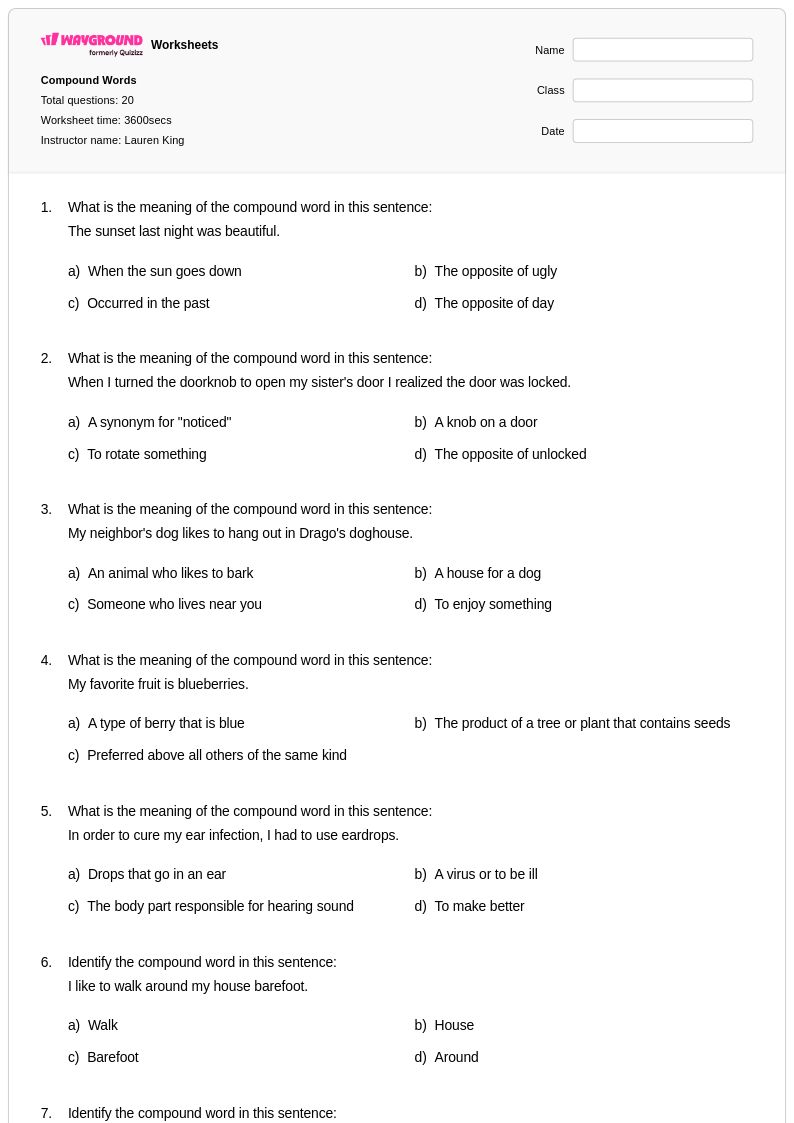
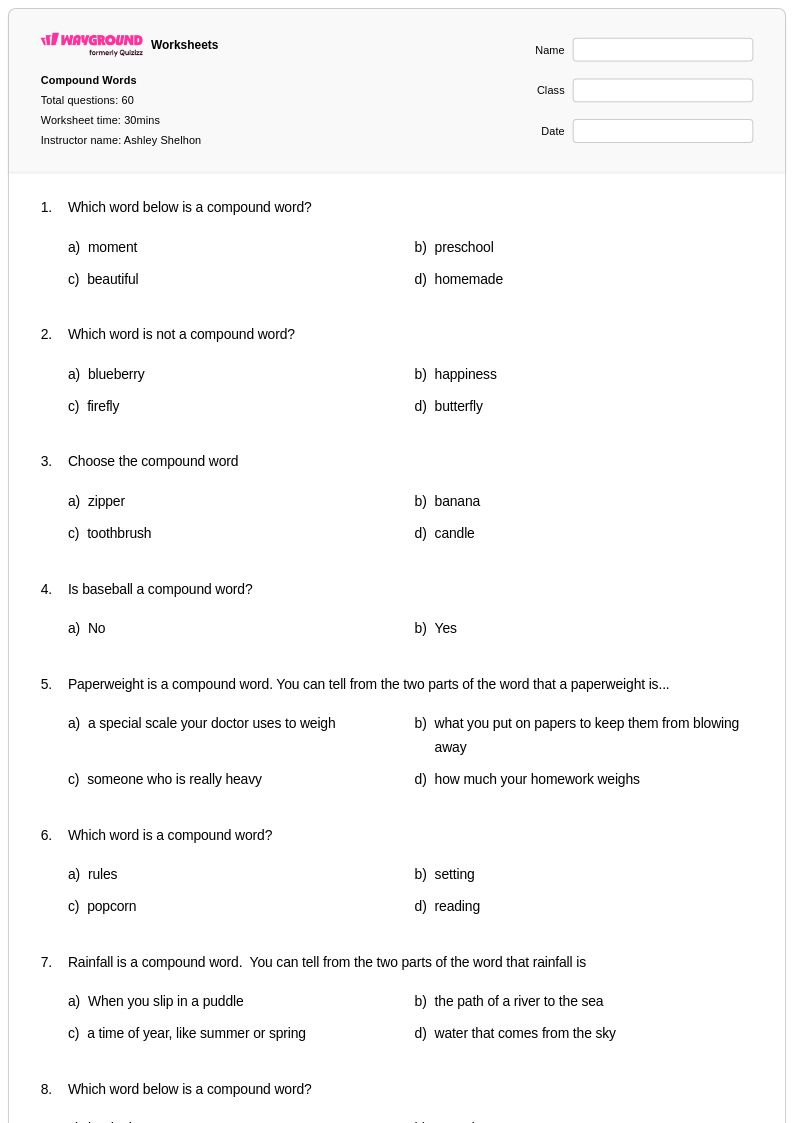
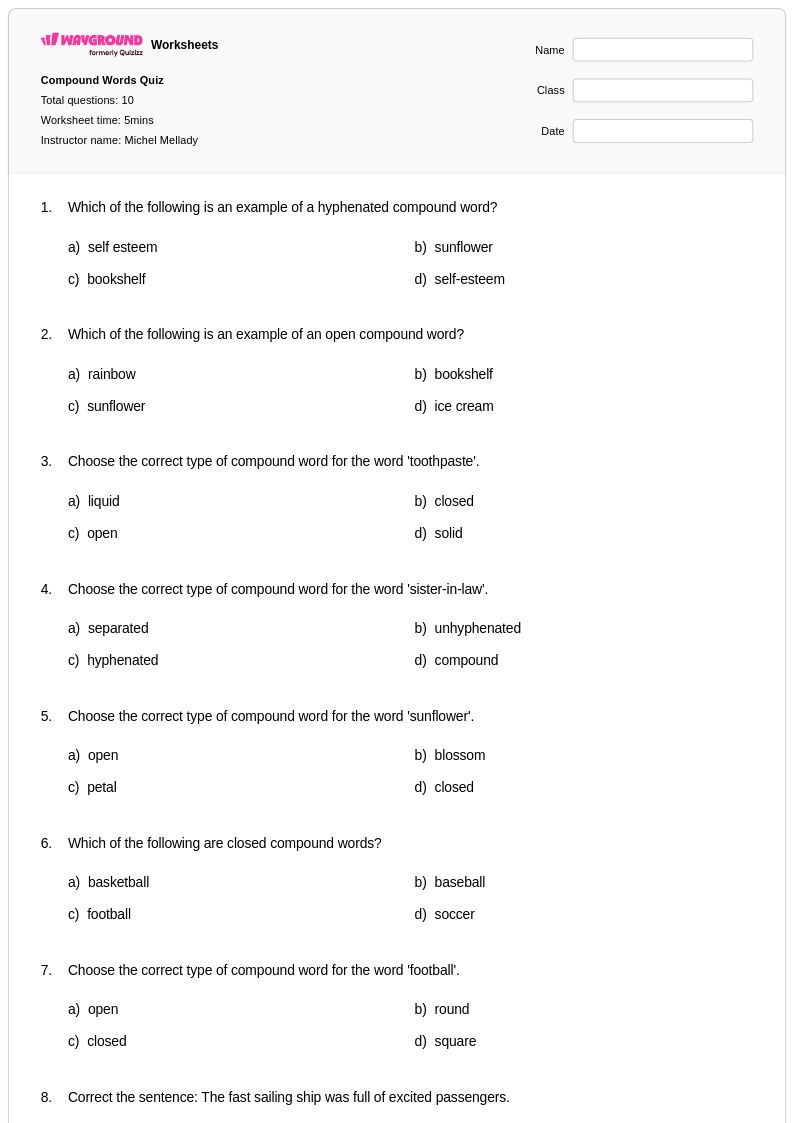
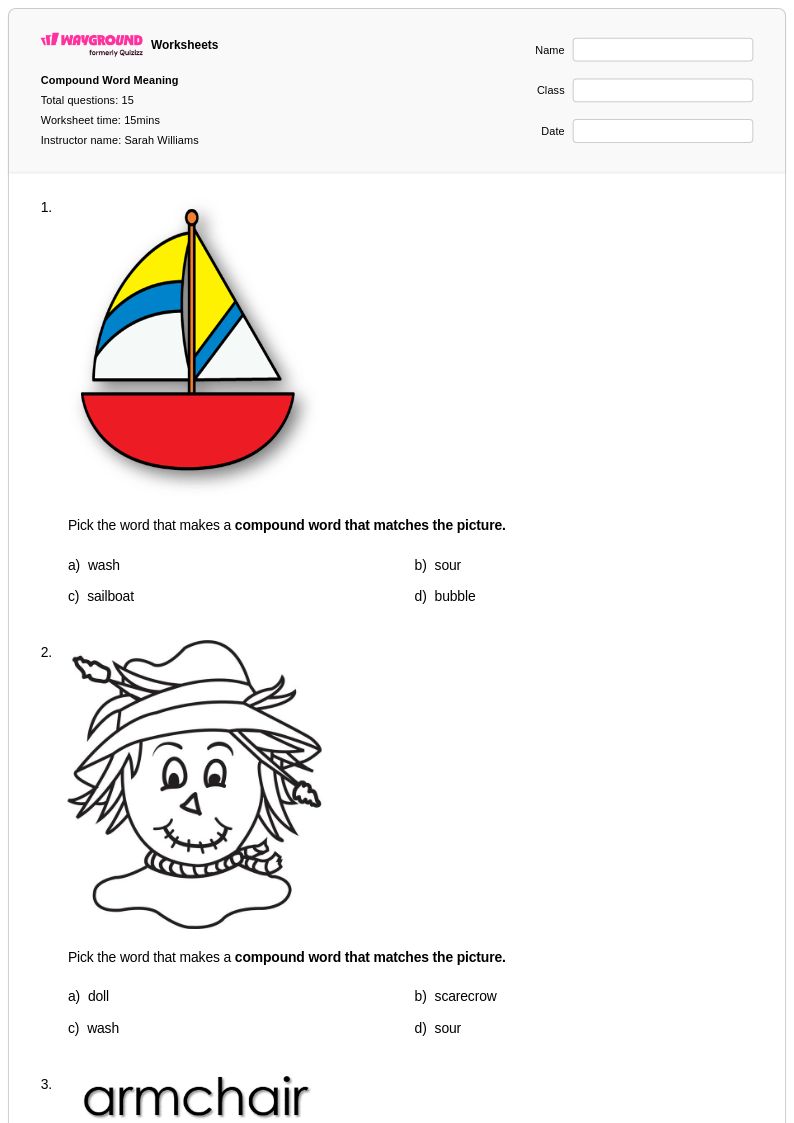
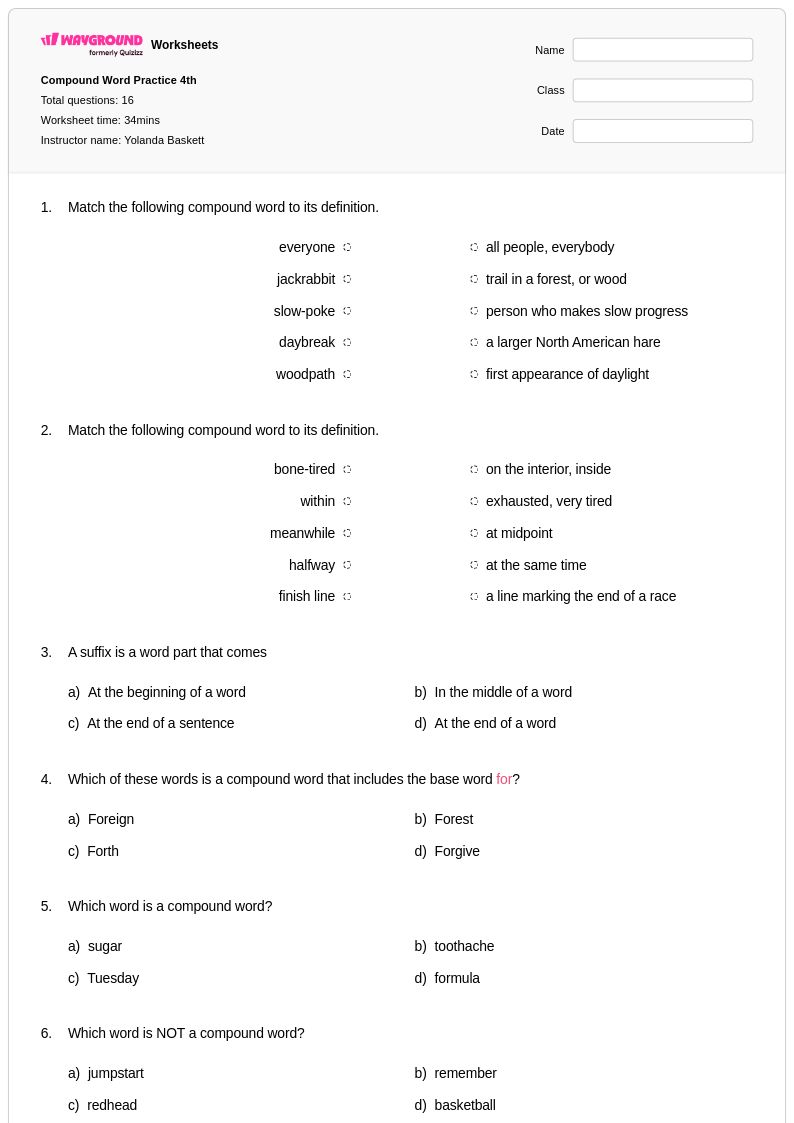
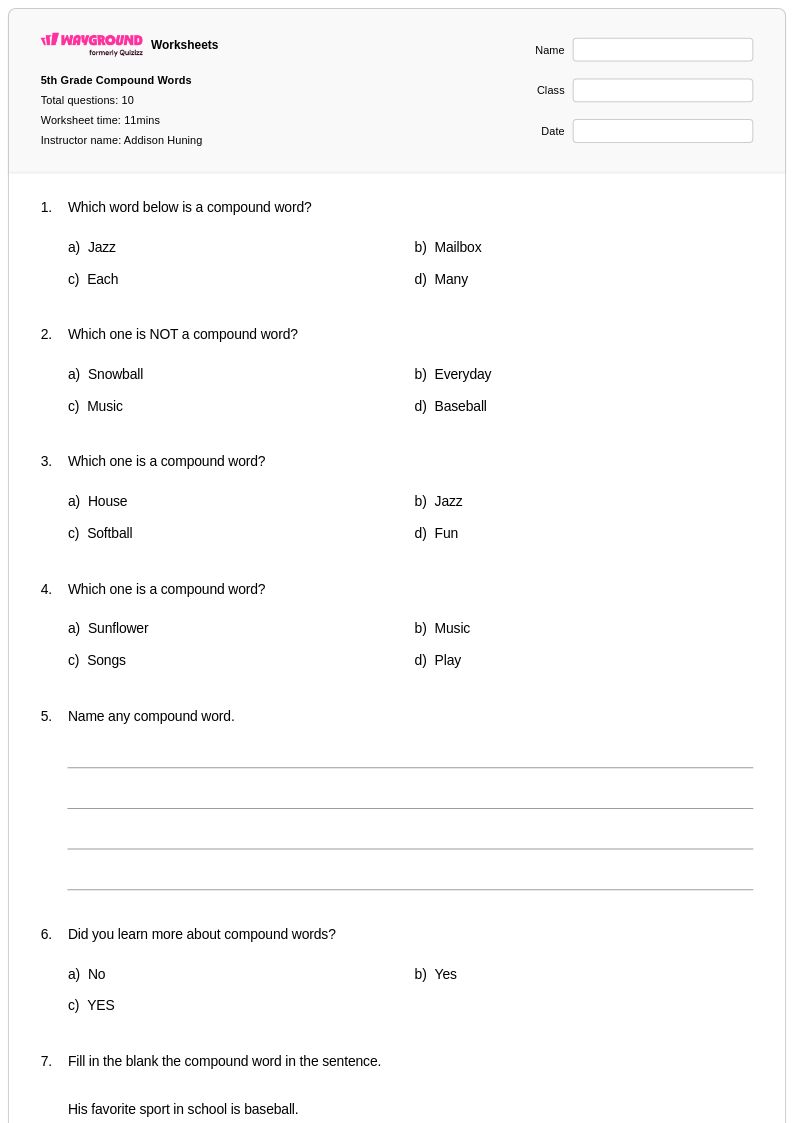
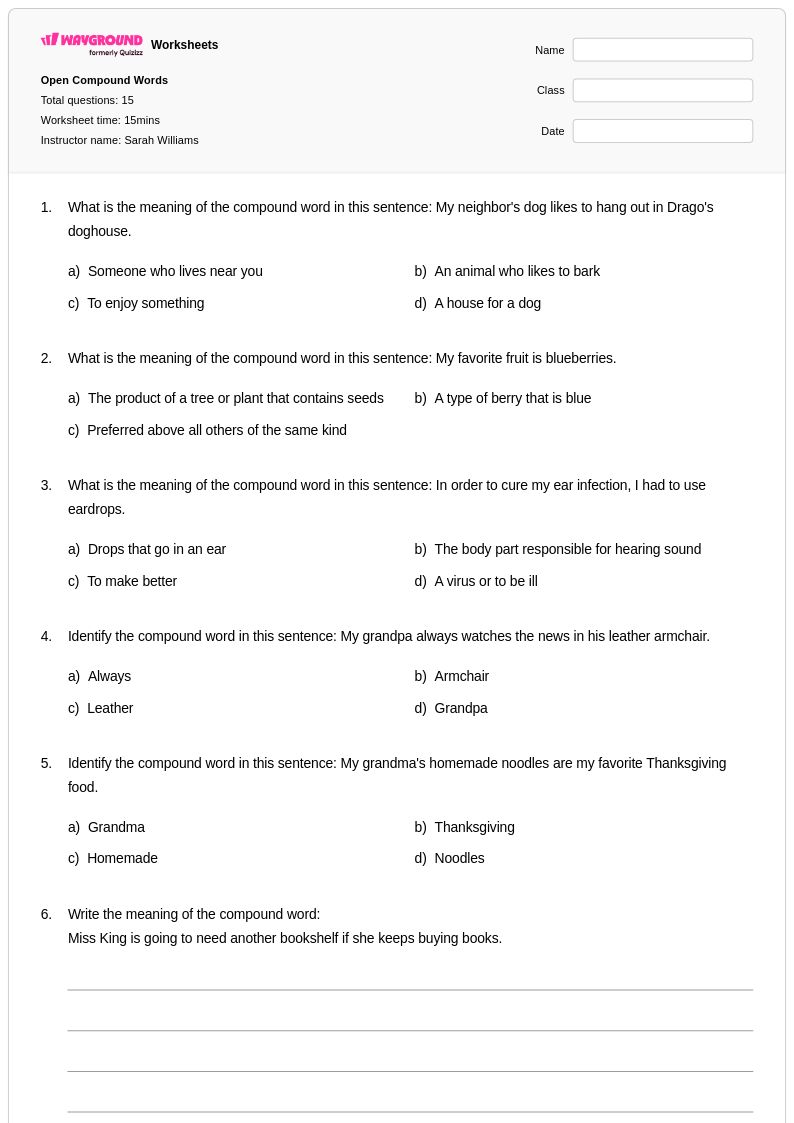
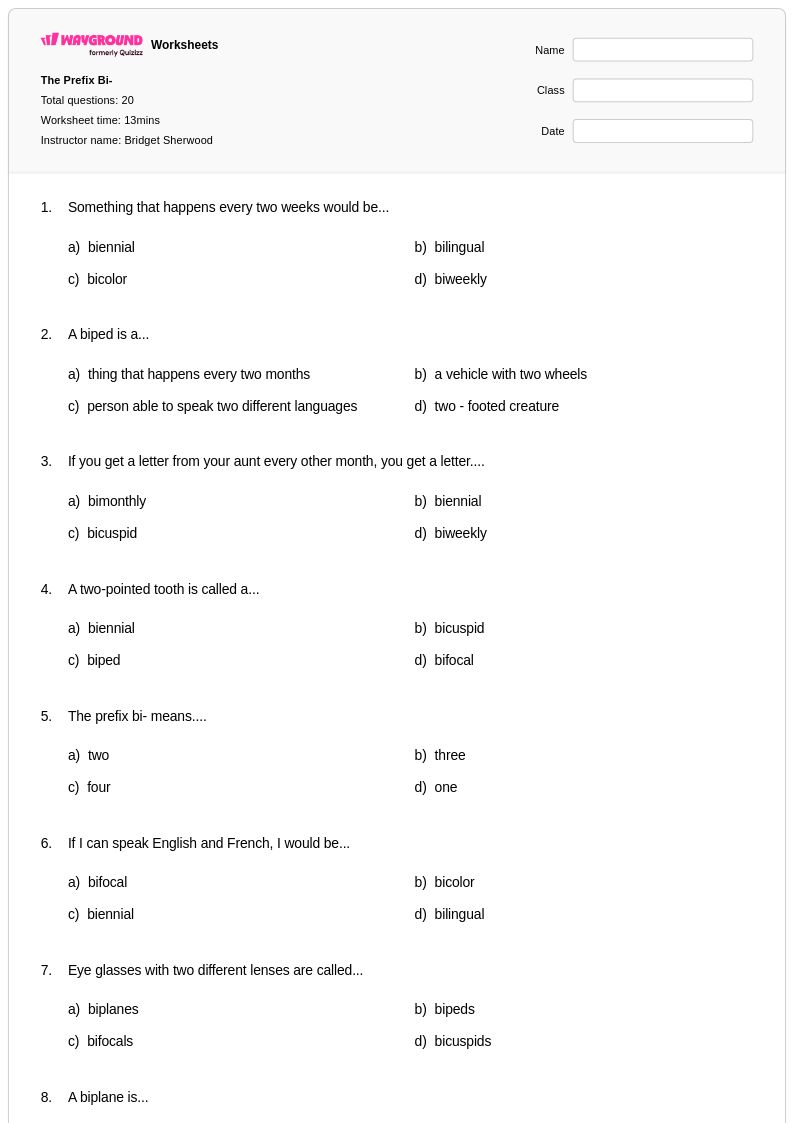
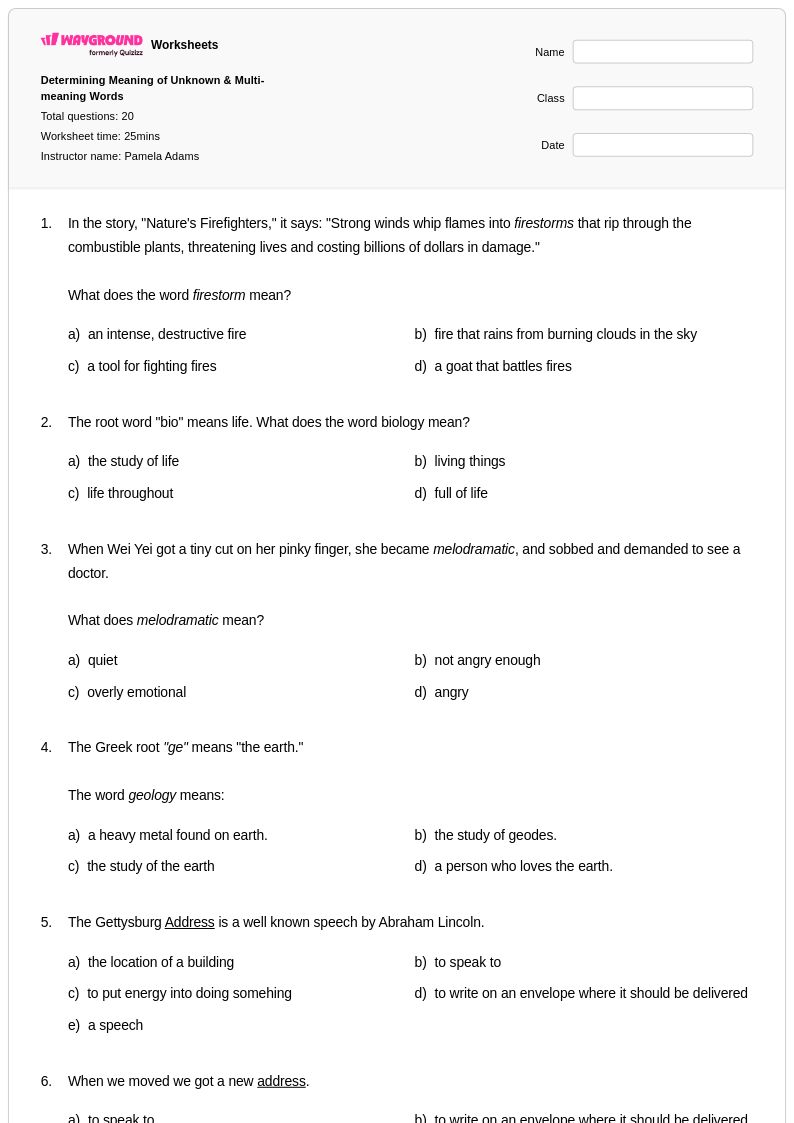
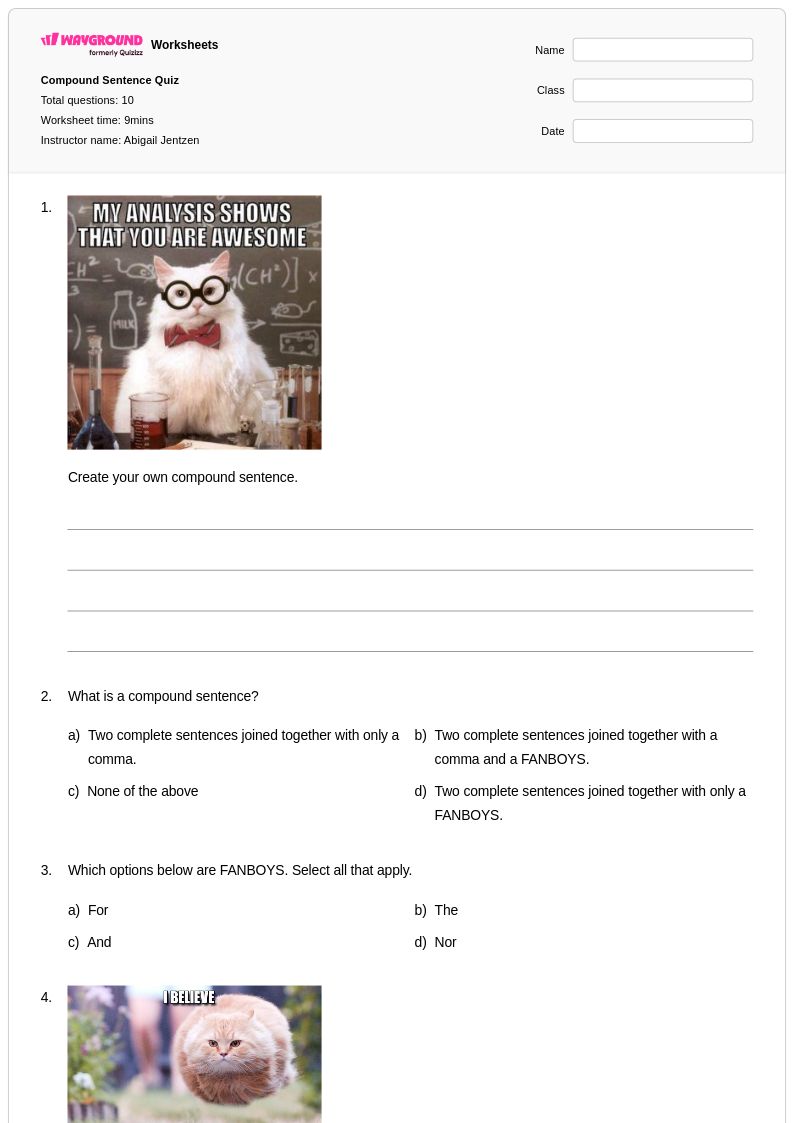
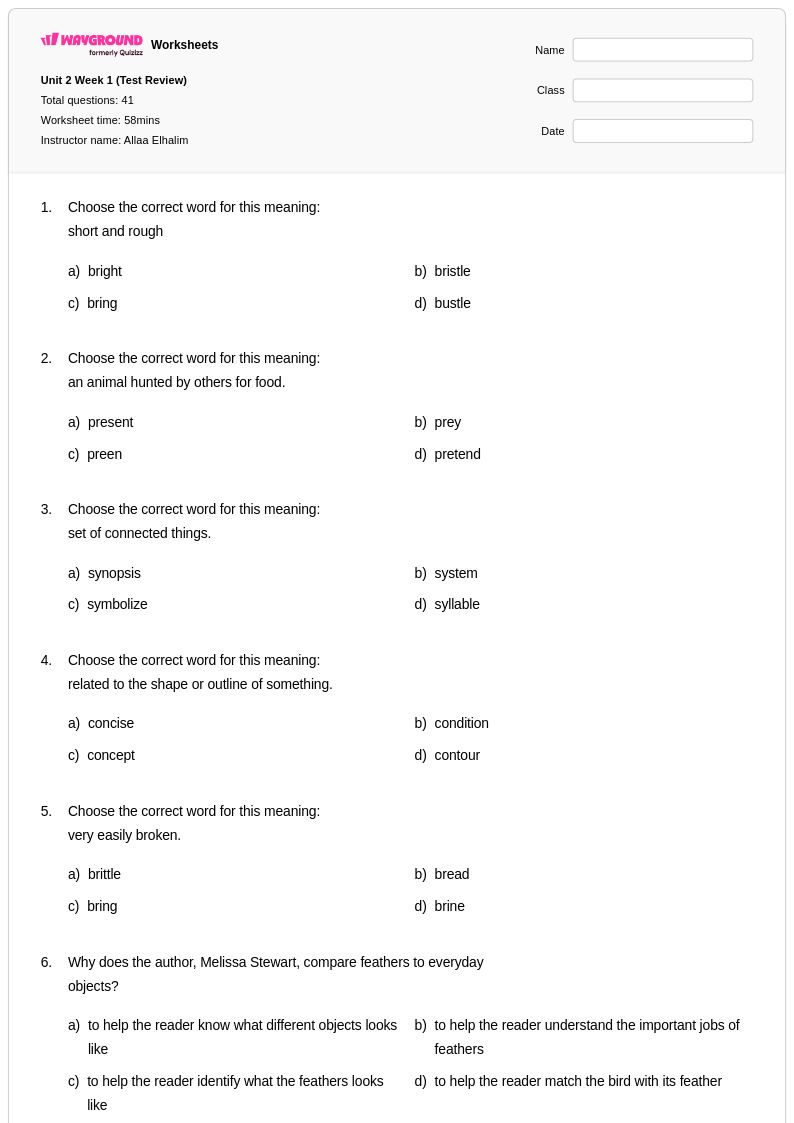
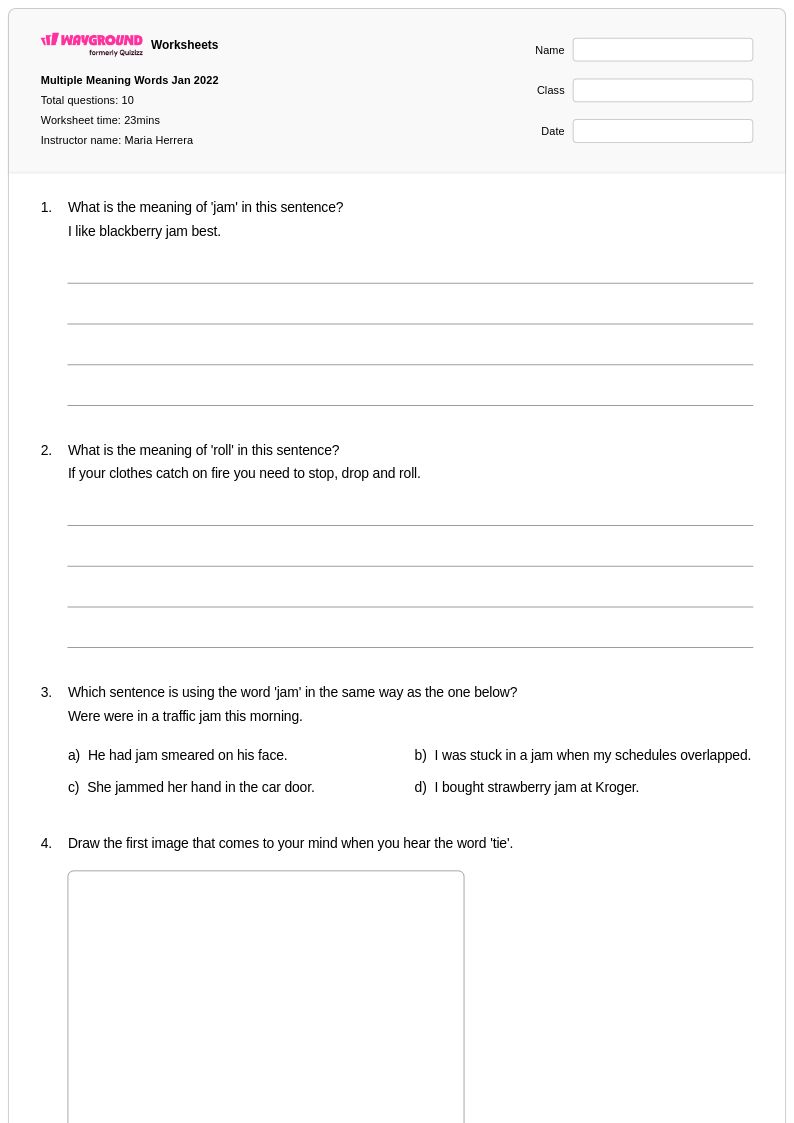
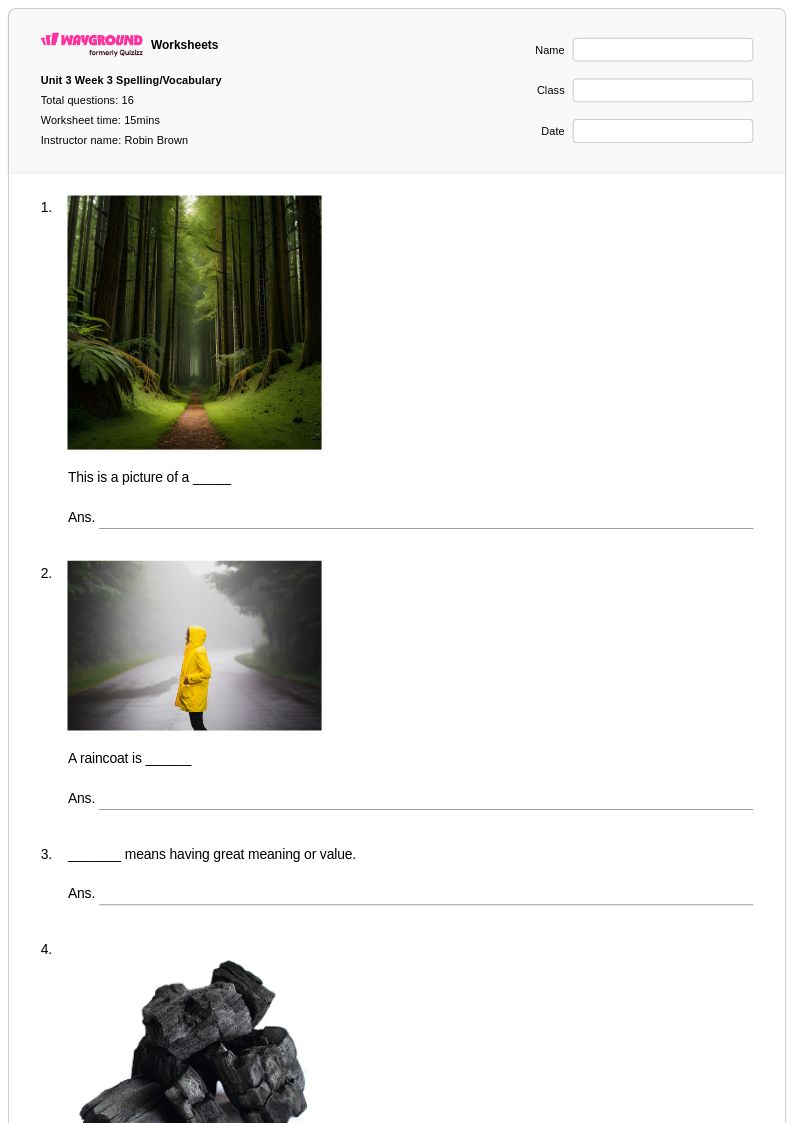
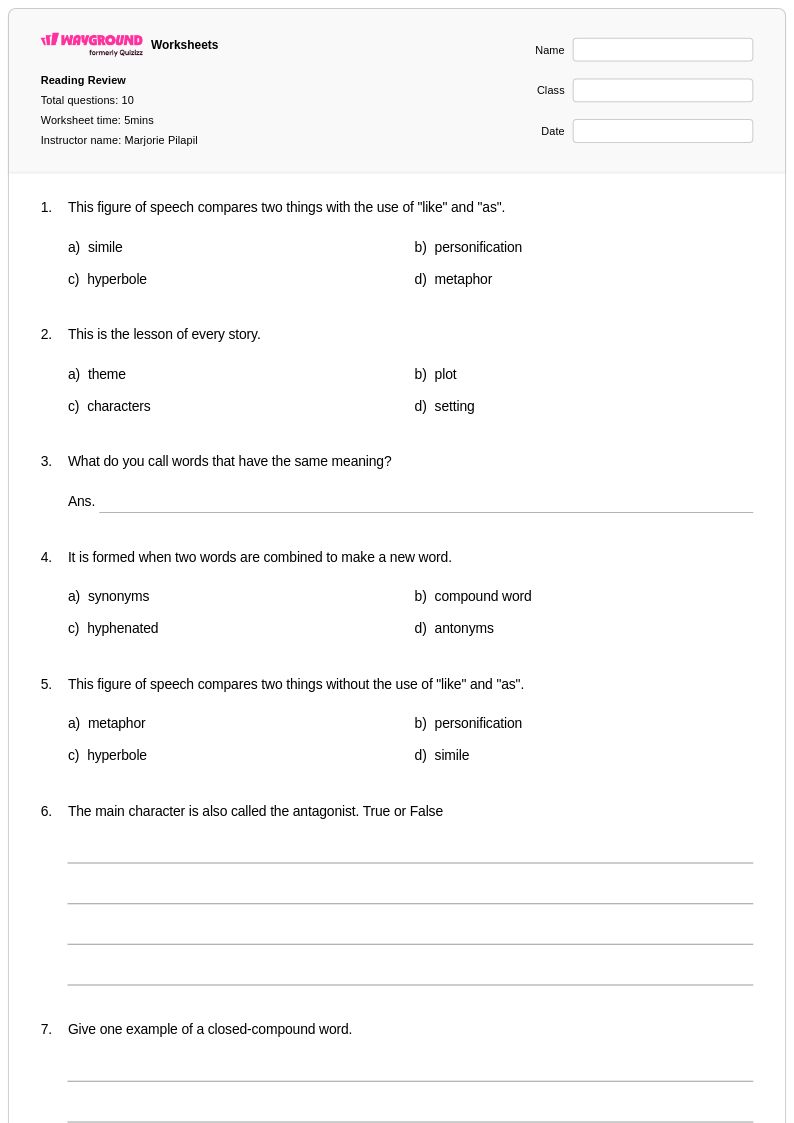
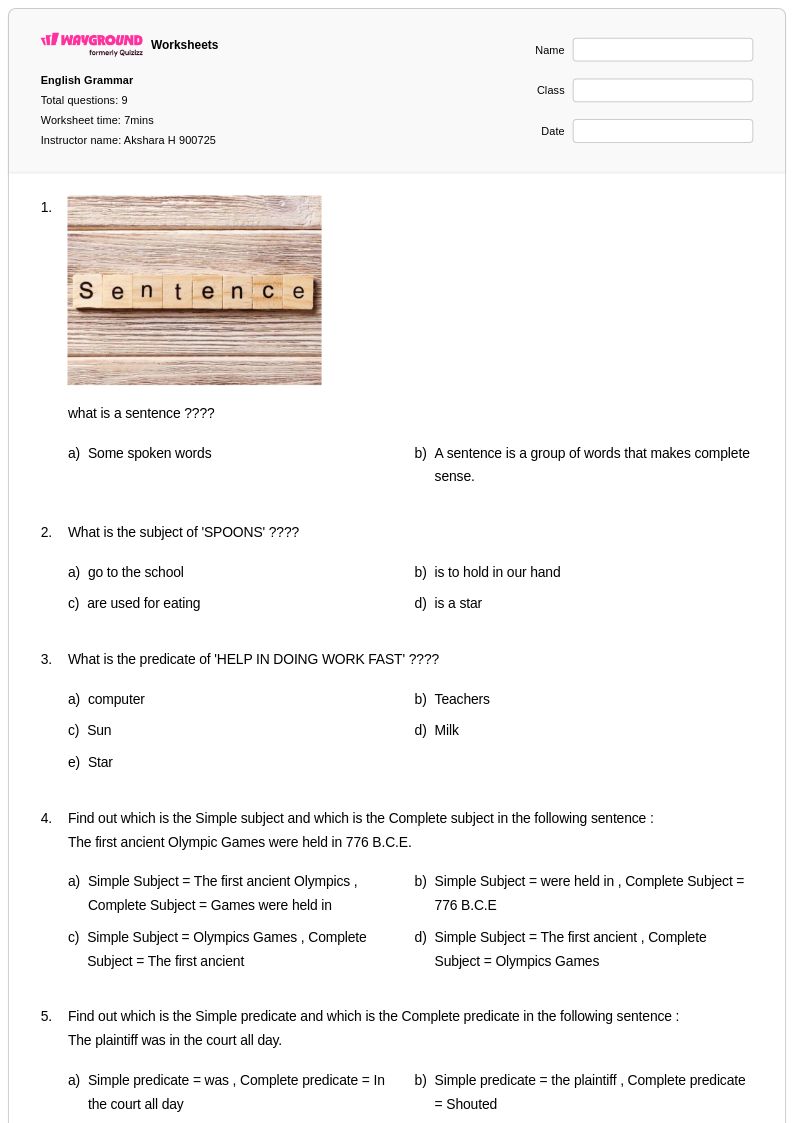
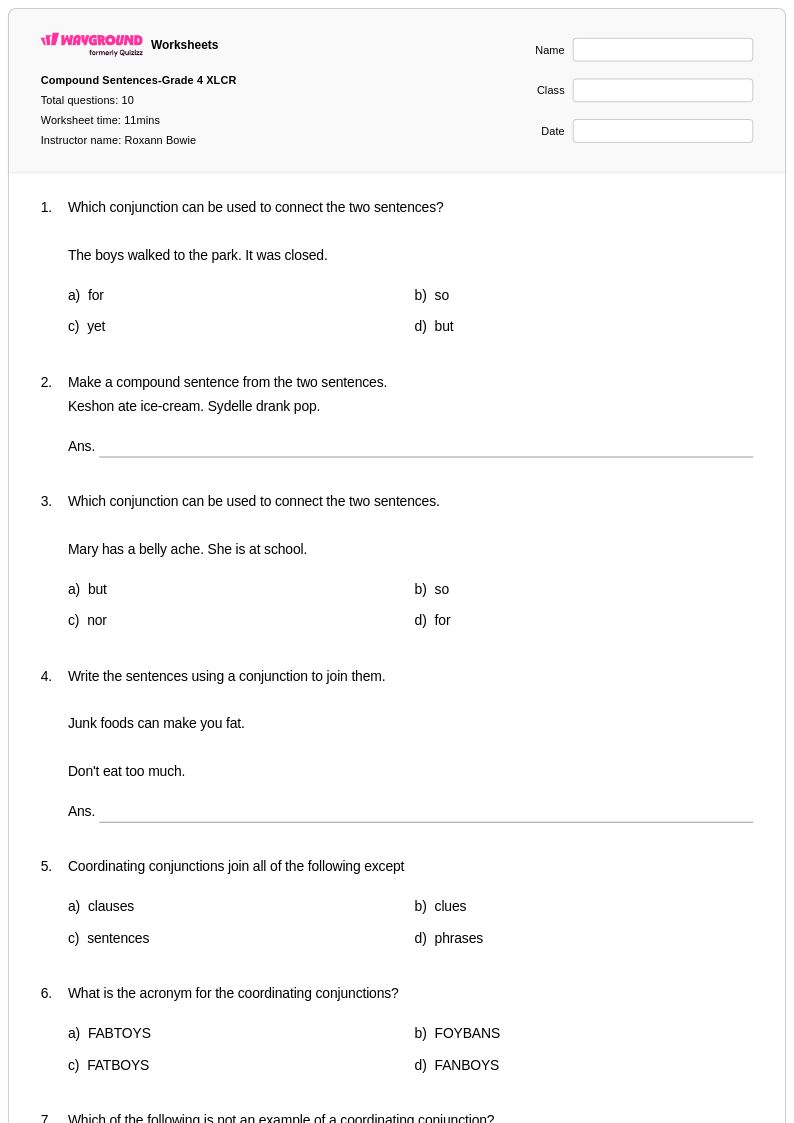
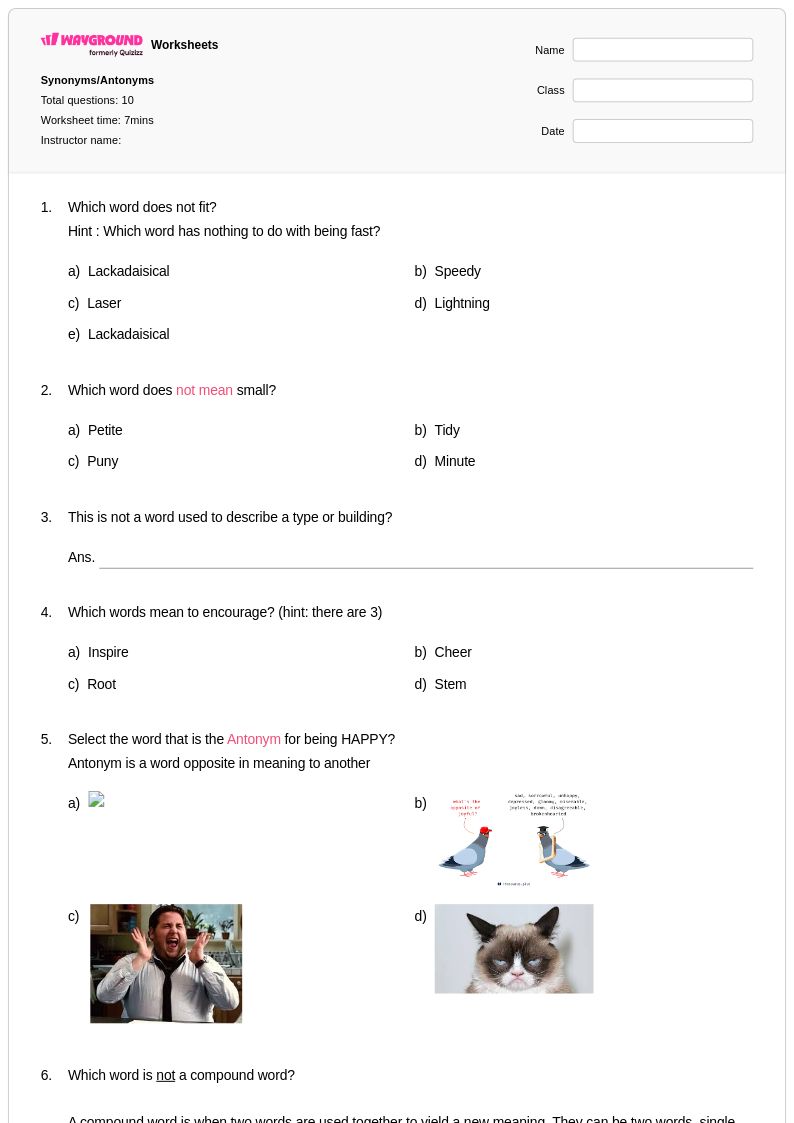
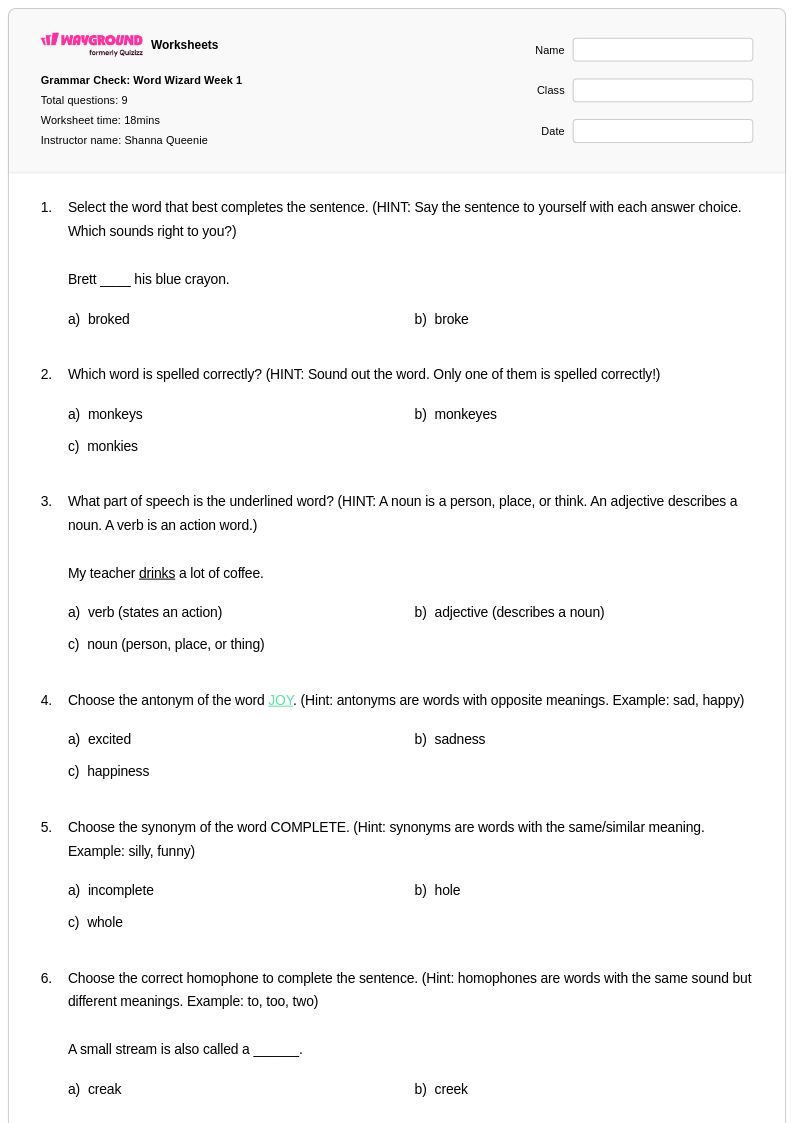
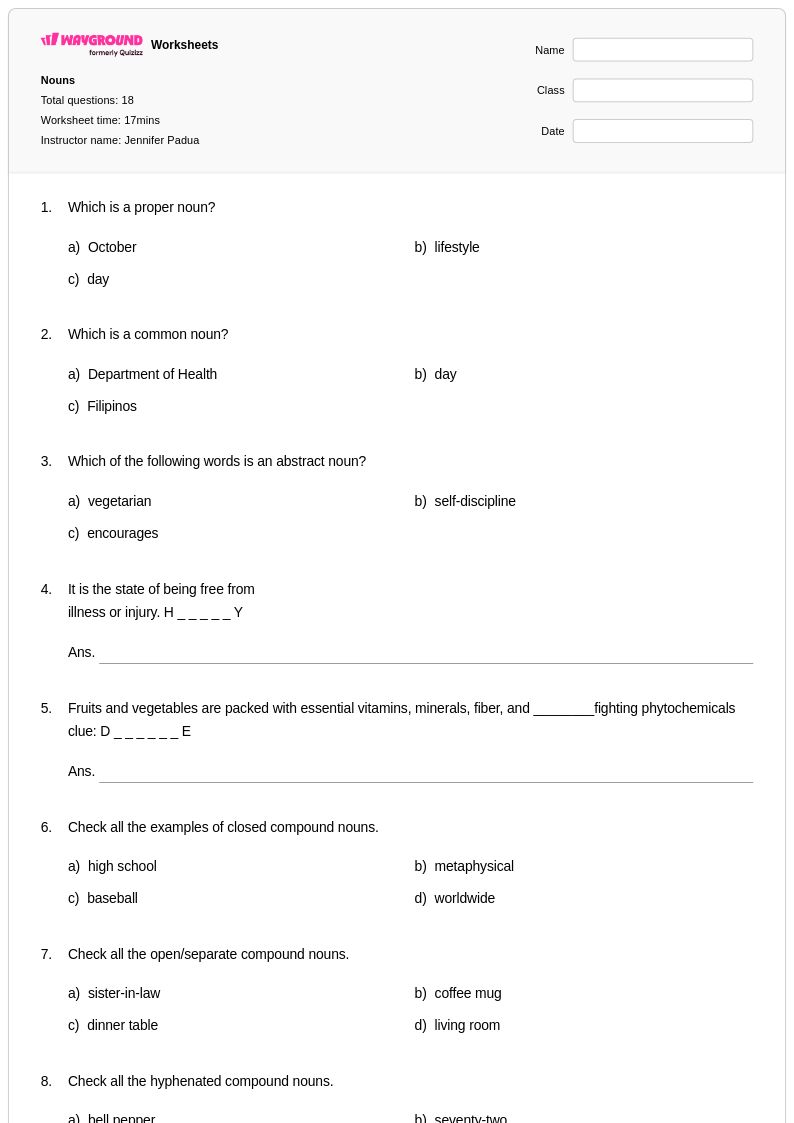
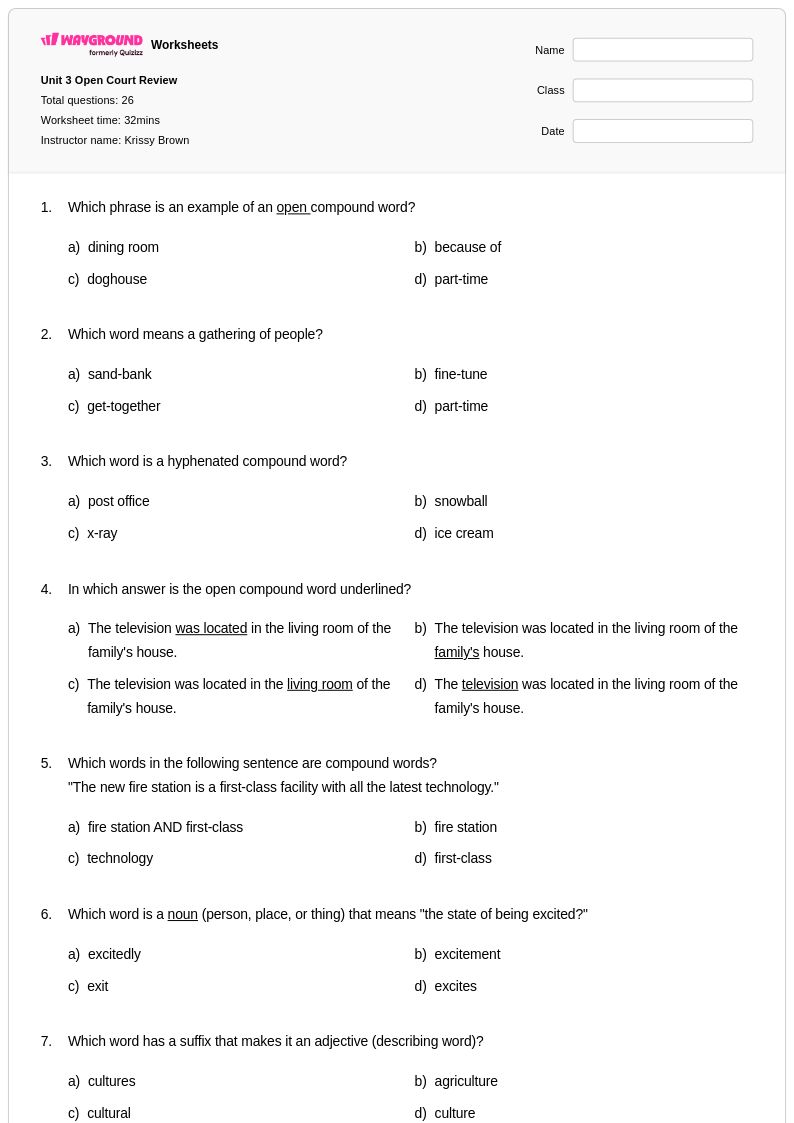
Meaning of compound words worksheets for Class 4 students available through Wayground (formerly Quizizz) provide comprehensive practice in understanding how two smaller words combine to create new words with distinct meanings. These educational resources strengthen students' vocabulary development and reading comprehension skills by teaching them to break apart compound words like "playground," "butterfly," and "homework" to understand their component parts and overall meaning. The worksheets feature varied practice problems that guide fourth graders through the process of identifying compound words, separating them into their base words, and determining how the combined meaning relates to the individual word parts. Each printable resource includes detailed answer keys and free pdf downloads, making it convenient for educators to implement structured vocabulary instruction that builds students' word analysis abilities.
Wayground (formerly Quizizz) supports teachers with an extensive collection of compound word meaning worksheets created by millions of educators worldwide, offering robust search and filtering capabilities that help instructors quickly locate grade-appropriate materials aligned with curriculum standards. The platform's differentiation tools enable teachers to customize worksheet difficulty levels and content focus, while flexible formatting options provide both printable pdf versions and interactive digital alternatives to accommodate diverse classroom needs. These comprehensive resources facilitate effective lesson planning by offering ready-to-use materials for skill practice, targeted remediation for struggling learners, and enrichment opportunities for advanced students, ensuring that all fourth grade learners can develop strong foundational skills in understanding how compound words function within the English language system.
FAQs
How do I teach students the meaning of compound words?
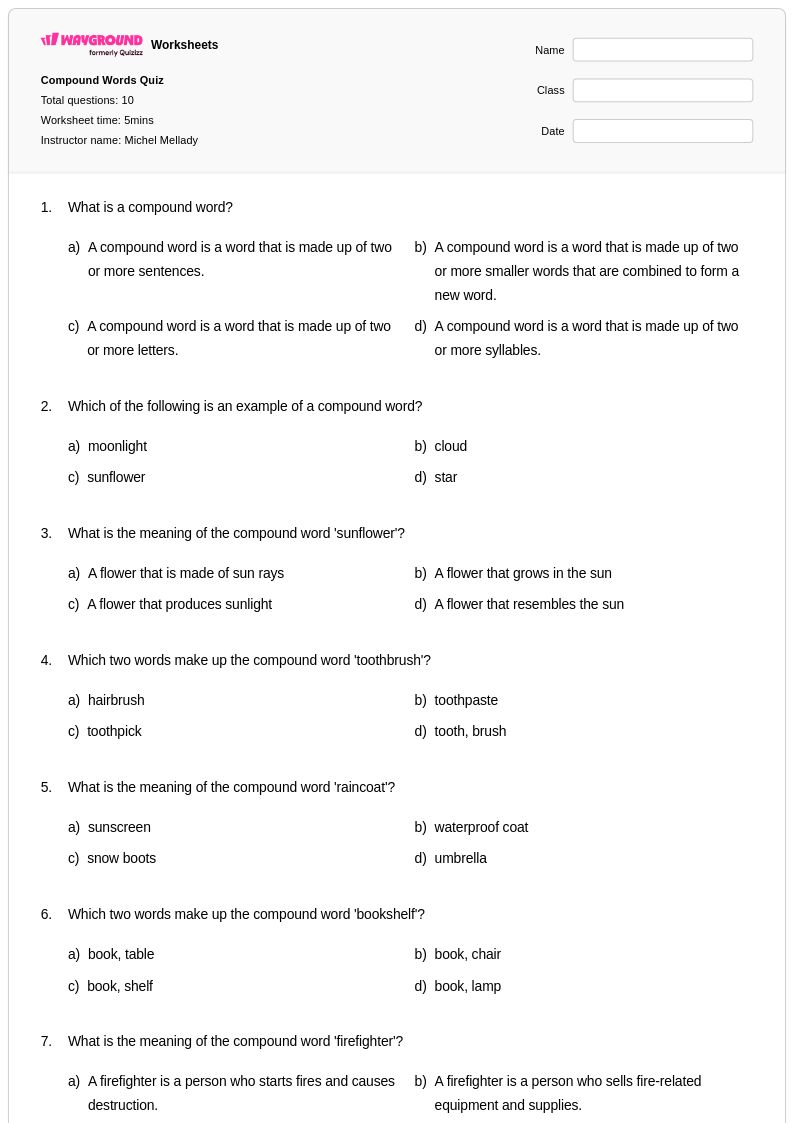
The most effective approach is to teach students to treat compound words as puzzles: identify the two smaller words, define each one independently, and then reason about how their meanings combine. For example, 'sunflower' is a flower associated with the sun, and 'raincoat' is a coat worn in the rain. Consistent practice with this break-apart strategy builds transferable word analysis skills students can apply across new vocabulary.
What exercises help students practice understanding compound word meanings?
Exercises that ask students to split a compound word, define each component, and then write or select the combined meaning are most effective for building comprehension. Matching activities, fill-in-the-blank sentences with compound words in context, and tasks where students construct compound words from given definitions all reinforce meaning-making at multiple levels. Varying the format helps students encounter compound words from different angles, deepening retention.
What mistakes do students commonly make when interpreting compound words?
The most common error is assuming the meaning of a compound word is simply the sum of its parts without considering how those parts interact grammatically. For instance, students may define 'butterfly' by combining 'butter' and 'fly' literally rather than recognizing it as an idiomatic compound. Students also frequently misidentify which component word is the head, leading to errors in understanding meaning direction, such as confusing whether a 'mailbox' is primarily a box or primarily associated with mail.
How can I differentiate compound words instruction for students at different levels?
For struggling students, start with transparent compounds where the meaning is clearly derived from both parts, such as 'bedroom' or 'sunlight,' before introducing opaque compounds like 'butterfly' or 'deadline.' Advanced learners can be challenged to analyze compound words found in content-area reading or to generate their own compound words for given definitions. On Wayground, teachers can apply accommodations such as reduced answer choices or read-aloud support to individual students, so differentiated practice can run simultaneously within the same class session.
How do I use Wayground's meaning of compound words worksheets in my classroom?
Wayground's compound words worksheets are available as printable PDFs for traditional classroom use and in digital formats for technology-integrated environments, giving teachers flexibility across in-person, hybrid, and remote settings. Teachers can also host worksheets as a quiz directly on Wayground, enabling real-time student responses and automatic scoring. All worksheets include complete answer keys, so grading and feedback are built into the resource from the start.
How do compound words help build broader vocabulary skills?
Understanding how compound words derive meaning from their components teaches students a reusable decoding strategy they can apply to unfamiliar words throughout their reading. This word-analysis habit, breaking a word down into recognizable parts, extends naturally to morpheme-level thinking, which supports comprehension of prefixes, suffixes, and root words later on. Compound word instruction is therefore not just vocabulary work; it is foundational word-attack skill development.