Free Printable Microorganisms Worksheets for Class 5
Explore Class 5 microorganisms through Wayground's free biology worksheets and printables, featuring practice problems and answer keys to help students discover bacteria, viruses, fungi, and microscopic life forms.
Explore printable Microorganisms worksheets for Class 5
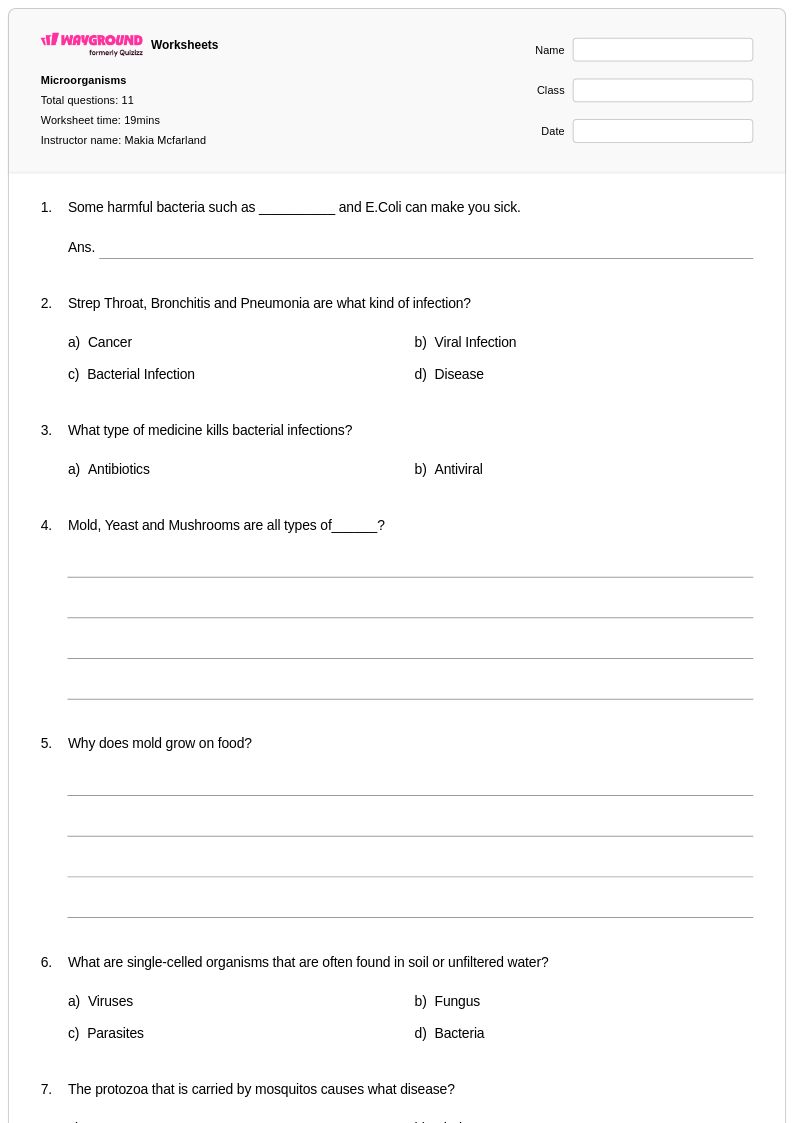
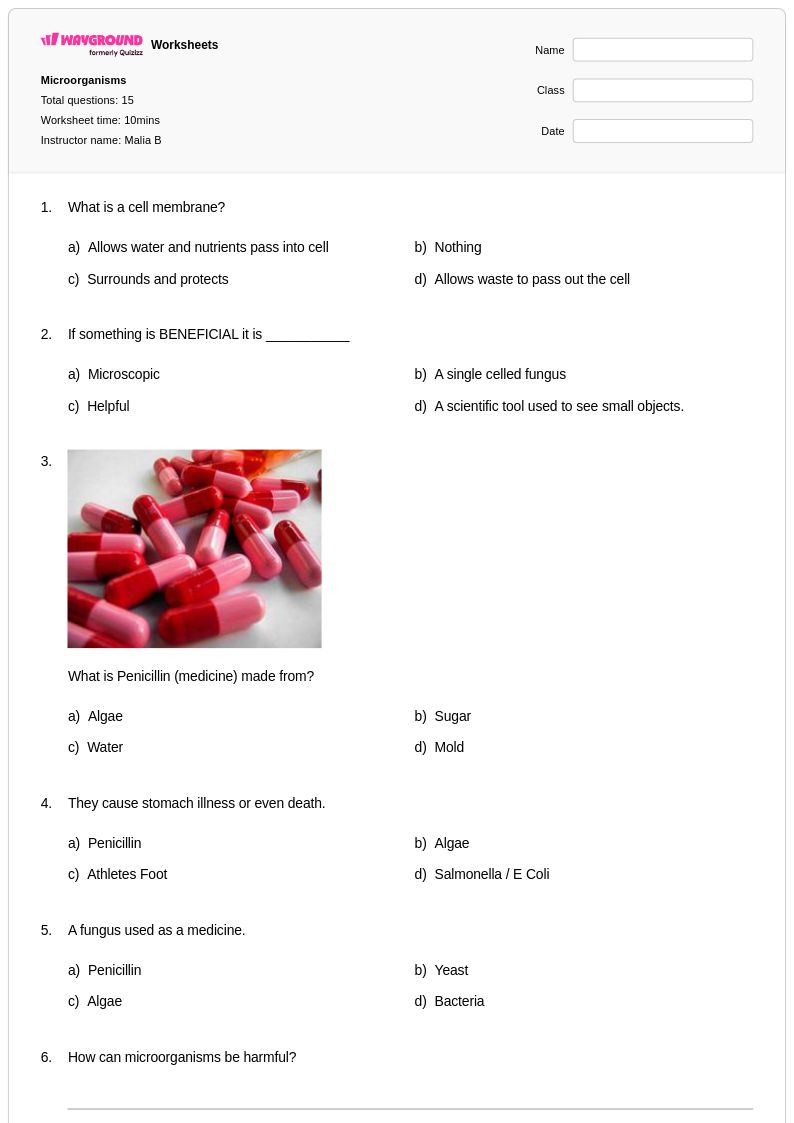
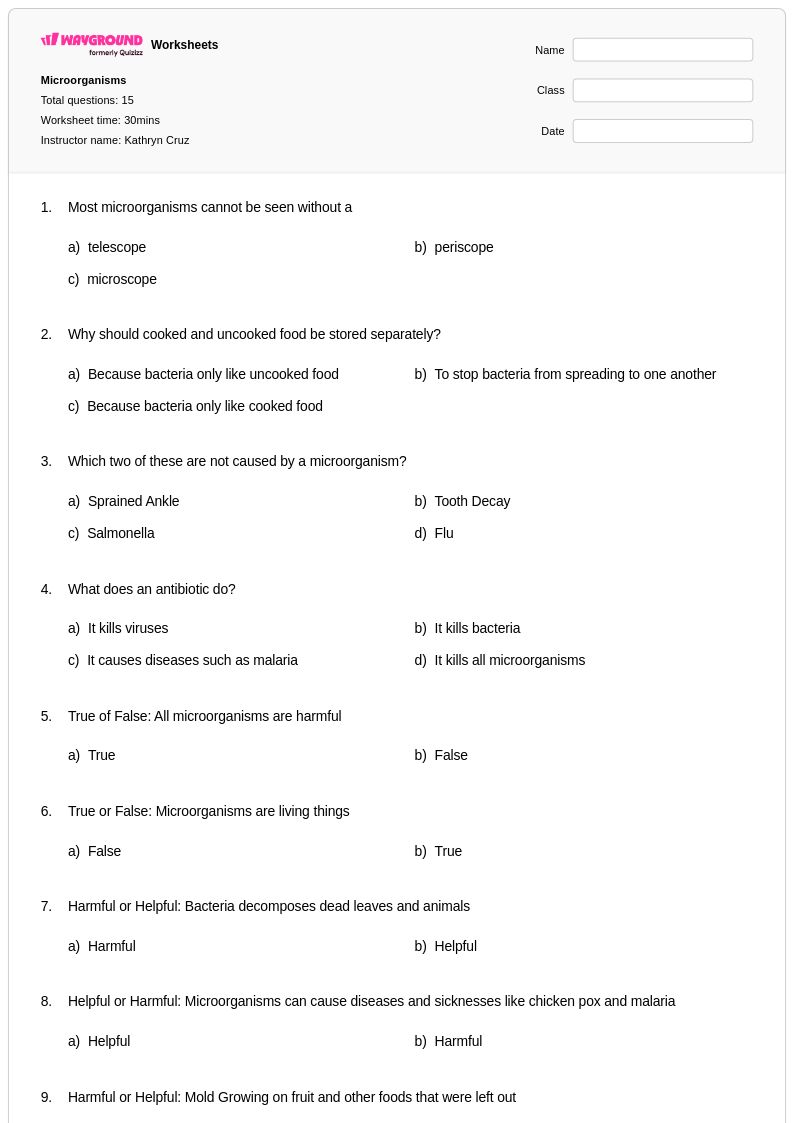
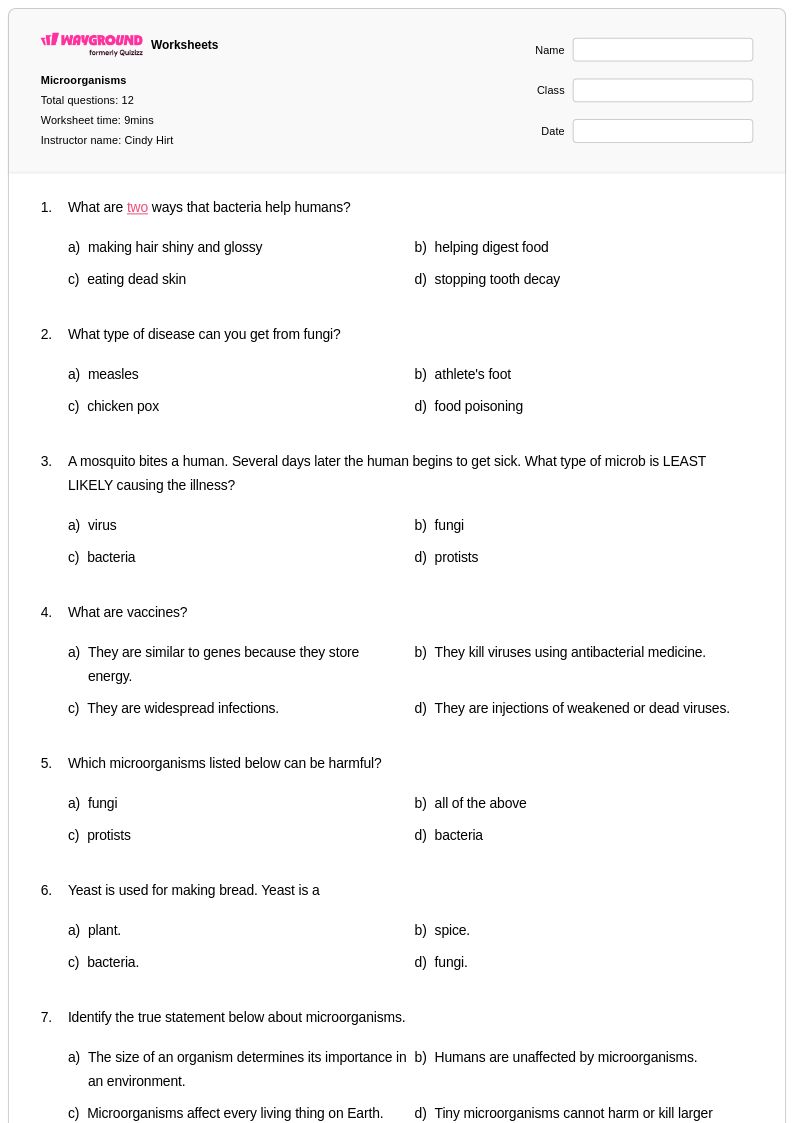
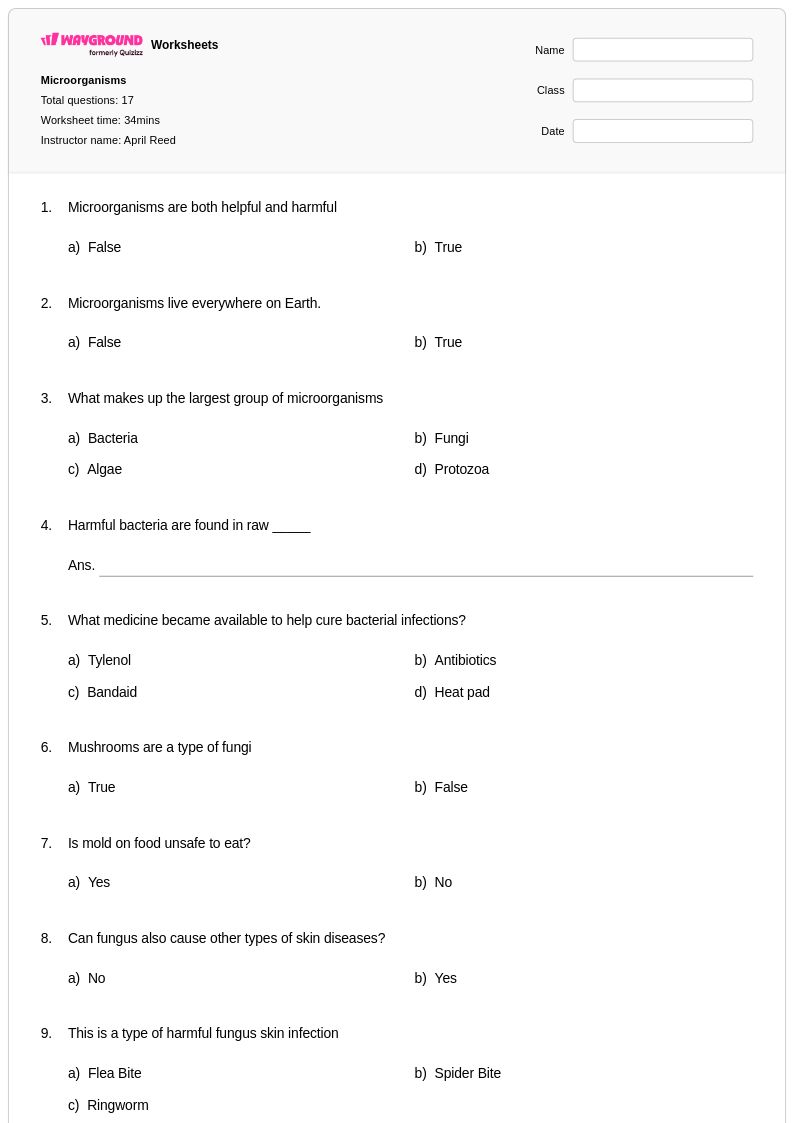
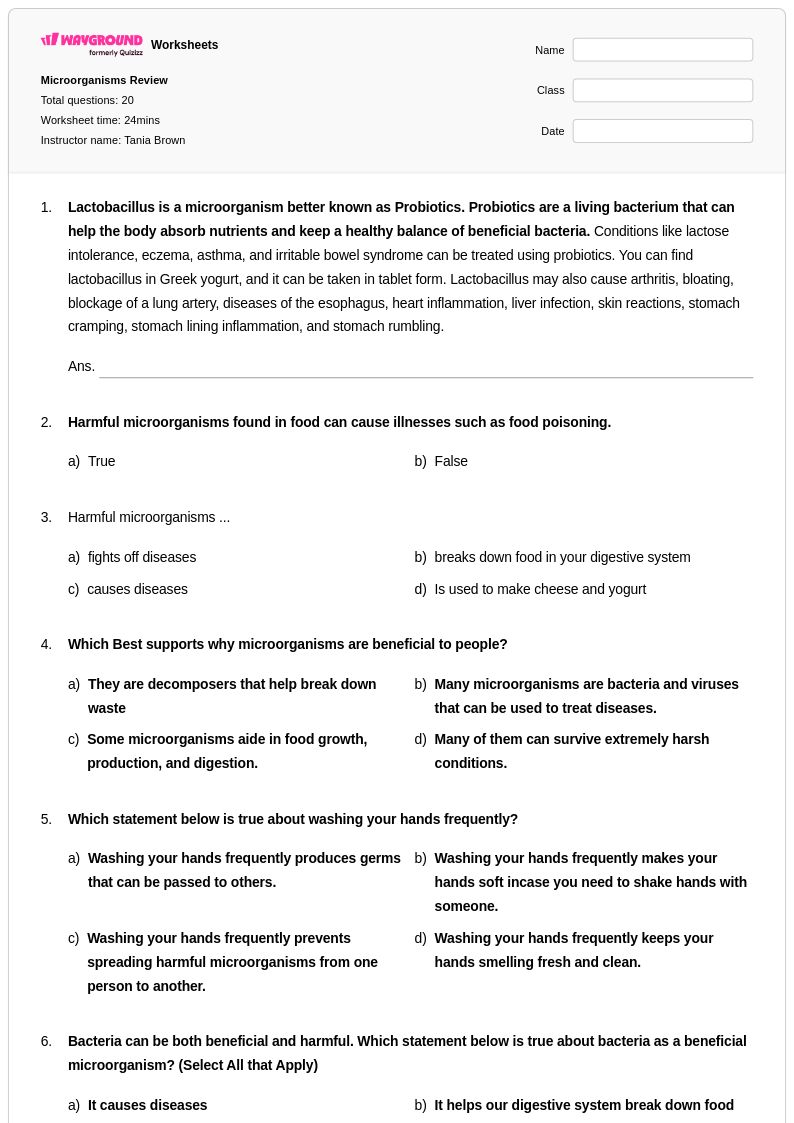
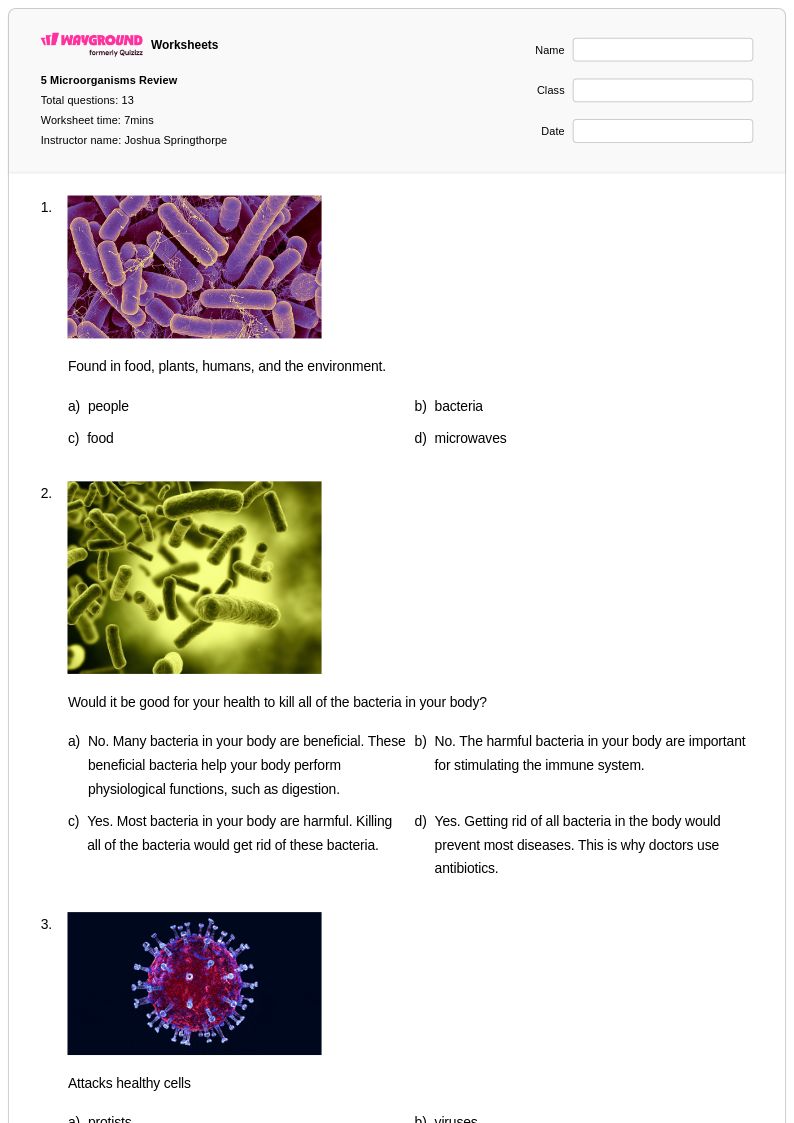
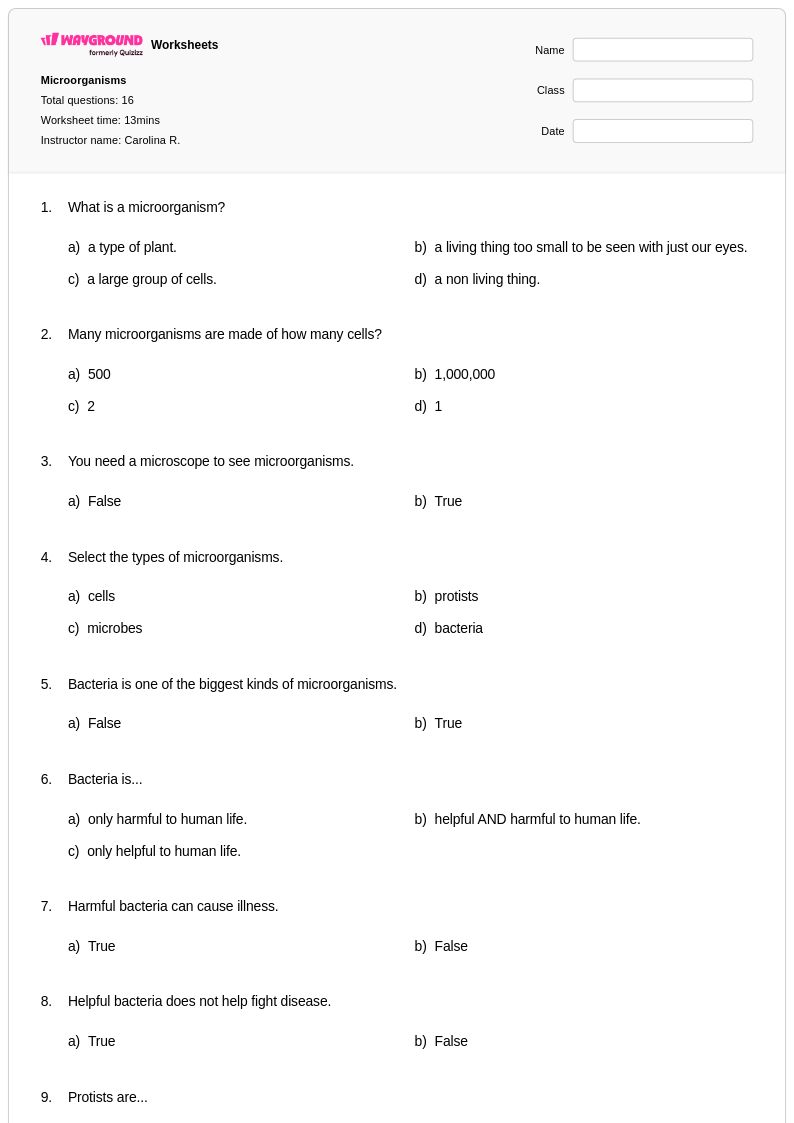
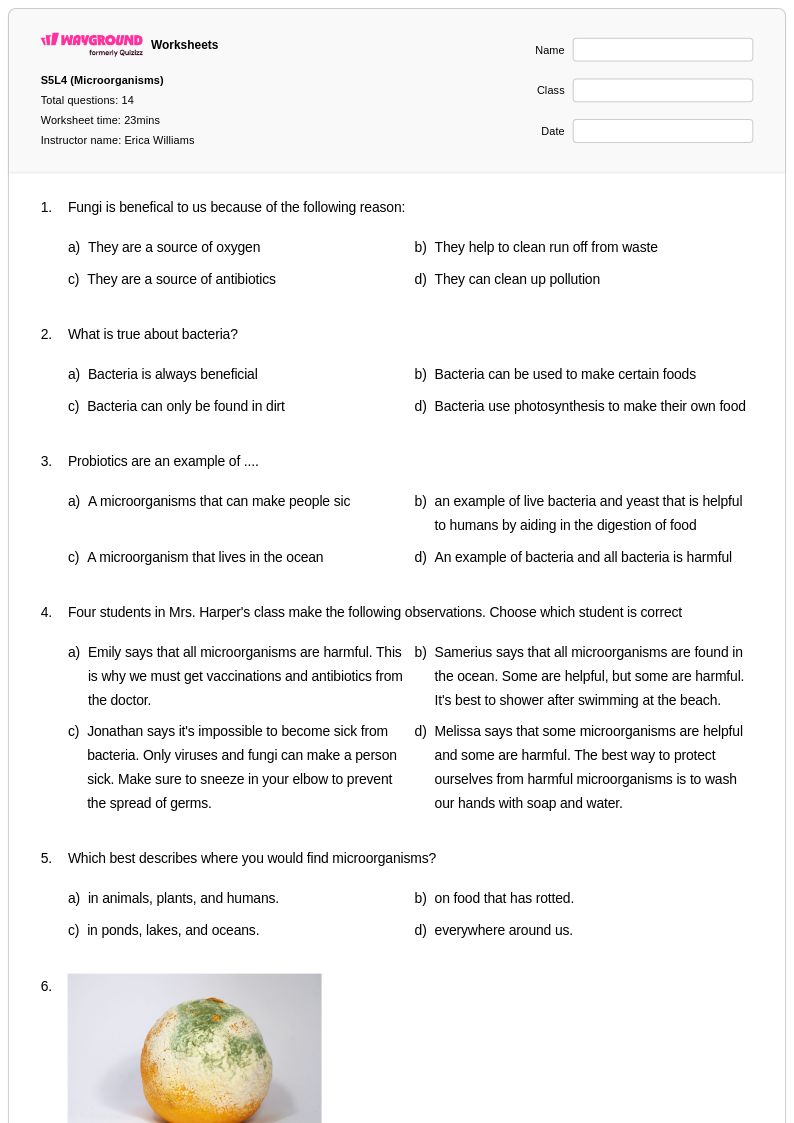
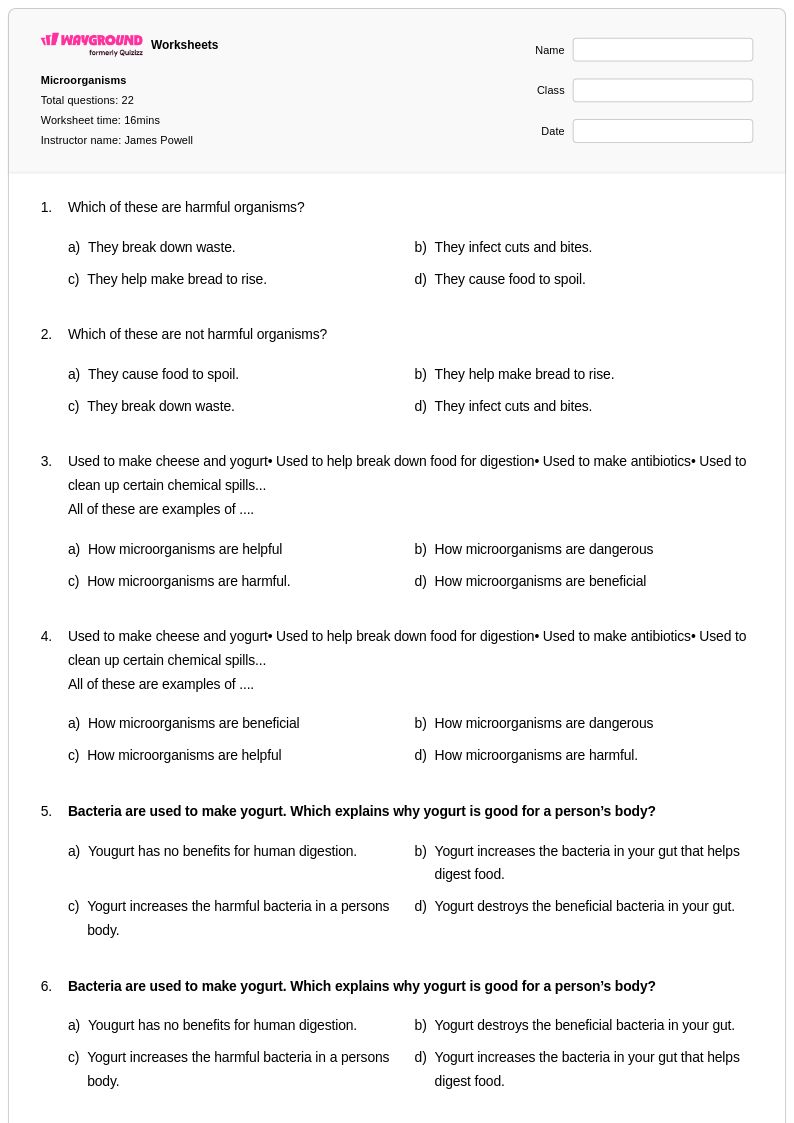
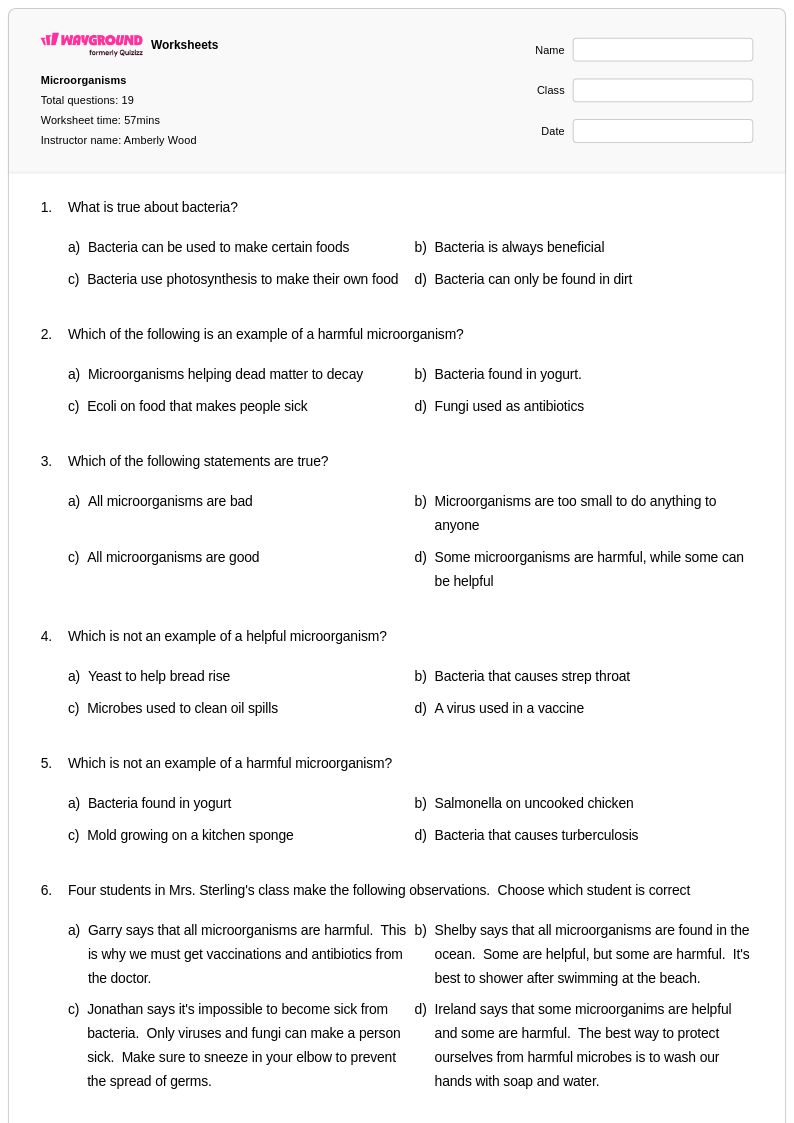
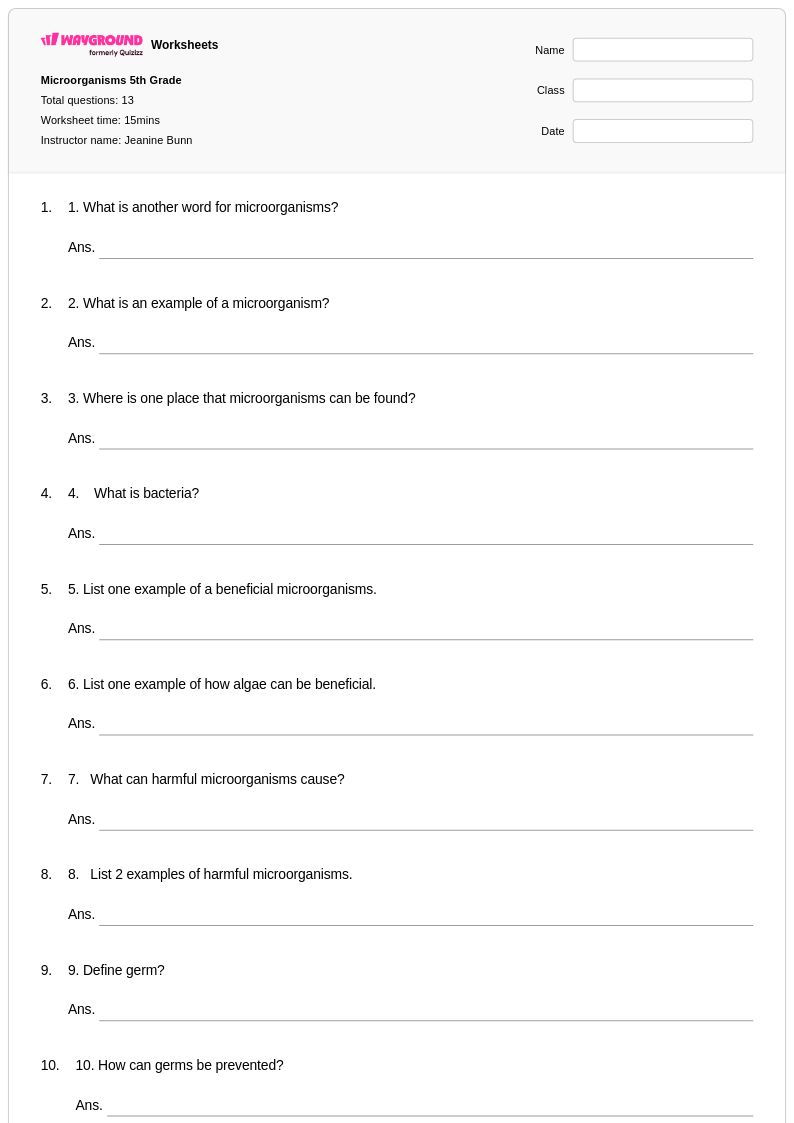
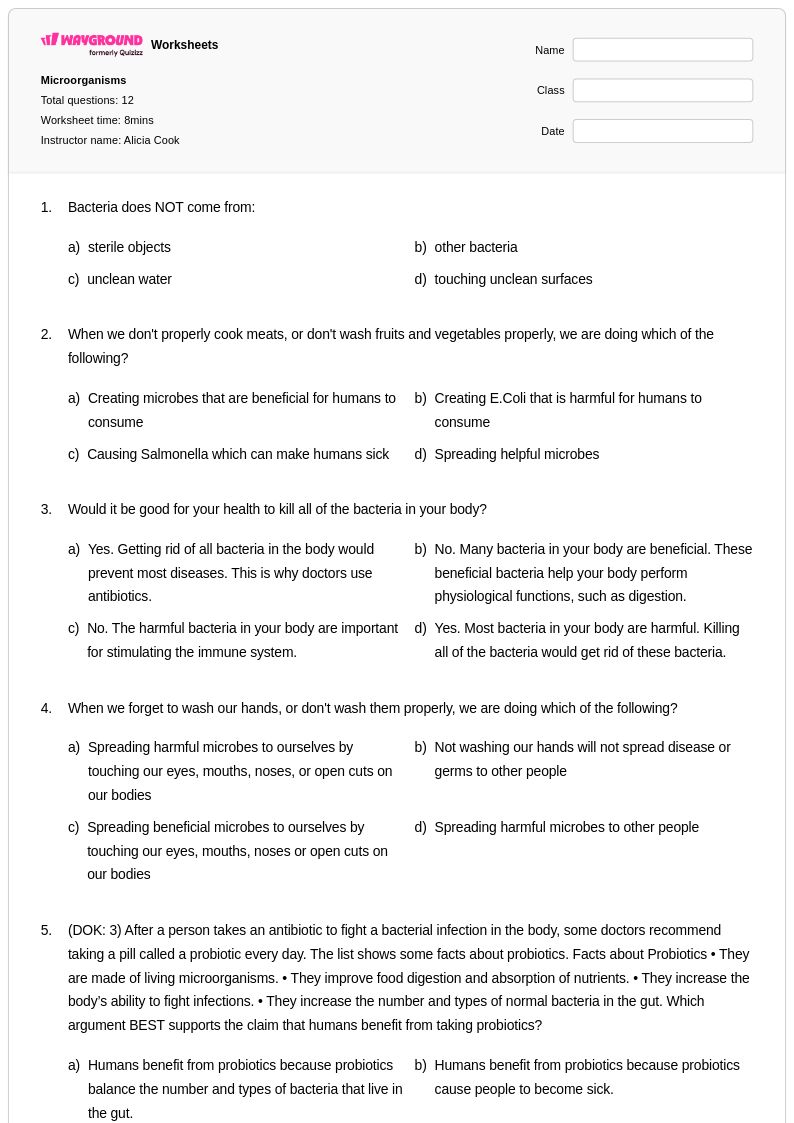
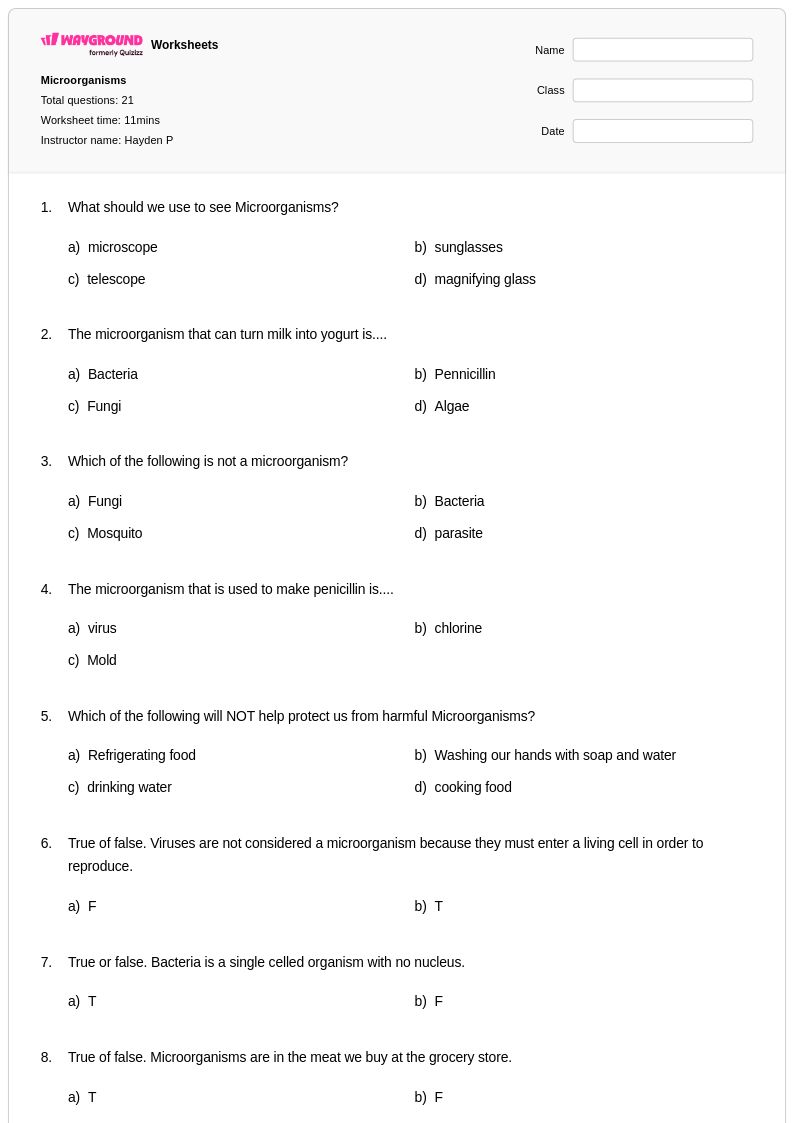
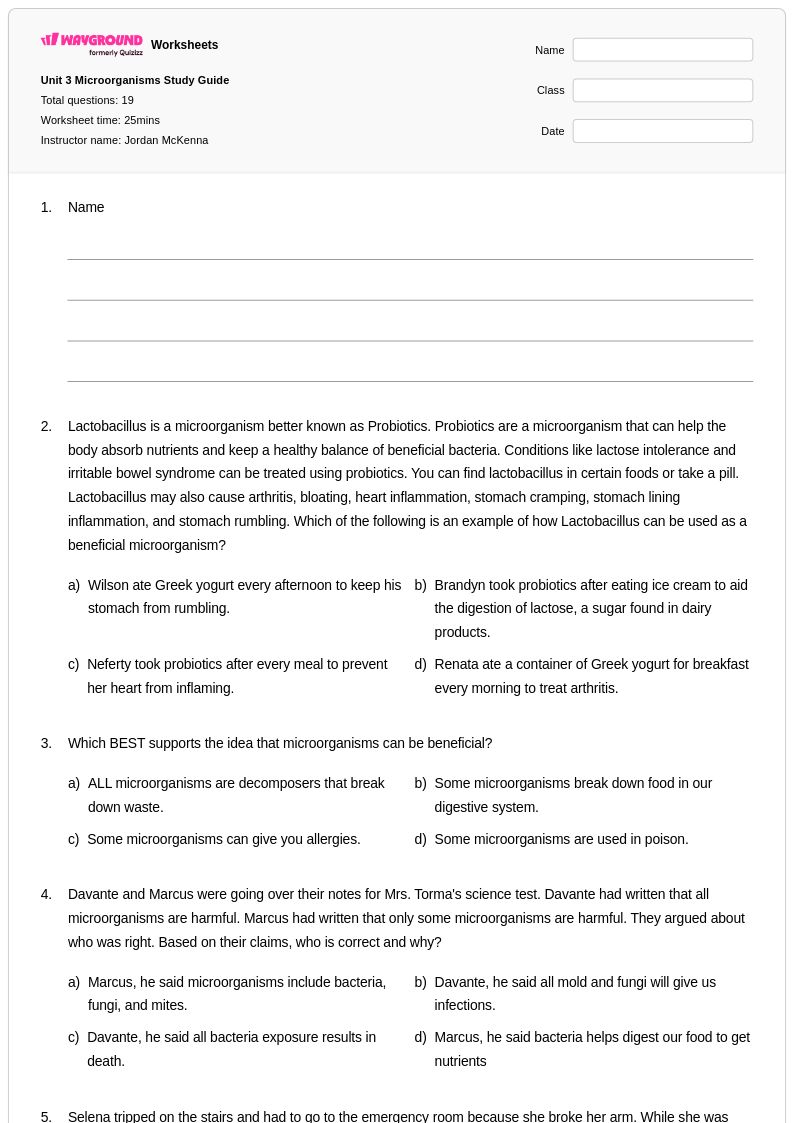
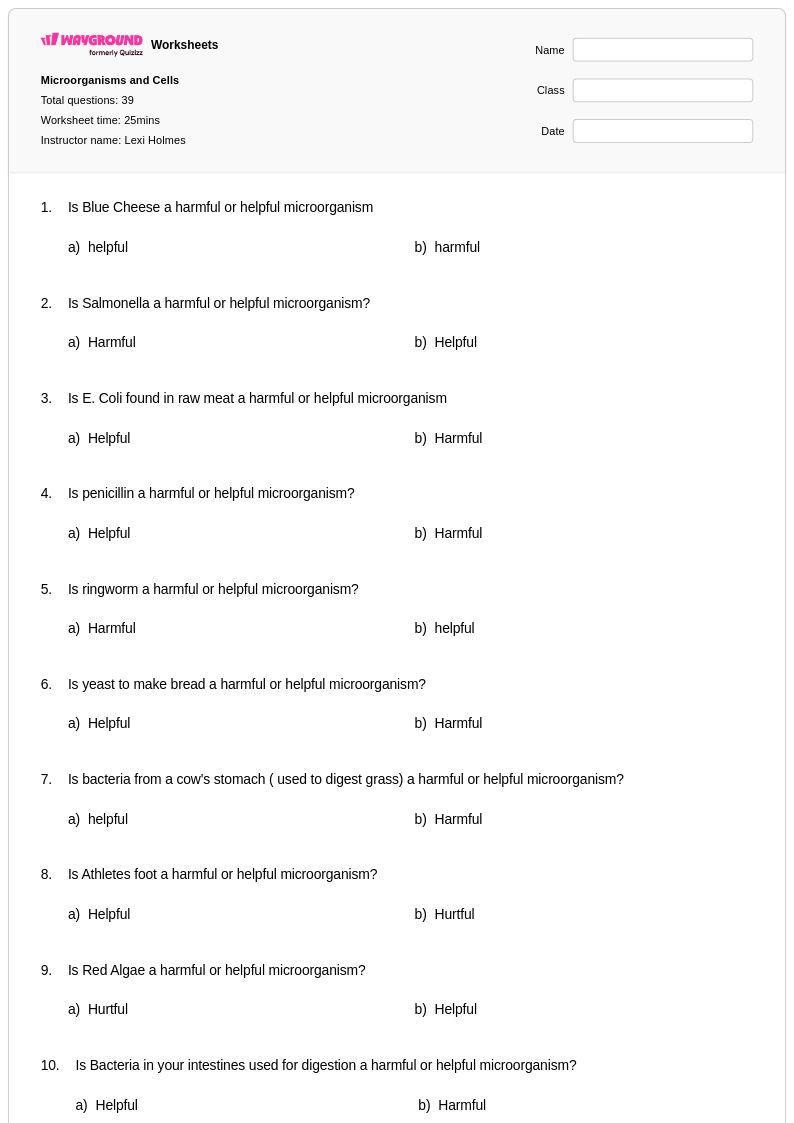
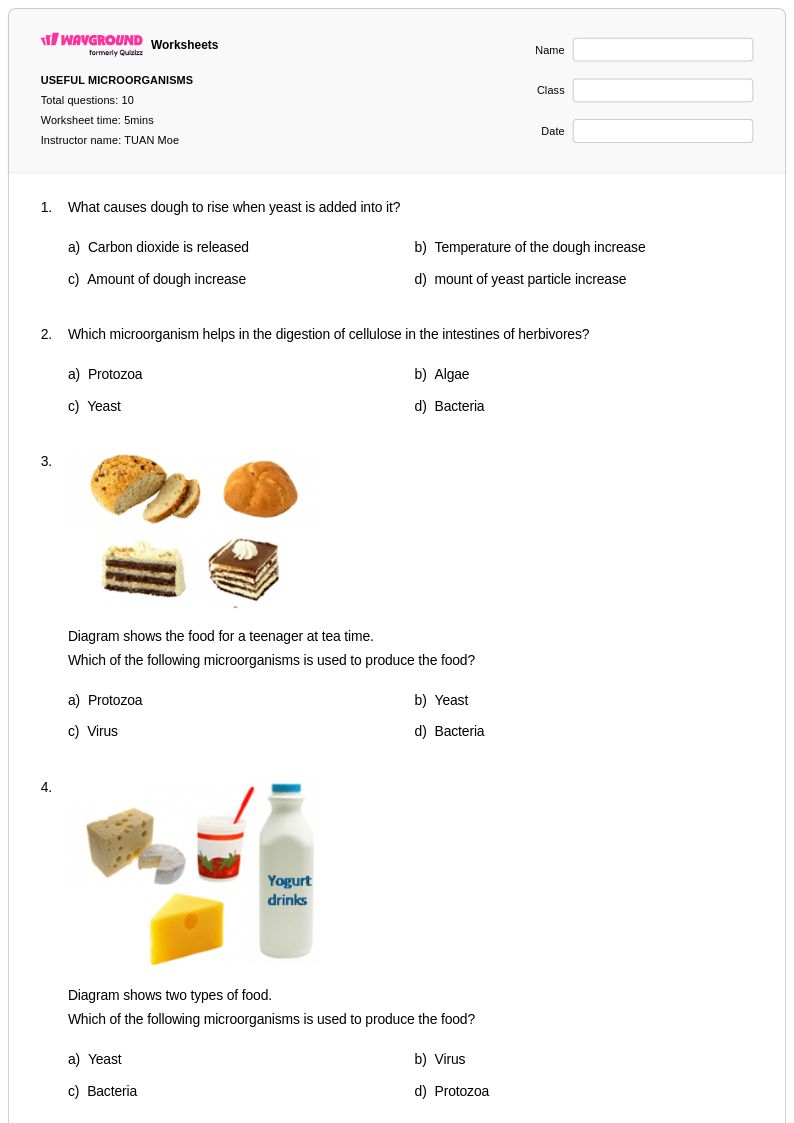
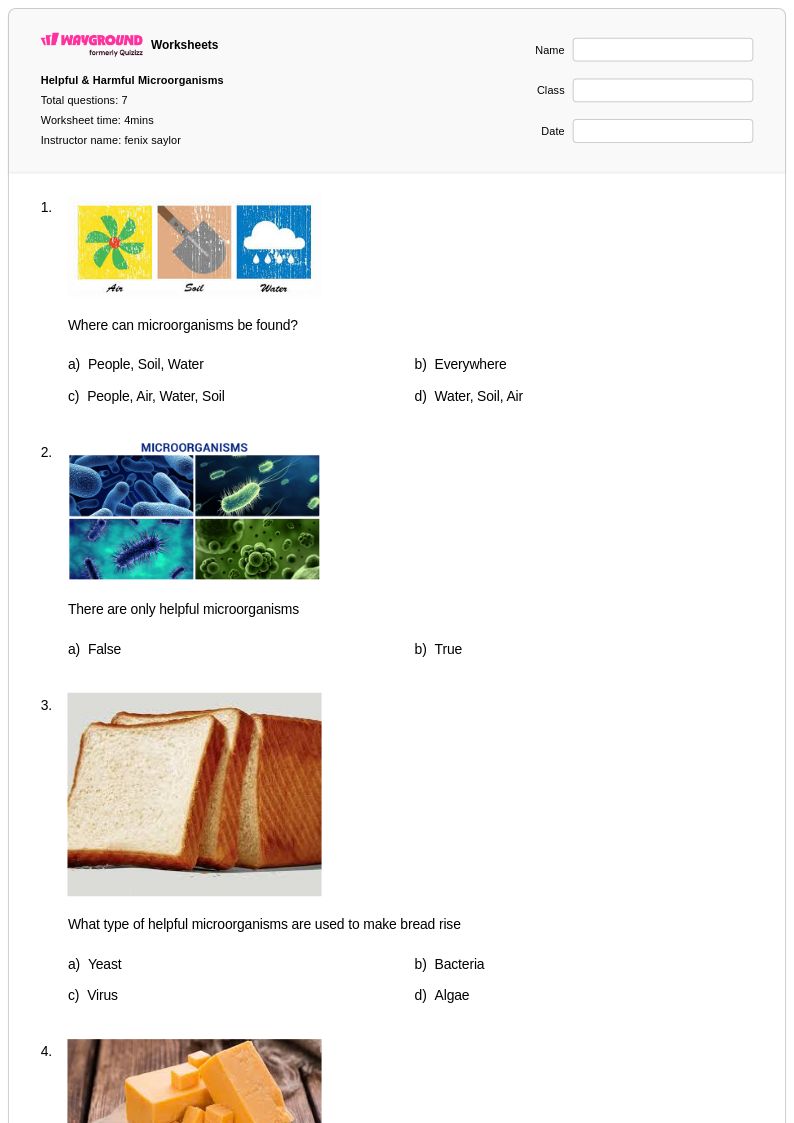
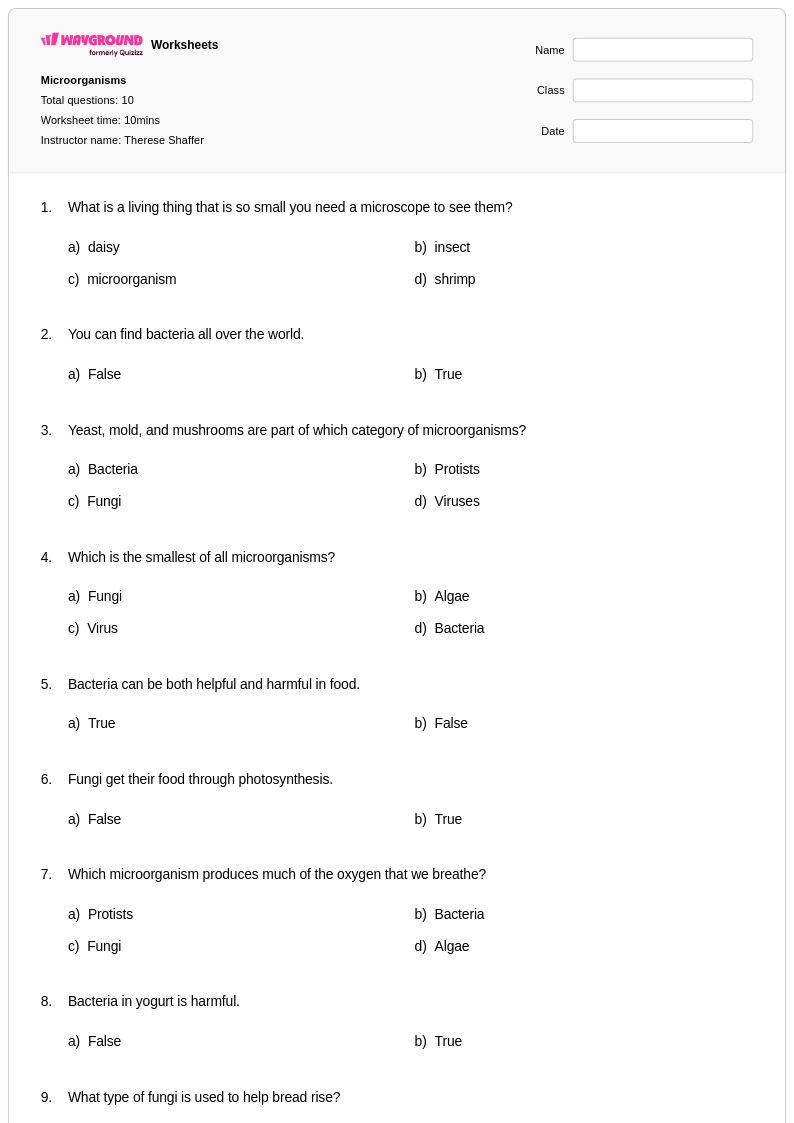
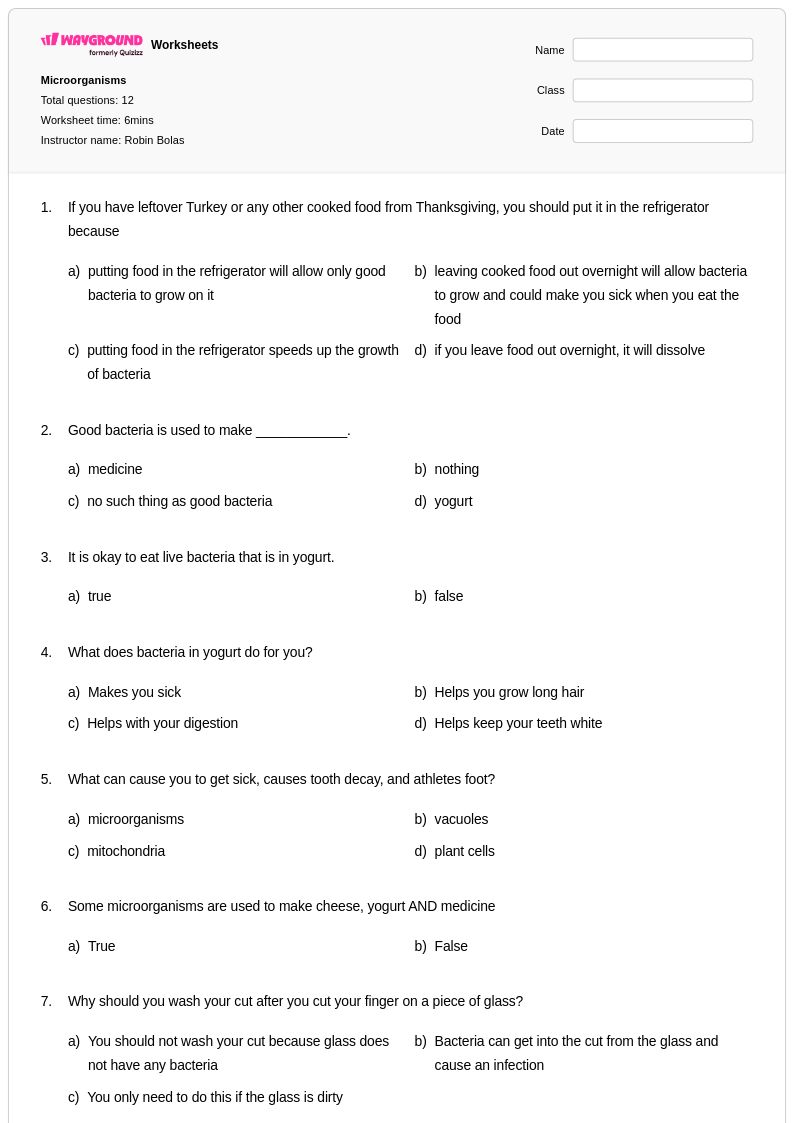
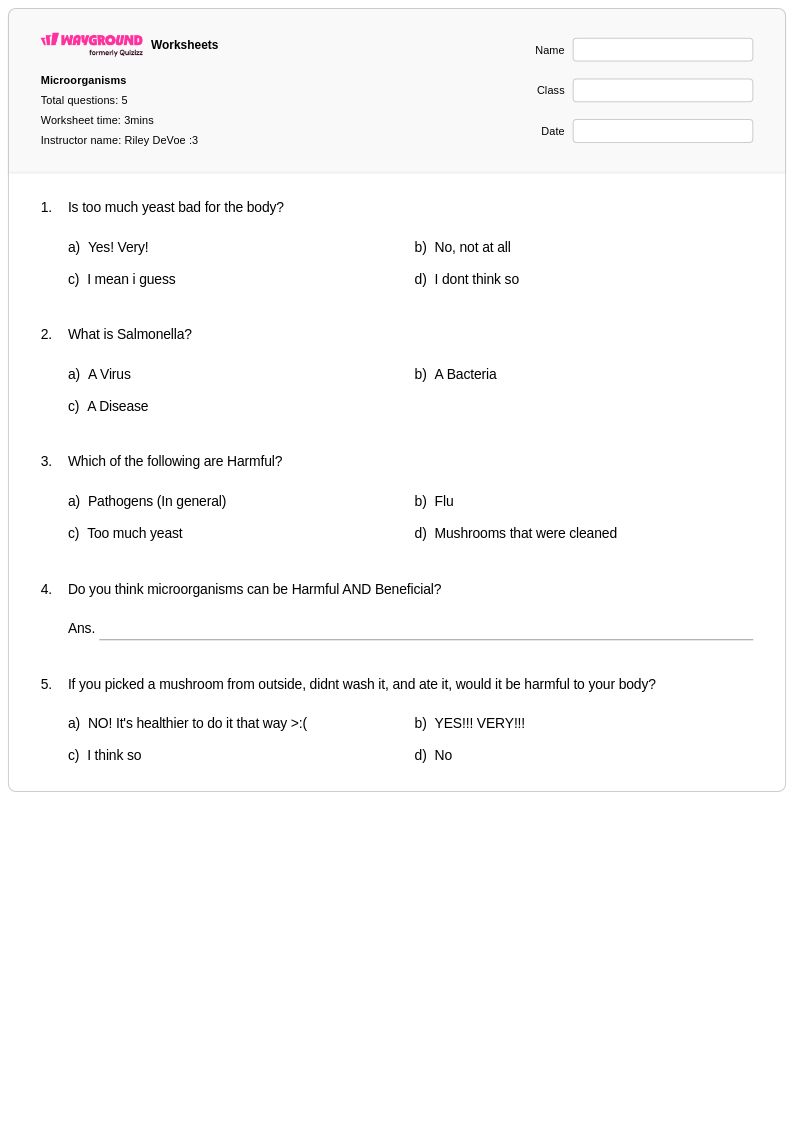
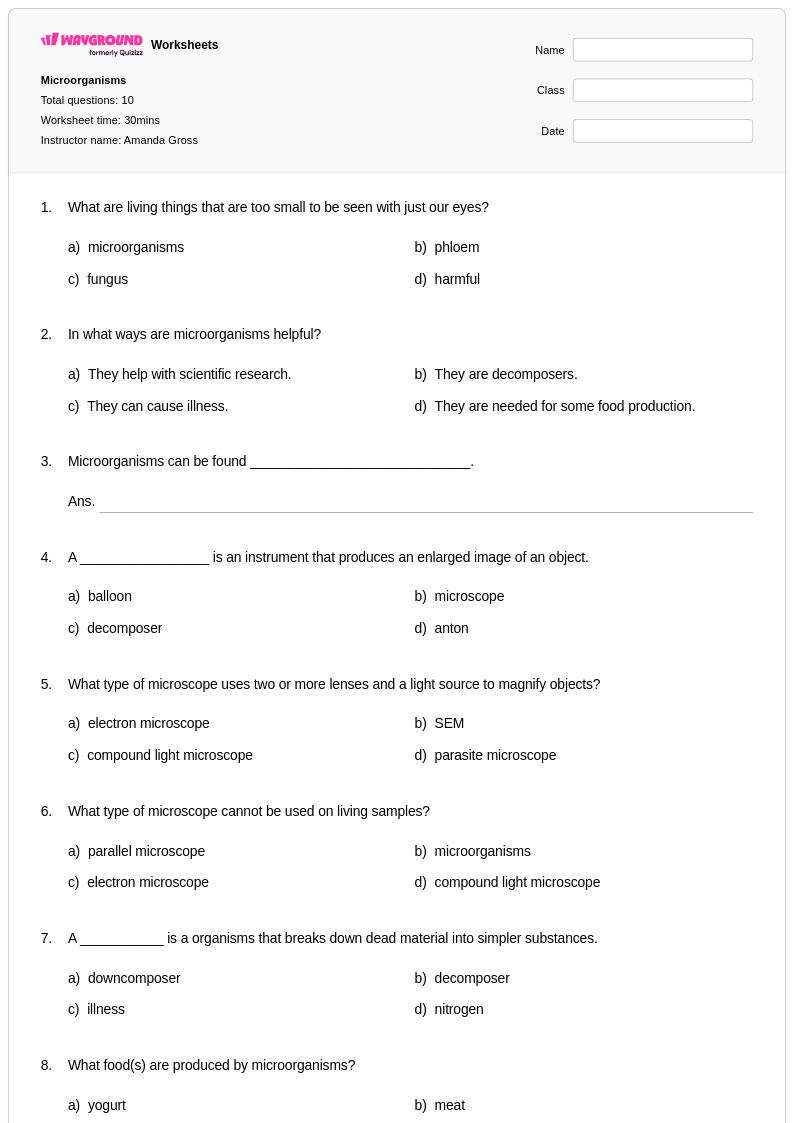
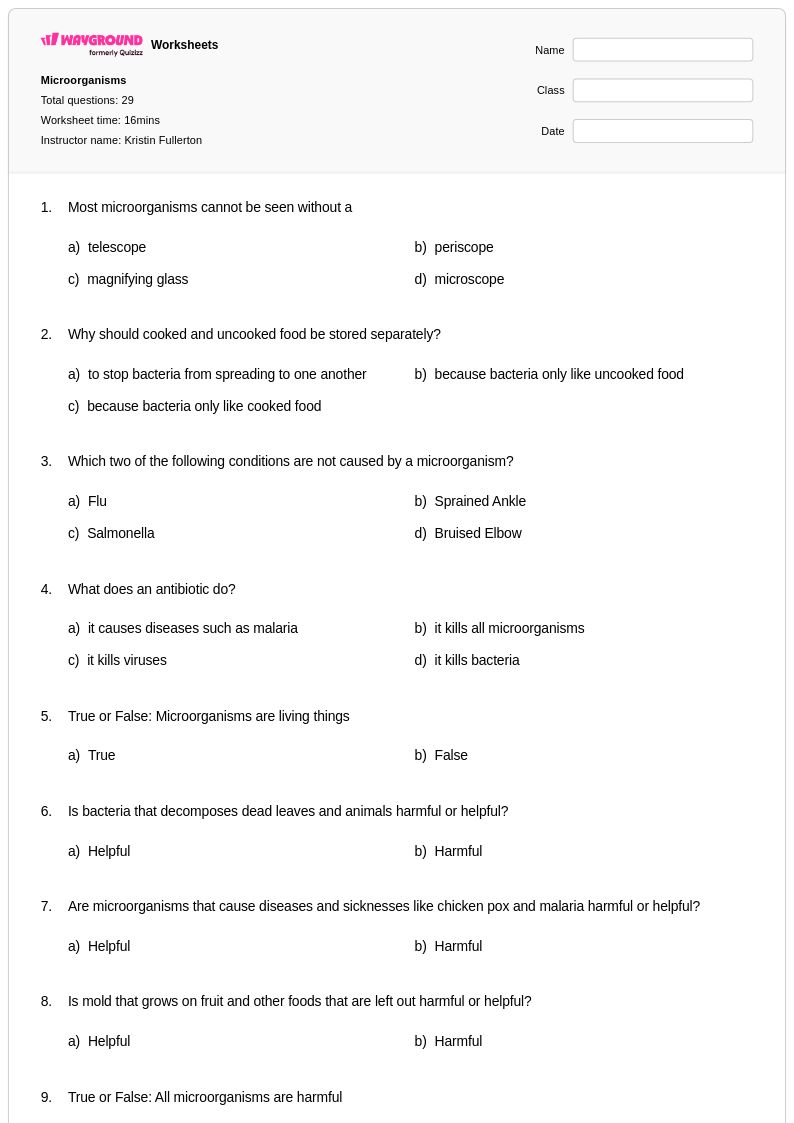
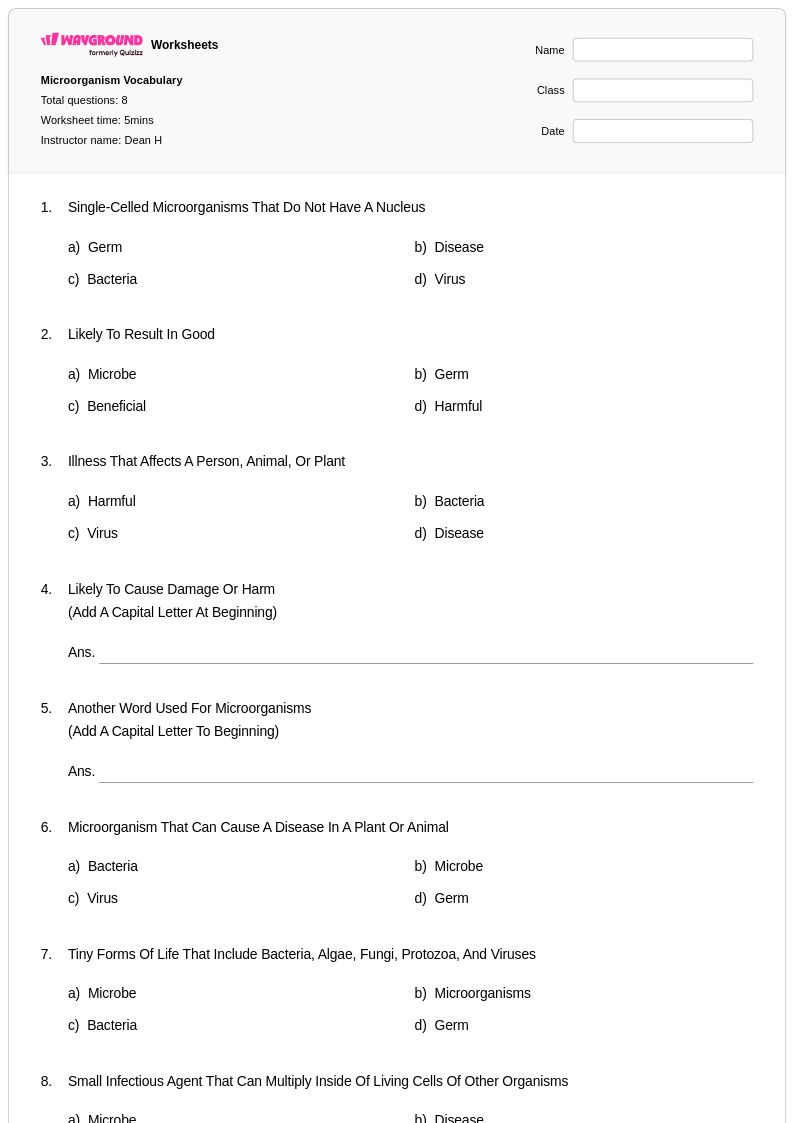
Microorganisms worksheets for Class 5 through Wayground offer comprehensive exploration of the invisible world that surrounds students every day. These educational resources strengthen fundamental scientific observation skills while introducing young learners to bacteria, viruses, fungi, and other microscopic life forms that play crucial roles in ecosystems and human health. The practice problems guide students through identifying different types of microorganisms, understanding their beneficial and harmful effects, and recognizing their presence in everyday situations from food production to disease prevention. Each printable worksheet includes detailed answer keys that support both independent learning and teacher-guided instruction, with free pdf formats making these resources accessible for classroom use, homework assignments, and supplementary study materials.
Wayground's extensive collection of teacher-created microorganisms worksheets provides educators with millions of expertly designed resources that align with Class 5 science standards and learning objectives. The platform's robust search and filtering capabilities allow teachers to quickly locate materials that match specific curriculum requirements, whether focusing on microbial diversity, the role of microorganisms in decomposition, or basic microscopy skills. These differentiation tools enable instructors to customize content for varying ability levels within their classrooms, supporting both remediation for struggling learners and enrichment opportunities for advanced students. Available in both printable pdf formats and interactive digital versions, these worksheet collections streamline lesson planning while providing flexible options for skill practice, formative assessment, and reinforcing key concepts about the microscopic world that Class 5 students are just beginning to discover.
FAQs
How do I teach microorganisms to middle or high school students?
Start by establishing the four major groups — bacteria, viruses, fungi, and protists — and use visual comparisons of their structural features before moving into function and ecological role. Anchoring instruction in real-world examples, such as bacterial roles in digestion or viral mechanisms of infection, helps students build conceptual hooks for abstract content. Structured practice with identification and classification tasks reinforces these distinctions before introducing more complex topics like metabolic diversity or reproductive strategies.
What exercises help students practice identifying and classifying microorganisms?
Effective practice exercises include characteristic matching tasks (pairing features like cell wall composition or reproduction method to the correct microbial group), diagram labeling of bacterial and viral structures, and short-answer questions requiring students to distinguish between eukaryotic and prokaryotic microorganisms. Exercises that require students to apply classification criteria to unfamiliar examples are especially useful for moving beyond rote memorization toward genuine conceptual understanding.
What misconceptions do students commonly have about microorganisms?
One of the most common misconceptions is that all microorganisms are harmful — students often overlook the essential beneficial roles of bacteria in nutrient cycling, food production, and human gut health. Another frequent error is conflating bacteria and viruses, with students incorrectly attributing cellular characteristics to viruses or assuming viruses can reproduce independently. Students also tend to confuse fungi with plants, particularly when it comes to cell wall composition and nutritional strategies.
How can I differentiate microorganisms instruction for students at different skill levels?
For struggling learners, reduce cognitive load by scaffolding classification tasks — begin with two groups before introducing all four, and use graphic organizers to make structural comparisons explicit. For advanced learners, extend practice into metabolic diversity, antibiotic resistance mechanisms, or the ecological impact of microbial communities. On Wayground, teachers can apply accommodations such as read aloud, reduced answer choices, and extended time to individual students, ensuring that differentiation is built into the delivery without disrupting the rest of the class.
How do I use Wayground's microorganisms worksheets in my classroom?
Wayground's microorganisms worksheets are available as both printable PDFs and digital formats, making them usable in traditional classroom settings and technology-integrated environments alike. Teachers can assign them as independent practice, homework, or formative assessment, and can also host them as a live quiz directly on the Wayground platform. Each worksheet includes a complete answer key, so grading and feedback are built into the resource.
What topics in microbiology are typically covered in a microorganisms worksheet?
A well-designed microorganisms worksheet typically covers microbial classification and identification, structural features such as cell wall composition and organelle presence, reproductive strategies (binary fission, budding, spore formation), and the roles of microorganisms in human health and environmental systems. Practice problems often address the distinction between beneficial and harmful microorganisms, making these worksheets suitable for both introductory biology units and targeted microbiology instruction.