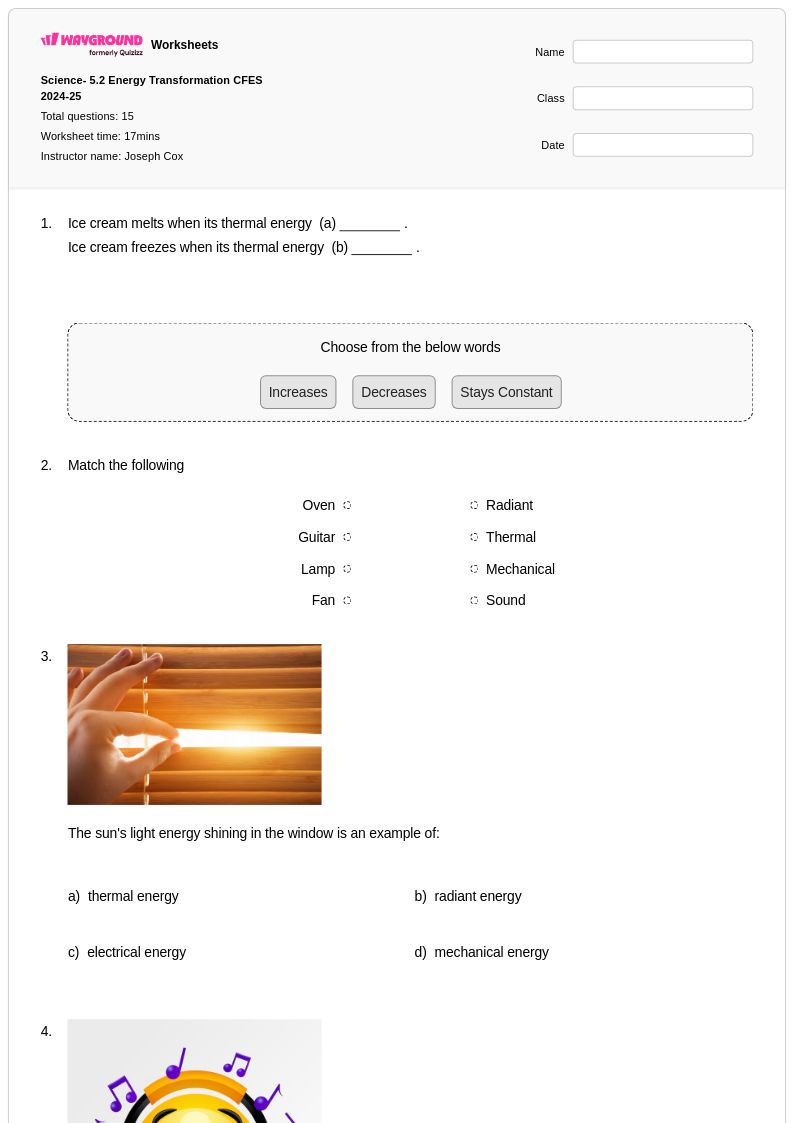
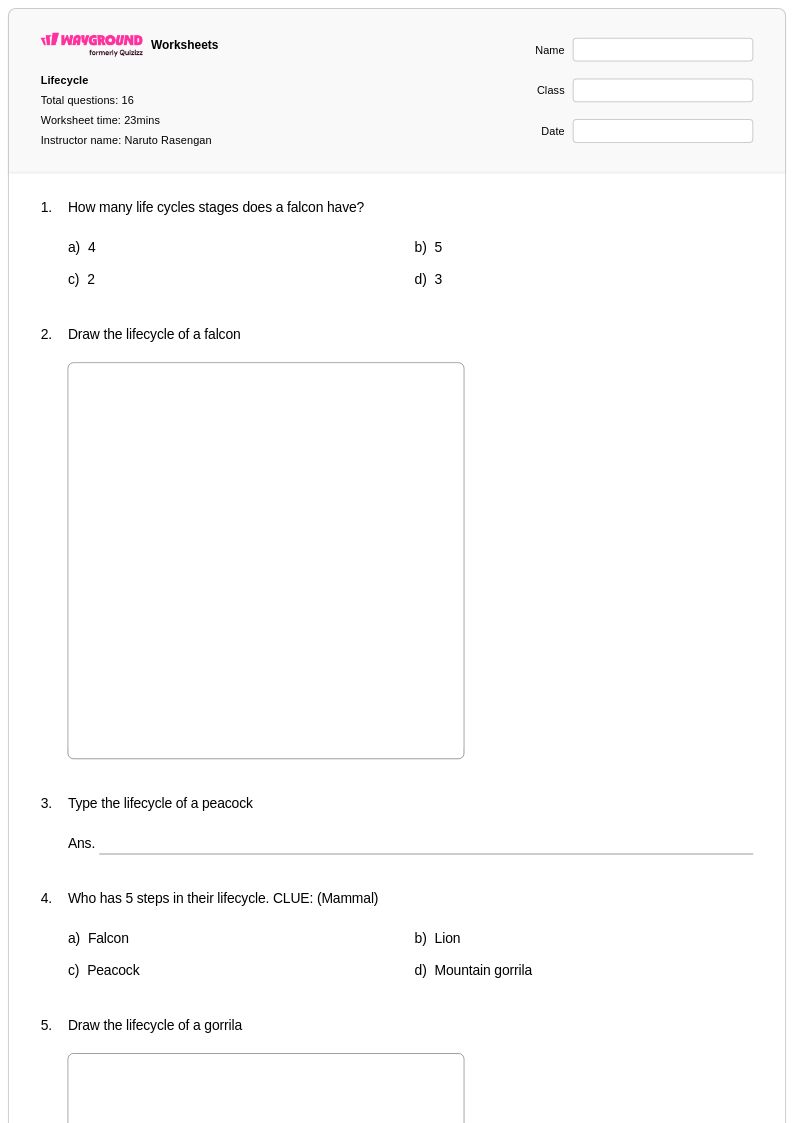
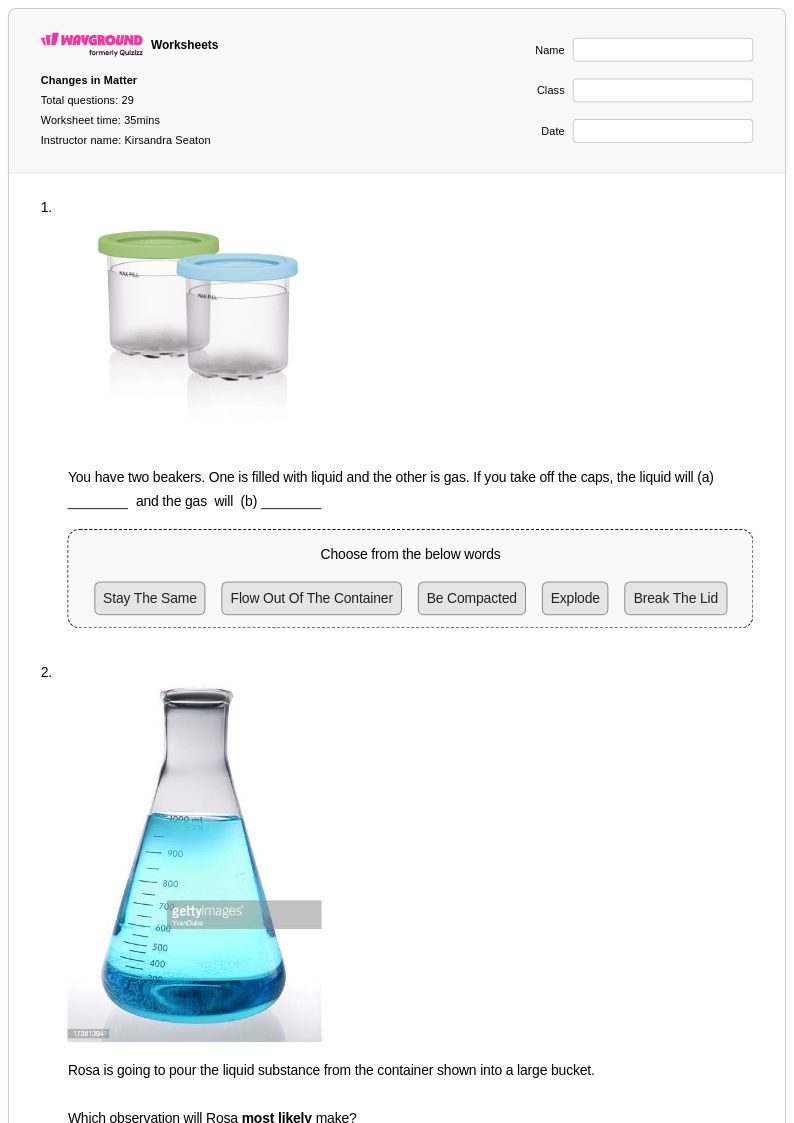
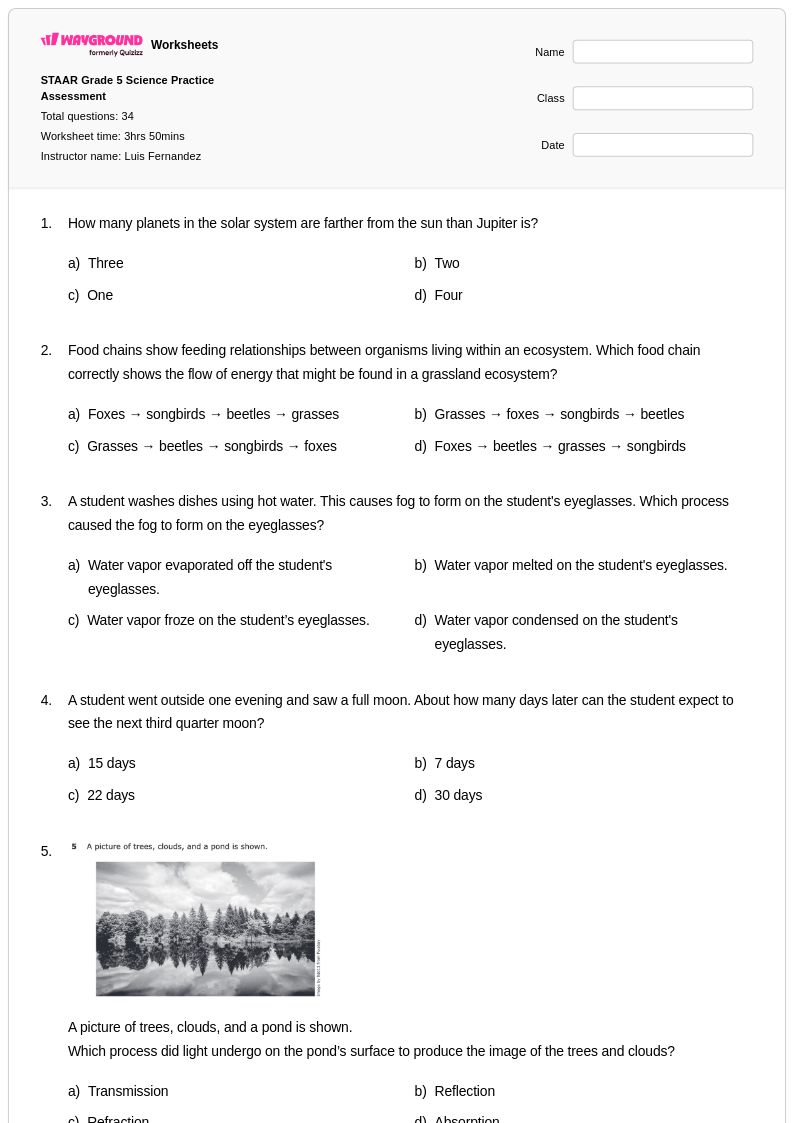
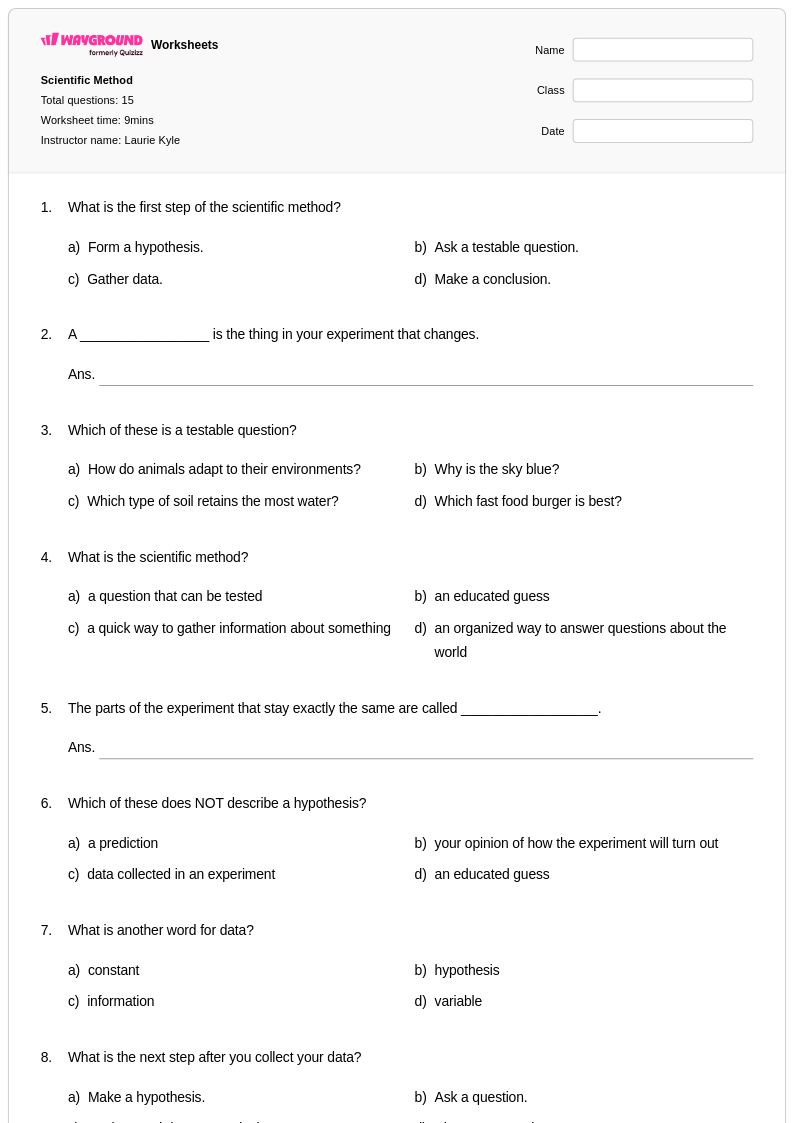
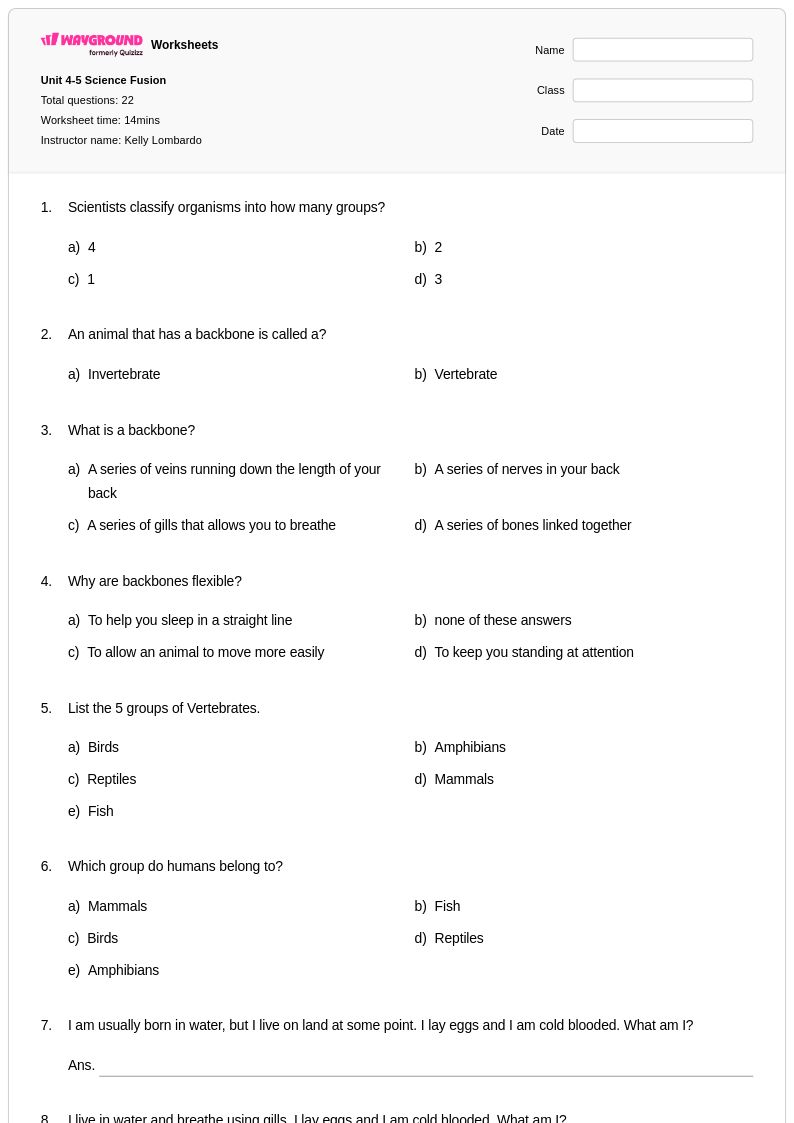
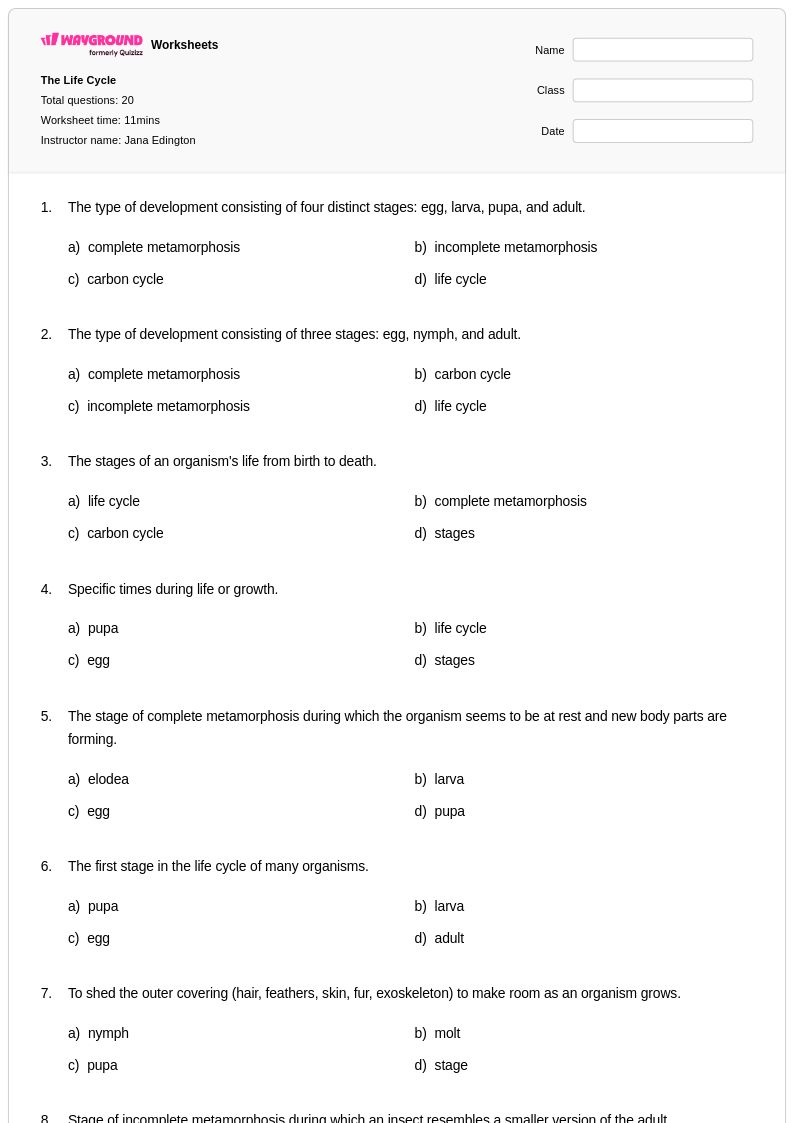
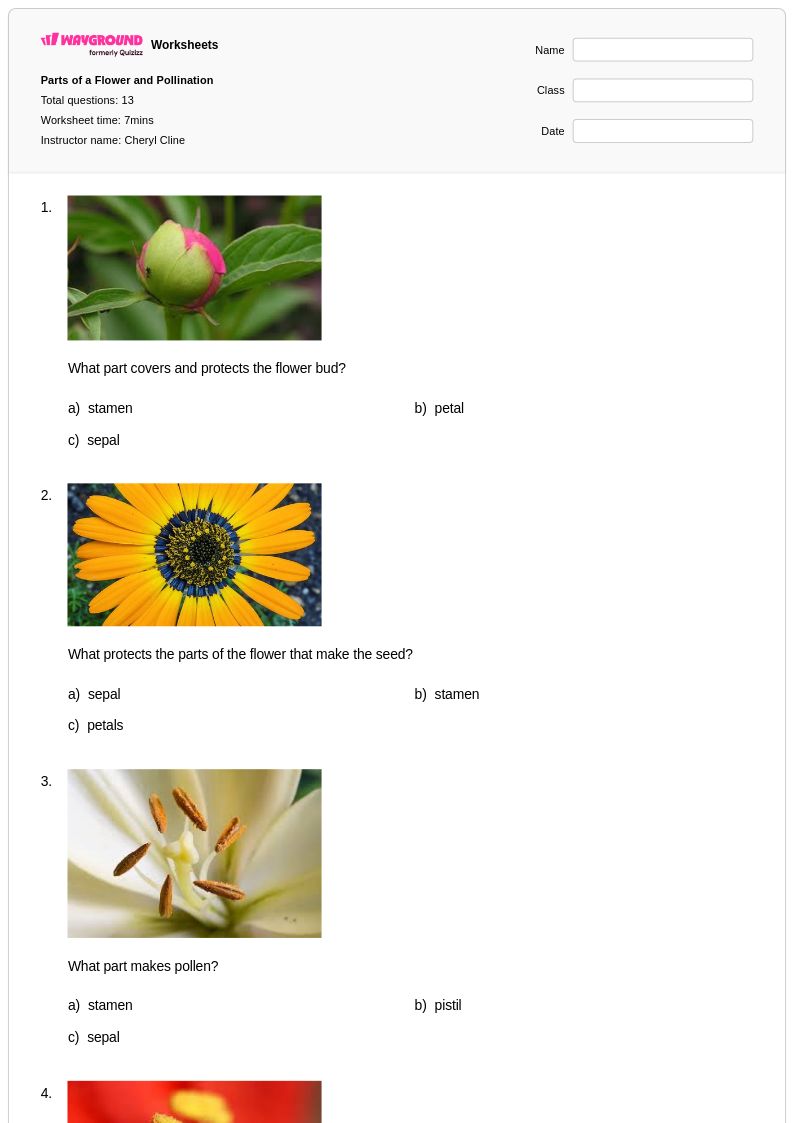
Free Printable Parts of an Egg Worksheets for Class 5
Explore Class 5 biology worksheets and printables focusing on parts of an egg, featuring free PDF practice problems and answer keys to help students master egg anatomy and structure fundamentals.
Explore printable Parts of an Egg worksheets for Class 5
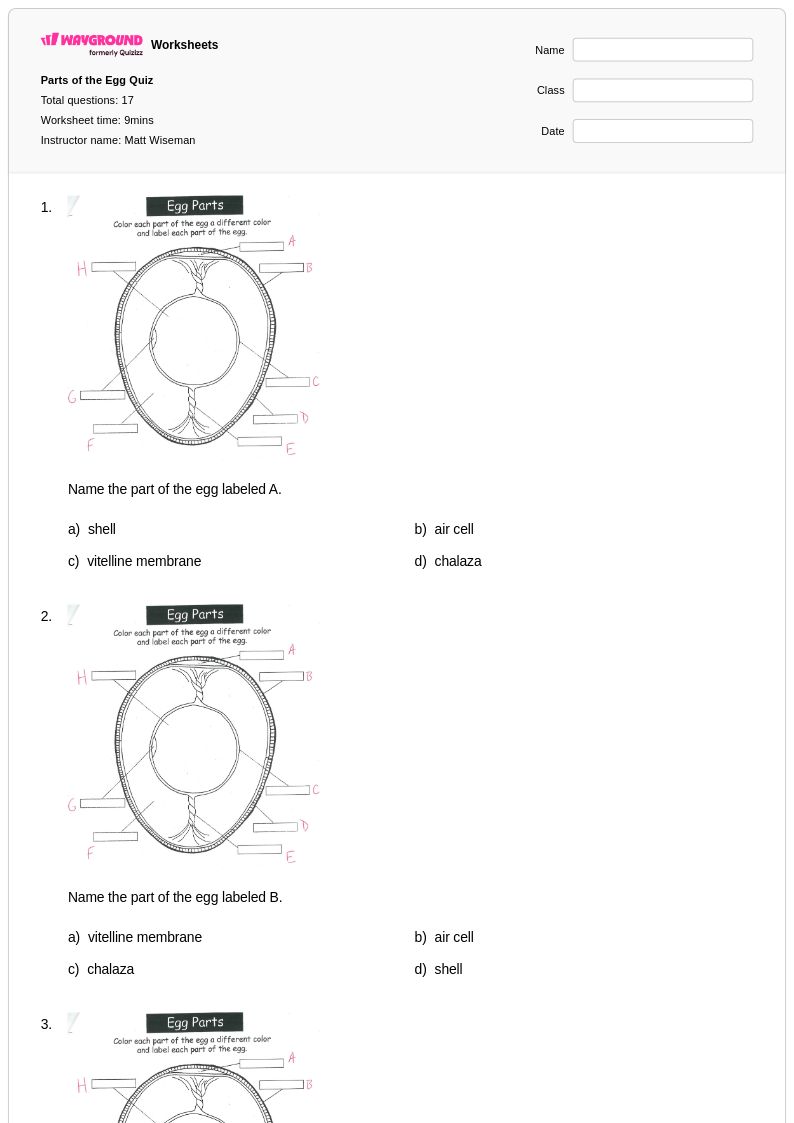
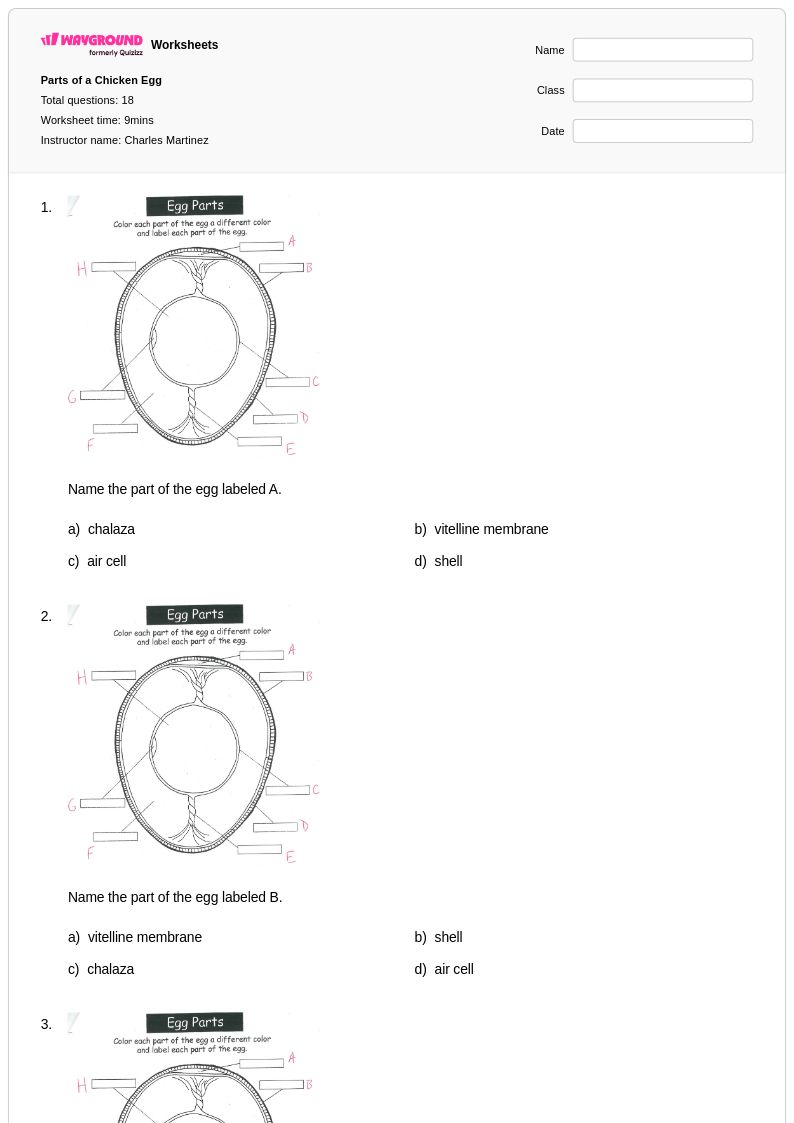
Parts of an egg worksheets for Class 5 students provide comprehensive exploration of egg anatomy through detailed diagrams, labeling exercises, and scientific observation activities. These educational resources strengthen students' understanding of biological structures by having them identify key components such as the shell, albumen, yolk, chalaza, and air cell while learning their specific functions in embryonic development. The worksheets combine visual learning with hands-on practice problems that encourage students to analyze cross-sectional diagrams, complete vocabulary matching exercises, and answer questions about how each egg part contributes to protecting and nourishing developing chicks. Teachers can access these printable resources with complete answer keys, making assessment and guided instruction more efficient while ensuring students grasp fundamental concepts about reproductive biology and animal development.
Wayground, formerly Quizizz, supports educators with an extensive collection of teacher-created worksheets covering egg anatomy and related biological concepts, drawn from millions of educational resources developed by classroom professionals worldwide. The platform's advanced search and filtering capabilities allow teachers to quickly locate grade-appropriate materials that align with science standards while offering differentiation tools to accommodate diverse learning needs within Class 5 classrooms. These worksheet collections are available in both printable PDF formats for traditional classroom use and digital formats for interactive learning, enabling flexible customization based on instructional goals and student requirements. Teachers utilize these resources for lesson planning, targeted remediation for struggling learners, enrichment activities for advanced students, and regular skill practice that reinforces understanding of biological structures and their functions in living organisms.
FAQs
How do I teach the parts of an egg to students?
Start by using a labeled cross-sectional diagram to introduce each structure — the shell, albumen, yolk, chalaza, air cell, and any embryonic structures — before connecting each part to its specific function in protecting and nourishing a developing embryo. Hands-on observation using a real egg or a high-quality diagram helps students anchor abstract vocabulary to visible structures. Having students label blank diagrams immediately after instruction reinforces retention and surfaces any early misconceptions about structure names or locations.
What exercises help students practice identifying parts of an egg?
Labeling exercises using blank or partially completed diagrams are the most effective practice format for egg anatomy, as they require students to recall and place each structure rather than simply recognize it. Practice problems that ask students to match each part to its function — such as connecting the chalaza to its role in suspending the yolk — deepen conceptual understanding beyond memorization. Repeated exposure through both diagram-based and written-response formats solidifies the vocabulary and functional relationships students need for assessments.
What mistakes do students commonly make when learning egg anatomy?
Students frequently confuse the albumen (egg white) with the yolk, especially when diagrams are not clearly color-coded or labeled. The chalaza is often overlooked or misidentified as part of the membrane rather than recognized as the twisted cord that anchors the yolk. Students also struggle to distinguish between the inner and outer shell membranes, treating them as a single structure rather than two separate layers with distinct roles.
How do I use parts of an egg worksheets in my classroom?
Parts of an egg worksheets on Wayground are available as printable PDFs for traditional classroom use and in digital formats for technology-integrated learning environments, including the option to host them as a quiz directly on Wayground. Printable versions work well for guided note-taking during a lesson or as independent practice, while digital formats allow for self-paced completion and immediate feedback. Both formats include answer keys, making them suitable for in-class instruction, homework, or self-assessment activities.
How do parts of an egg worksheets support biology curriculum standards?
Egg anatomy worksheets directly support biology curriculum objectives related to cell structure, reproductive biology, and embryonic development by requiring students to identify, label, and explain the function of each egg component. Because the egg is a self-contained system for protecting and nourishing an embryo, it serves as a concrete model for teaching broader concepts such as nutrient transport, protective membranes, and developmental biology. These worksheets help teachers meet standards that address life science, organismal biology, and structure-function relationships.
How can I differentiate parts of an egg worksheets for students at different skill levels?
For students who need additional support, provide diagrams with word banks or partially completed labels to reduce cognitive load while still requiring active engagement with the content. Advanced students can be challenged with questions that go beyond identification, asking them to explain the functional significance of each structure or compare egg anatomy across different species. On Wayground, teachers can apply individual accommodations such as read aloud, reduced answer choices, and extended time to specific students, allowing the same worksheet to serve a range of learners simultaneously.