Free Printable Motion and Energy Worksheets for Class 8
Explore free Class 8 Motion and Energy physics worksheets and printables from Wayground that help students master fundamental concepts through engaging practice problems and comprehensive answer keys.
Explore printable Motion and Energy worksheets for Class 8
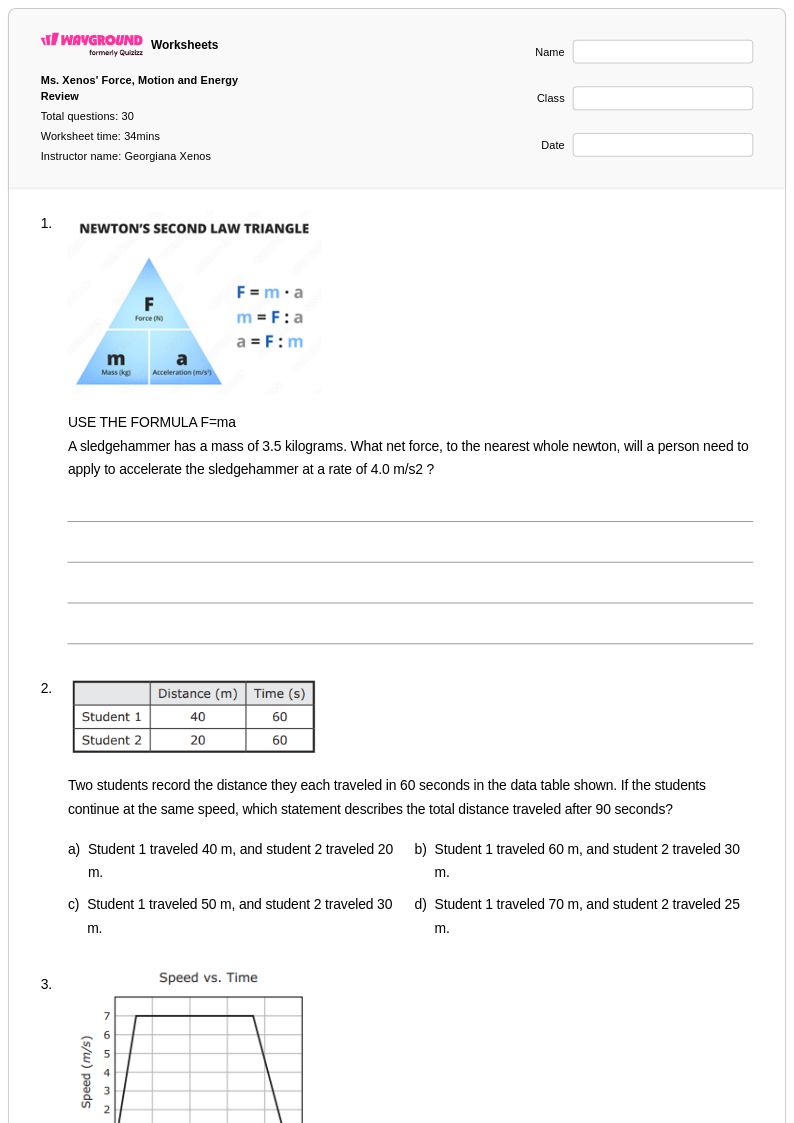
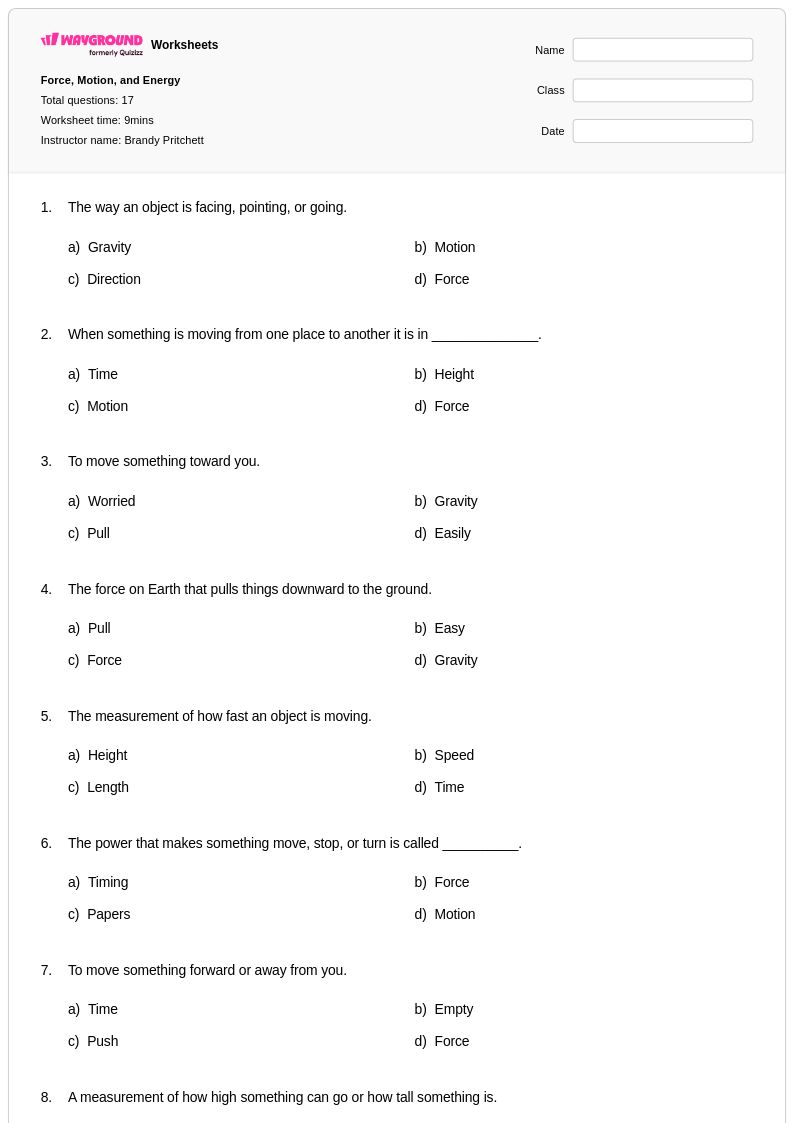
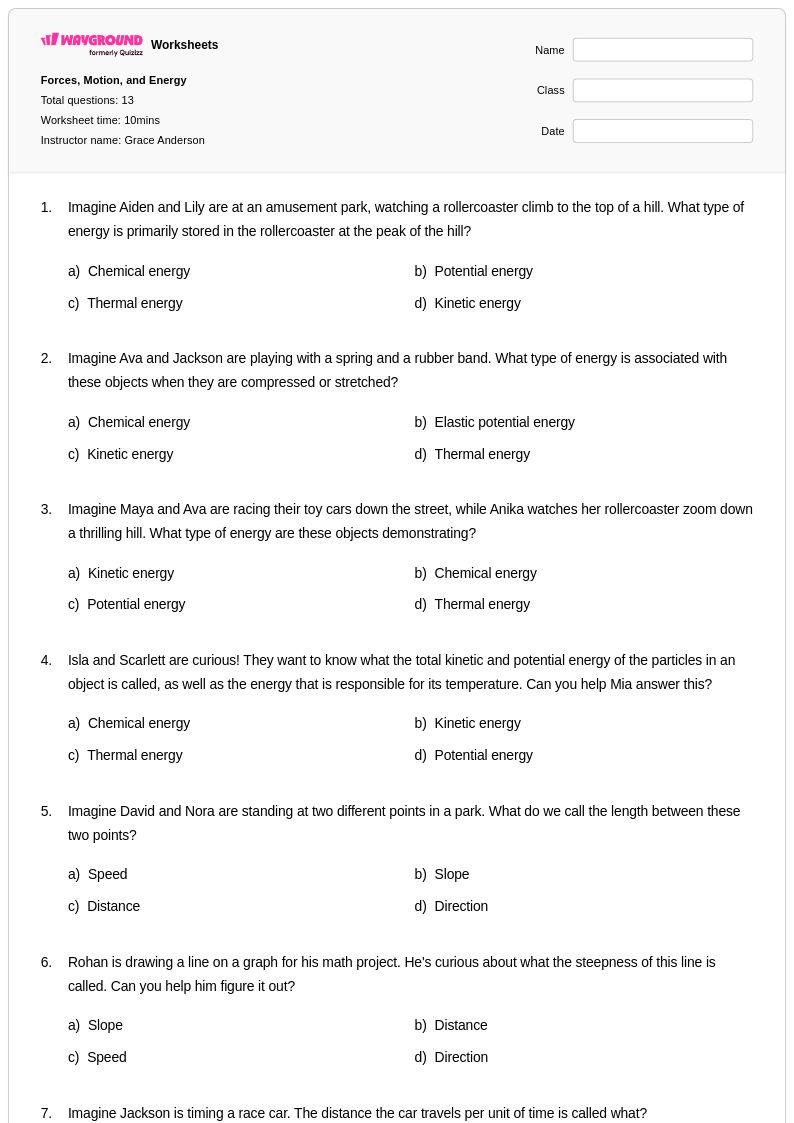
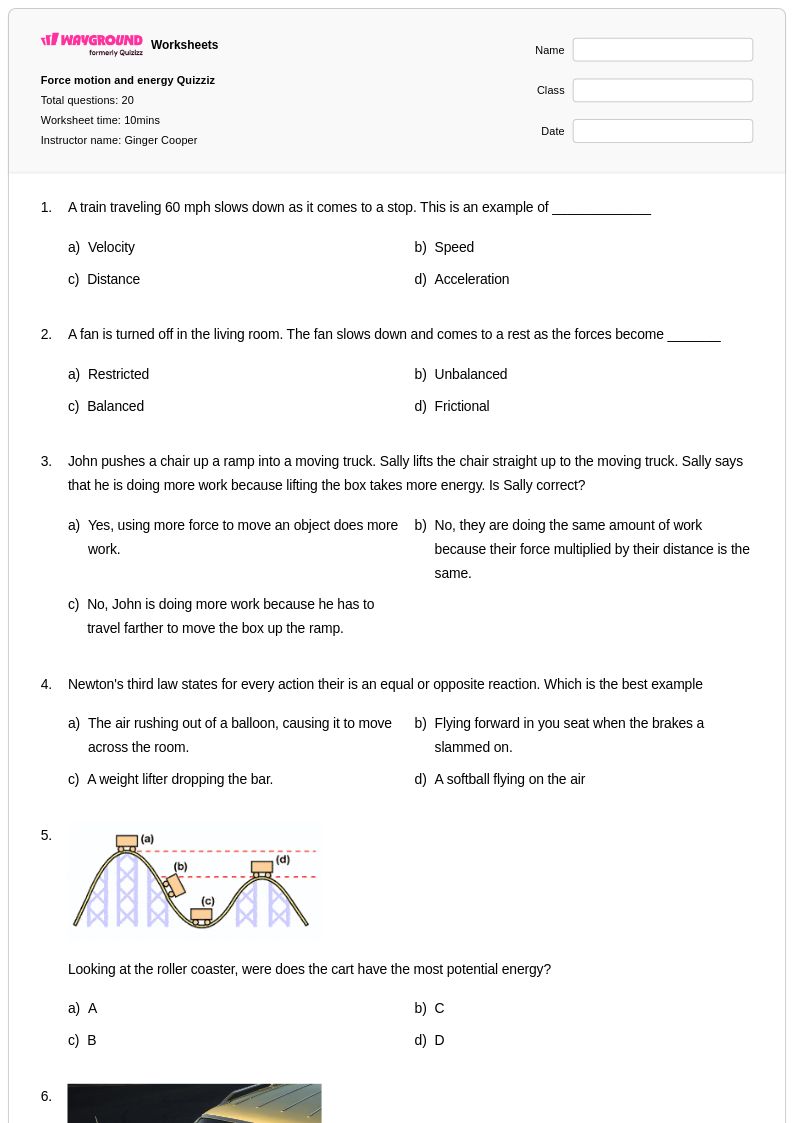
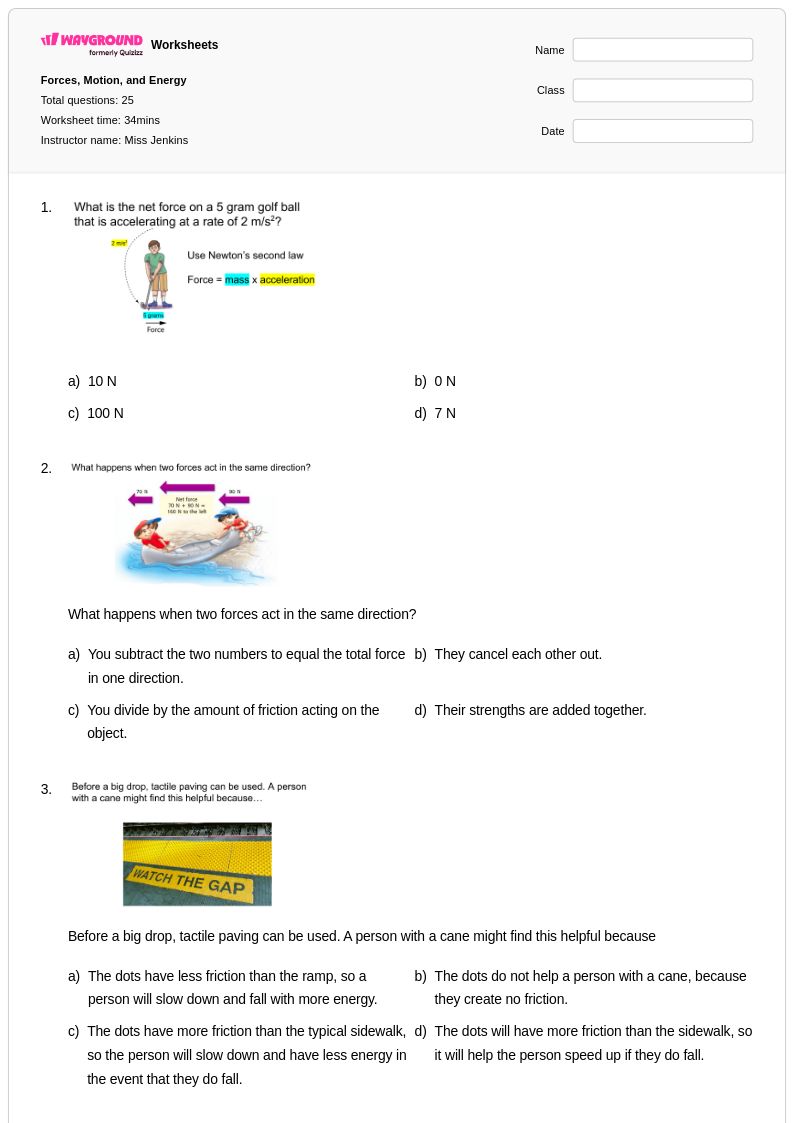
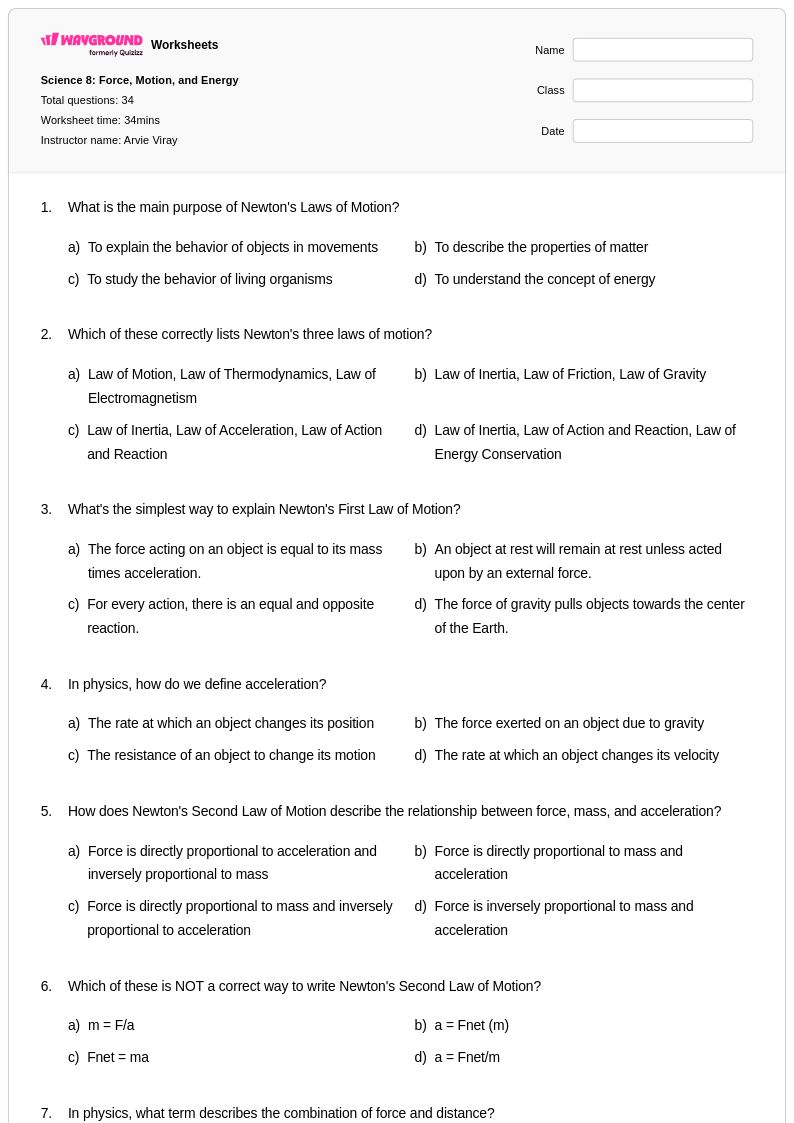
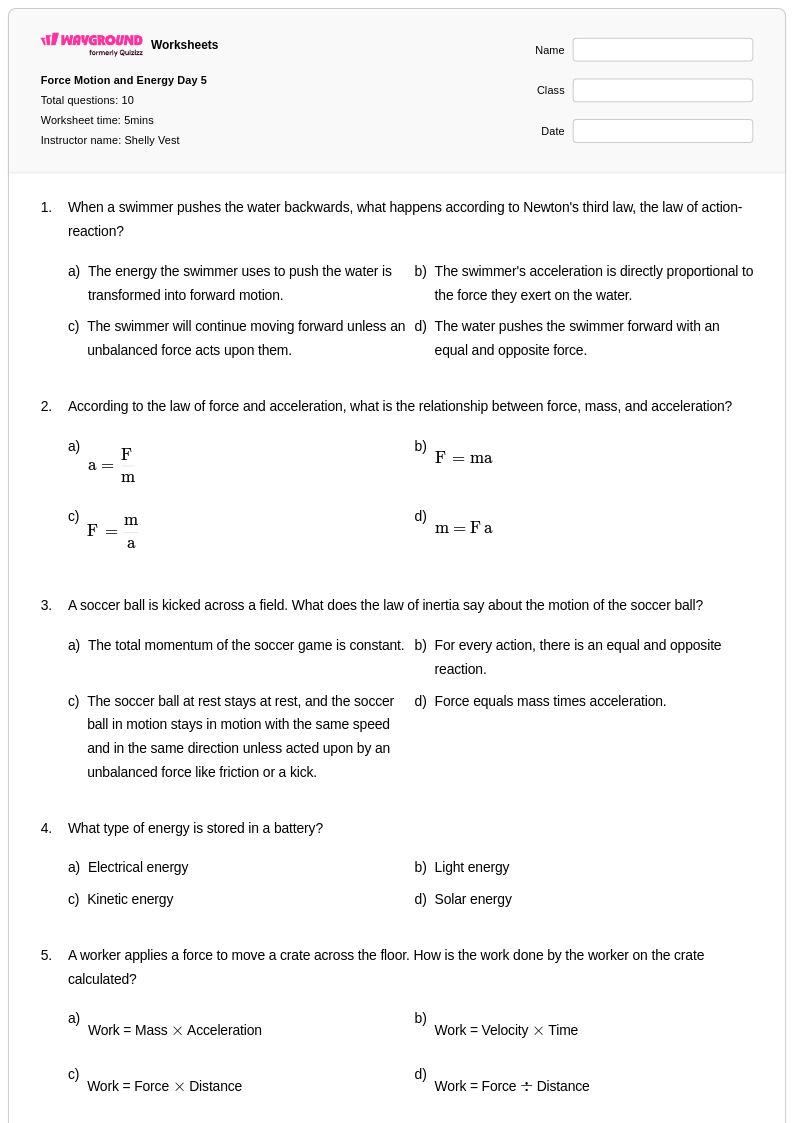
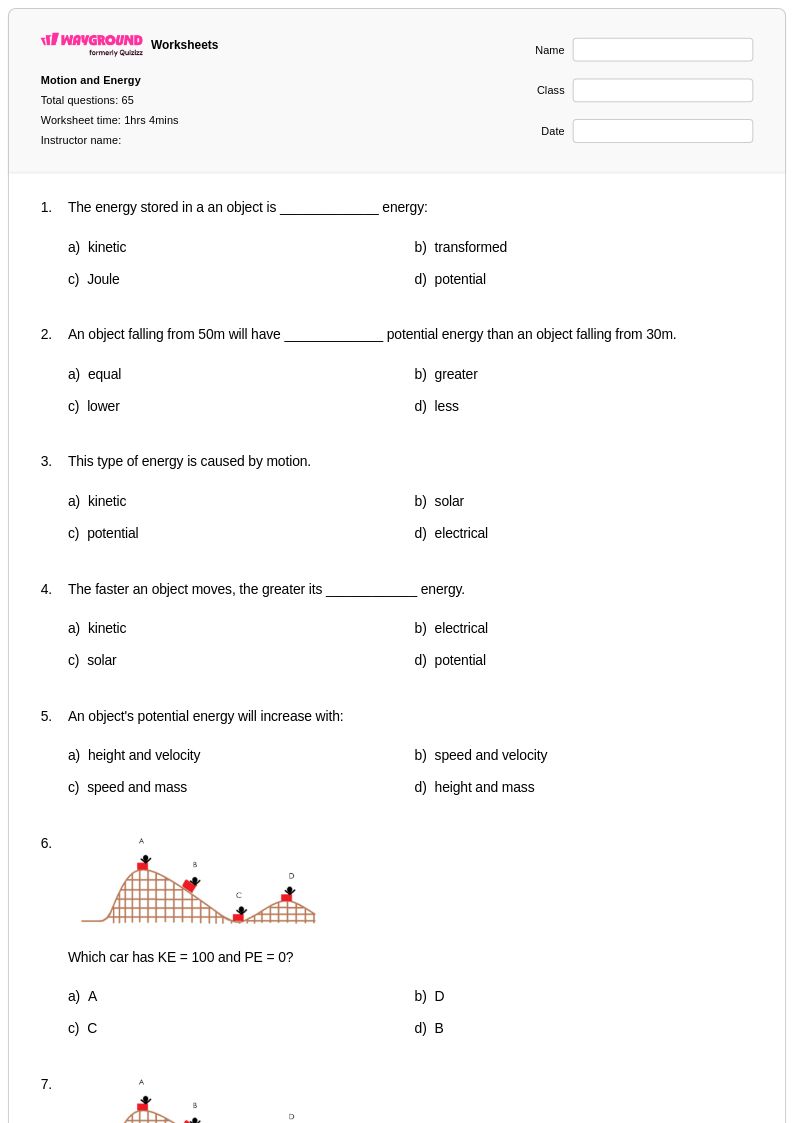
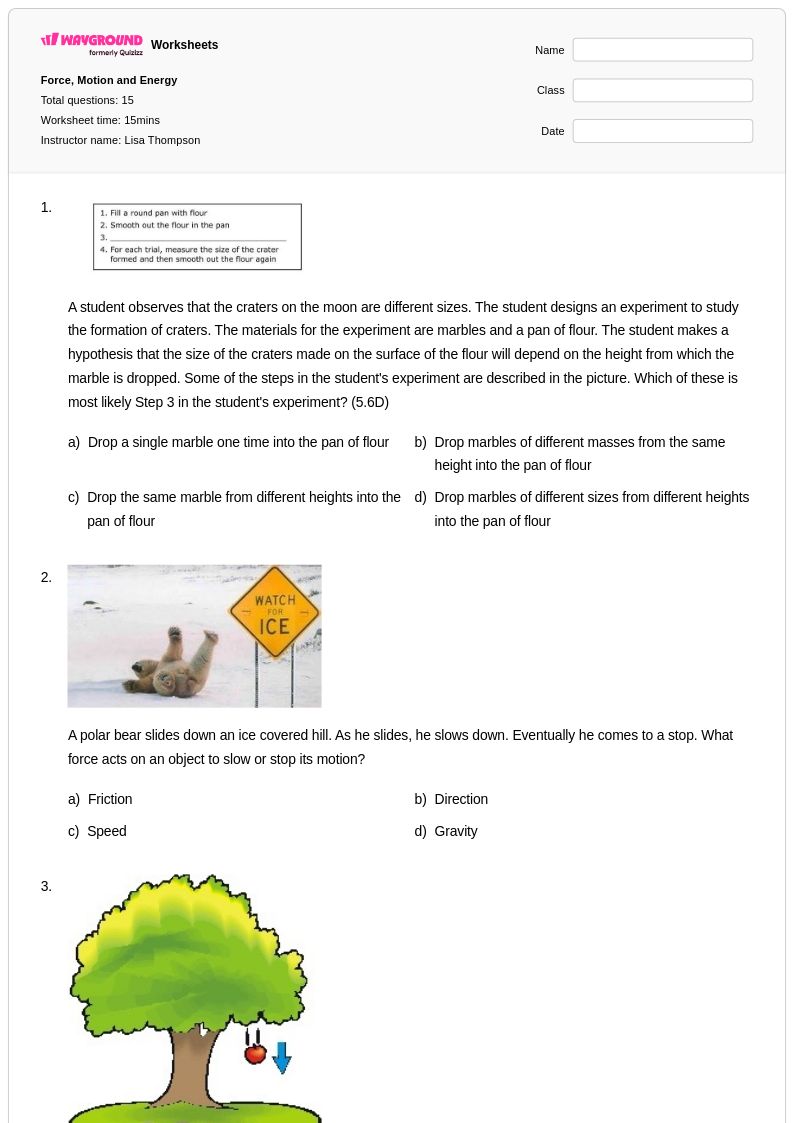
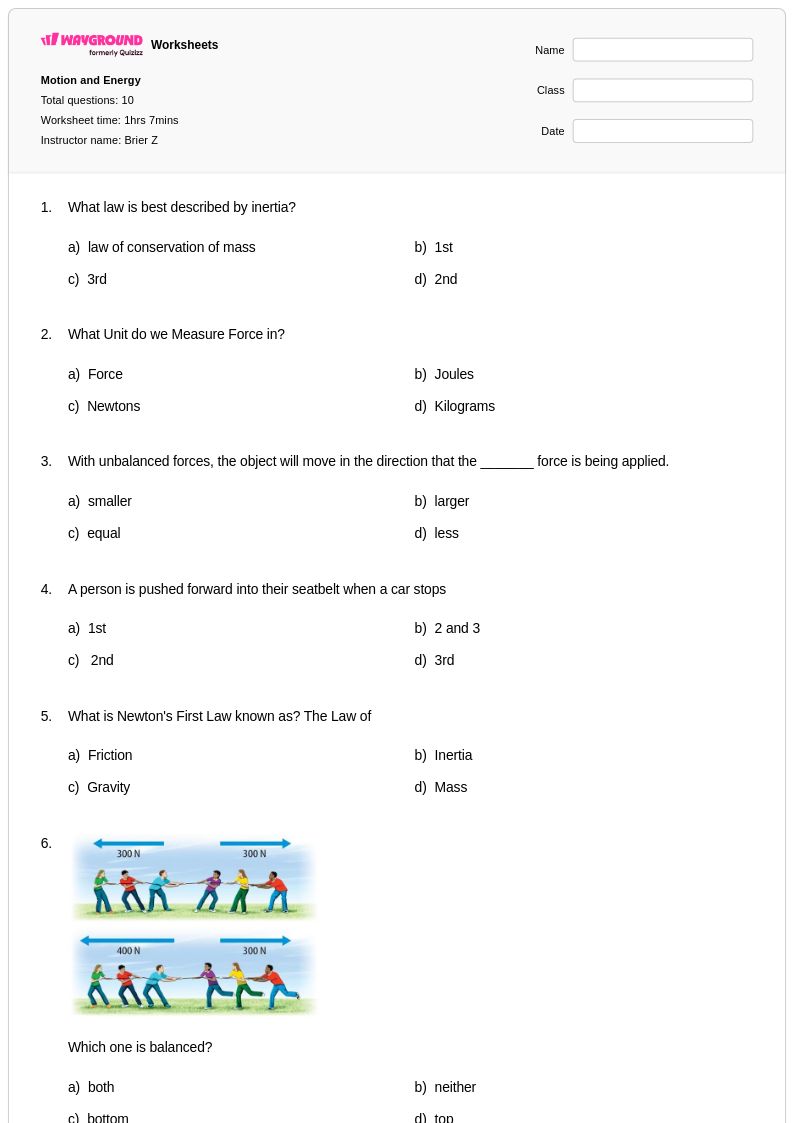
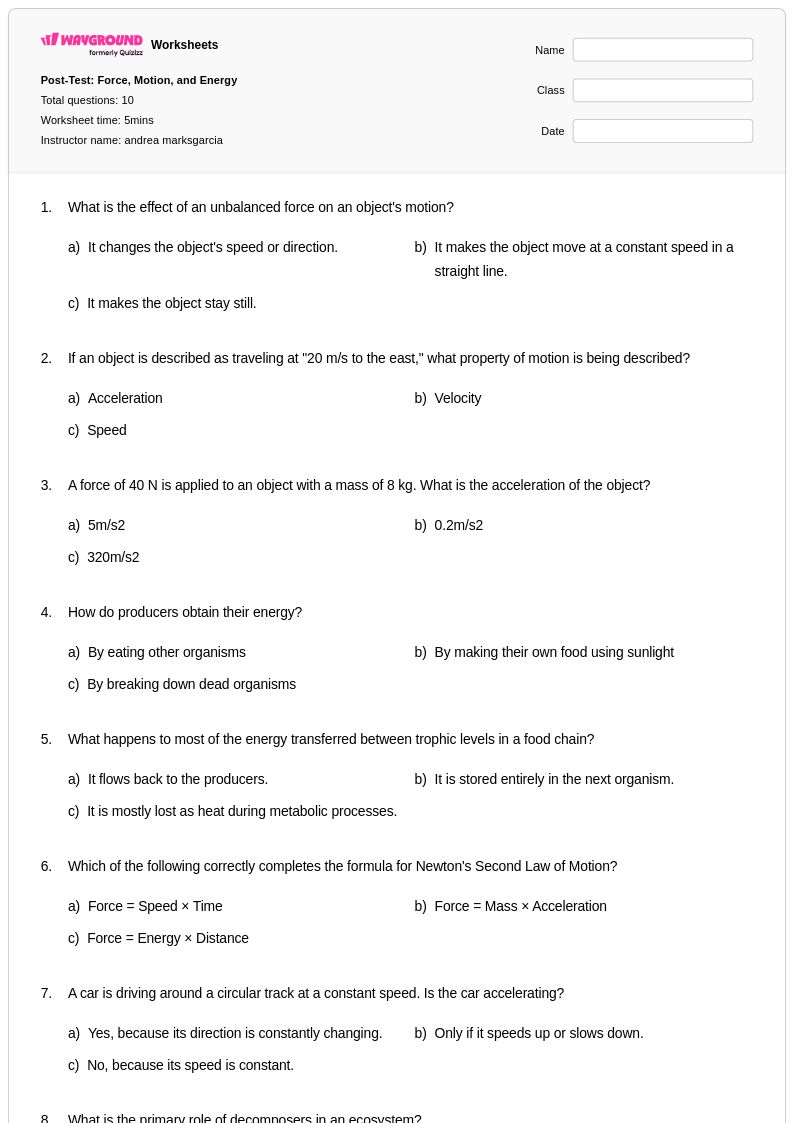
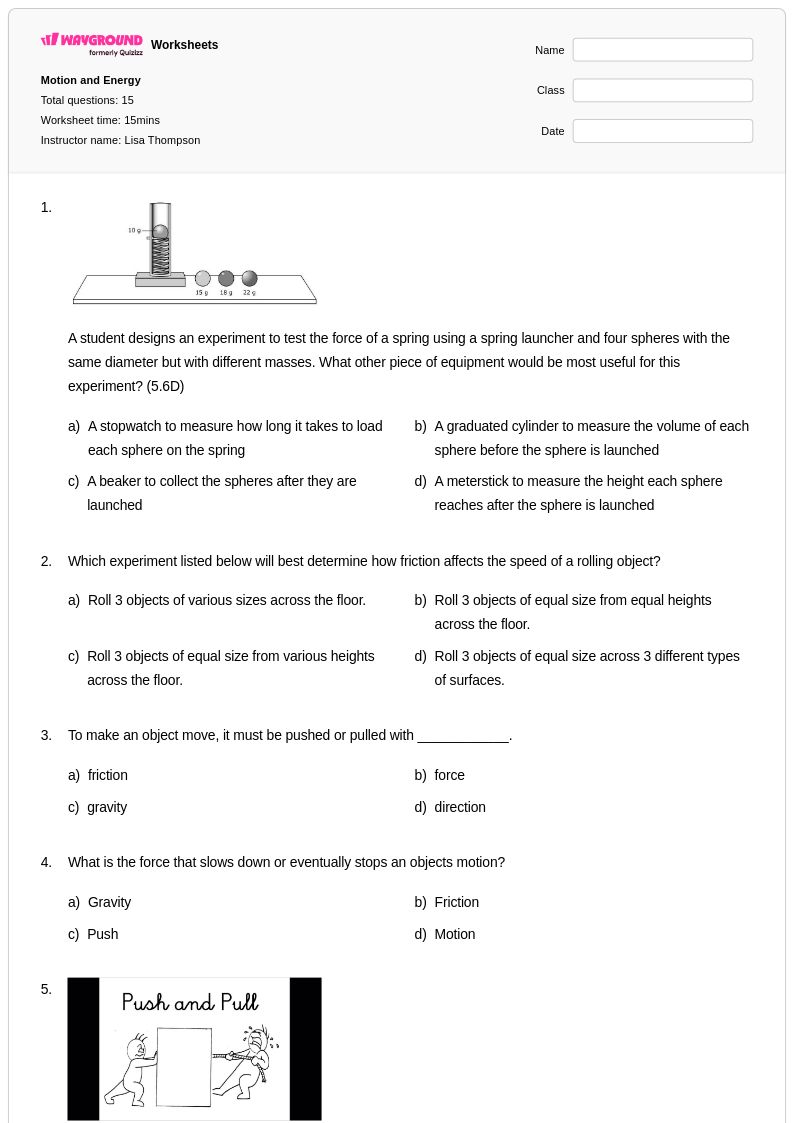
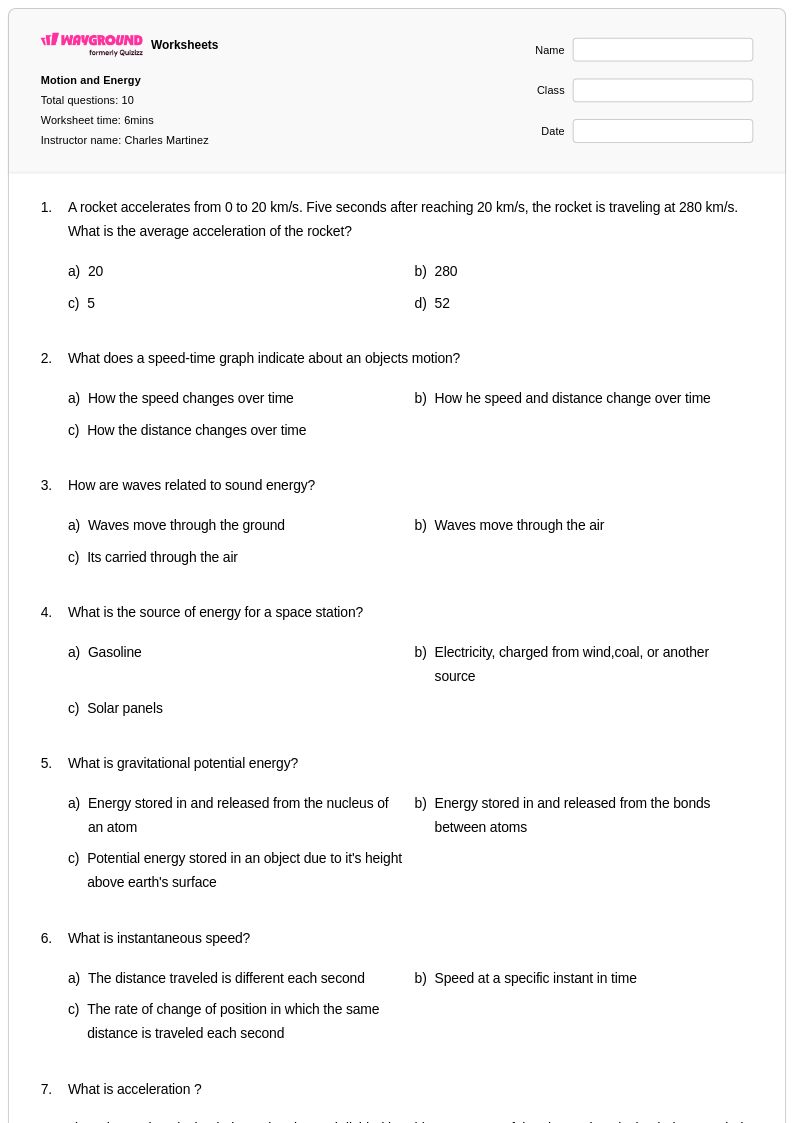
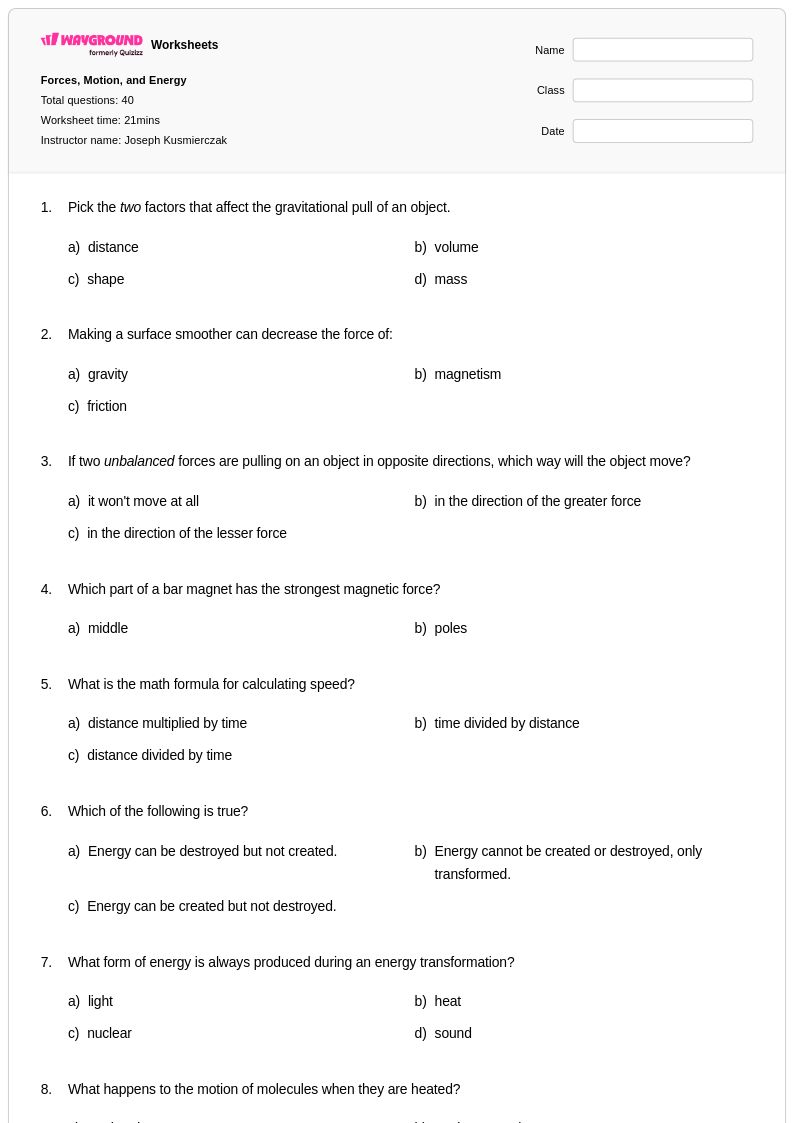
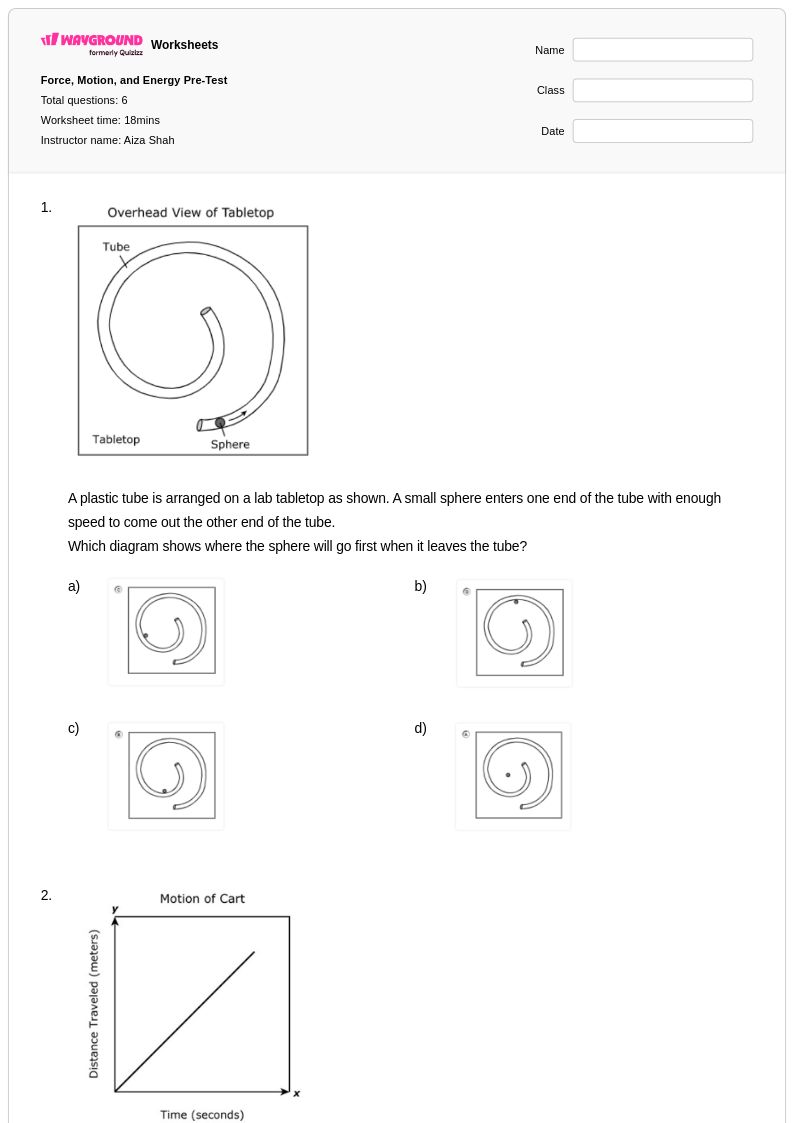
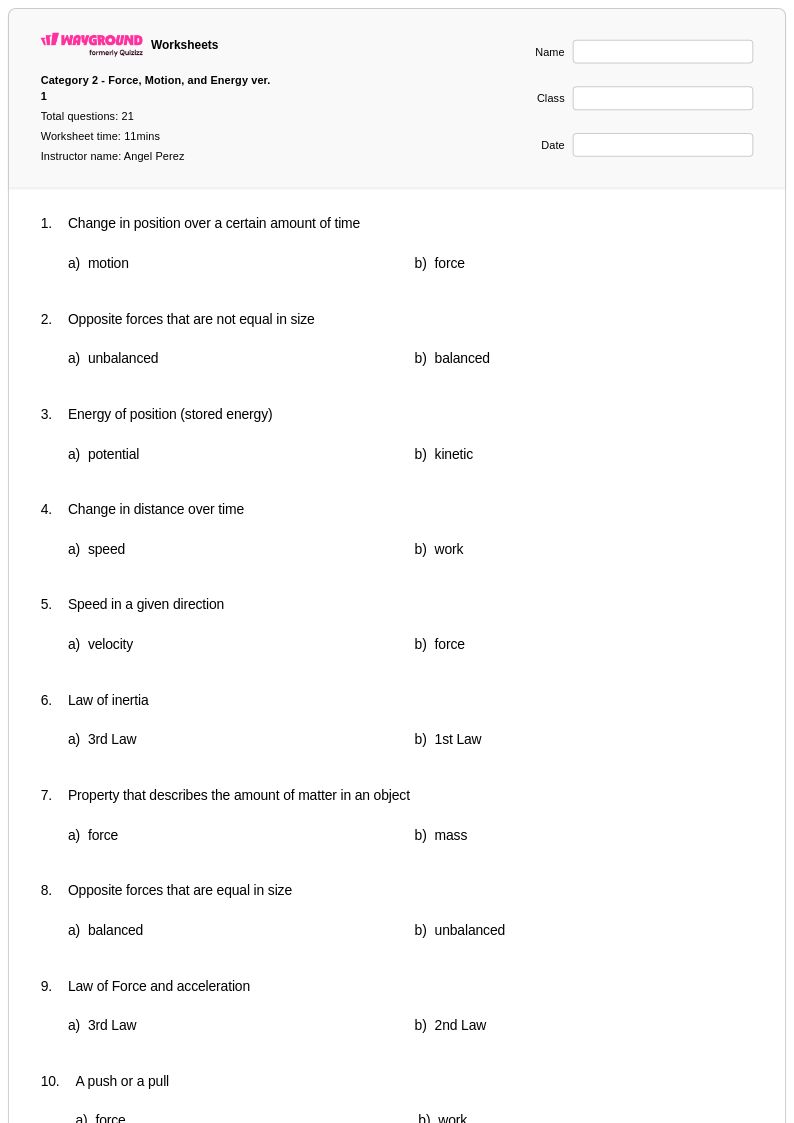
Motion and Energy worksheets for Class 8 students available through Wayground (formerly Quizizz) provide comprehensive coverage of fundamental physics concepts that form the foundation of mechanical understanding. These educational resources strengthen students' ability to analyze kinematic relationships, calculate velocity and acceleration, understand the laws of motion, and explore various forms of energy including kinetic, potential, and thermal energy. The worksheets feature practice problems that guide students through real-world applications of physics principles, from calculating the motion of objects on inclined planes to determining energy transformations in mechanical systems. Each worksheet collection includes detailed answer keys that support both independent study and classroom instruction, with free printables available in convenient pdf format for easy distribution and homework assignments.
Wayground (formerly Quizizz) supports physics educators with an extensive library of millions of teacher-created Motion and Energy resources specifically designed for Class 8 instruction. The platform's advanced search and filtering capabilities allow teachers to locate worksheets aligned with specific physics standards and learning objectives, while differentiation tools enable customization for students with varying skill levels and learning needs. These flexible resources are available in both printable and digital formats, including downloadable pdf versions that facilitate seamless integration into lesson planning and assessment strategies. Teachers utilize these comprehensive worksheet collections for targeted skill practice, remediation of challenging concepts like Newton's laws, enrichment activities exploring complex energy systems, and formative assessment of student understanding throughout their motion and energy unit instruction.
FAQs
How do I teach motion and energy concepts effectively in physics class?
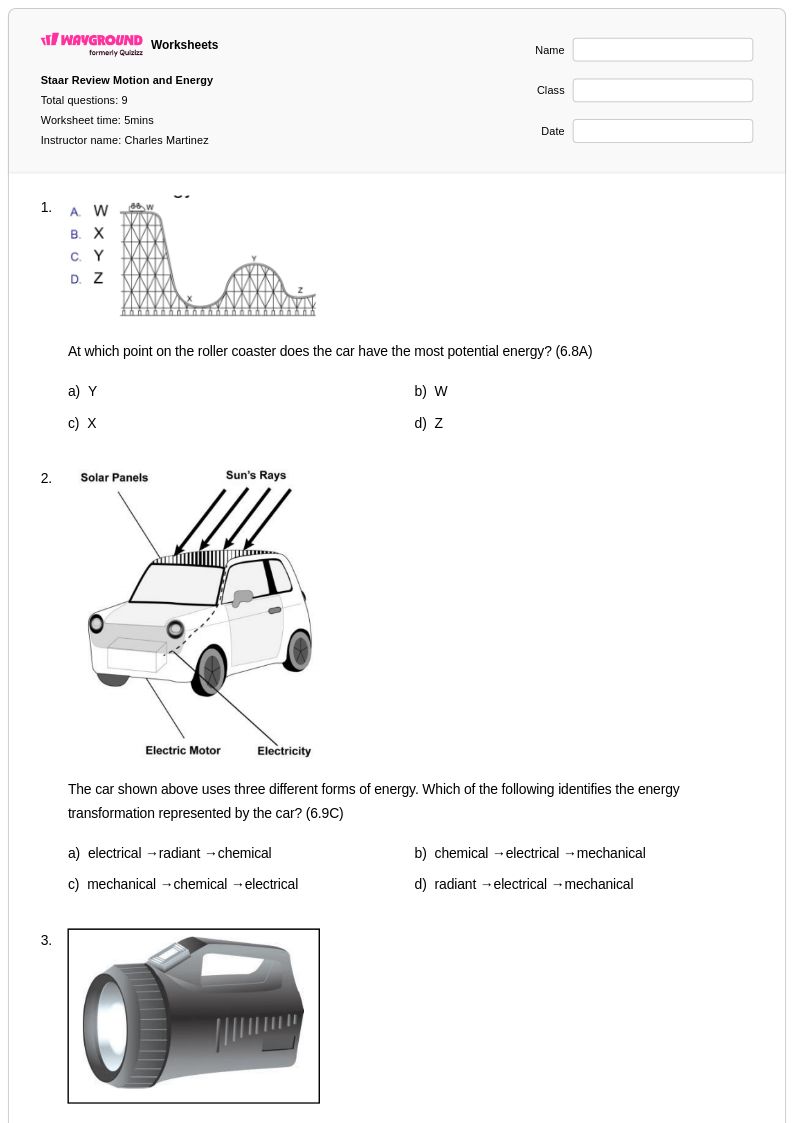
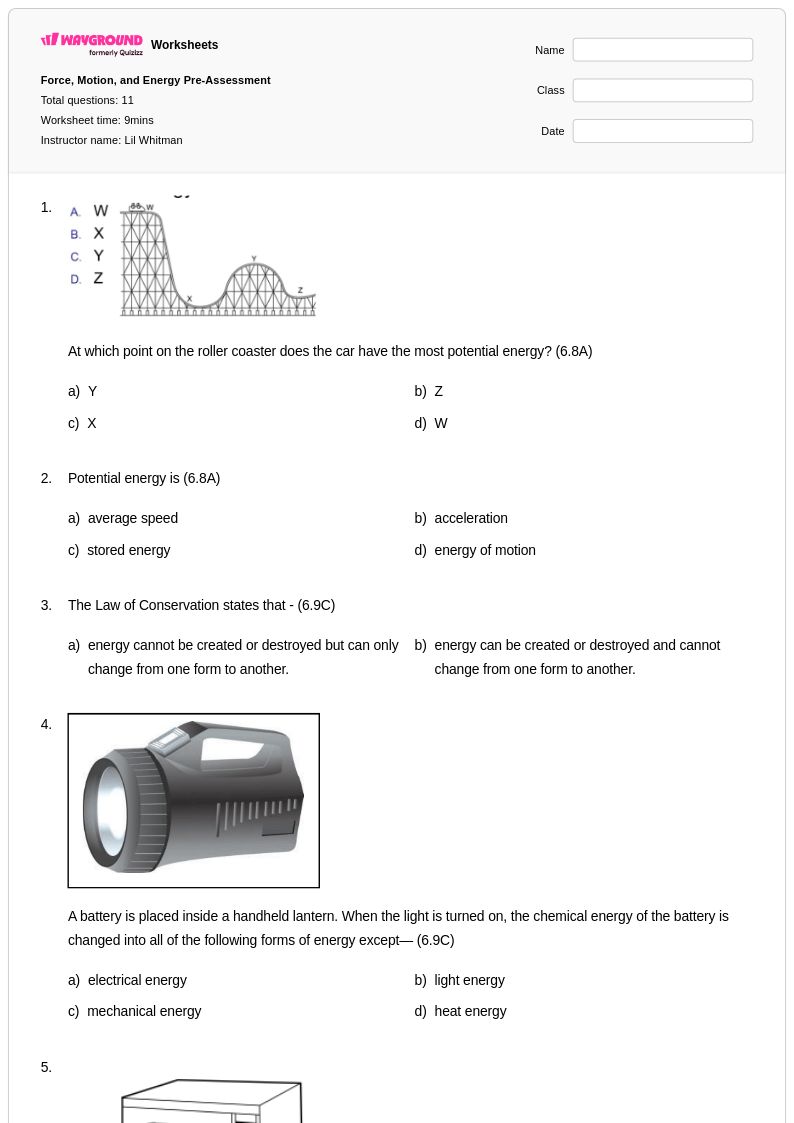
Effective motion and energy instruction builds from foundational definitions before moving into quantitative problem-solving. Start by grounding students in the difference between kinetic and potential energy, then introduce work and power as bridging concepts before tackling Newton's laws and momentum. Using real-world scenarios, such as roller coasters for energy conservation or projectile motion for kinematics, helps students connect abstract formulas to observable phenomena. Scaffolded practice problems that gradually increase in complexity reinforce procedural fluency alongside conceptual understanding.
What types of practice problems help students master motion and energy calculations?
Students benefit most from a progression that begins with single-variable calculations, such as finding kinetic energy given mass and velocity, before advancing to multi-step problems involving energy transformations or conservation of momentum. Practice sets should include displacement, velocity, acceleration, force, and work calculations alongside scenarios that require students to identify which energy form is present at different points in a system. Including both numerical and conceptual problems ensures students understand the physics, not just the formulas.
What common mistakes do students make when solving motion and energy problems?
One of the most frequent errors is confusing the scalar nature of energy with the vector nature of force and velocity, leading to sign errors in momentum and displacement problems. Students also commonly misapply the work-energy theorem by ignoring friction or failing to account for all forces acting on an object. In energy conservation problems, a recurring mistake is treating mechanical energy as always conserved, even when non-conservative forces like friction are explicitly present in the scenario.
How can I differentiate motion and energy worksheets for students at different skill levels?
Differentiation in motion and energy practice means offering parallel problem sets that share the same physical scenario but vary in the number of given variables, the complexity of the calculation, or the degree of conceptual explanation required. For students who need additional support, reducing the number of answer choices on multiple-choice items or providing formula reference boxes lowers cognitive load without removing rigor. On Wayground, teachers can apply individual accommodations such as reduced answer choices, extended time, and read-aloud support to specific students while the rest of the class receives standard settings.
How do I use Wayground's motion and energy worksheets in my classroom?
Wayground's motion and energy worksheets are available as printable PDFs for traditional classroom distribution and in digital formats for technology-integrated environments, giving teachers flexibility across in-person, hybrid, and remote settings. Teachers can also host worksheets directly as a quiz on Wayground, enabling real-time student response tracking. Each worksheet includes a complete answer key, so they work equally well for guided instruction, independent practice, or homework assignments without requiring additional teacher preparation.
How do I help students understand the difference between kinetic and potential energy?
Kinetic and potential energy are best taught through contrast: kinetic energy depends on an object's mass and speed, while potential energy depends on position or configuration within a force field, such as gravitational or elastic potential energy. A useful instructional approach is to trace a single object through a complete motion cycle, such as a ball thrown upward and returning, identifying the energy form dominating at each stage. Asking students to sketch energy bar graphs at multiple points in a scenario builds qualitative reasoning before they engage with calculations.