Free Printable Multiple Syllable Words Worksheets for Class 3
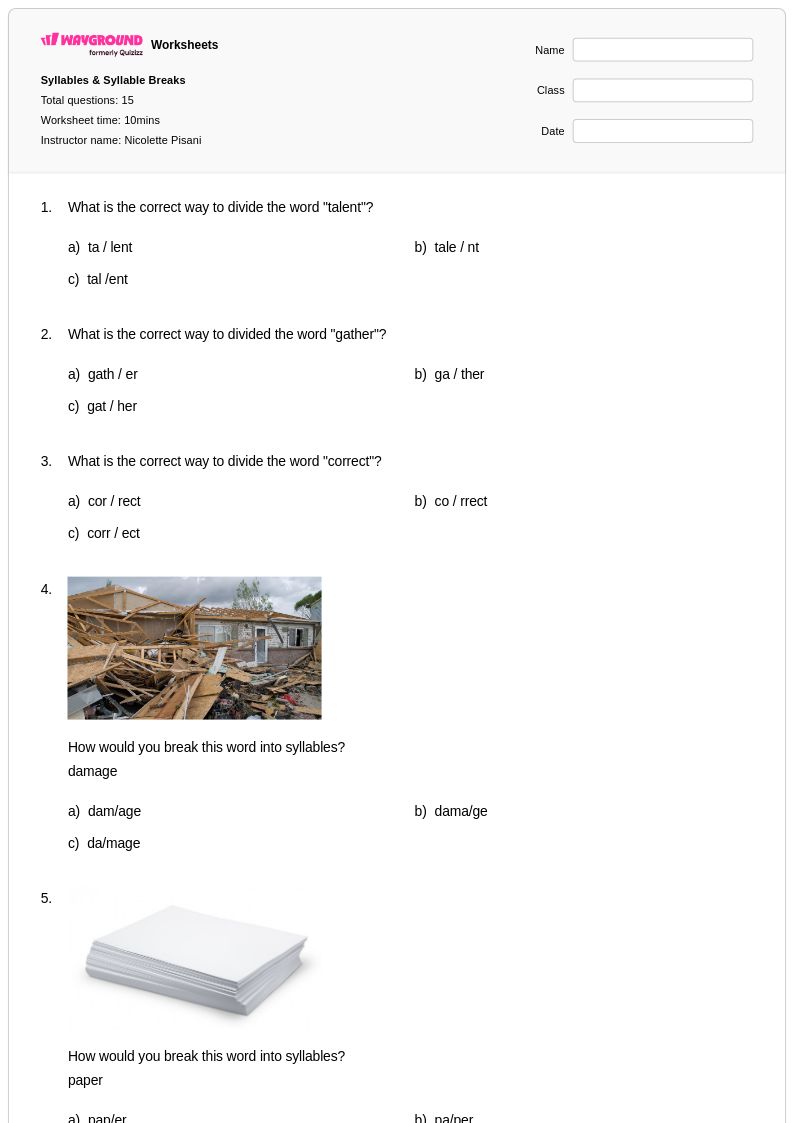
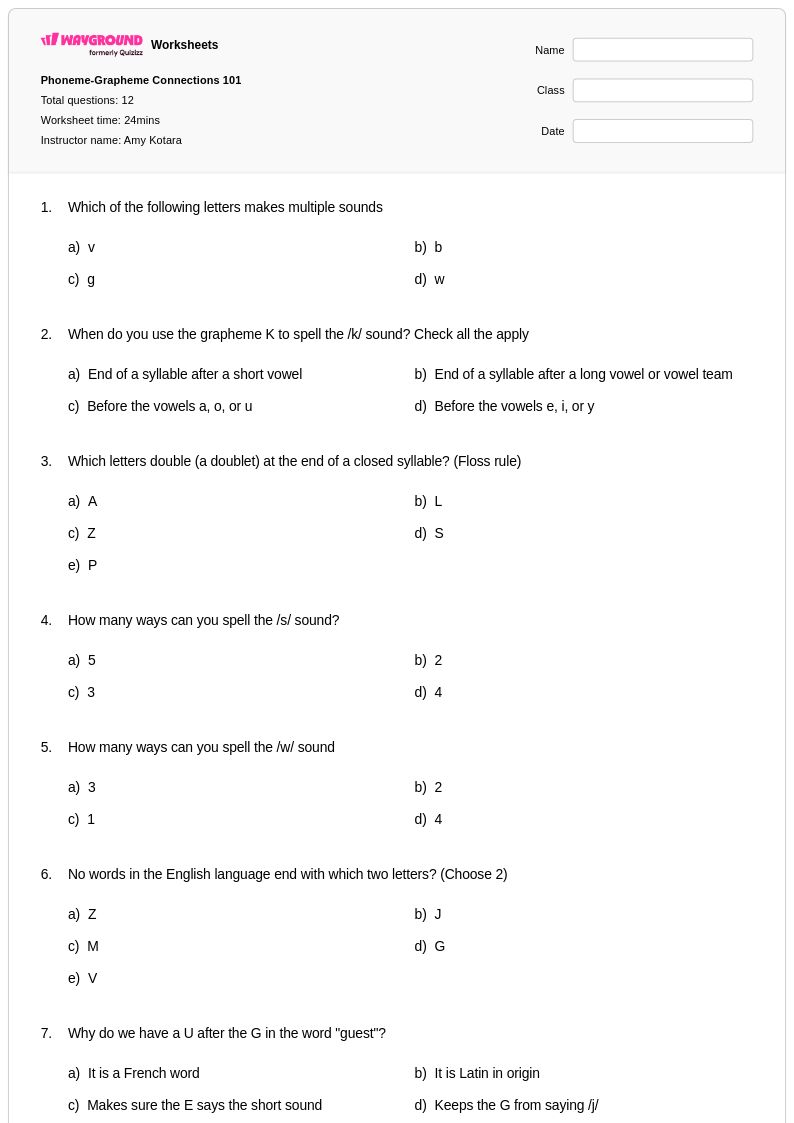
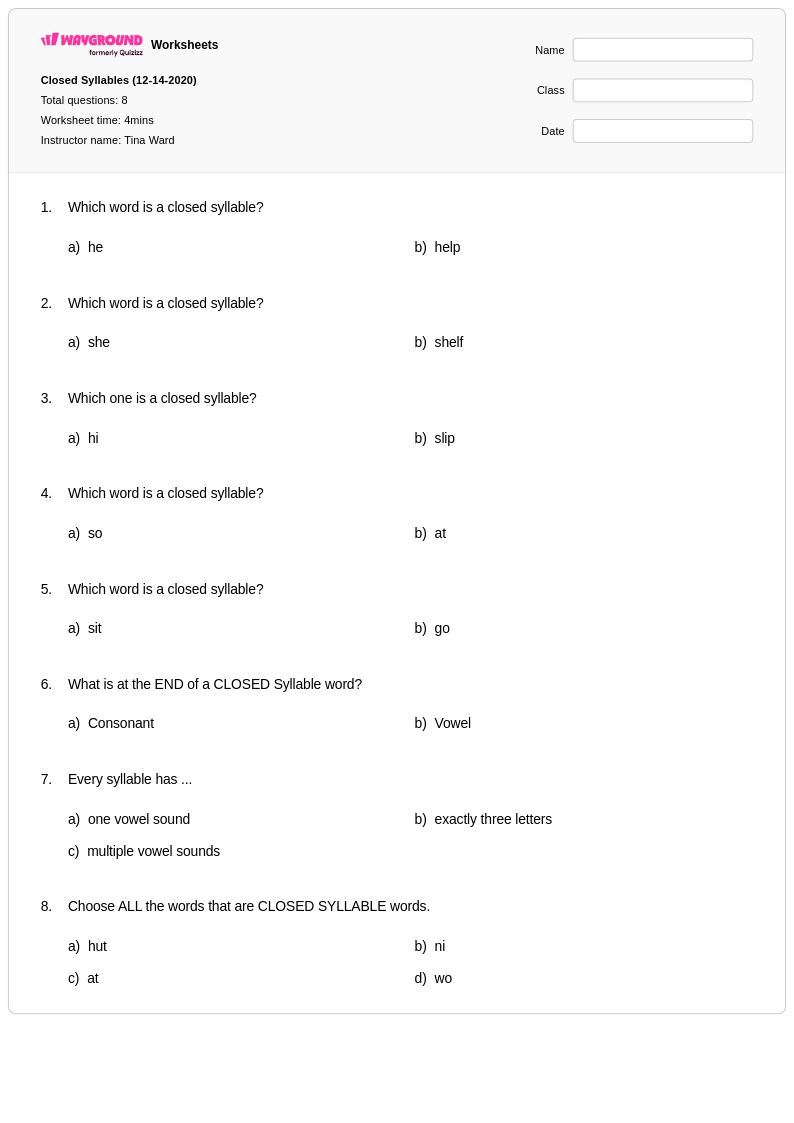
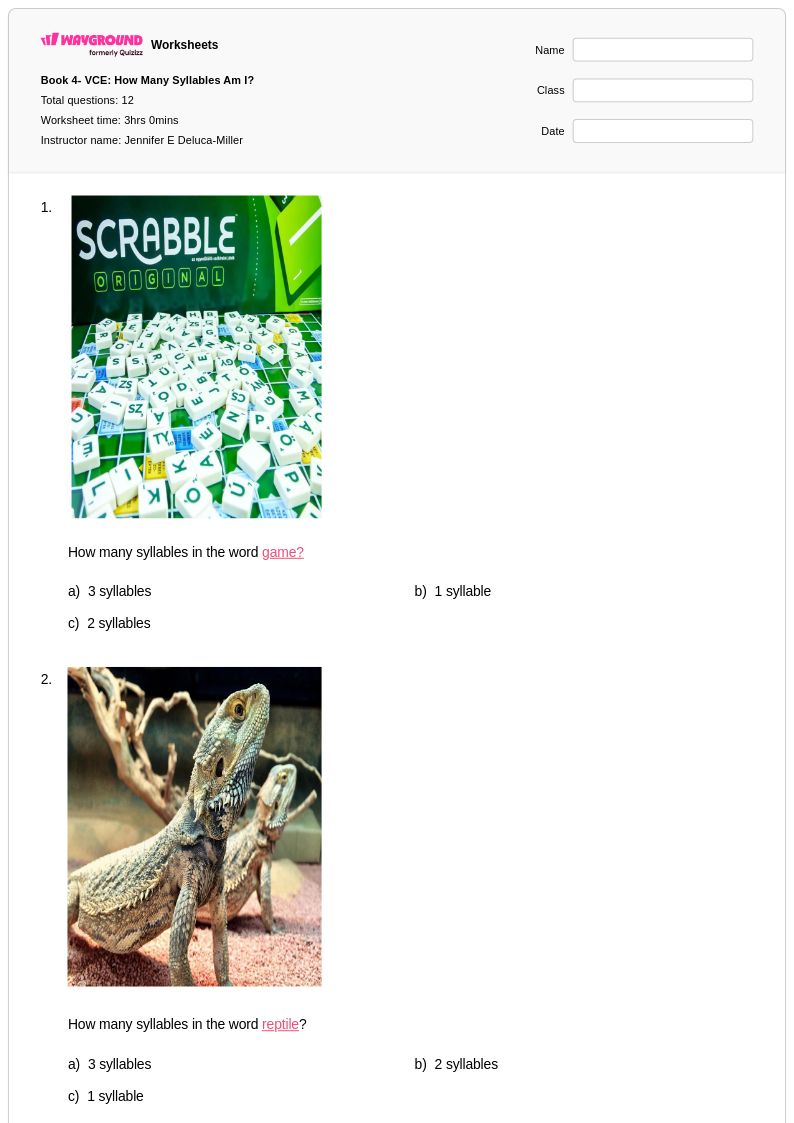
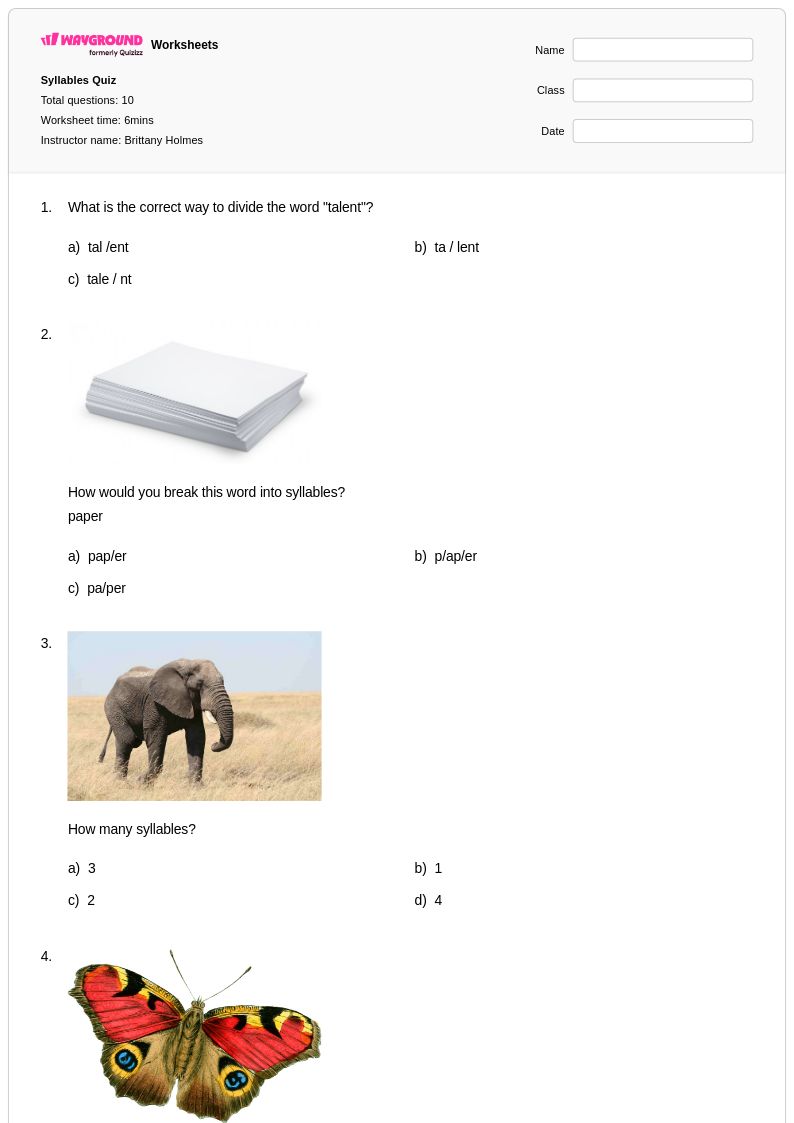
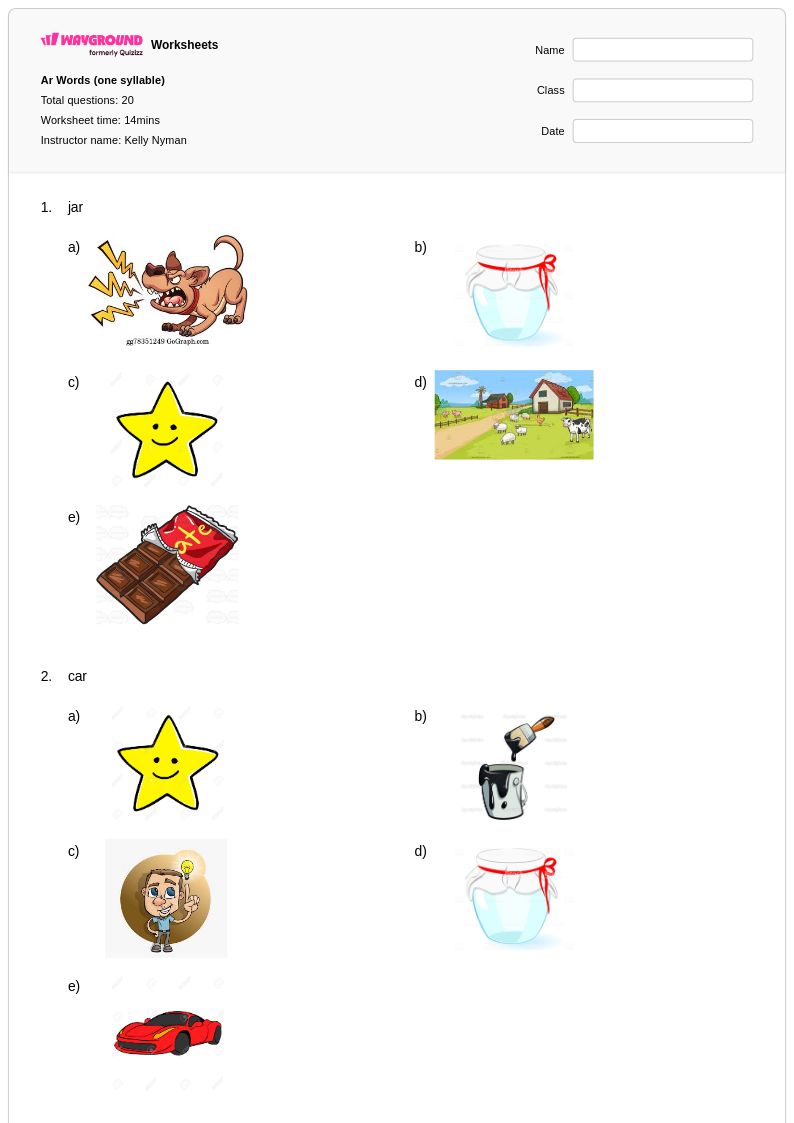
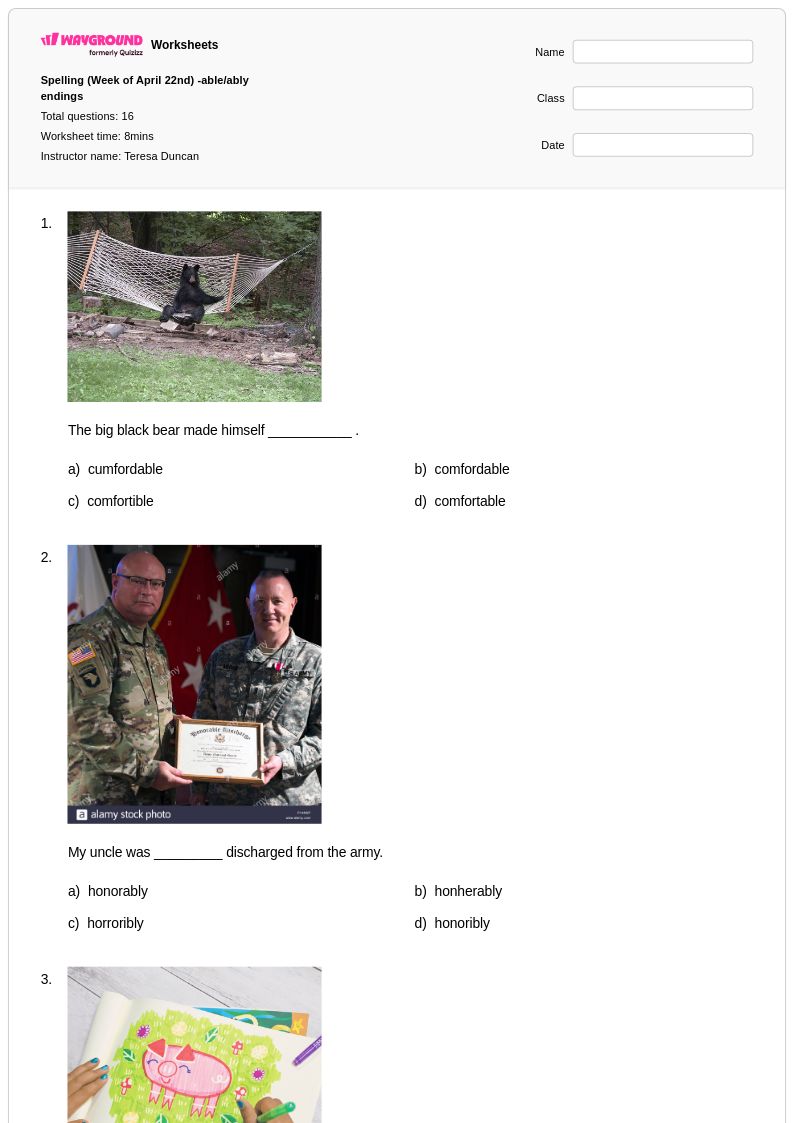
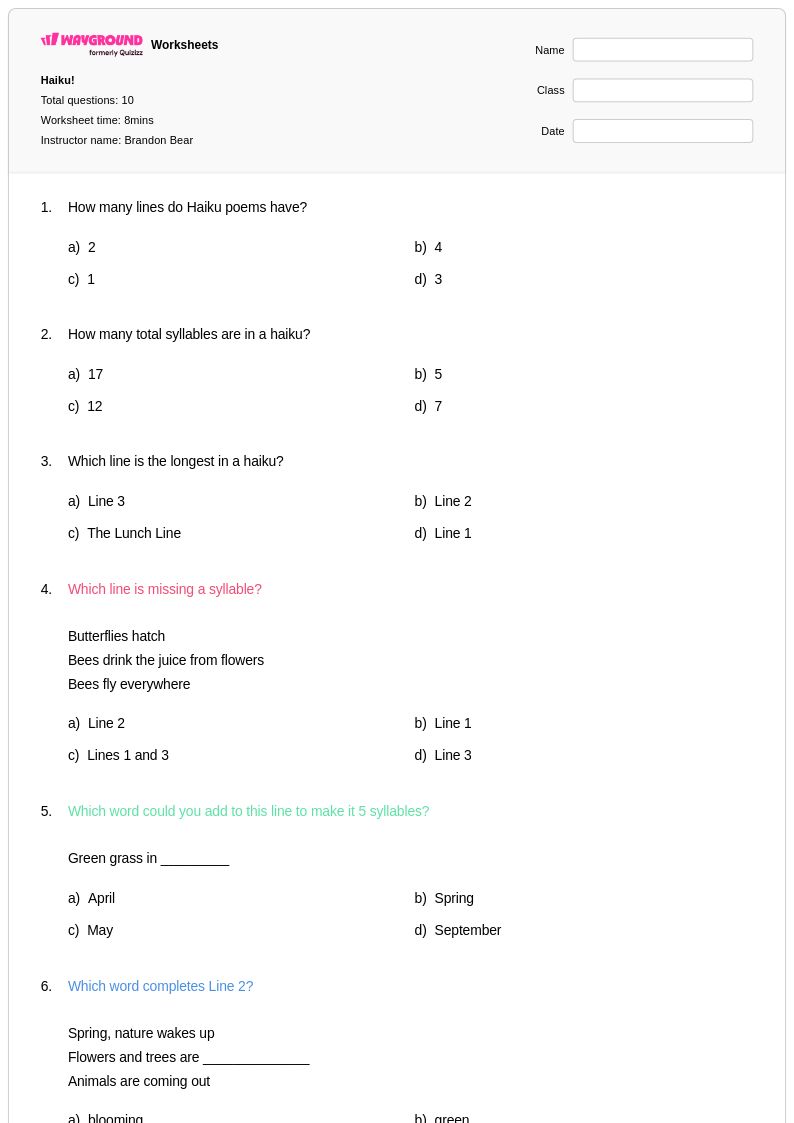
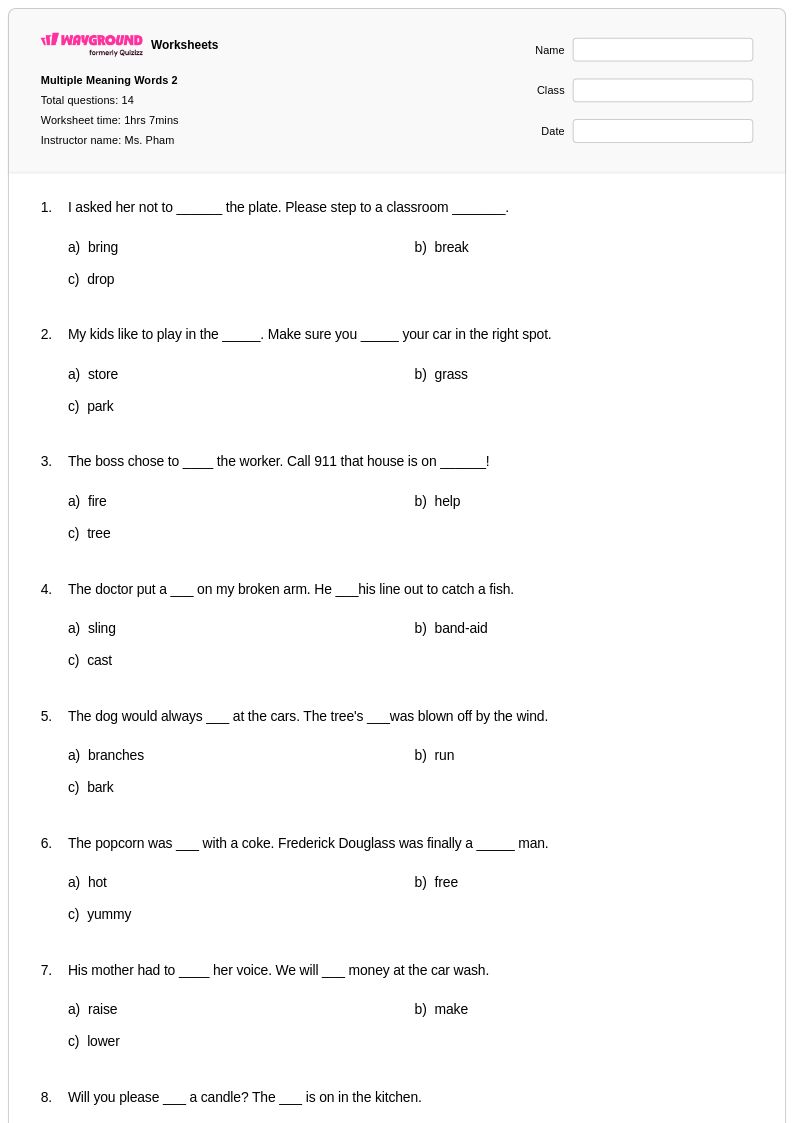
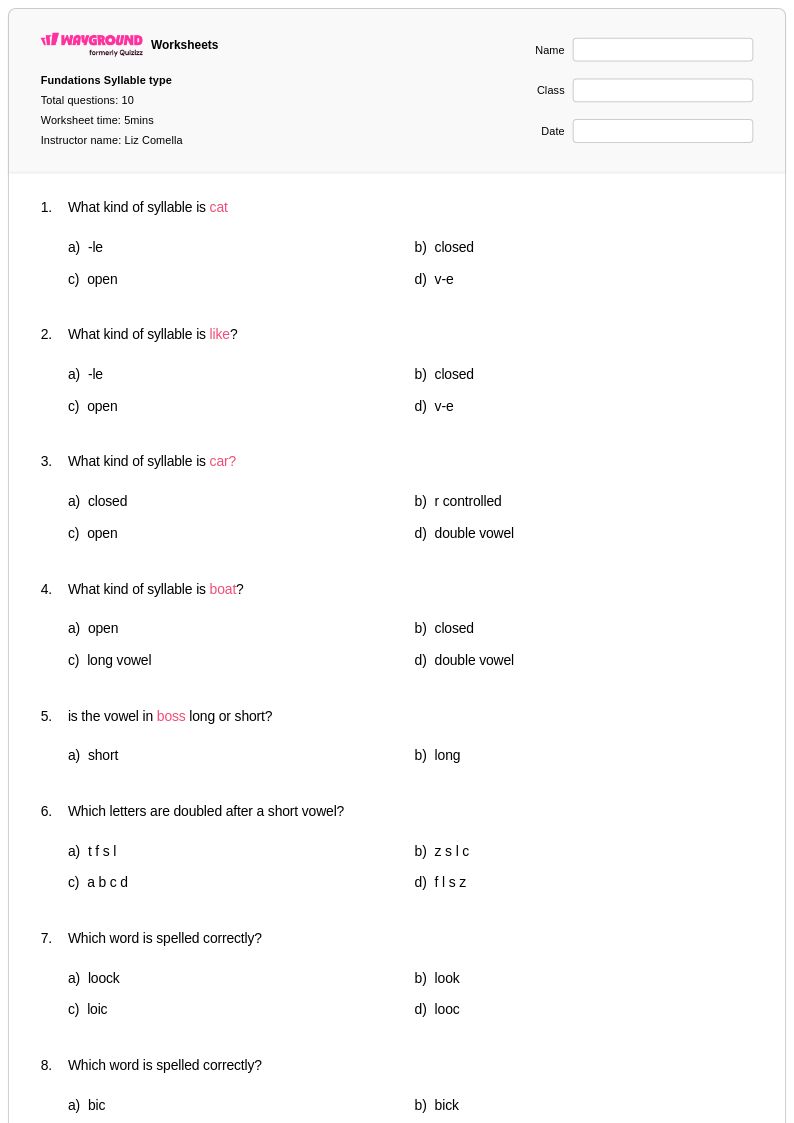
Wayground's free Class 3 multiple syllable words worksheets provide printable PDF practice problems and answer keys to help students master breaking down and identifying syllables in complex words.
Explore printable Multiple Syllable Words worksheets for Class 3
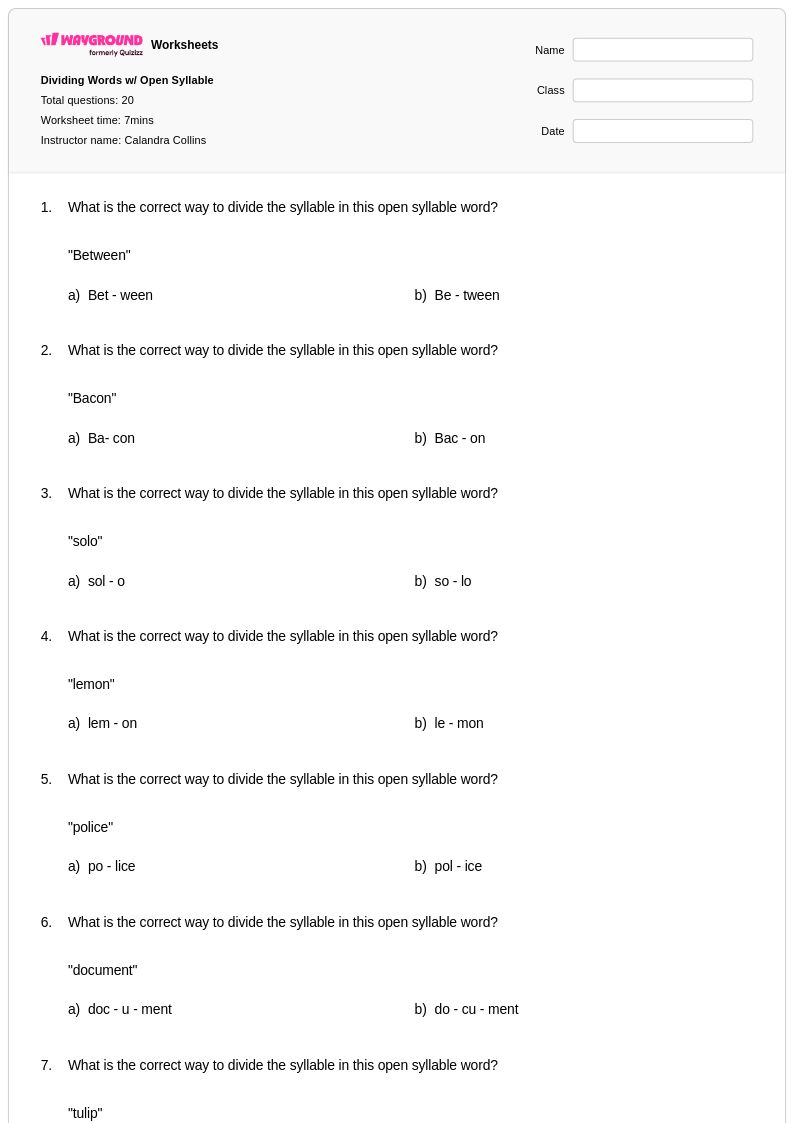
Multiple syllable words represent a crucial milestone in Class 3 reading development, and Wayground's comprehensive worksheet collection provides targeted practice for students mastering this essential skill. These expertly crafted worksheets guide third graders through the systematic breakdown of longer words into their component syllables, strengthening phonemic awareness and decoding abilities that serve as foundations for advanced reading comprehension. Each printable resource includes carefully sequenced practice problems that progress from basic two-syllable words to more complex multisyllabic vocabulary, complete with detailed answer keys that support both independent learning and teacher-guided instruction. The free pdf format ensures accessibility while maintaining the structured approach necessary for developing automatic syllable recognition and division skills.
Wayground's extensive library, featuring millions of teacher-created resources, empowers educators with sophisticated search and filtering capabilities specifically designed for multiple syllable word instruction at the Class 3 level. Teachers can easily locate worksheets aligned to state standards while utilizing built-in differentiation tools that accommodate diverse learning needs within their classrooms. The platform's flexible customization options allow educators to modify existing materials or combine resources for targeted remediation and enrichment activities. Available in both printable and digital formats including downloadable pdfs, these worksheet collections streamline lesson planning while providing the consistent skill practice essential for helping students transition from simple phonetic patterns to the complex syllable structures found in academic vocabulary across all subject areas.
FAQs
How do I teach multiple syllable words to students?
Teaching multisyllabic words works best when students first understand syllable division rules, such as breaking between double consonants (rab-bit), before a consonant followed by a vowel (ti-ger), and between two vowels that are pronounced separately (li-on). Begin with two-syllable words and gradually introduce longer, more complex vocabulary. Clapping syllables, tapping on a desk, or placing a hand under the chin to feel jaw drops are reliable kinesthetic strategies that help students internalize syllable boundaries before applying them in reading and spelling.
What exercises help students practice breaking words into syllables?
Effective syllable practice exercises include syllable sorting activities, where students group words by syllable count, as well as syllable division tasks that ask students to draw lines between syllables in printed words. Pronunciation drills that pair syllable stress placement with spelling reinforce the connection between how a word sounds and how it looks on the page. Worksheets that progress from two-syllable to multisyllabic words give students structured repetition across increasing levels of complexity.
What mistakes do students commonly make when counting or dividing syllables?
A frequent error is treating silent vowels as separate syllables, such as counting 'cake' as two syllables because it contains two vowels. Students also struggle with vowel teams and diphthongs, often splitting them incorrectly across syllable boundaries. Another common mistake is misidentifying stress patterns, which leads to mispronunciation of multisyllabic words like 'de-SERT' versus 'DES-ert.' Targeted practice that explicitly addresses these patterns, with immediate corrective feedback, helps students build accurate syllable awareness.
How can I differentiate syllable worksheets for students at different reading levels?
For struggling readers, start with two-syllable words that follow predictable closed or open syllable patterns before introducing exceptions. Advanced learners benefit from working with polysyllabic academic vocabulary and exploring how syllable stress shifts meaning, as in 'record' used as a noun versus a verb. On Wayground, teachers can apply accommodations such as Read Aloud support, reduced answer choices, and extended time to individual students, allowing the same worksheet to serve the full range of learners in one classroom without singling anyone out.
How do I use Wayground's multiple syllable words worksheets in my classroom?
Wayground's multiple syllable words worksheets are available as printable PDFs for traditional classroom use and in digital formats for technology-integrated instruction, including the option to host them as a quiz directly on Wayground. Teachers can assign them for whole-class direct instruction, small group intervention, or independent practice. Each worksheet includes an answer key, which supports efficient grading and allows students to self-check their work during guided practice sessions.
At what grade level should students be working with multisyllabic words?
Students typically begin syllable awareness work in kindergarten and first grade with two-syllable compound words and simple patterns, progressing to more complex multisyllabic vocabulary by second and third grade. By fourth grade and beyond, students encounter polysyllabic academic and domain-specific words across content areas, making syllable decoding a critical reading skill well into middle school. Instruction should be paced to student readiness rather than grade level alone, especially for readers who need additional phonics support.