

20 Q
1st
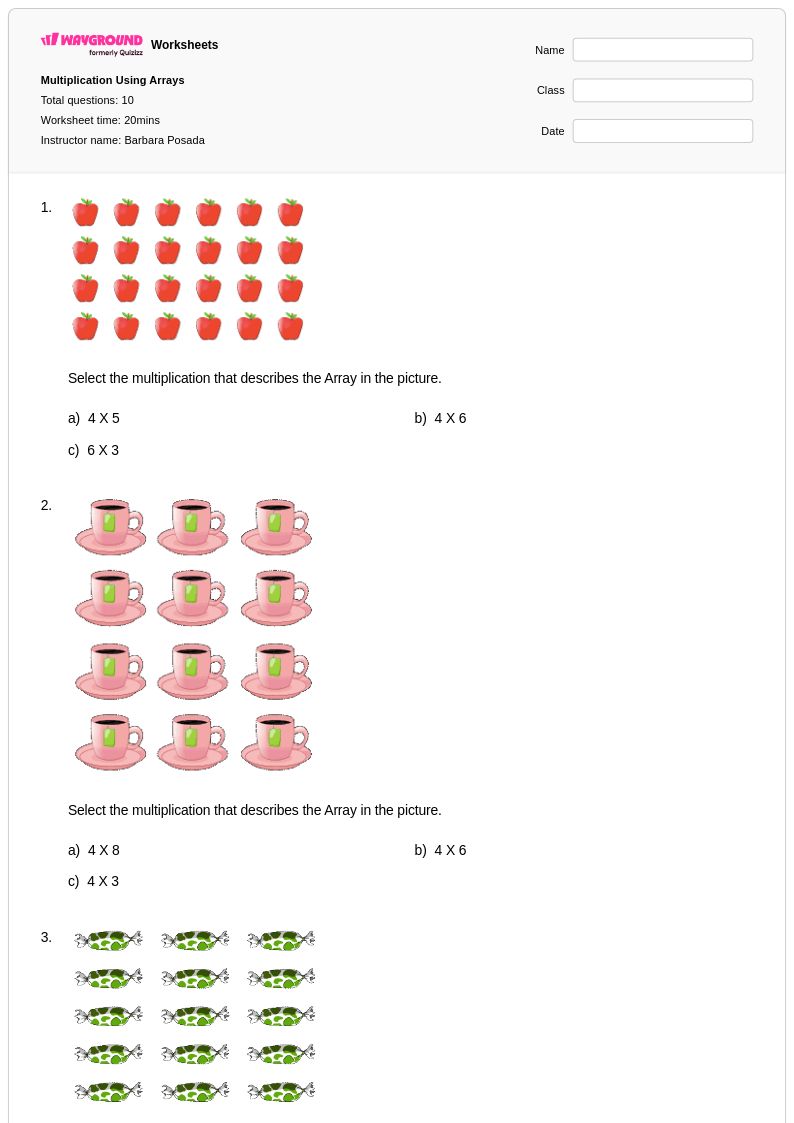
10 Q
1st

10 Q
1st
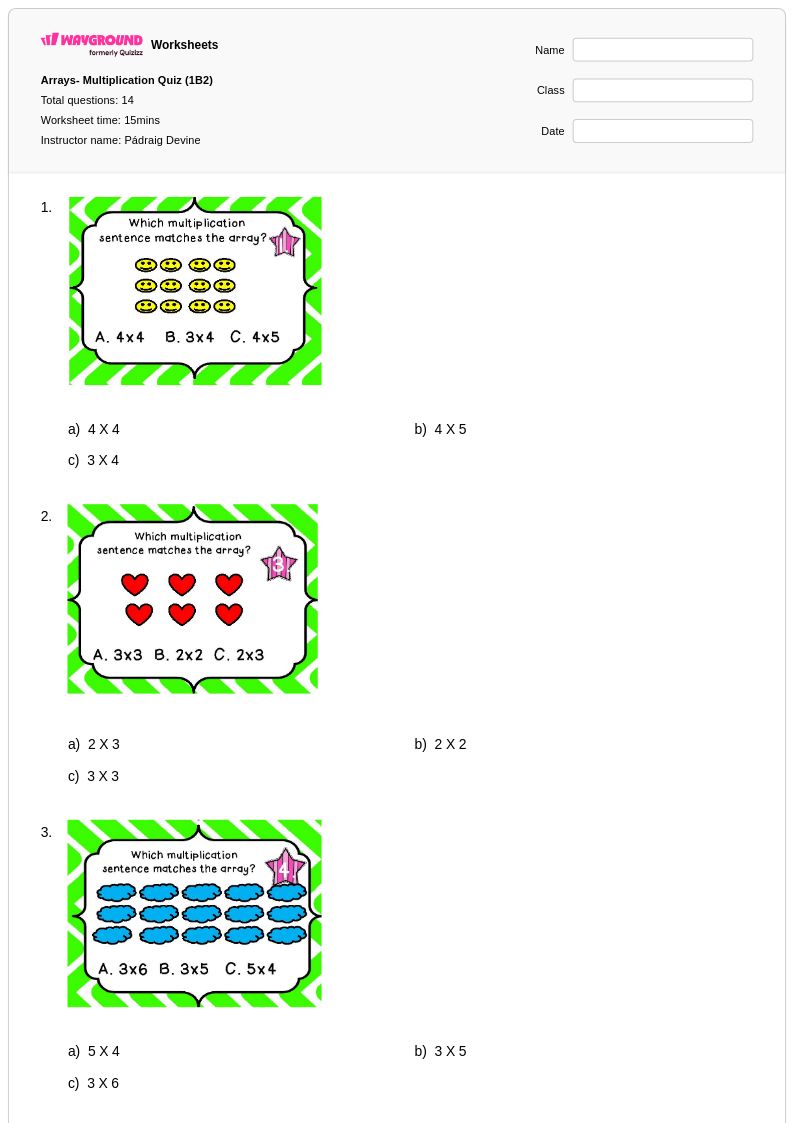
14 Q
1st
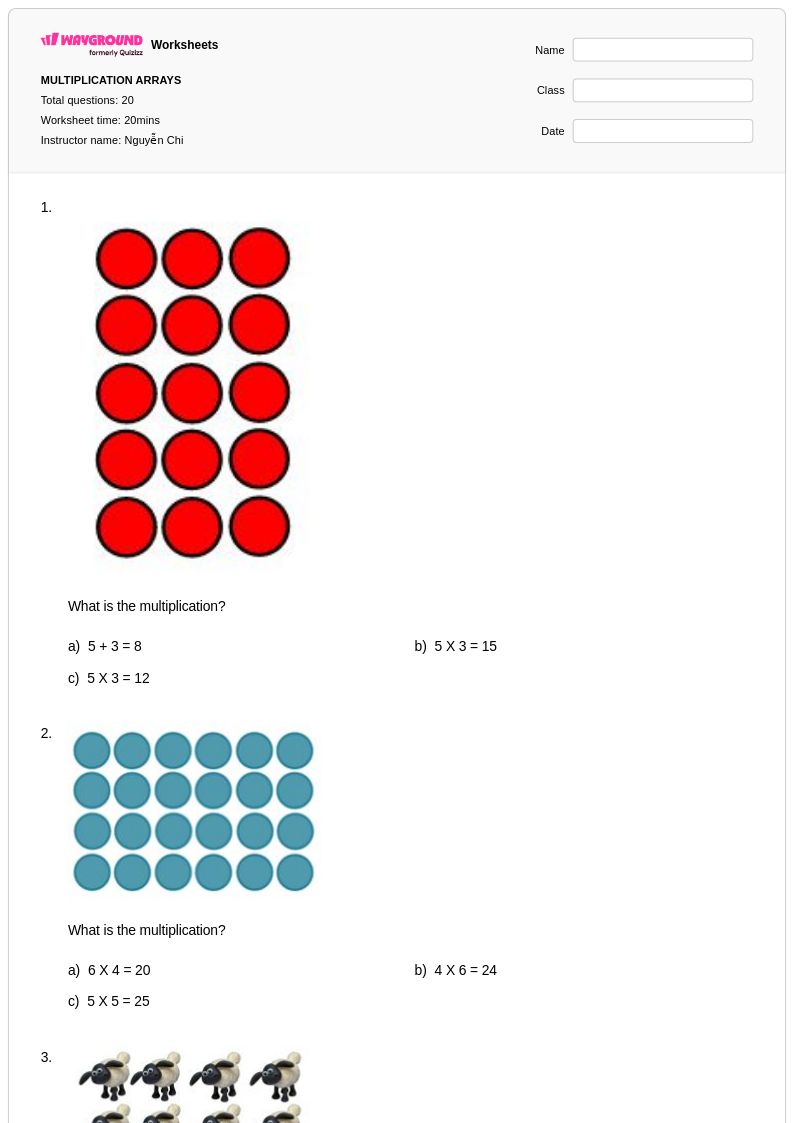
20 Q
1st - 3rd
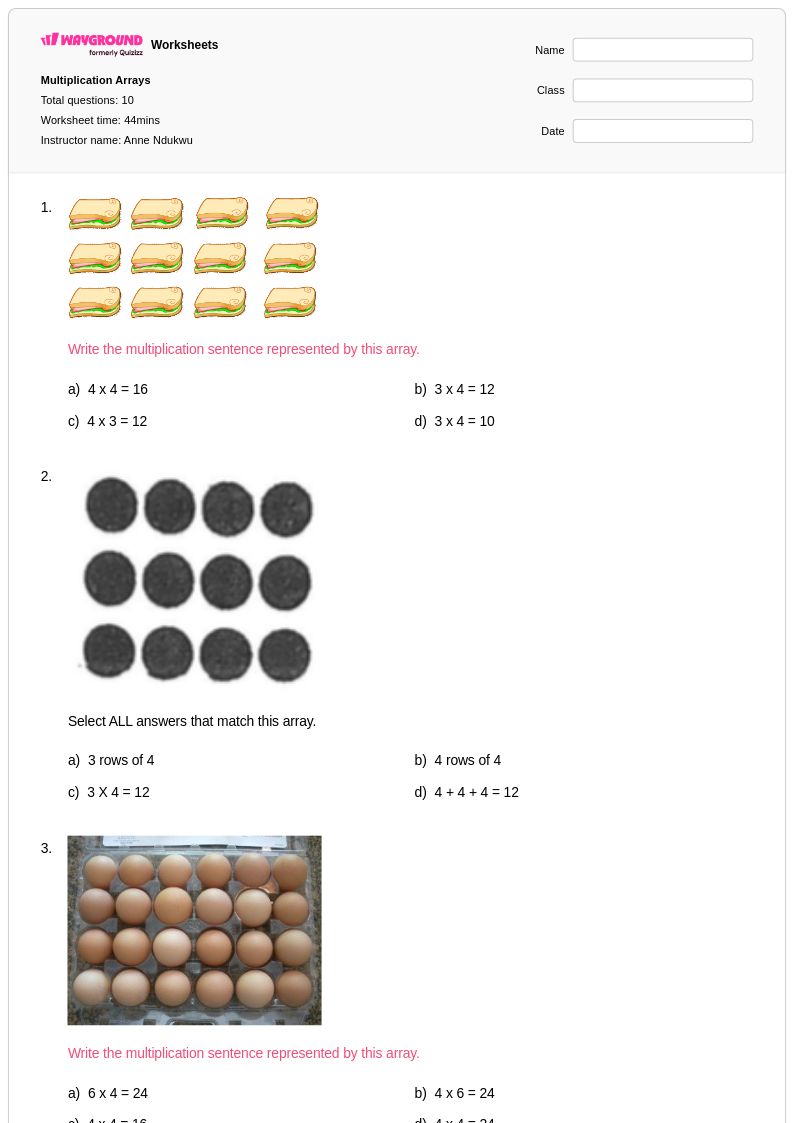
10 Q
1st
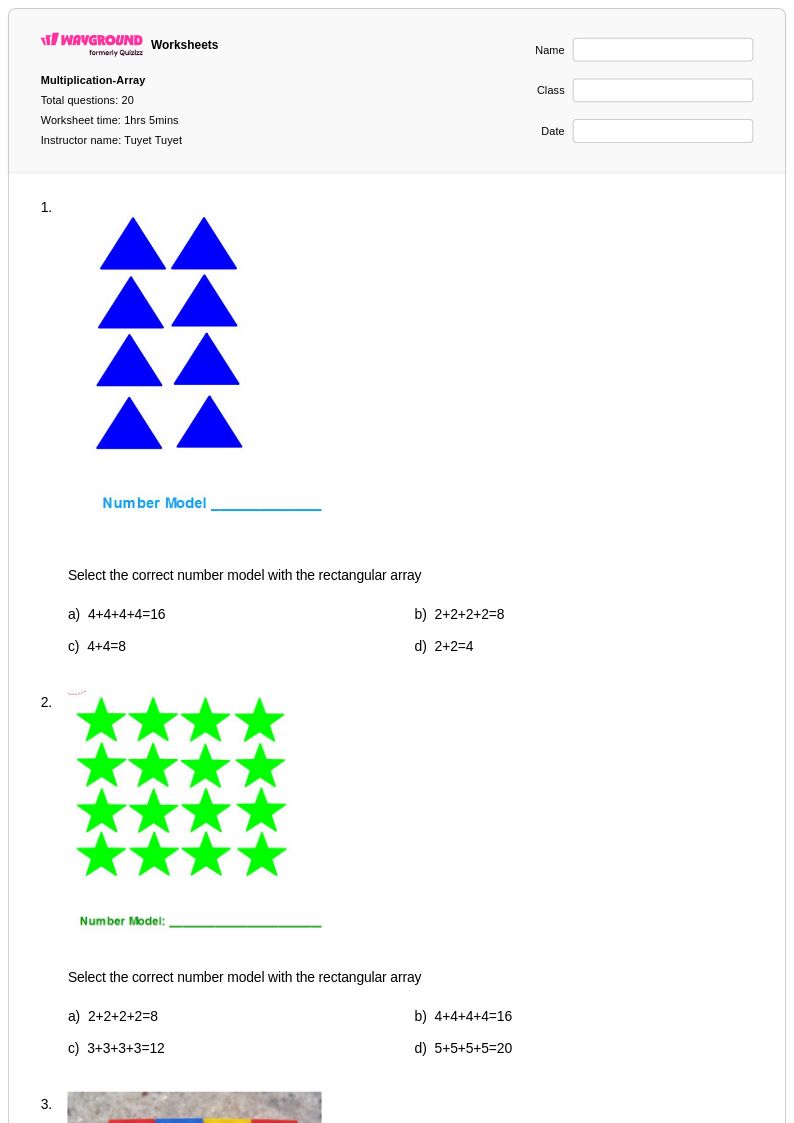
20 Q
1st
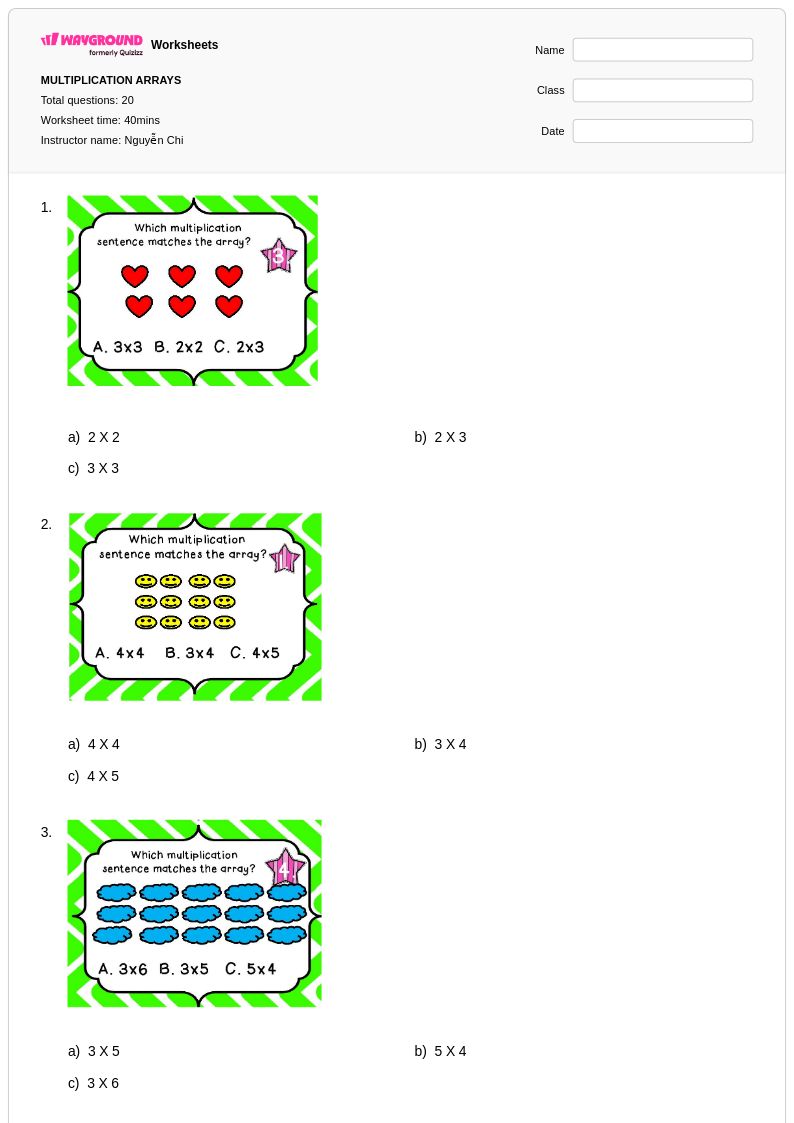
20 Q
1st - 3rd
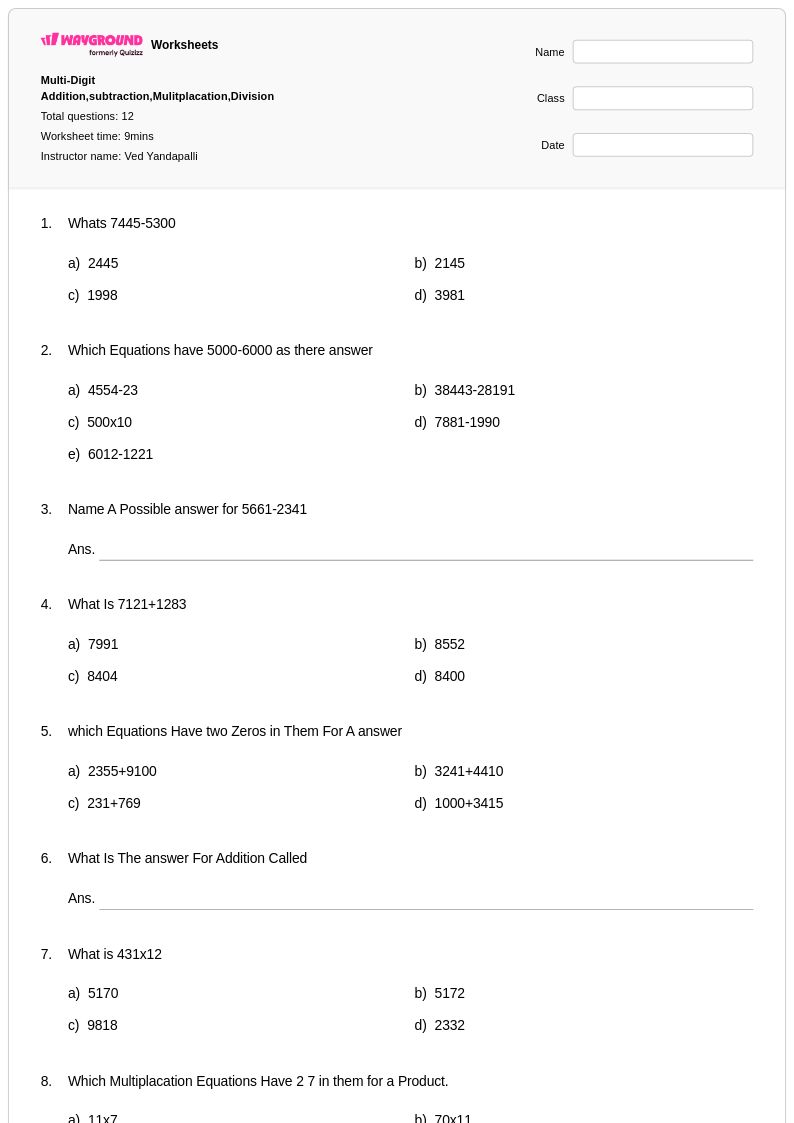
12 Q
1st - 9th
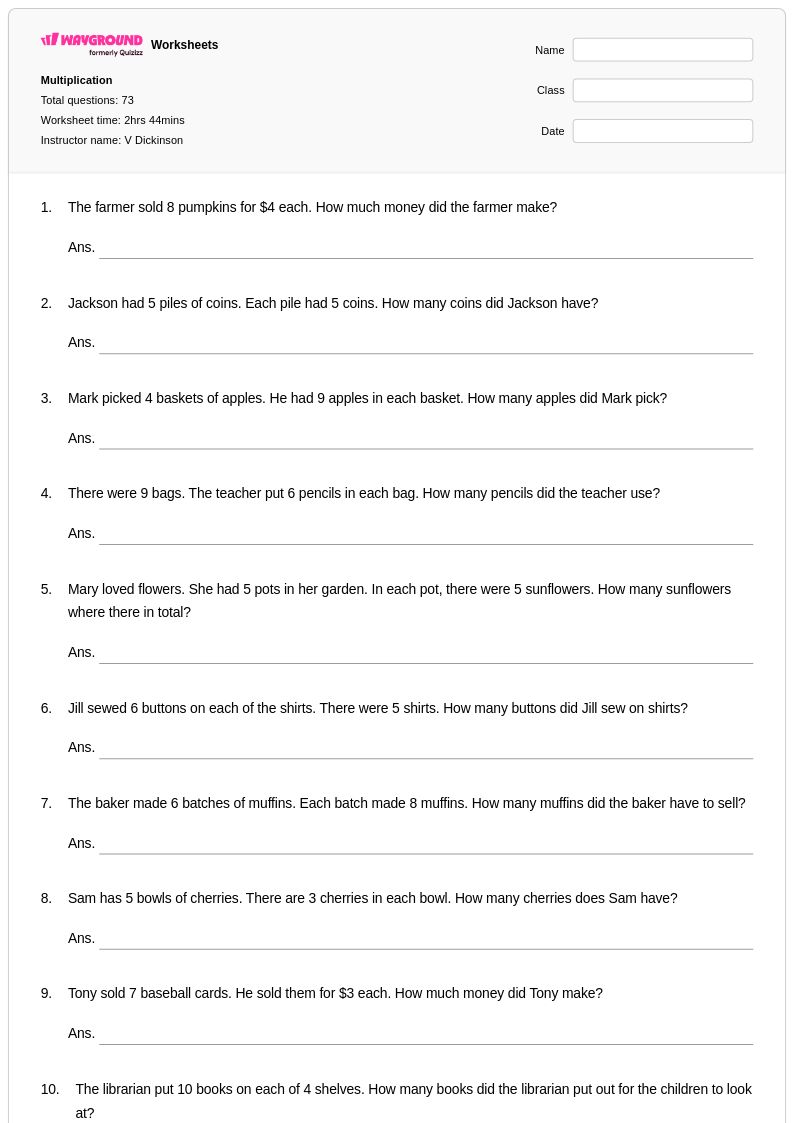
73 Q
1st - 5th

23 Q
1st

21 Q
1st
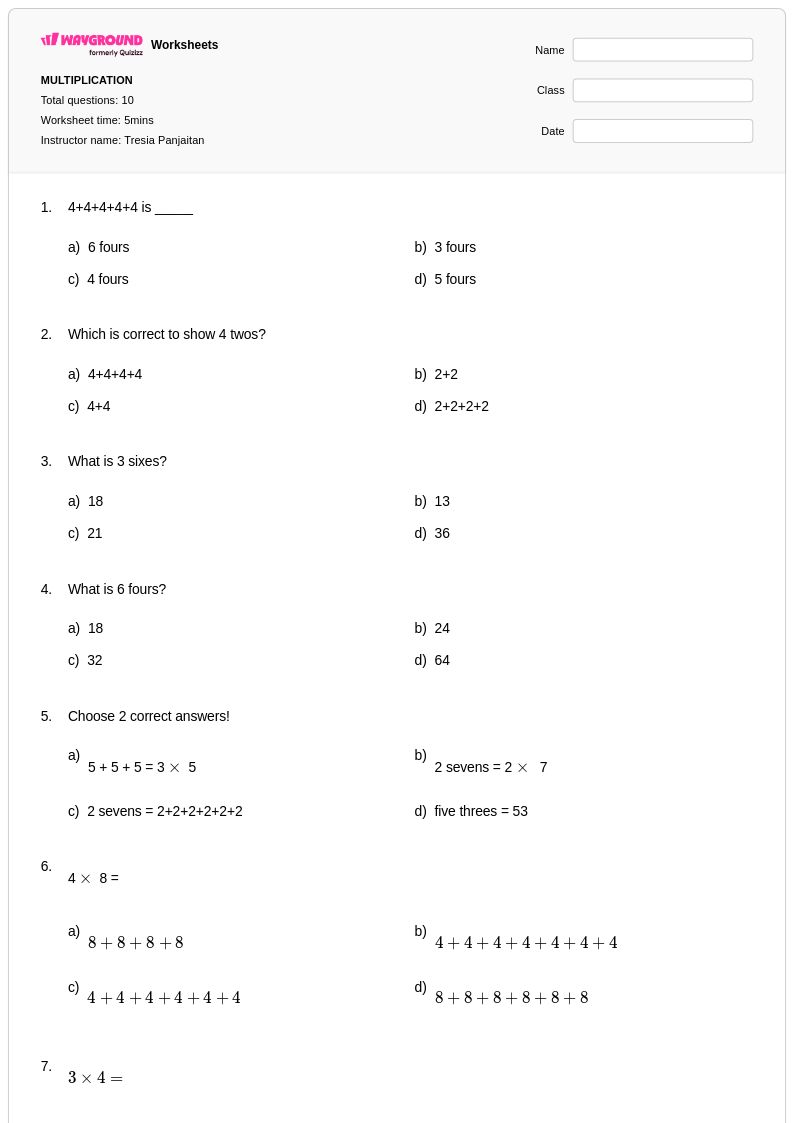
10 Q
1st - 6th
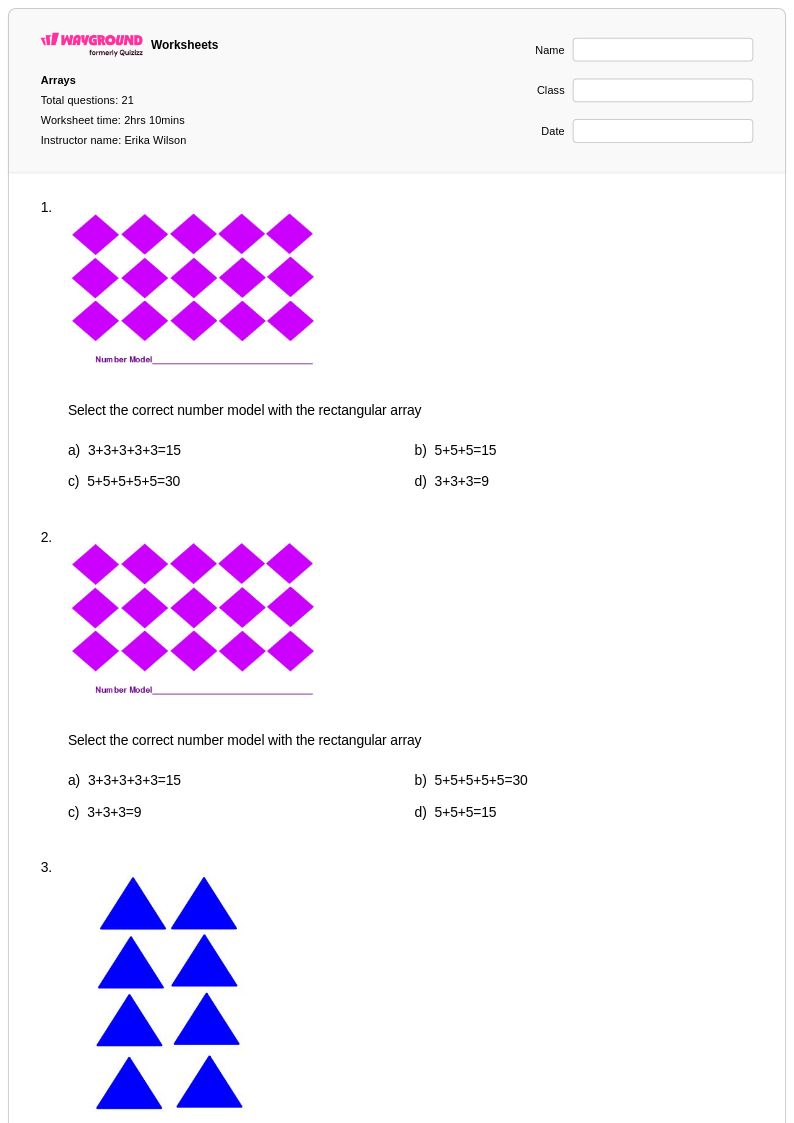
21 Q
KG - 2nd
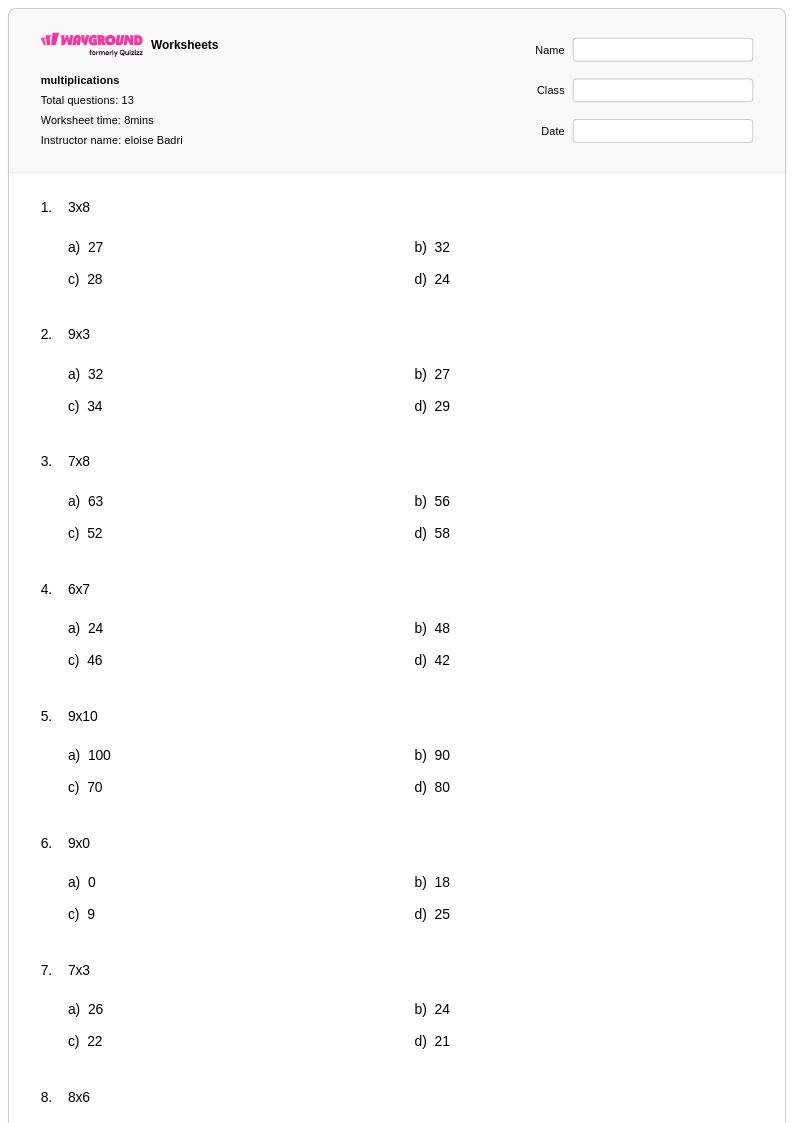
13 Q
1st
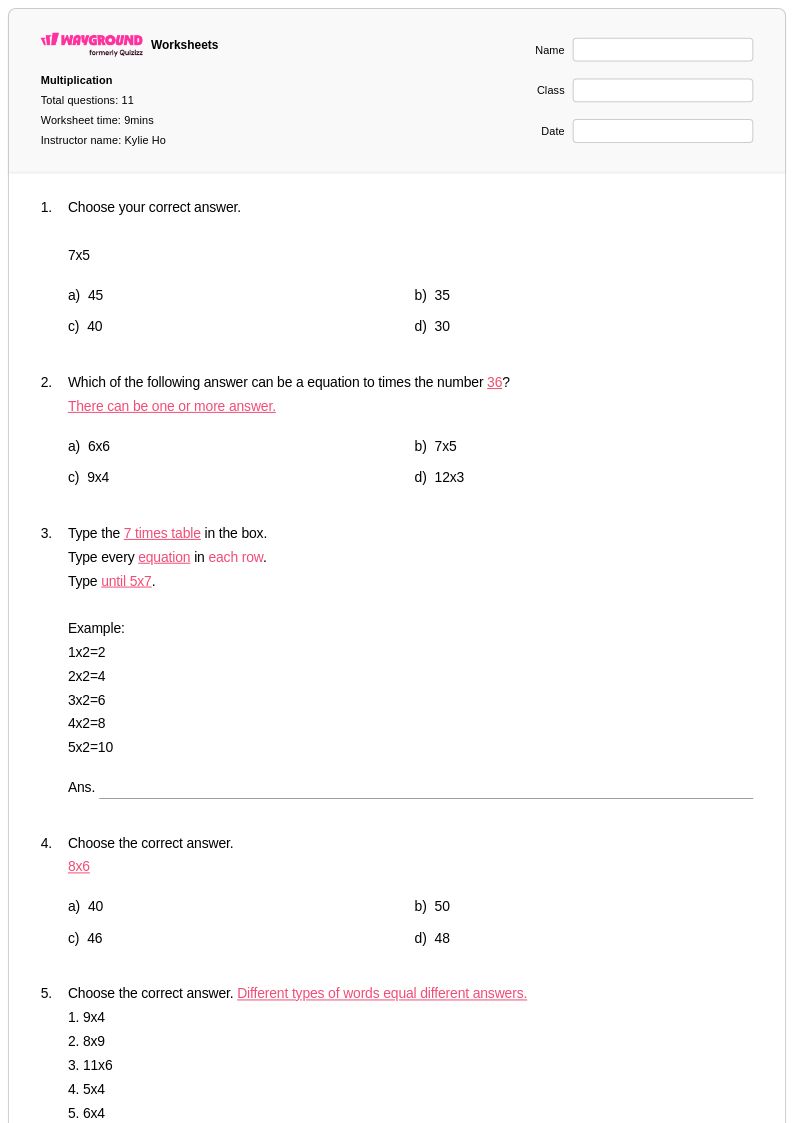
11 Q
1st - 3rd

17 Q
1st
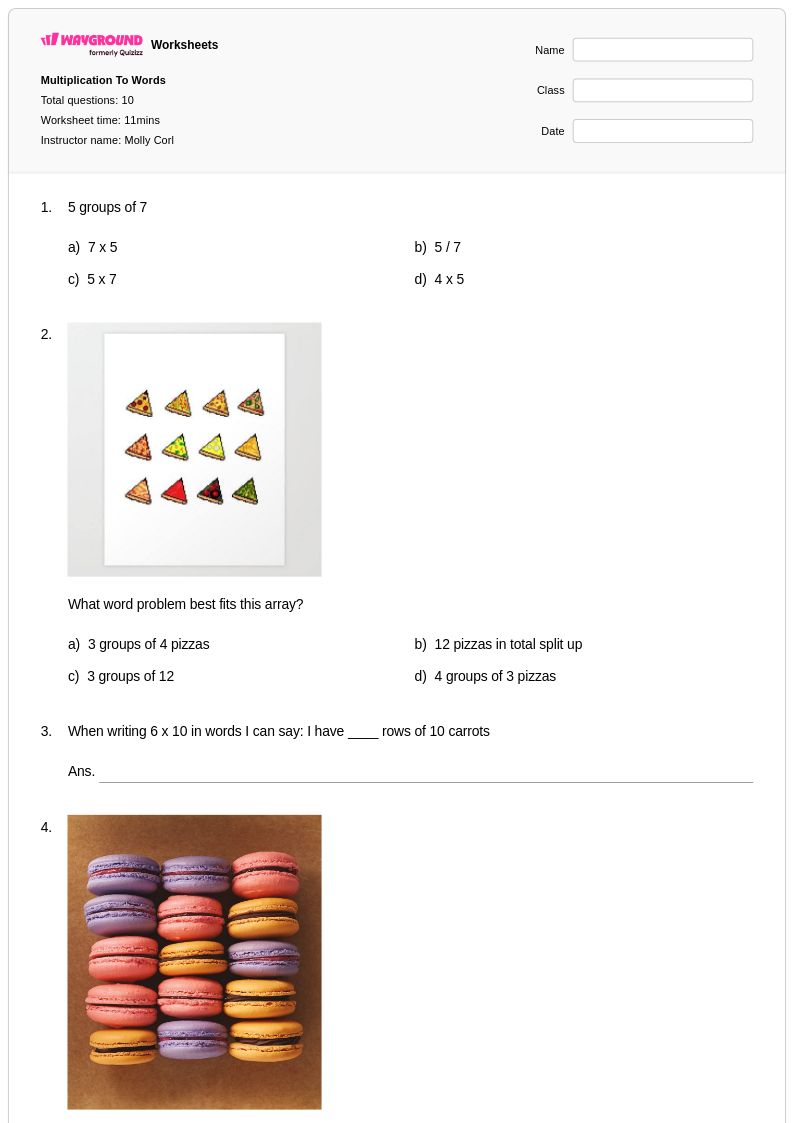
10 Q
1st - 3rd
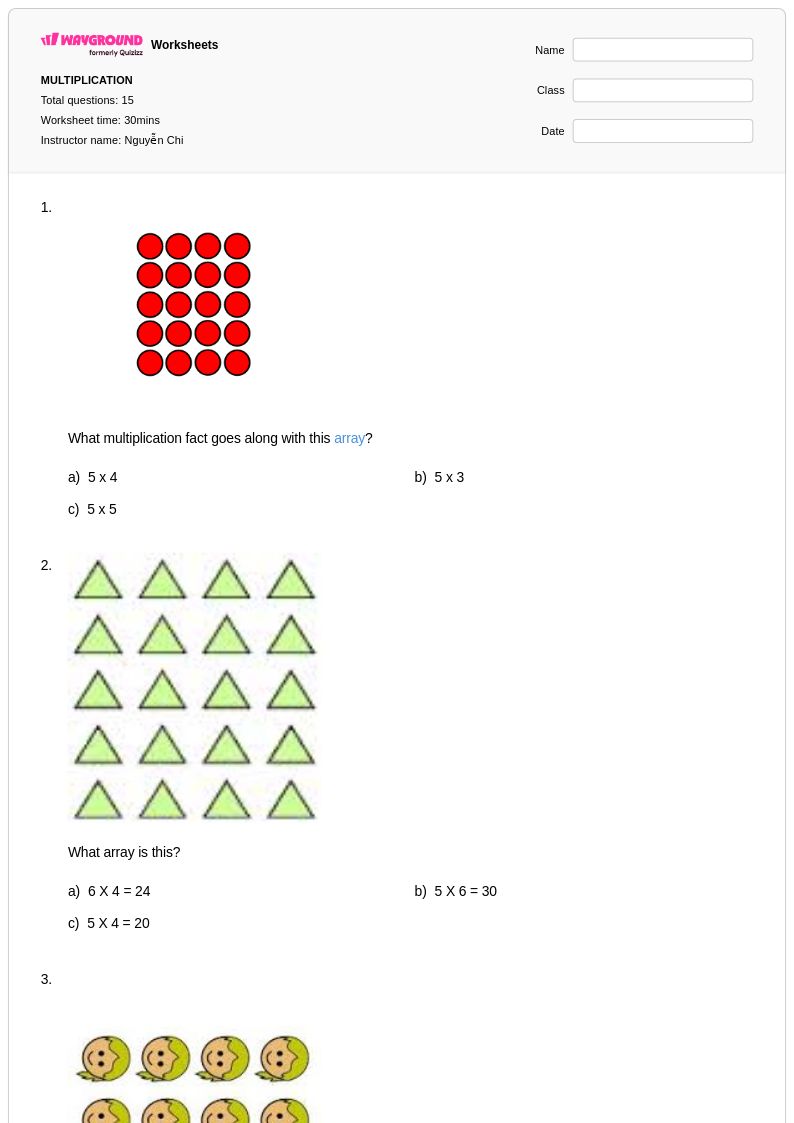
15 Q
1st - 3rd
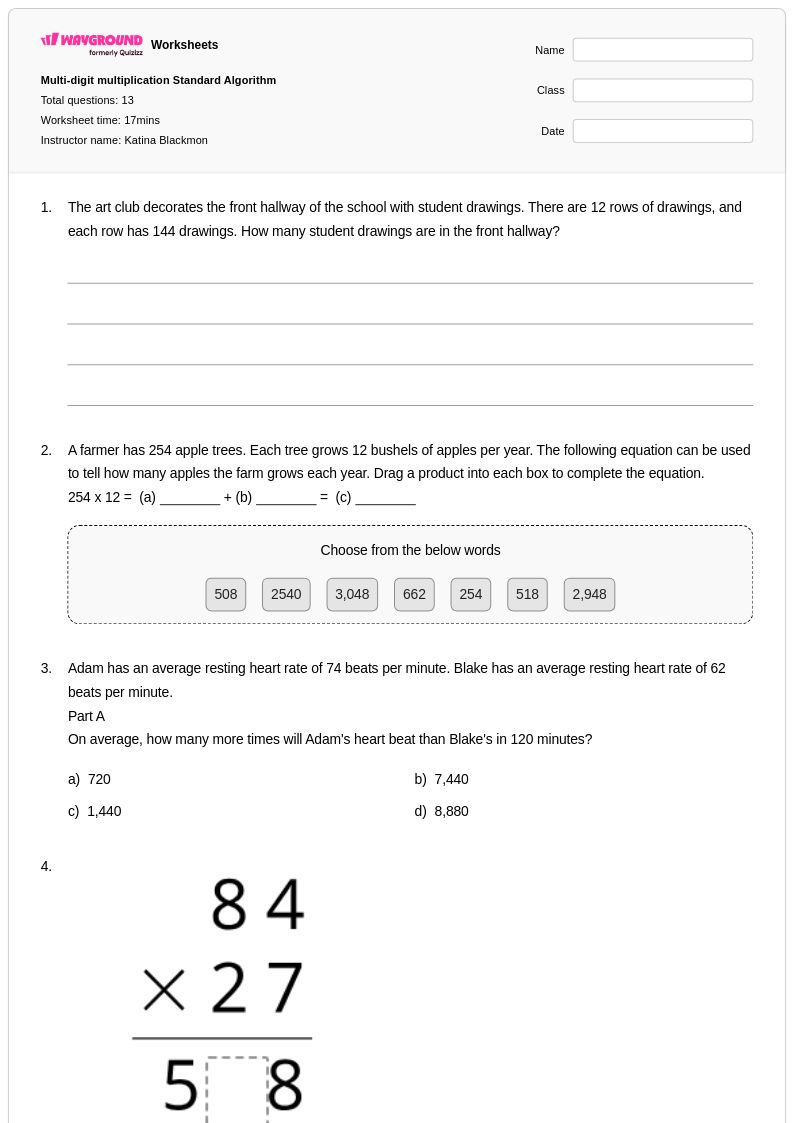
13 Q
1st - 5th
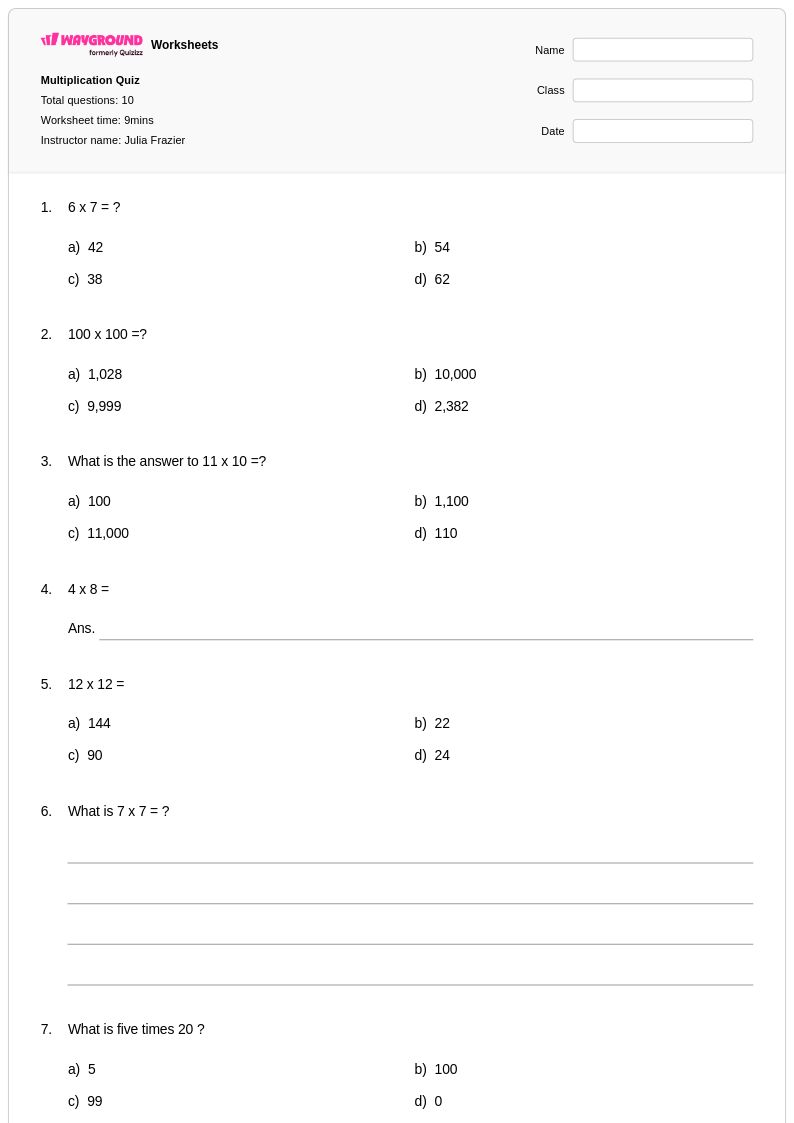
10 Q
1st - 3rd
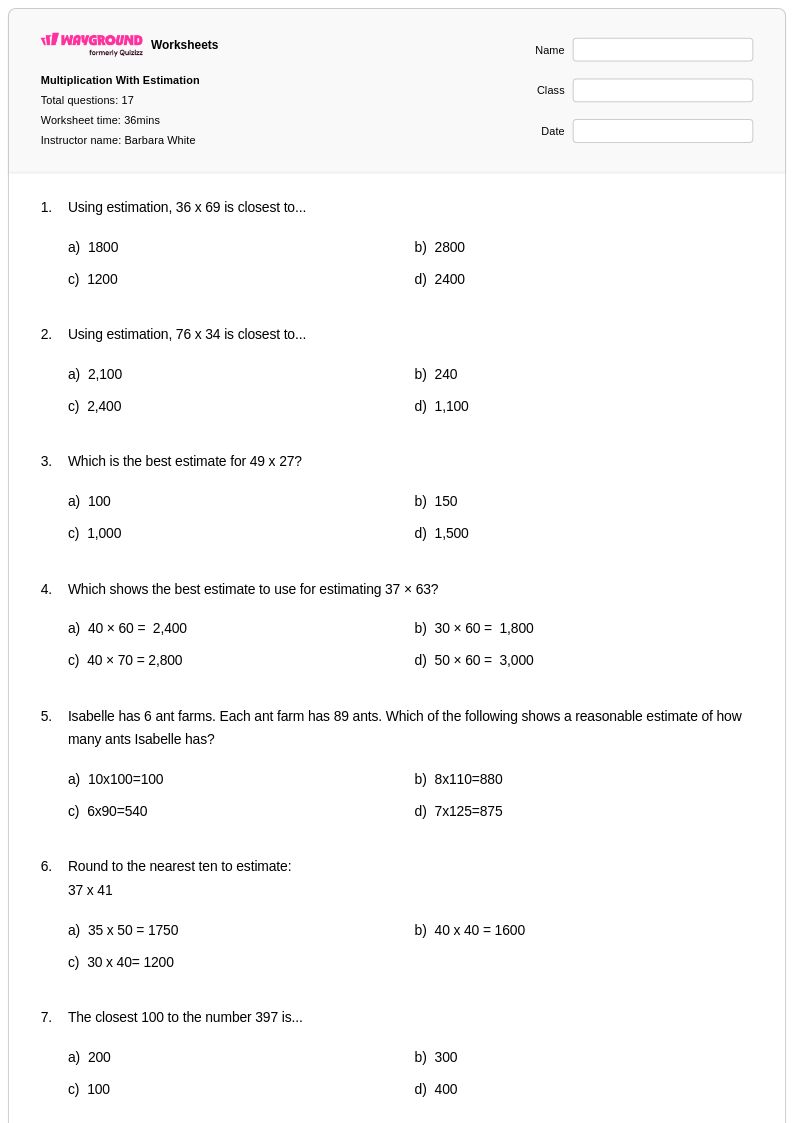
17 Q
1st

10 Q
1st
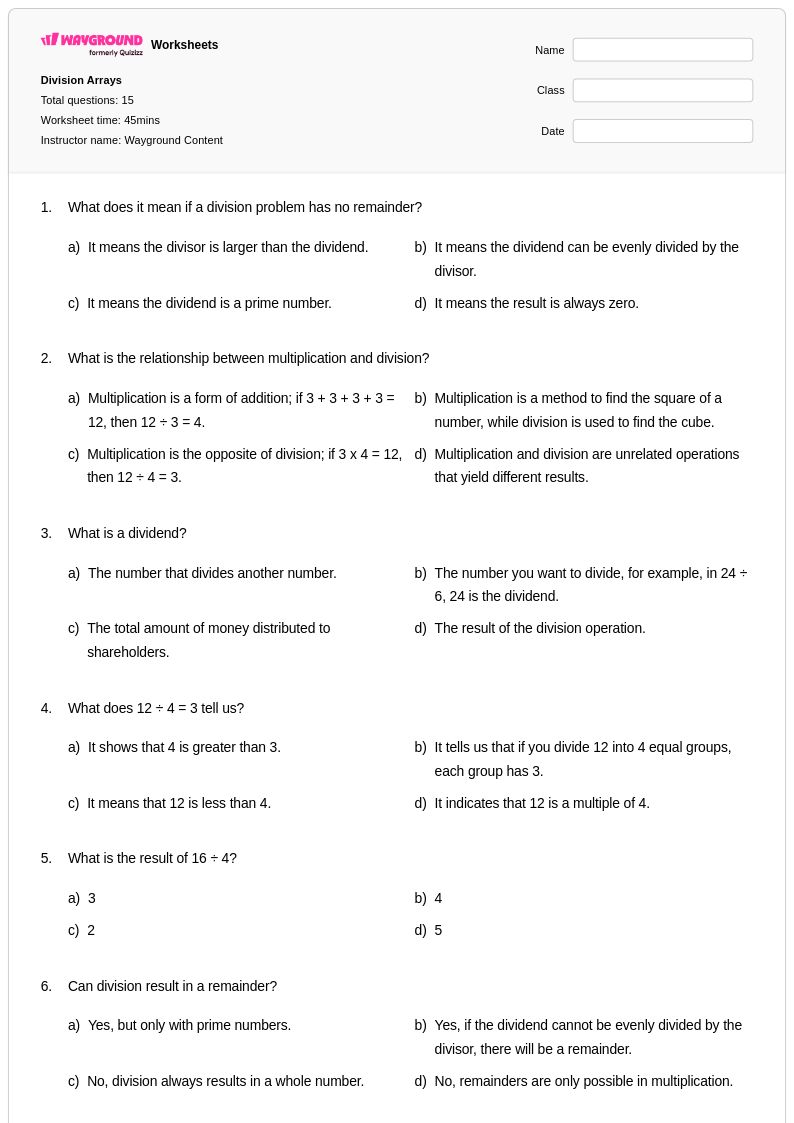
15 Q
1st
Explore Multiplication with Arrays Worksheets by Grades
Explore Other Subject Worksheets for class 1
Explore printable Multiplication with Arrays worksheets for Class 1
Multiplication with arrays worksheets for Class 1 students available through Wayground (formerly Quizizz) provide foundational exposure to visual multiplication concepts through structured grid arrangements. These carefully designed printables introduce young learners to the concept that multiplication represents equal groups arranged in rows and columns, helping students visualize mathematical relationships before formal multiplication instruction begins. Each worksheet features age-appropriate practice problems that allow first graders to count objects arranged in rectangular patterns, building essential number sense and spatial reasoning skills. The comprehensive collection includes free pdf resources complete with answer keys, enabling educators to seamlessly integrate array-based activities that strengthen students' understanding of repeated addition and early multiplicative thinking.
Wayground's extensive library supports teachers with millions of educator-created resources specifically designed for Class 1 multiplication with arrays instruction. The platform's robust search and filtering capabilities allow instructors to quickly locate worksheets that align with curriculum standards and match their students' developmental needs. Teachers can easily differentiate instruction by selecting from various difficulty levels and customizing materials to address individual learning goals, whether for remediation of basic counting skills or enrichment of advanced pattern recognition. The flexible format options, including both printable and digital pdf versions, accommodate diverse classroom environments and teaching preferences, making lesson planning more efficient while providing consistent opportunities for meaningful skill practice in early mathematical reasoning.
FAQs
What is the goal of teaching arrays in 1st grade?
How can I use arrays to introduce repeated addition to first graders?
What exercises are best for practicing arrays in 1st grade?
What challenges might first graders face when connecting arrays to repeated addition?
How can I use this 1st grade arrays worksheet in my classroom?
How does this topic build on Kindergarten skills and prepare students for 2nd grade math?