Free Printable New England Colonies Worksheets for Class 8
Explore Class 8 New England Colonies worksheets and printables that help students master early American colonial history through engaging practice problems, free PDF resources, and comprehensive answer keys.
Explore printable New England Colonies worksheets for Class 8
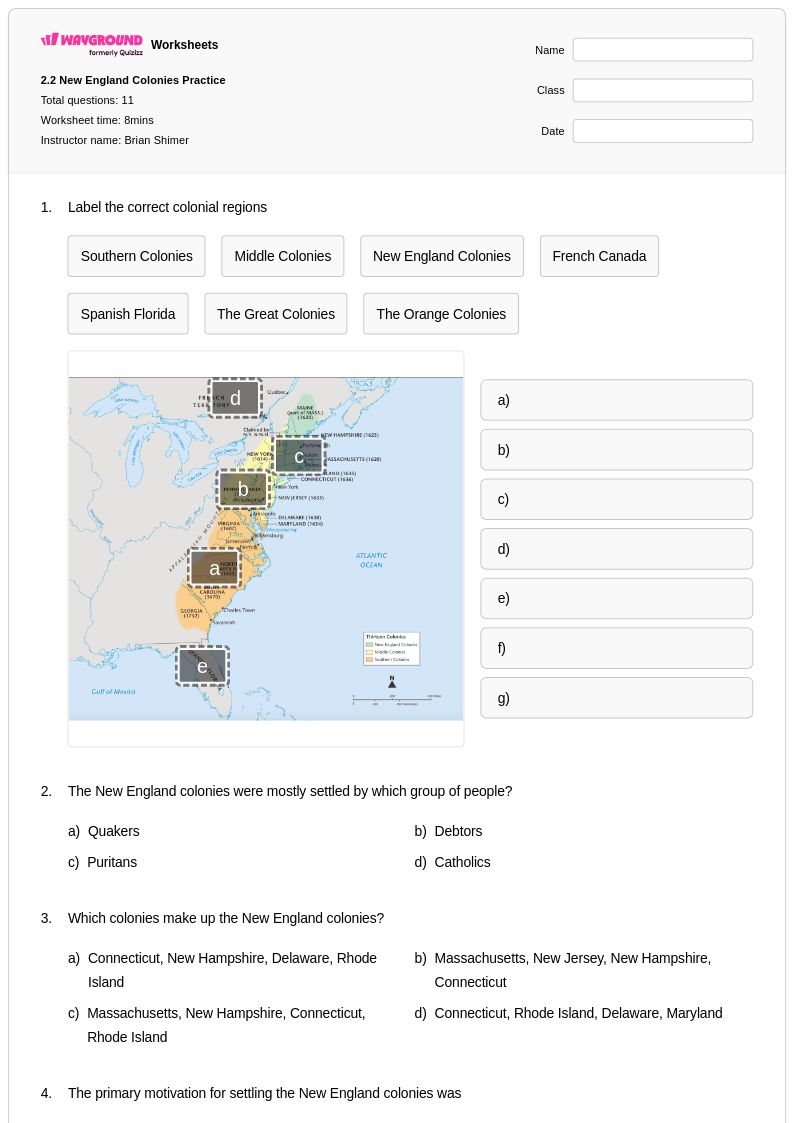
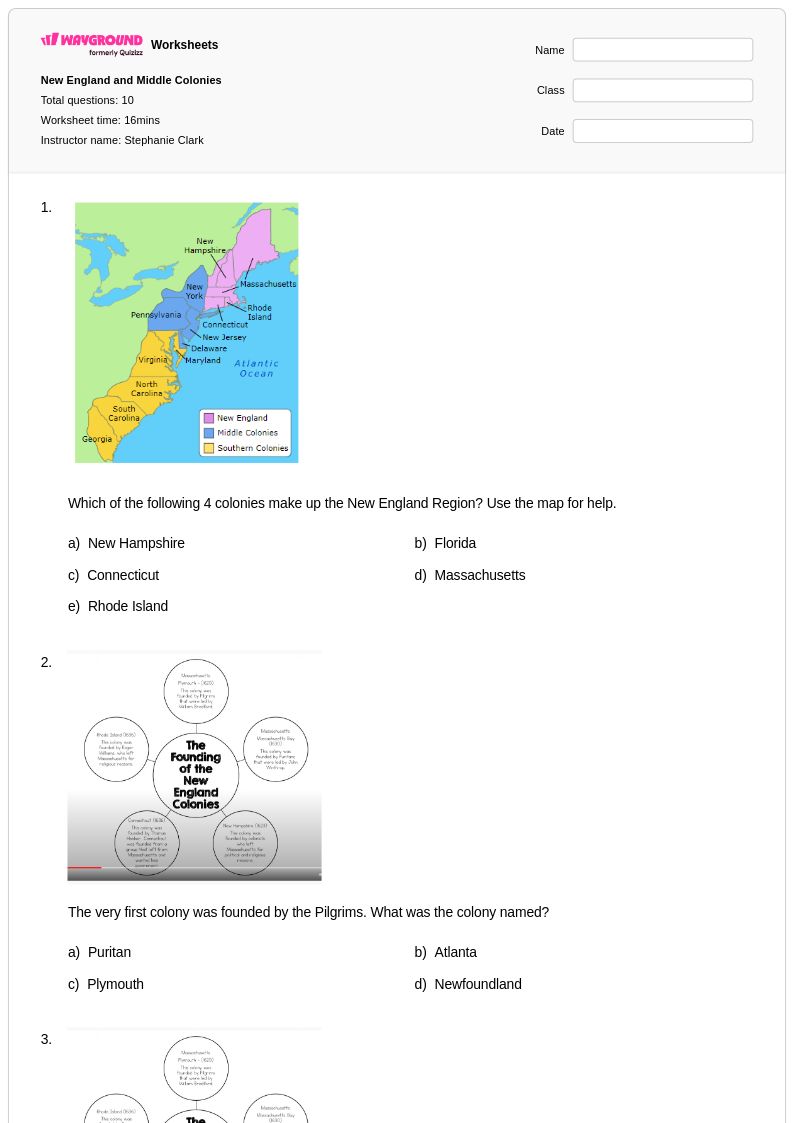
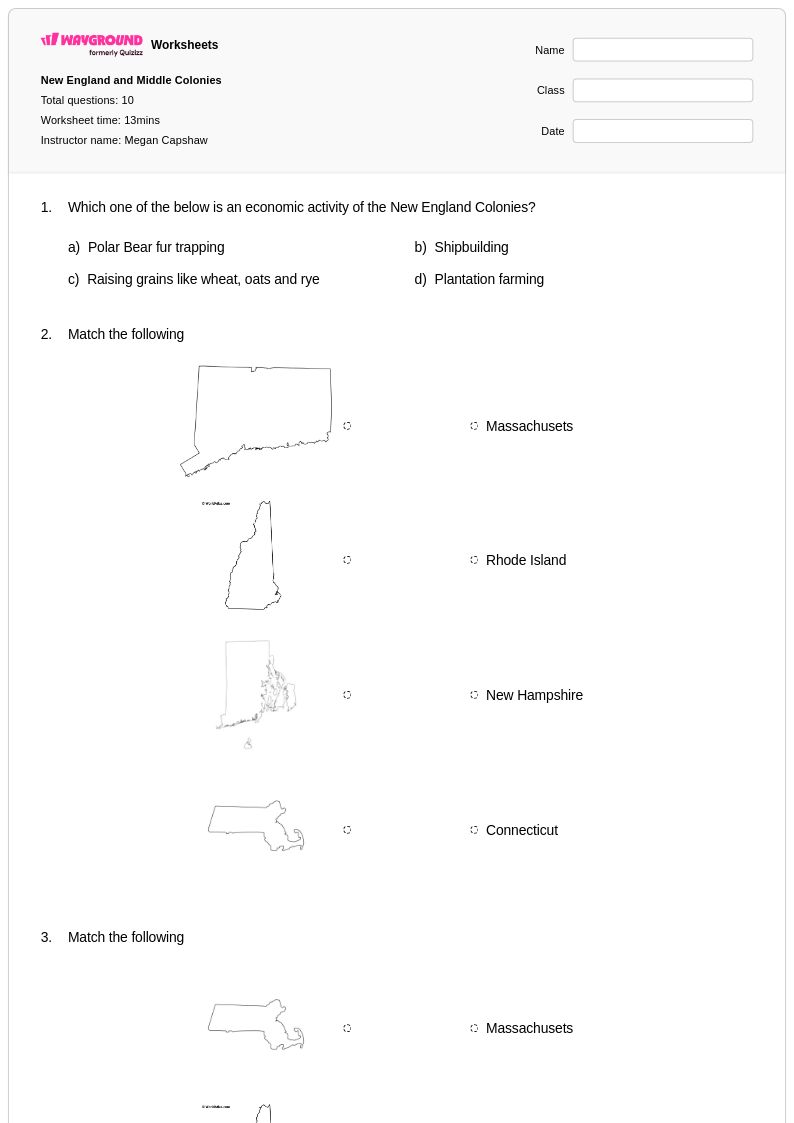
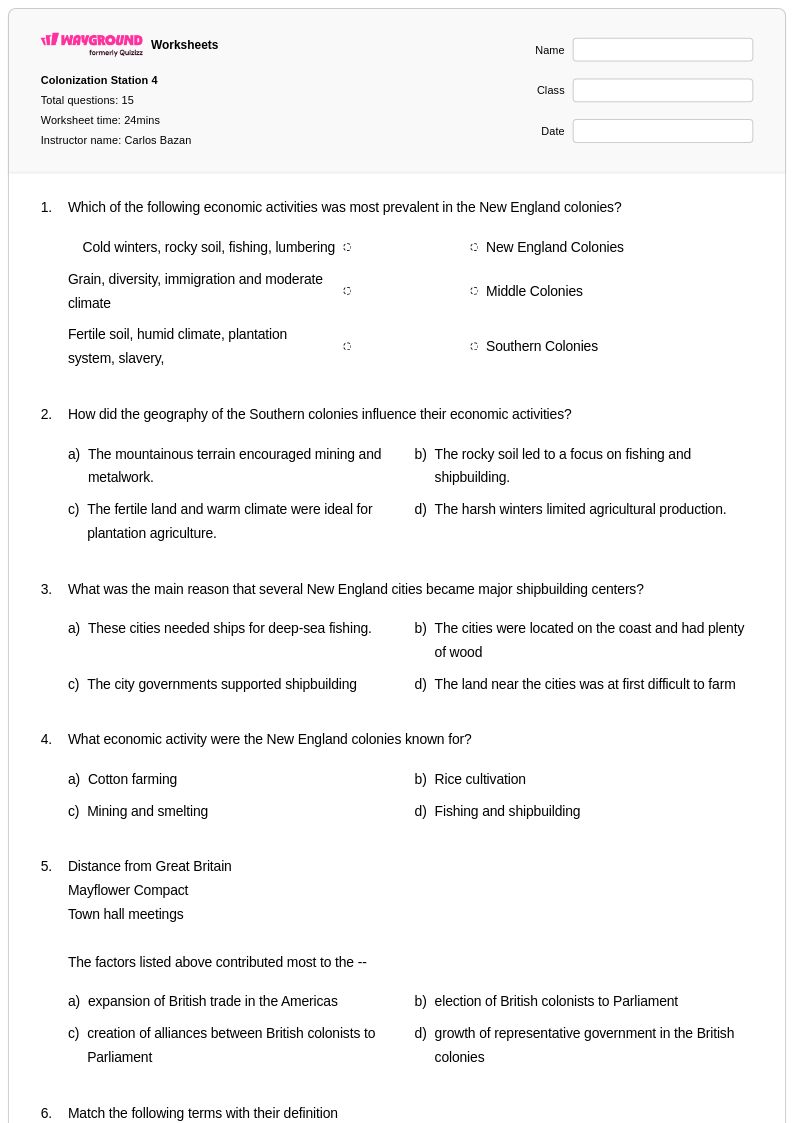
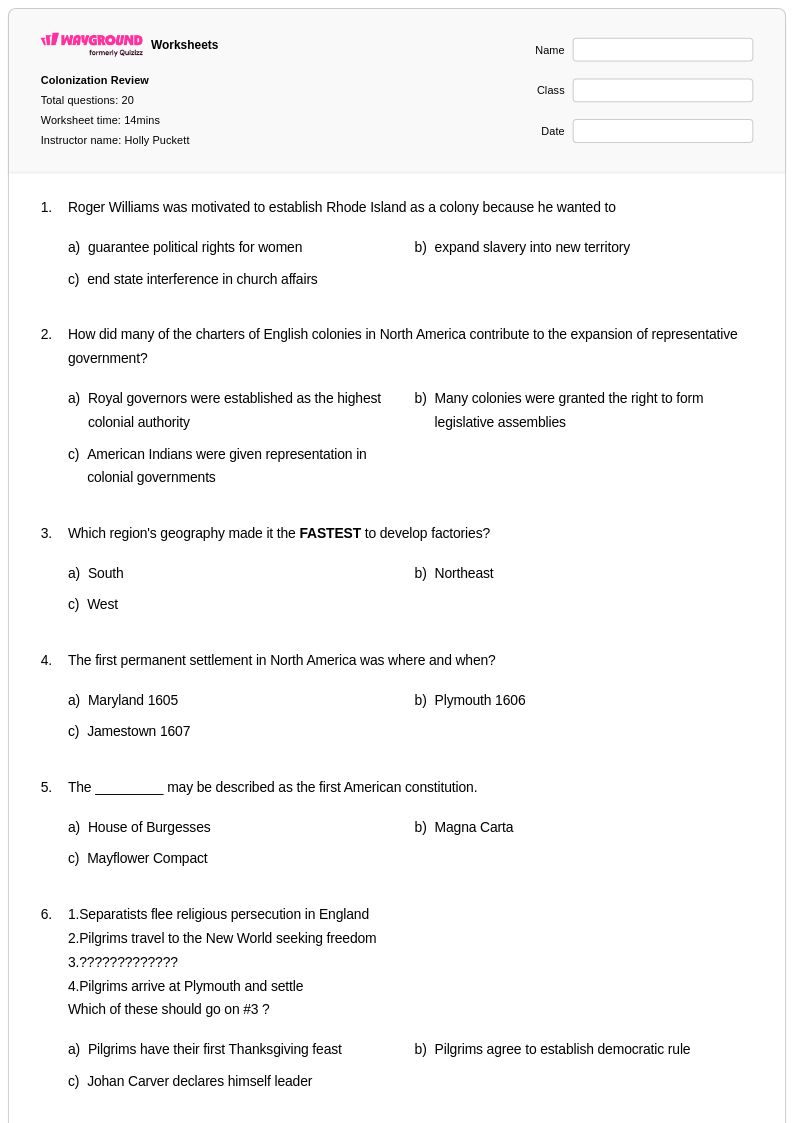
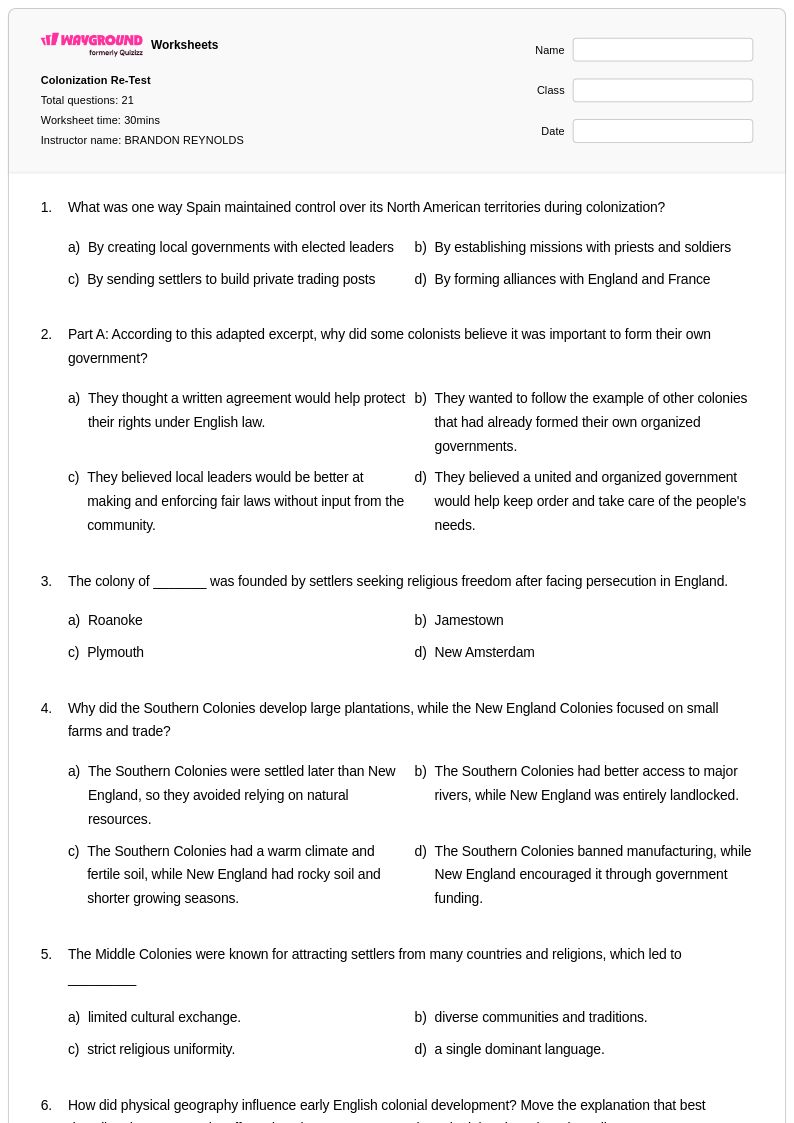
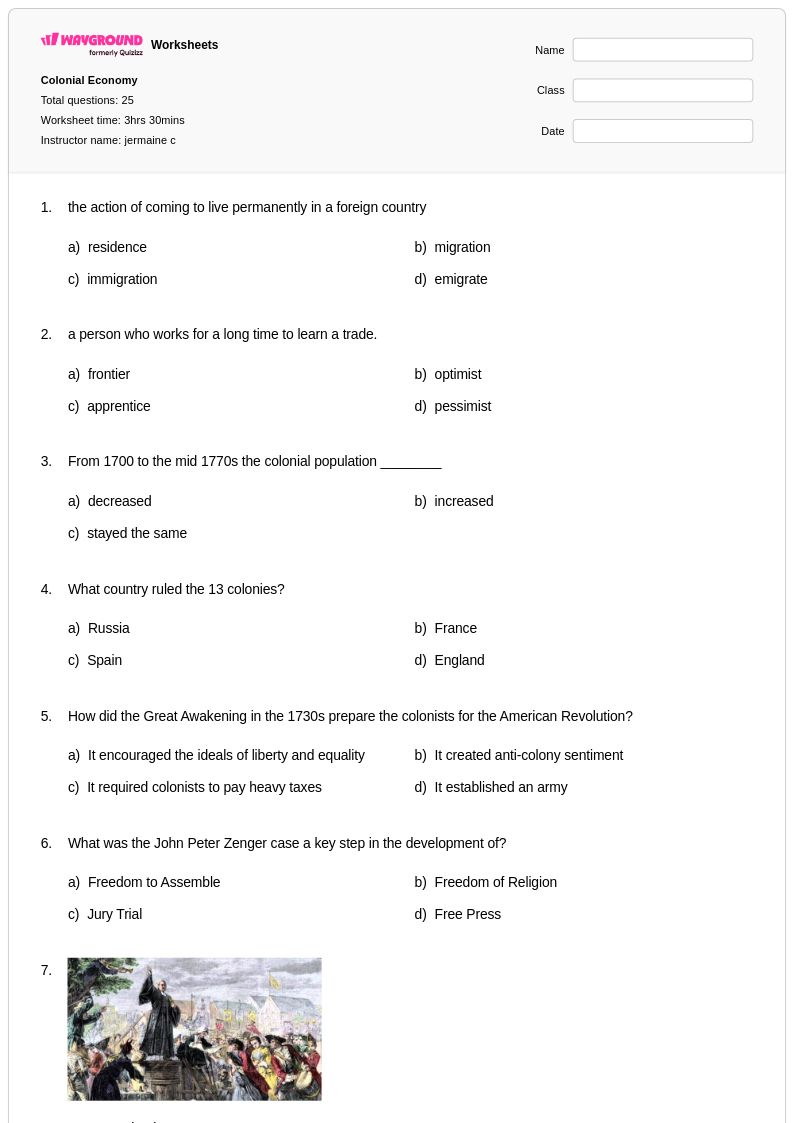
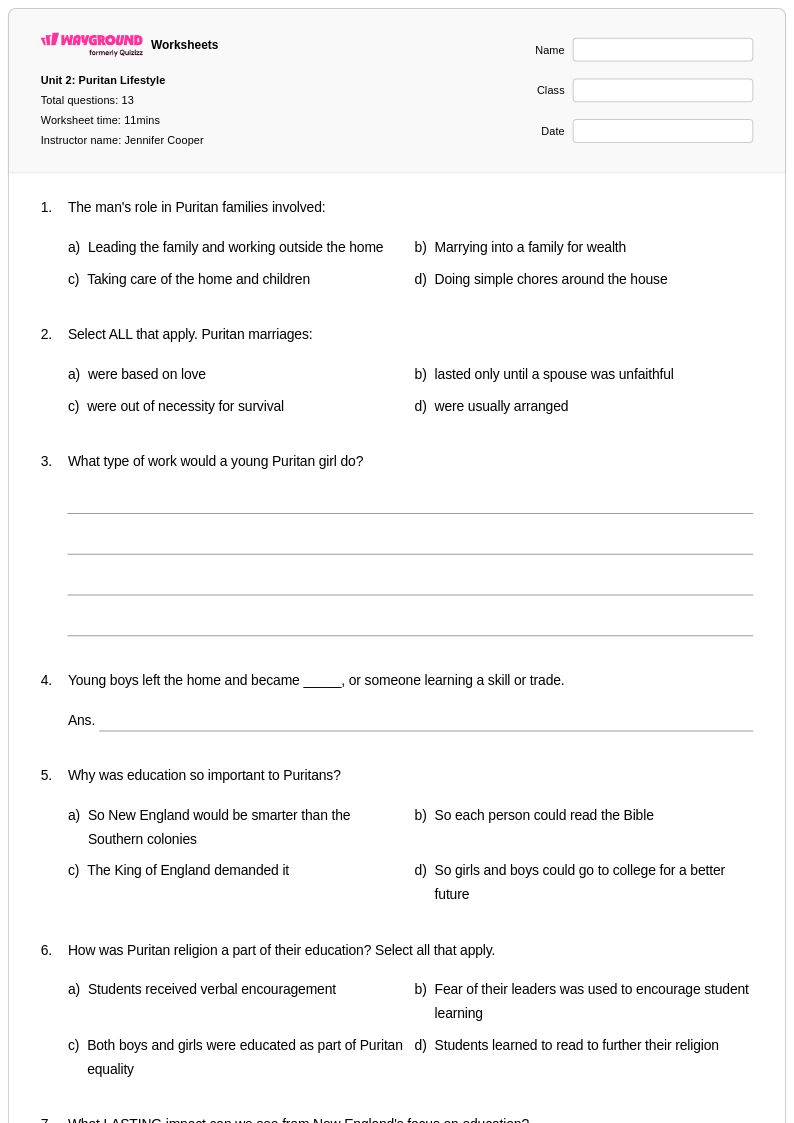
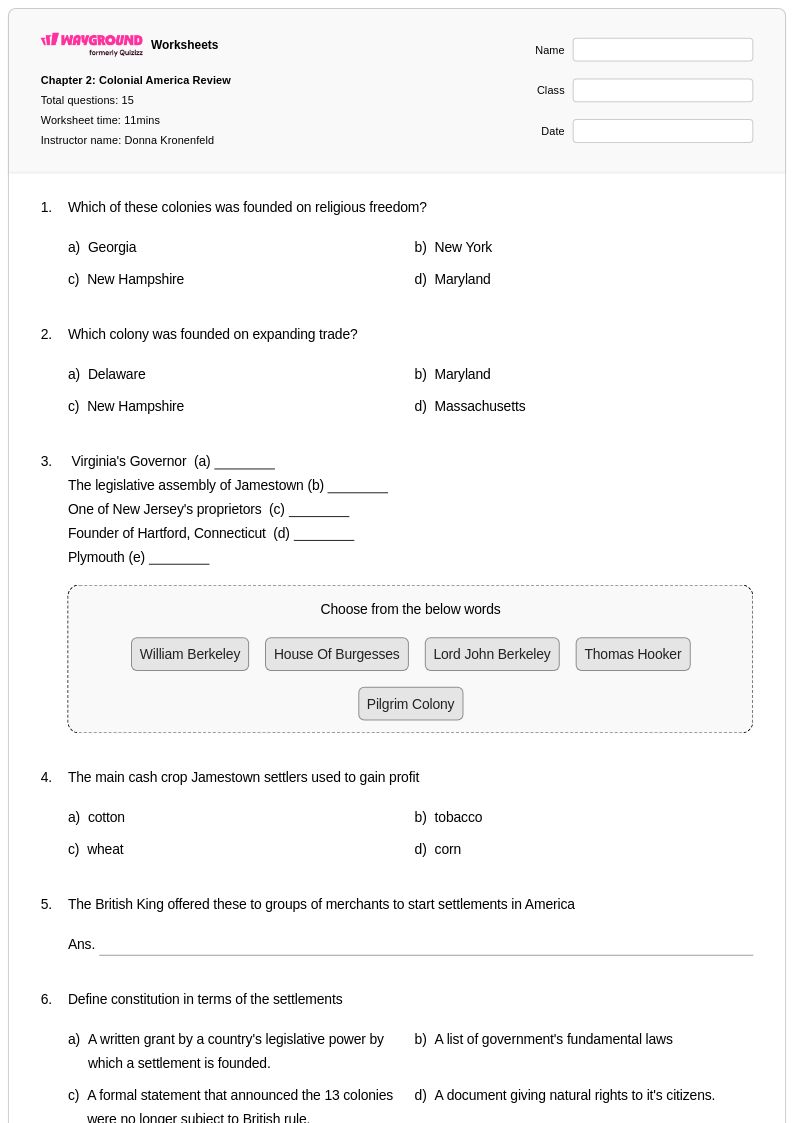
New England Colonies worksheets for Class 8 students available through Wayground provide comprehensive exploration of the founding and development of Massachusetts, Connecticut, Rhode Island, and New Hampshire during the colonial period. These educational resources strengthen critical thinking skills as students analyze primary source documents, examine the motivations behind Puritan settlement, and evaluate the economic foundations built on fishing, shipbuilding, and trade. The worksheet collections include detailed answer keys that support independent learning, while free printables offer teachers flexibility in classroom implementation. Practice problems guide students through complex historical concepts such as the Great Migration, town meeting governance, and the relationship between religious beliefs and colonial society, ensuring thorough comprehension of how New England's unique characteristics shaped early American development.
Wayground's extensive library draws from millions of teacher-created resources specifically designed to support Class 8 Social Studies instruction on colonial America. The platform's advanced search and filtering capabilities enable educators to quickly locate worksheets aligned with state and national history standards, while differentiation tools allow for seamless adaptation to diverse learning needs within the classroom. Teachers can access materials in both printable pdf format and interactive digital versions, providing maximum flexibility for lesson planning and student engagement. These comprehensive worksheet collections serve multiple instructional purposes, from initial skill-building exercises to targeted remediation for struggling learners and enrichment activities for advanced students, making them invaluable resources for developing deep understanding of New England's pivotal role in American colonial history.
FAQs
How do I teach the New England Colonies to middle school students?
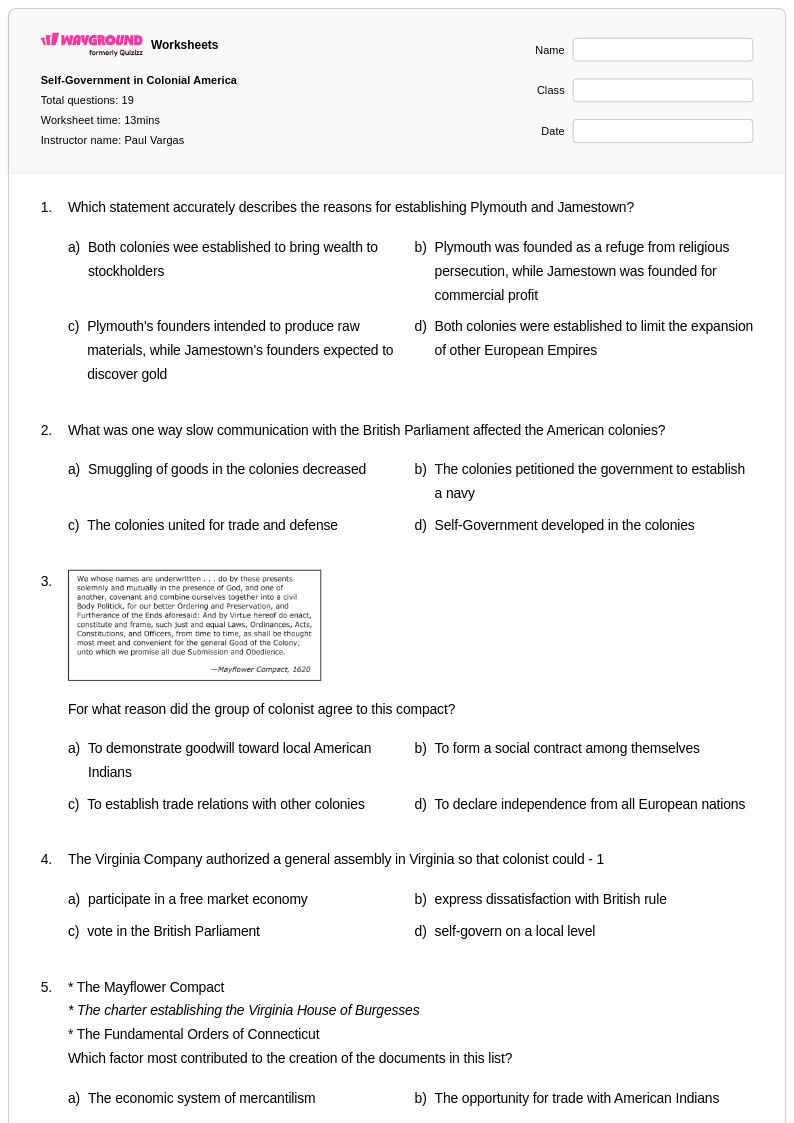
Teaching the New England Colonies effectively means anchoring instruction in the "why" behind settlement: religious persecution in England drove Puritan migration, which in turn shaped nearly every aspect of colonial life from governance to education. Start with the Mayflower Compact as a foundation for understanding self-governance, then build outward to town meetings, Puritan religious influence, and the economic realities of fishing and trade. Using primary source documents alongside cause-and-effect analysis helps students connect individual colonial experiences to broader patterns in early American history.
What topics should New England Colonies worksheets cover?
Strong New England Colonies worksheets should cover the founding of Massachusetts, Connecticut, Rhode Island, and New Hampshire, as well as the Puritan influence on colonial society, the Mayflower Compact, town meeting governance, and the economic foundations built on fishing and trade. Students also benefit from practice analyzing cause-and-effect relationships, such as how religious persecution in England drove migration patterns. Including primary source analysis and connections to King Philip's War rounds out the content and builds historical reasoning skills.
What misconceptions do students commonly have about the New England Colonies?
A frequent misconception is that all New England colonists were Puritans seeking purely religious freedom, when in fact economic motivations, indentured servitude, and forced migration also shaped the colonial population. Students also often conflate the Pilgrims and the Puritans, treating them as the same group with the same beliefs and goals. Another common error is assuming colonial governance was democratic in the modern sense, when in reality participation in town meetings and civic life was tightly restricted by religious standing and property ownership.
How does studying the New England Colonies connect to broader American history themes?
The New England Colonies introduce foundational concepts that recur throughout American history, including self-governance through documents like the Mayflower Compact, the tension between religious authority and civil liberty, and the economic structures that shaped regional identity. The Puritan emphasis on literacy and education also directly influenced the development of public schooling in America. Understanding these colonial foundations gives students the context needed to make sense of later events like the American Revolution and the drafting of the Constitution.
How can I use New England Colonies worksheets in my classroom?
New England Colonies worksheets work well as structured practice after direct instruction, as primary source analysis activities during inquiry-based lessons, or as review tools before assessments. On Wayground, these worksheets are available as printable PDFs for traditional classroom use and in digital formats for technology-integrated environments, and teachers can also host them as a quiz directly on the platform. Each worksheet includes a complete answer key, making them suitable for independent student work, small group activities, or teacher-led instruction.
How can I differentiate New England Colonies instruction for students at different skill levels?
For struggling students, focus on visual timelines, simplified primary sources, and scaffolded cause-and-effect organizers to build foundational understanding before introducing more complex analysis. Advanced learners benefit from extended primary source documents, comparative tasks that contrast New England with other colonial regions, and open-ended historical reasoning prompts. On Wayground, teachers can apply individual student accommodations such as read aloud support, reduced answer choices, and extended time, allowing the same core content to be accessible across a range of learning needs without disrupting the rest of the class.

![US - 13 Colonies [New England] 22-23 - Printable New-england-colonies Worksheets Class 8 - Wayground](https://quizizz-static.s3.amazonaws.com/_media/worksheets-new/6307d2d9753be1001d9d7b28-us-13-colonies-new-england-22-23)