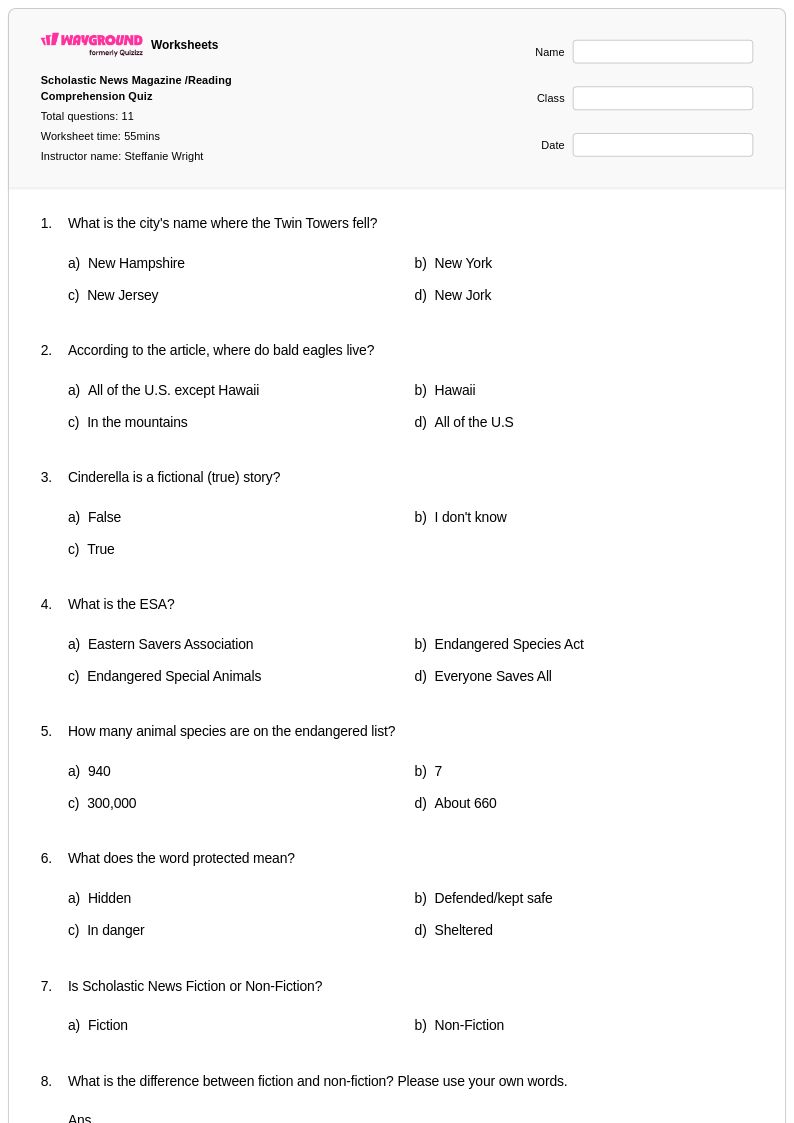
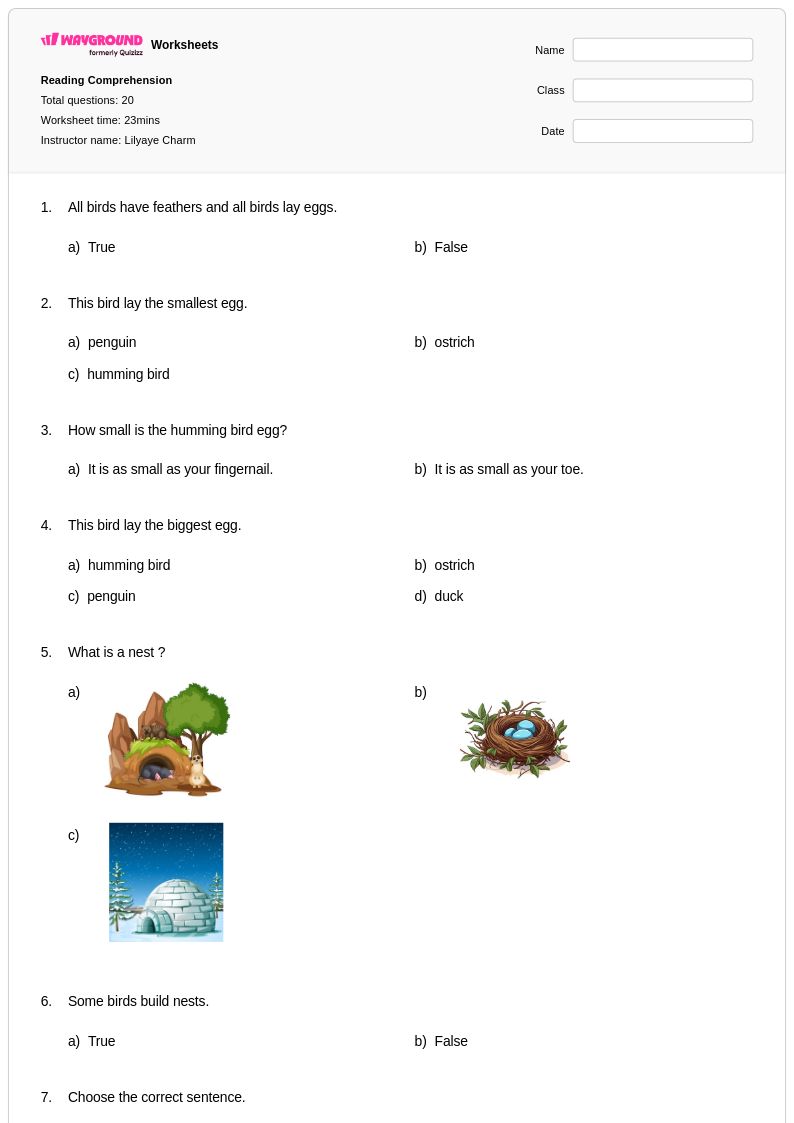
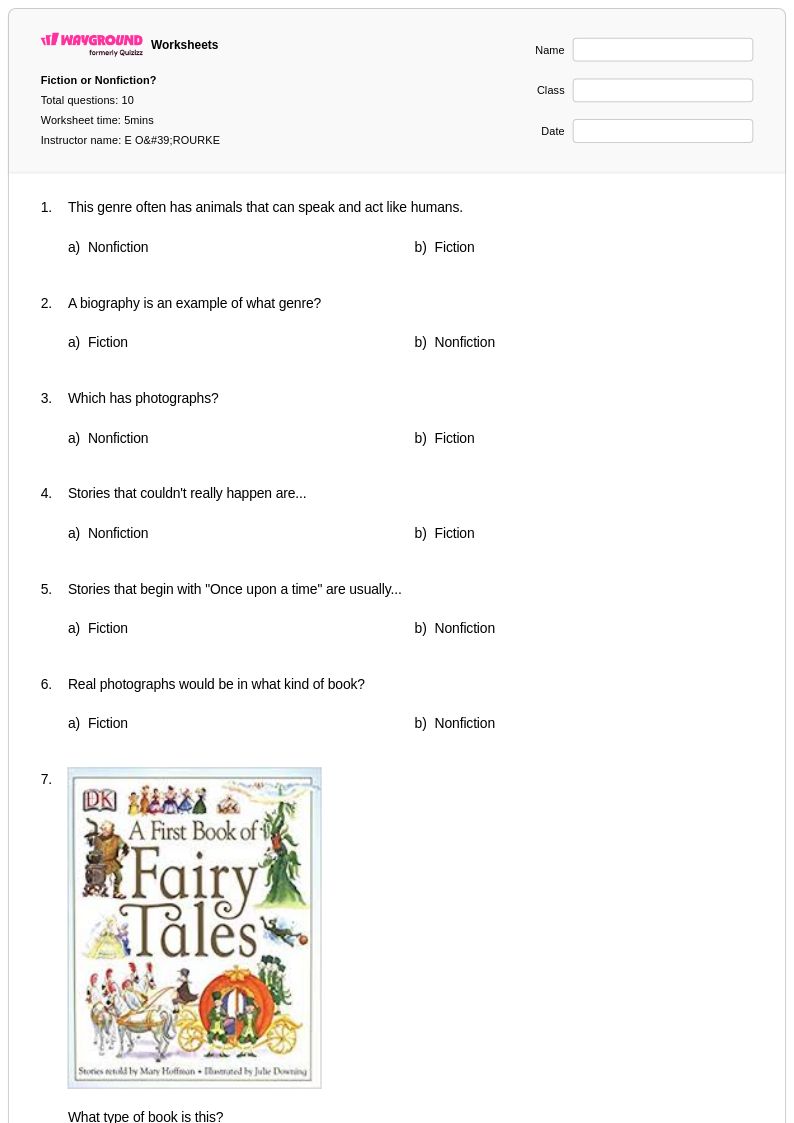
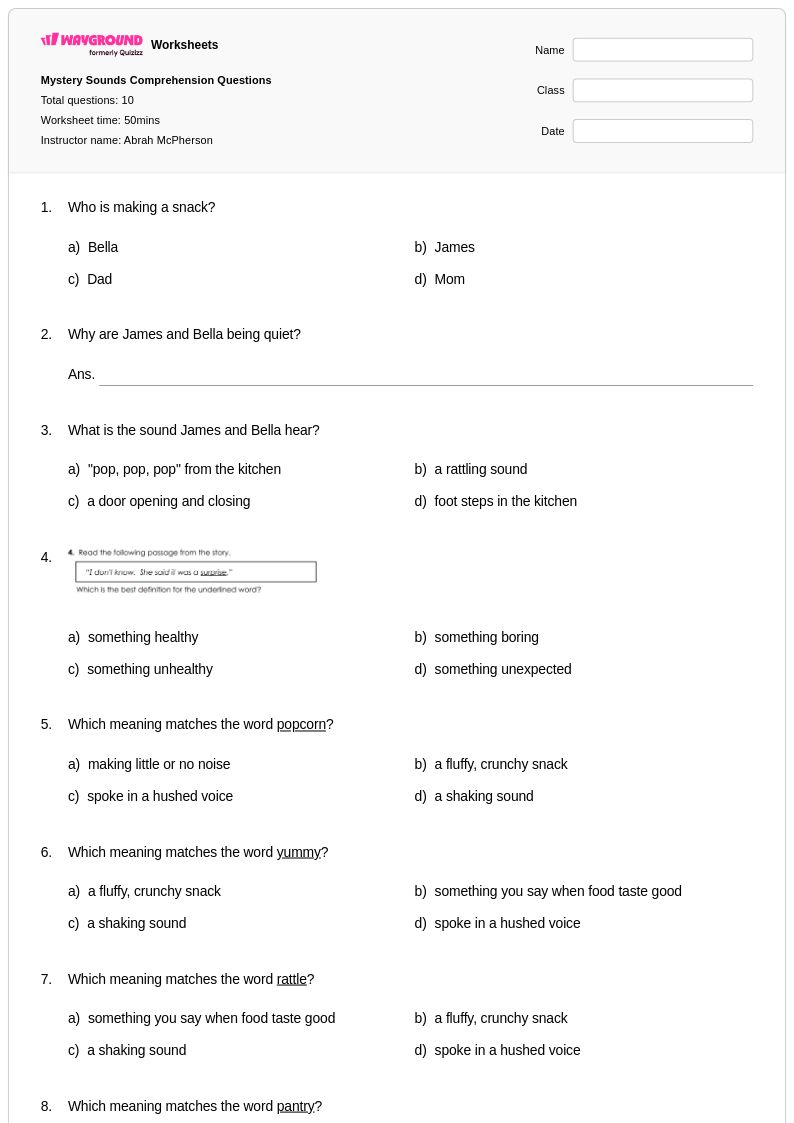
Free Printable Nonfiction Comprehension Questions Worksheets for Class 2
Enhance Class 2 reading skills with our free nonfiction comprehension questions worksheets and printables, complete with answer keys to help students practice critical thinking and text analysis through engaging PDF activities.
Explore printable Nonfiction Comprehension Questions worksheets for Class 2
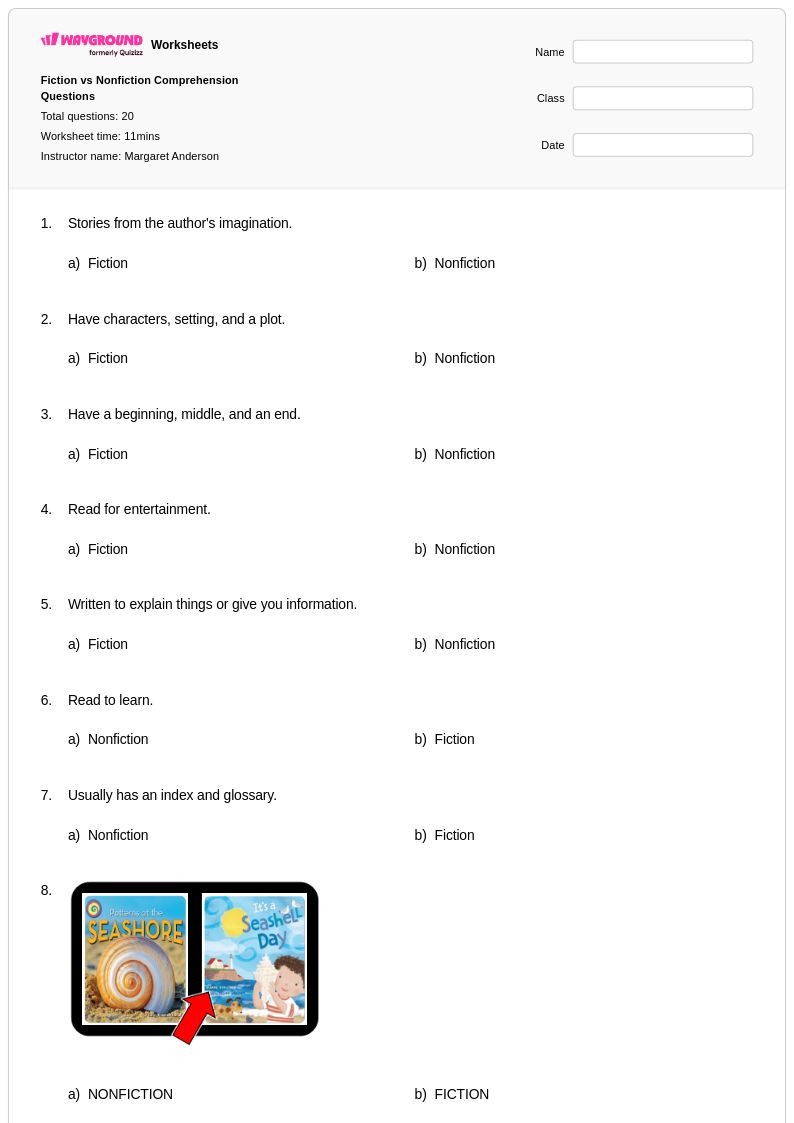
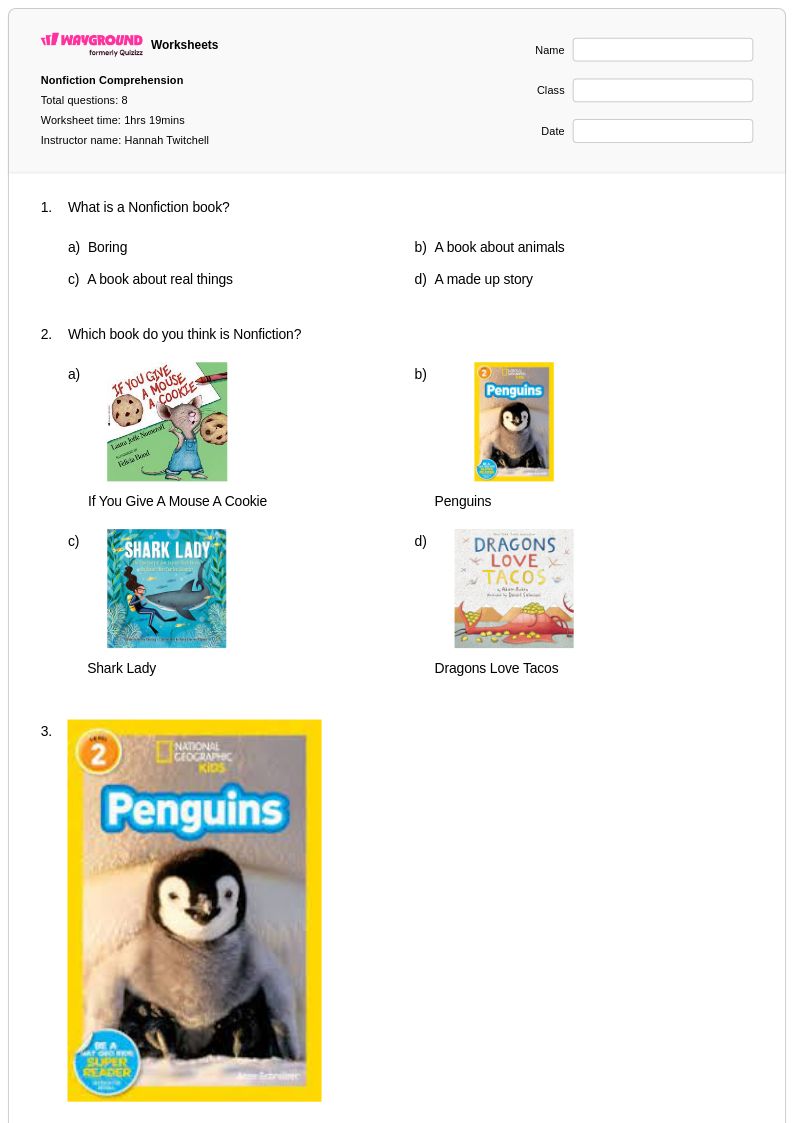
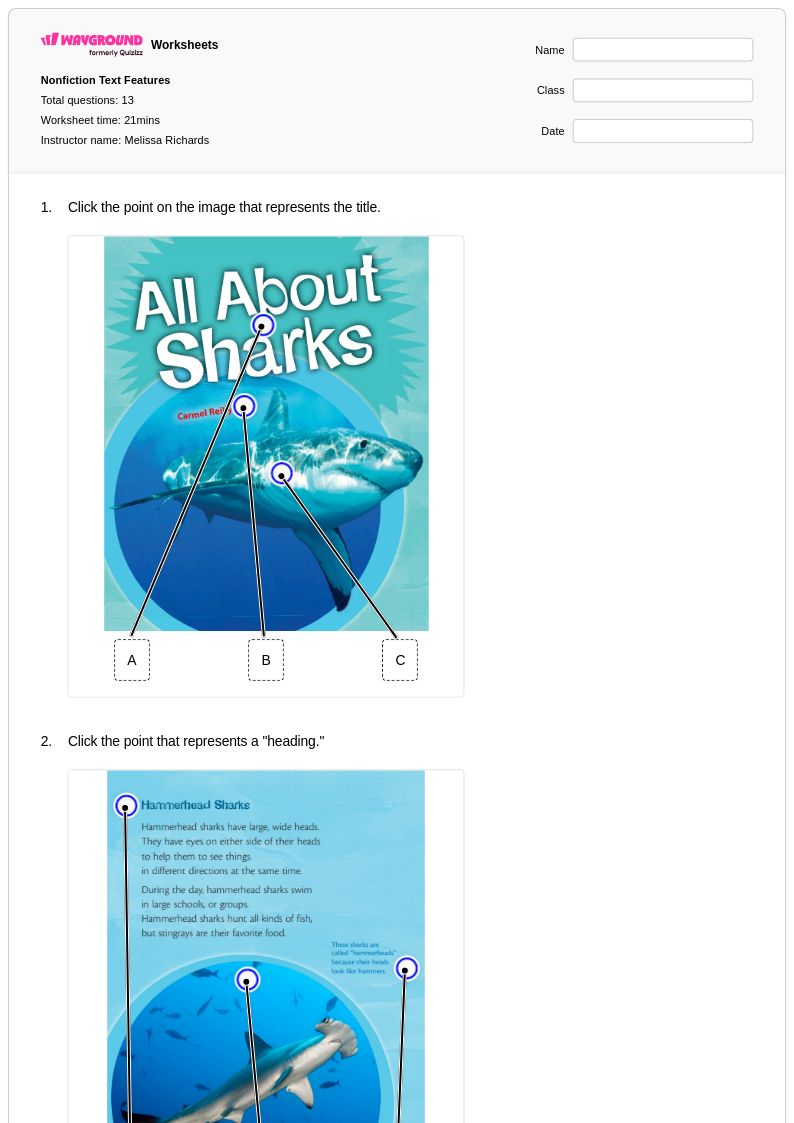
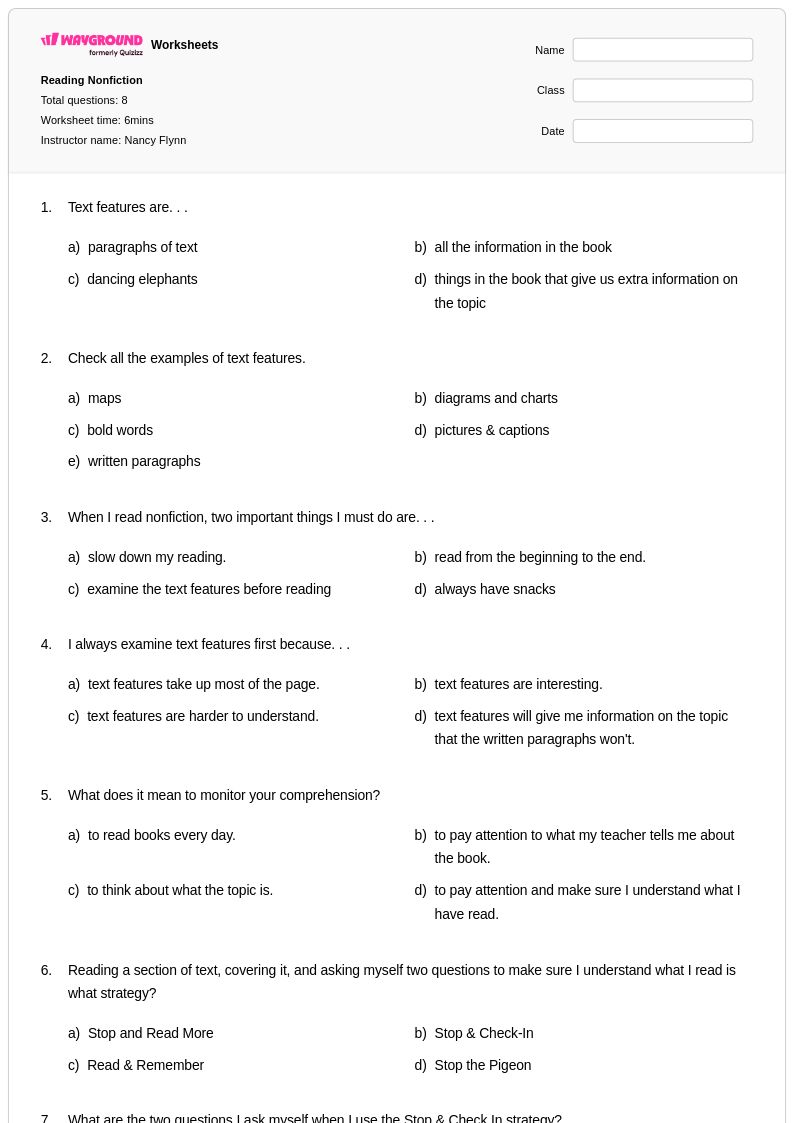
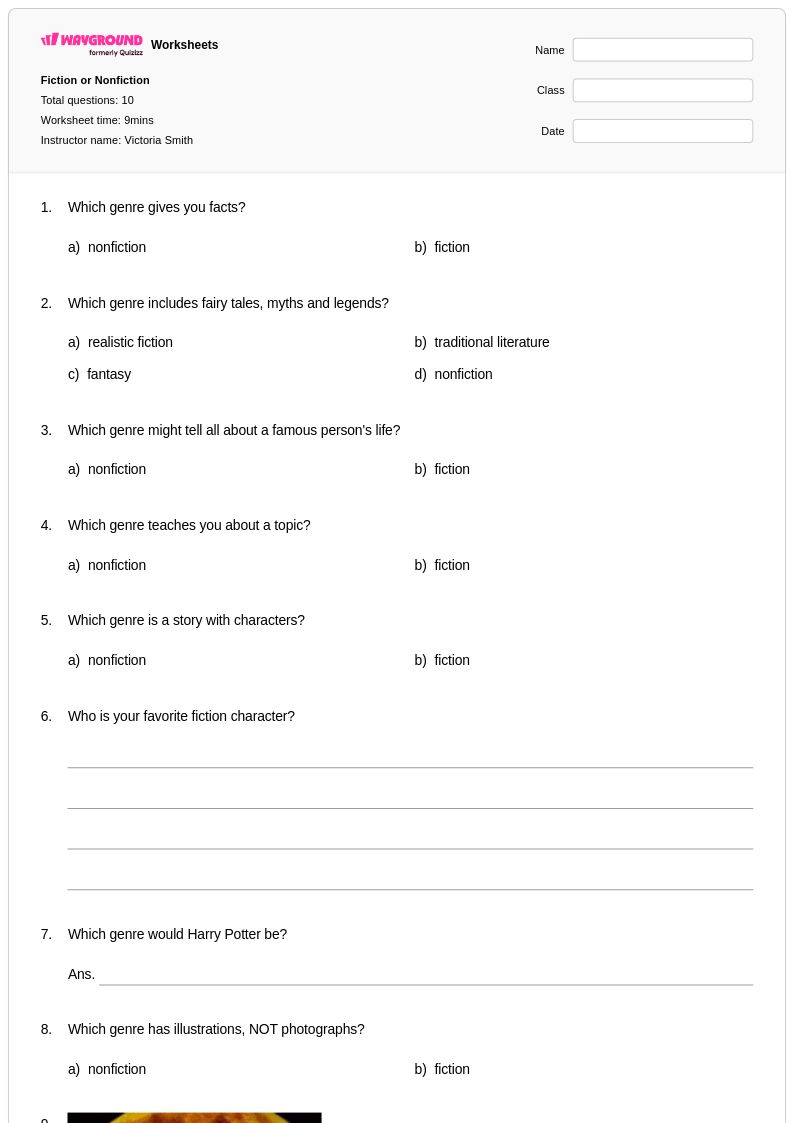
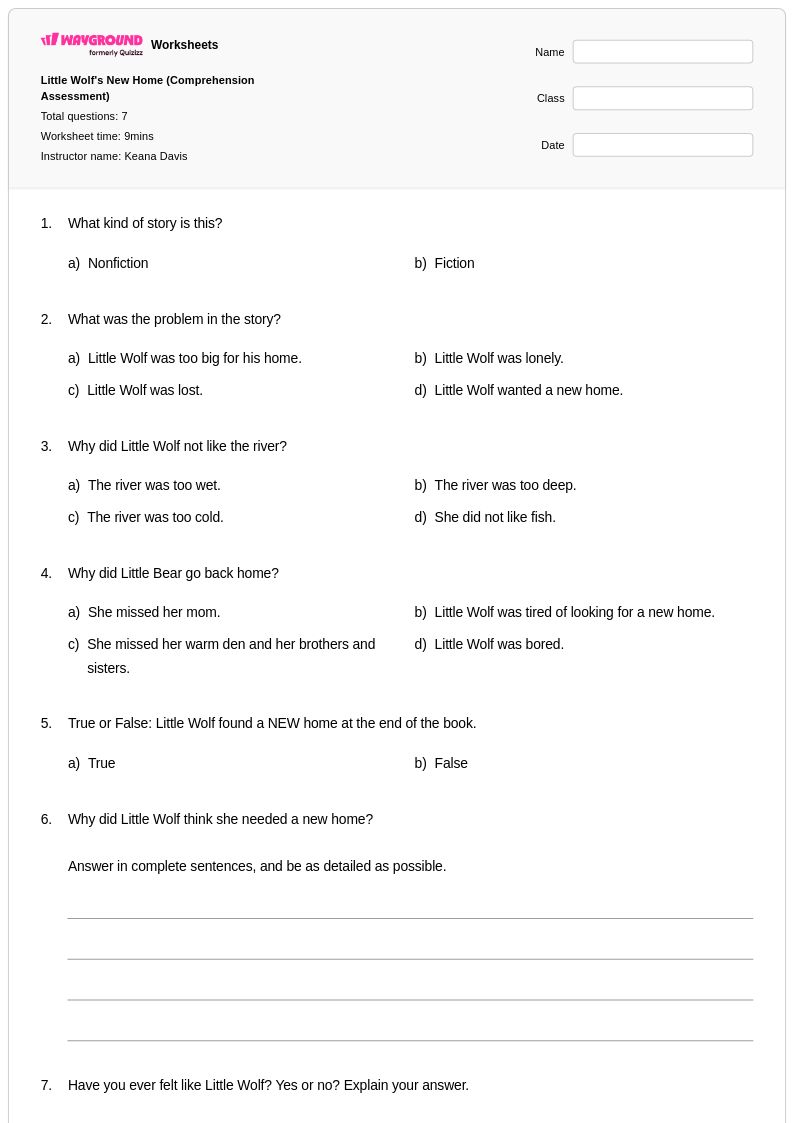
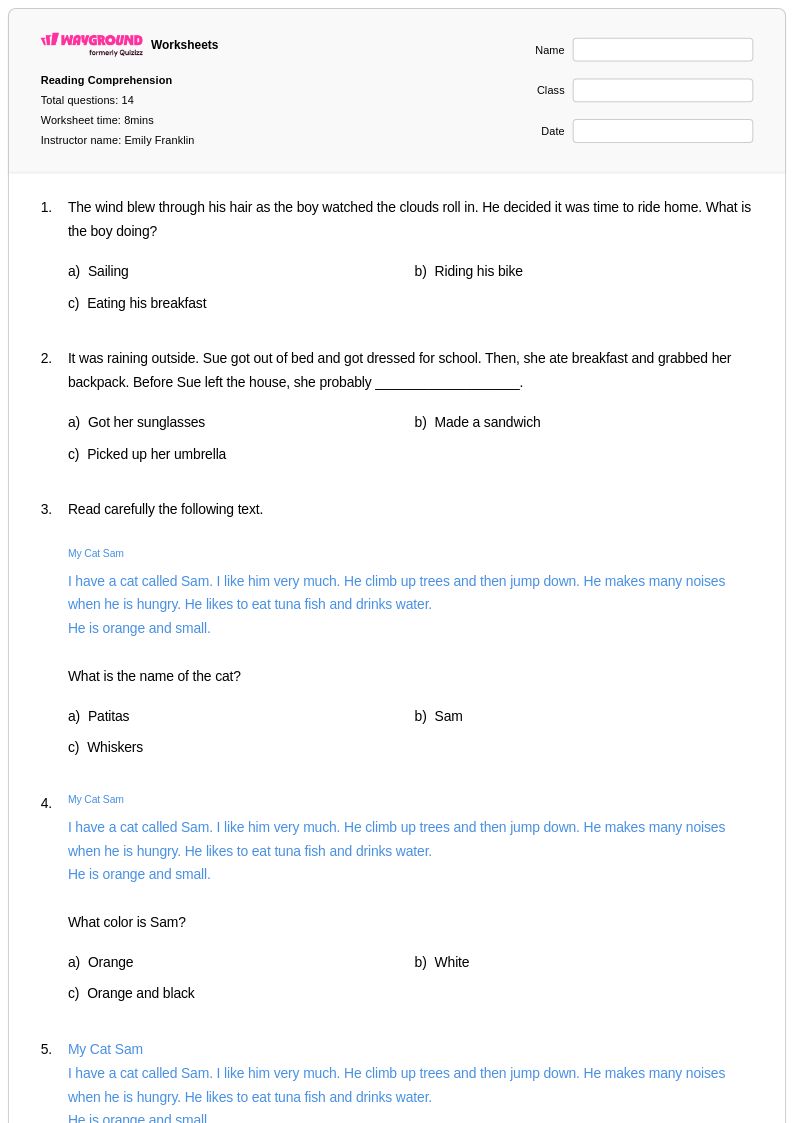
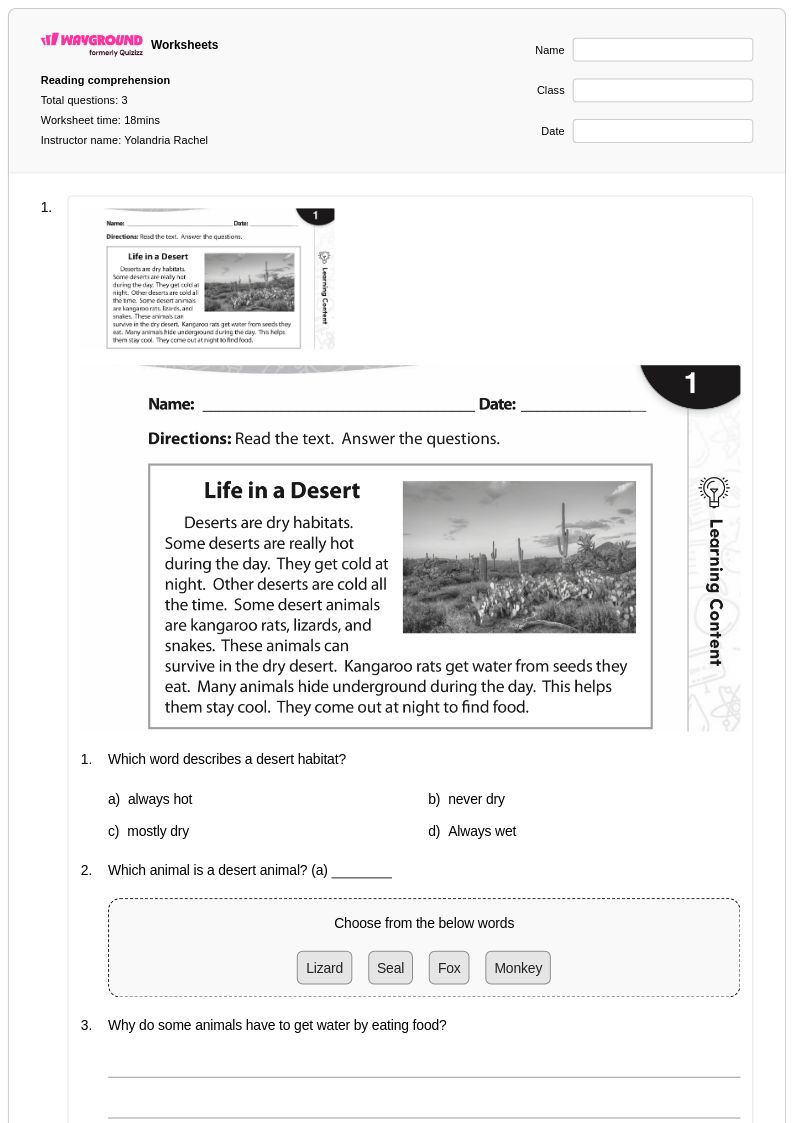
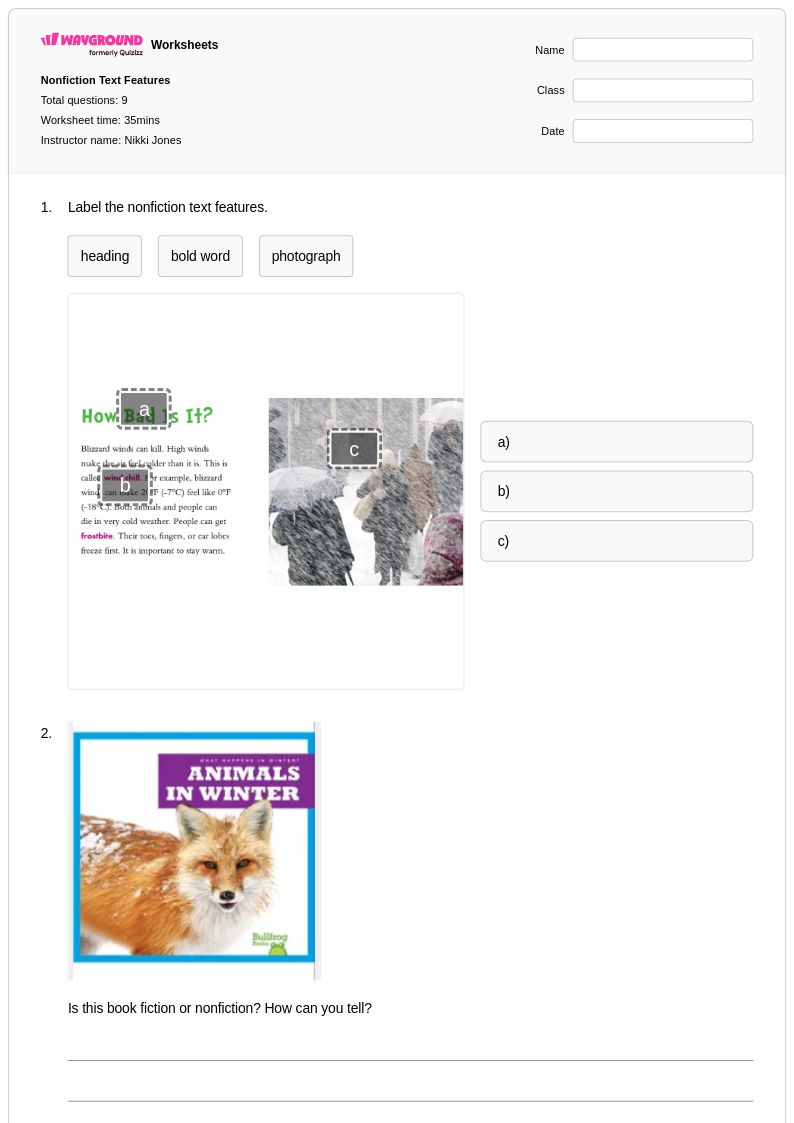
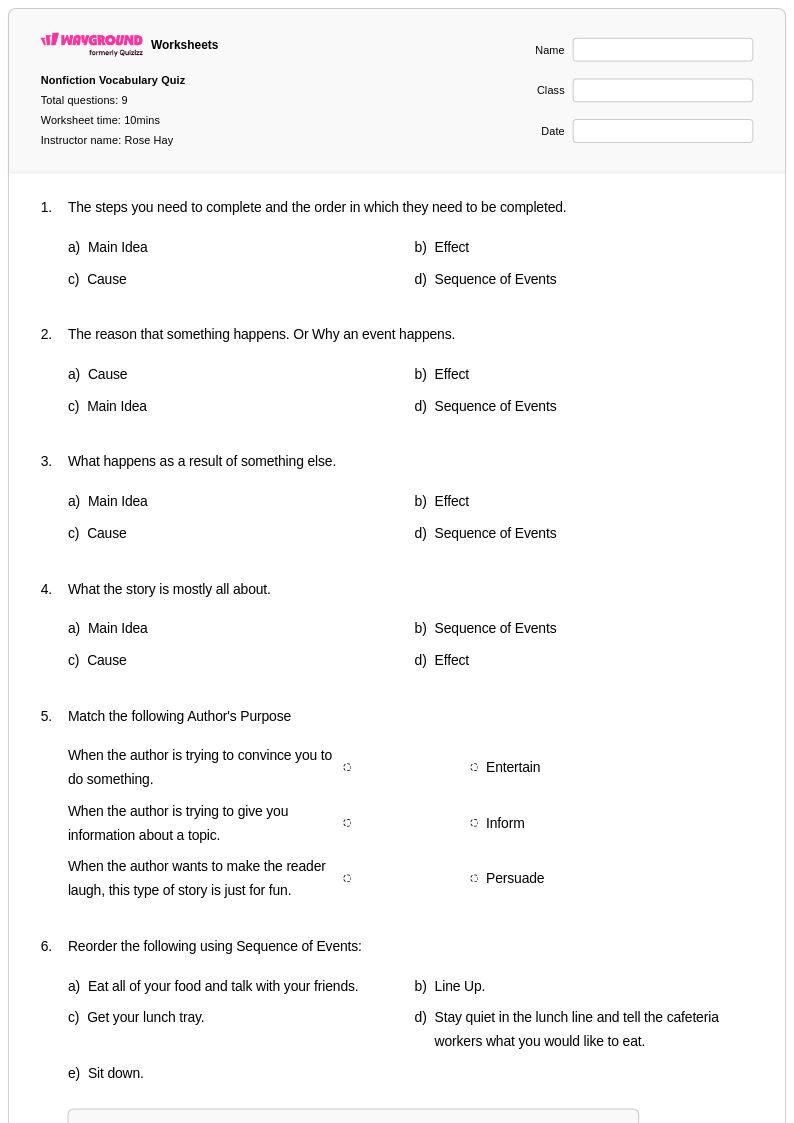
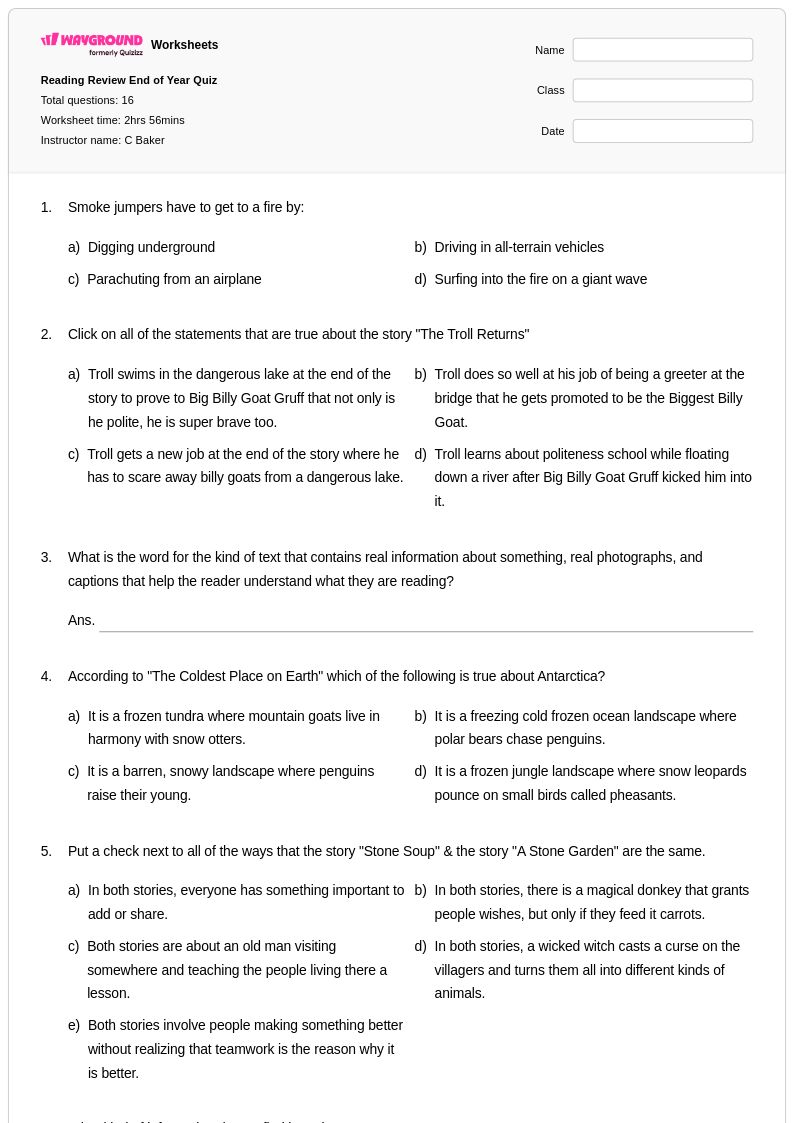
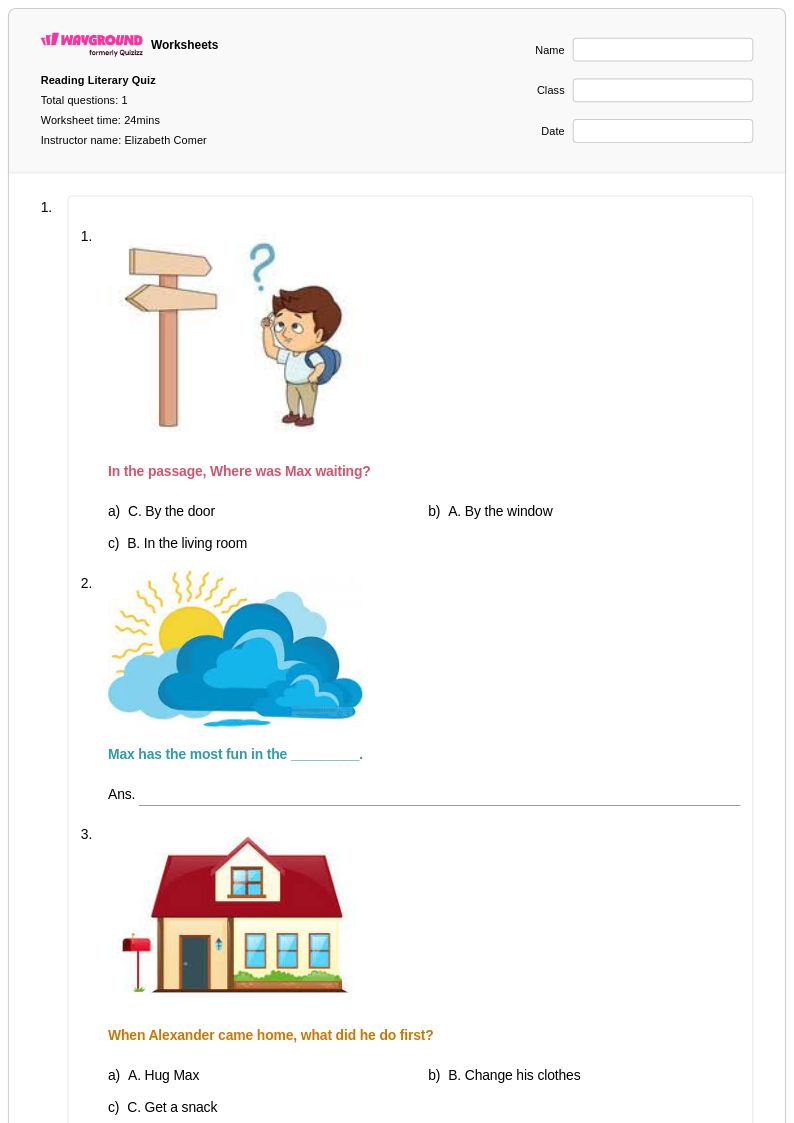
Nonfiction comprehension questions for Class 2 students available through Wayground (formerly Quizizz) provide essential practice for developing critical reading skills with factual texts. These carefully crafted worksheets present age-appropriate informational passages followed by targeted questions that assess students' ability to identify main ideas, locate specific details, make simple inferences, and understand text structure in nonfiction materials. Each worksheet includes a comprehensive answer key to support efficient grading and immediate feedback, while the free printable format ensures accessibility for all classrooms. The practice problems progress systematically from literal recall questions to higher-order thinking challenges, helping second-grade students build confidence when reading science texts, social studies materials, biographies, and other informational content that forms the foundation of academic literacy.
Wayground (formerly Quizizz) empowers educators with an extensive collection of teacher-created nonfiction comprehension resources specifically designed for Class 2 learners, drawing from millions of worksheets that align with reading standards and developmental expectations. The platform's robust search and filtering capabilities allow teachers to quickly locate materials that match their students' reading levels and curricular needs, while built-in differentiation tools enable seamless customization for diverse learning abilities within the same classroom. Available in both printable pdf format and interactive digital versions, these comprehension worksheets support flexible lesson planning whether used for whole-class instruction, small group remediation, individual enrichment, or independent skill practice. Teachers can efficiently organize reading centers, create differentiated homework assignments, and provide targeted intervention for students who need additional support with informational text comprehension strategies.
FAQs
How do I teach students to answer nonfiction comprehension questions effectively?
Teaching nonfiction comprehension begins with explicitly modeling how to identify the main idea, locate supporting details, and distinguish between stated facts and inferences. Anchor instruction in specific text structures — such as cause-and-effect, compare-and-contrast, and problem-solution — because recognizing structure helps students predict where key information will appear. Guided practice with short informational passages before moving to longer texts builds the stamina and transferable strategies students need for standardized assessments and real-world reading.
What exercises help students practice answering questions about nonfiction texts?
Effective practice exercises include close-reading tasks where students annotate for main idea and evidence, graphic organizers that map text structure, and tiered comprehension questions that progress from literal recall to inferential and evaluative thinking. Repeated exposure to diverse nonfiction genres — science articles, historical documents, biographical passages, and informational graphics — builds the flexibility students need to handle varied text types. Structured written-response practice, where students cite textual evidence in their answers, is particularly valuable for building the academic literacy skills assessed on most state standards.
What mistakes do students commonly make when answering nonfiction comprehension questions?
The most common error is relying on background knowledge instead of the text — students answer what they believe to be true rather than what the passage explicitly states or implies. A second frequent mistake is confusing the main idea with a supporting detail, particularly in densely informational texts where multiple relevant facts compete for attention. Students also often misread inferential questions as literal ones, providing a direct quote rather than a reasoned conclusion drawn from evidence across the passage.
How do I differentiate nonfiction comprehension practice for struggling readers and advanced students?
For struggling readers, reduce cognitive load by pre-teaching key vocabulary, providing annotated versions of the text, and offering scaffolded question sets that start with literal recall before moving to inference. For advanced students, increase complexity by using primary sources, multi-source synthesis tasks, or questions that require evaluating an author's perspective and use of evidence. On Wayground, teachers can apply student-level accommodations such as Read Aloud, reduced answer choices, and extended time to individual students, while the rest of the class receives default settings — making differentiation manageable without disrupting the learning environment.
How do I use Wayground's nonfiction comprehension questions worksheets in my classroom?
Wayground's nonfiction comprehension questions worksheets are available as printable PDFs for traditional classroom use and in digital formats for technology-integrated environments, giving teachers flexibility across in-person, remote, and hybrid settings. Teachers can also host worksheets as a live quiz on Wayground, making them suitable for whole-class instruction, small-group work, or independent practice stations. The included answer keys support both self-correction by students and efficient grading by teachers, reducing preparation time without sacrificing instructional rigor.
How can I use nonfiction comprehension questions for formative assessment?
Nonfiction comprehension questions are well-suited for formative assessment because they reveal precisely where a student's reading breaks down — whether at the literal, inferential, or evaluative level. Assigning a short passage with a targeted set of questions at the start or end of a lesson provides immediate data on whether students can extract main ideas, interpret evidence, or synthesize across sources. This information allows teachers to adjust instruction in real time, grouping students by need or revisiting specific comprehension skills before moving forward in the unit.