Free Printable Northeast Region Worksheets for Class 7
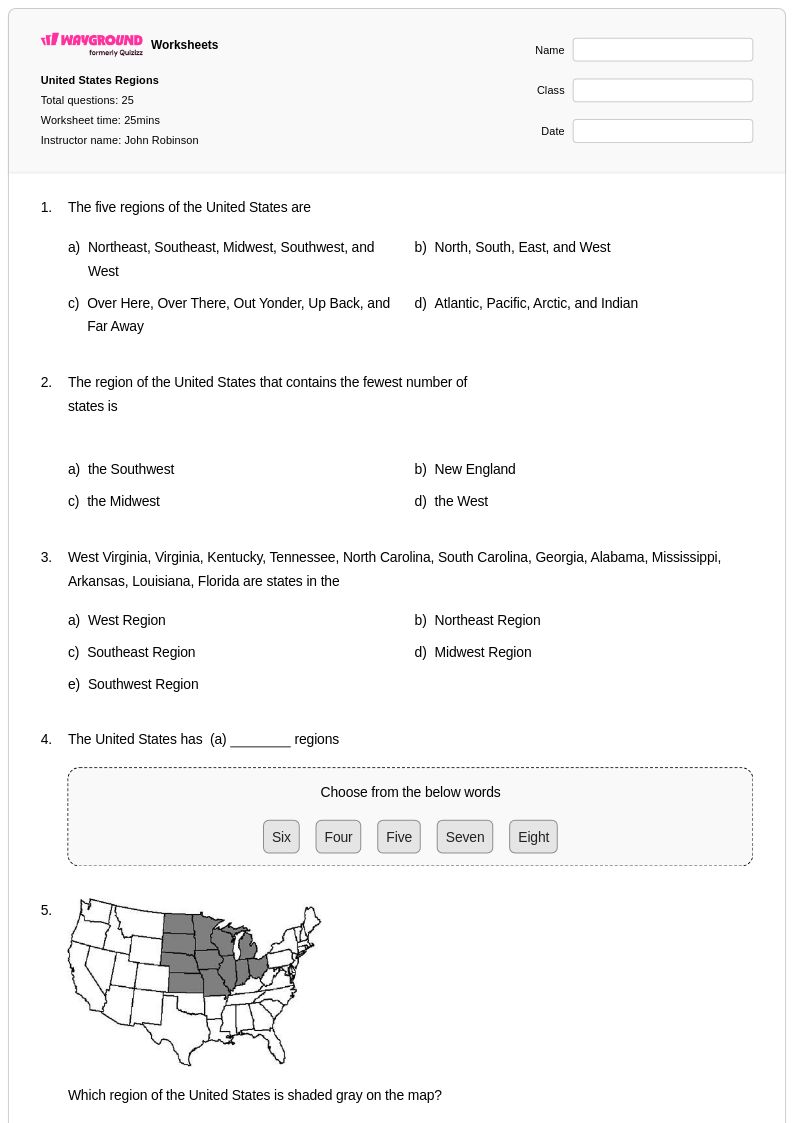
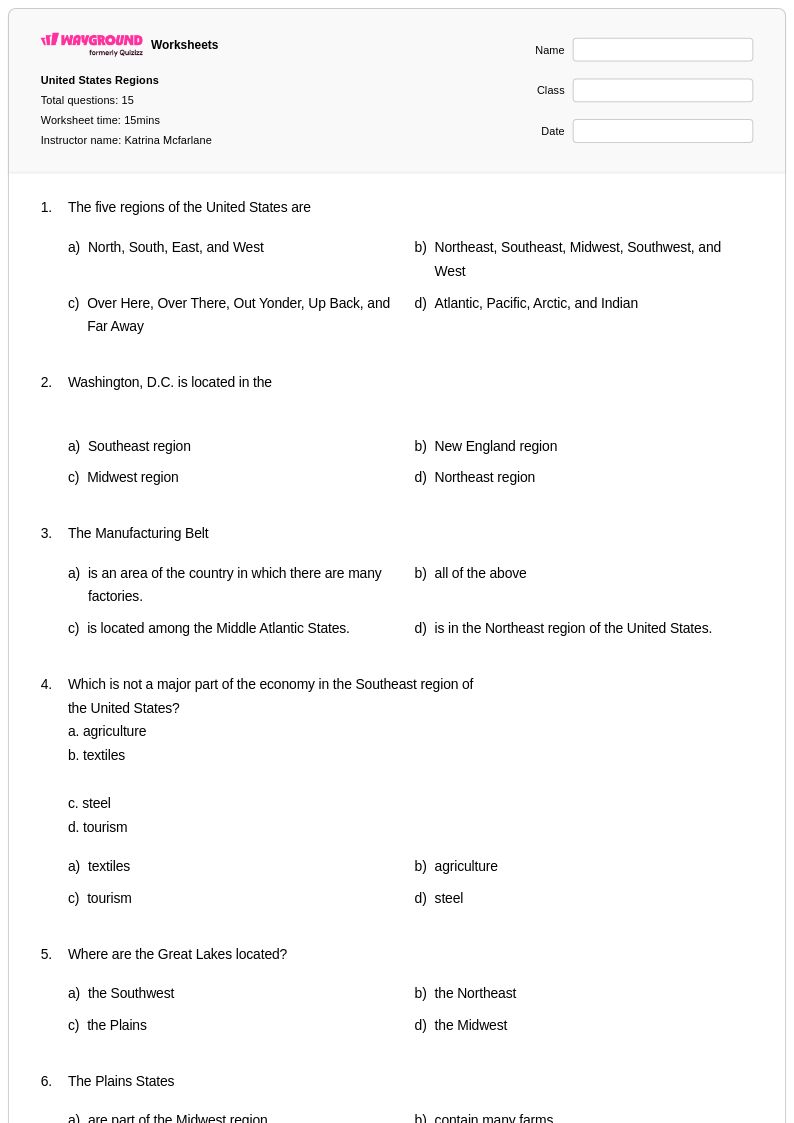
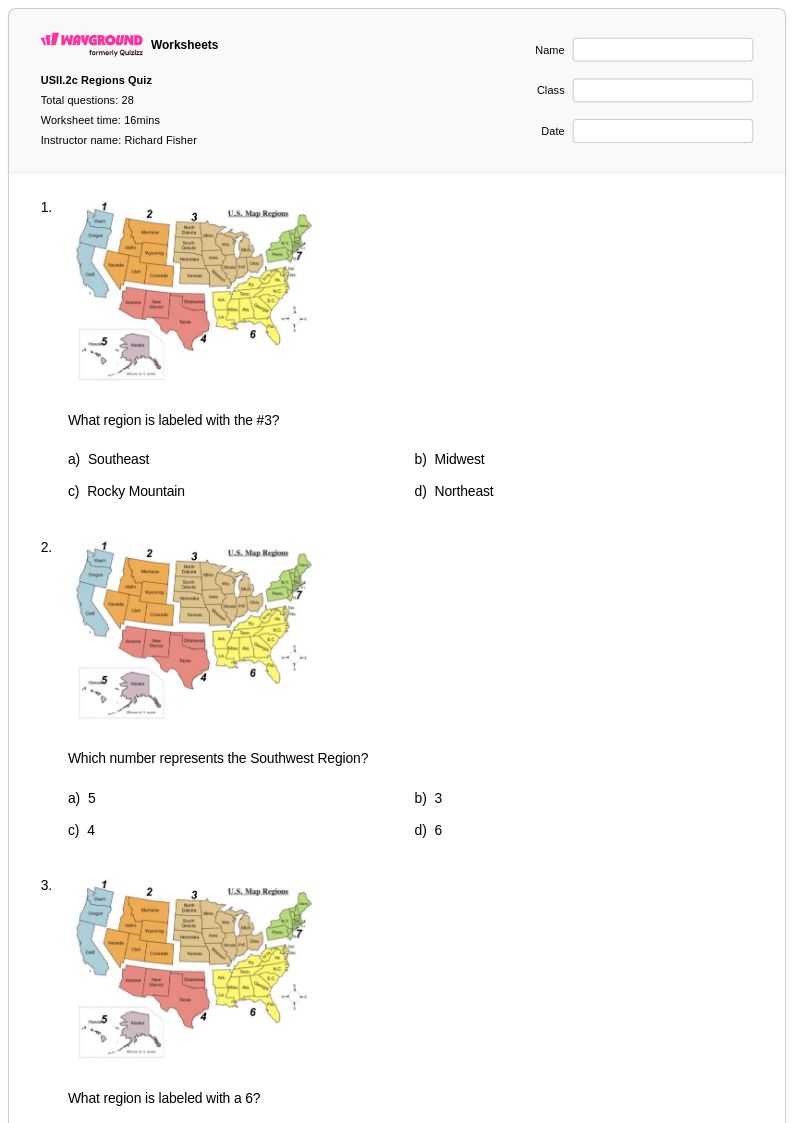
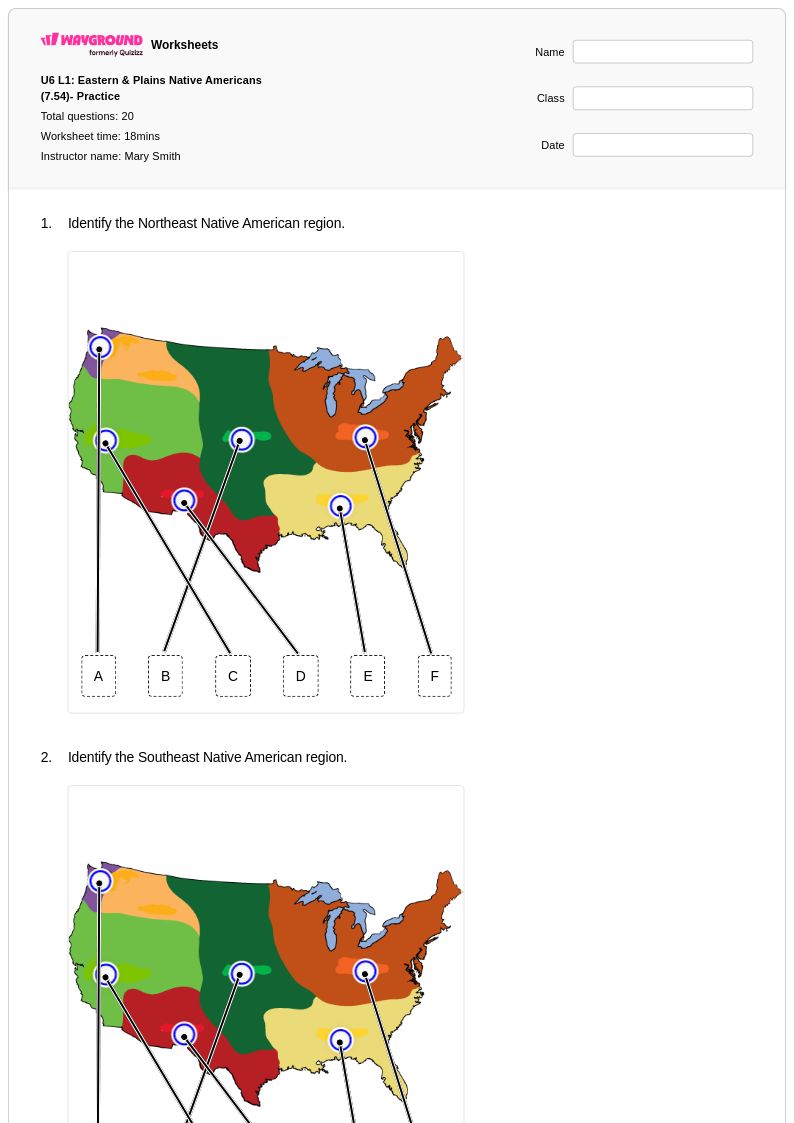
Class 7 Northeast Region geography worksheets from Wayground provide comprehensive printables and practice problems to help students master regional characteristics, with free PDF resources and answer keys included.
Explore printable Northeast Region worksheets for Class 7
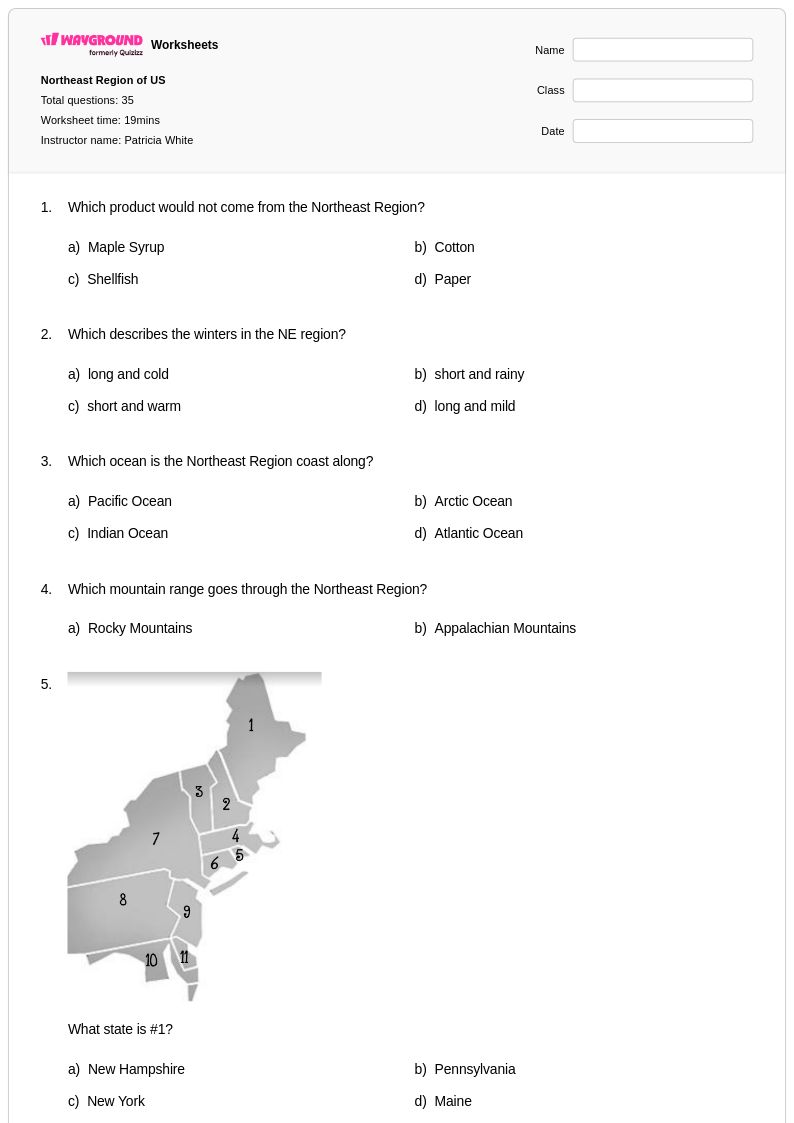
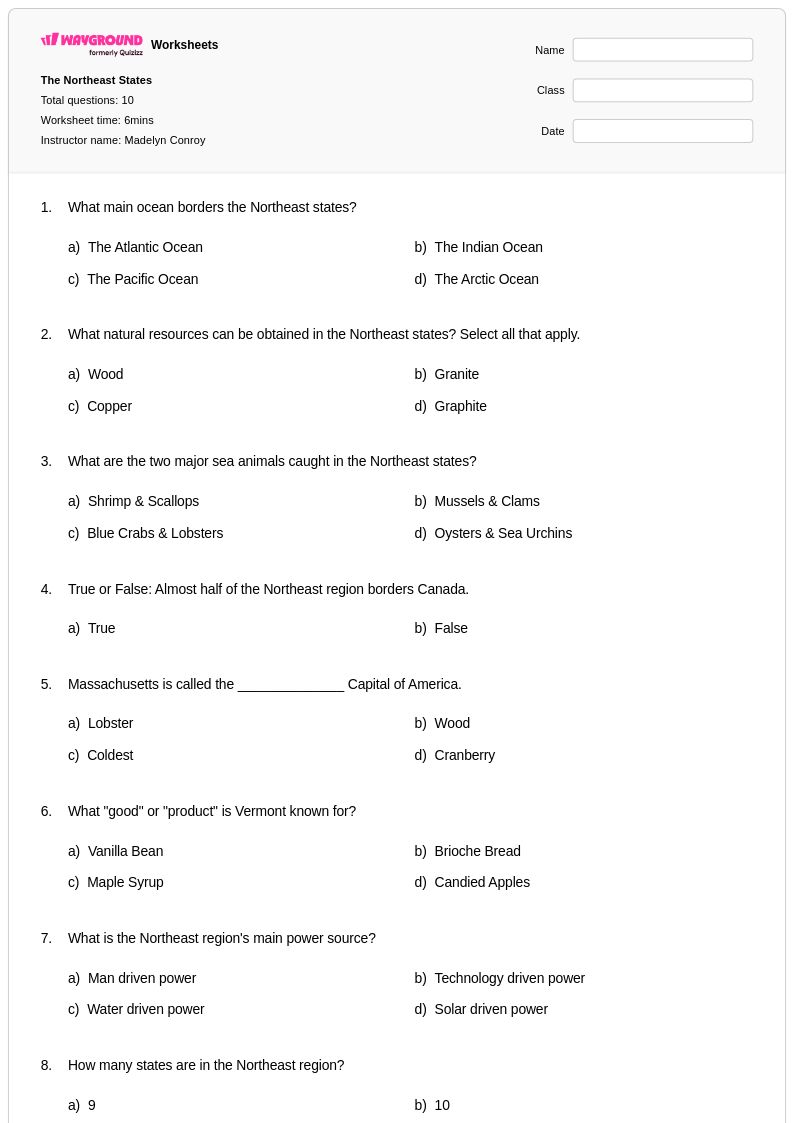
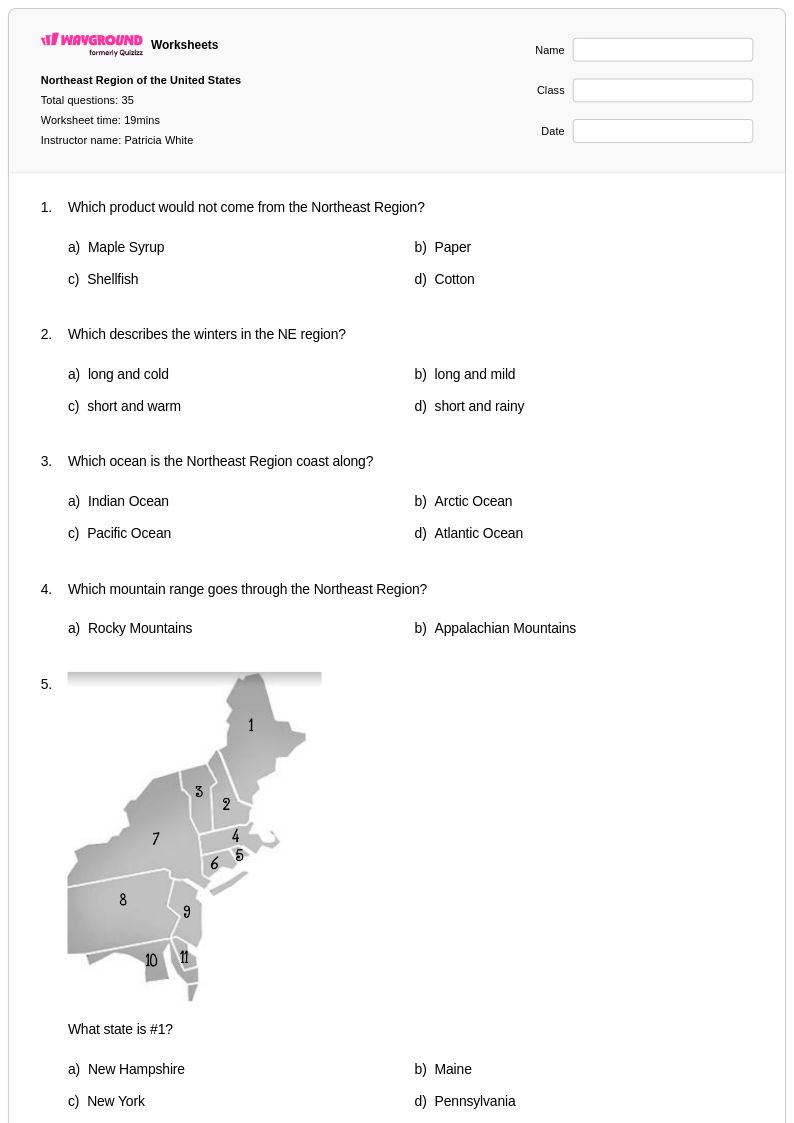
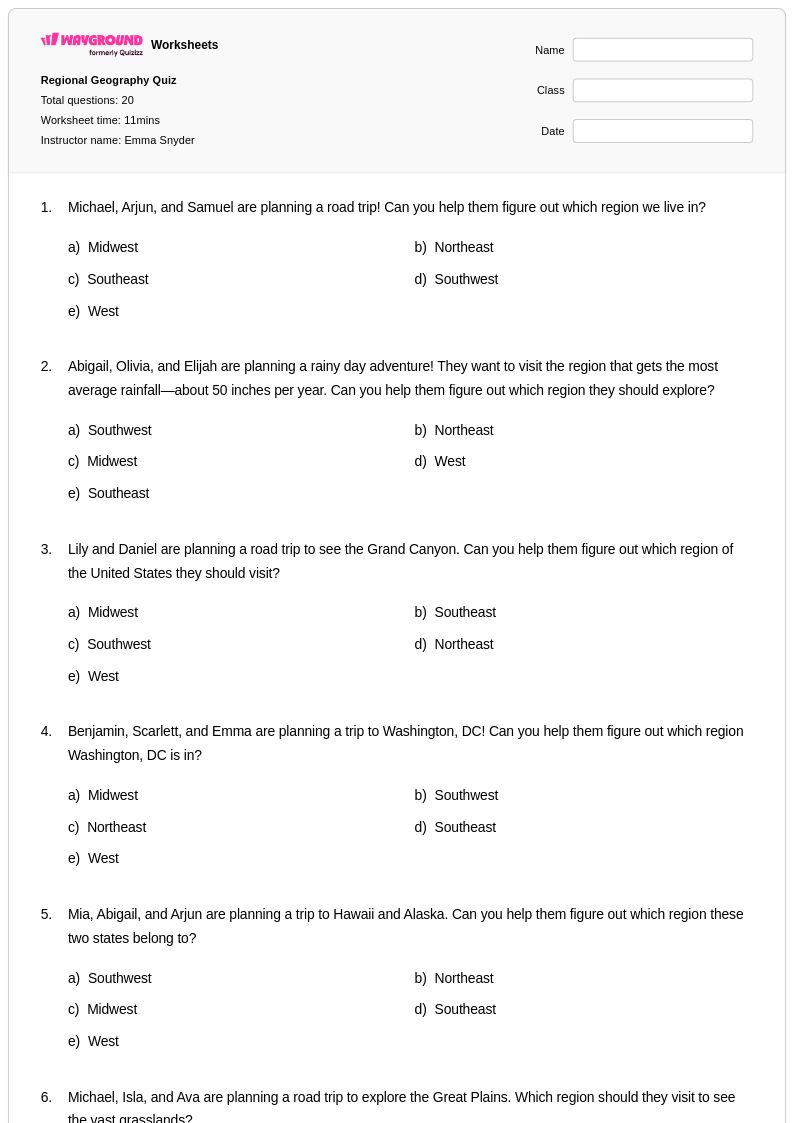
Northeast Region worksheets for Class 7 students available through Wayground (formerly Quizizz) provide comprehensive coverage of this economically and culturally significant area of the United States. These educational resources focus on developing students' understanding of the Northeast's distinctive geography, including the Appalachian Mountains, Atlantic Coastal Plain, and major river systems like the Hudson and Connecticut Rivers. The worksheets strengthen critical geographic skills through practice problems that require students to analyze population density patterns, identify major metropolitan areas from Boston to Washington D.C., and examine the relationship between physical features and economic activities. Each printable resource includes detailed answer keys and covers essential topics such as climate patterns, natural resources, and the region's role in American history, making these free materials invaluable for reinforcing classroom learning through targeted practice.
Wayground (formerly Quizizz) supports educators with millions of teacher-created Northeast Region worksheets that feature robust search and filtering capabilities, enabling quick access to grade-appropriate content aligned with social studies standards. Teachers can easily differentiate instruction by selecting from various difficulty levels and customize materials to meet specific classroom needs, whether for remediation with struggling students or enrichment activities for advanced learners. The platform's flexible format options include both digital and printable pdf versions, allowing seamless integration into any lesson plan or homework assignment. These comprehensive worksheet collections facilitate effective planning by providing ready-to-use resources that systematically build students' knowledge of the Northeast's urban centers, agricultural areas, and industrial heritage while developing essential map reading and geographic analysis skills.
FAQs
How do I teach the Northeast Region of the United States?
Start by anchoring instruction in physical geography — the Appalachian Mountains, Atlantic Coastal Plain, and major river systems — before connecting landforms to historical settlement and economic development. From there, move into cultural and demographic patterns, using case studies of cities like Boston, New York City, and Philadelphia to illustrate how geography shapes urbanization. Map-reading activities that ask students to identify state boundaries, capitals, and landforms simultaneously build spatial reasoning alongside content knowledge.
What exercises help students practice identifying Northeast states and capitals?
Blank map labeling exercises are among the most effective tools for building state and capital recognition, because the act of placing names spatially reinforces memory better than rote lists. Pair these with data analysis tasks that compare population density or economic output across northeastern states to give capitals and locations meaningful context. Regional comparison worksheets that contrast the Northeast with other U.S. regions also help students retain distinctions rather than memorizing in isolation.
What mistakes do students commonly make when learning about the Northeast Region?
Students frequently conflate New England with the entire Northeast, overlooking Mid-Atlantic states like New Jersey, Pennsylvania, and Delaware. Another common error is treating the Northeast as culturally uniform, when in fact it spans distinct historical, linguistic, and demographic subregions. Students also tend to underestimate the region's physical geography, reducing it to cities, so direct instruction on the Appalachians, coastal plains, and river systems is essential to building accurate mental maps.
How can I use Northeast Region worksheets to support different skill levels in my class?
Northeast Region worksheets can be differentiated by adjusting the complexity of tasks — for example, providing labeled reference maps for struggling learners while requiring advanced students to draw and annotate maps from memory. When using Wayground's digital format, teachers can apply accommodations such as read aloud for students who need audio support, reduced answer choices to lower cognitive load for select students, or extended time settings configured per student. These accommodations are saved and reusable across sessions, so setup stays minimal while support stays consistent.
How do I use Northeast Region worksheets from Wayground in my classroom?
Wayground's Northeast Region worksheets are available as printable PDFs for traditional classroom use and in digital formats for technology-integrated environments, including the option to host them as a quiz directly on Wayground. Teachers can use them as standalone practice, warm-up reviews, or formative assessment checkpoints within a broader geography unit. Each worksheet includes a complete answer key, which reduces grading time and makes the materials suitable for independent work, centers, or homework assignments.
How does the Northeast Region connect to broader U.S. geography standards?
The Northeast Region is a strong entry point for teaching human-environment interaction, one of the five geographic themes, because the region's dense urbanization, industrial history, and coastal geography illustrate how people both shape and adapt to their environment. It also supports standards around regional comparison, economic geography, and cultural diversity, making it a versatile anchor for units that extend into national or global geographic thinking. Connecting northeastern industrialization to Appalachian resource extraction, for example, helps students see geography as a system rather than a set of isolated facts.