Free Printable Nursery Rhymes Worksheets for Kindergarten
Discover free kindergarten nursery rhymes worksheets and printables that help young learners explore classic poems, develop reading skills, and practice language fundamentals with engaging activities and comprehensive answer keys.
Explore printable Nursery Rhymes worksheets for Kindergarten
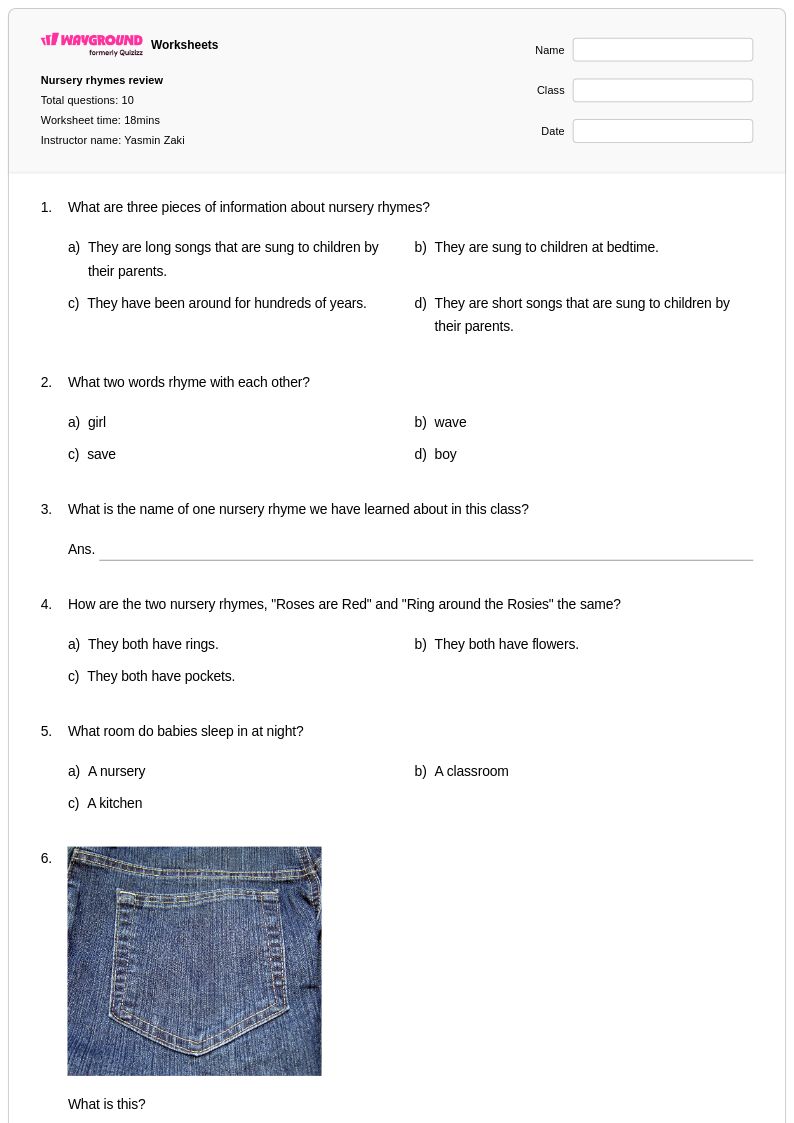
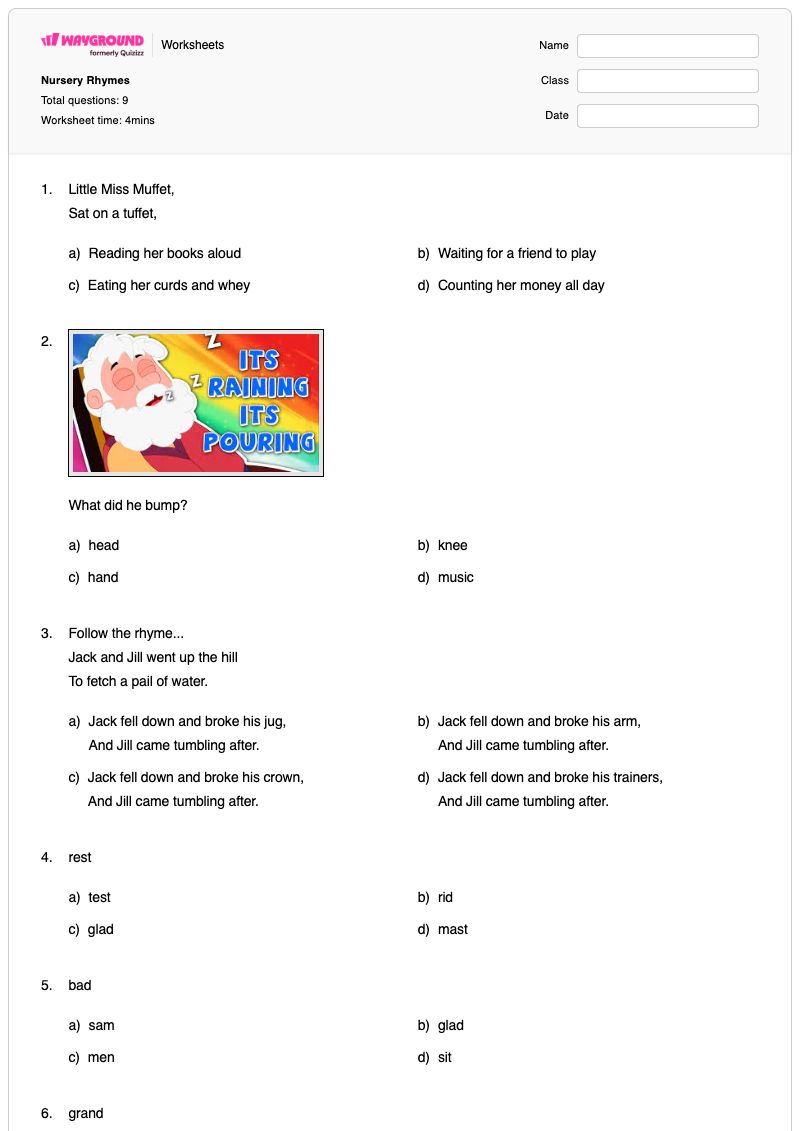
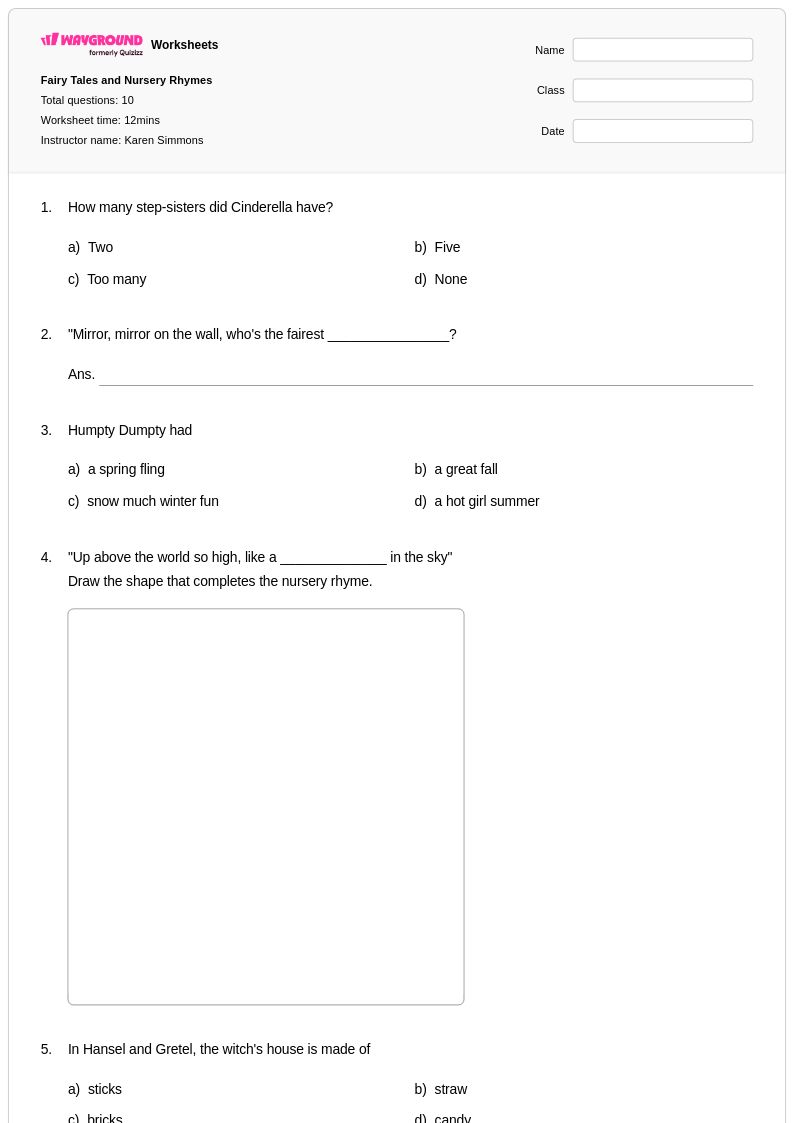
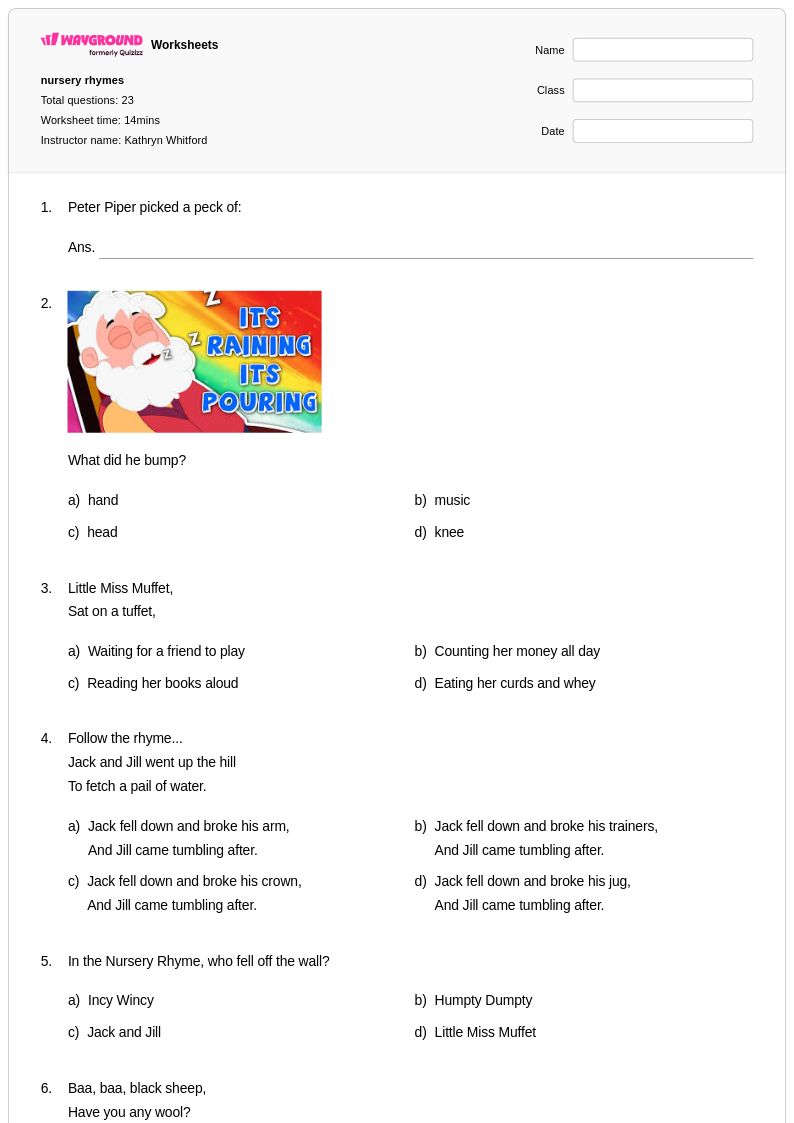
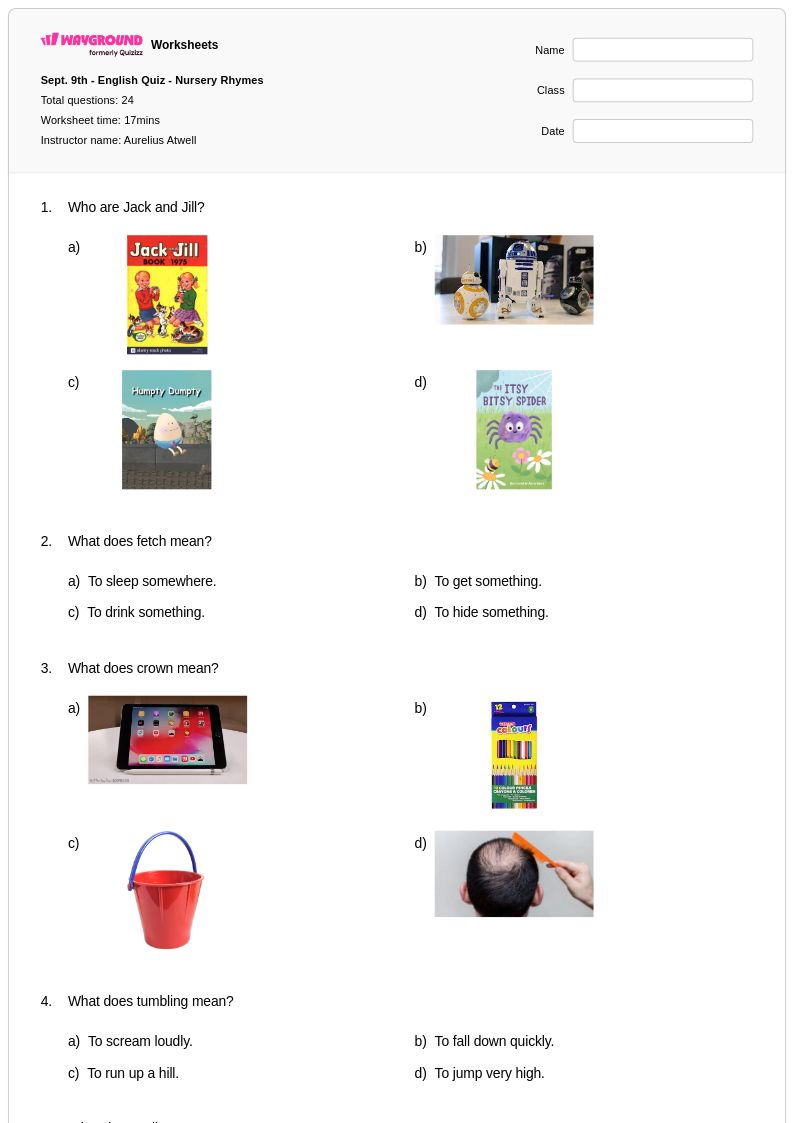
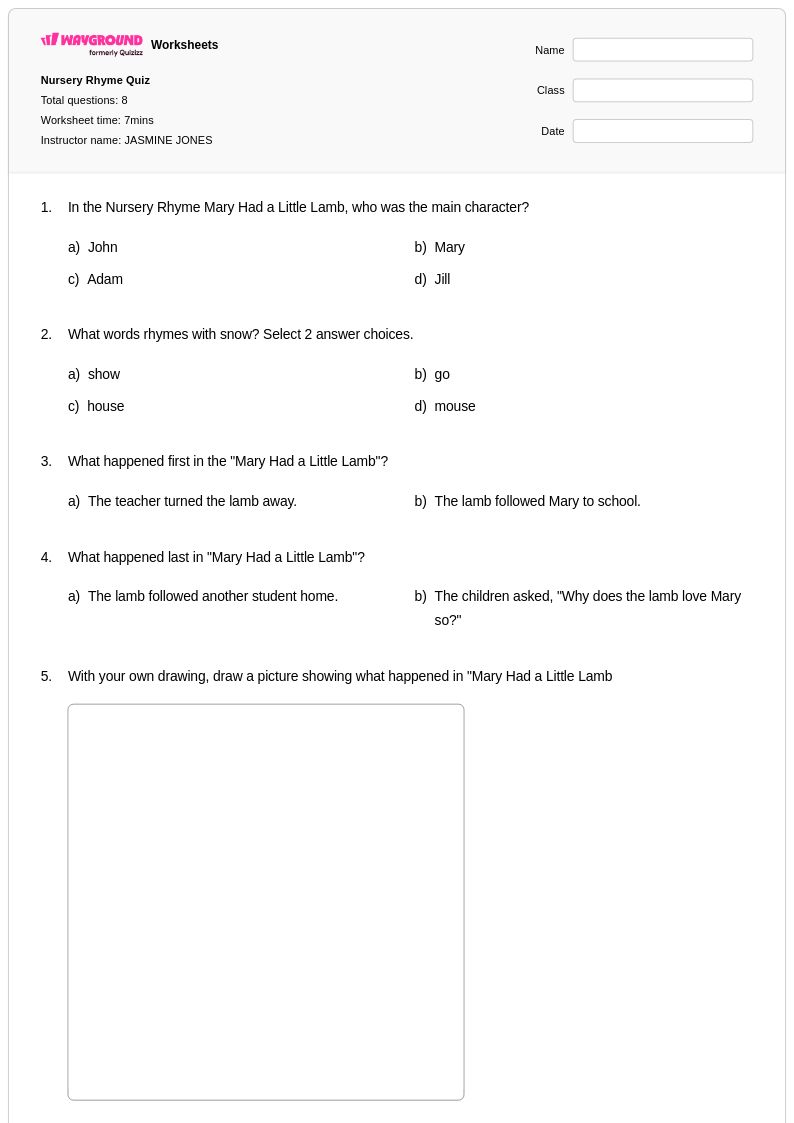
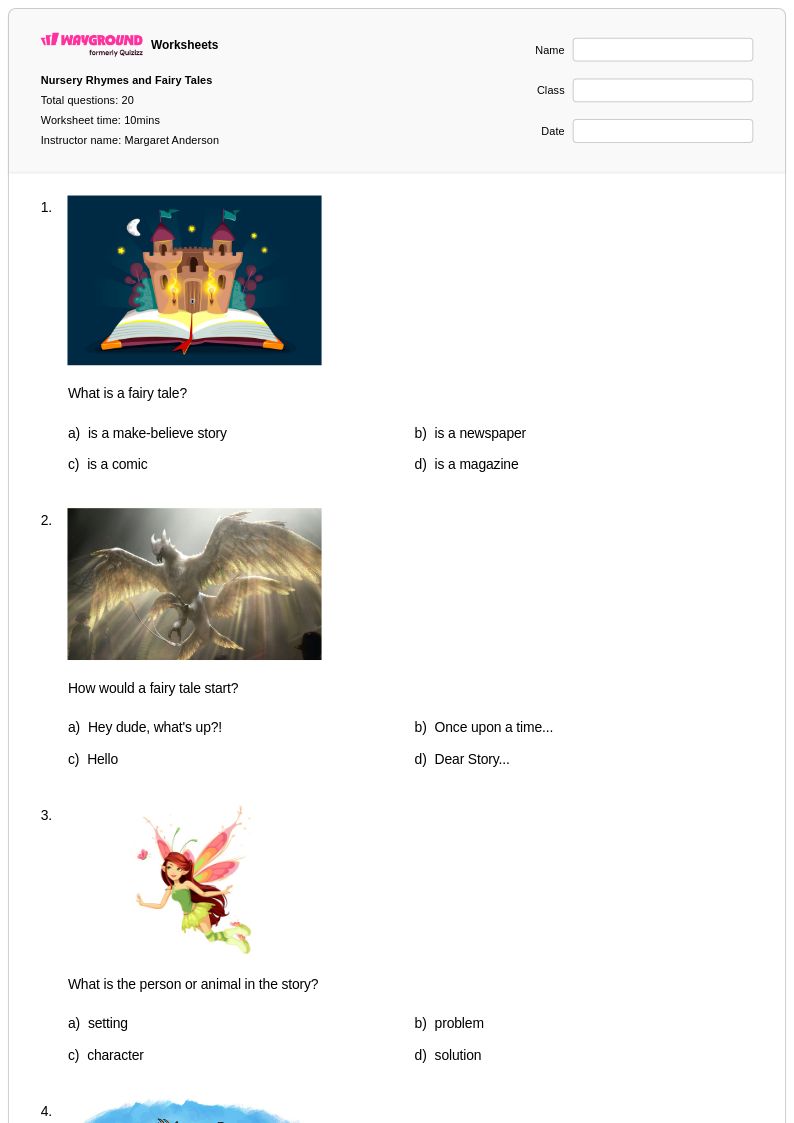
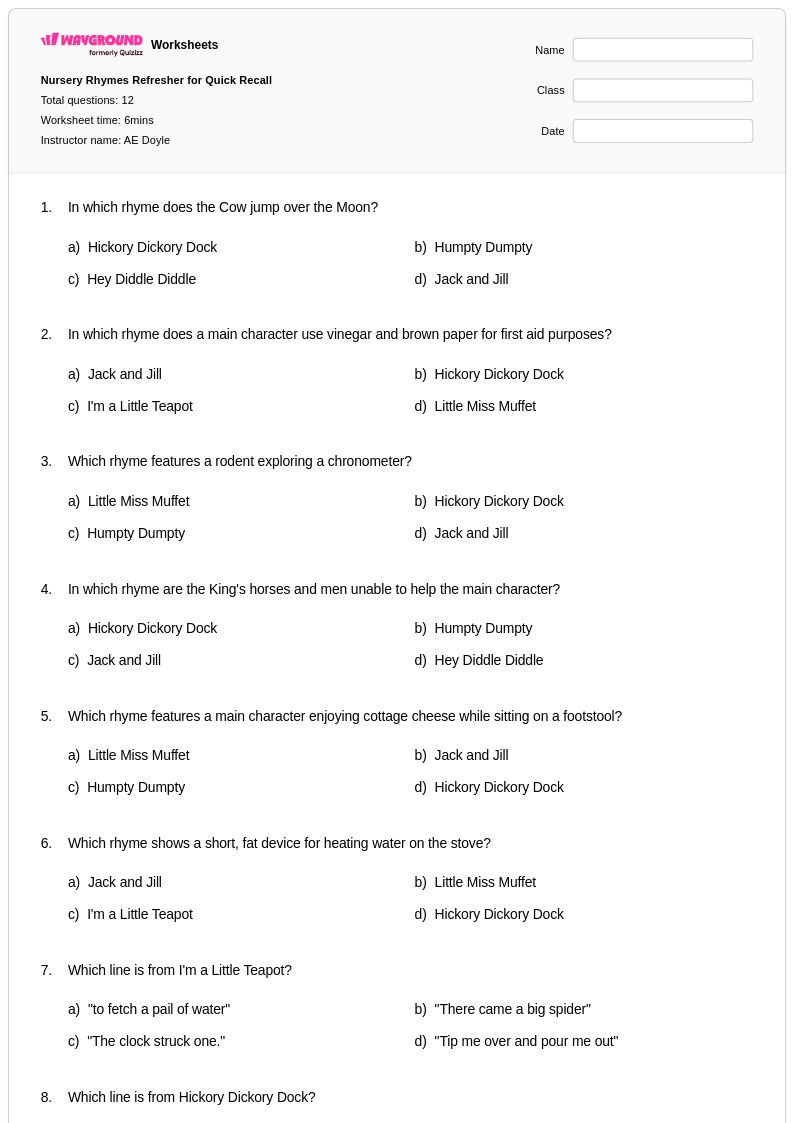
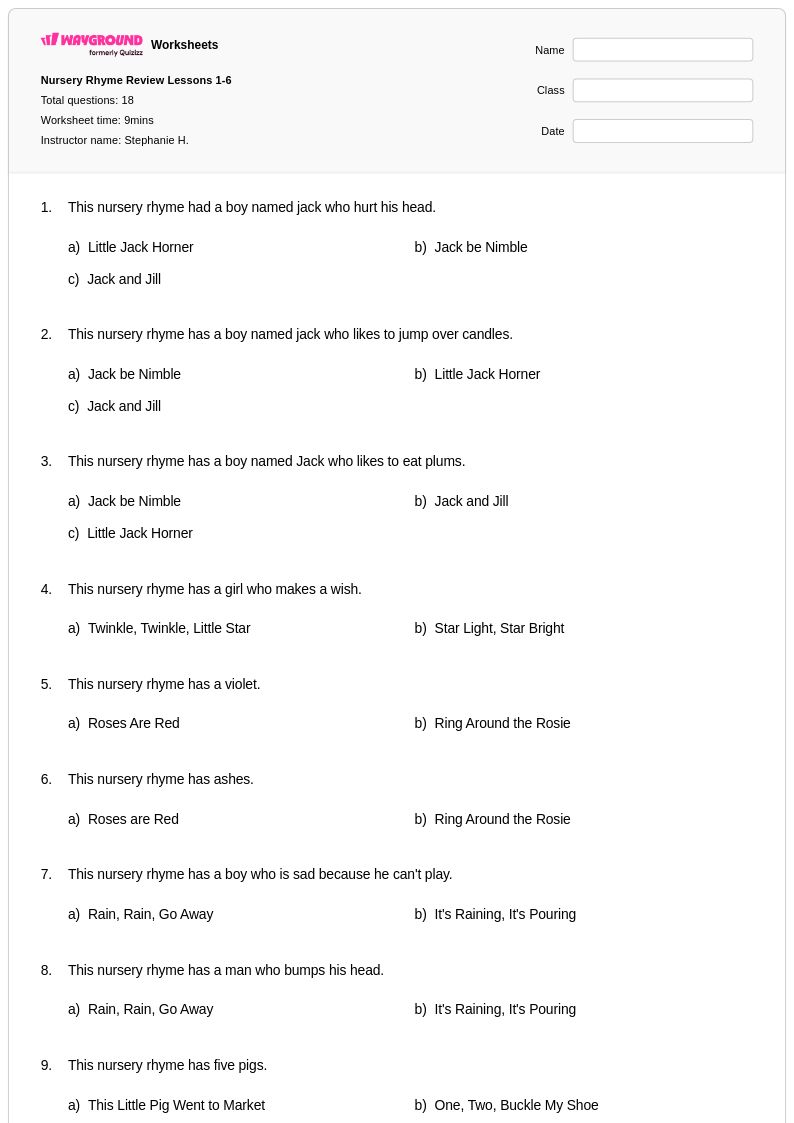
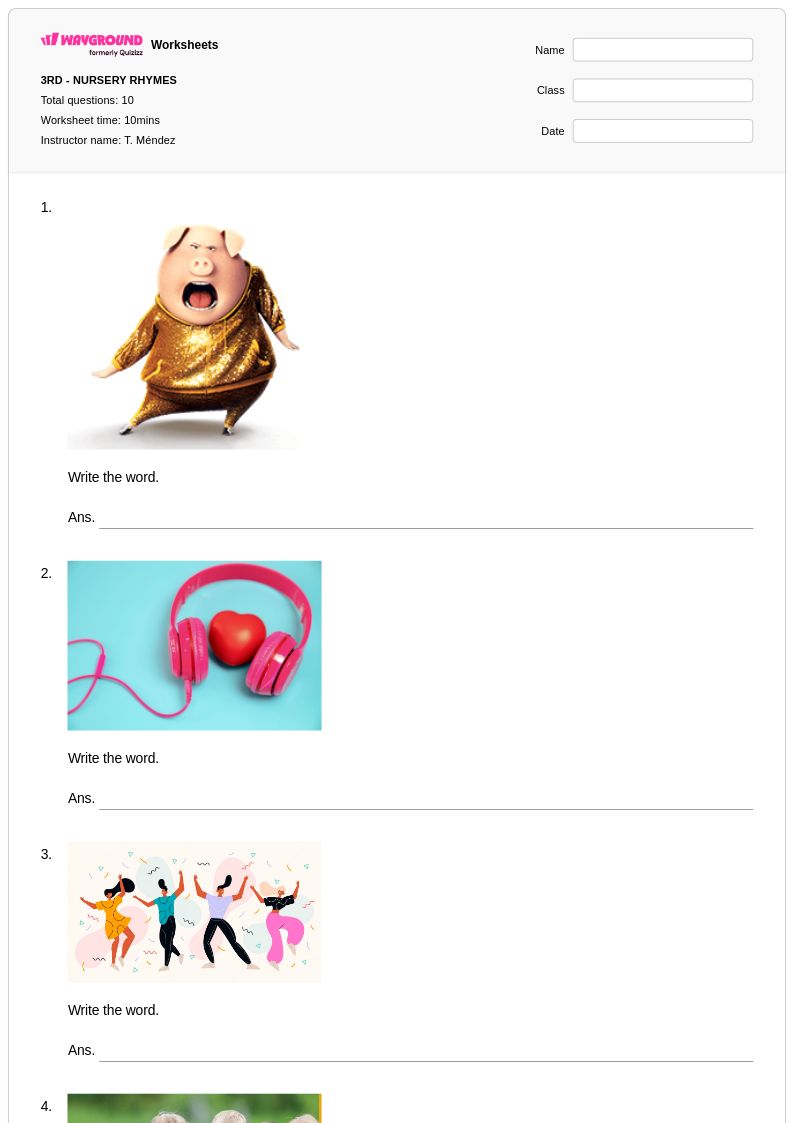
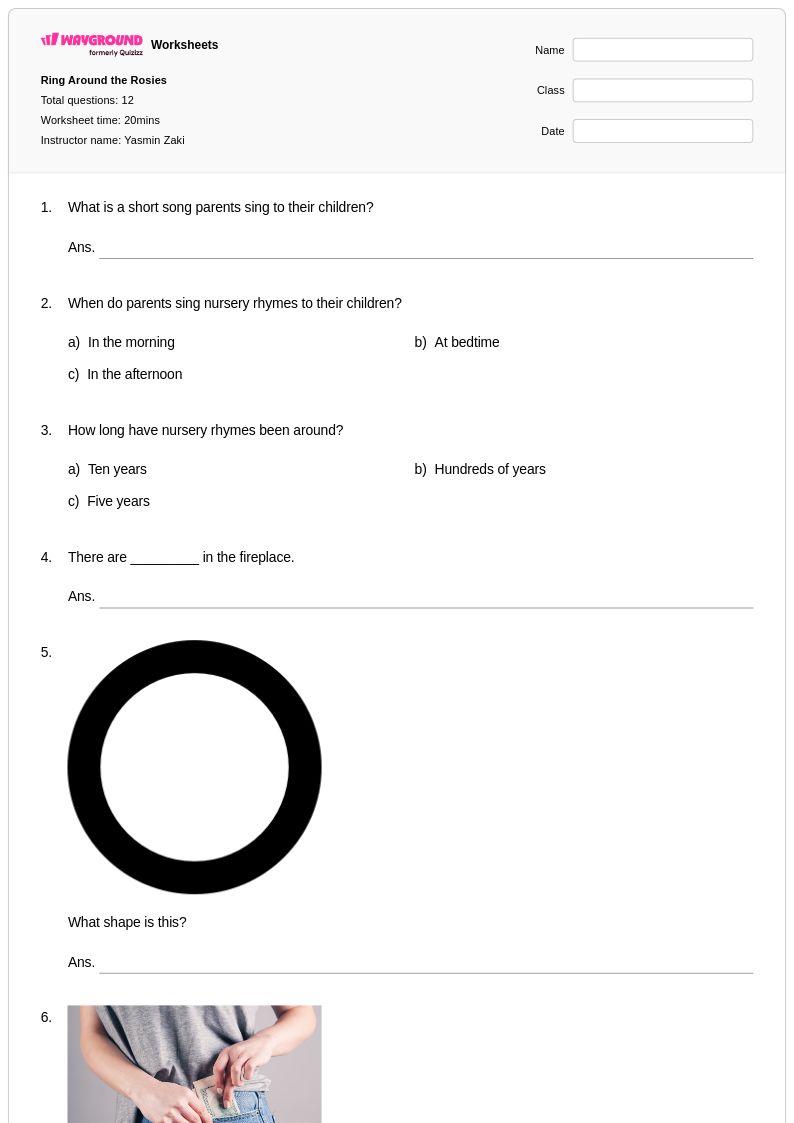
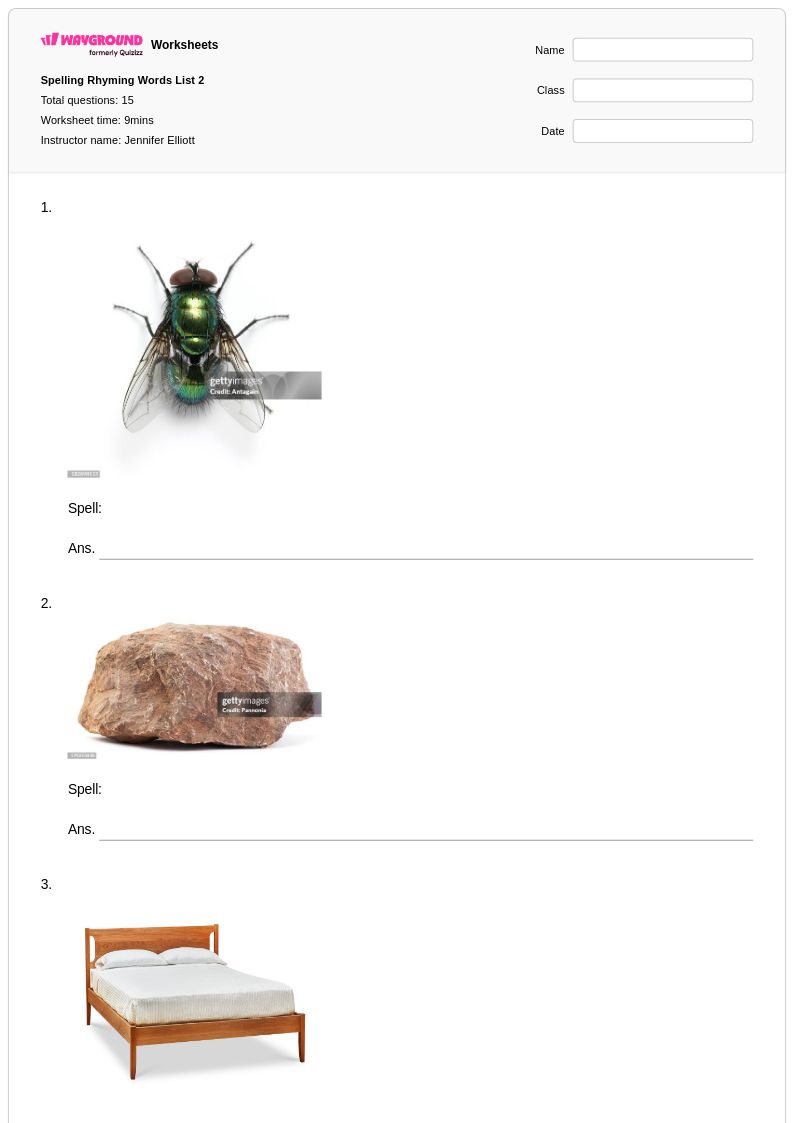
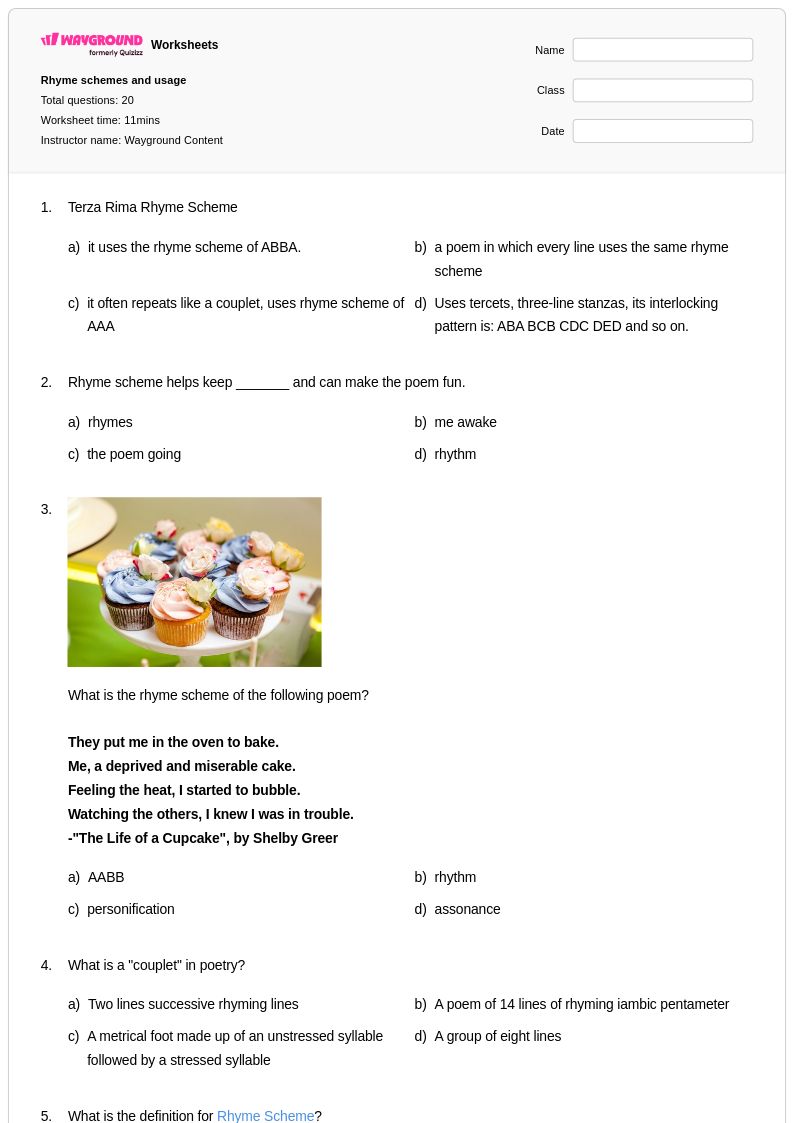
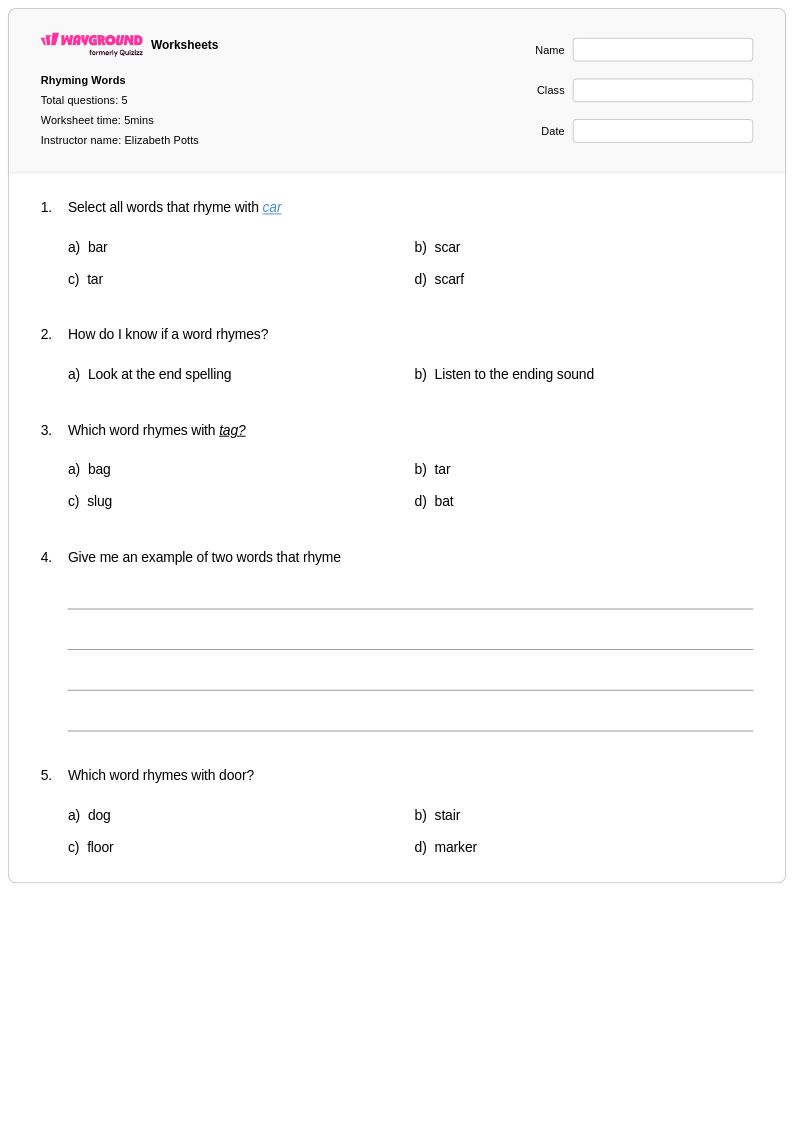
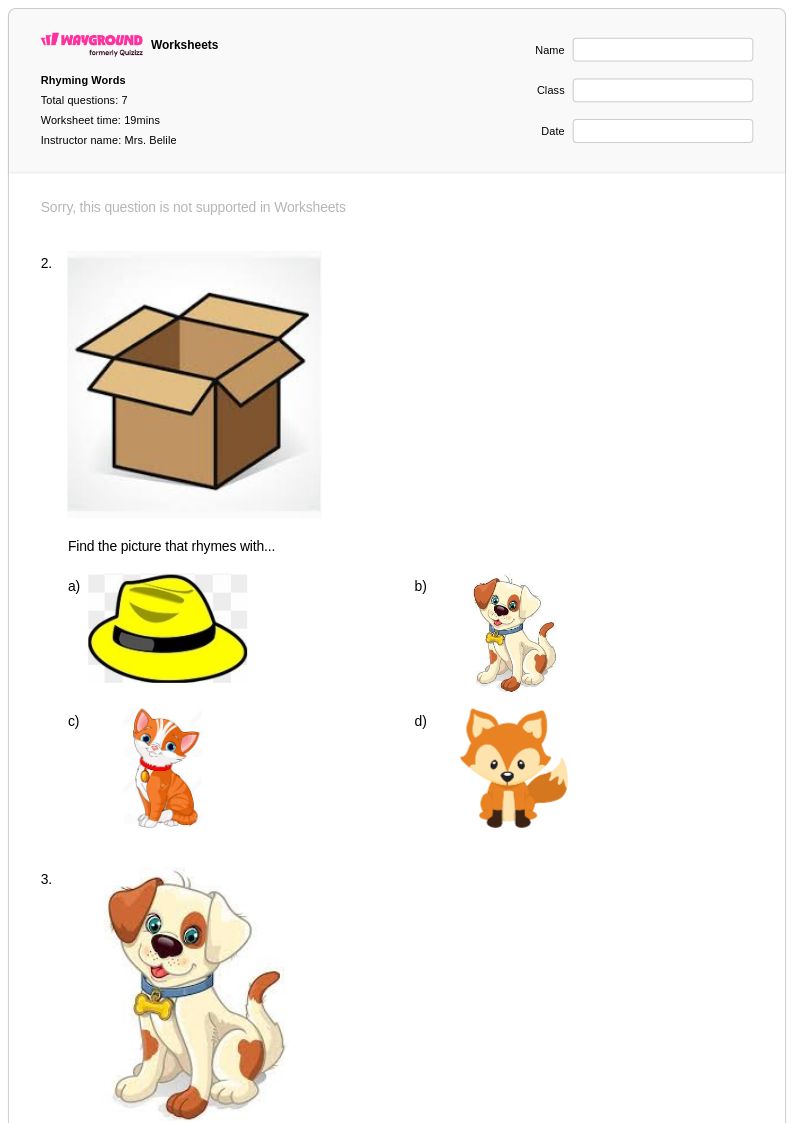
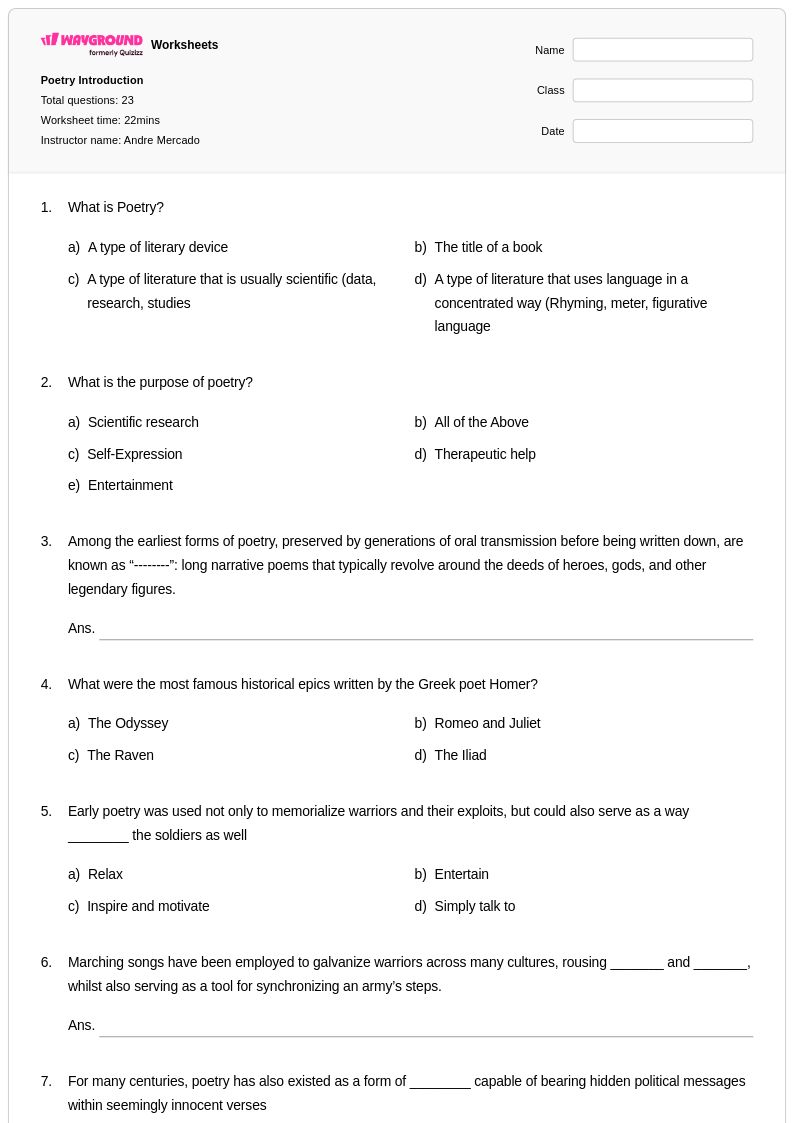
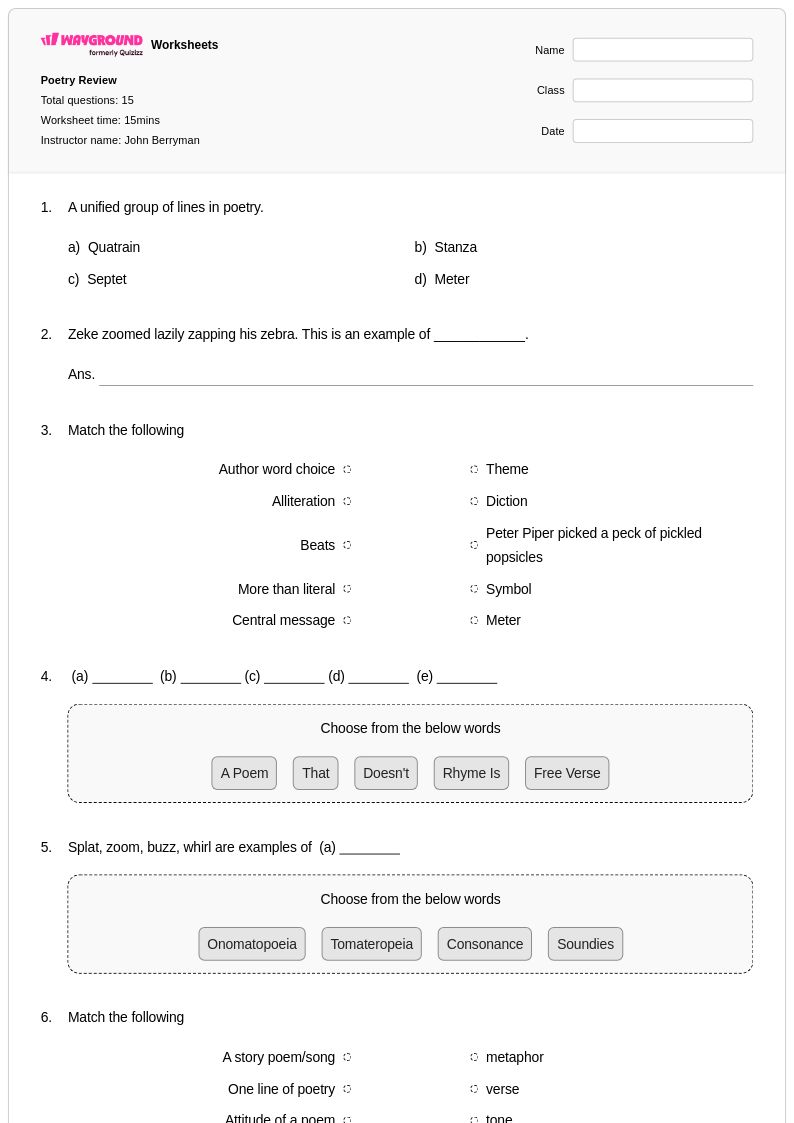
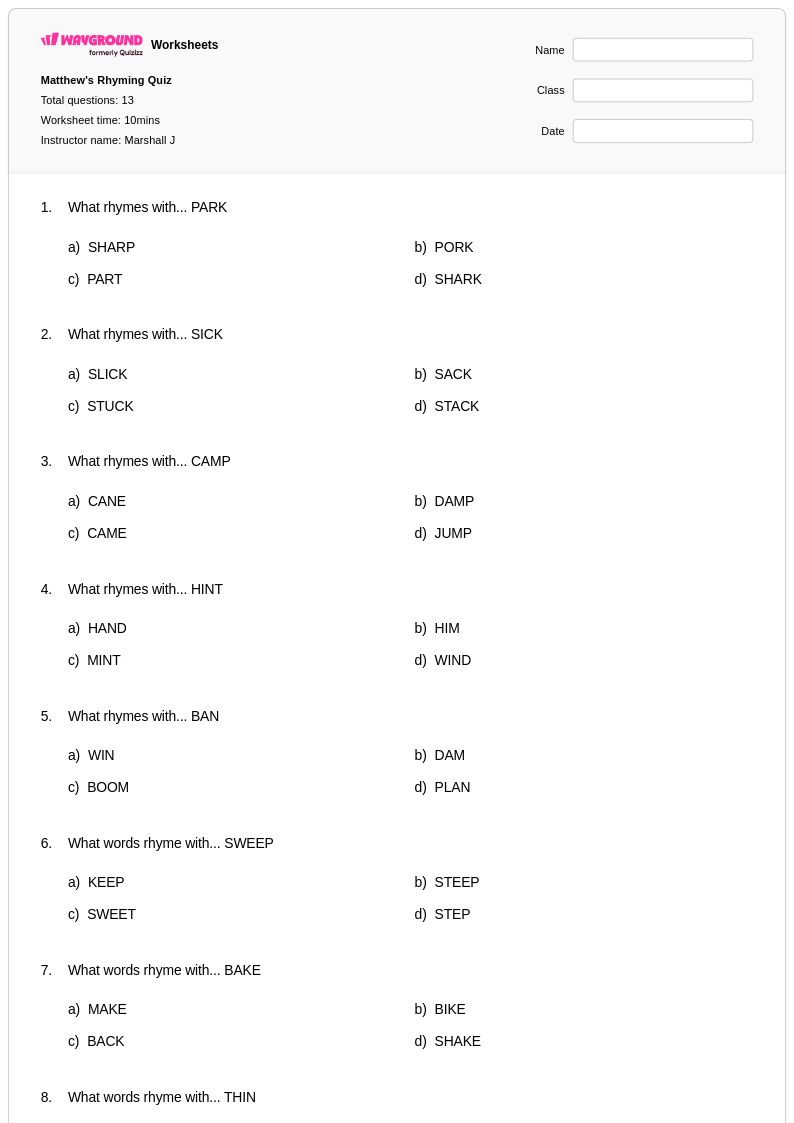
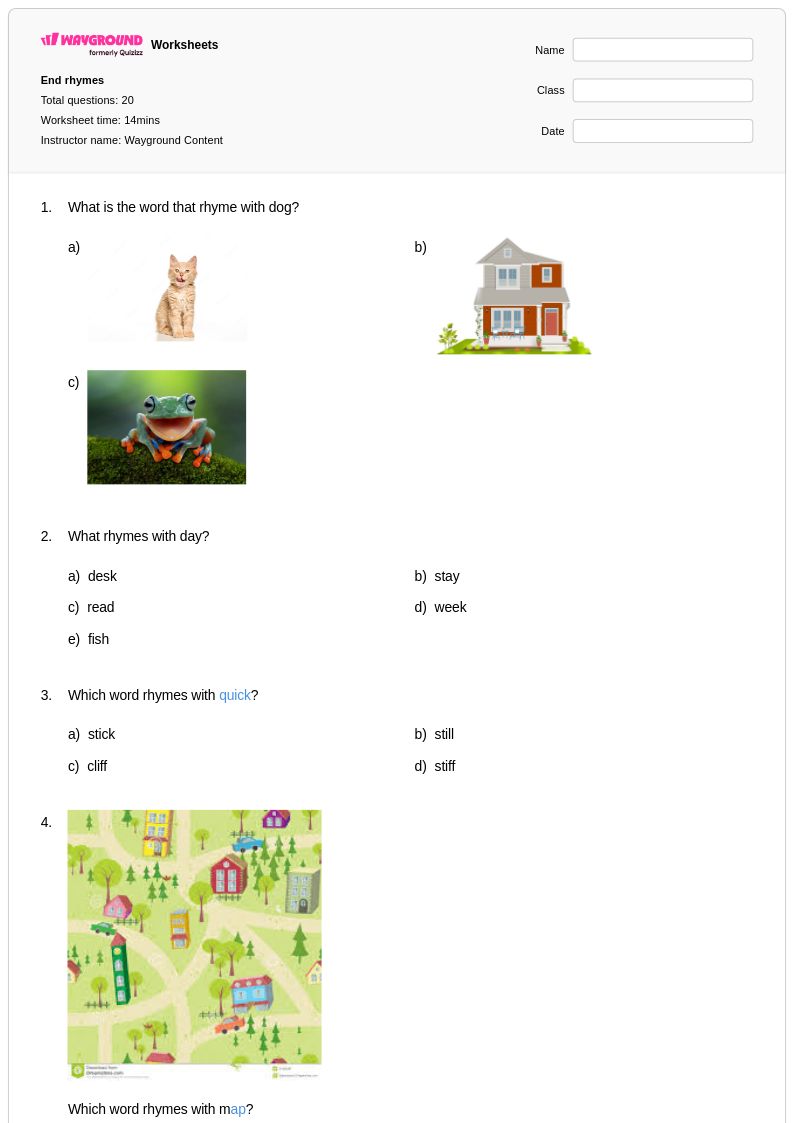
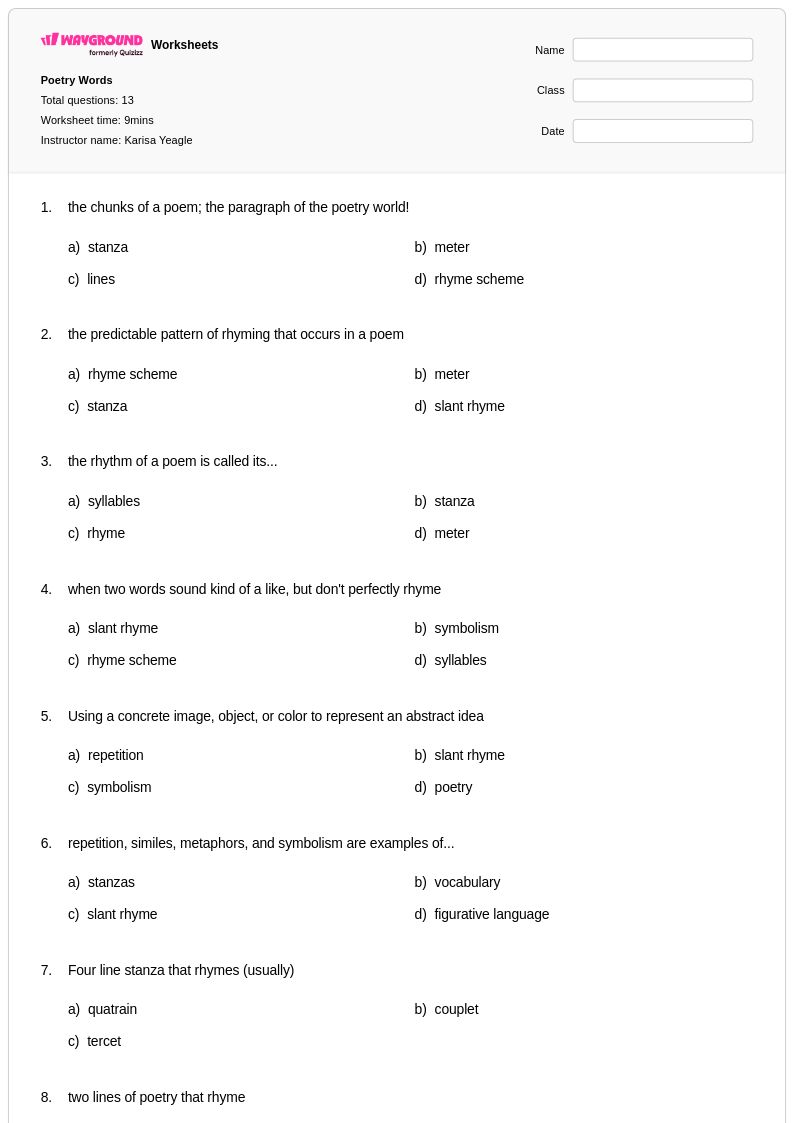
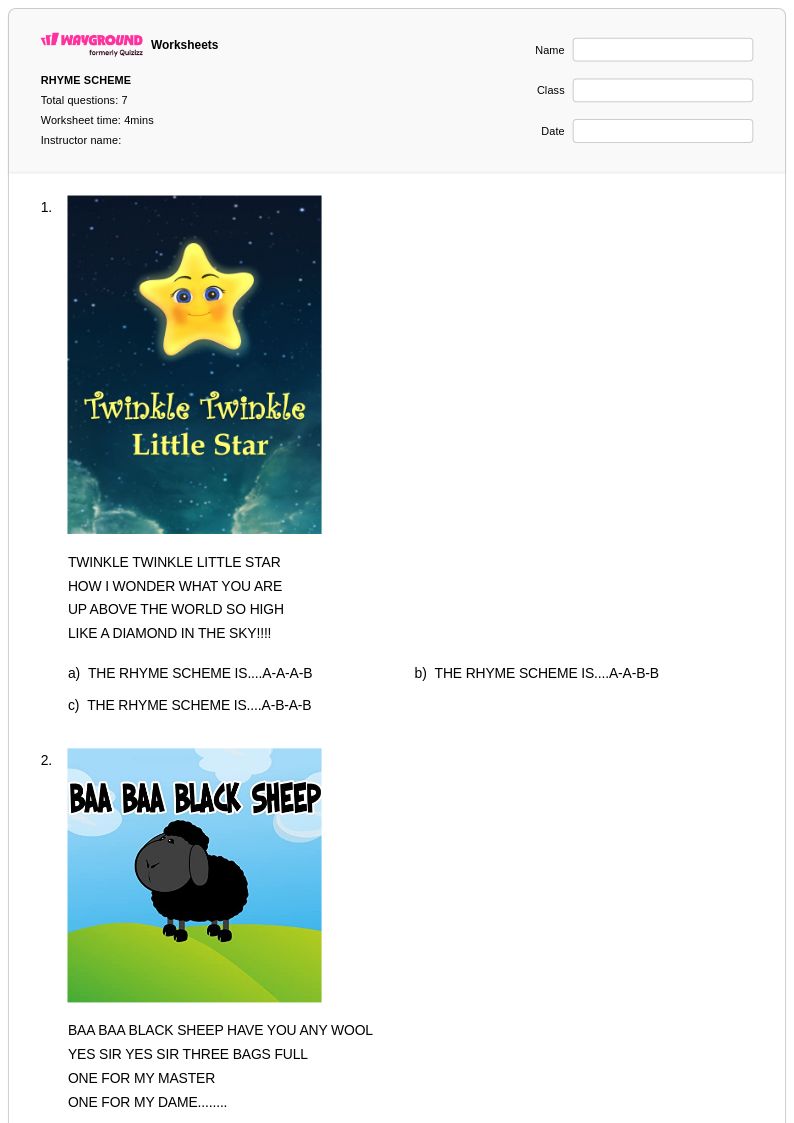
Nursery rhymes worksheets for kindergarten students available through Wayground (formerly Quizizz) provide essential foundation-building activities that introduce young learners to the fundamental elements of poetry and rhythm in literature. These carefully designed printables help kindergarteners develop phonemic awareness, vocabulary recognition, and early reading comprehension skills through beloved traditional verses like "Twinkle, Twinkle, Little Star," "Mary Had a Little Lamb," and "Humpty Dumpty." Each worksheet collection includes diverse practice problems that encourage students to identify rhyming patterns, complete missing words, sequence story events, and recognize familiar characters, all while building crucial pre-reading skills. Teachers can access comprehensive answer keys and free pdf resources that make assessment and instruction seamless, allowing educators to track student progress in recognizing rhythm, meter, and the predictable patterns that make nursery rhymes such powerful learning tools.
Wayground (formerly Quizizz) empowers educators with millions of teacher-created nursery rhyme resources that feature robust search and filtering capabilities, enabling quick access to grade-appropriate materials aligned with kindergarten literacy standards. The platform's differentiation tools allow teachers to customize worksheets based on individual student needs, offering both remediation support for struggling readers and enrichment opportunities for advanced learners who are ready to explore more complex rhyme schemes and story elements. Available in both printable and digital formats including downloadable pdfs, these comprehensive worksheet collections support flexible lesson planning whether teachers need quick practice activities, formal assessments, or engaging centers work. The extensive library ensures educators can seamlessly integrate nursery rhyme instruction into their reading curriculum while building students' appreciation for this important literary genre that serves as a gateway to more advanced poetry and storytelling concepts.
FAQs
How do I teach nursery rhymes to young learners effectively?
Start by reading nursery rhymes aloud repeatedly so students internalize rhythm and rhyme before any written work is introduced. Use gestures, clapping, and call-and-response to make the language memorable. Once students can recite a rhyme, transition to written activities like word completion and sequencing to reinforce print concepts. Connecting familiar oral language to the written word is one of the most reliable bridges into early literacy.
What skills do nursery rhyme worksheets help students practice?
Nursery rhyme worksheets target foundational literacy skills including phonemic awareness, rhyme recognition, oral language development, and sequencing. Activities like word completion, illustration matching, and recitation exercises give students structured practice with the patterns and vocabulary embedded in traditional verse. These skills directly support early reading development, making nursery rhymes a high-value entry point for pre-readers and emergent readers alike.
What common mistakes do students make when working with nursery rhymes?
Students often struggle to identify rhyming word pairs when they are spelled differently, such as 'star' and 'are,' because they rely on visual spelling rather than sound. Another frequent error is missequencing events in a rhyme, particularly when the narrative is implied rather than explicitly stated. Teachers should build explicit discussion of sound patterns and story order before assigning written tasks to reduce these errors.
How can I differentiate nursery rhyme activities for students at different ability levels?
For struggling readers, reduce the complexity of tasks by focusing on a single rhyming pair or using heavily illustrated matching activities before moving to text-based work. For more advanced learners, extend the activity by asking students to write their own rhyming couplets or compare two nursery rhymes for similar themes. On Wayground, teachers can apply individual accommodations such as read-aloud support and reduced answer choices to specific students, ensuring each child accesses the activity at an appropriate level.
How do I use Wayground's nursery rhyme worksheets in my classroom?
Wayground's nursery rhyme worksheets are available as printable PDFs for use in literacy centers, whole-group lessons, or take-home practice, and in digital formats for technology-integrated instruction including hosting them as a quiz directly on Wayground. Each worksheet includes an answer key, so teachers can use them for quick formative checks or self-paced independent practice. The digital format is especially useful for reading support features like read-aloud, which can be enabled for individual students who need it.
Why are nursery rhymes important for early literacy development?
Nursery rhymes expose young children to the phonological patterns of language before they can decode text, building the phonemic awareness that underlies successful reading. The repetitive structure, predictable rhyme schemes, and compact vocabulary of traditional rhymes like 'Humpty Dumpty' and 'Twinkle, Twinkle, Little Star' make them ideal vehicles for teaching sound-symbol relationships and oral fluency. Research consistently links early rhyme exposure to stronger reading outcomes in the primary grades.