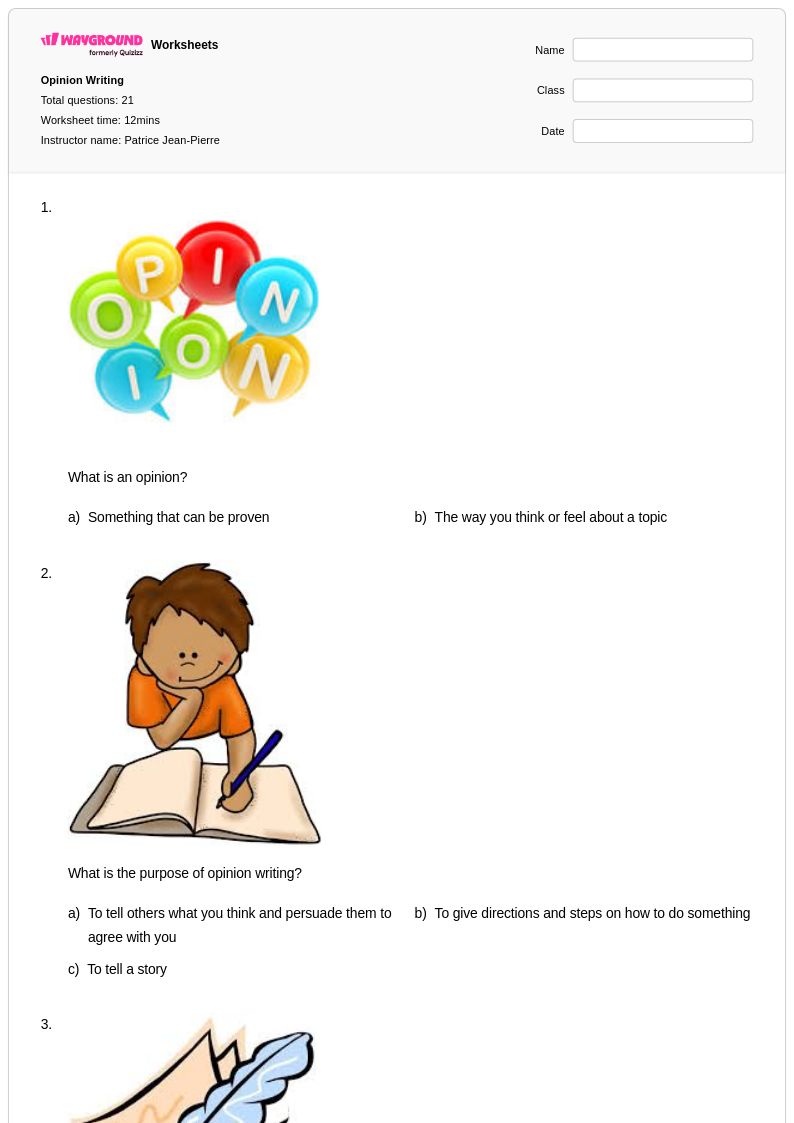
Free Printable Opinion Writing Worksheets for Kindergarten
Explore Wayground's collection of free kindergarten opinion writing worksheets and printables that help young learners express their thoughts, practice forming simple opinions, and develop foundational nonfiction writing skills with guided activities and answer keys.
Explore printable Opinion Writing worksheets for Kindergarten
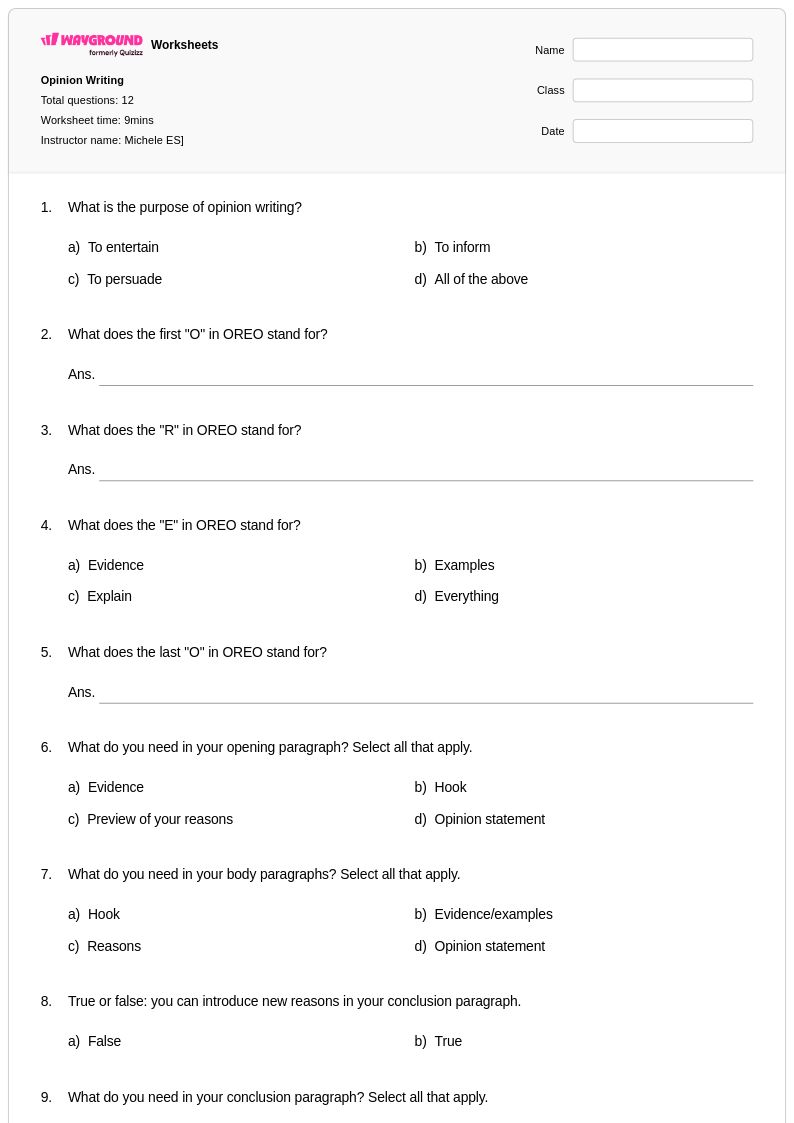
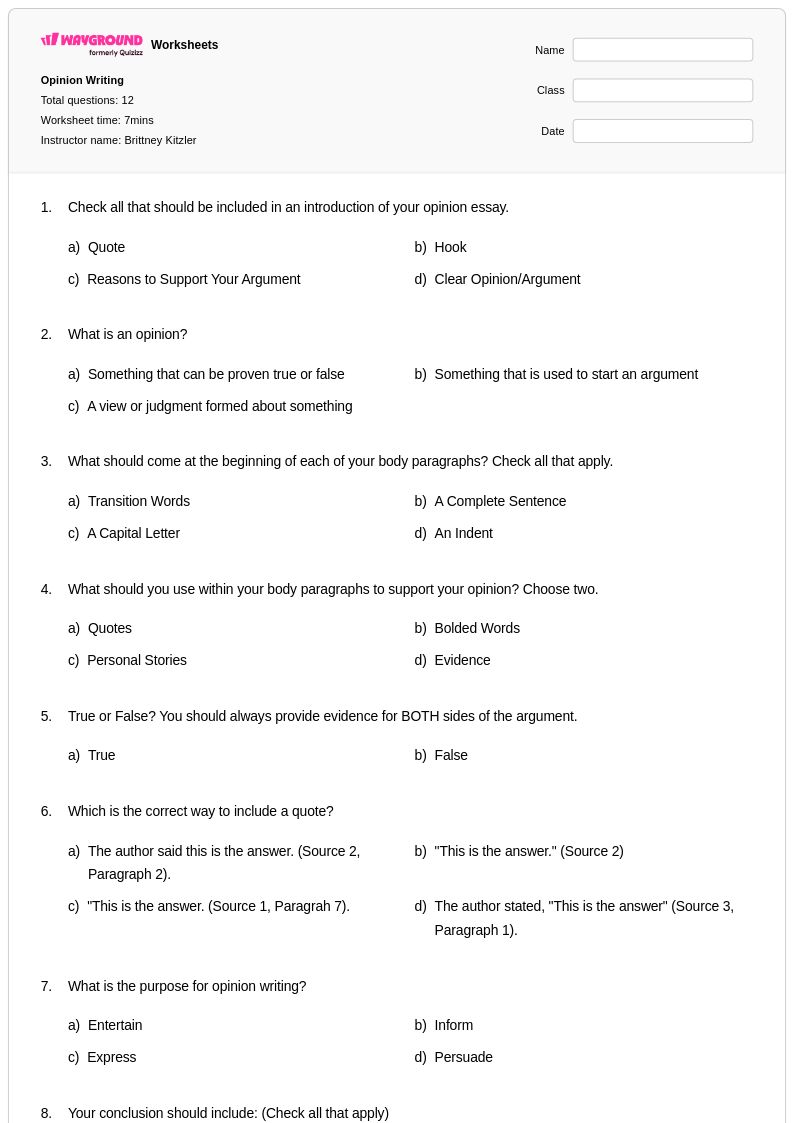
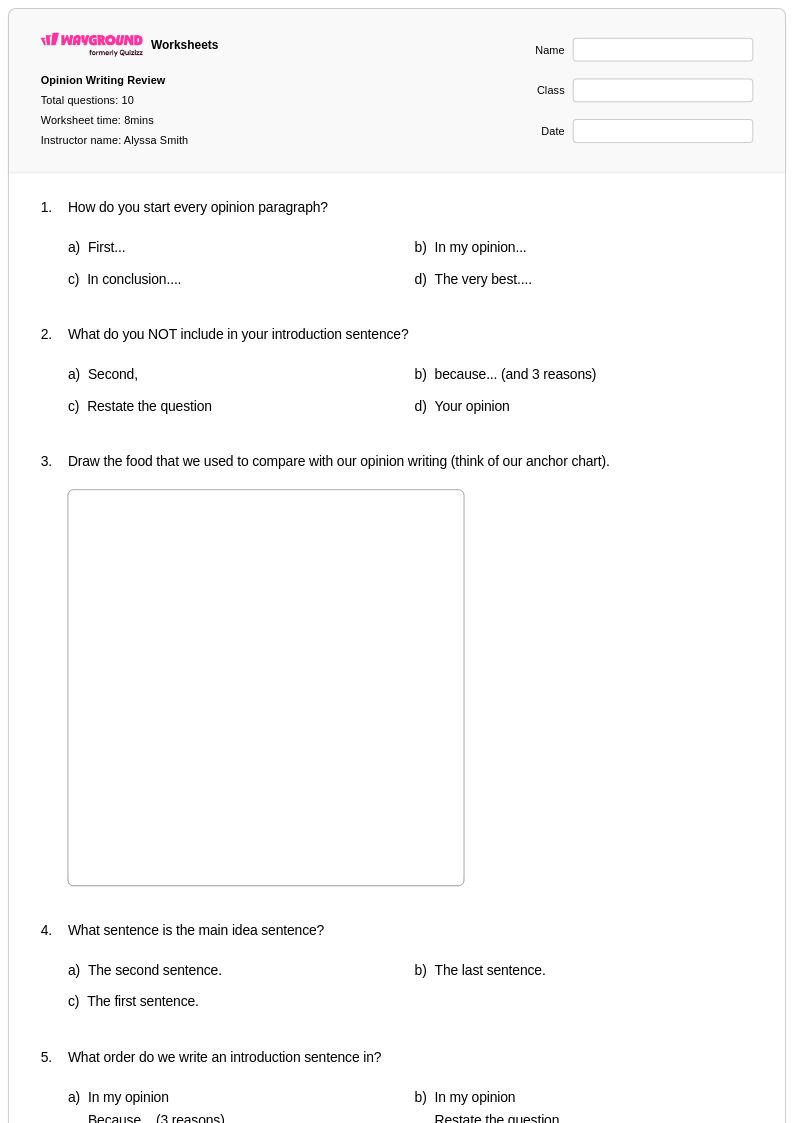
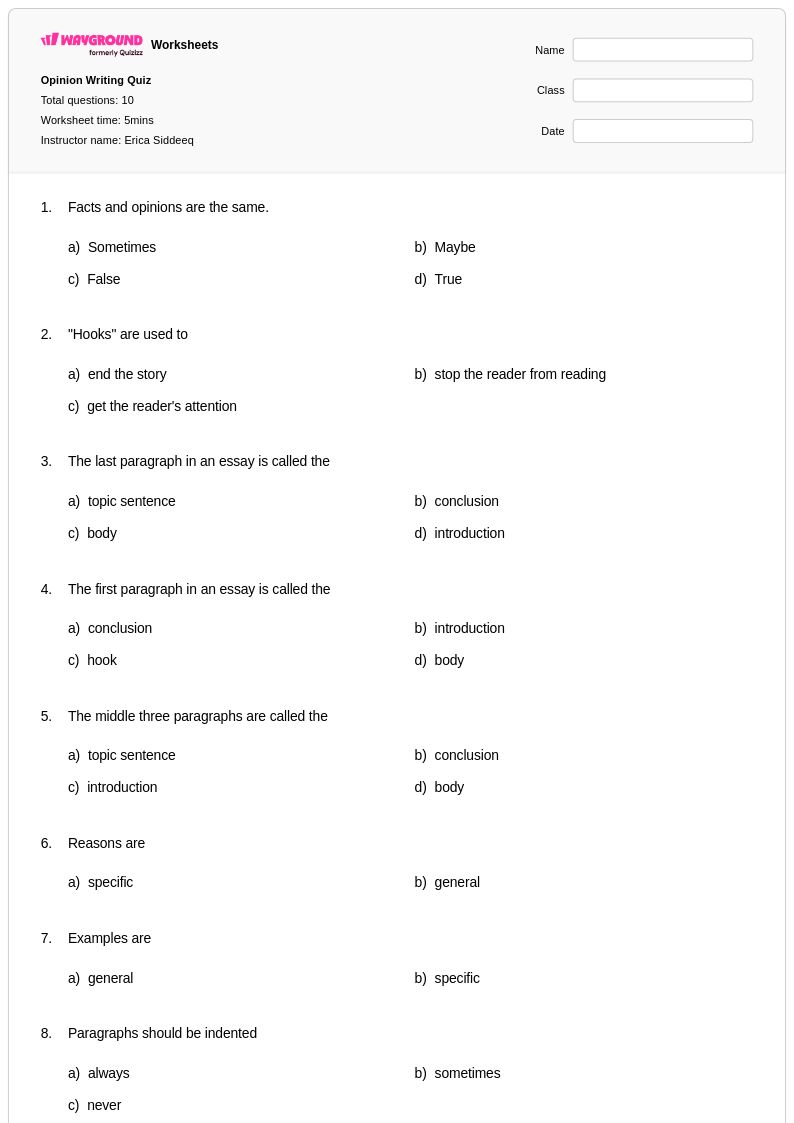
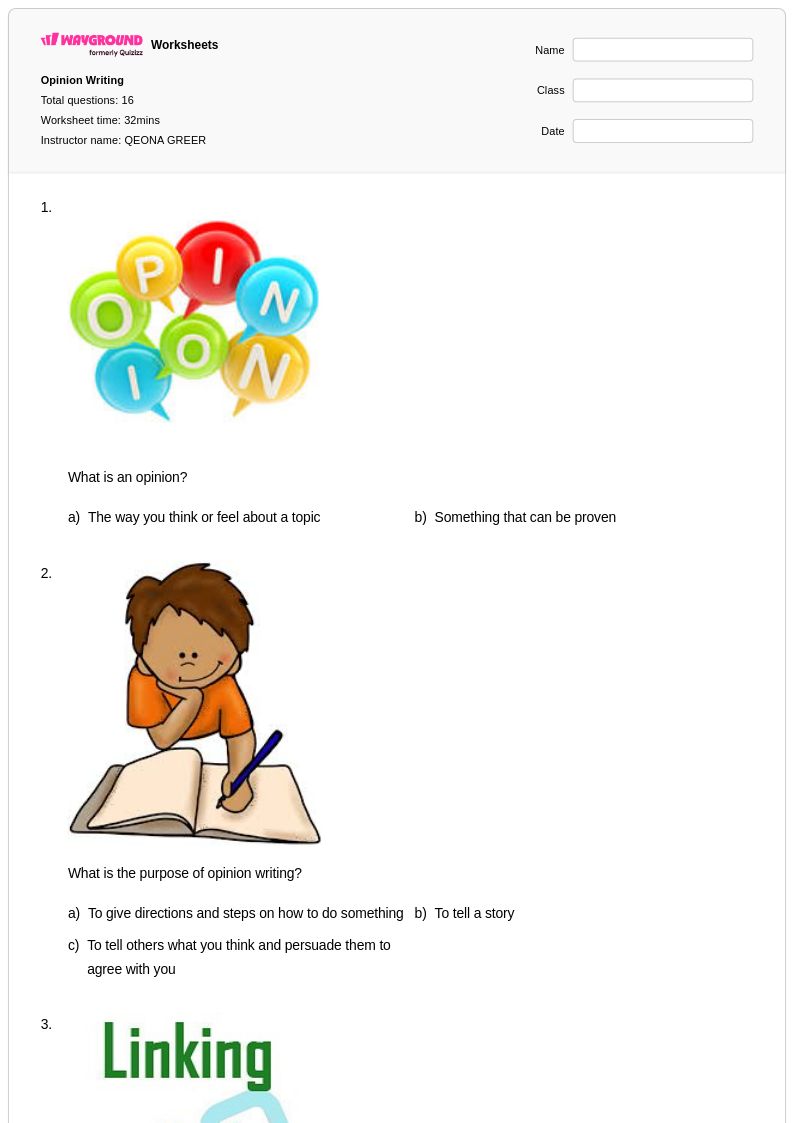
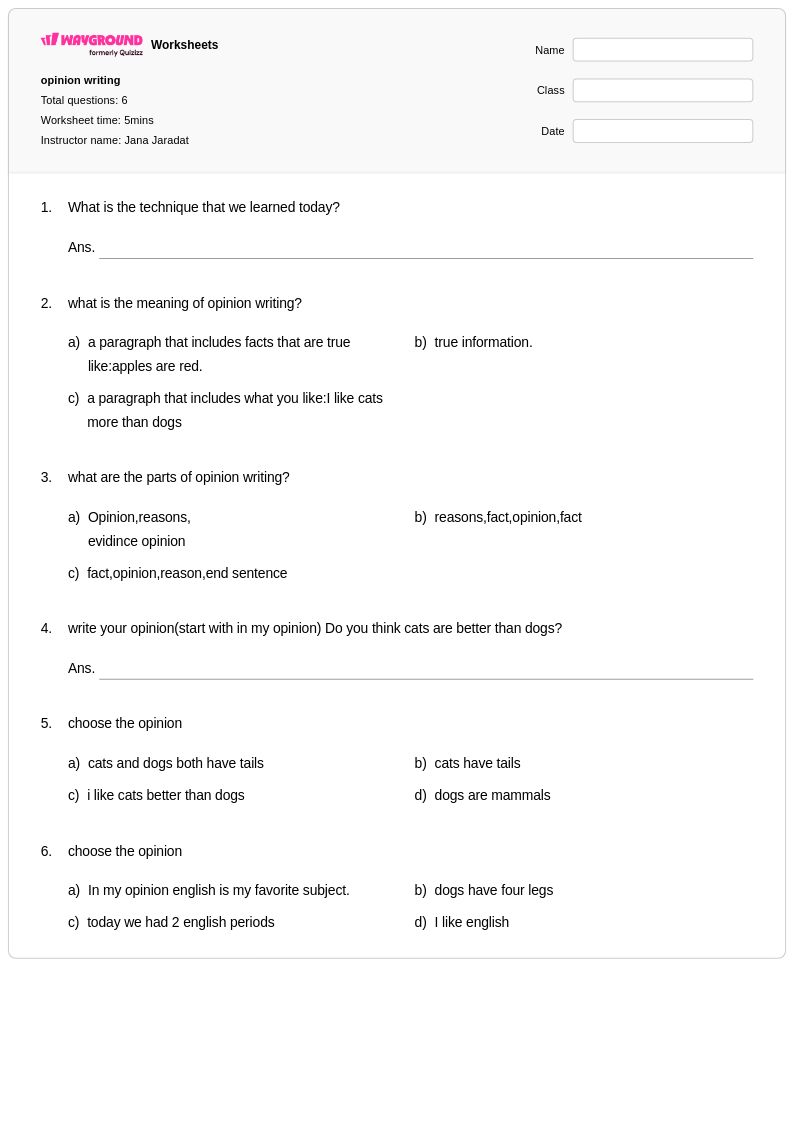
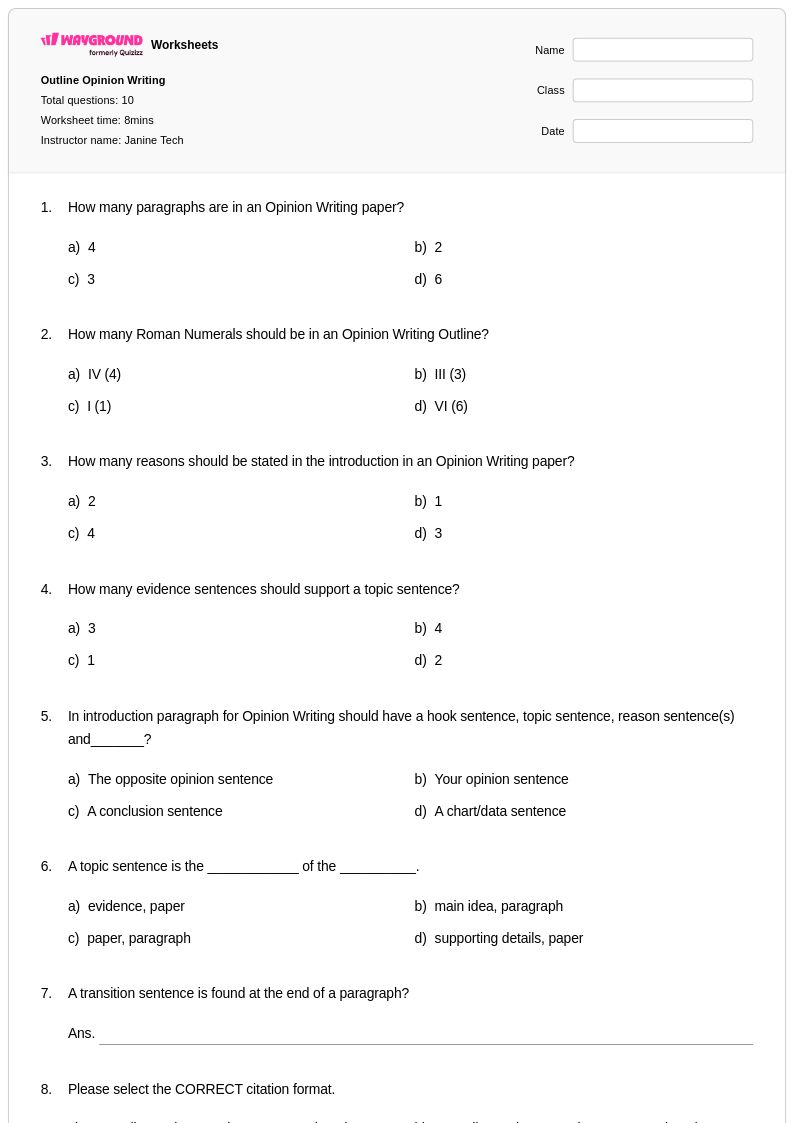
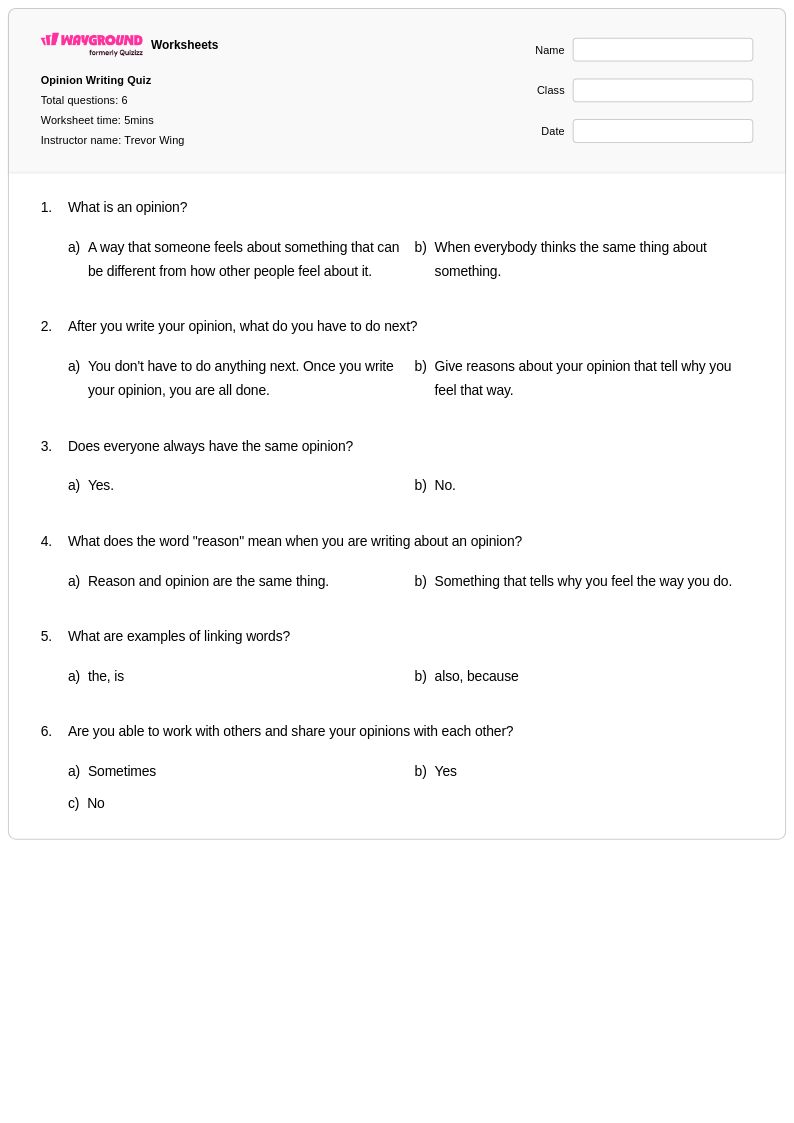
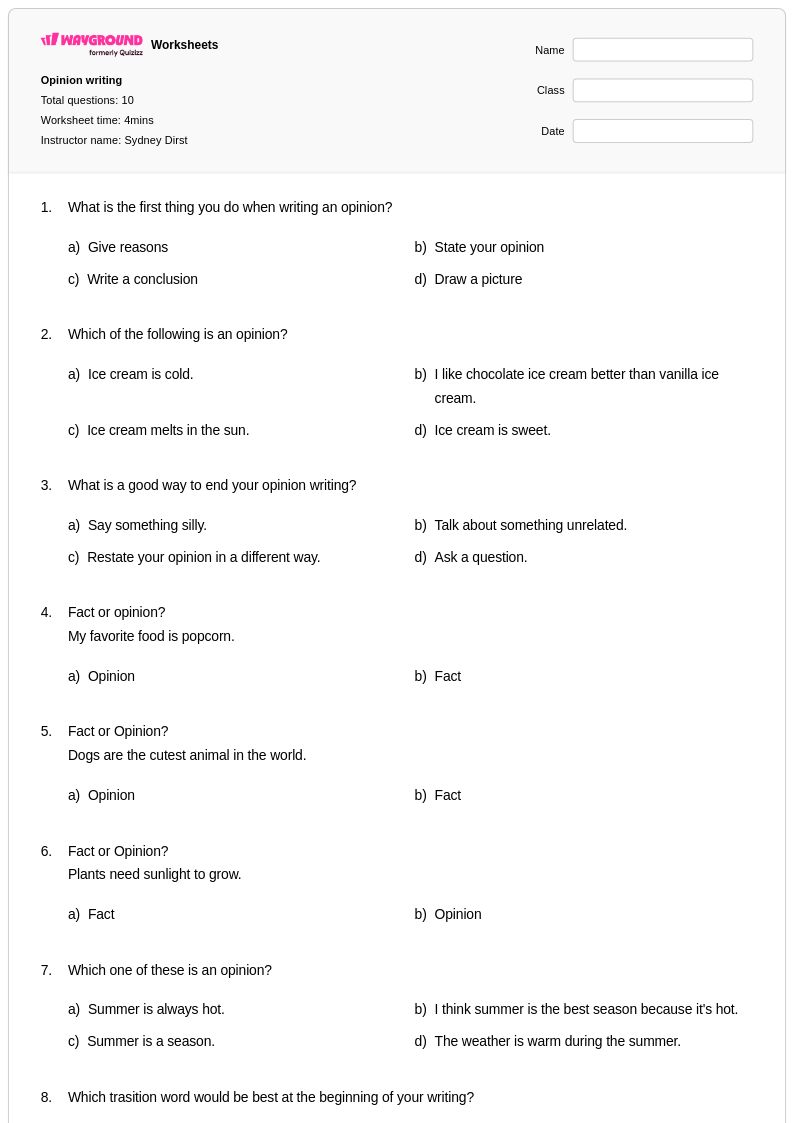
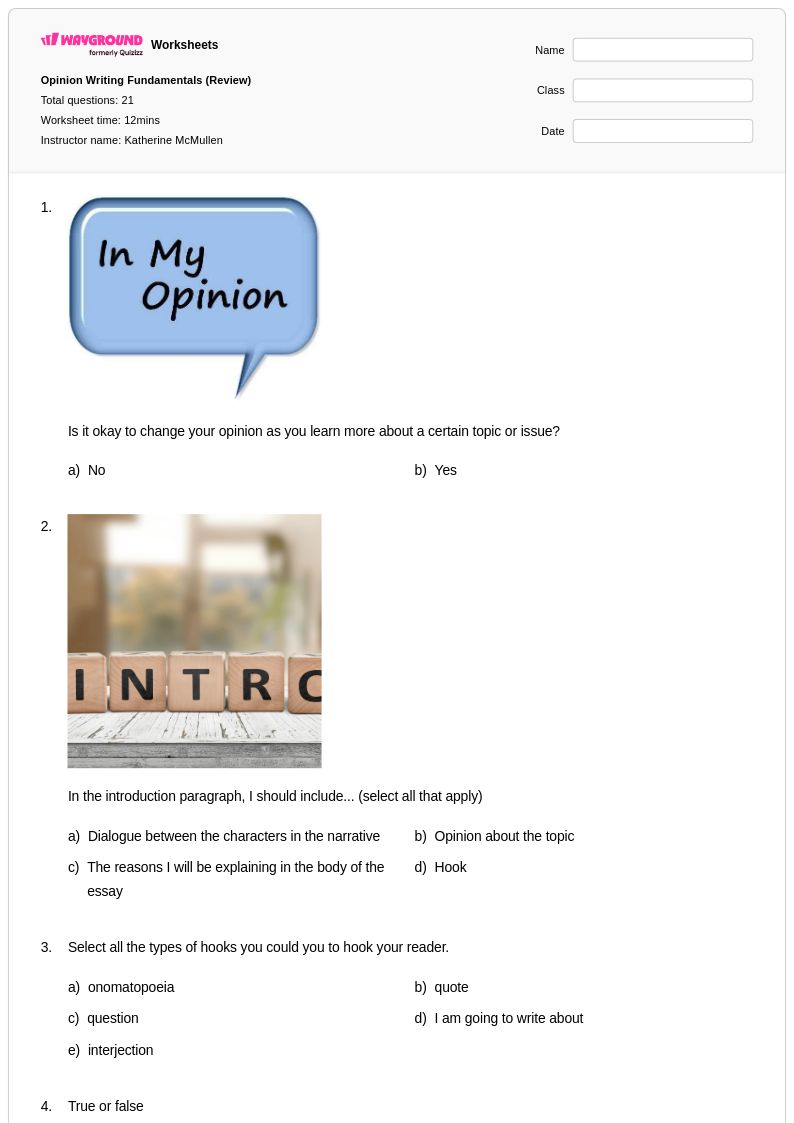
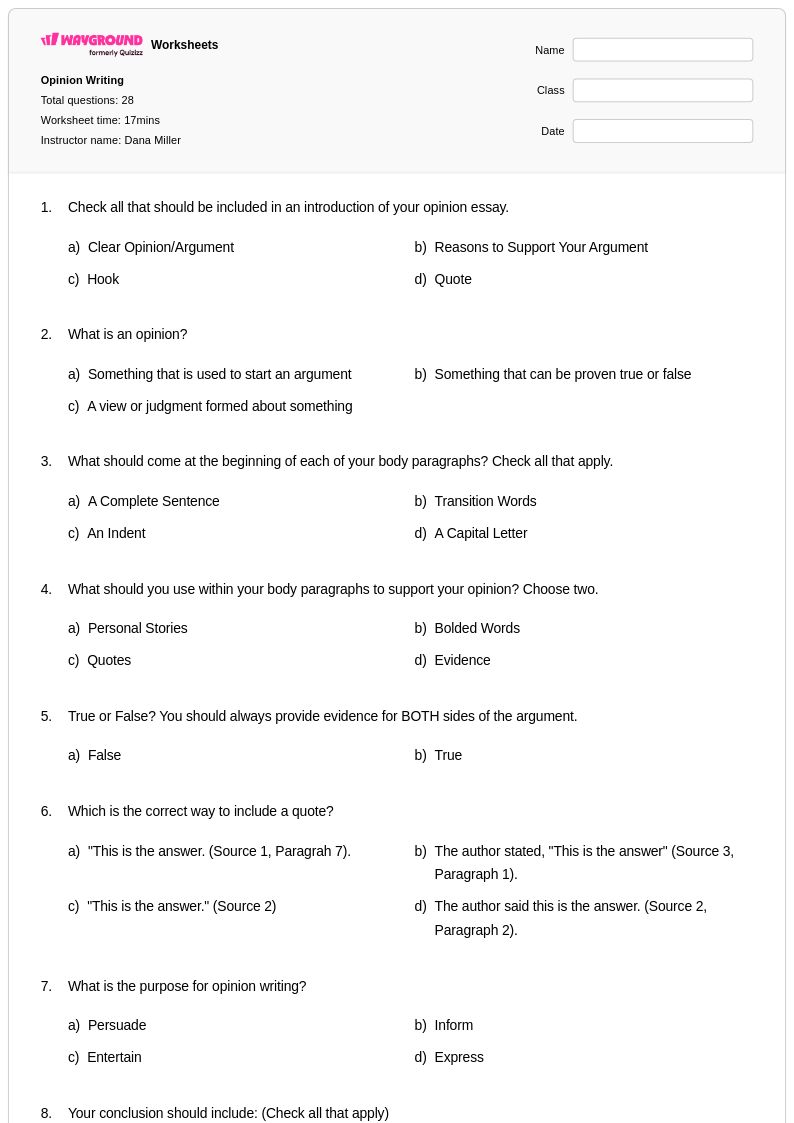
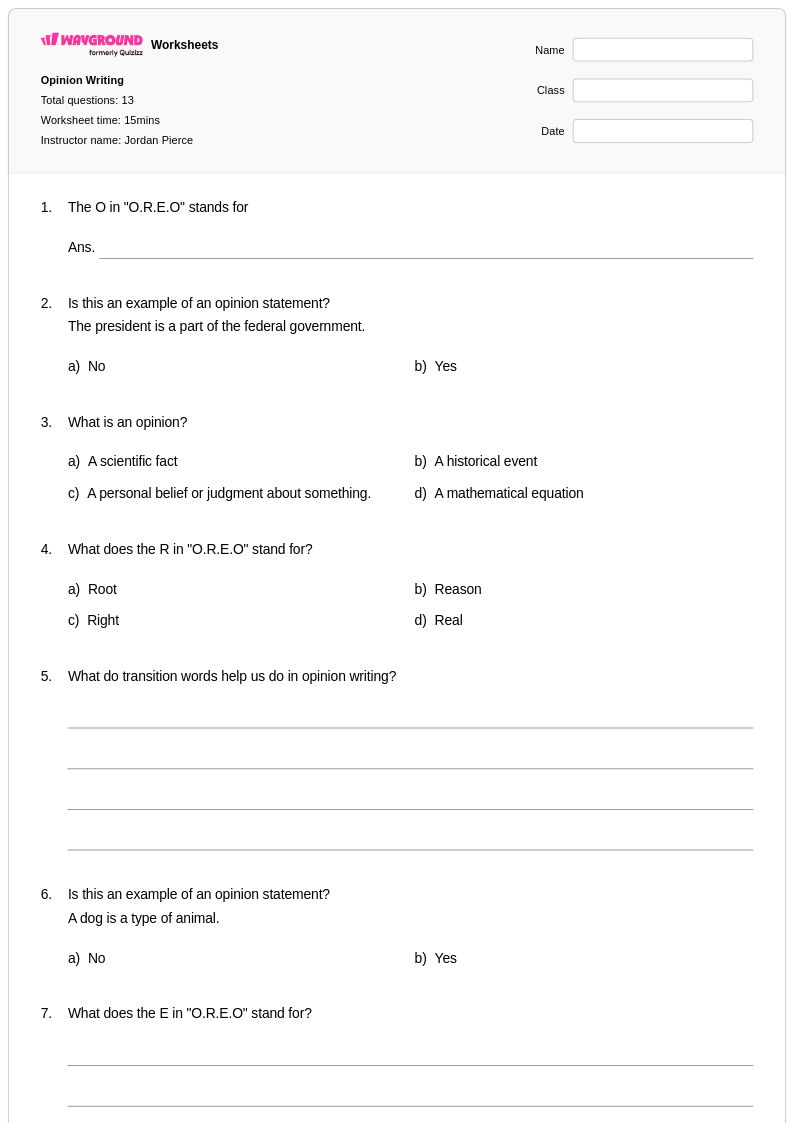
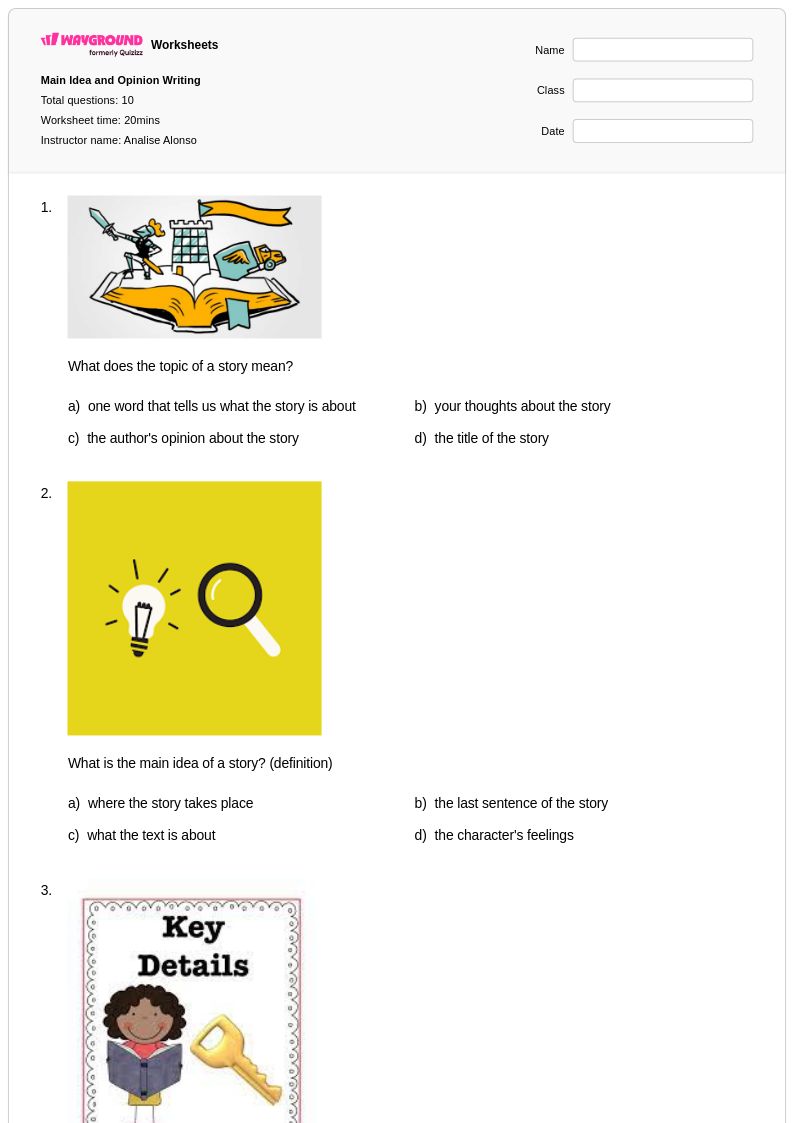
Opinion writing worksheets for kindergarten available through Wayground (formerly Quizizz) provide young learners with structured opportunities to express their thoughts and preferences while developing foundational writing skills. These carefully designed printables guide students through the essential components of opinion writing, helping them learn to state what they like or dislike about familiar topics such as favorite foods, animals, or activities. Each worksheet includes scaffolded practice problems that encourage kindergarteners to use simple sentence frames and drawing activities to support their written responses, with comprehensive answer keys provided to support both independent work and guided instruction. The free resources focus on building critical thinking skills by teaching students to provide basic reasons for their opinions, laying the groundwork for more sophisticated argumentative writing in later grades.
Wayground's extensive collection of kindergarten opinion writing worksheets draws from millions of teacher-created resources, offering educators robust search and filtering capabilities to locate materials that align with specific learning objectives and developmental needs. The platform's differentiation tools enable teachers to customize worksheets for varying skill levels within their classrooms, while maintaining alignment with early childhood writing standards that emphasize creative expression and foundational literacy development. These versatile resources are available in both printable pdf formats for traditional classroom use and digital formats for interactive learning experiences, supporting flexible lesson planning whether teachers need materials for whole-group instruction, small-group remediation, or enrichment activities. The comprehensive worksheet collection streamlines curriculum planning by providing ready-to-use practice opportunities that systematically build kindergarteners' confidence in expressing their opinions through writing.
FAQs
How do I teach opinion writing to students?
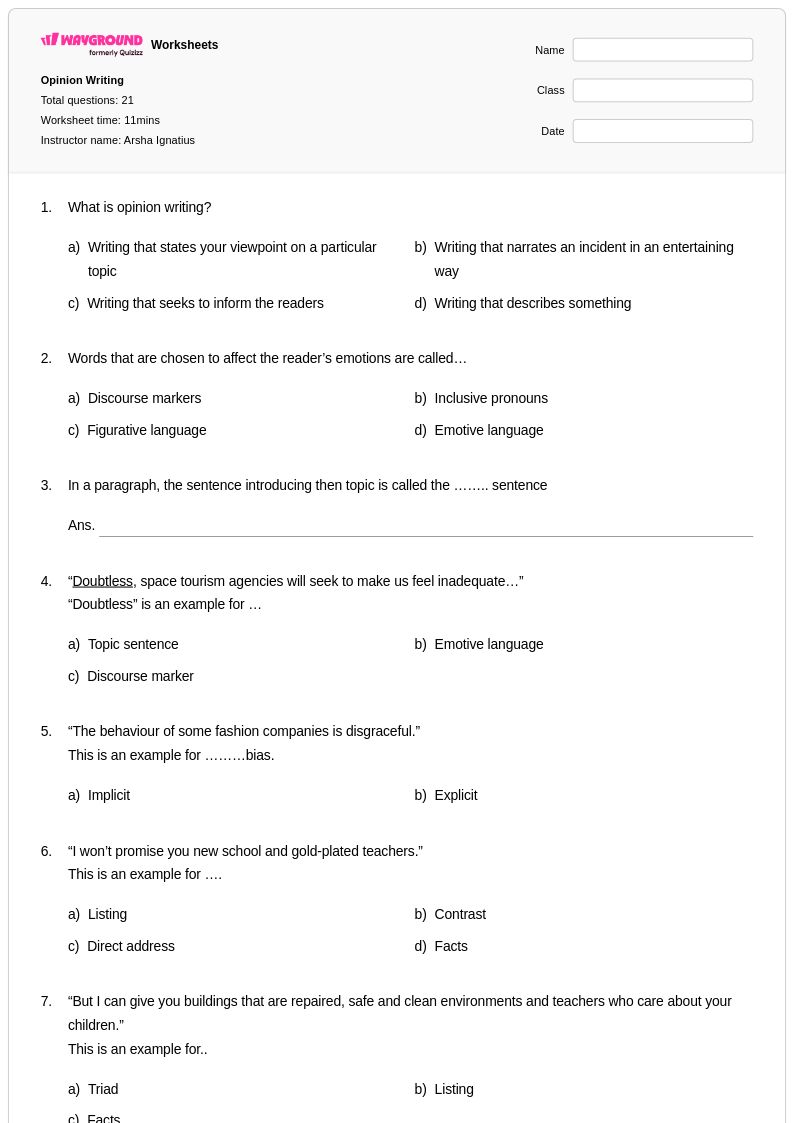
Effective opinion writing instruction begins with modeling the structure: a clear thesis statement, body paragraphs with supporting evidence, acknowledgment of counterarguments, and a strong conclusion. Teachers often use mentor texts to show students how persuasive writers organize their thinking before students attempt their own pieces. Breaking the writing process into explicit stages, such as drafting a claim, finding evidence, and revising for voice, helps students build each component skill before combining them into a full piece.
What exercises help students practice opinion writing?
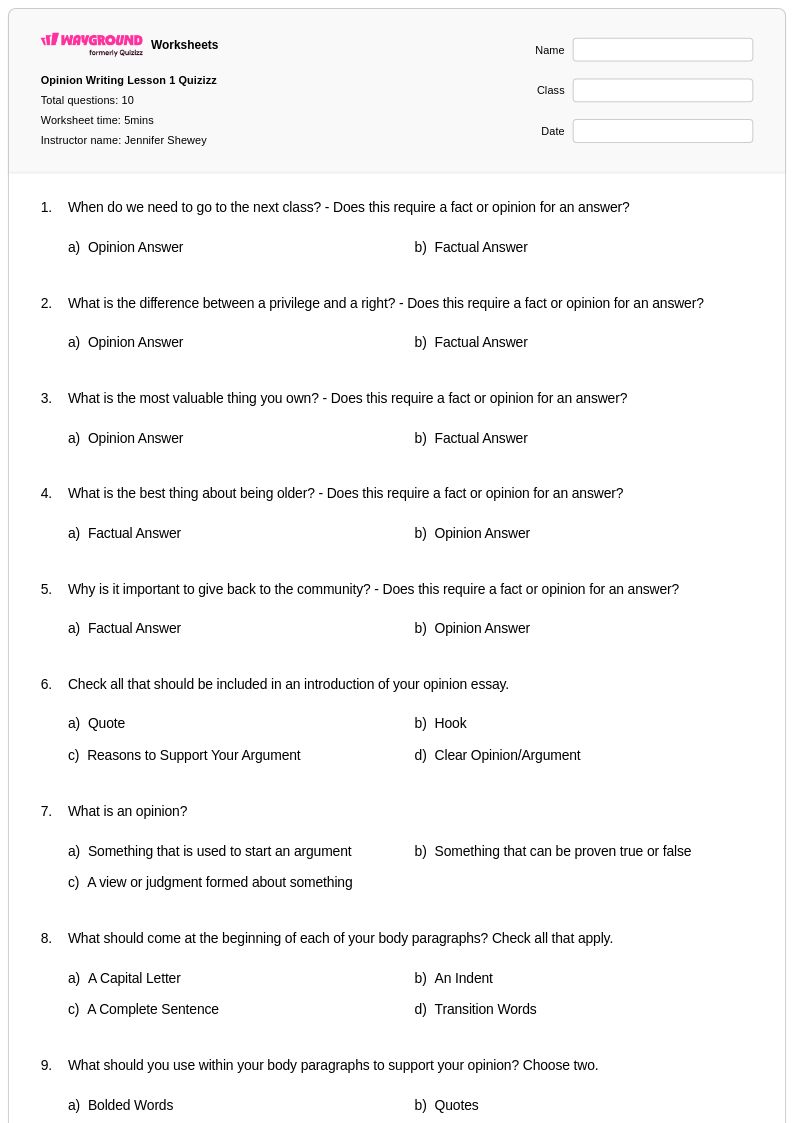
Structured practice exercises that isolate specific components of opinion writing are most effective, such as writing thesis statements from a given prompt, matching evidence to claims, or revising weak arguments to make them more persuasive. Worksheets that walk students through forming a claim, selecting relevant evidence, and addressing counterarguments give them a repeatable framework they can apply independently. Regular low-stakes practice with varied topics also builds confidence in persuasive writing before high-stakes assessments.
What mistakes do students commonly make in opinion writing?
The most common error is stating an opinion without supporting it with specific evidence, resulting in writing that relies on personal feeling rather than reasoned argument. Students also frequently ignore counterarguments entirely, which weakens the persuasive impact of their writing. Another typical mistake is losing a consistent voice or shifting tone mid-piece, often because students don't fully understand how word choice and persuasive language techniques contribute to an argument's credibility.
How do I help struggling writers structure an opinion essay?
For students who struggle with organization, providing a graphic organizer that maps out the thesis, three pieces of supporting evidence, a counterargument response, and a conclusion gives them a concrete scaffold before they begin drafting. Breaking the assignment into sequential steps, rather than assigning the full essay at once, reduces cognitive load and allows targeted feedback at each stage. Wayground's differentiation tools also allow teachers to apply reduced answer choices or read-aloud support to individual students without disrupting the rest of the class.
How can I use Wayground's opinion writing worksheets in my classroom?
Wayground's opinion writing worksheets are available as printable PDFs for traditional classroom use and in digital formats for technology-integrated or remote learning environments, making them flexible across instructional settings. Teachers can also host worksheets as a live quiz on Wayground, allowing real-time student responses and instant data on class performance. Each worksheet includes a complete answer key, so teachers can provide specific, targeted feedback on individual writing components such as thesis clarity, evidence quality, or conclusion strength.
How do I assess student progress in opinion writing?
Effective assessment of opinion writing should evaluate discrete skills separately before scoring a full piece holistically, looking specifically at thesis clarity, quality and relevance of evidence, handling of counterarguments, and conclusion effectiveness. Using a consistent rubric aligned to these components helps students understand exactly where their writing succeeds and where it needs revision. Worksheets with answer keys are particularly useful for formative assessment because they allow teachers to identify patterns in student errors and plan targeted follow-up instruction.