Free Printable Writing Organization and Structure Worksheets for Kindergarten
Discover free kindergarten writing organization and structure worksheets and printables that help young learners practice organizing their thoughts, sequencing ideas, and building foundational writing skills through engaging activities with answer keys.
Explore printable Writing Organization and Structure worksheets for Kindergarten
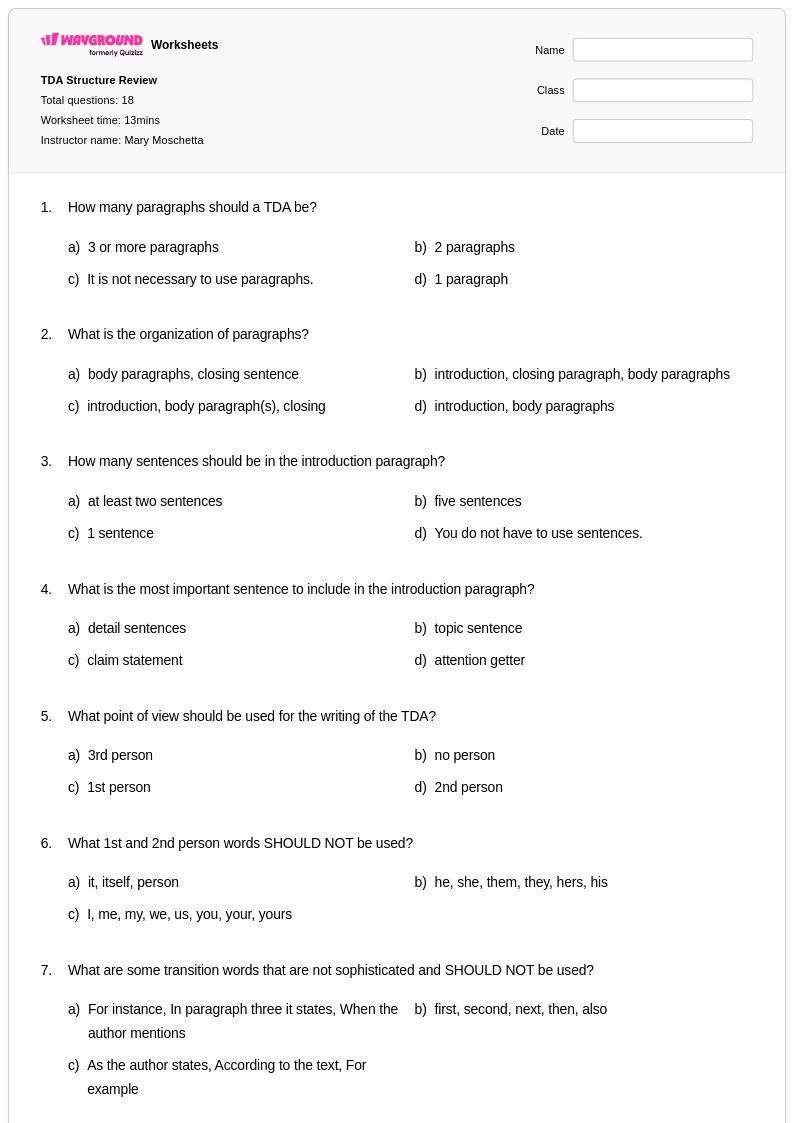
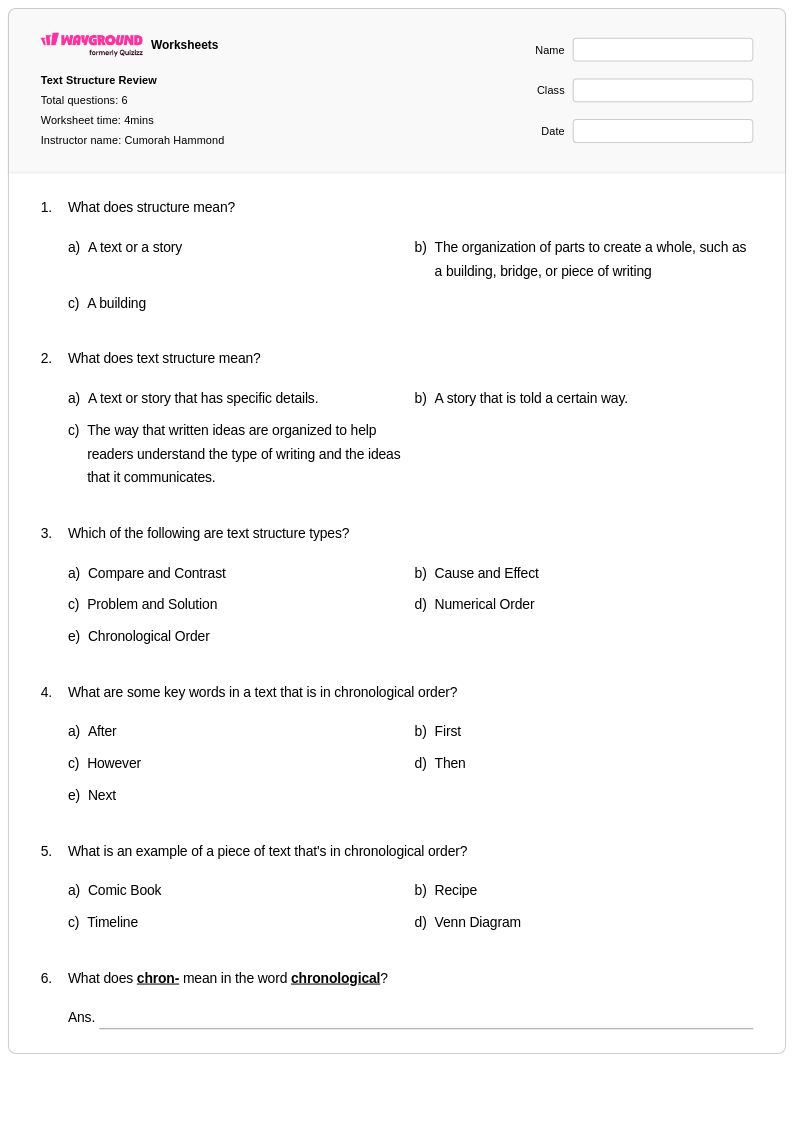
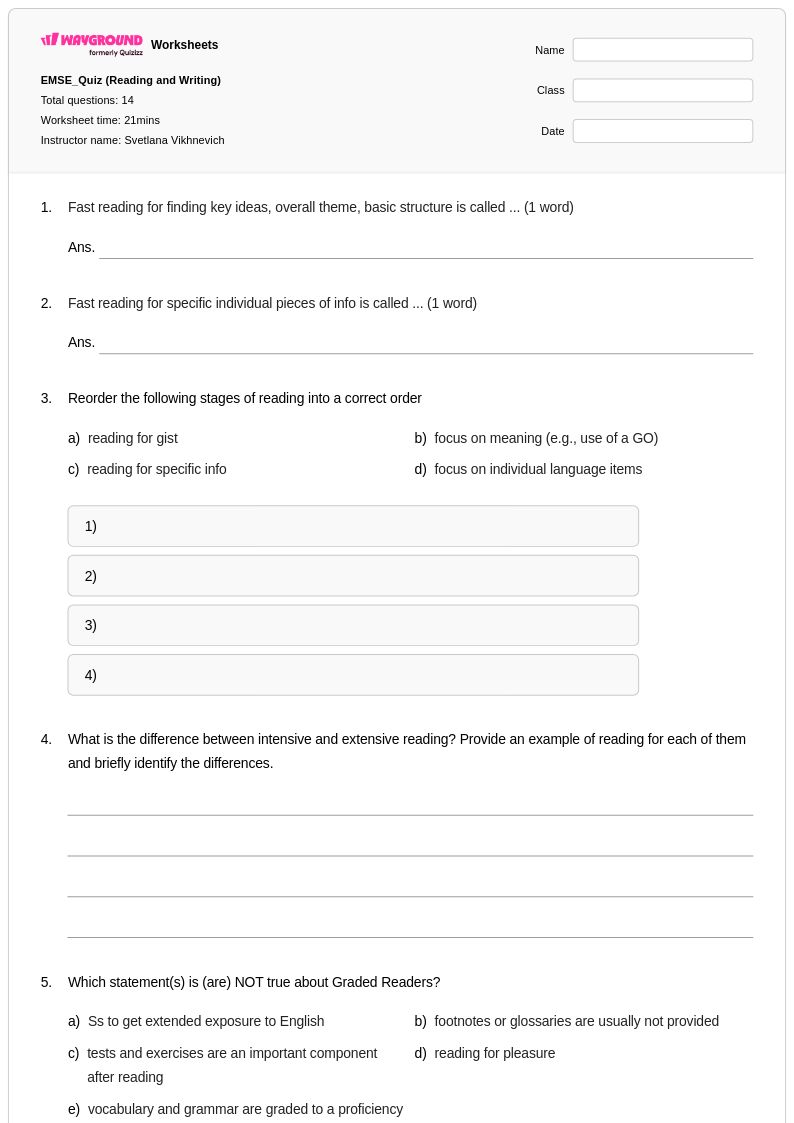
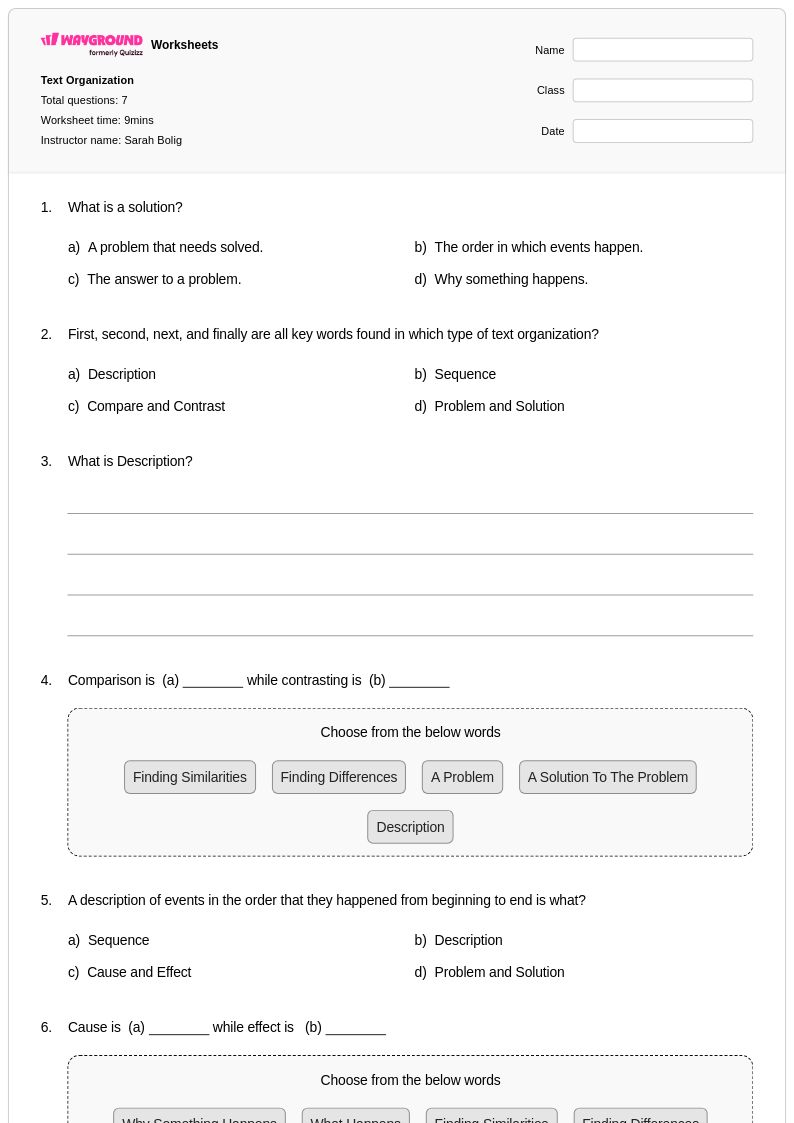
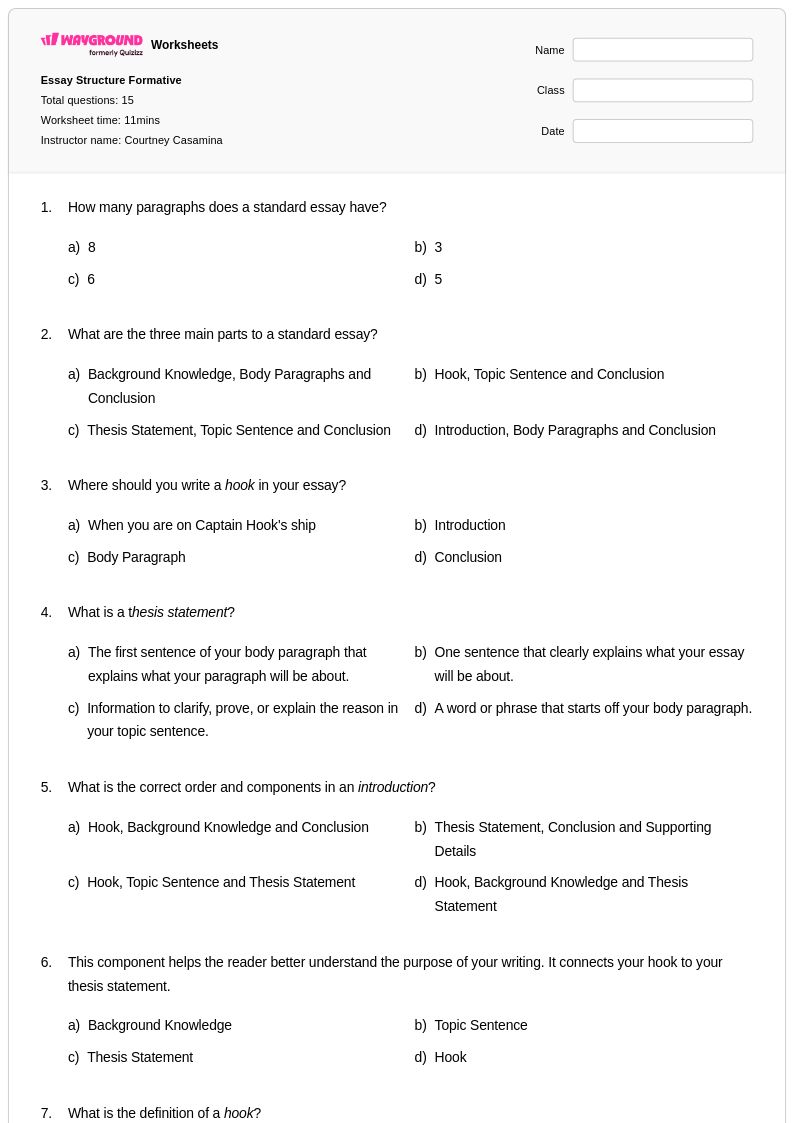
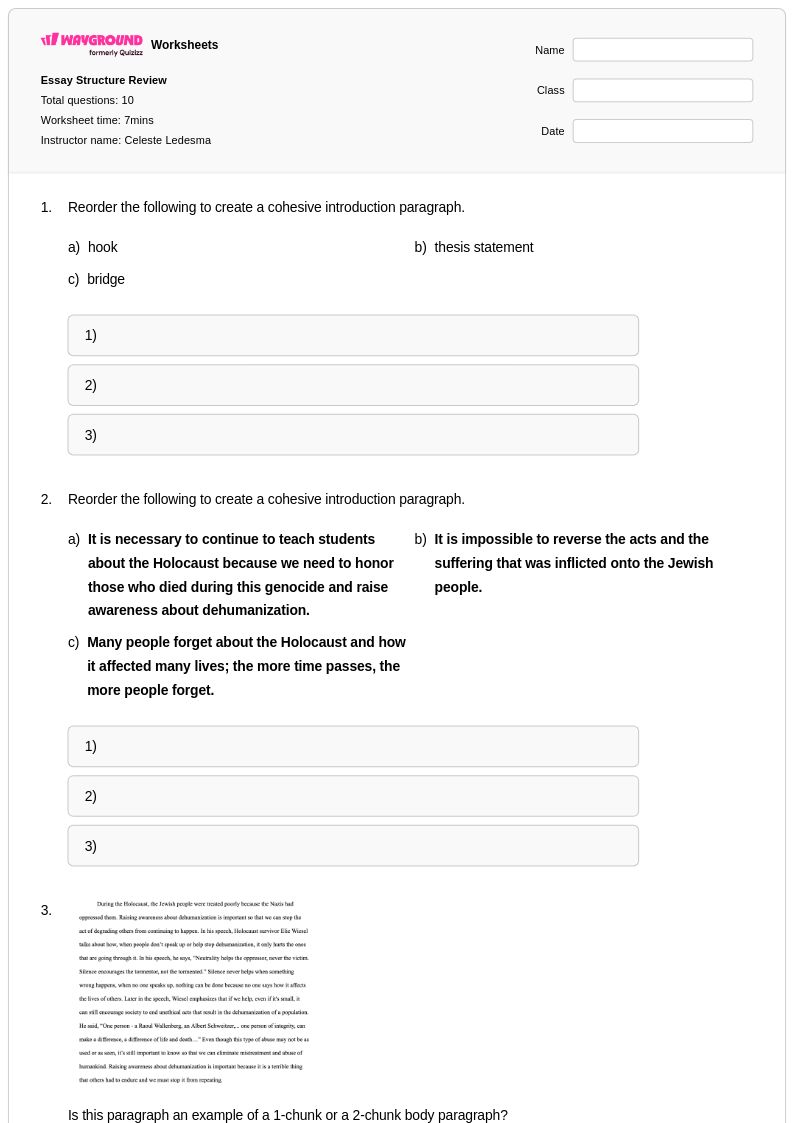
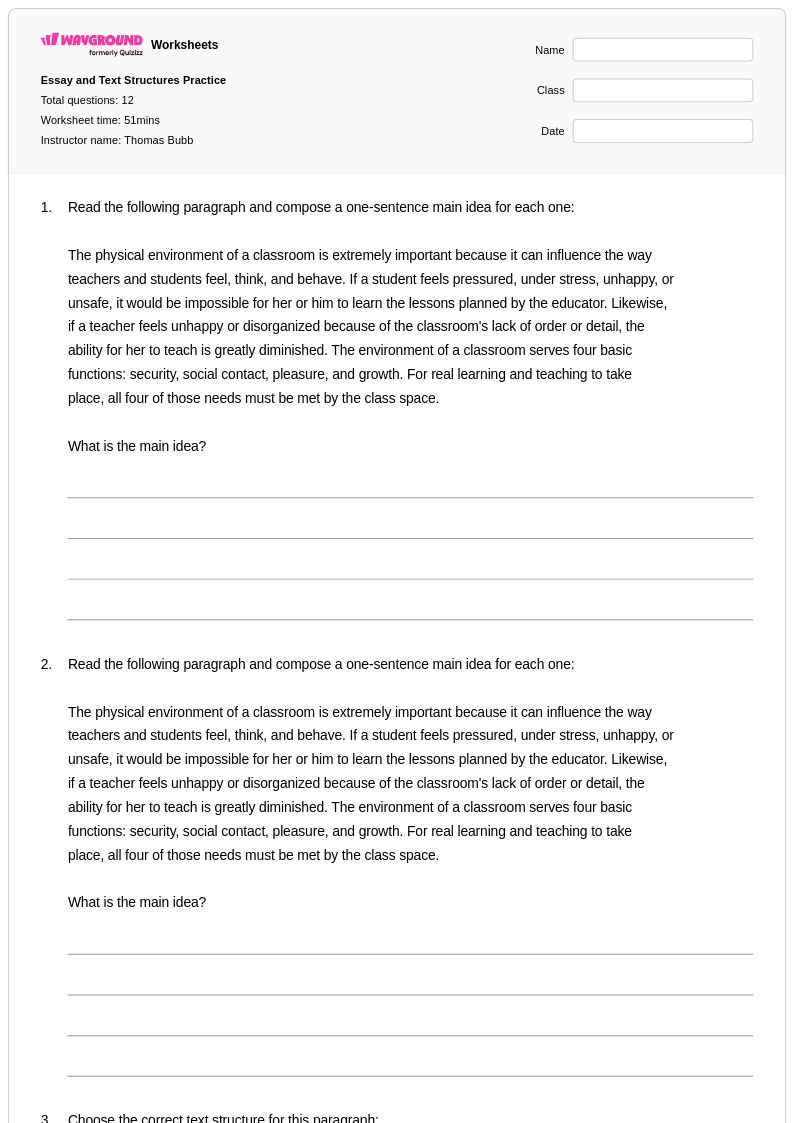
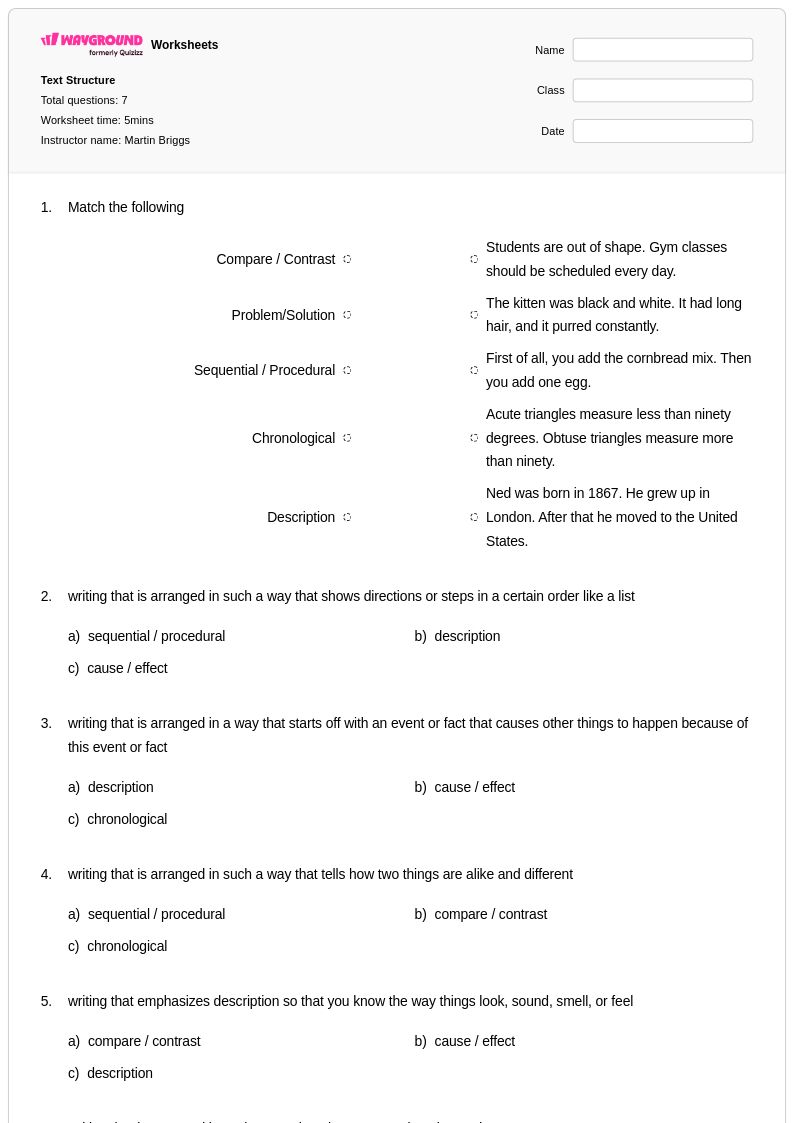
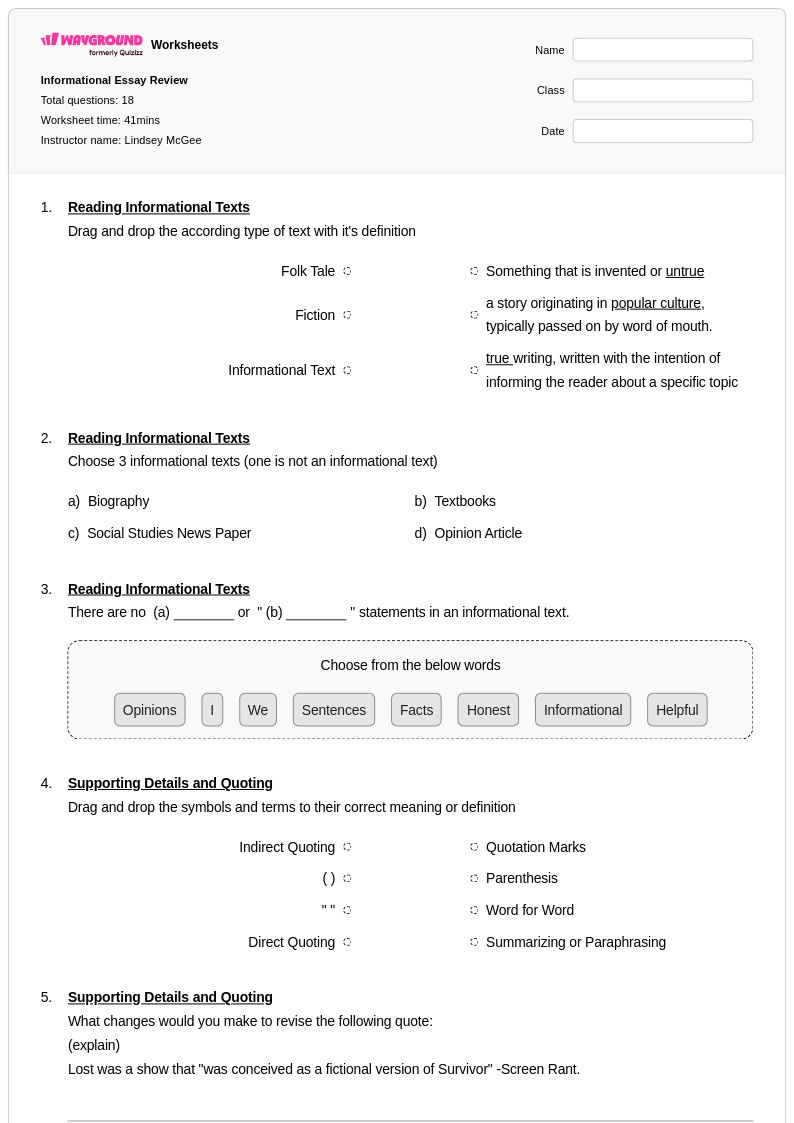
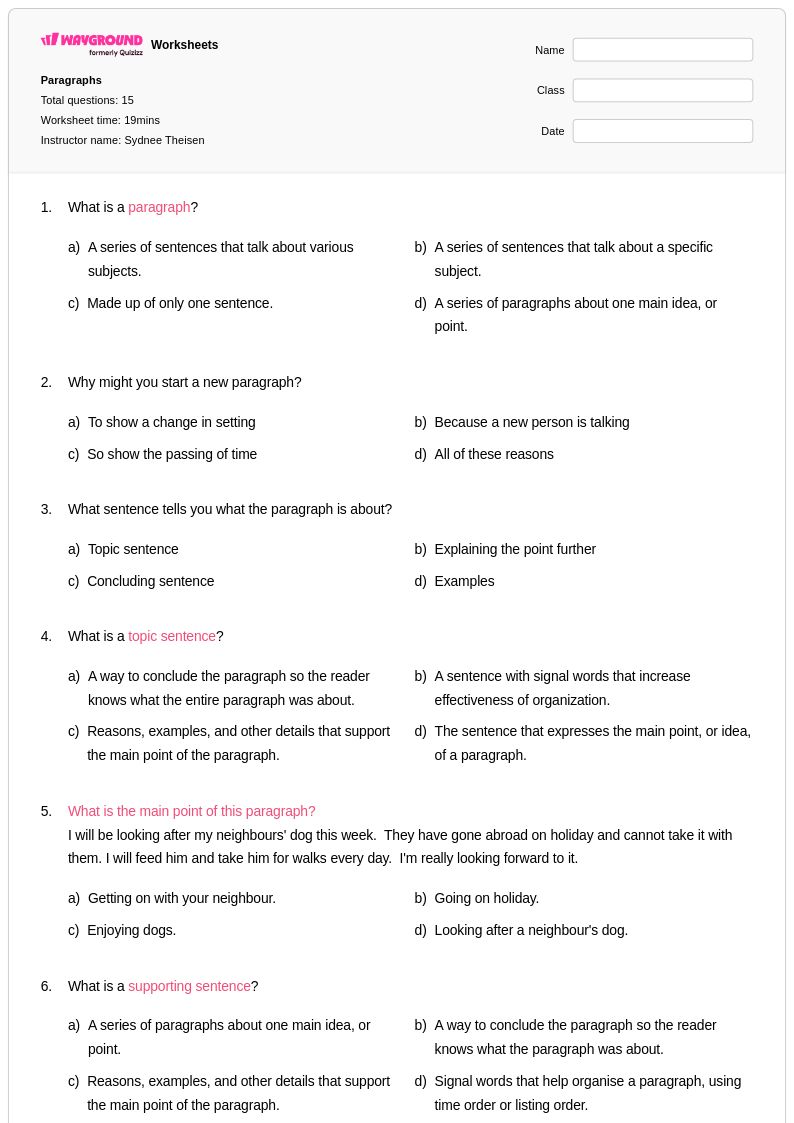
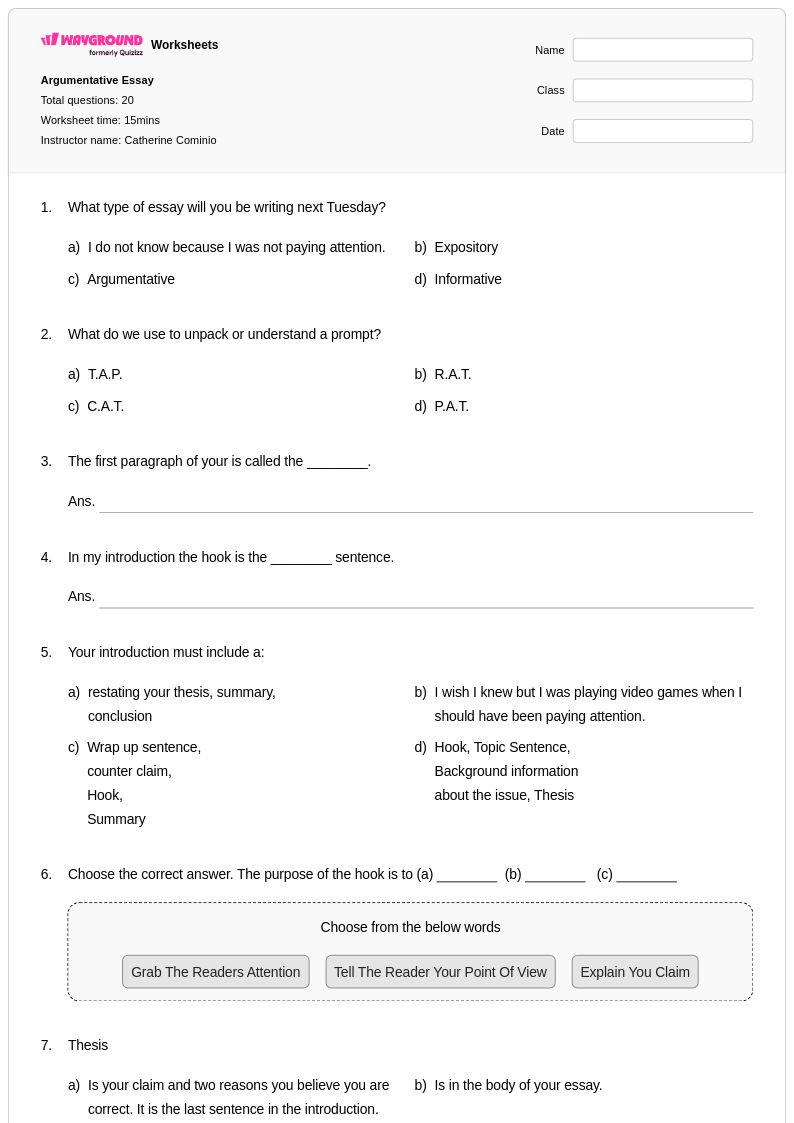
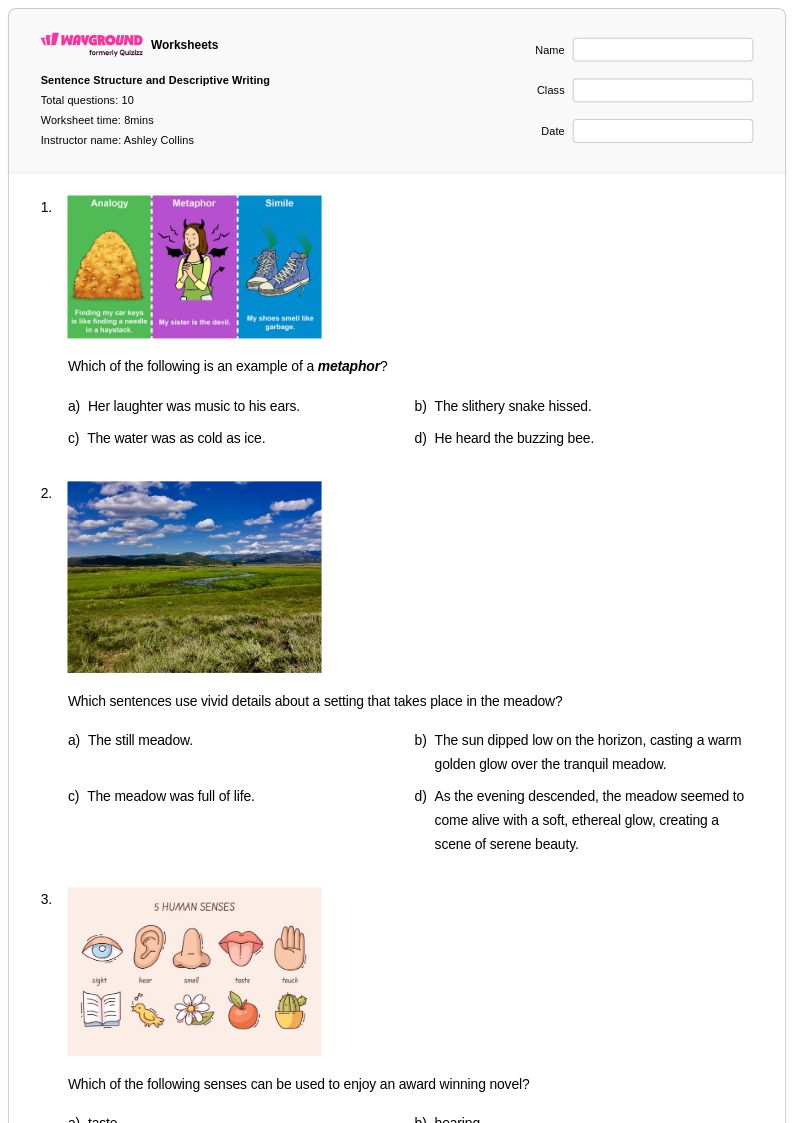
Writing organization and structure worksheets for kindergarten students through Wayground provide essential foundation-building activities that introduce young learners to the fundamental concepts of organized communication. These carefully designed printables focus on helping kindergarteners understand basic structural elements such as beginning, middle, and end sequences, simple story ordering, and logical arrangement of ideas through age-appropriate visual and hands-on exercises. The worksheets strengthen critical pre-writing skills including sequential thinking, cause-and-effect relationships, and basic narrative flow through engaging activities like picture sequencing, story mapping, and simple graphic organizers. Each worksheet comes with comprehensive answer keys and is available as free pdf downloads, making them accessible resources for both classroom instruction and home practice problems that reinforce organizational thinking skills.
Wayground supports educators with an extensive collection of kindergarten writing organization and structure worksheets created by millions of teachers who understand the developmental needs of early learners. The platform's robust search and filtering capabilities allow teachers to quickly locate materials aligned with specific learning standards and differentiate instruction based on individual student needs. Teachers can customize these printable and digital pdf resources to match their classroom requirements, whether for whole-group instruction, small-group remediation, or enrichment activities for advanced learners. This flexibility enables educators to seamlessly integrate organizational skill practice into their daily writing instruction, providing consistent opportunities for students to develop the structural thinking abilities that serve as building blocks for more complex writing tasks in later grades.
FAQs
How do I teach writing organization and structure to students?
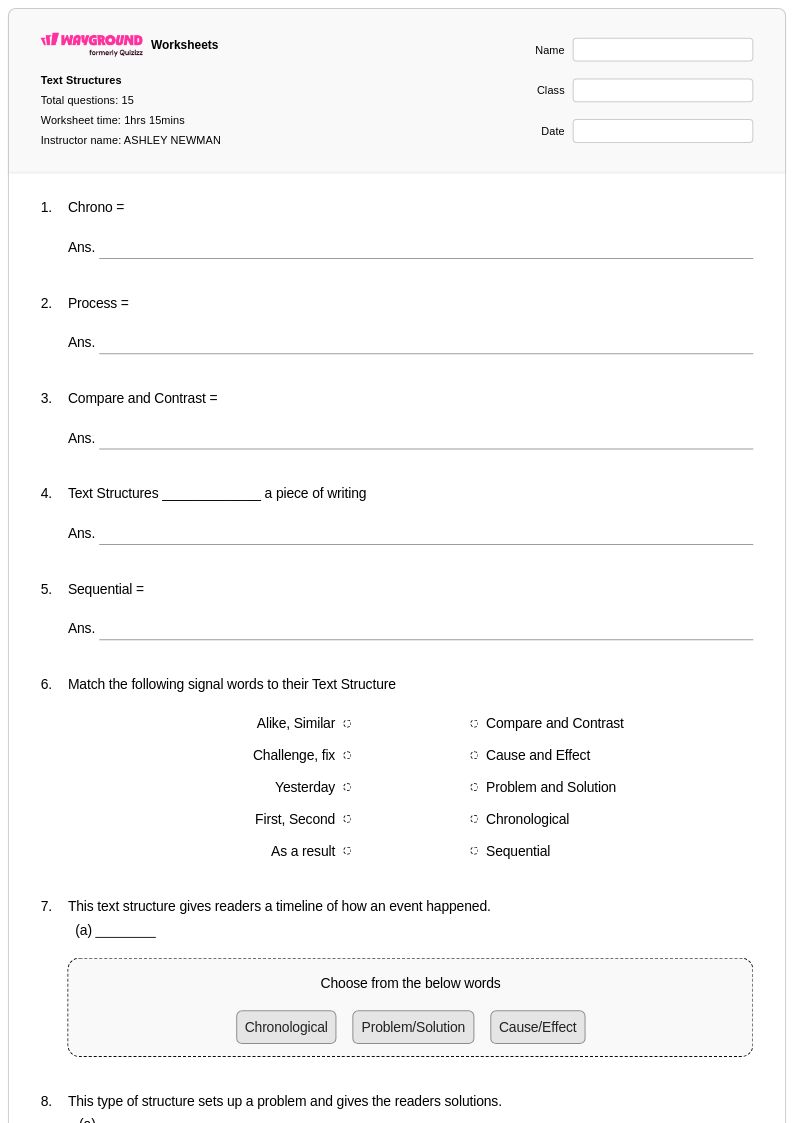
Effective instruction in writing organization starts with explicit modeling of structural patterns such as chronological order, cause and effect, compare and contrast, and problem and solution. Teachers should introduce one structure at a time, use mentor texts to show it in action, and then guide students through planning tools like graphic organizers and outlines before they draft. Connecting each structure to a real writing purpose, such as persuasive essays for rhetorical appeals or narrative essays for three-act structure, helps students see organization as a functional tool rather than an abstract rule.
What are the most common mistakes students make with writing organization?
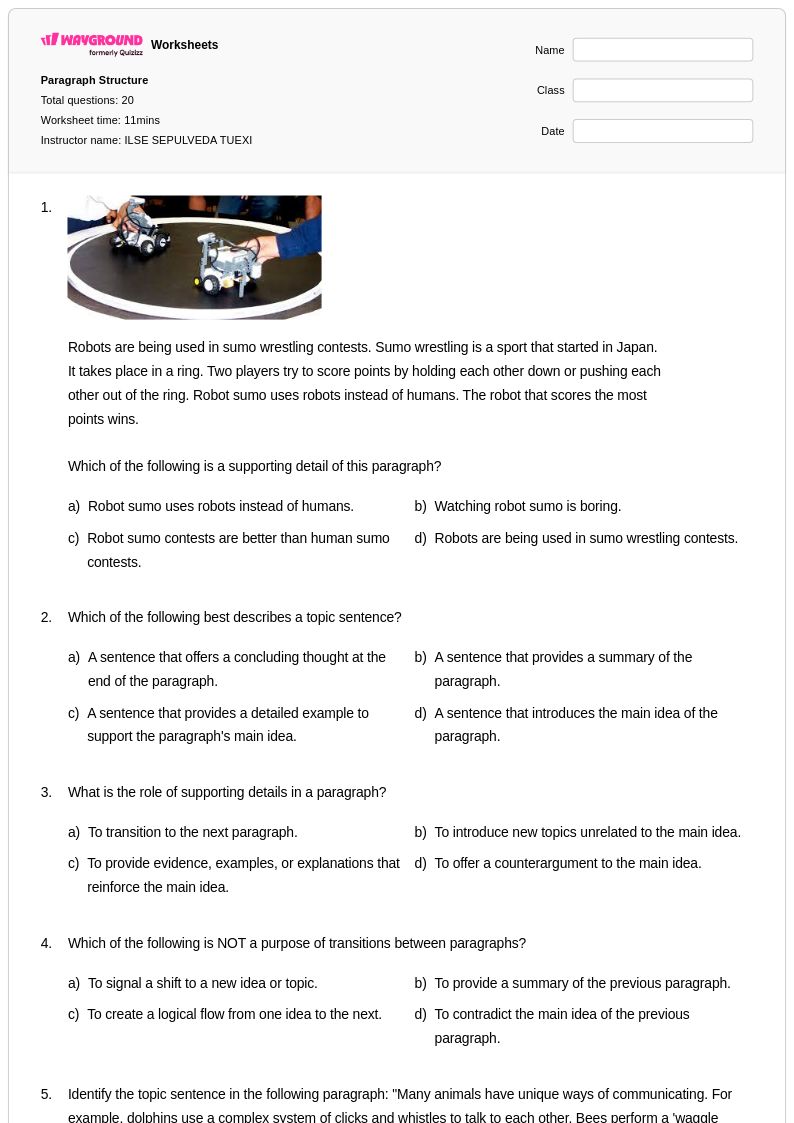
The most frequent errors include weak or missing topic sentences that fail to anchor a paragraph, abrupt transitions that leave readers without logical connectors between ideas, and including irrelevant details that derail the focus of a composition. Students also commonly confuse the purpose of different essay structures, for example treating an informative essay like a narrative. Targeted practice with paragraph correction exercises and transition signal activities can help students identify and self-correct these patterns before they become habits.
What exercises help students practice paragraph structure and transitions?
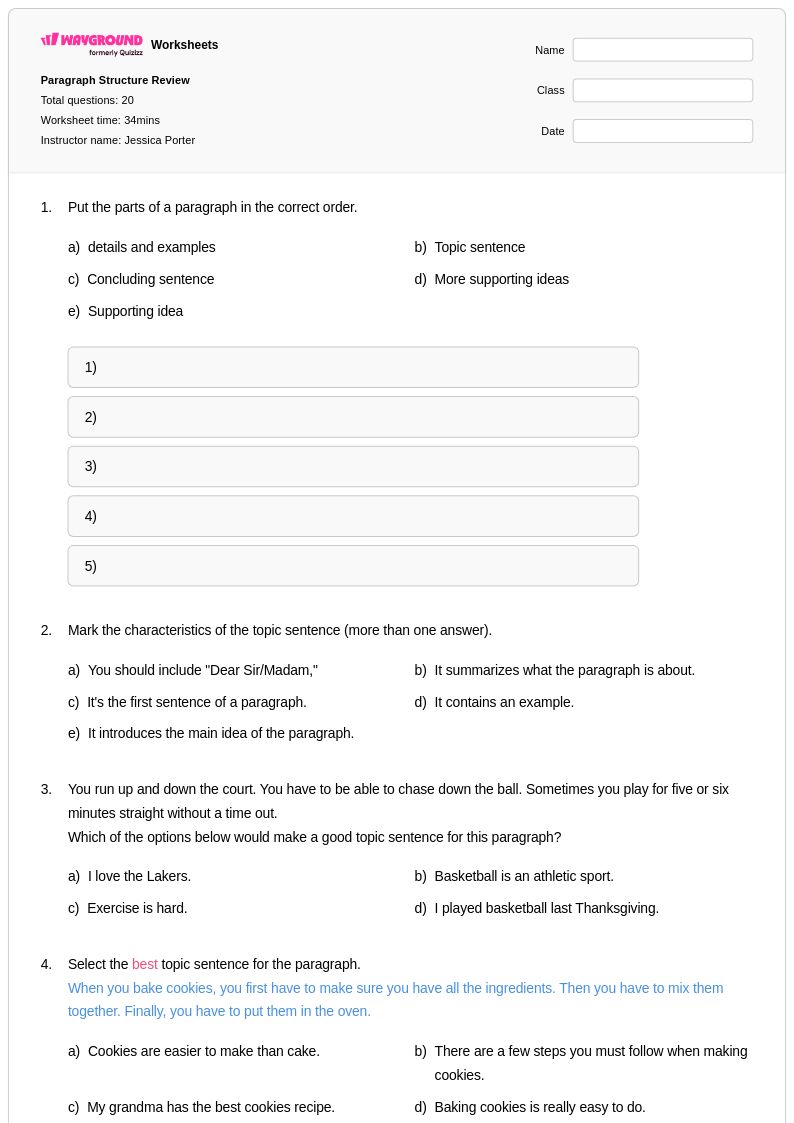
Paragraph correction tasks, transition sentence activities, and topic sentence identification exercises are among the most effective for building structural awareness. Sentence expansion and sentence variety practice reinforce how individual sentences contribute to paragraph cohesion, while sequencing exercises train students to arrange ideas in a logical order. Pairing these activities with short writing tasks, such as writing a strong introduction or a strong ending, gives students immediate opportunities to apply what they practice.
How can I help struggling writers understand how to organize an essay?
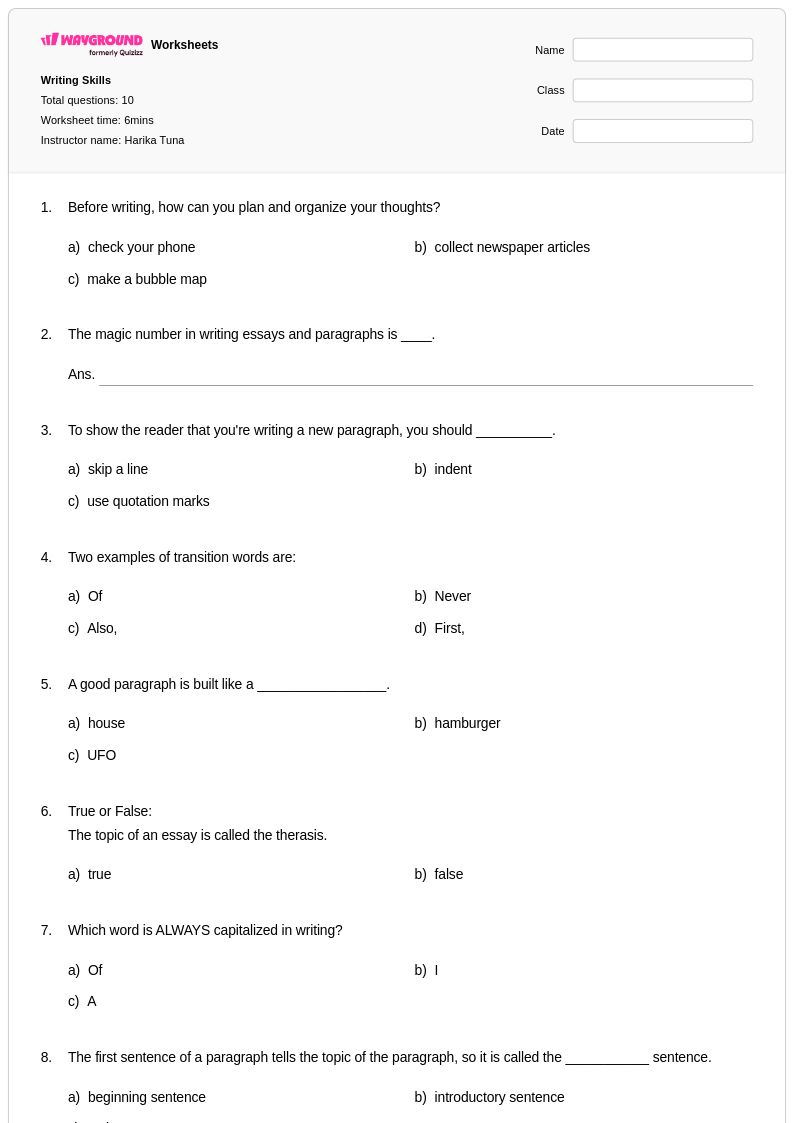
Breaking essay organization into discrete, teachable components, such as separating topic sentence work from transition work from concluding sentence work, reduces cognitive load for struggling writers. Visual scaffolds like paragraph frames and color-coded outlines make structural expectations concrete. On Wayground, teachers can apply accommodations such as Read Aloud, reduced answer choices, and extended time for individual students, ensuring that access to the content is not blocked by decoding or processing challenges while the rest of the class works at the standard pace.
How do I use Wayground's writing organization and structure worksheets in my classroom?
Wayground's writing organization and structure worksheets are available as printable PDFs for traditional classroom use and in digital formats for technology-integrated environments, making them flexible enough for whole-group instruction, small-group remediation, or independent practice. Teachers can also host worksheets as a quiz directly on Wayground, enabling real-time tracking of student responses. The platform's search and filtering tools allow teachers to locate worksheets aligned to specific standards or subtopics, such as rhetorical appeals, transitional devices, or persuasive essay structure, so lesson planning stays targeted and efficient.
How do I teach students to use transitional words and phrases effectively?
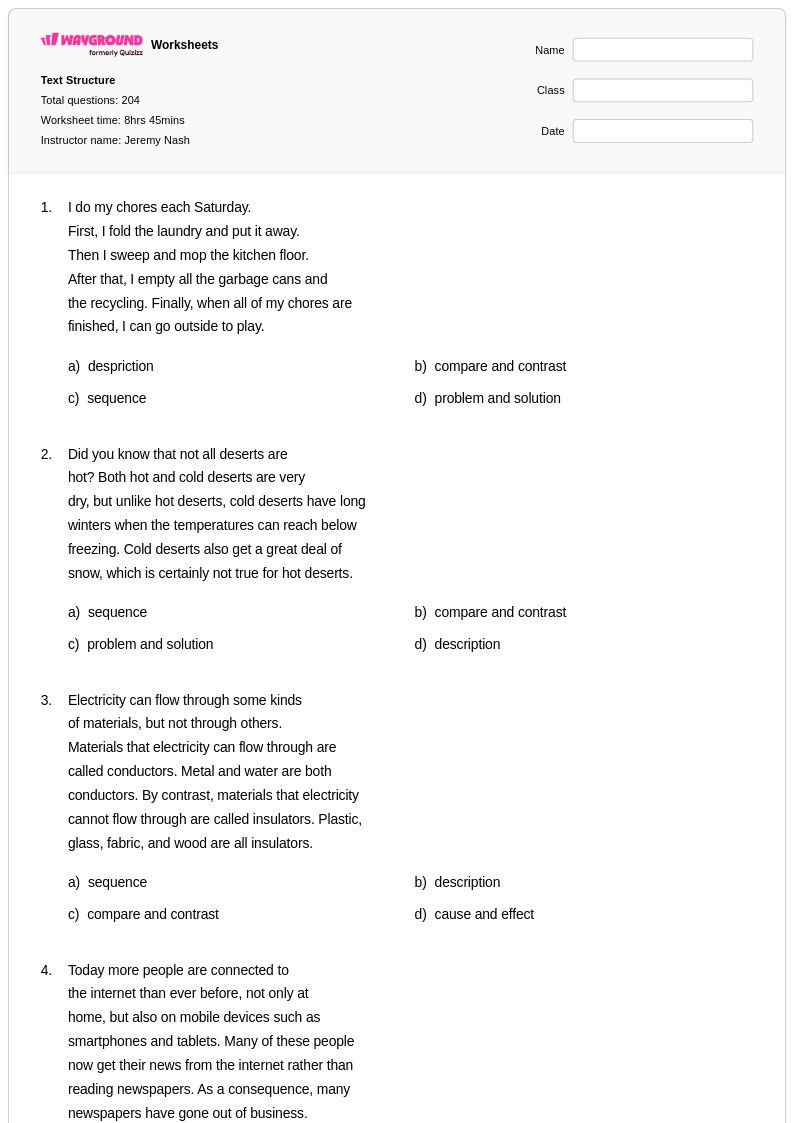
Begin by categorizing transitions by function, such as those that show sequence, contrast, cause and effect, or elaboration, so students understand that word choice reflects a logical relationship, not just stylistic preference. Practice activities that ask students to select the correct transition for a given context are more effective than simple memorization lists because they require students to analyze the relationship between ideas. Once students can identify the function of a transition, move to sentence-level and paragraph-level writing tasks where they must apply the appropriate signal independently.
What writing organization topics should I prioritize at the middle school level?
At the middle school level, foundational priorities include topic sentences, paragraph structure, transitional devices, and the structural conventions of informative, narrative, and persuasive essay forms. As students advance, layering in rhetorical appeals, organizing evidence, sentence variety, and voice in writing builds the sophistication needed for high school writing demands. Logical fallacies and the speaker-listener technique also become increasingly relevant as students engage with argument-based writing across content areas.