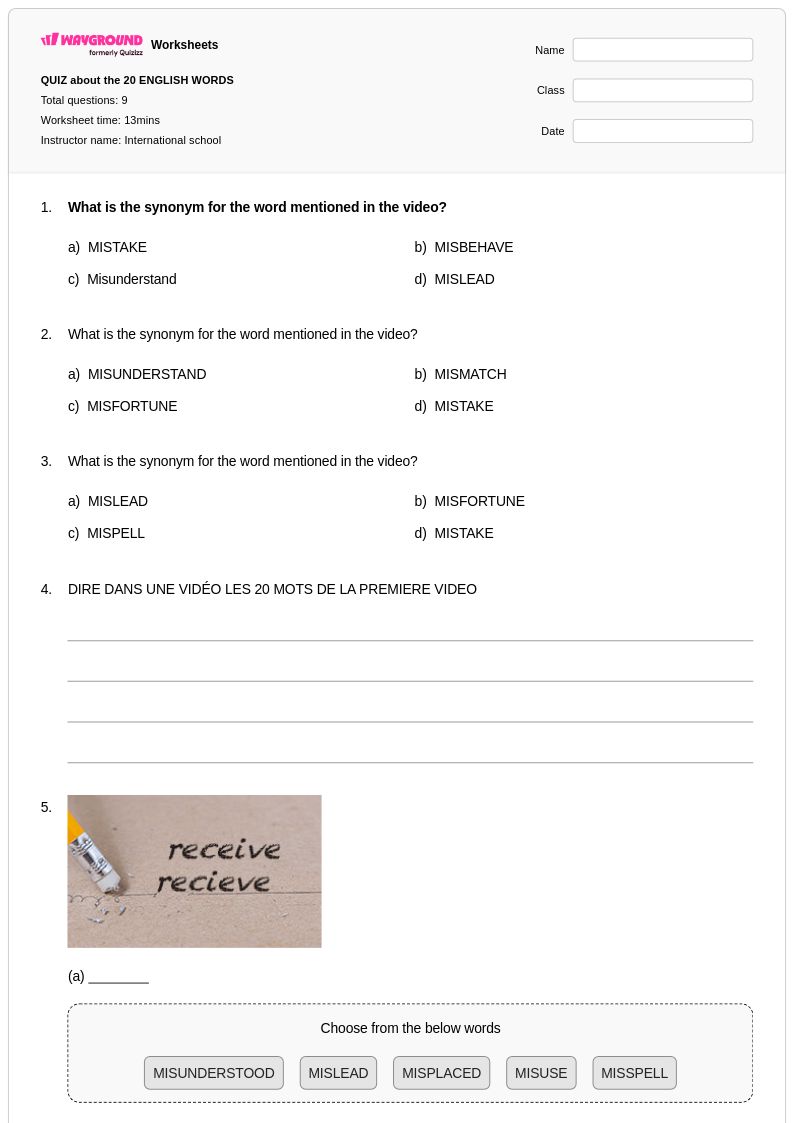
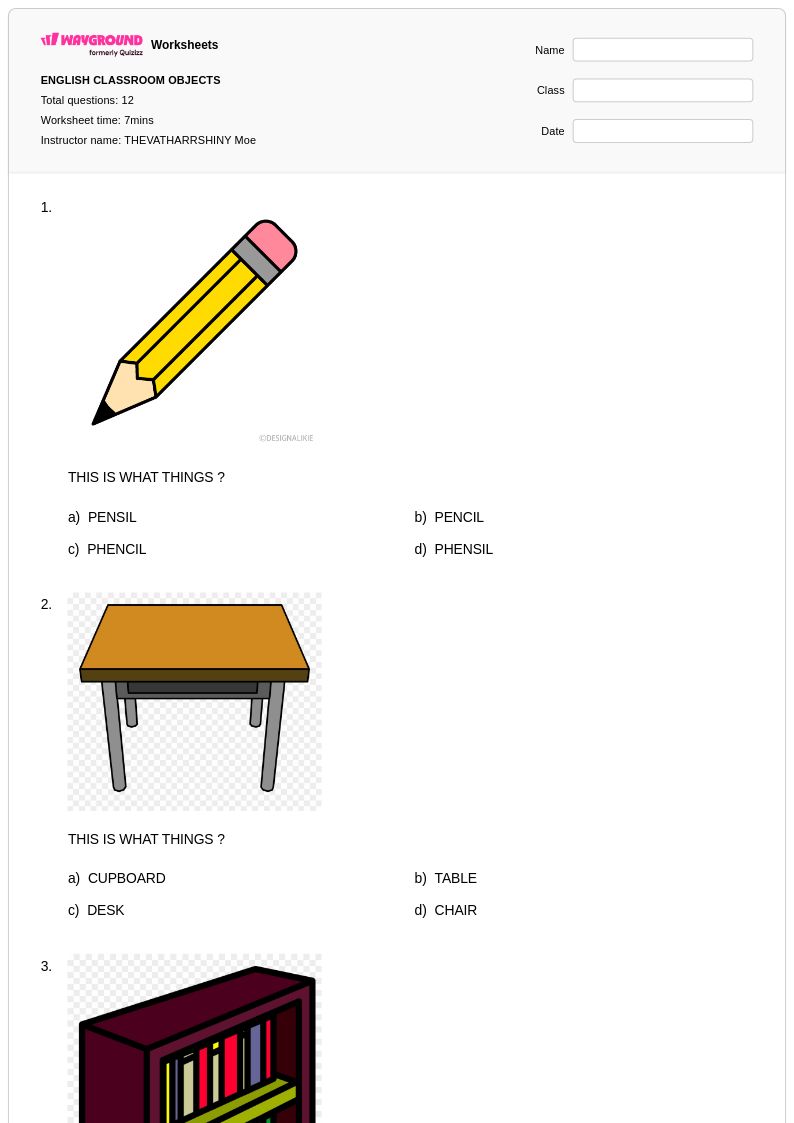
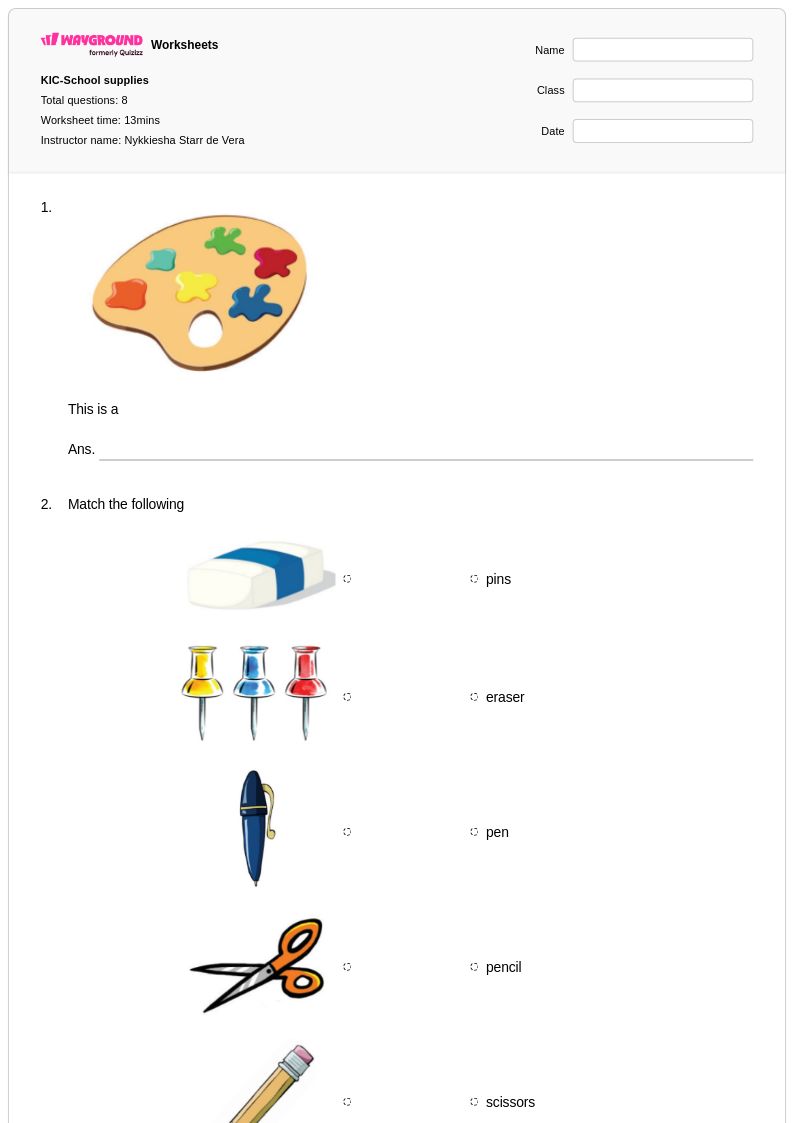
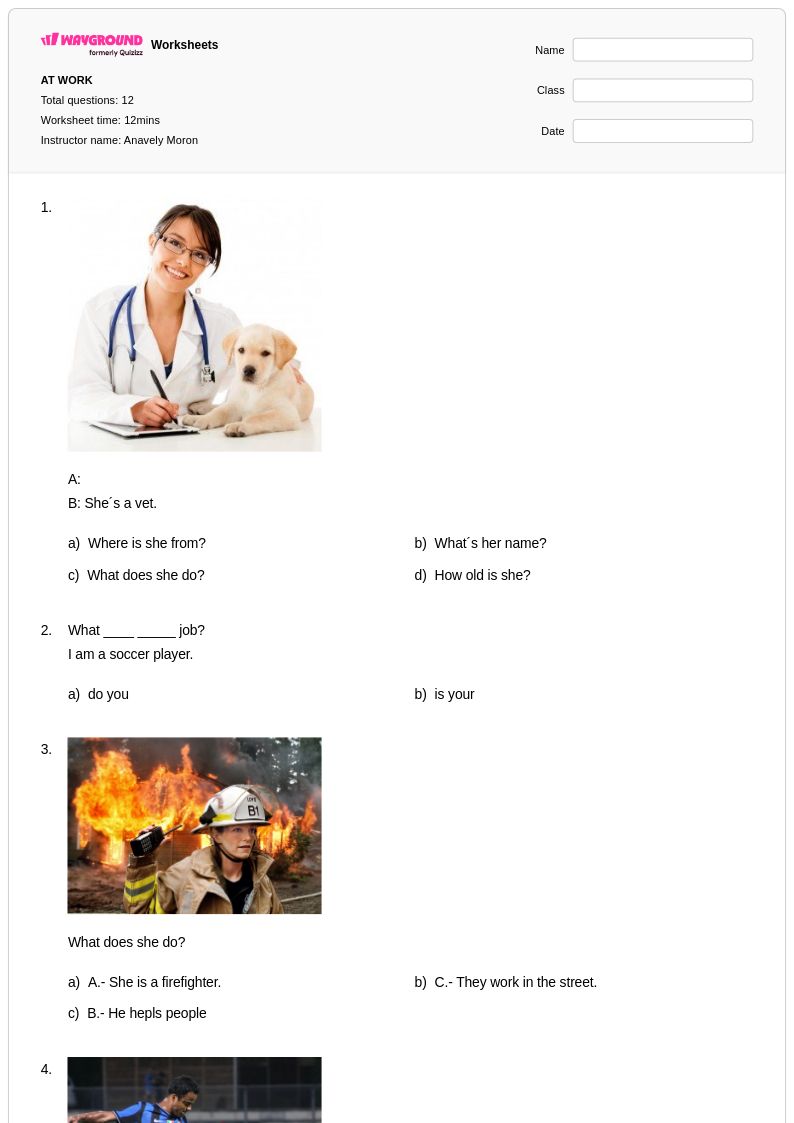
Develop essential pencil control skills with Wayground's free printable handwriting worksheets, featuring guided practice problems and answer keys to help students master proper grip, pressure, and movement techniques.
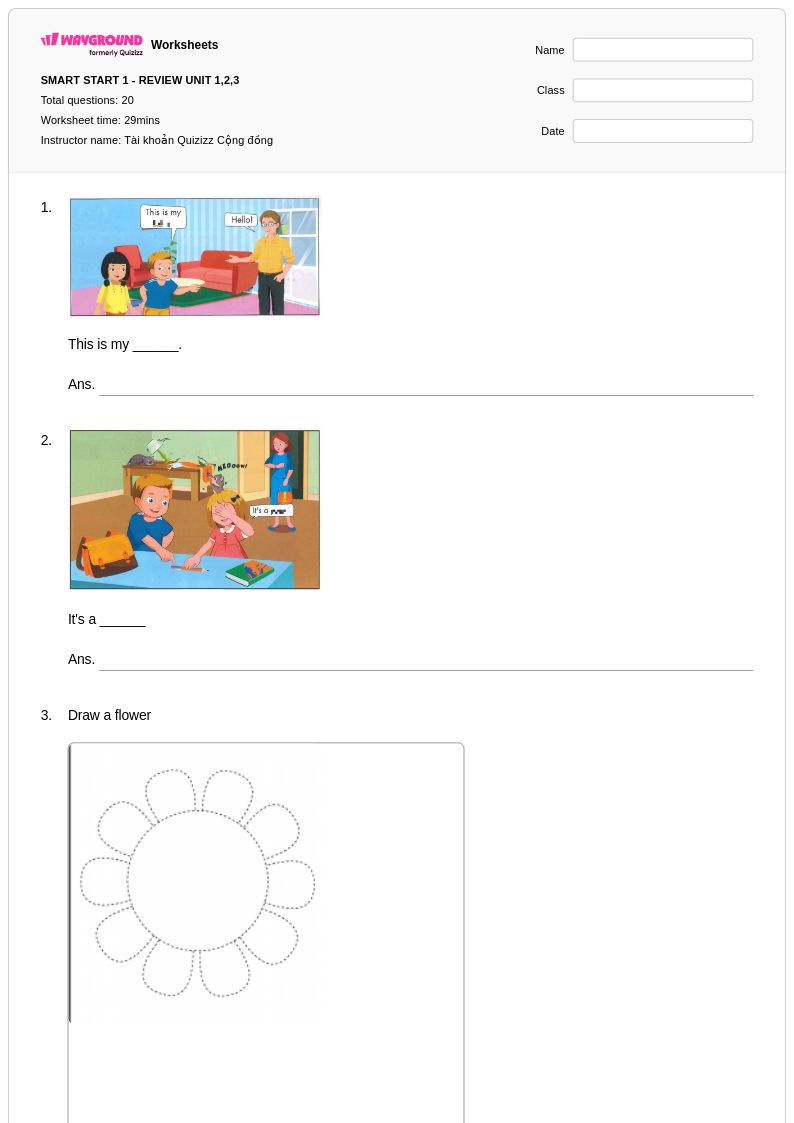
Pencil control worksheets available through Wayground (formerly Quizizz) provide essential foundational practice for developing the fine motor skills and hand coordination necessary for effective handwriting. These comprehensive printables focus on strengthening the precise movements students need to guide writing instruments with accuracy and confidence, featuring activities such as tracing curved and straight lines, completing dot-to-dot exercises, navigating mazes, and practicing controlled strokes in various directions. Each worksheet targets specific aspects of pencil grip, pressure control, and directional movement, with practice problems that progressively build from simple line tracing to more complex patterns and shapes. The collection includes free pdf resources with accompanying answer keys that allow educators to quickly assess student progress and identify areas needing additional support, ensuring that learners develop the muscular control and spatial awareness required for successful letter formation and writing fluency.
Wayground (formerly Quizizz) empowers teachers with millions of educator-created pencil control resources that streamline lesson planning and provide targeted skill practice opportunities. The platform's robust search and filtering capabilities allow instructors to quickly locate worksheets aligned with specific developmental standards and learning objectives, while differentiation tools enable customization based on individual student needs and abilities. Teachers can access these materials in both printable pdf format and digital versions, offering flexibility for classroom instruction, homework assignments, and independent practice sessions. This extensive collection supports remediation efforts for students struggling with fine motor development, provides enrichment activities for advanced learners, and offers systematic skill-building sequences that help educators address the varying pencil control abilities within their classrooms, ultimately creating a solid foundation for handwriting success across all learning environments.
FAQs
How do I teach pencil control to young students?
Teaching pencil control begins with establishing a proper tripod grip, where the pencil rests between the thumb and index finger with support from the middle finger. From there, structured activities like tracing straight and curved lines, dot-to-dot exercises, and directional stroke practice help students build the fine motor strength and hand coordination needed for accurate writing. Progressing gradually from simple line tracing to more complex shapes ensures students develop muscular control before moving on to letter formation.
What exercises help students practice pencil control?
Effective pencil control exercises include tracing curved and straight lines, completing dot-to-dot patterns, navigating pencil mazes, and practicing controlled strokes in multiple directions. These activities target specific components of writing readiness, including grip strength, pressure regulation, and spatial awareness. Using worksheets that increase in complexity over time helps students build confidence and precision progressively.
What common mistakes do students make when learning pencil control?
One of the most frequent errors is applying inconsistent pressure, either gripping the pencil too tightly, which causes fatigue and jagged lines, or too loosely, resulting in faint and uncontrolled strokes. Students also commonly use whole-arm movements instead of fine finger movements, which reduces precision. Identifying these patterns early through targeted practice and observation allows educators to intervene before poor habits become ingrained.
How can I differentiate pencil control practice for students at different skill levels?
For students still developing foundational motor skills, start with wide-spaced line tracing and large dot-to-dot activities that require minimal precision. More advanced learners can move to tighter patterns, complex mazes, and multi-directional stroke sequences. On Wayground, teachers can apply individual accommodations such as Read Aloud support and reduced answer choices for students who need additional scaffolding, while the rest of the class works through standard materials without disruption.
How do I use Wayground's pencil control worksheets in my classroom?
Wayground's pencil control worksheets are available as printable PDFs for traditional classroom use and in digital formats for technology-integrated learning environments, including the option to host them as a quiz on Wayground. Printable versions work well for hands-on fine motor practice, while digital formats support independent practice or remote learning. Each worksheet includes an answer key, making it straightforward to assess student progress and pinpoint areas that need additional reinforcement.
At what age or grade level should students begin pencil control practice?
Pencil control practice is most commonly introduced in pre-K and kindergarten, typically between ages 3 and 6, when students are developing the fine motor skills necessary for writing readiness. However, students in early elementary grades who show difficulties with letter formation or writing fluency often benefit from targeted pencil control remediation as well. Structured practice at any of these stages builds the spatial awareness and muscular coordination that underpin successful handwriting.