
20 Q
4th - Uni
9 Q
4th
20 Q
4th - Uni
10 Q
4th
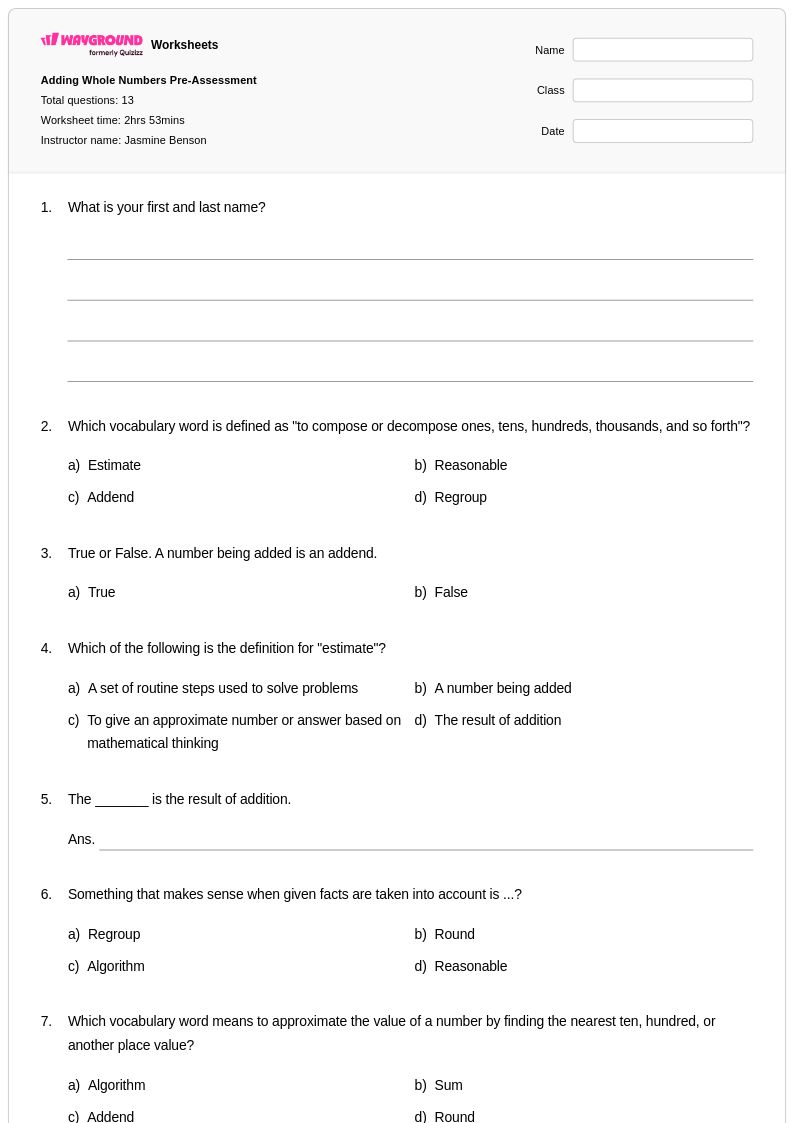
13 Q
4th
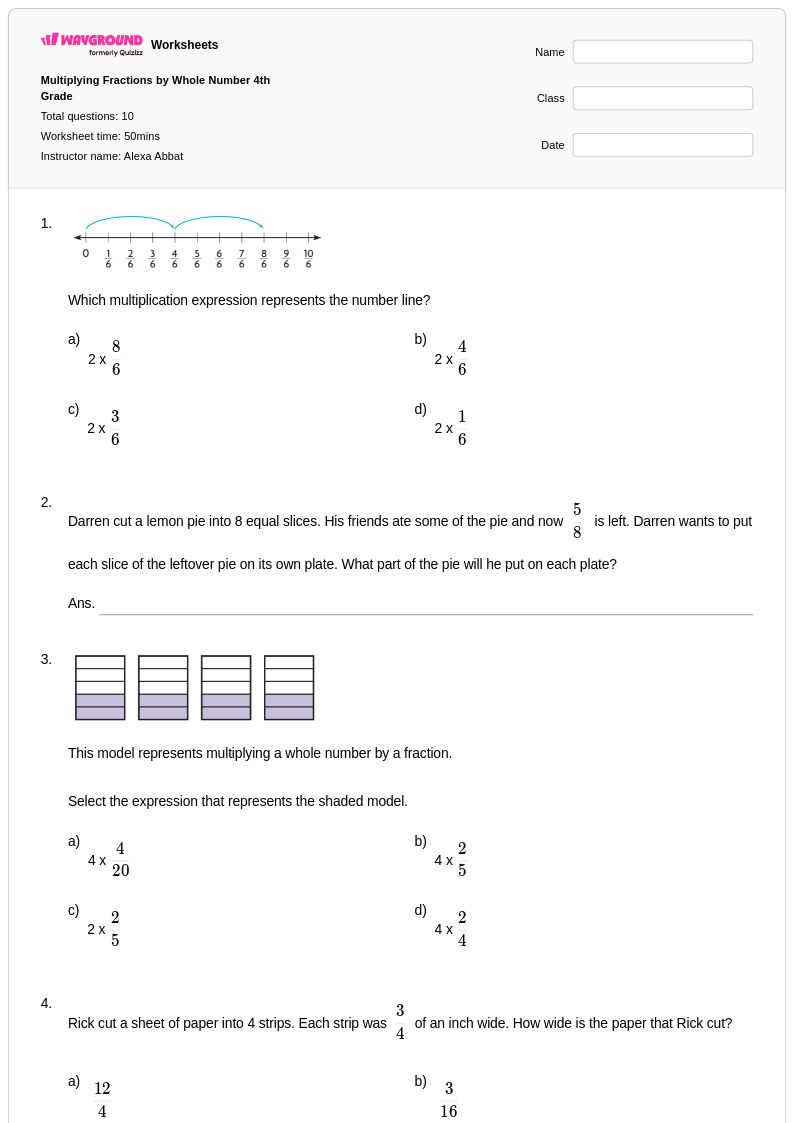
10 Q
4th
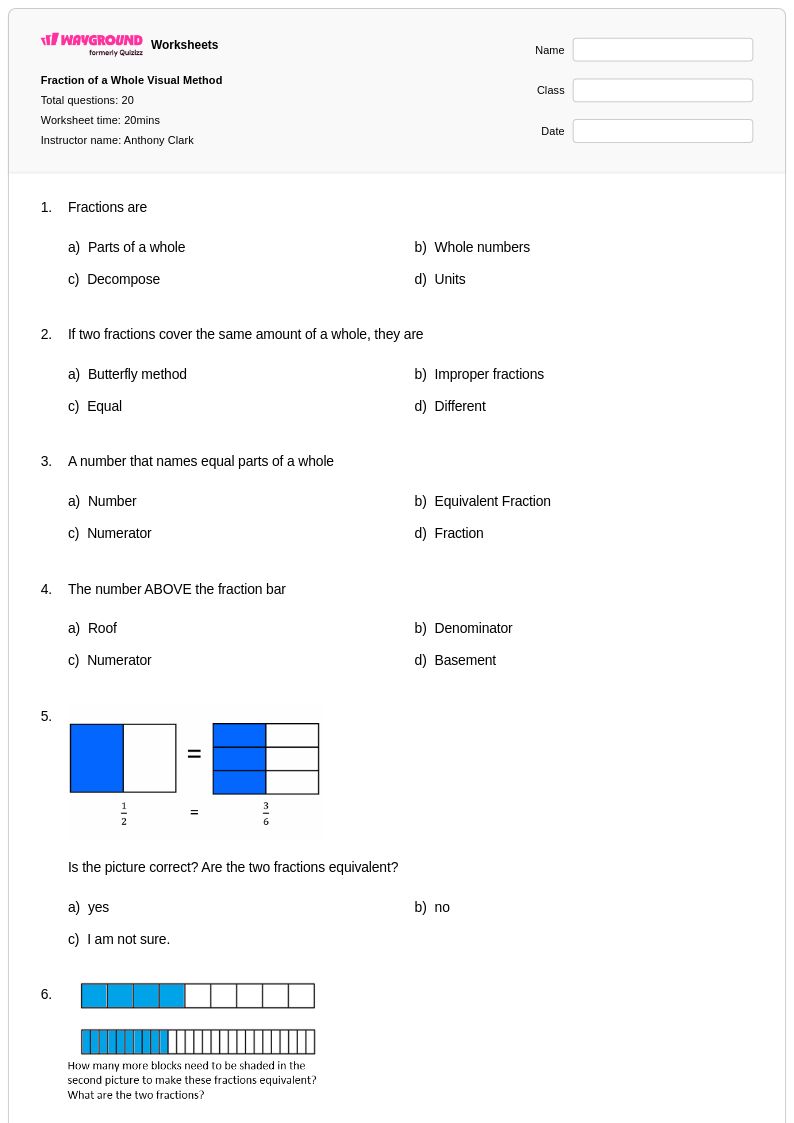
20 Q
4th - Uni
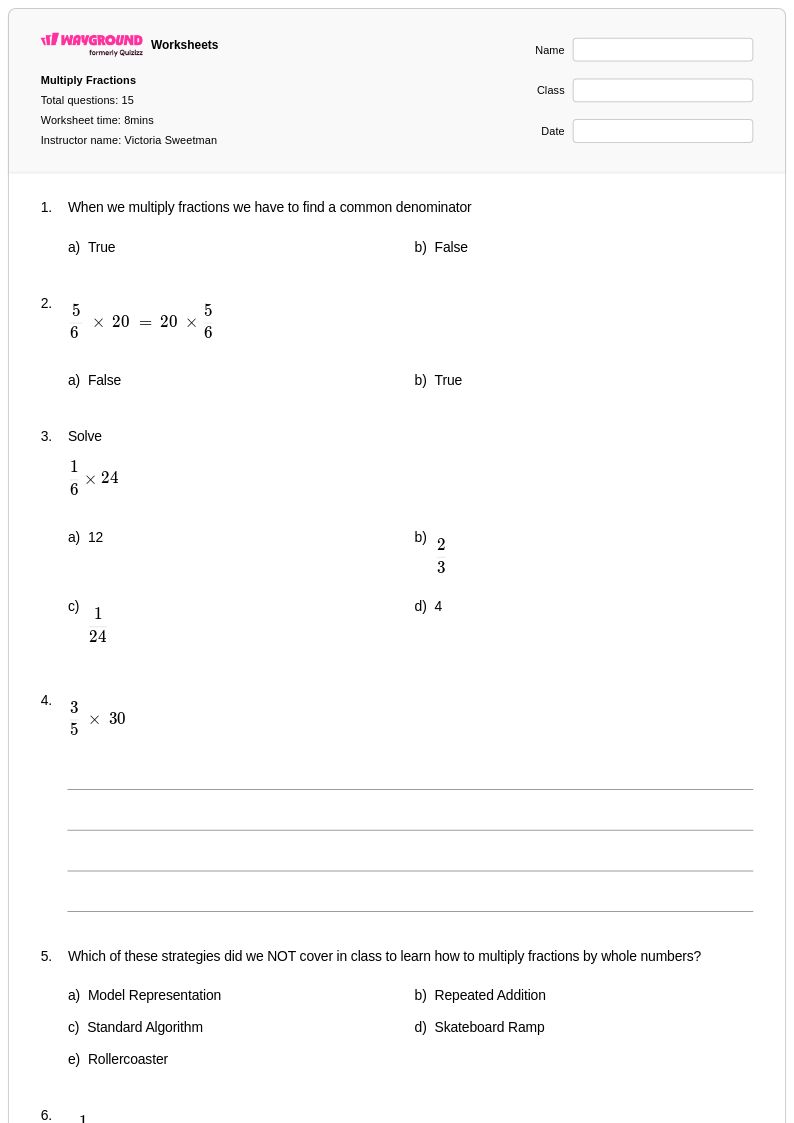
15 Q
4th - 5th
20 Q
3rd - Uni
20 Q
4th - Uni
9 Q
4th
20 Q
3rd - Uni
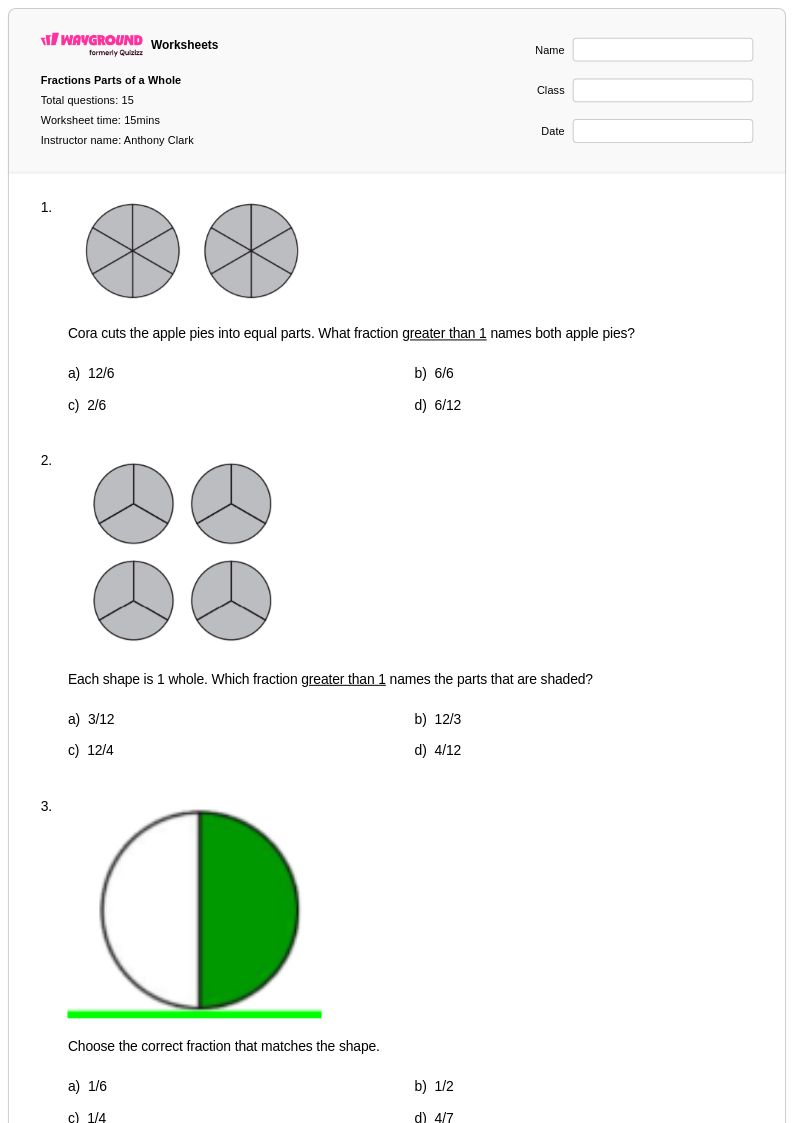
15 Q
3rd - Uni
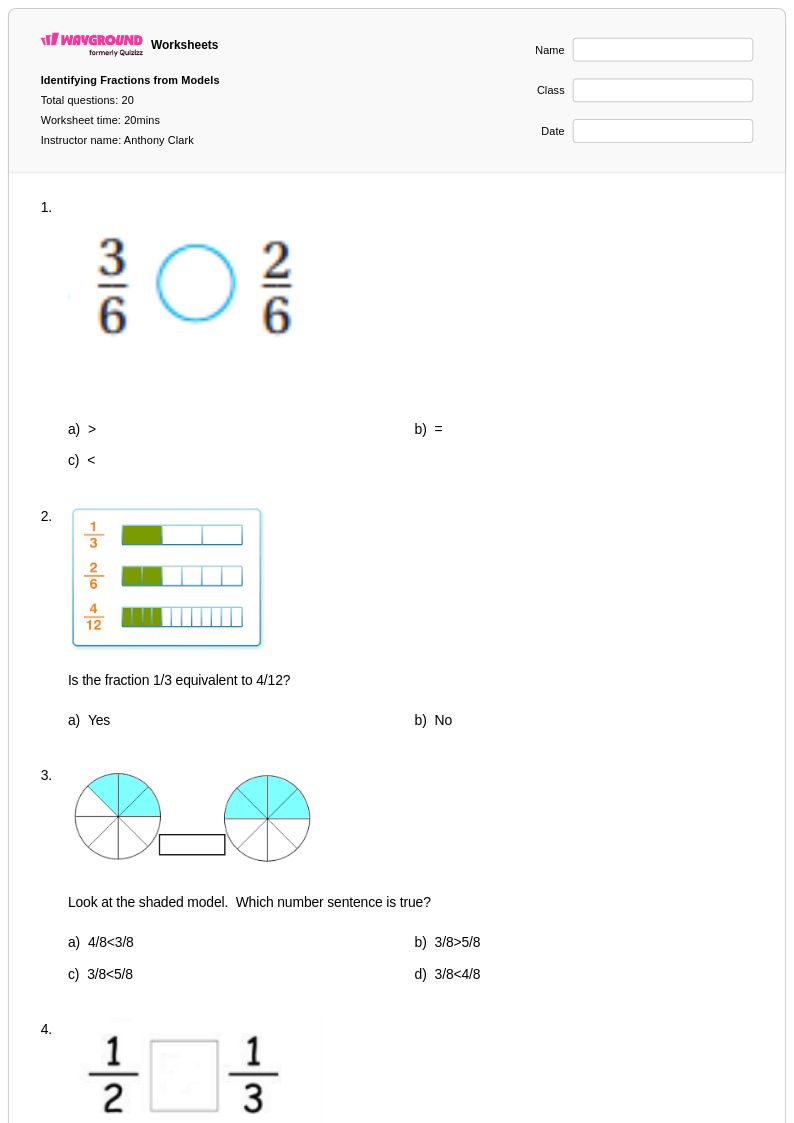
20 Q
4th - Uni
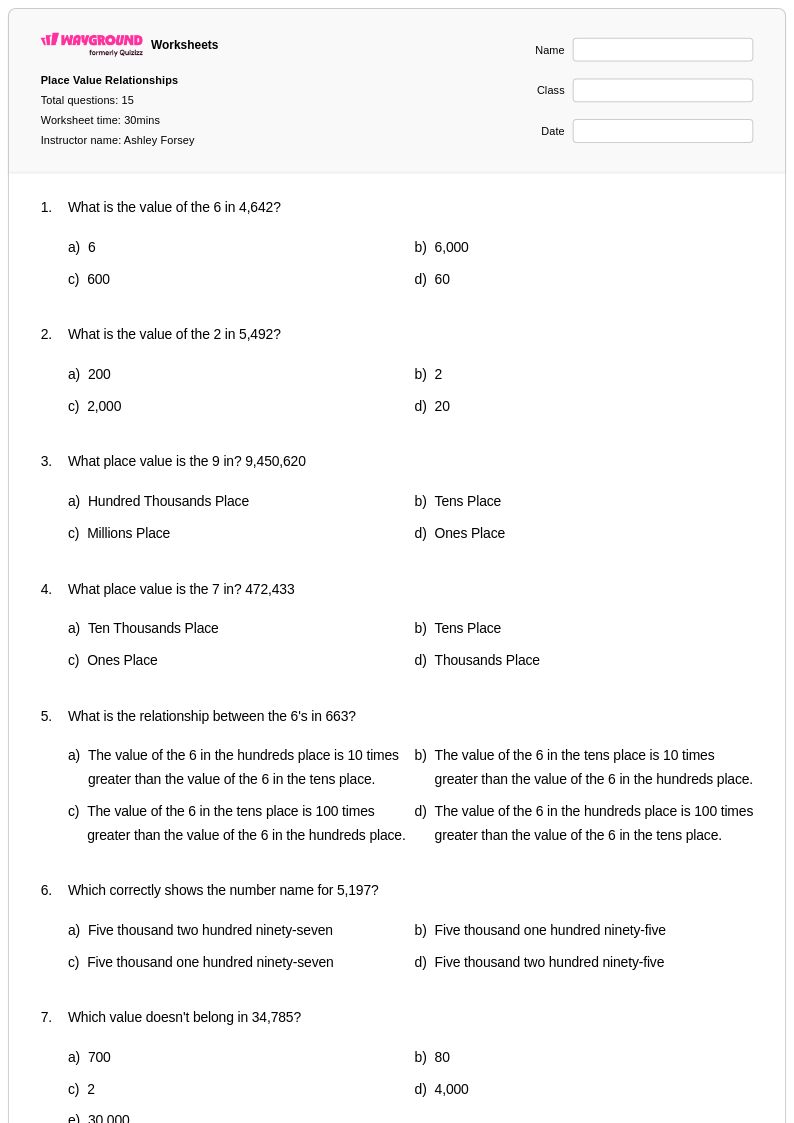
15 Q
4th
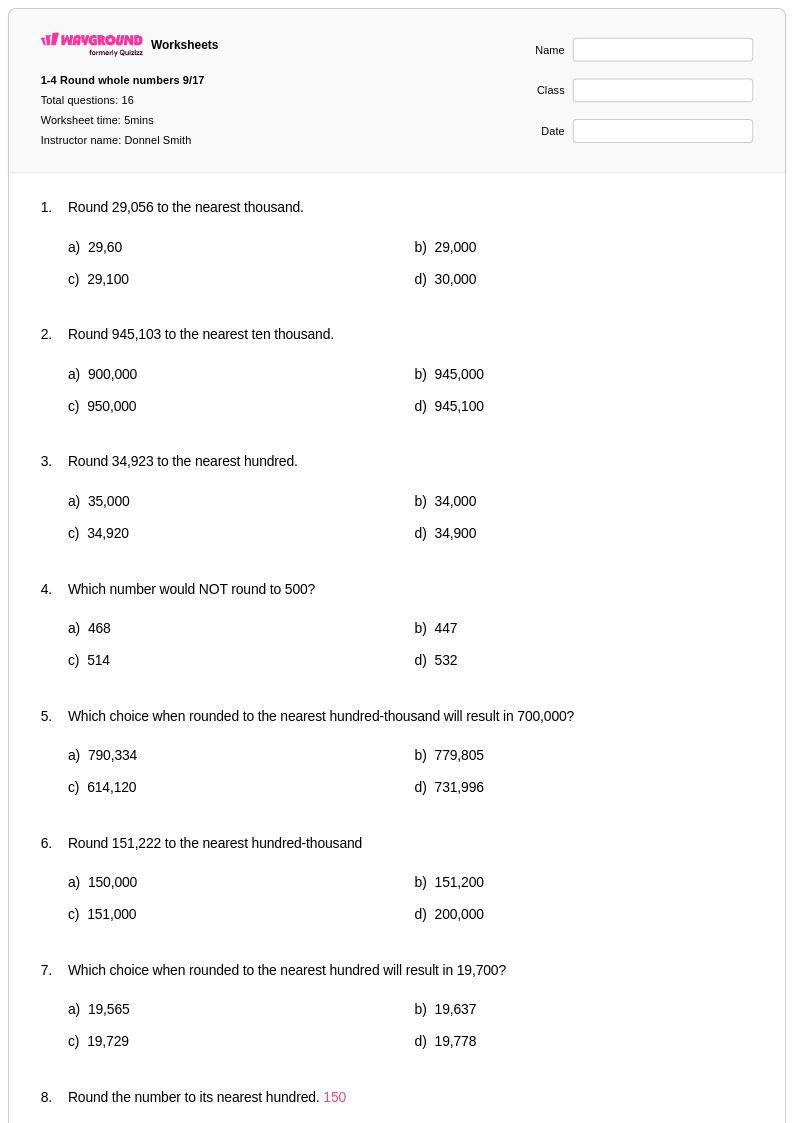
16 Q
4th

26 Q
4th
20 Q
4th
20 Q
3rd - Uni
12 Q
4th
12 Q
4th
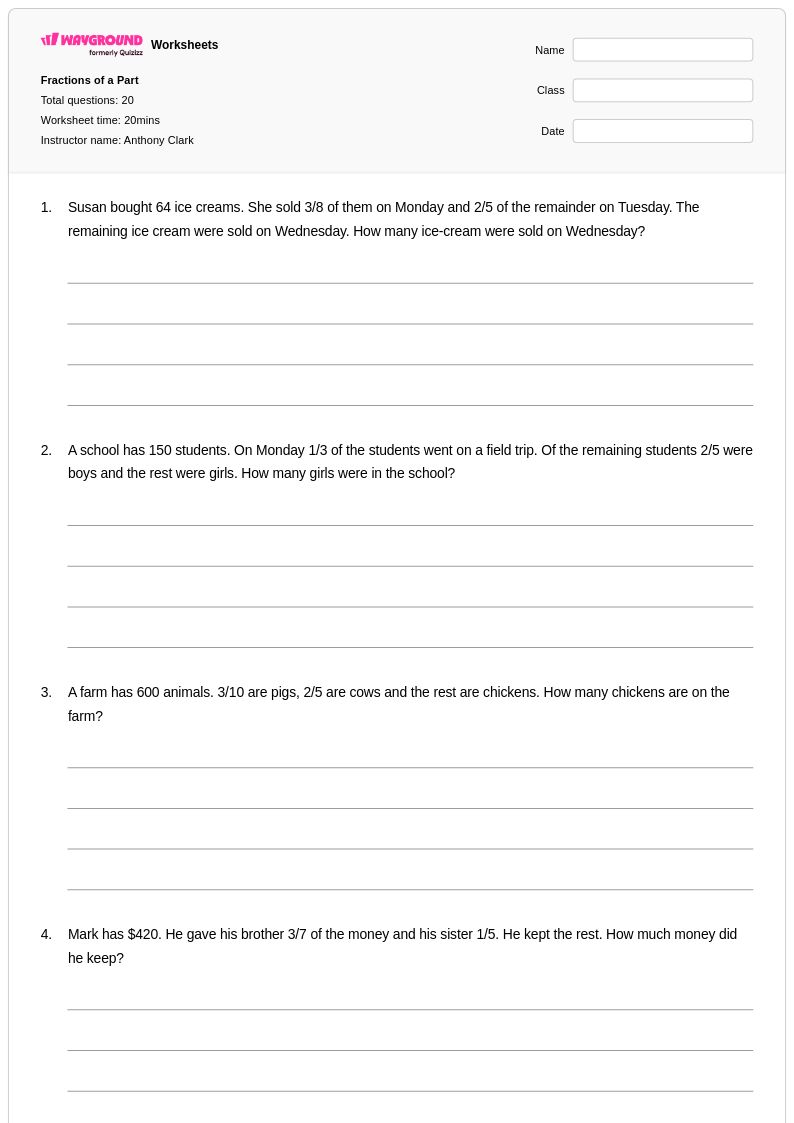
20 Q
3rd - Uni
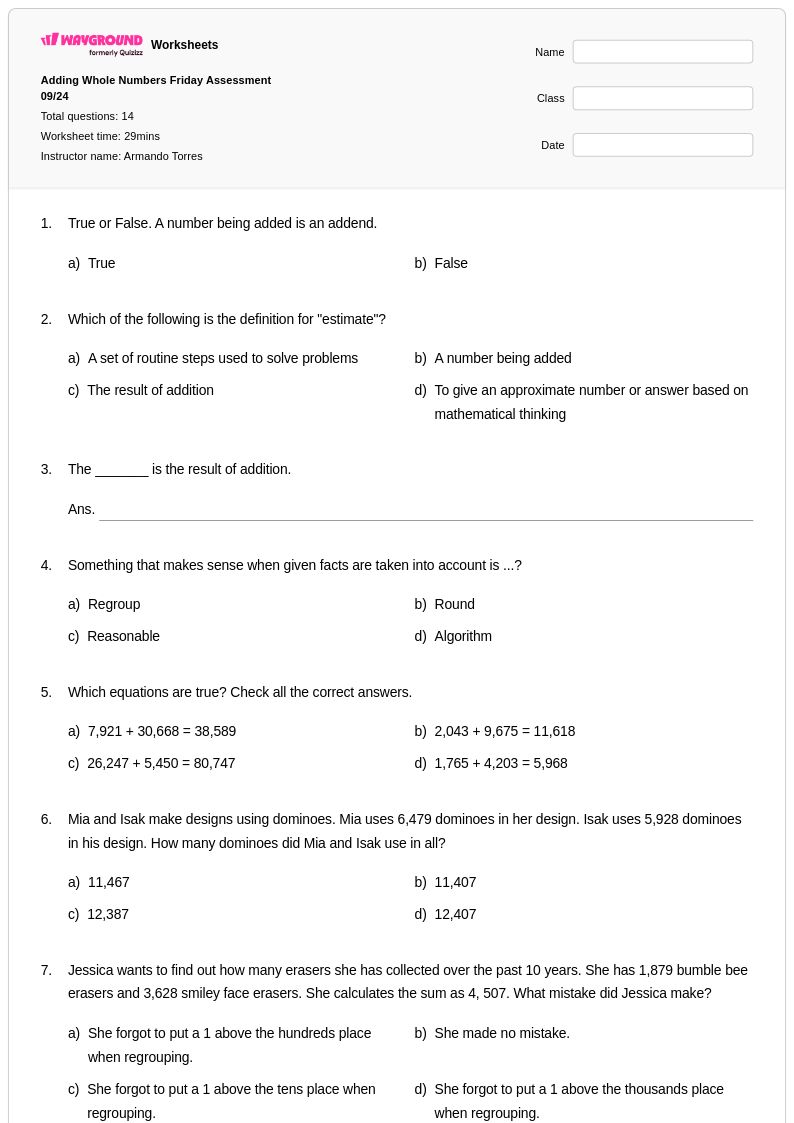
14 Q
4th
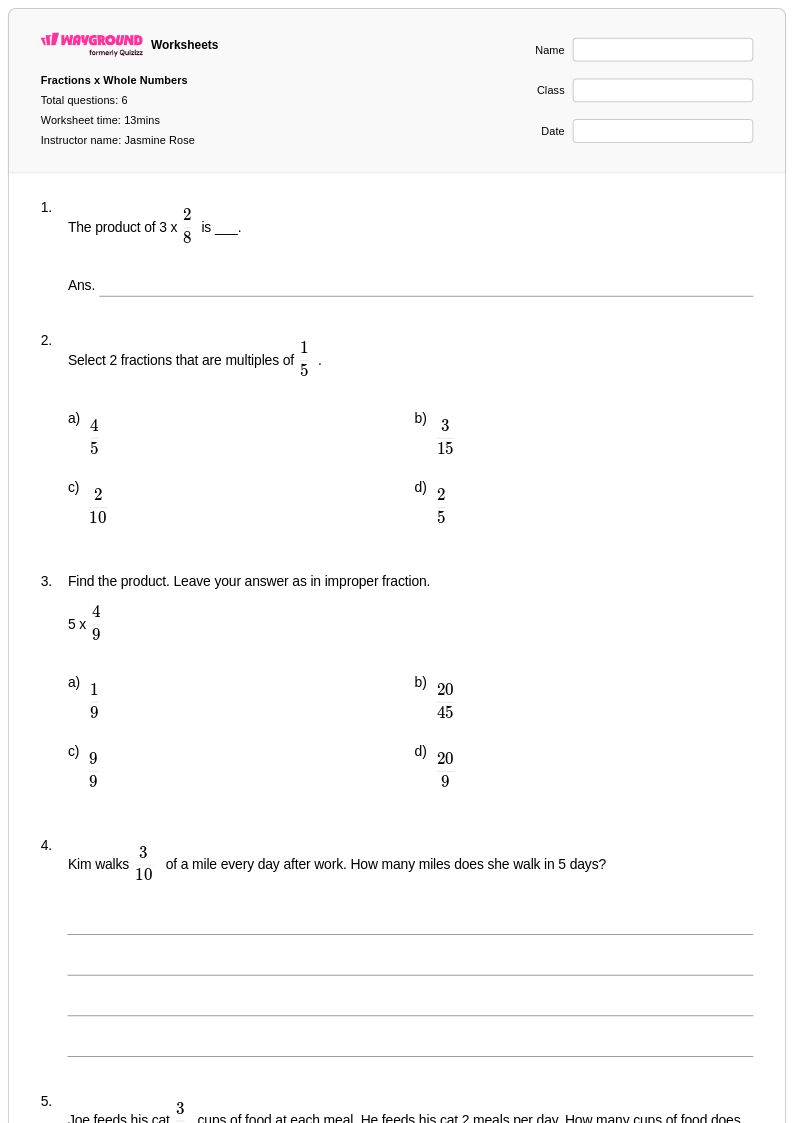
6 Q
4th
Explore Other Subject Worksheets for class 4
Explore printable Percent Part-whole Relationships worksheets for Class 4
Percent part-whole relationships form a critical foundation for Class 4 students as they begin to understand how percentages represent portions of complete sets or quantities. Wayground's comprehensive collection of worksheets focuses specifically on helping students visualize and calculate these fundamental connections, strengthening their ability to identify what percentage one part represents of a whole and conversely, determine specific parts when given percentage values. These practice problems systematically guide learners through various scenarios using familiar contexts like classroom items, food portions, and everyday objects, making abstract concepts more concrete and accessible. Each worksheet includes a complete answer key and is available as a free printable pdf, allowing teachers to seamlessly integrate targeted percent practice into their mathematics instruction while building students' confidence with this essential skill.
Wayground, formerly Quizizz, empowers educators with millions of teacher-created resources specifically designed to support Class 4 percent part-whole relationship instruction through robust search and filtering capabilities that help locate precisely the right materials for any lesson objective. The platform's standards-aligned worksheets offer flexible customization options and differentiation tools, enabling teachers to modify difficulty levels and problem types to meet diverse learning needs within their classrooms. Available in both printable and digital pdf formats, these resources streamline lesson planning while providing targeted options for remediation, enrichment, and ongoing skill practice, ensuring that every student can develop mastery of percent part-whole concepts through appropriately challenging and engaging mathematical experiences.
FAQs
What do 4th graders learn about percentages?
How can I teach the concept of percent to 4th graders?
What exercises are best for 4th graders practicing percents?
What foundational understanding should I assess for this topic in Grade 4?
How can I use this Grade 4 percent worksheet?
How does this topic relate to 4th-grade Common Core standards?