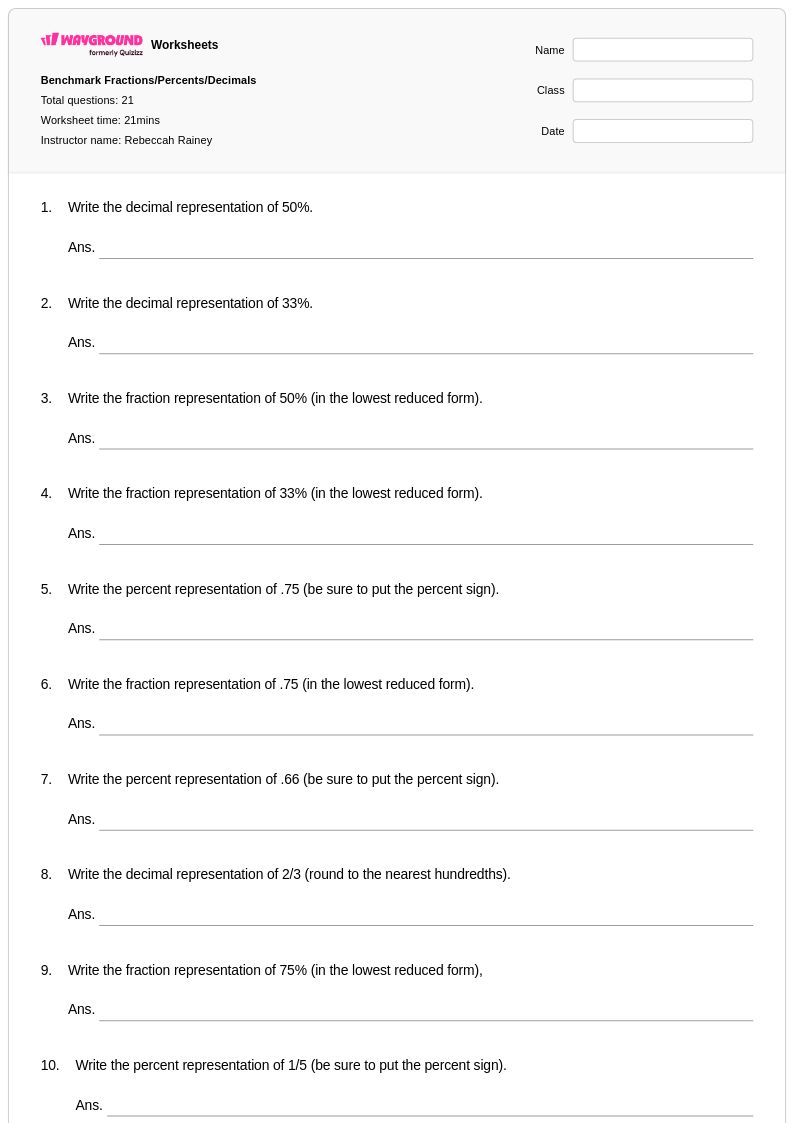
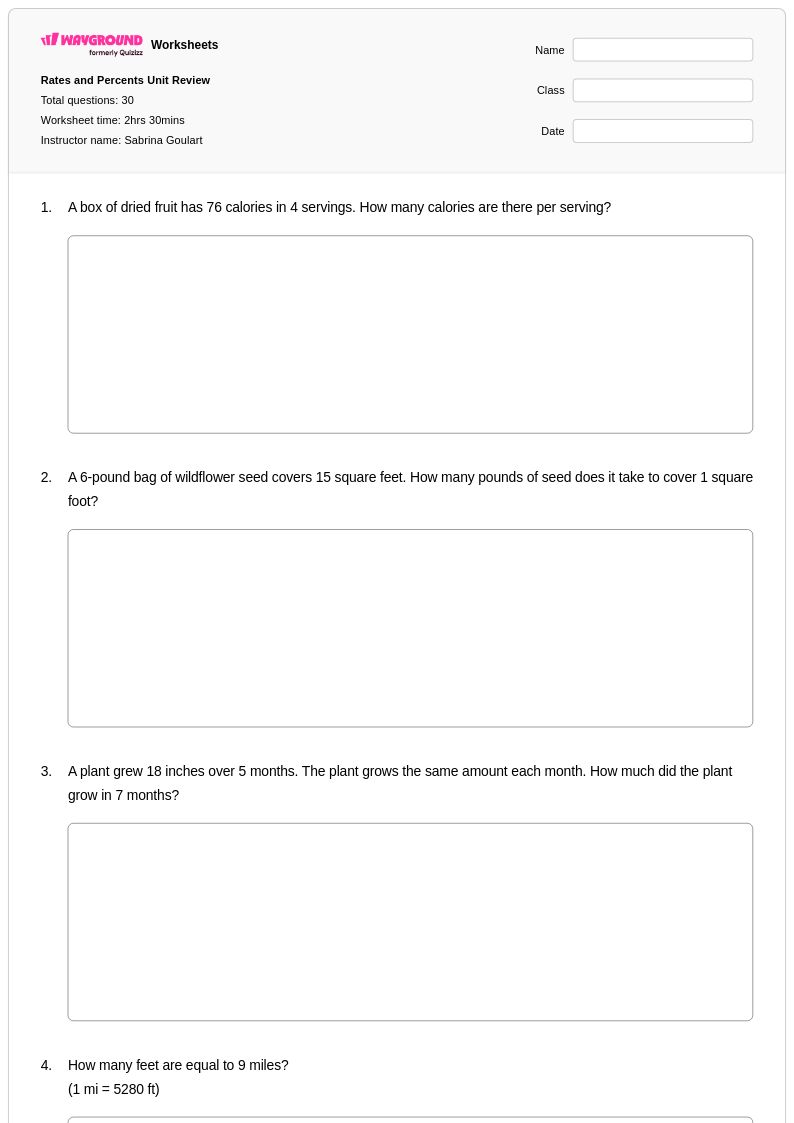
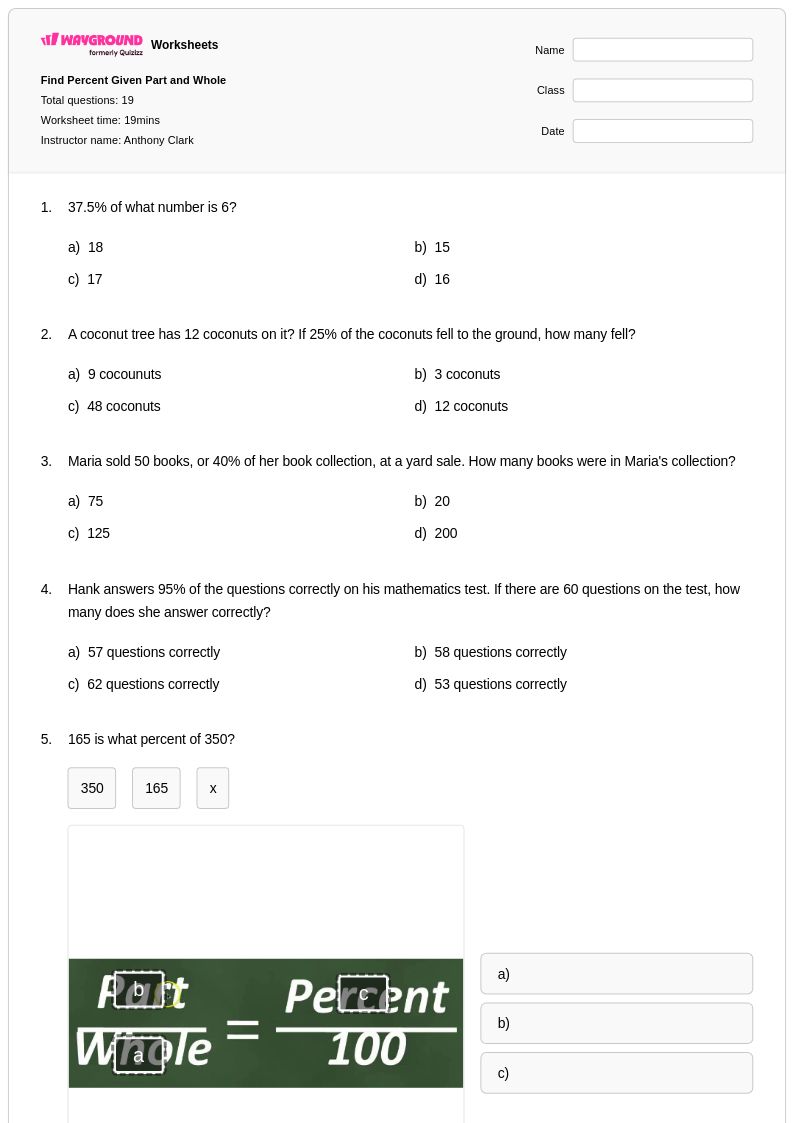
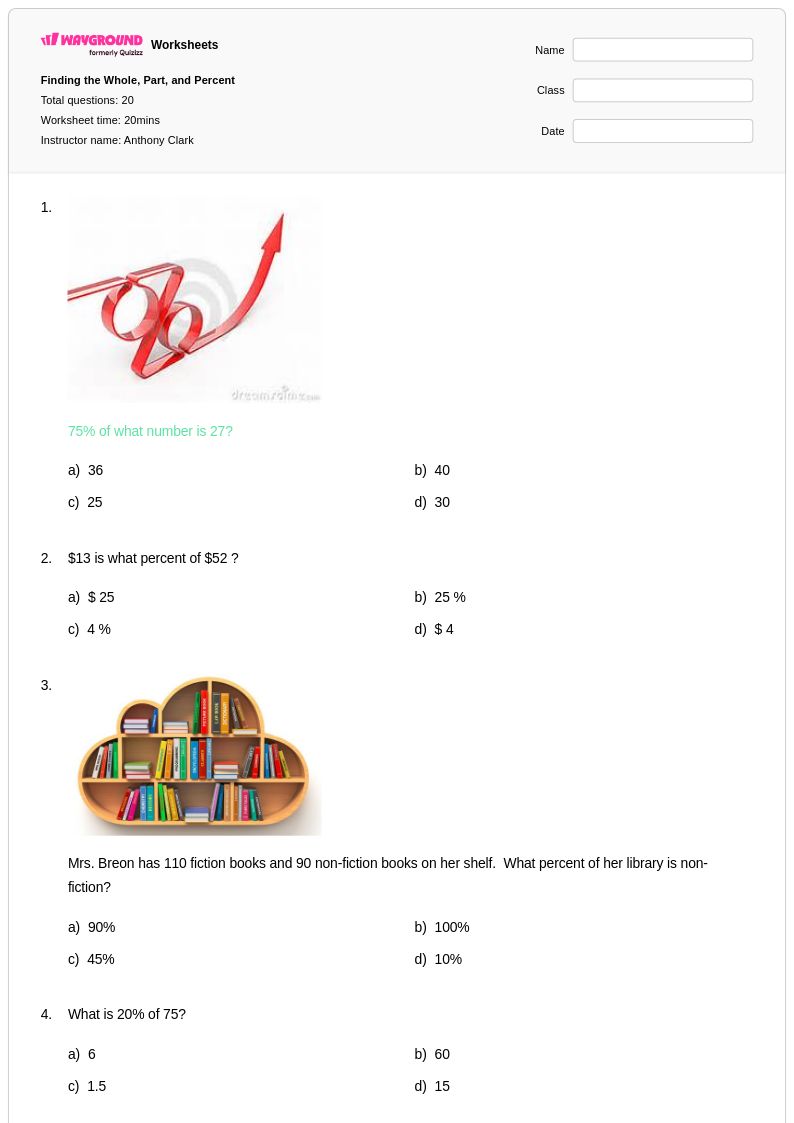
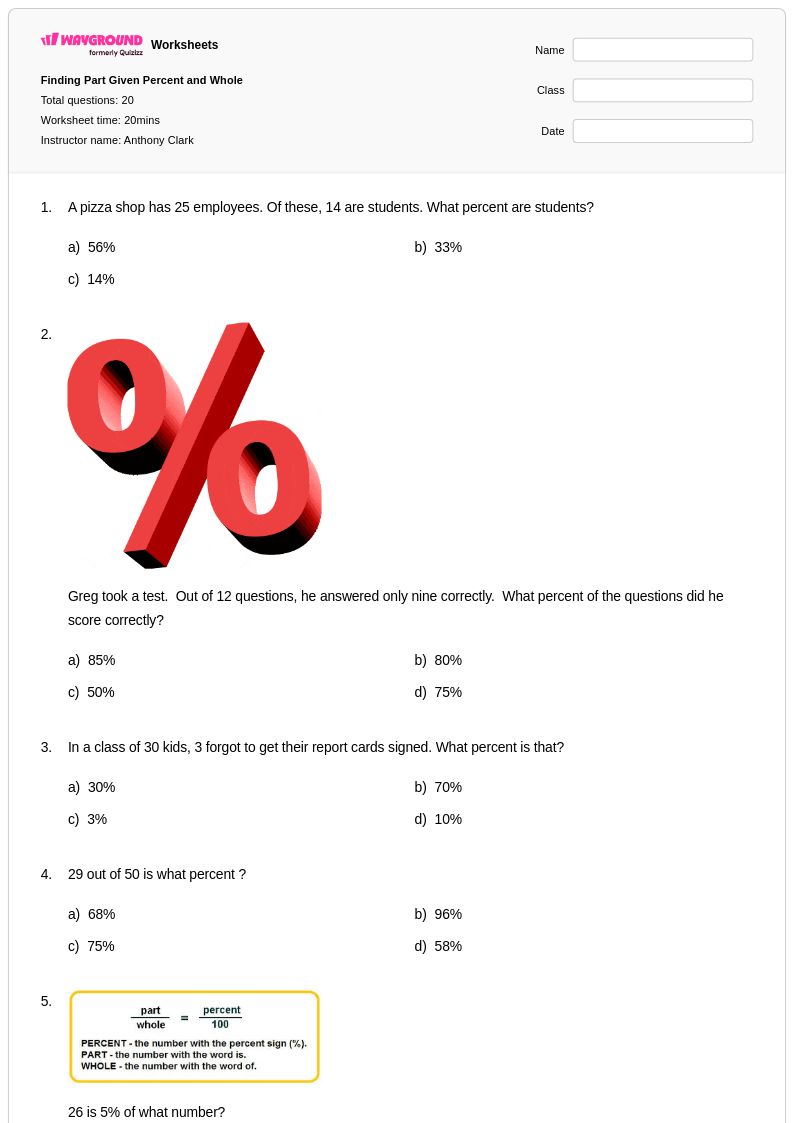
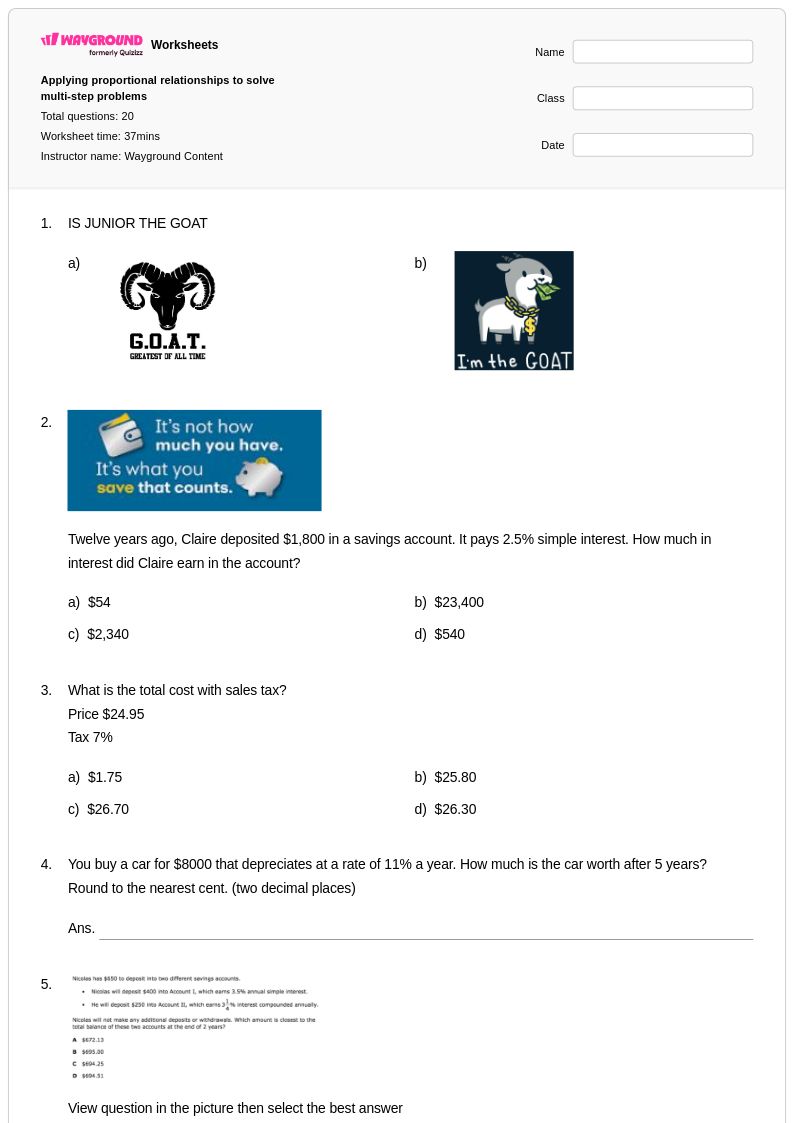
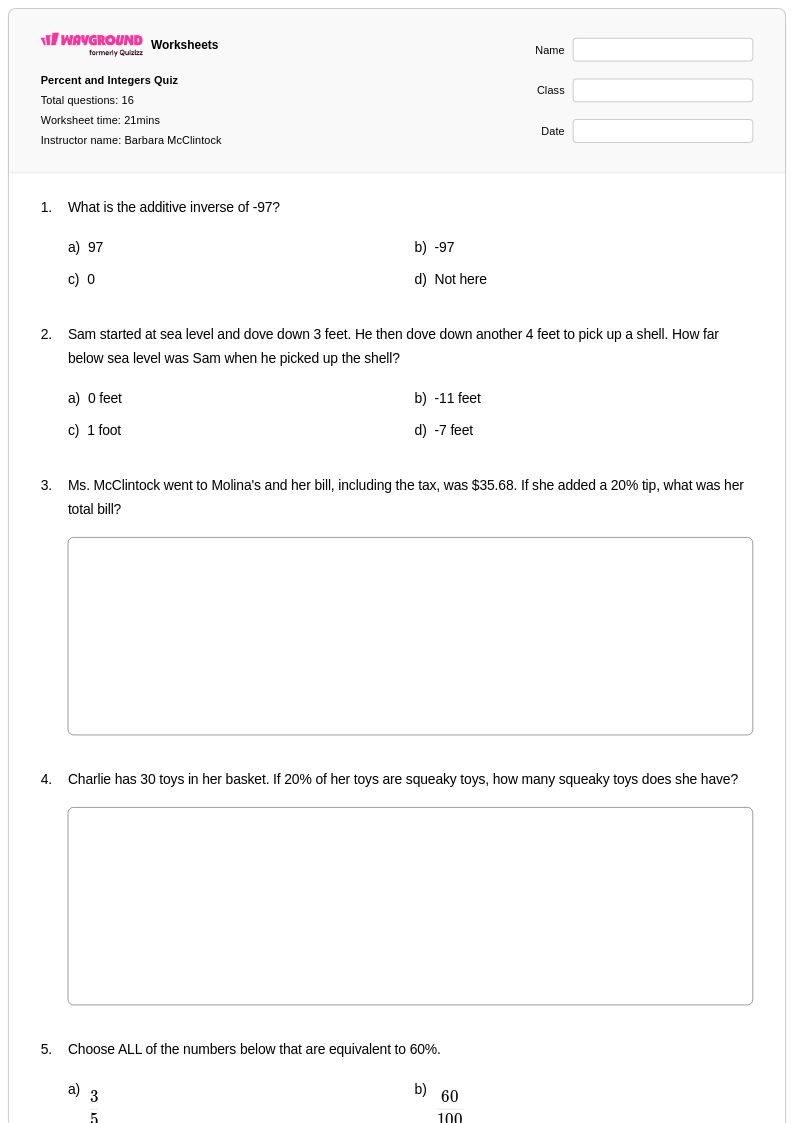
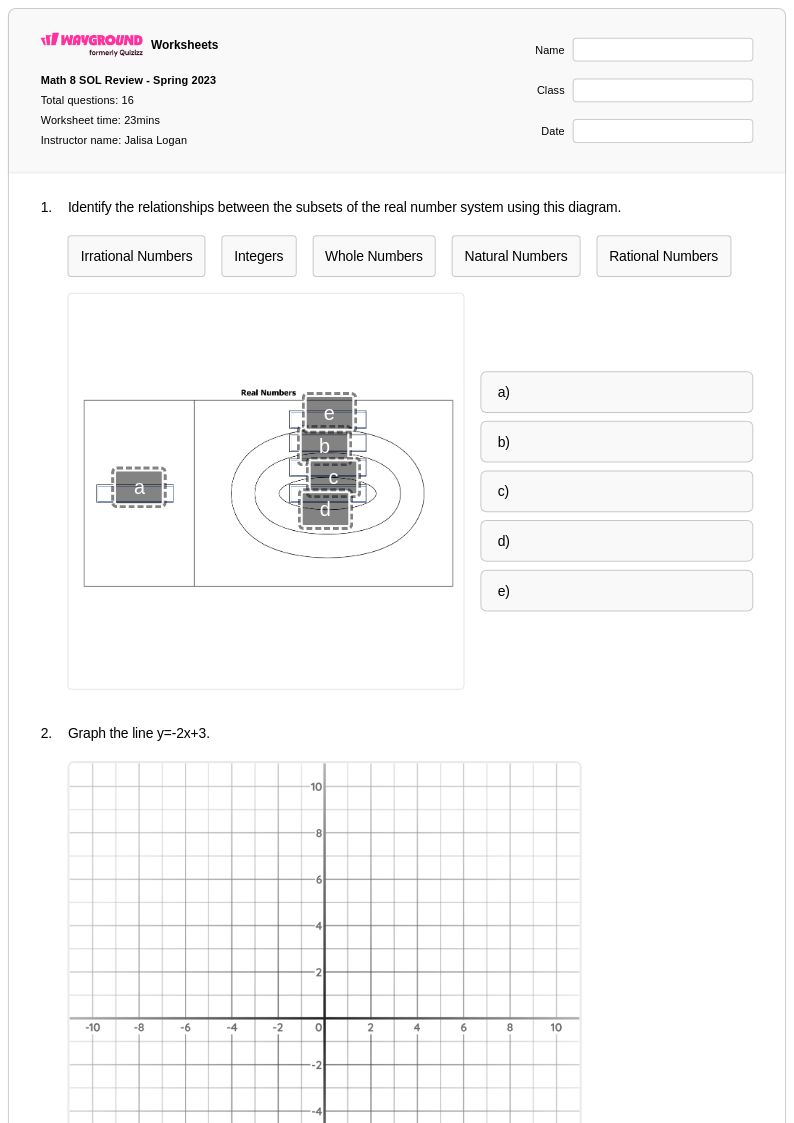
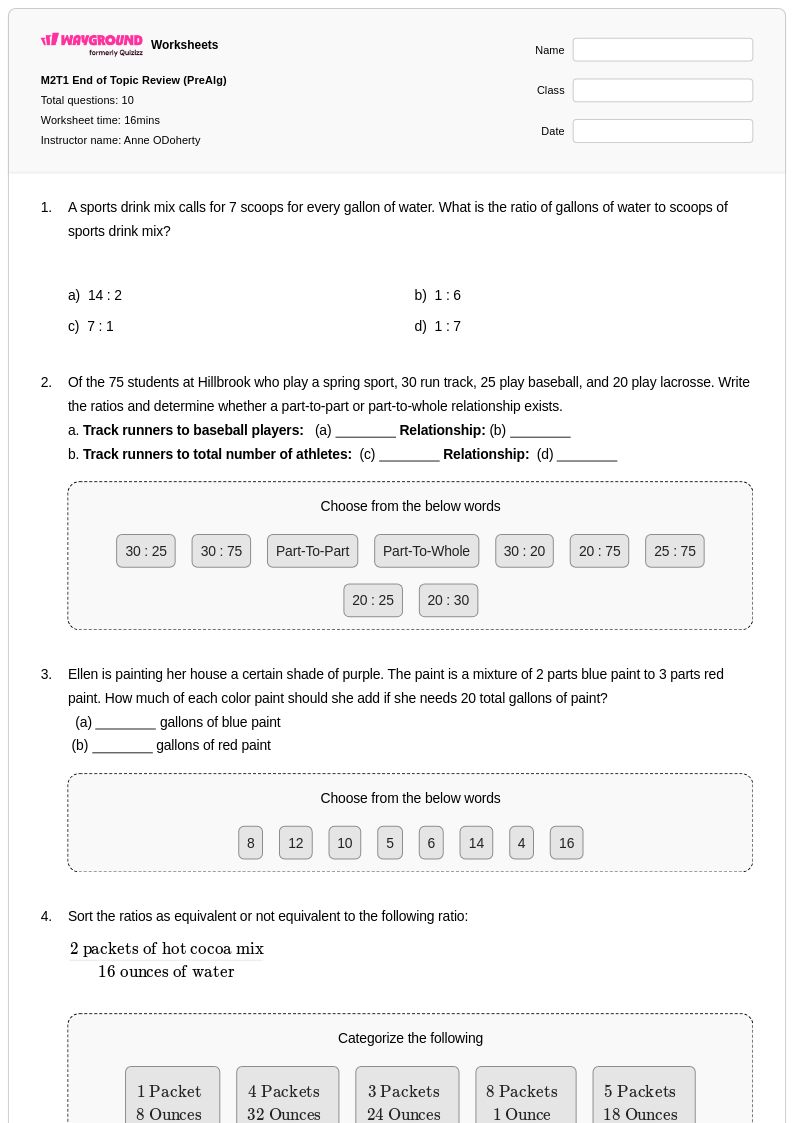
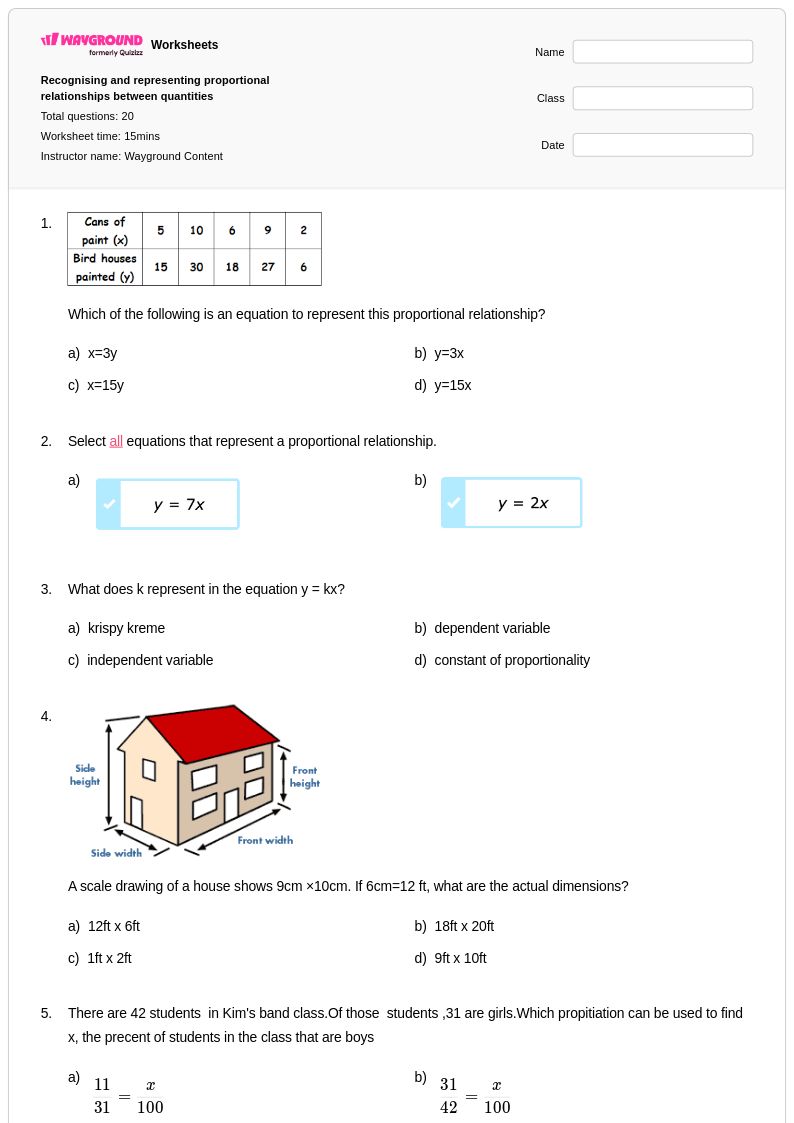
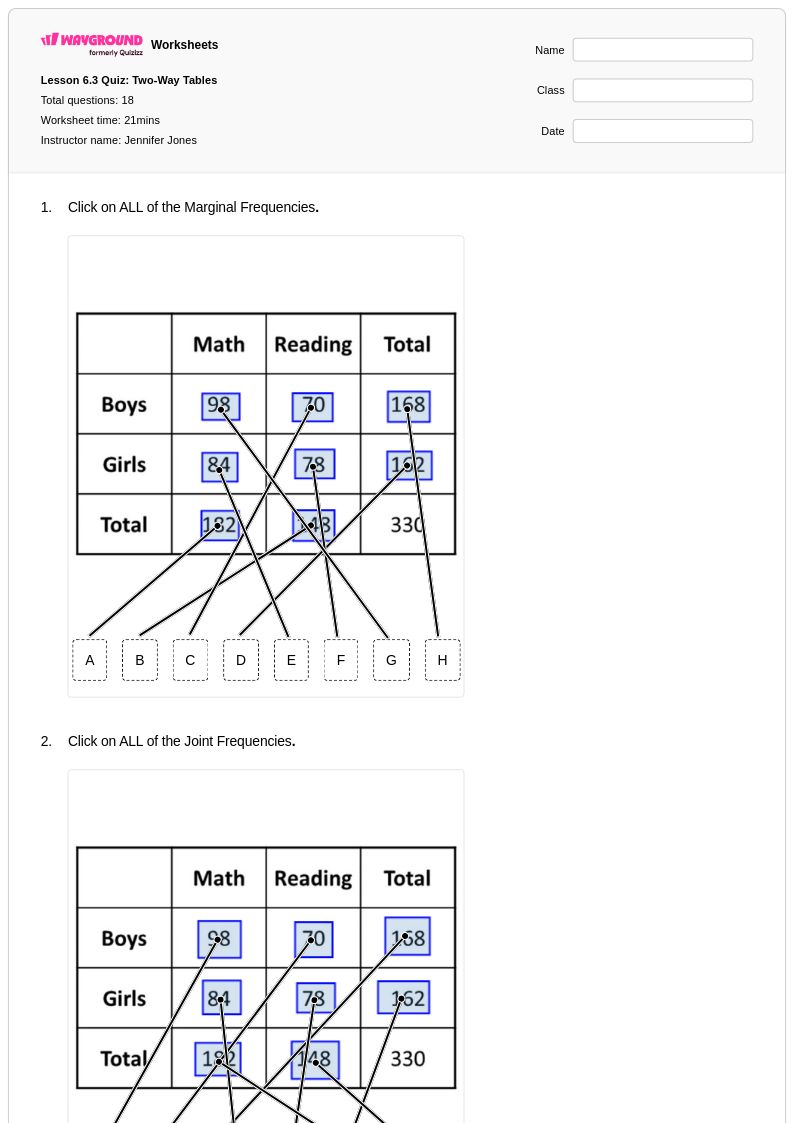
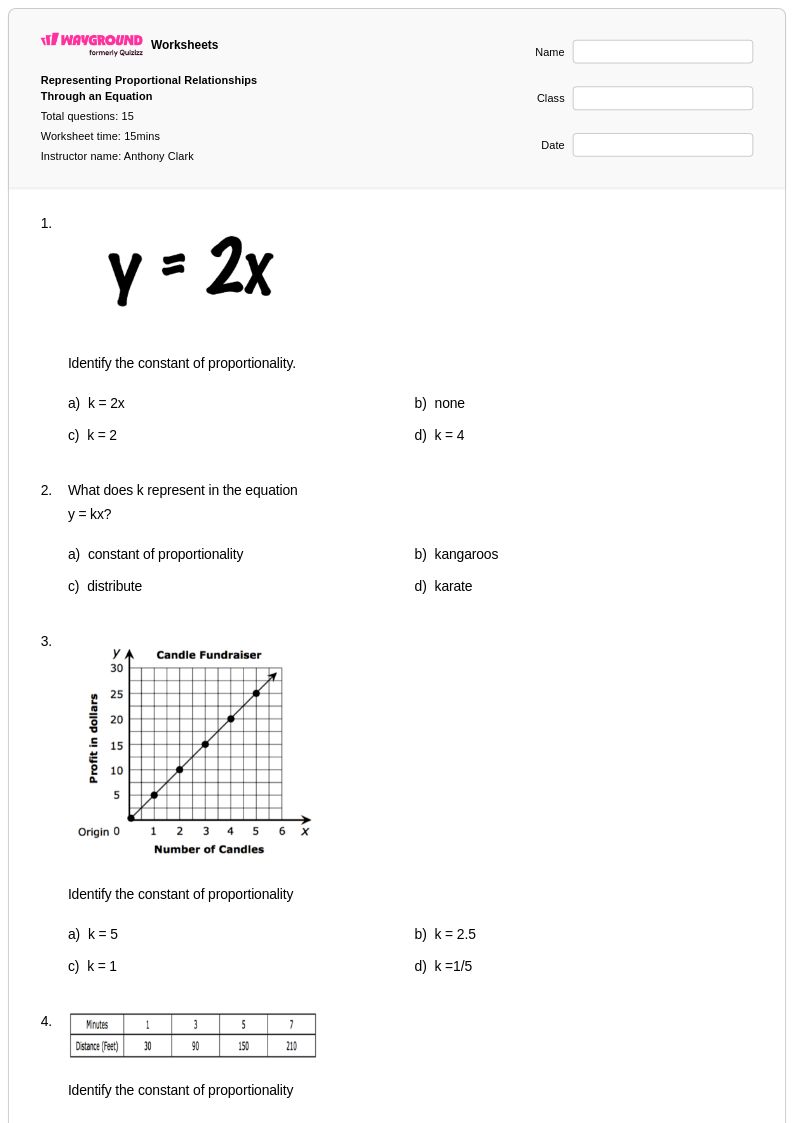
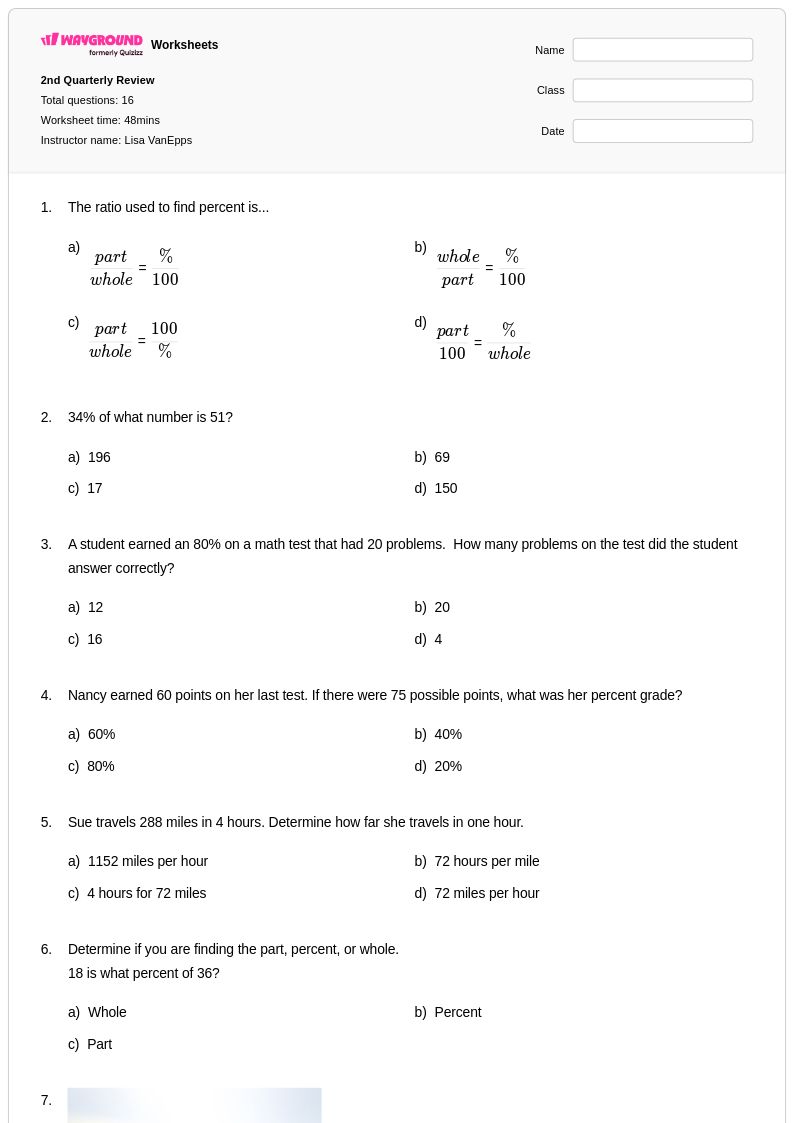
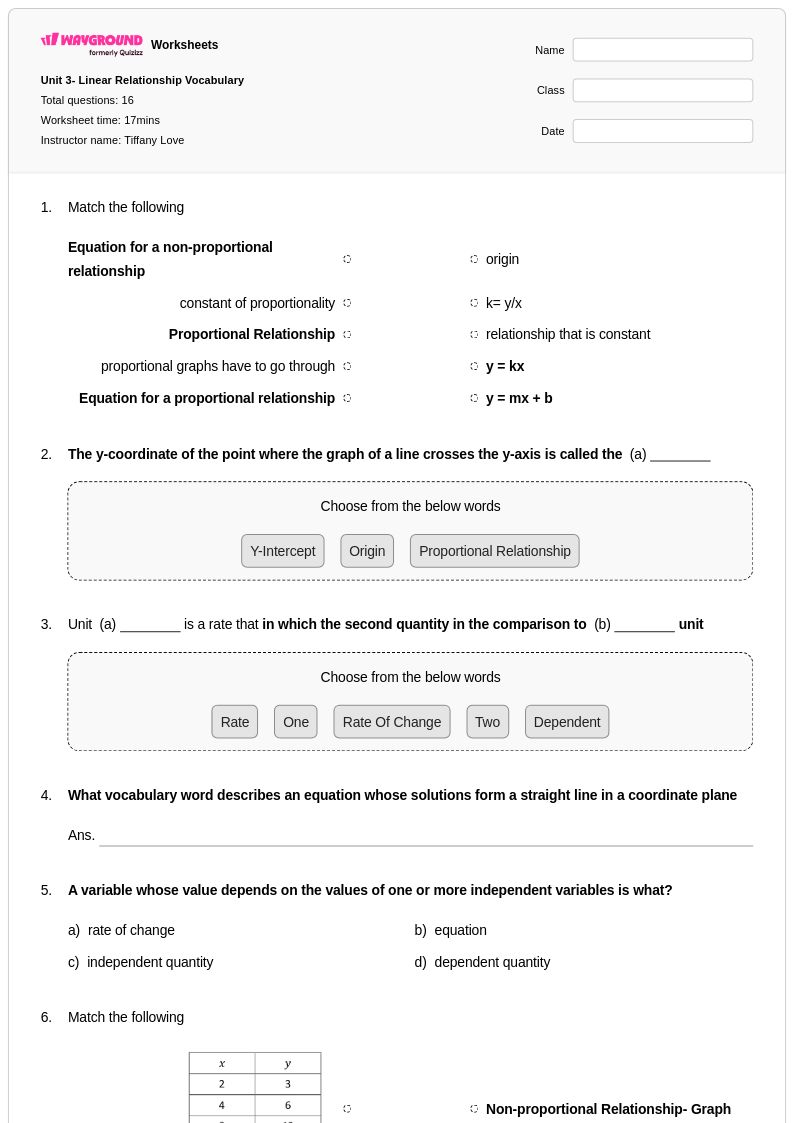
Explore Wayground's free percent part-whole relationships worksheets with printable PDFs, practice problems, and answer keys to help students master identifying and calculating the connections between percentages, parts, and wholes.
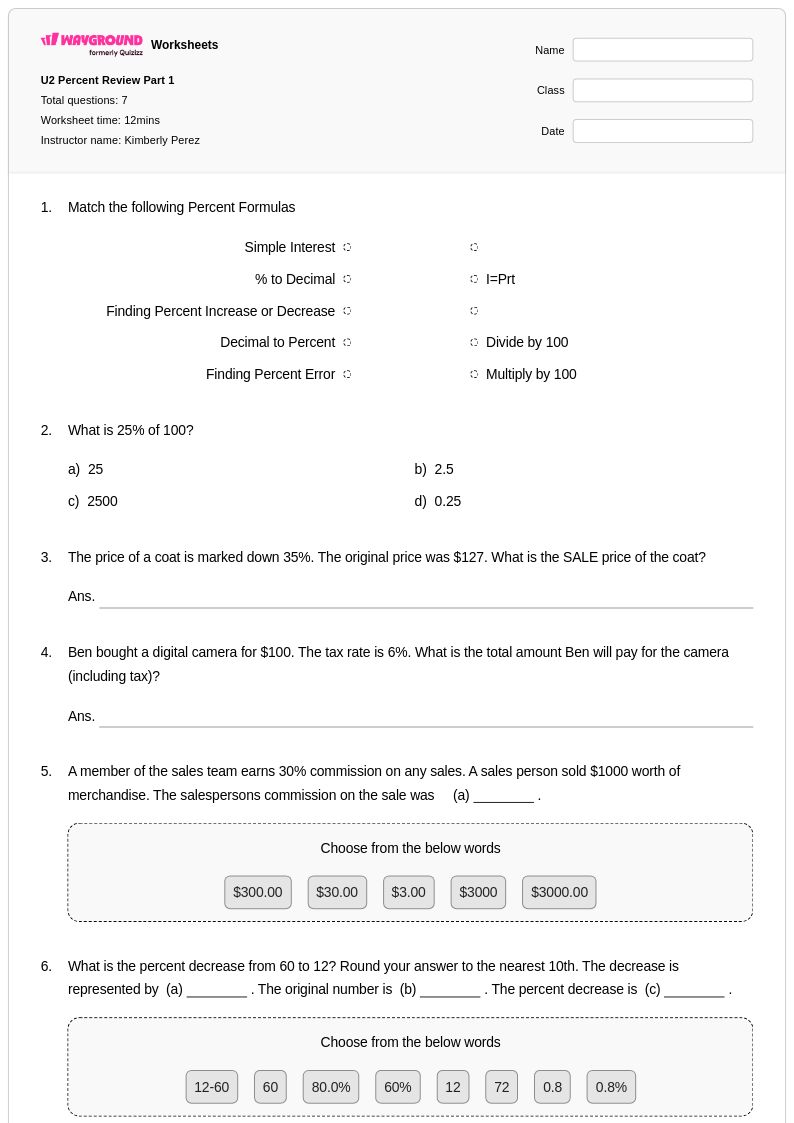
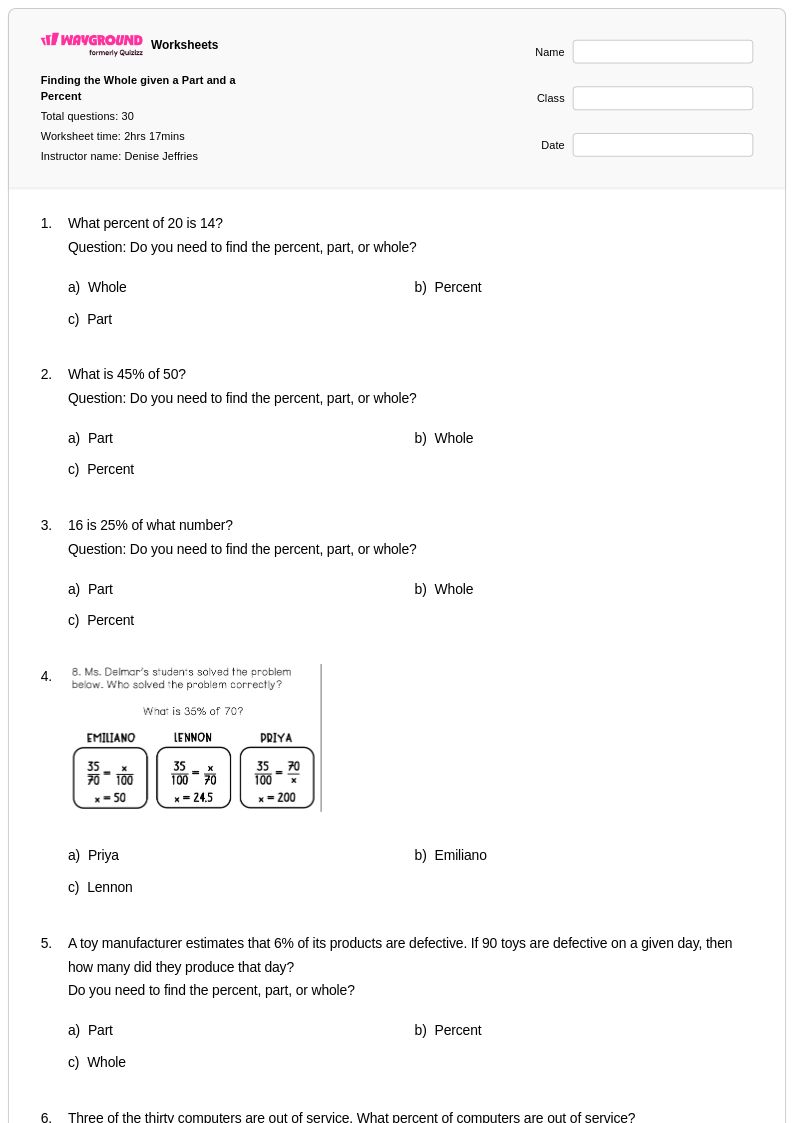
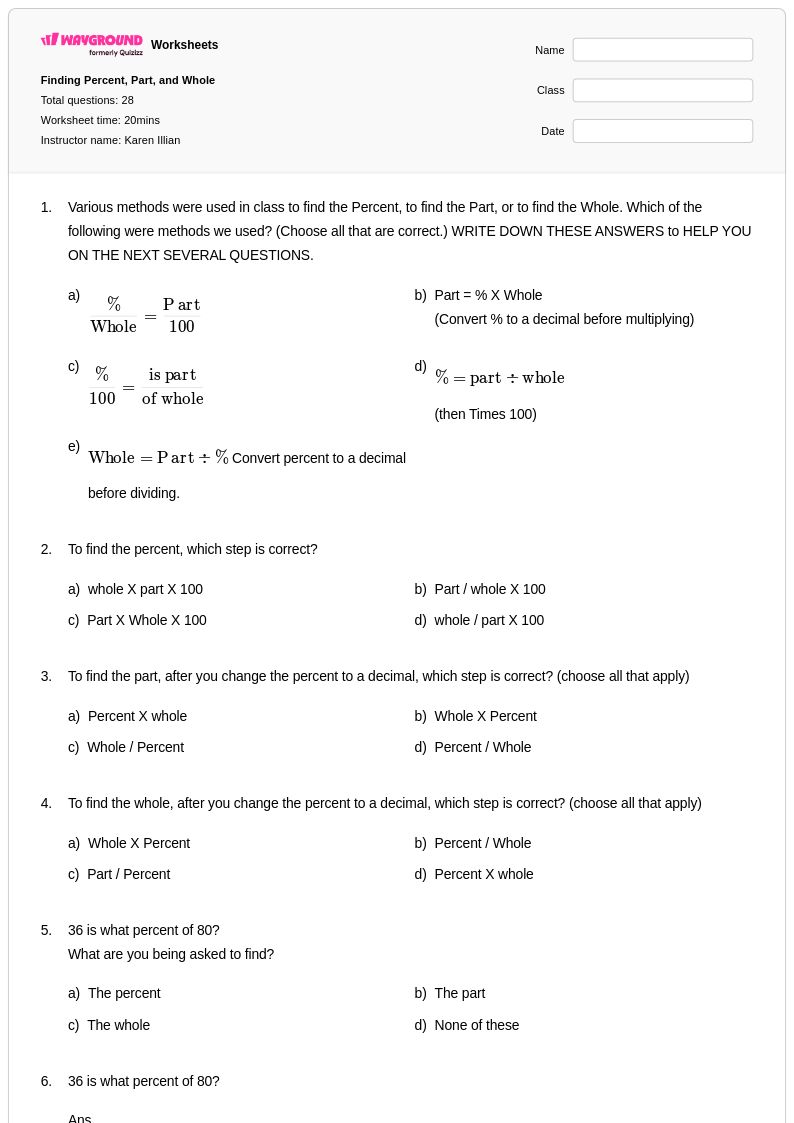
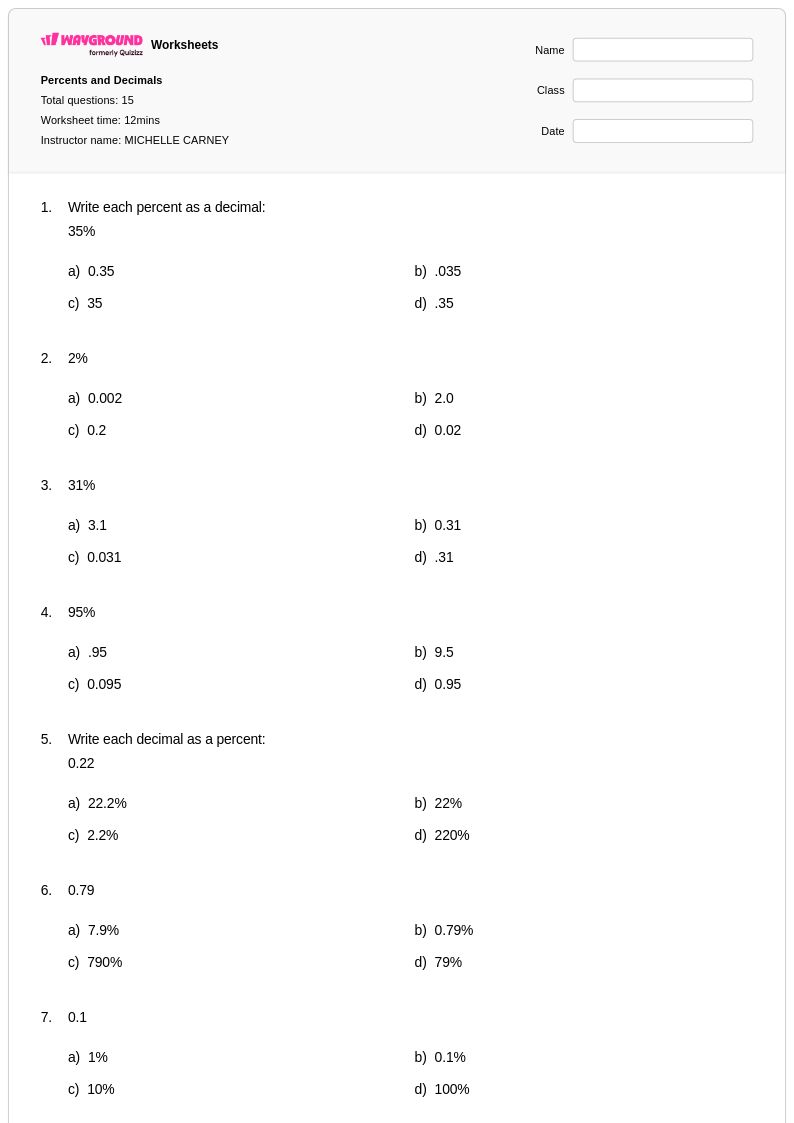
Percent part-whole relationships worksheets available through Wayground (formerly Quizizz) provide students with essential practice in understanding how percentages connect parts to their complete wholes. These comprehensive resources strengthen critical mathematical reasoning skills by helping students identify what portion of a total amount a percentage represents, calculate missing parts when given percentages and wholes, and determine percentages when parts and wholes are known. The worksheets feature systematically designed practice problems that guide learners through real-world scenarios involving discounts, tax calculations, survey results, and statistical data analysis. Each printable resource includes a complete answer key and is available as a free pdf download, making it convenient for both classroom instruction and independent study sessions.
Wayground (formerly Quizizz) supports mathematics educators with an extensive collection of teacher-created worksheet resources focused on percent part-whole relationships, drawing from millions of professionally developed materials that undergo rigorous quality standards. The platform's advanced search and filtering capabilities allow instructors to locate worksheets that align with specific curriculum standards and match their students' skill levels, while built-in differentiation tools enable customization for diverse learning needs. Teachers can access these resources in both printable and digital formats, including downloadable pdf versions, making lesson planning more efficient and providing flexible options for remediation, enrichment, and targeted skill practice. The comprehensive nature of these worksheet collections ensures that educators have reliable tools for reinforcing percent concepts through varied problem-solving approaches and progressive difficulty levels.
FAQs
How can I introduce percent part-whole relationships to my students?
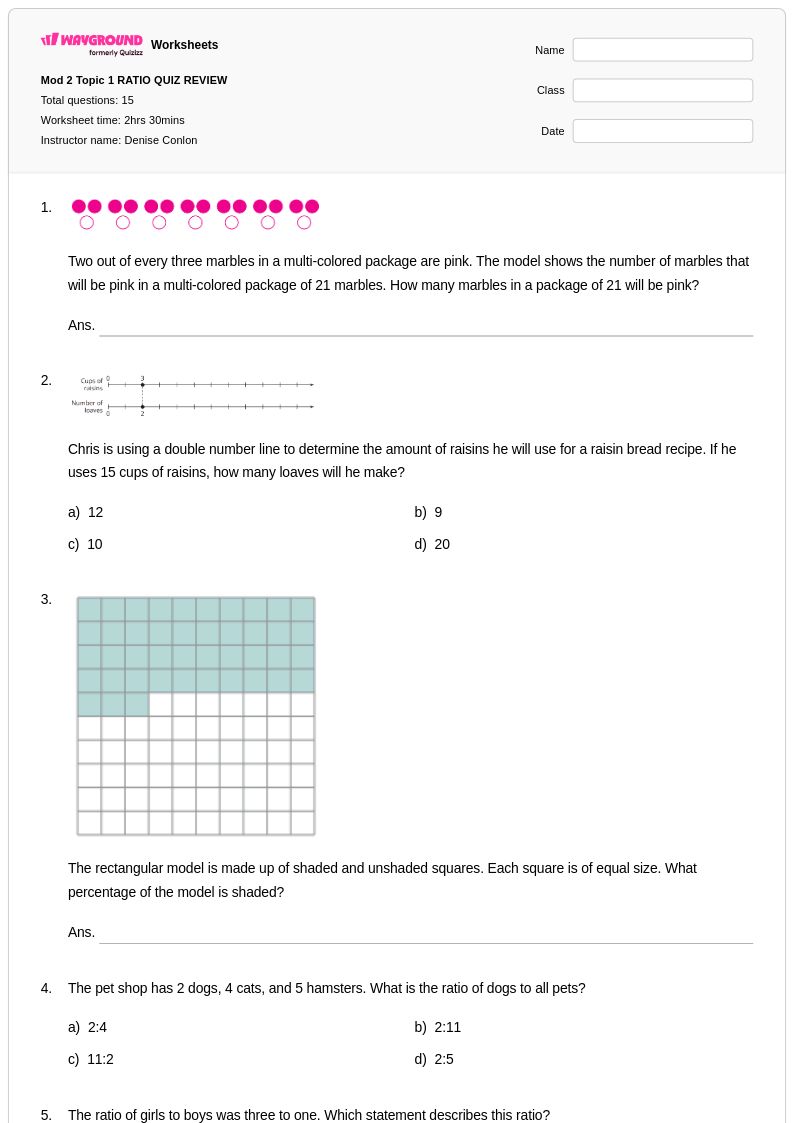
Start with visual models like 10x10 grids or bar models to help students see a percentage as a “part per 100.” Connect this to real-world examples they already understand, such as a phone battery's charge level or a sale discount. Ask them to identify the “part” (the current charge) and the “whole” (the full battery) in each scenario.
What types of problems help students practice percent part-whole relationships?
Effective practice includes a mix of problem types. Start with straightforward calculations where students find the part, the whole, or the percent. Then, move to word problems involving practical scenarios like calculating a tip, finding an original price after a discount, or interpreting survey data. This variety helps students apply the concept flexibly.
What is a common mistake students make when solving percent problems?
A frequent error is incorrectly identifying the “part” and the “whole” in a word problem. For example, in a problem asking for the original price after a 20% discount, students might mistakenly use the discounted price as the whole instead of recognizing it as a part (80%) of the original price. Emphasize reading problems carefully to identify which value represents the total amount.
How can I use this percent worksheet with my class?
This worksheet is available as a printable PDF for hands-on practice or as an interactive digital quiz you can assign through Wayground. Every worksheet includes a complete answer key for easy grading. For printed assignments, you can use the Wayground for Teachers app to quickly scan and grade student work.
How does this topic fit into the Common Core math standards?
Common Core standards develop this concept progressively. Students typically begin in 6th grade by finding a percent of a quantity and solving for the whole when given a part and the percent. In 7th grade, this extends to solving multi-step problems involving percent increase and decrease, markups, and simple interest, often using proportional relationships.
How can I support struggling learners with these percent worksheets?
For students who need support, you can use Wayground's digital accommodation tools like Read Aloud for word problems or Reduced Answer Choices on multiple-choice questions. You can also create a scaffolded version of the printable worksheet by adjusting the font size and spacing to improve readability.