
12 Q
1st
10 Q
1st - 5th
11 Q
1st - 5th
15 Q
1st
10 Q
1st
43 Q
1st
10 Q
KG - 12th
20 Q
1st - 3rd
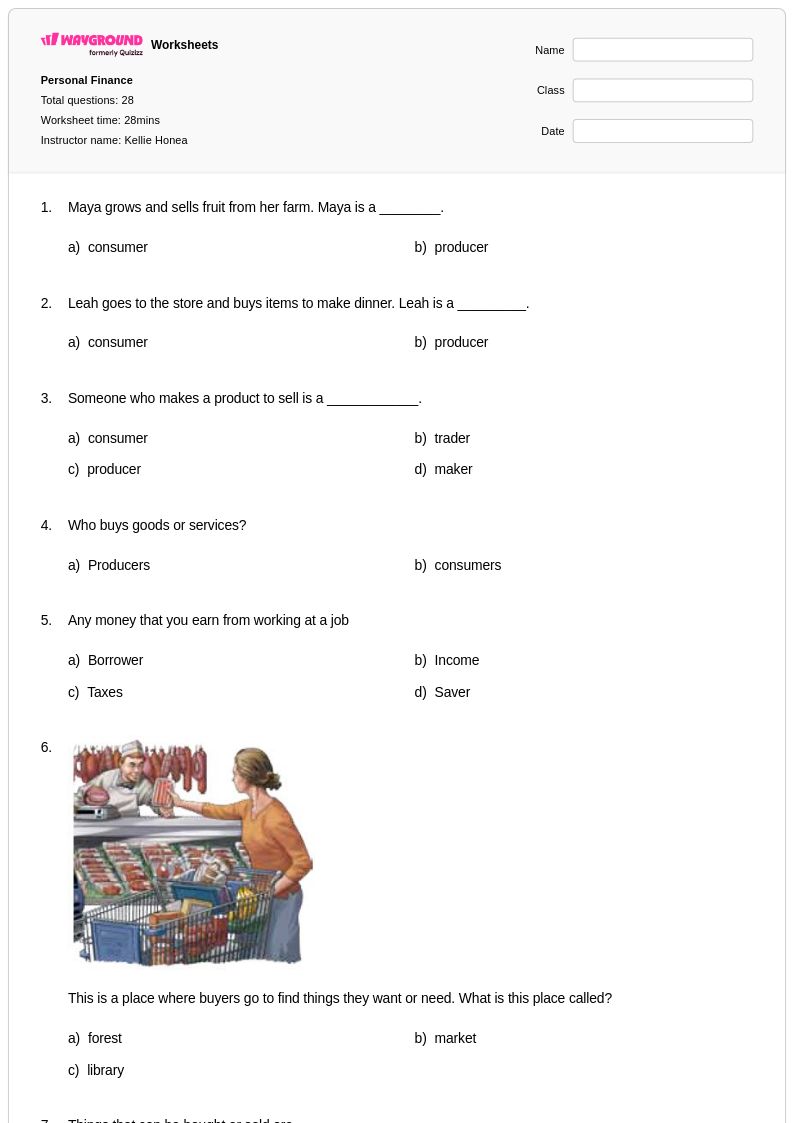
28 Q
1st
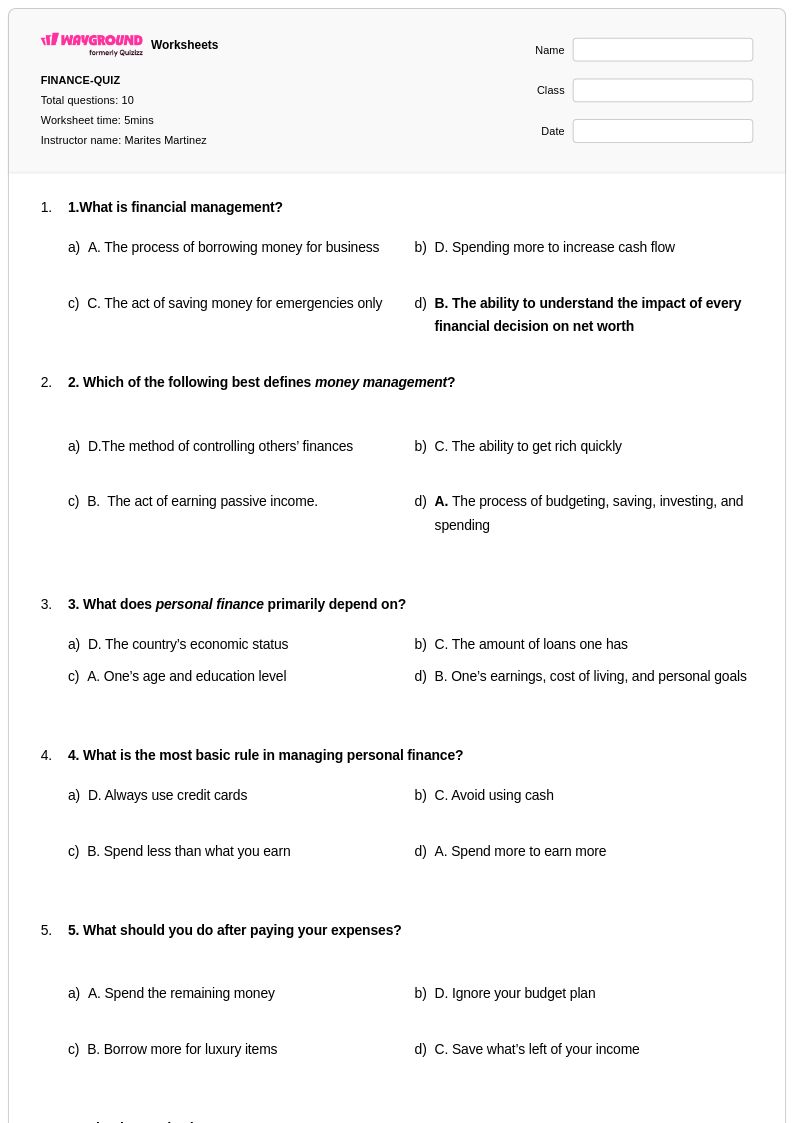
10 Q
1st - 5th
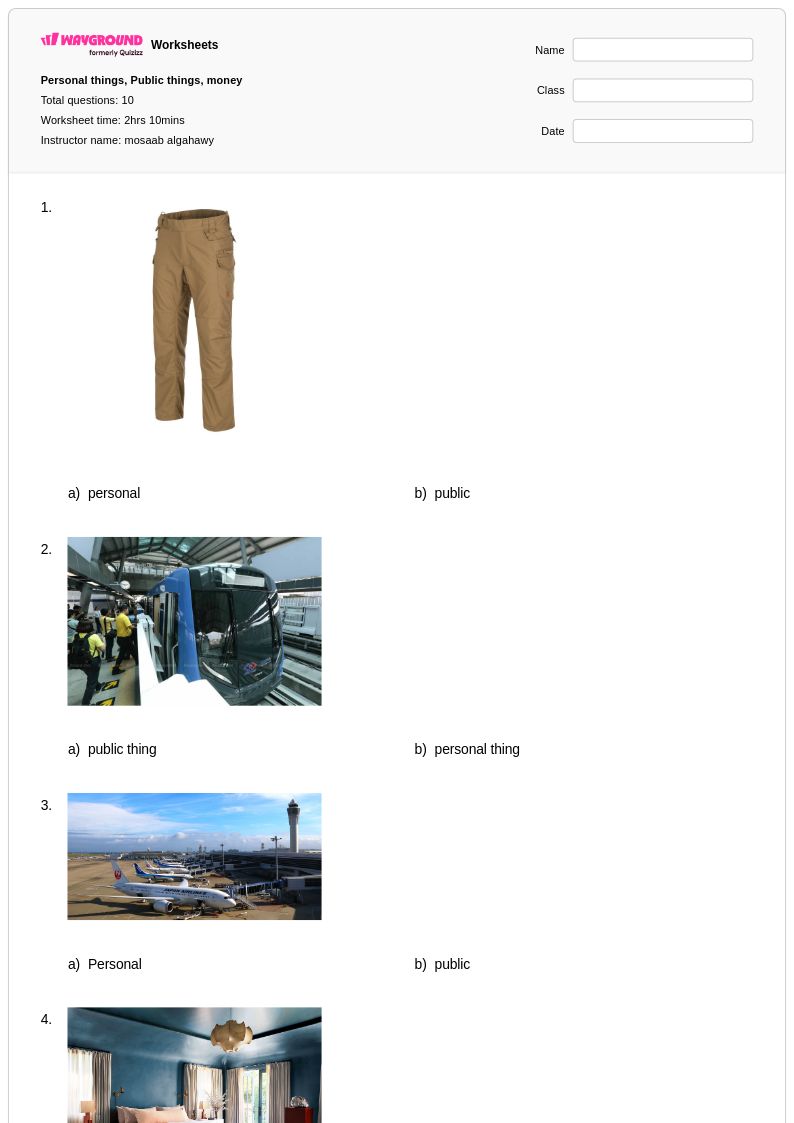
10 Q
KG - 3rd
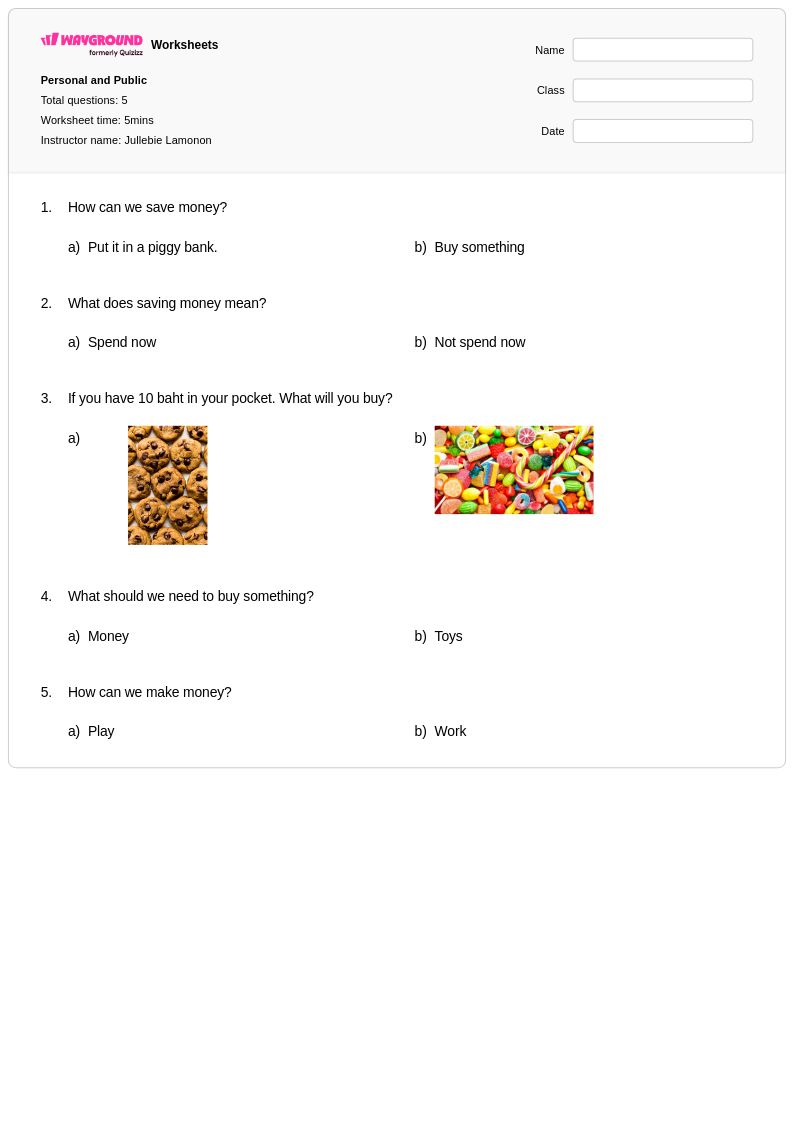
5 Q
1st
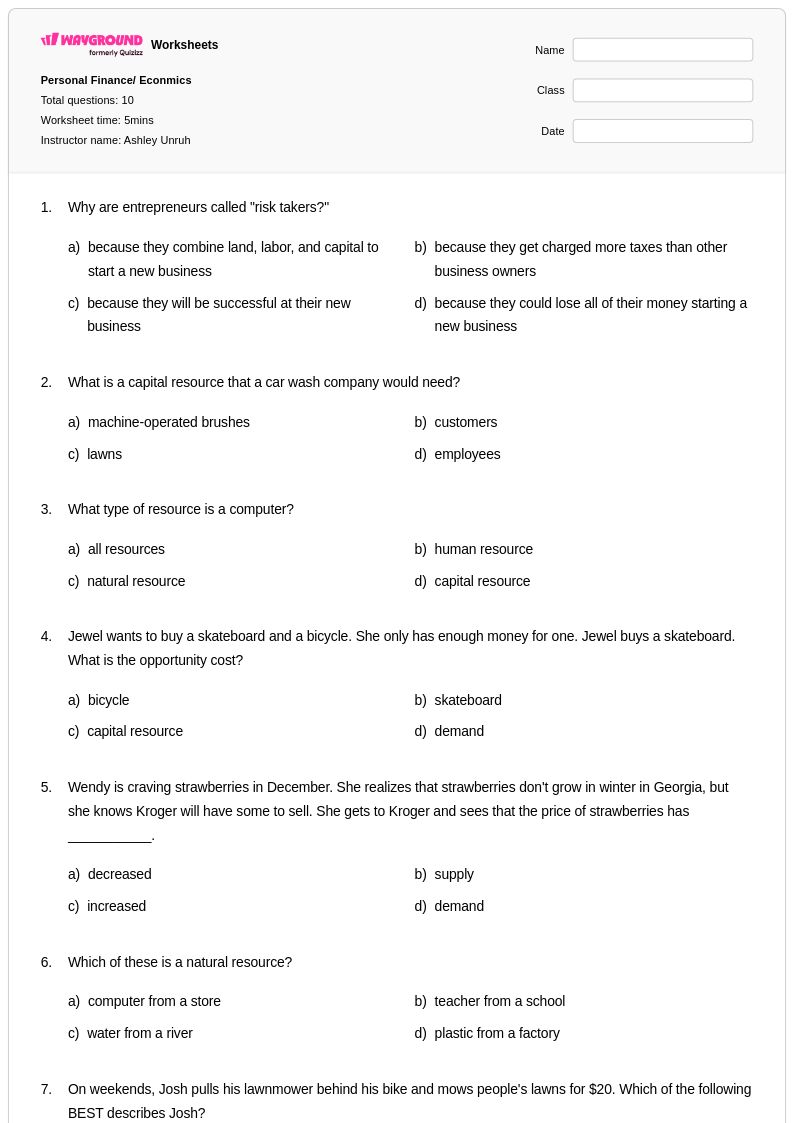
10 Q
1st - 5th
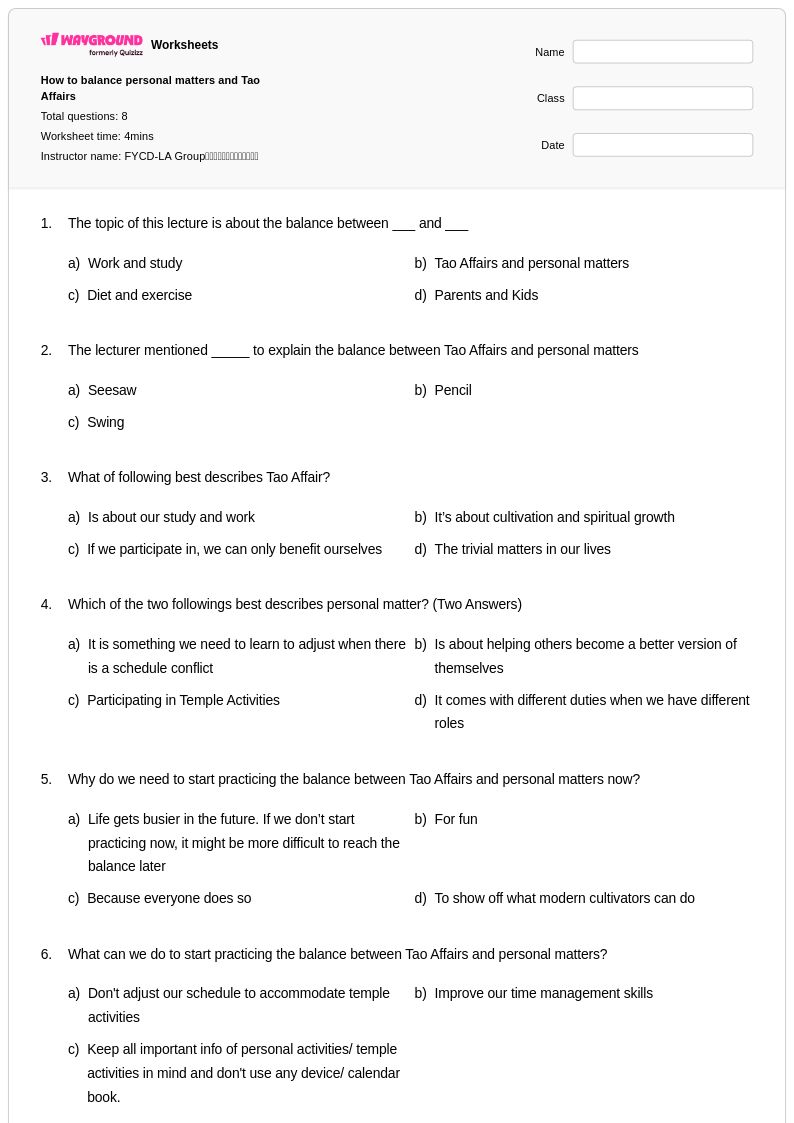
8 Q
1st - Uni
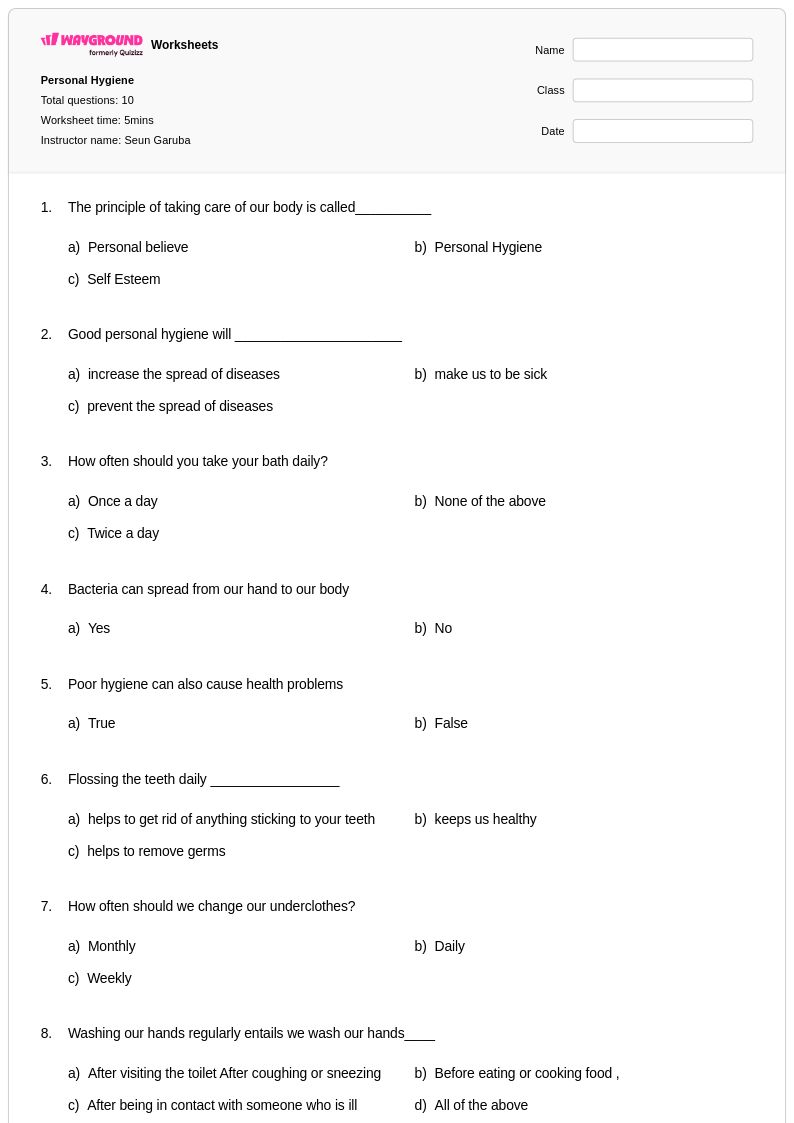
10 Q
1st - 3rd
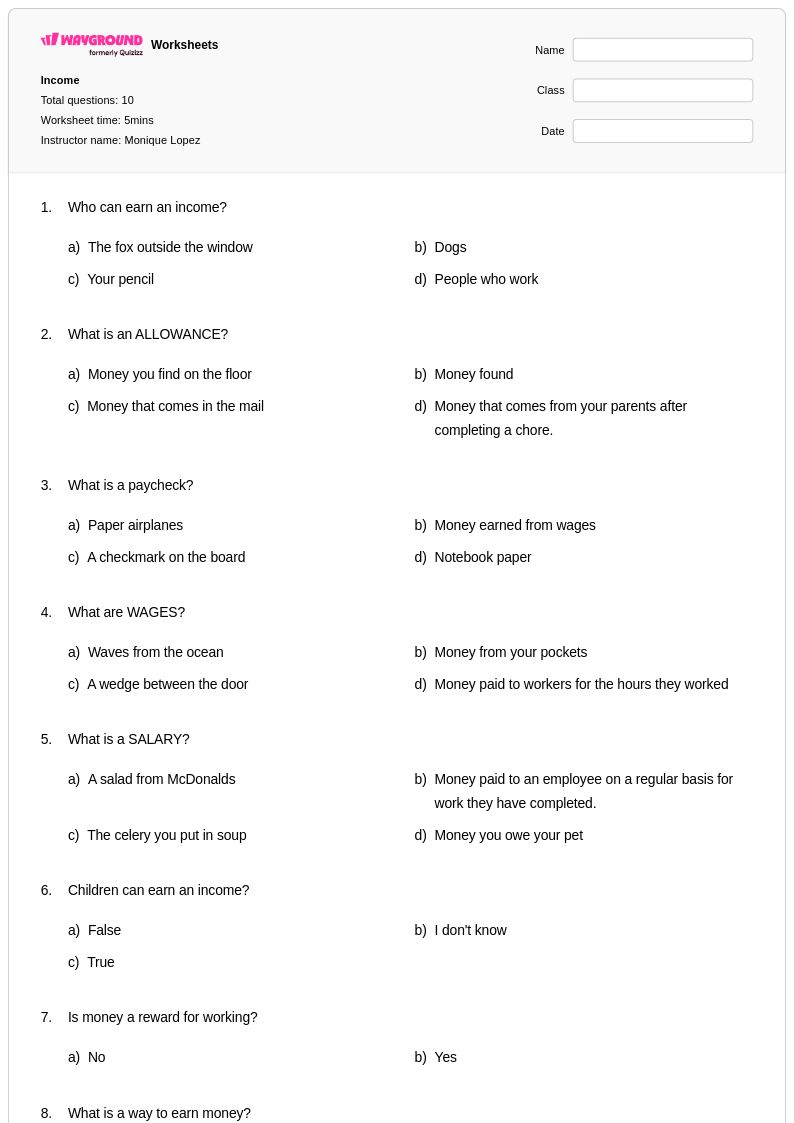
10 Q
1st - 3rd
20 Q
KG - PD
6 Q
KG - 12th
25 Q
1st
20 Q
1st - 3rd
15 Q
1st - 3rd
10 Q
1st
12 Q
KG - 3rd
10 Q
1st - 5th
Explore Other Subject Worksheets for class 1
Explore printable Personal Allowance worksheets for Class 1
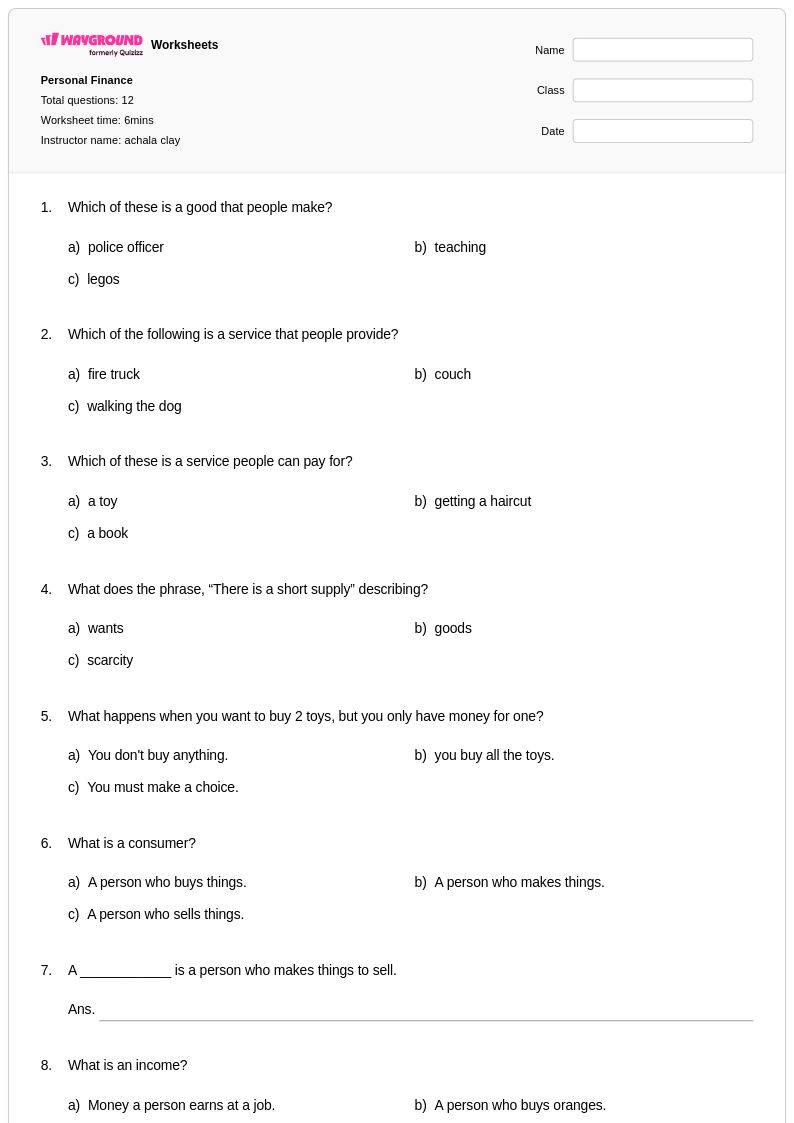
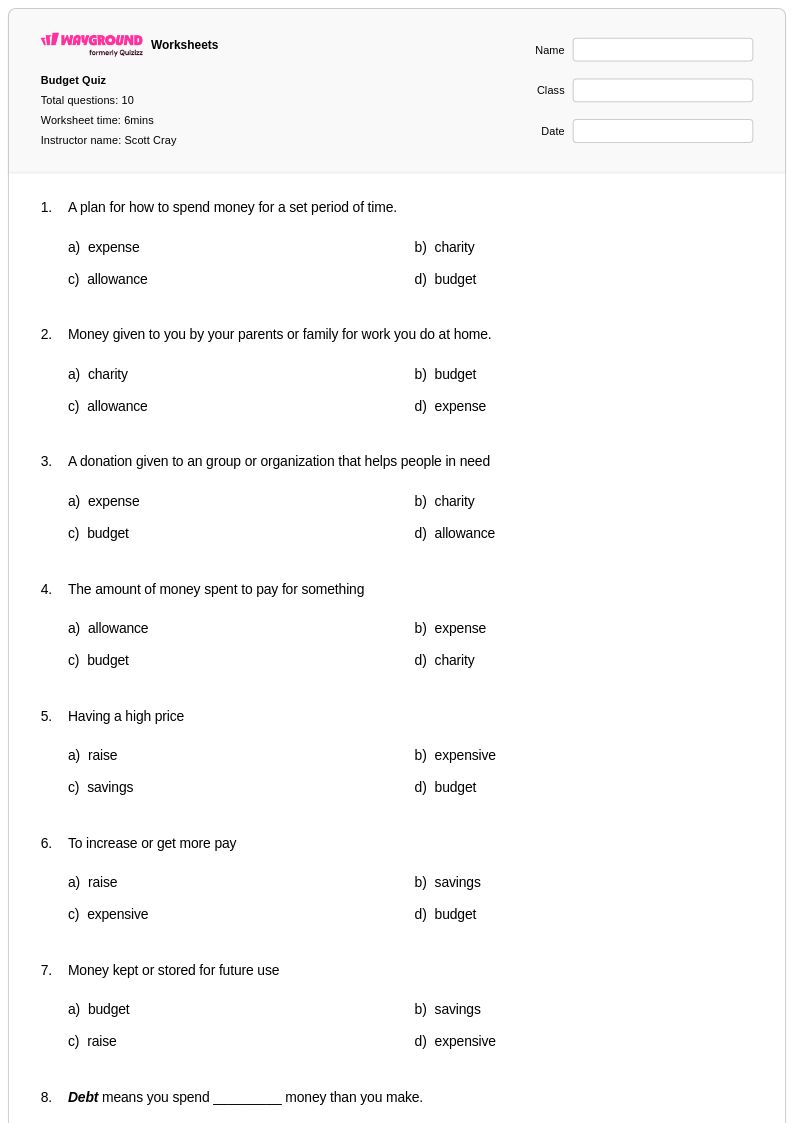
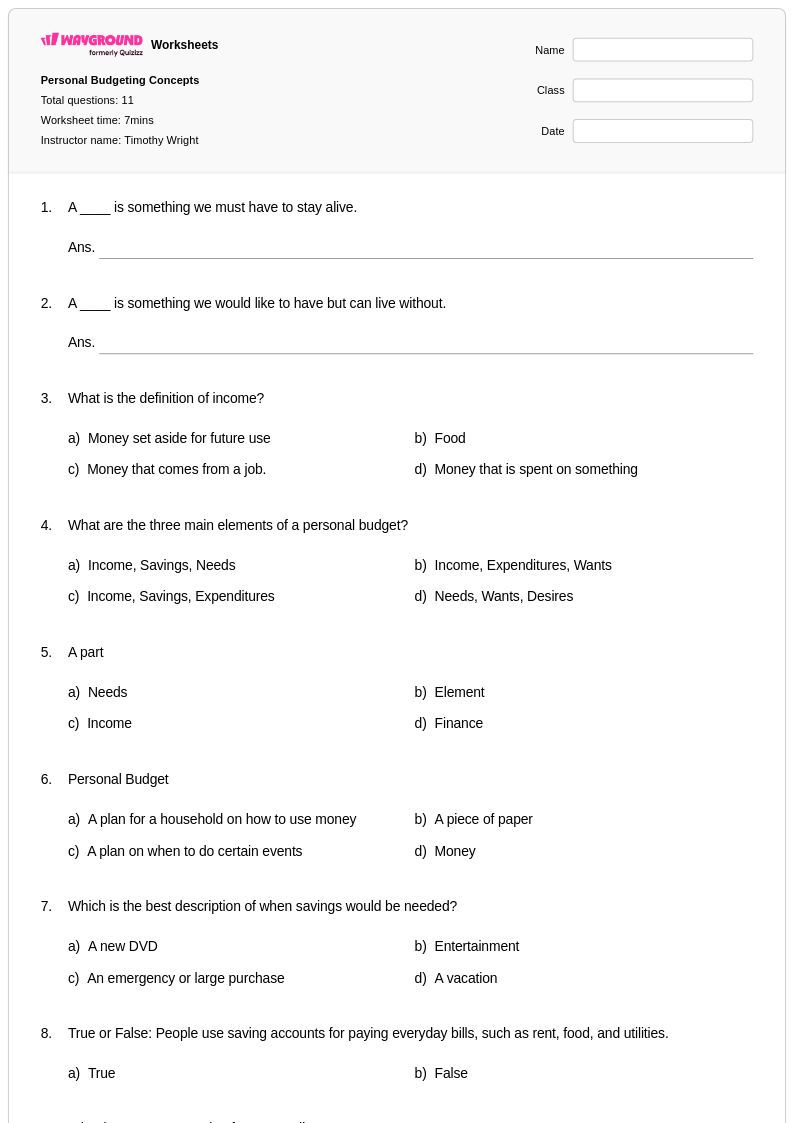
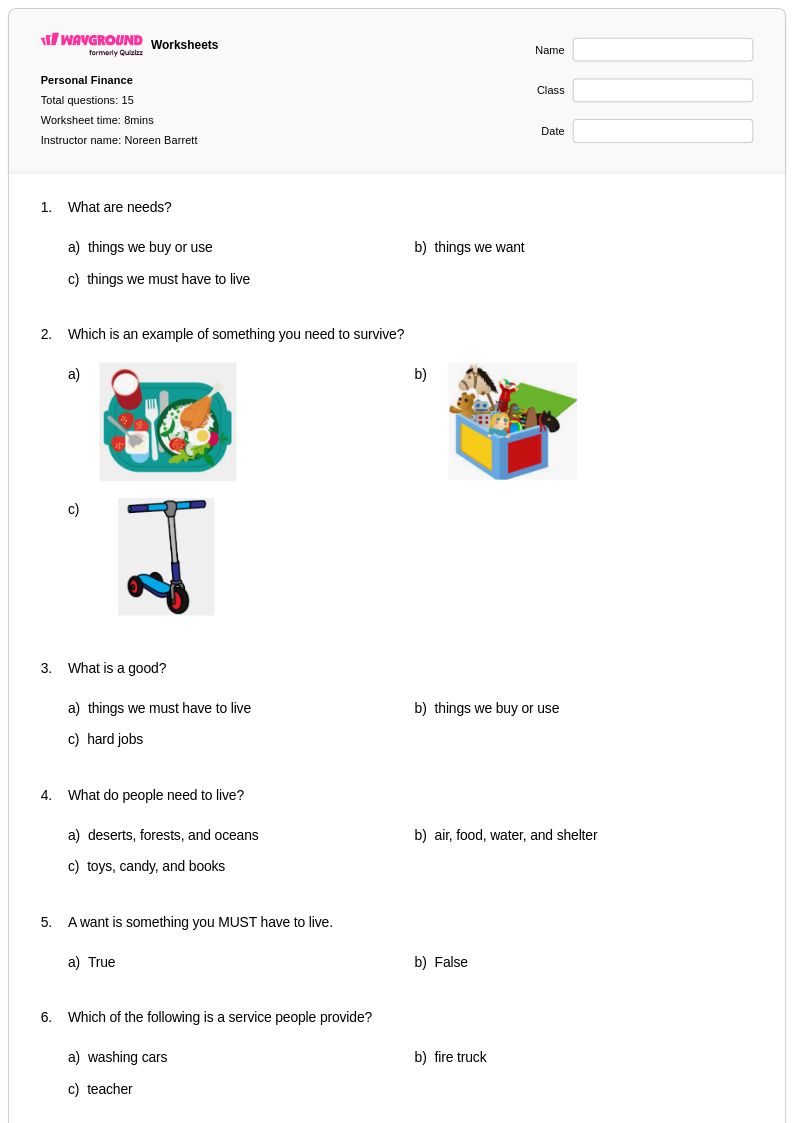
Personal allowance worksheets for Class 1 students through Wayground (formerly Quizizz) introduce young learners to fundamental money management concepts through age-appropriate activities and engaging practice problems. These carefully designed worksheets help first-grade students understand the basic concept of receiving and managing a weekly or monthly allowance, building essential financial literacy skills from an early age. Students work through scenarios involving earning money for completing chores, making simple spending decisions, and distinguishing between wants and needs when using their personal allowance. Each worksheet collection includes comprehensive answer keys and is available as free printable resources in convenient pdf format, allowing educators to seamlessly integrate hands-on money concepts into their social studies curriculum while strengthening mathematical reasoning and decision-making abilities.
Wayground (formerly Quizizz) empowers educators with access to millions of teacher-created personal allowance worksheets specifically designed for Class 1 learners, featuring robust search and filtering capabilities that make finding age-appropriate financial literacy content effortless. The platform's extensive collection aligns with social studies standards while offering flexible customization tools that allow teachers to modify worksheets for individual student needs, supporting both remediation for struggling learners and enrichment opportunities for advanced students. Available in both printable pdf format and interactive digital versions, these resources enable educators to effectively plan comprehensive lessons that introduce basic economic concepts through relatable allowance scenarios. Teachers can efficiently differentiate instruction by selecting from various difficulty levels and presentation styles, ensuring that every first-grade student develops confidence in understanding personal money management while practicing essential problem-solving and critical thinking skills.
FAQs
How do I teach students about personal allowance and money management?
What exercises help students practice budgeting with a personal allowance?
What mistakes do students commonly make when learning about personal allowance and budgeting?
How can I differentiate personal allowance instruction for students at different skill levels?
How do I use Wayground's personal allowance worksheets in my classroom?