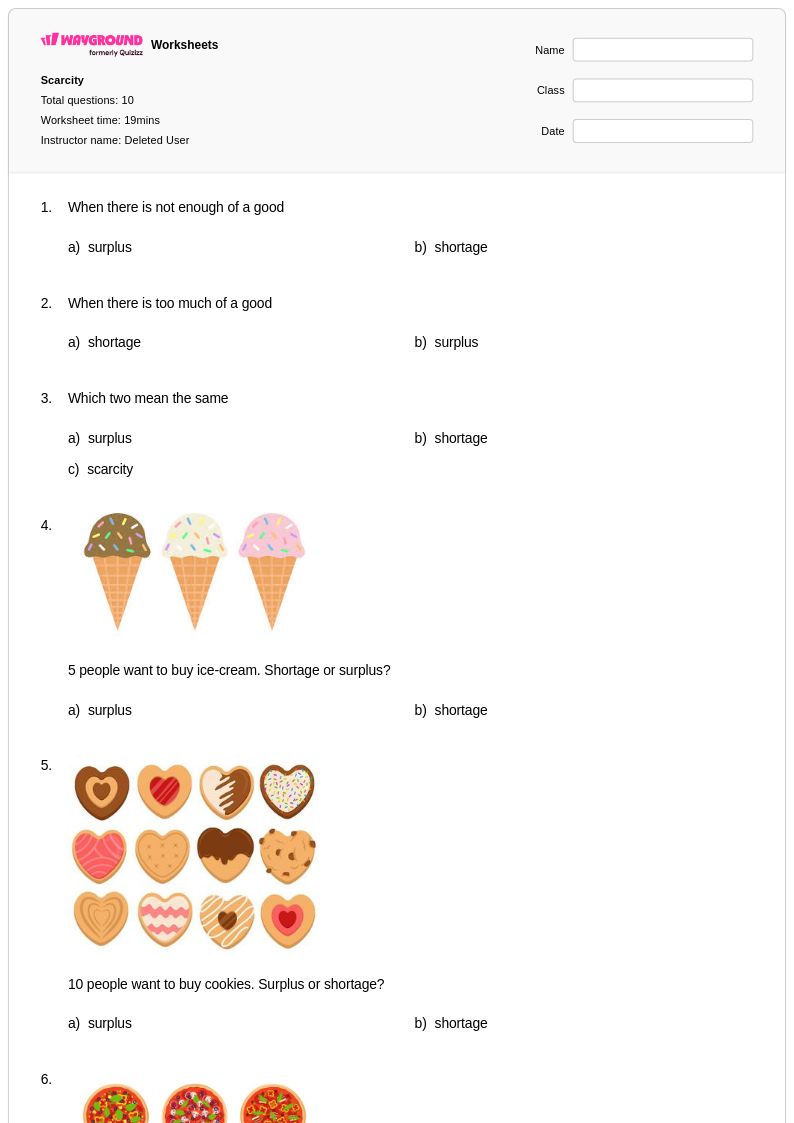
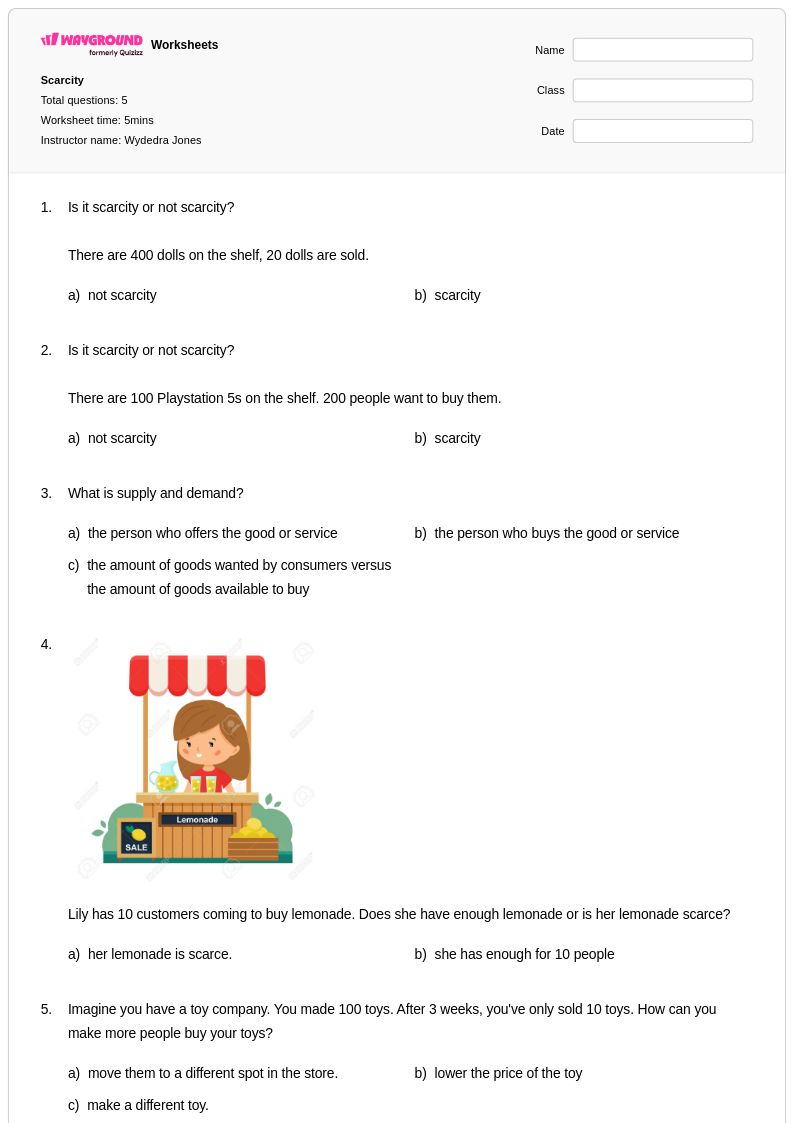
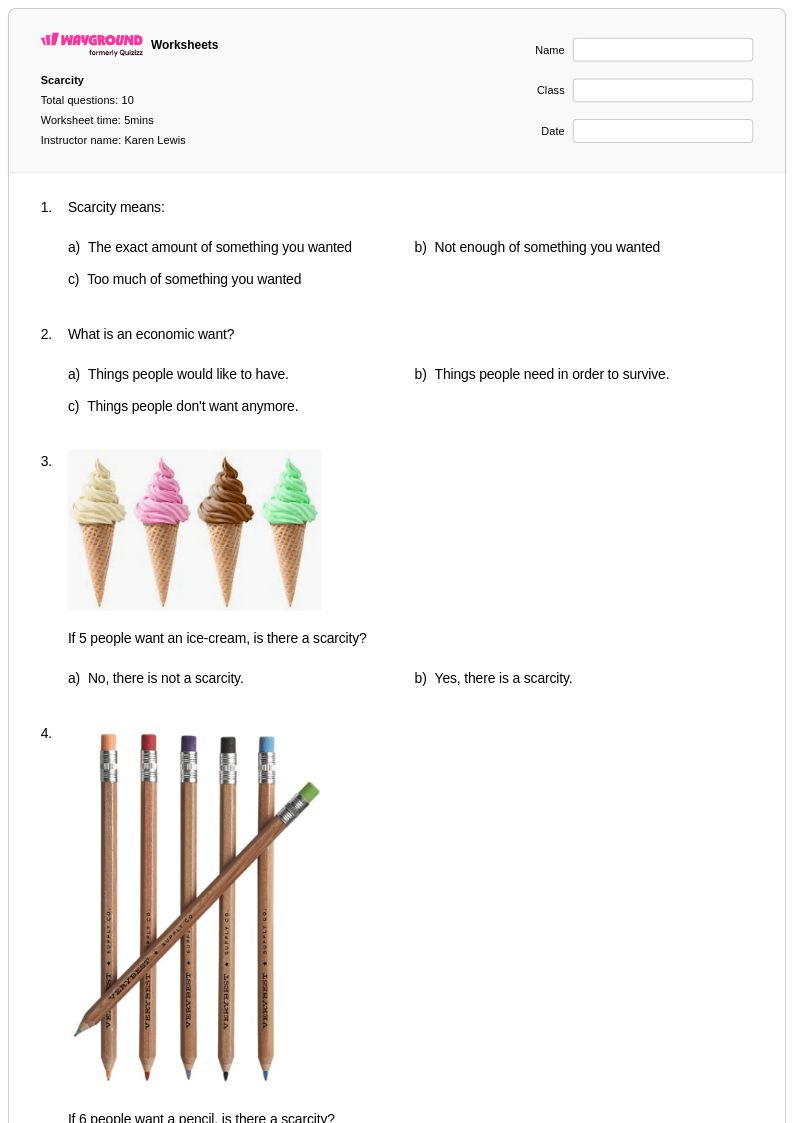
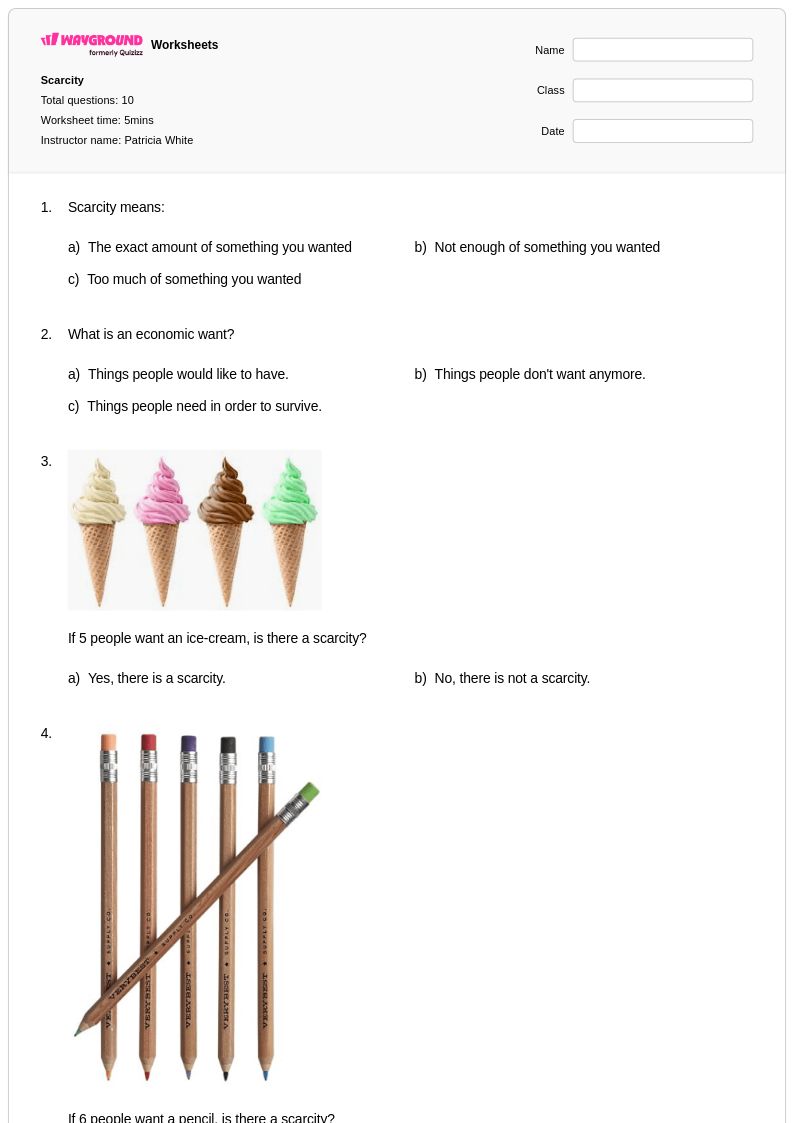
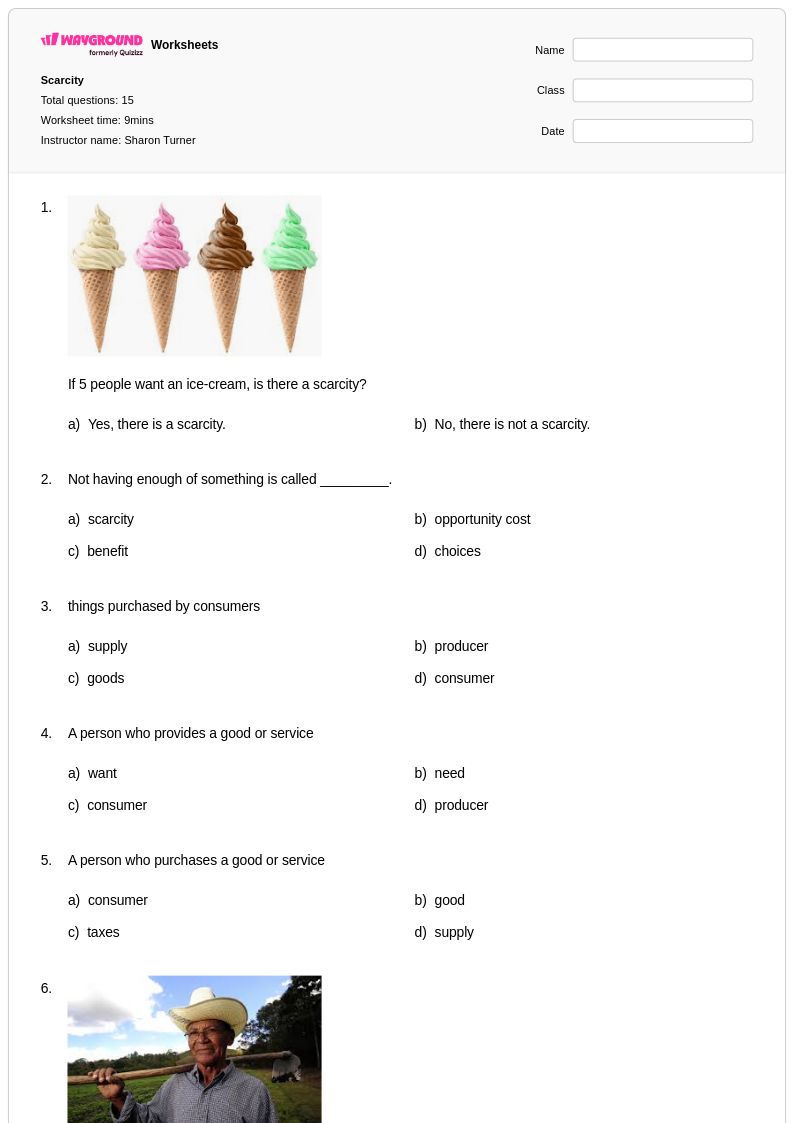
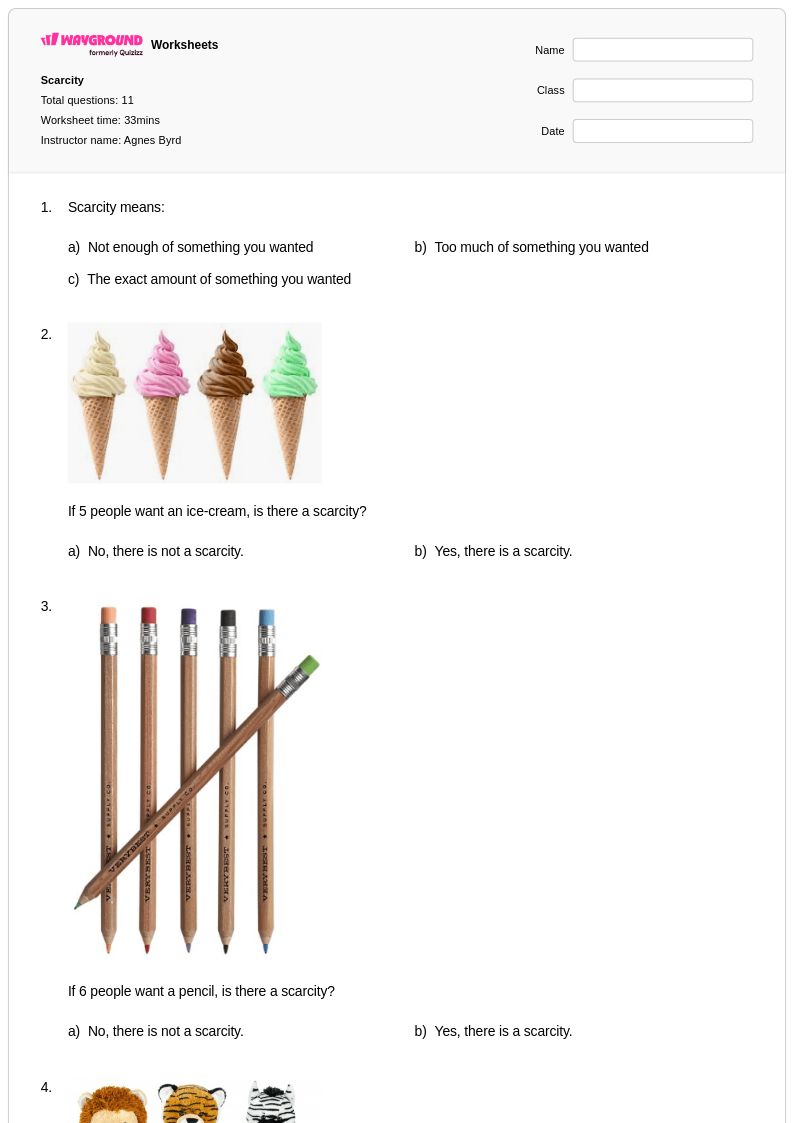
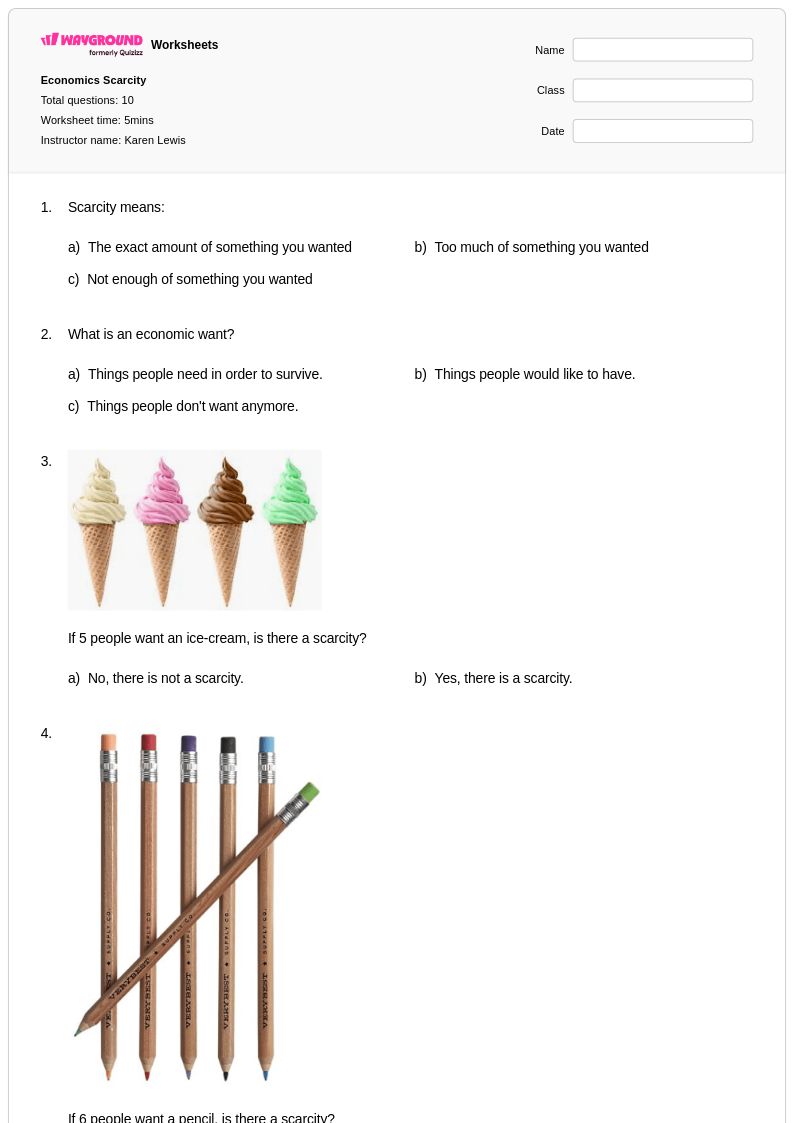
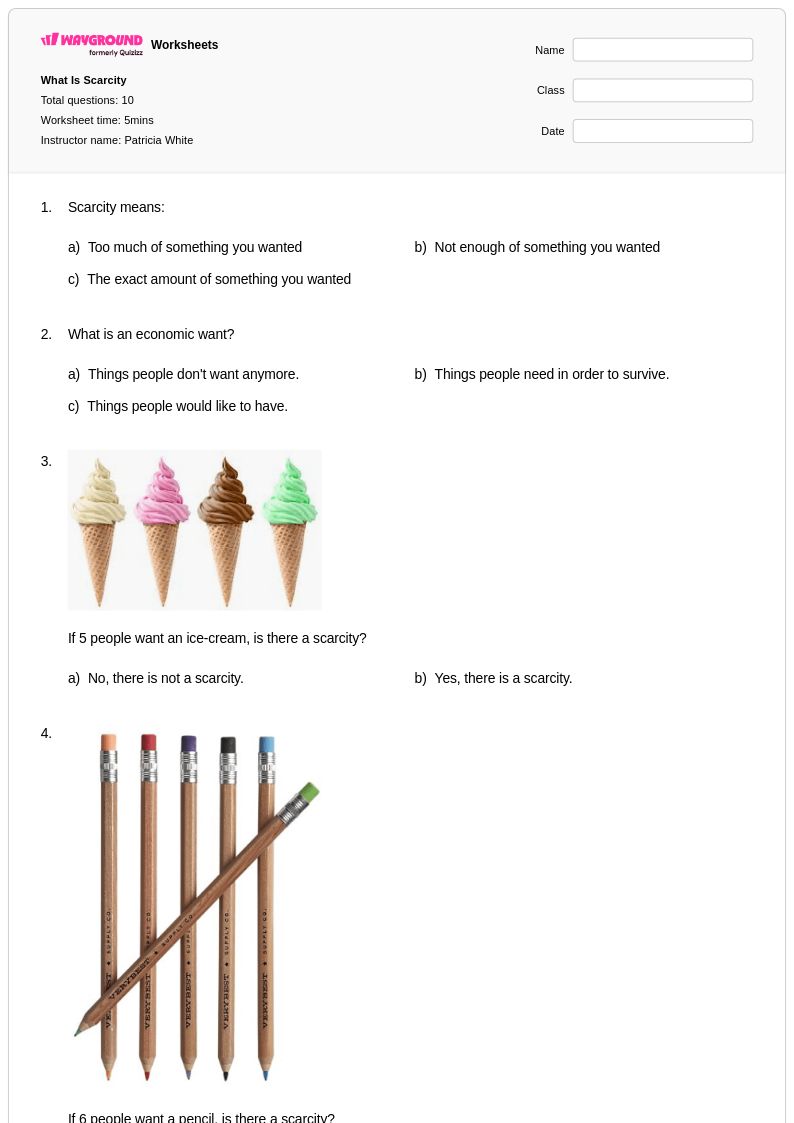
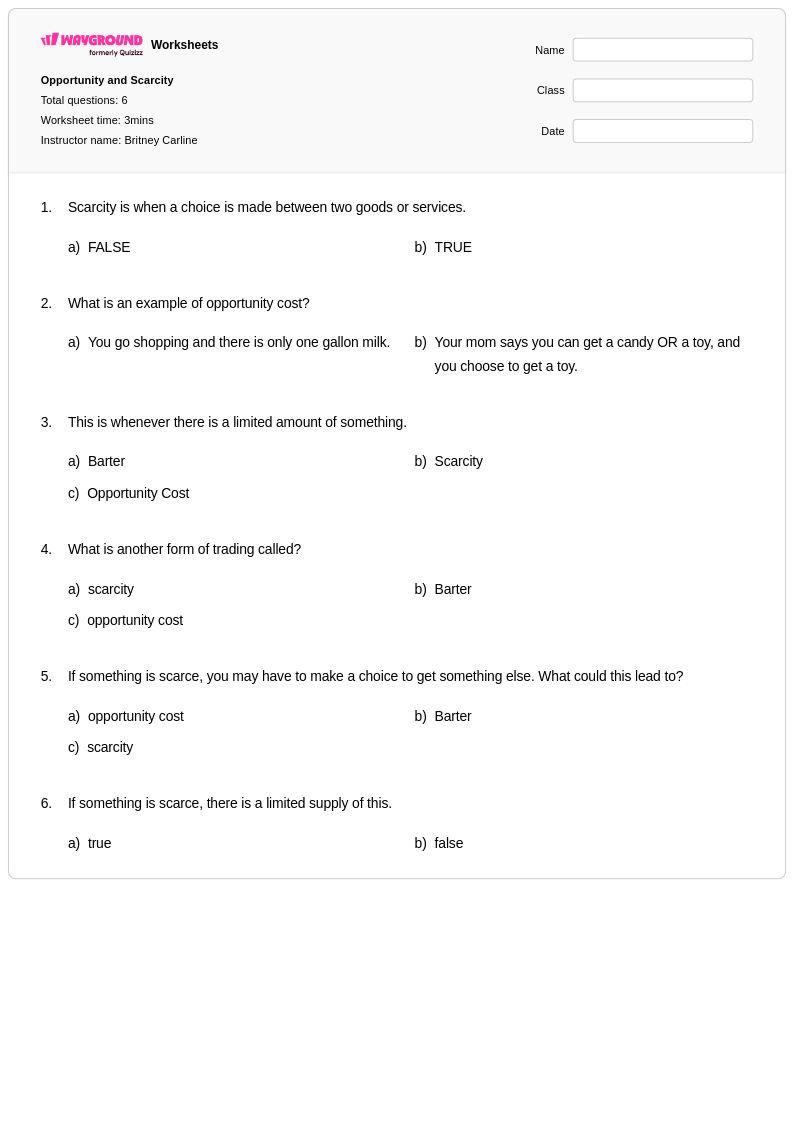
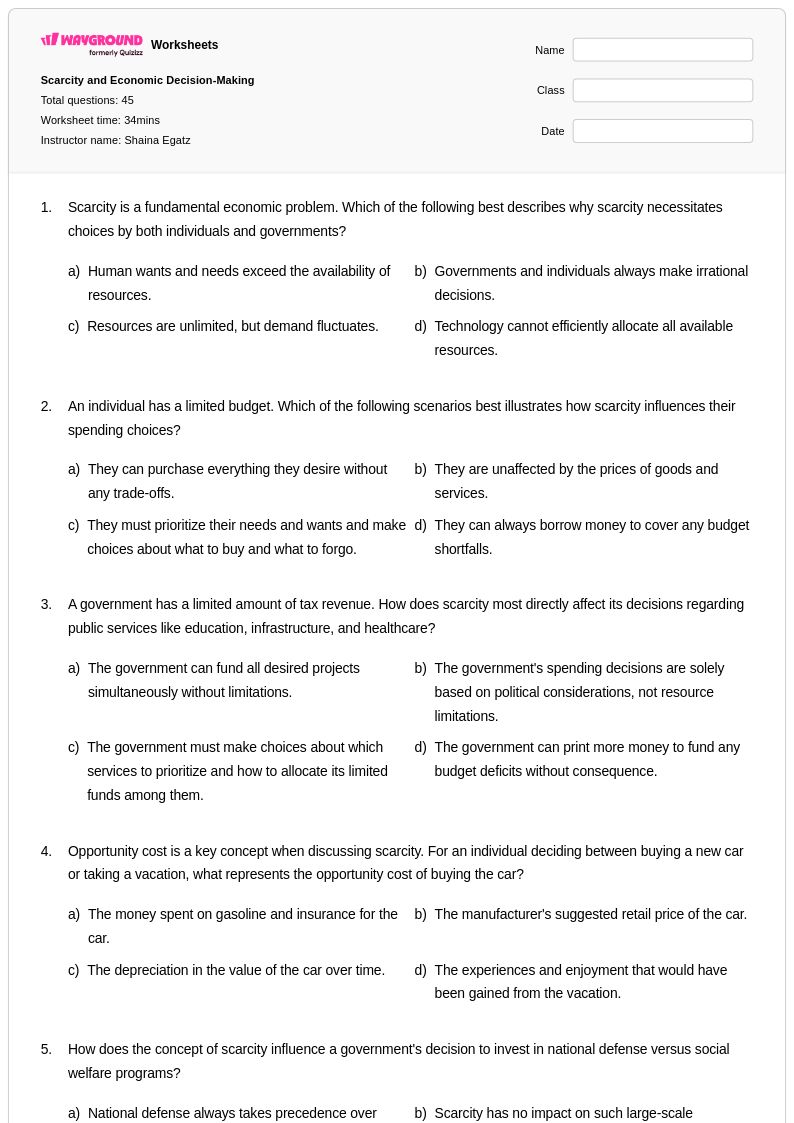
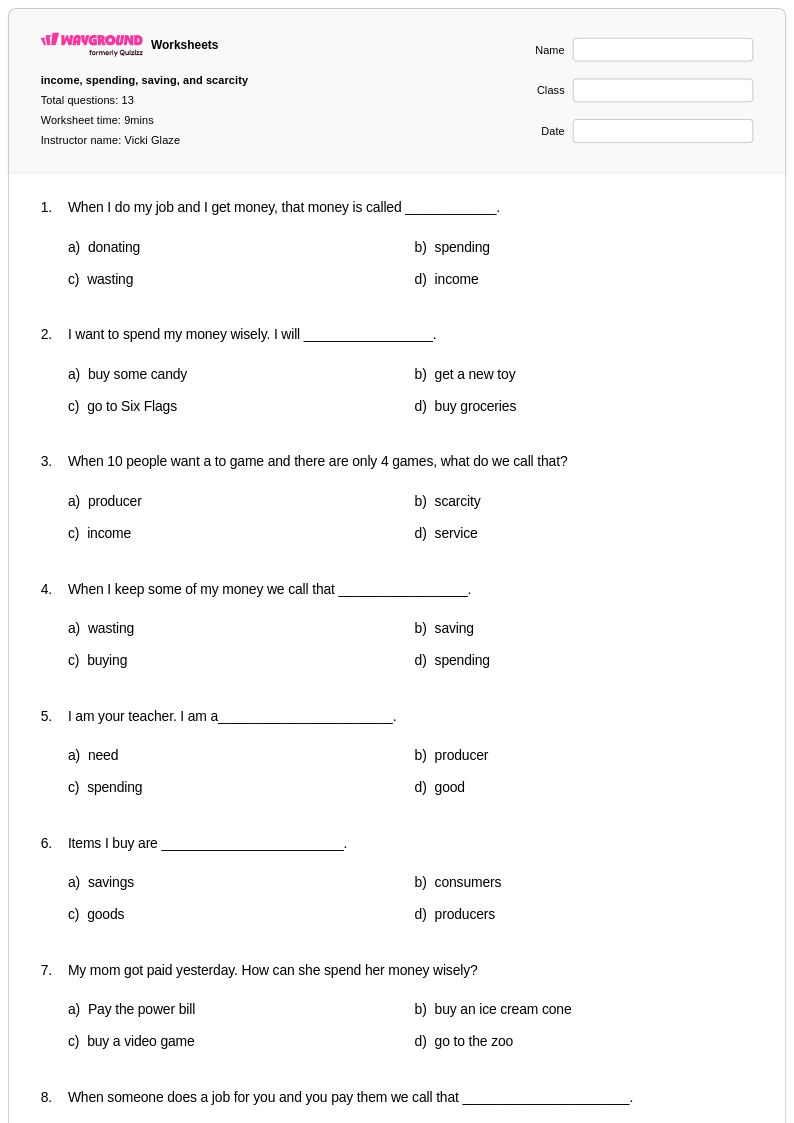
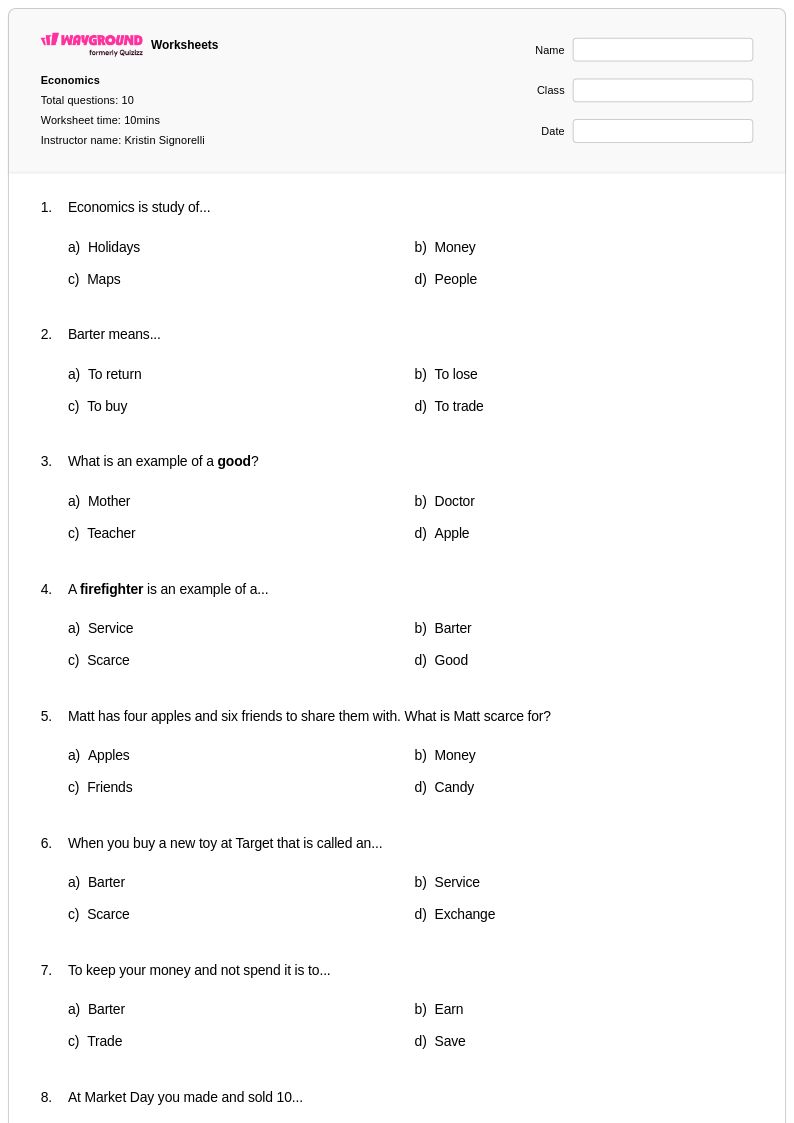
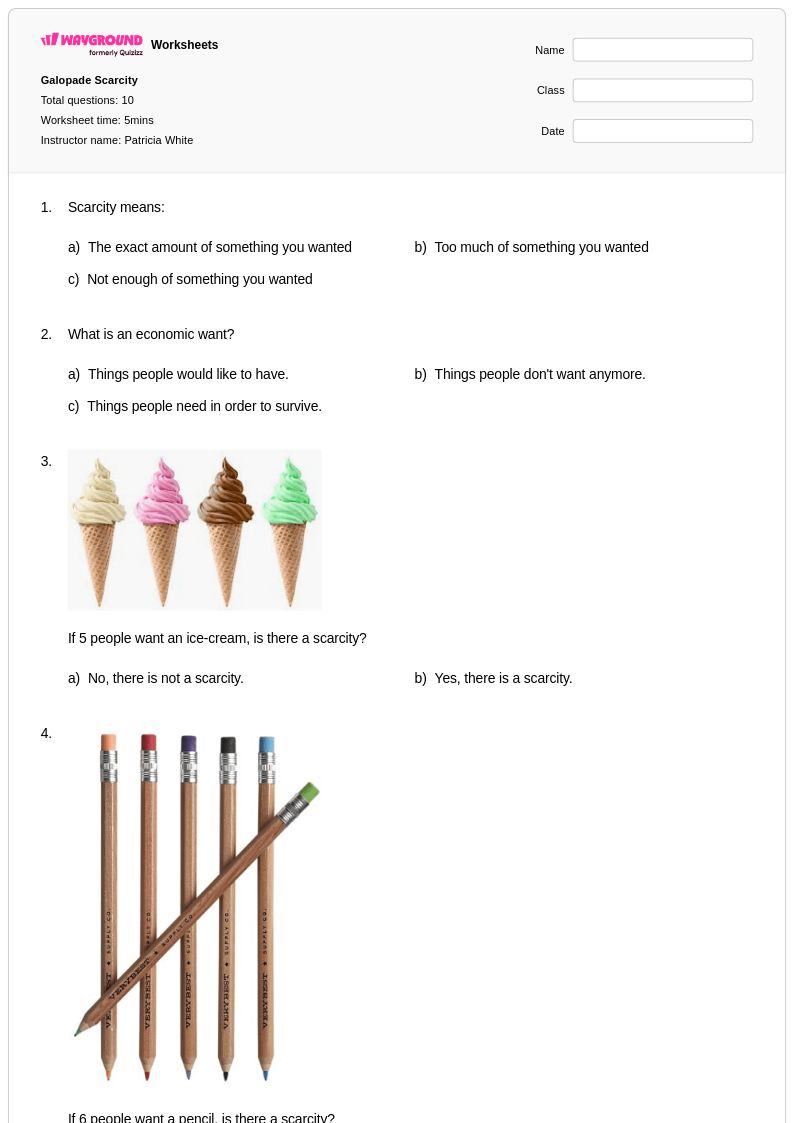
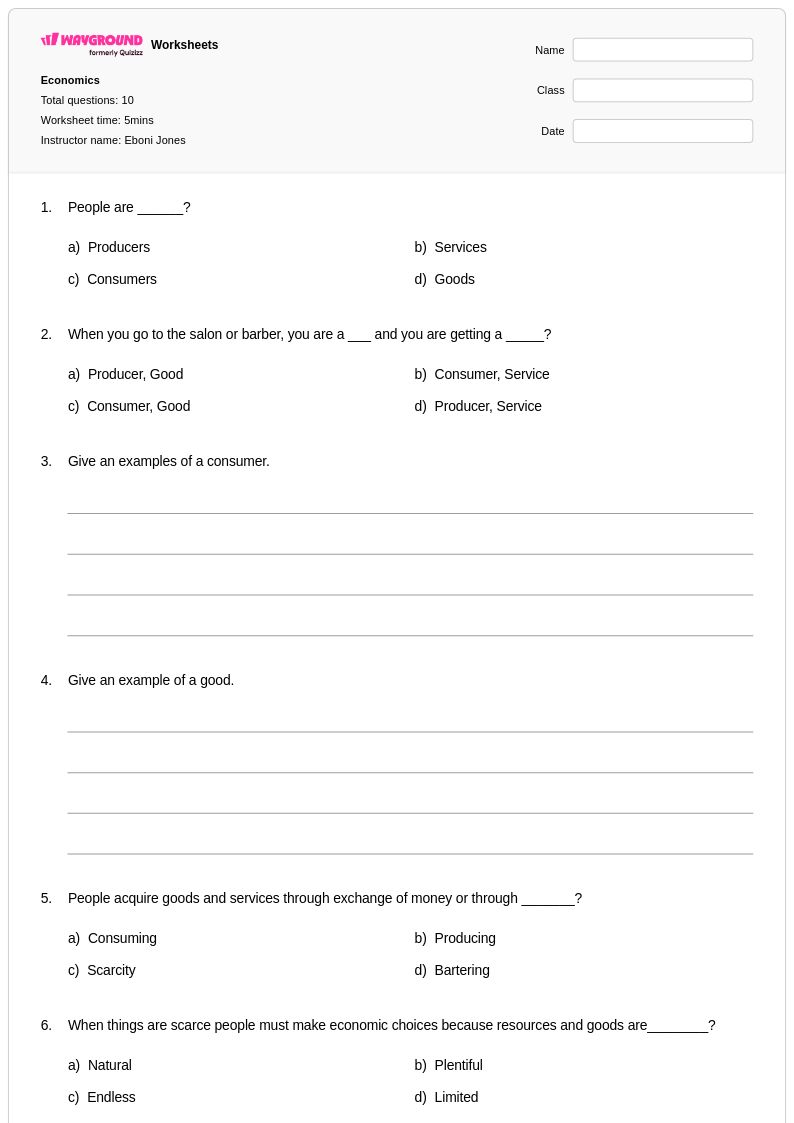
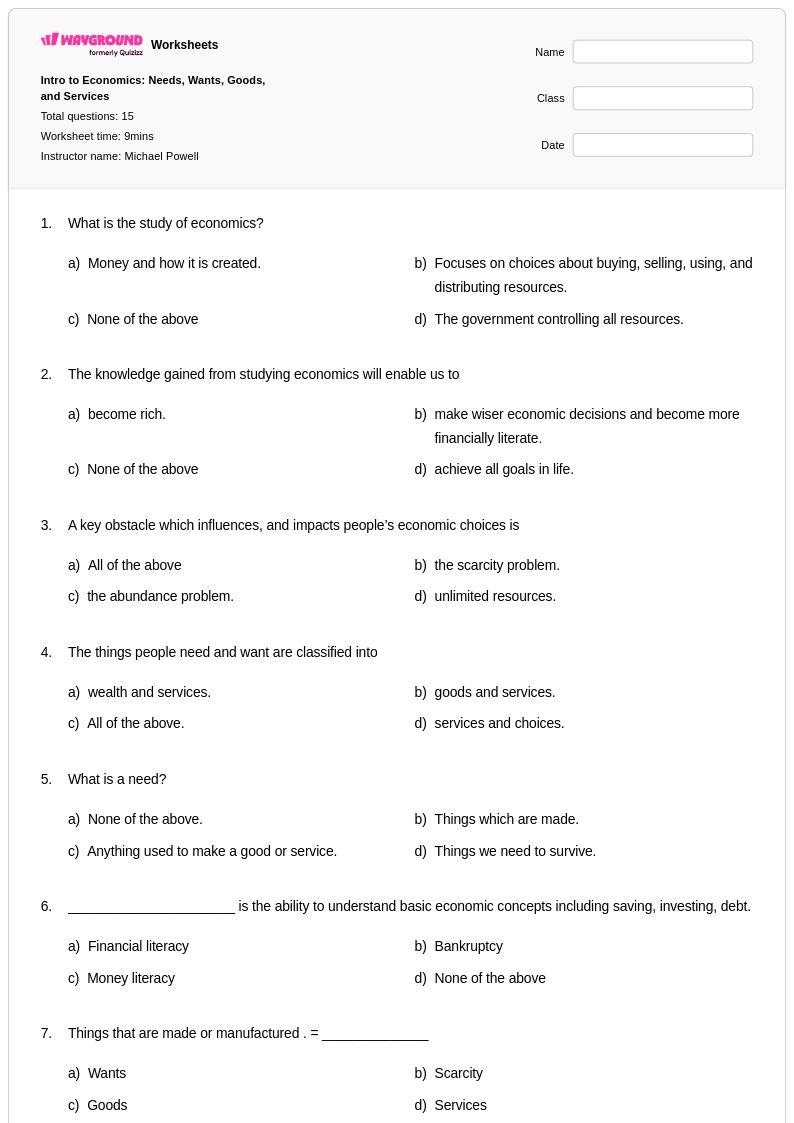
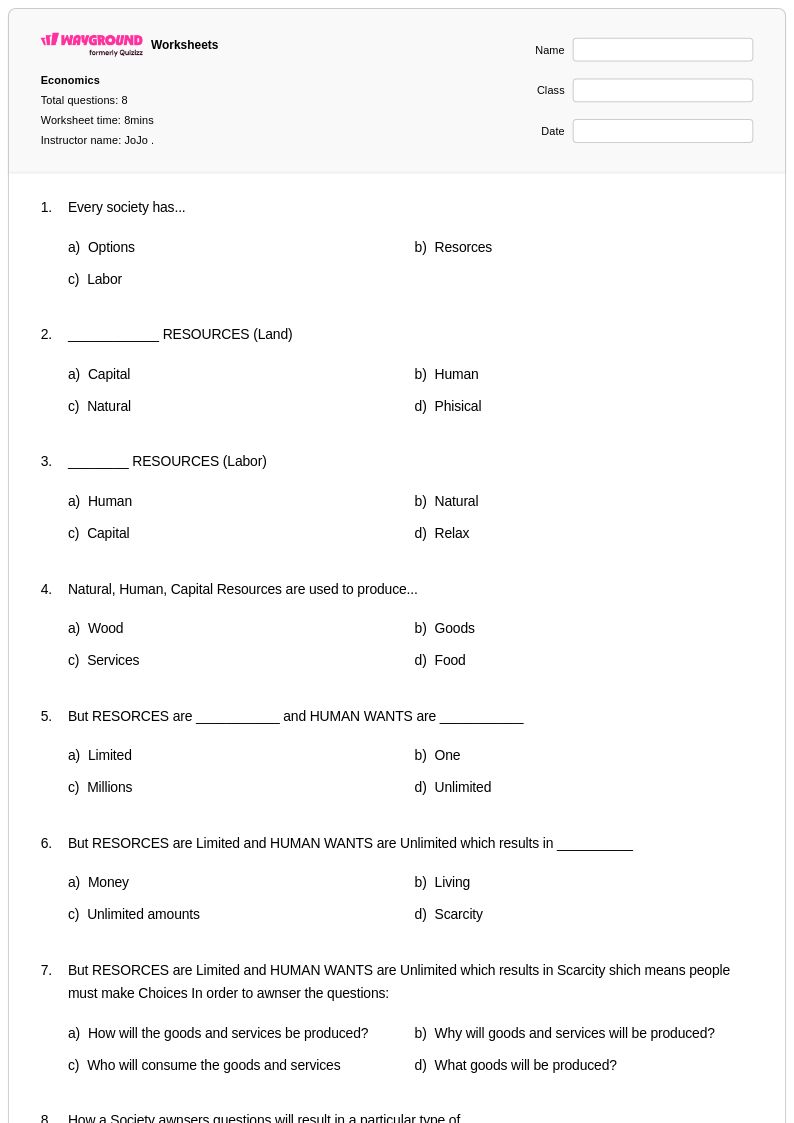
Class 1 scarcity worksheets from Wayground help young learners understand basic economic concepts through engaging printables, practice problems, and free PDF activities with answer keys.
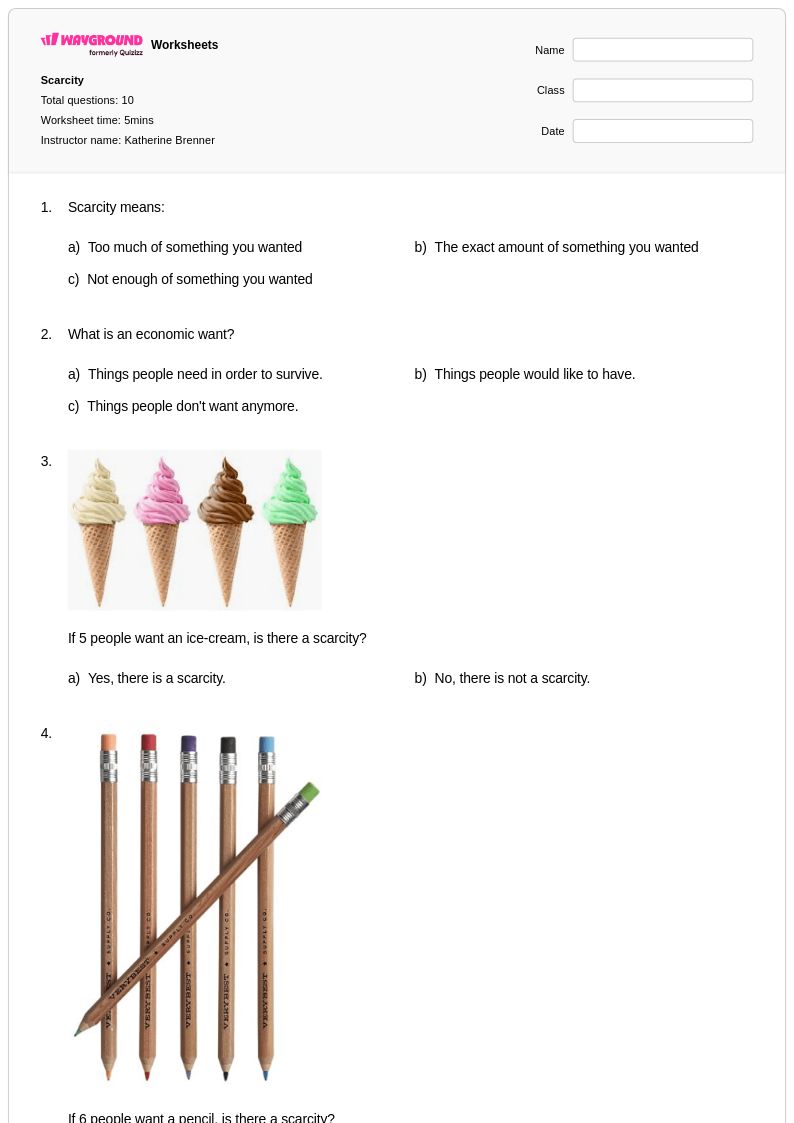
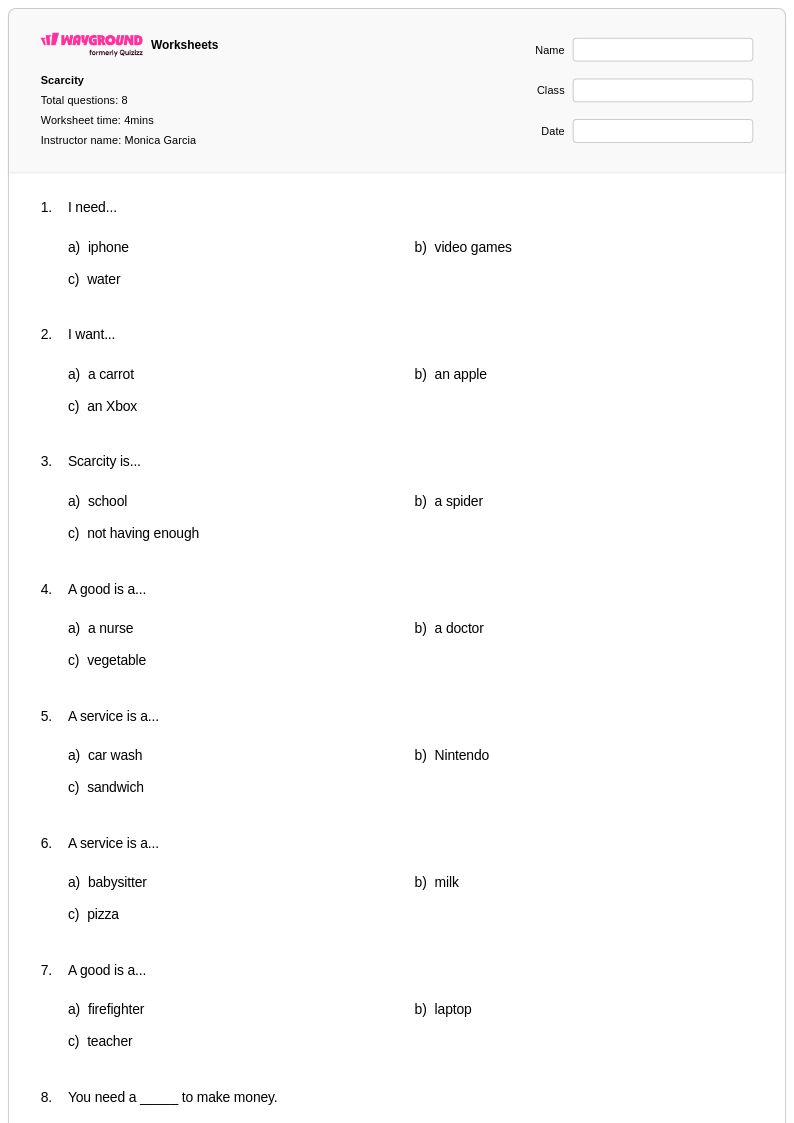
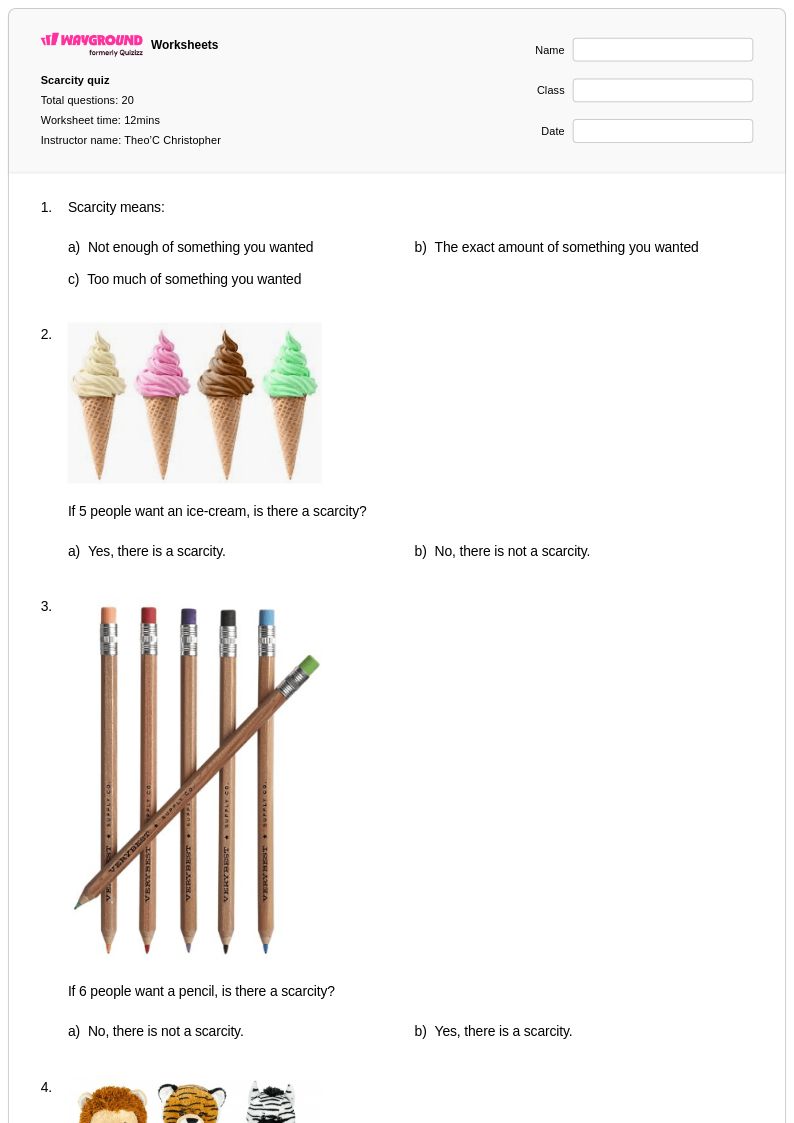
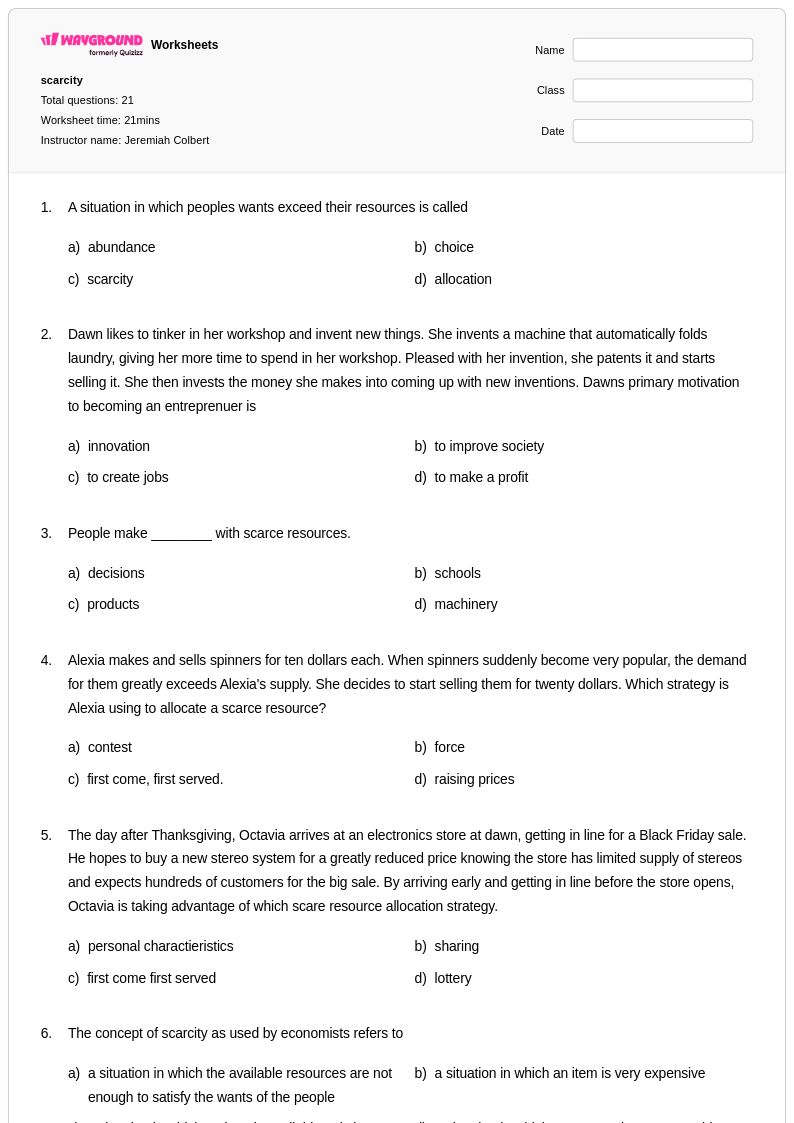
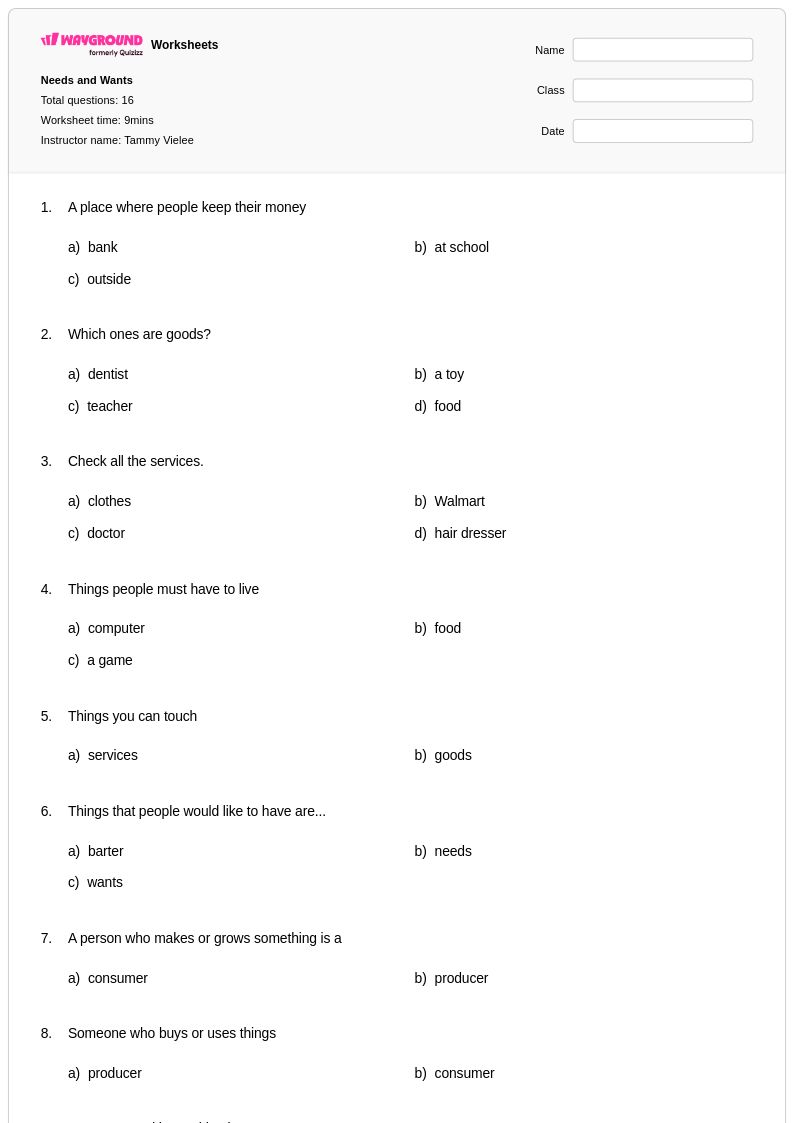
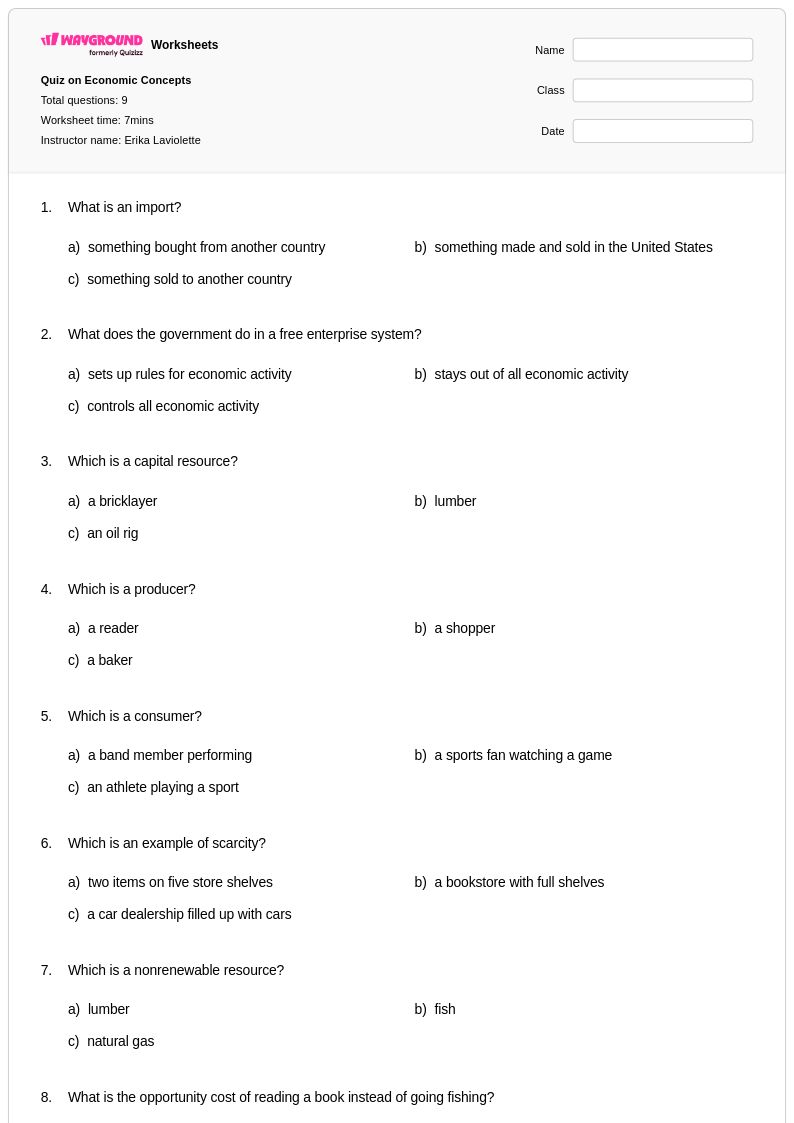
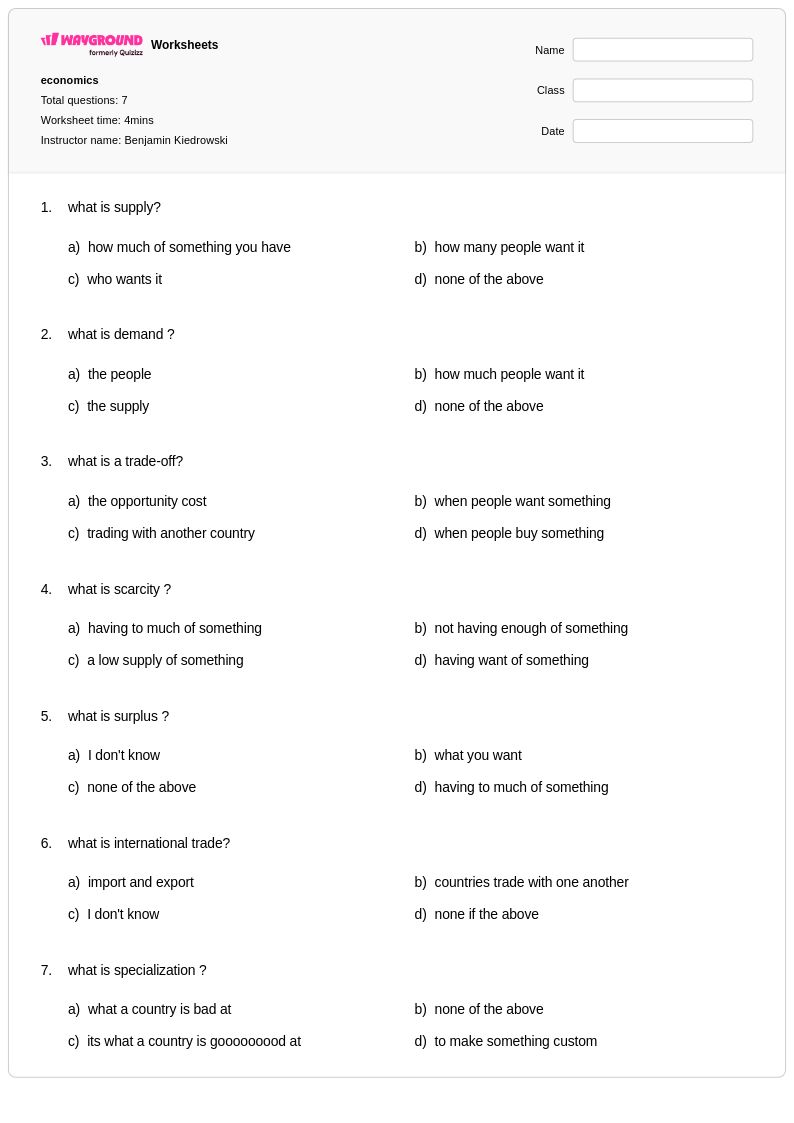
Scarcity worksheets for Class 1 students available through Wayground (formerly Quizizz) introduce young learners to this fundamental economic concept through age-appropriate activities and engaging practice problems. These educational resources help first graders understand that resources are limited while wants and needs can be unlimited, building essential critical thinking skills about choices and decision-making. The worksheets feature colorful illustrations, simple scenarios, and interactive exercises that make abstract economic concepts concrete for developing minds. Teachers can access comprehensive materials including detailed answer keys, ready-to-use pdf downloads, and free printables that support classroom instruction and independent practice, ensuring students grasp how scarcity affects daily decisions in their own lives.
Wayground (formerly Quizizz) empowers educators with millions of teacher-created scarcity worksheets specifically designed for Class 1 social studies instruction, featuring robust search and filtering capabilities that help locate materials aligned with curriculum standards and learning objectives. The platform's differentiation tools enable teachers to customize worksheets based on individual student needs, supporting both remediation for struggling learners and enrichment opportunities for advanced students. Available in both printable and digital formats including downloadable pdf files, these resources streamline lesson planning while providing flexible options for in-class activities, homework assignments, and assessment preparation. The extensive collection supports systematic skill practice and helps teachers efficiently address diverse learning styles while reinforcing key economic literacy concepts essential for young students' academic development.
FAQs
How do I teach scarcity to students who struggle with abstract economic concepts?
Anchor the concept in concrete, relatable scenarios before introducing formal definitions. Ask students to consider why they cannot have everything they want — limited time, money, or resources — and use these personal examples to bridge toward broader economic contexts like government budgets or natural resource allocation. Once students recognize scarcity in their own lives, they are far more prepared to analyze it at a societal or global scale.
What kinds of practice exercises help students understand scarcity and opportunity cost together?
The most effective exercises present students with real-world decision scenarios where they must choose between competing needs or wants given a fixed resource, then identify what is given up as a result. Activities that ask students to evaluate trade-offs — such as allocating a limited school budget or deciding how a farmer uses limited land — build both scarcity recognition and opportunity cost reasoning simultaneously. Structured practice problems that walk students through each step of the decision-making process are especially useful for reinforcing both concepts in tandem.
What misconceptions do students commonly have about scarcity in economics?
The most common misconception is that scarcity only applies to rare or expensive goods, when in fact scarcity exists whenever demand for a resource exceeds its available supply — including time, clean water, and even skilled labor. Students also frequently confuse scarcity with shortage, not recognizing that scarcity is a permanent condition of economics while shortages are temporary market imbalances. Addressing these distinctions explicitly during instruction, with examples drawn from everyday contexts, helps students develop more accurate economic reasoning.
How can I differentiate scarcity instruction for students at different skill levels?
For students who need additional support, start with binary choice scenarios that isolate a single scarce resource before introducing multi-variable trade-off problems. More advanced students benefit from open-ended analysis tasks that ask them to evaluate resource allocation decisions across different scales, such as household versus national budgets. On Wayground, teachers can apply accommodations such as reduced answer choices or read-aloud settings to individual students, allowing the same worksheet to serve diverse learners without requiring separate materials.
How do I use Wayground's scarcity worksheets in my classroom?
Wayground's scarcity worksheets are available as printable PDFs for traditional classroom use and in digital formats for technology-integrated environments, making them flexible for in-person, hybrid, or remote instruction. Teachers can also host worksheets directly as a quiz on Wayground, enabling real-time student responses and streamlined assessment. Each worksheet includes a complete answer key, so teachers can use them for guided practice, independent work, or formative assessment without additional preparation.
At what grade level should scarcity be introduced in economics instruction?
Scarcity is typically introduced at the elementary level in simplified form, where students identify wants versus needs and recognize that resources are limited. More rigorous treatment of scarcity — including opportunity cost, trade-offs, and resource allocation — is standard in middle and high school economics courses. The appropriate entry point depends on curriculum standards, but even early learners can engage meaningfully with scarcity through age-appropriate scenarios involving time, food, or classroom supplies.