Free Printable Picture Comprehension Worksheets for Kindergarten
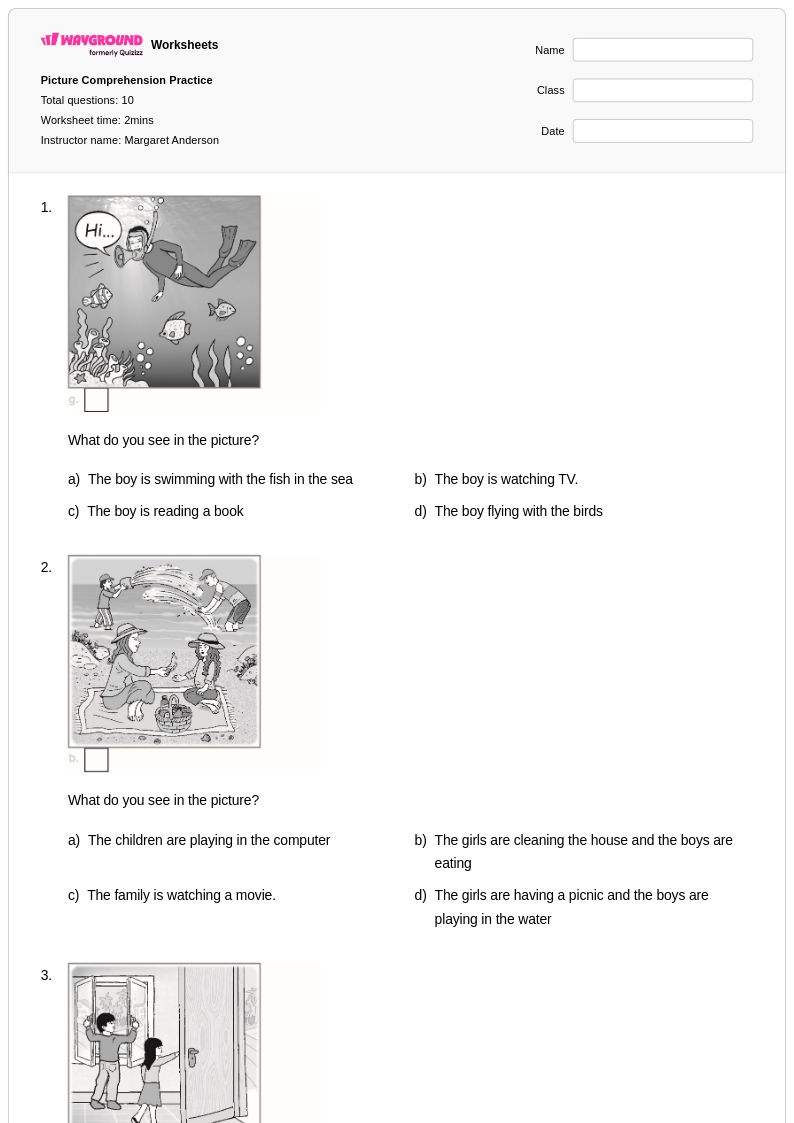
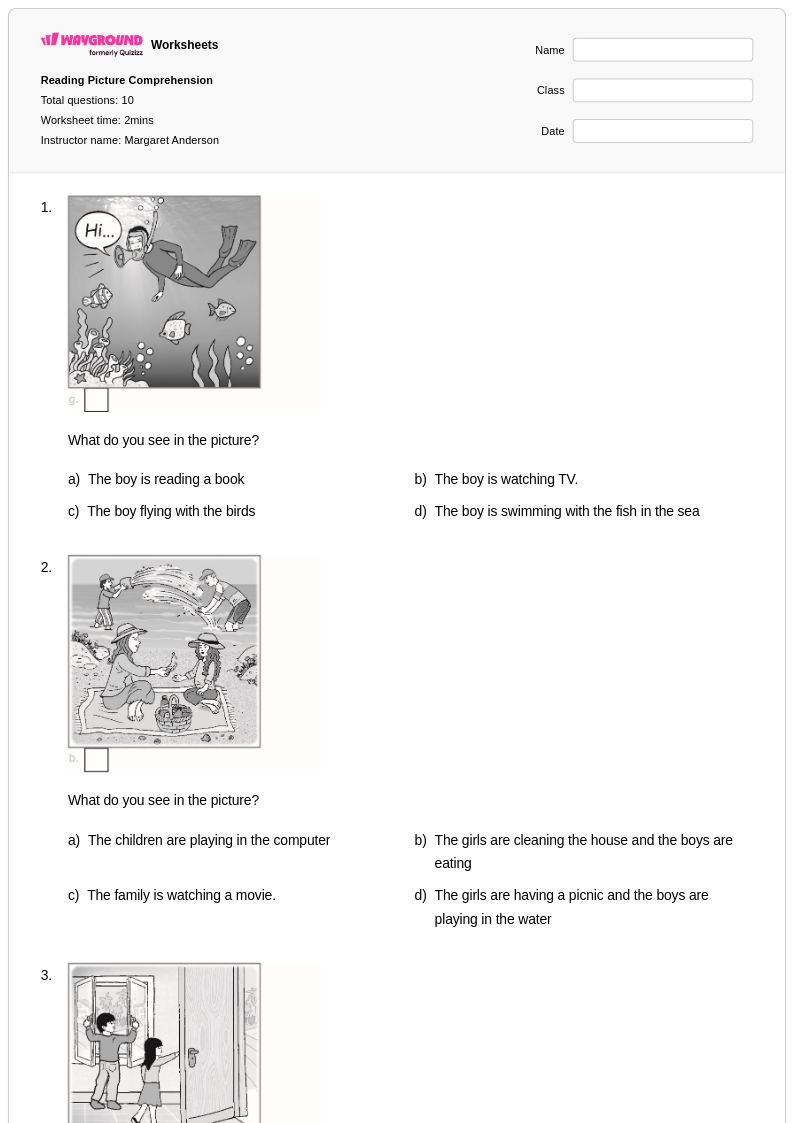
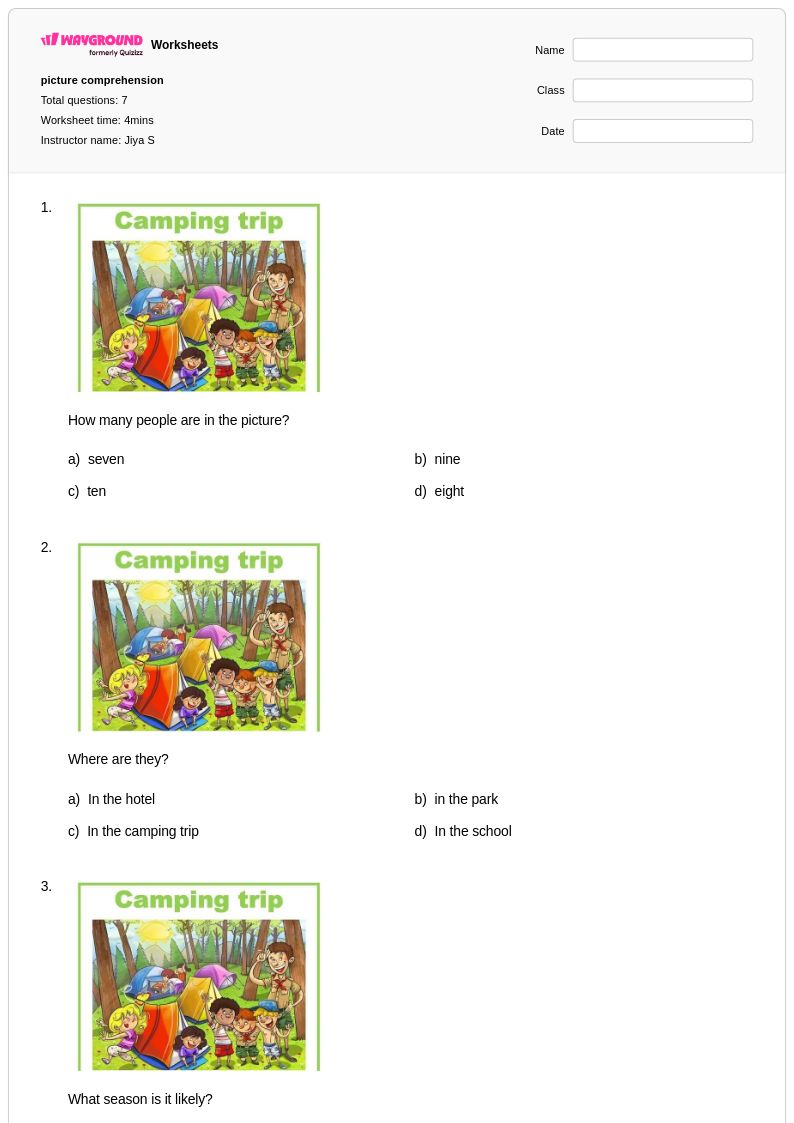
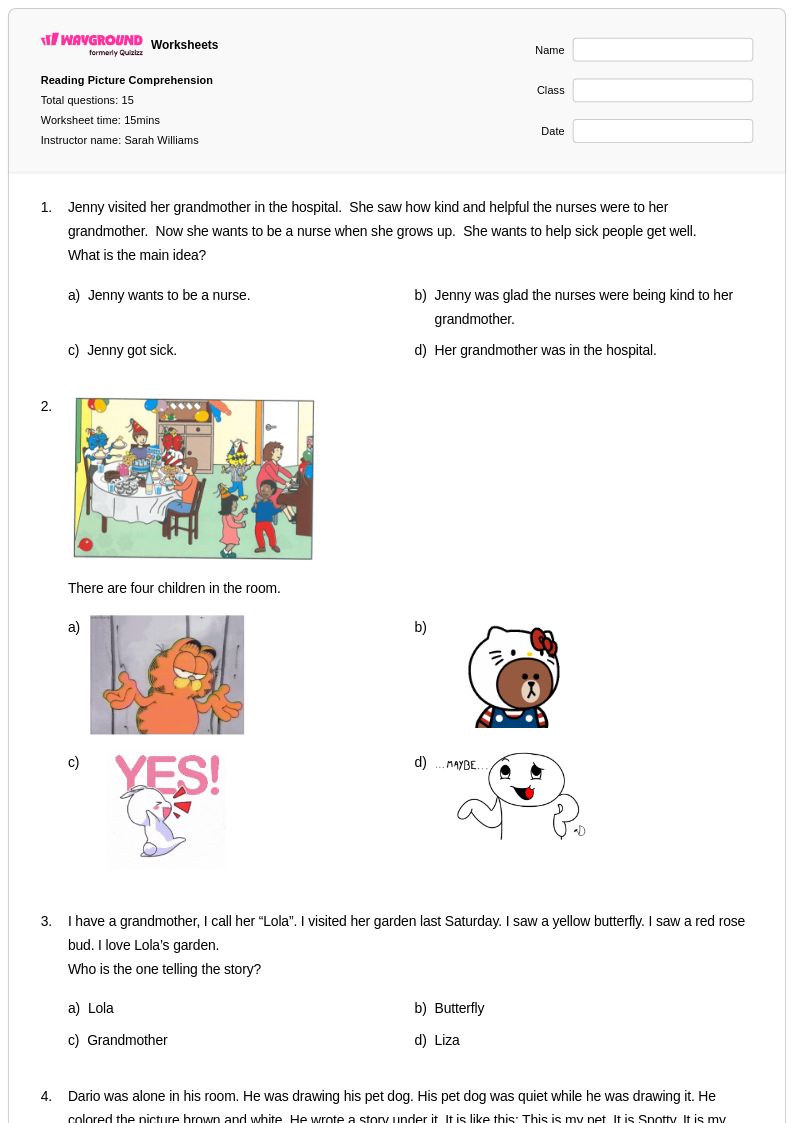
Kindergarten Picture Comprehension worksheets from Wayground help young learners develop visual literacy skills through engaging printables and practice problems, complete with answer keys for effective early reading foundation building.
Explore printable Picture Comprehension worksheets for Kindergarten
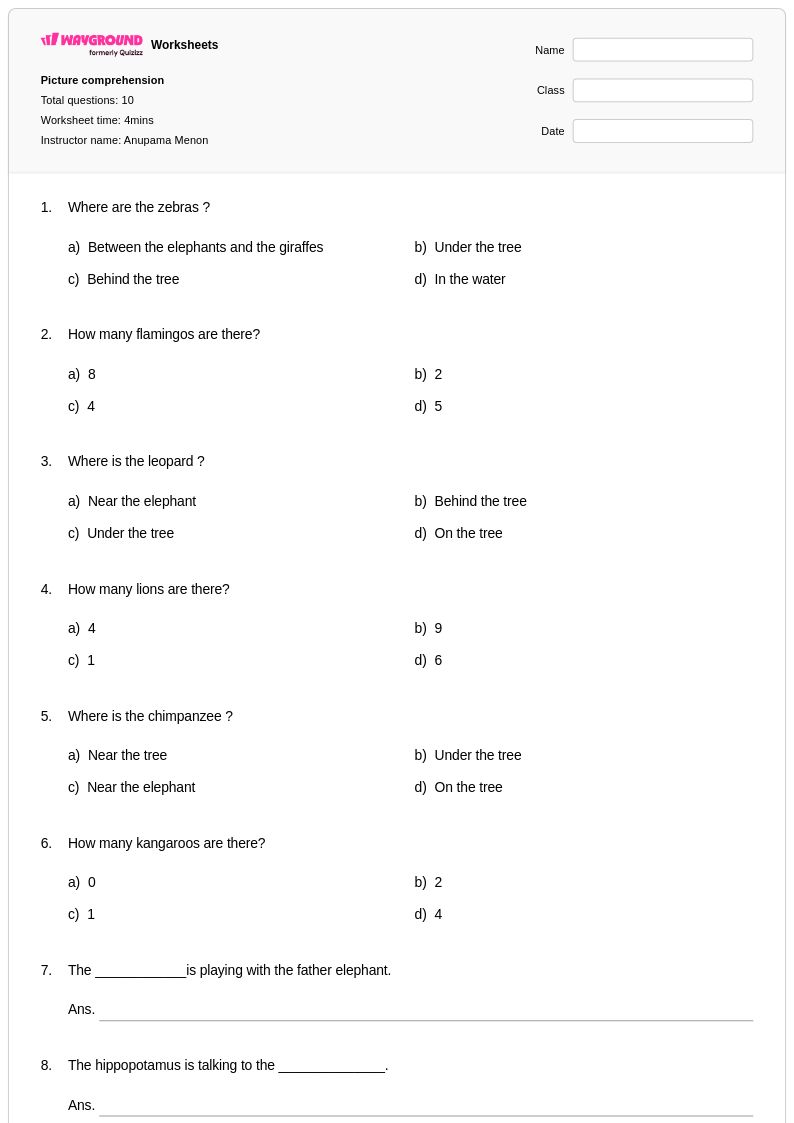
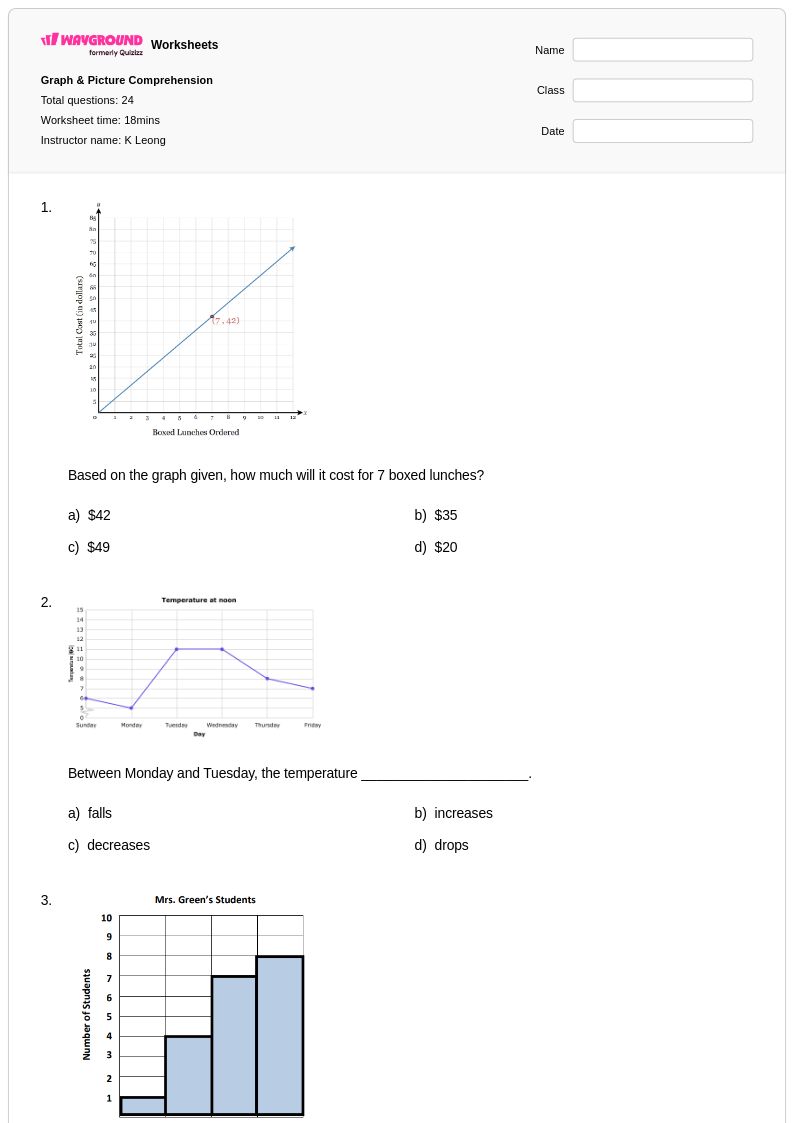
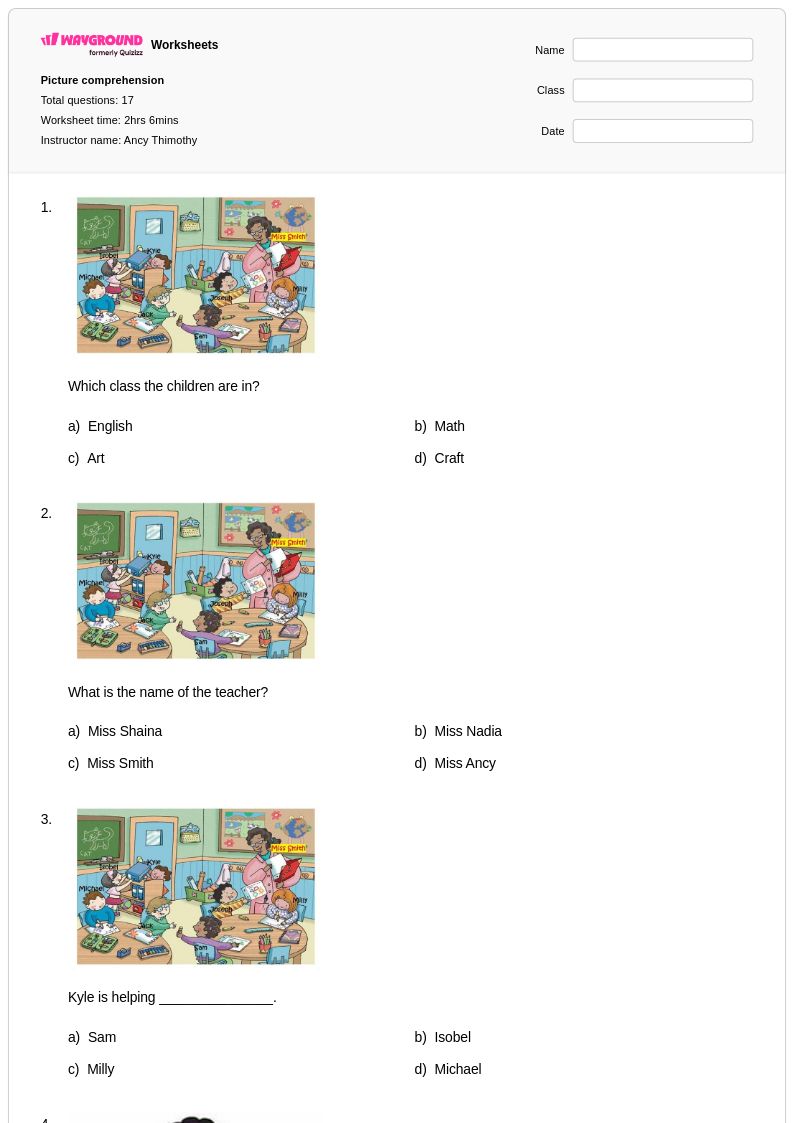
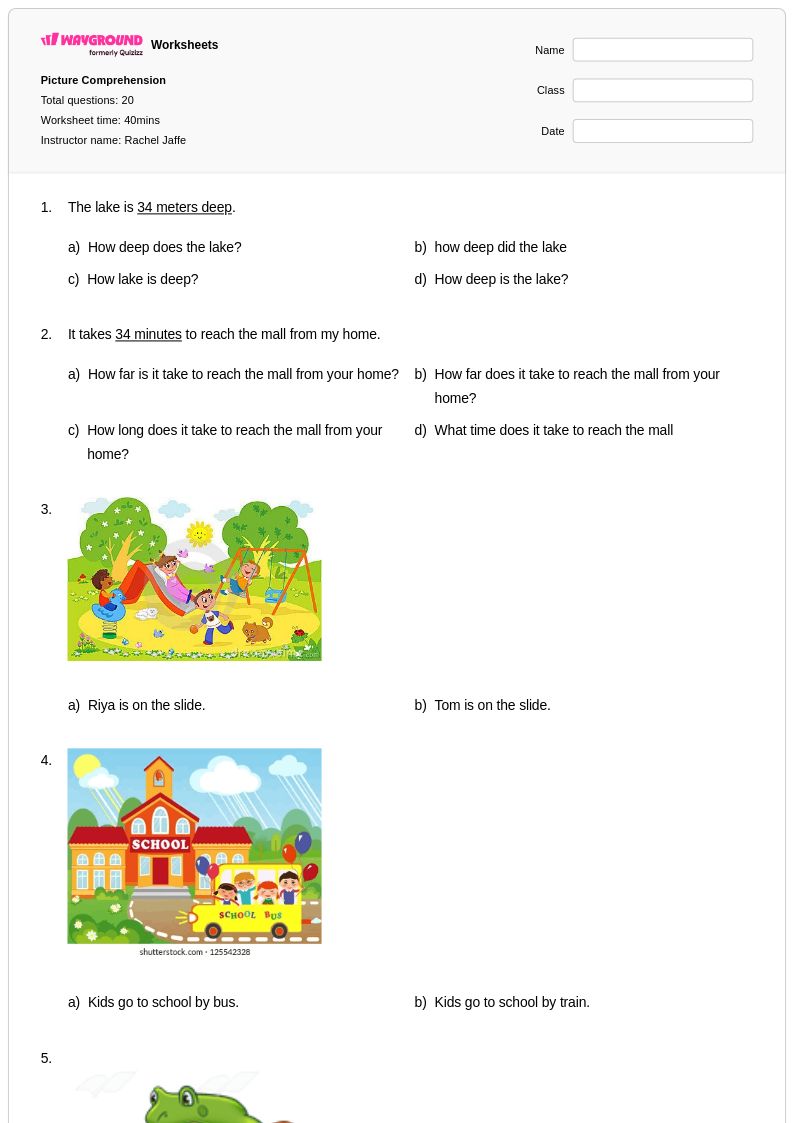
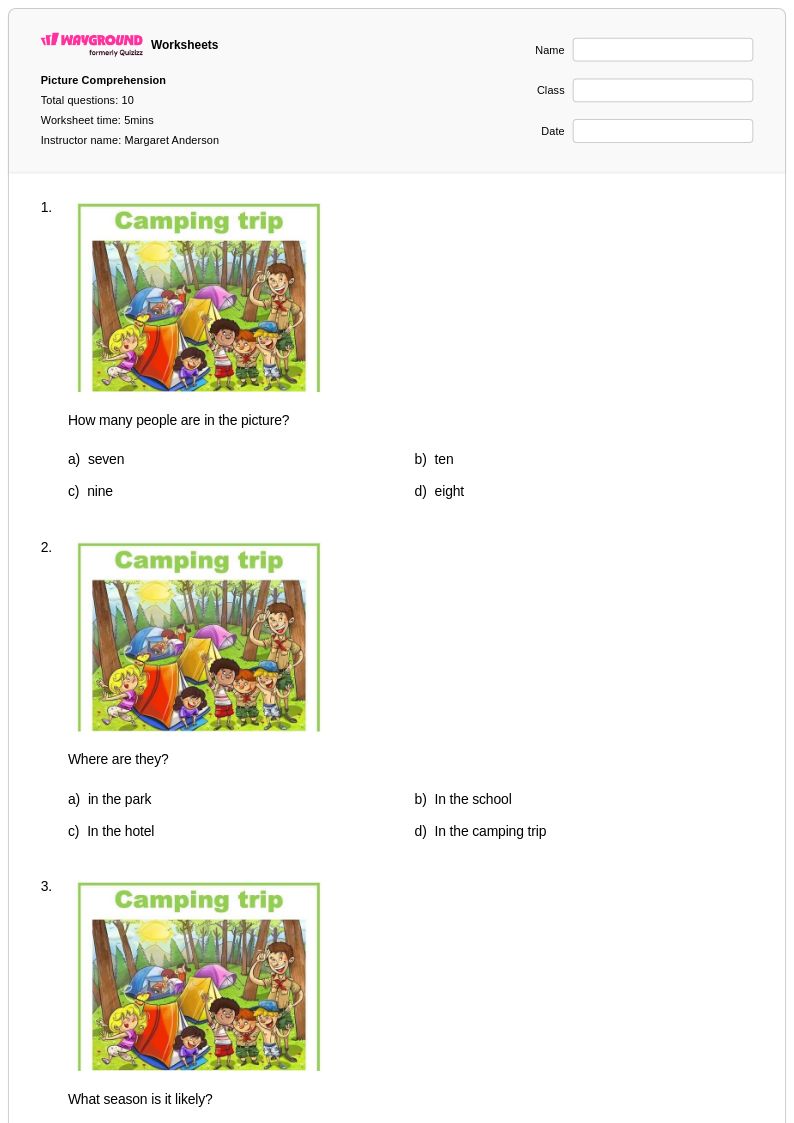
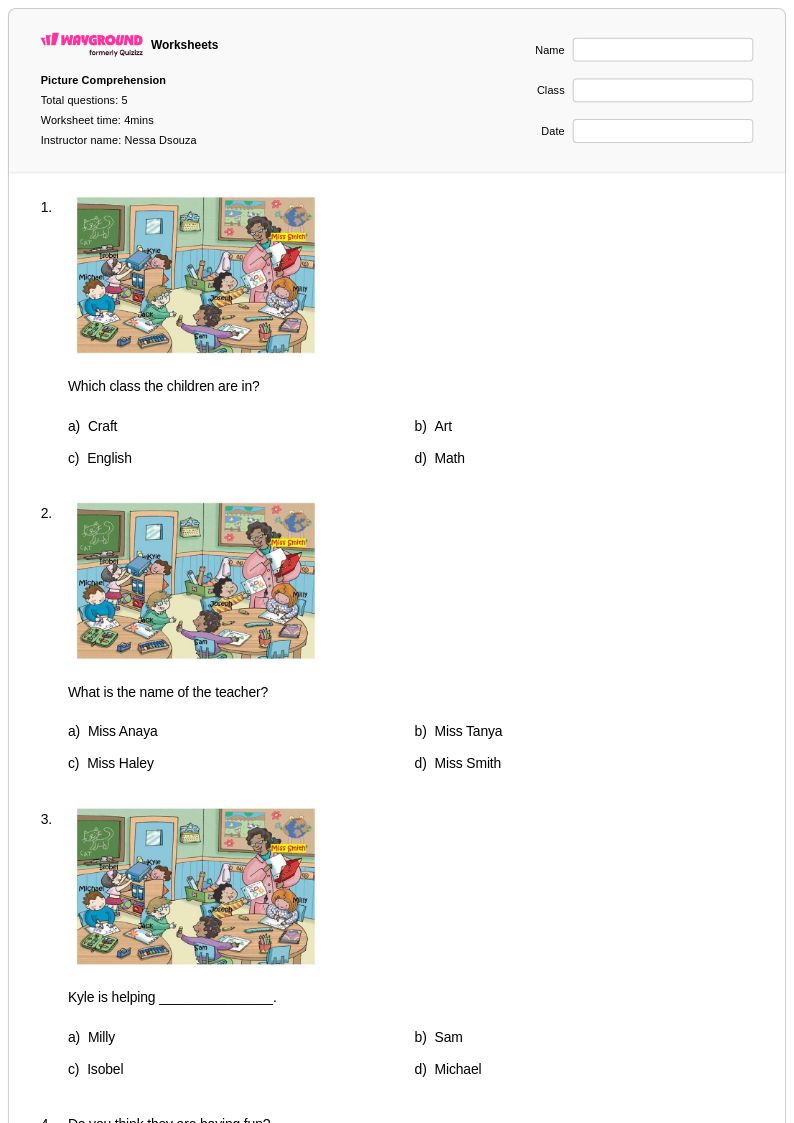
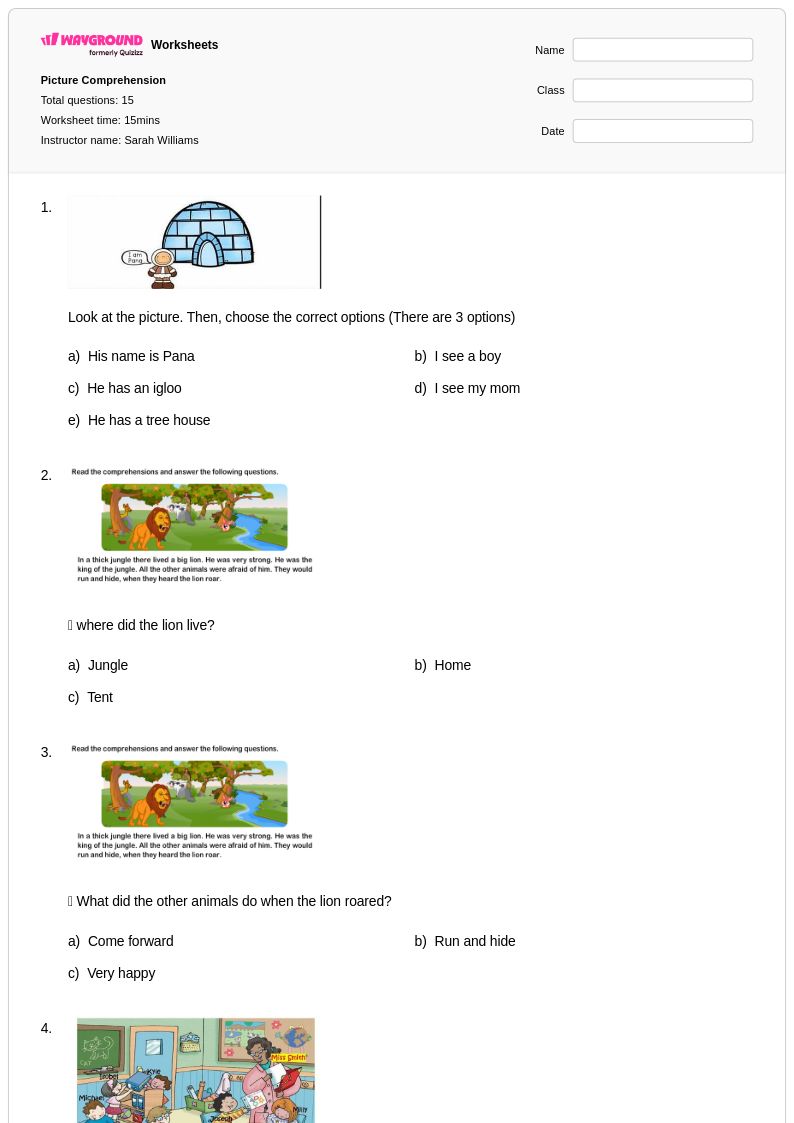
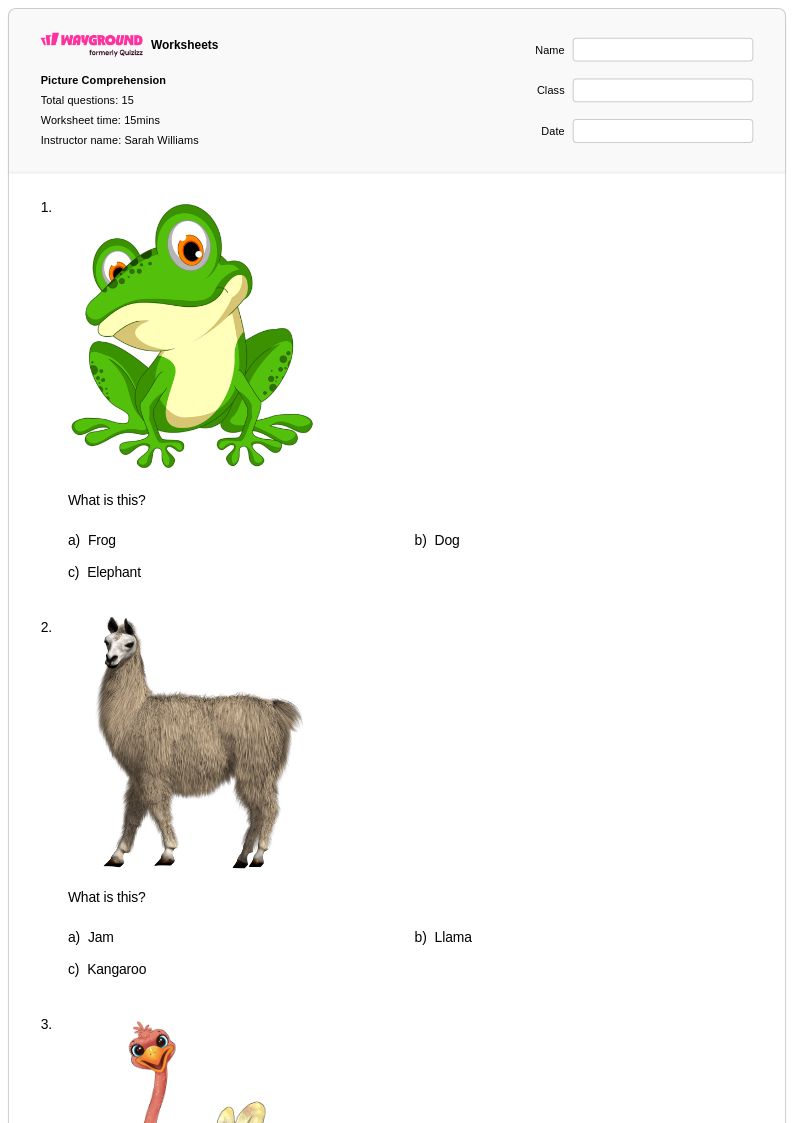
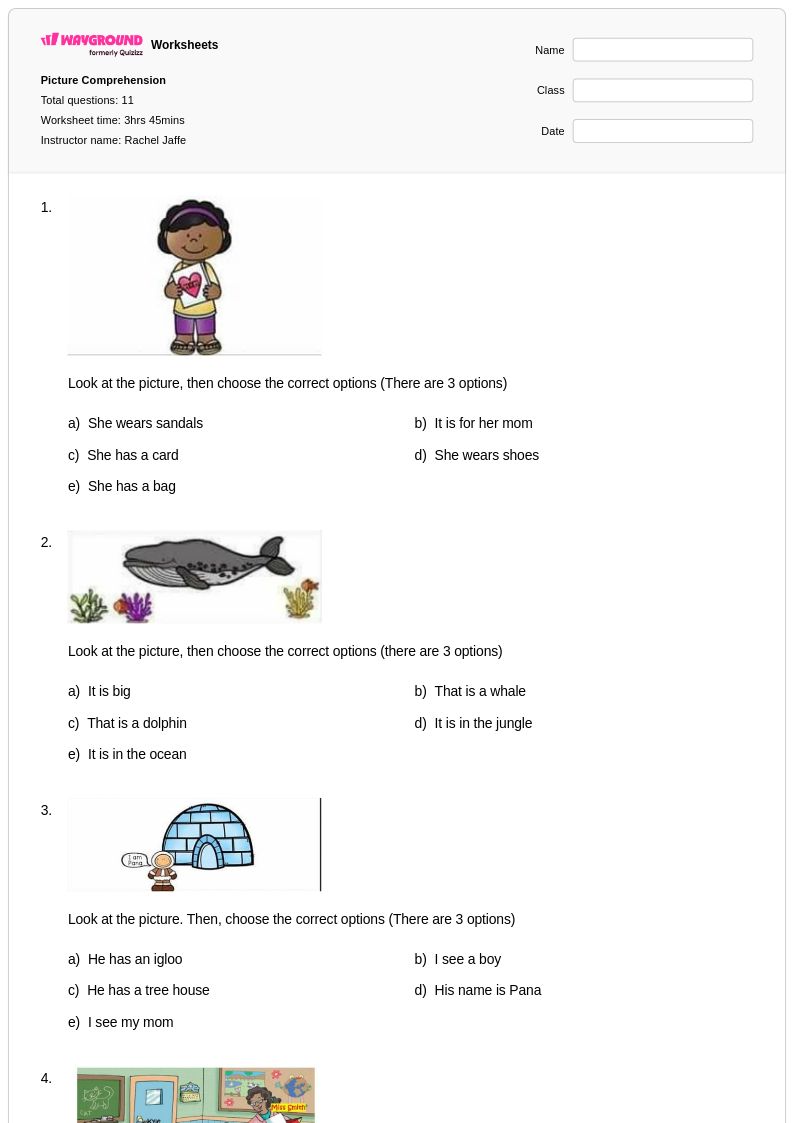
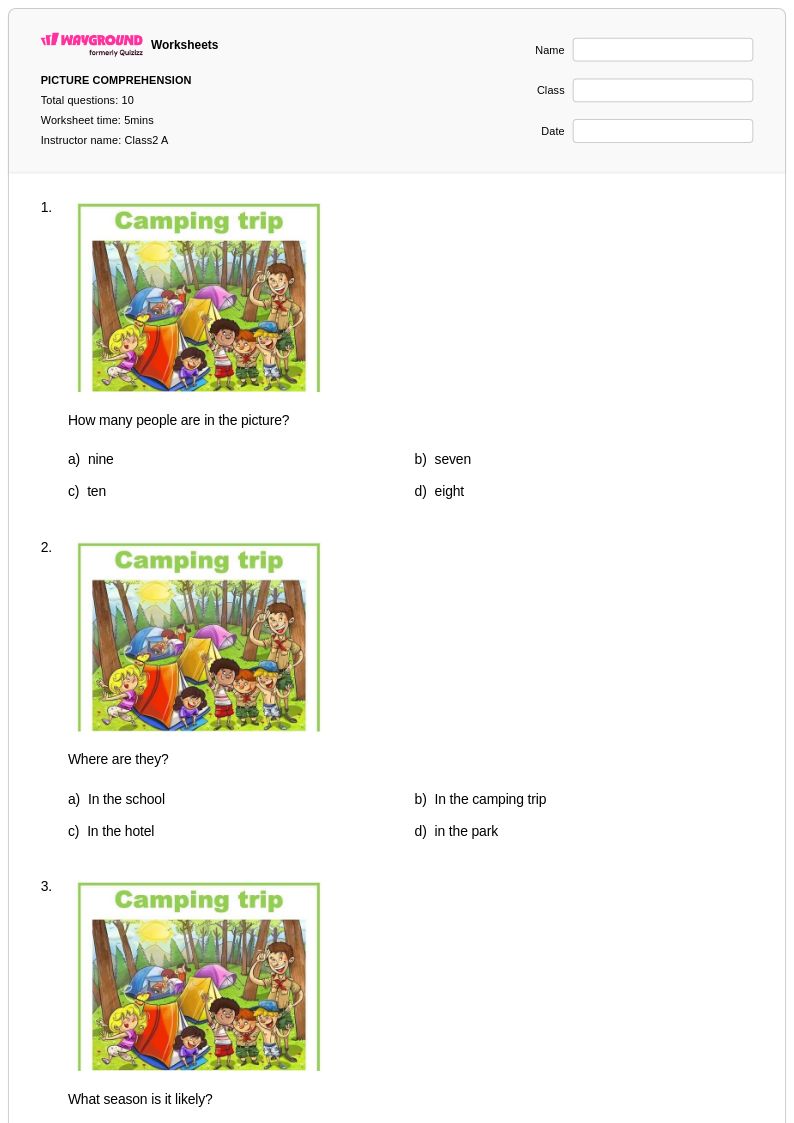
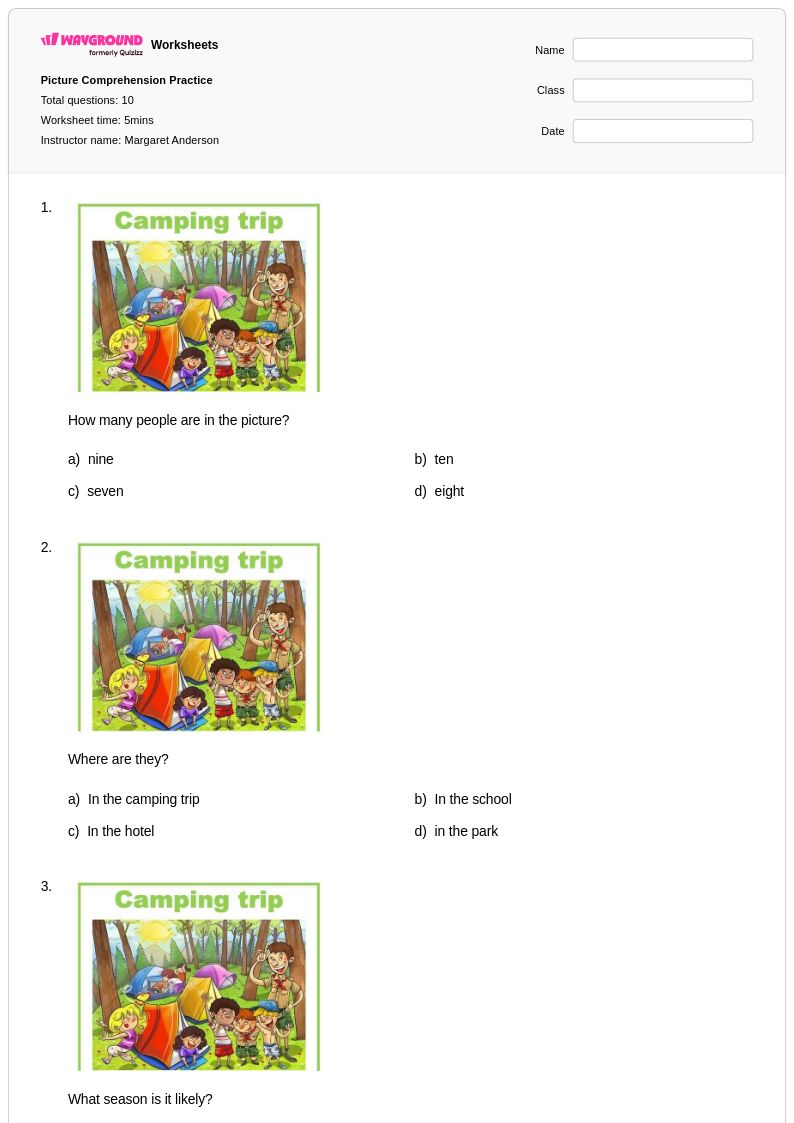
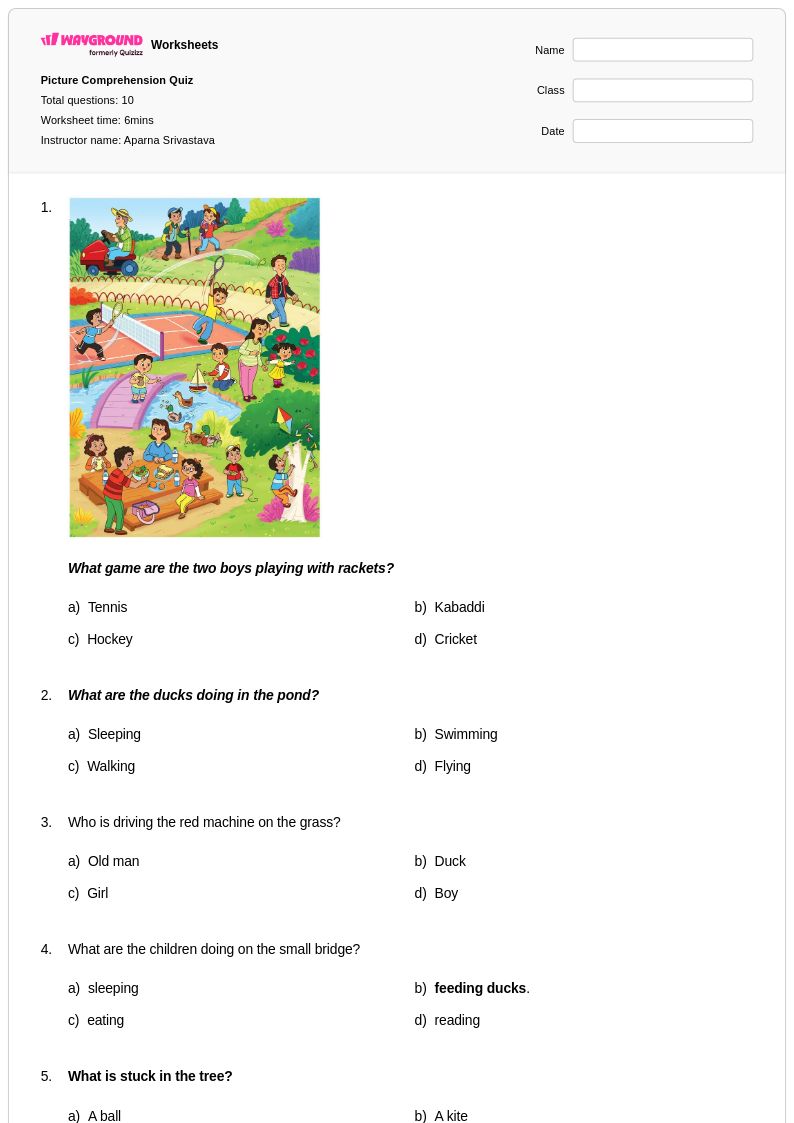
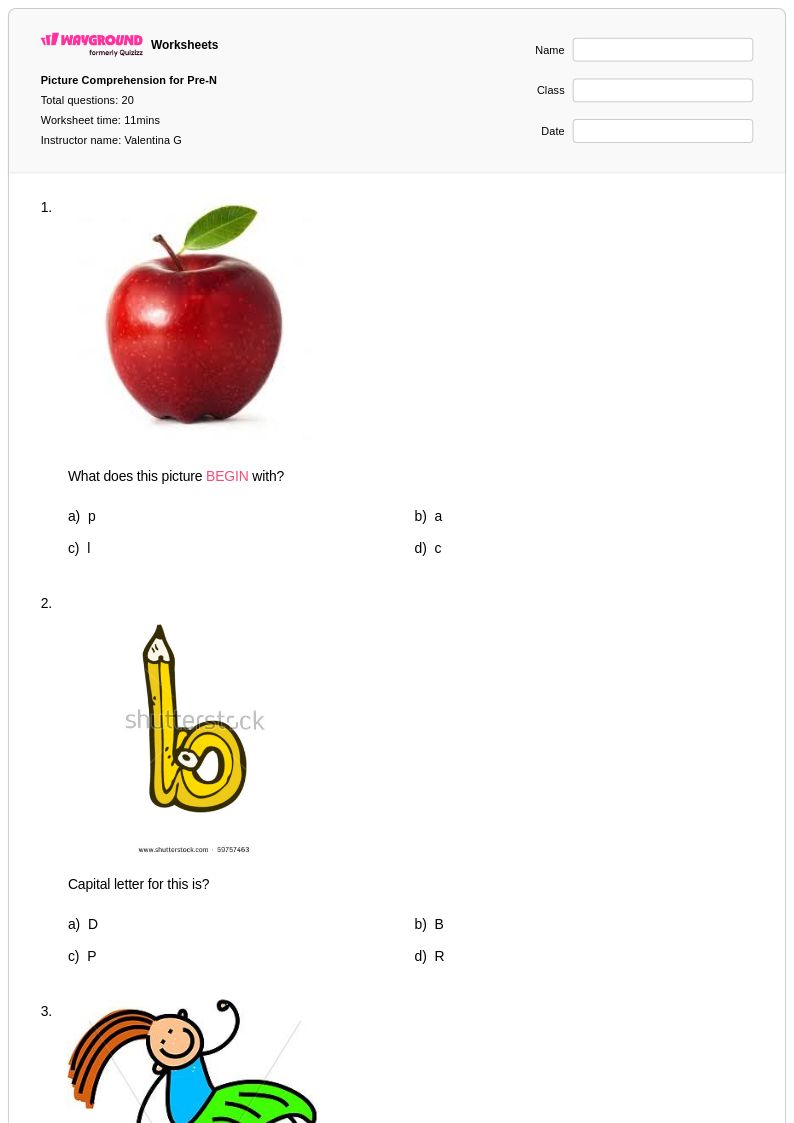
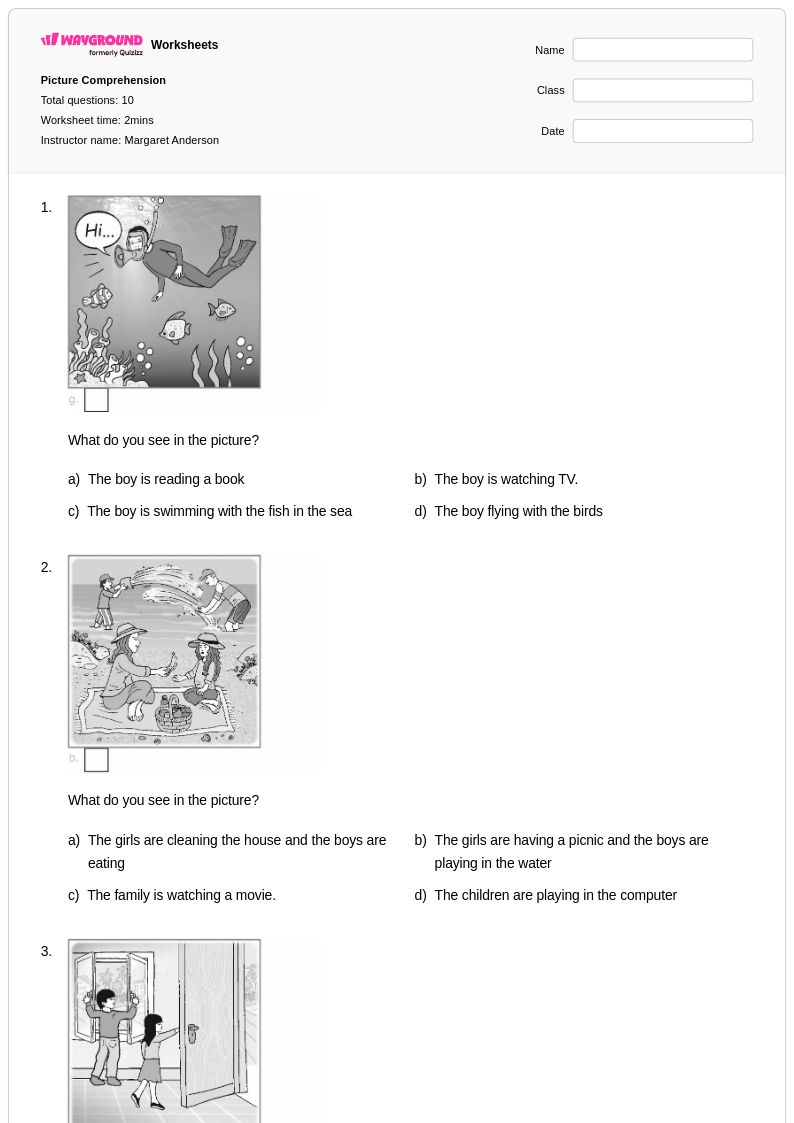
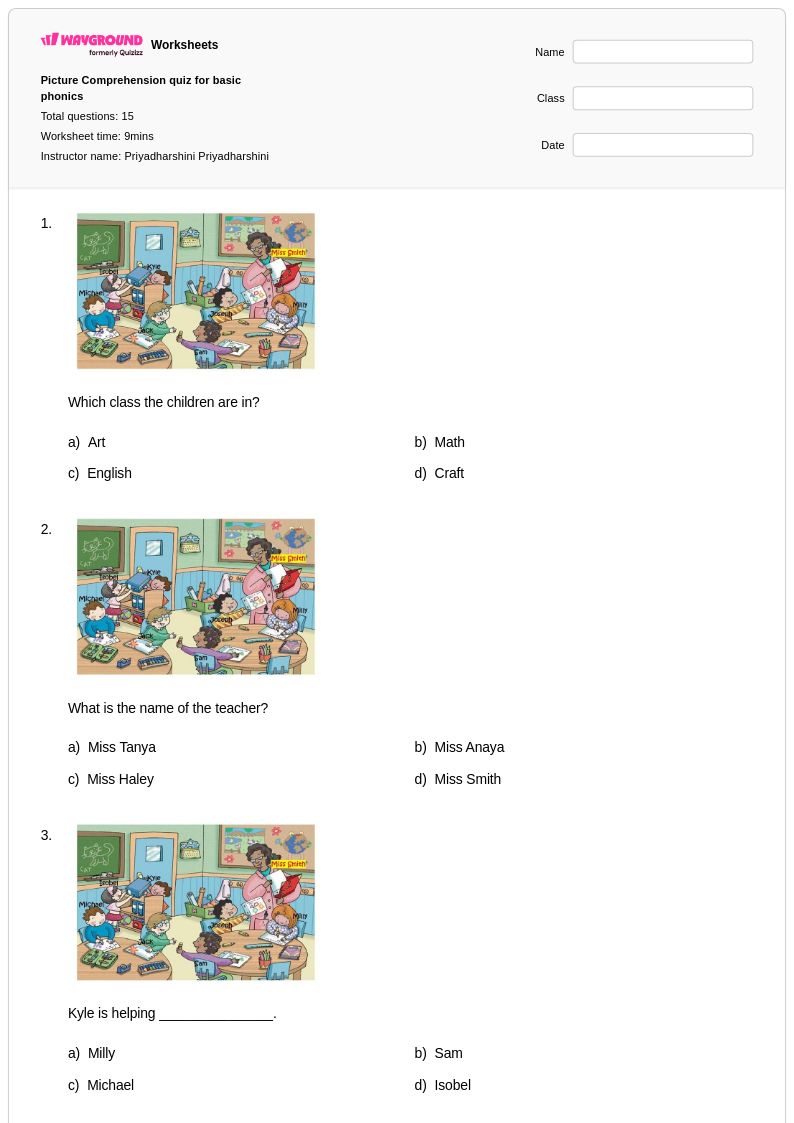
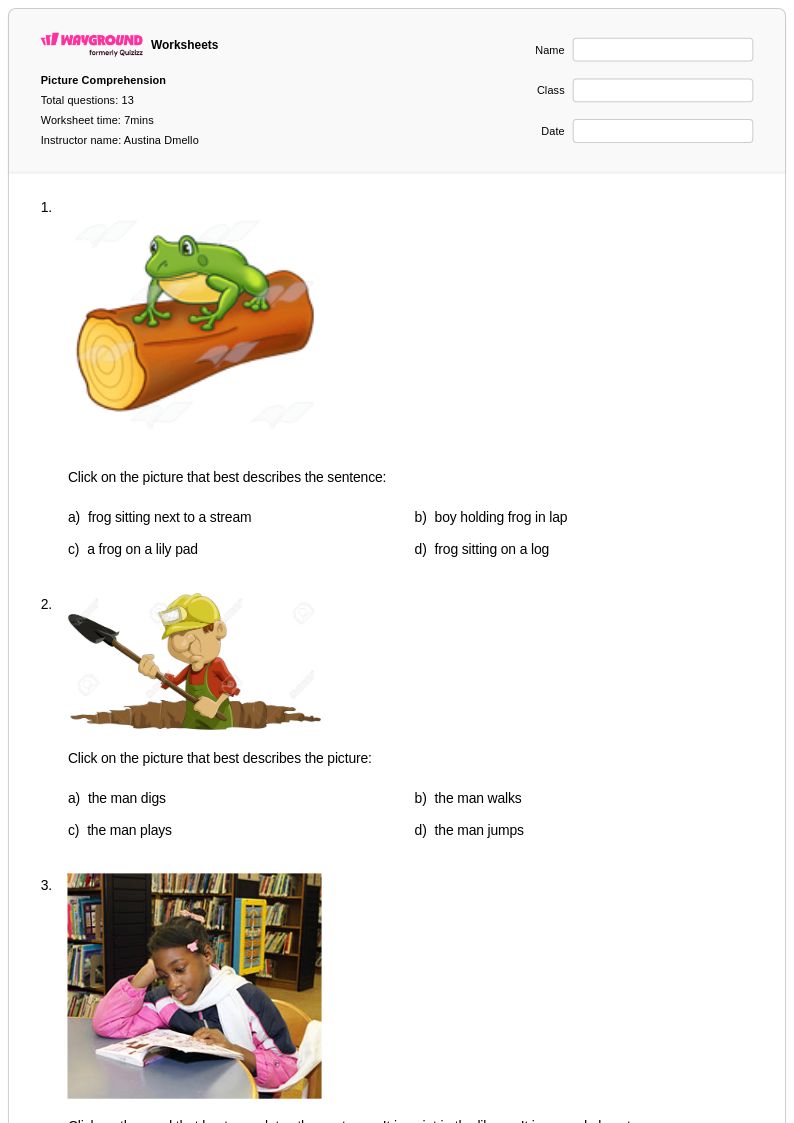
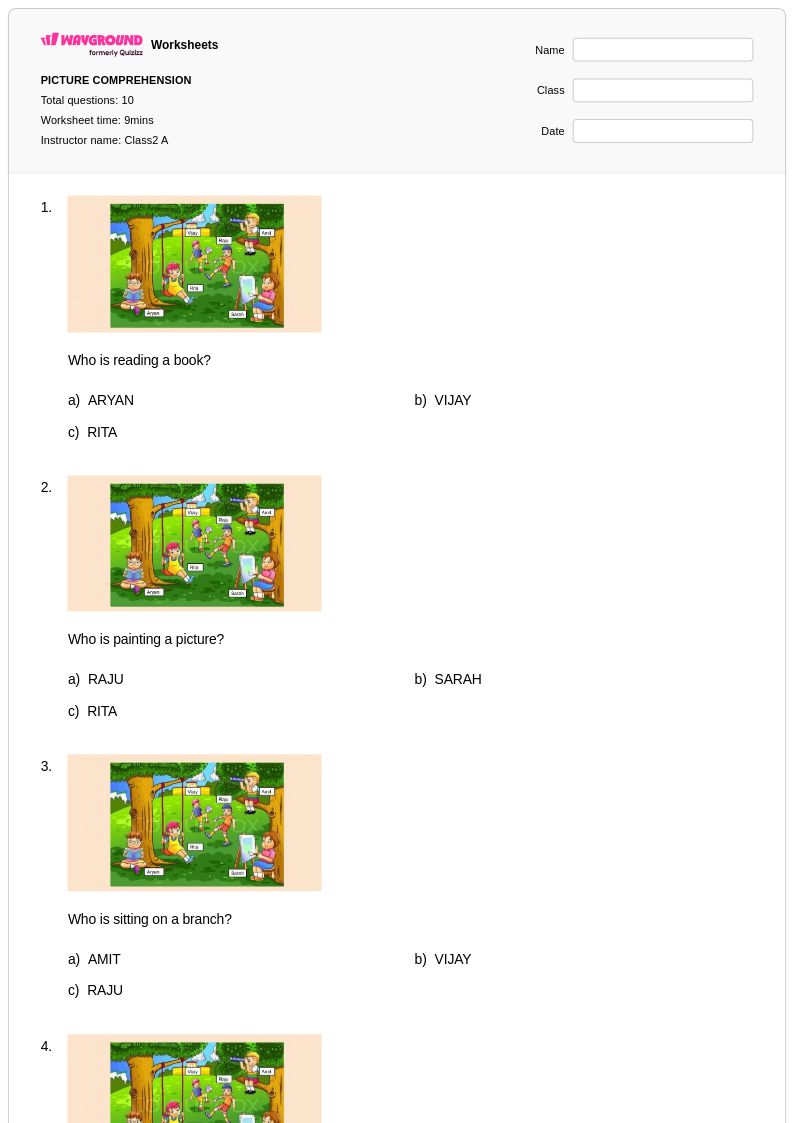
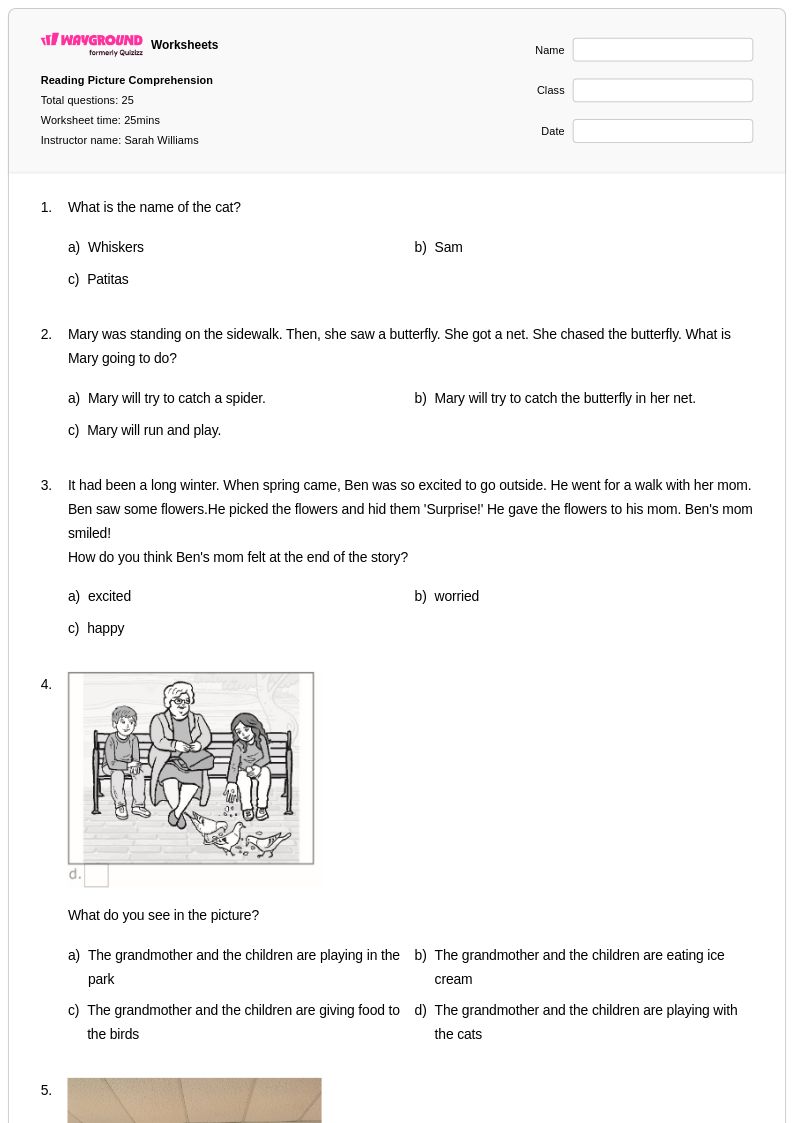
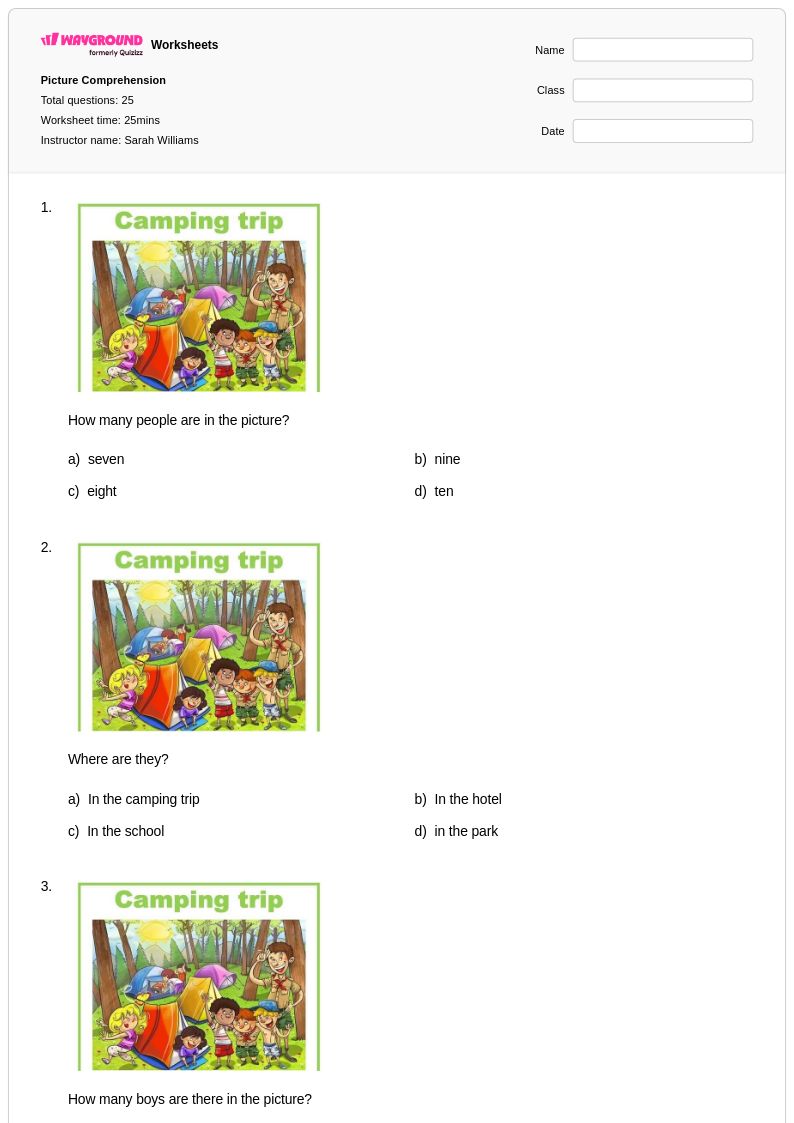
Picture comprehension worksheets for kindergarten students available through Wayground (formerly Quizizz) provide essential foundations for developing visual literacy and reading readiness skills. These carefully designed printables help young learners practice identifying story elements, making predictions, and understanding narrative sequences through engaging visual content. Students work with colorful illustrations and simple scenes to strengthen their ability to extract meaning from images, connect visual details to spoken language, and develop pre-reading comprehension strategies. Each worksheet includes structured practice problems that guide kindergarteners through the process of observing, analyzing, and interpreting pictures, while comprehensive answer keys support teachers and parents in providing effective feedback during these crucial early literacy activities.
Wayground (formerly Quizizz) empowers educators with access to millions of teacher-created picture comprehension resources specifically designed for kindergarten-level instruction. The platform's robust search and filtering capabilities allow teachers to quickly locate worksheets that align with specific learning standards and differentiate instruction based on individual student needs. These flexible resources are available in both printable PDF formats for traditional classroom use and digital formats for interactive learning experiences, making them ideal for lesson planning, targeted remediation, and enrichment activities. Teachers can easily customize existing worksheets or create new materials that support systematic skill practice, ensuring that every kindergarten student receives appropriate visual literacy instruction that builds confidence and competence in early comprehension development.
FAQs
How do I teach picture comprehension to early learners?
Teaching picture comprehension starts with guiding students to slow down and observe before they respond. Prompt students with structured questions such as 'What do you see?' then 'What is happening?' and finally 'Why do you think that?' to move them from identification to inference. Using age-appropriate illustrations with familiar scenarios helps young learners connect visual details to prior knowledge, which builds the foundational skills needed for reading comprehension.
What exercises help students practice picture comprehension?
Effective practice exercises include asking students to identify characters, setting, and actions in an image, sequence events shown across multiple pictures, and make simple inferences about cause and effect. Worksheets that pair images with short-answer or multiple-choice questions are particularly useful because they hold students accountable for what they observe rather than what they assume. Repeated exposure to progressively complex illustrations helps students develop visual discrimination and vocabulary alongside their analytical skills.
What mistakes do students commonly make with picture comprehension?
A common error is that students describe what they already know about a topic rather than what is actually shown in the image, which reveals a gap between observation and inference. Young learners also frequently miss background details and focus only on the most prominent figure, leading to incomplete answers. Teachers can address this by explicitly modeling how to scan the full image and by asking targeted follow-up questions that direct attention to overlooked details.
How can I use picture comprehension worksheets to support different reading readiness levels?
Picture comprehension worksheets can be differentiated by selecting images with varying levels of detail and pairing them with response formats matched to student ability, such as circling answers for emergent learners and written responses for more advanced students. On Wayground, teachers can apply accommodations such as Read Aloud so that question text is read to students who are not yet independent readers, and Reduced answer choices to lower cognitive load for students who need additional support. These settings can be assigned to individual students so the rest of the class receives the standard experience without disruption.
How do I use picture comprehension worksheets on Wayground in my classroom?
Wayground picture comprehension worksheets are available as printable PDFs for traditional classroom use and in digital formats for technology-integrated lessons, including the option to host them as a live quiz on the Wayground platform. Teachers can assign digital versions for independent practice, use the printable version during small group instruction, or project the worksheet for whole-class discussion. Each worksheet includes an answer key, allowing for immediate feedback whether the activity is completed on paper or on a device.
At what age or grade level should students start working on picture comprehension?
Picture comprehension activities are most commonly introduced in pre-K through Grade 2, when students are developing the visual literacy and language skills that underpin early reading. These exercises are especially valuable as a bridge for students who are not yet decoding text independently, since they build the same comprehension strategies used in reading without requiring phonics skills. Students who struggle with reading comprehension in later grades can also benefit from returning to picture-based tasks to reinforce inference and sequencing skills.