Free Printable Predicting Products of Chemical Reactions Worksheets for Class 12
Class 12 chemistry worksheets help students master predicting products of chemical reactions through comprehensive practice problems, free printables, and detailed answer keys available as downloadable PDFs.
Explore printable Predicting Products of Chemical Reactions worksheets for Class 12
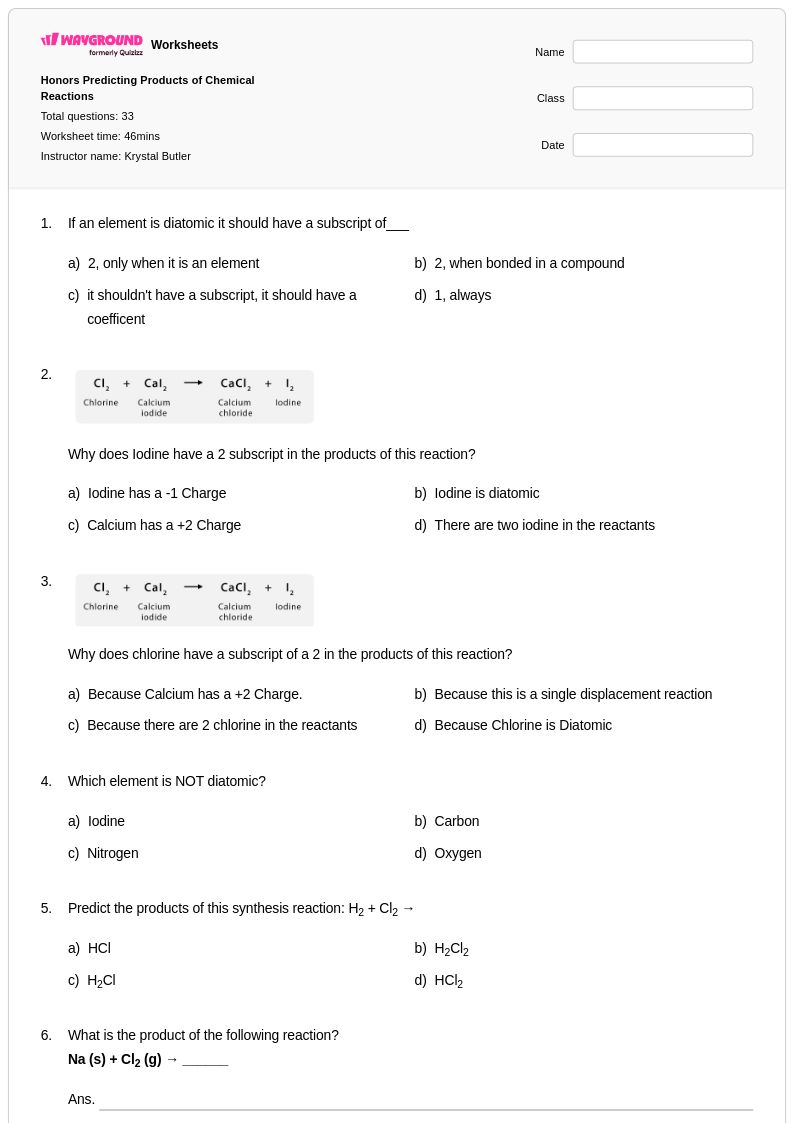
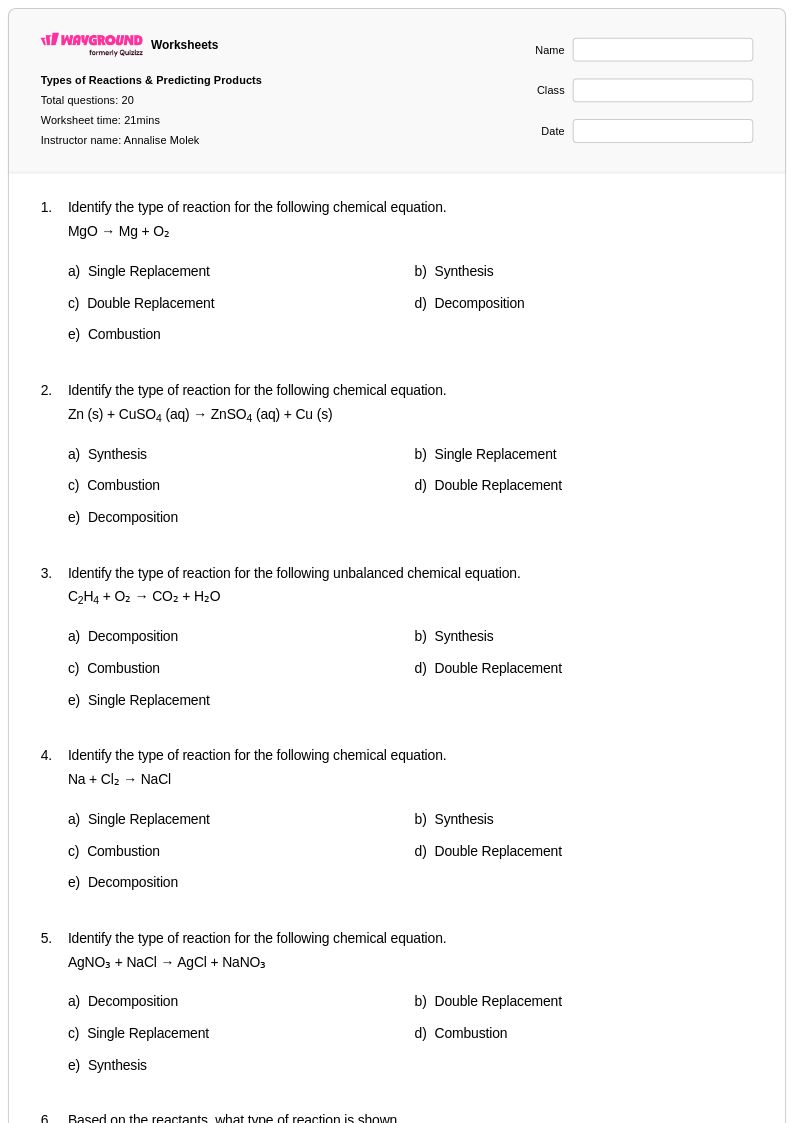
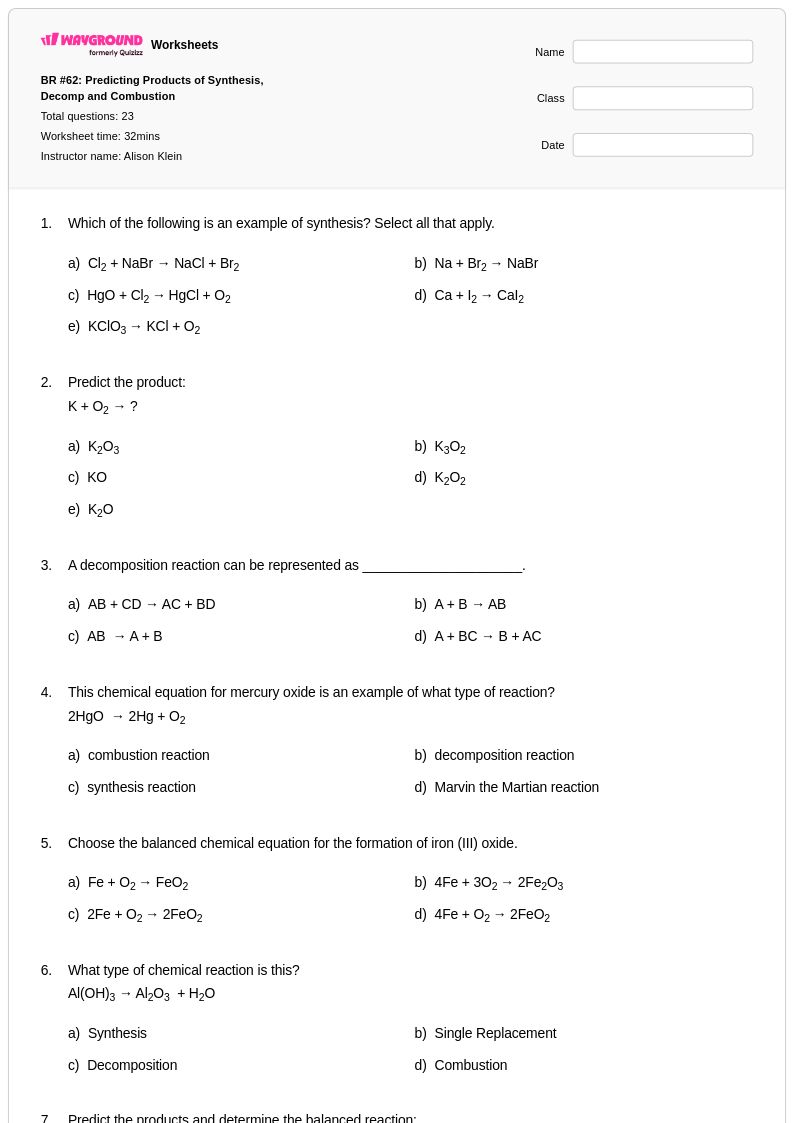
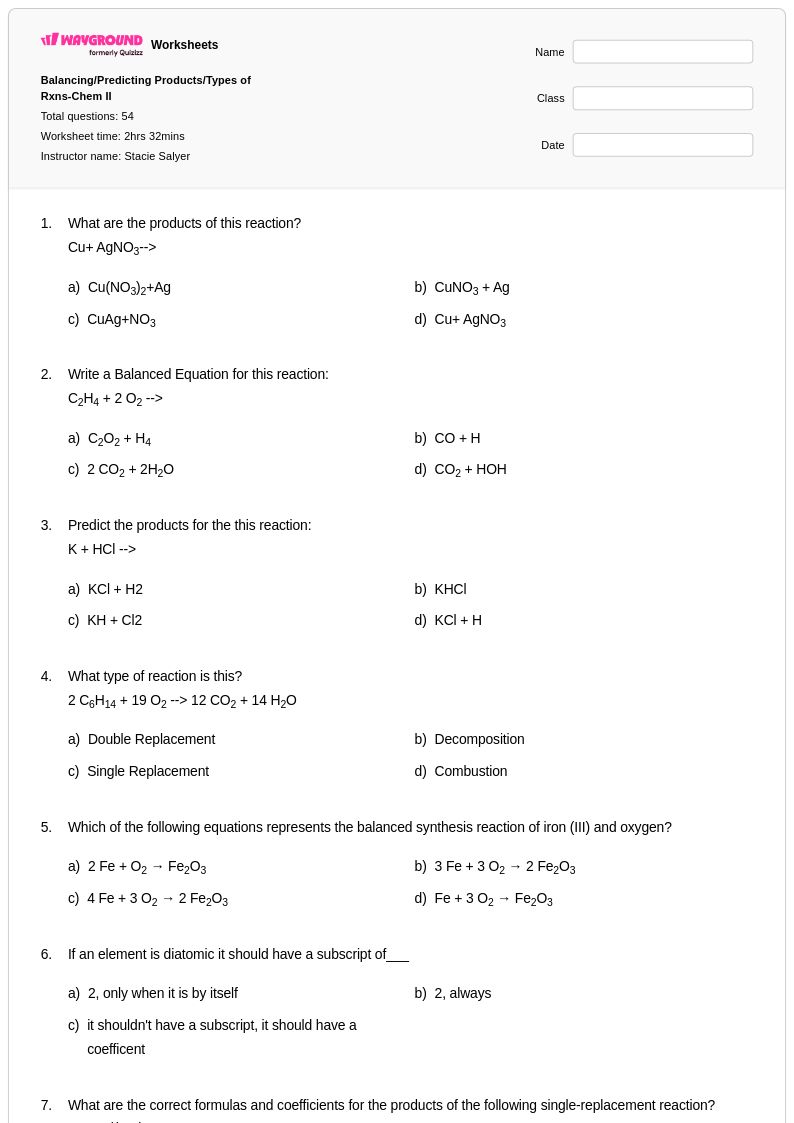
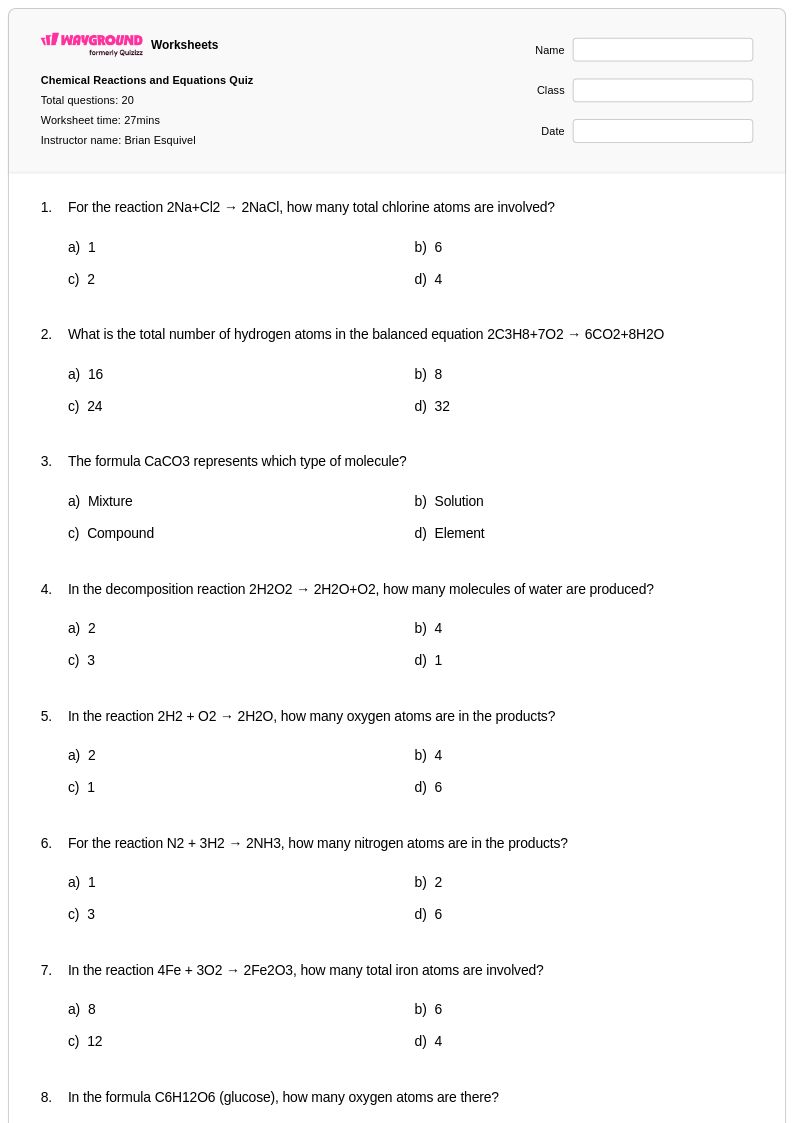
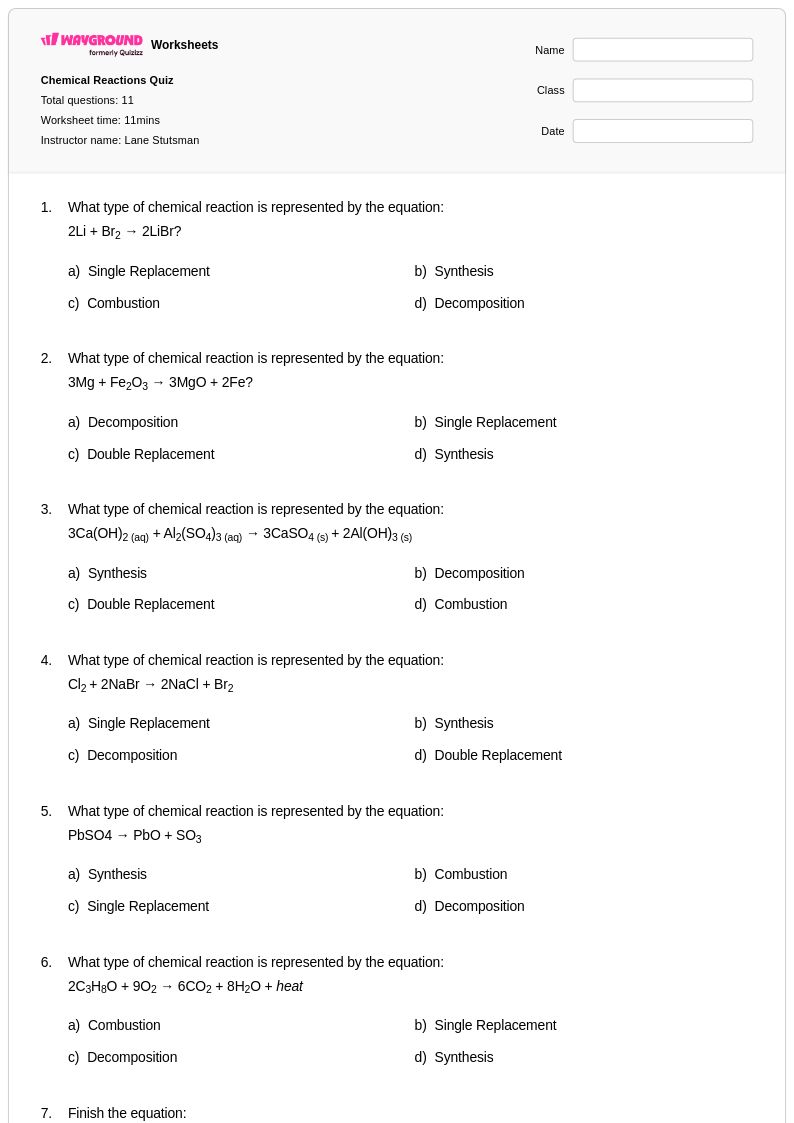
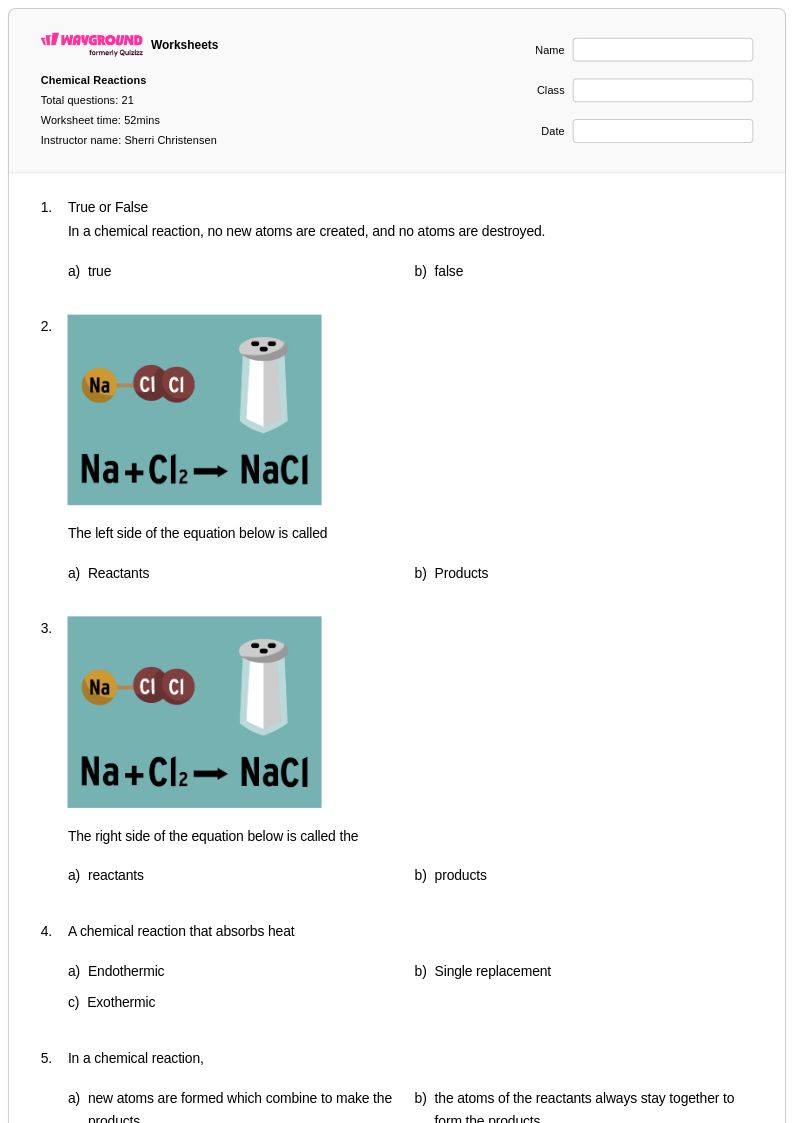
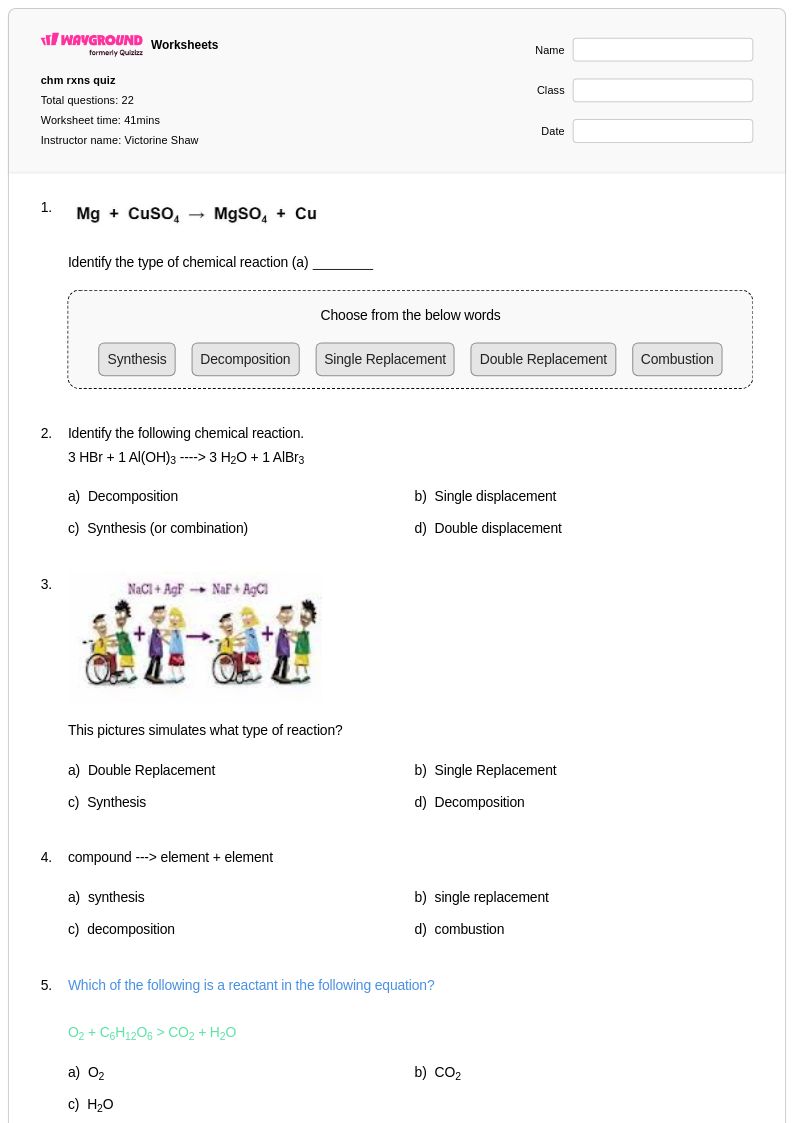
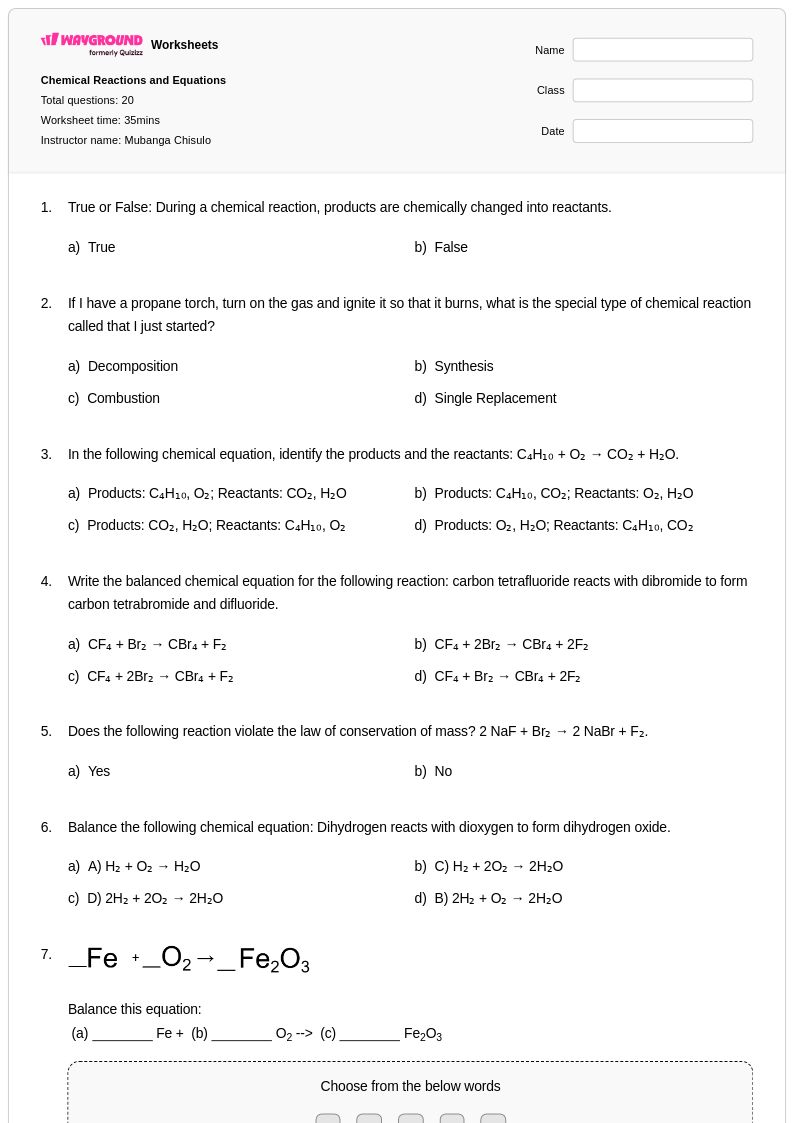
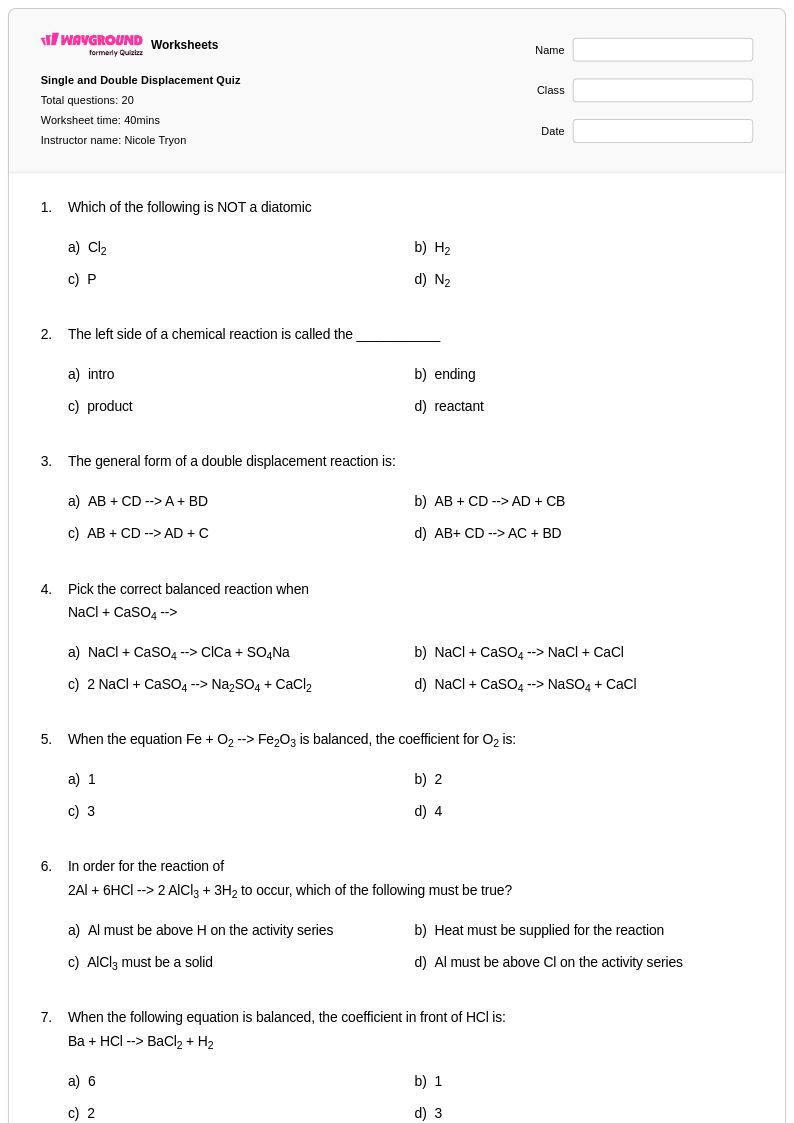
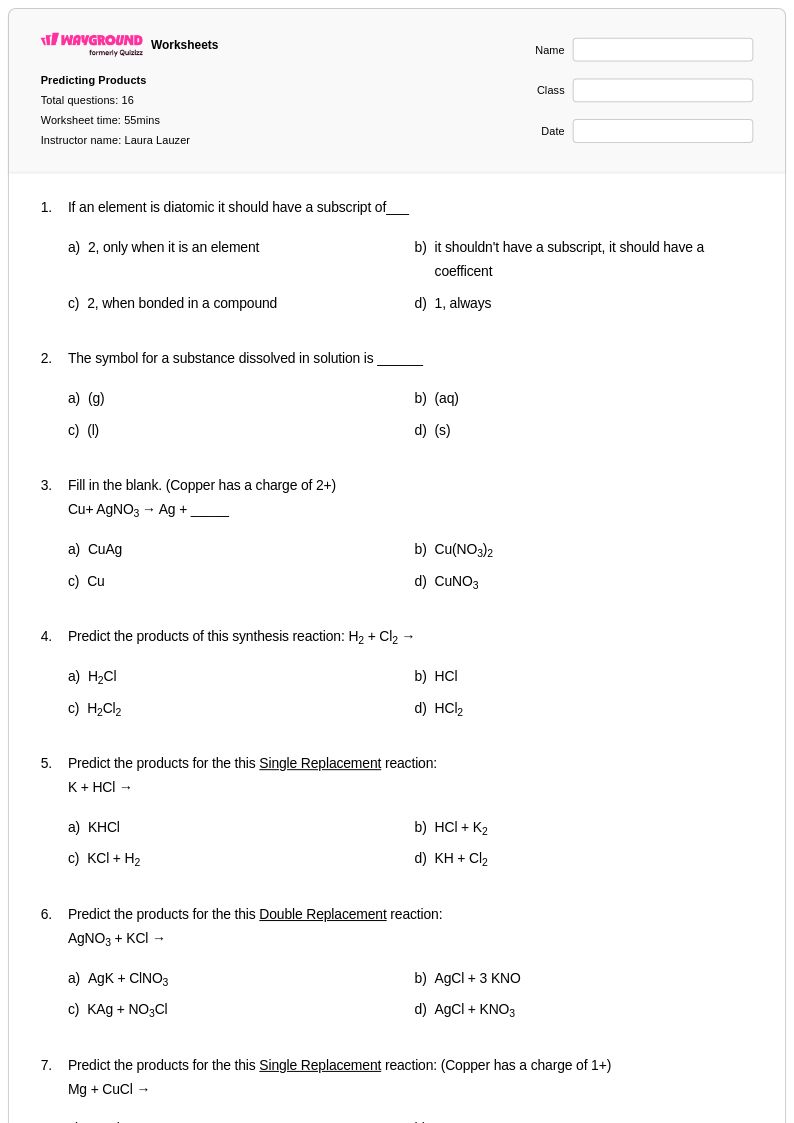
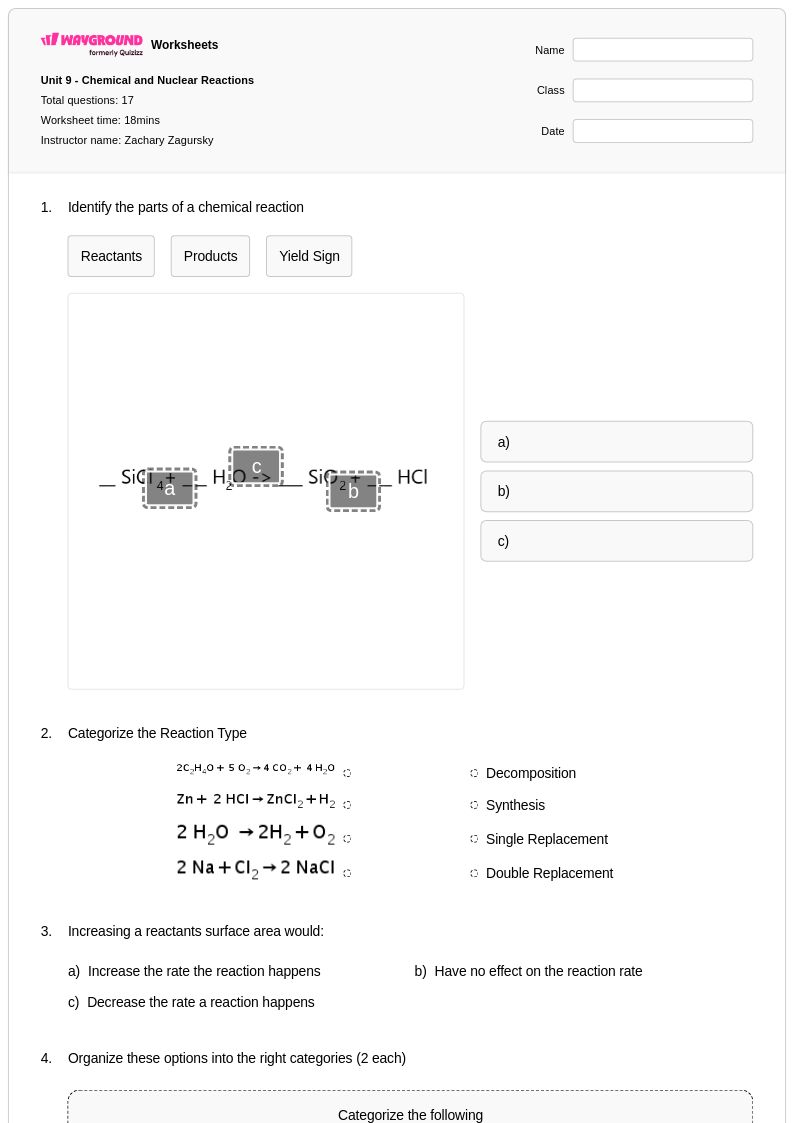
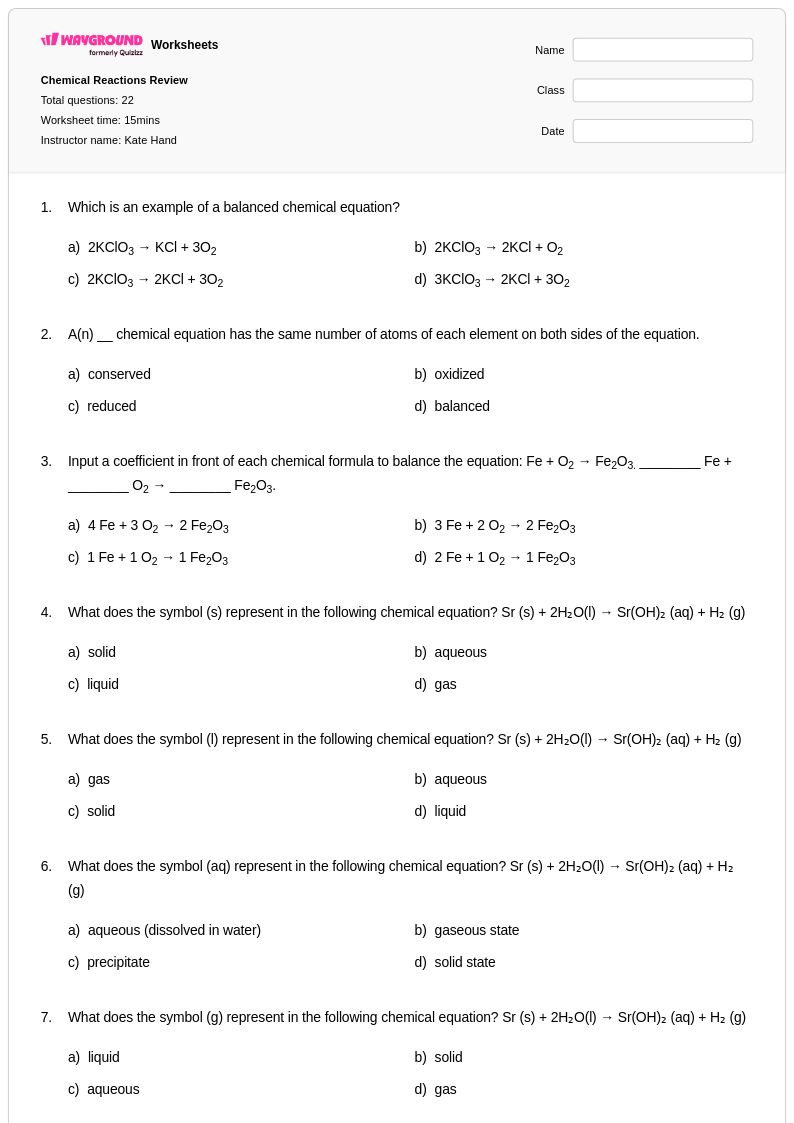
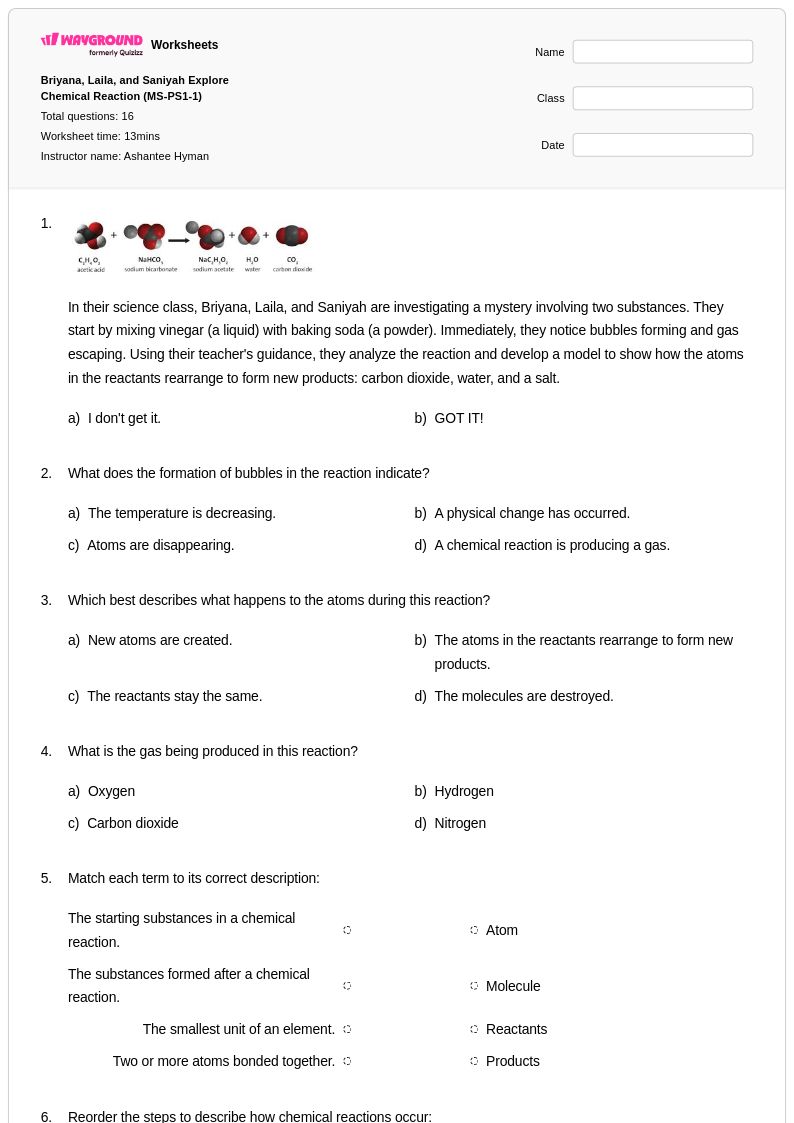
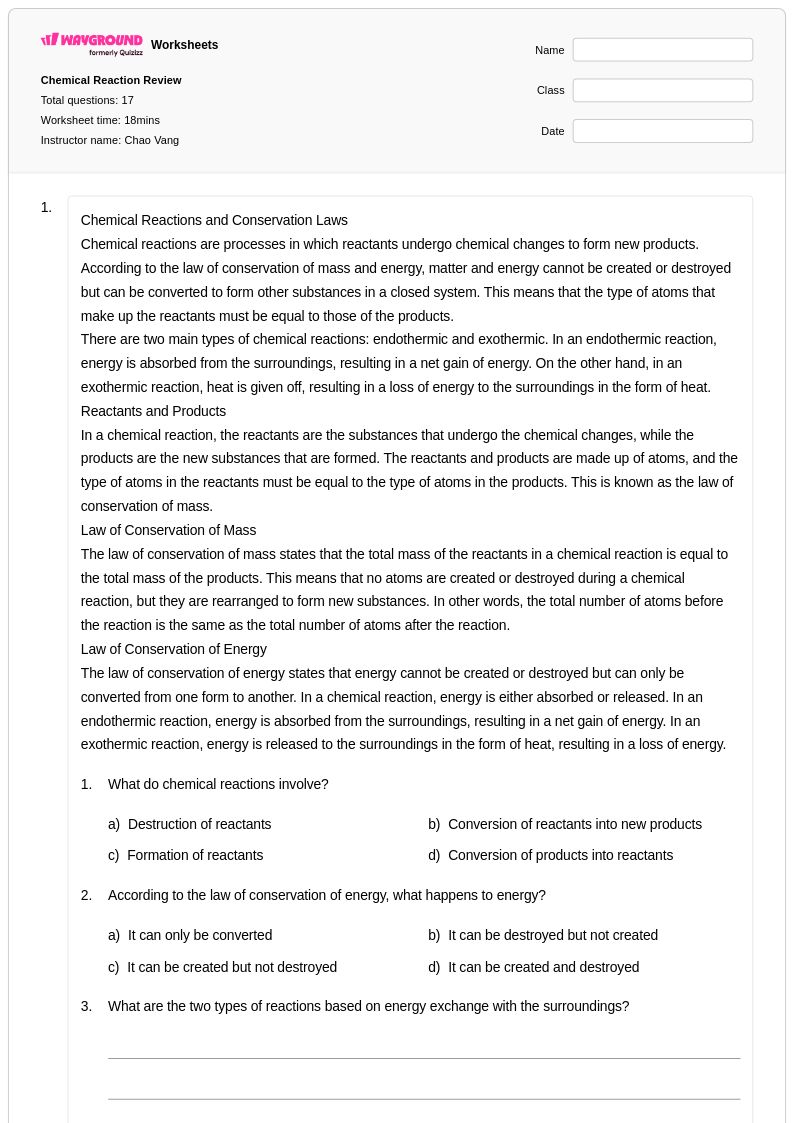
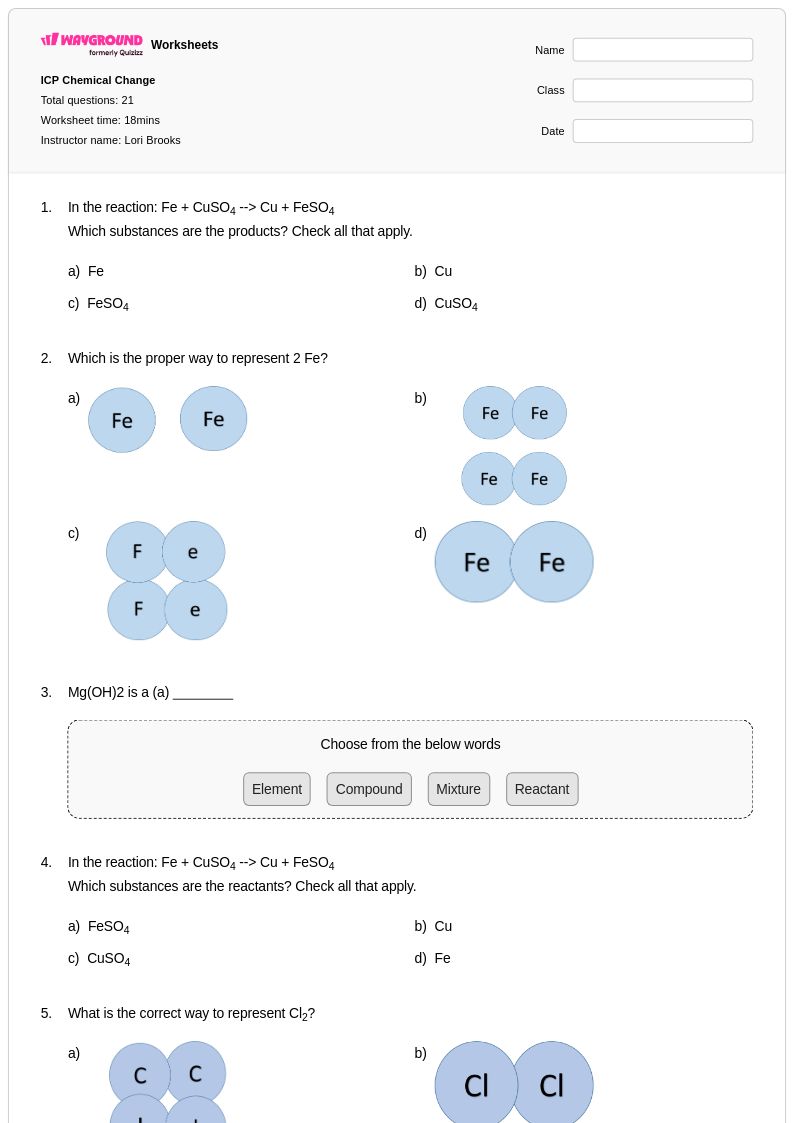
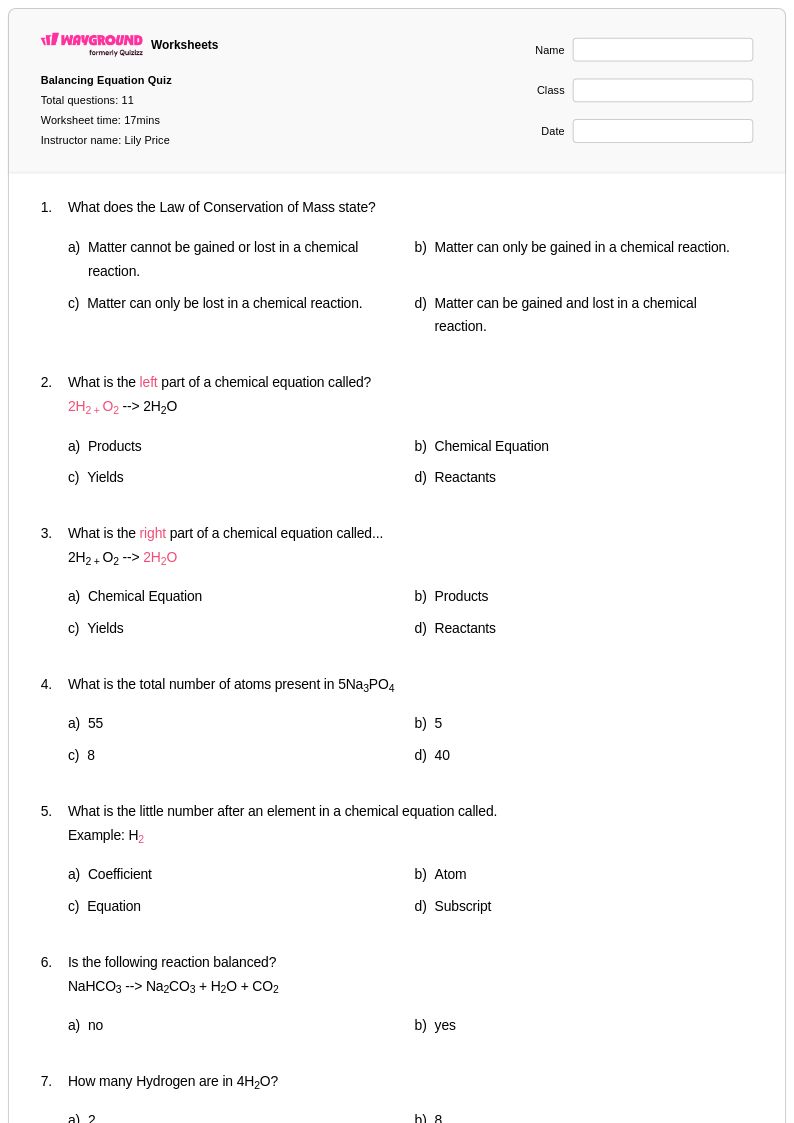
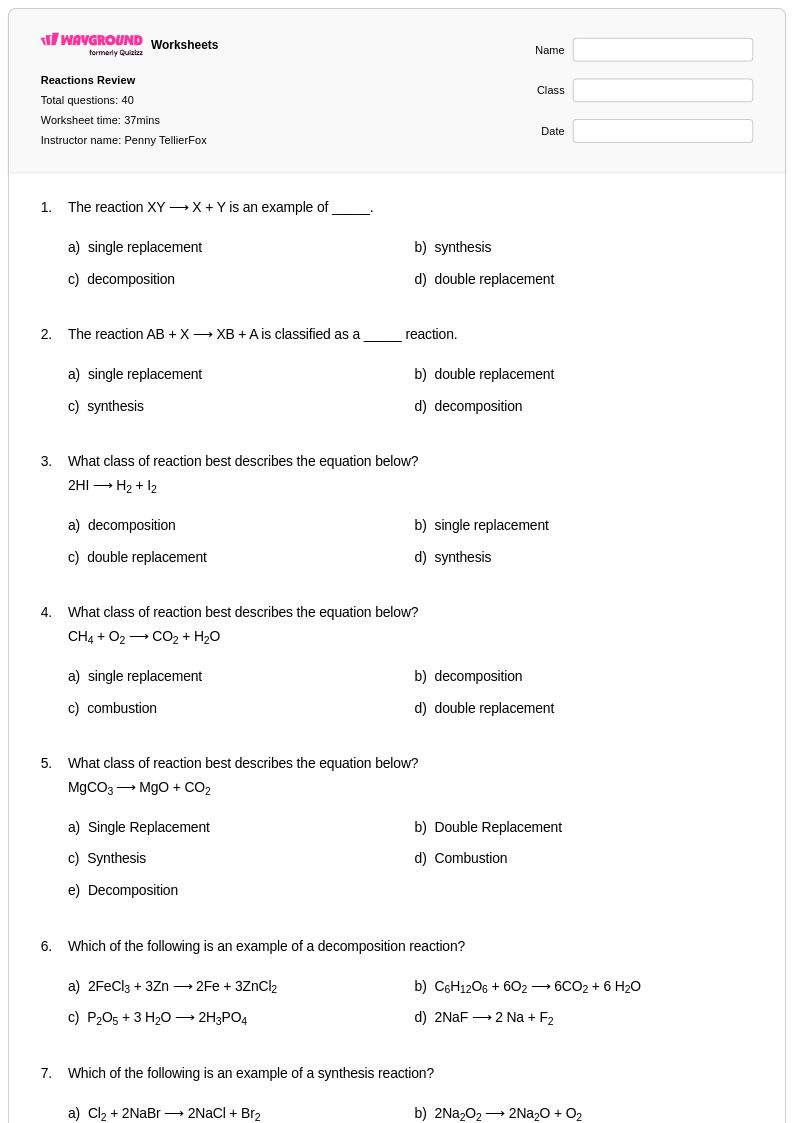
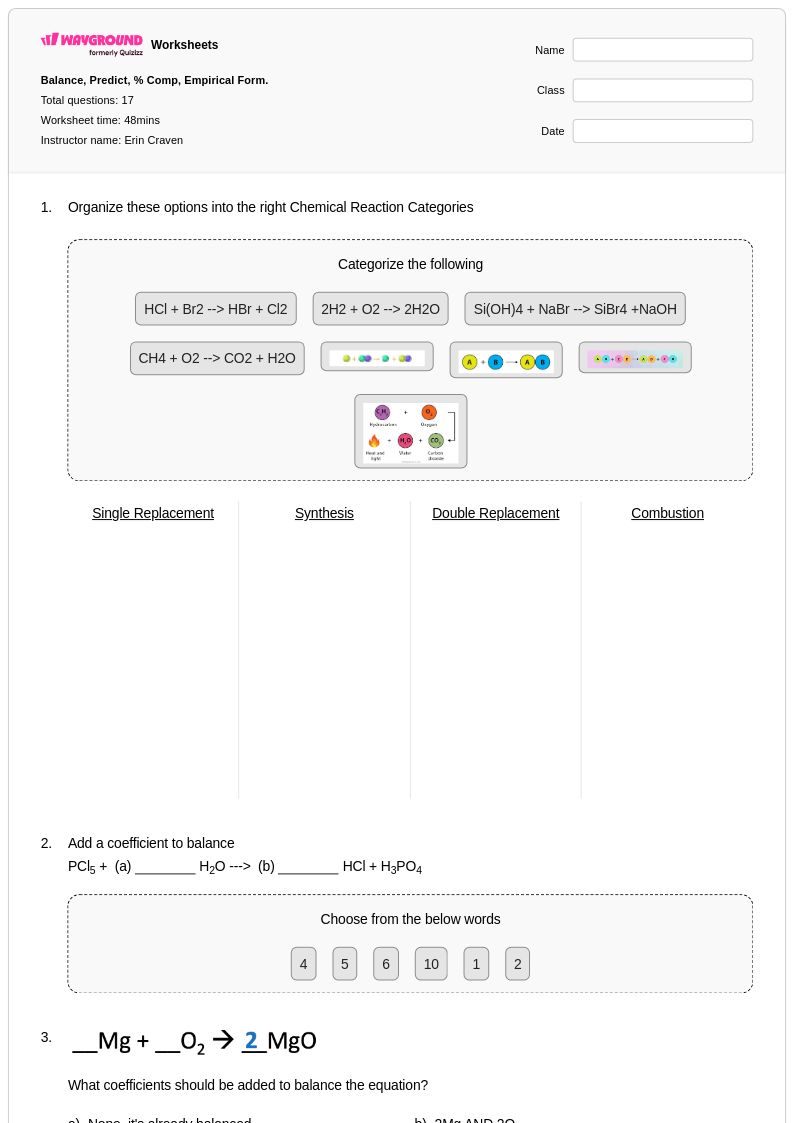
Predicting products of chemical reactions represents one of the most critical skills Class 12 chemistry students must master as they prepare for advanced coursework and standardized assessments. Wayground (formerly Quizizz) provides comprehensive worksheets that guide students through the systematic process of analyzing reactants, applying reaction patterns, and determining the likely products formed during various chemical processes. These expertly designed practice problems strengthen students' understanding of reaction types including synthesis, decomposition, single and double replacement, and combustion reactions, while reinforcing their knowledge of chemical formulas, bonding principles, and conservation of mass. Each worksheet collection includes detailed answer keys and is available as free printables in pdf format, enabling students to work through complex reaction scenarios at their own pace while building the analytical thinking skills essential for success in advanced chemistry.
Wayground (formerly Quizizz) empowers educators with millions of teacher-created resources specifically designed to support Class 12 chemistry instruction in predicting chemical reaction products. The platform's robust search and filtering capabilities allow teachers to quickly locate worksheets aligned with specific curriculum standards and learning objectives, while built-in differentiation tools enable customization for students across various skill levels. These resources are available in both printable pdf format and interactive digital versions, providing flexibility for classroom instruction, homework assignments, and independent study sessions. Teachers can seamlessly integrate these materials into their lesson planning to provide targeted remediation for struggling students, enrichment opportunities for advanced learners, and structured skill practice that builds student confidence in analyzing complex chemical reactions and predicting their outcomes with scientific accuracy.
FAQs
How do I teach students to predict products of chemical reactions?
Start by teaching students to identify the reaction type first — synthesis, decomposition, single displacement, double displacement, or combustion — because the type determines the pattern of product formation. Once students can classify reactions, they can apply consistent rules to determine likely products rather than memorizing outcomes case by case. Using worked examples that walk through each logical step, from analyzing reactants to applying bonding rules, helps students internalize the process before tackling problems independently.
What exercises help students practice predicting chemical reaction products?
Practice problems that group reactions by type are most effective, allowing students to recognize and apply the same rule repeatedly before mixing reaction types. Exercises that require students to write out reactants, identify the reaction pattern, and then balance the resulting equation reinforce the full prediction process. Progressive worksheets that move from simple ionic exchanges to more complex combustion or organic reactions help build student confidence systematically.
What mistakes do students commonly make when predicting products of chemical reactions?
One of the most frequent errors is failing to correctly identify the reaction type, which leads students to apply the wrong product-formation rules entirely. Students also commonly forget to account for the charges of ions in double displacement reactions, producing incorrect or impossible compounds. Another persistent mistake is neglecting to balance the final equation after predicting products, which suggests students treat prediction and balancing as unrelated steps rather than parts of the same process.
How do I differentiate predicting products worksheets for students at different ability levels?
For struggling students, start with single-reaction-type worksheets and provide a reference card listing the rules for each reaction type so cognitive load is reduced to application rather than recall. Advanced students benefit from mixed-reaction-type problems and questions that require them to explain their reasoning in writing, not just supply the product. On Wayground, teachers can apply accommodations such as reduced answer choices for individual students, which limits options displayed without alerting the rest of the class, making differentiation seamless within a single assignment.
How can I use predicting products of chemical reactions worksheets in my classroom?
These worksheets are available as printable PDFs for traditional classroom use and in digital formats for technology-integrated environments, giving teachers flexibility depending on their setup. The digital format also allows teachers to host the worksheet as a quiz on Wayground, making it easy to assign for in-class practice or homework while automatically collecting student responses. Each worksheet includes a complete answer key with explanations of the reasoning behind product formation, which supports both self-paced student review and teacher-led discussion.
How do I help students who struggle specifically with combustion or decomposition reactions?
For combustion reactions, students often struggle because they do not automatically recognize that complete combustion of a hydrocarbon always produces carbon dioxide and water. Explicitly teaching the combustion template — fuel plus oxygen yields CO2 and H2O — and having students practice applying it to several hydrocarbon examples before introducing incomplete combustion builds the necessary pattern recognition. For decomposition, students benefit from seeing examples sorted by compound type, since the products of a decomposition reaction depend heavily on whether the reactant is a binary compound, a metal carbonate, a metal hydroxide, or another category.