Free Printable Percent Abundance of Isotopes Worksheets for Class 12
Class 12 percent abundance of isotopes worksheets from Wayground provide free printables and practice problems with answer keys to help students master calculating isotopic compositions and average atomic masses in chemistry.
Explore printable Percent Abundance of Isotopes worksheets for Class 12
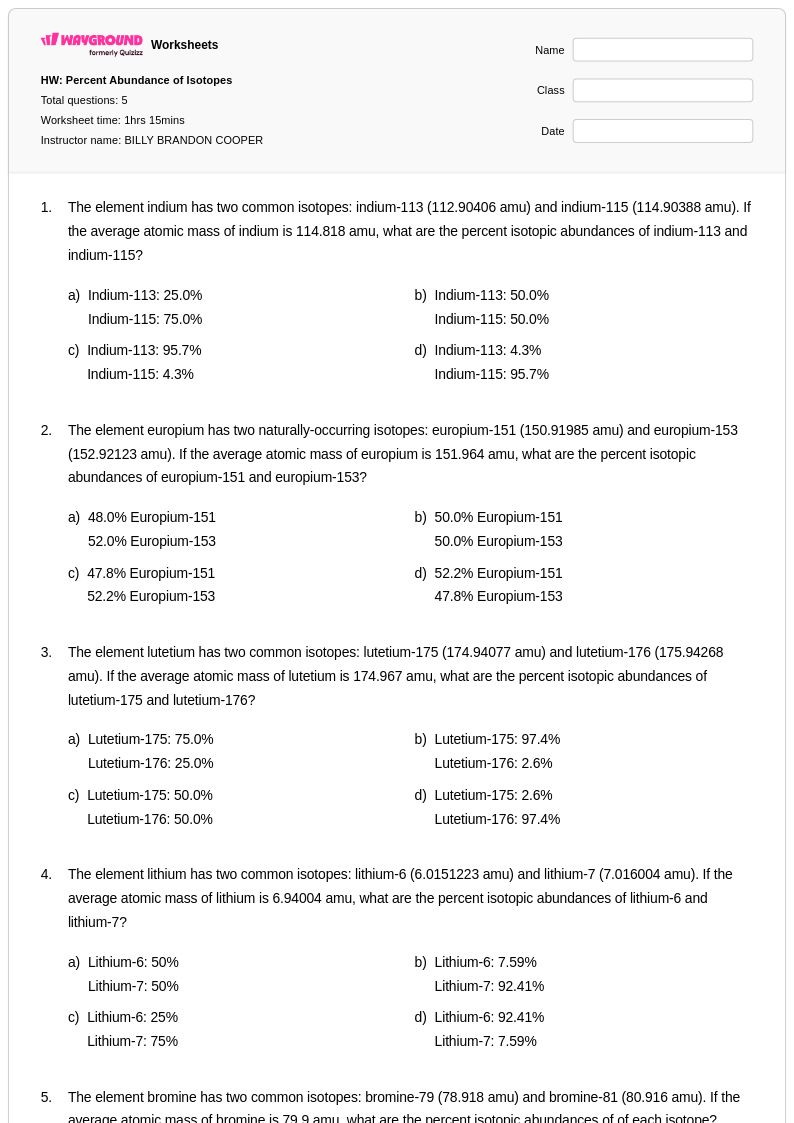
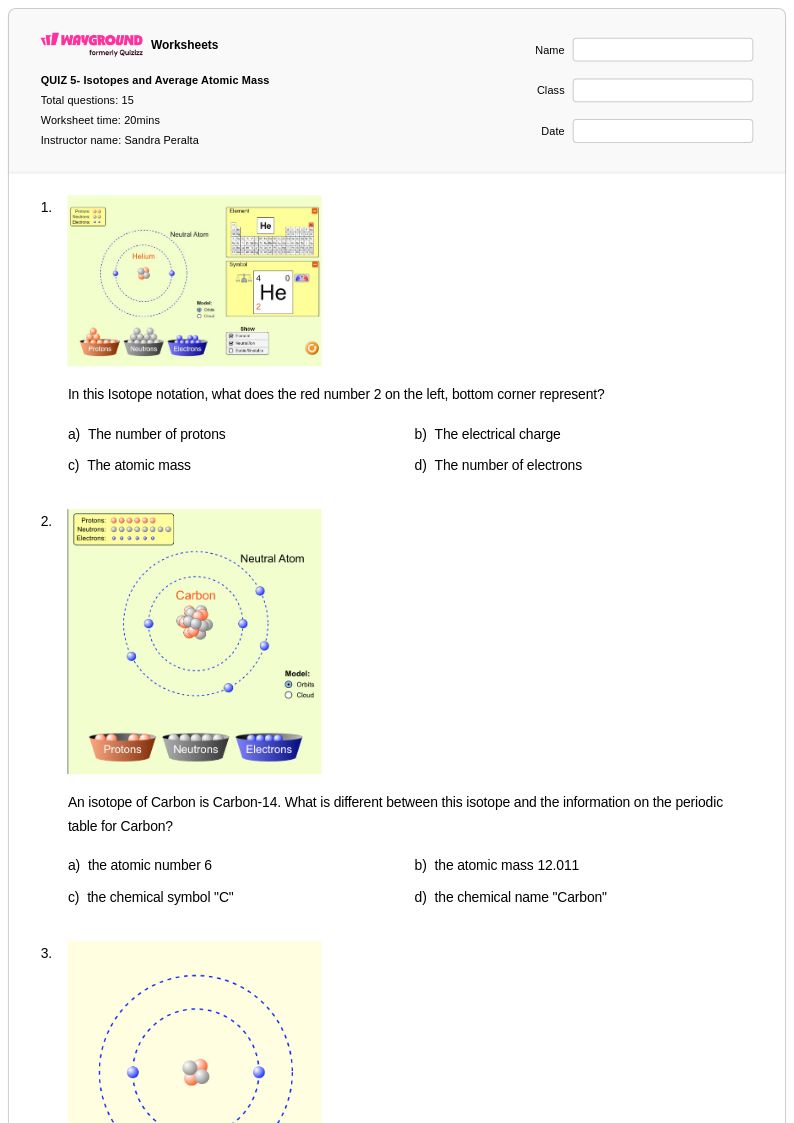
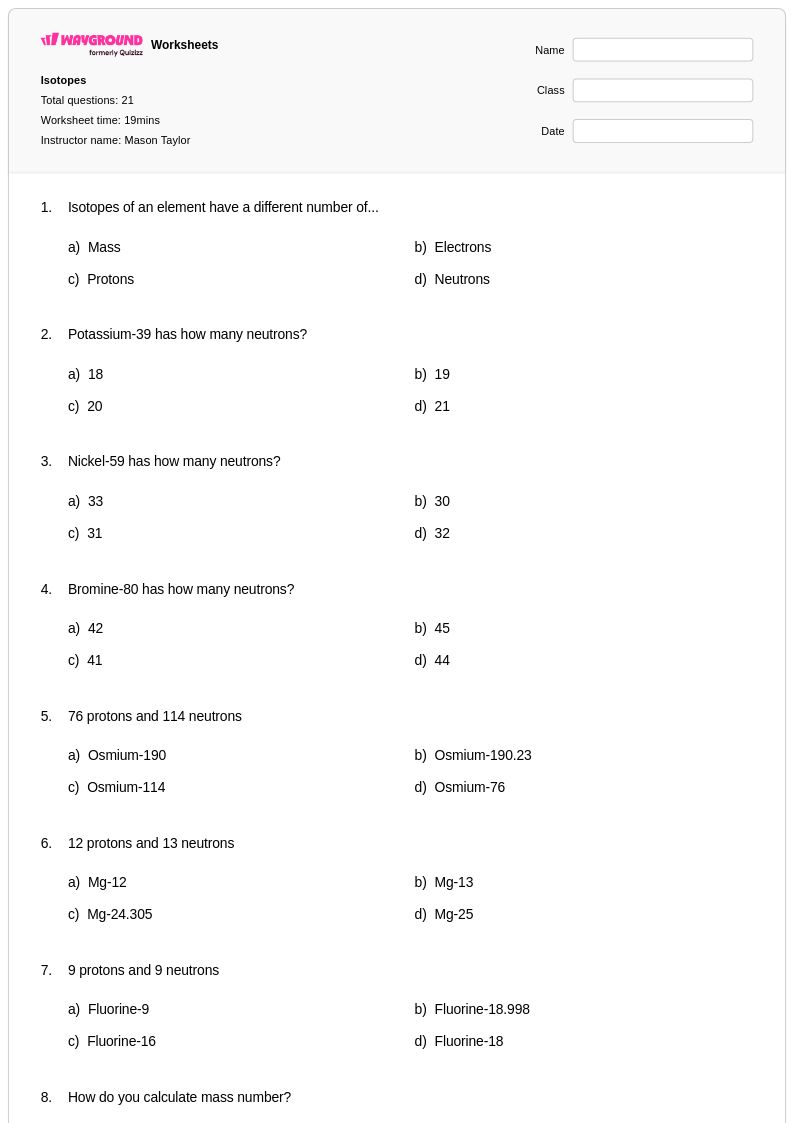
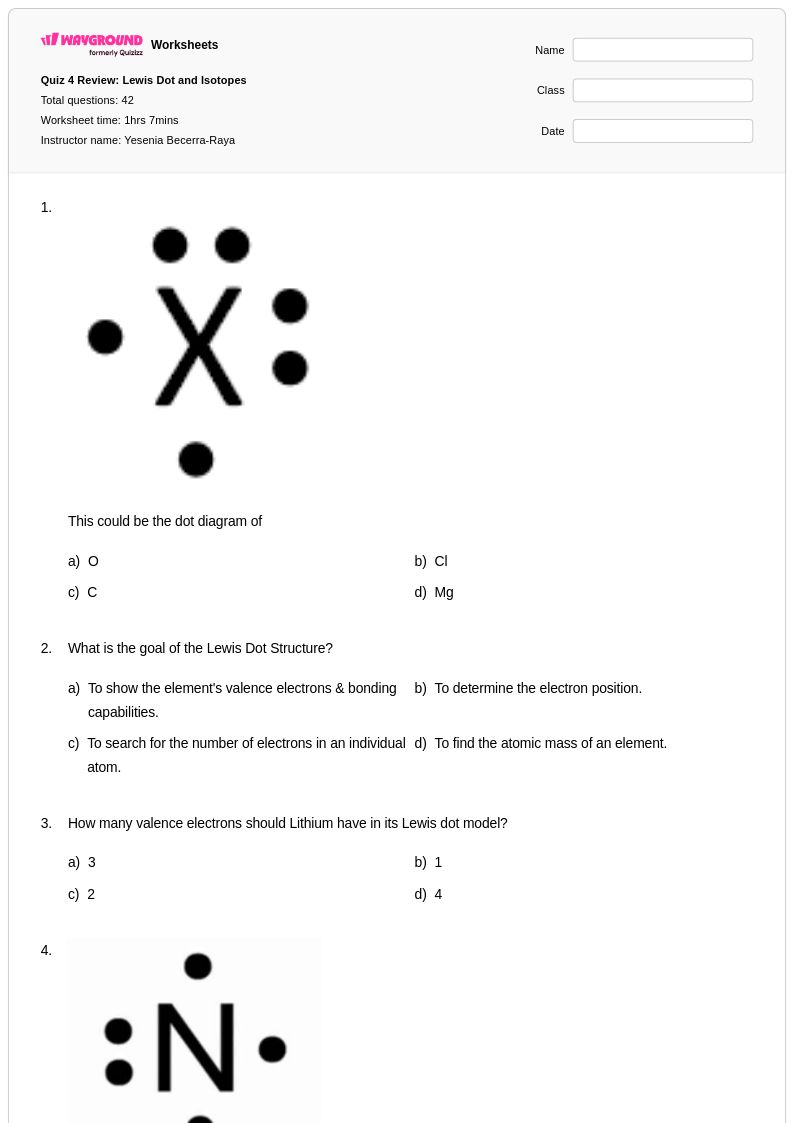
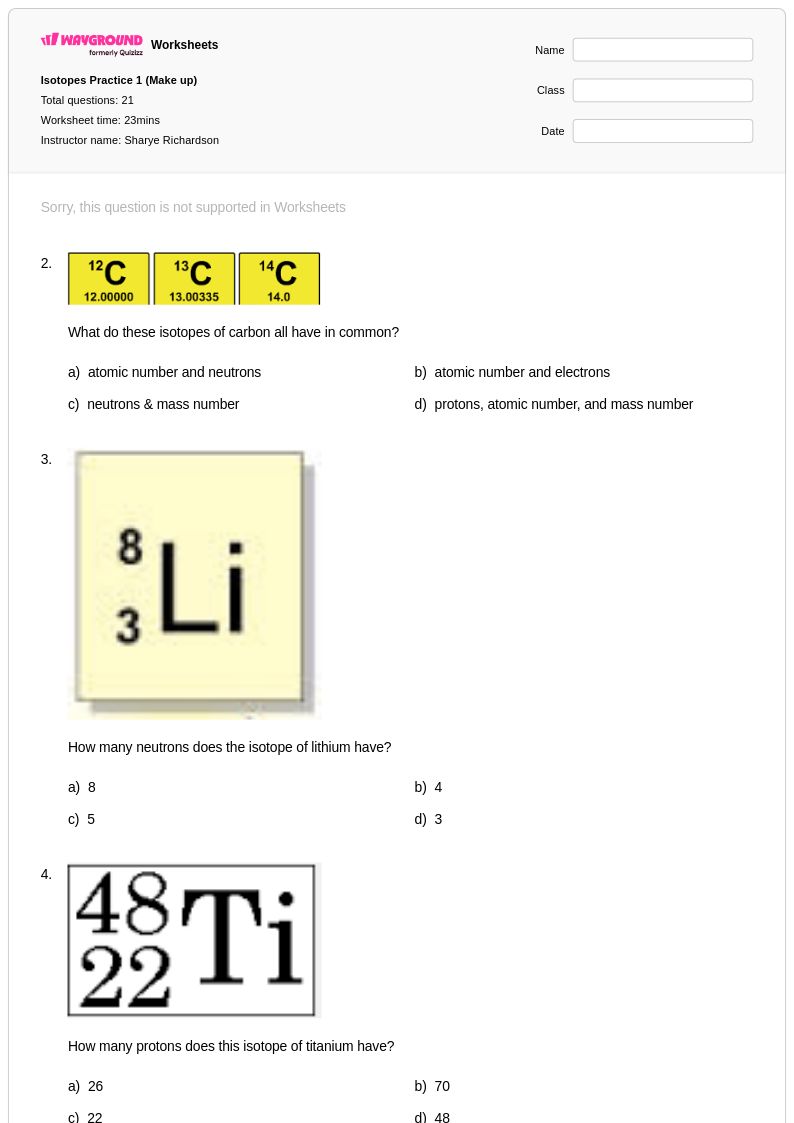
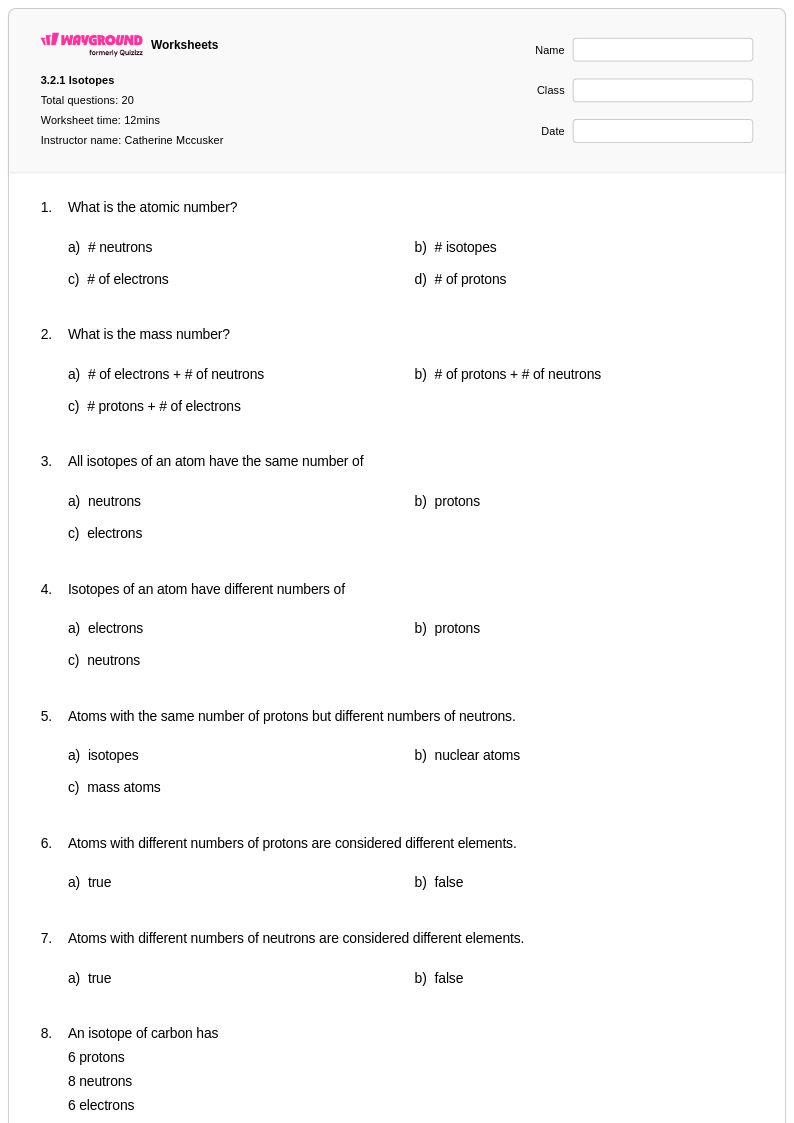
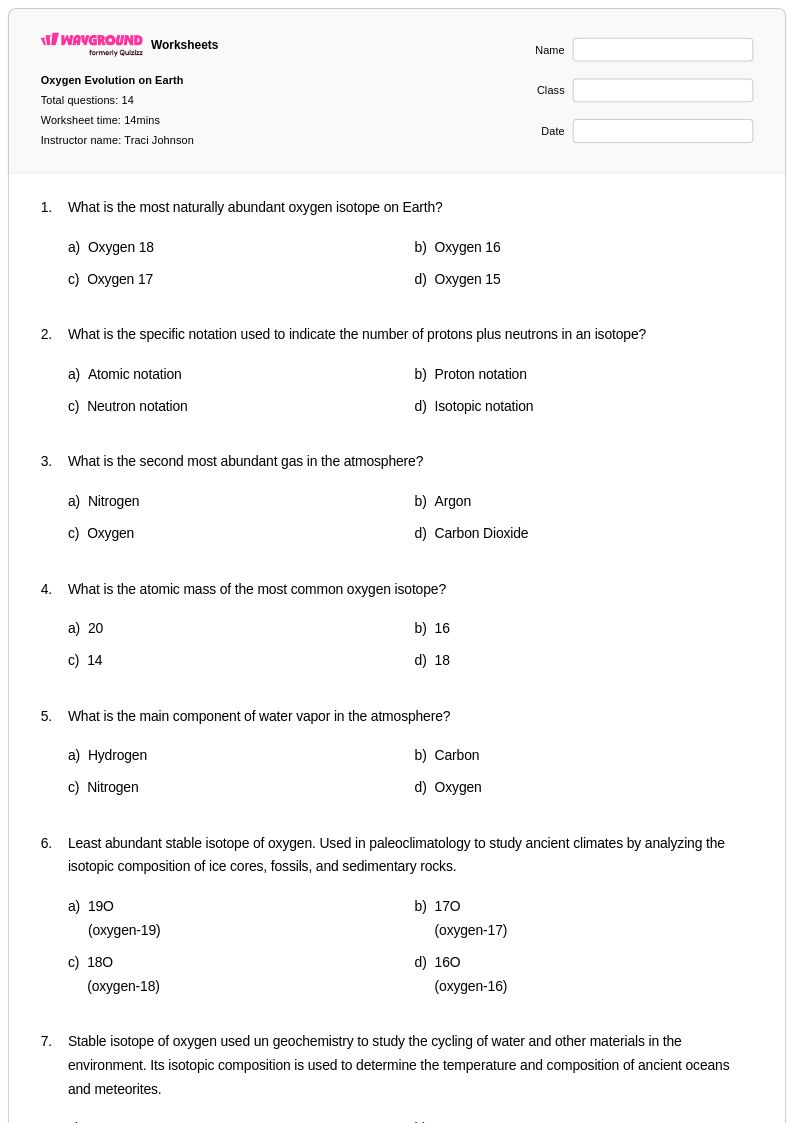
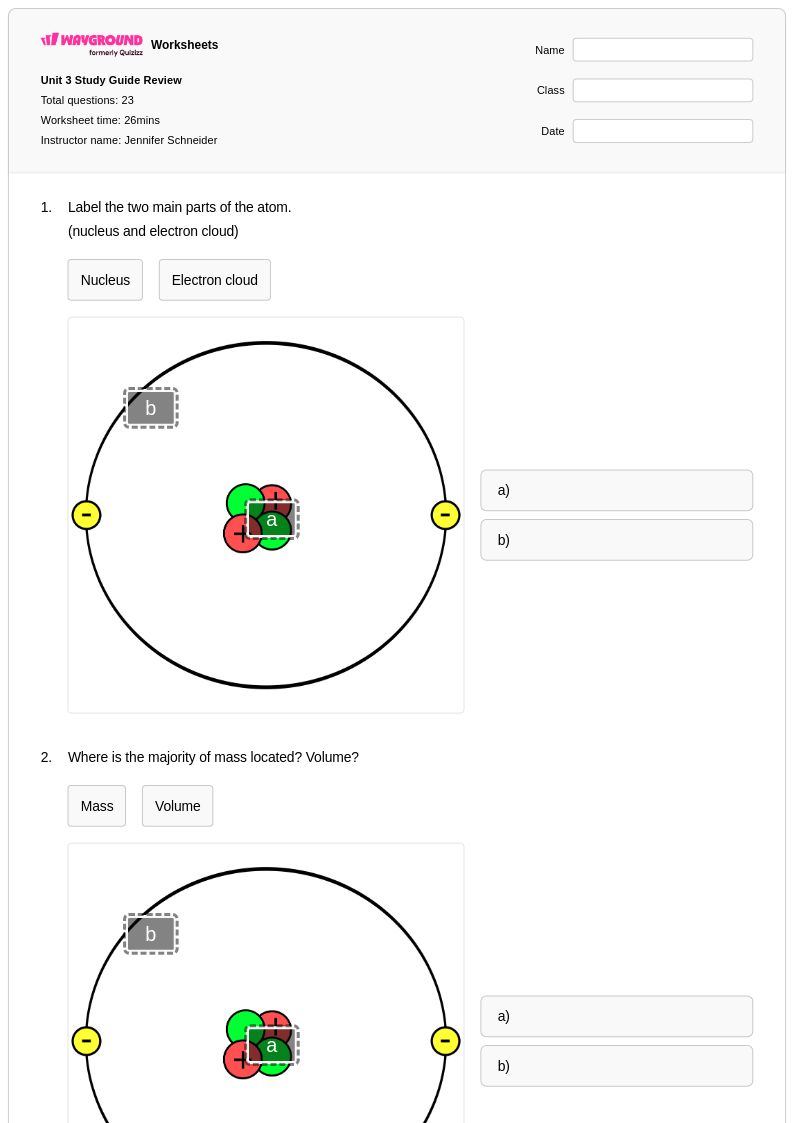
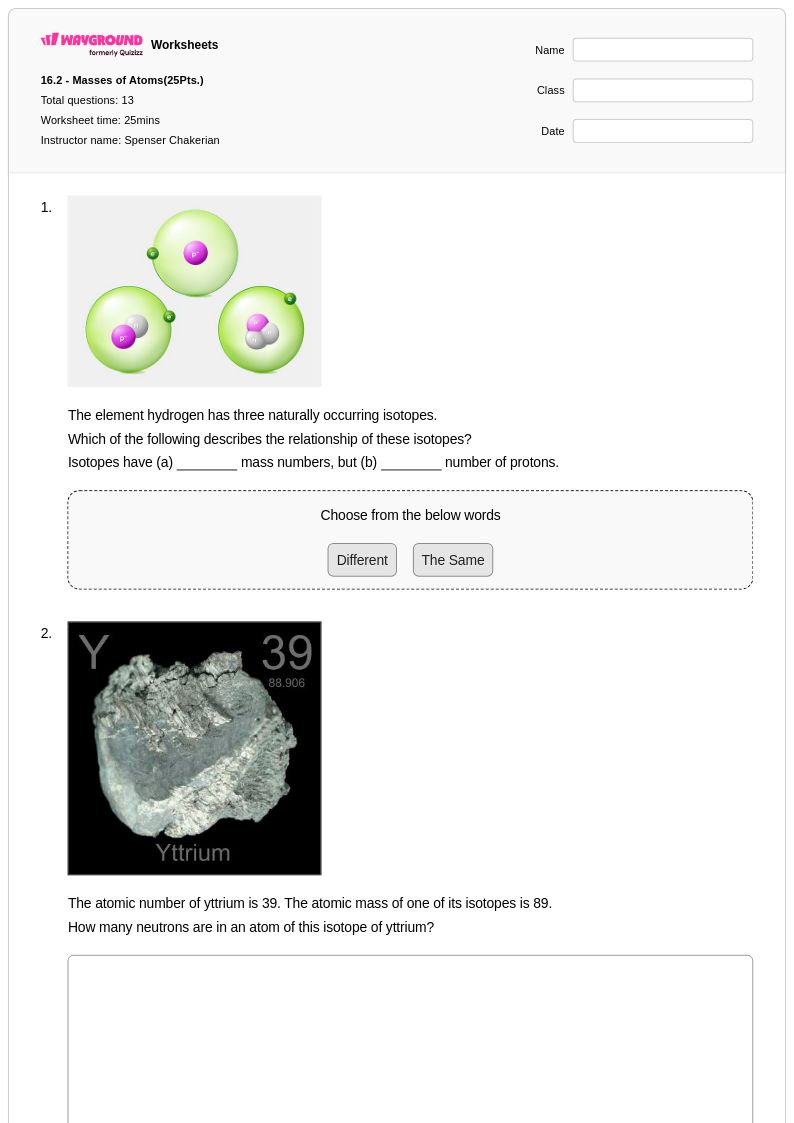
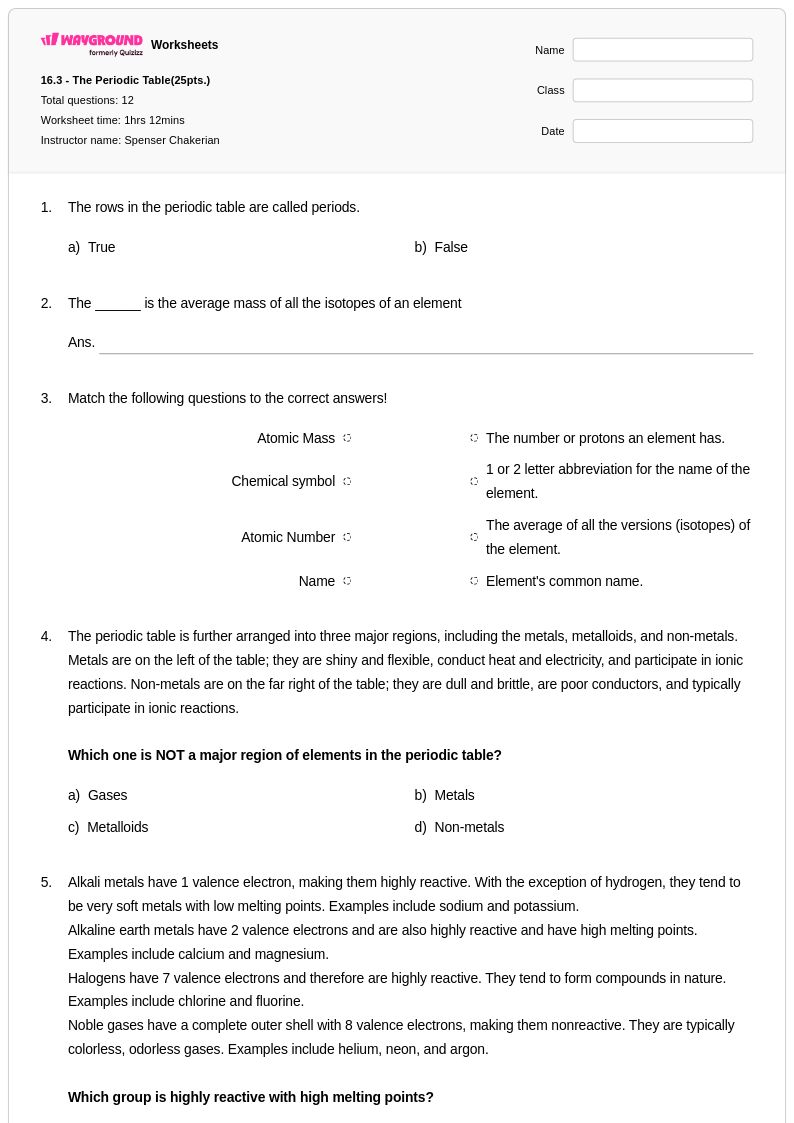
Percent abundance of isotopes worksheets for Class 12 chemistry students through Wayground (formerly Quizizz) provide comprehensive practice in calculating the relative amounts of different isotopic forms of elements found in nature. These worksheets strengthen essential skills in atomic theory, mass spectrometry interpretation, and weighted average calculations that form the foundation of advanced chemistry concepts. Students work through practice problems that require them to determine percent abundance values from atomic mass data, calculate average atomic masses using isotopic compositions, and analyze mass spectrometry results to identify unknown elements. Each worksheet includes detailed answer keys and step-by-step solutions, with free printable pdf formats available to support both classroom instruction and independent study of this critical chemistry topic.
Wayground (formerly Quizizz) supports chemistry educators with an extensive collection of teacher-created resources specifically designed for percent abundance of isotopes instruction at the Class 12 level. The platform's millions of worksheets feature robust search and filtering capabilities that allow teachers to locate materials aligned with specific chemistry standards and learning objectives. Advanced differentiation tools enable educators to customize problem difficulty levels, modify calculation complexity, and adapt content for diverse learning needs within their classrooms. These resources are available in both printable and digital pdf formats, providing flexibility for lesson planning, targeted remediation for students struggling with isotopic calculations, enrichment activities for advanced learners, and structured skill practice that builds confidence in nuclear chemistry concepts essential for college-level coursework.
FAQs
How do I teach percent abundance of isotopes to chemistry students?
Start by ensuring students understand that most elements exist as multiple isotopes with different atomic masses, and that the periodic table value reflects a weighted average of those masses. Introduce the percent abundance formula by walking through a two-isotope example step by step, connecting the math to real mass spectrometry data. Once students grasp the weighted average concept, gradually move to problems involving three or more isotopes to build complexity and confidence.
What practice problems help students get better at isotope abundance calculations?
Students benefit most from a sequenced set of problems that begins with straightforward two-isotope calculations before advancing to multi-isotope scenarios. Effective practice includes both directions of the calculation: given percent abundances, find average atomic mass, and given average atomic mass, find an unknown percent abundance. Applying these calculations to real elements such as chlorine, copper, or magnesium grounds the math in authentic chemistry context.
What mistakes do students commonly make when calculating percent abundance of isotopes?
The most common error is using whole-number percentages in the formula without converting them to decimals first, which throws off the weighted average entirely. Students also frequently confuse mass number with atomic mass, treating integer values as exact when isotopic masses are slightly different. A third common mistake is setting up problems where percent abundances do not sum to 100%, often because students misread which value is the unknown.
How do I use these percent abundance of isotopes worksheets in my classroom?
These worksheets are available as printable PDFs for traditional classroom use and in digital formats for technology-integrated learning environments, including the option to host them as a quiz on Wayground. The problems progress from basic two-isotope calculations to more complex multi-isotope scenarios, making them suitable for guided practice, independent work, or homework. Included answer keys with step-by-step solutions allow students to self-check their work or give teachers a ready-made grading resource.
How does percent abundance connect to average atomic mass on the periodic table?
The atomic mass listed on the periodic table is a weighted average of all naturally occurring isotopes of an element, where each isotope's mass is weighted by its fractional percent abundance. This is why chlorine's atomic mass is approximately 35.45 rather than a whole number: it reflects the natural mix of chlorine-35 (about 75%) and chlorine-37 (about 25%). Understanding this connection helps students see the periodic table as a data-rich tool rather than a list of arbitrary values.
How can I differentiate percent abundance worksheets for students at different skill levels?
For students who need remediation, limit problems to two-isotope scenarios and provide the formula as a reference scaffold. On-level students can work through mixed problem sets that include both finding average atomic mass and solving for an unknown percent abundance. For enrichment, introduce mass spectrometry graphs that require students to extract isotopic data before performing calculations, adding an interpretive layer to the mathematical skill.