Free Printable Prepositional Phrases Worksheets for Class 3
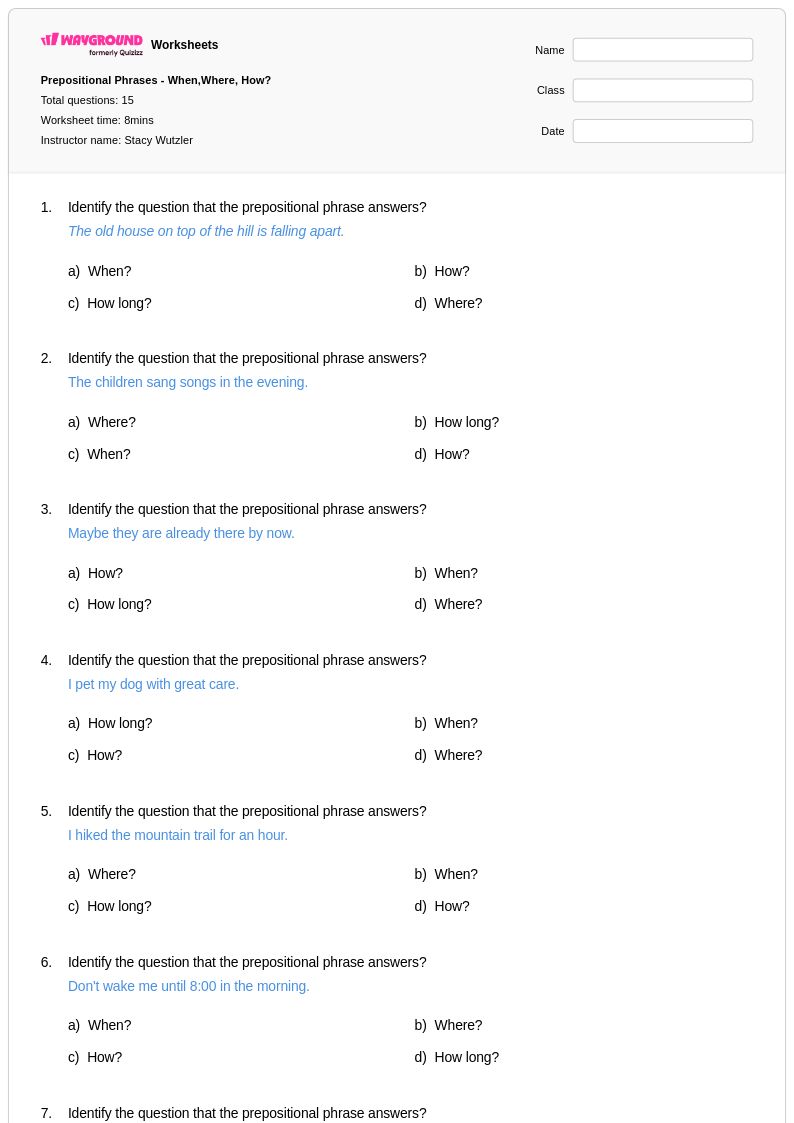
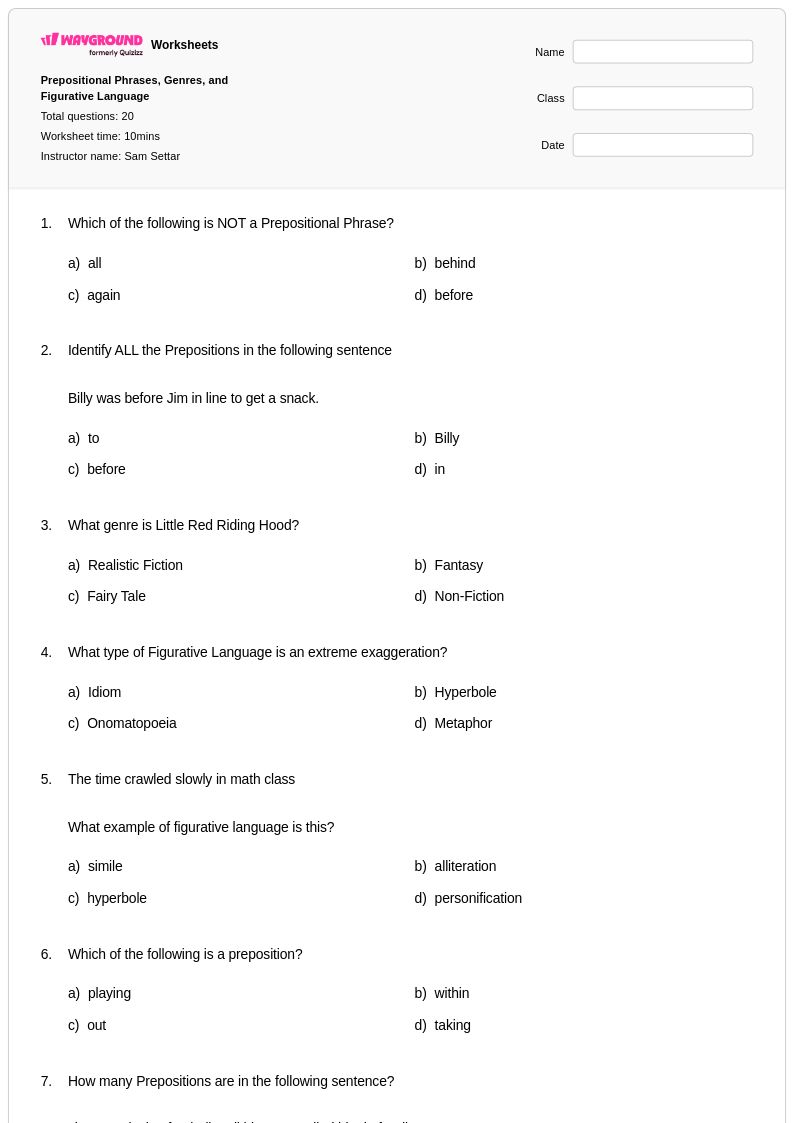
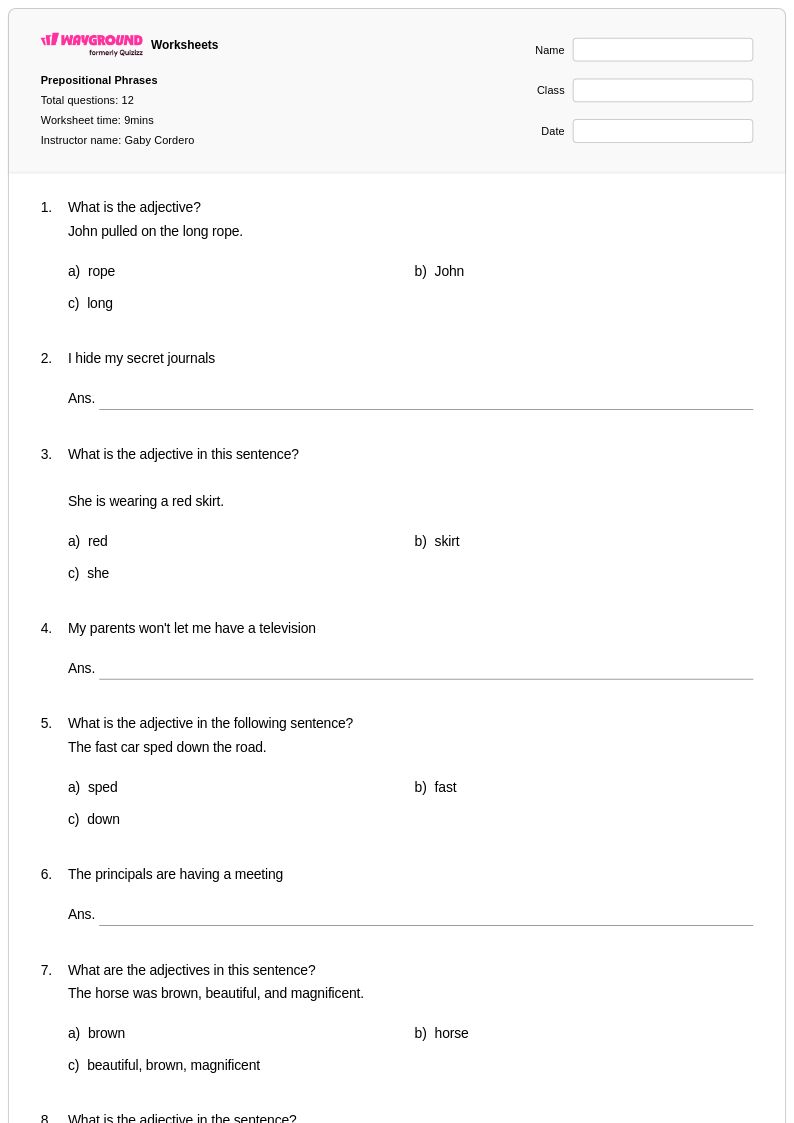
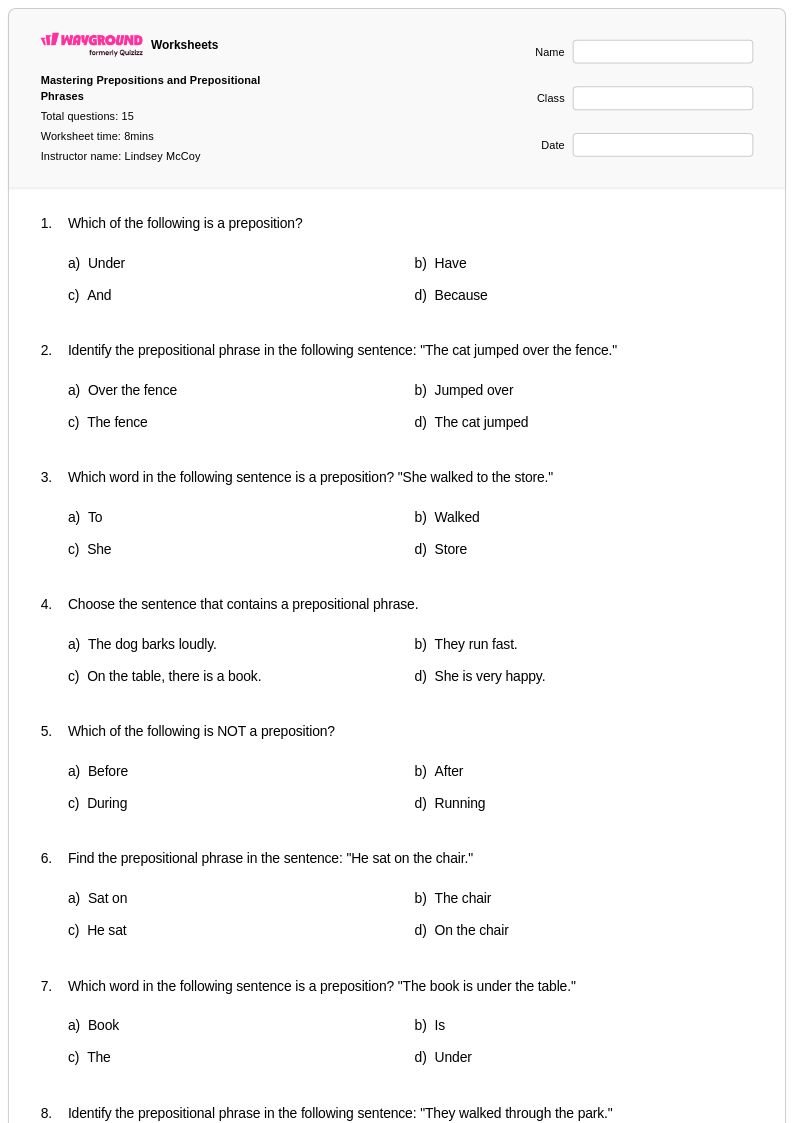
Class 3 prepositional phrases worksheets from Wayground help students master identifying and using prepositional phrases through engaging printables, practice problems, and free PDF resources with complete answer keys.
Explore printable Prepositional Phrases worksheets for Class 3
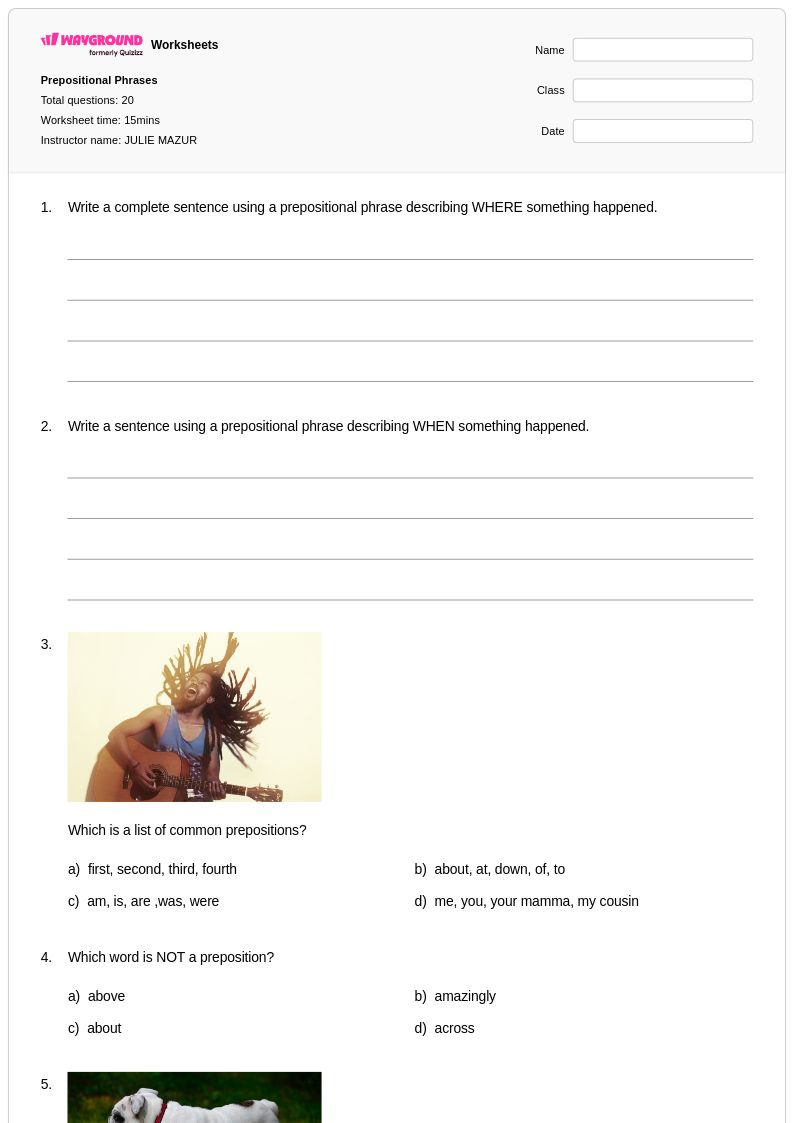
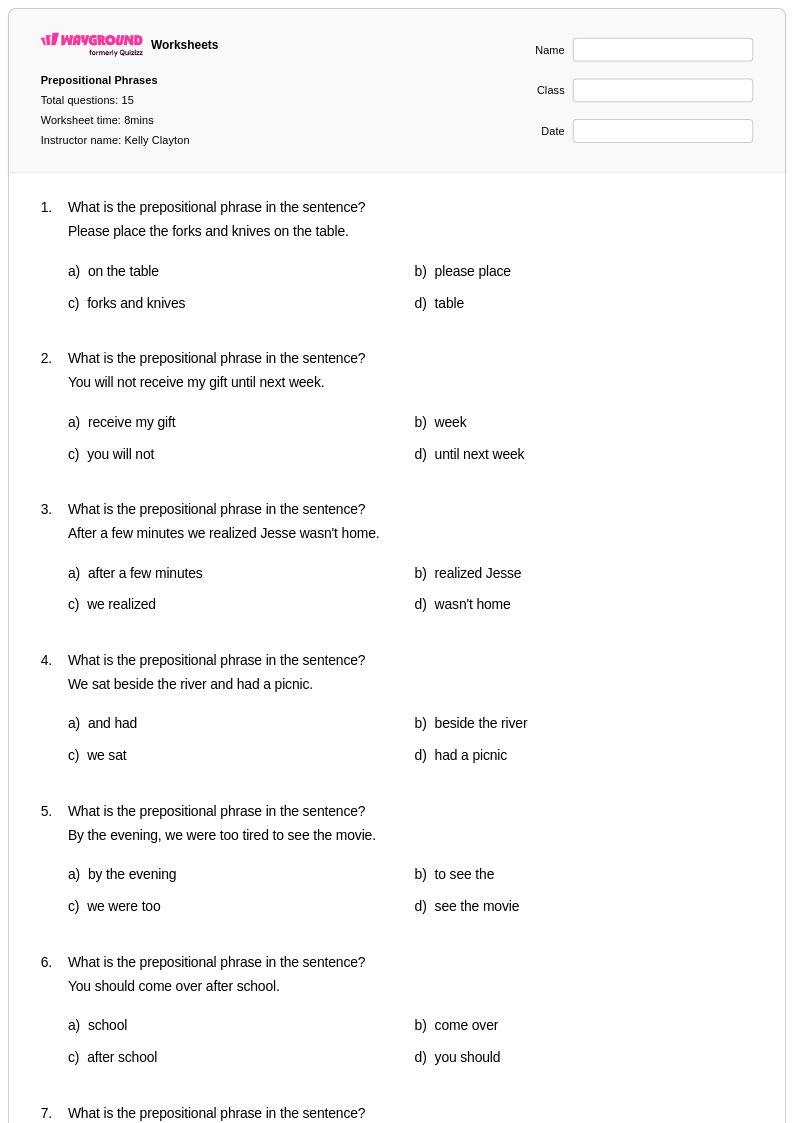
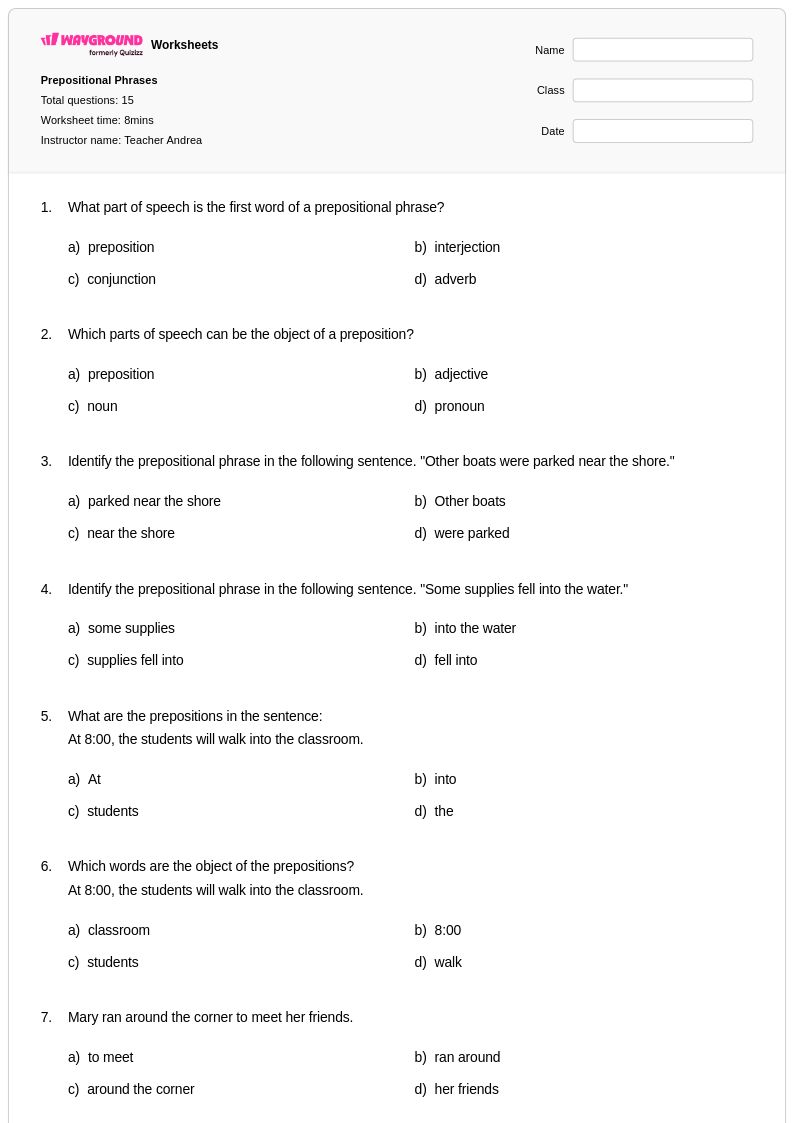
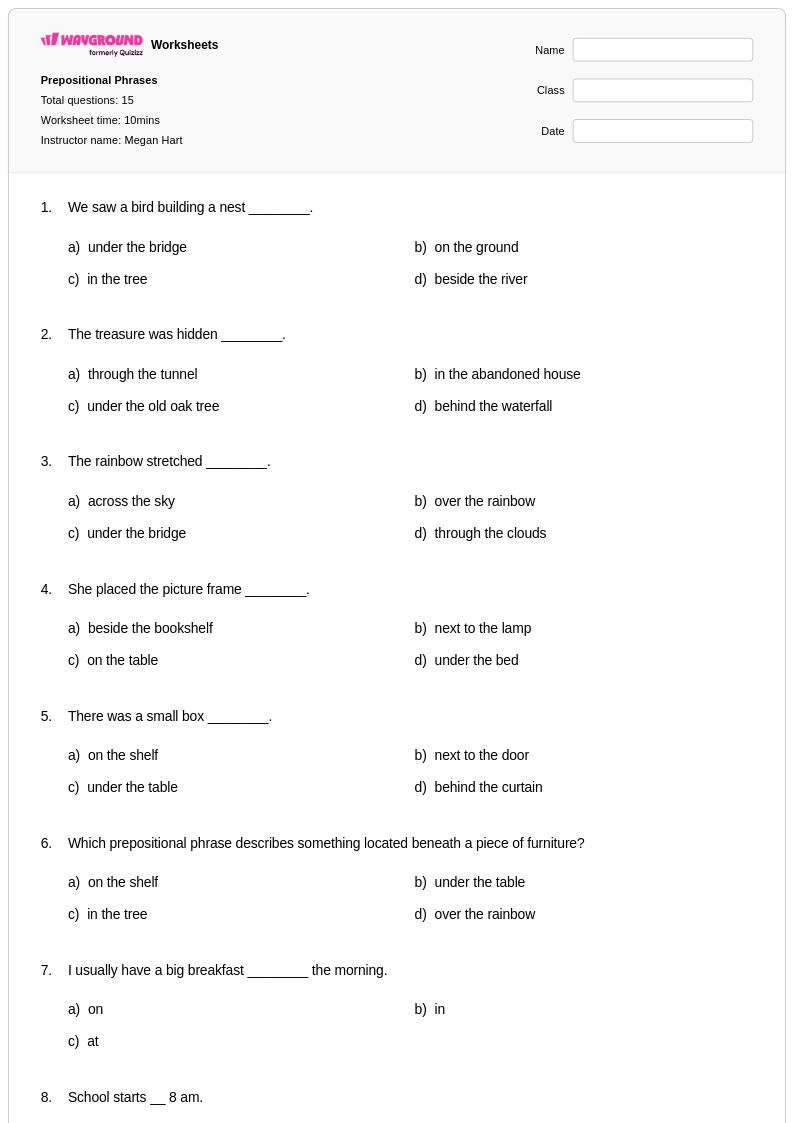
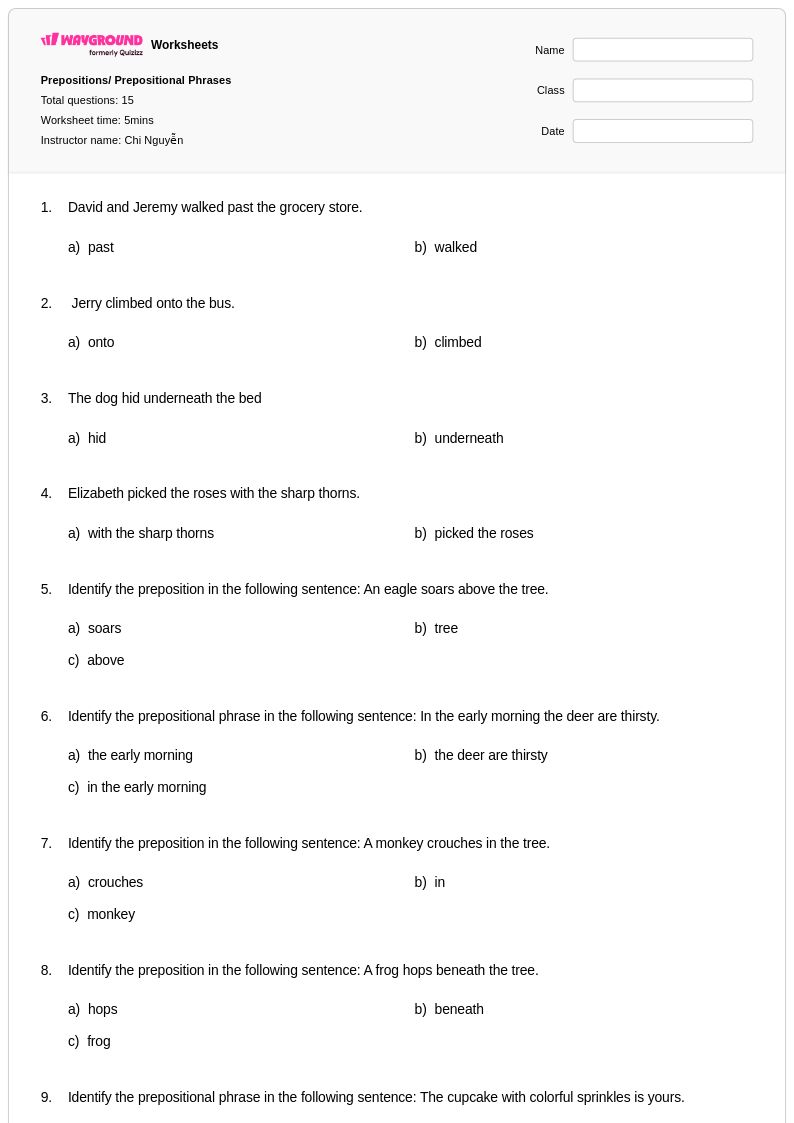
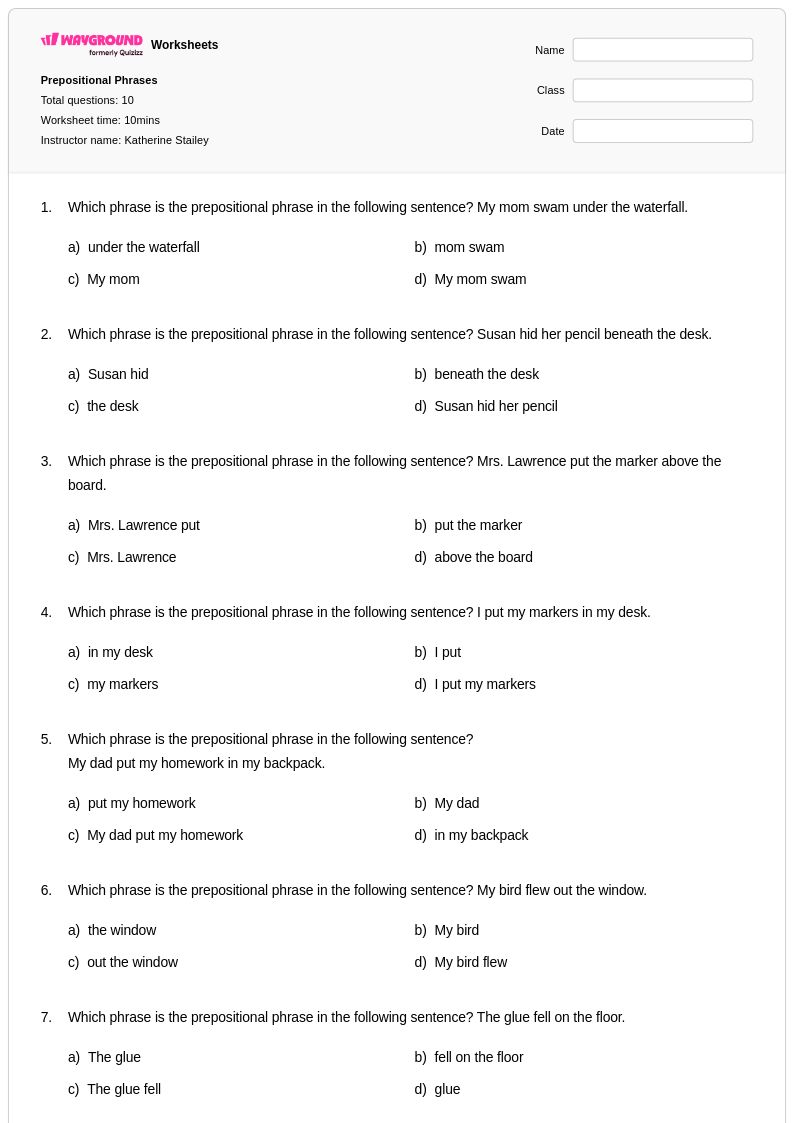
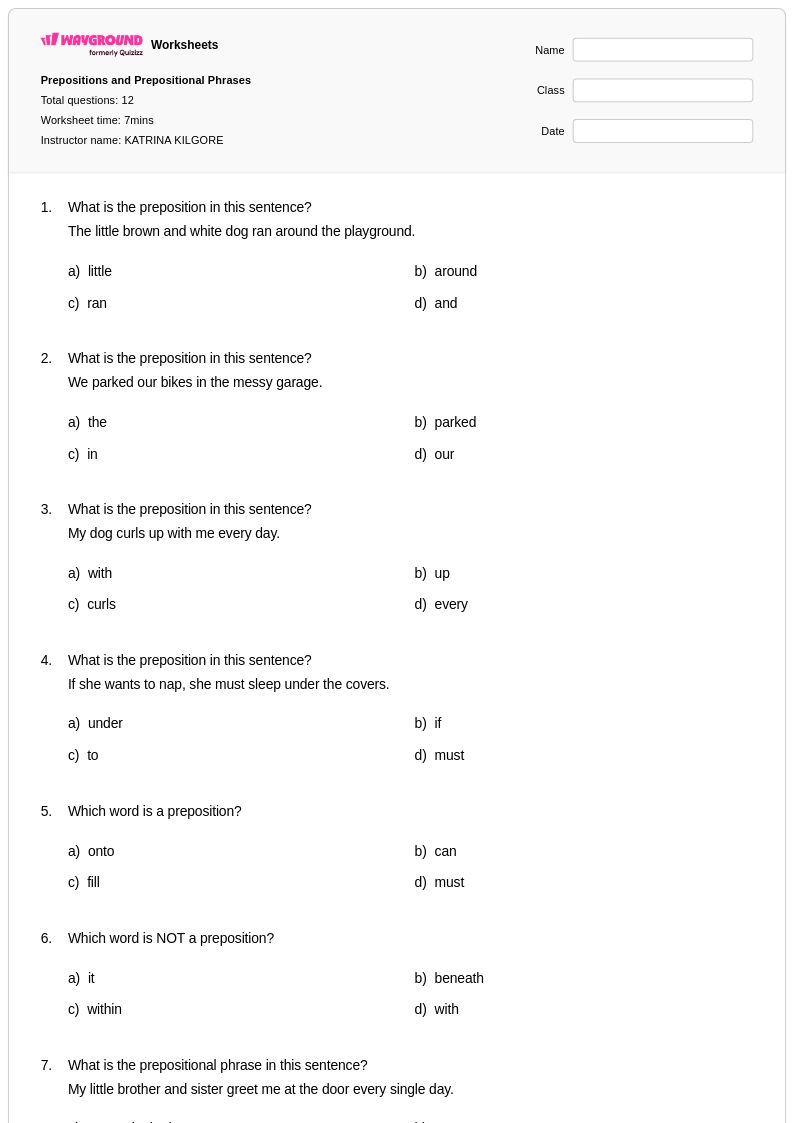
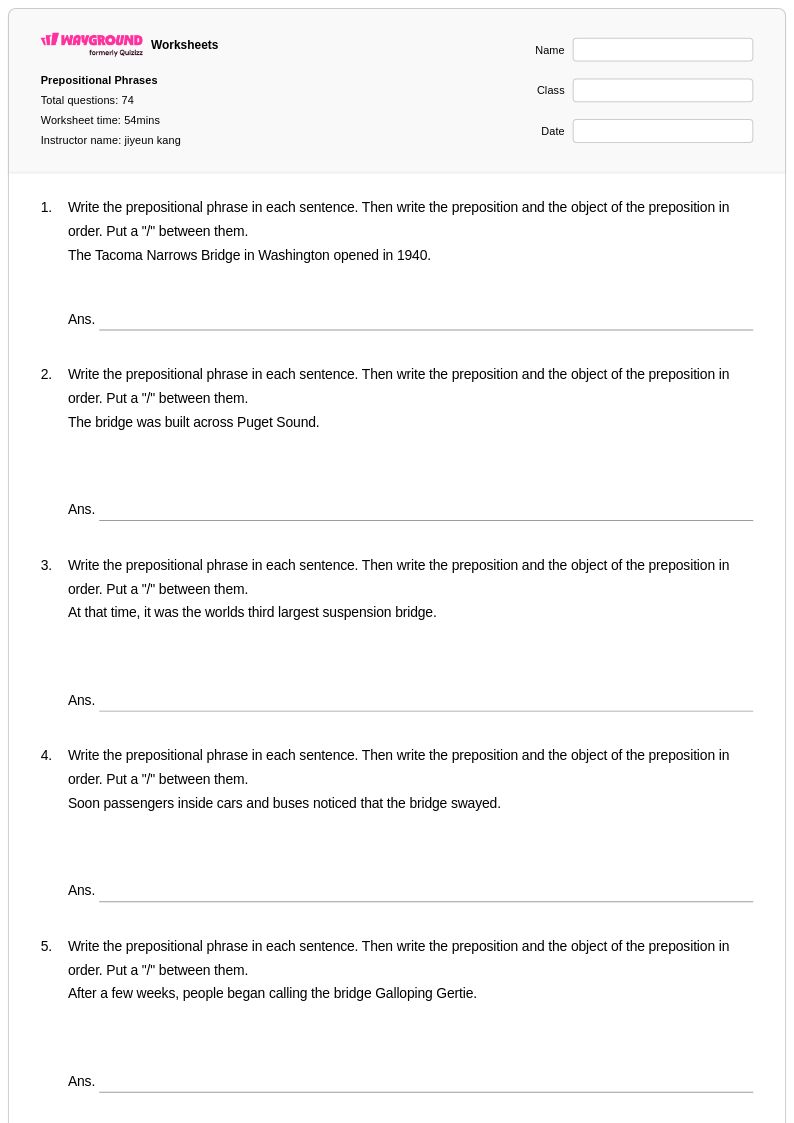
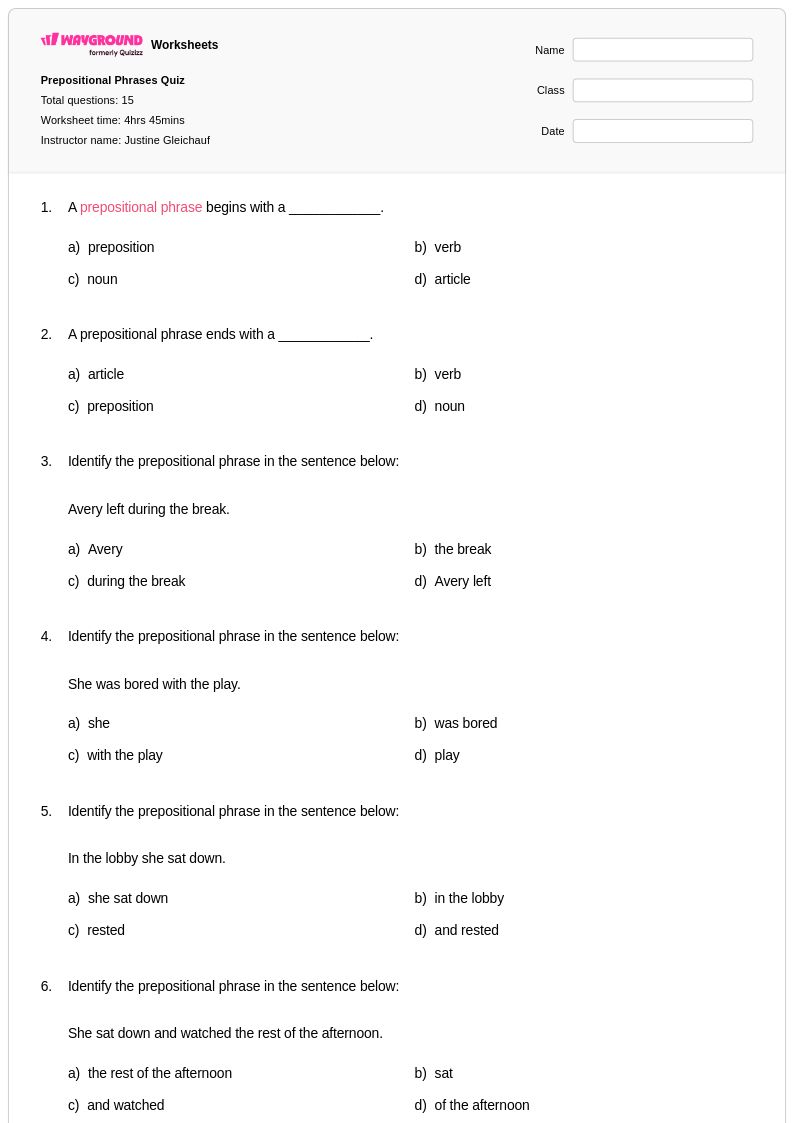
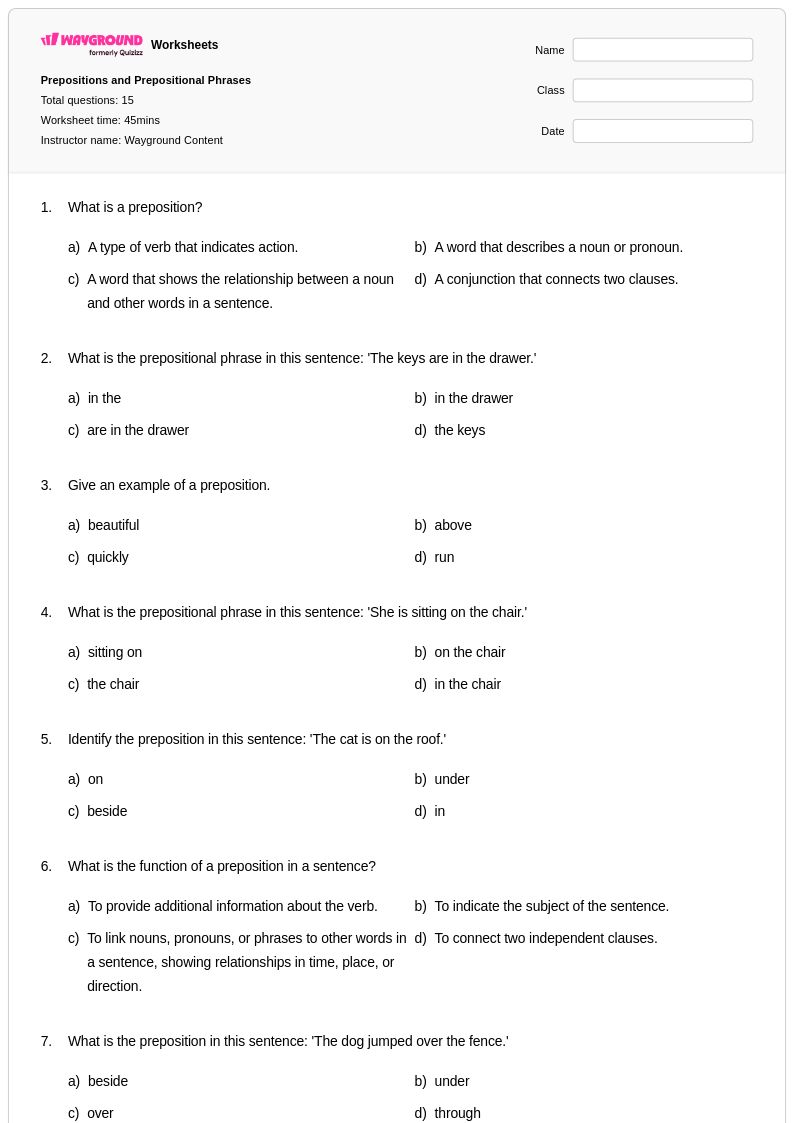
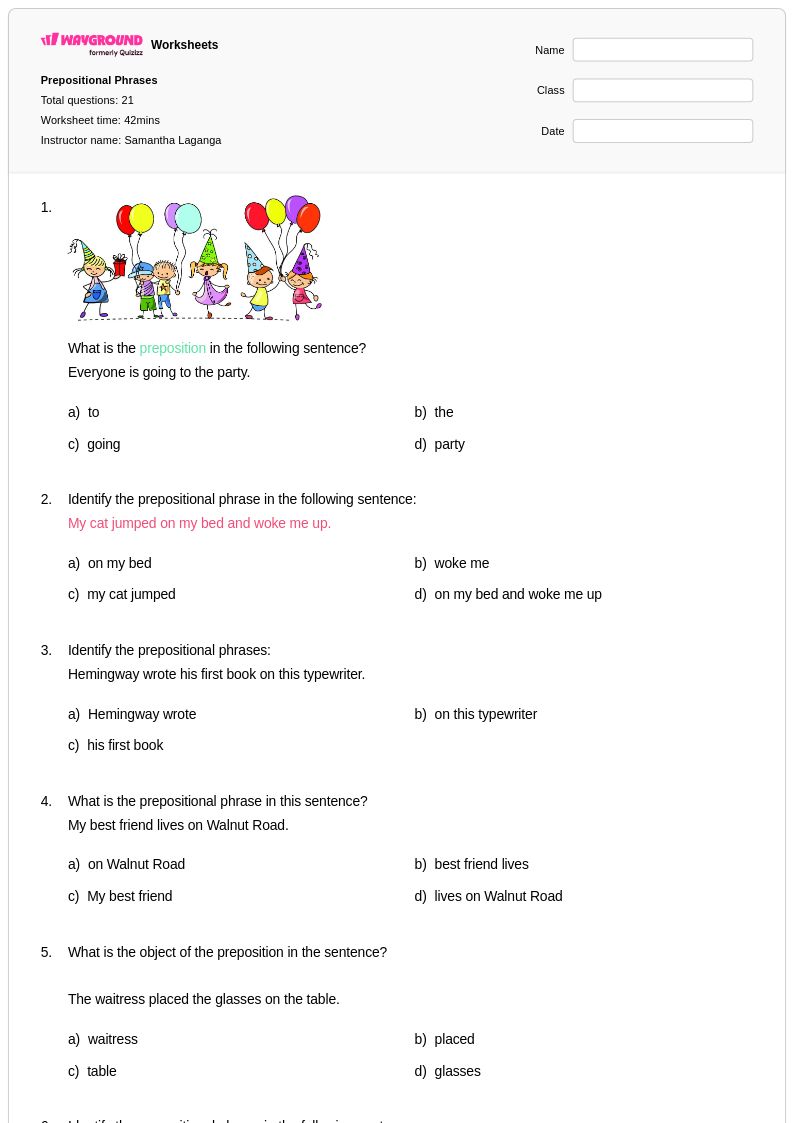
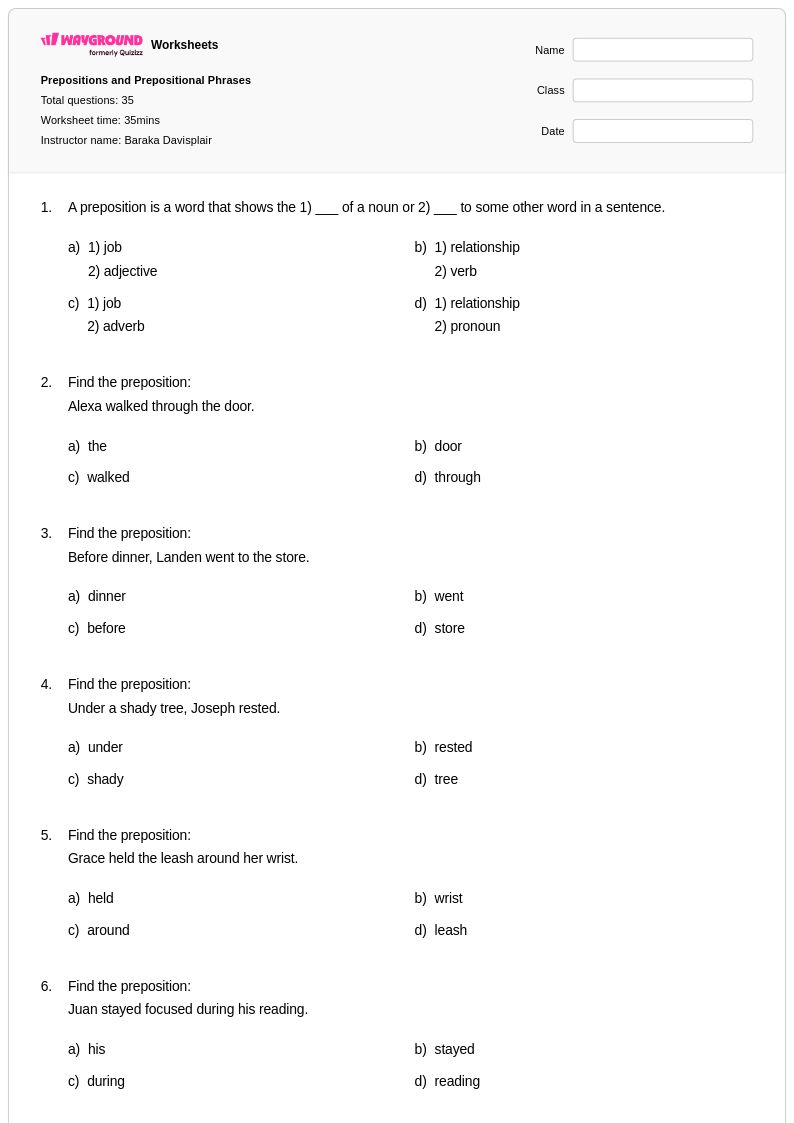
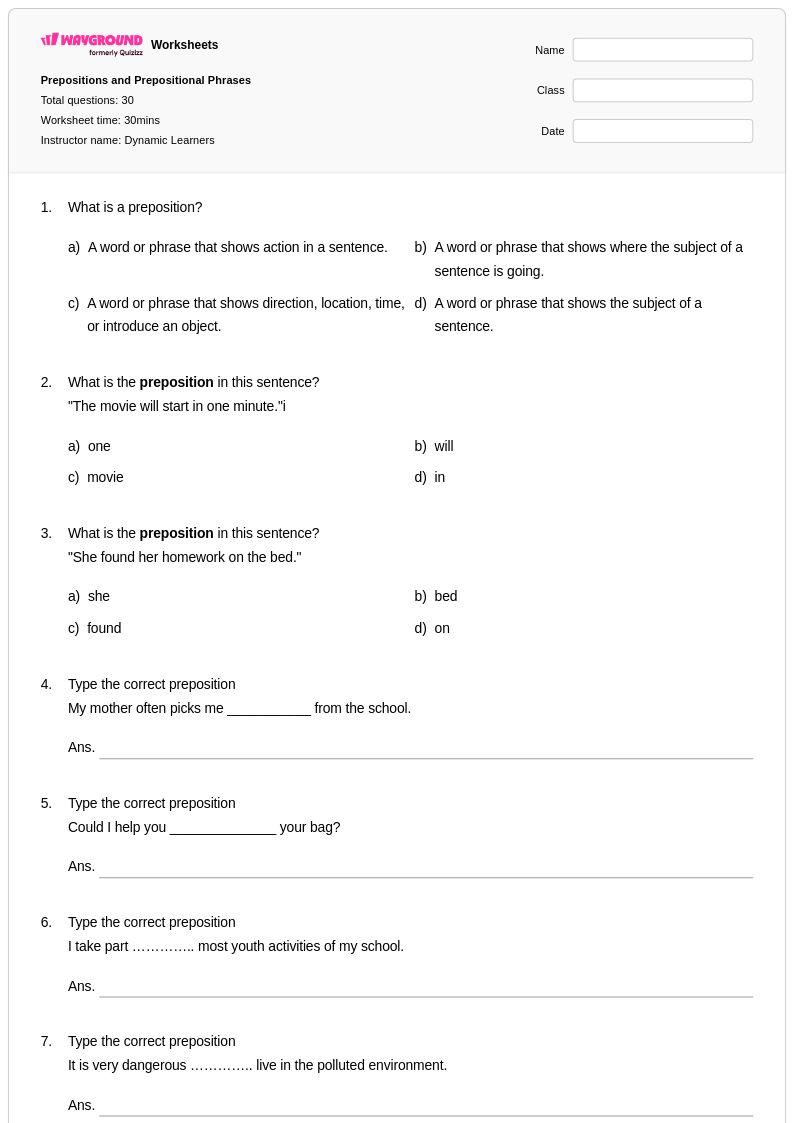
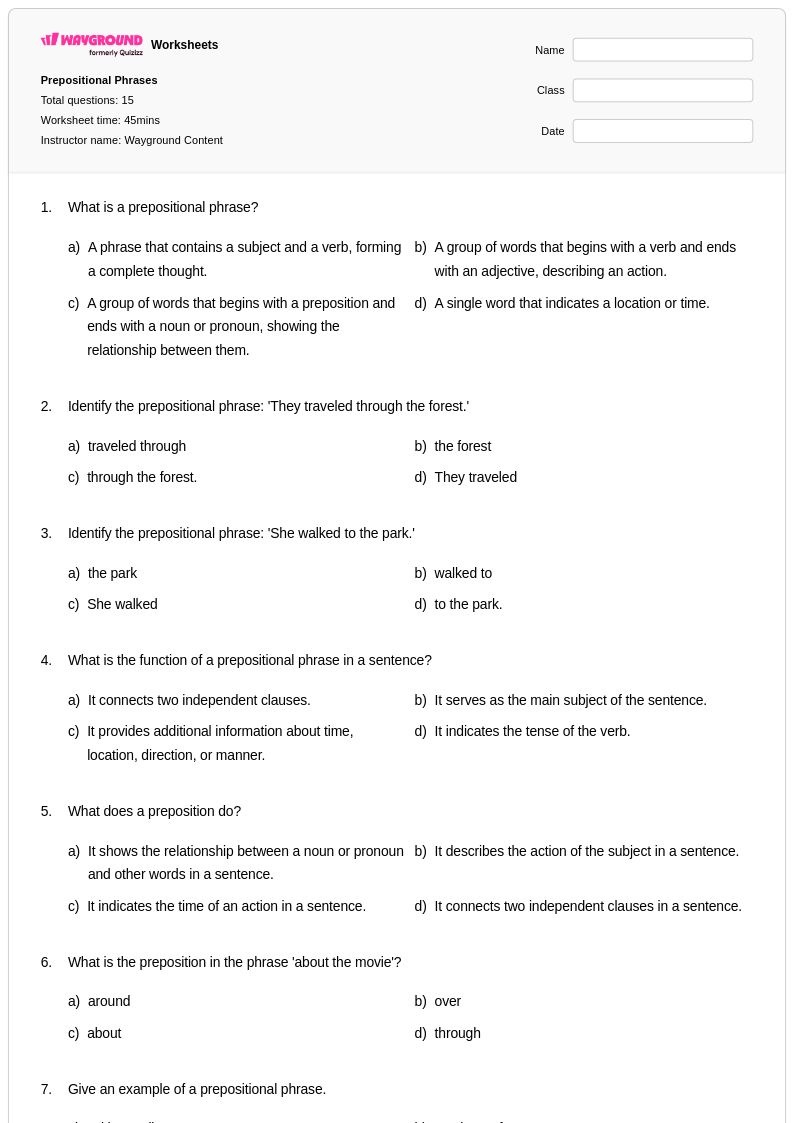
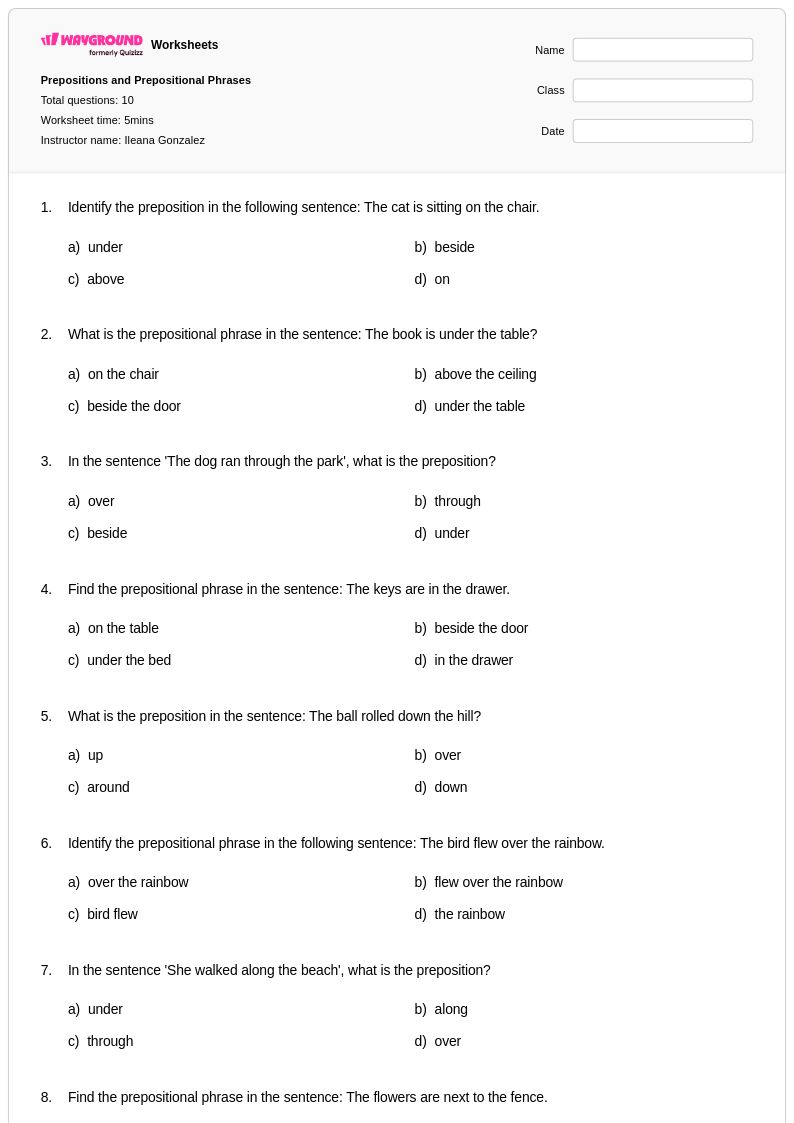
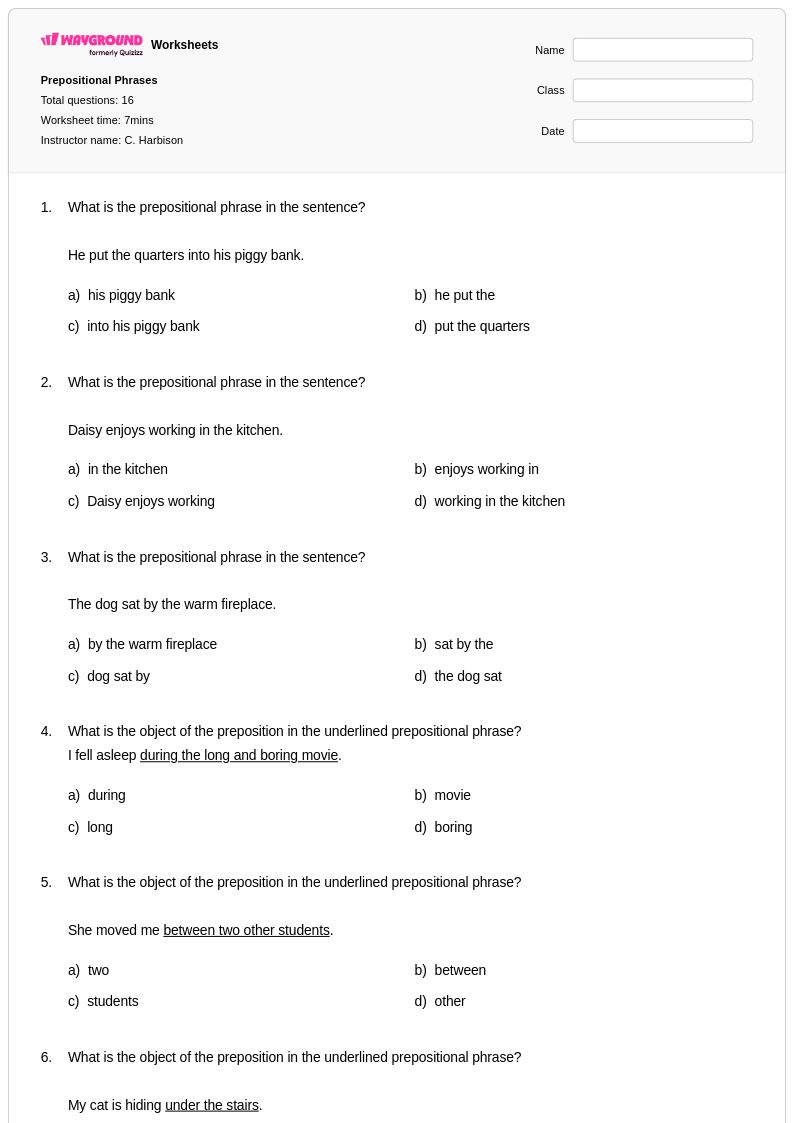
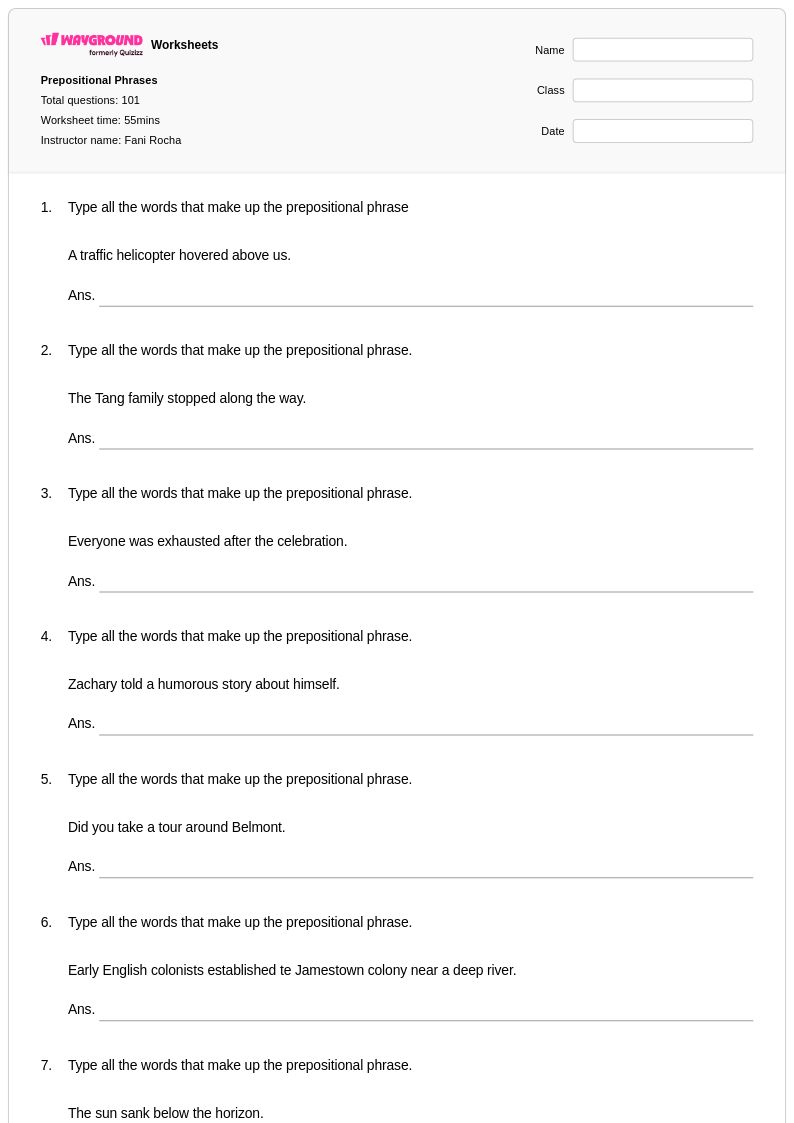
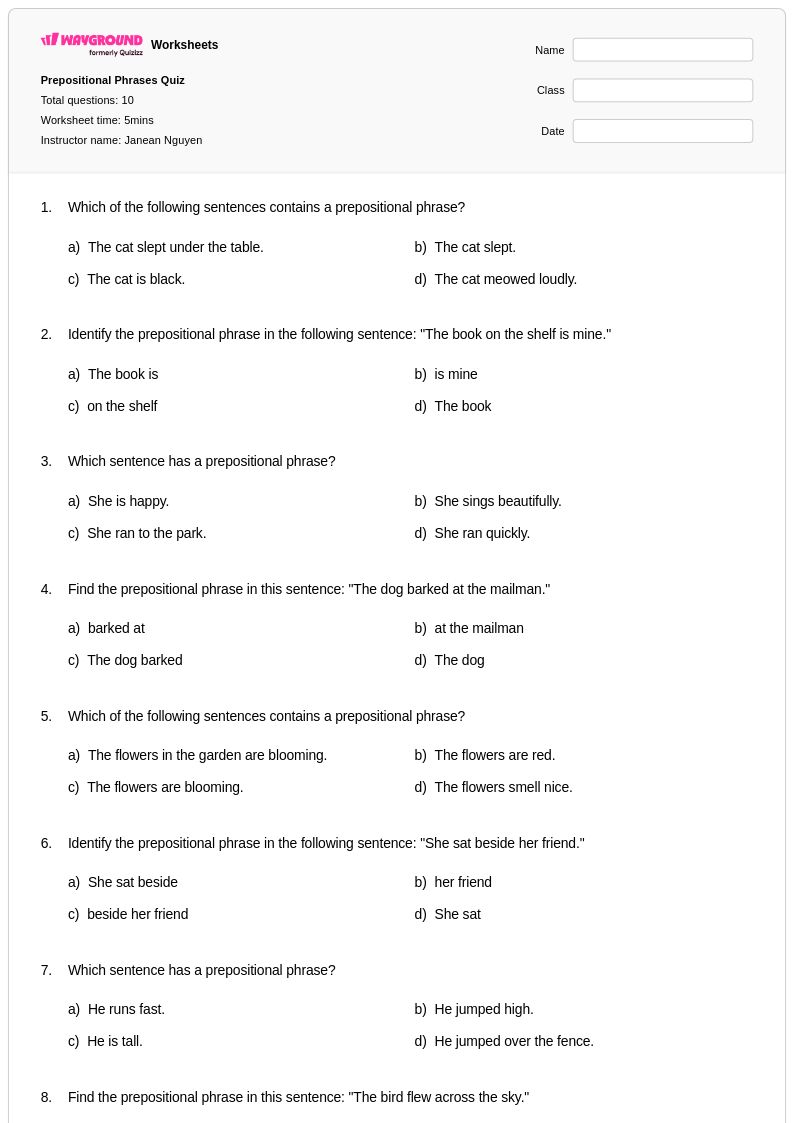
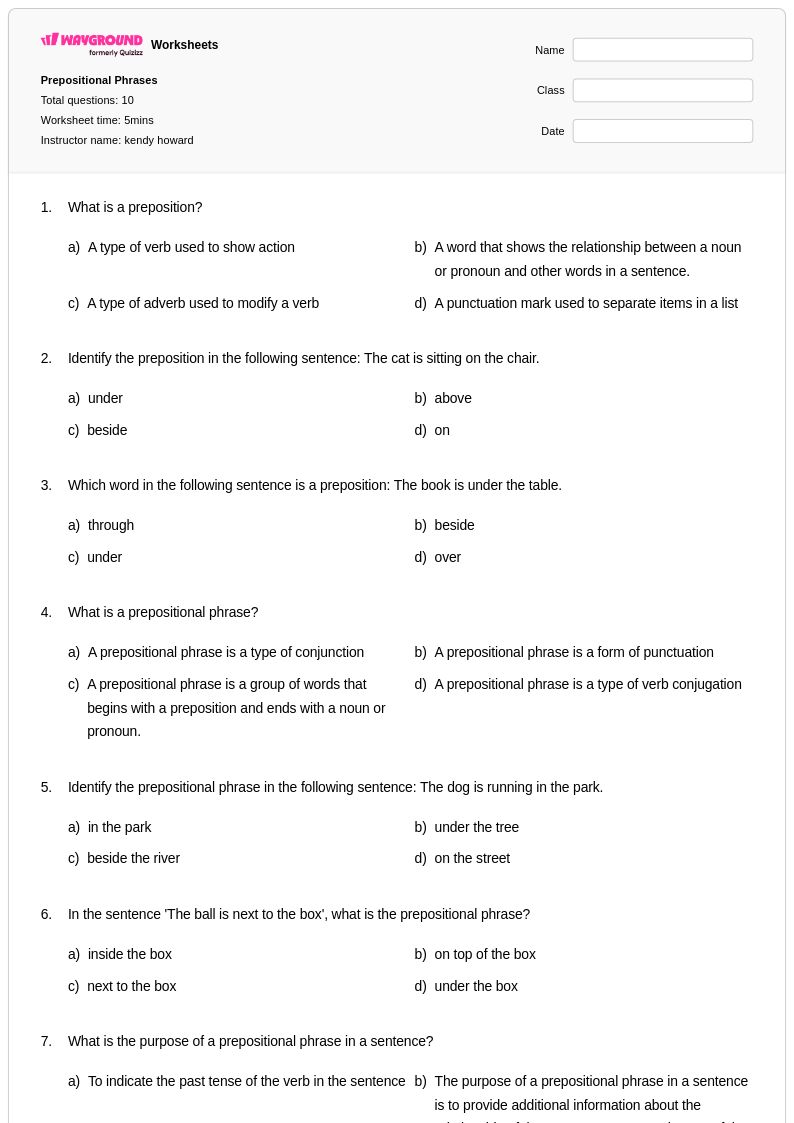
Prepositional phrases represent a fundamental building block of sentence structure that Class 3 students must master to develop strong writing and reading comprehension skills. Wayground's comprehensive collection of prepositional phrase worksheets provides third-grade learners with systematic practice in identifying, understanding, and using these essential grammatical elements. These carefully designed resources help students recognize how prepositions like "under," "beside," "through," and "during" combine with nouns or pronouns to create phrases that describe location, time, and direction within sentences. Each worksheet includes an answer key and focuses on practical application through engaging practice problems that challenge students to locate prepositional phrases in context, complete sentences using appropriate phrases, and create their own examples. Available as free printables in convenient PDF format, these materials strengthen students' ability to analyze sentence structure while building vocabulary and spatial reasoning skills.
Wayground, formerly Quizizz, empowers educators with an extensive library of millions of teacher-created prepositional phrase resources specifically aligned with Class 3 language arts standards. The platform's advanced search and filtering capabilities allow teachers to quickly locate worksheets that match their students' exact learning needs, whether for initial instruction, targeted remediation, or enrichment activities. These differentiation tools enable educators to customize content difficulty levels and provide multiple practice opportunities through both printable and digital formats, including downloadable PDF versions for flexible classroom implementation. Teachers can seamlessly integrate these prepositional phrase worksheets into lesson planning, homework assignments, and assessment preparation, ensuring students receive consistent skill practice that builds confidence in grammatical analysis and prepares them for more advanced language concepts in upper elementary grades.
FAQs
How do I teach prepositional phrases to students who are struggling with grammar?
Start by anchoring instruction to a short list of the most common prepositions (in, on, at, by, with, under, between) and have students physically locate them in sentences before identifying the full phrase. Teach students to find the preposition first, then ask 'what?' or 'whom?' to find the object, which isolates the phrase reliably. Once students can identify phrases in isolation, move to sentences where the phrase modifies a noun or verb so they begin to see the grammatical role it plays.
What exercises help students practice identifying prepositional phrases in sentences?
Effective practice exercises include underlining or bracketing prepositional phrases in mentor sentences, sorting phrases by function (adjective vs. adverb), and rewriting sentences with phrases moved to different positions to see how meaning shifts. Gap-fill exercises where students supply a missing preposition or object reinforce both identification and construction skills. Working with authentic texts, such as excerpts from novels or nonfiction, helps students transfer recognition skills beyond controlled practice.
What mistakes do students commonly make when working with prepositional phrases?
The most common error is confusing the object of the preposition with the subject of the sentence, which leads to subject-verb agreement mistakes (e.g., treating the noun inside the phrase as the subject). Students also frequently misidentify infinitives like 'to run' as prepositional phrases because 'to' can function as a preposition in other contexts. A third recurring issue is omitting the object entirely, writing a preposition without completing the phrase, which leaves the sentence grammatically incomplete.
How can I use prepositional phrase worksheets to differentiate instruction for mixed-ability classrooms?
For students who need additional support, reducing the number of answer choices on identification tasks lowers cognitive load while still building the target skill. On Wayground, teachers can assign accommodations such as reduced answer choices or read-aloud support to individual students without alerting the rest of the class, so differentiation happens seamlessly. Higher-performing students can be challenged with open-ended construction tasks that require them to add prepositional phrases to plain sentences and explain the grammatical function of each phrase they add.
How do I use Wayground's prepositional phrases worksheets in my classroom?
Wayground's prepositional phrase worksheets are available as printable PDFs for traditional classroom use and in digital formats for technology-integrated instruction, including the option to host the worksheet as a quiz directly on the Wayground platform. Teachers can use the search and filtering tools to find materials aligned to specific learning standards and student skill levels. The included answer keys make these worksheets practical for independent practice, homework assignments, and targeted remediation without requiring additional teacher preparation.
How do prepositional phrases function differently as adjectives versus adverbs?
A prepositional phrase functions as an adjective when it modifies a noun or pronoun, answering questions like 'which one?' or 'what kind?' (e.g., 'the book on the shelf'). It functions as an adverb when it modifies a verb, adjective, or another adverb, answering questions like 'where?', 'when?', 'how?', or 'to what extent?' (e.g., 'she ran through the park'). Teaching students to ask these guiding questions helps them consistently determine the phrase's grammatical role rather than guessing.