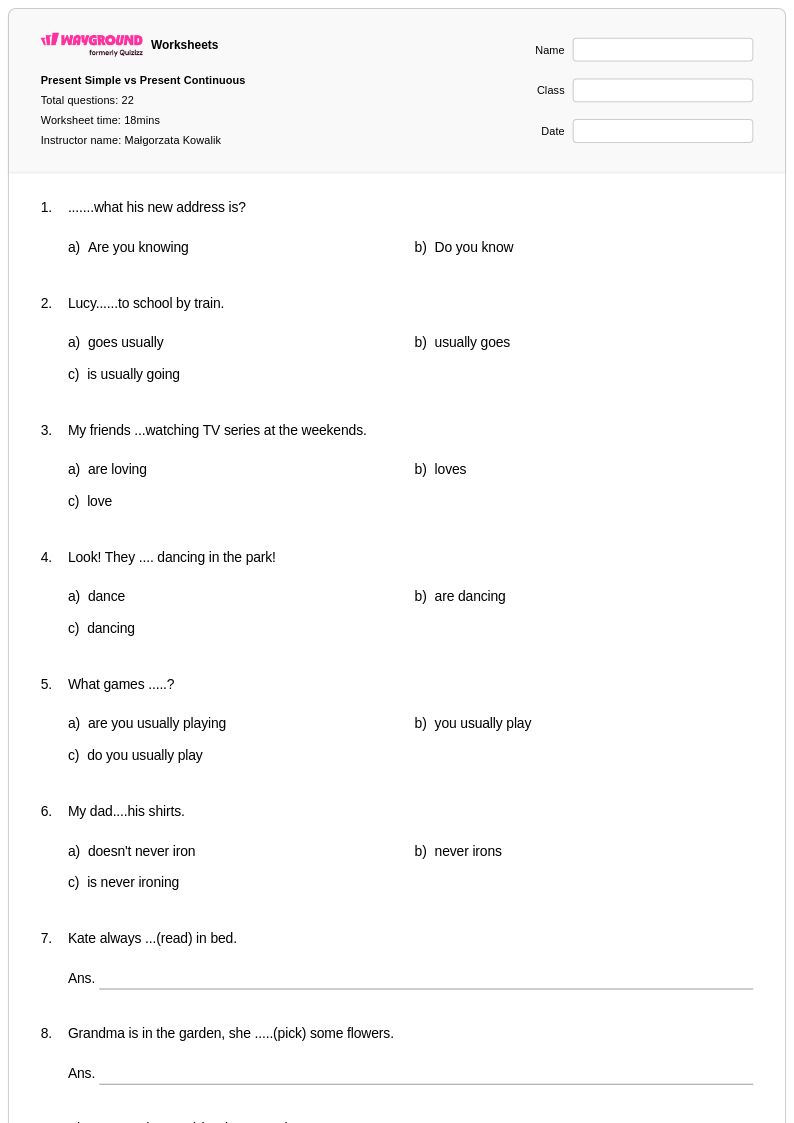
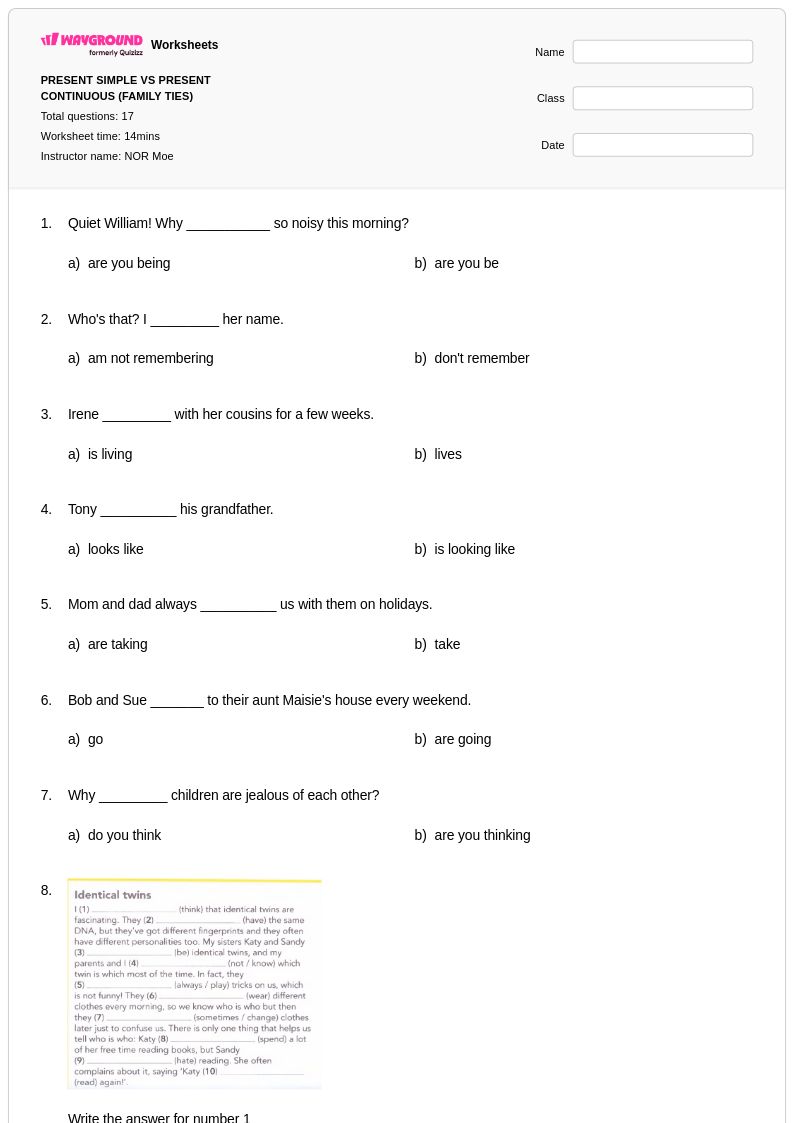
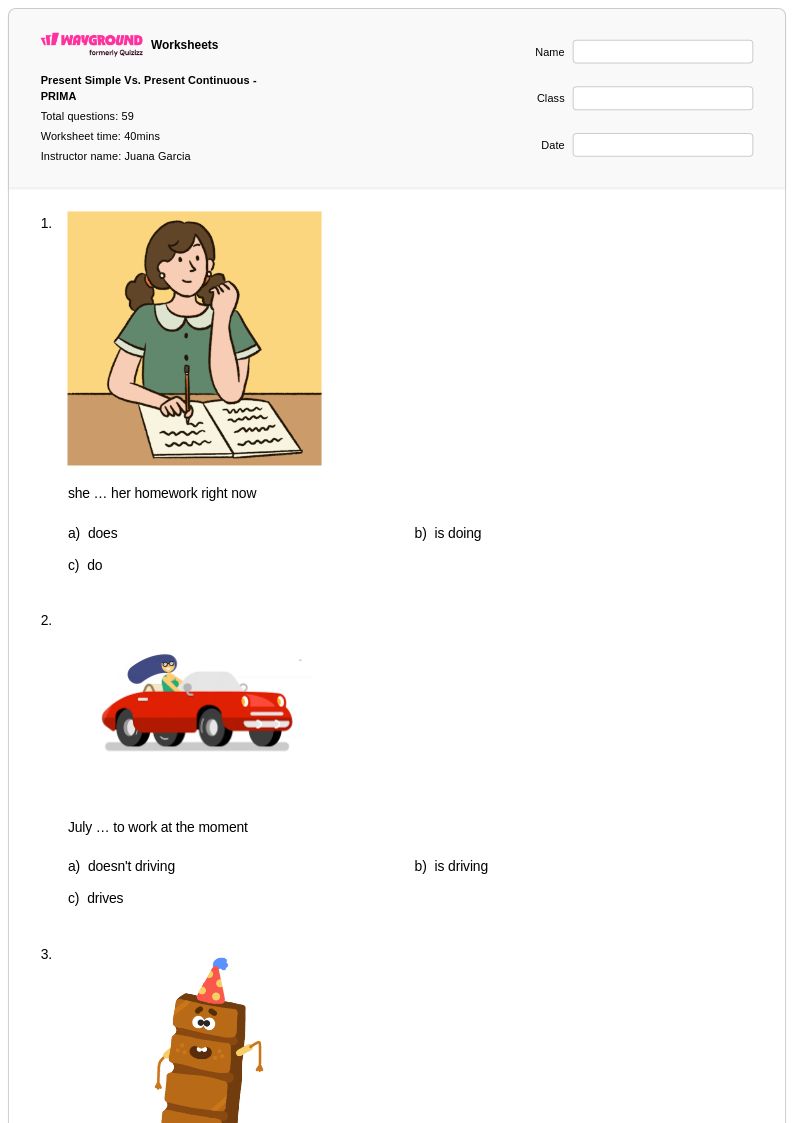
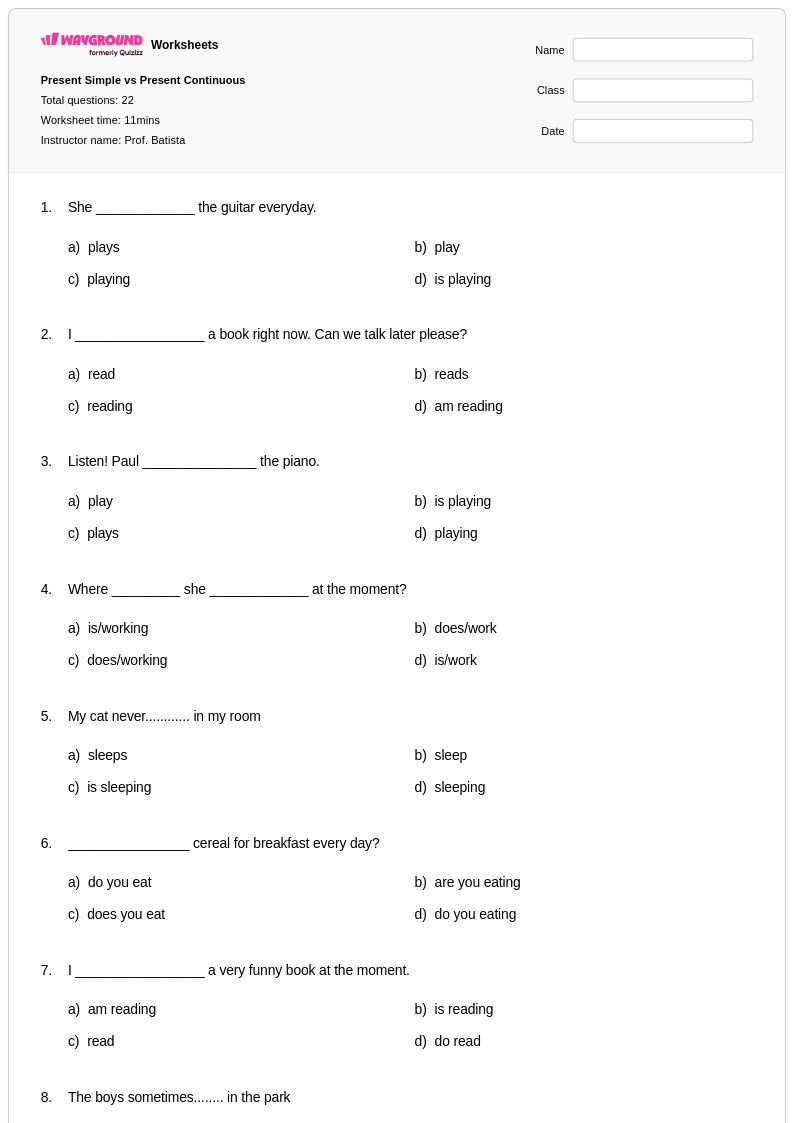
Free Printable Present Simple vs Present Continuous Worksheets for Class 8
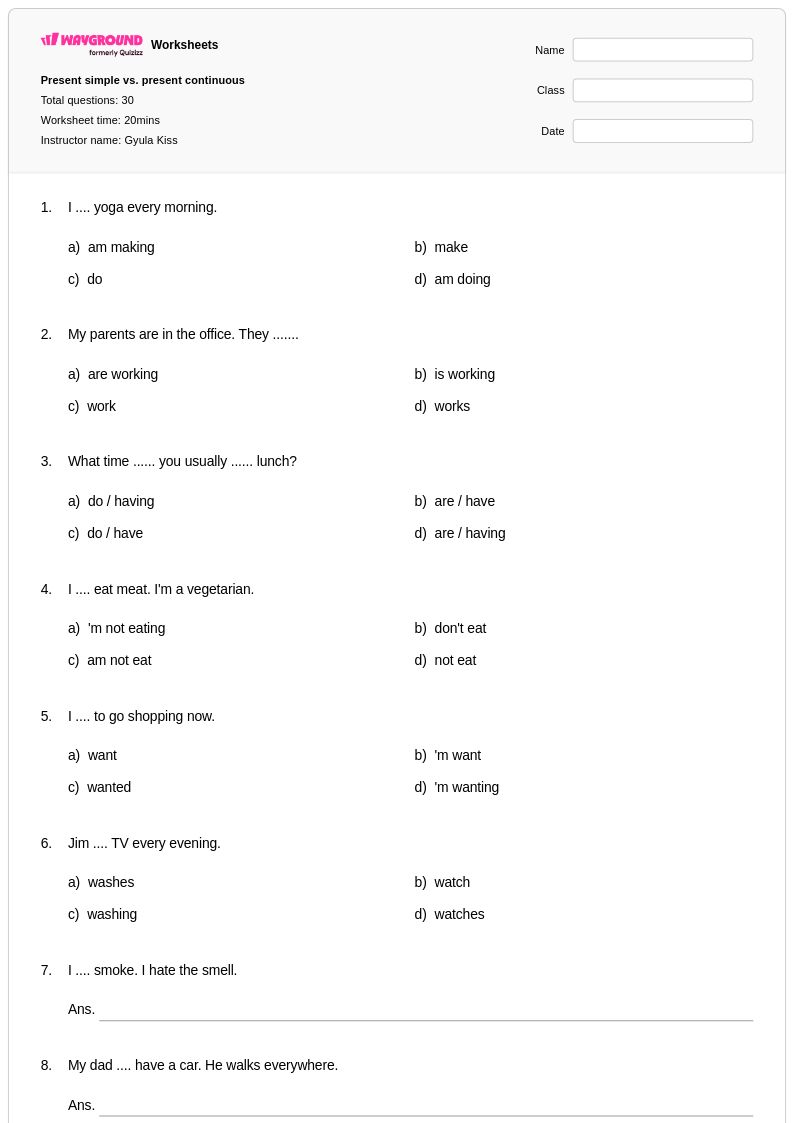
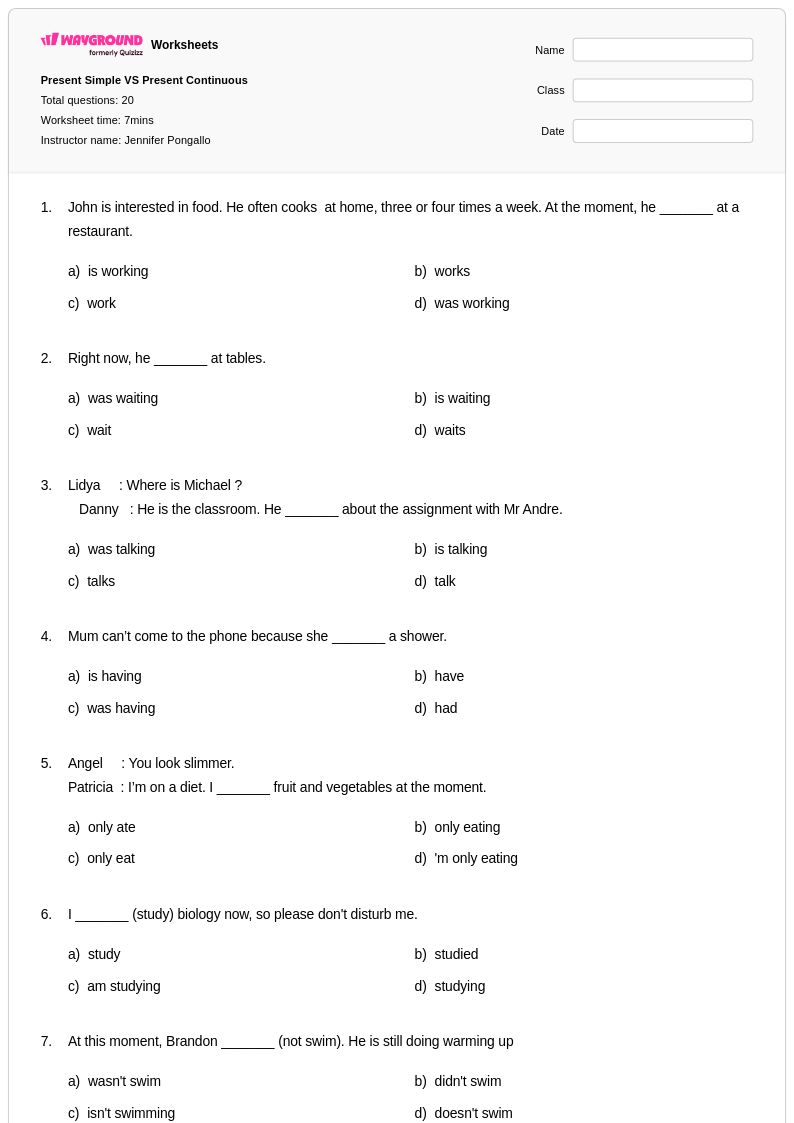
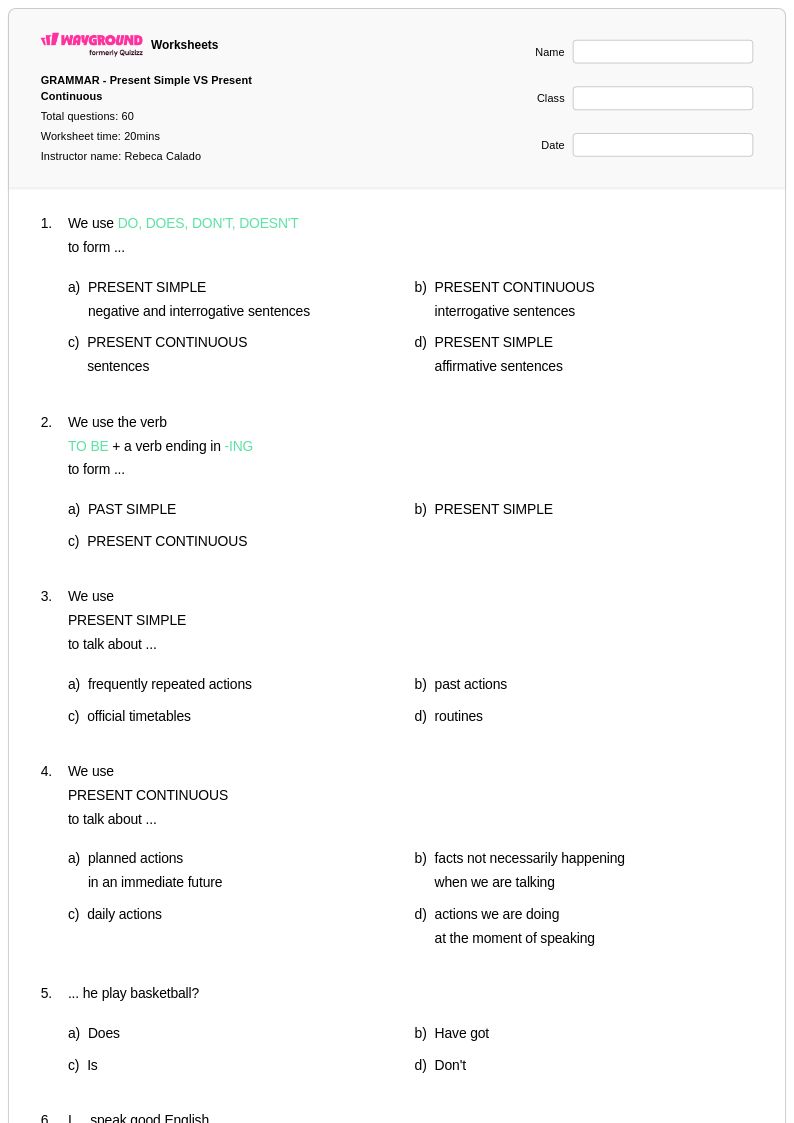
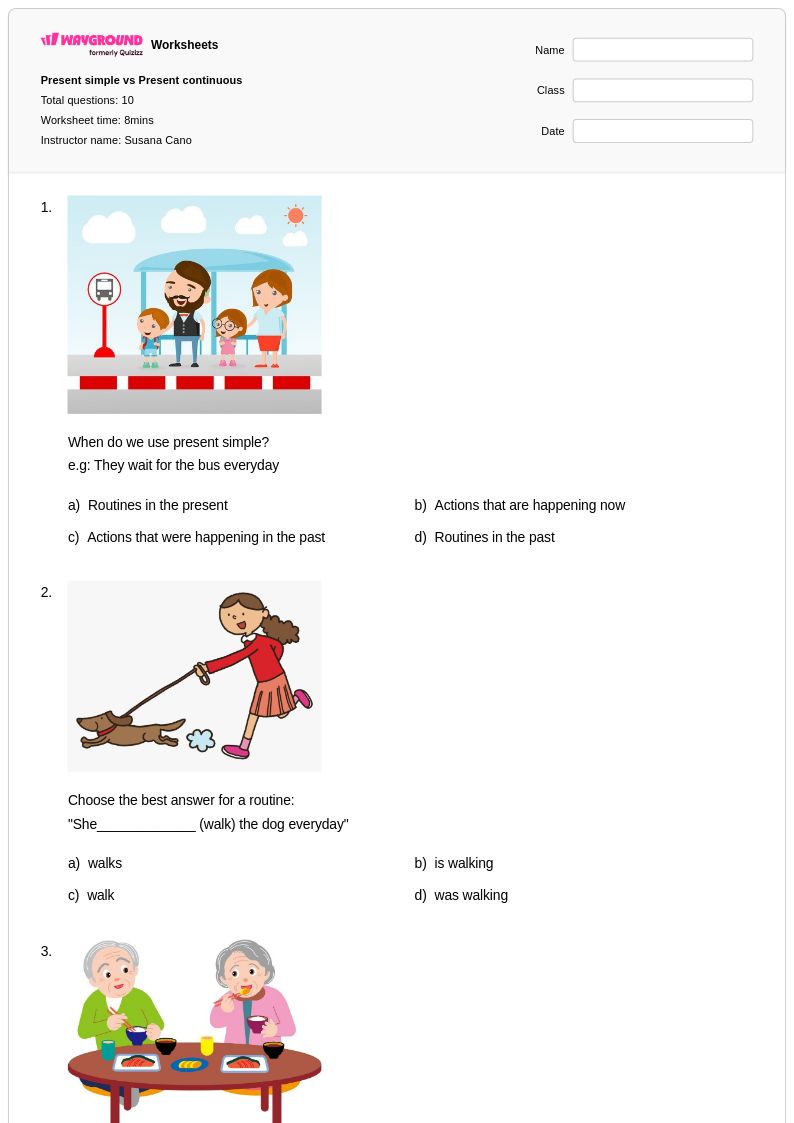
Class 8 students can master the difference between Present Simple and Present Continuous verb tenses with Wayground's comprehensive collection of free worksheets, printables, and practice problems with complete answer keys.
Explore printable Present Simple vs Present Continuous worksheets for Class 8
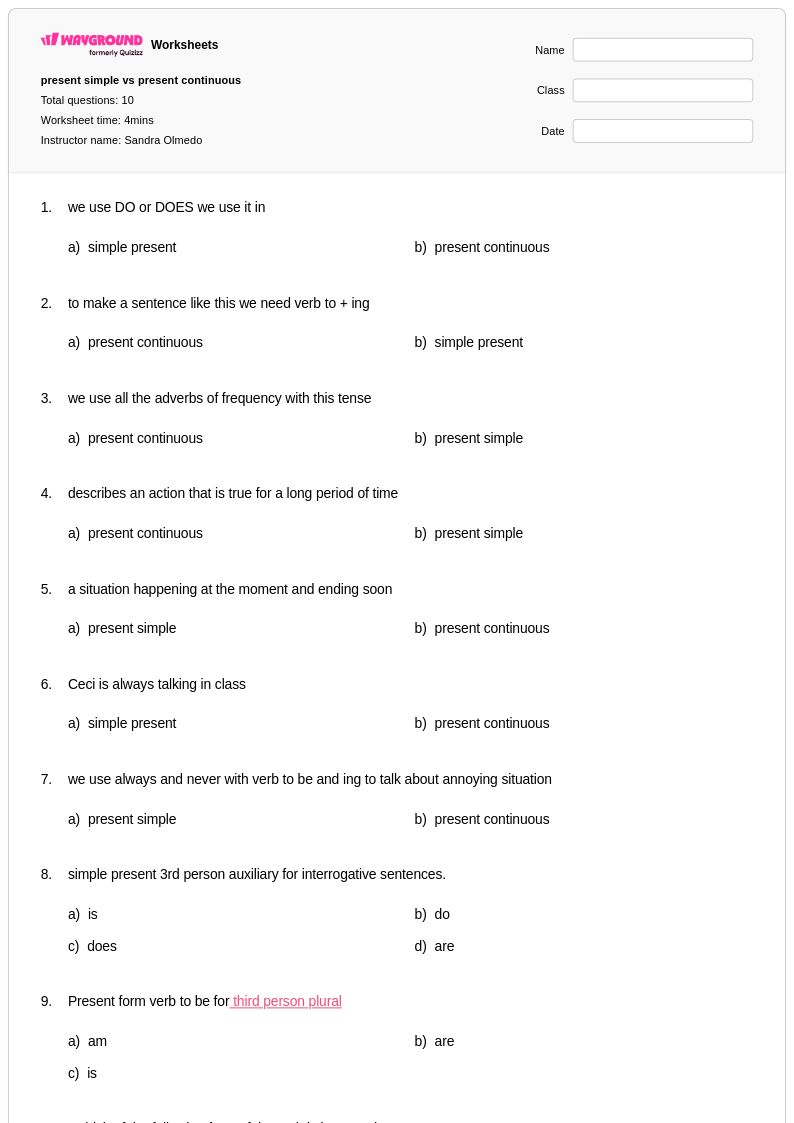
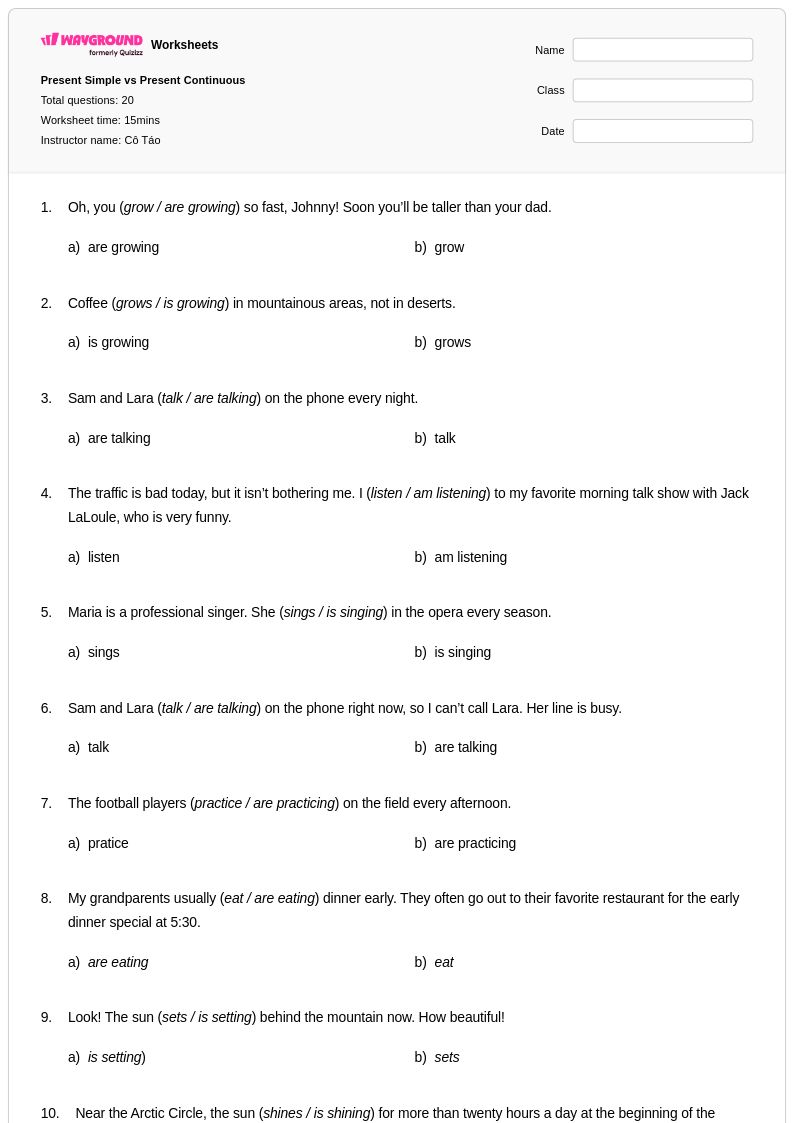
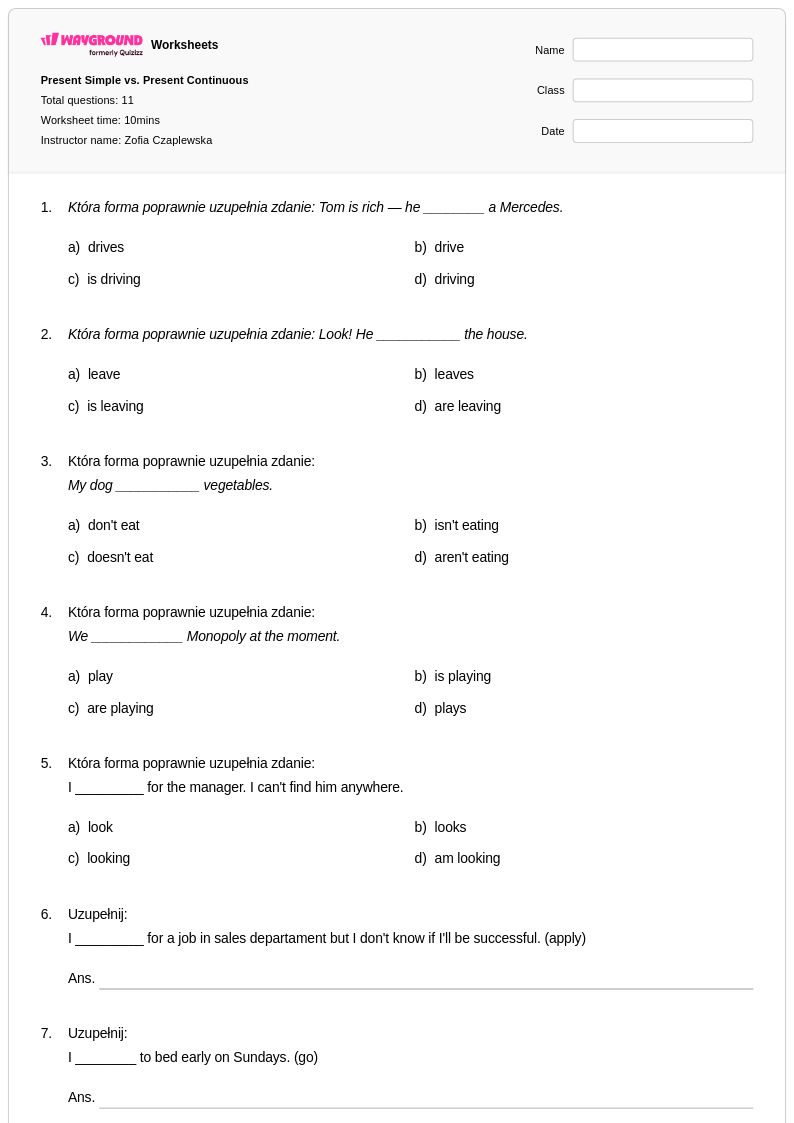
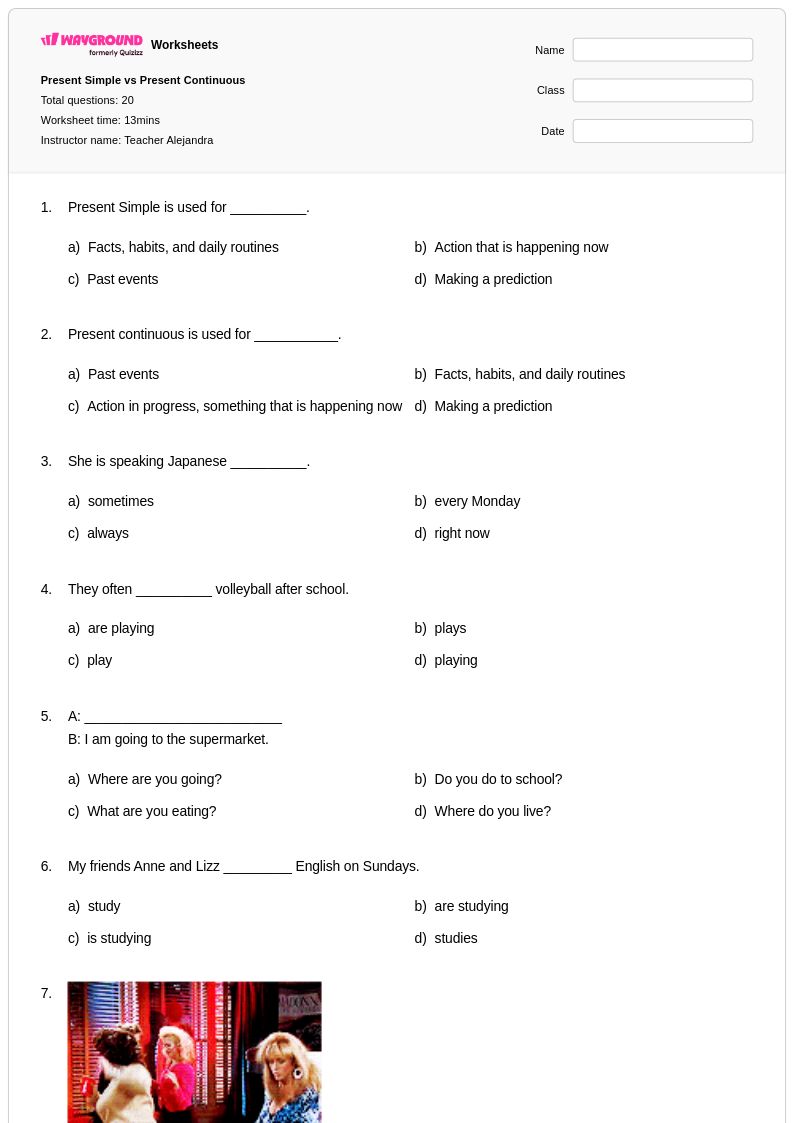
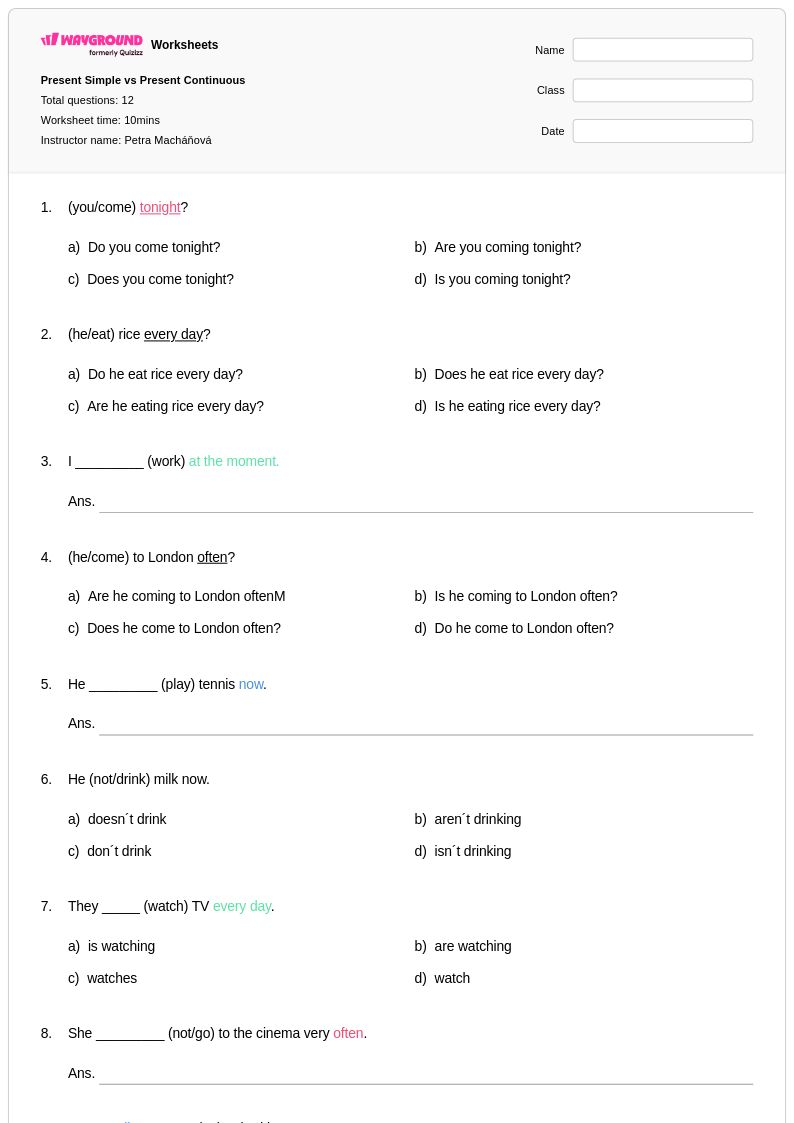
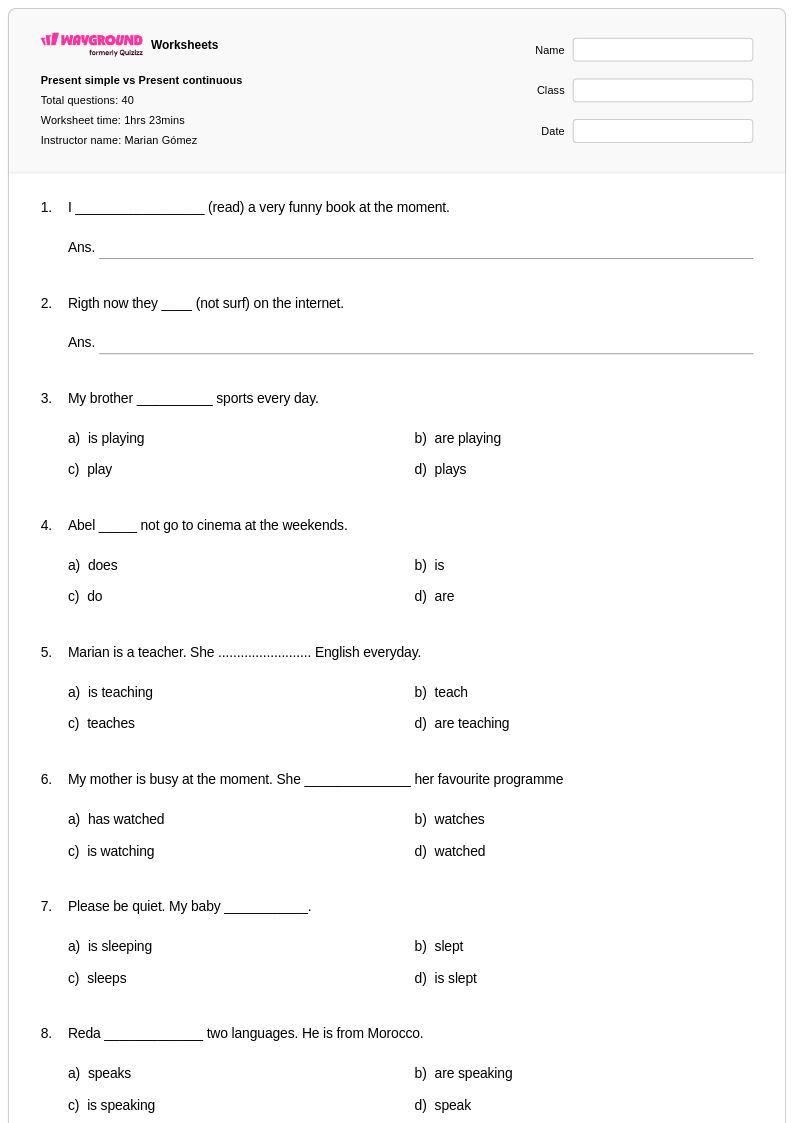
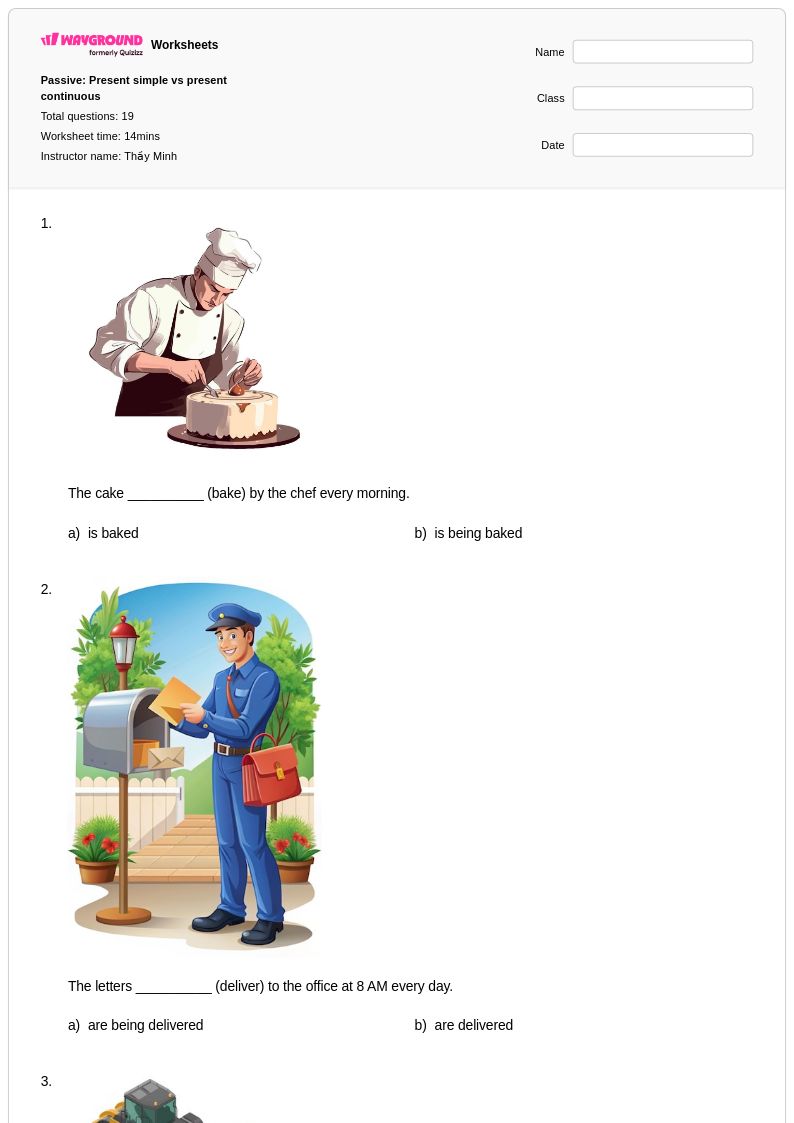
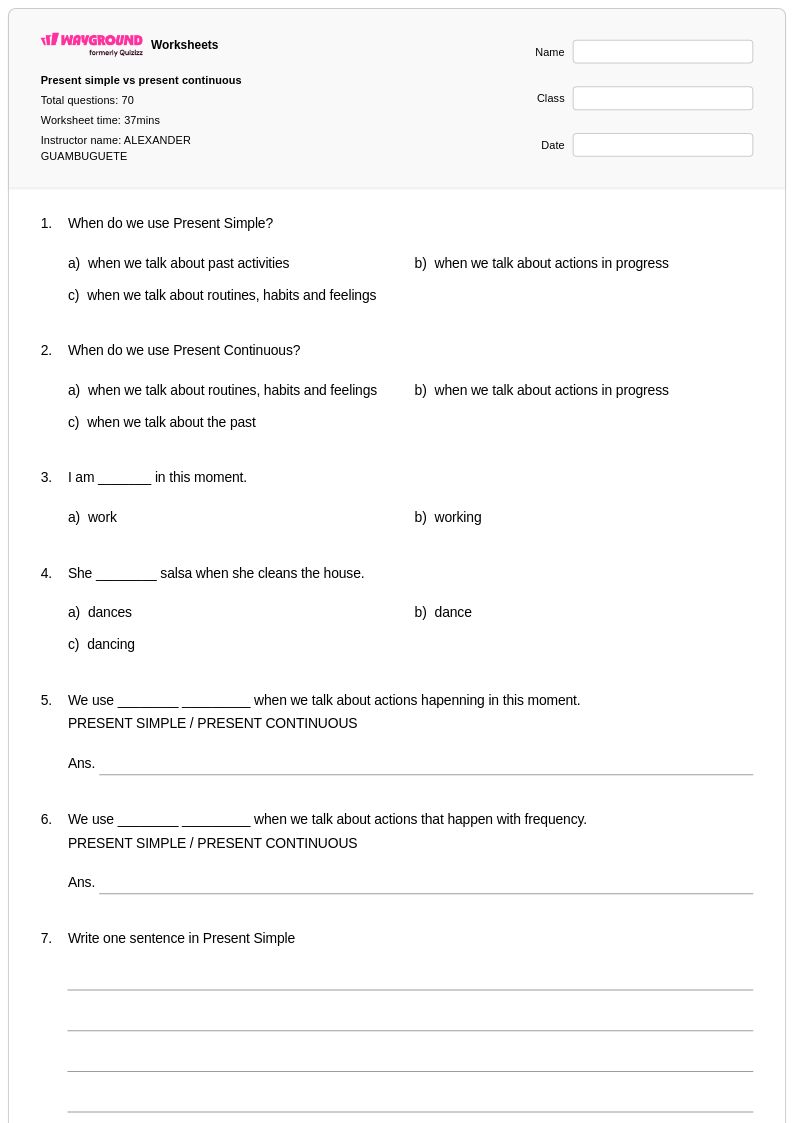
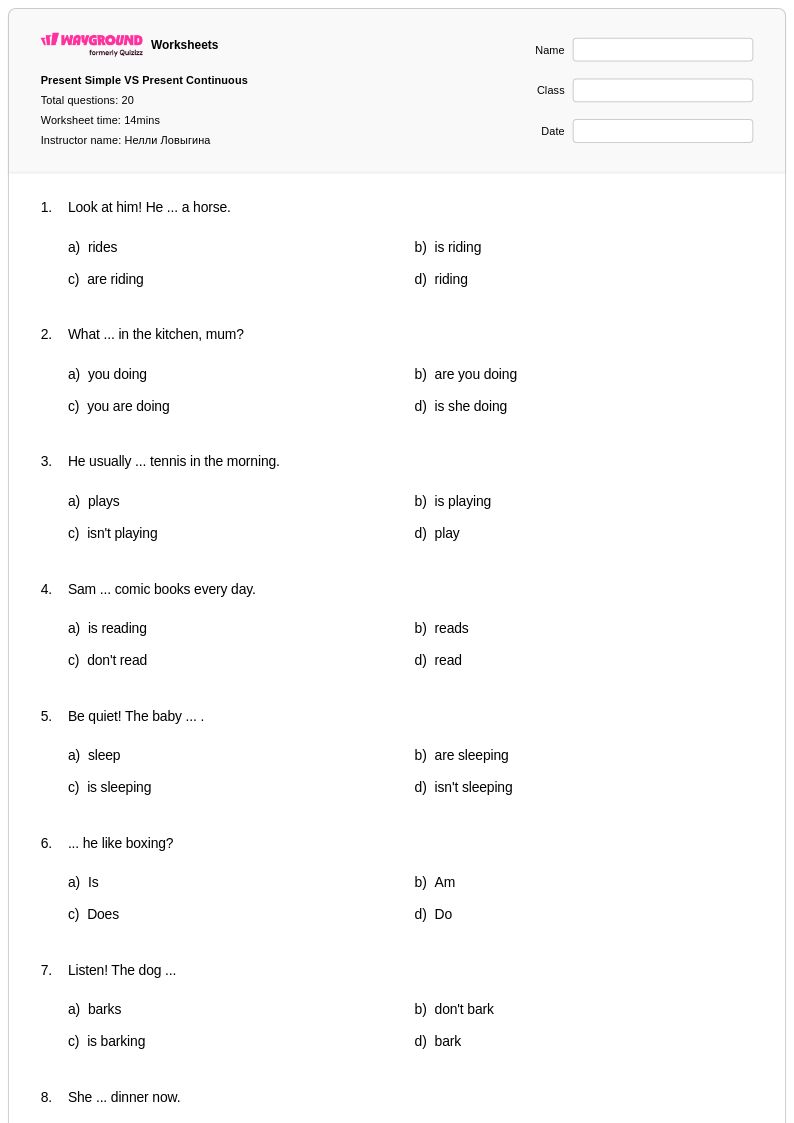
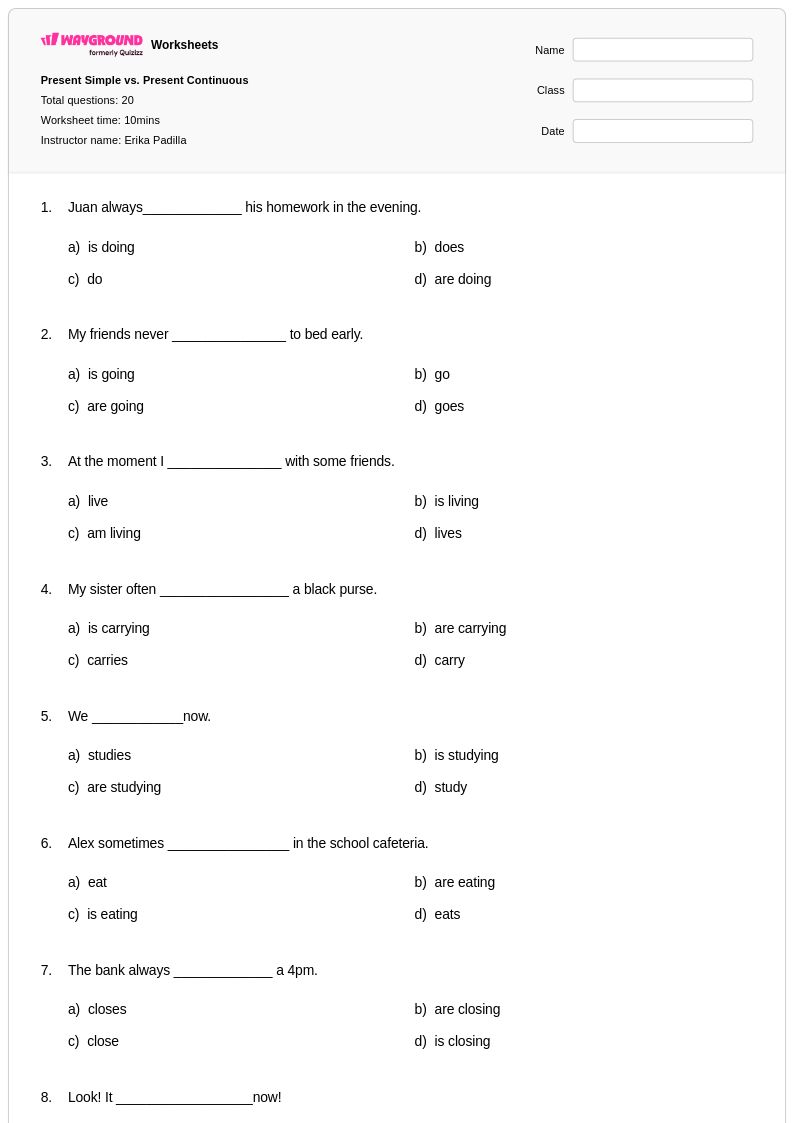
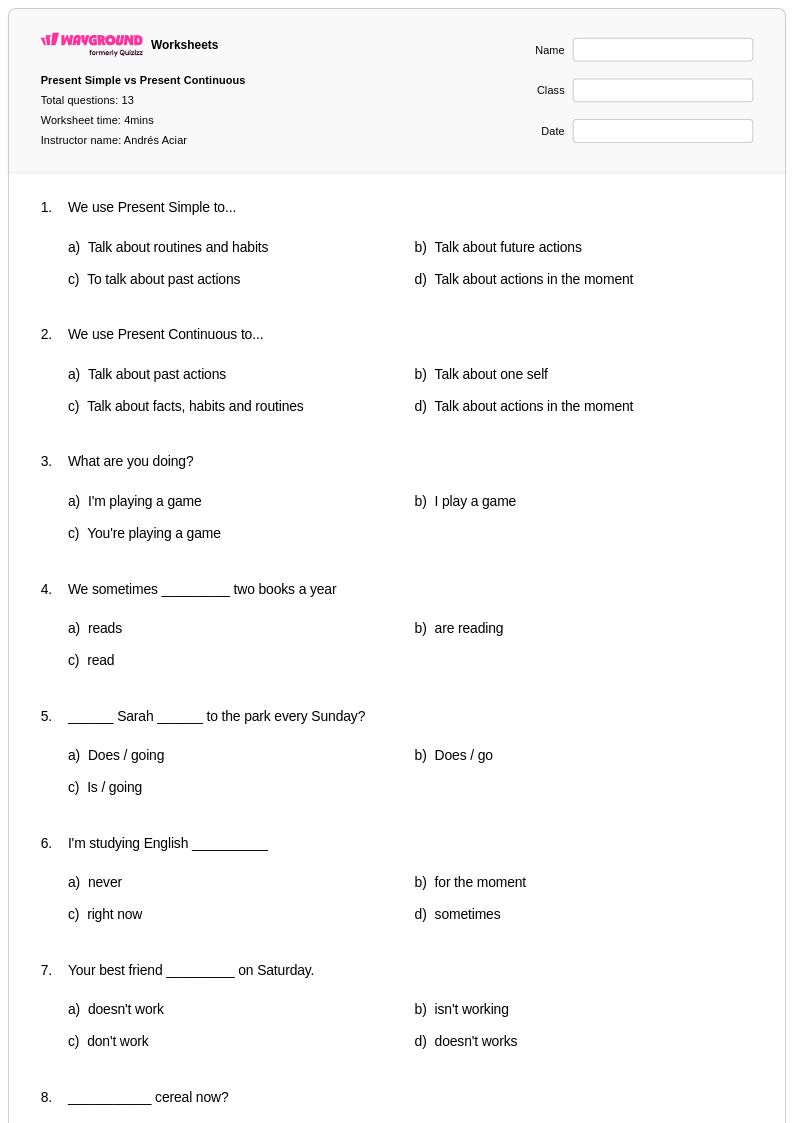
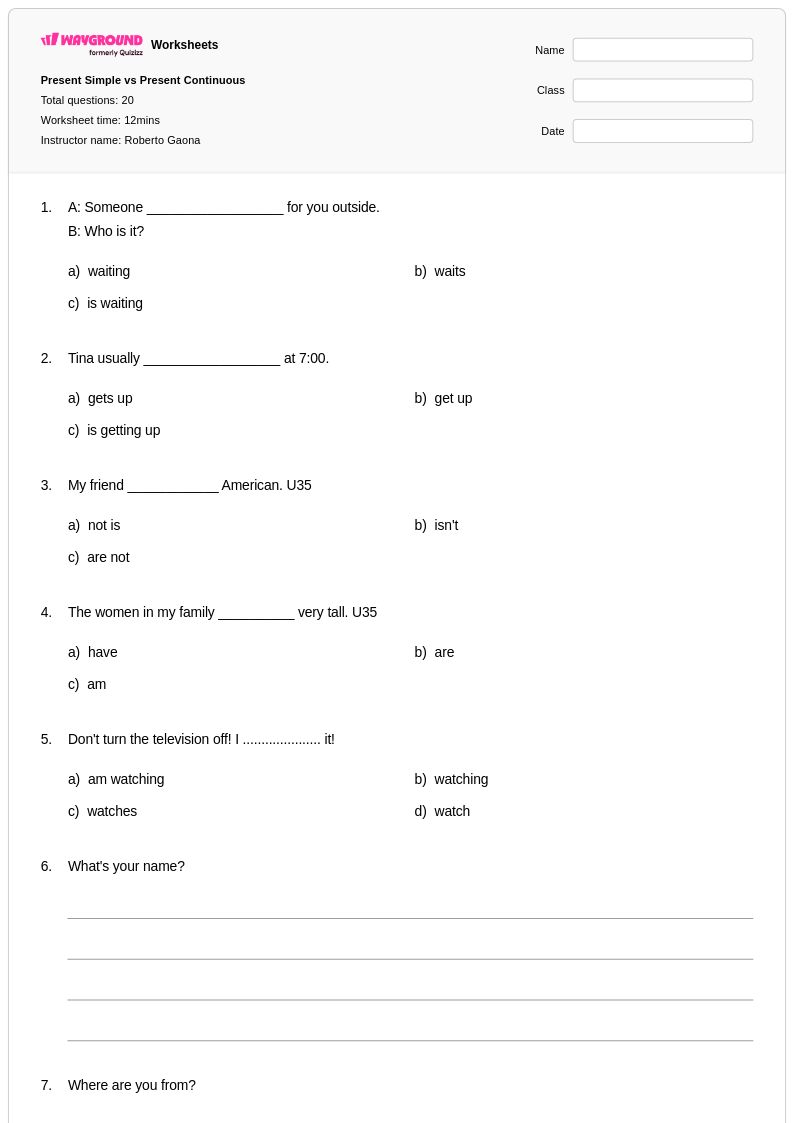
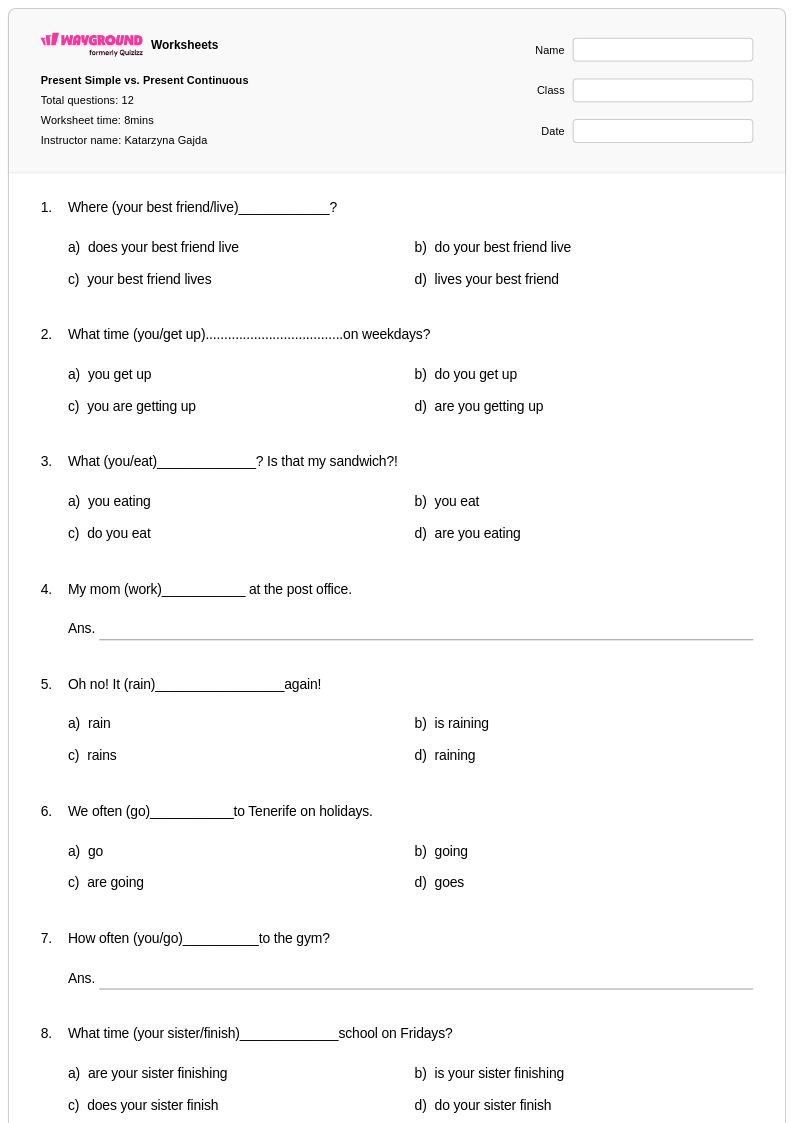
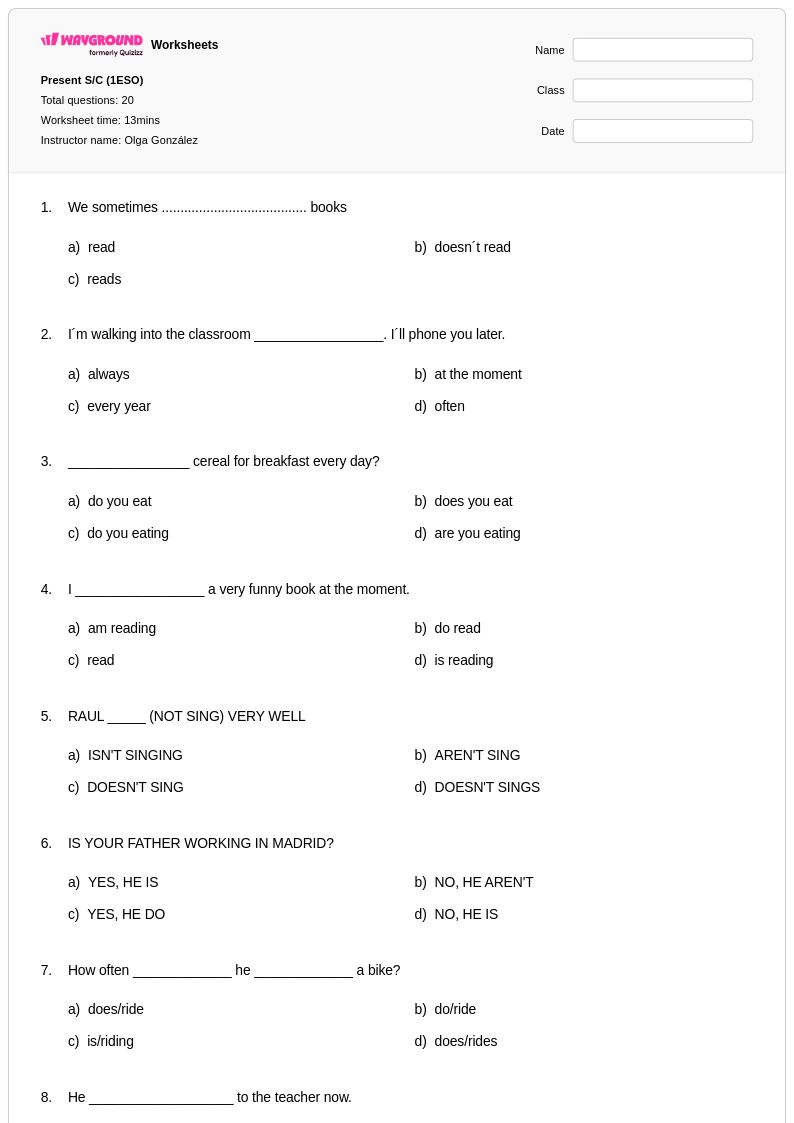
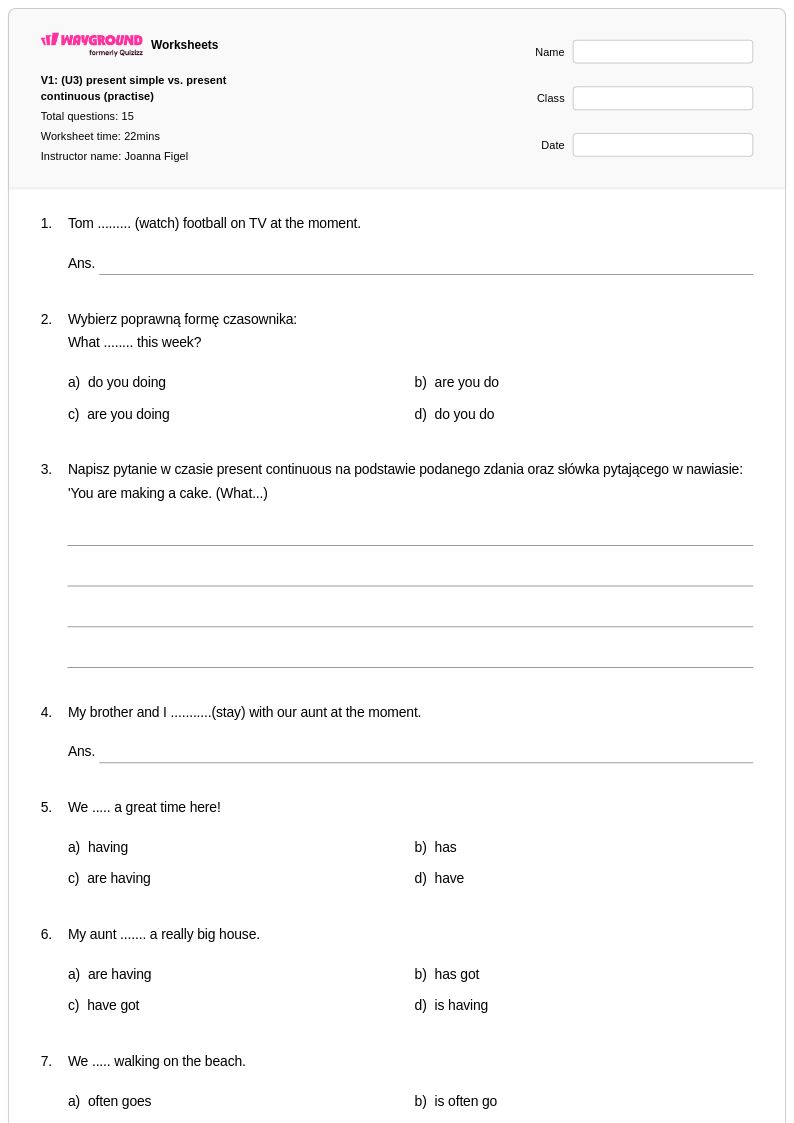
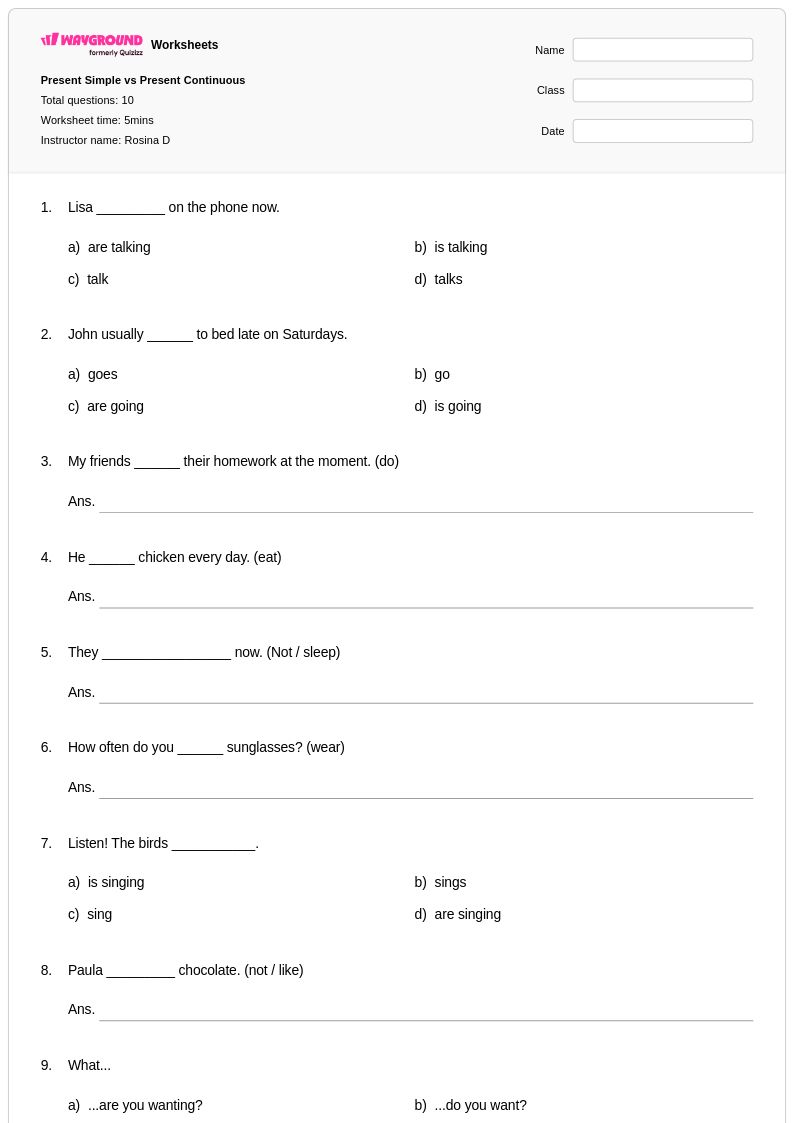
Present Simple vs Present Continuous worksheets for Class 8 students through Wayground (formerly Quizizz) provide comprehensive practice in distinguishing between these two fundamental verb tenses that often challenge middle school learners. These expertly crafted worksheets strengthen students' ability to recognize when actions are habitual or permanent versus temporary or ongoing, helping them master the nuanced differences between "I work every day" and "I am working right now." Each worksheet collection includes varied practice problems that progress from basic identification exercises to complex sentence construction tasks, complete with detailed answer keys that enable both independent study and teacher-guided instruction. Available as free printables in convenient PDF format, these resources offer scaffolded learning opportunities that build confidence in verb tense usage through repetitive practice and real-world application scenarios.
Wayground (formerly Quizizz) empowers educators with an extensive library of millions of teacher-created Present Simple vs Present Continuous worksheet resources specifically designed to meet diverse Class 8 classroom needs. The platform's robust search and filtering capabilities allow teachers to quickly locate materials aligned with curriculum standards while accessing differentiation tools that accommodate various learning styles and ability levels within the same classroom. These flexible worksheet collections are available in both printable PDF formats for traditional paper-based learning and digital versions for interactive online practice, enabling seamless integration into any instructional approach. Teachers can customize existing worksheets or create targeted assignments for remediation, enrichment, or regular skill practice, making lesson planning more efficient while ensuring students receive appropriate challenges that reinforce proper verb tense usage in both written and spoken English contexts.
FAQs
How do I teach the difference between present simple and present continuous?
The most effective approach is to anchor each tense to its core function before contrasting them: present simple describes habits, general truths, and permanent states (she works in a hospital), while present continuous describes actions happening right now or temporary situations (she is working from home this week). Using time markers as visual anchors — words like 'always' and 'every day' for present simple, and 'now', 'at the moment', and 'this week' for present continuous — gives students a reliable decision-making strategy. Contextual sentence sorting activities, where students categorize sentences by tense and justify their reasoning, reinforce the distinction more durably than rule memorization alone.
What exercises help students practice present simple vs present continuous?
Gap-fill exercises are highly effective because they force students to apply tense rules within a sentence context rather than in isolation. Sentence transformation tasks — converting a present simple sentence into present continuous and explaining the meaning shift — build deeper grammatical awareness. Tense identification exercises, where students label underlined verbs and explain why that tense is used, are particularly useful for reinforcing the role of time markers and contextual clues.
What mistakes do students commonly make with present simple vs present continuous?
One of the most frequent errors is overusing the present continuous for stative verbs — students write 'I am knowing the answer' instead of 'I know the answer' because the action feels ongoing to them. Students also confuse temporary and permanent states, applying present continuous to situations that describe identity or fixed conditions rather than in-progress actions. A third common error is ignoring time markers entirely, choosing a tense based on gut feeling rather than reading contextual signals in the sentence.
How do I use Wayground's present simple vs present continuous worksheets in my class?
Wayground's present simple vs present continuous worksheets are available as printable PDFs for traditional classroom use and in digital formats for technology-integrated or remote learning environments, giving teachers flexibility across different instructional settings. You can also host them as a quiz directly on Wayground, which allows for real-time student response tracking. Each worksheet includes a detailed answer key, so they work equally well for guided in-class practice, independent work, or homework assignments.
How can I differentiate present simple vs present continuous practice for students at different levels?
For students who are still building foundational understanding, simplify practice by focusing on high-frequency time markers and single-clause sentences before introducing complex or multi-clause contexts. More advanced students benefit from exercises involving stative verbs, reported speech transitions, or real-world reading passages where they must identify and justify tense use. On Wayground, teachers can apply student-level accommodations such as reduced answer choices to lower cognitive load for struggling learners, or enable Read Aloud for students who need audio support — accommodations that can be assigned individually without affecting the rest of the class.
When should I introduce present continuous after teaching present simple?
Most grammar instruction sequences recommend establishing present simple firmly first, since it covers habitual and factual uses that students encounter constantly in reading and conversation. Present continuous is typically introduced once students can reliably form and use present simple, so the contrast becomes meaningful rather than overwhelming. Introducing both tenses simultaneously before either is secure tends to increase confusion, particularly around stative verbs, which do not follow the same present continuous rules as action verbs.