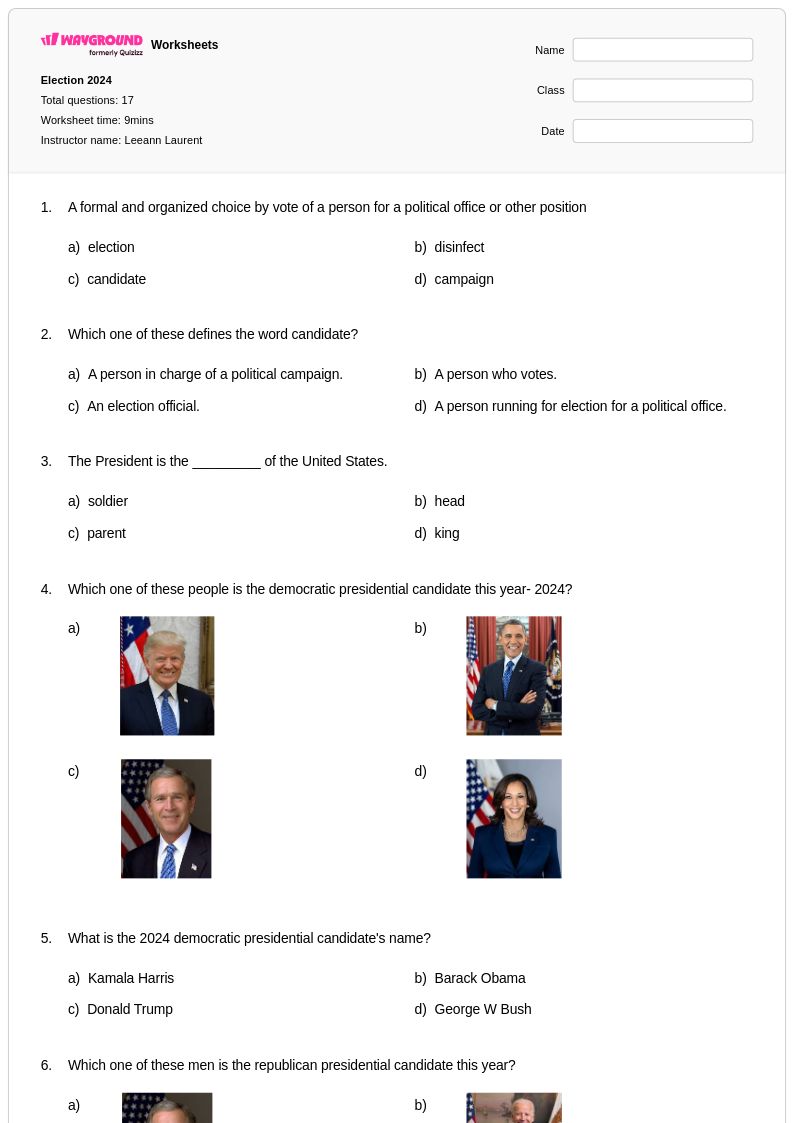
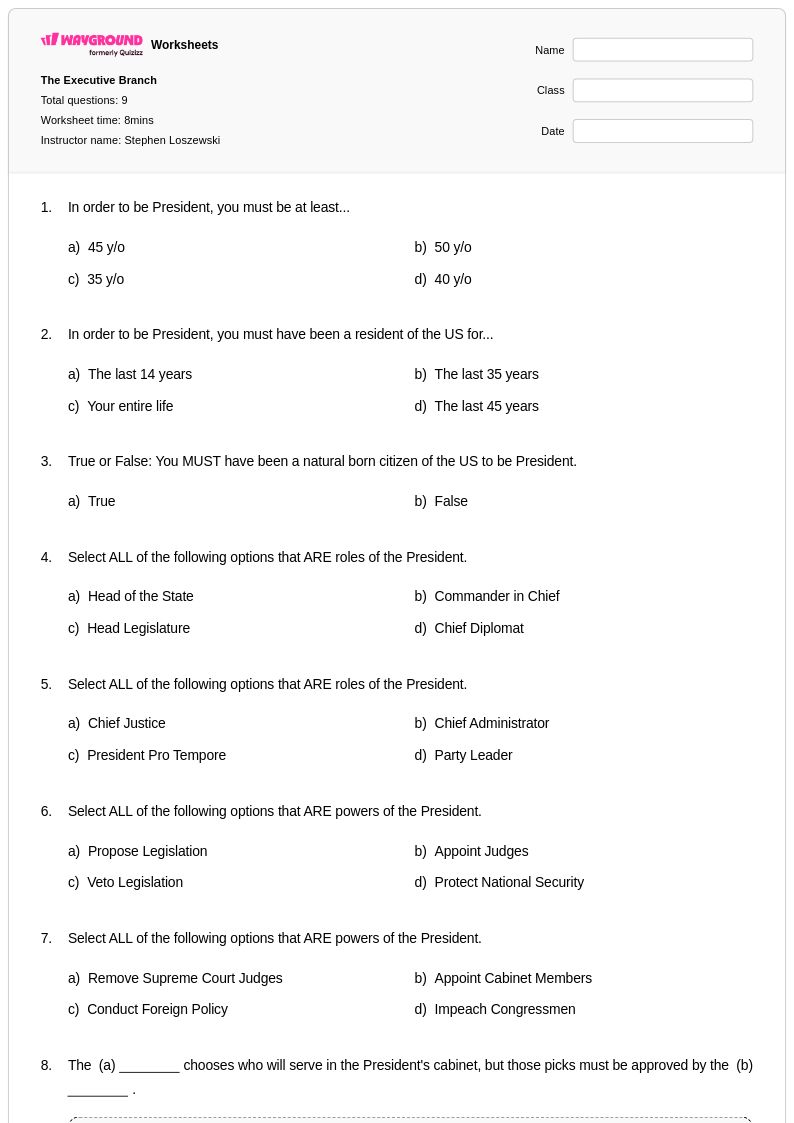
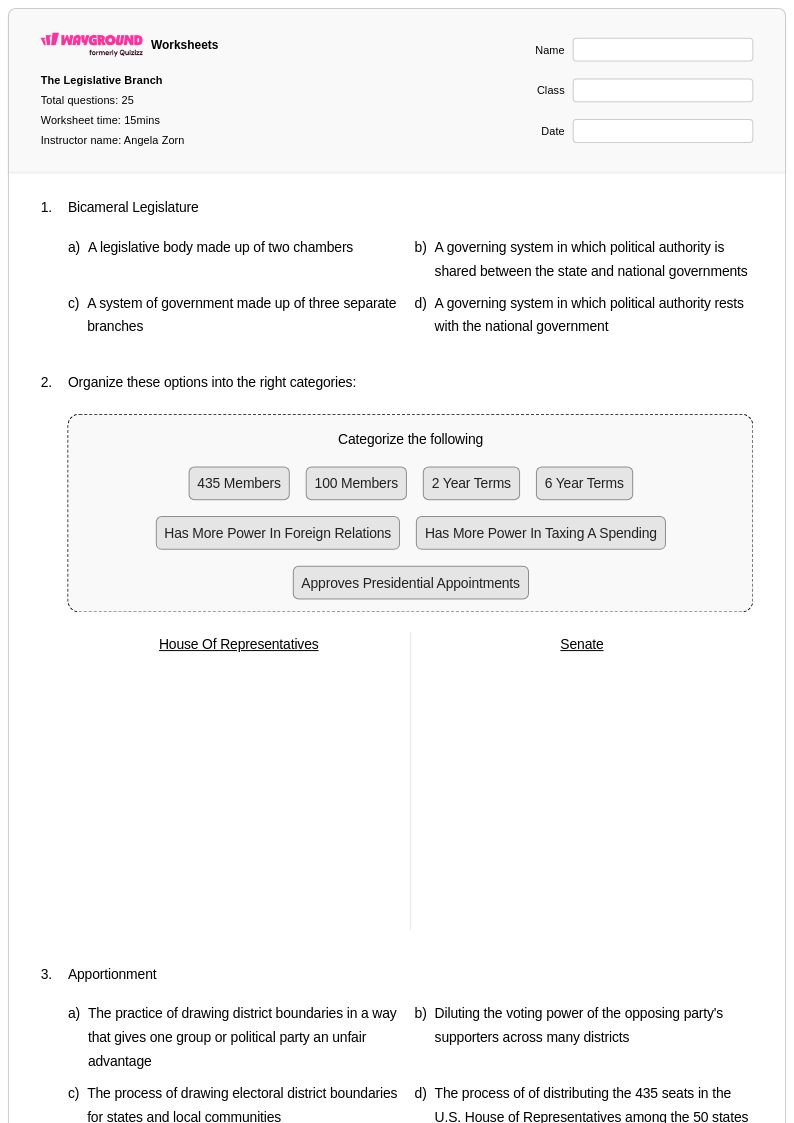
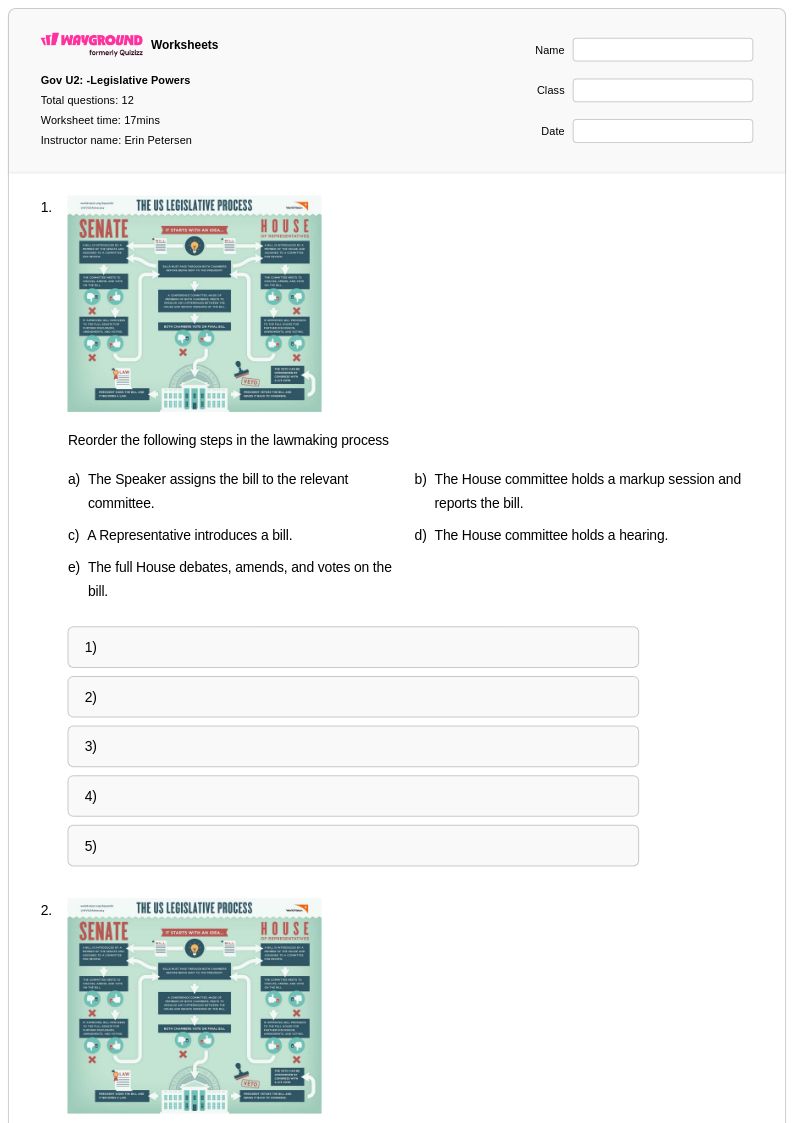
Free Printable Presidential Debate Worksheets for Class 9
Explore Wayground's free Class 9 Presidential Debate worksheets and printables that help students analyze campaign strategies, evaluate candidate positions, and develop critical thinking skills about the democratic election process with comprehensive answer keys.
Explore printable Presidential Debate worksheets for Class 9
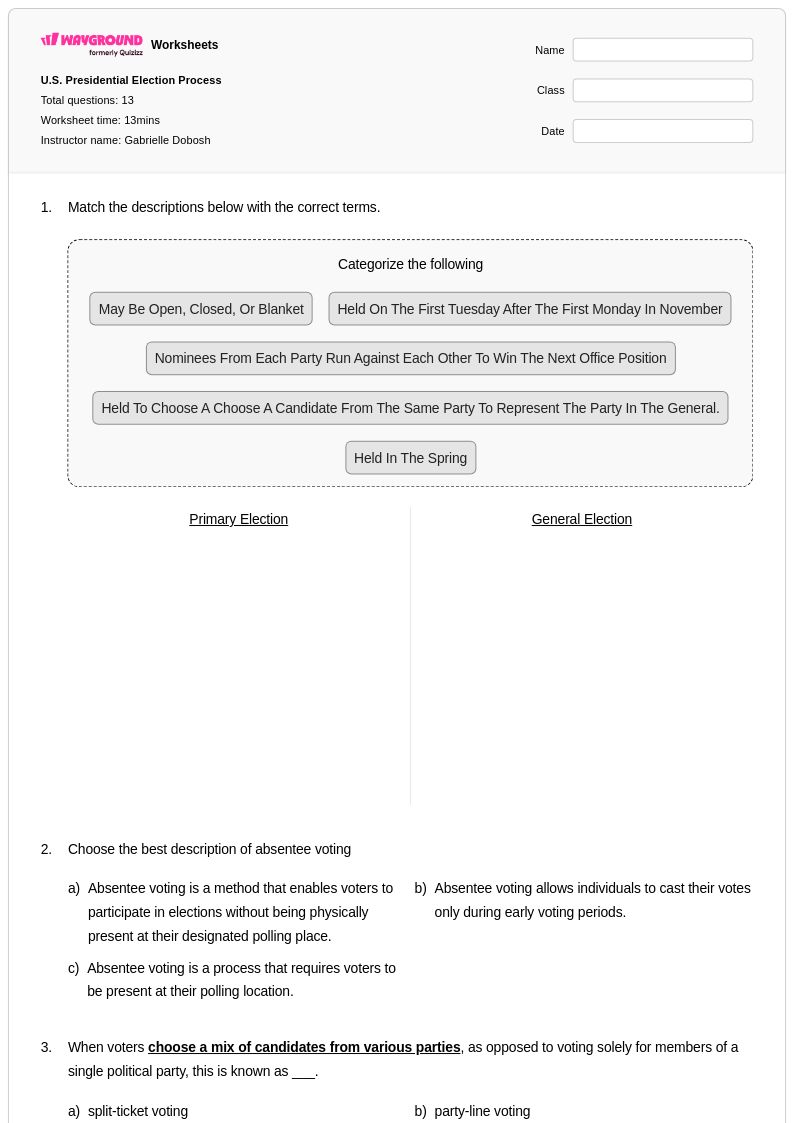
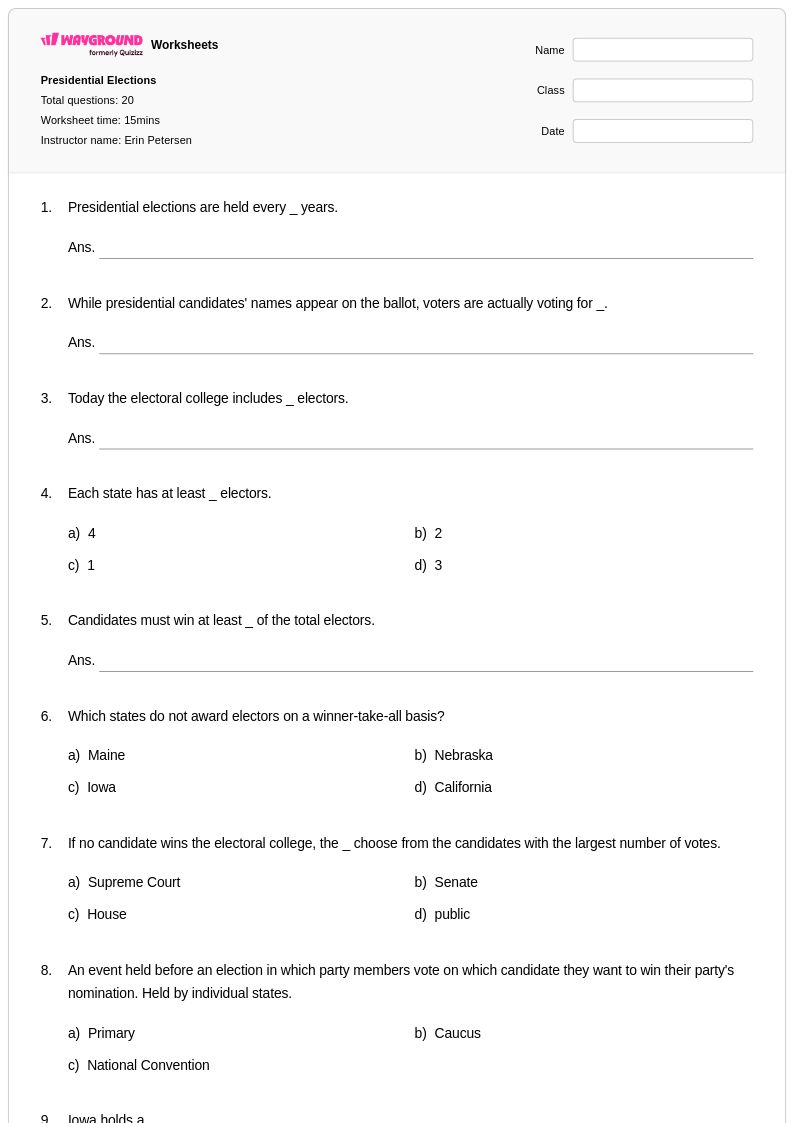
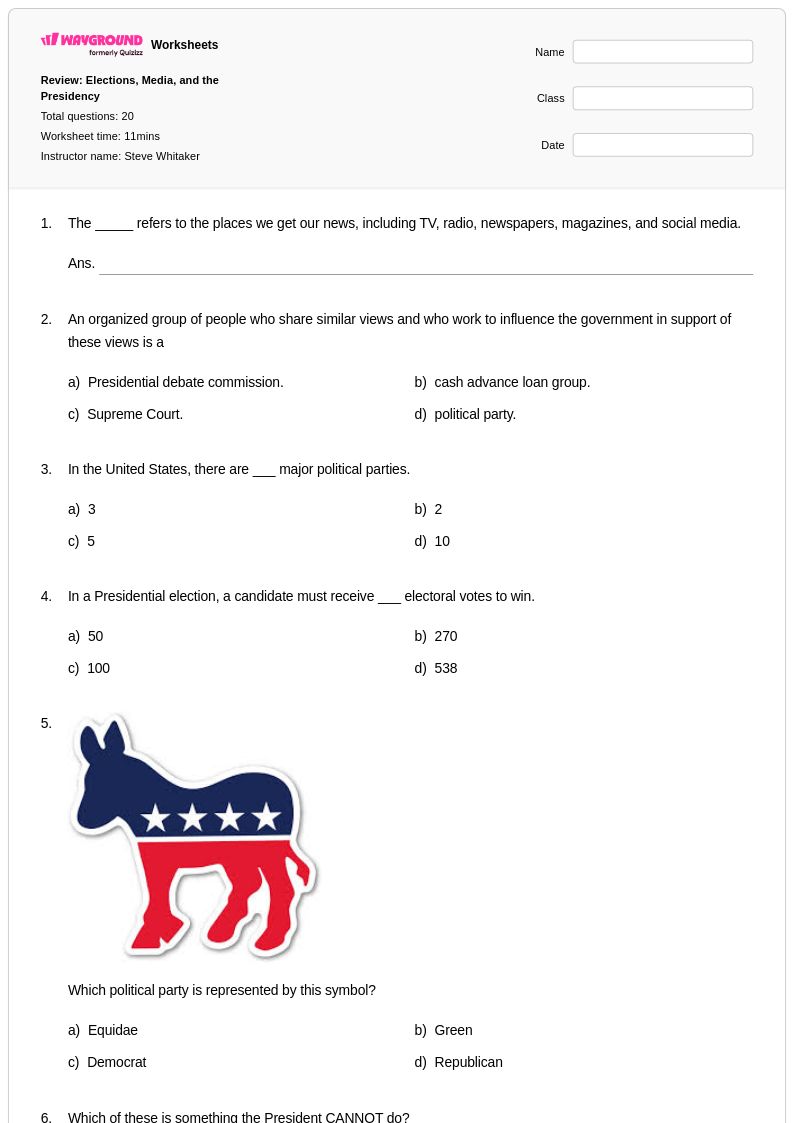
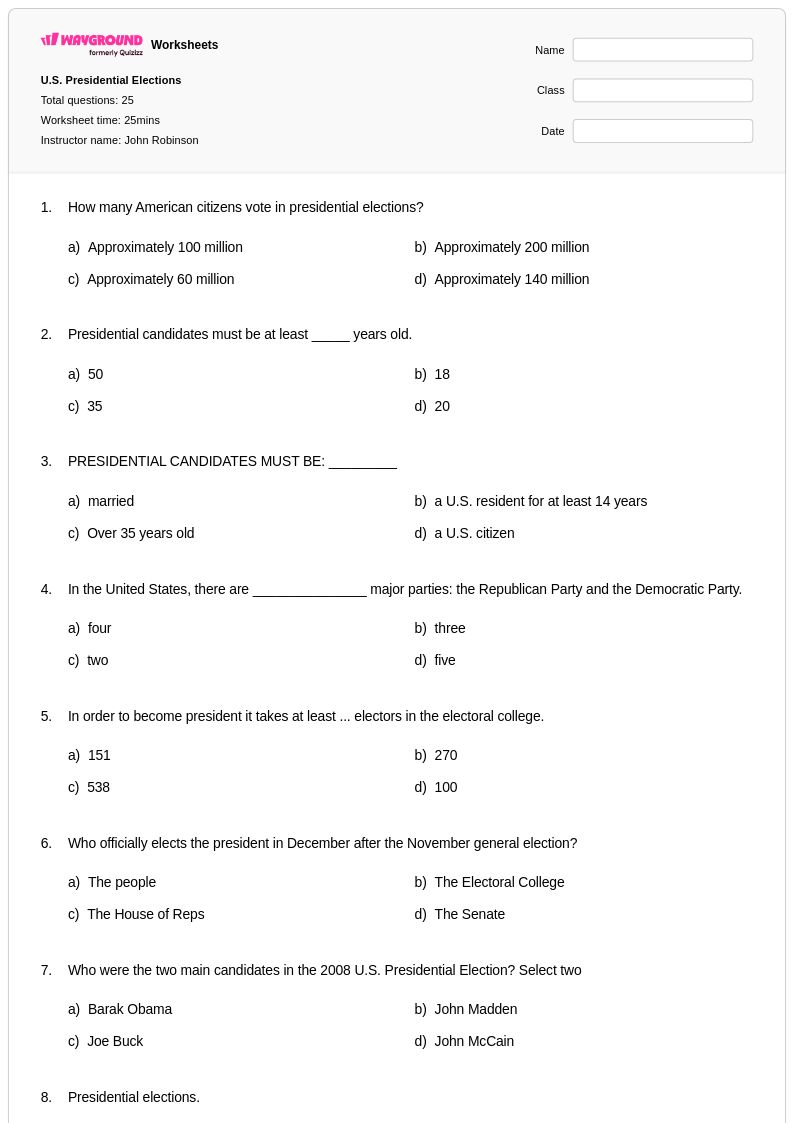
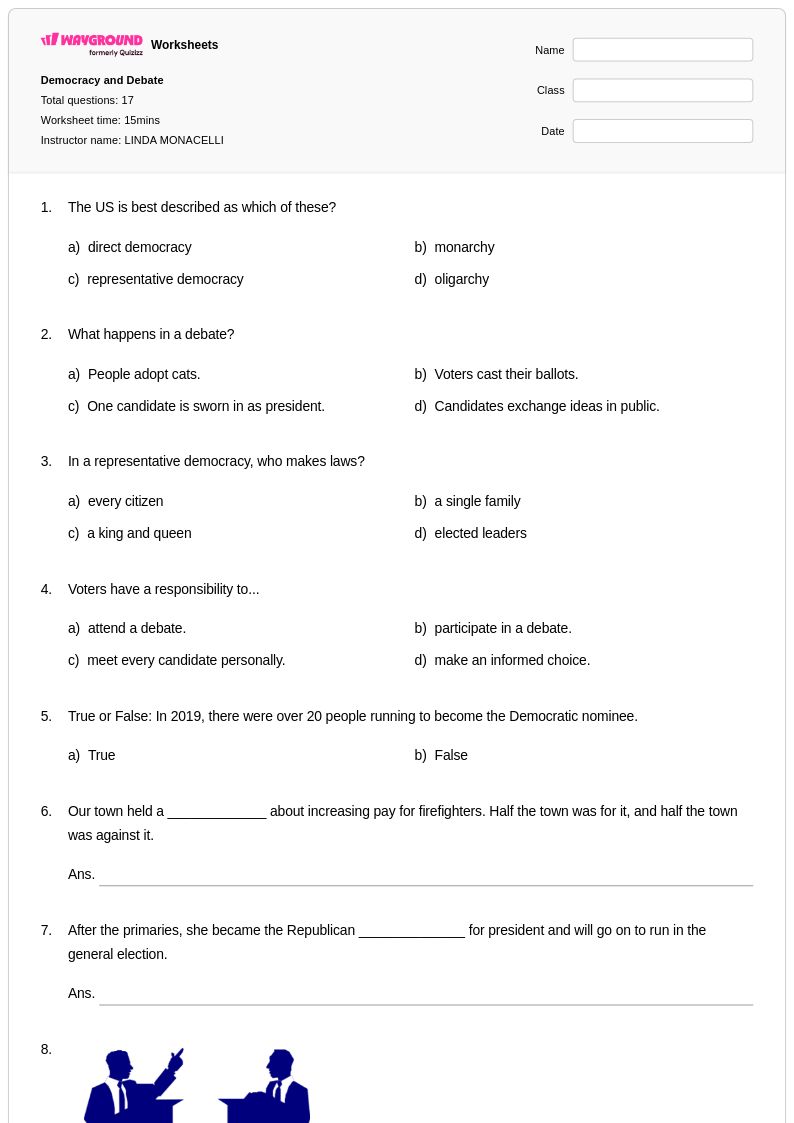
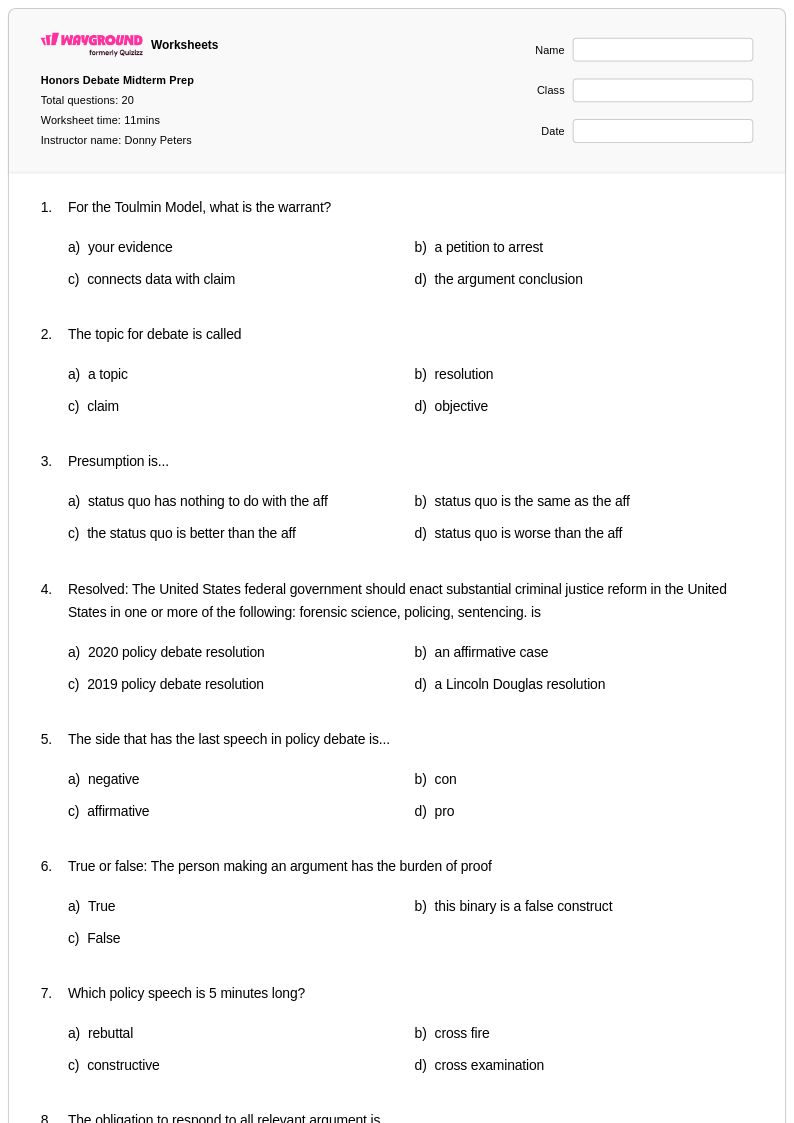
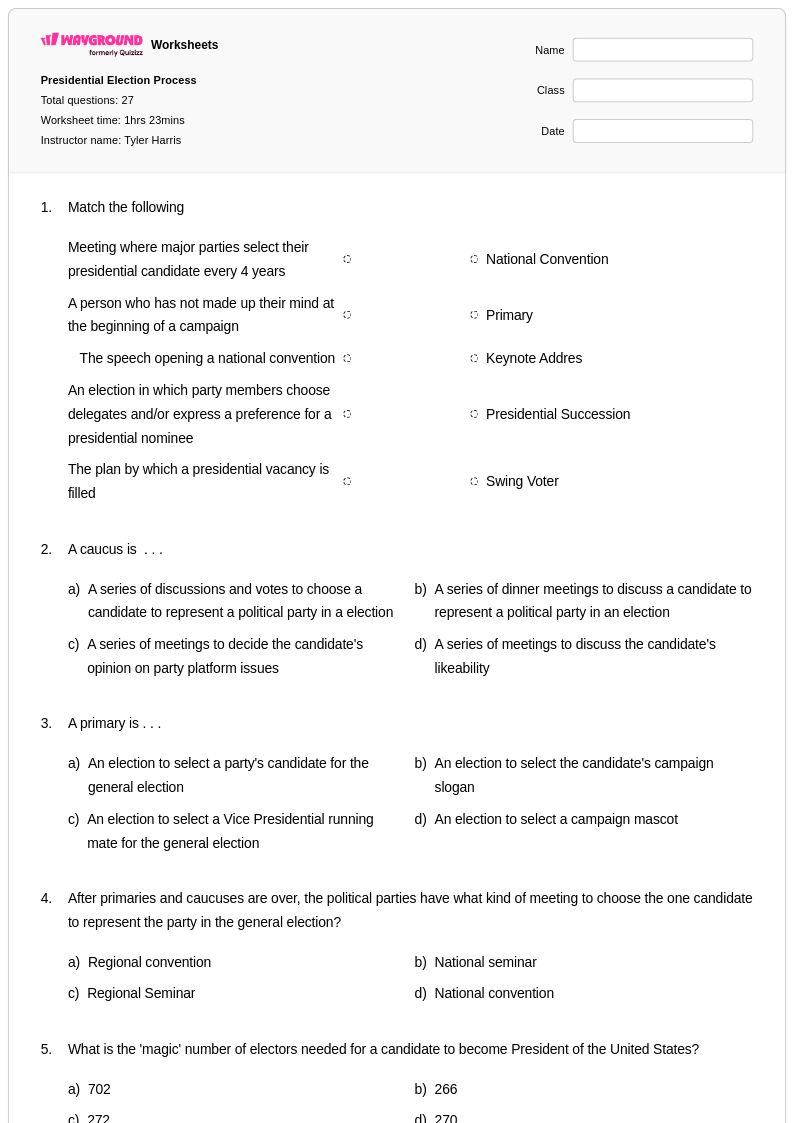
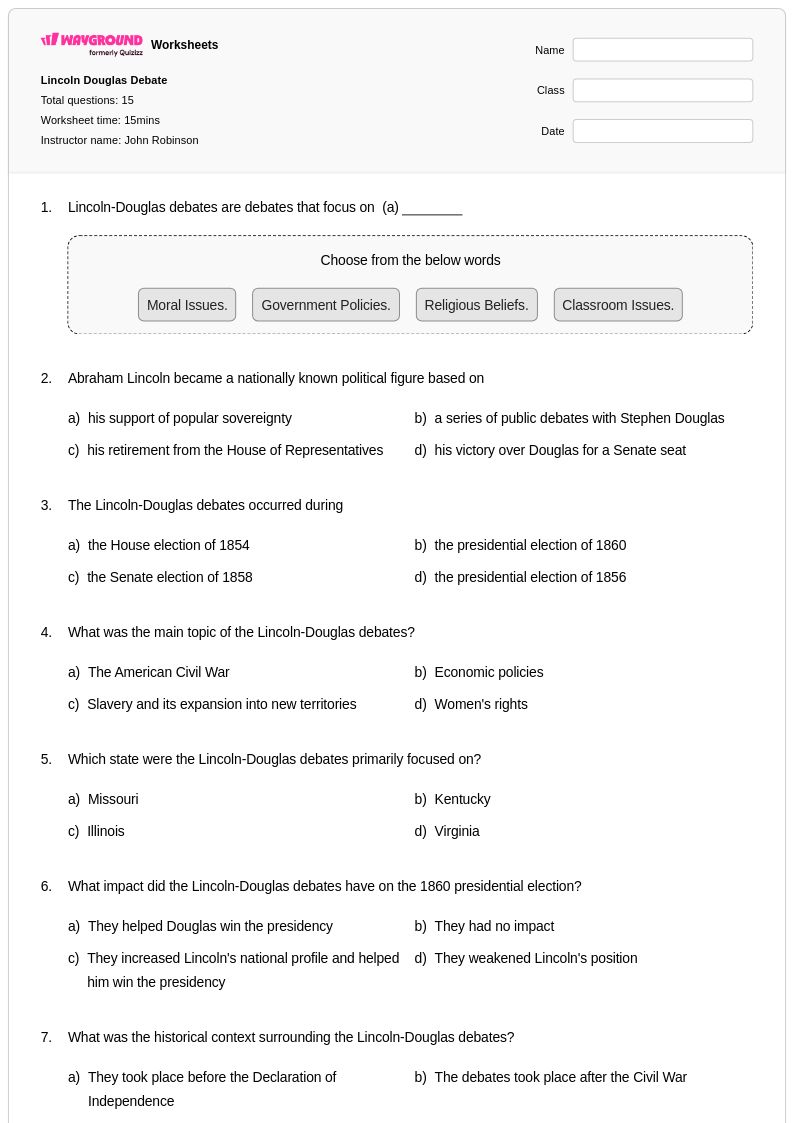
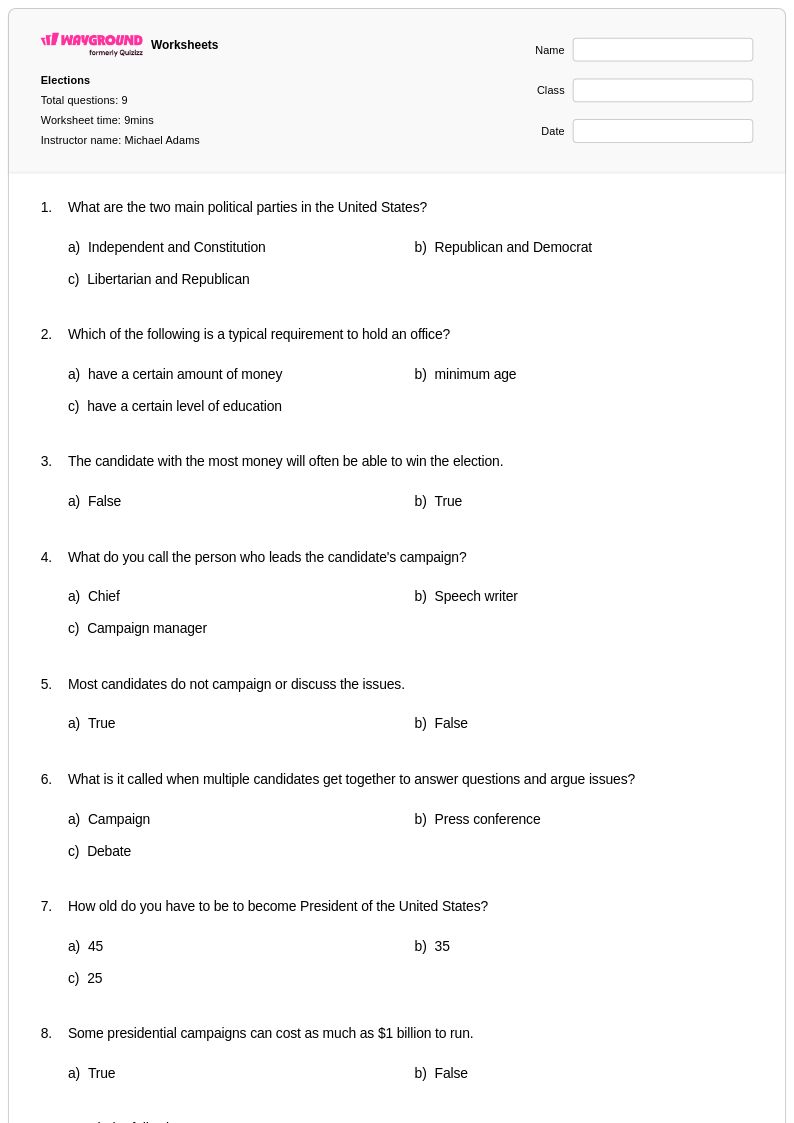
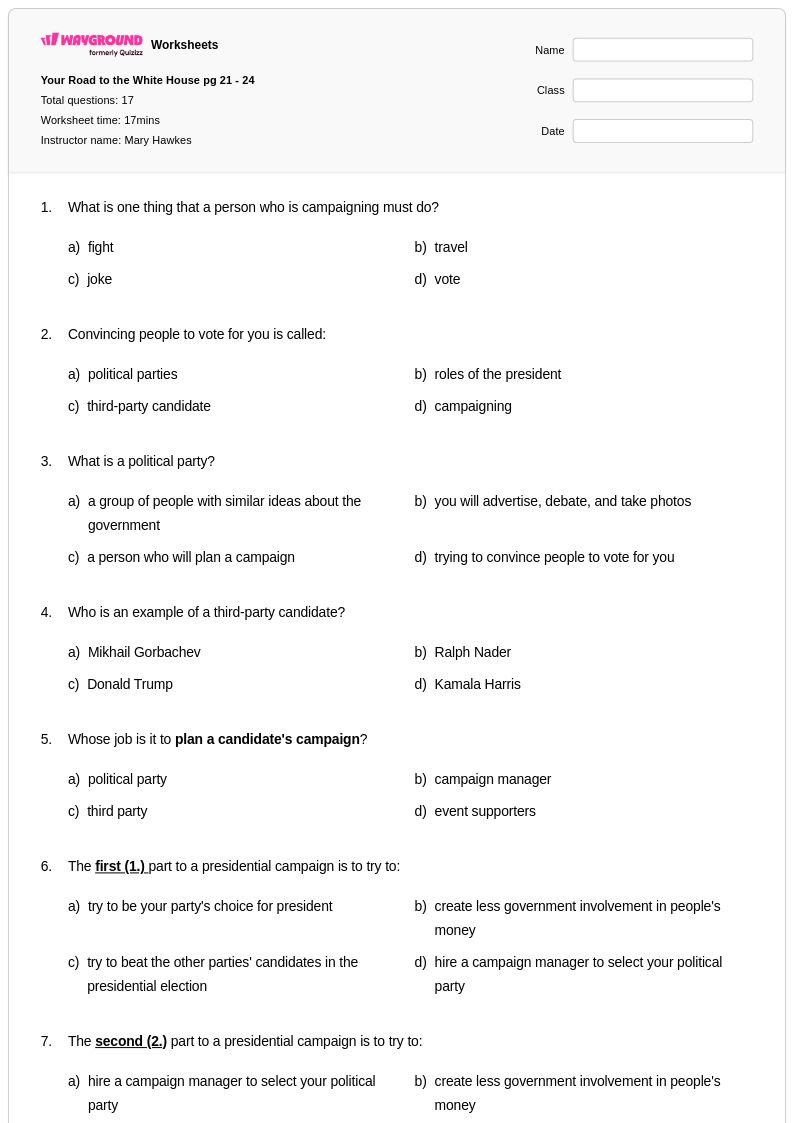
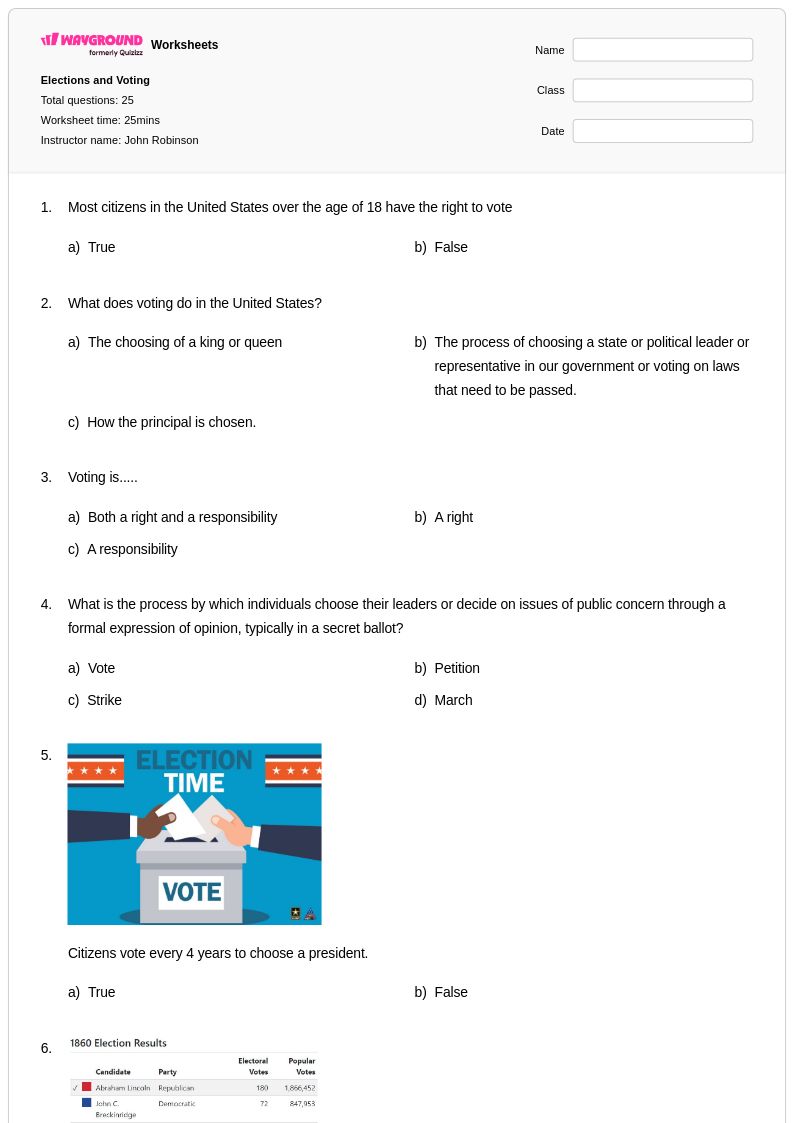
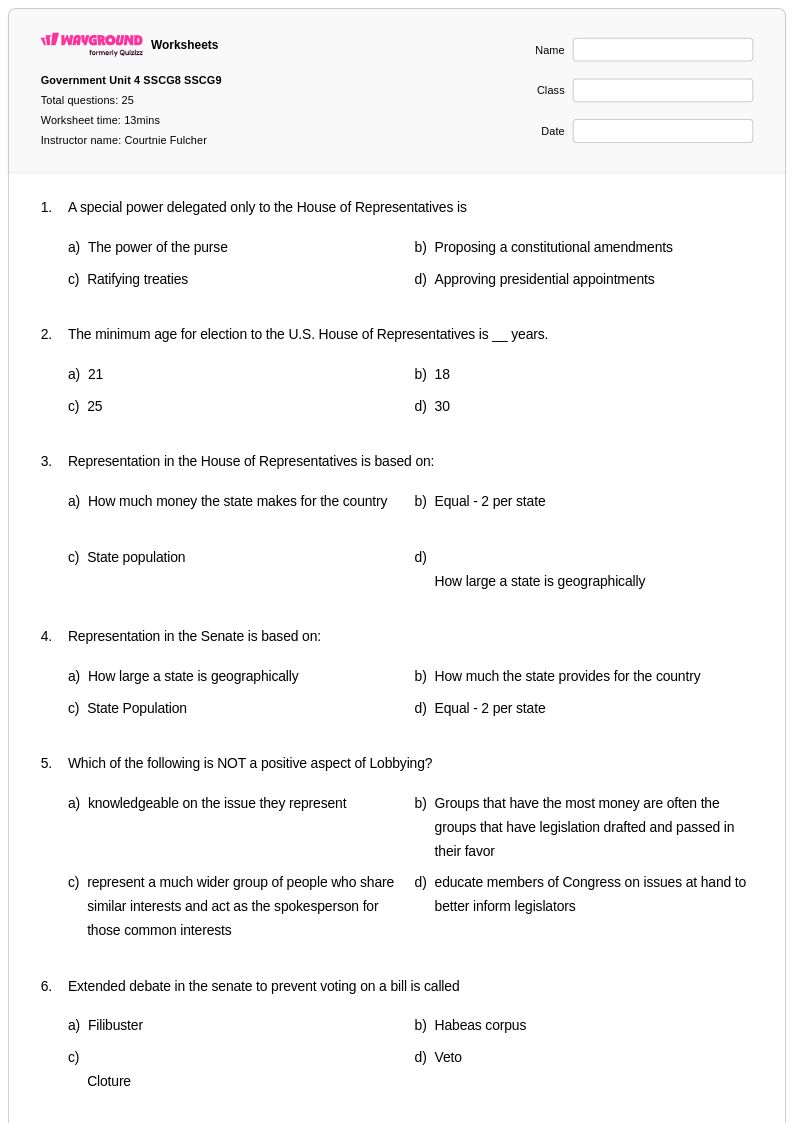
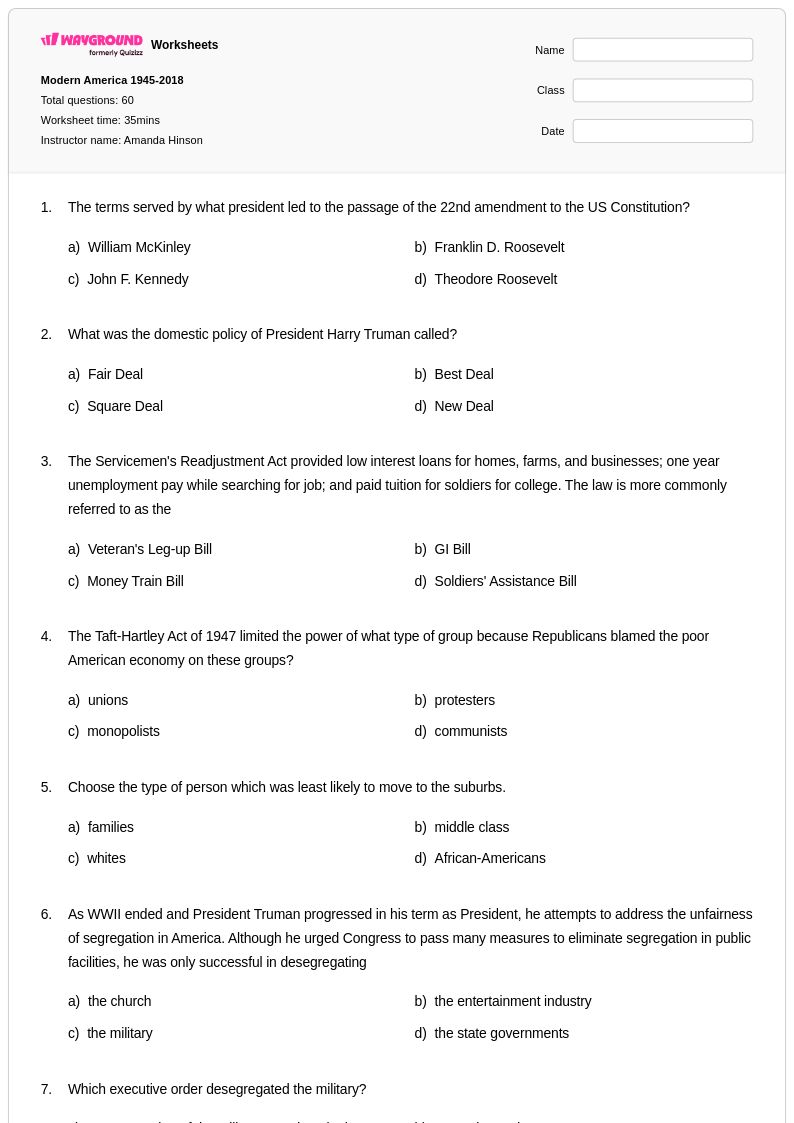
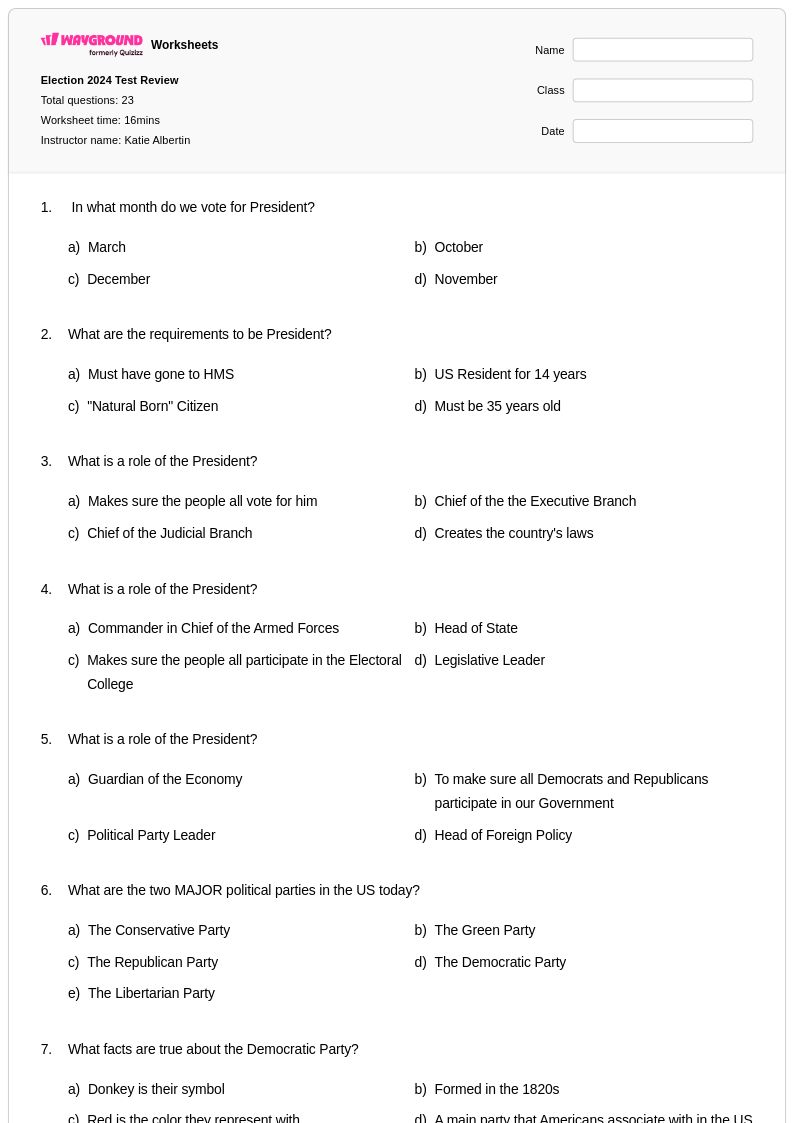
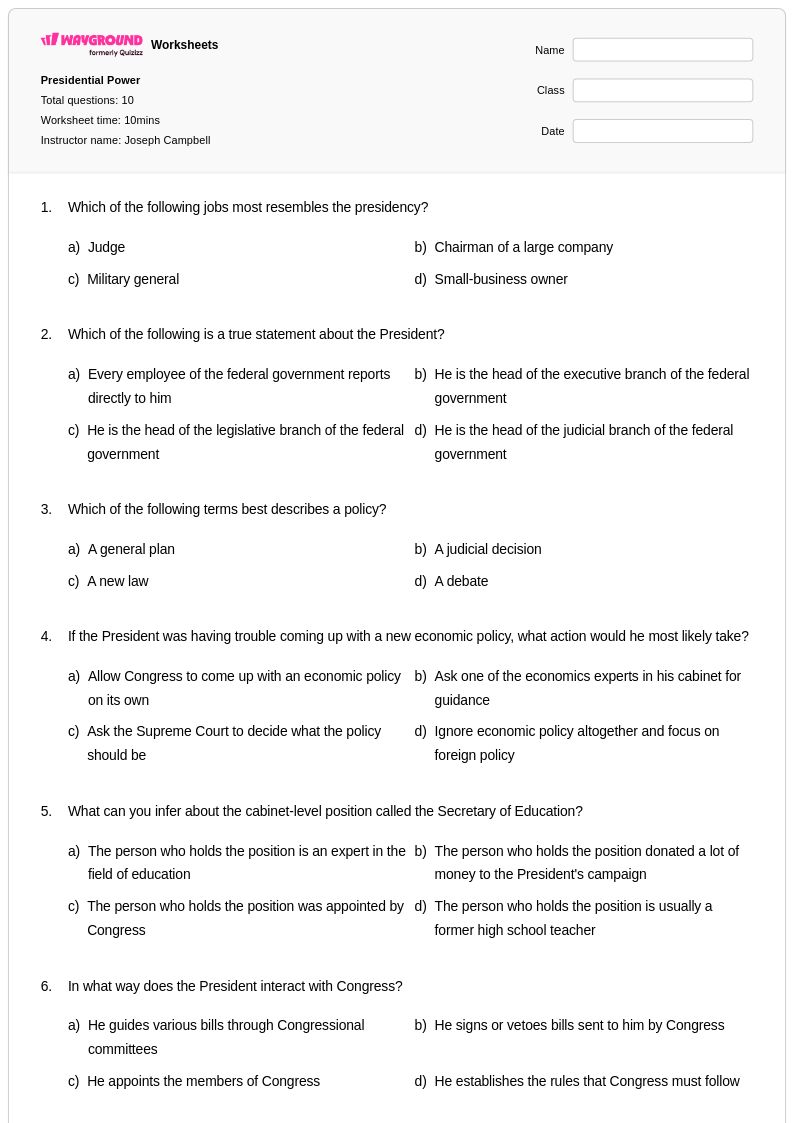
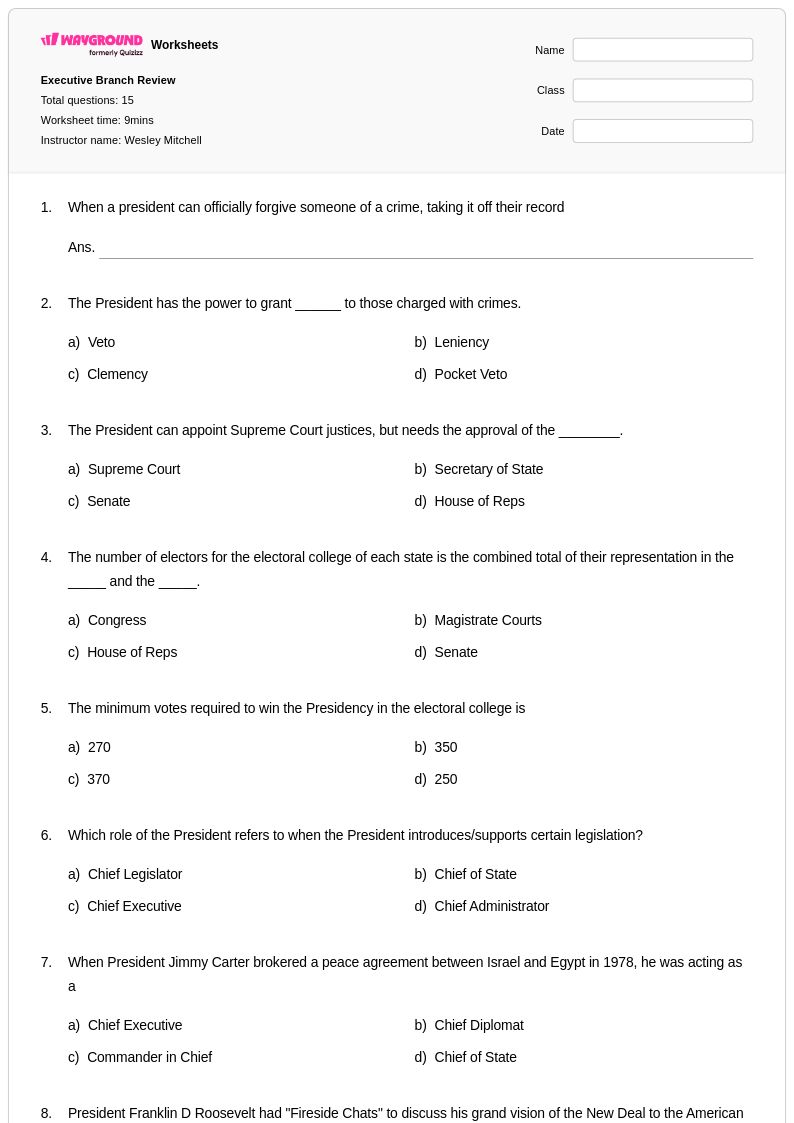
Presidential debate worksheets for Class 9 students available through Wayground (formerly Quizizz) provide comprehensive resources that immerse students in the democratic process and critical analysis of political discourse. These expertly crafted materials guide ninth-grade learners through examining debate formats, evaluating candidate positions, analyzing rhetorical strategies, and understanding the role of presidential debates in American elections. Students develop essential civic skills including media literacy, critical thinking, argument analysis, and informed citizenship through practice problems that challenge them to assess debate performance, fact-check claims, and compare policy positions. Each worksheet collection includes detailed answer keys and is available as free printables in convenient PDF format, allowing educators to seamlessly integrate authentic political engagement into their civics curriculum while strengthening students' ability to participate meaningfully in democratic society.
Wayground (formerly Quizizz) empowers educators with access to millions of teacher-created presidential debate resources specifically designed for Class 9 civics instruction, featuring robust search and filtering capabilities that help locate materials aligned with state social studies standards and learning objectives. The platform's differentiation tools enable teachers to customize worksheets based on individual student needs, reading levels, and analytical capabilities, while flexible formatting options support both digital classroom integration and traditional printable assignments. These comprehensive collections facilitate strategic lesson planning by providing varied approaches to debate analysis, from basic comprehension exercises to advanced critical thinking challenges, supporting teachers in delivering effective remediation for struggling learners and enrichment opportunities for advanced students. The extensive library ensures educators can provide consistent skill practice throughout election cycles and beyond, helping students develop lasting civic engagement competencies essential for active democratic participation.
FAQs
How do I teach presidential debates in a civics or social studies class?
Teaching presidential debates works best when students are guided to move beyond surface-level reactions and analyze the structural and rhetorical elements at play. Start by introducing debate formats, the role of moderators, and how candidates frame policy positions before showing any debate footage. From there, students can evaluate arguments, identify logical fallacies or emotional appeals, and compare how different candidates address the same issue. Grounding the lesson in media literacy — including how coverage shapes public perception — helps students develop the critical thinking skills central to civics education.
What activities help students practice analyzing presidential debates?
Structured worksheets are effective for helping students break down complex debate content into manageable analytical tasks. Practice activities might include comparing candidate positions on a single policy issue, identifying rhetorical strategies such as appeal to authority or fear-based framing, and evaluating the strength of arguments using evidence-based criteria. These exercises build the civic competencies students need to be informed participants in democratic processes, not just passive observers of election coverage.
What common mistakes do students make when analyzing presidential debates?
One of the most frequent errors is confusing persuasive delivery with substantive argument — students often rate candidates as 'winning' based on confidence or likability rather than the quality of their policy proposals. Students also struggle to separate factual claims from opinion, especially when candidates use statistics selectively or frame issues in emotionally charged language. Teaching students to identify bias, check claims against evidence, and evaluate arguments on merit rather than presentation is essential for developing genuine civic literacy.
How can I use presidential debate worksheets in my classroom?
Presidential debate worksheets on Wayground are available as printable PDFs for traditional classroom use and in digital formats for technology-integrated environments, making them adaptable to in-person, hybrid, or remote settings. Teachers can also host these materials as a quiz directly on Wayground, enabling interactive engagement and immediate feedback. The included answer keys allow educators to efficiently assess student comprehension and guide follow-up instruction based on where students struggled.
How do presidential debates connect to broader civics standards?
Presidential debates are a direct entry point into several core civics concepts, including electoral processes, the role of political speech in a democracy, media influence on public opinion, and how citizens evaluate candidates for office. Analyzing debates gives students a concrete, real-world context for abstract standards around informed citizenship, argument evaluation, and democratic participation. This makes debate analysis a highly transferable skill that reinforces content across civics, government, and media literacy curricula.
How do I differentiate presidential debate instruction for students at different skill levels?
For students who need additional support, reducing the scope of analysis — focusing on one candidate's position on one issue rather than a full debate — lowers the cognitive load while keeping the learning objective intact. Advanced learners can be challenged to write comparative analyses or evaluate how media framing across different outlets affects public interpretation of the same debate. On Wayground, teachers can apply individual accommodations such as read aloud support, reduced answer choices, and extended time to specific students, ensuring every learner can access the material at an appropriate level of challenge.