
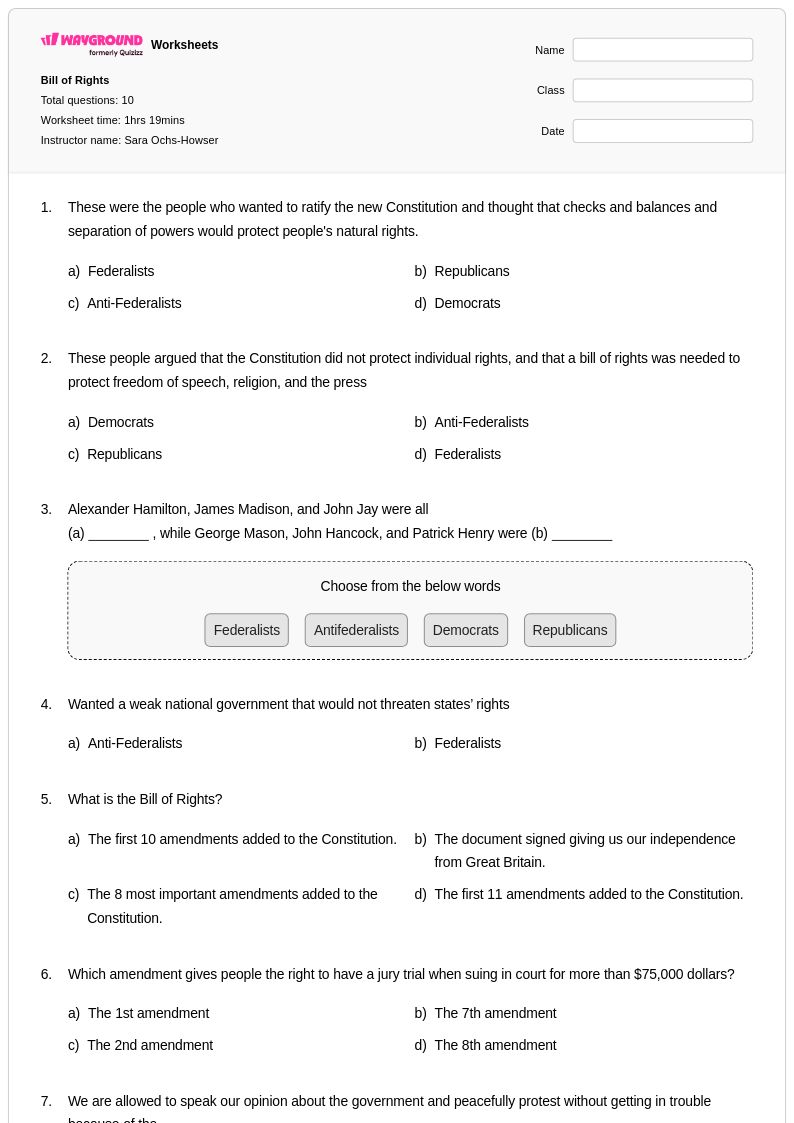
10 Q
9th
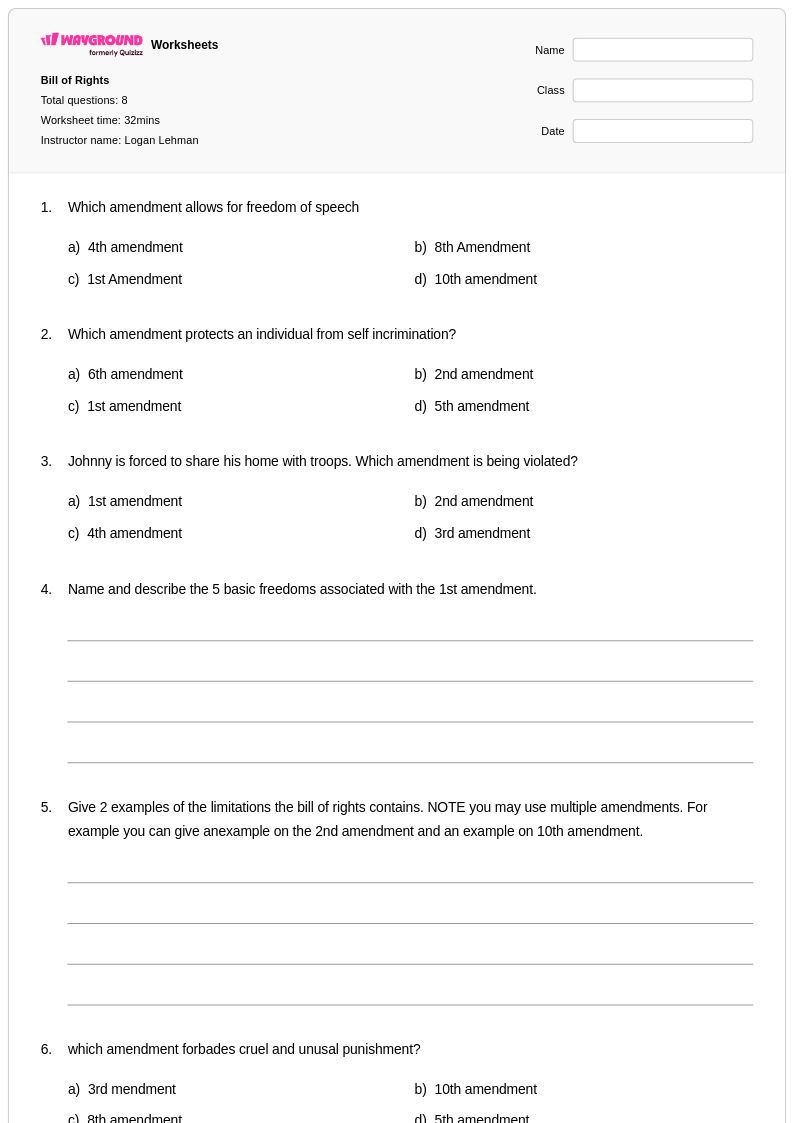
8 Q
9th - 12th
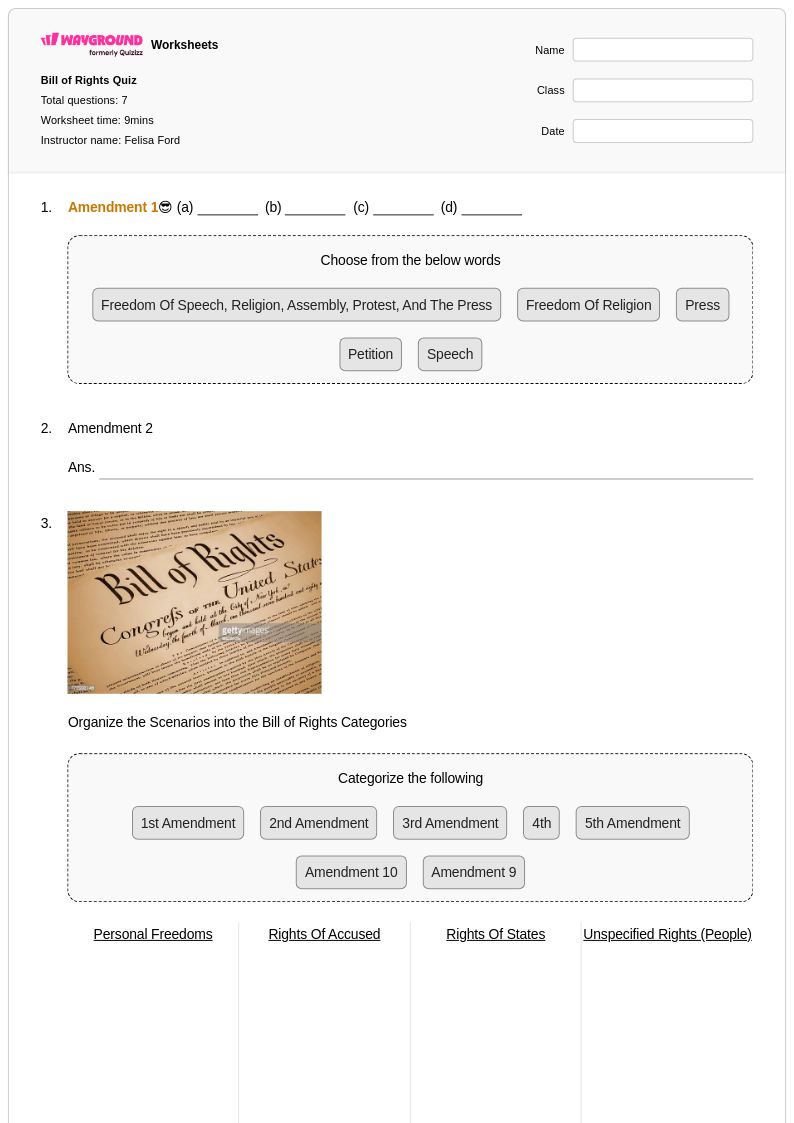
7 Q
9th - 12th
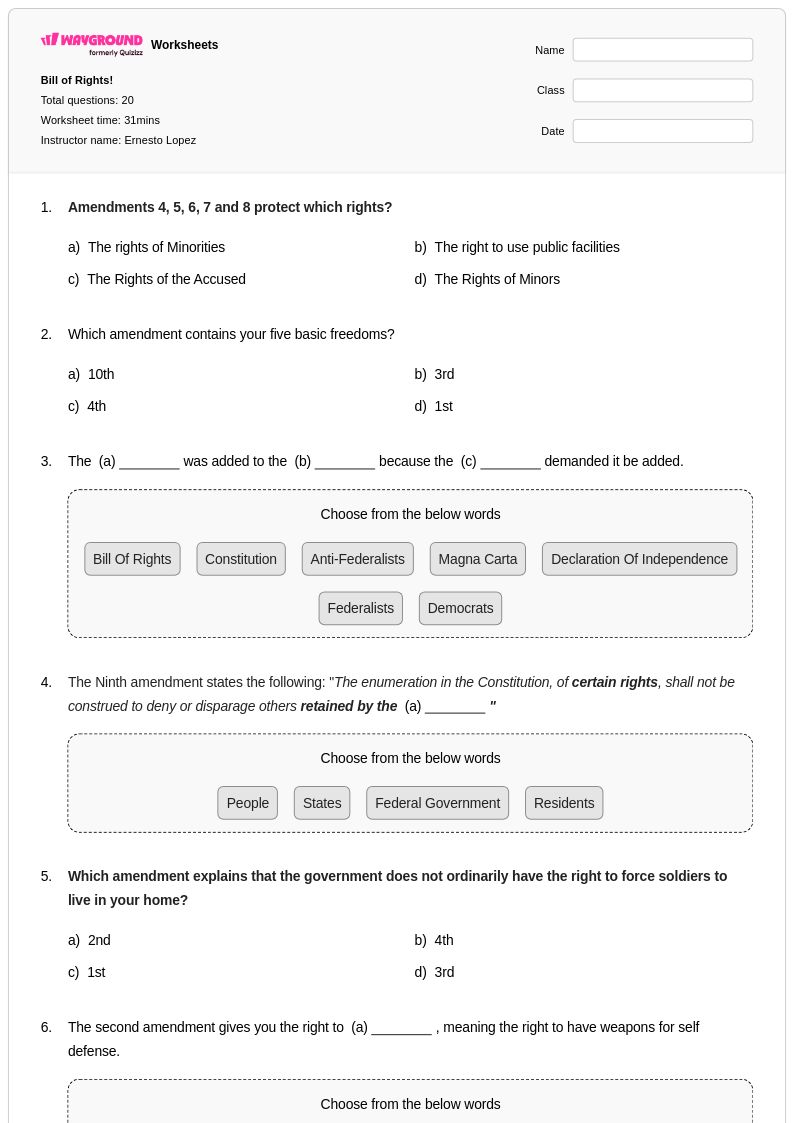
20 Q
7th - Uni
6 Q
9th - 12th
14 Q
5th - Uni
7 Q
9th - 12th
10 Q
9th
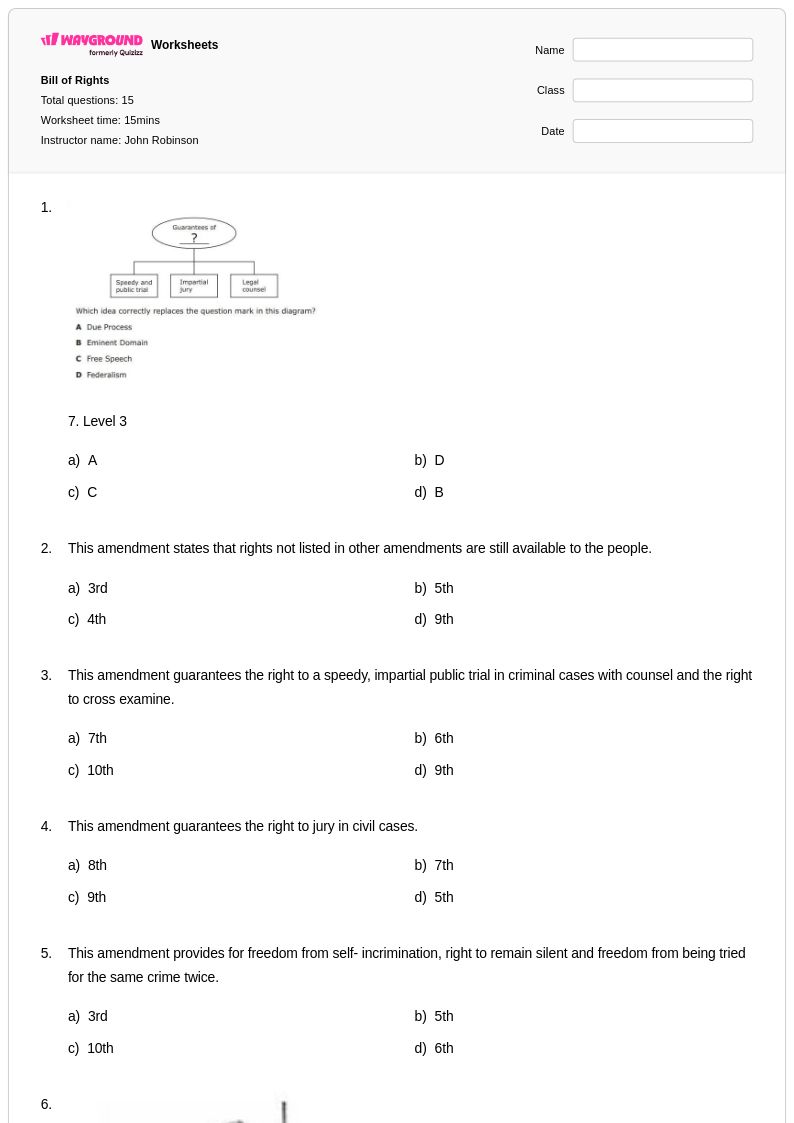
15 Q
8th - Uni
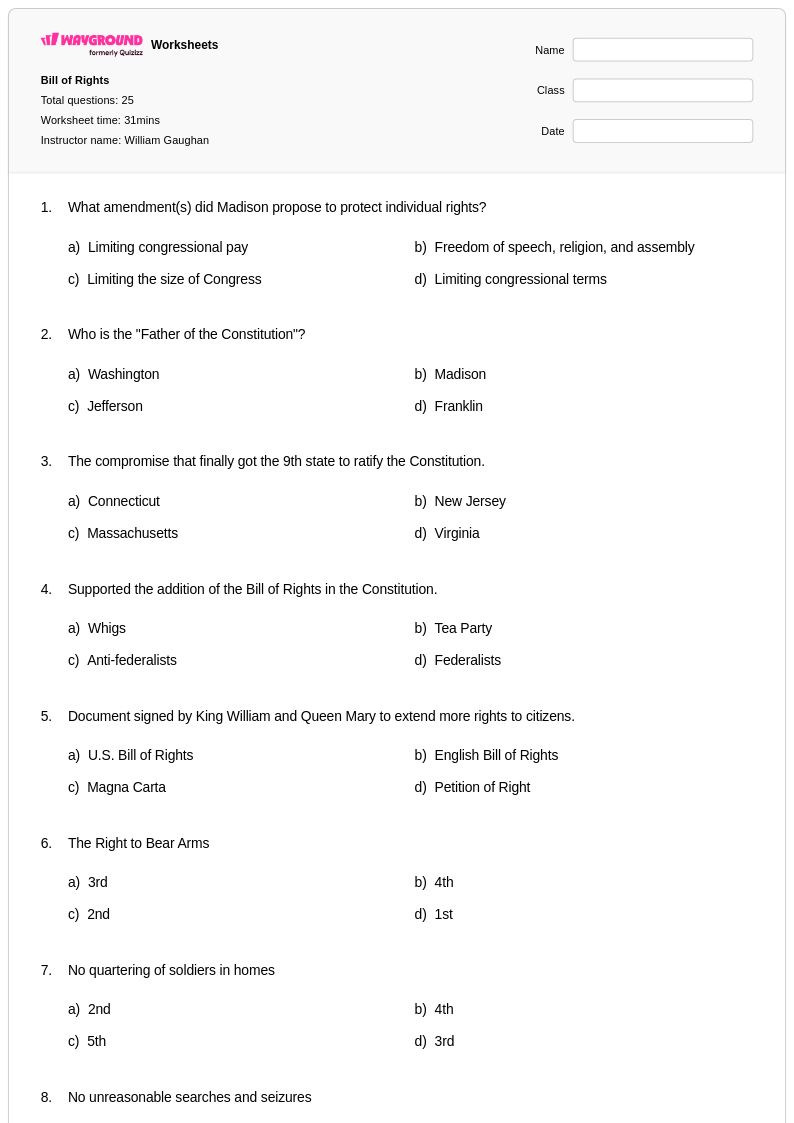
25 Q
9th - 12th
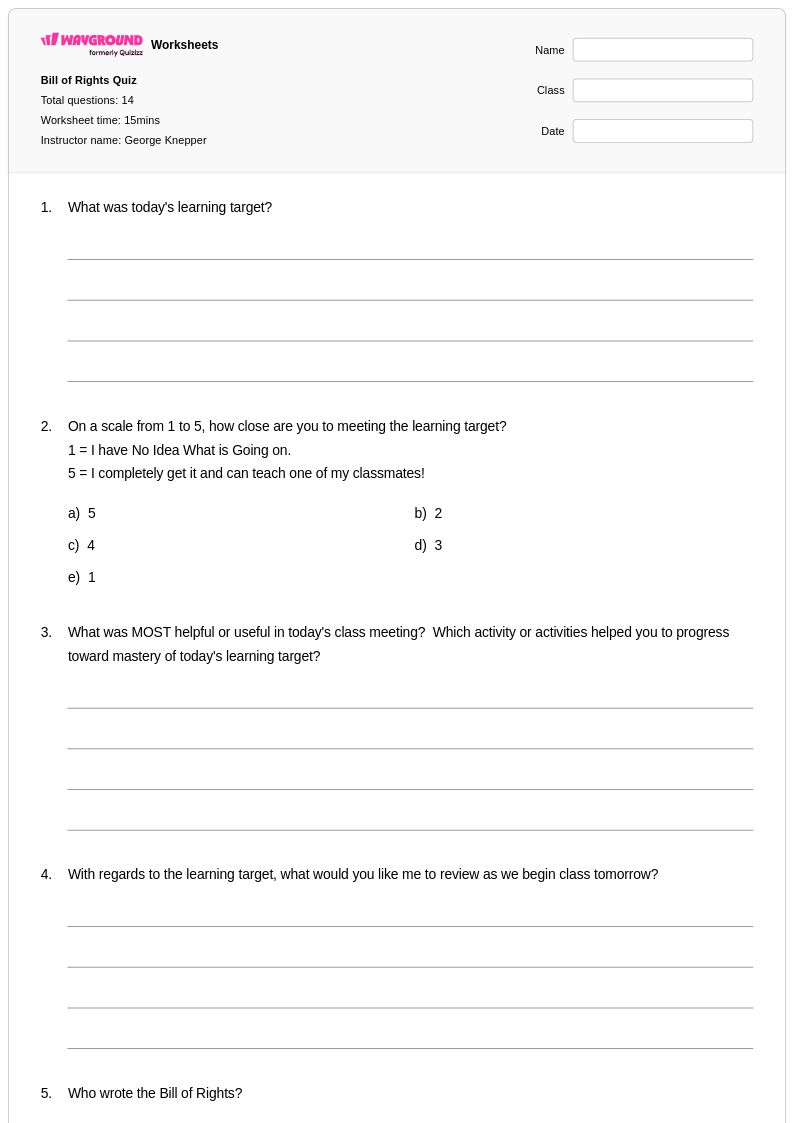
14 Q
9th - 12th
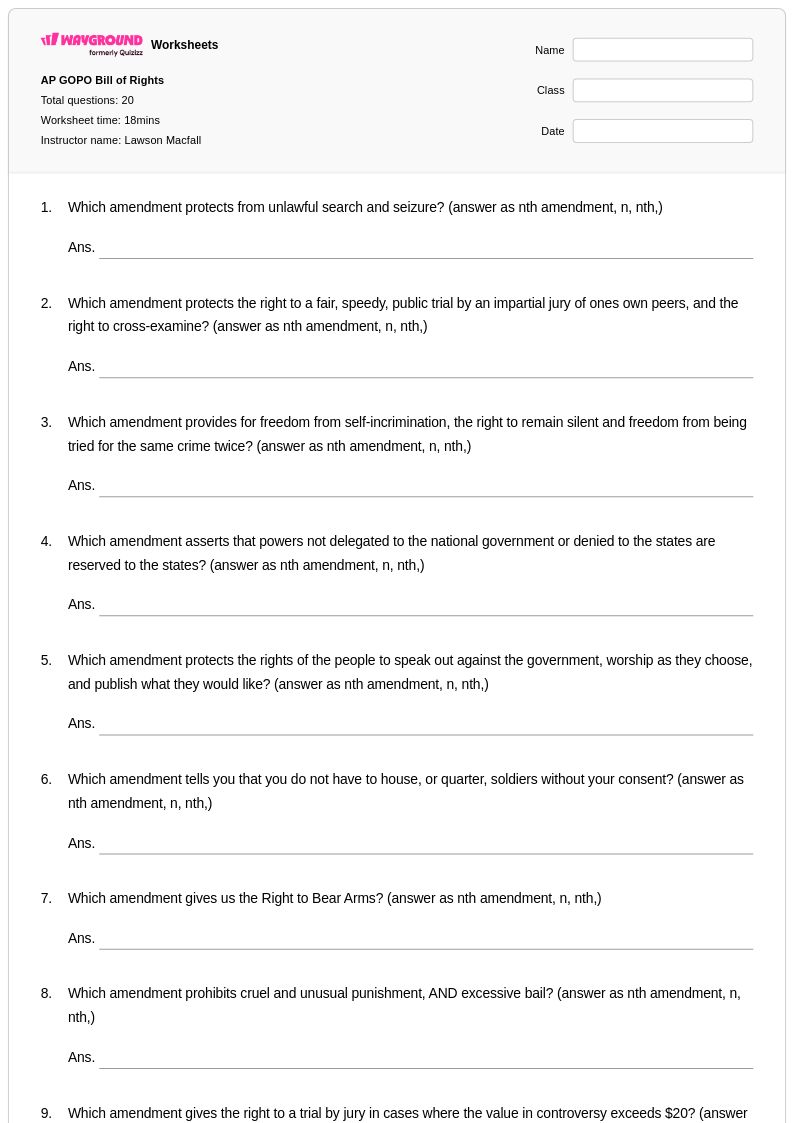
20 Q
7th - 12th
18 Q
7th - Uni
18 Q
9th - 12th
15 Q
8th - Uni
15 Q
7th - Uni
17 Q
9th
5 Q
8th - Uni
10 Q
7th - 12th
20 Q
9th - 12th
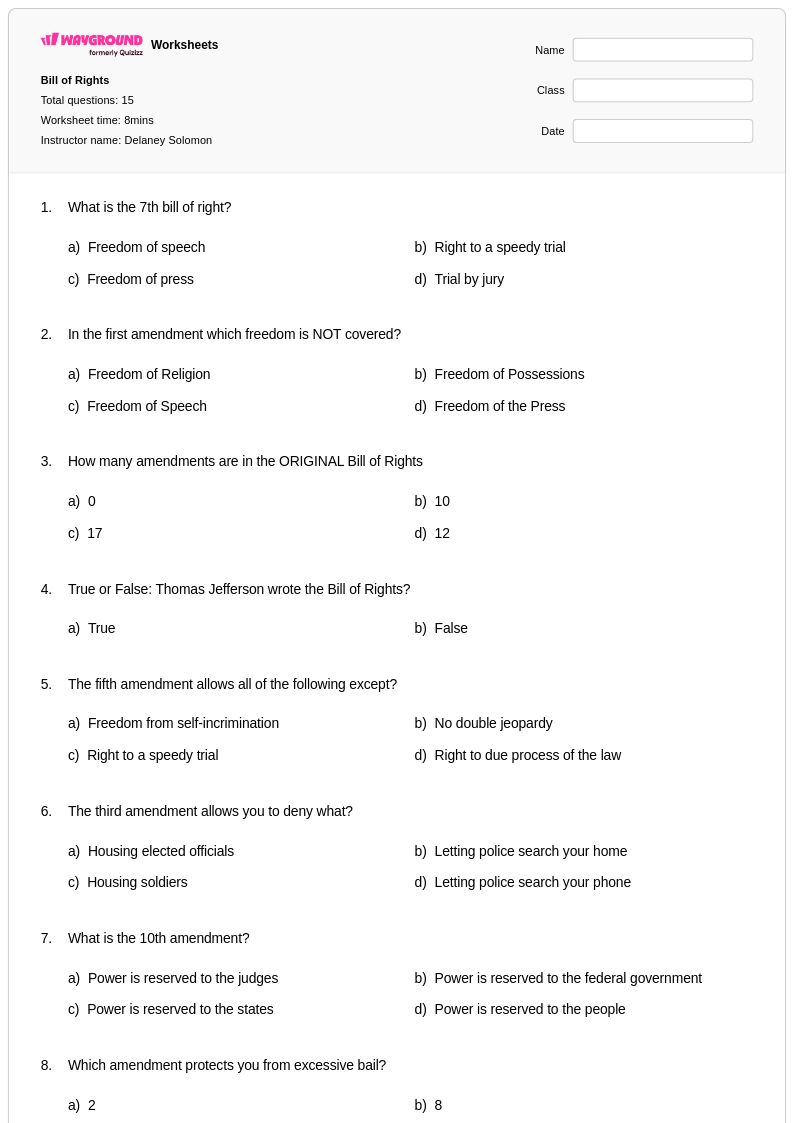
15 Q
8th - 10th
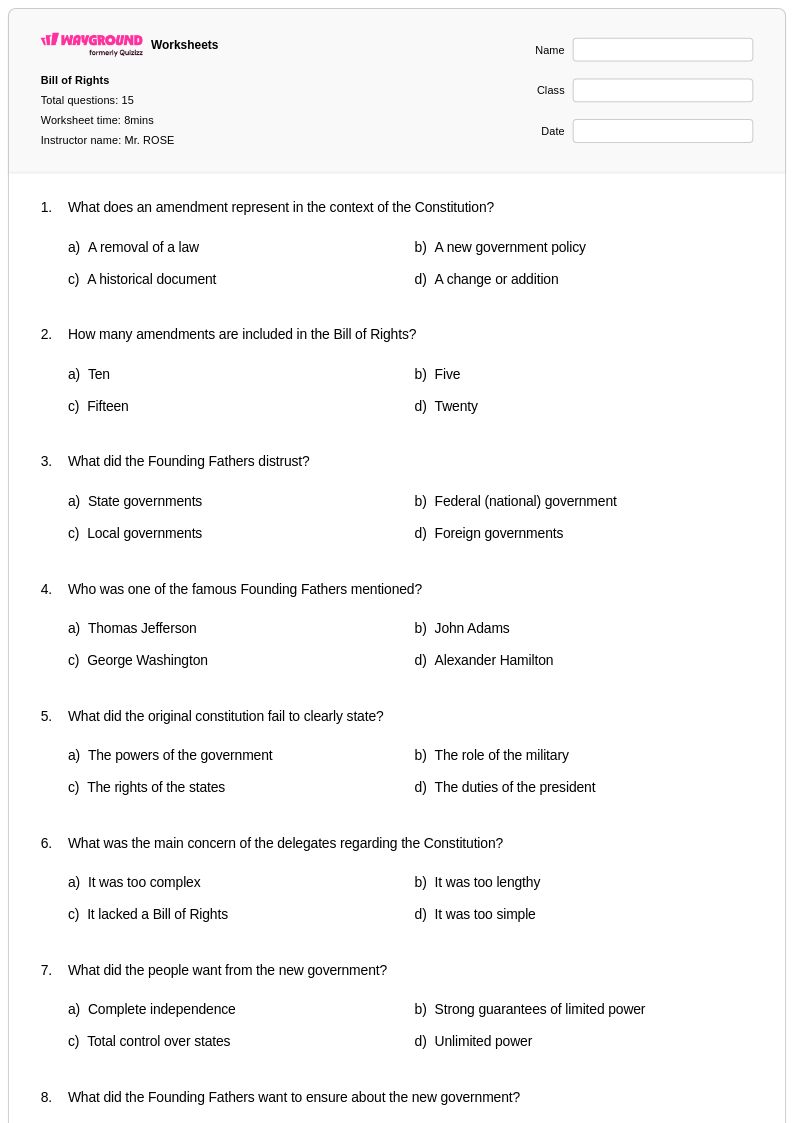
15 Q
9th
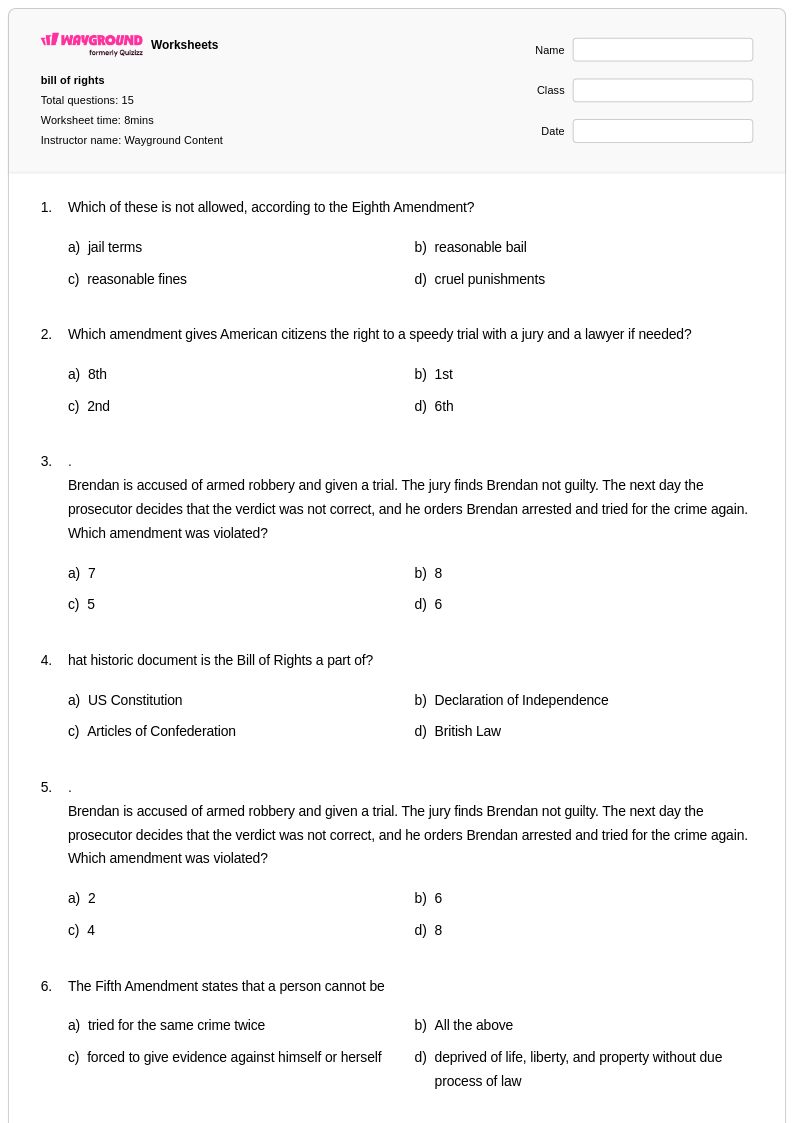
15 Q
9th - 12th
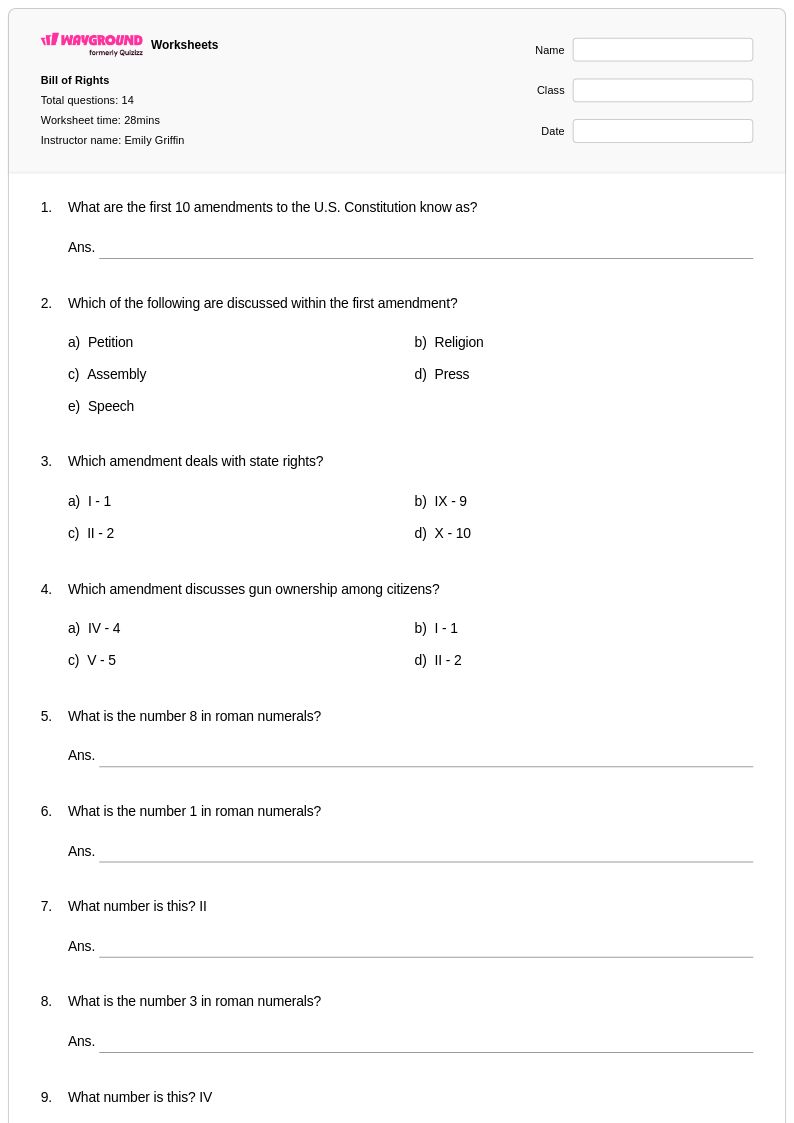
14 Q
9th - 10th
Explore Other Subject Worksheets for class 9
Explore printable Bill of Rights worksheets for Class 9
Class 9 Bill of Rights worksheets available through Wayground (formerly Quizizz) provide comprehensive coverage of the first ten amendments to the U.S. Constitution, helping students develop critical civic literacy skills essential for informed citizenship. These educational resources strengthen students' ability to analyze constitutional protections, interpret amendment language, and apply Bill of Rights principles to contemporary scenarios through engaging practice problems that connect historical foundations to modern legal concepts. The worksheet collection includes varied formats such as document analysis activities, case study examinations, and constitutional interpretation exercises, with each resource featuring detailed answer keys to support independent learning and self-assessment. Students work through free printables that examine landmark Supreme Court cases, explore the balance between individual liberties and government authority, and investigate how constitutional amendments protect fundamental freedoms in democratic society.
Wayground (formerly Quizizz) supports social studies educators with an extensive library of millions of teacher-created Bill of Rights resources specifically designed for Class 9 instruction, featuring robust search and filtering capabilities that allow teachers to locate materials aligned with state and national civics standards. The platform's differentiation tools enable educators to customize worksheet difficulty levels and content focus areas, ensuring appropriate challenge levels for diverse learning needs while maintaining rigorous academic expectations for constitutional knowledge. Teachers can access these resources in both printable pdf formats for traditional classroom distribution and digital formats for technology-integrated instruction, facilitating seamless lesson planning whether used for initial concept introduction, targeted skill remediation, or enrichment activities that extend constitutional understanding beyond basic amendment memorization to deeper analytical thinking about civil liberties and governmental limitations.
FAQs
How do I teach the Bill of Rights to middle and high school students?
What exercises help students practice understanding the Bill of Rights?
What common mistakes do students make when learning the Bill of Rights?
How can I use Bill of Rights worksheets to support students with different learning needs?
How do I assess whether students truly understand the Bill of Rights versus just memorizing it?
How do I use Bill of Rights worksheets on Wayground in my classroom?