Free Printable Bill of Rights Worksheets for Class 10
Explore Class 10 Bill of Rights free worksheets and printables that help students master constitutional amendments through engaging practice problems, comprehensive PDFs, and detailed answer keys available on Wayground.
Explore printable Bill of Rights worksheets for Class 10
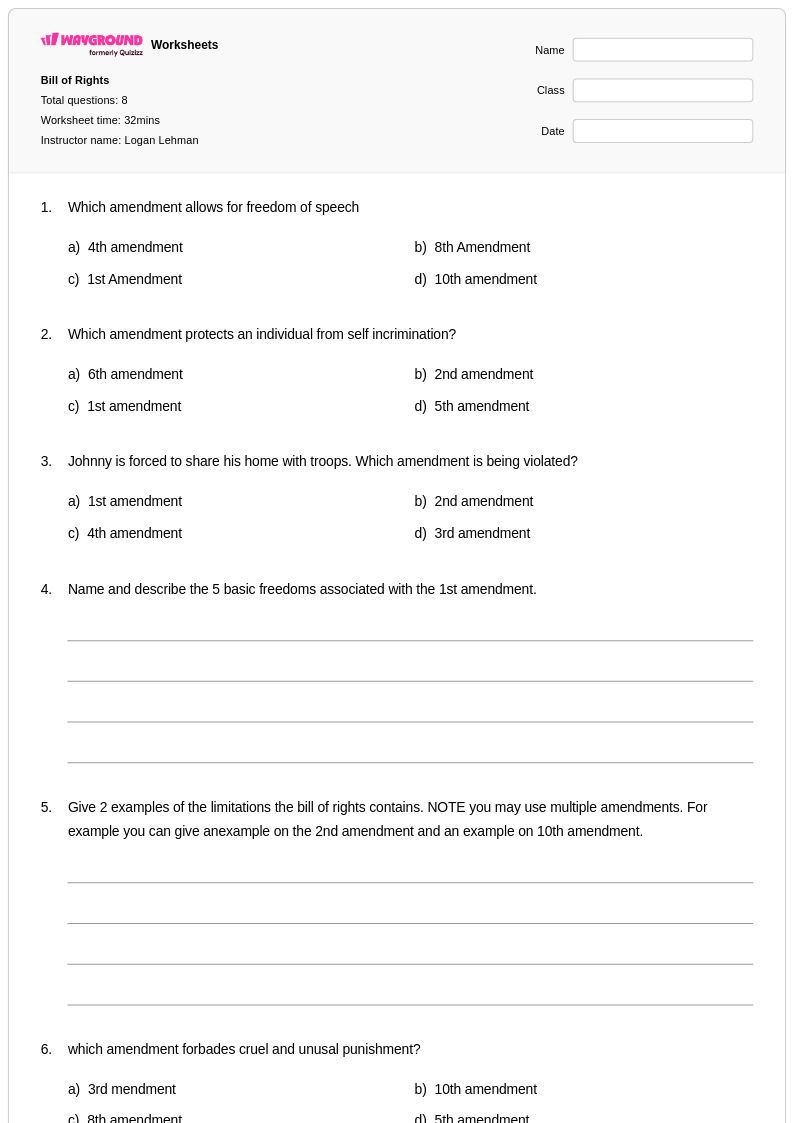
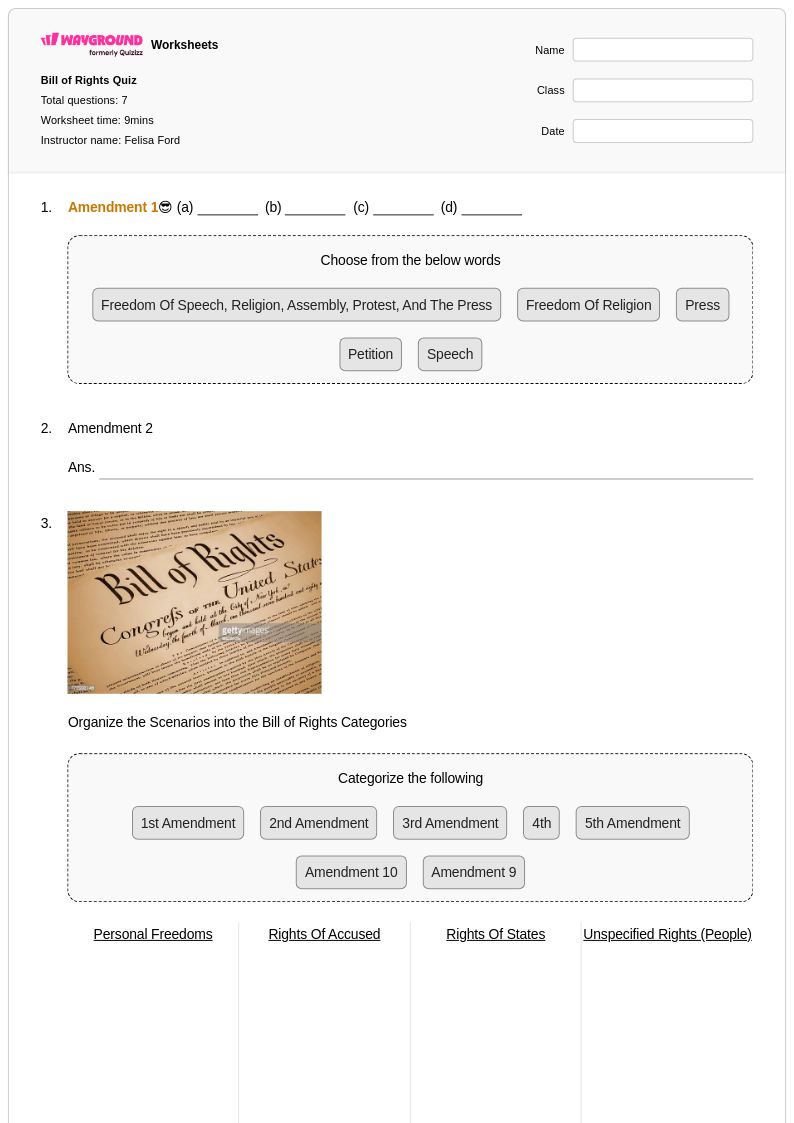
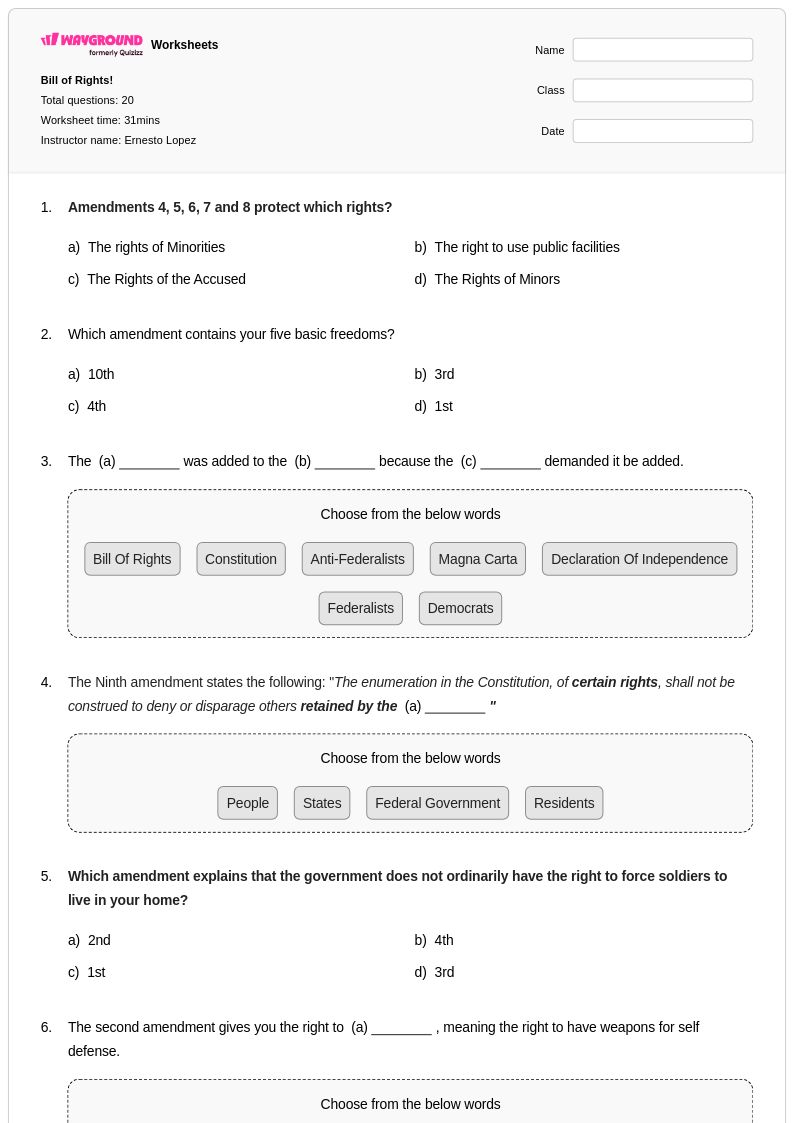
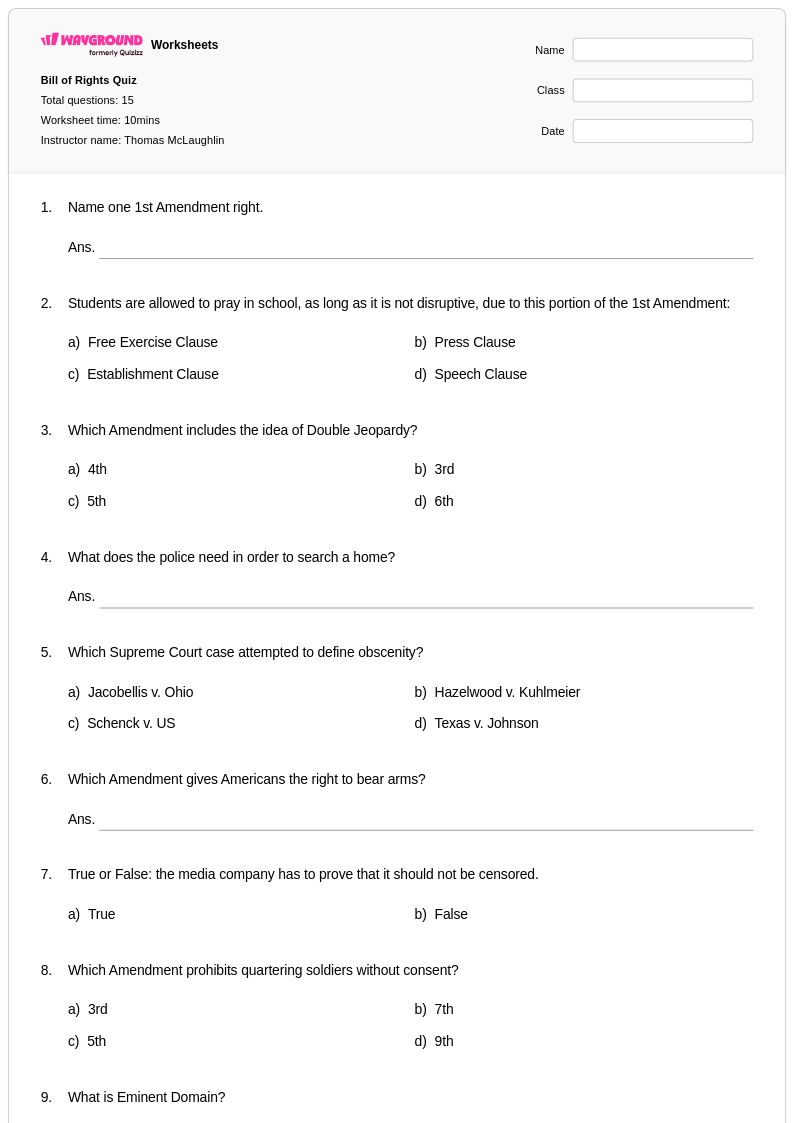
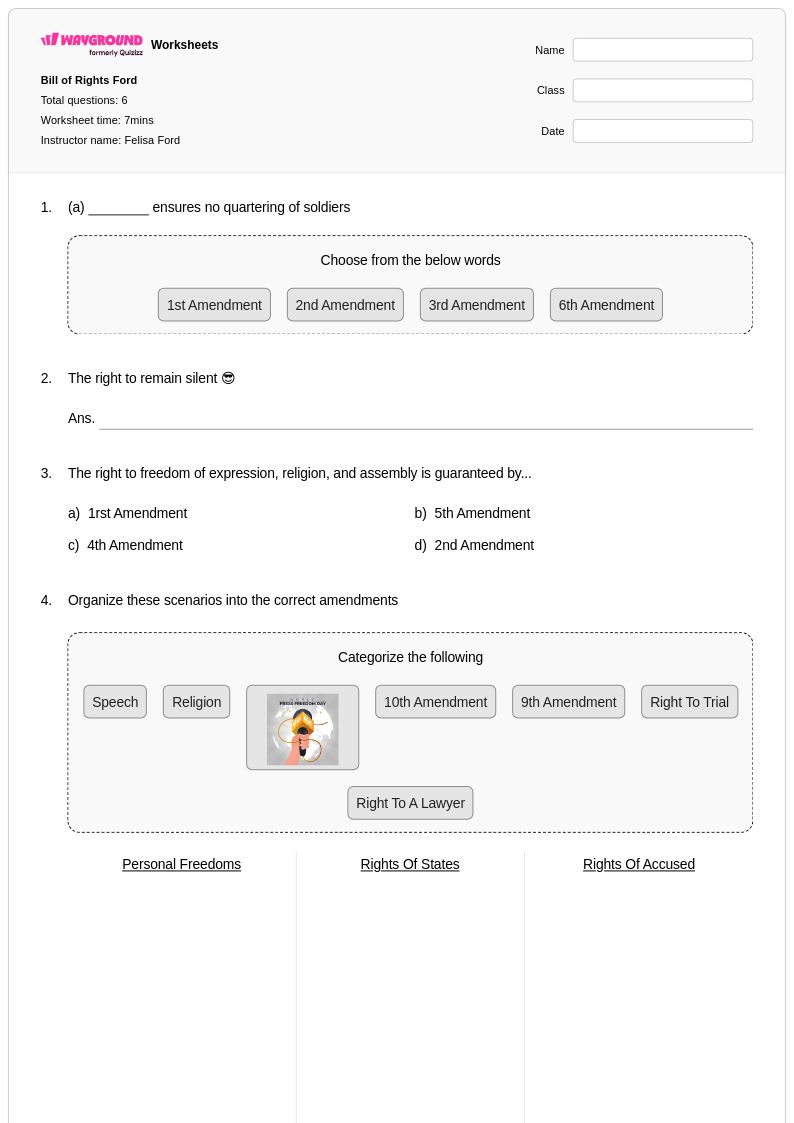
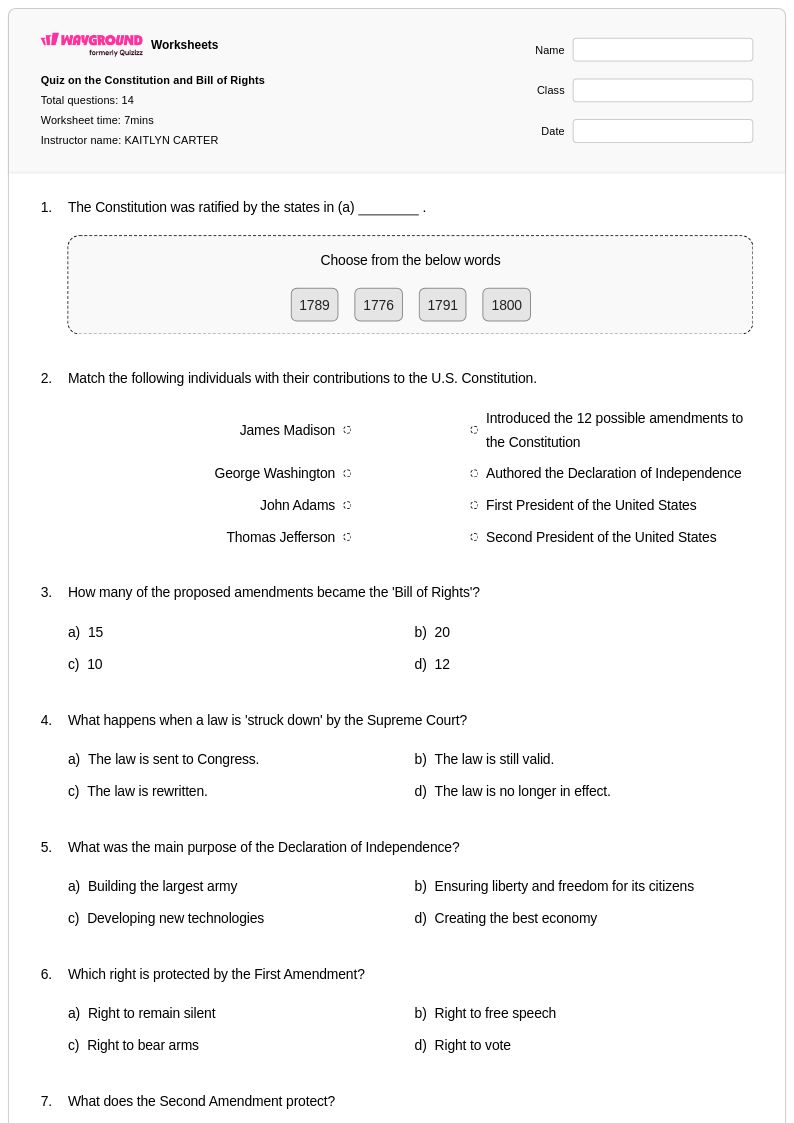
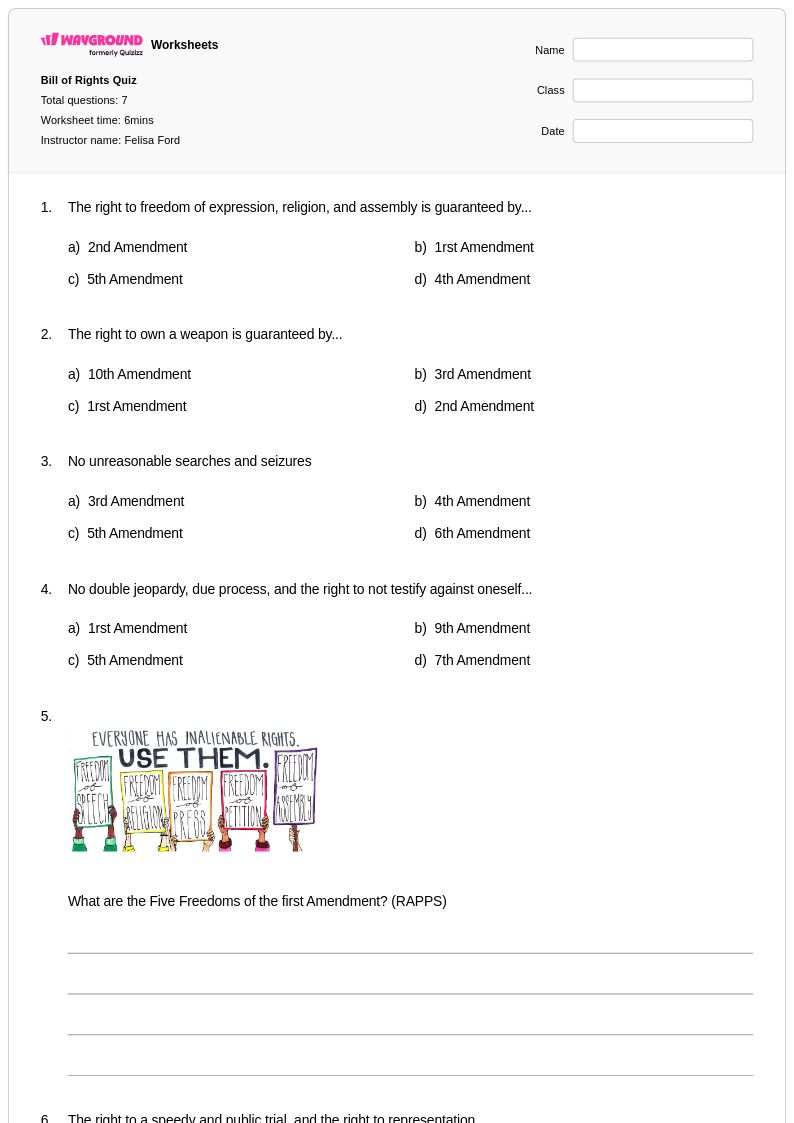
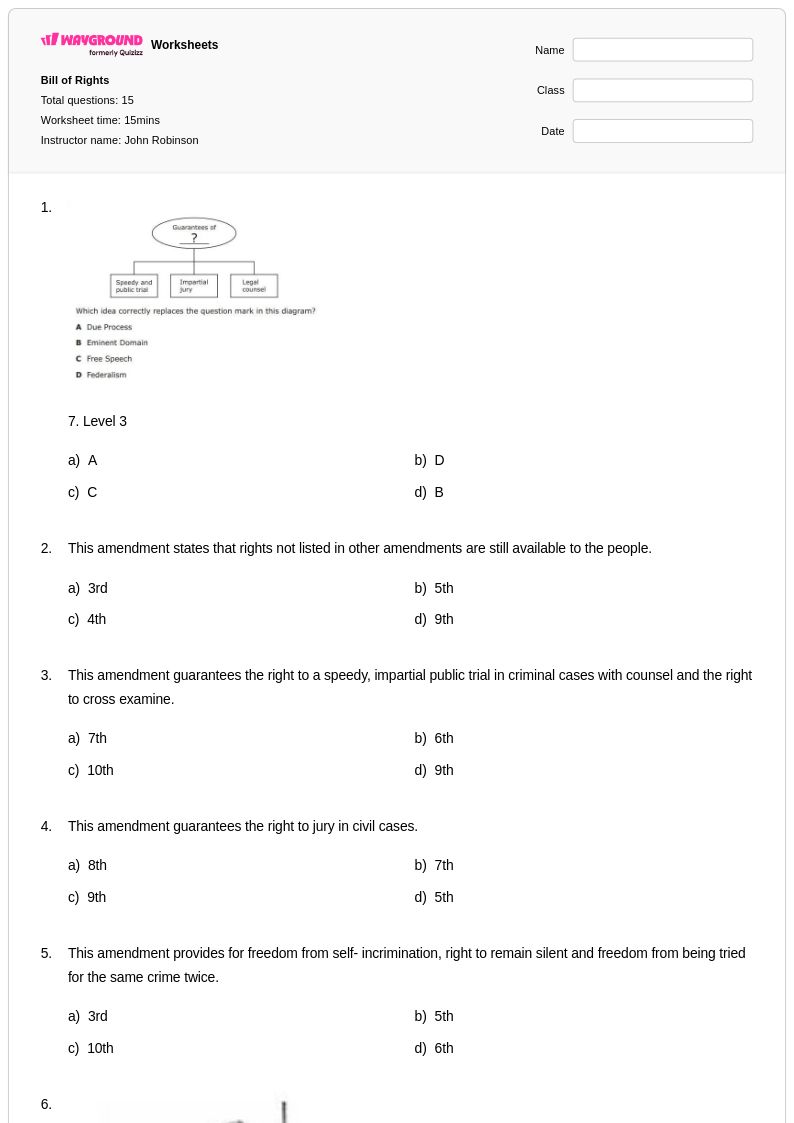
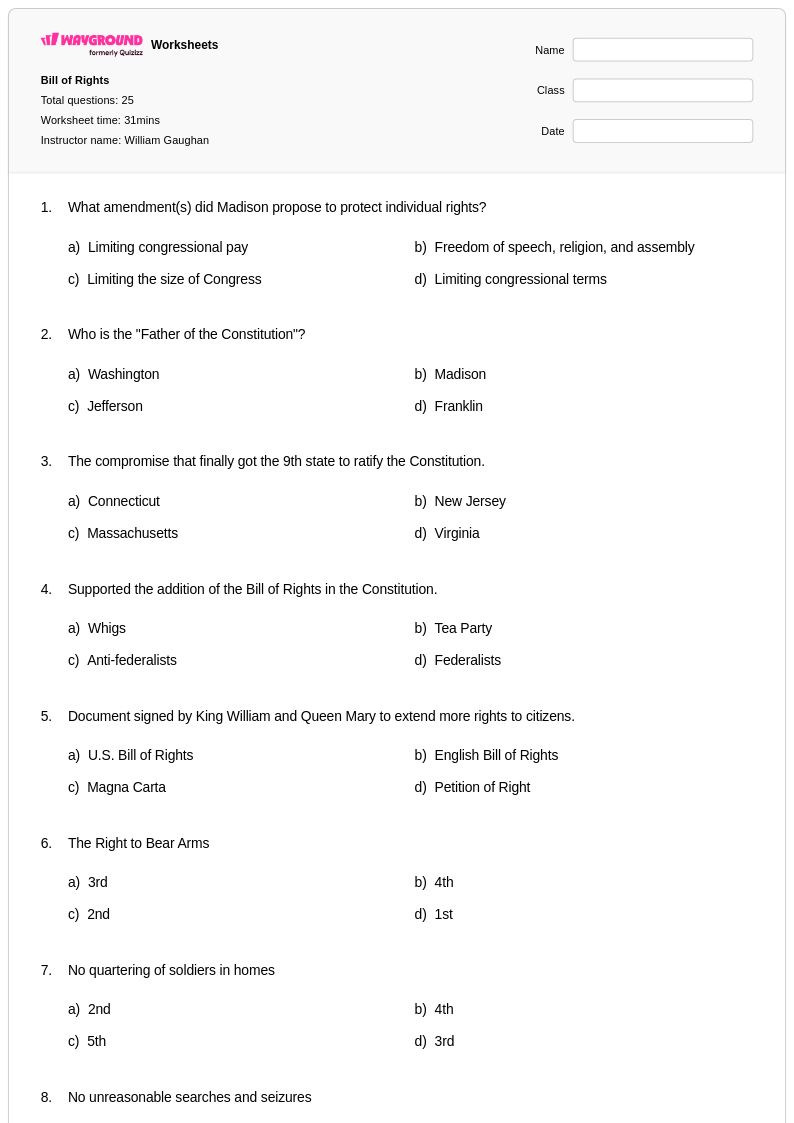
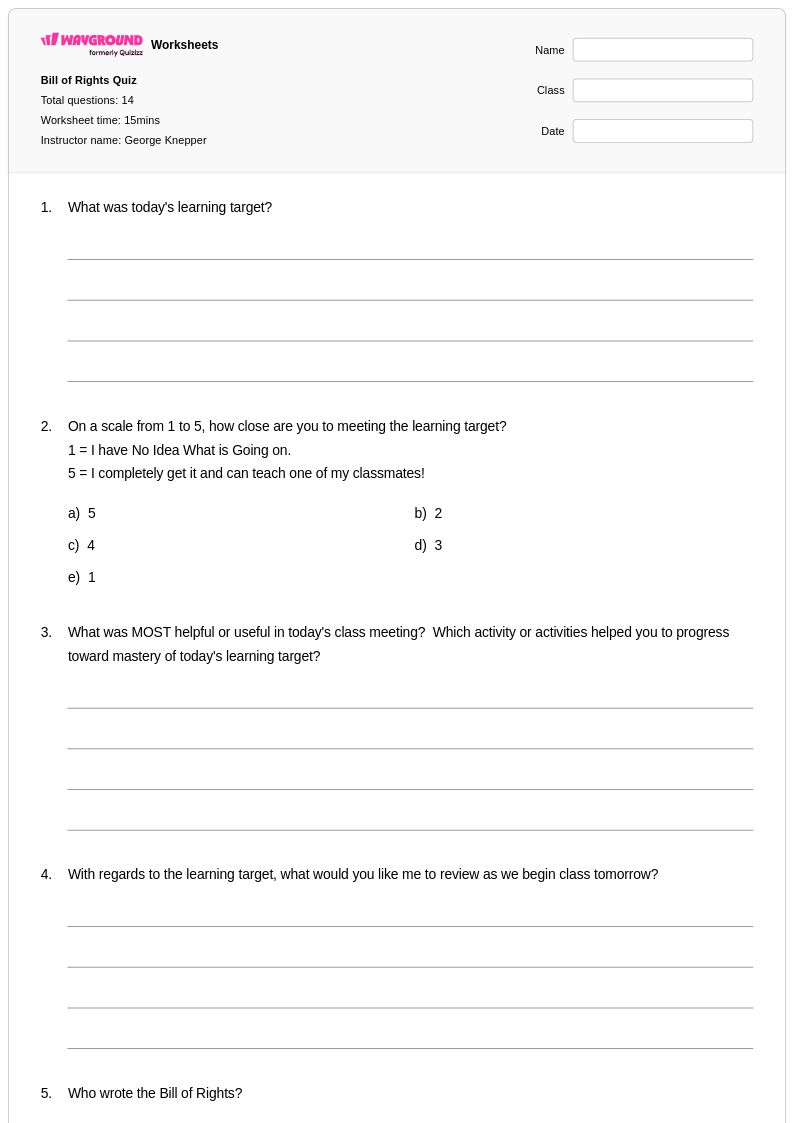
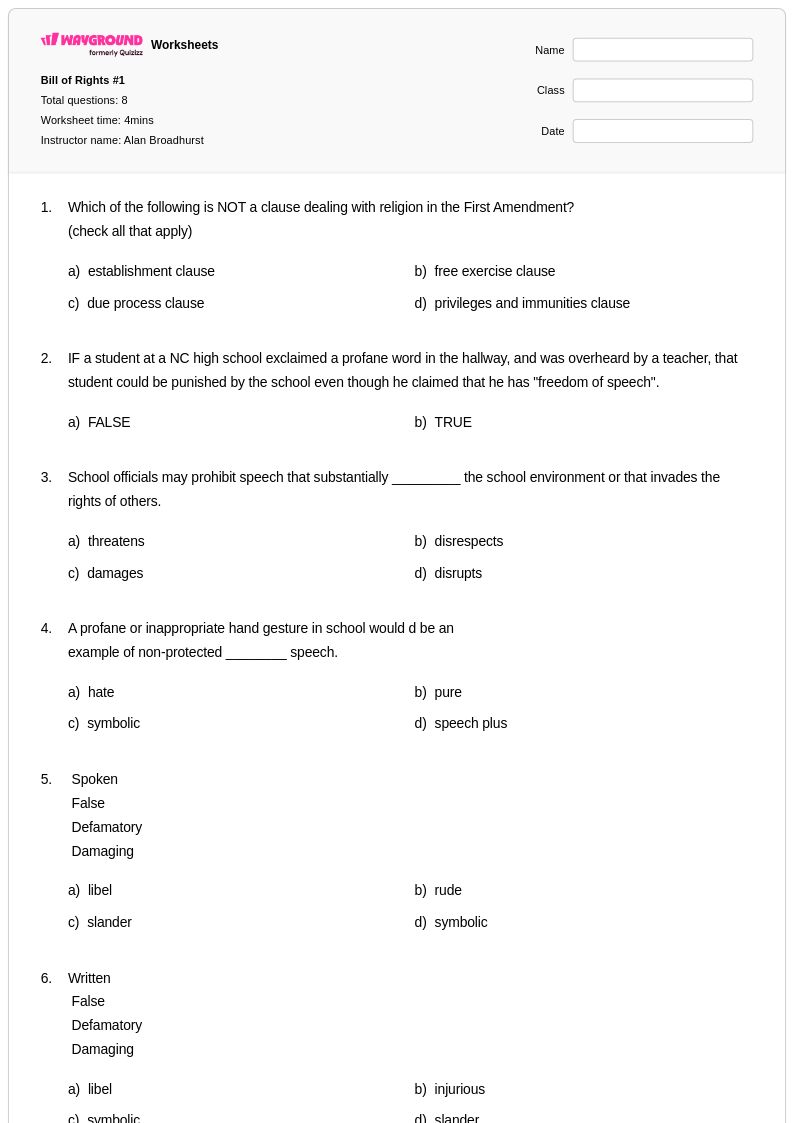
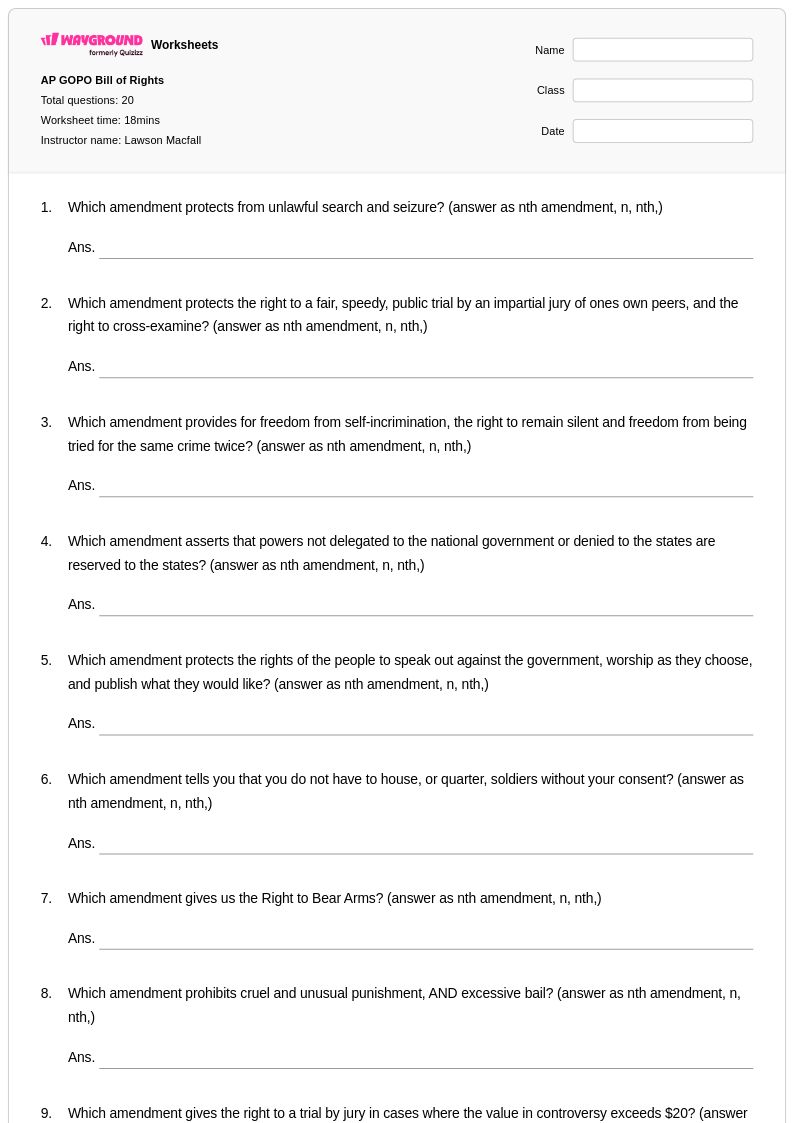
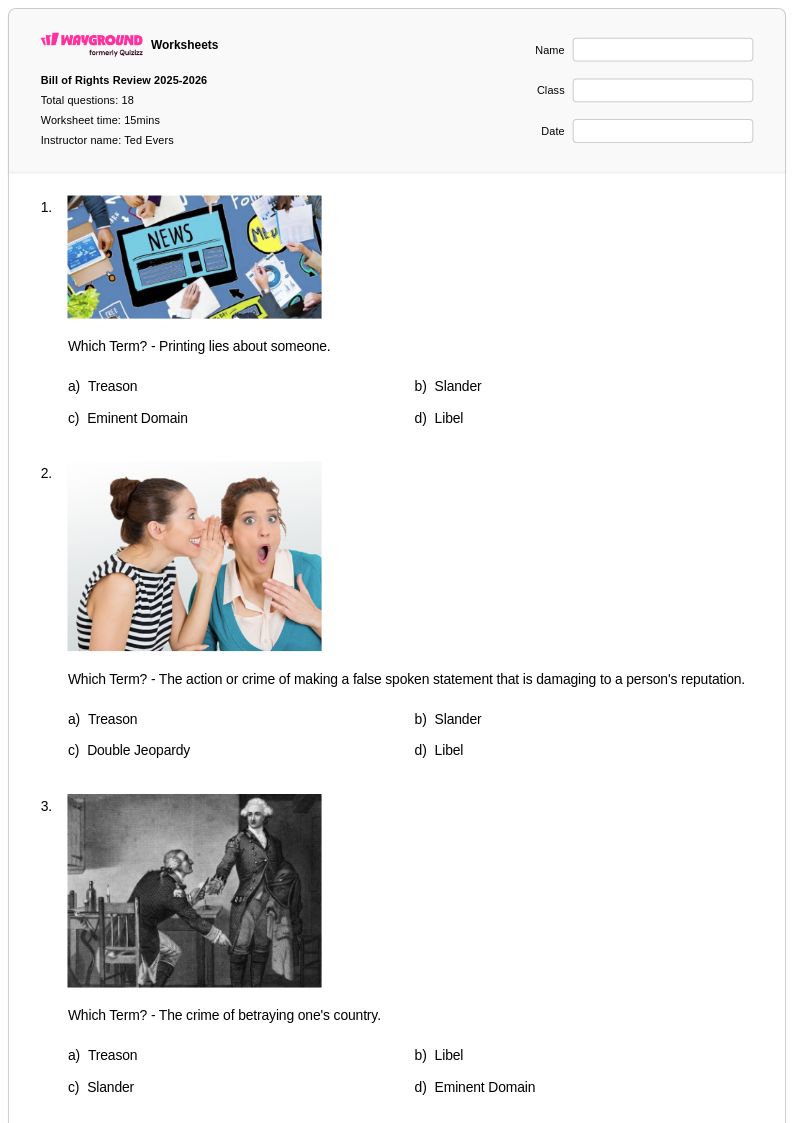
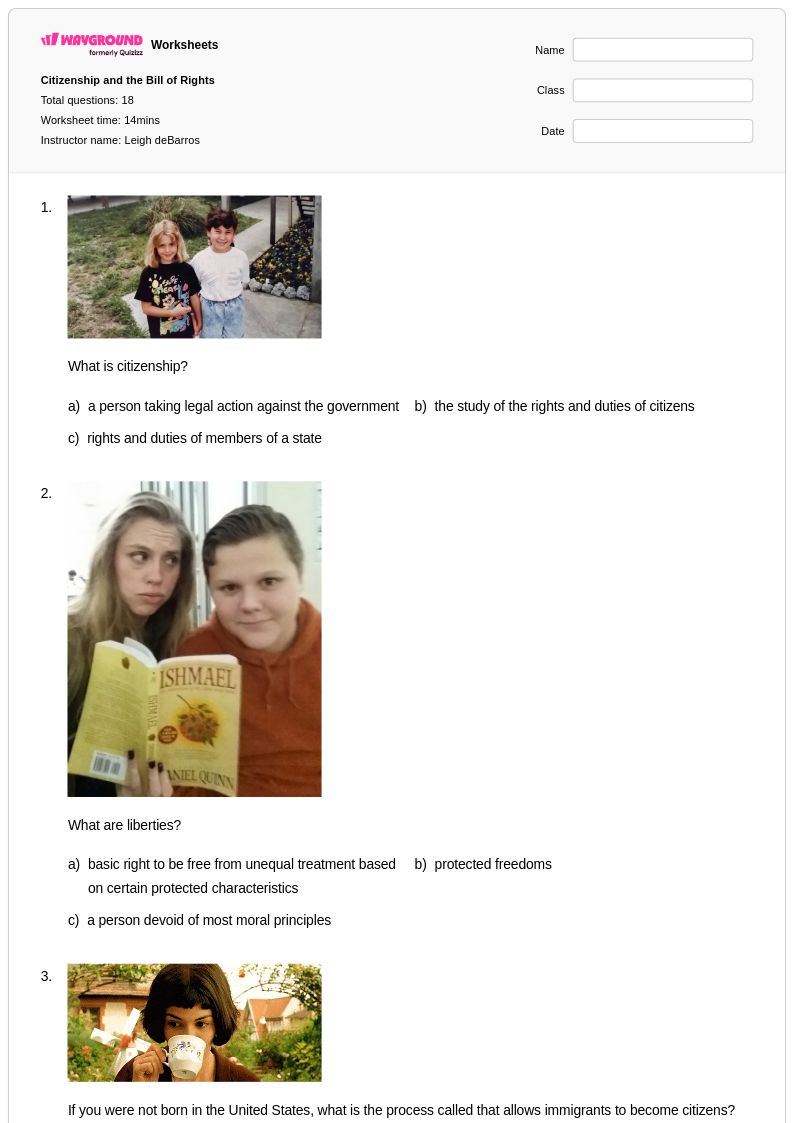
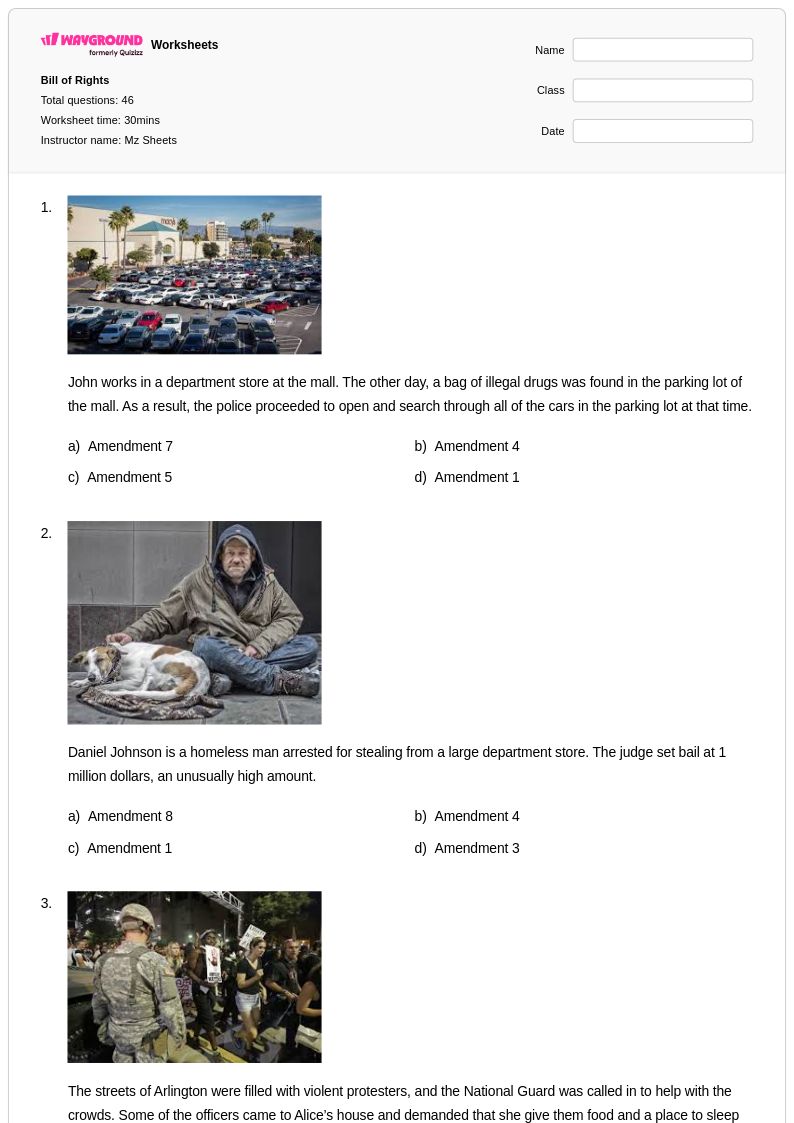
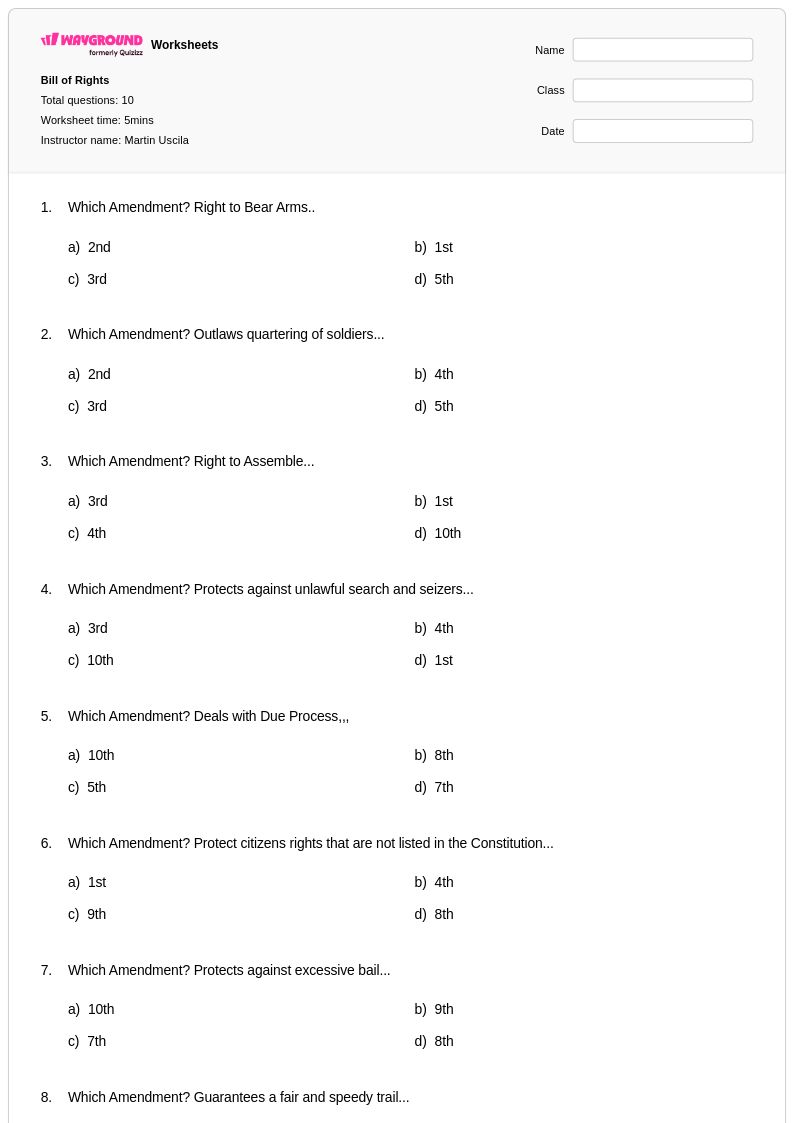
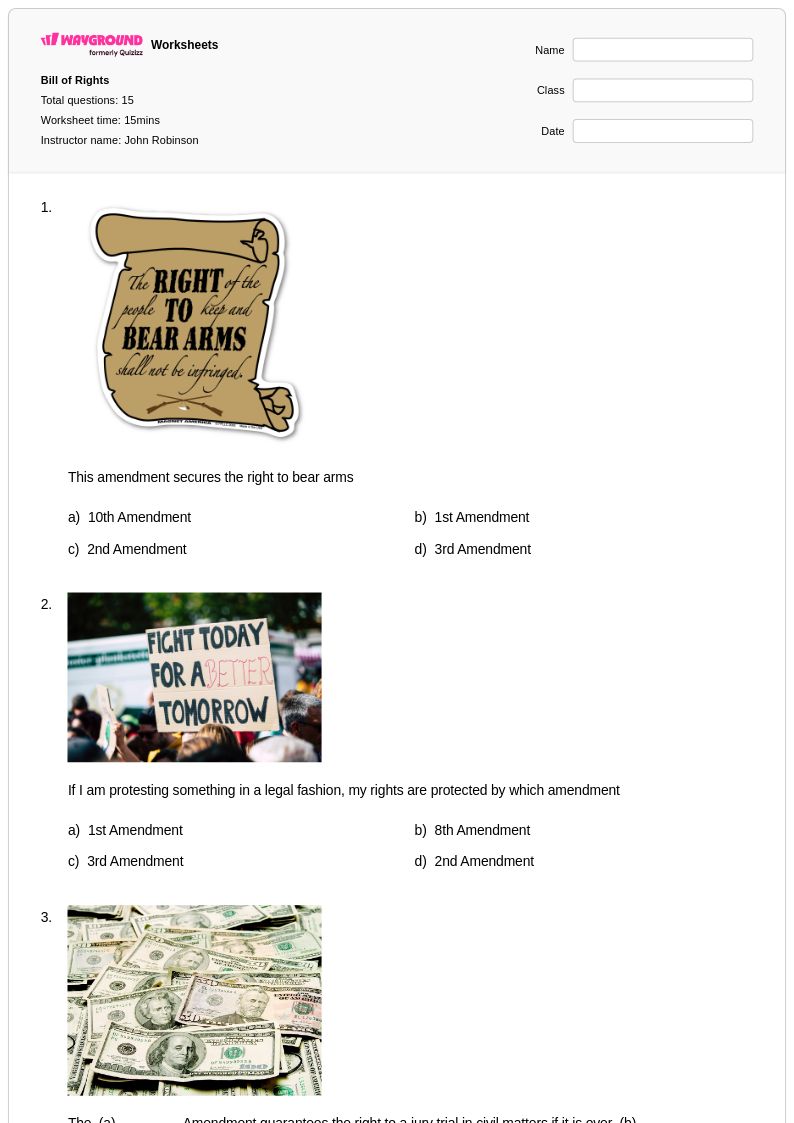
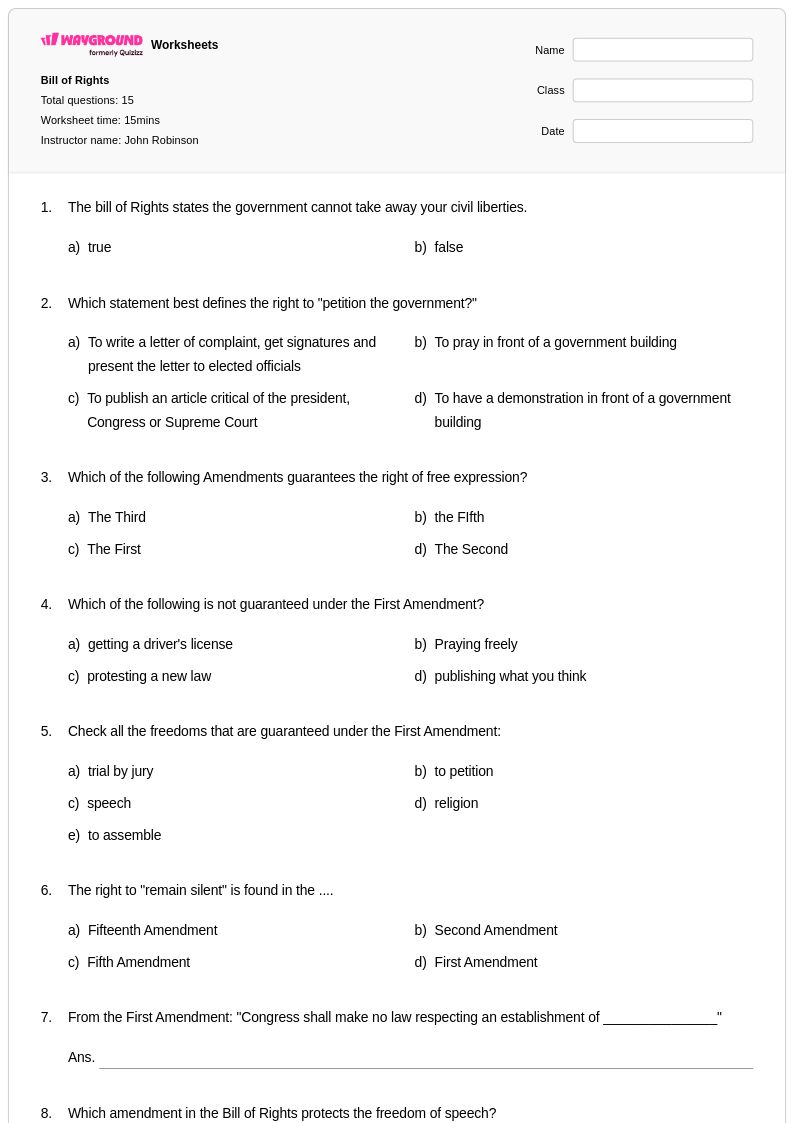
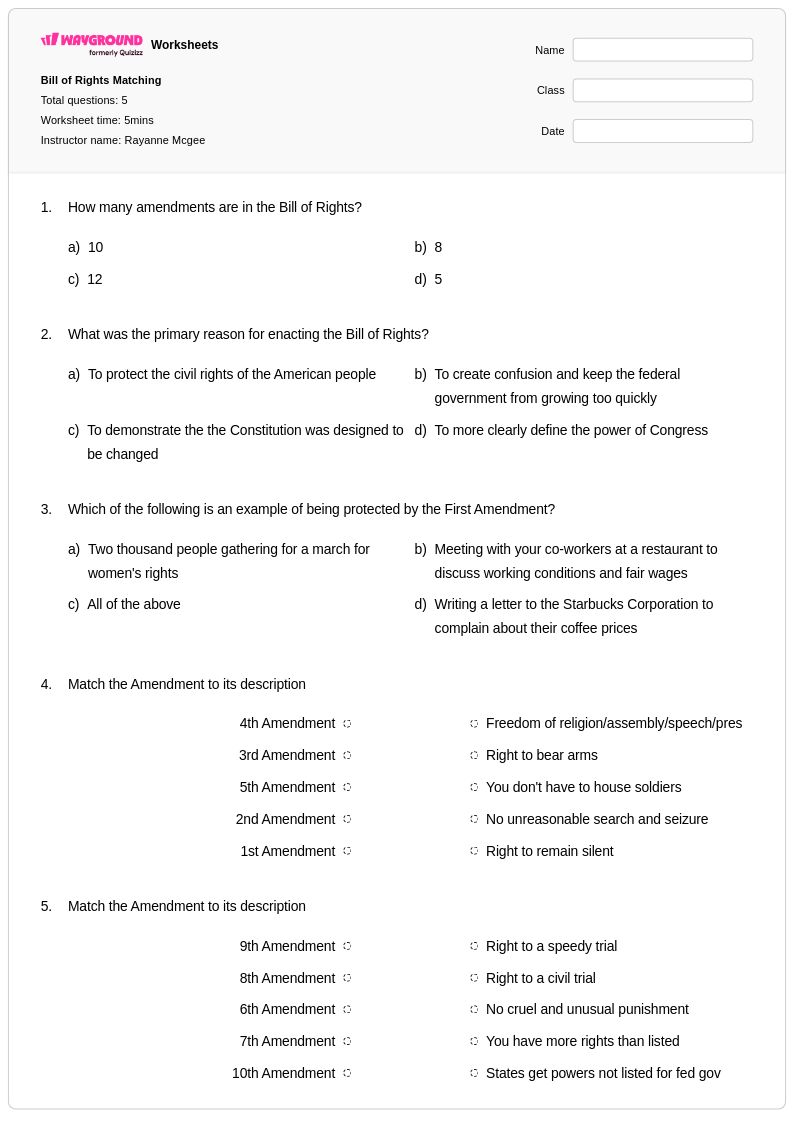
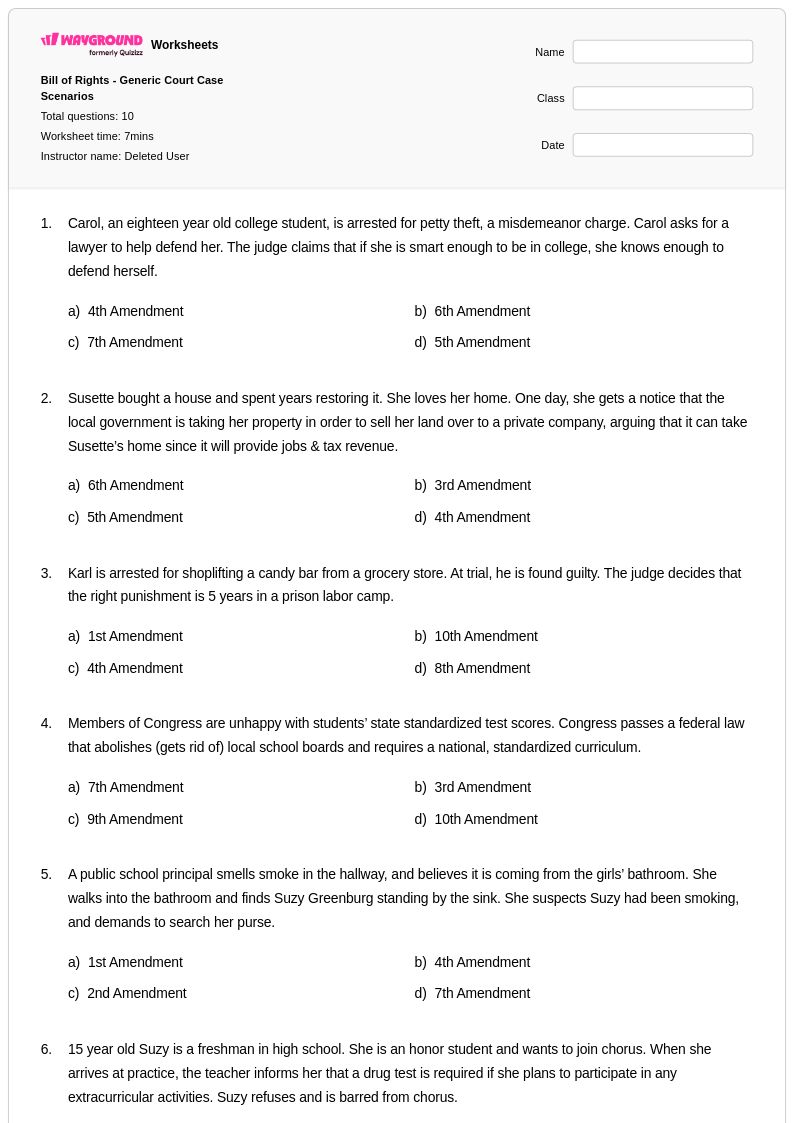
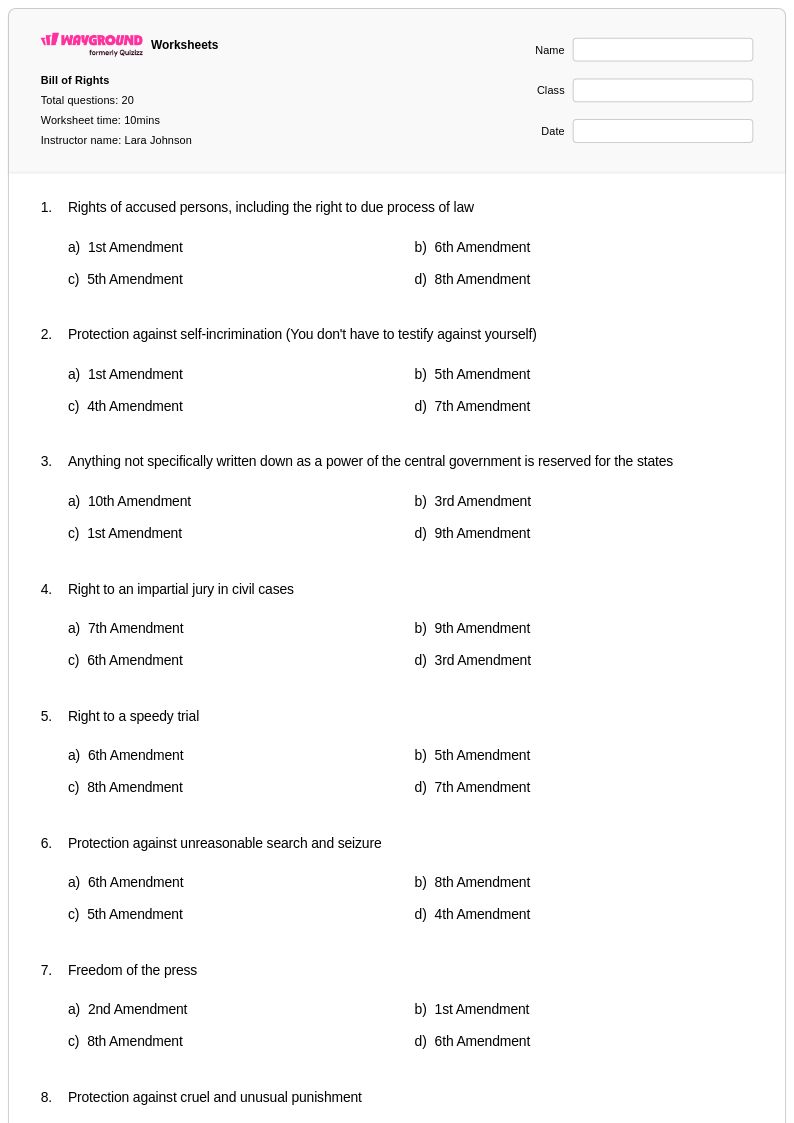
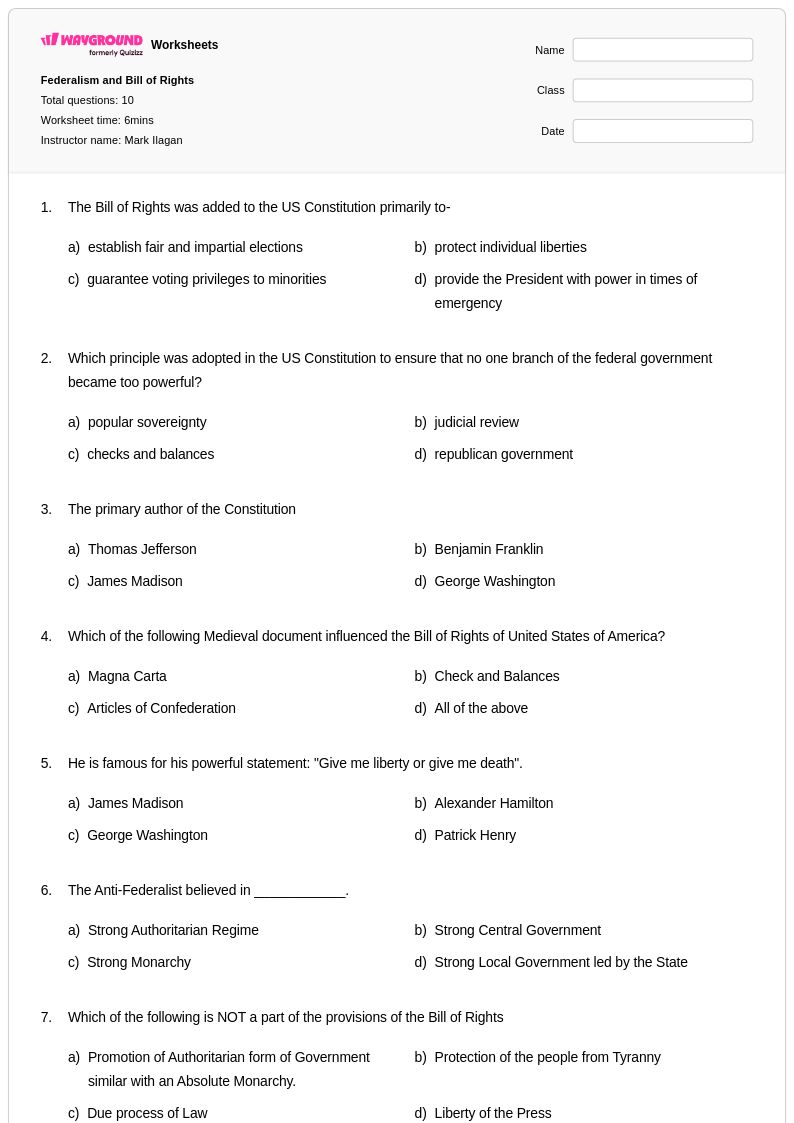
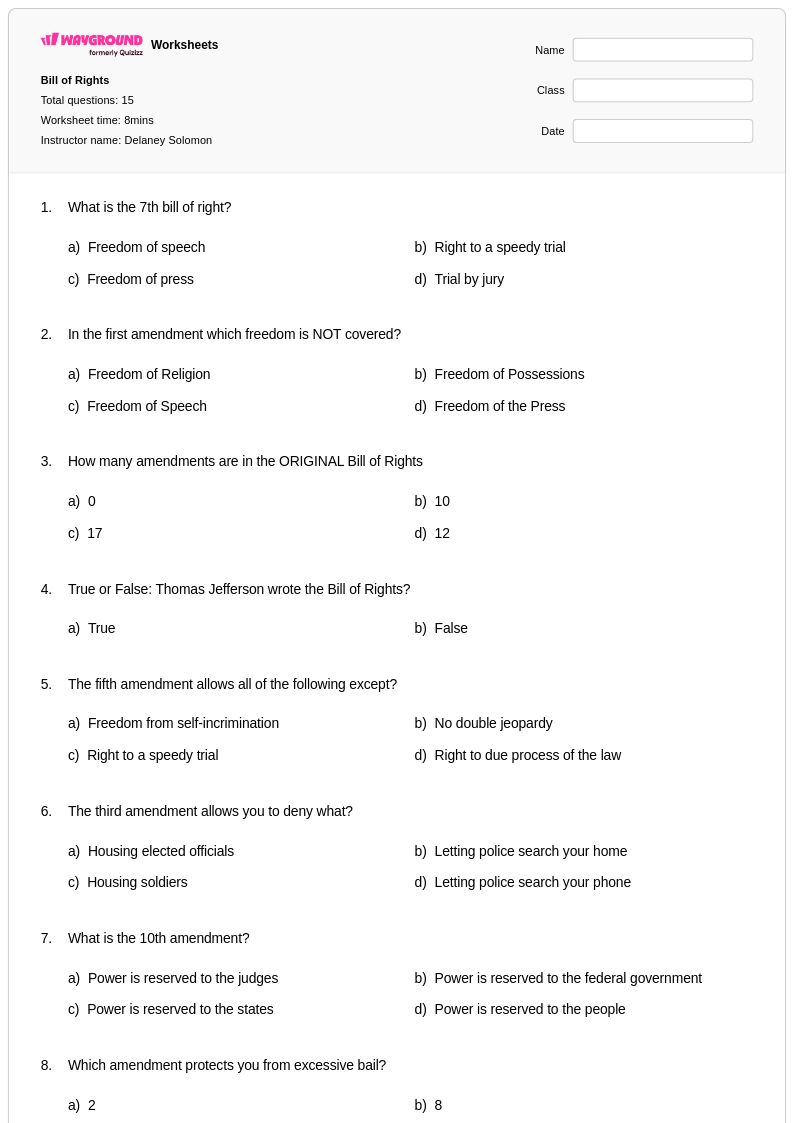
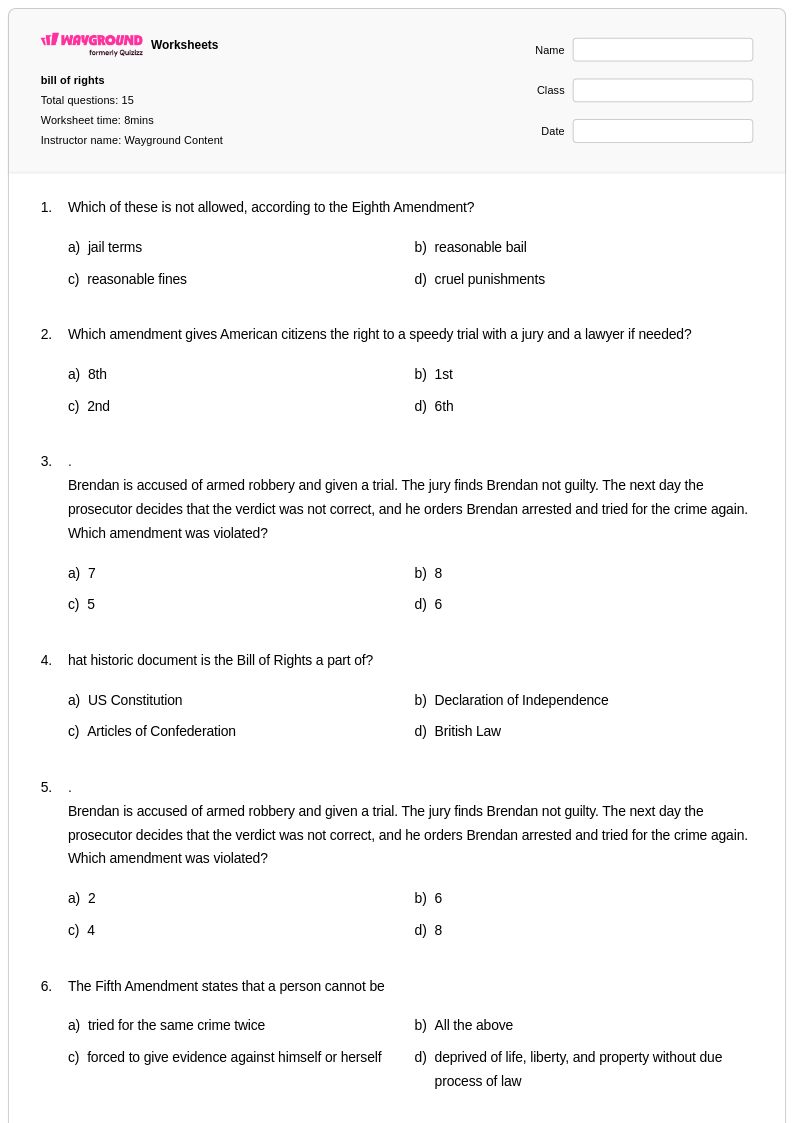
Bill of Rights worksheets for Class 10 students available through Wayground (formerly Quizizz) provide comprehensive coverage of the first ten amendments to the United States Constitution and their enduring impact on American democracy. These educational resources strengthen critical thinking skills by challenging students to analyze constitutional text, interpret Supreme Court cases, and evaluate how individual liberties balance with governmental authority. The worksheet collection includes practice problems that require students to identify specific amendments in real-world scenarios, compare historical and contemporary applications of constitutional rights, and examine landmark cases that have shaped civil liberties jurisprudence. Each printable resource comes with a detailed answer key to support independent study and classroom assessment, while the free pdf format ensures accessibility for diverse learning environments.
Wayground (formerly Quizizz) empowers educators with millions of teacher-created Bill of Rights resources specifically designed for Class 10 social studies instruction. The platform's robust search and filtering capabilities allow teachers to locate materials aligned with state and national civics standards, while differentiation tools enable customization based on individual student needs and learning objectives. These worksheets are available in both printable and digital formats, including downloadable pdf versions that facilitate seamless integration into existing lesson plans. Teachers utilize these comprehensive resources for targeted skill practice, remediation of constitutional concepts, and enrichment activities that deepen students' understanding of how the Bill of Rights continues to shape American legal and political discourse in the 21st century.
FAQs
How do I teach the Bill of Rights to middle and high school students?
Start by grounding students in the historical context of the founding era — why Anti-Federalists demanded explicit protections before ratifying the Constitution. From there, move amendment by amendment, pairing each with a real Supreme Court case that tested its limits. Connecting abstract rights to concrete legal disputes helps students understand that the Bill of Rights is a living framework, not just a list.
What exercises help students practice understanding the Bill of Rights?
Scenario-based exercises are especially effective — present students with situations involving a school search, a protest permit denial, or a criminal trial and ask them to identify which amendment applies and why. Analyzing landmark Supreme Court cases such as Tinker v. Des Moines or Miranda v. Arizona reinforces how each amendment functions in practice. Worksheets that ask students to match amendments to real-world scenarios build both recall and analytical reasoning.
What common mistakes do students make when learning the Bill of Rights?
Students frequently confuse which amendment protects which right — conflating the First and Fourth Amendments is especially common. Many also misunderstand that the Bill of Rights originally limited only the federal government, not the states, until incorporation through the Fourteenth Amendment extended most protections. A third persistent error is treating rights as absolute, rather than understanding that courts have consistently held that rights can be regulated under certain compelling government interests.
How can I use Bill of Rights worksheets to support students with different learning needs?
Bill of Rights worksheets on Wayground can be assigned digitally, allowing teachers to apply individual accommodations such as read aloud for students who need audio support, reduced answer choices to lower cognitive load, and extended time for students who require it. These settings are saved per student and carry over to future sessions, so teachers don't need to reconfigure them each time. Remaining students receive default settings without notification, keeping the classroom experience equitable and uninterrupted.
How do I assess whether students truly understand the Bill of Rights versus just memorizing it?
Memorization-based assessments — like matching amendments to numbers — reveal very little about genuine constitutional literacy. Instead, assess students by presenting novel scenarios and asking them to identify the relevant amendment, explain the constitutional tension involved, and predict how a court might rule. Open-response questions tied to Supreme Court case excerpts are particularly strong indicators of whether students understand application versus recall.
How do I use Bill of Rights worksheets on Wayground in my classroom?
Bill of Rights worksheets on Wayground are available as printable PDFs for traditional classroom use and in digital formats for technology-integrated environments, accommodating a range of teaching setups and student preferences. Teachers can also host worksheets directly as a quiz on Wayground, enabling real-time participation and immediate feedback. All worksheets include complete answer keys, making them practical for both instruction and independent practice.