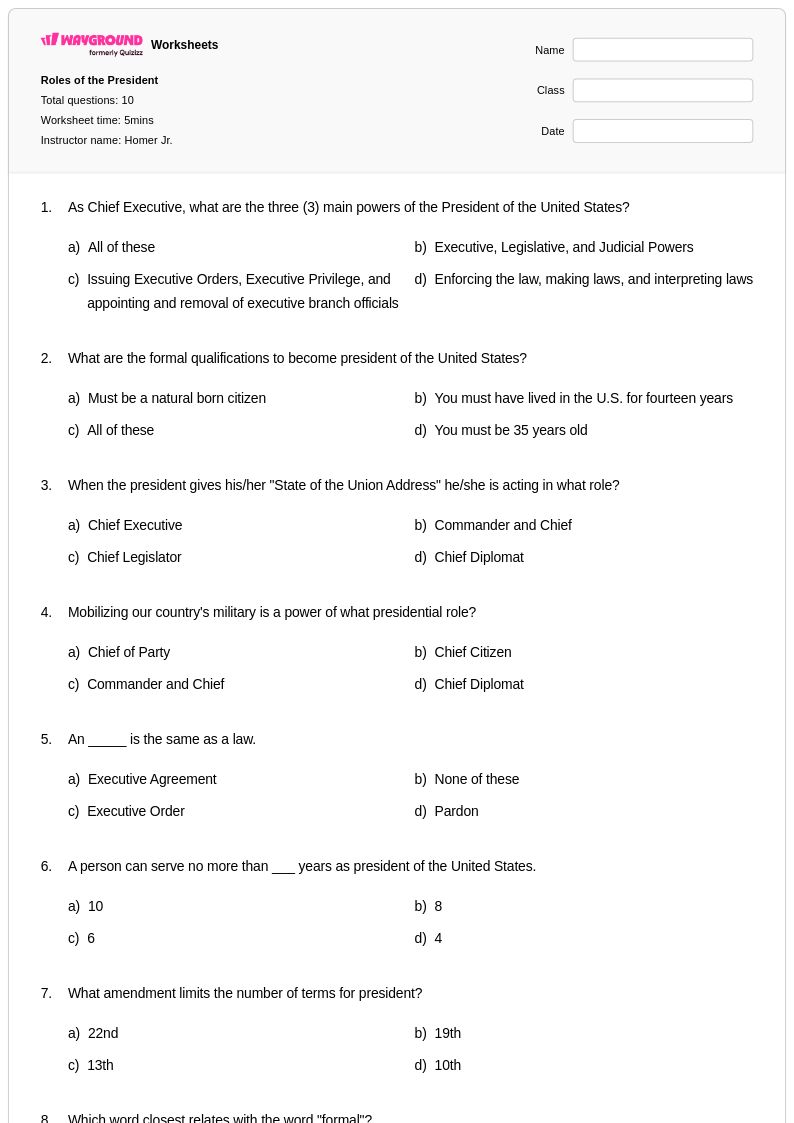
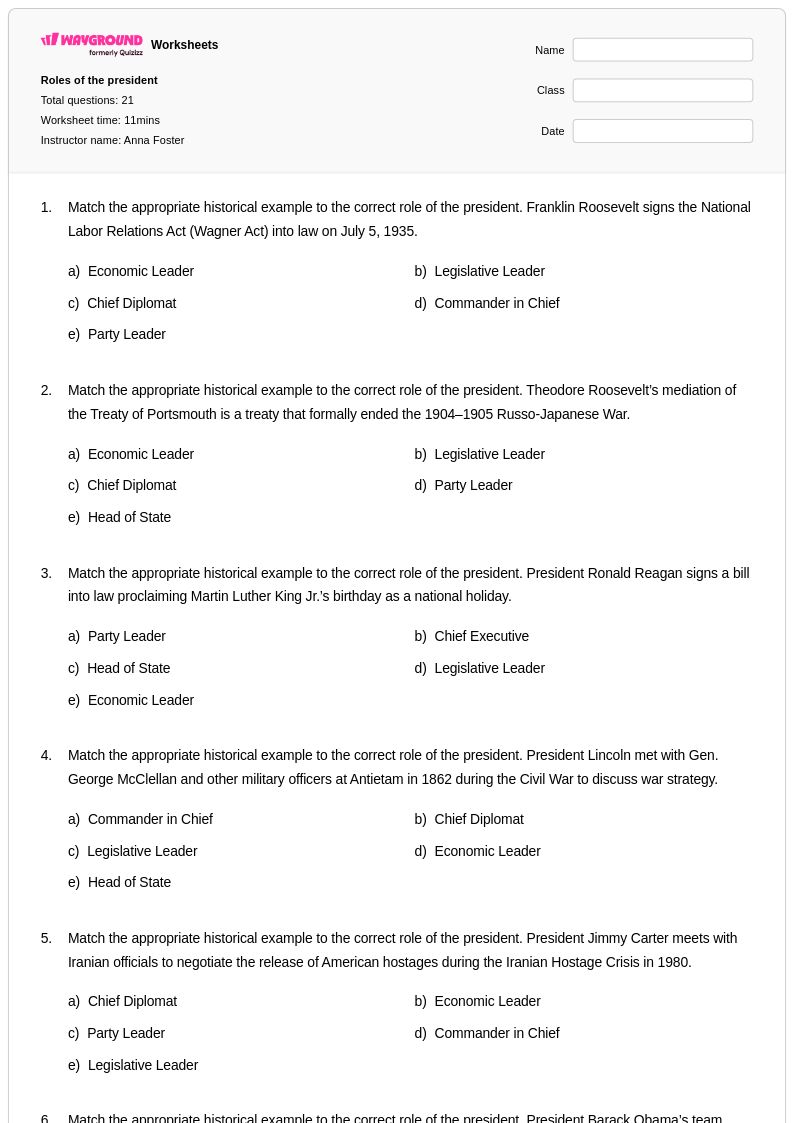
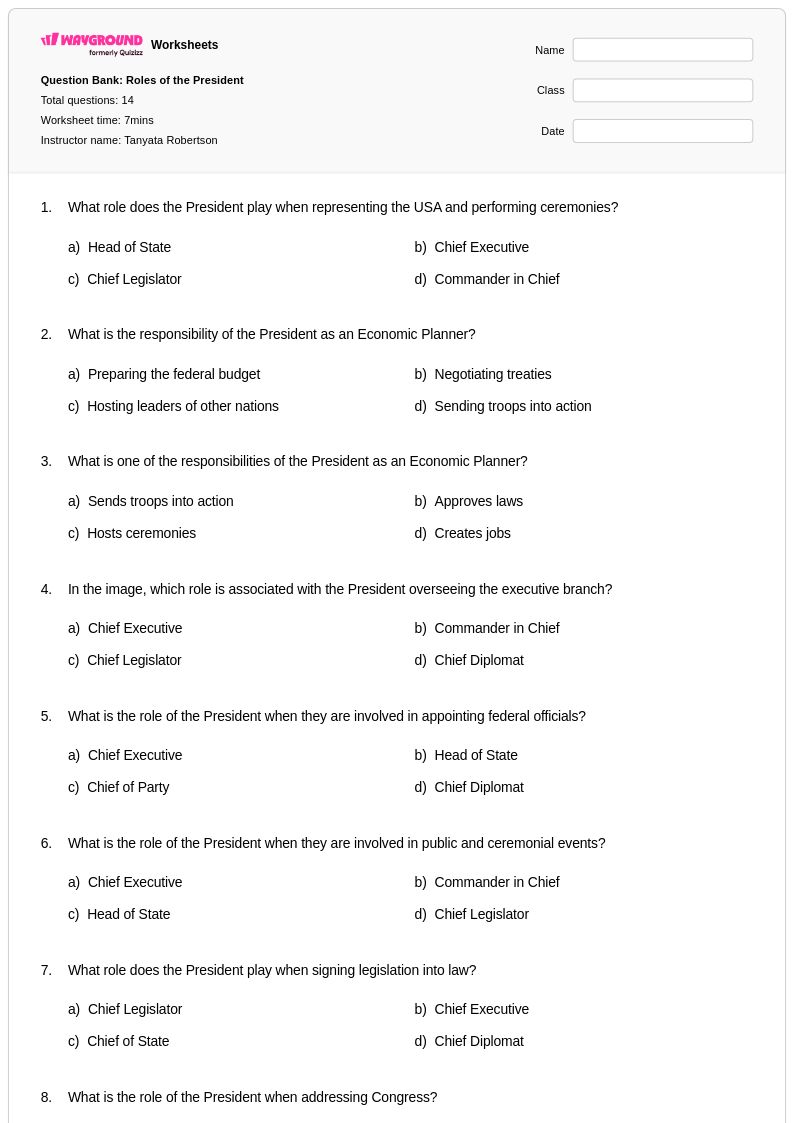
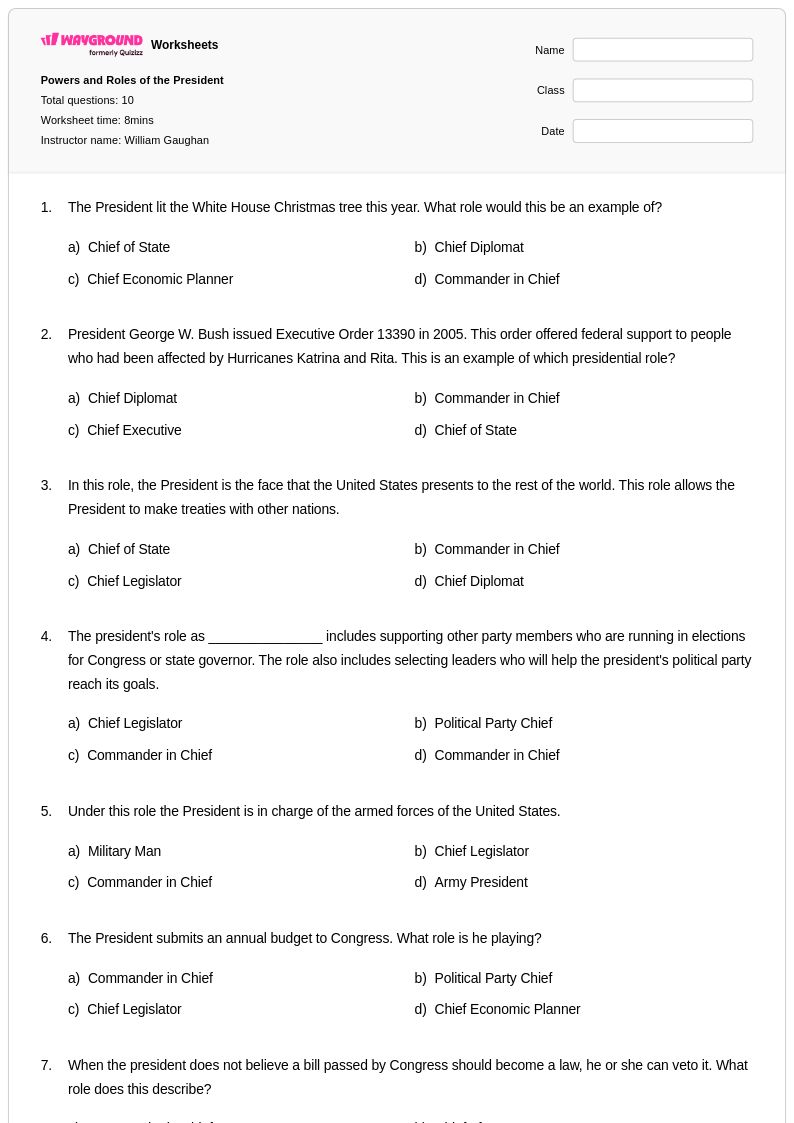
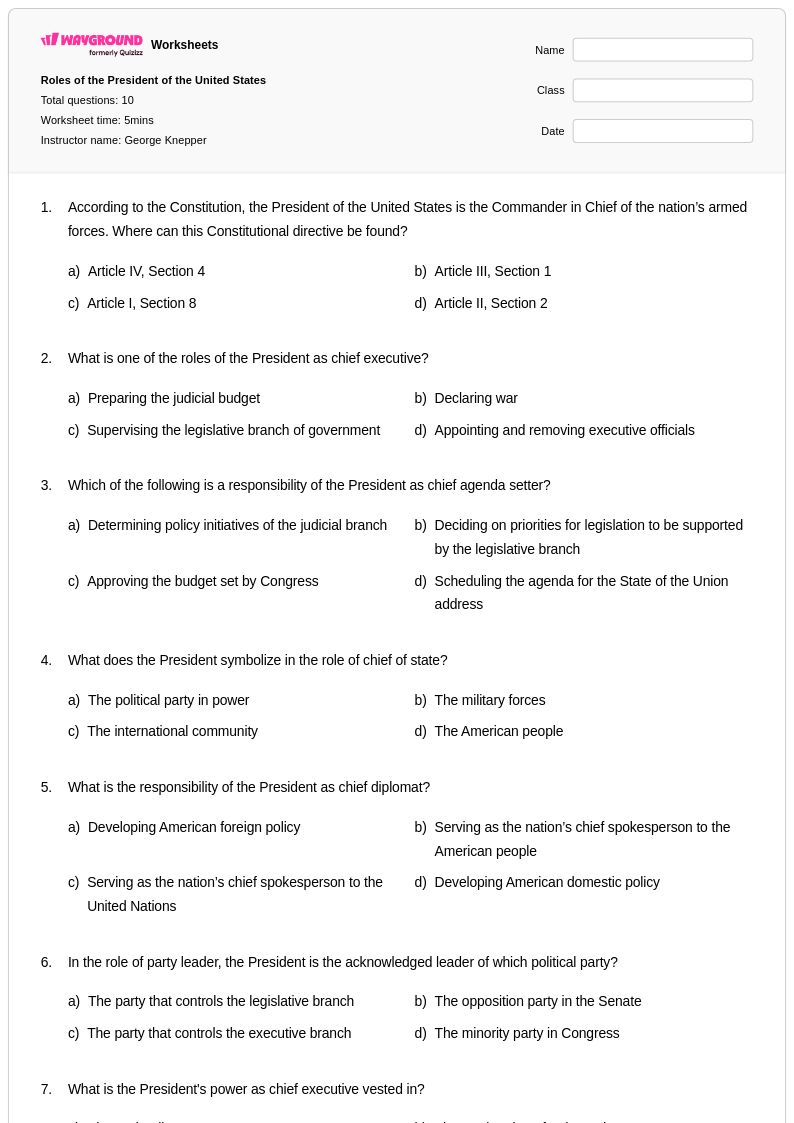
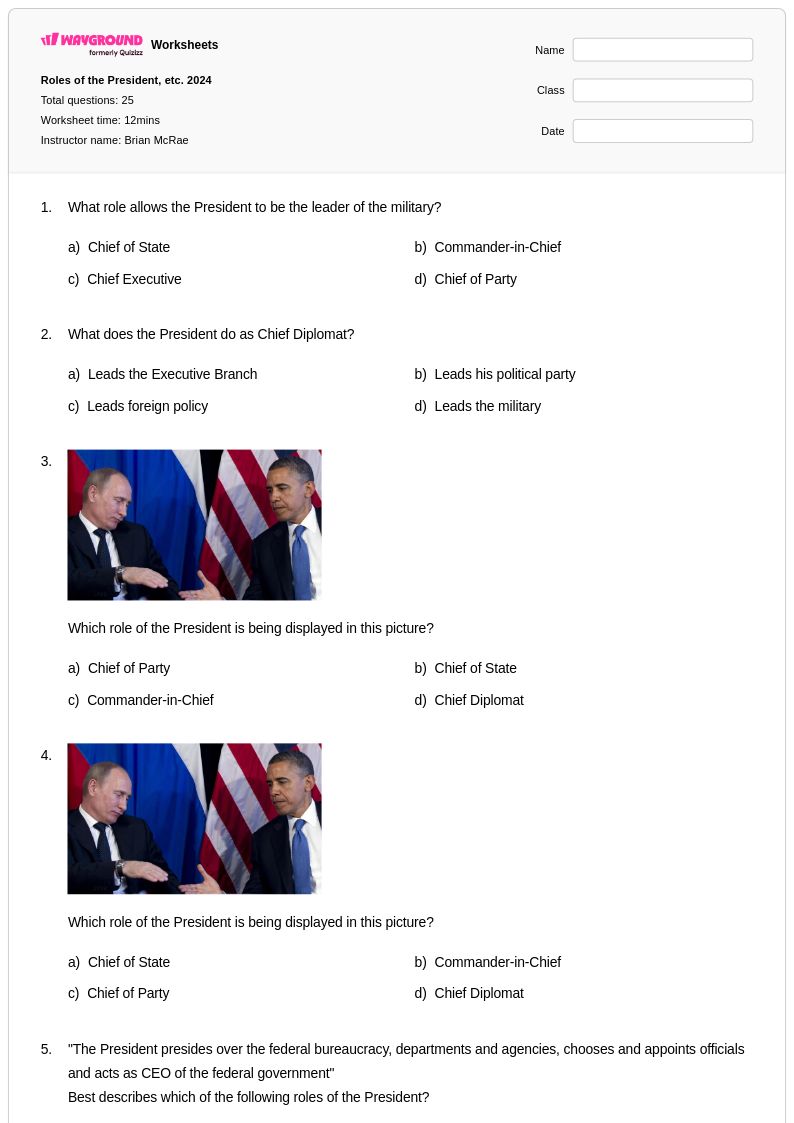
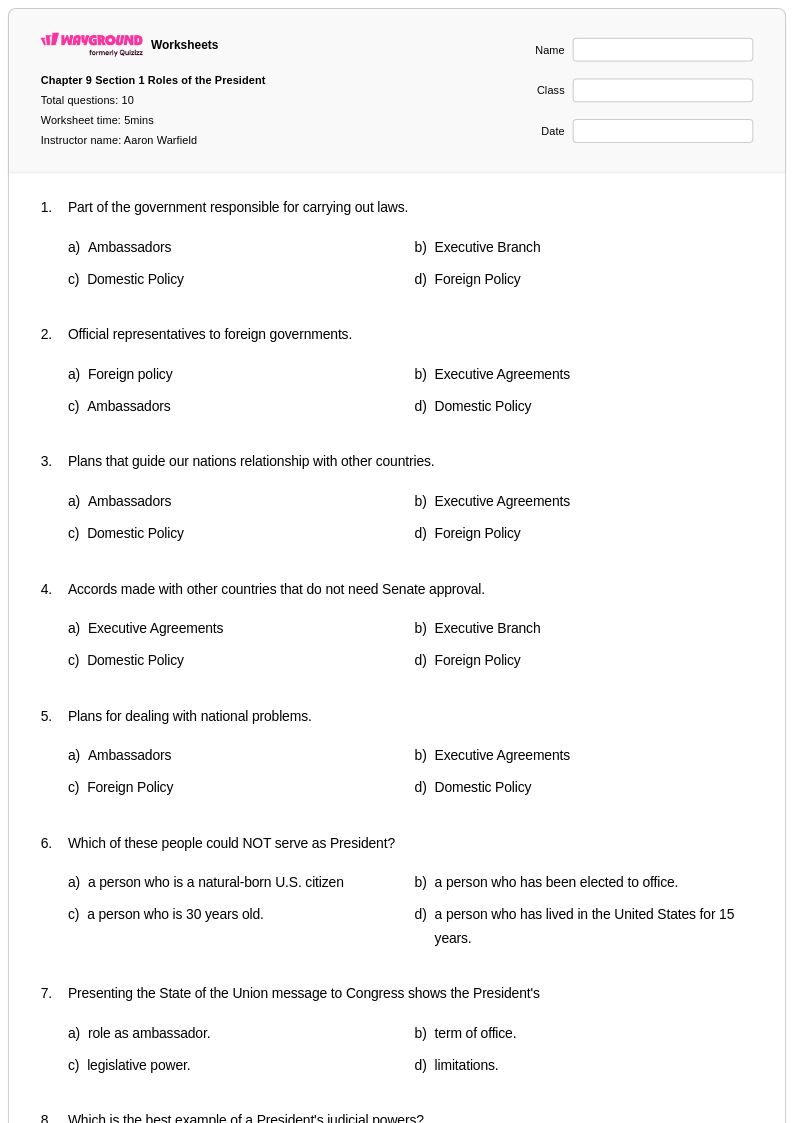
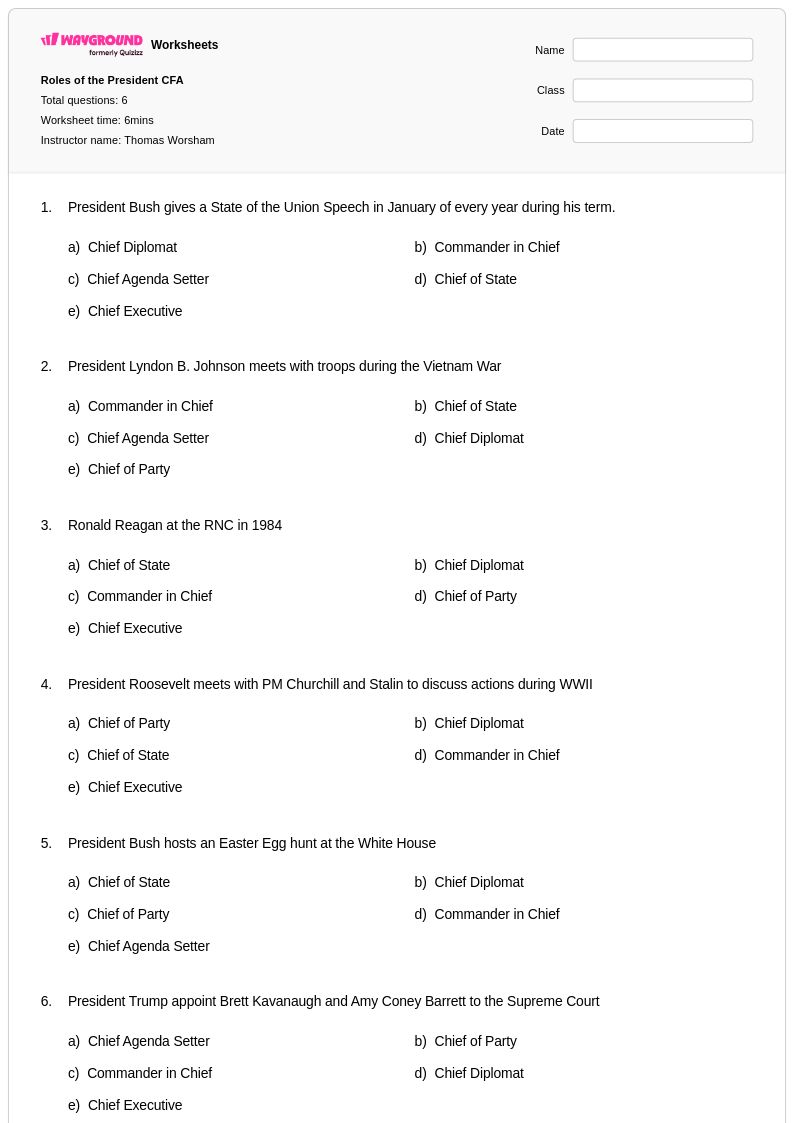
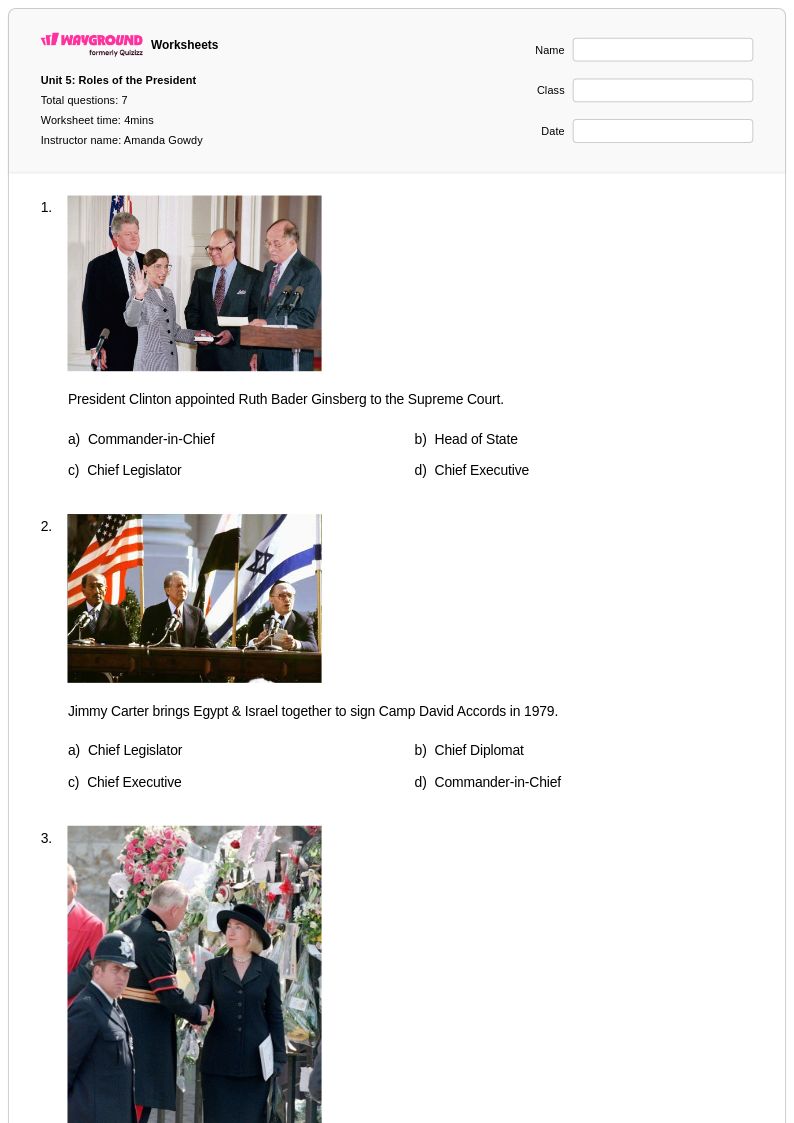
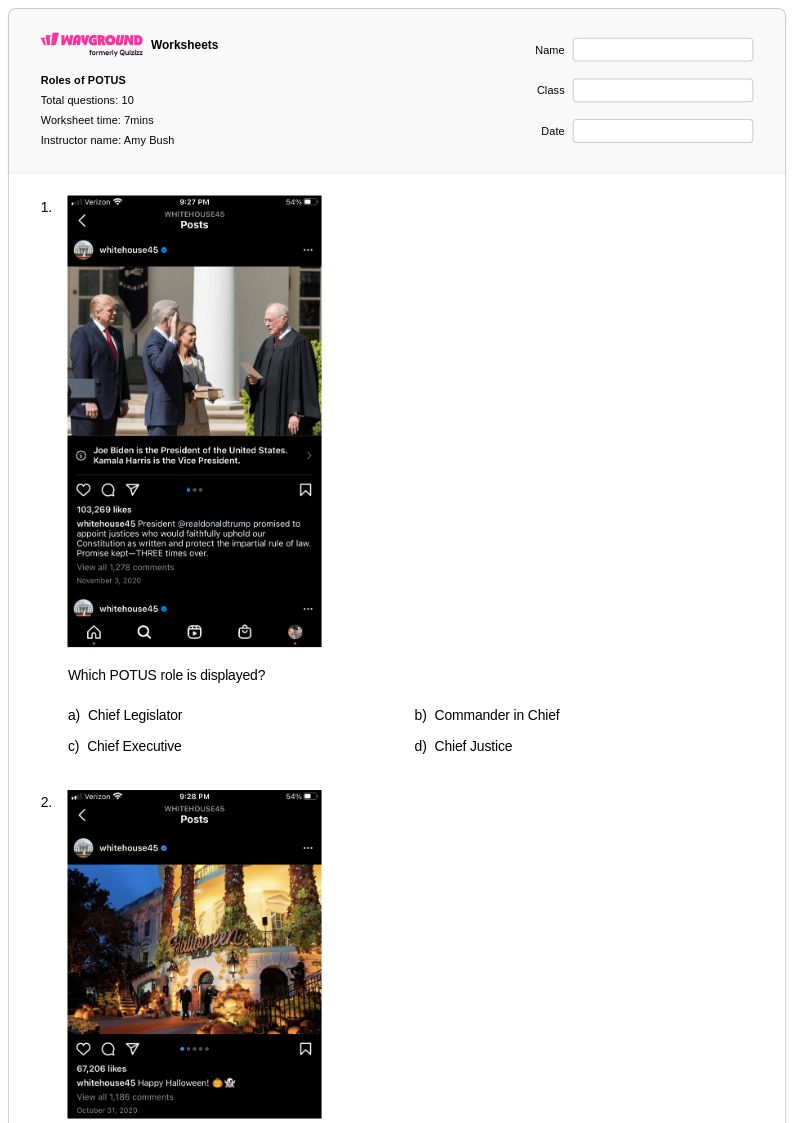
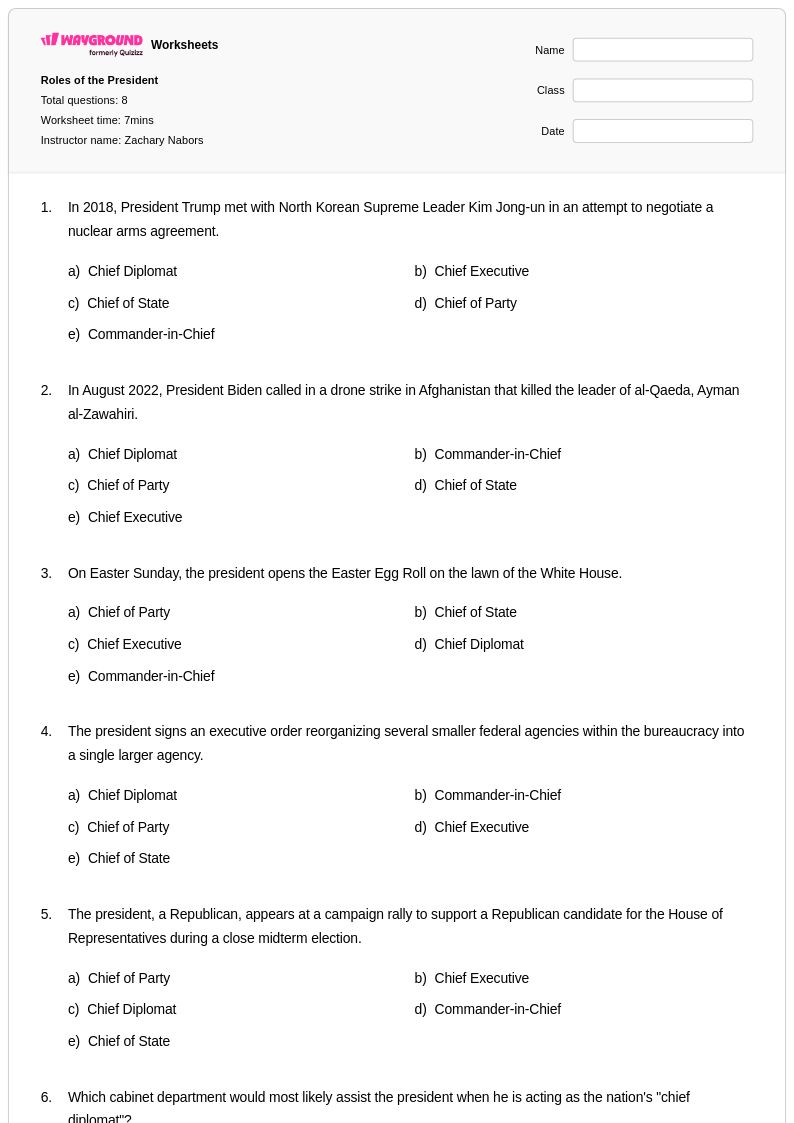
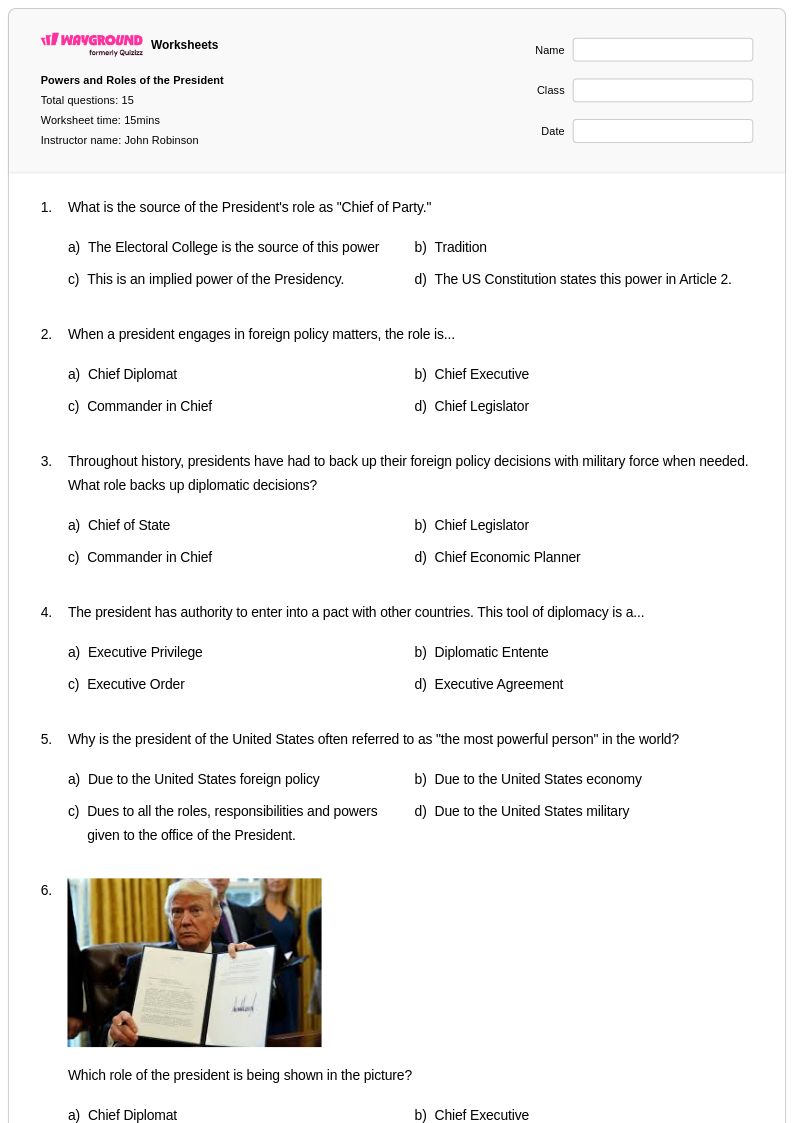
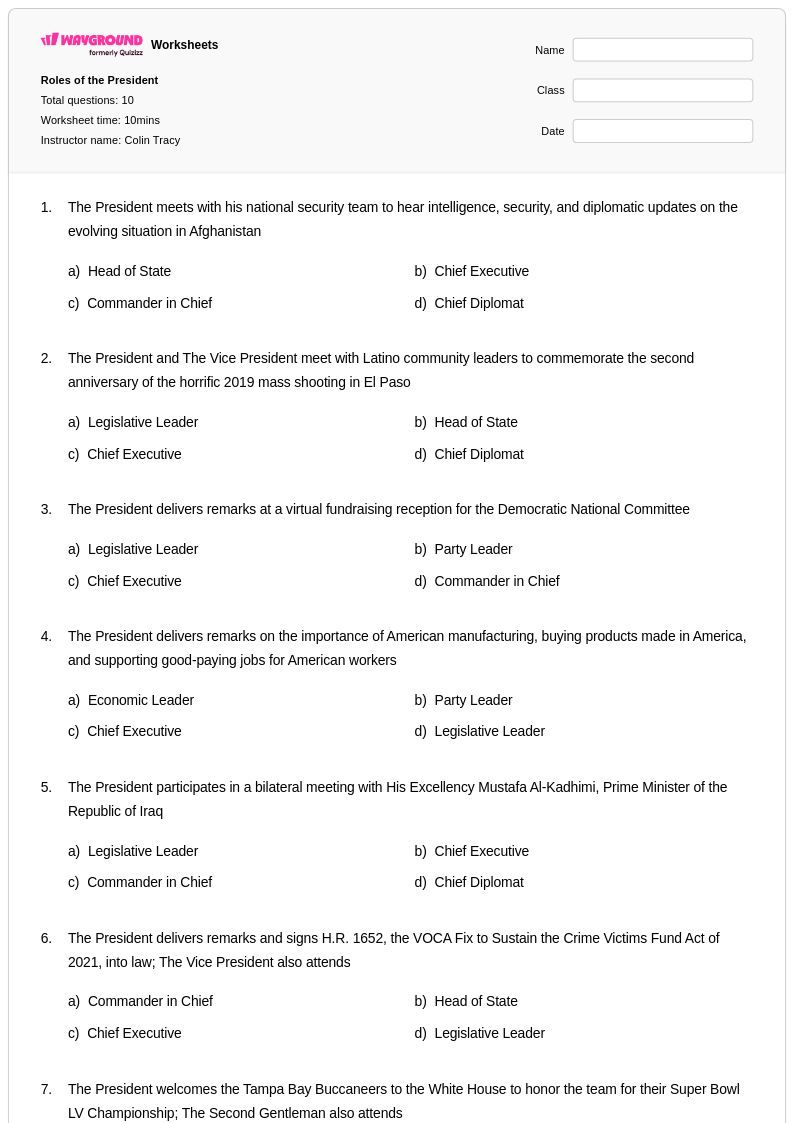
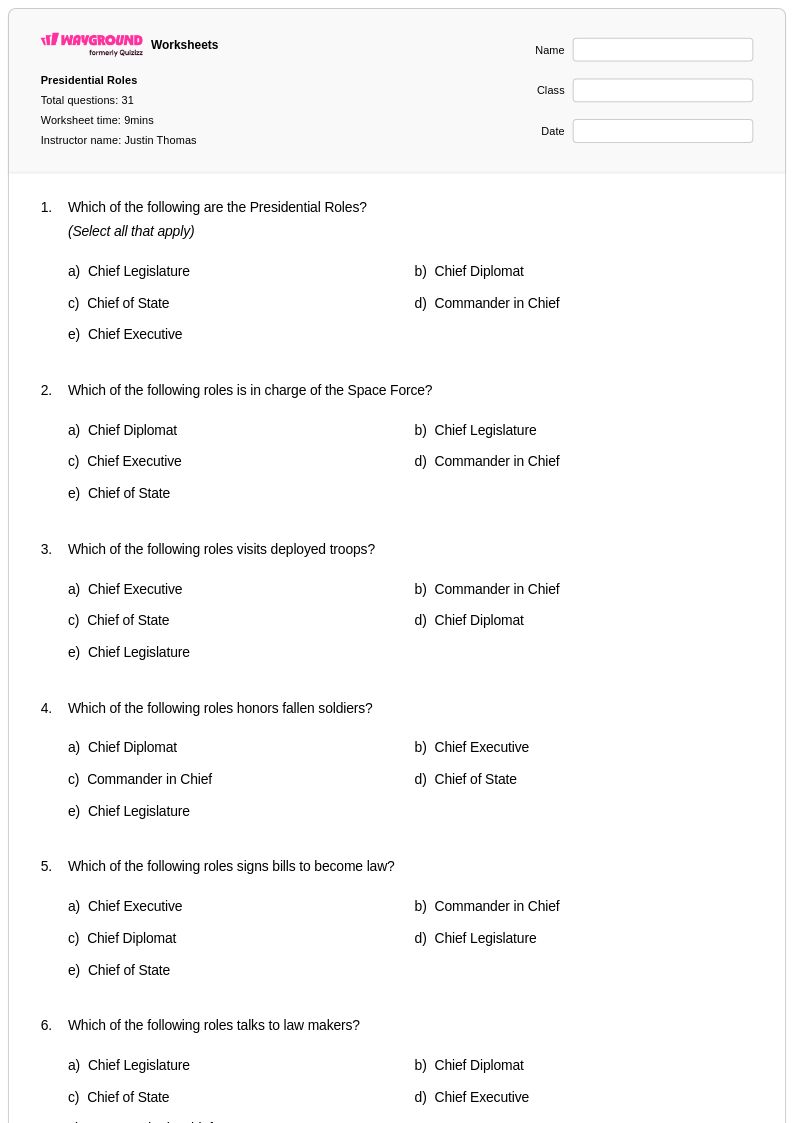
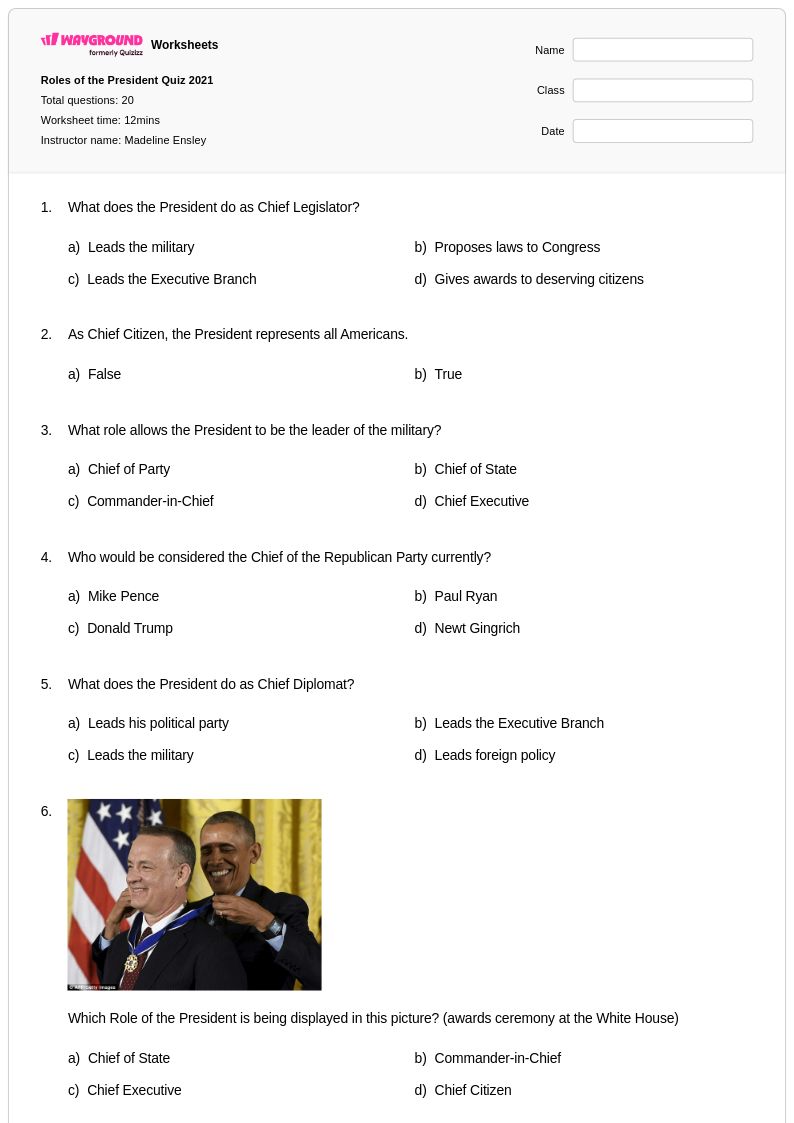
Free Printable Roles of the President Worksheets for Class 10
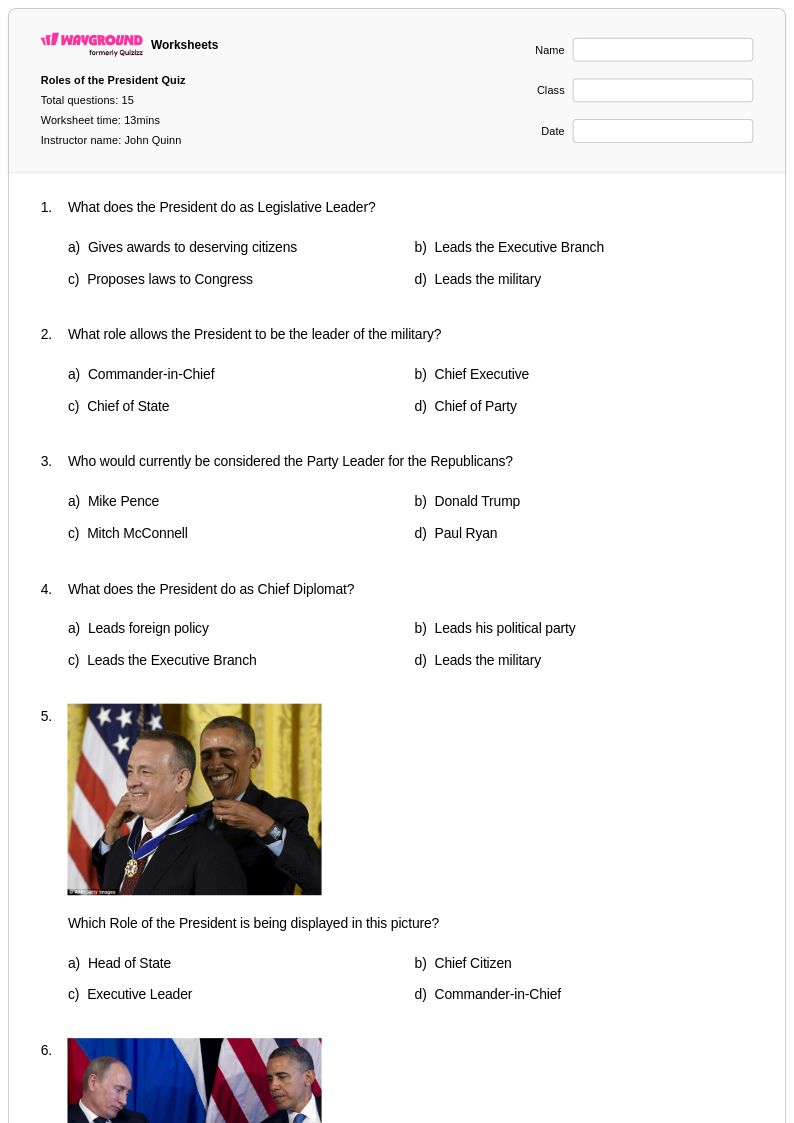
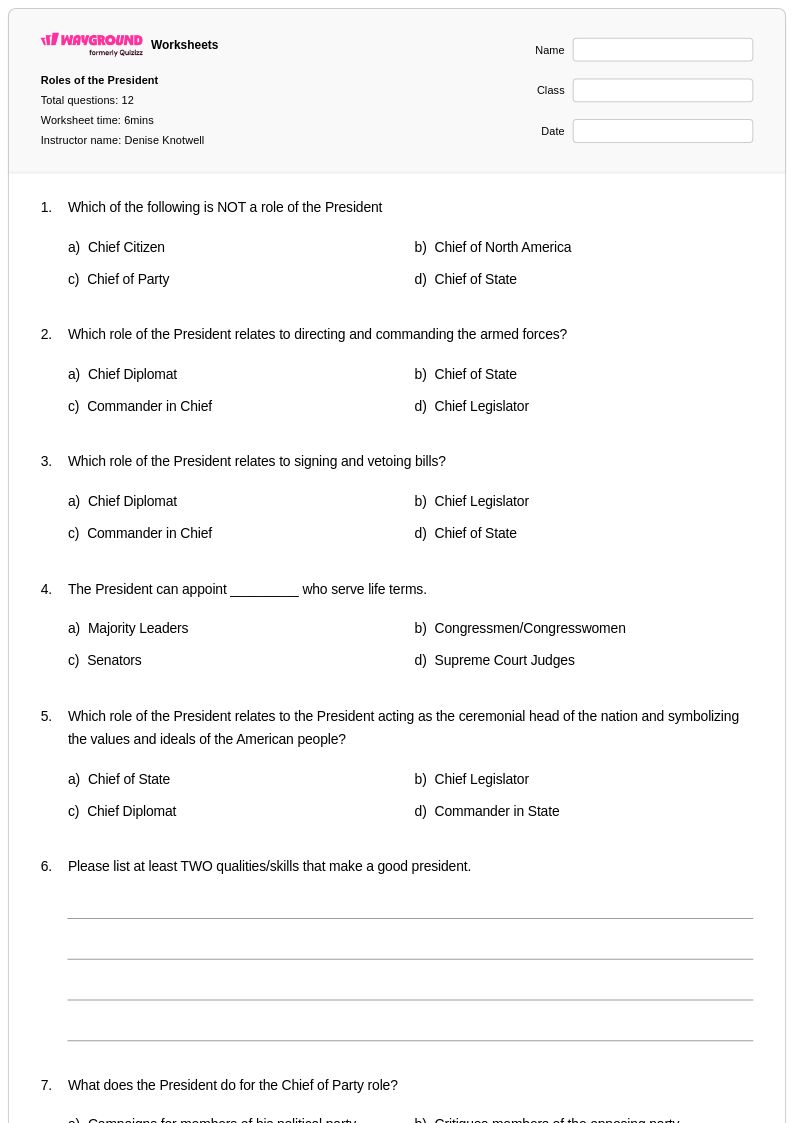
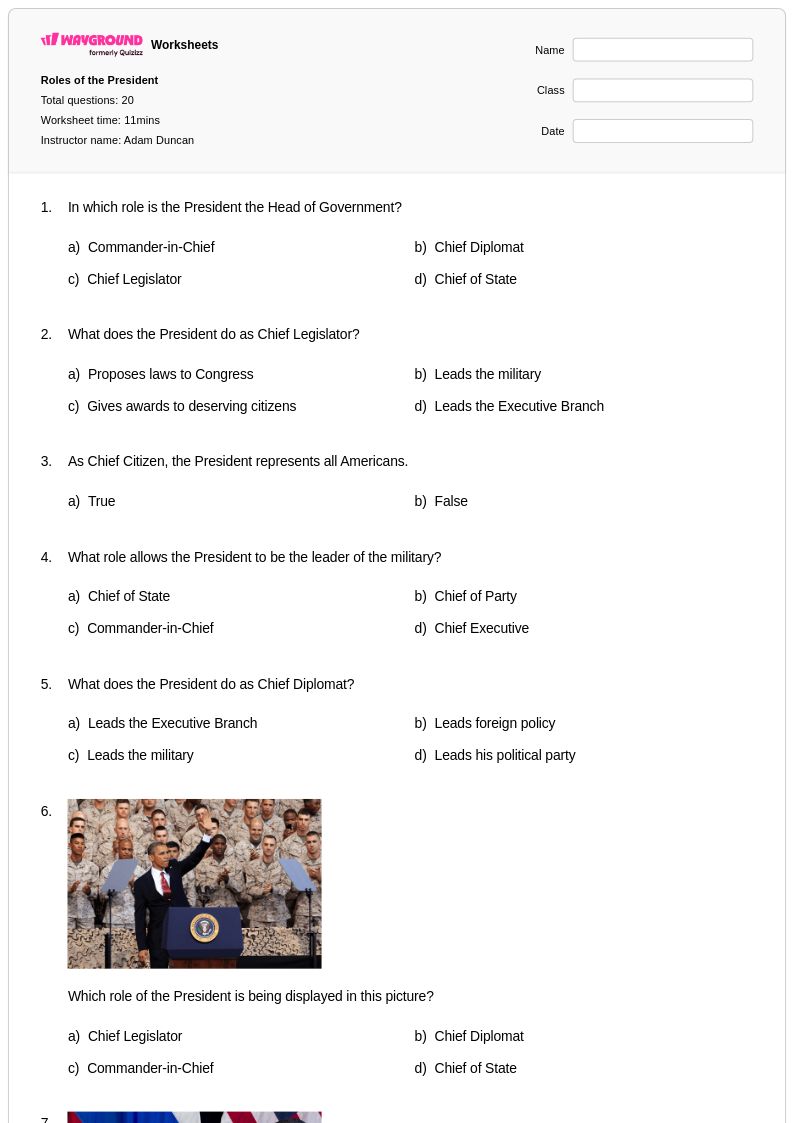
Class 10 students can explore the roles of the President through Wayground's comprehensive collection of free worksheets and printables, featuring practice problems and answer keys that help develop understanding of executive powers and presidential responsibilities.
Explore printable Roles of the President worksheets for Class 10
Roles of the President worksheets available through Wayground (formerly Quizizz) provide Class 10 students with comprehensive practice materials that explore the multifaceted responsibilities of the executive branch leader. These carefully designed resources help students master critical concepts including the President's constitutional powers, ceremonial duties, diplomatic functions, and leadership roles in domestic and foreign policy. The worksheets strengthen analytical thinking skills as students examine real-world scenarios where presidential authority intersects with legislative and judicial branches, developing their understanding of checks and balances within the federal system. Each printable resource includes detailed answer keys that support independent learning and self-assessment, while practice problems challenge students to apply their knowledge of presidential powers to contemporary political situations through free, accessible pdf formats.
Wayground (formerly Quizizz) empowers educators with millions of teacher-created resources specifically focused on presidential roles and responsibilities, featuring robust search and filtering capabilities that align with state civics standards for Class 10 instruction. The platform's differentiation tools enable teachers to customize worksheets based on individual student needs, offering both remediation support for struggling learners and enrichment opportunities for advanced students ready to explore complex constitutional principles. Teachers benefit from flexible formatting options that include both digital and printable pdf versions, facilitating seamless integration into diverse classroom environments and remote learning scenarios. These comprehensive worksheet collections streamline lesson planning while providing targeted skill practice that reinforces essential civics knowledge through standards-aligned content that supports effective government education instruction.
FAQs
How do I teach the roles of the President in a civics class?
Start by introducing the constitutional basis for each presidential role — Chief Executive, Commander in Chief, Chief Diplomat, and Head of State — before connecting each role to concrete historical or current events. Using real-world scenarios helps students see how these roles operate simultaneously and sometimes in tension with one another. Structured worksheets that walk students through each role individually, then ask them to apply their knowledge across domestic and foreign policy contexts, build the conceptual scaffolding students need before tackling more complex executive branch content.
What exercises help students practice identifying the roles of the President?
Practice problems that present presidential actions or decisions and ask students to identify which role is being exercised are especially effective for building this skill. For example, students might read a scenario about a treaty negotiation and identify the Chief Diplomat role, or examine a decision to deploy troops and connect it to the Commander in Chief role. Repeated exposure to varied scenarios across domestic and foreign policy domains strengthens students' ability to distinguish between roles that can overlap in practice.
What misconceptions do students commonly have about the President's roles?
One of the most common misconceptions is that the President has unlimited authority — students often conflate presidential power with absolute power and overlook the constitutional limitations placed on the executive branch. Another frequent error is treating the roles as entirely separate, when in reality a single presidential action can engage multiple roles at once. Students also tend to underestimate the Chief Diplomat role, focusing heavily on domestic duties while missing the scope of the President's foreign policy responsibilities.
How can I use roles of the President worksheets to differentiate instruction?
Roles of the President worksheets can be differentiated by adjusting the complexity of scenarios students analyze — struggling learners benefit from worksheets that isolate one role at a time with clear definitions, while advanced students can work through multi-role scenarios that require nuanced reasoning. On Wayground, teachers can apply student-level accommodations such as Read Aloud for students who need audio support, reduced answer choices to lower cognitive load, and extended time — all configurable per student without notifying the rest of the class. These settings are saved across sessions, making differentiation sustainable rather than one-off.
How do I use Wayground's roles of the President worksheets in my classroom?
Wayground's roles of the President worksheets are available as printable PDFs for traditional classroom use and in digital formats for technology-integrated environments, giving teachers flexibility to assign them as in-class practice, homework, or assessment prep. Teachers can also host the content as a quiz directly on Wayground, which is useful for formative assessment or independent review. Each worksheet includes a complete answer key, so teachers can use them for self-graded student work or to guide whole-class discussion.
How do the President's roles relate to checks and balances?
Each presidential role operates within a system of checks and balances that limits unilateral executive action. For example, while the President serves as Commander in Chief, Congress holds the power to declare war and control military funding — a direct check on that role. Teaching students to map each presidential role against its corresponding legislative or judicial check deepens their understanding of how the separation of powers functions in practice, rather than treating the President's authority as self-contained.