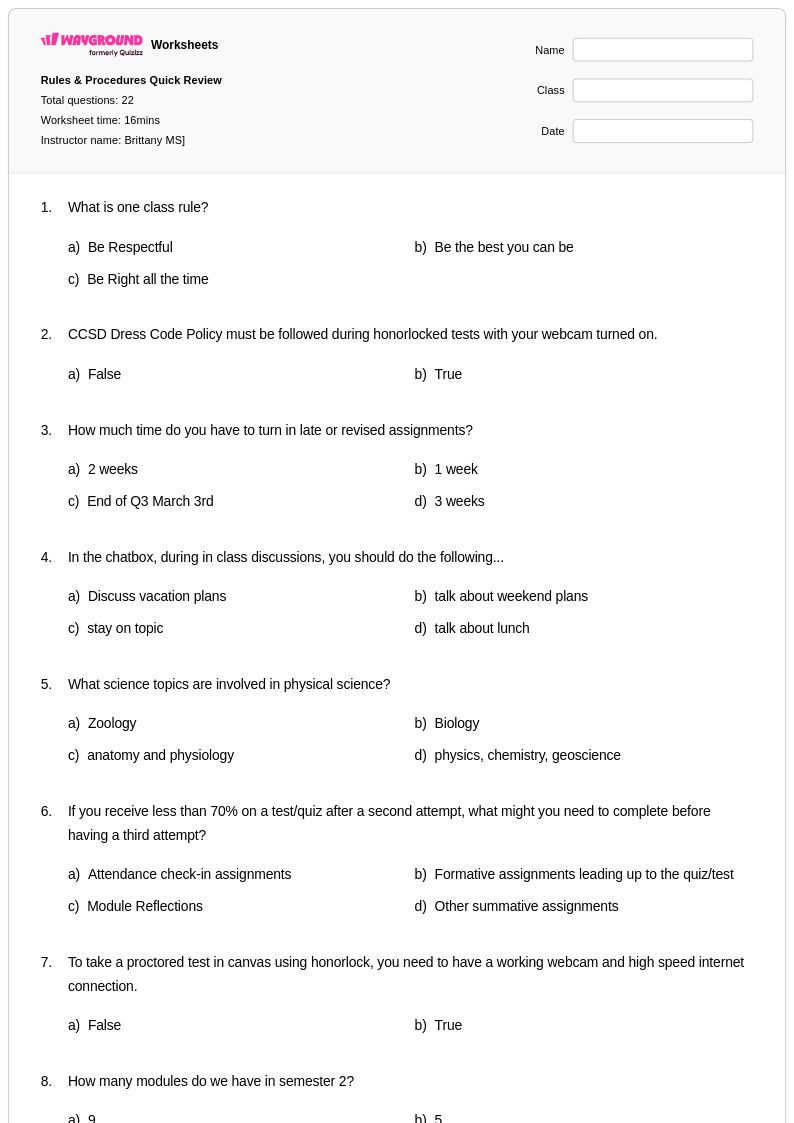
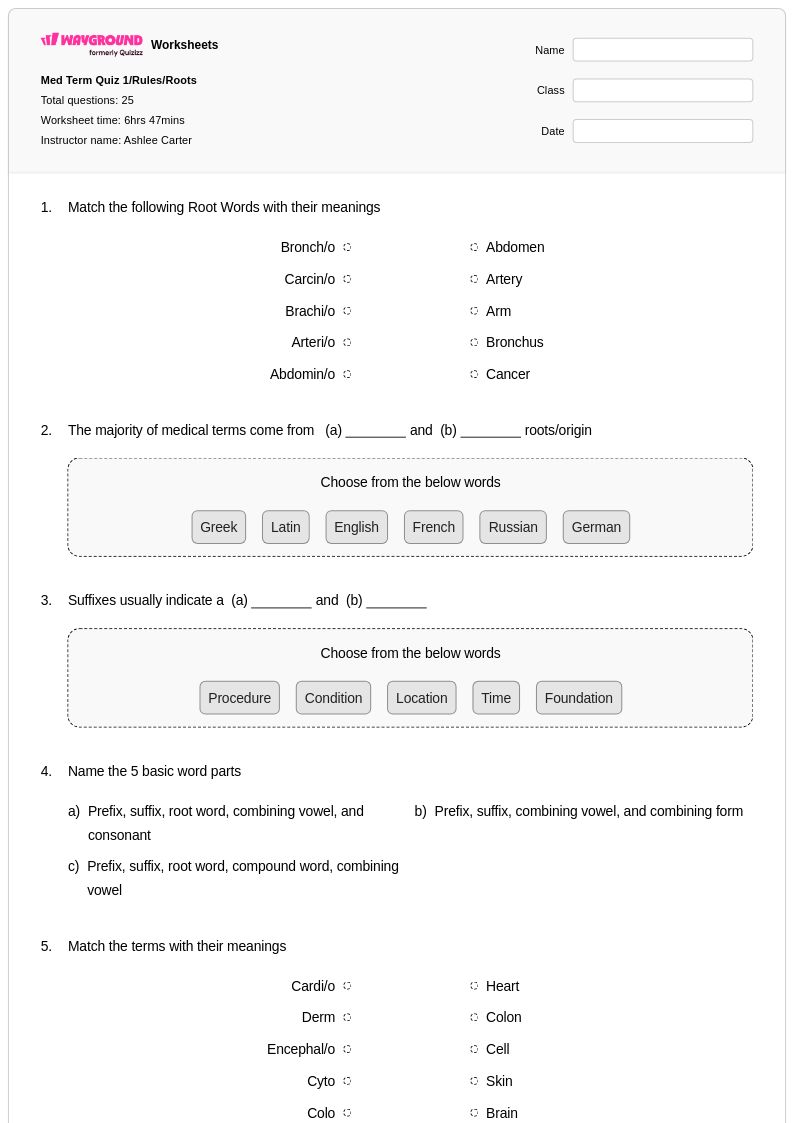
Class 12 science procedure worksheets from Wayground help students master systematic experimental methods through comprehensive printables, practice problems, and answer keys that develop critical scientific investigation skills.
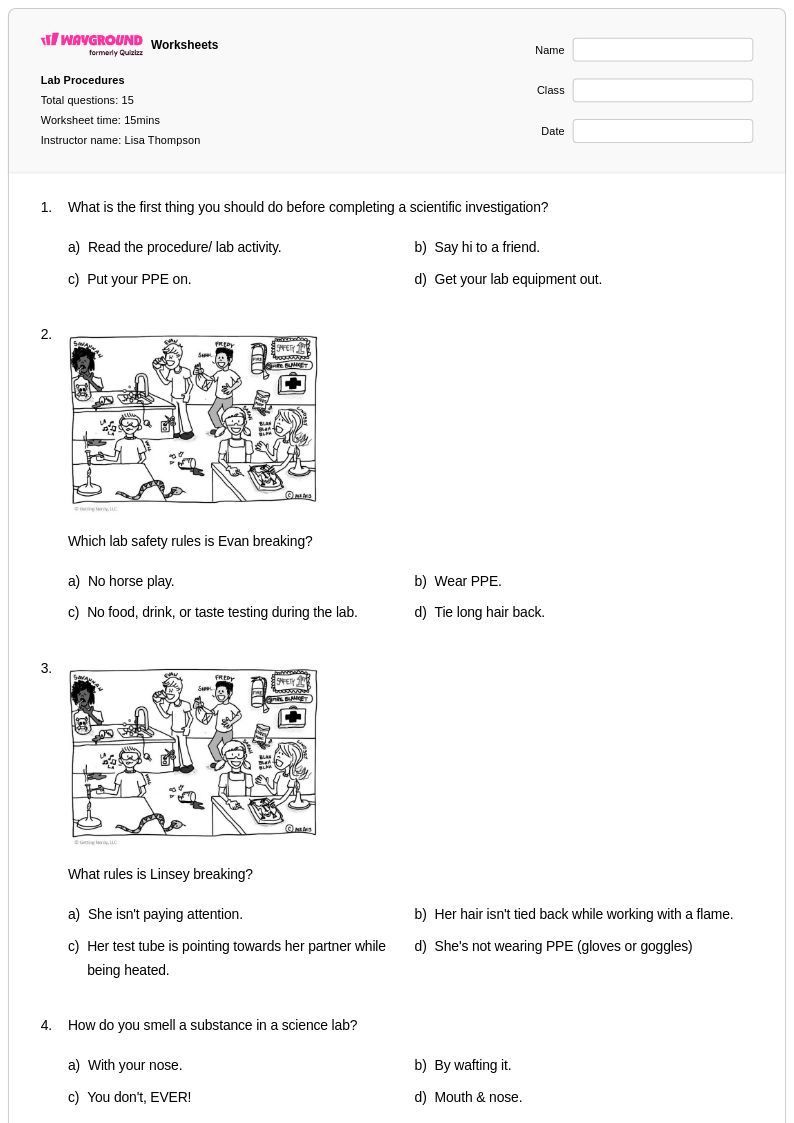
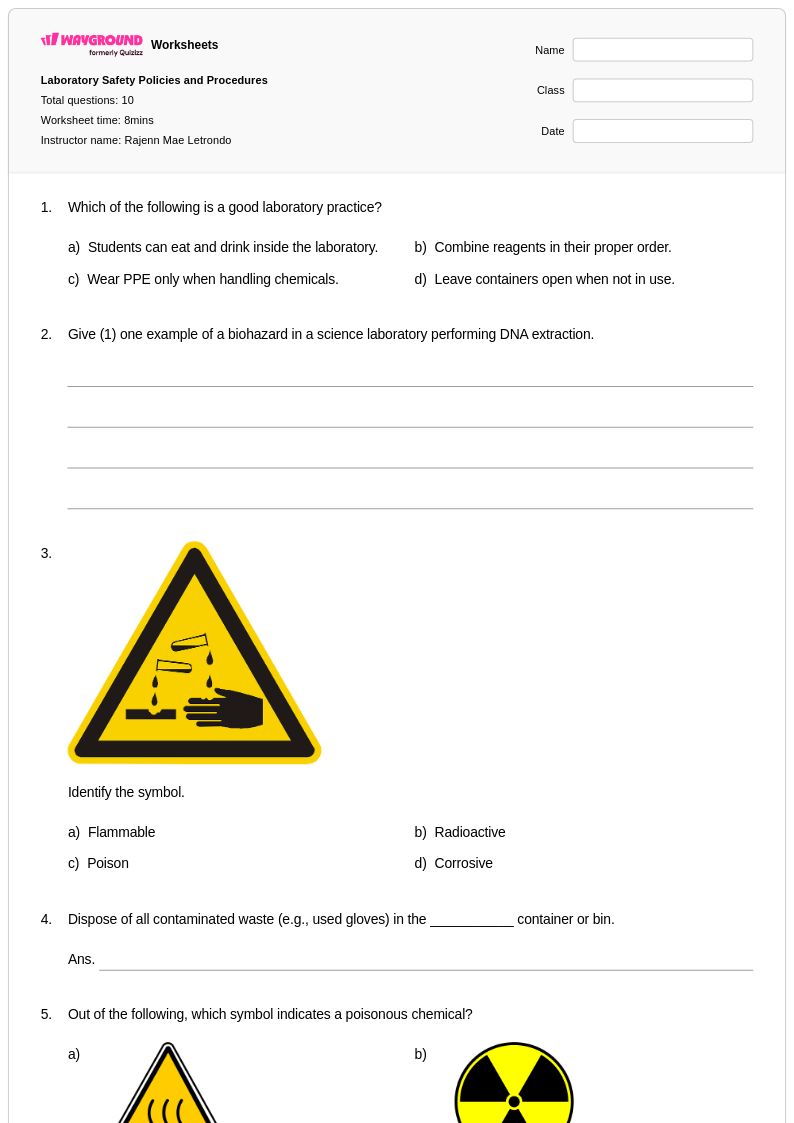
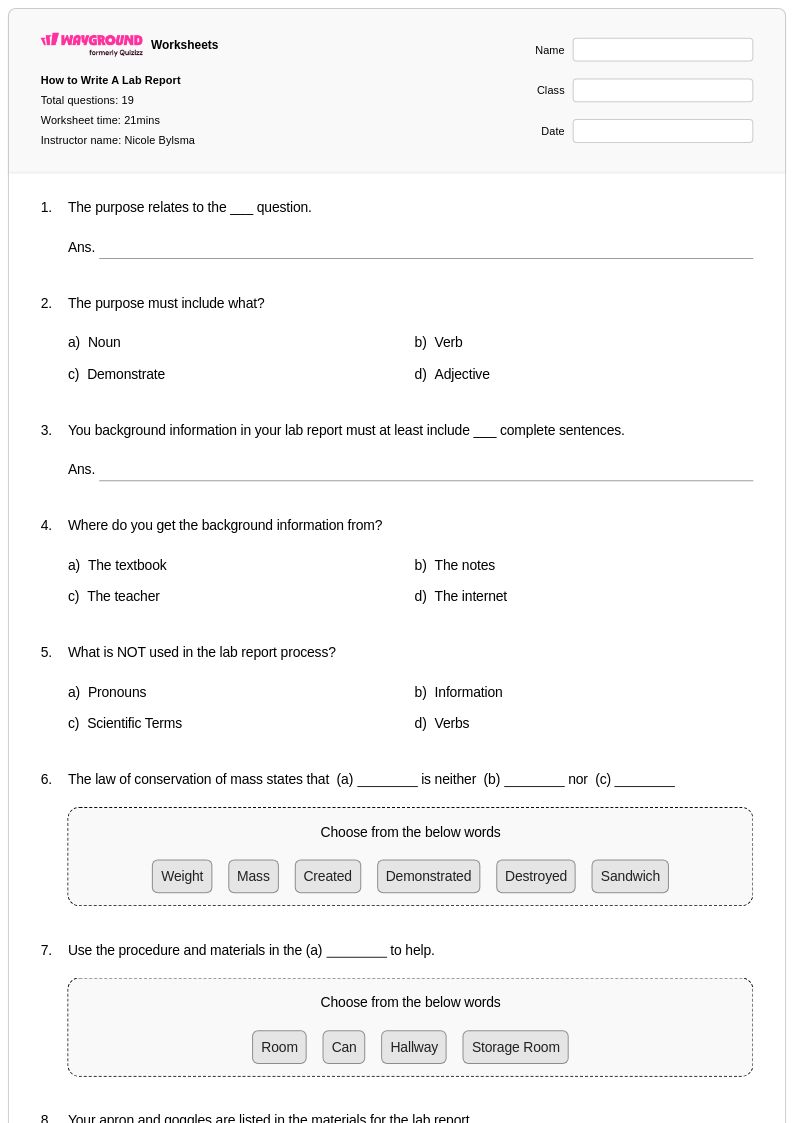
Explore printable Procedure worksheets for Class 12
Procedure worksheets for Class 12 students available through Wayground (formerly Quizizz) focus on developing critical skills in designing, implementing, and evaluating scientific procedures across advanced engineering and science practices. These comprehensive worksheets guide students through the systematic approach of creating step-by-step methodologies for complex investigations, emphasizing variables control, safety protocols, data collection strategies, and reproducibility standards essential for college-level scientific work. Students strengthen their analytical thinking by working through practice problems that require them to identify procedural flaws, optimize experimental designs, and justify methodological choices in authentic research scenarios. Each worksheet includes detailed answer keys and is available as free printables in pdf format, allowing educators to seamlessly integrate procedural skill development into their advanced science curriculum while supporting students in mastering the rigorous standards expected in post-secondary STEM fields.
Wayground (formerly Quizizz) empowers educators with an extensive collection of millions of teacher-created procedure worksheets specifically designed for Class 12 engineering and science practices, featuring robust search and filtering capabilities that enable quick identification of resources aligned with specific learning standards and curriculum objectives. The platform's sophisticated differentiation tools allow teachers to customize worksheet difficulty levels and modify procedural complexity to meet diverse student needs, from remediation support for struggling learners to enrichment challenges for advanced students ready for independent research design. Available in both printable and digital formats including downloadable pdf versions, these resources facilitate flexible lesson planning whether for in-person laboratory preparation, remote learning assignments, or hybrid instructional models. Teachers can efficiently scaffold procedural understanding through carefully sequenced practice activities, assess student readiness for independent experimental design, and provide targeted skill practice that bridges classroom learning with real-world scientific methodology.
FAQs
How do I teach scientific procedures to students?
Teaching scientific procedures effectively begins with explicitly modeling the steps of experimental design: identifying a testable question, forming a hypothesis, controlling variables, collecting data, and drawing conclusions. Teachers should use worked examples and think-alouds to demonstrate how procedural decisions are made before asking students to design their own investigations. Reinforcing safety protocols and documentation habits early builds the discipline students need for more complex labs later.
What exercises help students practice designing and executing scientific procedures?
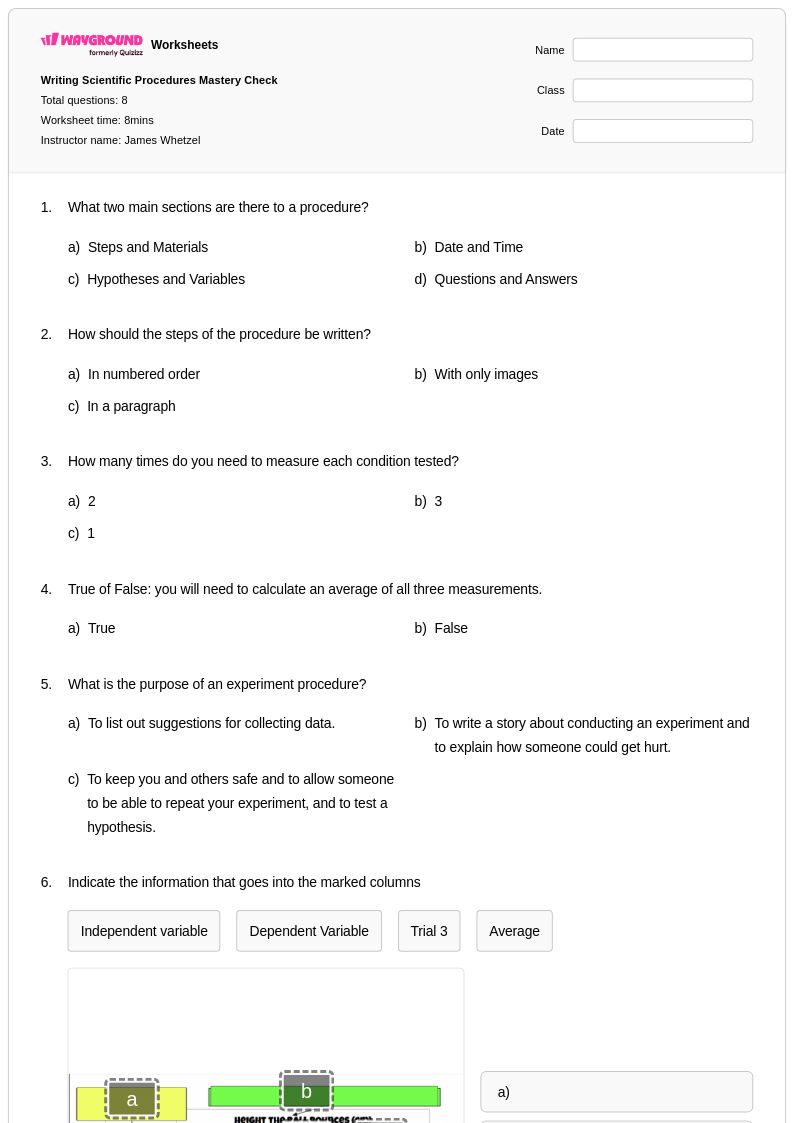
Effective practice exercises include sequencing scrambled procedural steps, identifying independent and dependent variables in a given experiment, and critiquing flawed procedure descriptions to find uncontrolled conditions or missing safety steps. Students also benefit from writing their own step-by-step procedures for a simple investigation and then peer-reviewing each other's work for clarity and logical order. These activities build the precision and analytical thinking that scientific inquiry requires.
What mistakes do students commonly make when writing or following scientific procedures?
One of the most frequent errors is failing to control variables, where students change more than one condition at a time and cannot isolate cause and effect. Students also commonly write vague steps that lack measurable quantities or specific actions, making procedures impossible to replicate. Another persistent misconception is treating the procedure as a one-time document rather than a living record that must be updated when conditions change during an investigation.
How can I differentiate procedure worksheets for students with varying skill levels?
For students who struggle, reduce cognitive load by providing partially completed procedures or a word bank of scientific terms to fill in during sequencing tasks. Advanced students can be challenged to design original multi-variable experiments and justify each procedural decision in writing. On Wayground, teachers can apply accommodations such as read aloud support, reduced answer choices, and extended time to individual students, ensuring every learner engages with the material at the appropriate level without disrupting the rest of the class.
How do I use Wayground's procedure worksheets in my classroom?
Wayground's procedure worksheets are available as printable PDFs for traditional classroom use and in digital formats for technology-integrated environments, giving teachers flexibility across in-person, remote, and hybrid settings. Teachers can also host the worksheets as a live or assigned quiz directly on Wayground, enabling real-time tracking of student responses. Each worksheet includes a complete answer key, supporting both teacher-led review and independent student self-assessment.
How do I assess whether students understand scientific procedures?
Effective assessment goes beyond asking students to list steps and instead requires them to evaluate a given procedure for errors, explain why a specific step is necessary, or predict what would happen if a variable were left uncontrolled. Having students document their own observations during a lab and then compare them against expected results reveals whether they can execute a procedure accurately, not just describe one. Written reflection prompts asking students to revise a flawed procedure are particularly revealing of deeper conceptual understanding.