Free Printable Safety Equipment Worksheets for Class 12
Enhance Class 12 students' understanding of laboratory safety equipment with Wayground's comprehensive collection of free worksheets, printable PDFs, and practice problems featuring detailed answer keys for effective science learning.
Explore printable Safety Equipment worksheets for Class 12
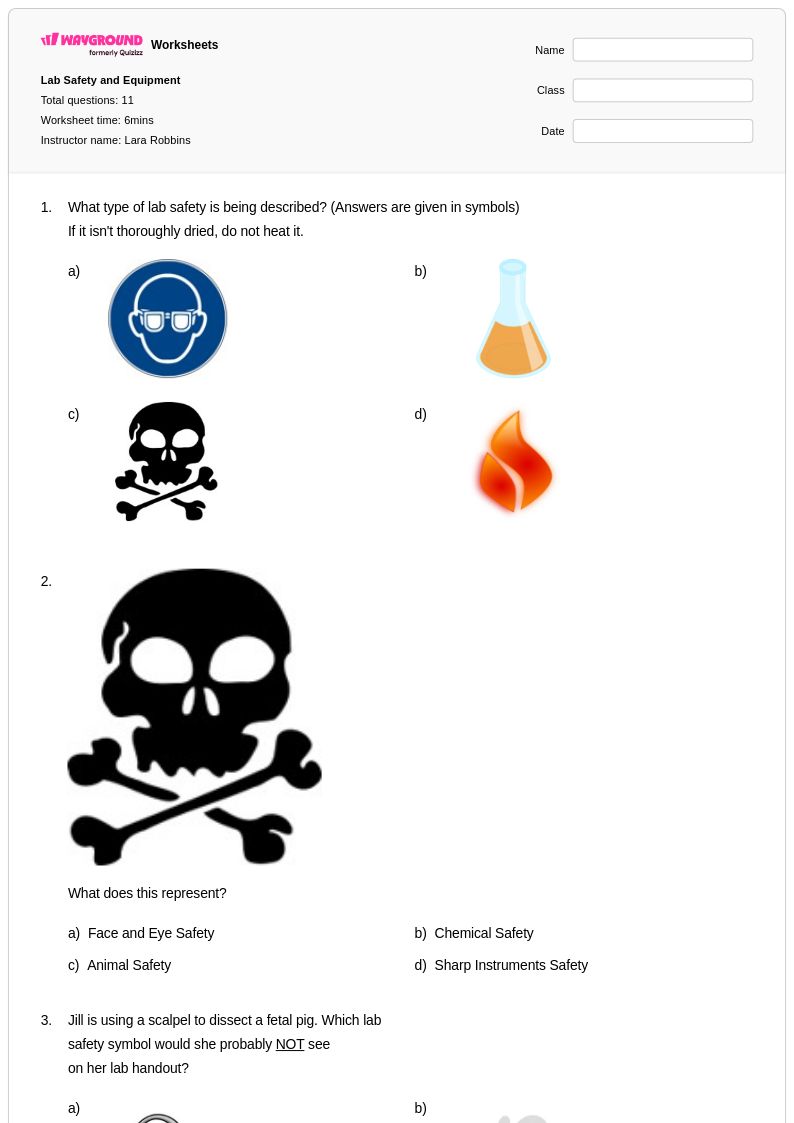
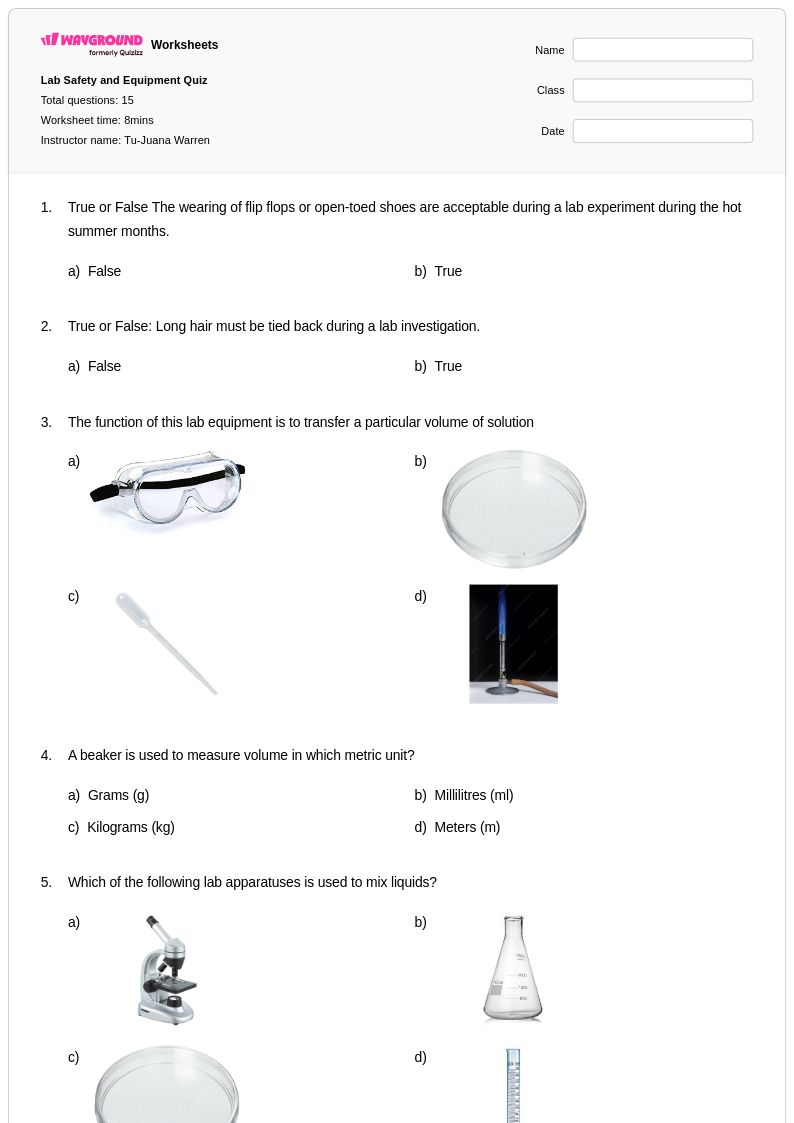
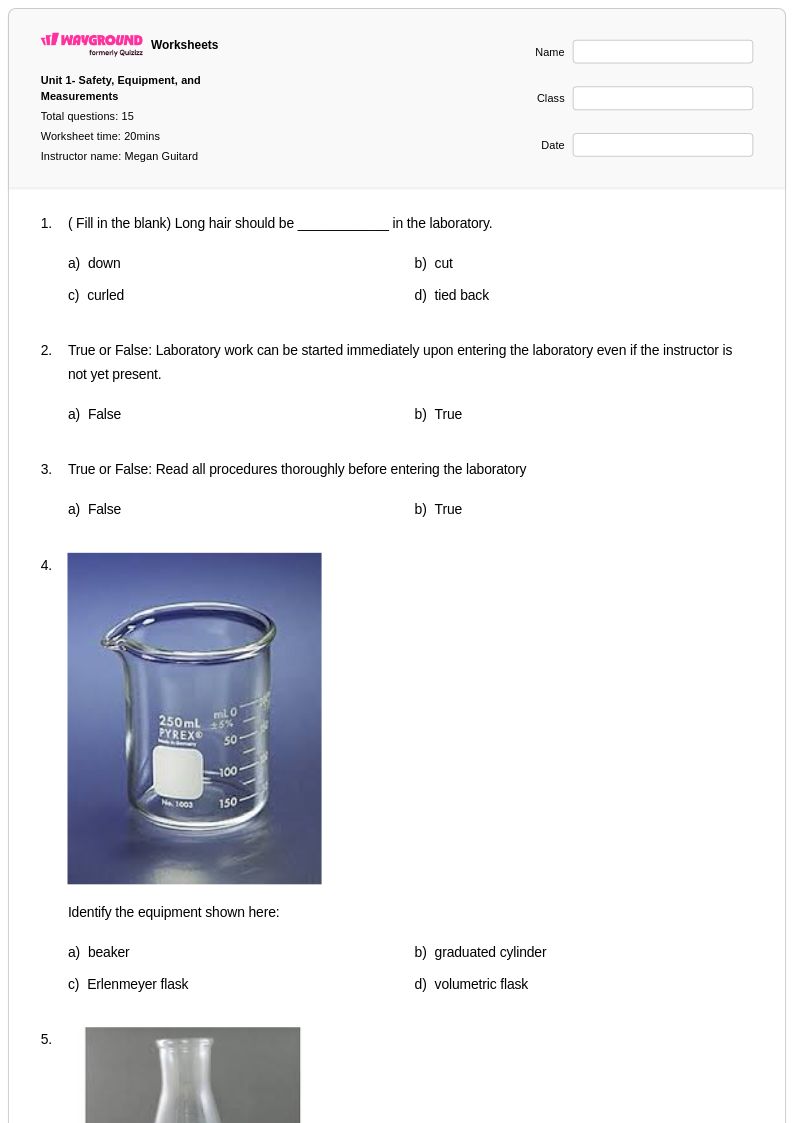
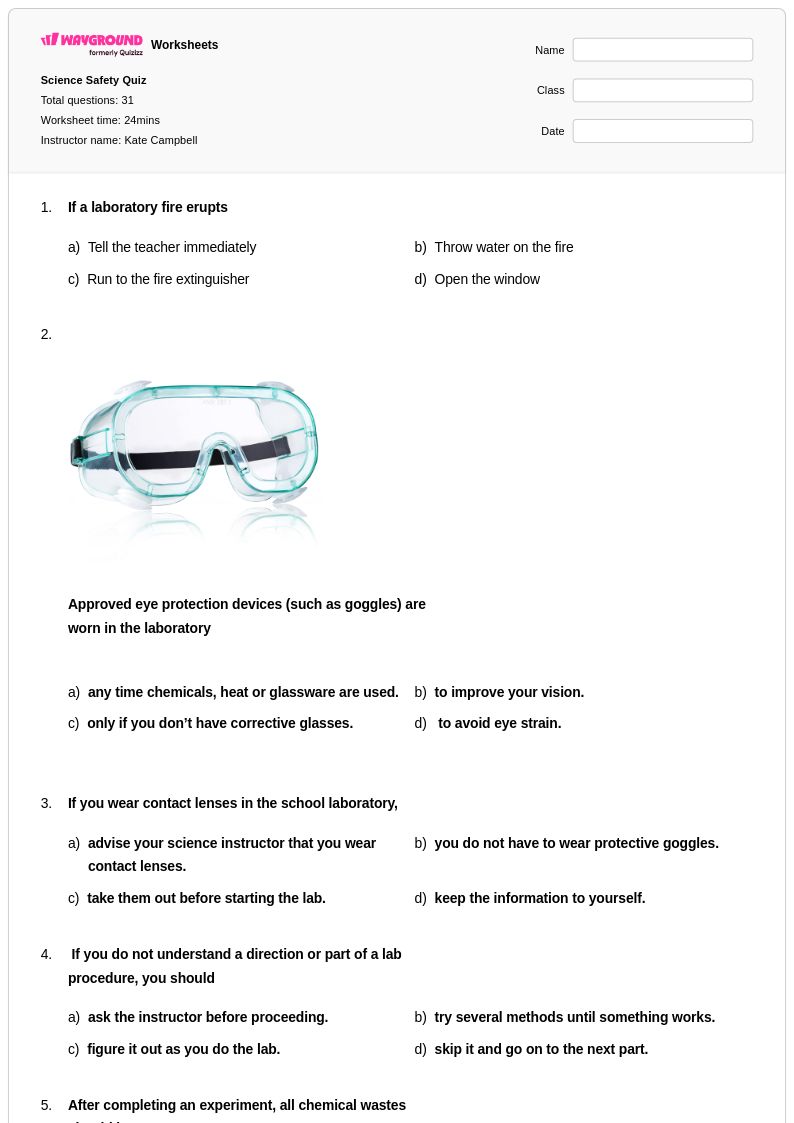
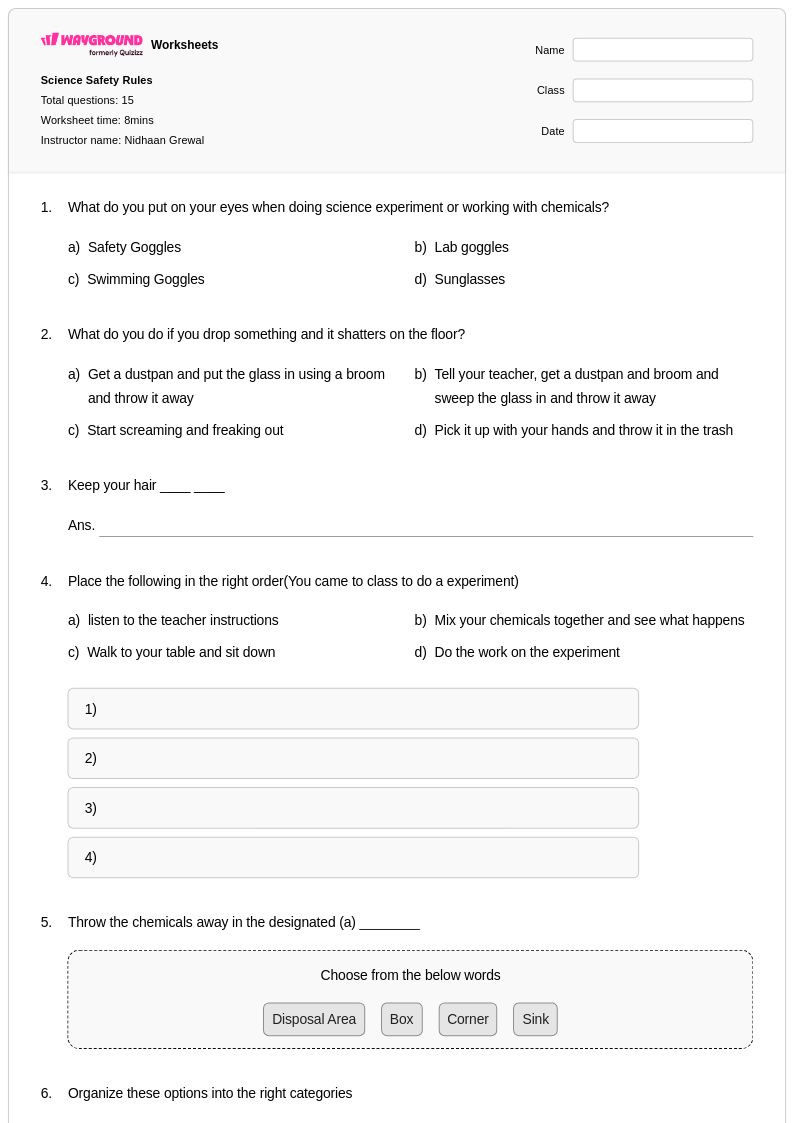
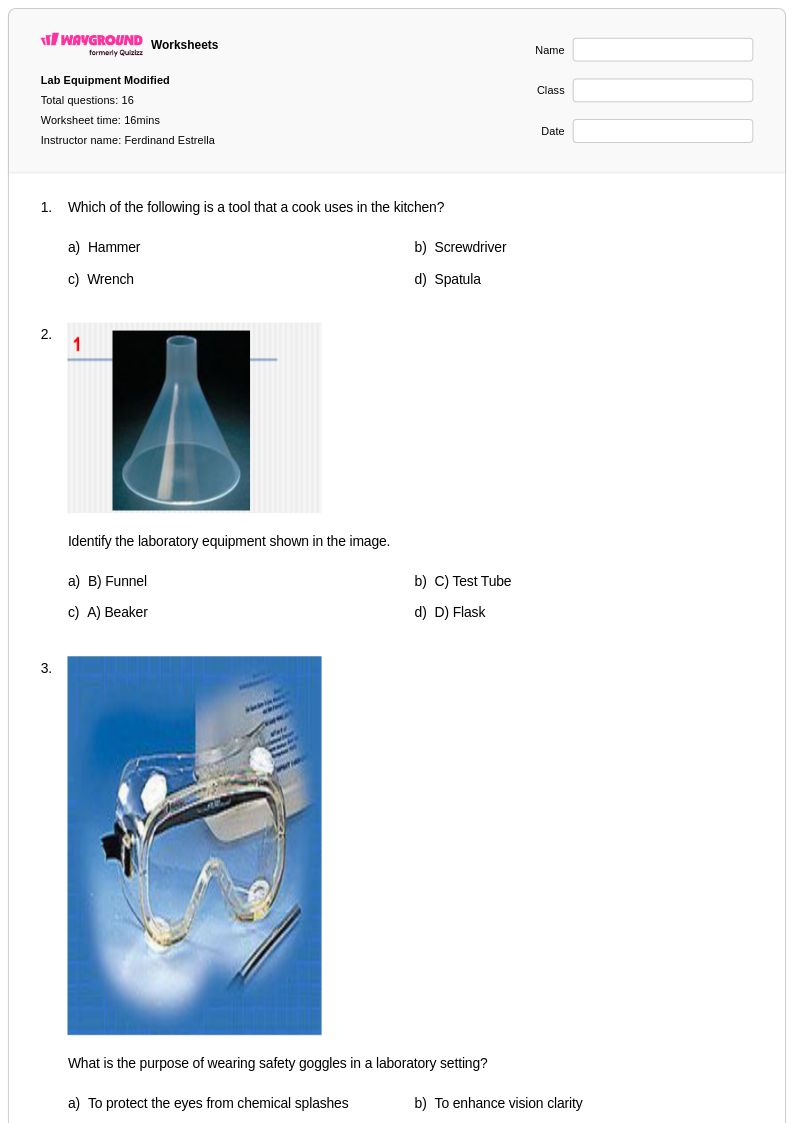
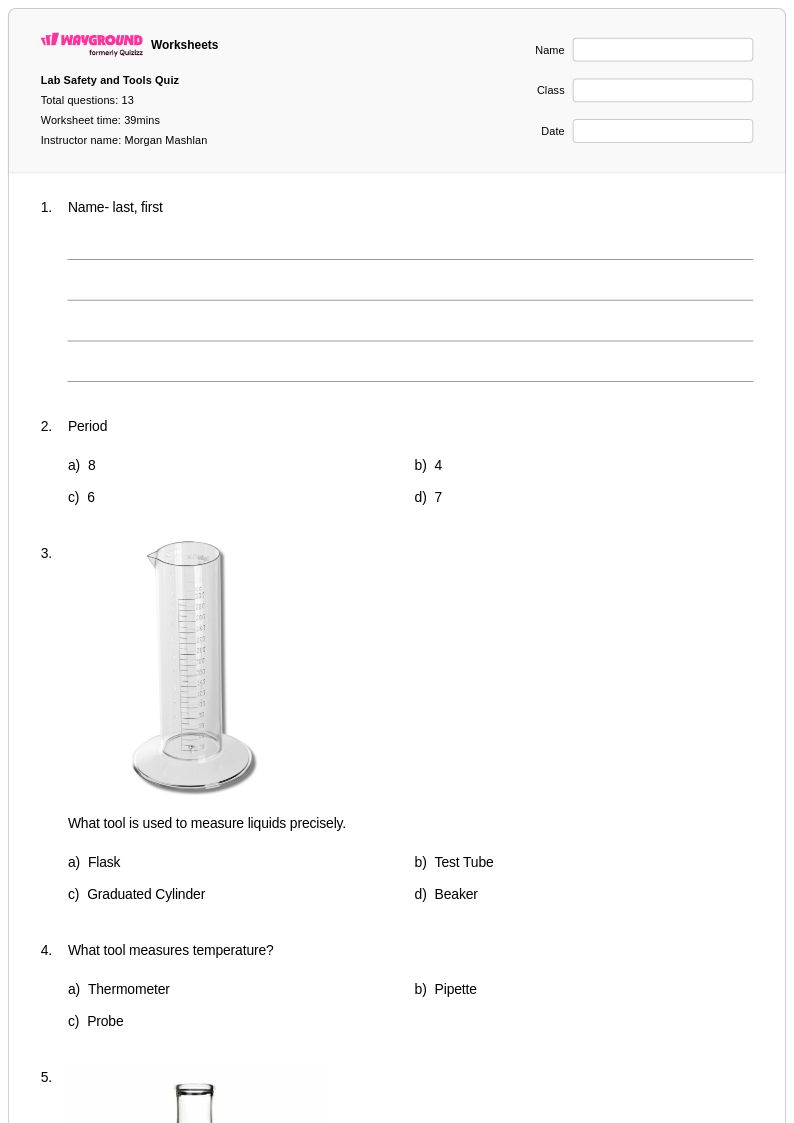
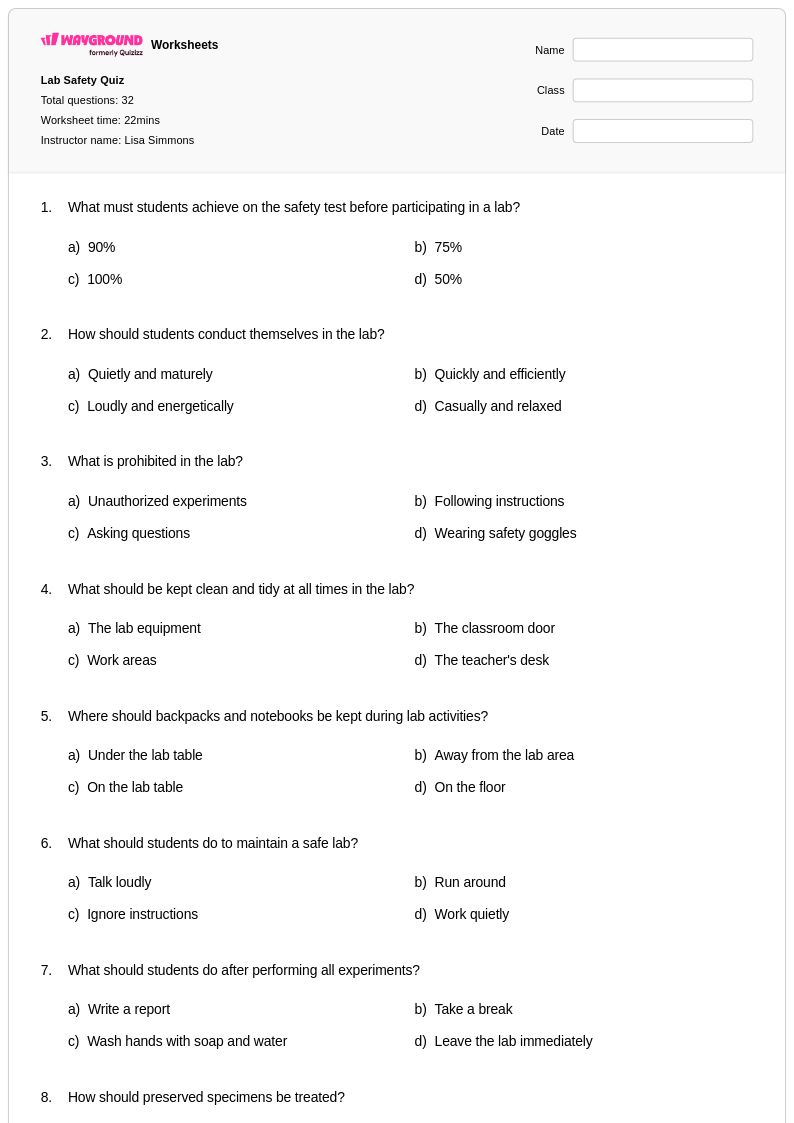
Safety equipment worksheets for Class 12 students available through Wayground (formerly Quizizz) provide comprehensive coverage of essential laboratory and field safety protocols that advanced science students must master before entering professional or collegiate environments. These carefully designed practice problems challenge students to identify appropriate personal protective equipment, evaluate safety procedures across various scientific disciplines, and analyze risk assessment scenarios that mirror real-world laboratory conditions. The worksheets strengthen critical thinking skills related to hazard recognition, emergency response protocols, and proper equipment maintenance while offering complete answer keys that enable both independent study and instructor-guided review sessions. Available as free printables and interactive digital resources, these materials ensure students develop the sophisticated safety awareness required for advanced scientific work.
Wayground (formerly Quizizz) supports educators with an extensive collection of teacher-created safety equipment resources that span millions of worksheets, assessments, and interactive materials specifically aligned with Class 12 science standards. The platform's robust search and filtering capabilities allow instructors to quickly locate materials tailored to specific safety topics, laboratory environments, or skill levels, while built-in differentiation tools enable seamless customization for diverse student needs. These resources are available in both printable pdf formats and digital interactive versions, providing flexibility for traditional classroom instruction, remote learning, or hybrid educational models. Teachers can efficiently plan comprehensive safety instruction sequences, implement targeted remediation for students struggling with safety concepts, offer enrichment activities for advanced learners, and provide ongoing skill practice that reinforces proper safety protocols throughout the academic year.
FAQs
How do I teach students to identify and use safety equipment in the lab?
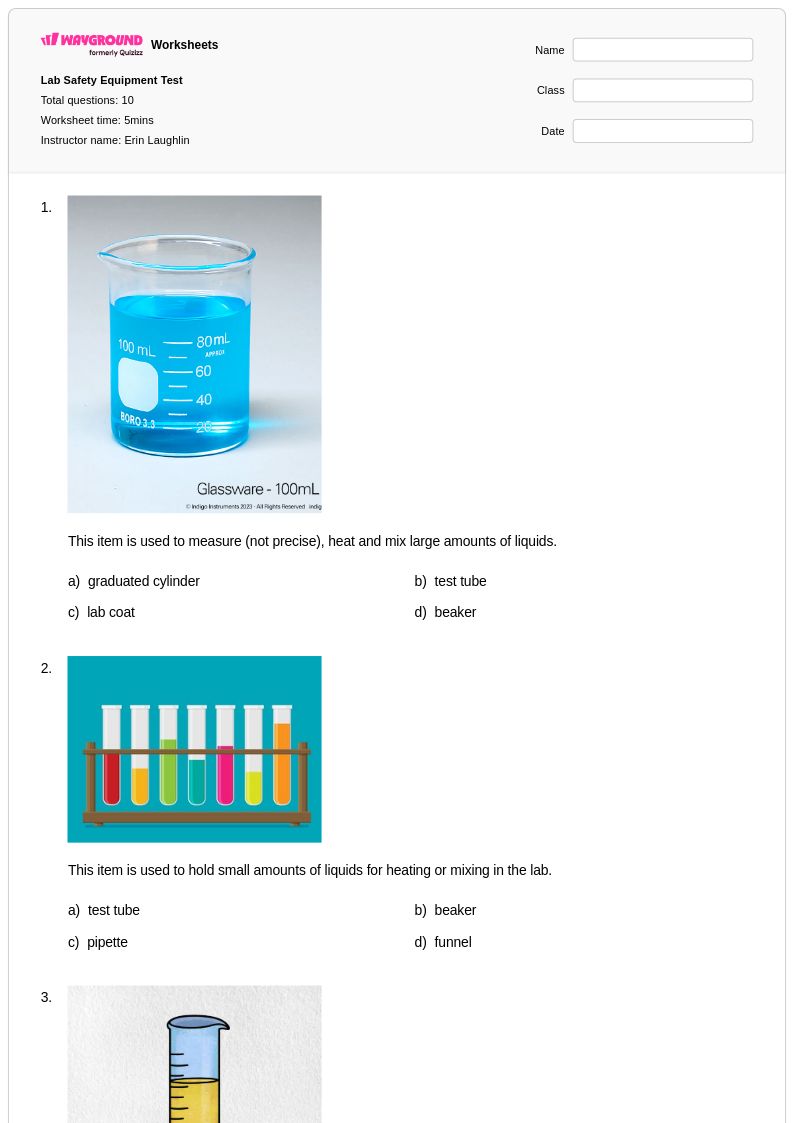
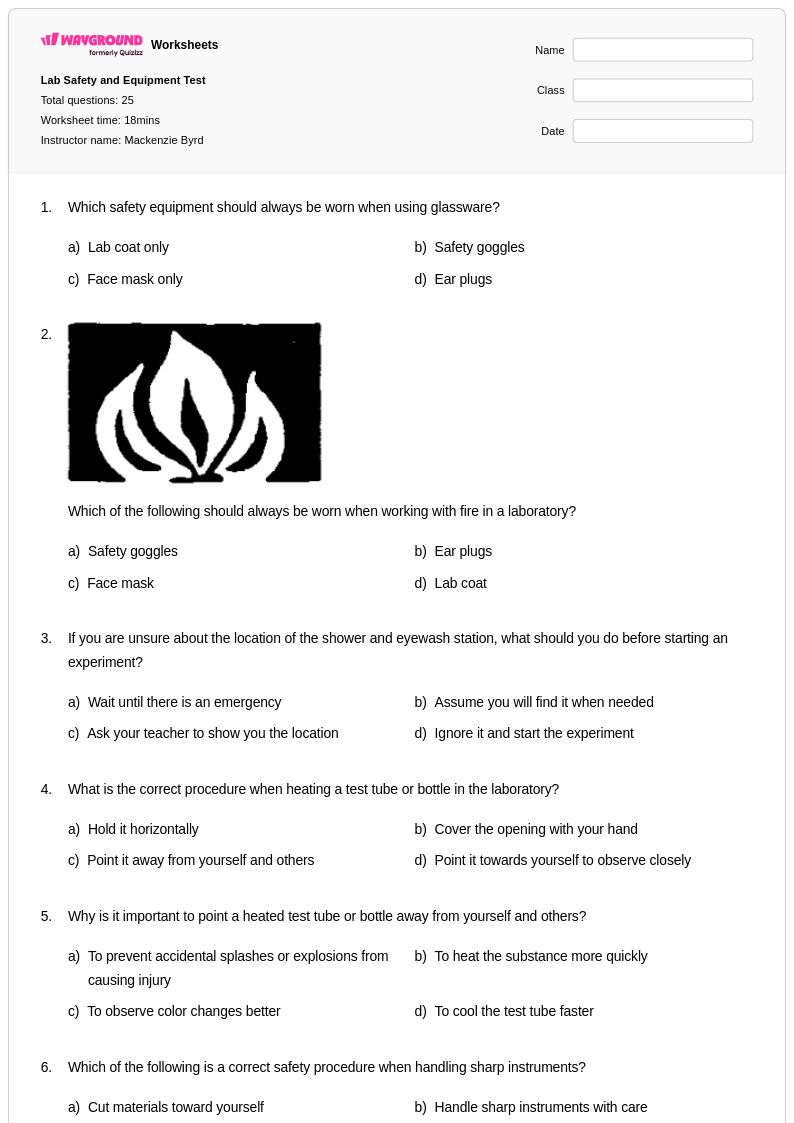
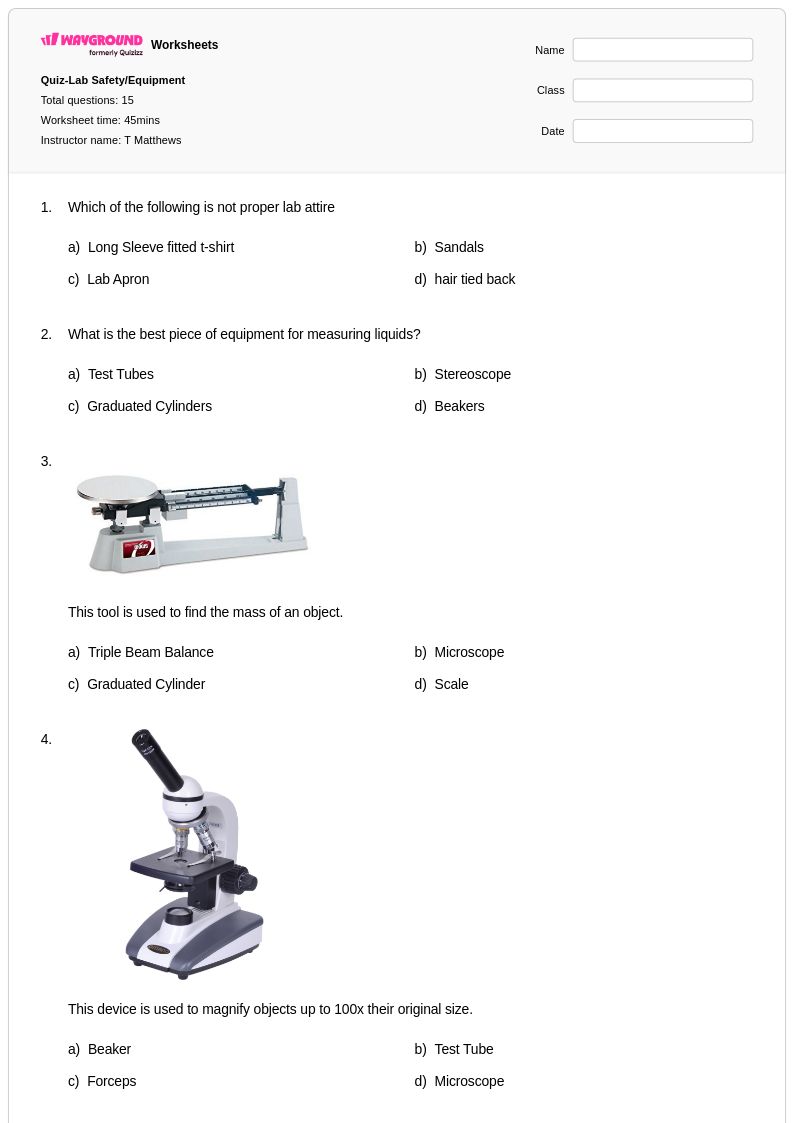
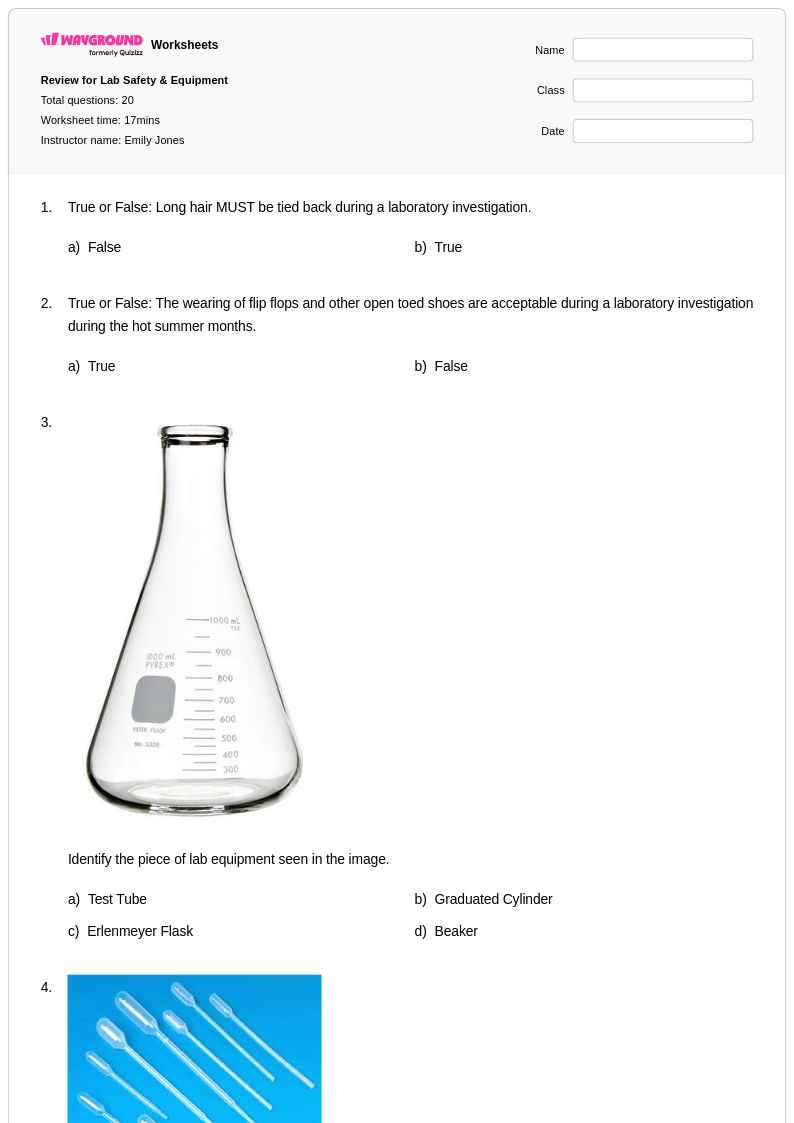
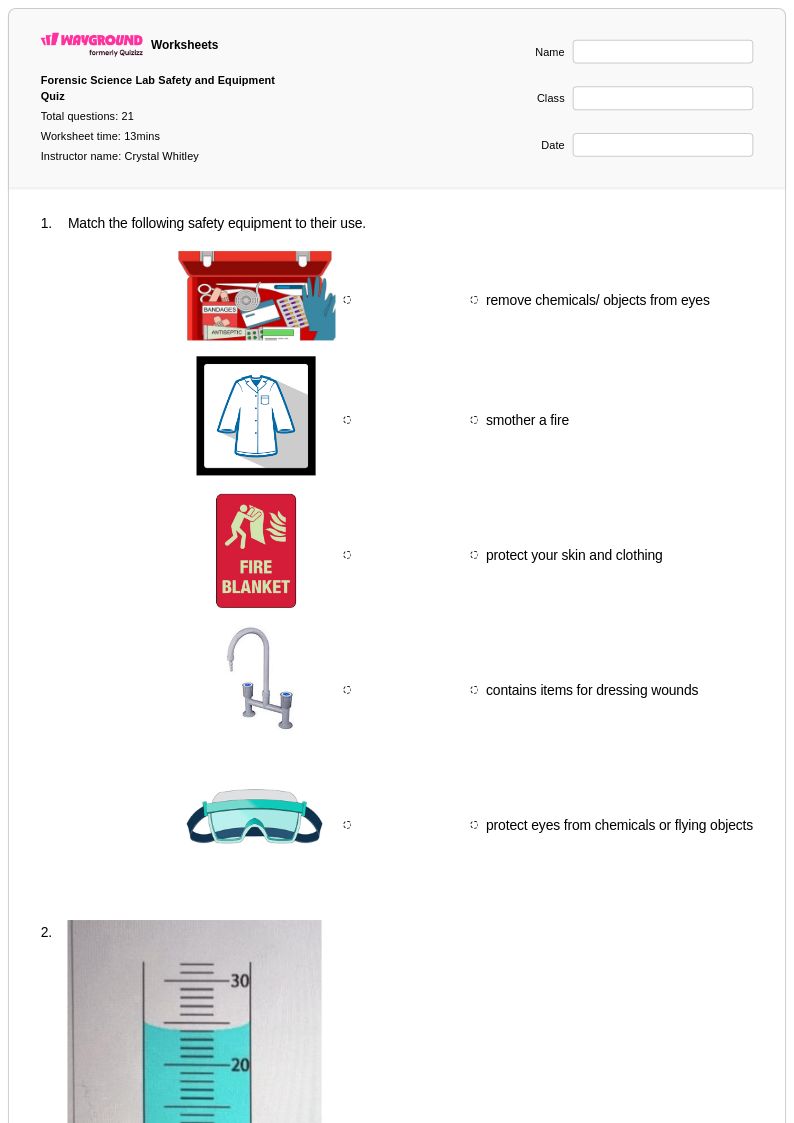
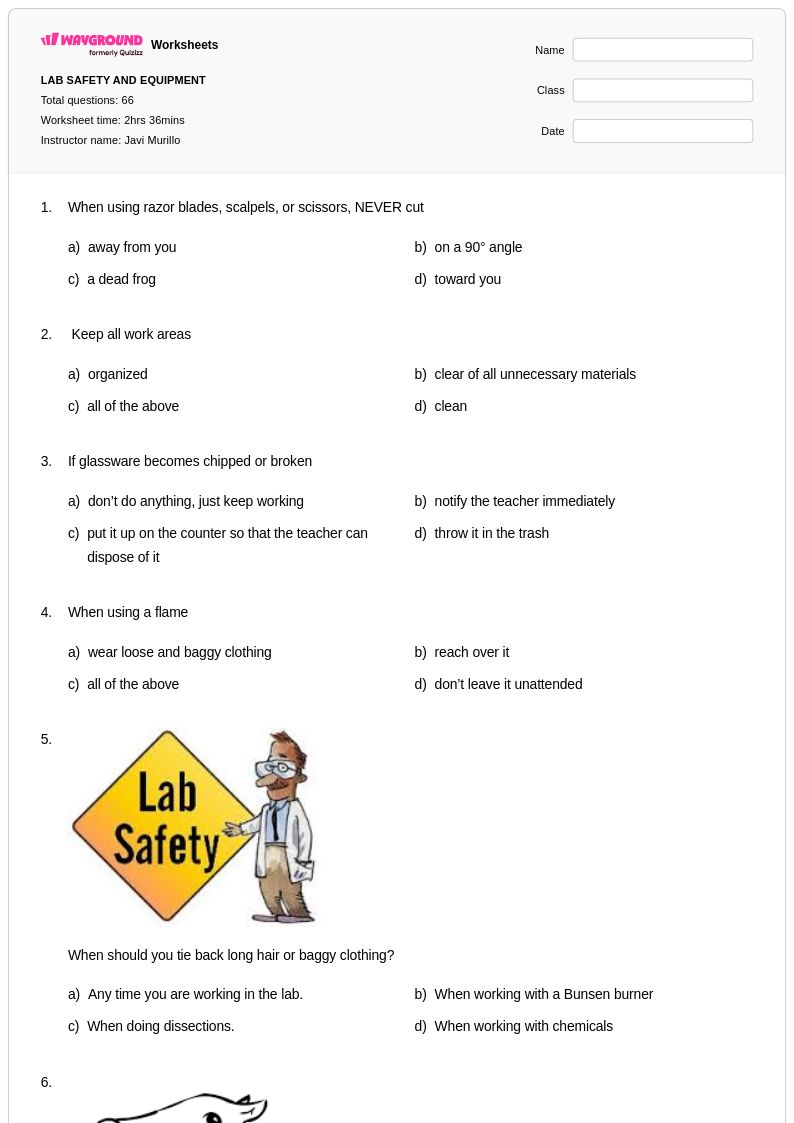
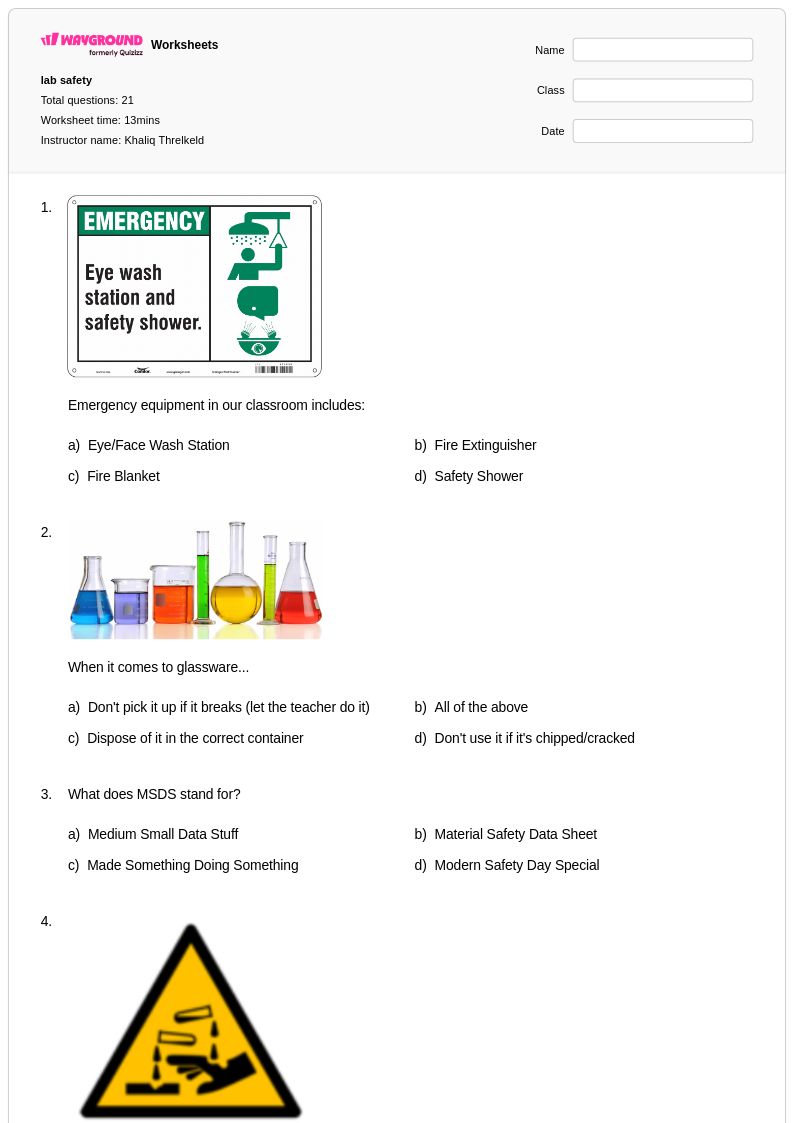
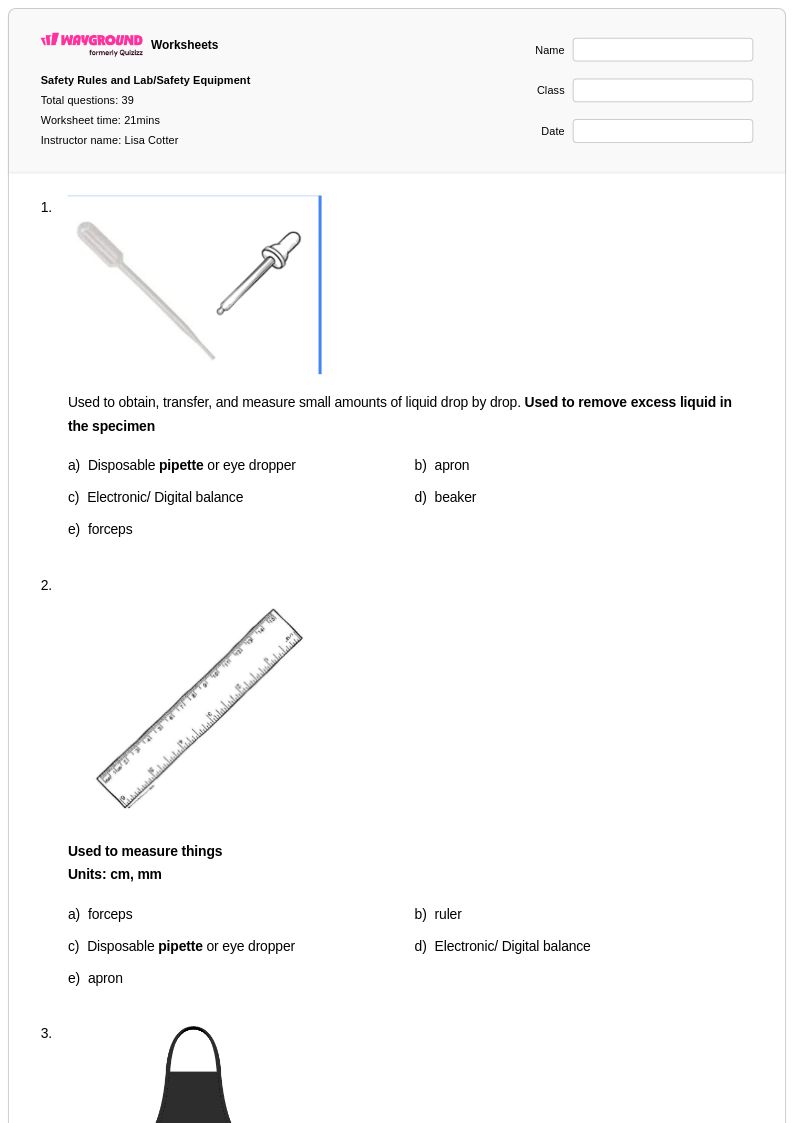
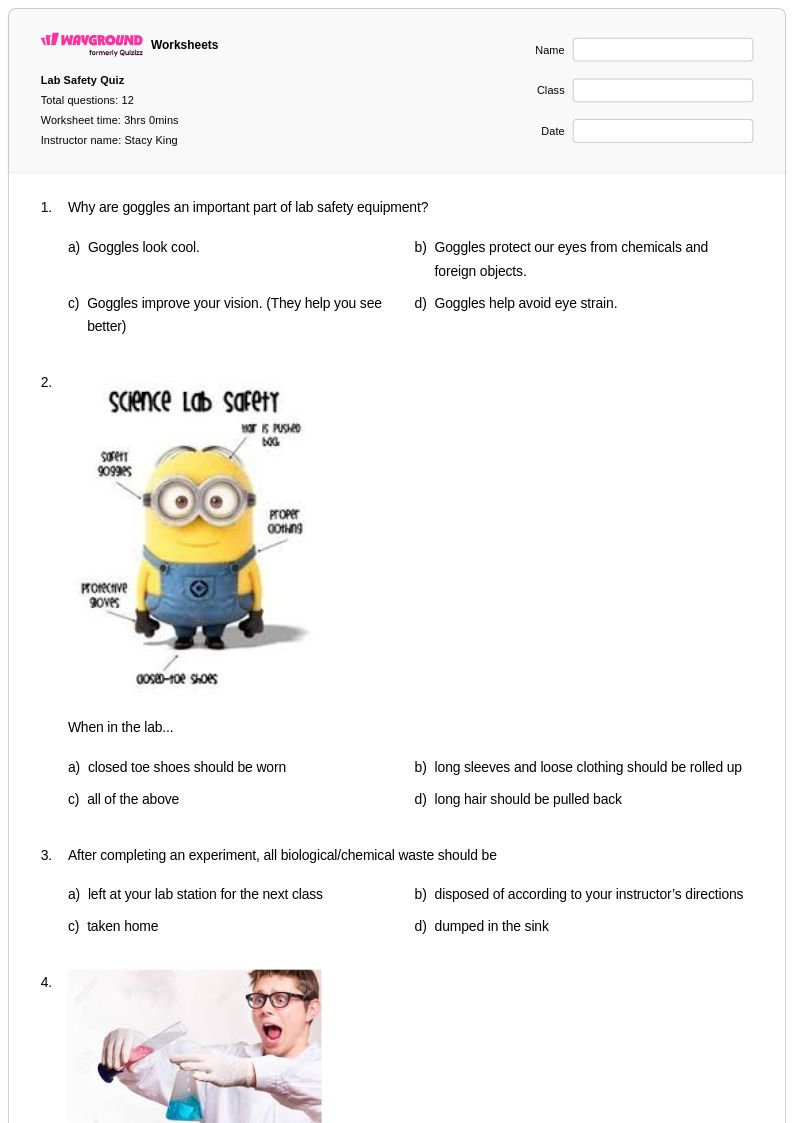
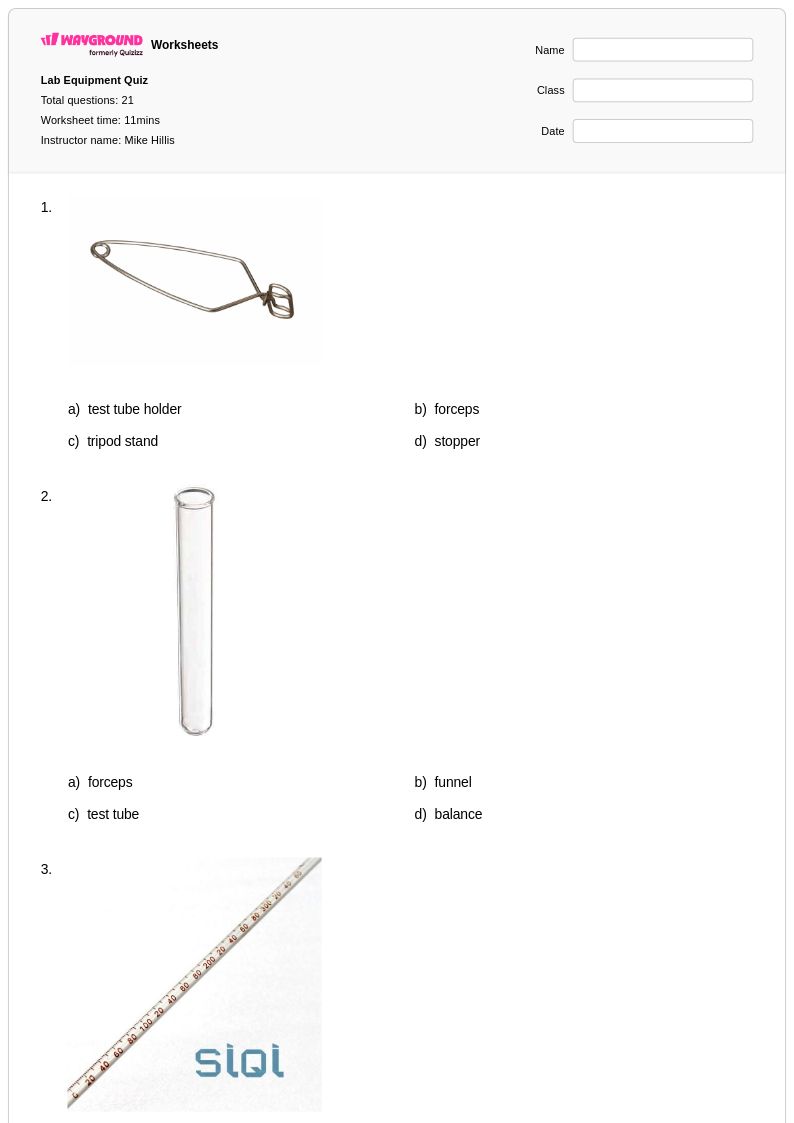
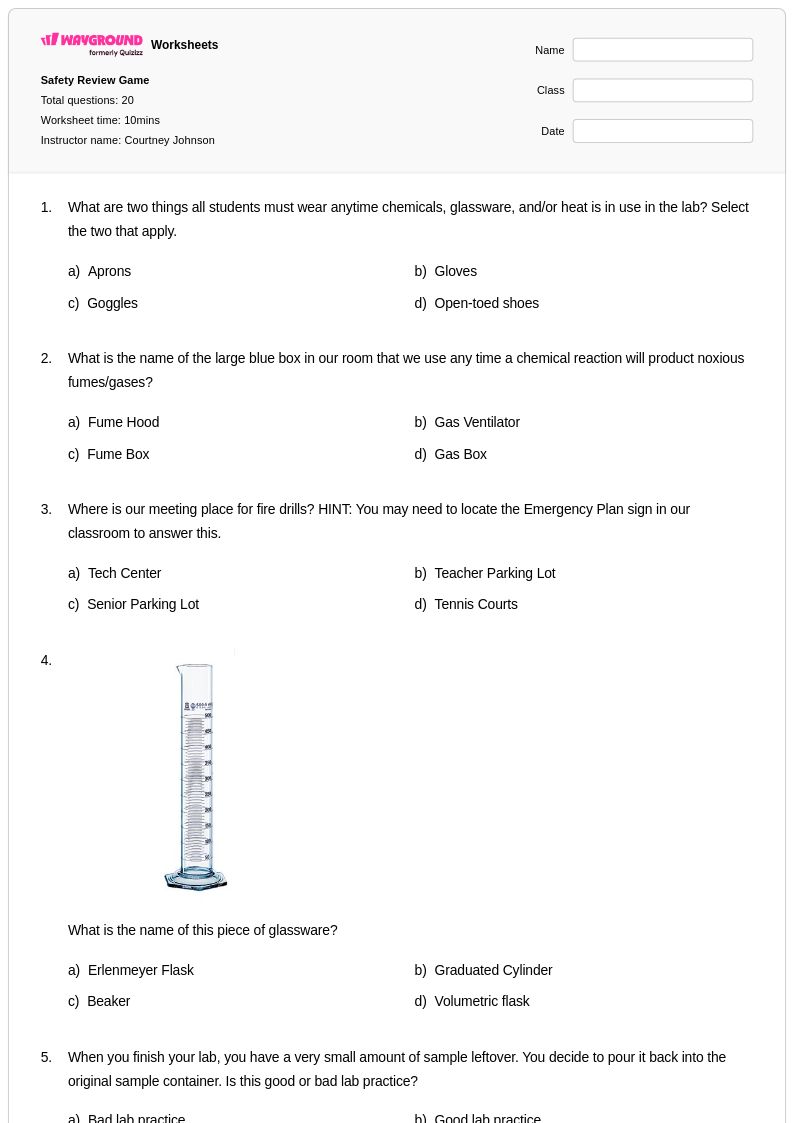
Start by introducing each piece of equipment in context — show students not just what goggles, gloves, or fume hoods look like, but when and why each is required. Scenario-based instruction works well: present a specific hazard (e.g., handling corrosive chemicals) and ask students to select the appropriate protective gear. Reinforcing this with matching exercises and visual identification activities helps students build automatic recognition before they ever enter a lab setting.
What kinds of exercises help students practice safety equipment skills?
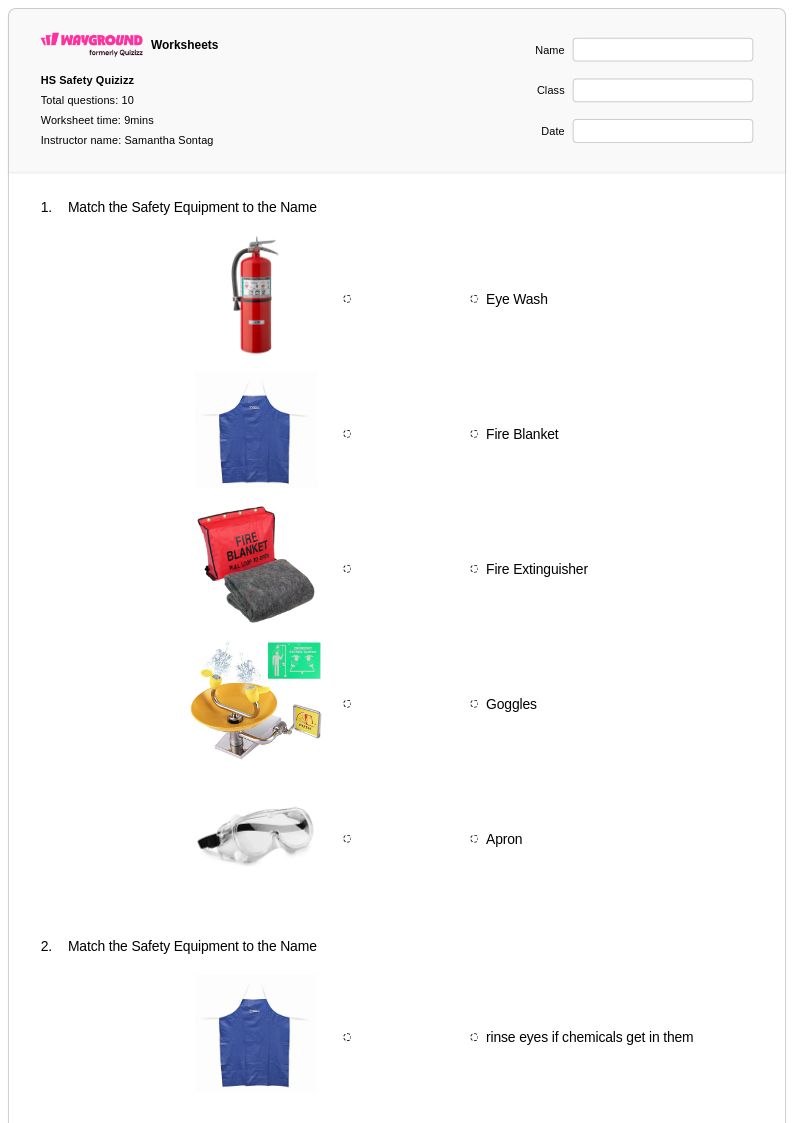
Effective practice includes hazard-matching tasks where students pair specific risks with the correct protective gear, scenario-based questions that require selecting equipment for a given lab situation, and identification exercises using labeled diagrams of equipment like safety goggles, lab coats, gloves, and emergency stations. These formats push students beyond memorization into applied decision-making, which is the skill that actually matters in a real lab environment.
What mistakes do students commonly make when learning about lab safety equipment?
A common error is treating all protective equipment as interchangeable — for example, assuming any gloves offer the same protection regardless of the chemical hazard. Students also frequently overlook emergency equipment such as eyewash stations and fire extinguishers, focusing only on personal protective gear. Another misconception is that safety protocols are optional when hazards seem minor, which makes scenario-based practice critical for reinforcing that context always determines the appropriate response.
How do I assess whether students actually understand lab safety equipment, not just memorize it?
Move beyond simple recall by presenting novel scenarios students haven't seen before and asking them to justify their equipment choices in writing or discussion. Assessing whether students can explain why a fume hood is required for volatile substances, or why nitrile gloves differ from latex gloves in certain contexts, reveals conceptual understanding rather than surface familiarity. Worksheet exercises that include real-world analysis prompts are particularly effective for surfacing gaps before students enter a live lab.
How do I use Wayground's safety equipment worksheets in my classroom?
Wayground's safety equipment worksheets are available as printable PDFs for traditional classroom and lab-prep use, and in digital formats for technology-integrated environments. Teachers can assign them as pre-lab preparation, in-class review, or post-unit assessment, and can host them as a quiz directly on Wayground for real-time student responses. Each worksheet includes a complete answer key, so feedback is immediate whether students are working independently or in a guided setting. Wayground also supports student-level accommodations such as read aloud, extended time, and reduced answer choices, which can be applied individually without disrupting the rest of the class.
How can I differentiate safety equipment instruction for students at different levels?
For foundational learners, focus on basic identification tasks — matching equipment names to images or selecting the correct item from a short list. More advanced students can engage with multi-variable scenarios that require evaluating multiple hazards simultaneously and justifying equipment selection decisions. On Wayground, teachers can access worksheets across complexity levels, from basic safety equipment identification to advanced hazard assessment, and apply accommodations like reduced answer choices or read aloud for students who need additional support.