Free Printable Producers and Consumers Worksheets for Class 3
Explore Wayground's free Class 3 producers and consumers worksheets with printable PDFs, practice problems, and answer keys to help students understand basic economic roles and relationships.
Explore printable Producers and Consumers worksheets for Class 3
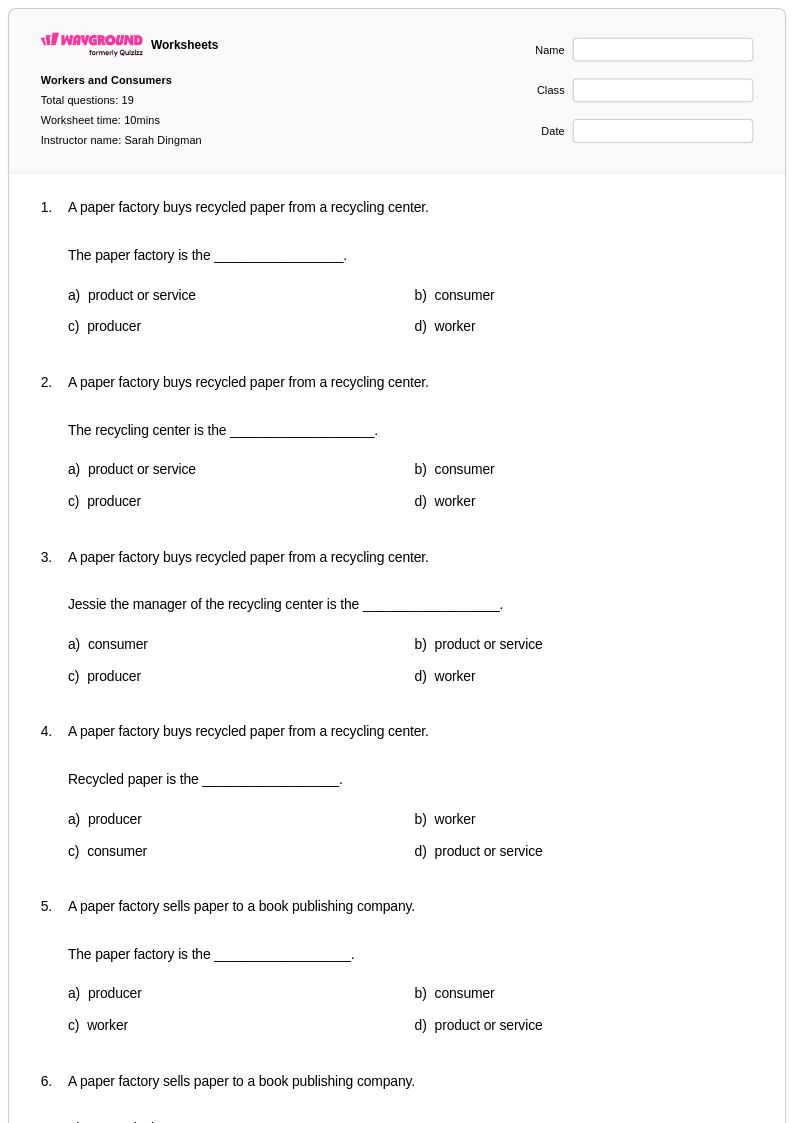
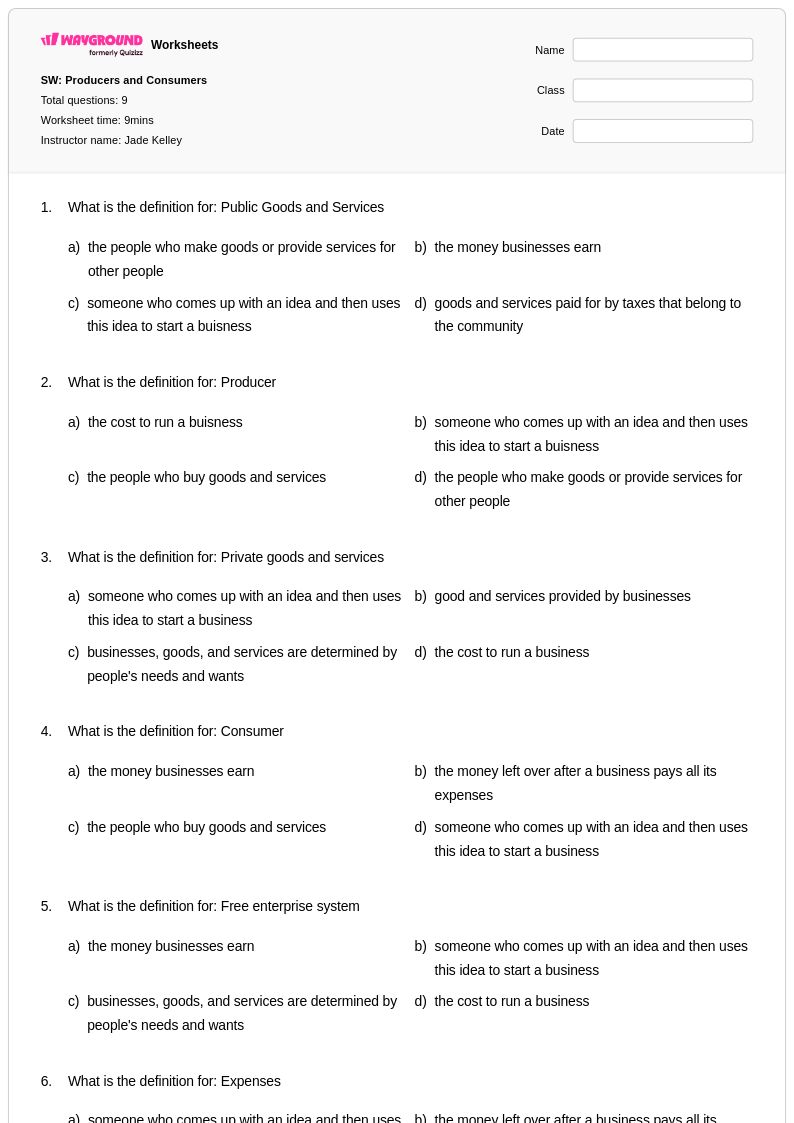
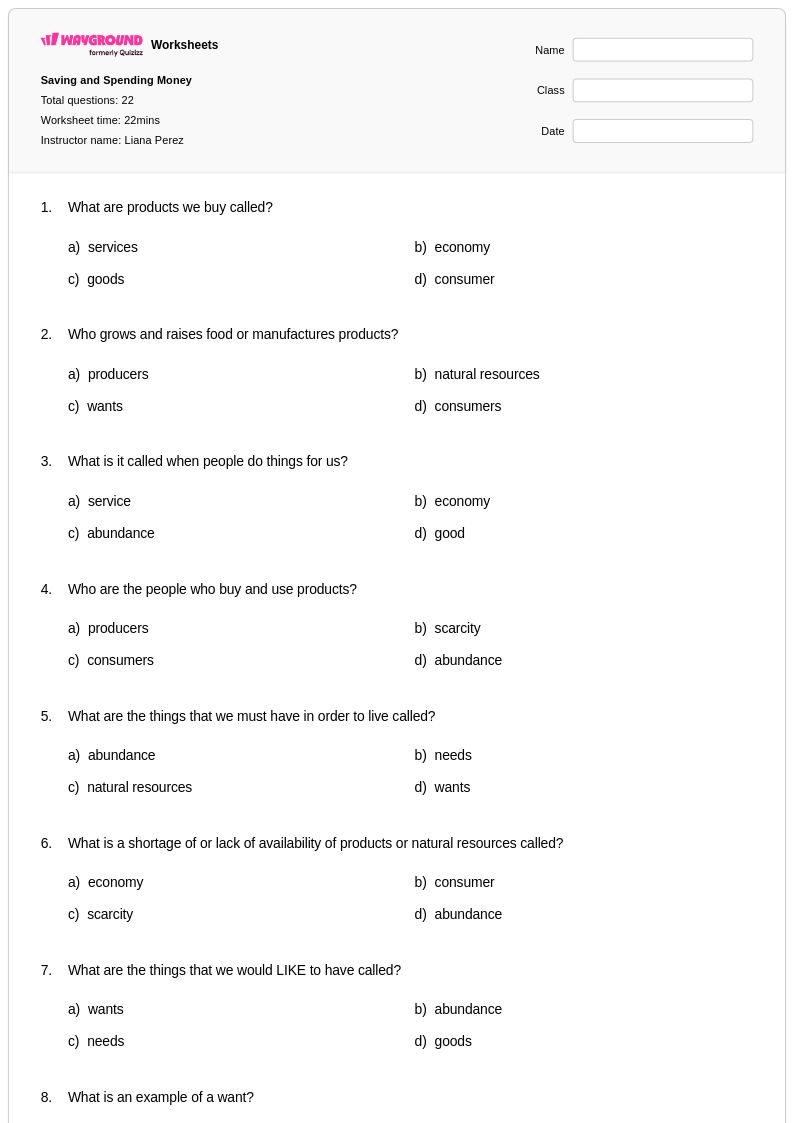
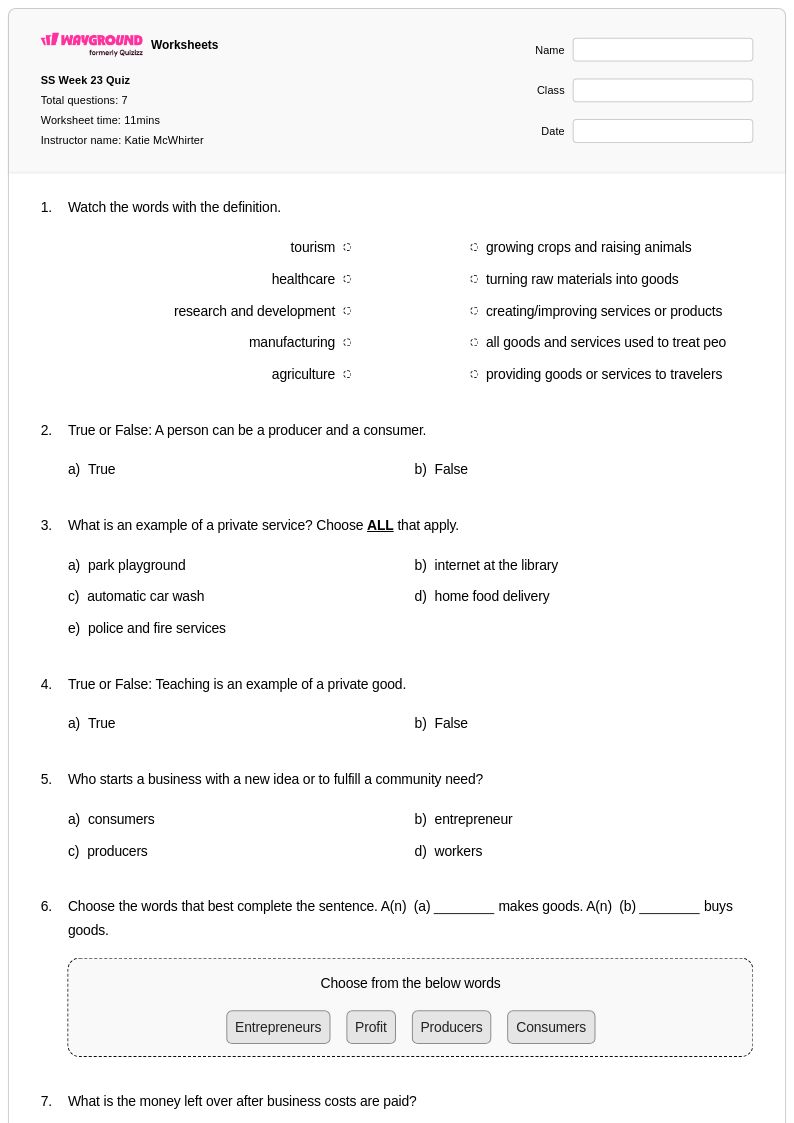
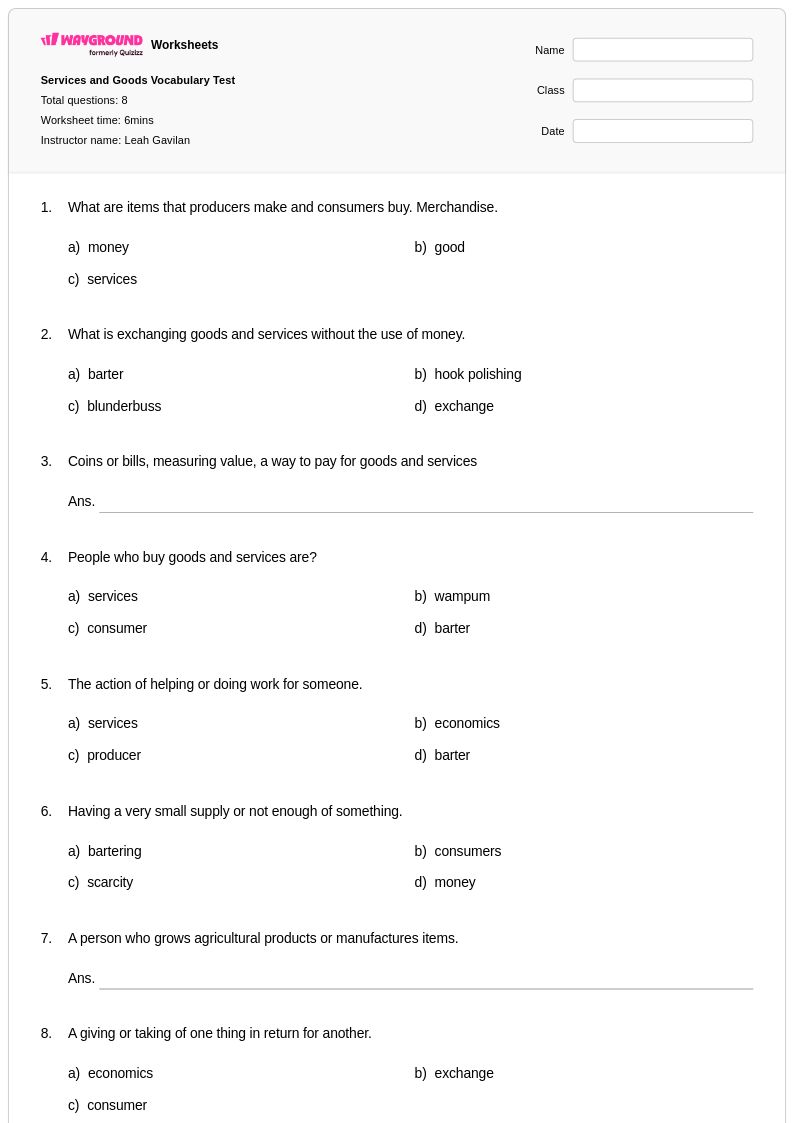
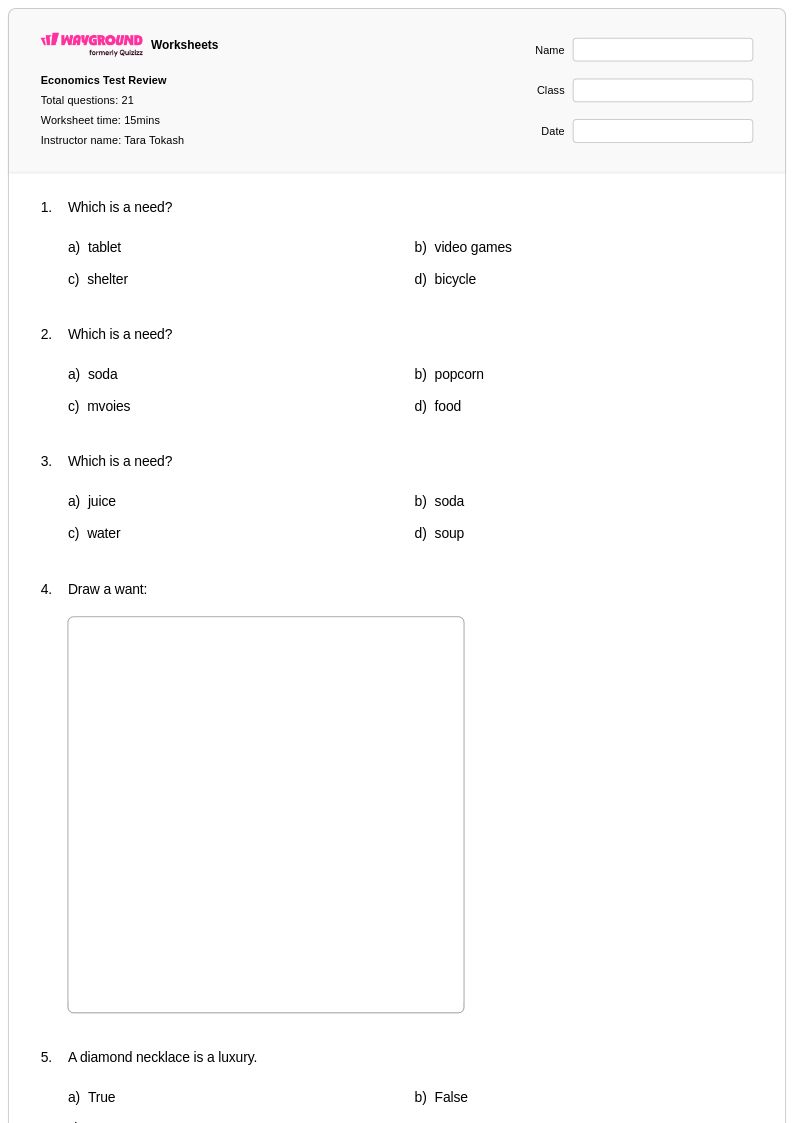
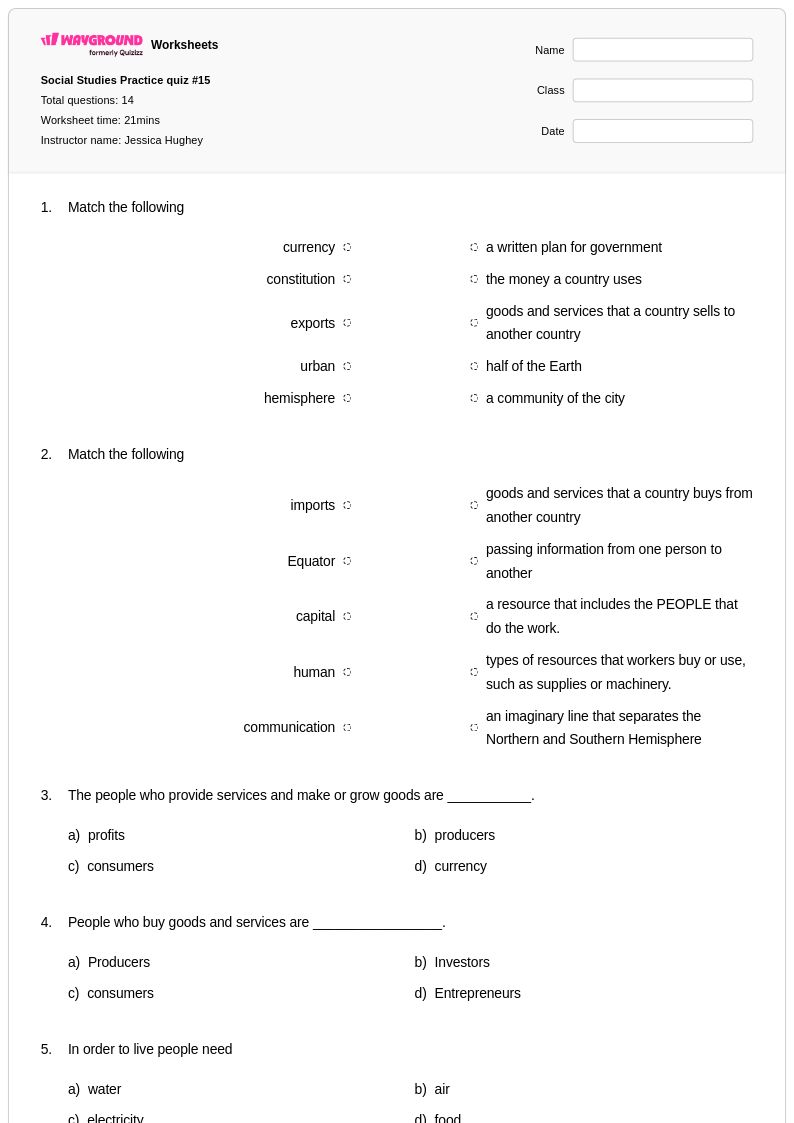
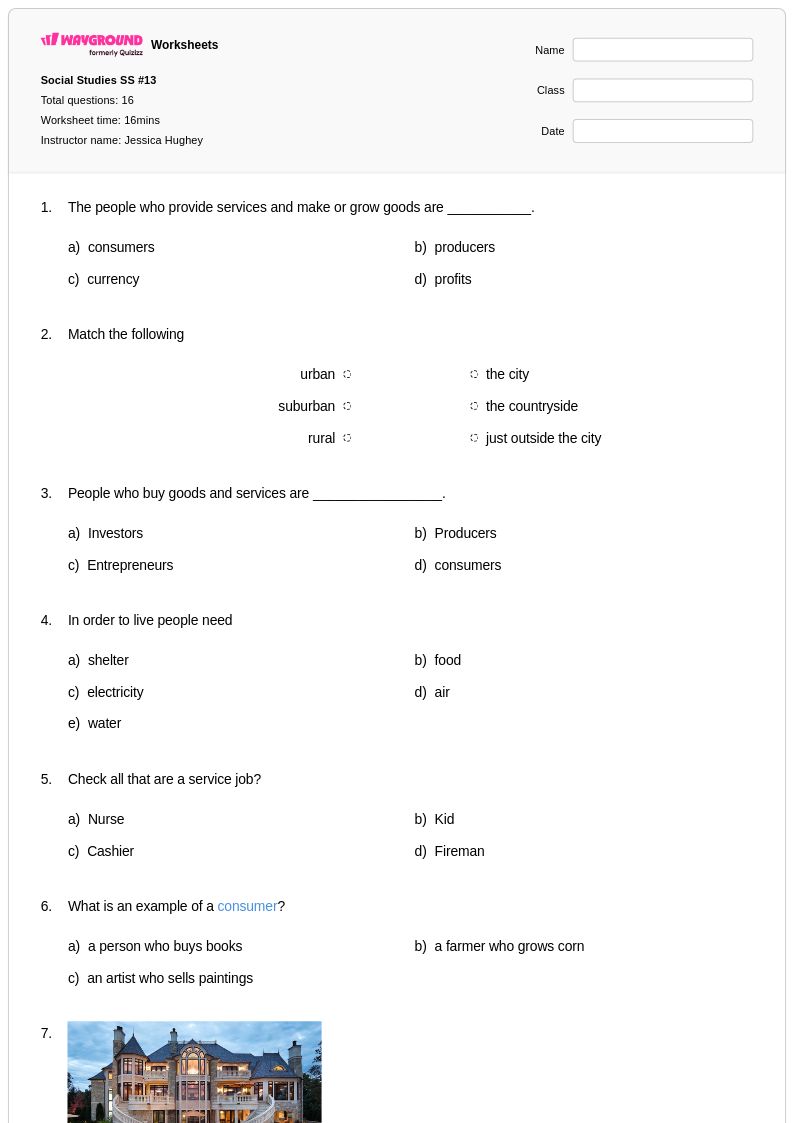
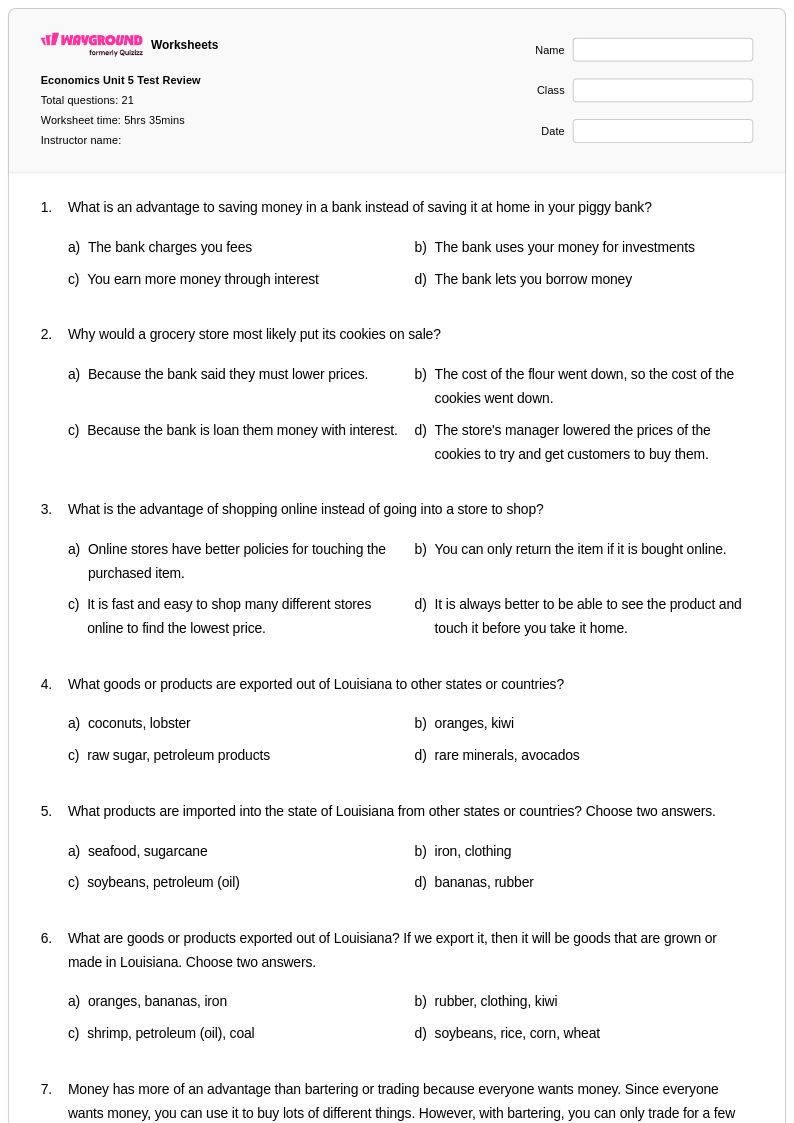
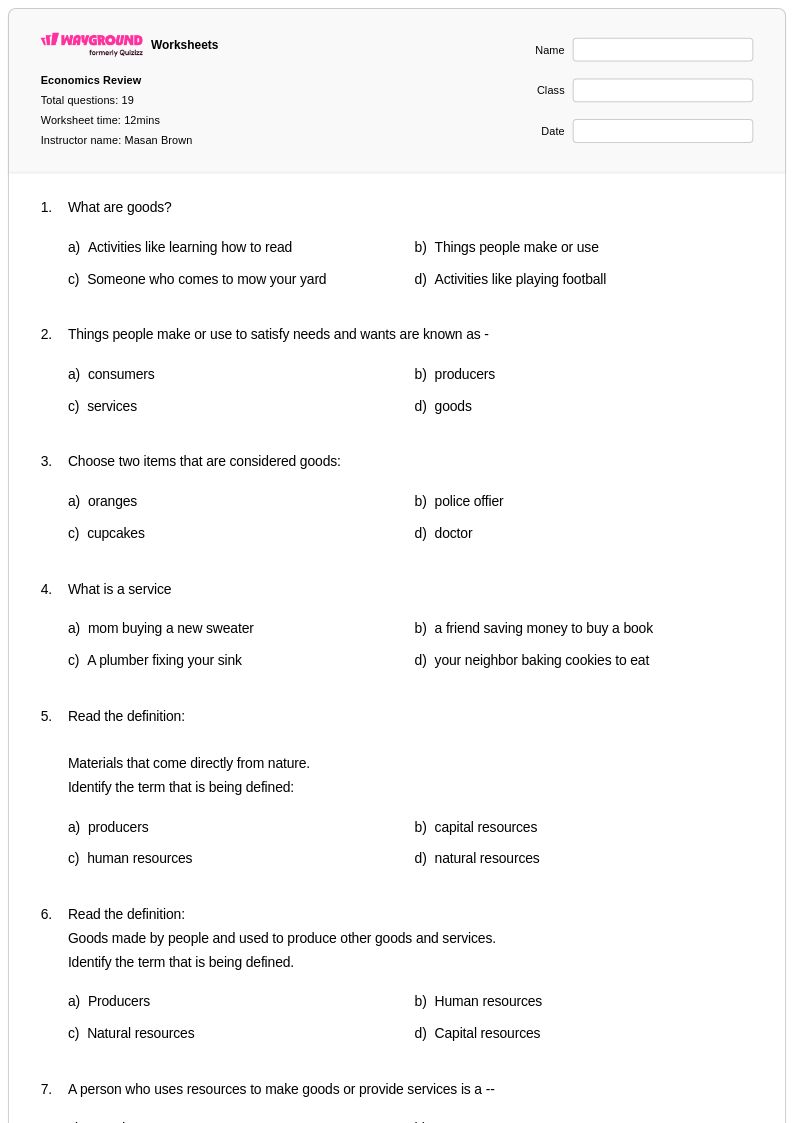
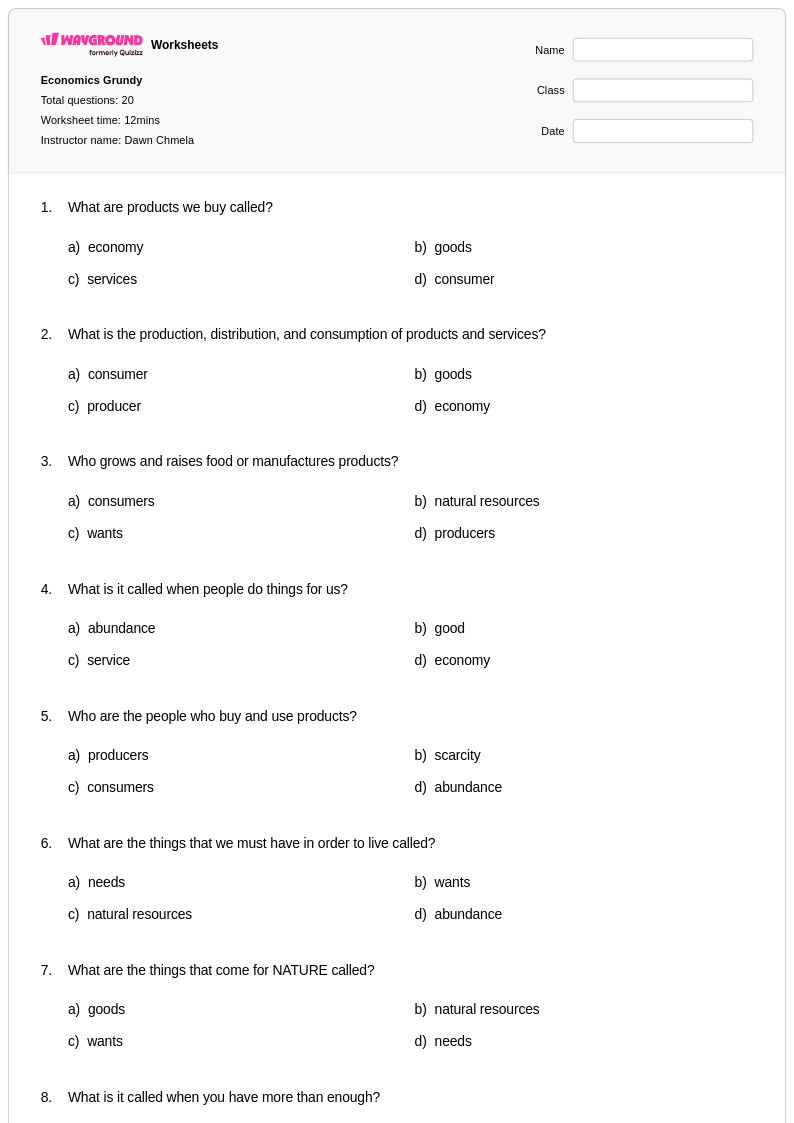
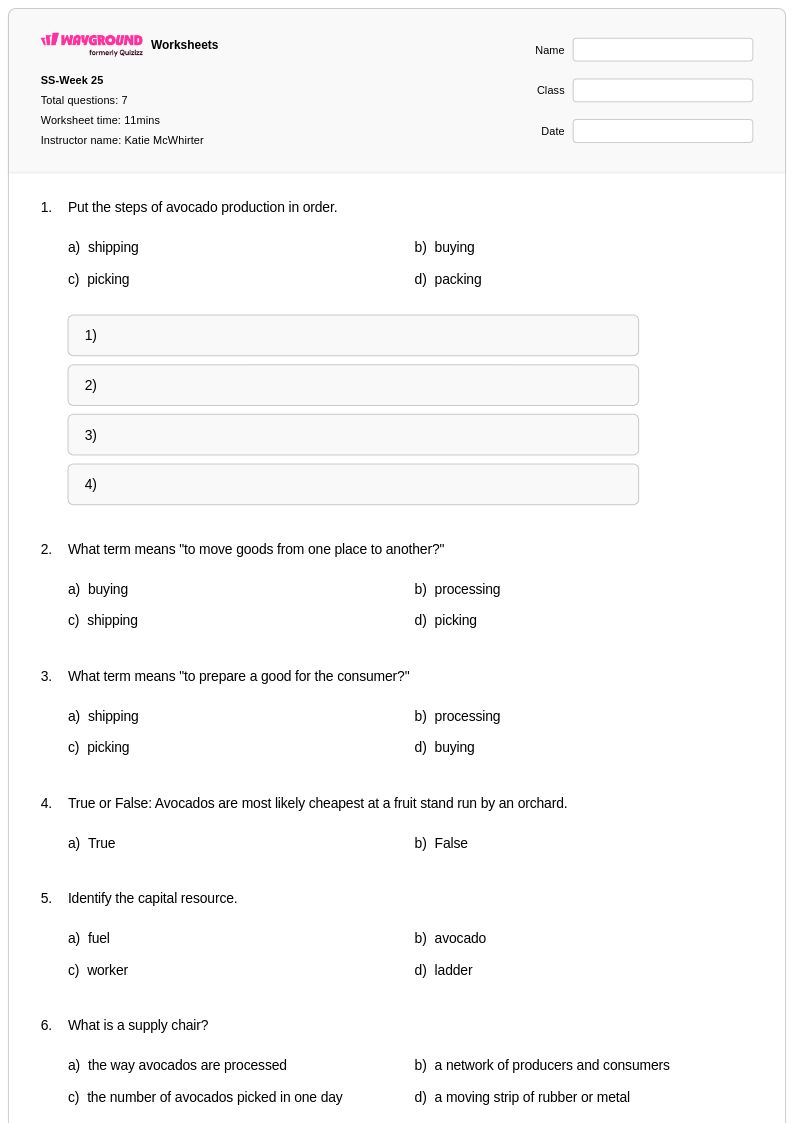
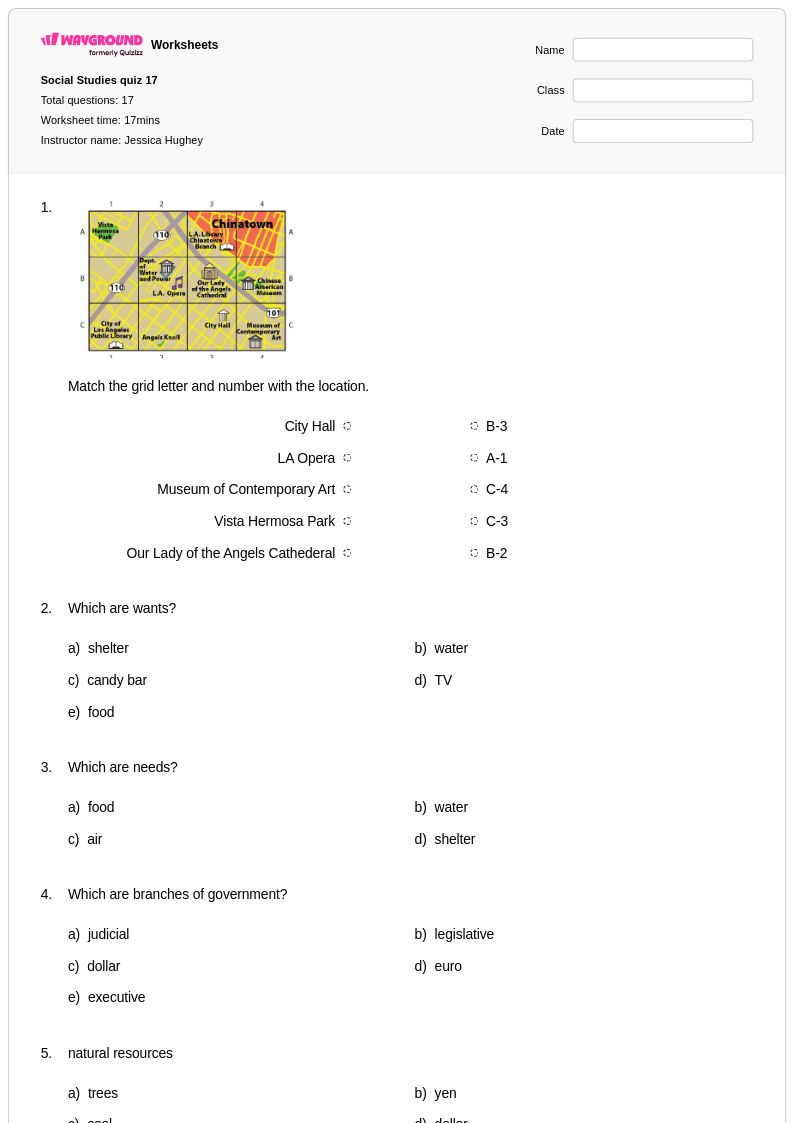
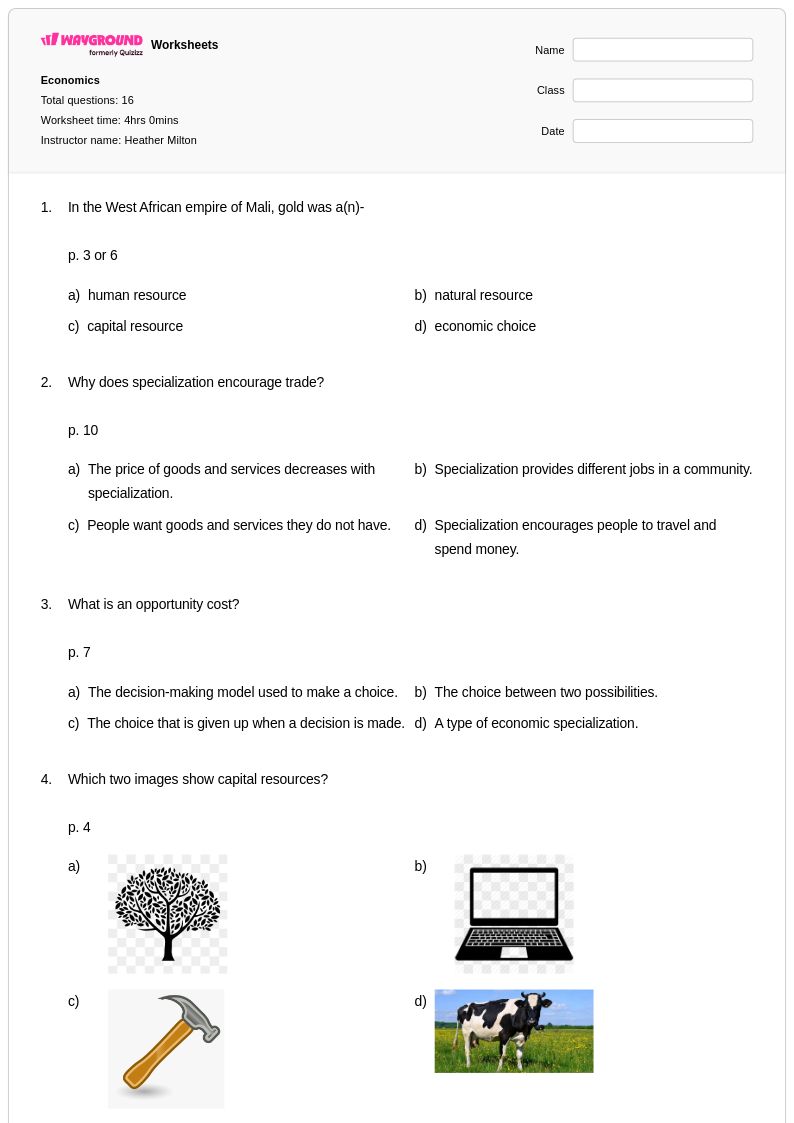
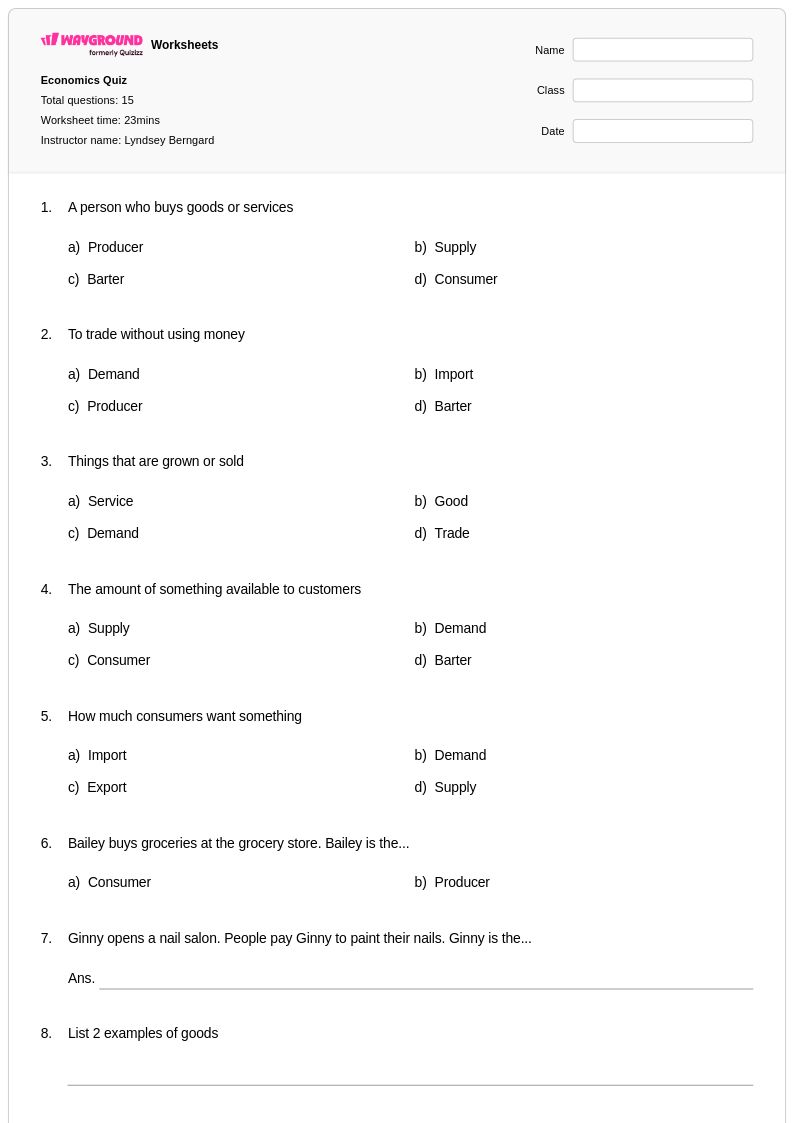
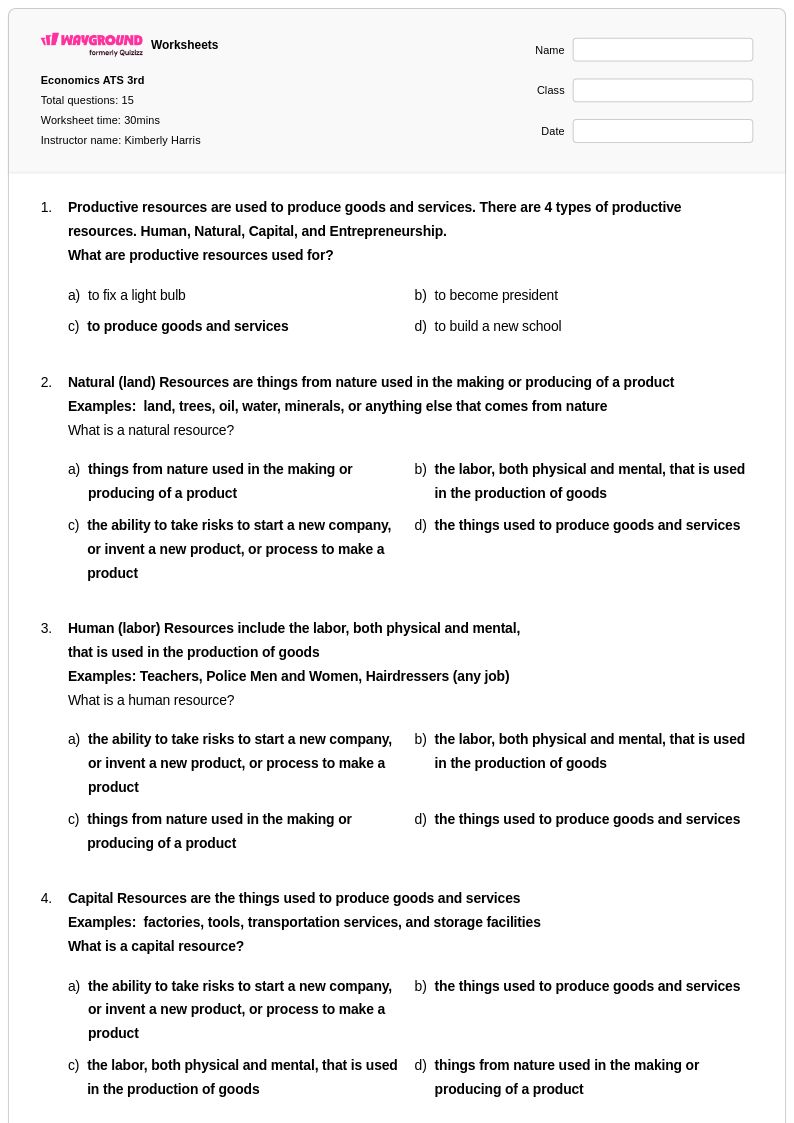
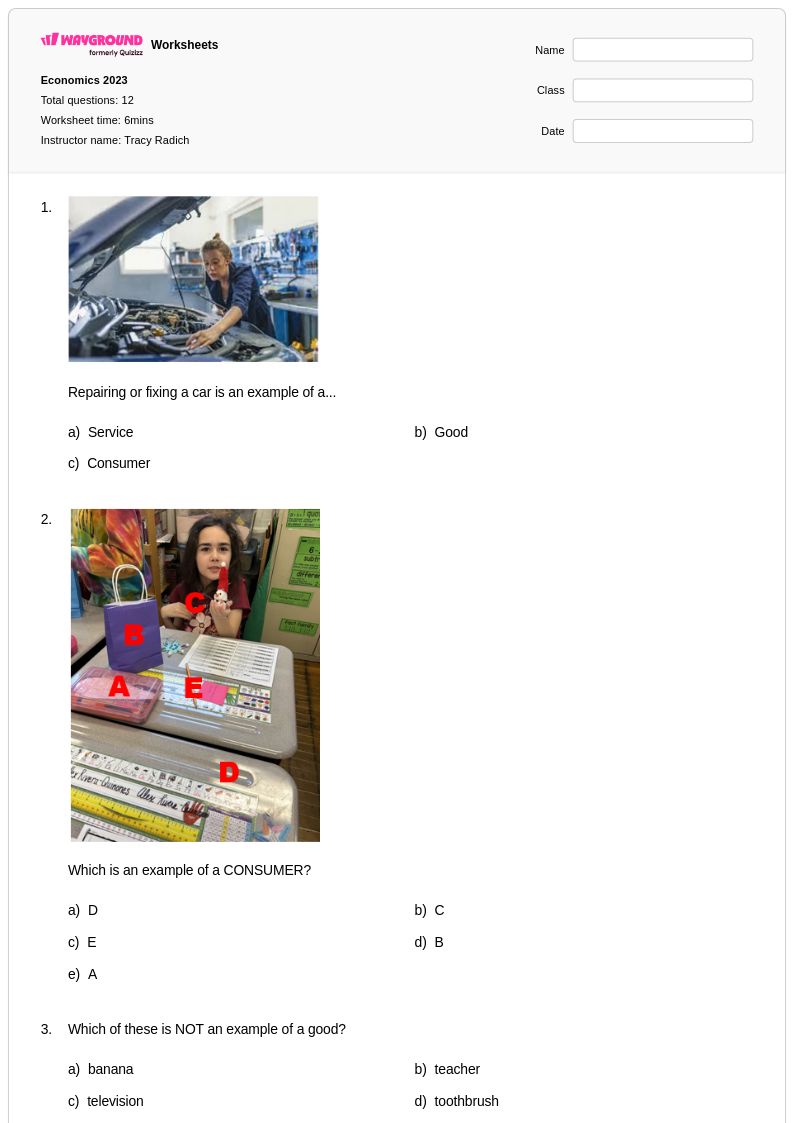
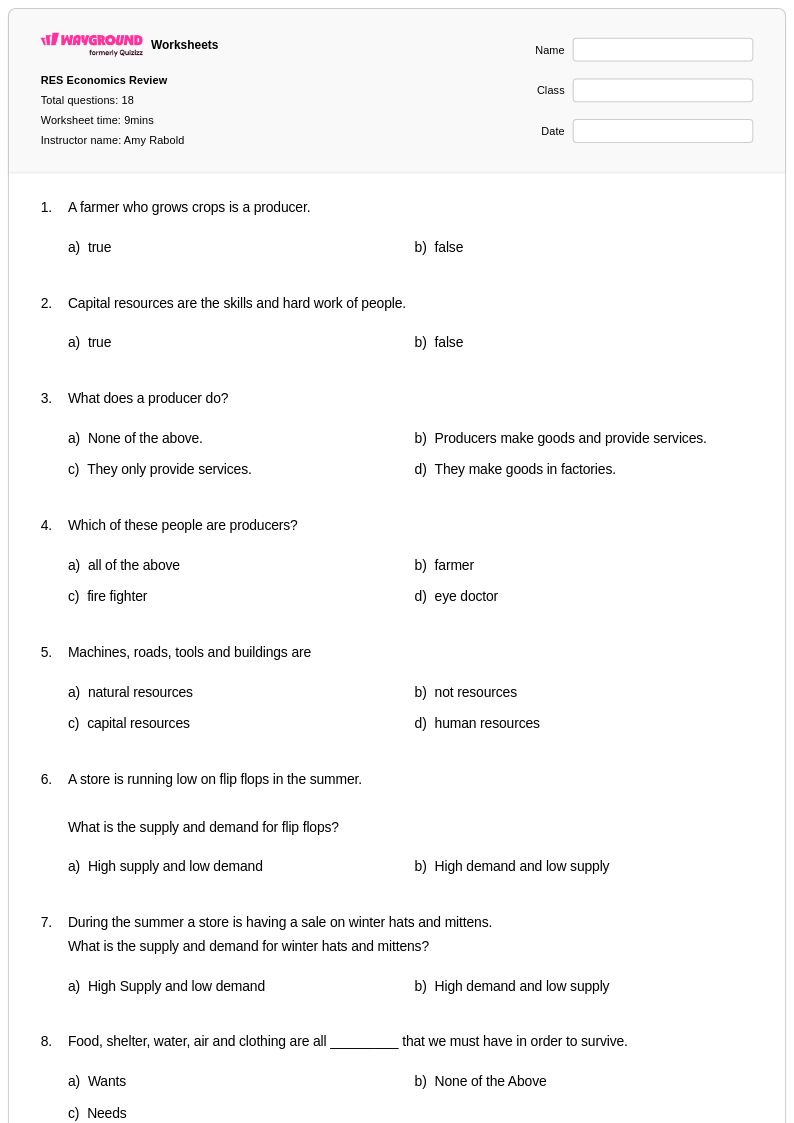
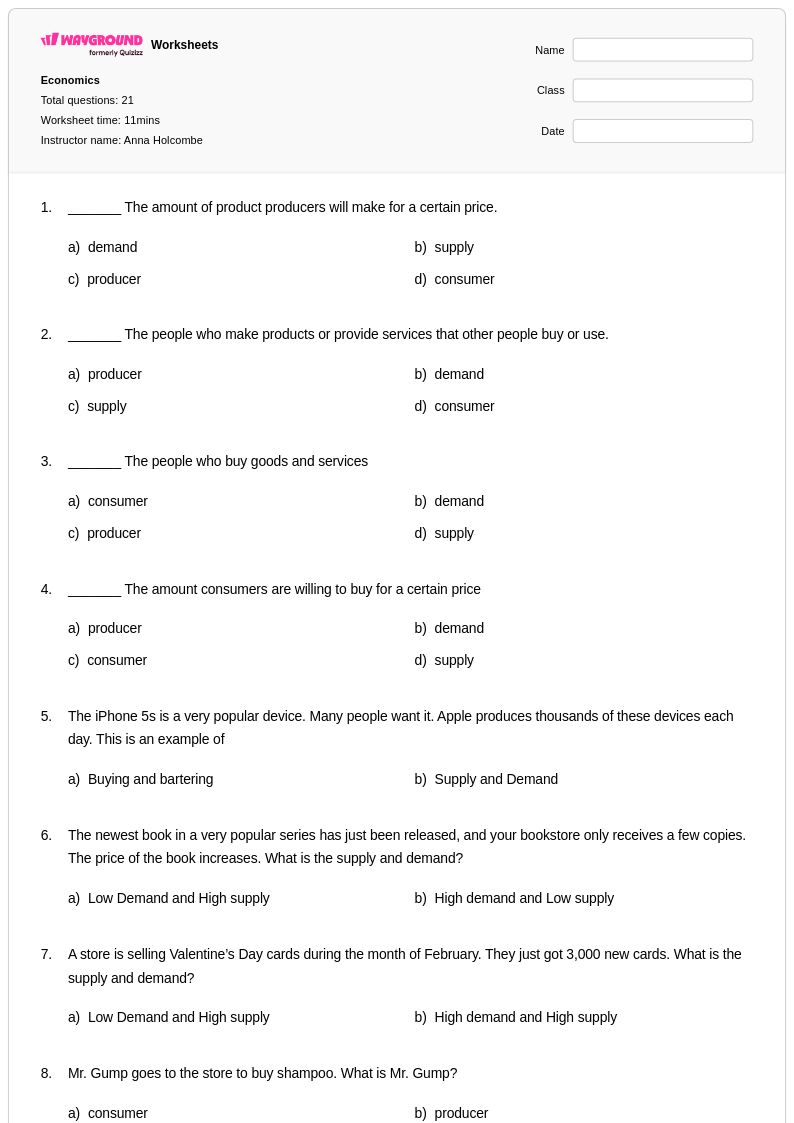
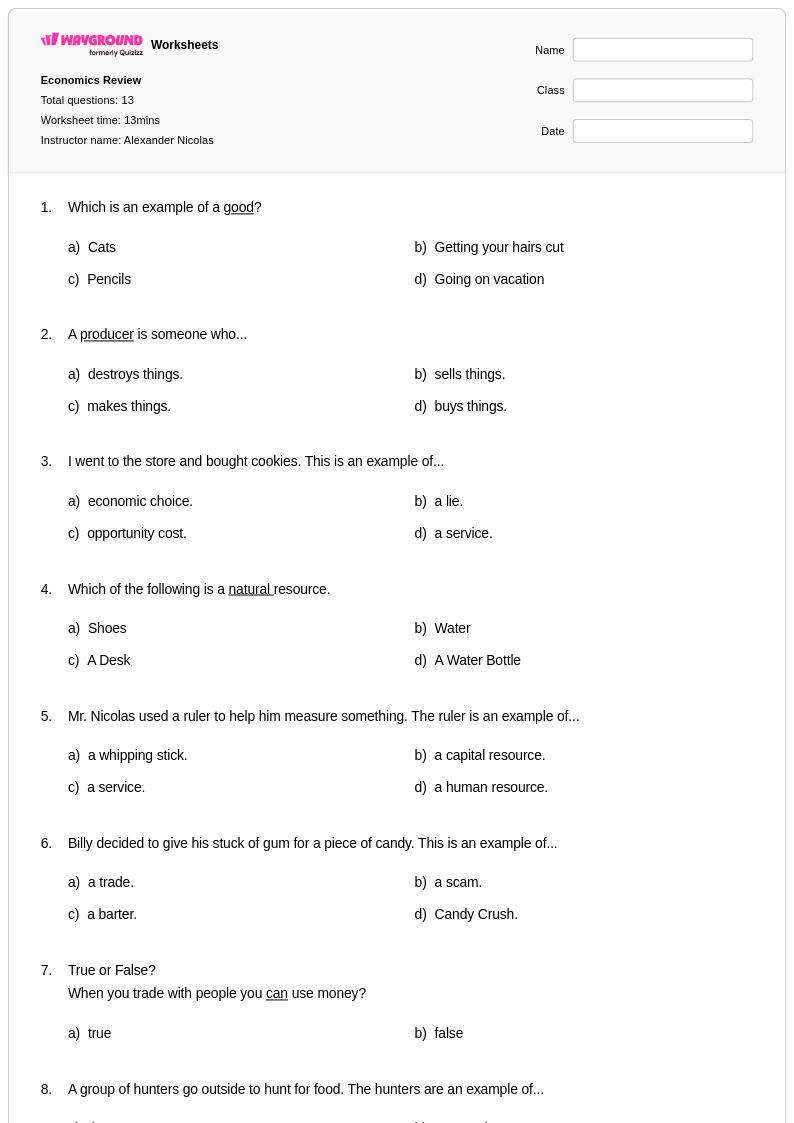
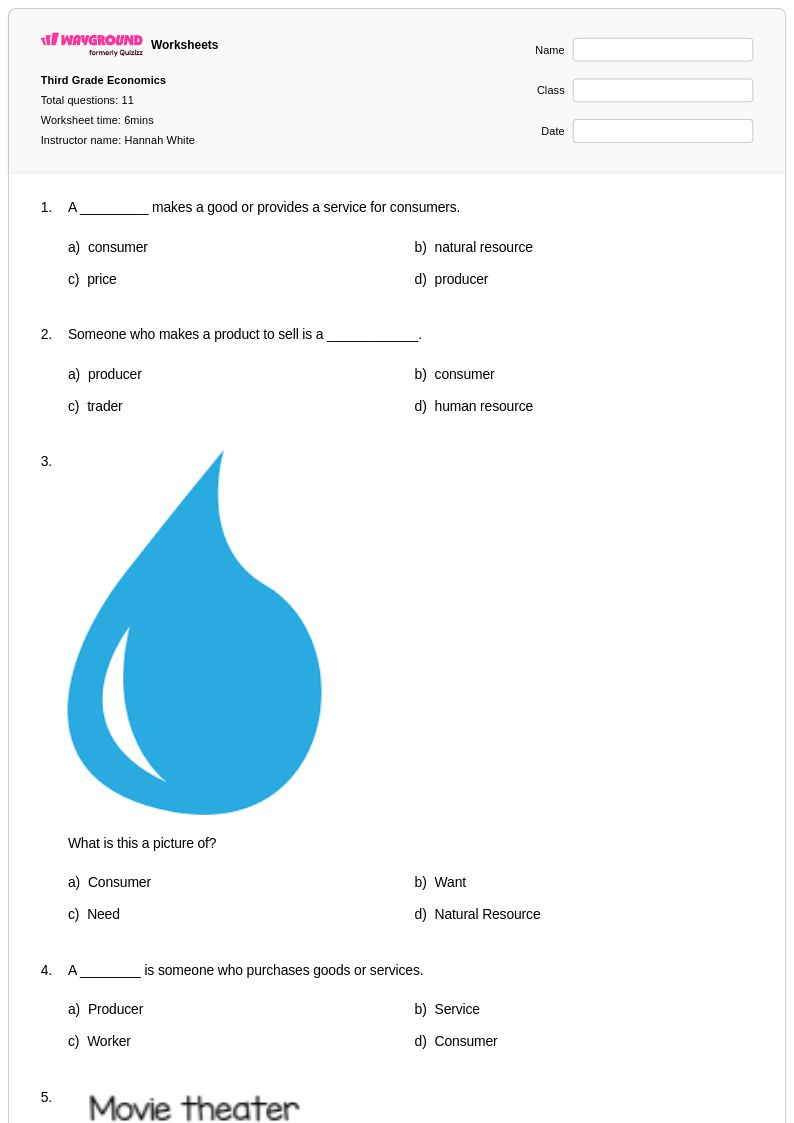
Producers and consumers worksheets for Class 3 students available through Wayground provide essential foundational practice in understanding basic economic concepts and roles within community systems. These carefully designed educational resources help young learners distinguish between those who make goods and services (producers) and those who purchase and use them (consumers), while developing critical thinking skills about how economic relationships function in their daily lives. The comprehensive collection includes engaging practice problems that challenge students to identify real-world examples, categorize different economic roles, and analyze simple supply and demand scenarios appropriate for elementary learners. Each worksheet comes with a complete answer key and is available as free printable PDF downloads, making it convenient for teachers to incorporate these materials into their social studies curriculum while reinforcing vocabulary and conceptual understanding through varied question formats.
Wayground's extensive platform, formerly known as Quizizz, empowers educators with millions of teacher-created resources specifically designed to support Class 3 social studies instruction on producers and consumers topics. The robust search and filtering capabilities allow teachers to quickly locate worksheets that align with state standards and match their specific classroom needs, while built-in differentiation tools enable customization for diverse learning levels and abilities. These versatile materials are available in both printable and digital PDF formats, providing flexibility for in-class activities, homework assignments, or remote learning scenarios. Teachers can efficiently plan comprehensive lesson sequences, target remediation for struggling students, offer enrichment opportunities for advanced learners, and provide consistent skill practice that builds economic literacy progressively throughout the academic year.
FAQs
How do I teach producers and consumers to elementary students?
Start by anchoring the concepts in students' everyday lives — ask them where their food, clothing, and toys come from, then introduce the terms producer and consumer to label what they already know. From there, use real-world examples like a bakery (producer) and a customer buying bread (consumer) to illustrate the exchange relationship. Gradually introduce the idea that the same person or business can be both a producer and a consumer depending on context, which helps students build a more flexible understanding of economic roles.
What exercises help students practice identifying producers and consumers?
Sorting activities are especially effective — students categorize businesses, individuals, or scenarios as producers, consumers, or both, which builds pattern recognition and reinforces the distinction. Practice problems that trace a product from raw material to finished good help students see the full supply chain and understand how multiple producers and consumers interact within a single transaction. Scenario-based questions that ask students to justify their reasoning also strengthen critical thinking alongside content knowledge.
What mistakes do students commonly make when learning about producers and consumers?
The most common misconception is that producers and consumers are always separate, distinct groups — students often struggle to recognize that a business can consume raw materials (acting as a consumer) while also producing finished goods. Another frequent error is conflating 'producer' exclusively with farmers or factories, when in reality any individual or entity that creates goods or services qualifies. Addressing these misconceptions early with counterexamples, such as a restaurant that both purchases ingredients and sells meals, helps students build a more accurate mental model.
How do producers and consumers connect to supply and demand?
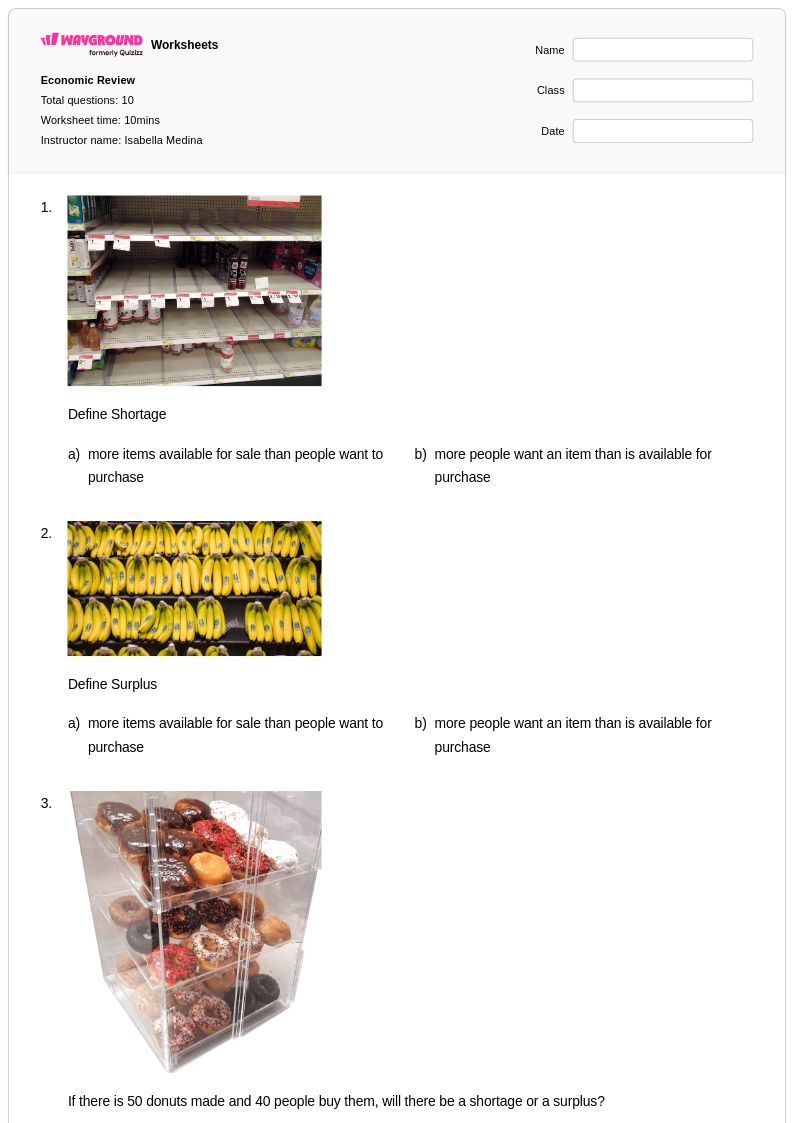
Producers and consumers are the two sides that create supply and demand: producers supply goods and services to the market, while consumers generate demand by choosing to purchase them. When consumer demand rises, producers typically increase output; when demand falls, production often slows. Teaching these roles together gives students the conceptual foundation they need to understand how prices, quantity, and market decisions are shaped by the interaction between the two groups.
How do I use Wayground's producers and consumers worksheets in my classroom?
Wayground's producers and consumers worksheets are available as printable PDFs for traditional classroom use and in digital formats for technology-integrated learning environments, giving you flexibility based on your instructional setup. You can also host the worksheets as a quiz directly on Wayground, which allows you to track student responses and identify gaps in understanding in real time. Each worksheet includes a complete answer key, so you can use them for guided practice, independent work, or targeted remediation without additional prep.
How can I differentiate producers and consumers instruction for students with different learning needs?
On Wayground, you can apply individual student accommodations including extended time, read-aloud support for students who need questions read to them, and reduced answer choices to lower cognitive load for struggling learners. Font size and display themes can also be adjusted through reading mode to improve accessibility. These settings are saved per student and carry over to future sessions, so differentiation is set up once and applied automatically without disrupting the rest of the class.