Free Printable Progressive Muscle Relaxation Worksheets for Class 12
Discover Class 12 progressive muscle relaxation worksheets and printables from Wayground that help students master stress-reduction techniques through guided practice problems, free PDF resources, and comprehensive answer keys.
Explore printable Progressive Muscle Relaxation worksheets for Class 12
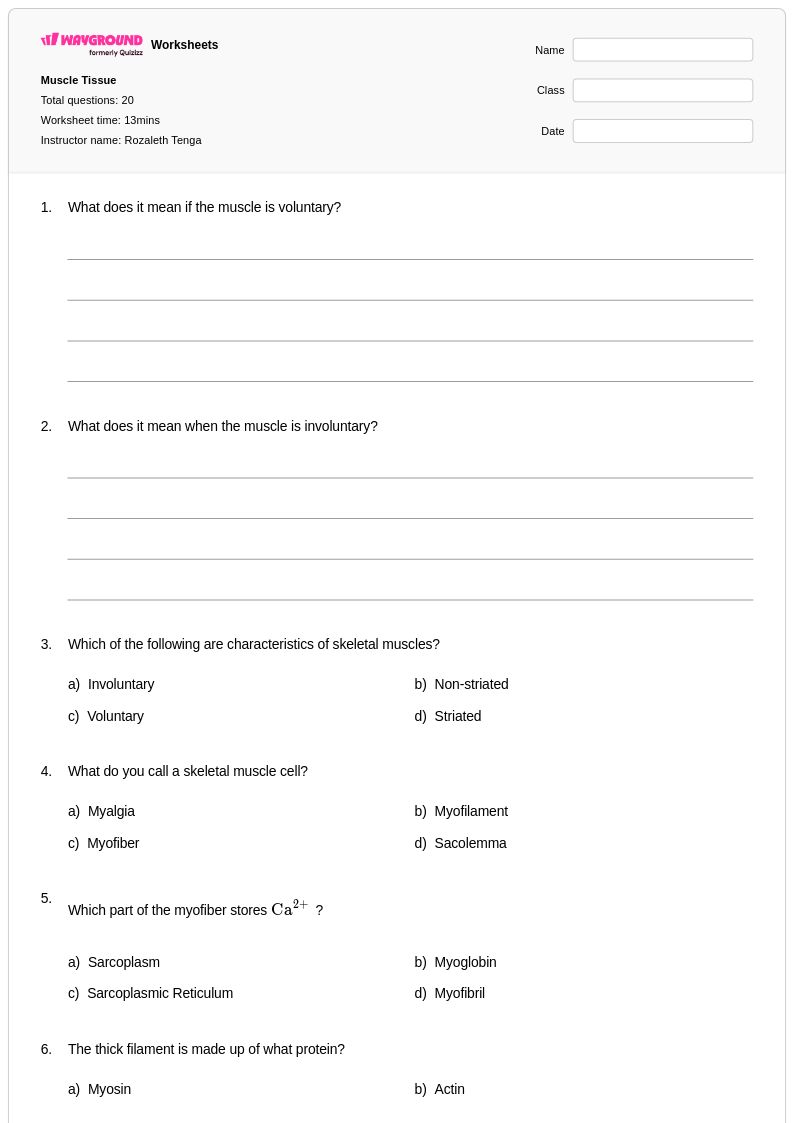
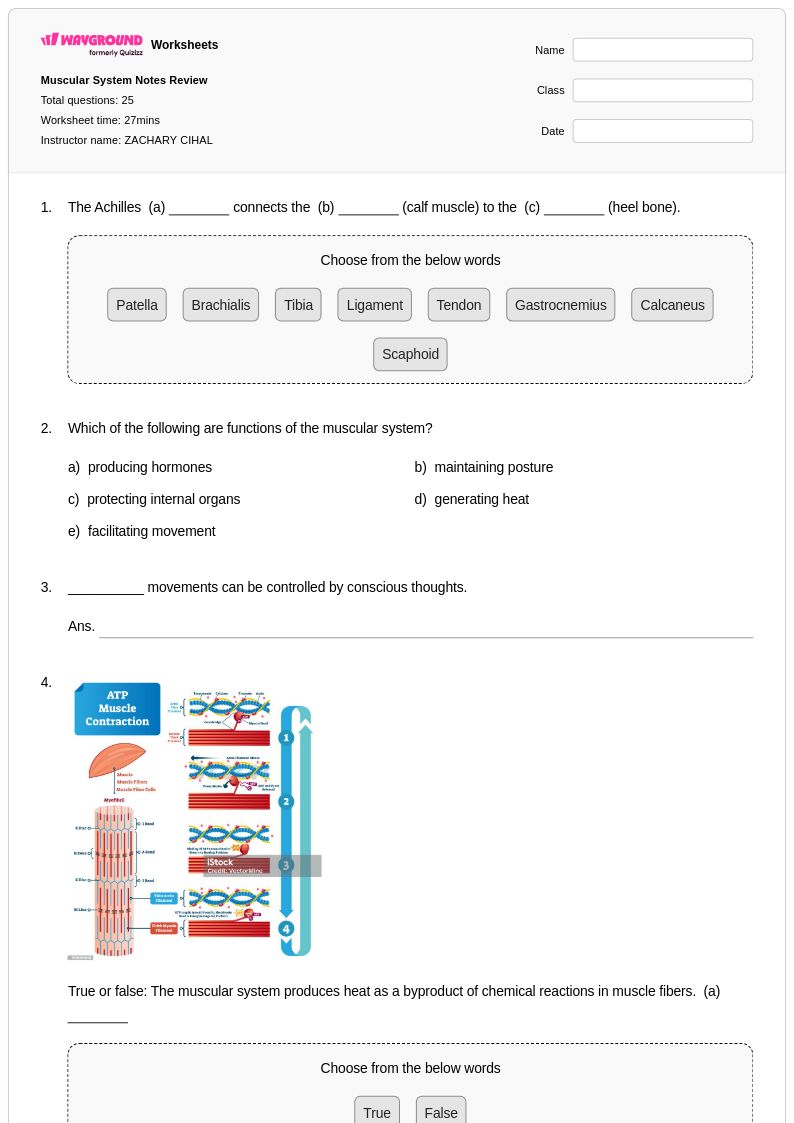
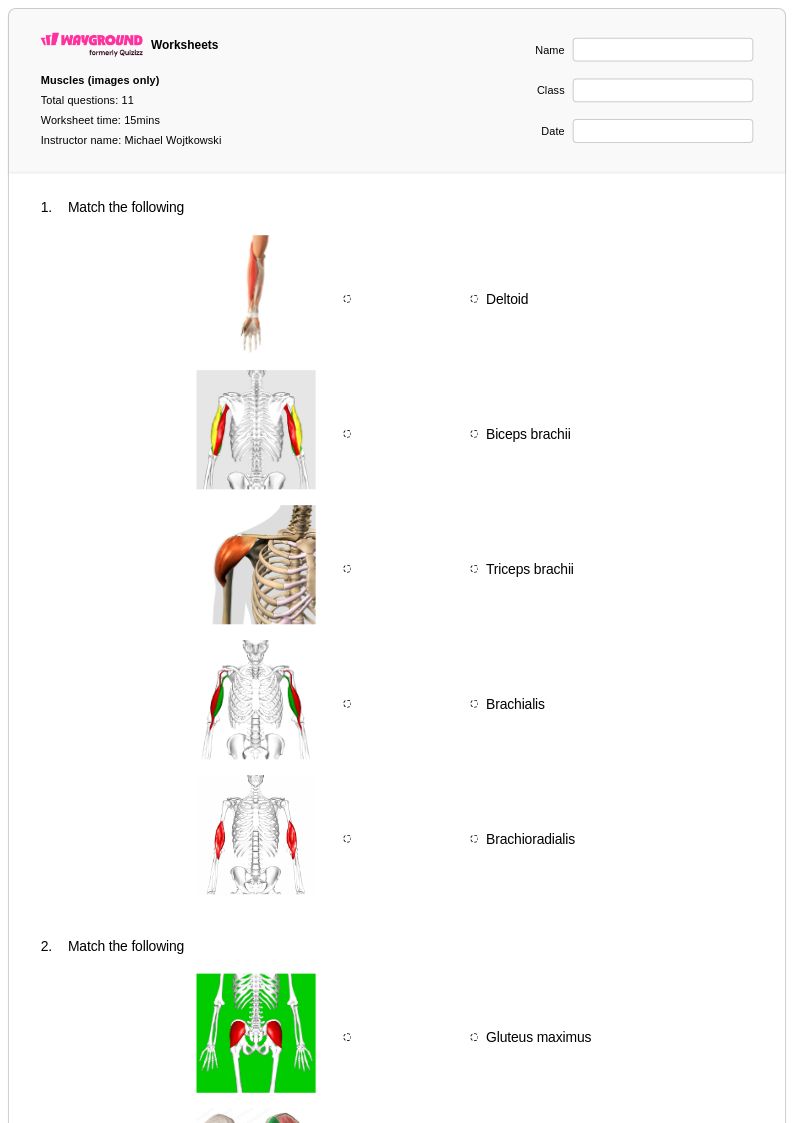
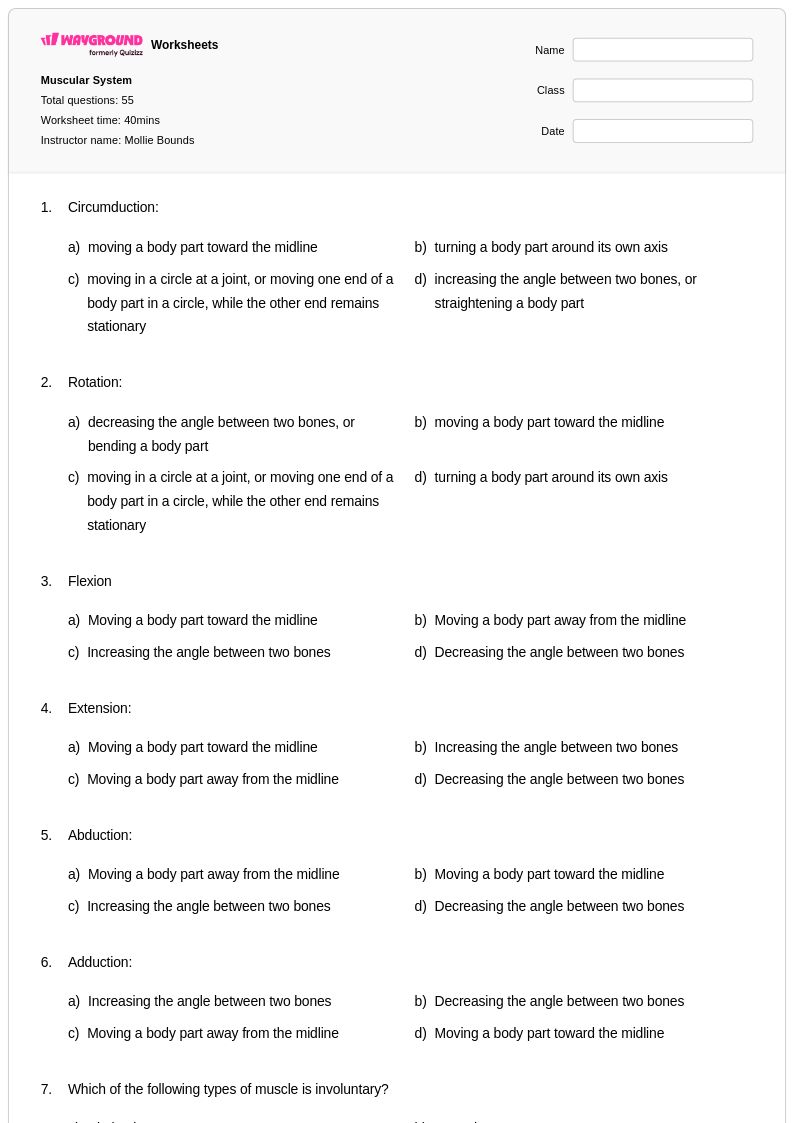
Progressive muscle relaxation worksheets for Class 12 Physical Education provide students with structured guidance to master this essential stress management technique that systematically tenses and releases different muscle groups throughout the body. These comprehensive printables help twelfth-grade students develop critical wellness skills by teaching proper breathing patterns, muscle awareness, and relaxation sequencing that can be applied throughout their lives for managing academic stress, athletic performance anxiety, and general well-being. The worksheets feature detailed practice problems that guide students through each step of the progressive muscle relaxation process, complete with answer keys that ensure proper technique mastery and self-assessment opportunities. Students work through free educational materials that combine theoretical understanding with practical application, allowing them to experience firsthand how controlled muscle tension and release can promote physical and mental relaxation.
Wayground, formerly Quizizz, supports Physical Education teachers with an extensive collection of progressive muscle relaxation resources drawn from millions of teacher-created materials that have been tested in real classroom environments. The platform's advanced search and filtering capabilities enable educators to quickly locate age-appropriate Class 12 content that aligns with wellness standards and learning objectives, while differentiation tools allow teachers to customize worksheets for students with varying experience levels in mindfulness and relaxation techniques. These flexible resources are available in both printable pdf formats for hands-on practice sessions and digital versions for remote learning or technology-integrated classrooms, supporting comprehensive lesson planning that addresses remediation for students struggling with stress management, enrichment opportunities for advanced learners interested in wellness careers, and regular skill practice that builds lasting healthy coping mechanisms.
FAQs
How do I teach progressive muscle relaxation to students?
Start by explaining the mind-body connection and why physical tension often accompanies stress. Guide students through a scripted sequence, beginning with facial muscles and working down to the toes, having them tense each muscle group for 5–10 seconds before releasing. Pair each release with a slow exhale to reinforce the link between breath and relaxation. Consistent, repeated practice is key — students benefit most when PMR is introduced as a regular routine rather than a one-time activity.
What exercises help students practice progressive muscle relaxation?
Structured worksheets that walk students through tense-and-release sequences for each major muscle group are the most effective practice tools. Exercises that ask students to log their physical sensations before and after each sequence build body awareness and reinforce the technique. Adding reflection prompts — such as identifying which muscle groups held the most tension — helps students internalize the practice and apply it independently outside of guided sessions.
What mistakes do students commonly make when learning progressive muscle relaxation?
The most common error is tensing surrounding muscle groups instead of isolating the targeted one, which reduces the effectiveness of the release. Students also frequently rush through the sequence, not holding tension long enough or releasing too quickly before the relaxation response sets in. Another common mistake is holding the breath during the tension phase — reminding students to breathe continuously and only exhale on release significantly improves their results.
How can I differentiate progressive muscle relaxation instruction for students with varying abilities or needs?
For students with limited mobility or physical disabilities, modify the sequence to focus only on accessible muscle groups and adjust the language in worksheets accordingly. Students who struggle with focus may benefit from shorter sequences targeting three to four muscle groups before building up to a full-body practice. On Wayground, teachers can enable the Read Aloud feature so that worksheet instructions are read to students who need auditory support, and extended time settings can be applied individually for students who need a slower pace through guided sequences.
How do I use progressive muscle relaxation worksheets in my classroom?
These worksheets are available as printable PDFs for traditional classroom use and in digital formats for technology-integrated or remote learning environments, and can also be hosted as a quiz directly on Wayground. Use them to introduce the tense-and-release sequence step by step, assign them as independent practice after an initial guided session, or incorporate them into a broader stress management or mindfulness unit. The included answer keys allow students to self-check their understanding of proper technique, timing, and expected physical sensations.
At what age or grade level is progressive muscle relaxation appropriate to teach?
Progressive muscle relaxation can be adapted for a wide range of ages, from upper elementary students learning basic stress management to high school students developing more advanced self-regulation skills. Younger students typically benefit from simplified sequences with concrete, playful language — such as 'squeeze like you're holding a lemon' — while older students can engage with more detailed physiological explanations. It is also commonly taught in health, physical education, and school counseling contexts across middle and high school.