
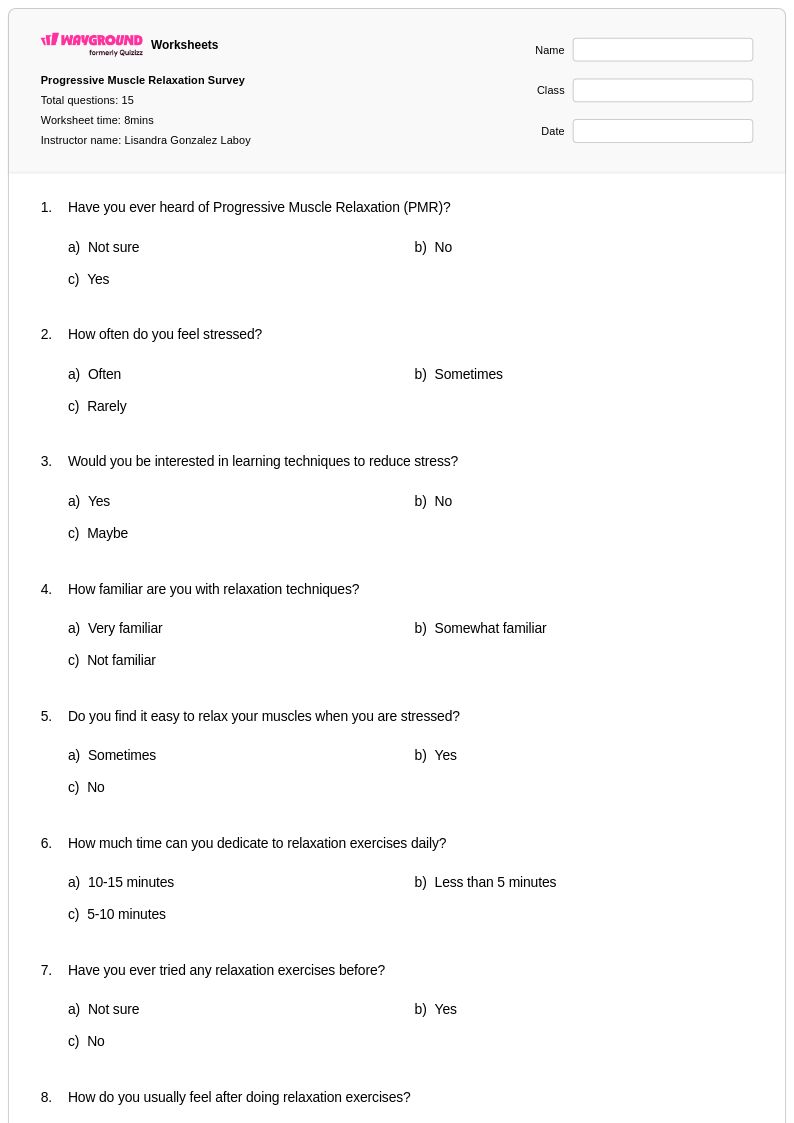
15 Q
8th
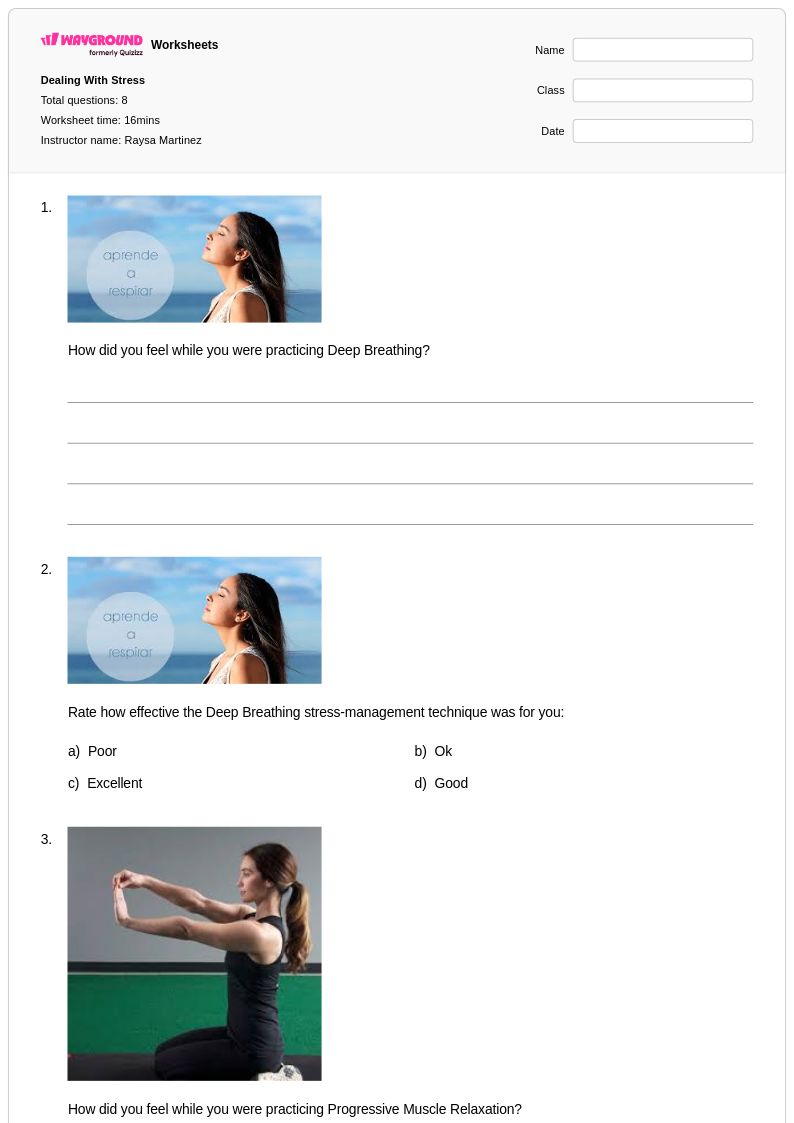
8 Q
6th - 8th
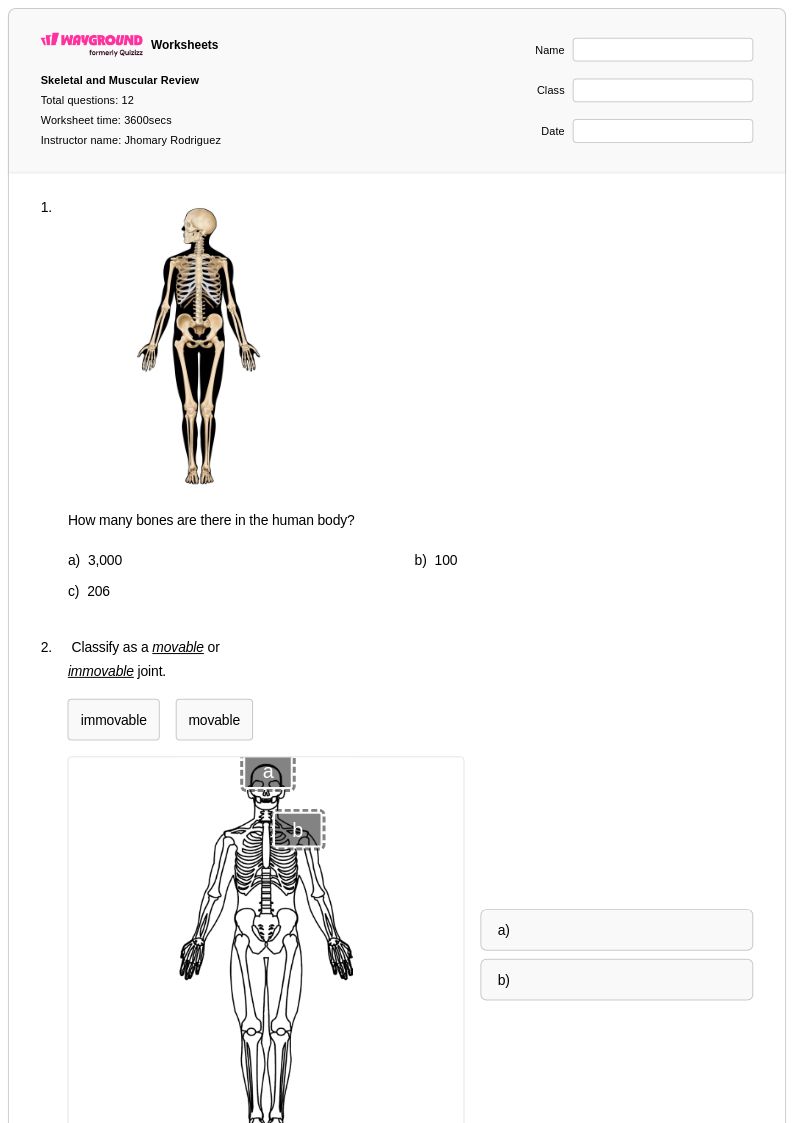
12 Q
6th - 8th
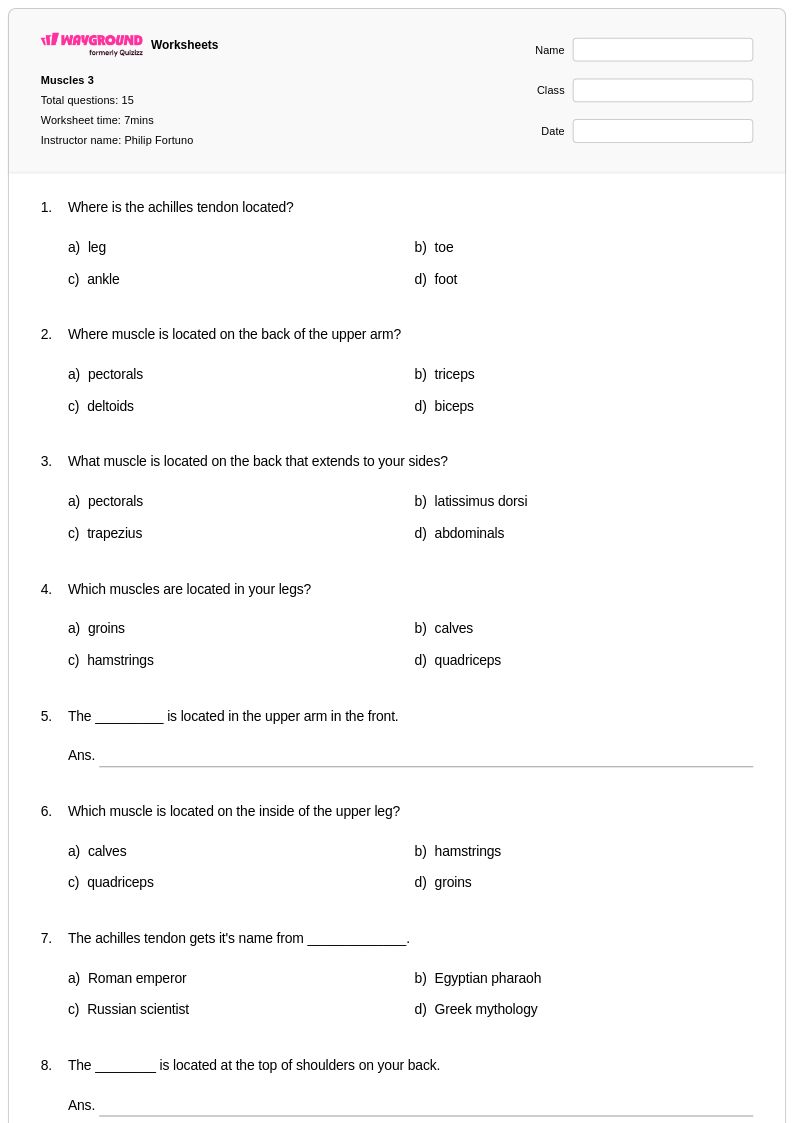
15 Q
6th - 8th
40 Q
8th
8 Q
8th
10 Q
6th - 8th
10 Q
8th
10 Q
7th - 8th
20 Q
6th - 8th
10 Q
7th - 8th
10 Q
8th
12 Q
8th
10 Q
8th
7 Q
6th - 8th
20 Q
6th - 8th

30 Q
8th
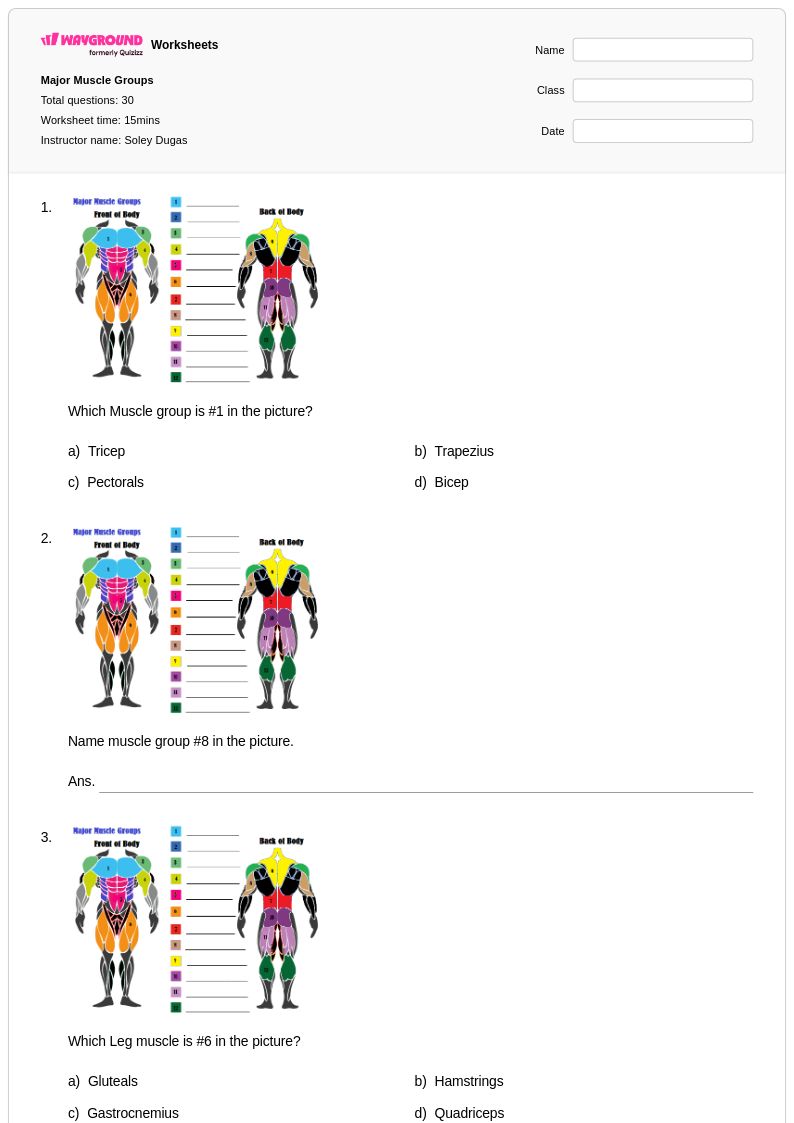
30 Q
8th
14 Q
8th
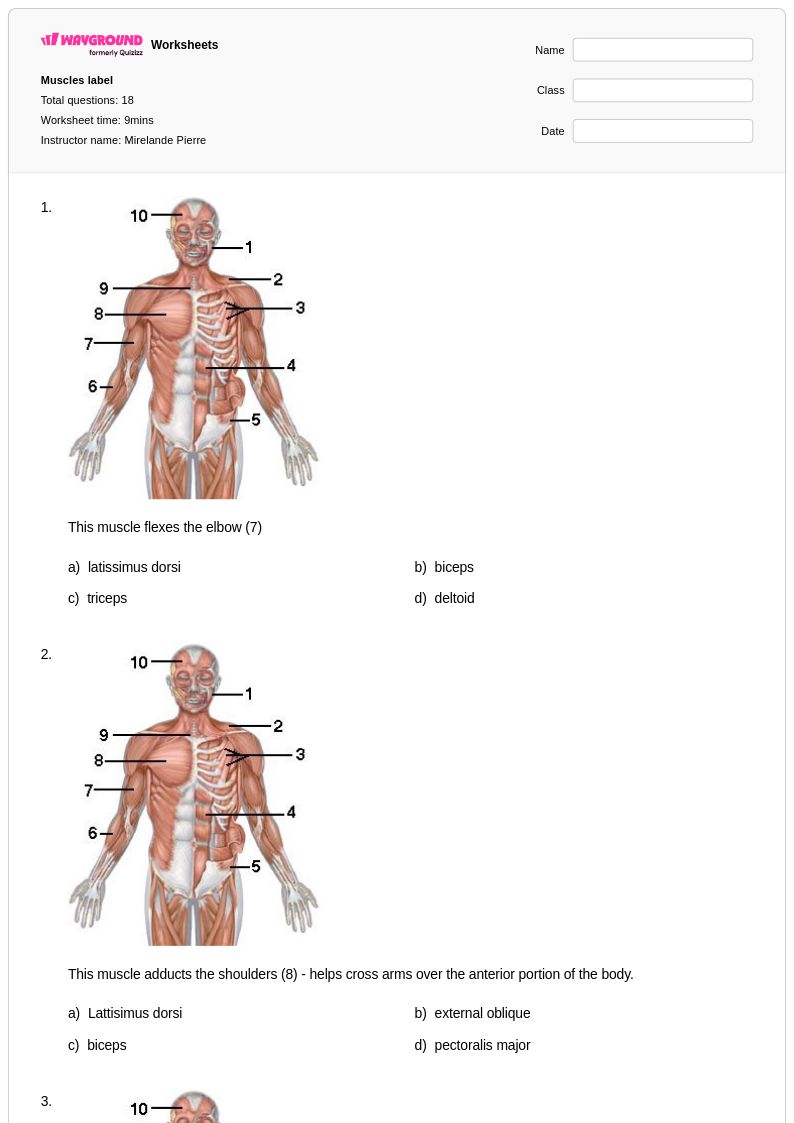
18 Q
8th
20 Q
8th
42 Q
8th
20 Q
8th
25 Q
8th - Uni
Explore Progressive Muscle Relaxation Worksheets by Grades
Explore Other Subject Worksheets for class 8
Explore printable Progressive Muscle Relaxation worksheets for Class 8
Progressive muscle relaxation worksheets for Class 8 students available through Wayground (formerly Quizizz) provide comprehensive instruction in this evidence-based stress management technique that systematically tenses and releases different muscle groups throughout the body. These educational resources guide eighth-grade students through step-by-step processes for identifying physical tension, practicing controlled muscle contractions, and developing awareness of the contrast between tension and relaxation states. The worksheets strengthen essential wellness skills including body awareness, stress recognition, self-regulation techniques, and mindfulness practices that support both physical and mental health. Students engage with practice problems that require them to sequence muscle groups correctly, identify appropriate breathing patterns, and reflect on their personal stress responses, while comprehensive answer keys help educators assess student understanding of these fundamental relaxation principles. Available as free printables in convenient pdf format, these resources make progressive muscle relaxation techniques accessible for classroom instruction and independent practice.
Wayground (formerly Quizizz) empowers physical education teachers with millions of teacher-created progressive muscle relaxation worksheets specifically designed for Class 8 wellness curricula, featuring robust search and filtering capabilities that allow educators to locate resources aligned with national health education standards. The platform's differentiation tools enable teachers to customize worksheets for varying skill levels and learning needs, while flexible formatting options provide both printable pdf versions for traditional classroom use and digital formats for technology-integrated instruction. These comprehensive worksheet collections support diverse instructional goals including lesson planning for stress management units, targeted remediation for students struggling with anxiety or tension-related issues, enrichment activities for advanced learners exploring mind-body connections, and regular skill practice that reinforces proper progressive muscle relaxation techniques. The extensive library ensures educators can access high-quality, standards-aligned materials that effectively teach students this valuable lifelong wellness skill while accommodating different teaching styles and classroom environments.
FAQs
How do I teach progressive muscle relaxation to students?
What exercises help students practice progressive muscle relaxation?
What mistakes do students commonly make when learning progressive muscle relaxation?
How can I differentiate progressive muscle relaxation instruction for students with varying abilities or needs?
How do I use progressive muscle relaxation worksheets in my classroom?
At what age or grade level is progressive muscle relaxation appropriate to teach?