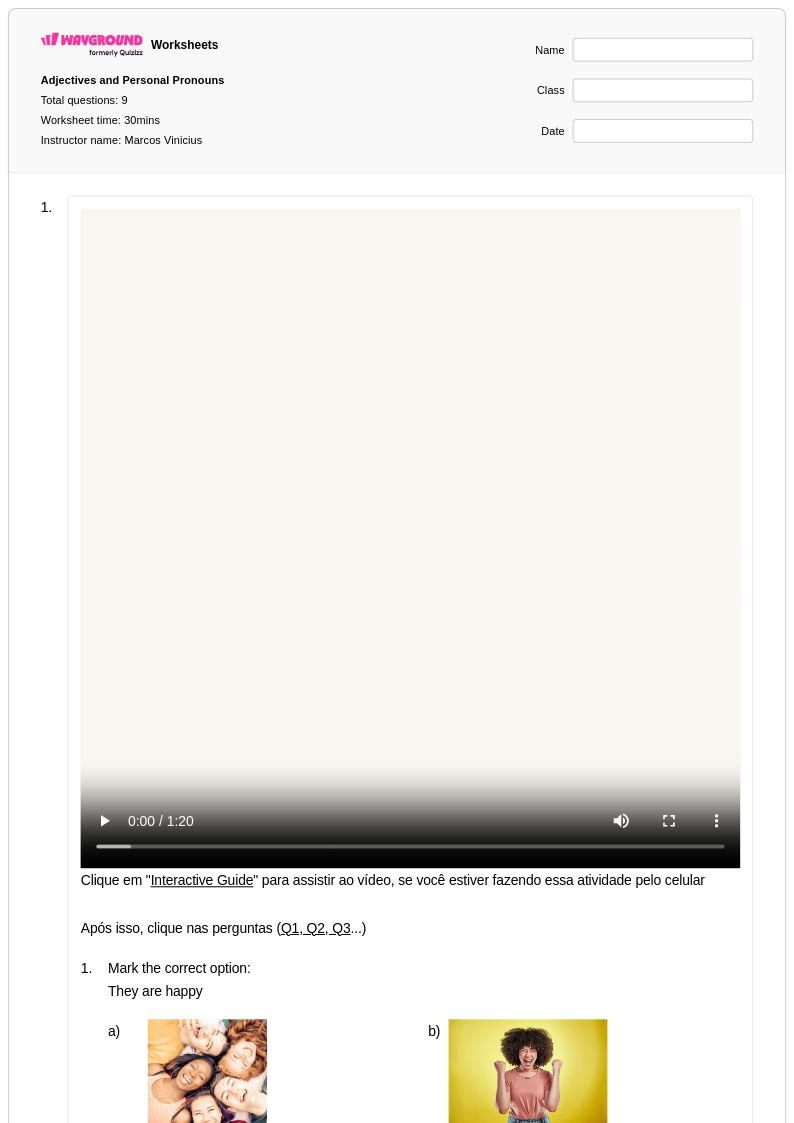
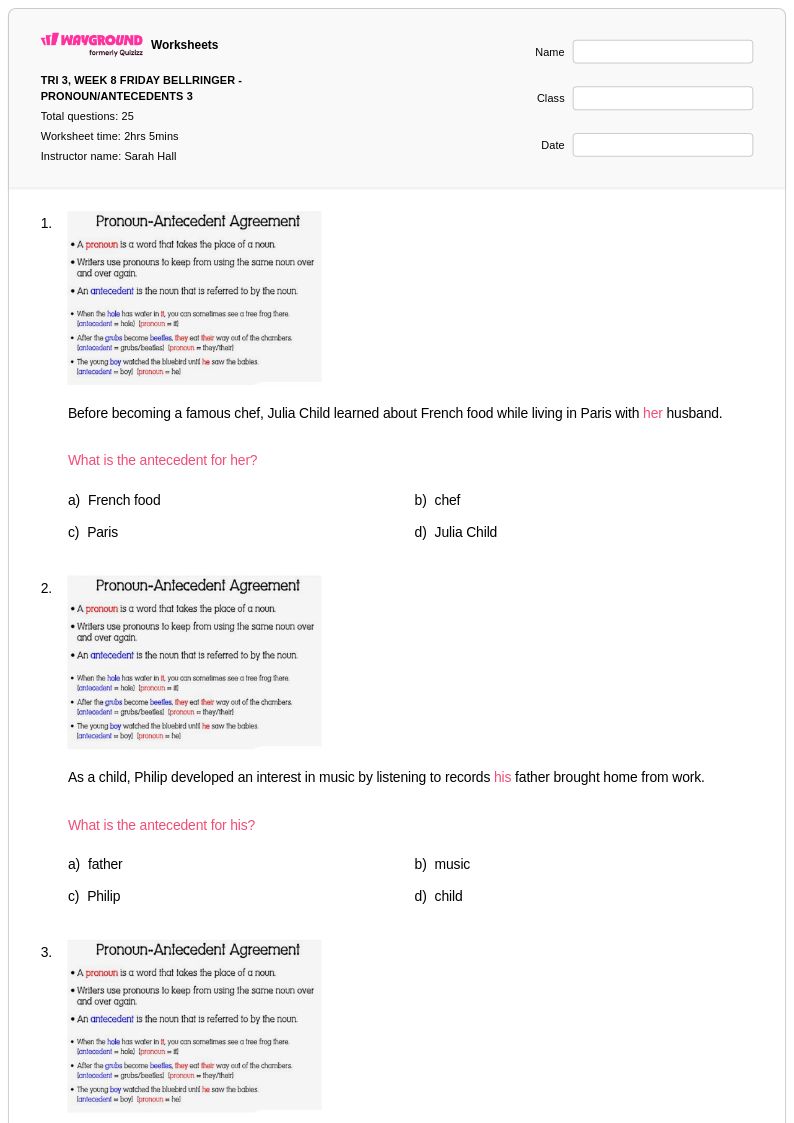
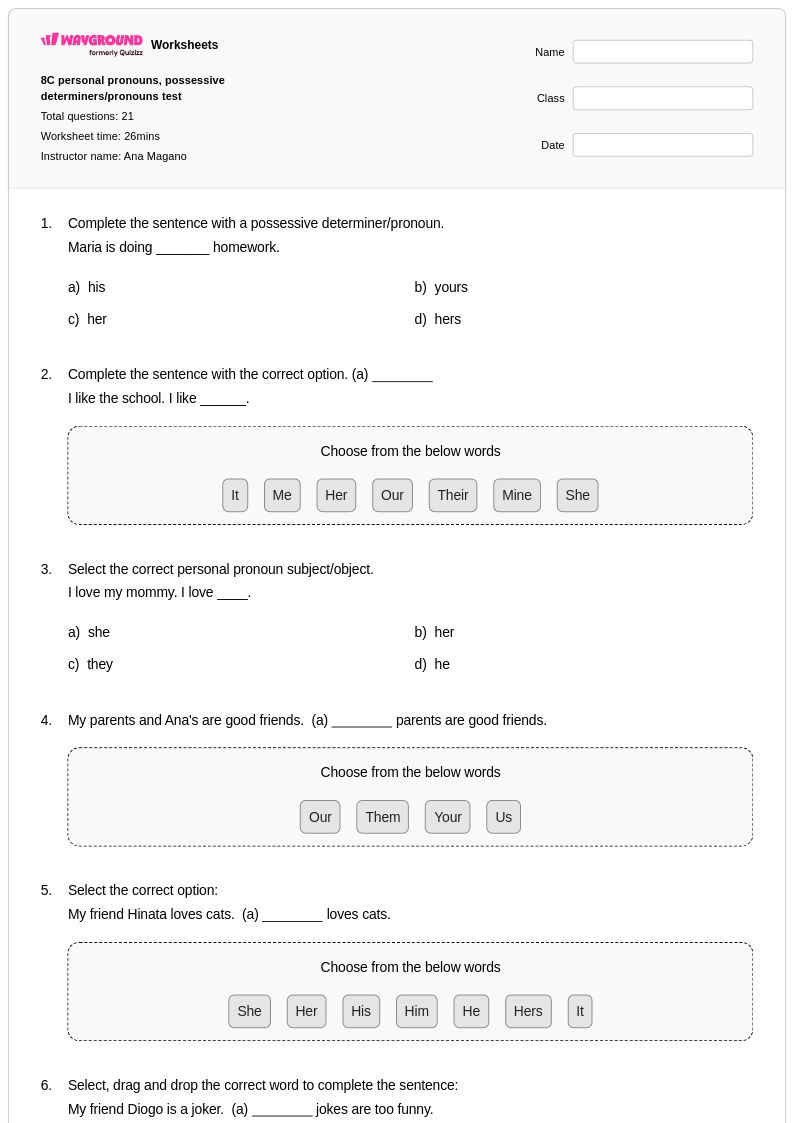
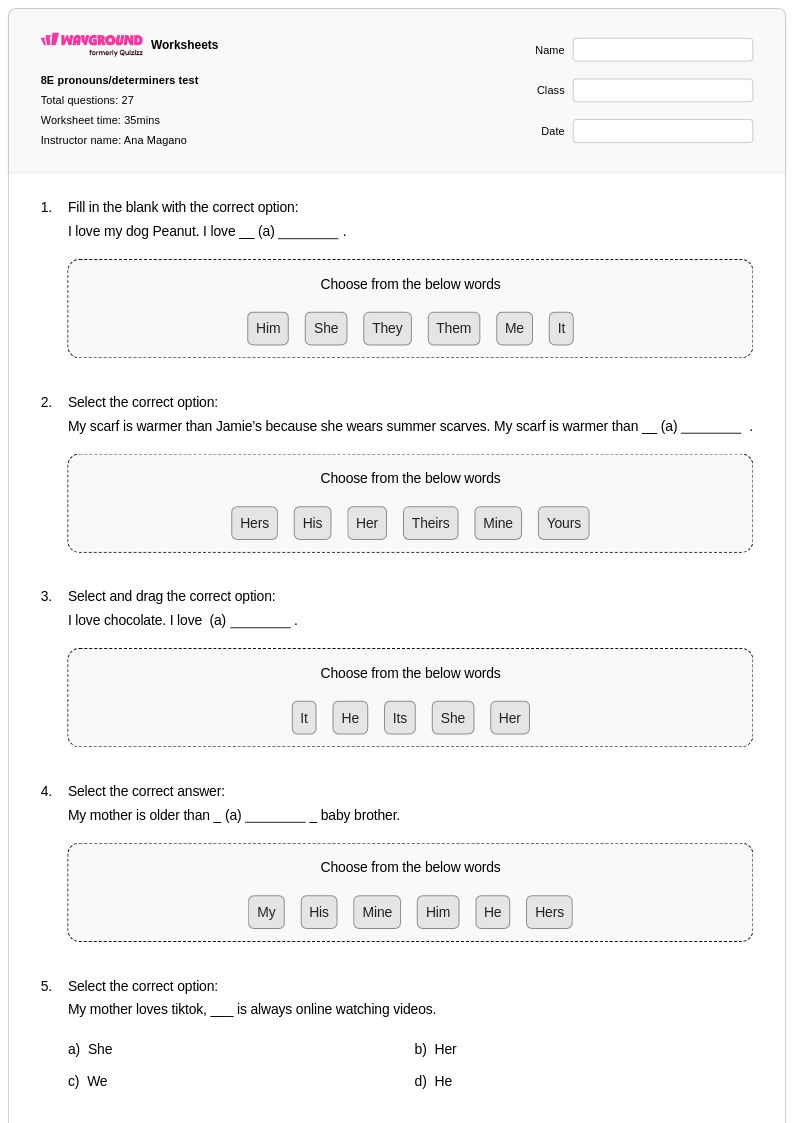
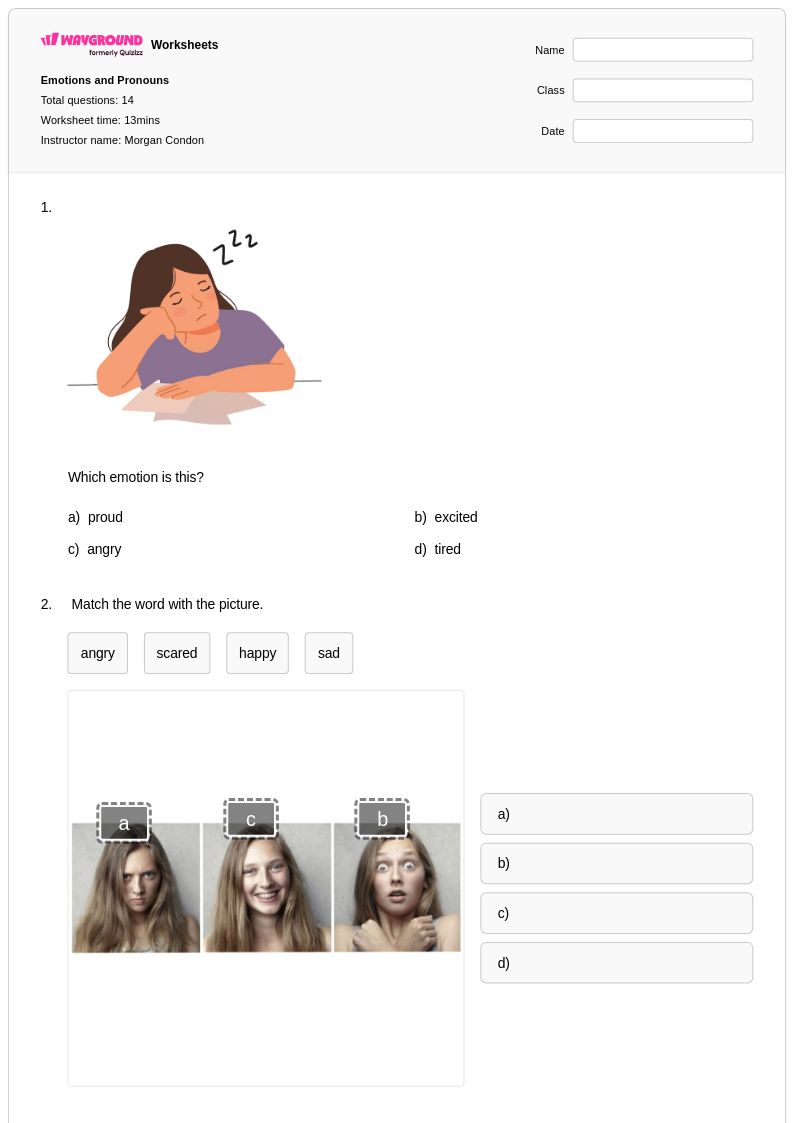
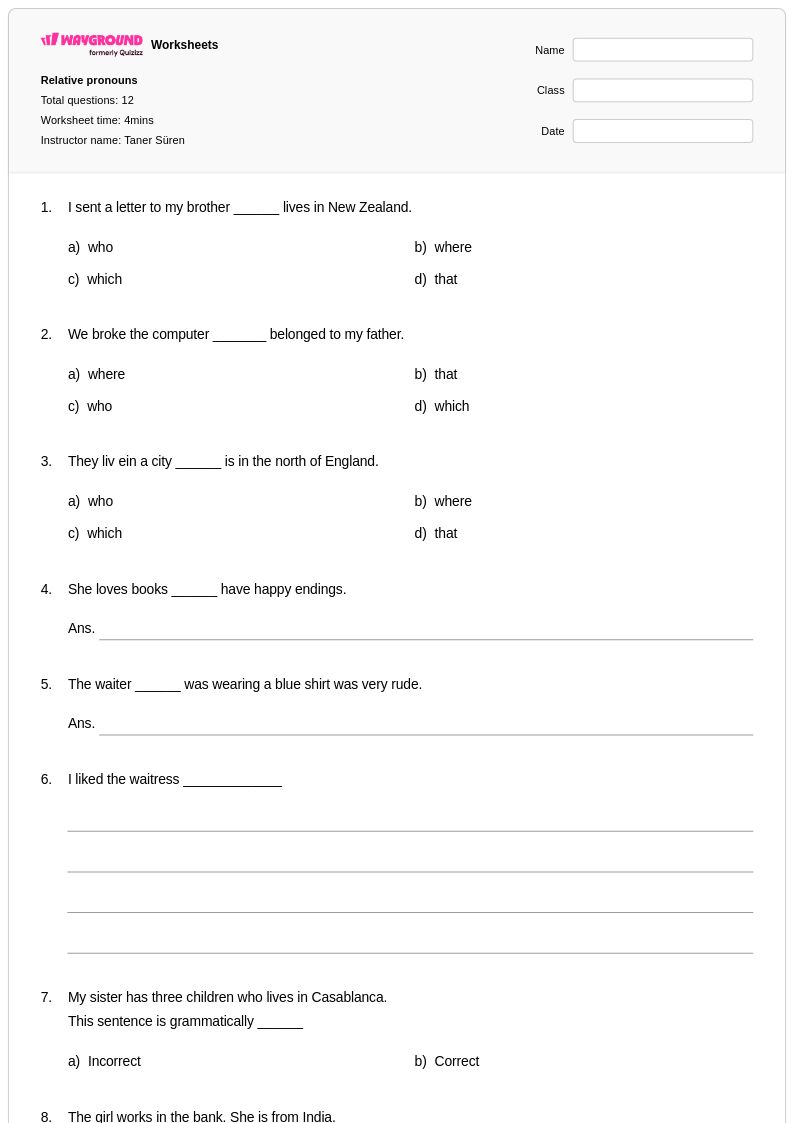
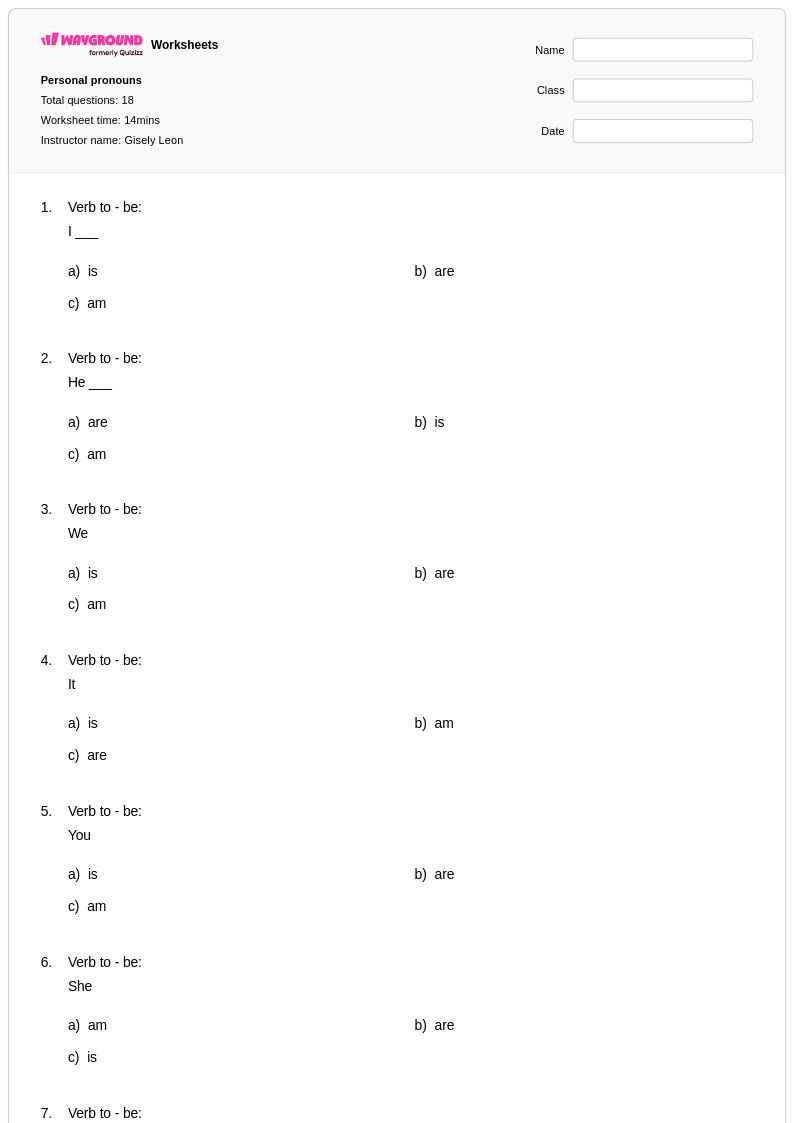
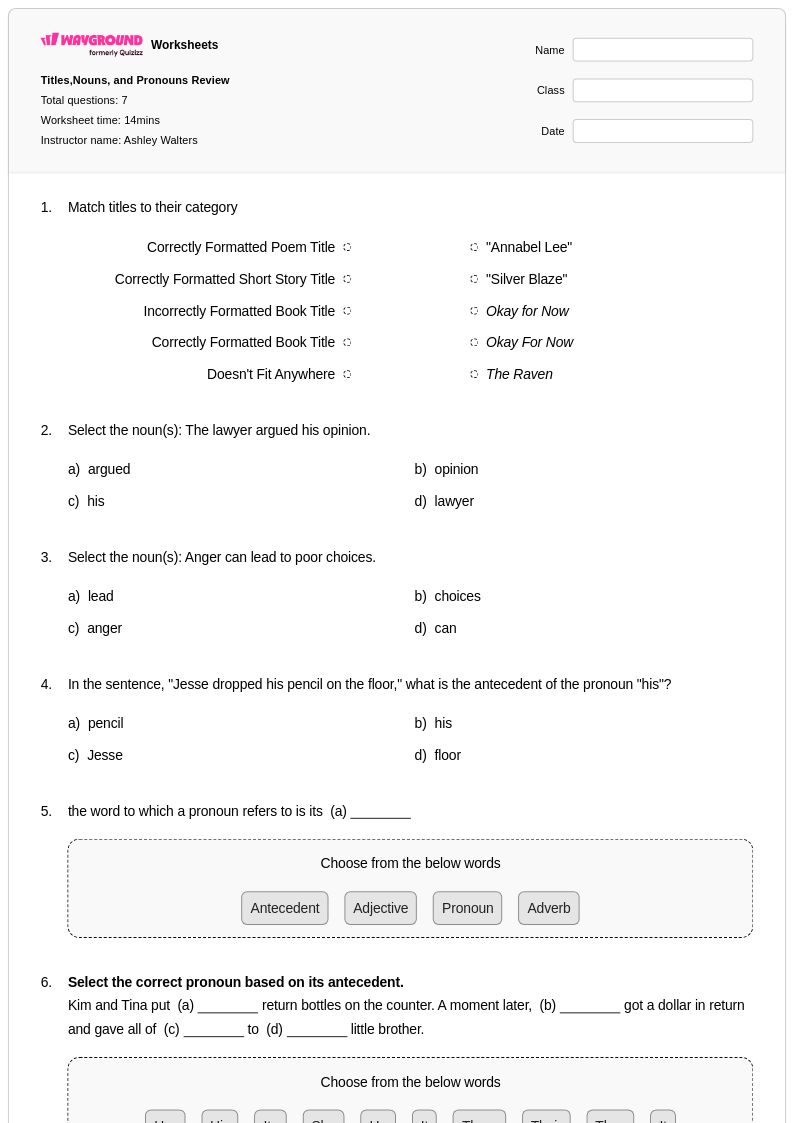
Class 8 pronoun worksheets from Wayground help students master personal, possessive, and demonstrative pronouns through engaging printables, practice problems, and comprehensive answer keys for effective English grammar learning.
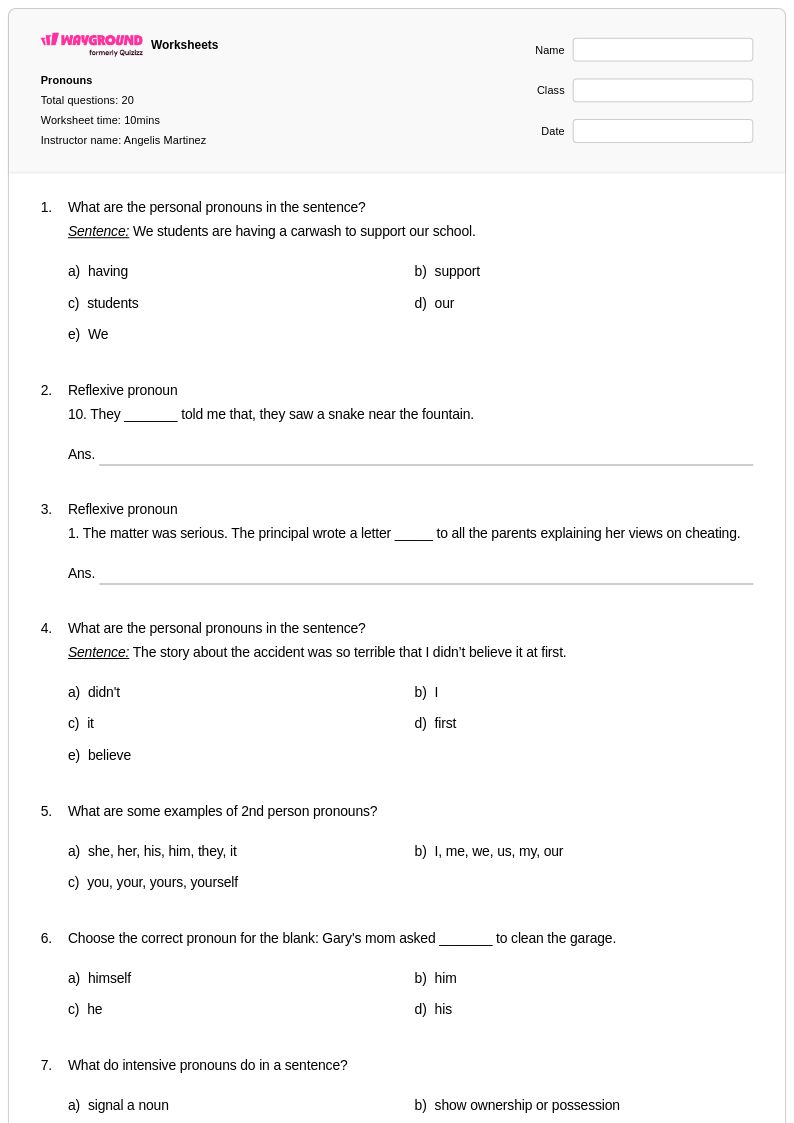
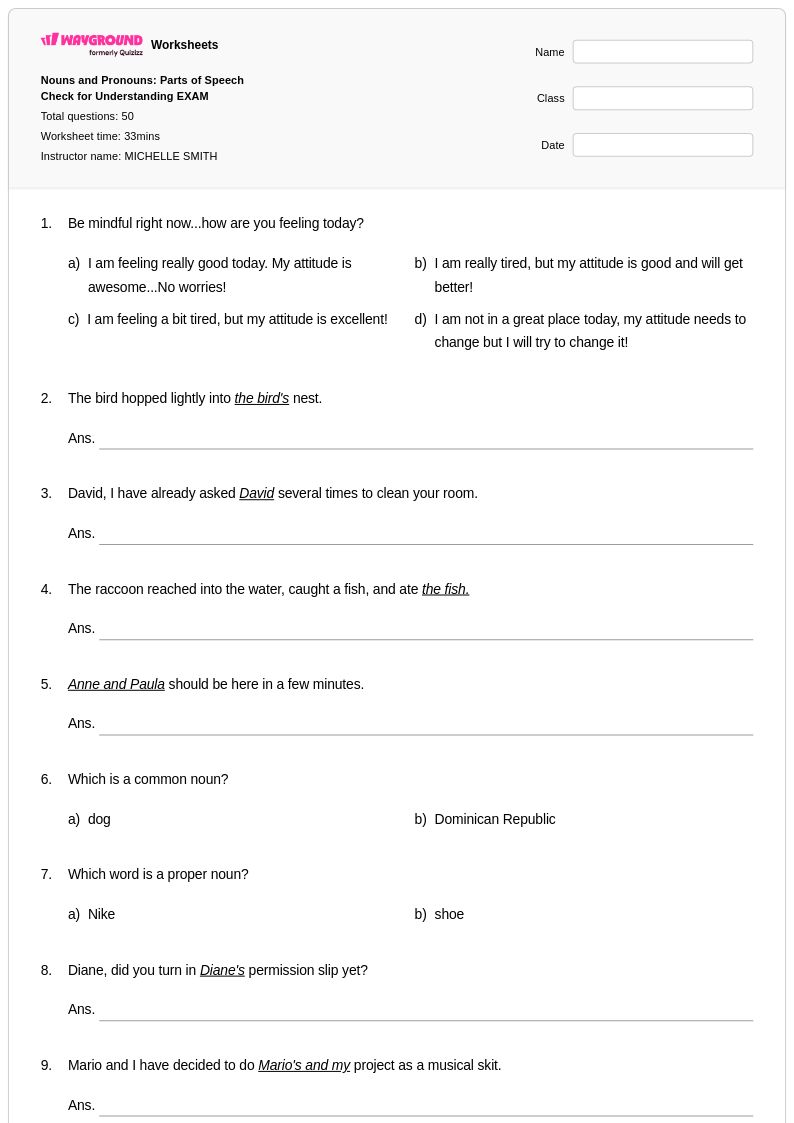
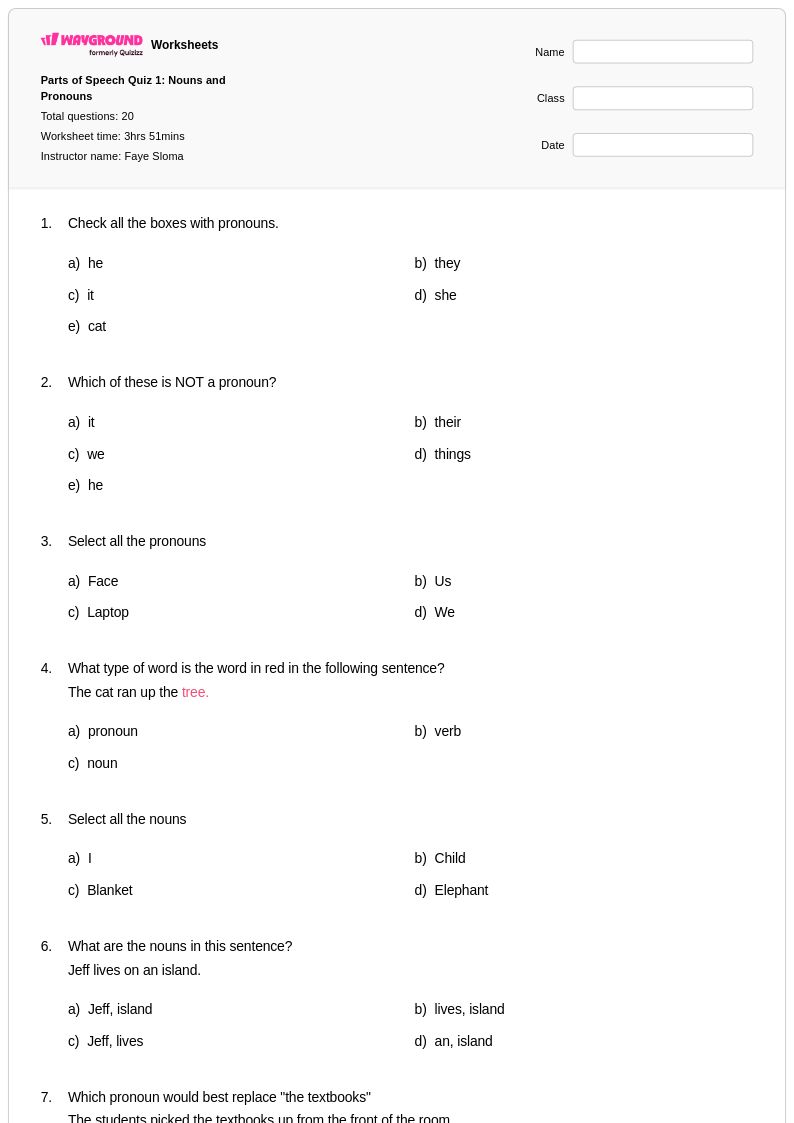
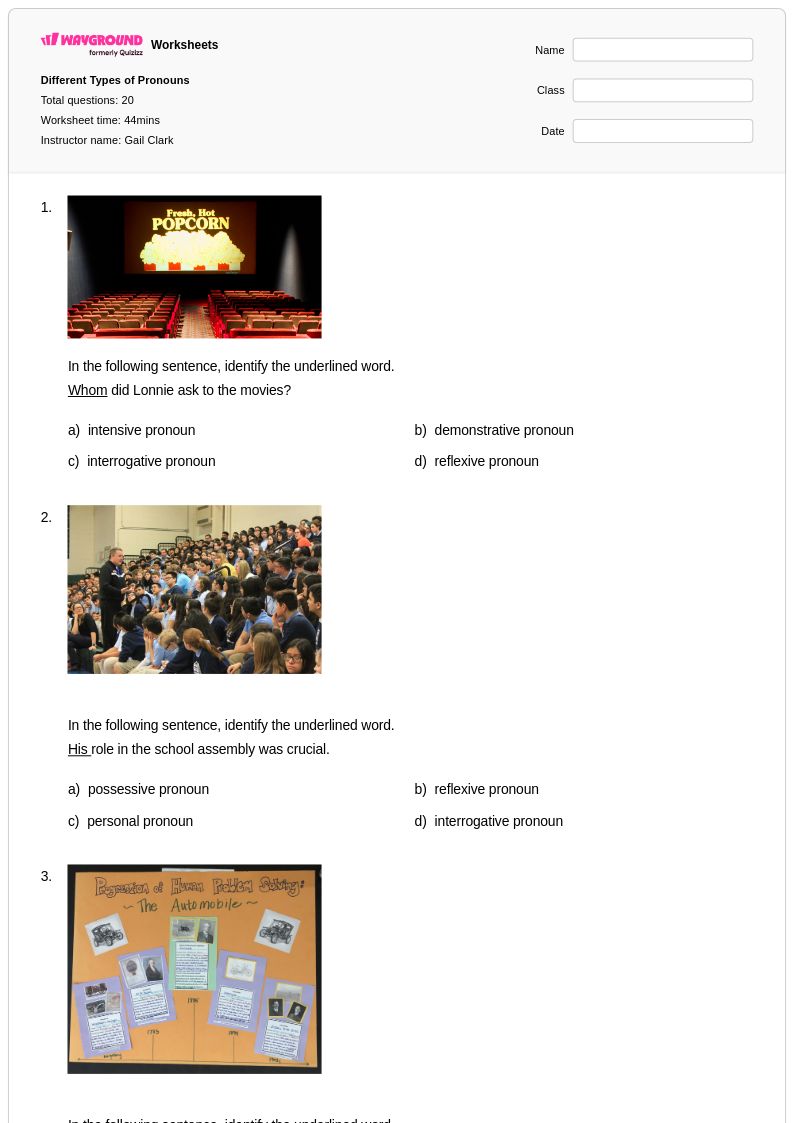
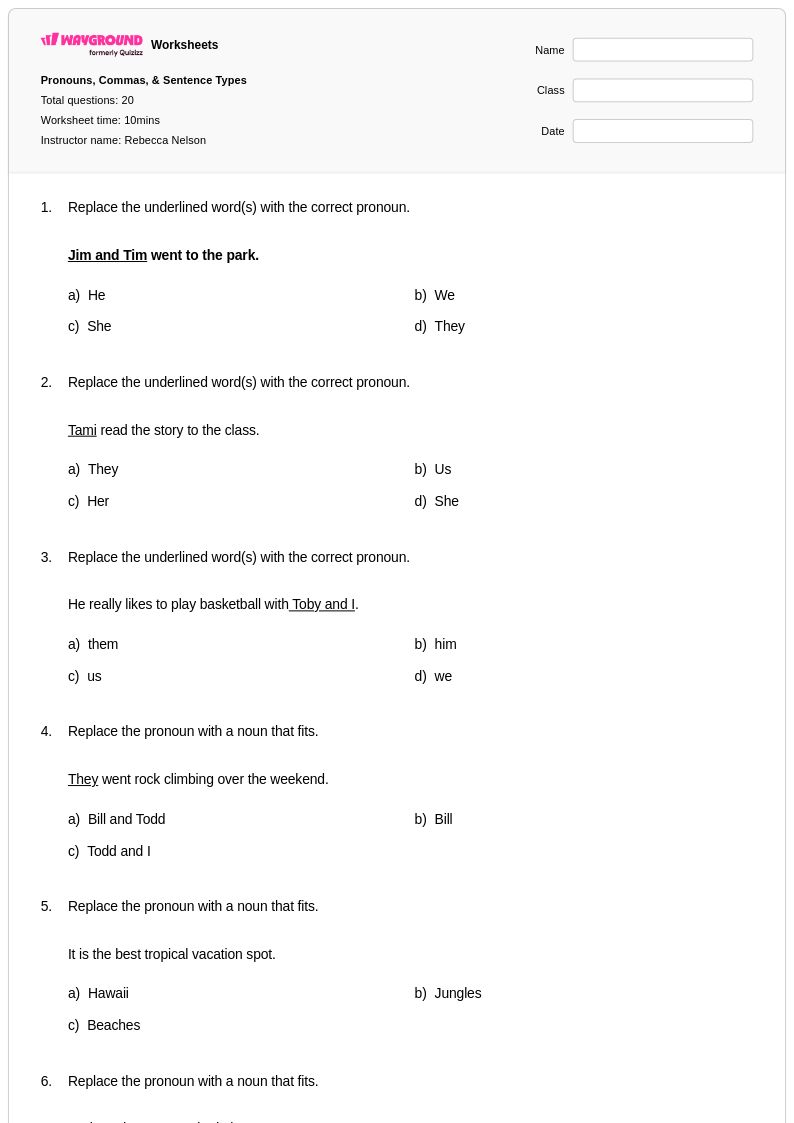
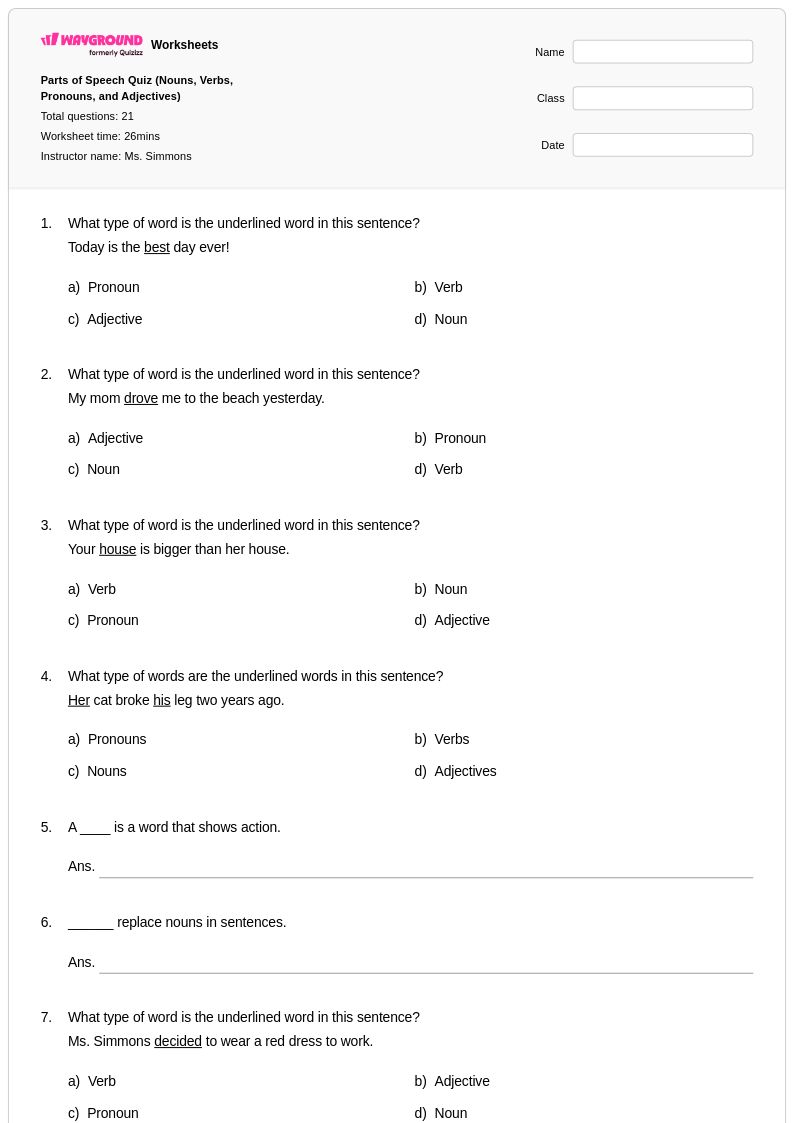
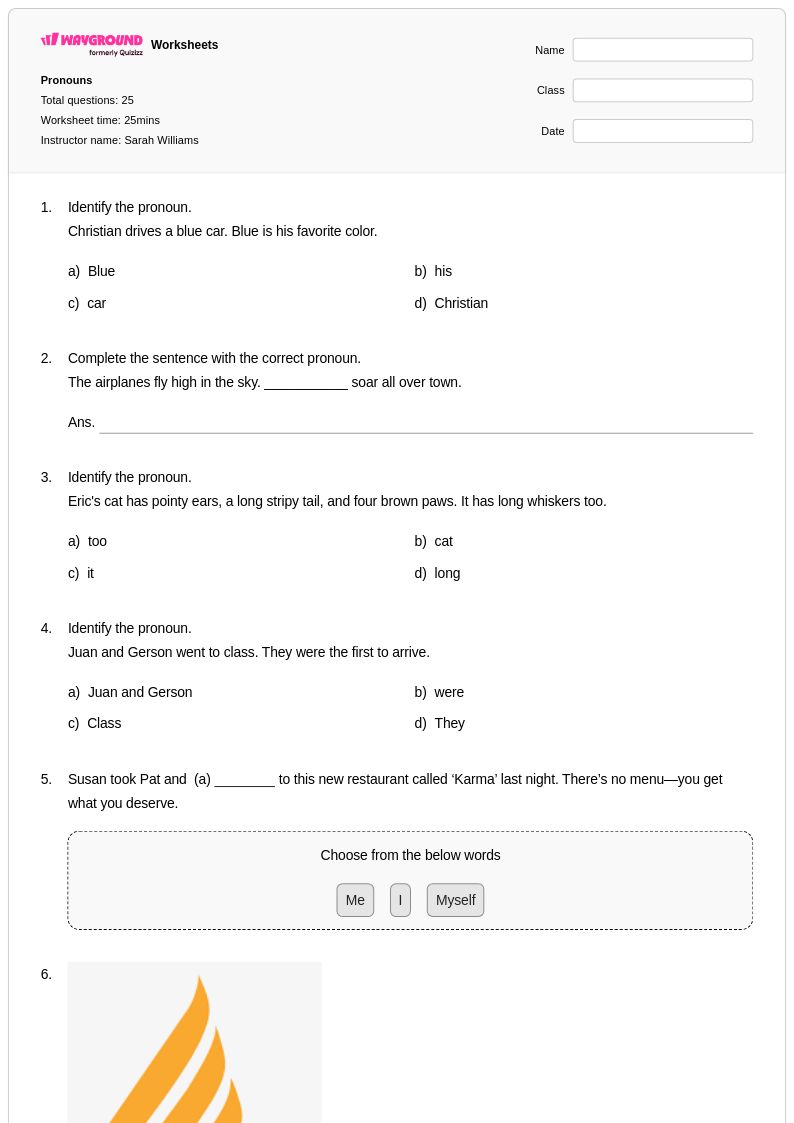
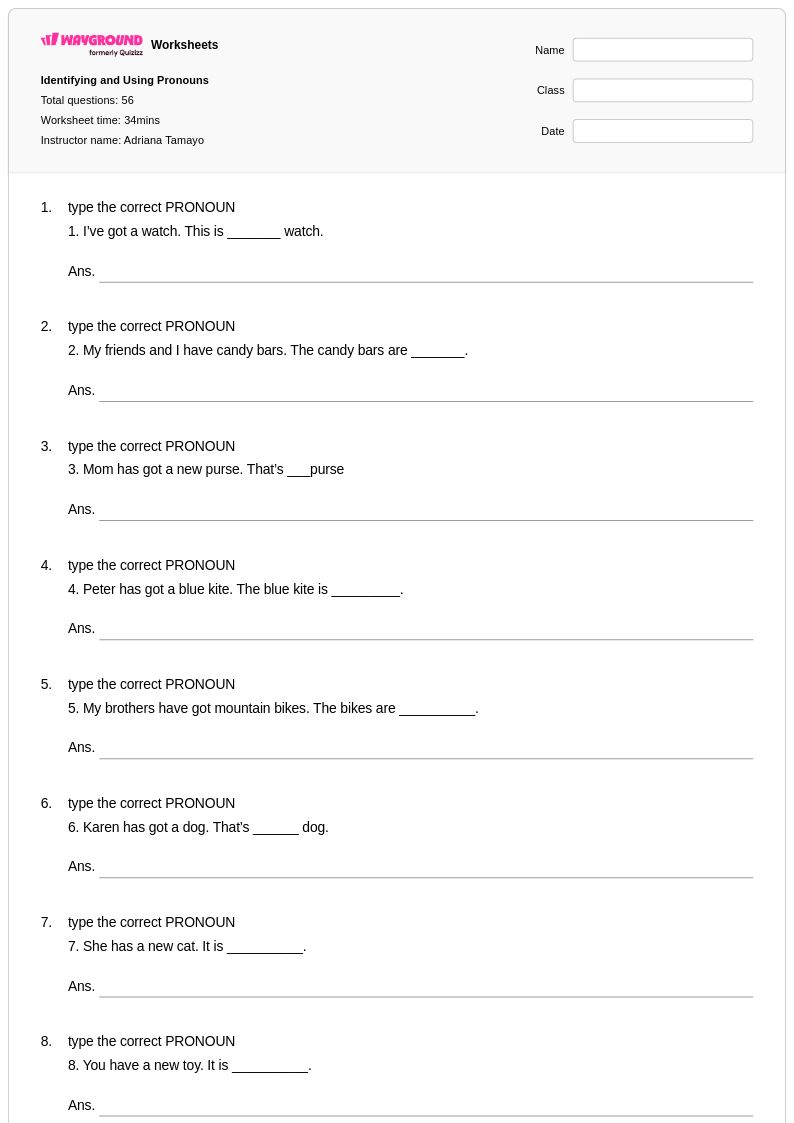
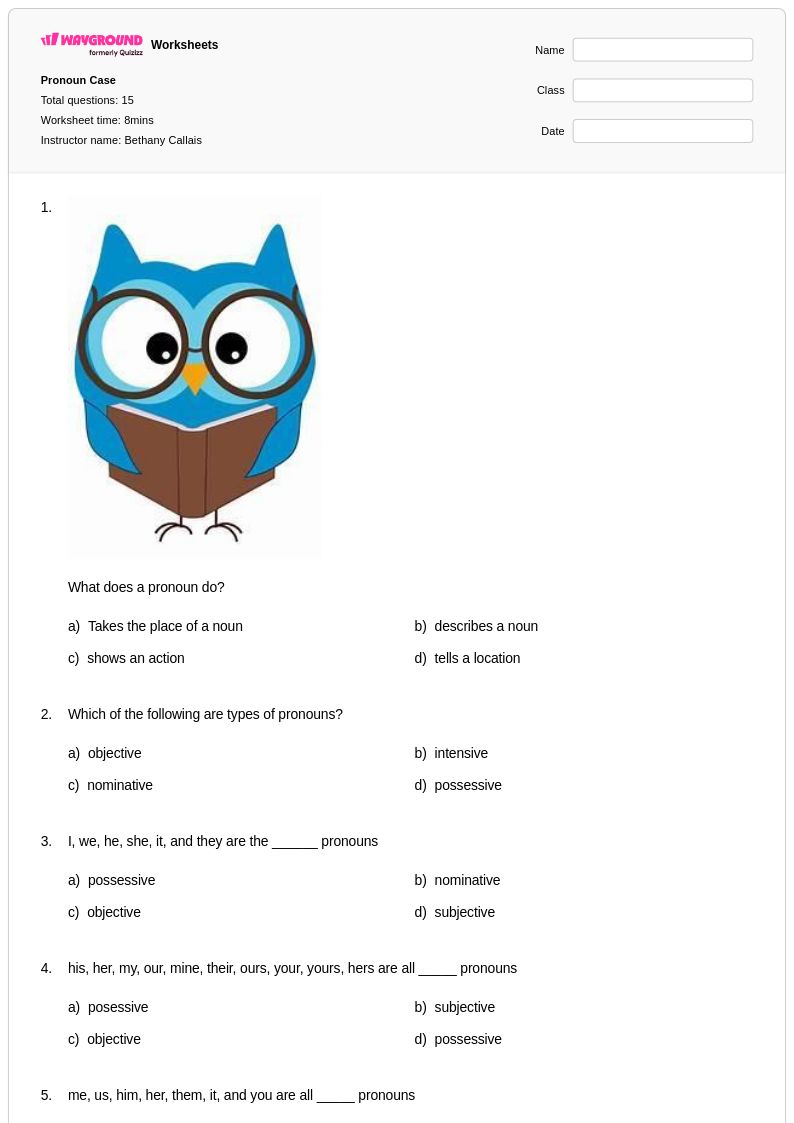
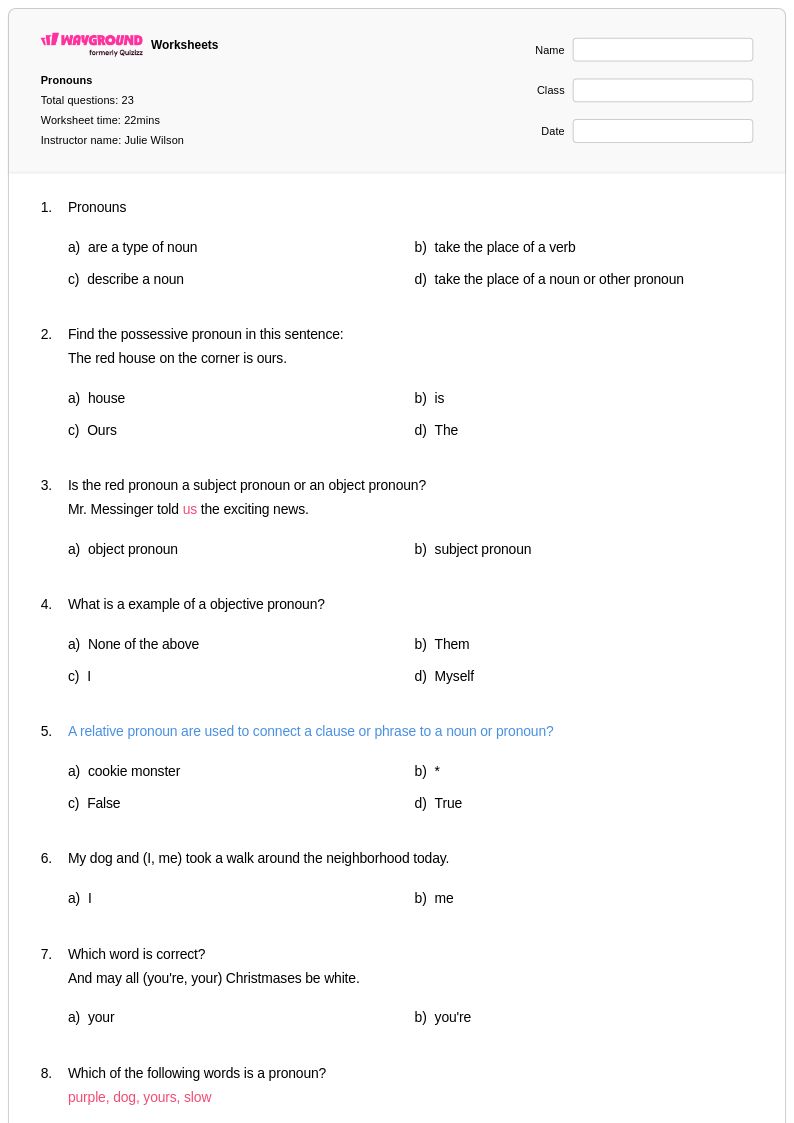
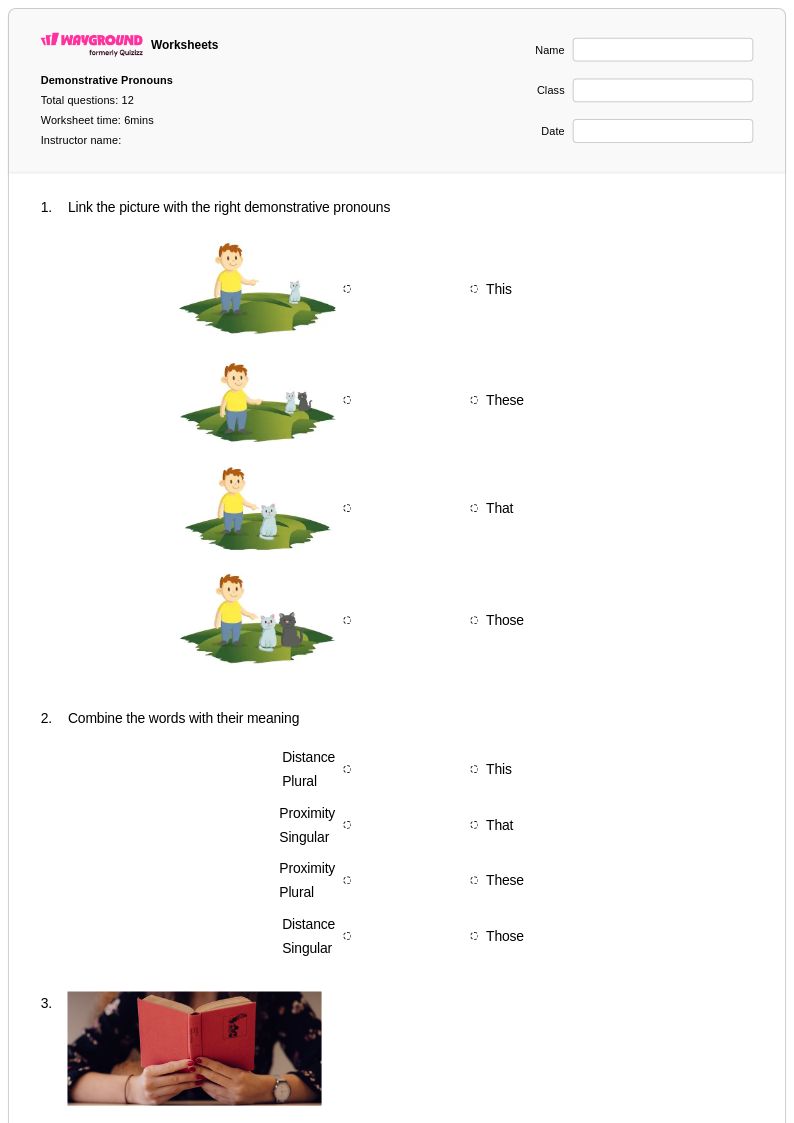
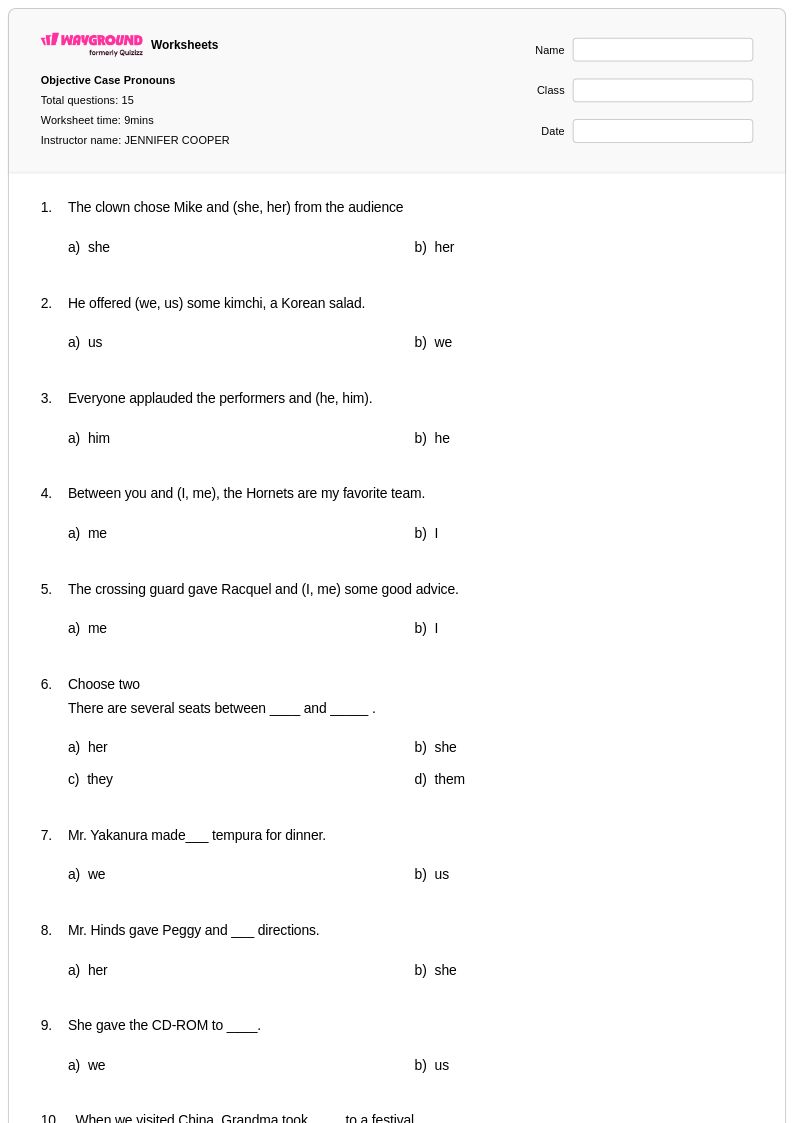
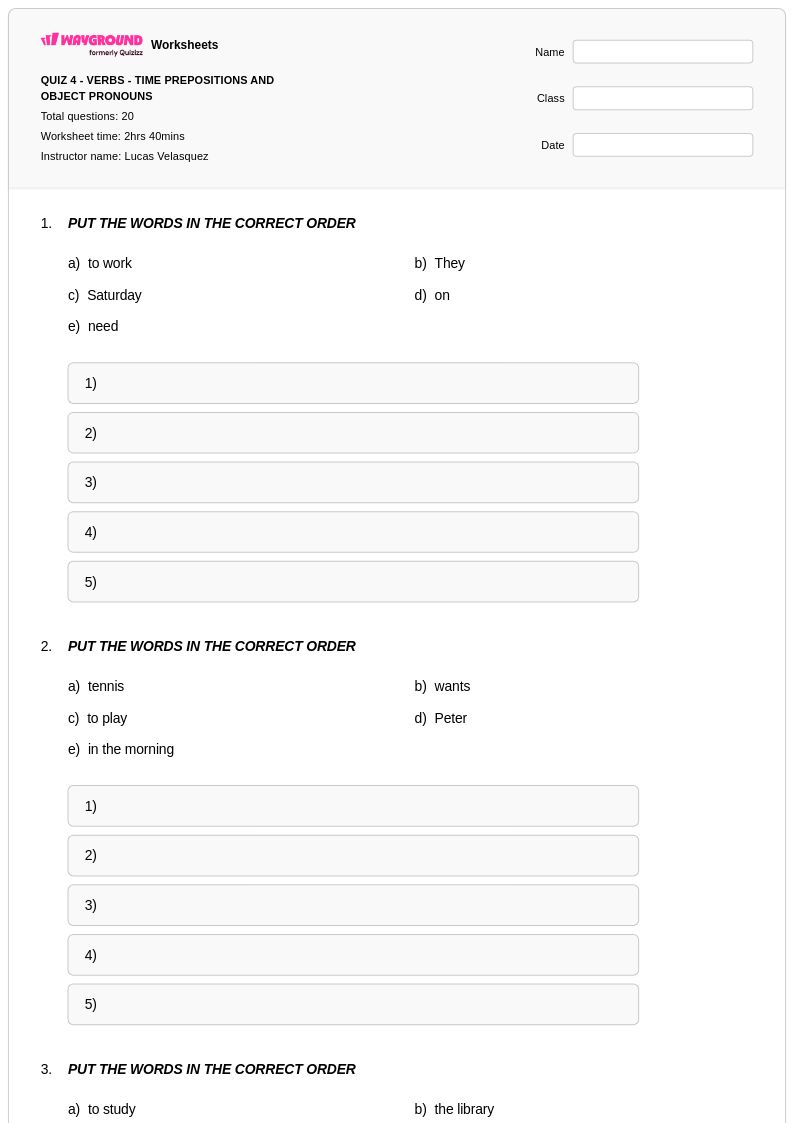
Class 8 pronoun worksheets available through Wayground (formerly Quizizz) provide comprehensive practice opportunities for students to master this essential component of grammar. These educational resources focus on developing critical skills including proper pronoun-antecedent agreement, distinguishing between subject and object pronouns, understanding reflexive and intensive pronouns, and recognizing indefinite pronouns in context. Students work through carefully designed practice problems that challenge them to identify, categorize, and correctly use various types of pronouns in both isolated exercises and within complete sentences. Each worksheet comes with a detailed answer key, allowing for immediate feedback and self-assessment, while the free printable format ensures accessibility for both classroom instruction and independent study.
Wayground (formerly Quizizz) empowers educators with an extensive collection of teacher-created pronoun resources, drawing from millions of professionally developed materials that align with grade-level standards and learning objectives. The platform's robust search and filtering capabilities enable teachers to quickly locate worksheets that match their specific instructional needs, whether targeting particular pronoun types or addressing varying skill levels within their Class 8 classrooms. These differentiation tools support both remediation for struggling learners and enrichment opportunities for advanced students, while the flexible customization options allow educators to modify content to suit their unique classroom requirements. Available in both printable pdf format and digital versions, these pronoun worksheets seamlessly integrate into lesson planning, homework assignments, and targeted skill practice sessions, providing teachers with versatile resources that enhance grammar instruction and student engagement.
FAQs
How do I teach the different types of pronouns to students?
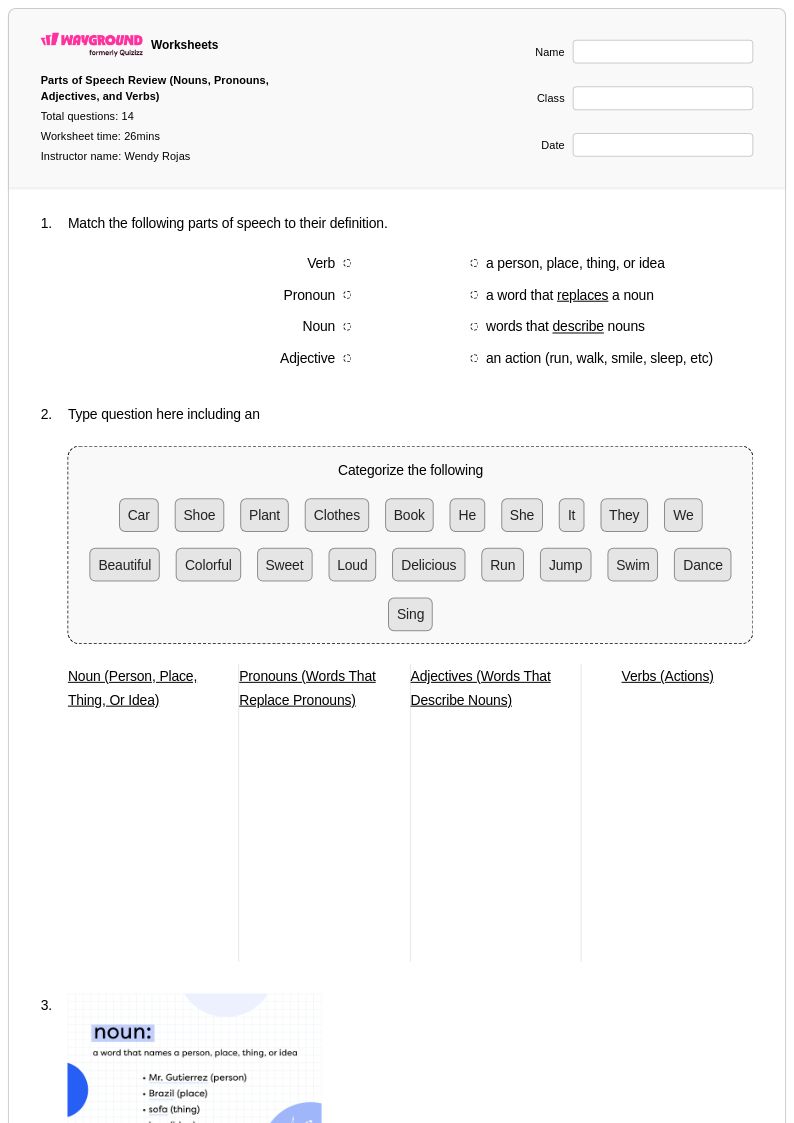
Start by grouping pronouns into clear categories: personal, possessive, demonstrative, reflexive, intensive, relative, and indefinite. Introduce each type with concrete examples before asking students to identify and use them in context. A common effective sequence is to begin with personal and possessive pronouns, which students encounter most frequently, then layer in more complex types like relative and indefinite pronouns as foundational understanding solidifies.
What exercises help students practice pronoun-antecedent agreement?
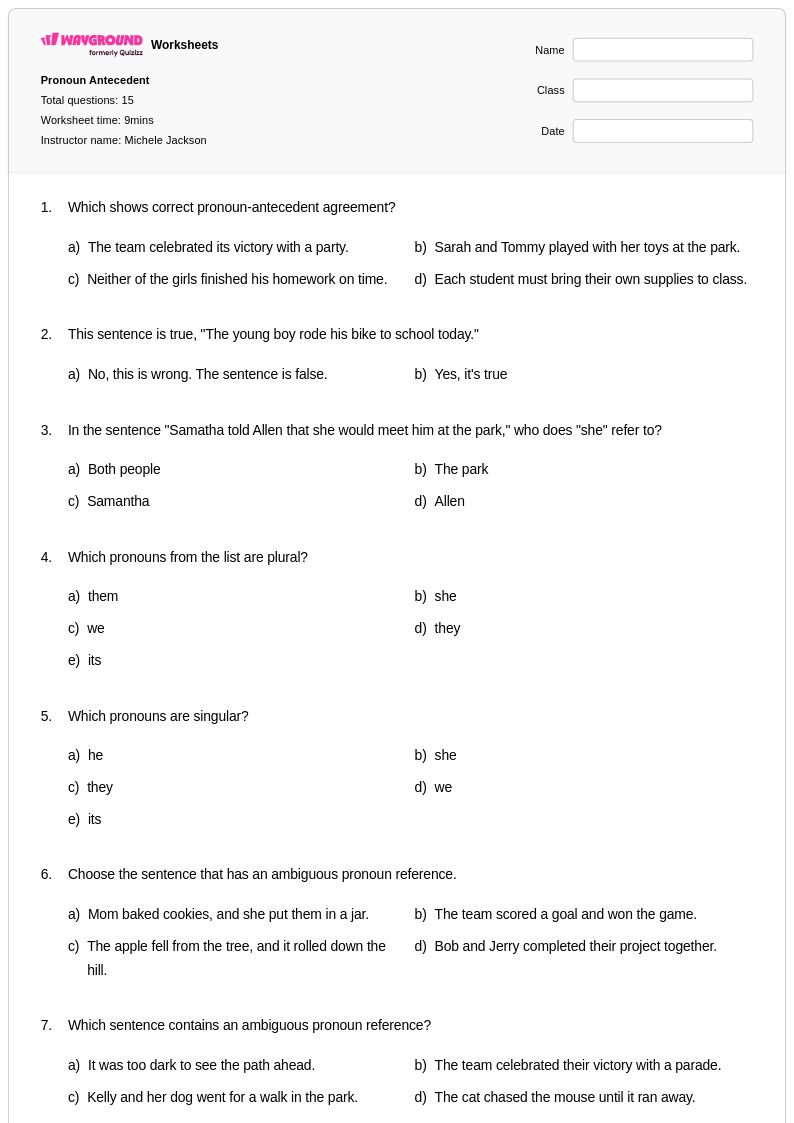
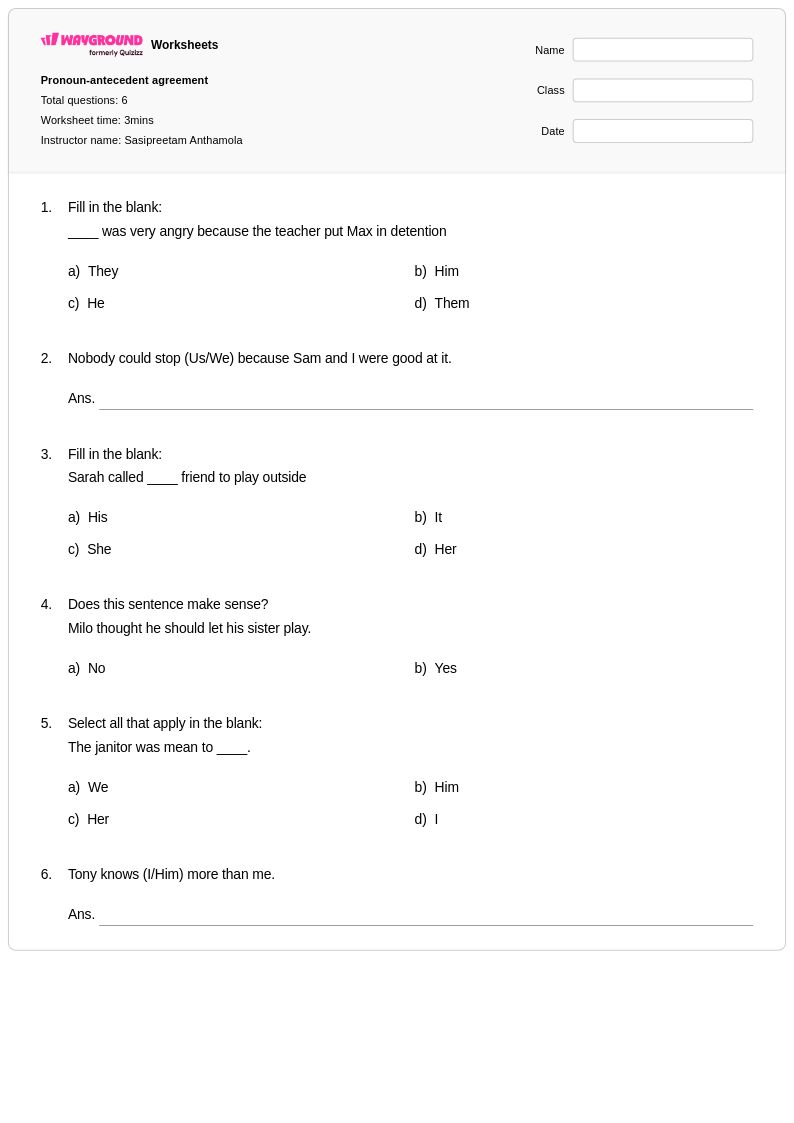
Targeted practice should include sentence-level exercises where students identify the antecedent, determine whether it is singular or plural, and then select or correct the matching pronoun. Editing tasks, where students revise passages containing agreement errors, are especially effective because they replicate real writing conditions. Pairing these exercises with immediate feedback, such as through answer-key-supported worksheets, helps students self-correct and internalize the rule.
What mistakes do students commonly make with pronouns?
The most frequent errors include pronoun-antecedent disagreement in number (using 'they' with a singular antecedent without clear reason), vague pronoun reference (using 'it' or 'this' without a clear noun to replace), and incorrect pronoun case (confusing subject and object forms, such as 'me and him went' instead of 'he and I went'). Students also commonly confuse reflexive pronouns like 'myself' as substitutes for 'I' or 'me', which is grammatically incorrect. Identifying these patterns early allows teachers to target instruction before errors become habitual.
How do I help students understand vague pronoun references in their writing?
Teach students to trace every pronoun back to a single, unambiguous noun antecedent in the same sentence or the sentence immediately before. A useful classroom exercise is to underline every pronoun in a short paragraph and draw an arrow to its intended antecedent, flagging any pronoun with no clear match. When students cannot draw that arrow confidently, they need to revise by replacing the vague pronoun with a specific noun.
What is the difference between reflexive and intensive pronouns, and how do I teach it?
Reflexive pronouns (e.g., 'herself', 'themselves') refer back to the subject as the receiver of the action, making them grammatically necessary to the sentence's meaning. Intensive pronouns use the same forms but are used purely for emphasis and can be removed without changing the sentence's core meaning. A quick test students can apply: if removing the '-self' pronoun breaks the sentence, it is reflexive; if the sentence still makes sense, it is intensive.
How do I use pronoun worksheets from Wayground in my classroom?
Wayground's pronoun worksheets are available as printable PDFs for traditional classroom use and in digital formats for technology-integrated or remote learning environments, and teachers can also host them as a quiz directly on Wayground. The collection spans multiple pronoun subtopics including antecedents, indefinite pronouns, pronoun shifts, and relative pronouns, making it easy to assign practice that targets a specific skill. All worksheets come with complete answer keys, which supports efficient grading and allows students to receive immediate feedback on their work.