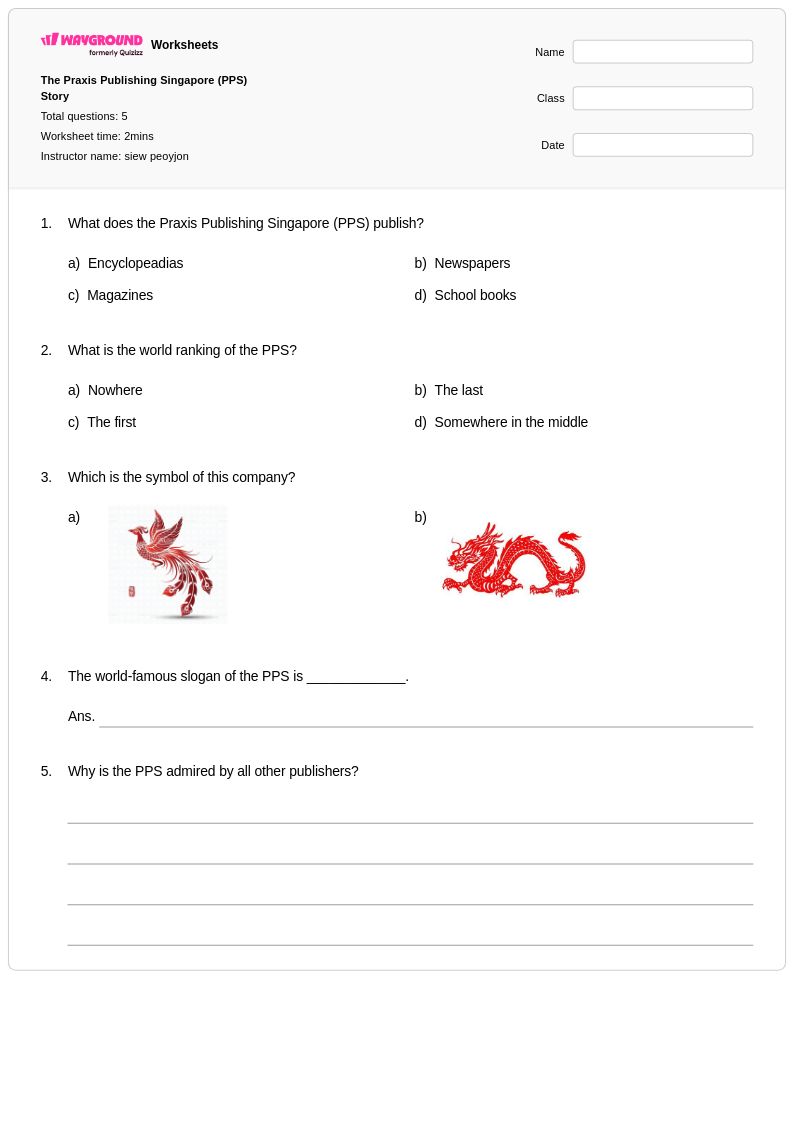
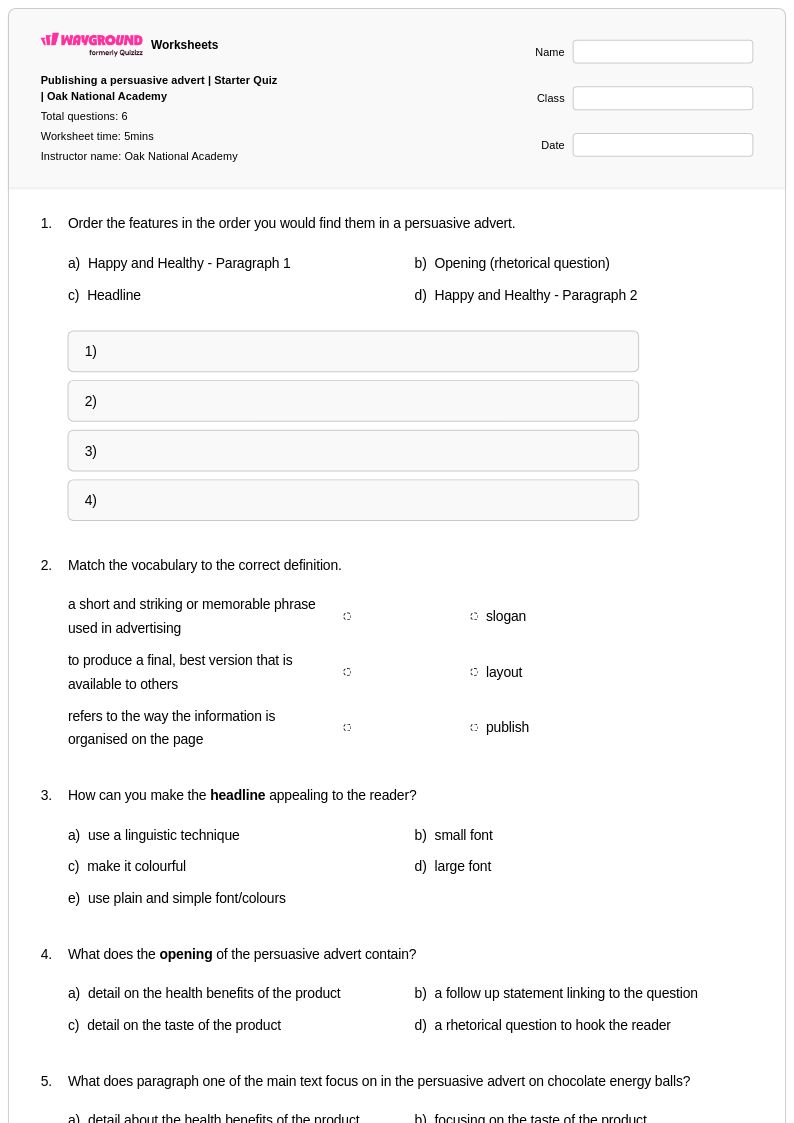
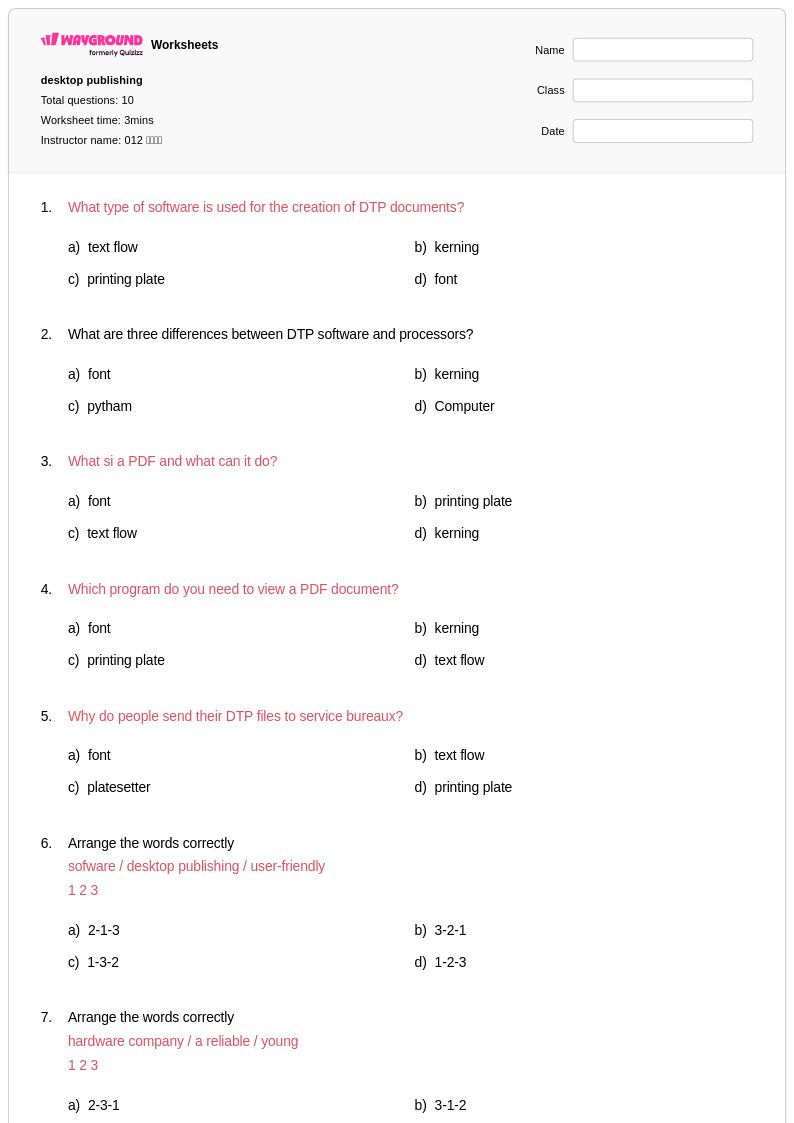
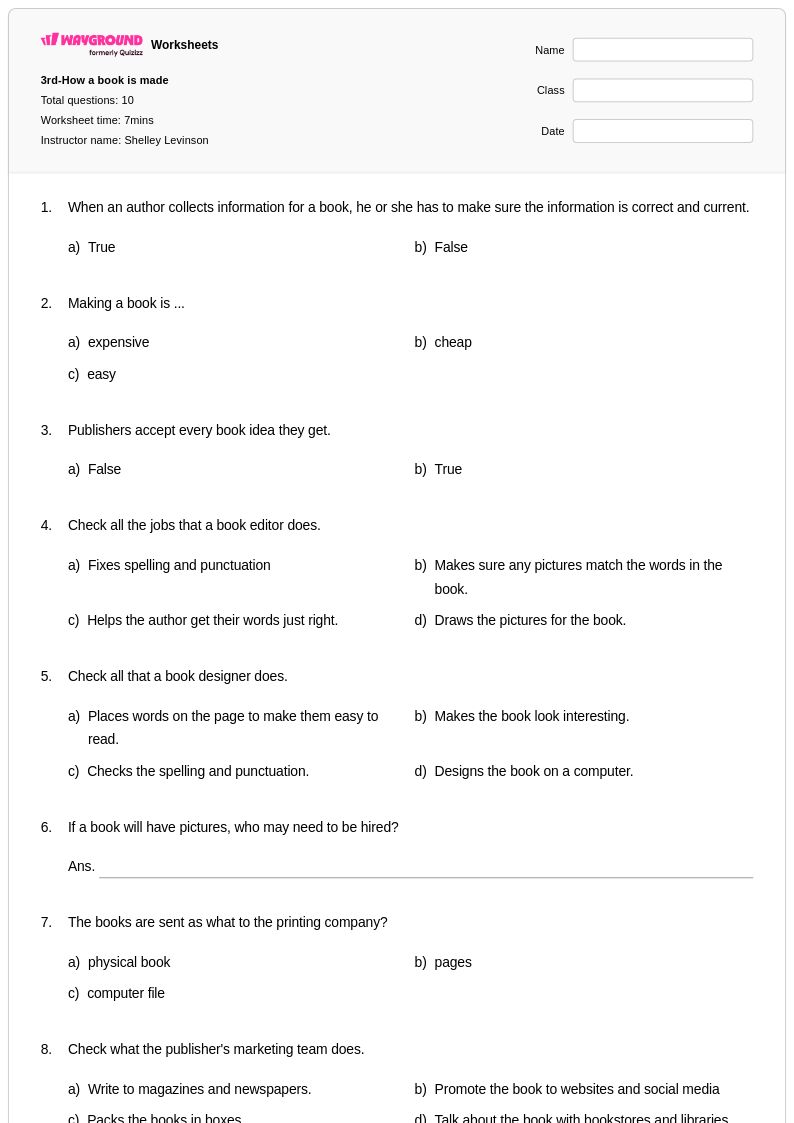
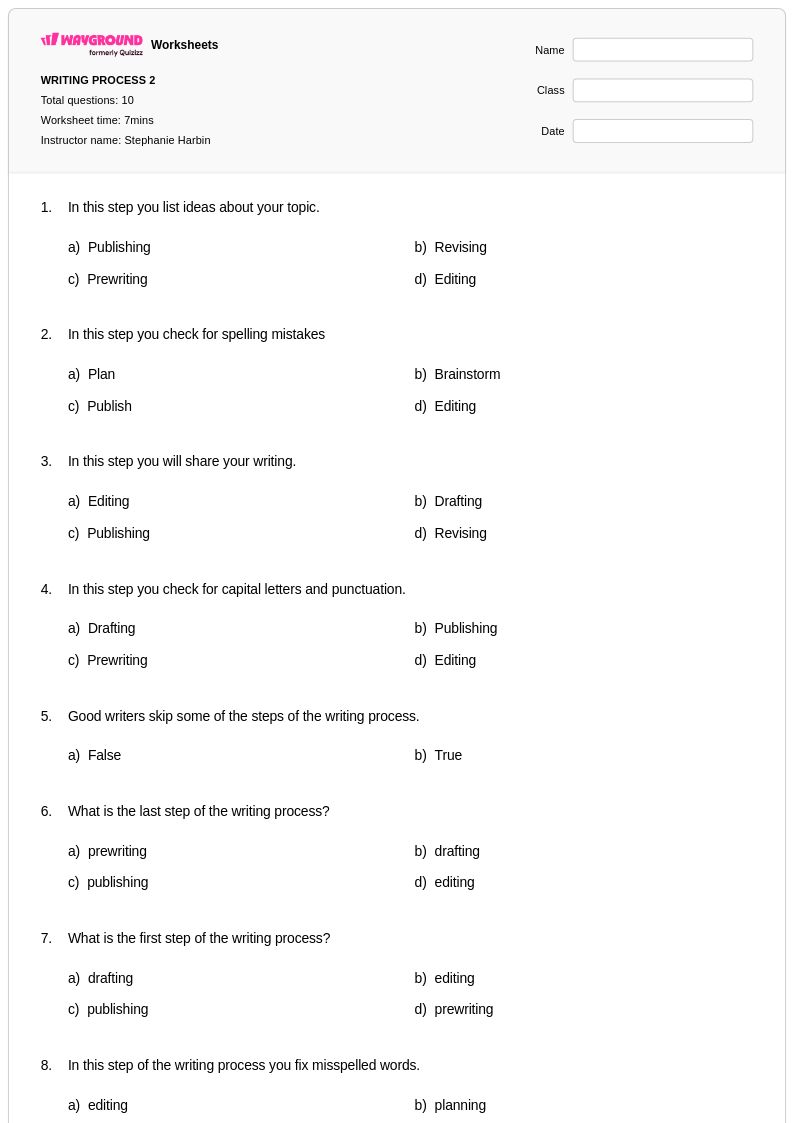
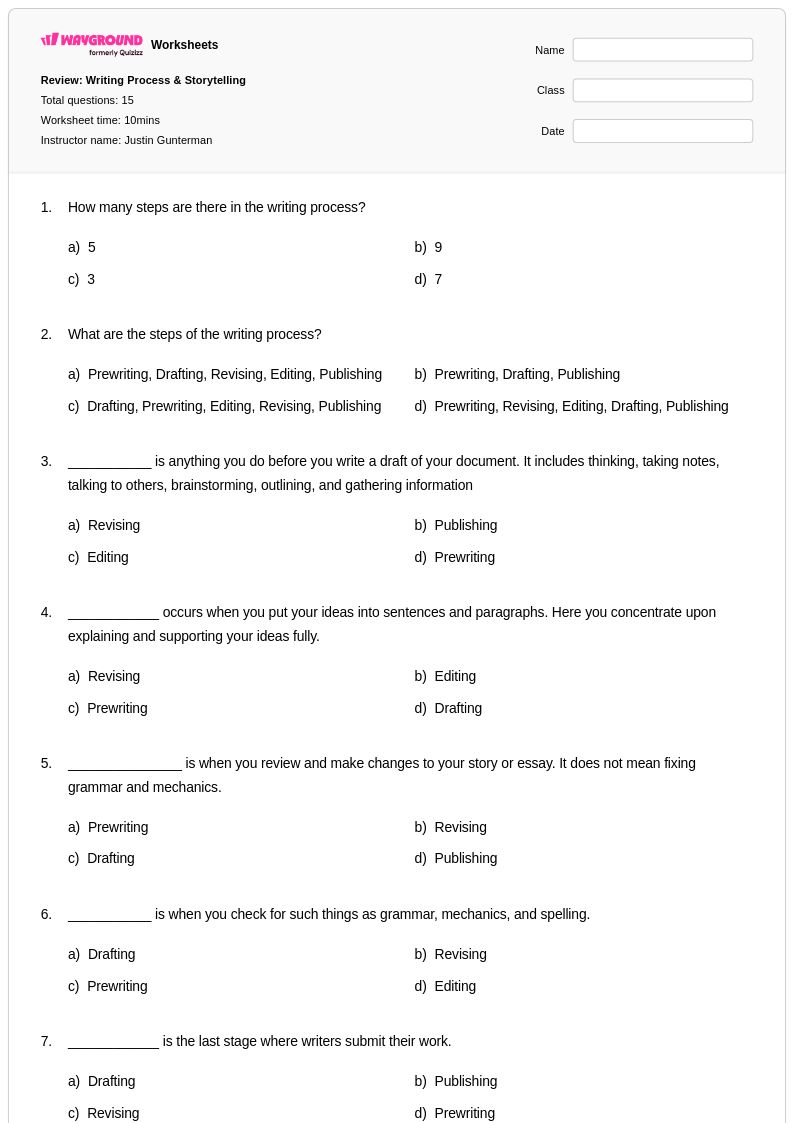
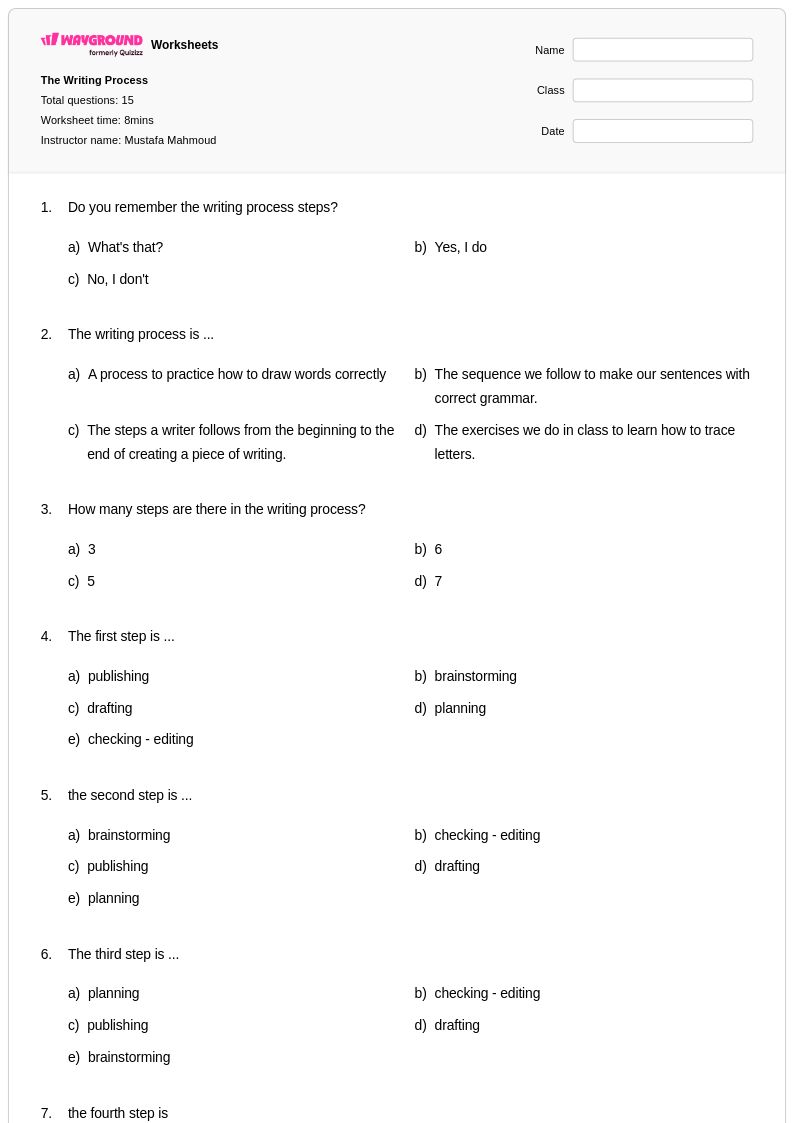
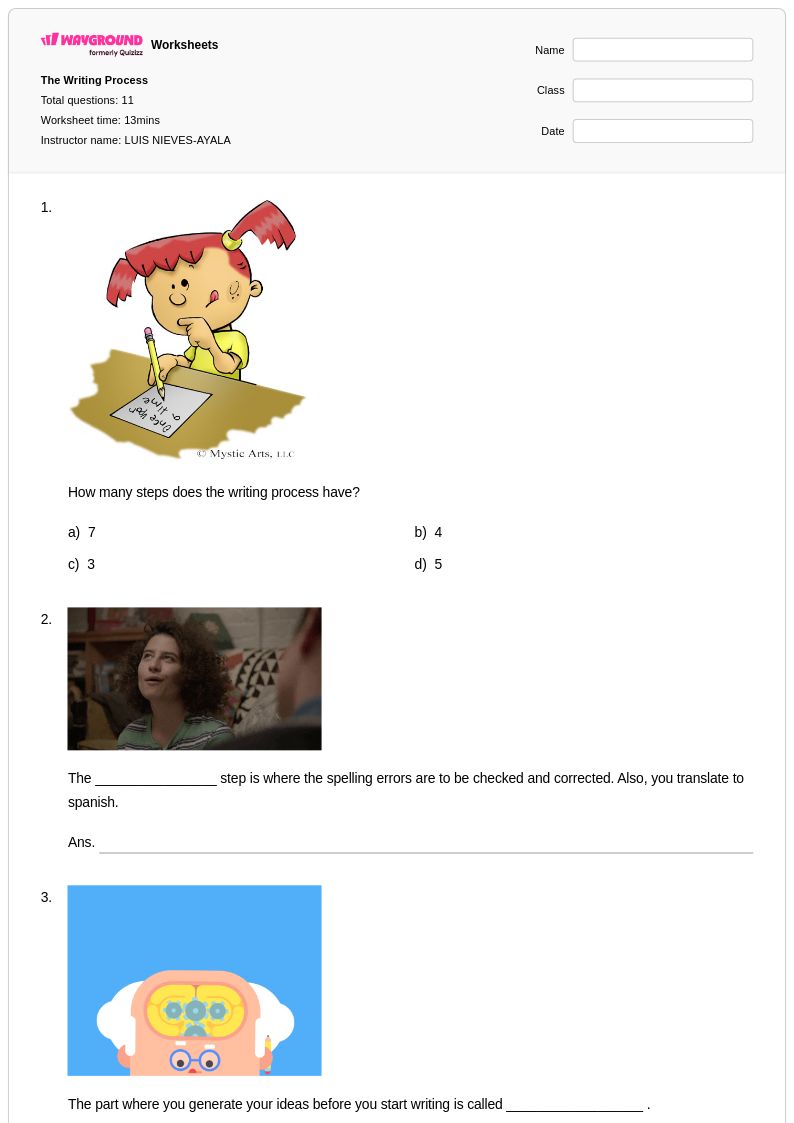
Wayground's free Class 5 publishing worksheets and printables help students master the final stage of the writing process through engaging practice problems and comprehensive answer keys in convenient PDF format.
Explore printable Publishing worksheets for Class 5
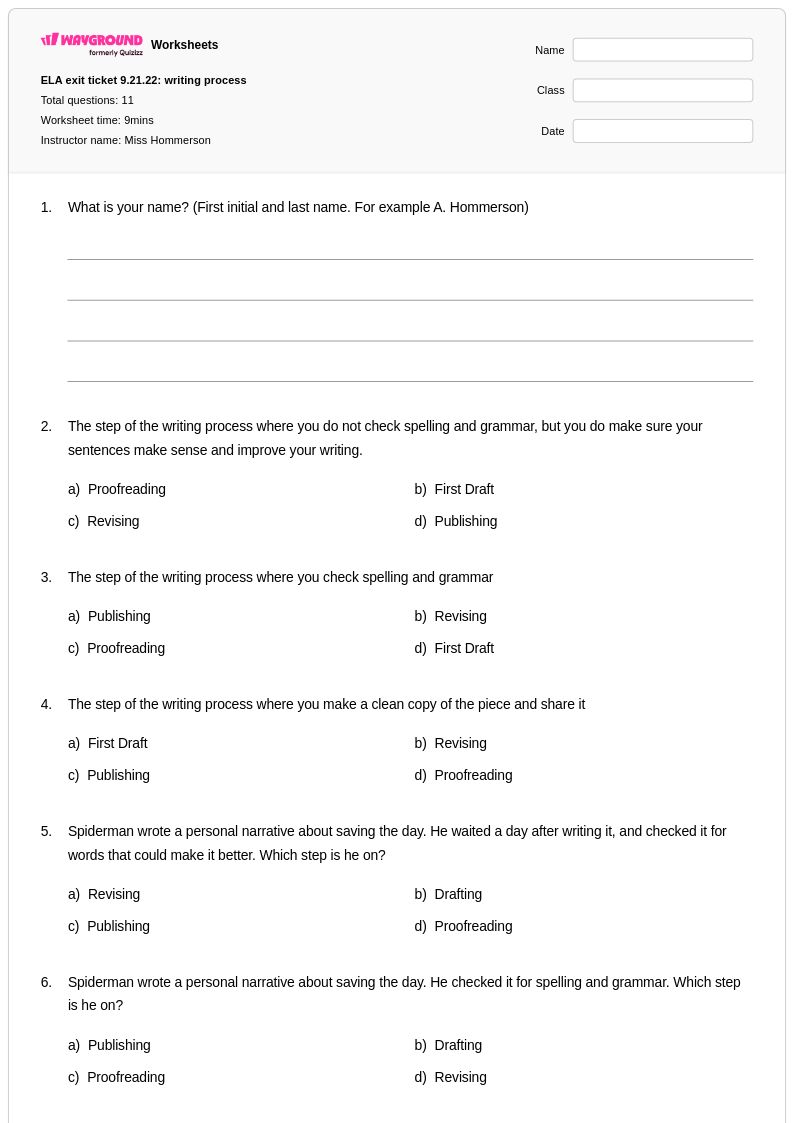
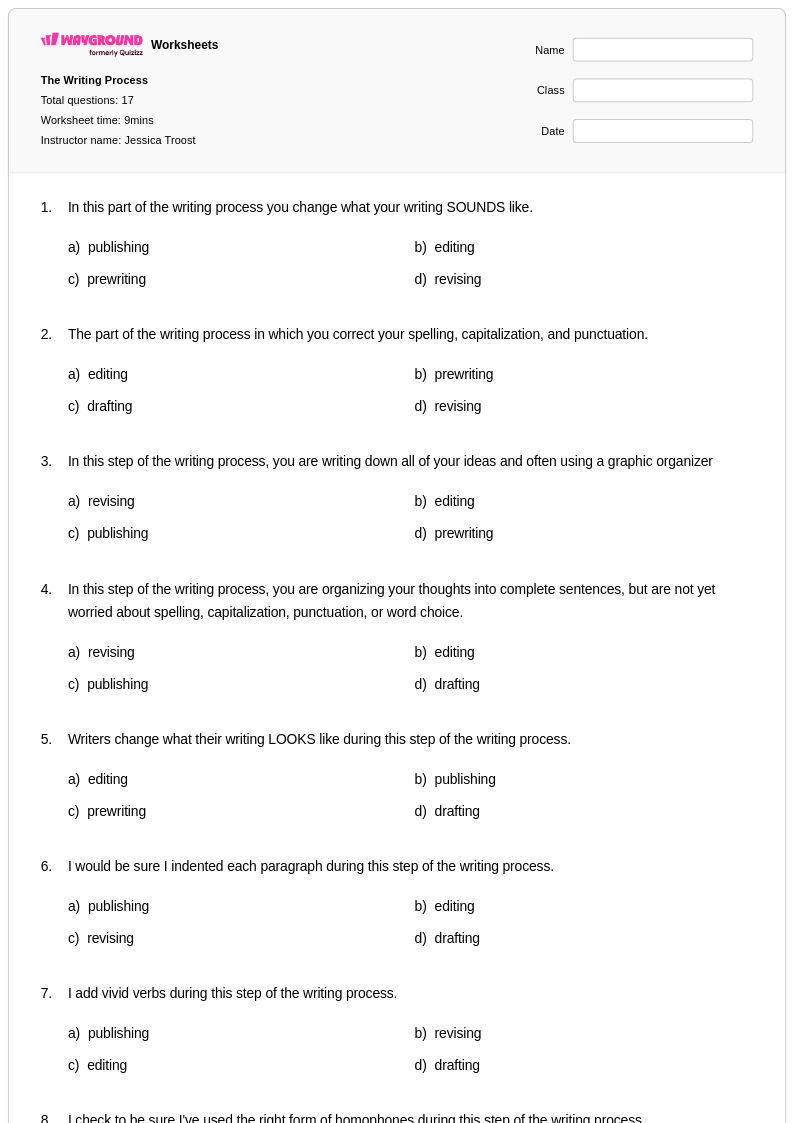
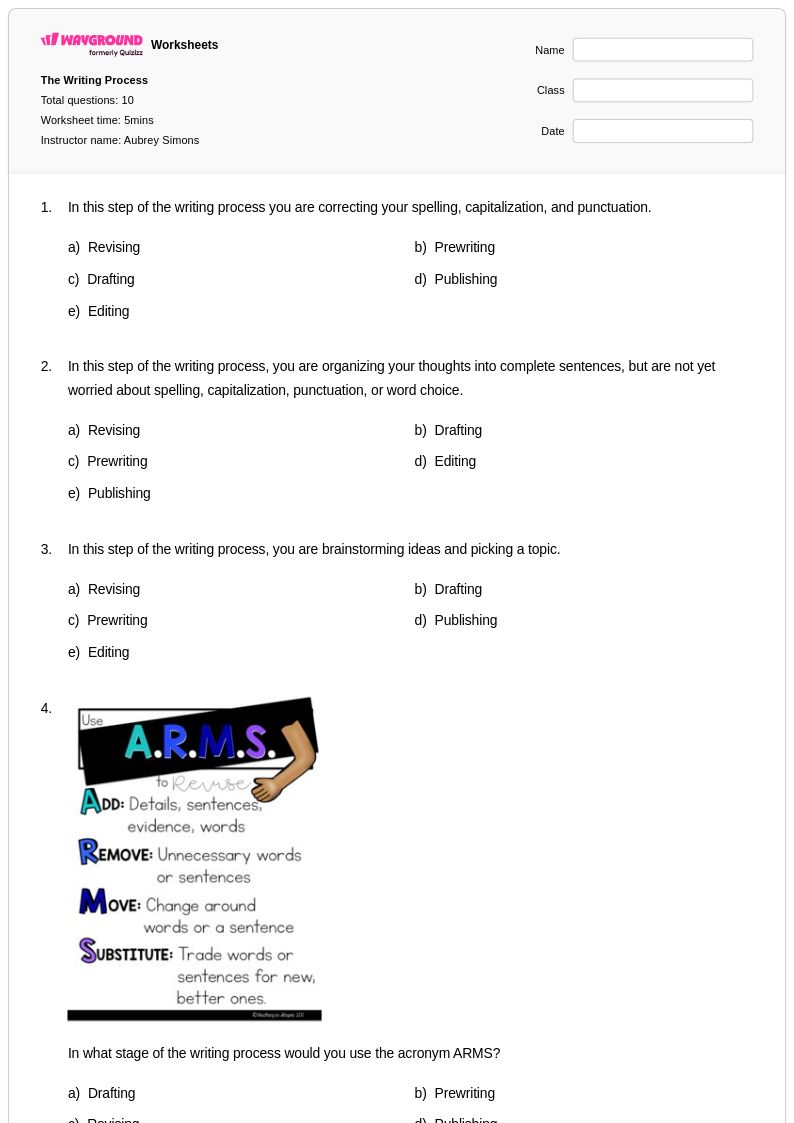
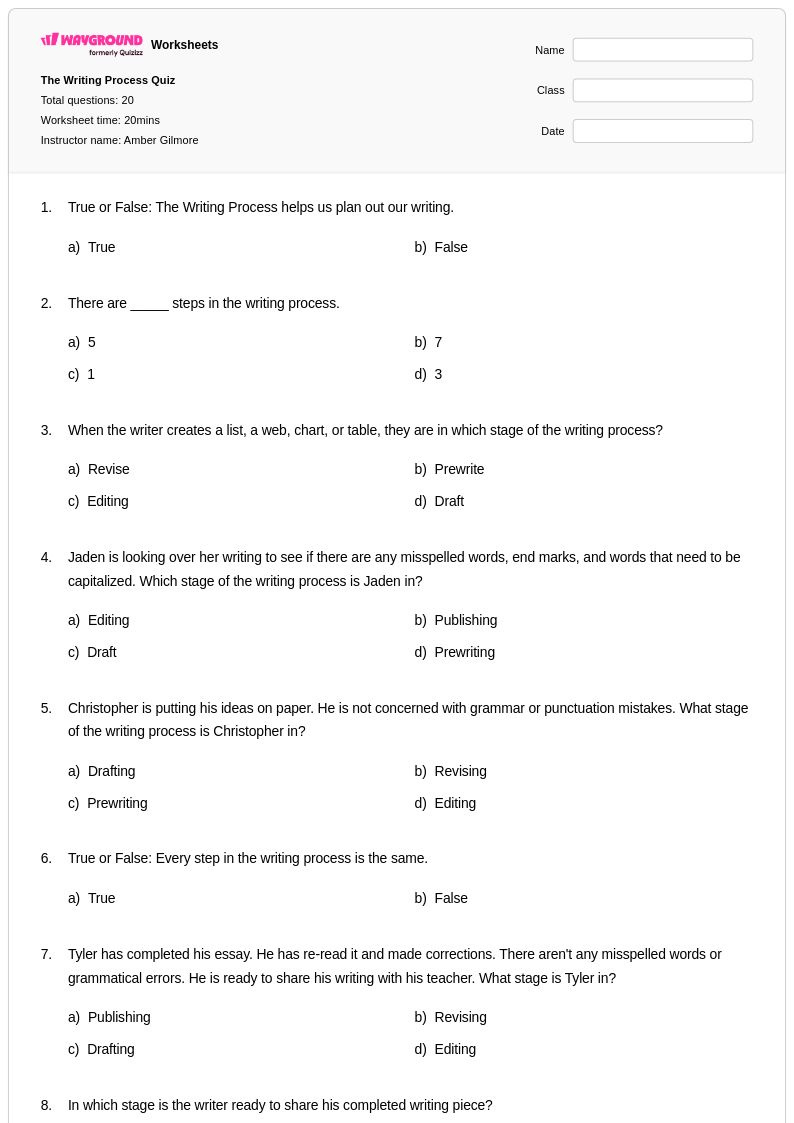
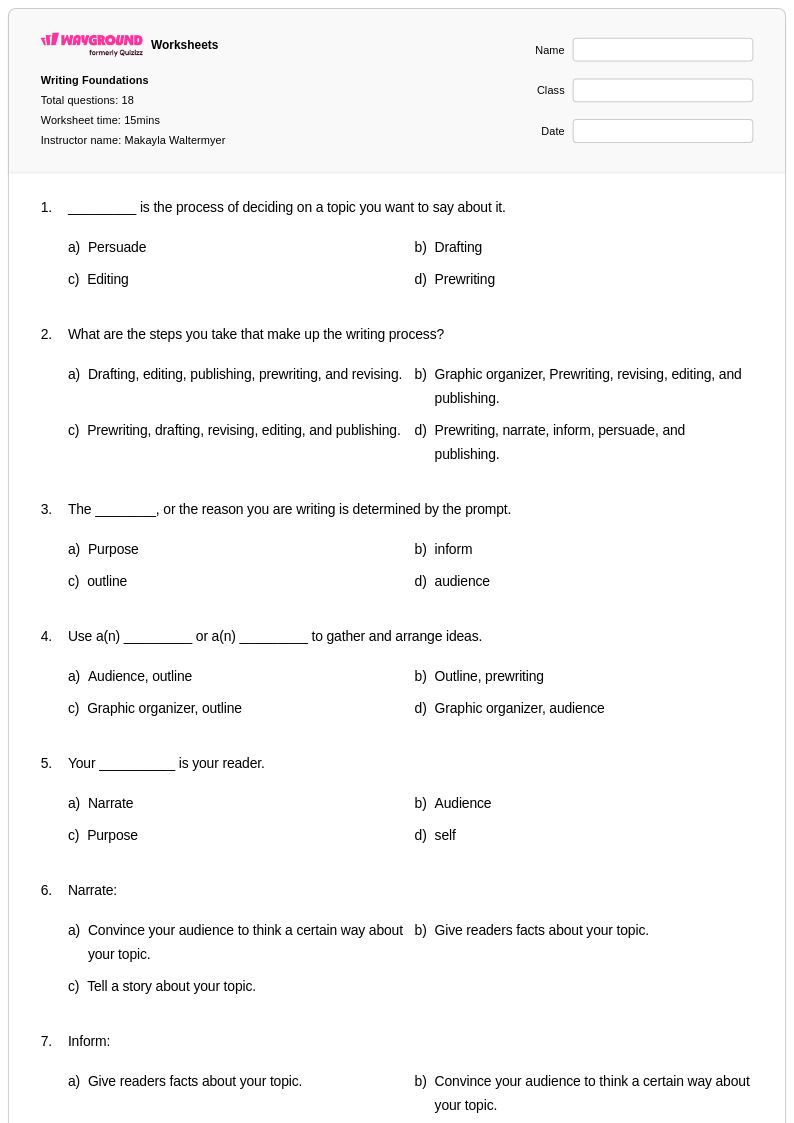
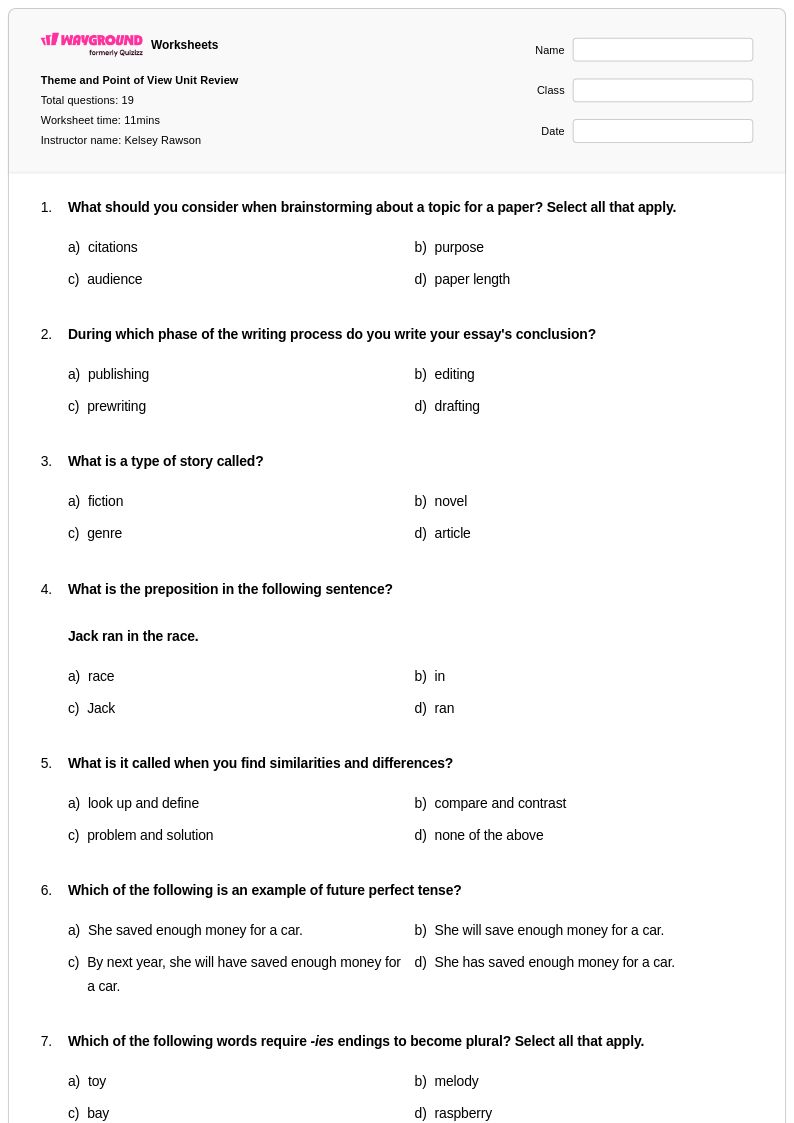
Publishing worksheets for Class 5 students through Wayground (formerly Quizizz) provide comprehensive practice opportunities that guide young writers through the final stage of the writing process. These carefully designed resources help fifth-grade students develop essential skills in preparing their written work for sharing with authentic audiences, including formatting text properly, creating appealing visual presentations, and understanding the importance of final proofreading before publication. The worksheets feature engaging practice problems that teach students how to select appropriate publishing formats, incorporate illustrations or graphics effectively, and make final revisions that enhance readability. Each resource includes detailed answer keys and is available as free printables in convenient pdf format, allowing students to work through real-world publishing scenarios while building confidence in presenting their completed writing projects.
Wayground (formerly Quizizz) empowers educators with an extensive collection of millions of teacher-created publishing worksheets specifically designed for Class 5 writing instruction. The platform's robust search and filtering capabilities enable teachers to quickly locate resources aligned with specific writing standards and student needs, while differentiation tools allow for seamless customization to support learners at various skill levels. These publishing worksheets are available in both printable pdf formats and interactive digital versions, providing flexible options for classroom instruction, homework assignments, and independent practice sessions. Teachers can effectively use these resources for targeted skill practice, remediation for students who need additional support with publishing concepts, and enrichment activities that challenge advanced writers to explore sophisticated formatting and presentation techniques.
FAQs
How do I teach the publishing stage of the writing process?
Teaching publishing means helping students understand that their writing is now intended for a real audience, which requires deliberate attention to presentation and correctness. Start by modeling manuscript formatting standards, then walk students through a final proofreading checklist that targets common surface-level errors. Emphasize that publishing is not just printing — it includes choosing the right format, whether a bound booklet, a class blog post, or a displayed poster, based on who will read the work. Connecting publishing to authentic audiences gives students a concrete reason to care about the quality of their final product.
What exercises help students practice publishing skills?
Effective publishing practice exercises include formatting a raw draft according to manuscript standards, completing a final proofreading checklist, and selecting the most appropriate presentation method for a given audience or purpose. Students also benefit from comparing a polished published piece to an unformatted draft so they can articulate what changed and why. Worksheets that present realistic publication scenarios — such as preparing a piece for a school newspaper or a classroom anthology — build the decision-making skills students need to publish independently.
What mistakes do students commonly make during the publishing stage?
The most common mistake is treating publishing as simply hitting print — students often skip final proofreading and overlook formatting requirements because they consider their writing 'done' after revision. Many students also confuse editing with publishing, not realizing that publishing involves audience awareness and presentation decisions beyond correcting grammar. Another frequent error is inconsistent formatting, such as mixed font styles, irregular spacing, or missing headers, which undermines the professionalism of the final piece. Targeted publishing worksheets that walk through formatting checklists and real-world publication scenarios help students internalize what a truly finished piece looks like.
How can I use Wayground's publishing worksheets in my classroom?
Wayground's publishing worksheets are available as printable PDFs for traditional classroom use and in digital formats for technology-integrated environments, giving you flexibility based on your setup. You can assign them as individual practice, use them during writing workshop as a guided reference, or project them for whole-class instruction during the publishing stage of a writing unit. Digital versions can also be hosted as a quiz directly on Wayground, allowing you to track student progress and identify who still needs support with formatting or proofreading standards.
How do I support struggling writers during the publishing stage?
Struggling writers often need scaffolded publishing supports such as a simplified formatting checklist, a sentence-level proofreading guide, and clear visual models of what a finished piece looks like. Breaking publishing into discrete steps — format first, proofread second, select presentation method third — reduces the cognitive load for students who feel overwhelmed. On Wayground, teachers can apply individual accommodations such as Read Aloud for students who process text better aurally, or reduced answer choices to lower the difficulty of practice questions, without drawing attention to those students in front of peers.
Why is publishing an important stage in the writing process?
Publishing is the stage where writing becomes communication — it shifts the work from a private draft to a product intended for a real audience, which is what gives the entire writing process its purpose. When students publish their writing, they develop pride in their work, understand the standards that professional and academic writing requires, and build the habit of presenting ideas with clarity and care. Without explicit instruction in publishing, students often never fully close the loop on what it means to produce finished, polished writing.