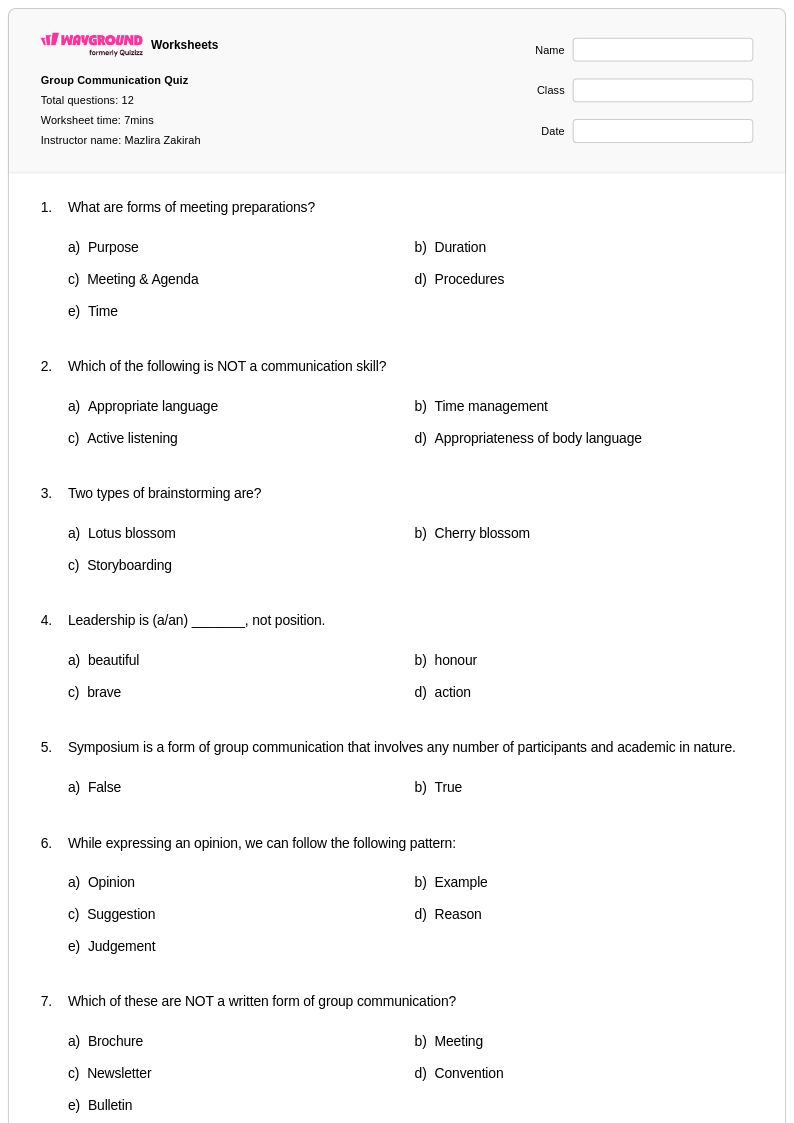
Free Printable Storyboarding Worksheets for Class 5
Class 5 storyboarding worksheets and printables help students master the visual planning process for creative writing through engaging practice problems, free PDF downloads, and comprehensive answer keys.
Explore printable Storyboarding worksheets for Class 5
Class 5 storyboarding worksheets available through Wayground (formerly Quizizz) provide students with structured frameworks to organize their creative ideas and develop essential pre-writing skills. These comprehensive printables guide fifth graders through the visual planning process, helping them sequence story events, develop character arcs, and establish clear narrative structures before beginning their actual writing. Each worksheet includes practice problems that challenge students to break down complex stories into manageable visual segments, strengthening their ability to identify key plot points, transitions, and story elements. The accompanying answer key supports both independent learning and teacher-guided instruction, while the free pdf format ensures easy access and distribution in various classroom settings.
Wayground's extensive collection of teacher-created storyboarding resources empowers educators with millions of expertly designed materials that align with writing process standards and accommodate diverse learning needs. The platform's robust search and filtering capabilities allow teachers to quickly locate worksheets that match specific skill levels, story genres, or instructional objectives, while differentiation tools enable seamless customization for struggling writers and advanced students alike. These digital and printable resources support comprehensive lesson planning by offering flexible options for whole-group instruction, small group remediation, and individual enrichment activities. Teachers can easily integrate these storyboarding worksheets into their writing curriculum to provide consistent skill practice, assess student understanding of narrative structure, and guide young writers through the critical planning phase that strengthens overall composition quality.
FAQs
How do I teach storyboarding to students who have never done it before?
Start by introducing storyboarding as a visual planning tool that breaks a story into sequential scenes before any writing begins. Model the process using a familiar story — walk students through identifying the setting, key characters, and major plot events scene by scene. Once students see how a complete story maps onto a storyboard, give them a structured template with labeled panels so they can practice organizing their own narrative ideas without the pressure of a blank page.
What exercises help students practice storyboarding skills?
Effective storyboarding practice includes having students sequence scrambled story panels into logical order, write scene descriptions for a set of provided images, and create original storyboards from a simple story prompt. These exercises build the core skills of narrative sequencing, scene-level thinking, and understanding how pacing and plot structure work together. Structured worksheet templates that prompt students to identify characters, setting, conflict, and resolution for each panel are especially useful for building these habits systematically.
What mistakes do students commonly make when creating a storyboard?
The most common error is treating the storyboard like a summary rather than a scene-by-scene visual plan, which leads to vague panels that skip over key plot details. Students also frequently neglect pacing, cramming too many events into one panel or leaving transitions between scenes unclear. Another frequent issue is skipping character motivation — panels often show what happens without capturing why, which weakens the narrative logic before drafting even begins.
How can I use storyboarding worksheets to support struggling writers?
Storyboarding worksheets help struggling writers by externalizing the planning process into a concrete, visual format before they face the demands of full prose writing. Structured templates that prompt students panel by panel reduce cognitive overload by breaking the story into manageable chunks. For students who need additional support, Wayground allows teachers to enable Read Aloud so worksheet instructions and prompts are read to students, and reduced answer choices can be applied to comprehension-check components to lower the barrier to entry.
How do I use Wayground's storyboarding worksheets in my classroom?
Wayground's storyboarding worksheets are available as printable PDFs for traditional classroom use and in digital formats for technology-integrated or remote learning environments, making them flexible enough to fit most instructional setups. Teachers can also host the worksheets as a quiz directly on Wayground, allowing students to complete them interactively while the platform tracks responses. Each worksheet includes an answer key, so teachers can use them for guided instruction, independent practice, or self-assessment without additional prep.
How does storyboarding fit into the writing process as a pre-writing strategy?
Storyboarding is a pre-writing strategy that helps students plan narrative structure visually before they begin drafting, which reduces revision time and improves coherence in the final piece. By mapping plot events, character arcs, and scene transitions onto panels, students develop a clearer sense of story logic and pacing. Research and classroom practice both support pre-writing planning as a significant factor in writing quality, particularly for students who struggle with organization.