Free Printable Push and Pull Worksheets for Kindergarten
Discover free kindergarten push and pull worksheets and printables that help young learners explore basic forces through engaging practice problems, complete with answer keys for easy assessment.
Explore printable Push and Pull worksheets for Kindergarten
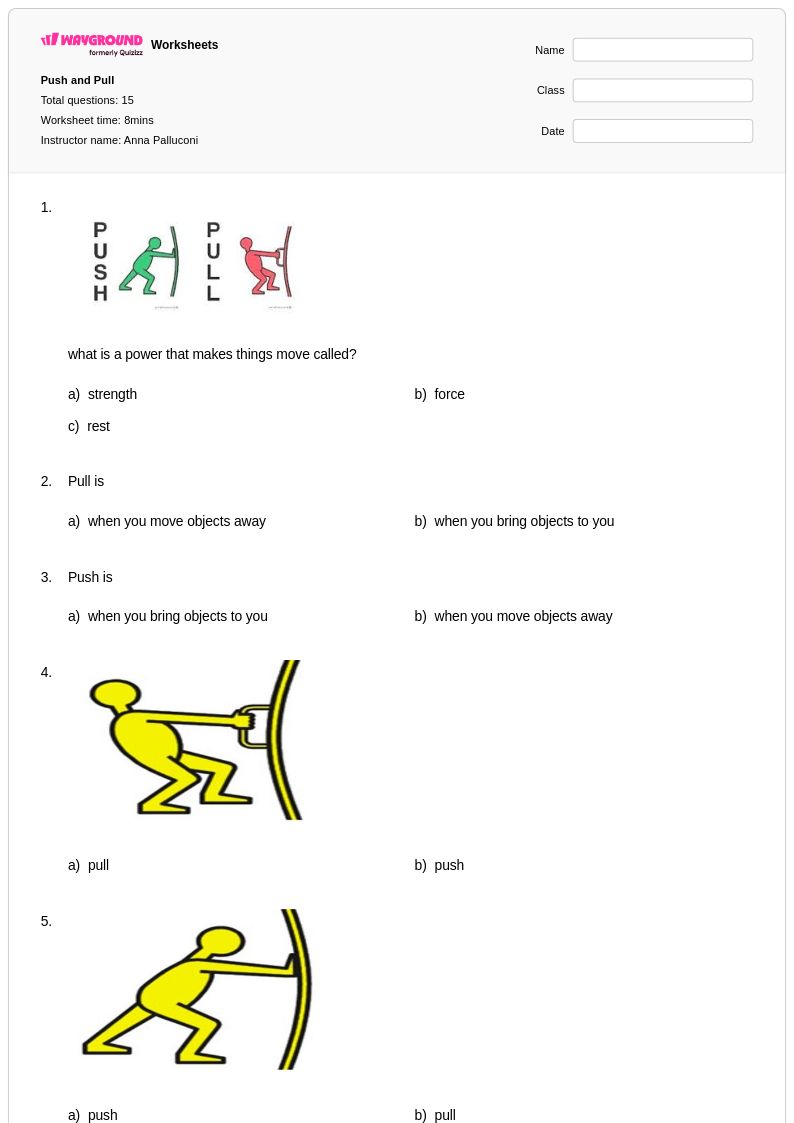
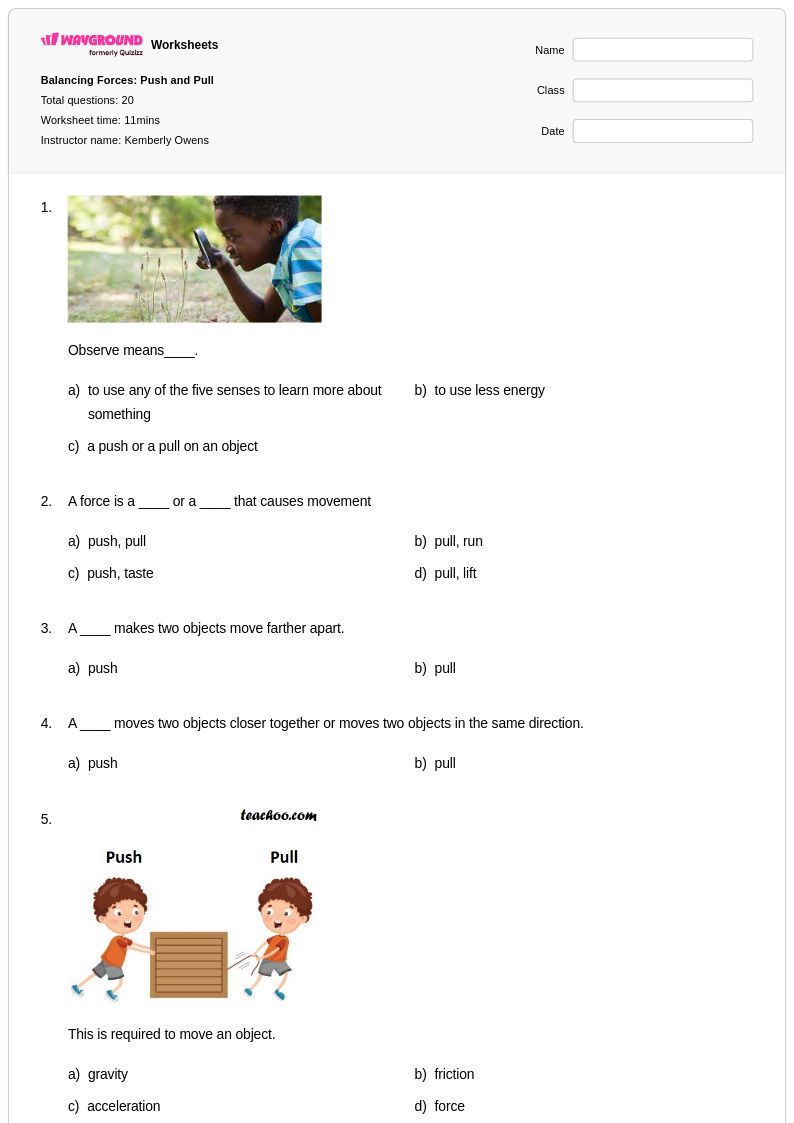
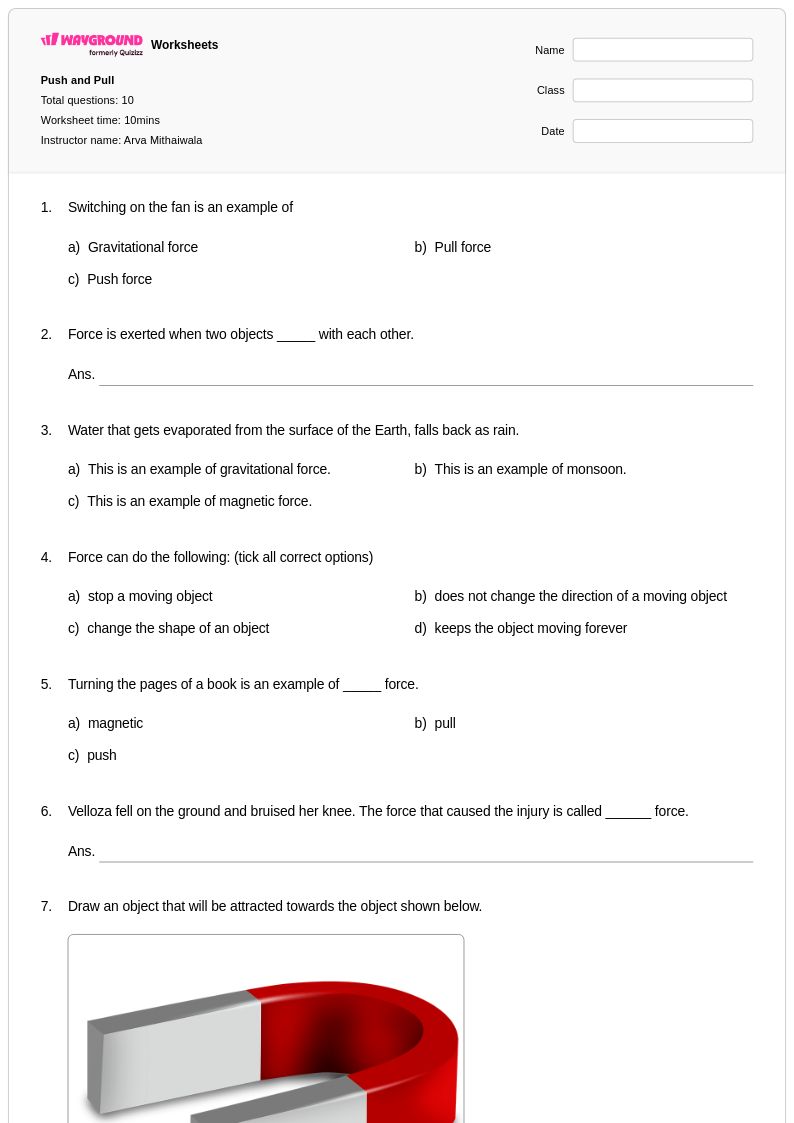
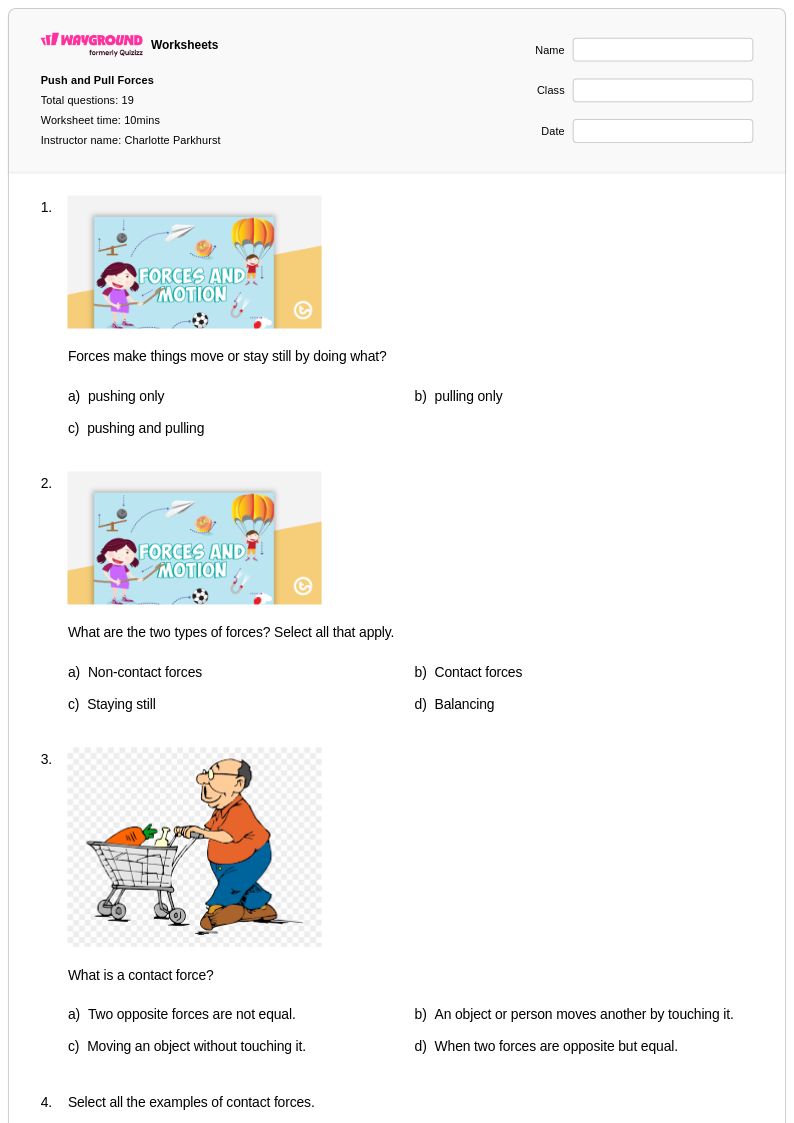
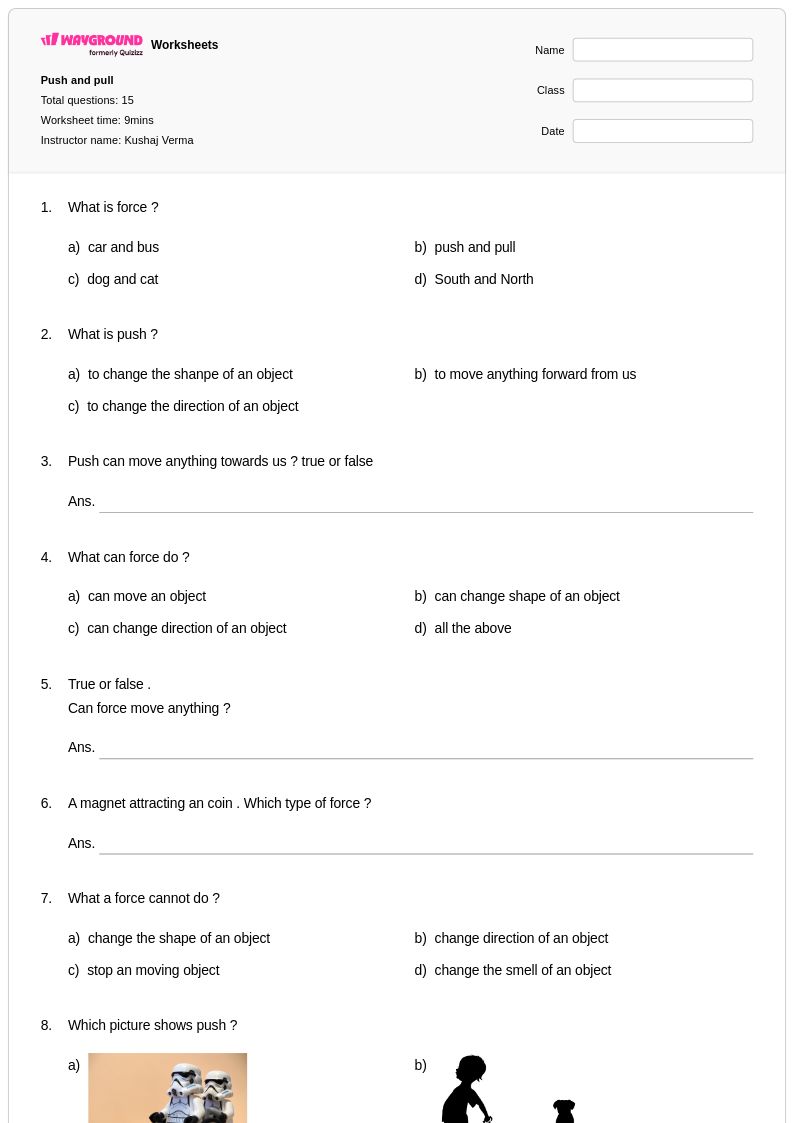
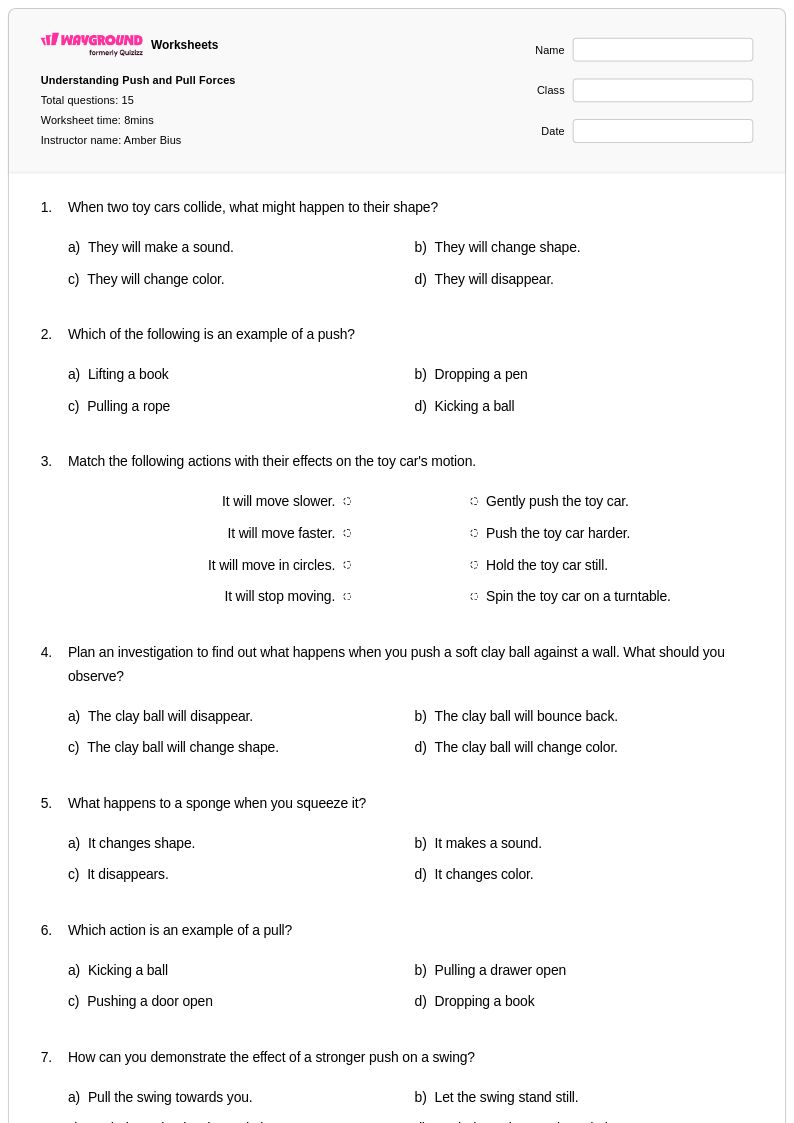
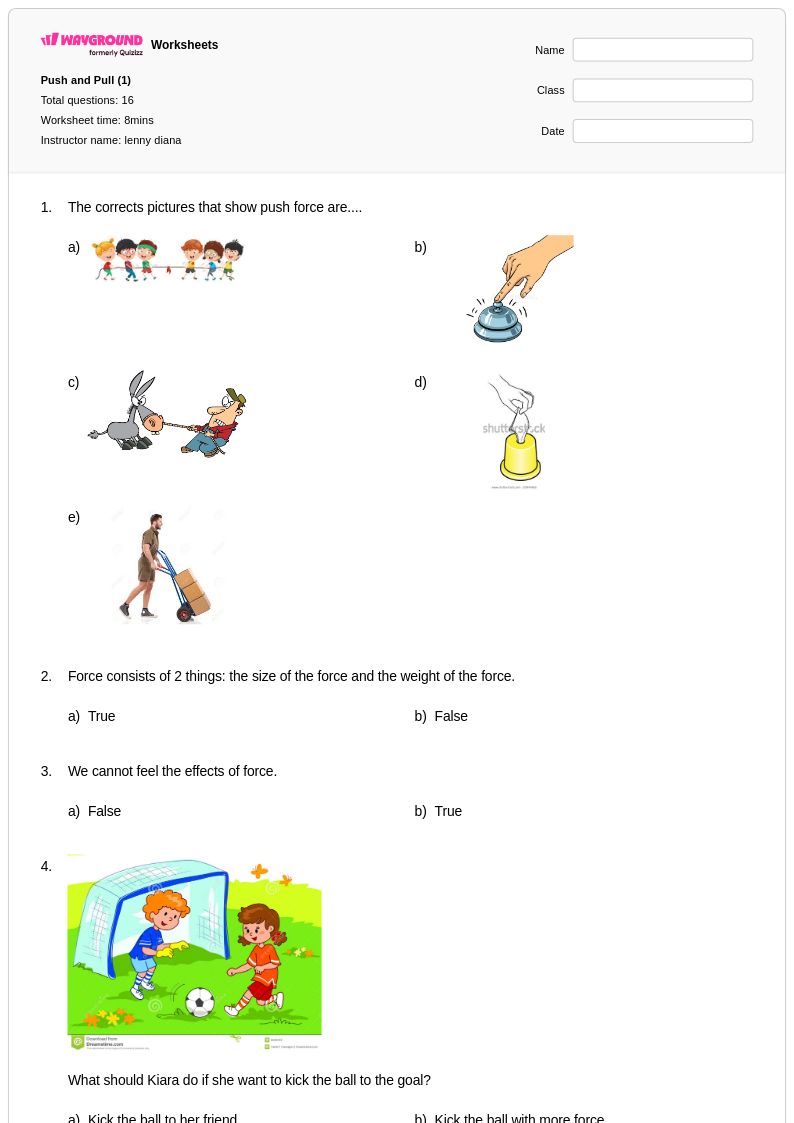
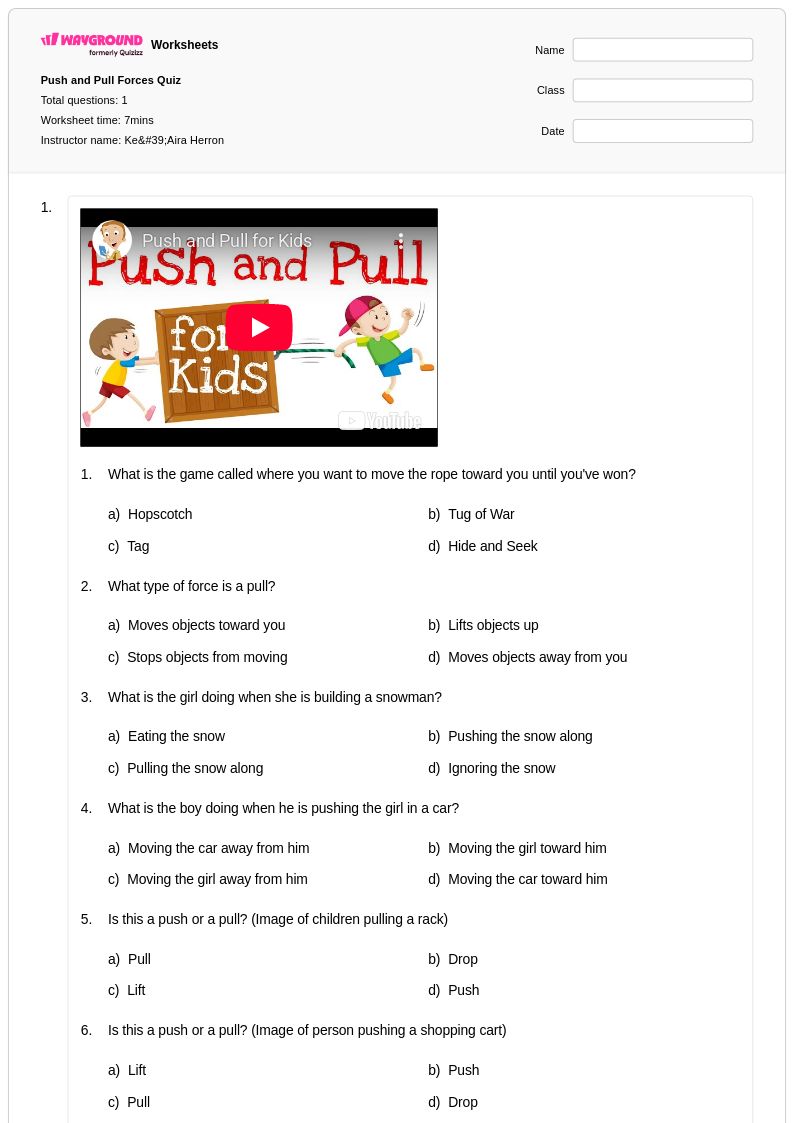
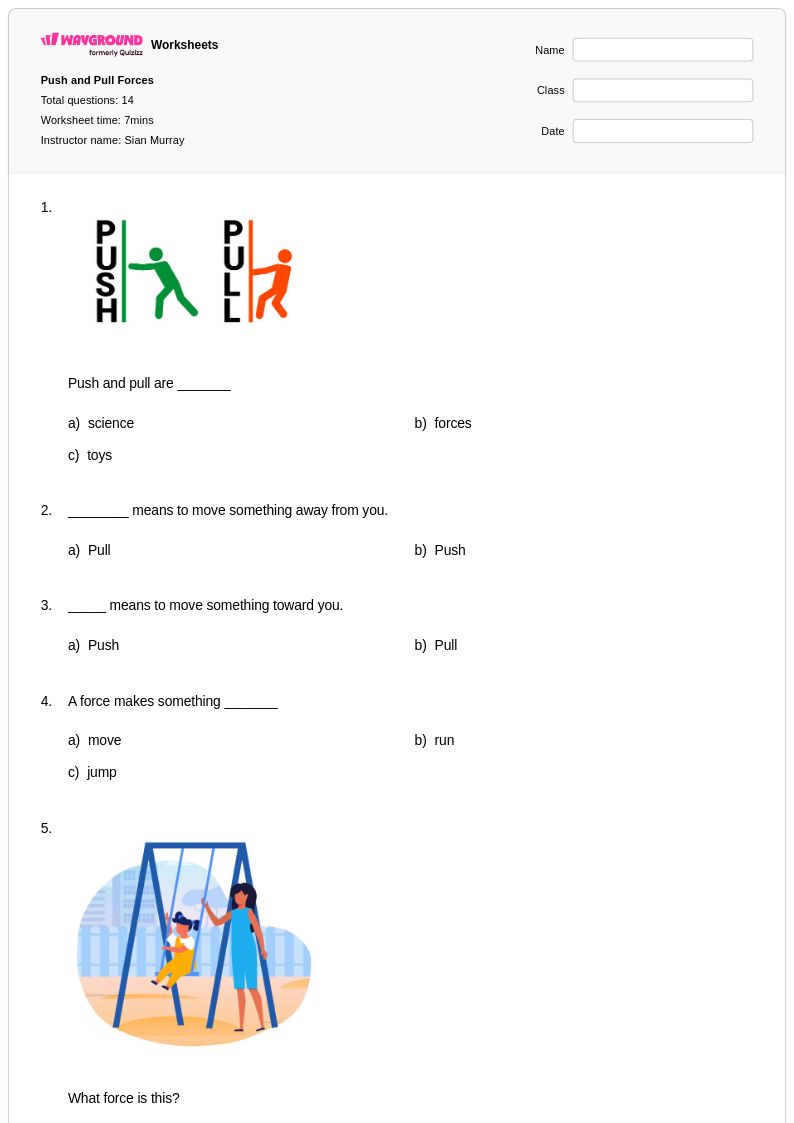
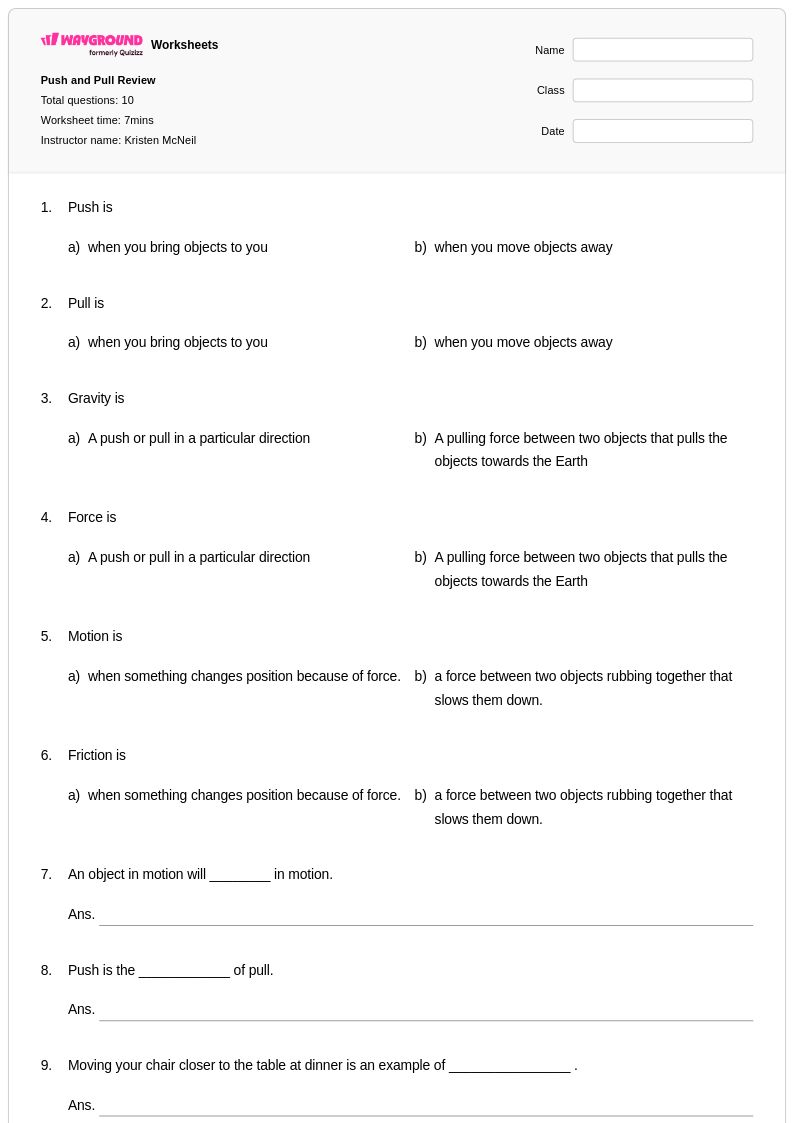
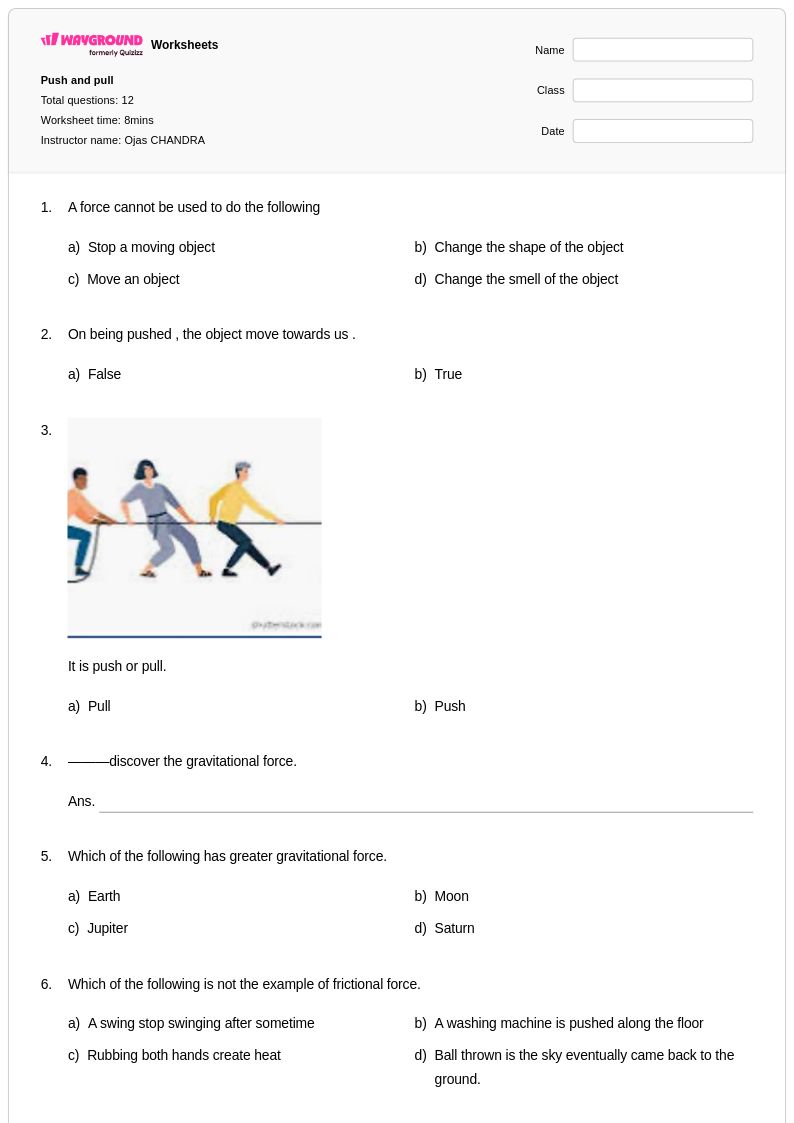
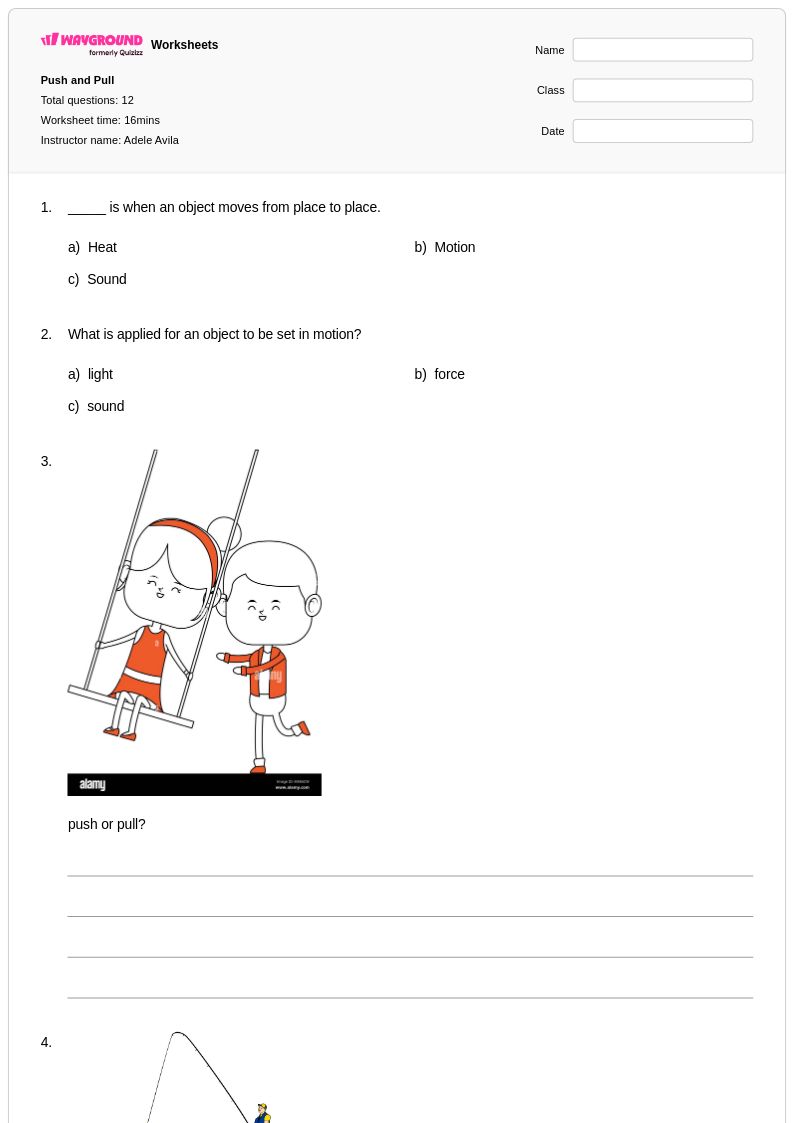
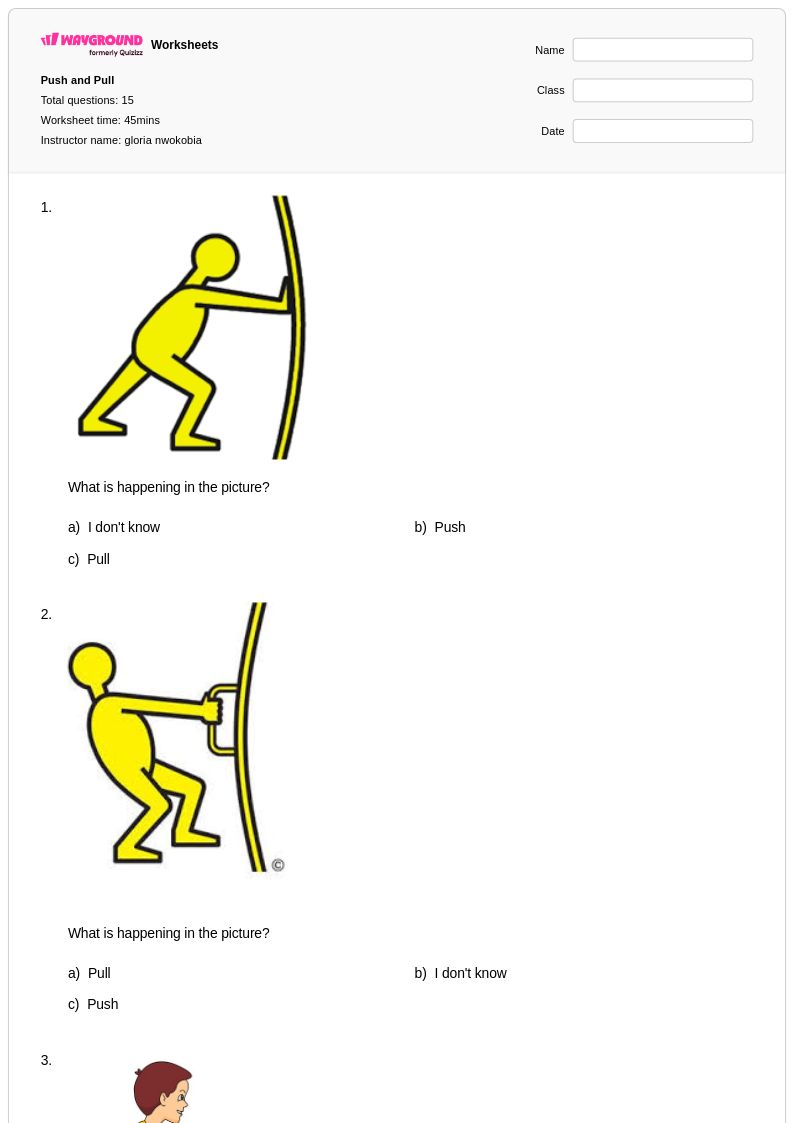
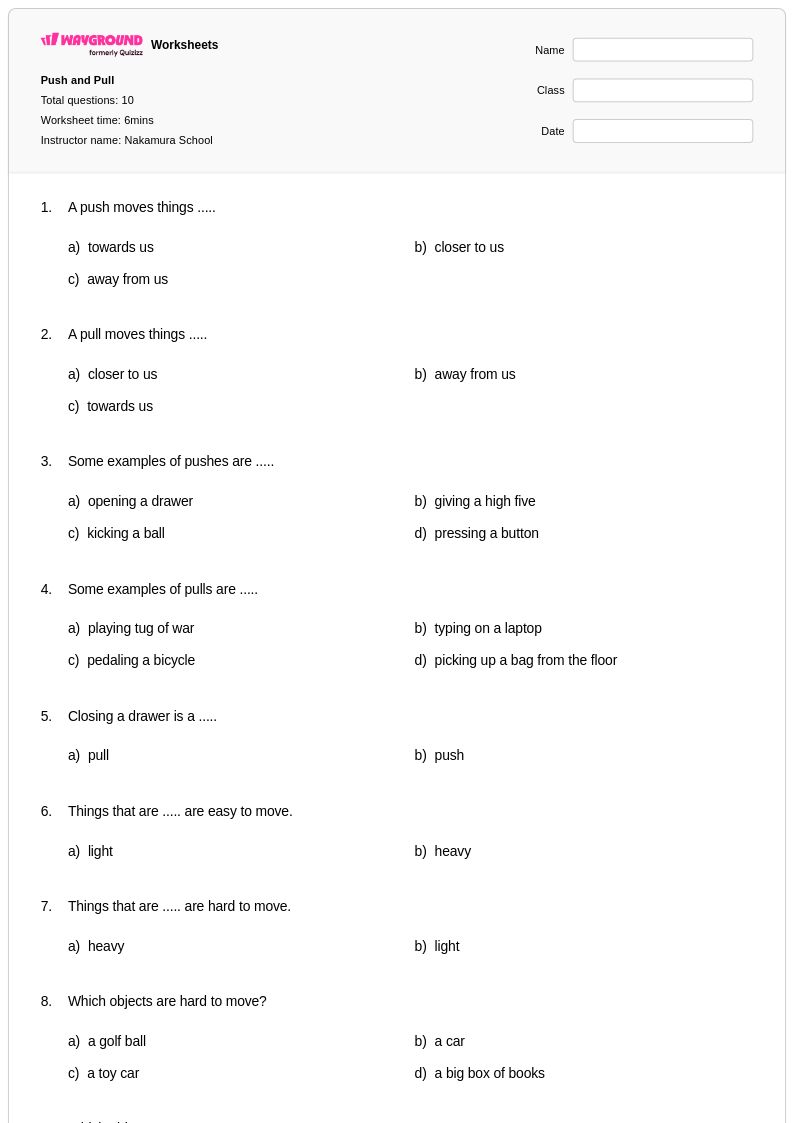
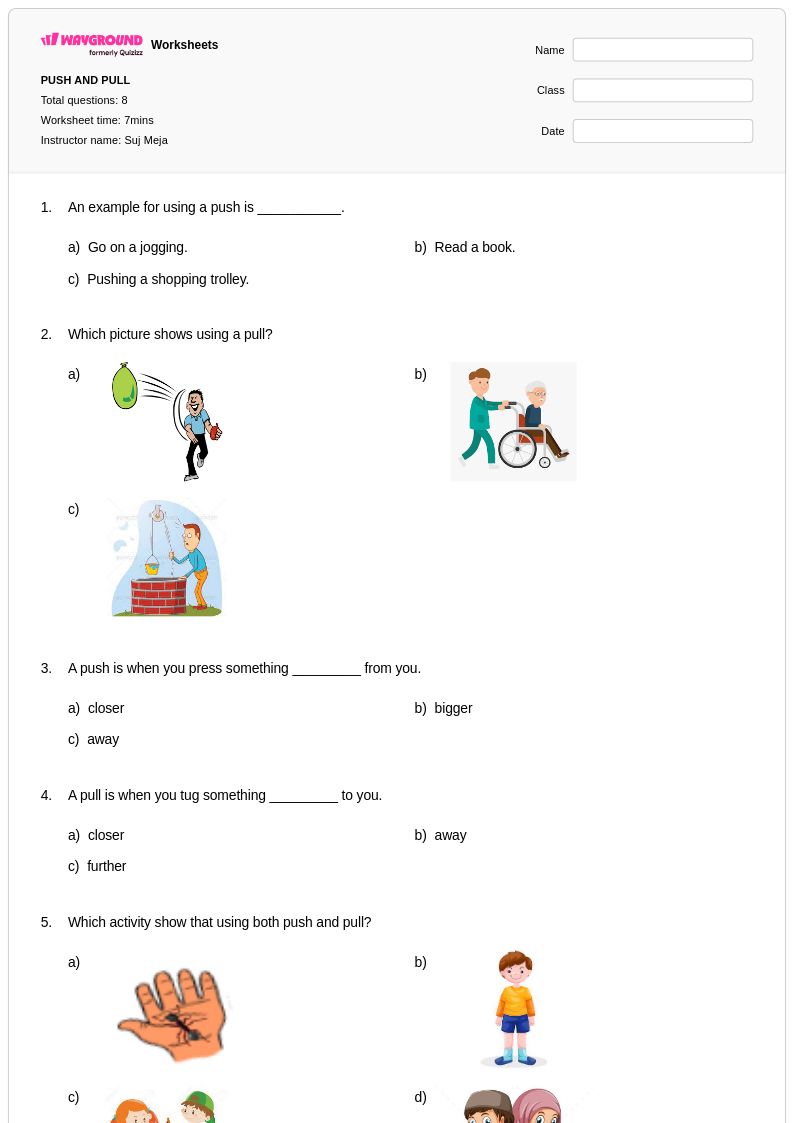
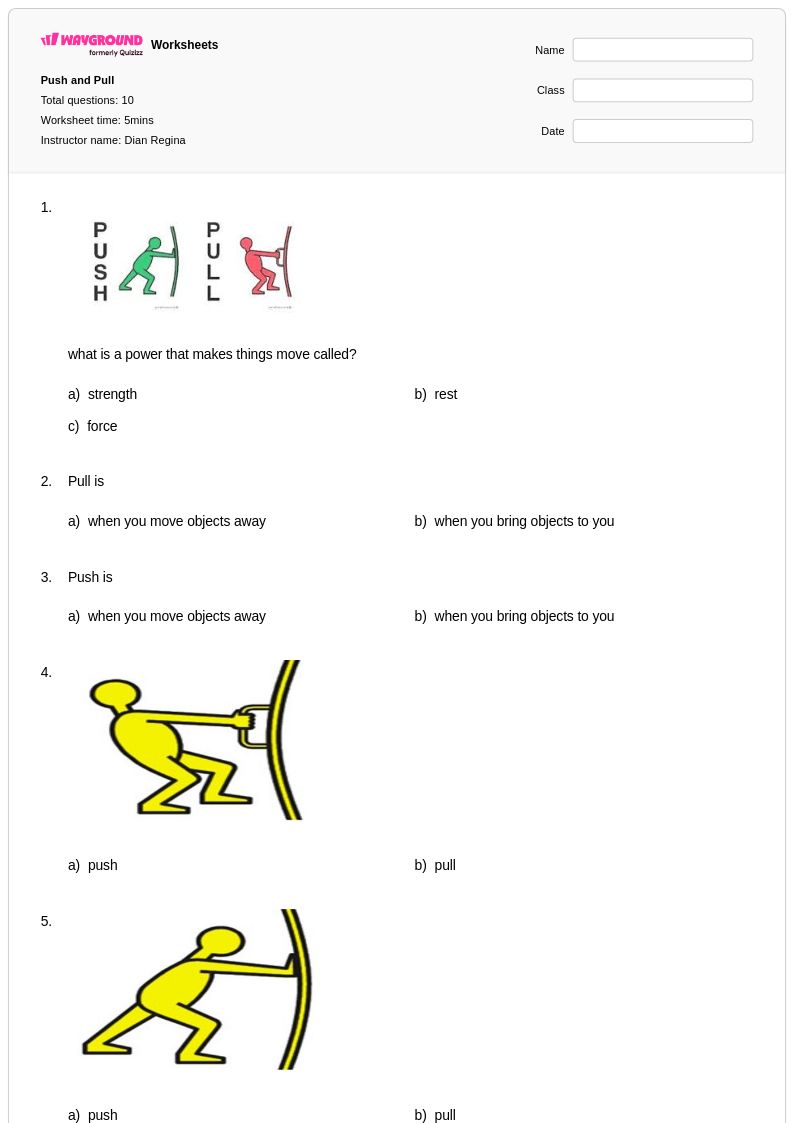
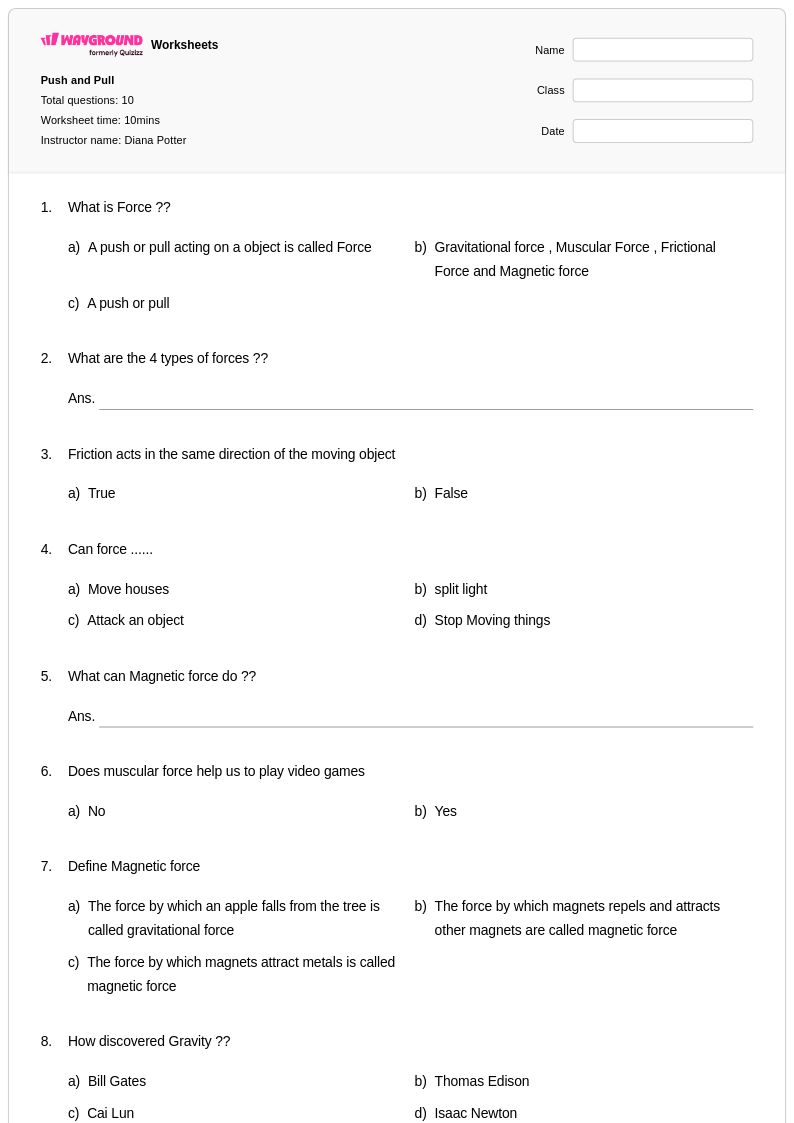
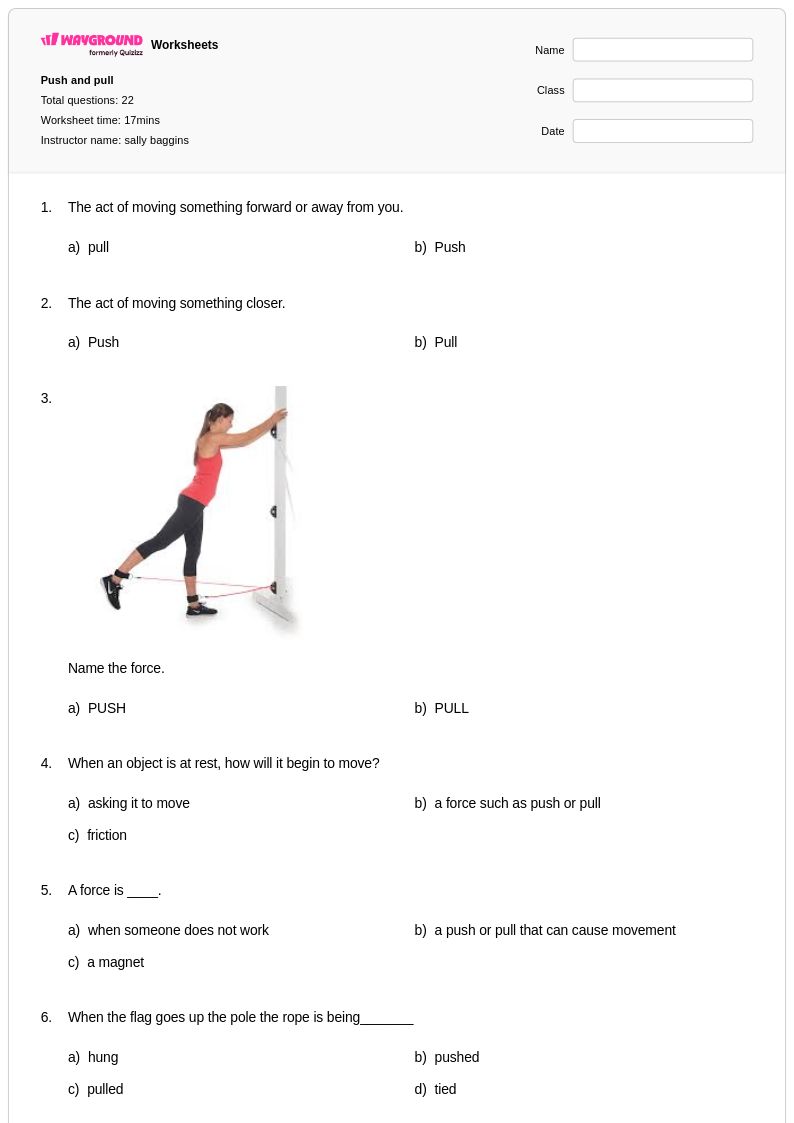
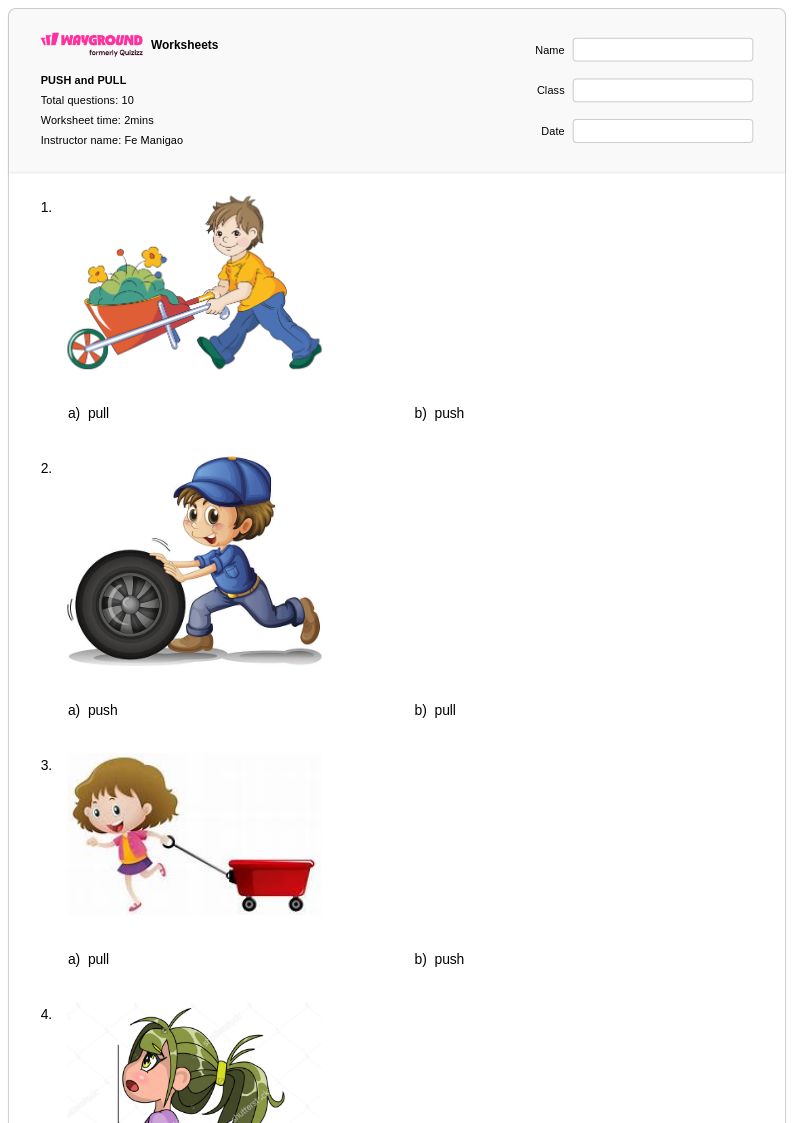
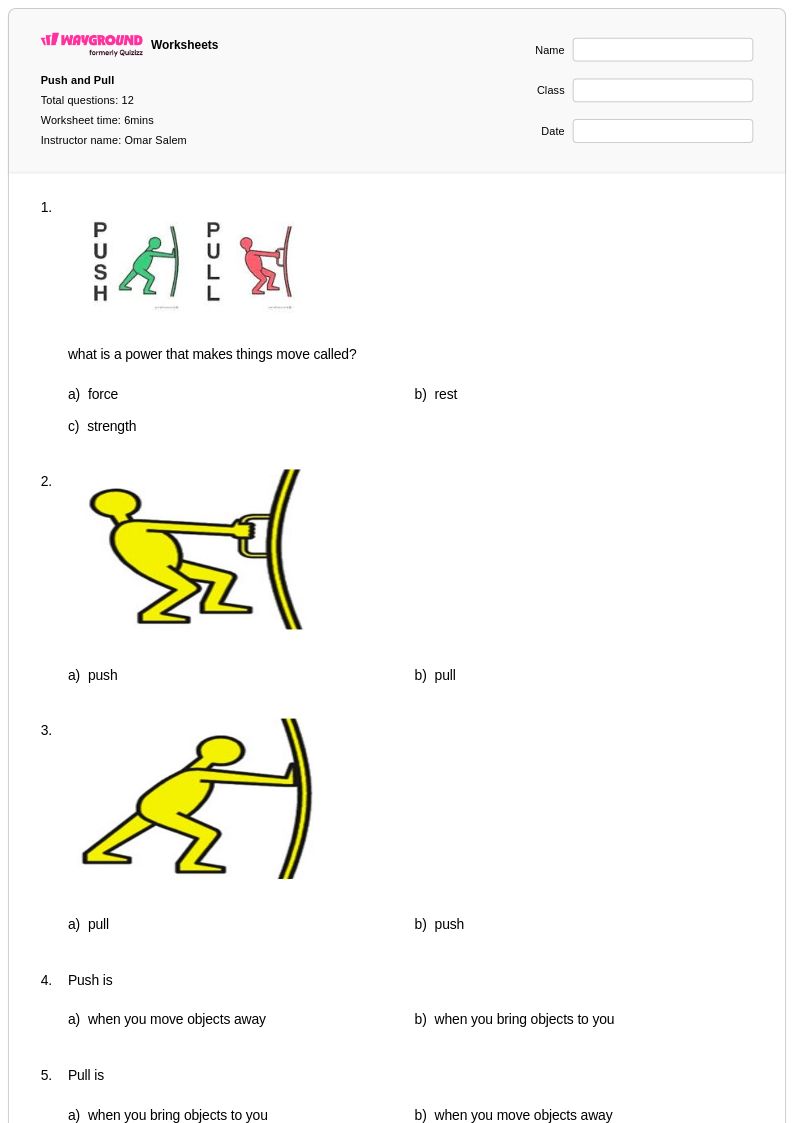
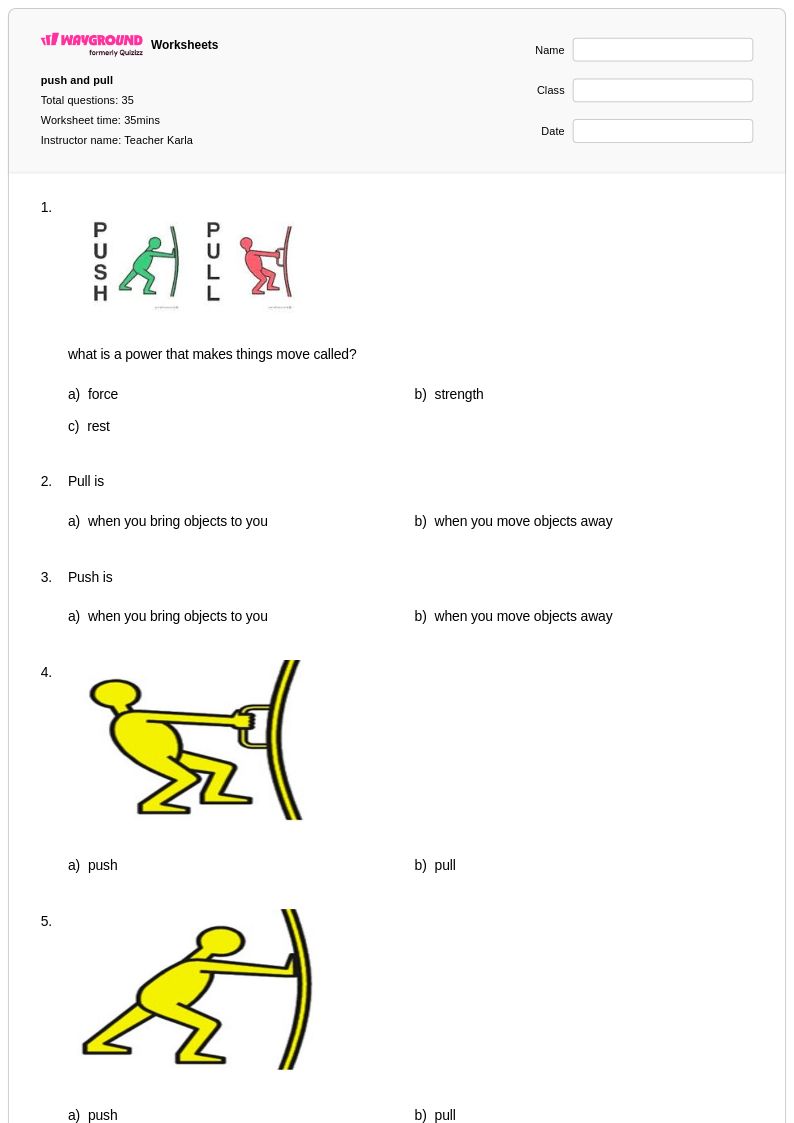
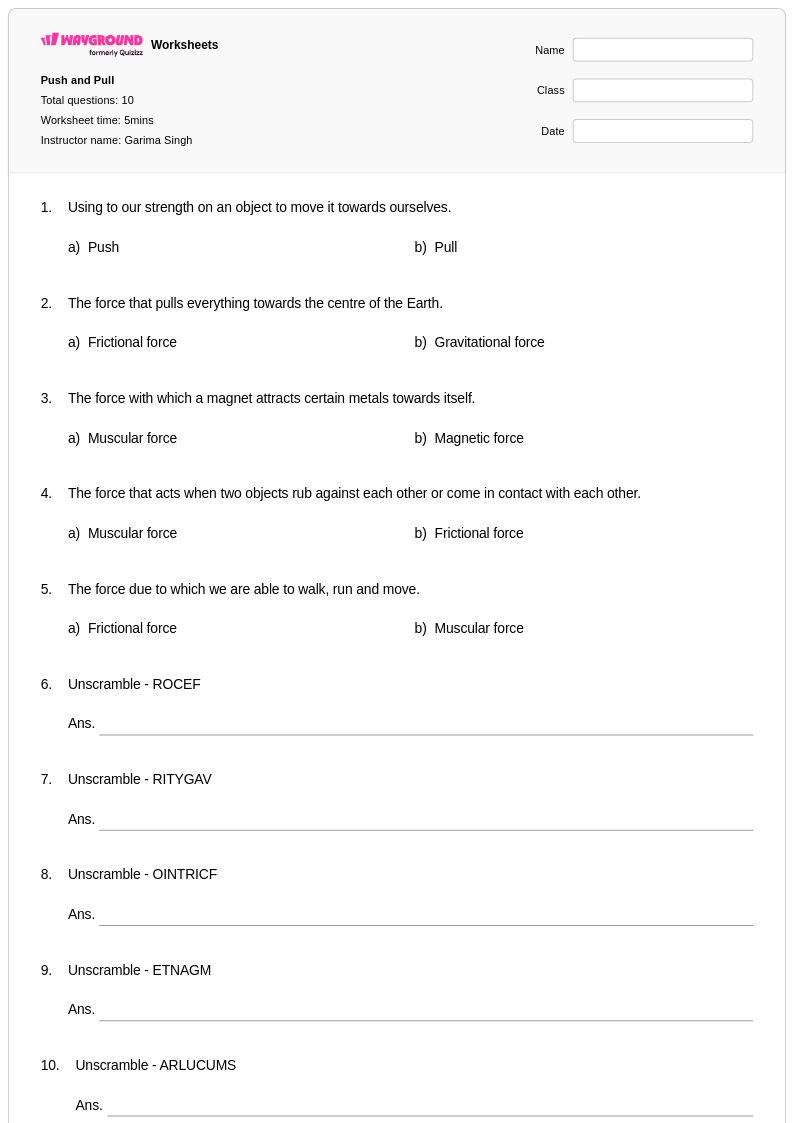
Push and pull worksheets for kindergarten provide young learners with foundational experiences in understanding forces and motion through hands-on exploration and visual learning activities. These carefully designed educational resources help students develop essential scientific thinking skills by identifying objects that can be pushed or pulled, predicting movement outcomes, and observing cause-and-effect relationships in their everyday environment. The collection includes engaging practice problems featuring familiar items like toys, playground equipment, and household objects that kindergarteners can easily relate to their own experiences. Each worksheet comes with a comprehensive answer key to support both independent learning and guided instruction, while the free printables offer flexible pdf formats that accommodate various classroom needs and home learning situations.
Wayground (formerly Quizizz) empowers educators with access to millions of teacher-created push and pull resources specifically tailored for kindergarten science instruction. The platform's robust search and filtering capabilities allow teachers to quickly locate age-appropriate materials that align with early childhood science standards and developmental benchmarks. Advanced differentiation tools enable educators to customize worksheets for diverse learning needs, while the availability of both printable and digital formats, including downloadable pdf versions, provides maximum flexibility for lesson planning and implementation. These comprehensive features streamline the process of creating engaging remediation activities, enrichment opportunities, and targeted skill practice sessions that help kindergarten students build confidence in their understanding of basic forces and motion concepts.
FAQs
How do I teach push and pull forces to young students?
Start by grounding push and pull in physical, everyday experiences students already know, such as opening a door, sliding a chair, or kicking a ball. Use hands-on demonstrations where students push and pull classroom objects, then connect those experiences to the vocabulary of force and motion. Building from concrete observation to abstract labeling helps students internalize the concept before moving to more formal practice.
What kinds of exercises help students practice identifying push and pull forces?
Effective practice exercises ask students to classify real-world scenarios as pushes, pulls, or both, such as riding a bicycle, playing tug-of-war, or using a zipper. Worksheets that include labeled diagrams, sorting activities, and short-answer explanations reinforce both identification and reasoning skills. Repeated exposure to varied everyday contexts helps students generalize the concept beyond a single example.
What mistakes do students commonly make when learning about push and pull?
A common misconception is that only large or dramatic actions count as forces, leading students to overlook subtle pushes and pulls like gravity or friction. Students also frequently confuse the direction of force with the direction of motion, particularly when an object slows down due to a push or pull working against it. Addressing these errors explicitly, using counterexamples drawn from familiar situations, helps students build a more accurate mental model.
How can I use push and pull worksheets to support different learners in my class?
Push and pull worksheets can be differentiated by adjusting task complexity, for example, offering picture-based sorting for emerging learners and scenario analysis for more advanced students. On Wayground, teachers can apply individual accommodations such as Read Aloud for students who need audio support, reduced answer choices to lower cognitive load, and extended time settings, all without notifying the rest of the class. These settings are reusable across future sessions, making consistent differentiation efficient rather than burdensome.
How do I use Wayground's push and pull worksheets in my classroom?
Wayground's push and pull worksheets are available as printable PDFs for traditional classroom distribution and in digital formats for technology-integrated learning environments. Teachers can also host the worksheets as an interactive quiz directly on Wayground, which enables real-time student responses and automatic scoring. Each worksheet includes a complete answer key, so teachers can provide fast, accurate feedback without additional preparation.
How do push and pull concepts connect to broader science standards?
Push and pull forces form the foundation of motion and forces concepts found in most K-5 science frameworks, including the Next Generation Science Standards (NGSS), where they appear as core ideas in physical science. Understanding that forces cause objects to start, stop, speed up, slow down, or change direction is a prerequisite for later study of Newton's Laws, simple machines, and energy transfer. Establishing this foundation early prevents significant gaps in scientific reasoning as students progress.