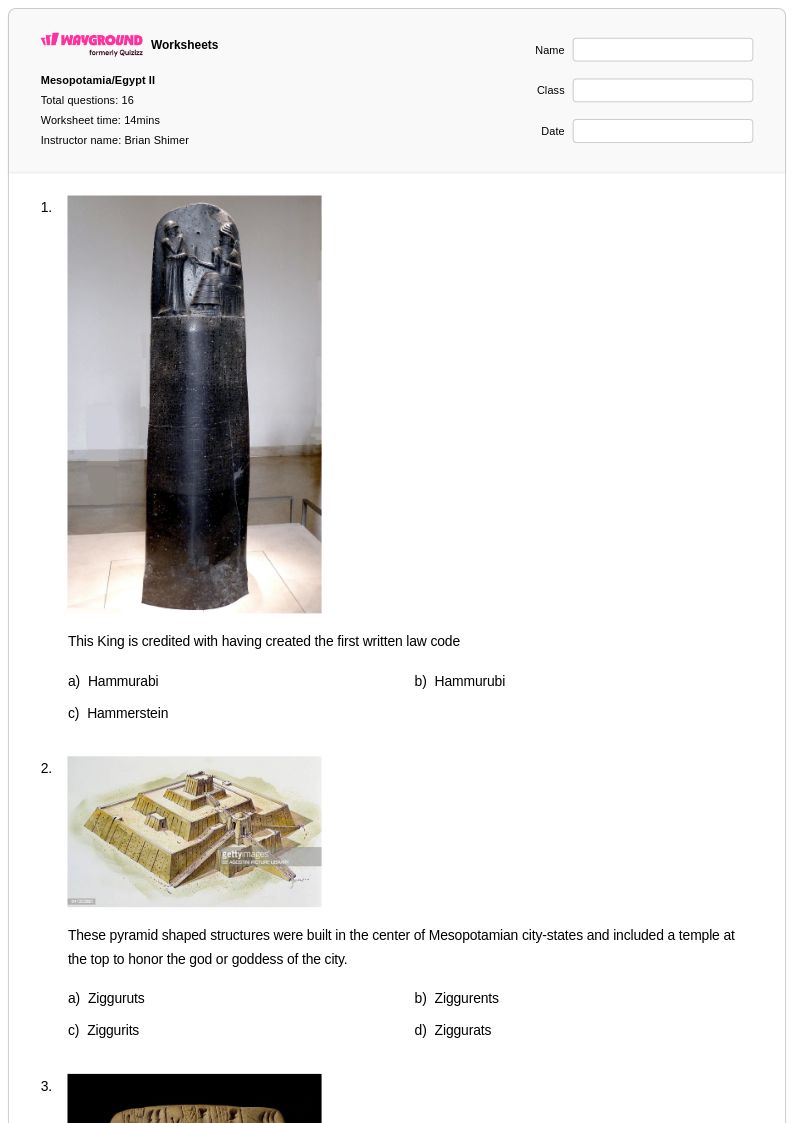
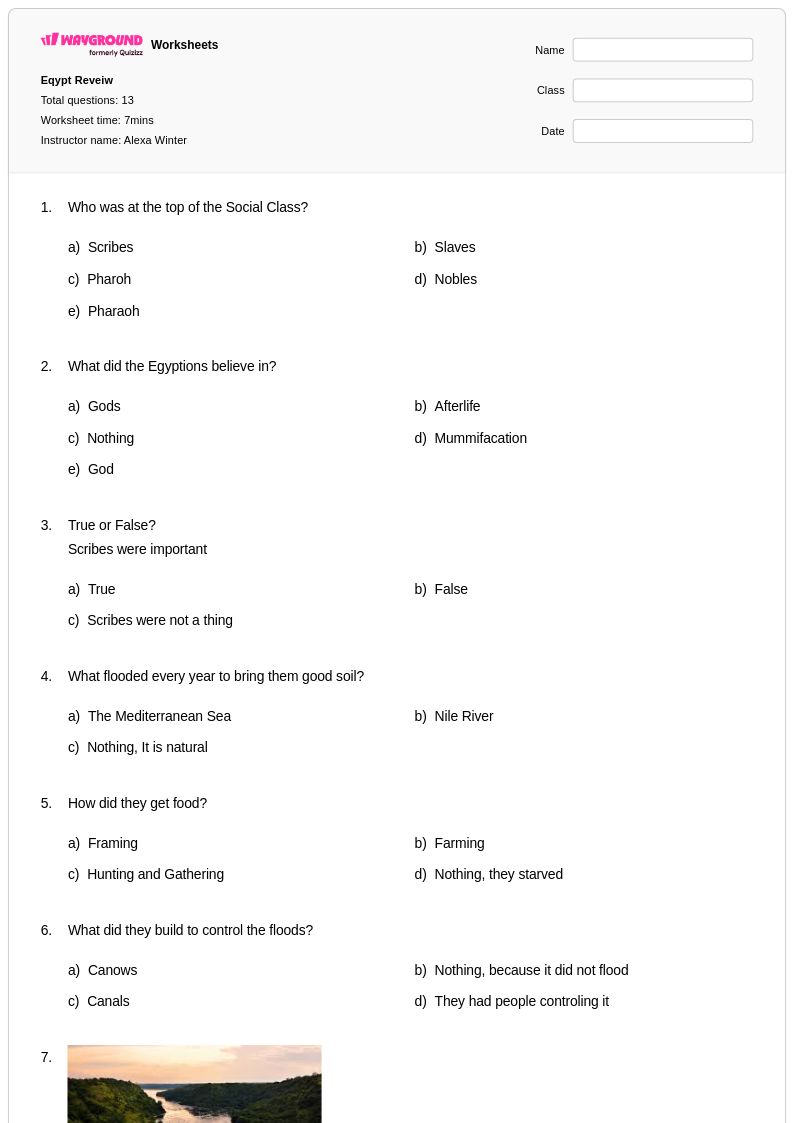
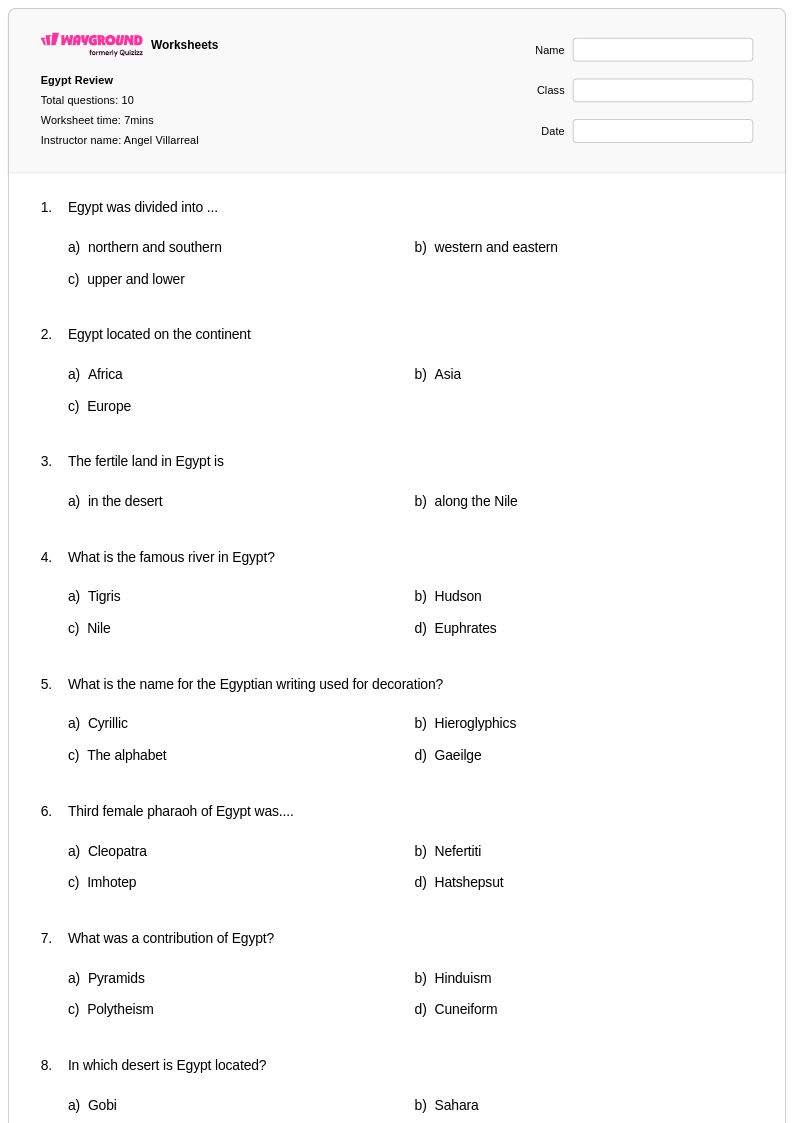
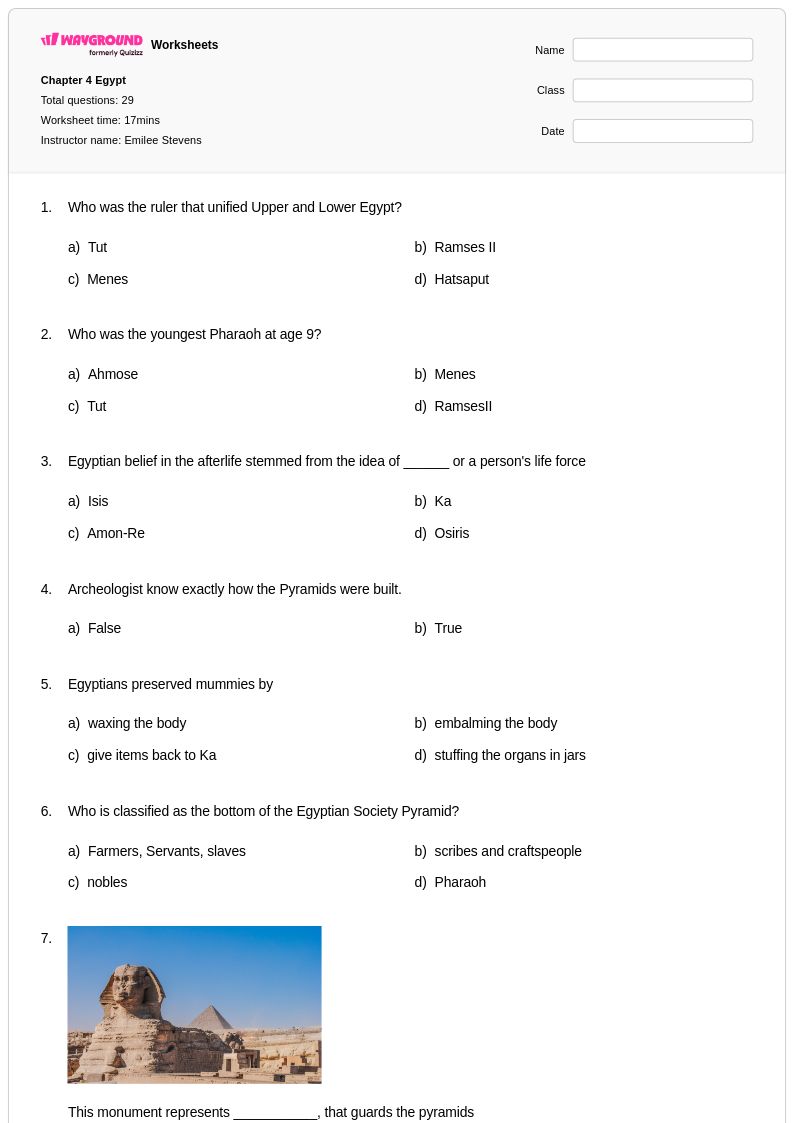
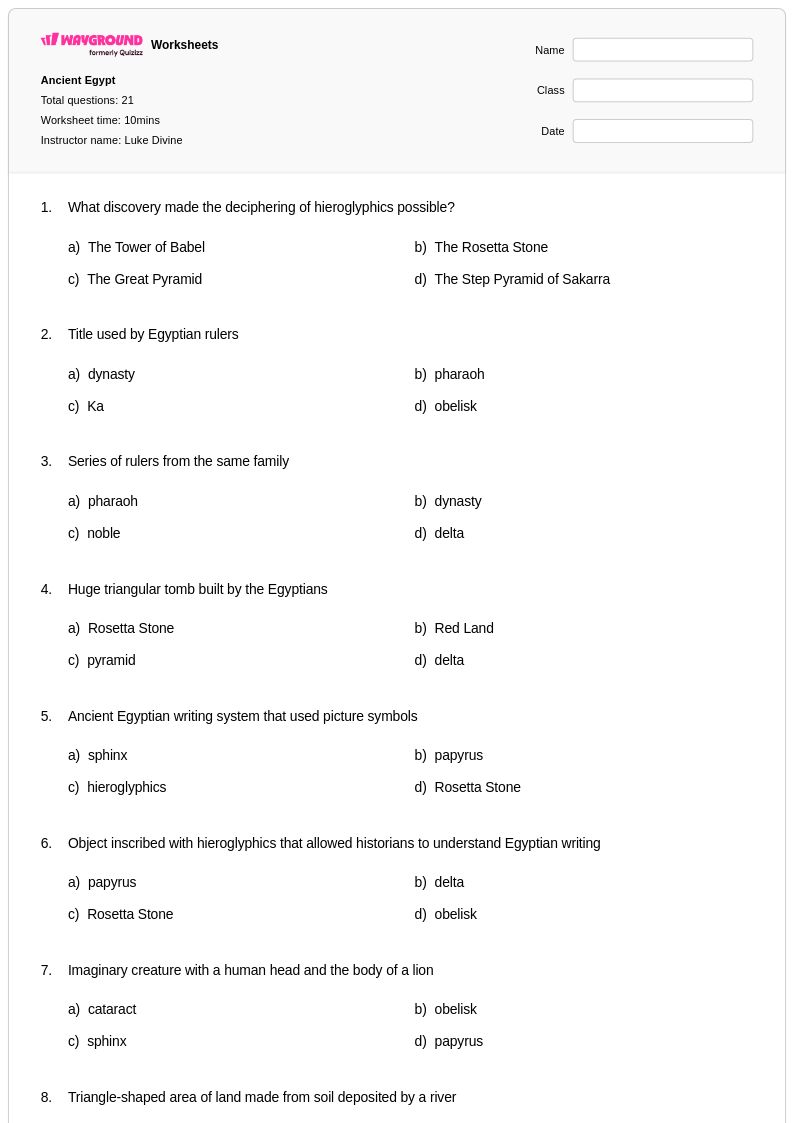
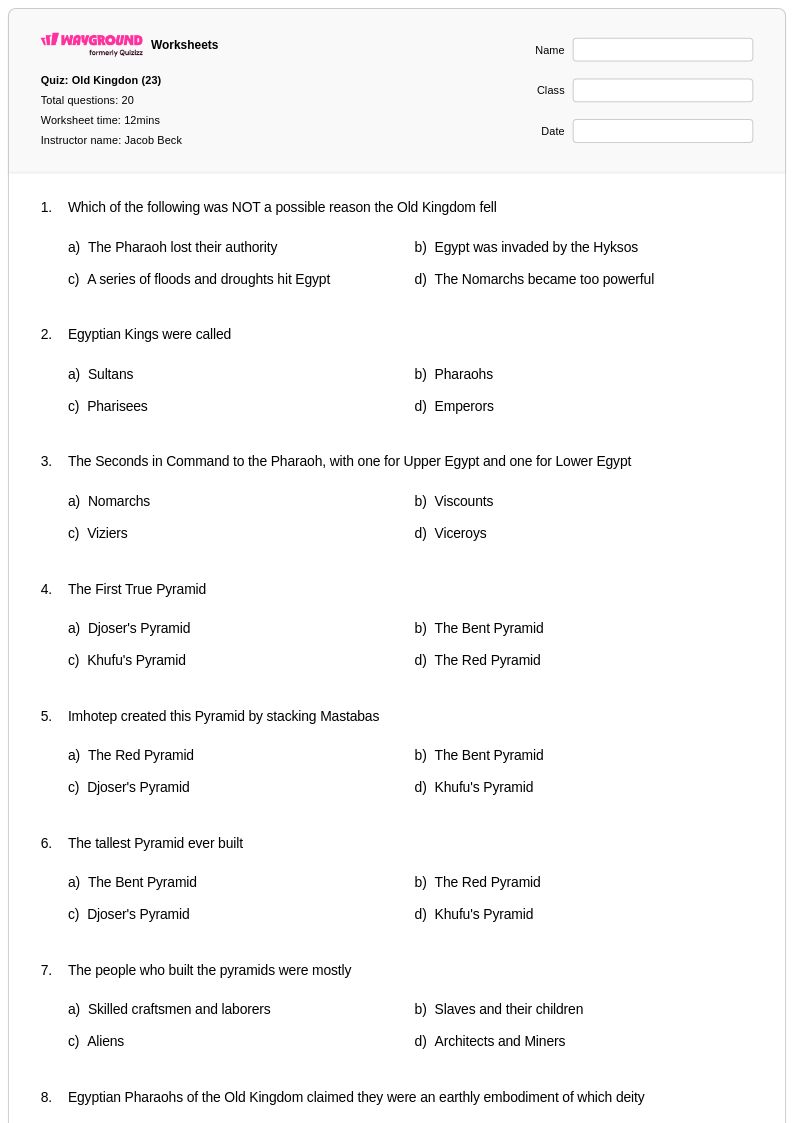
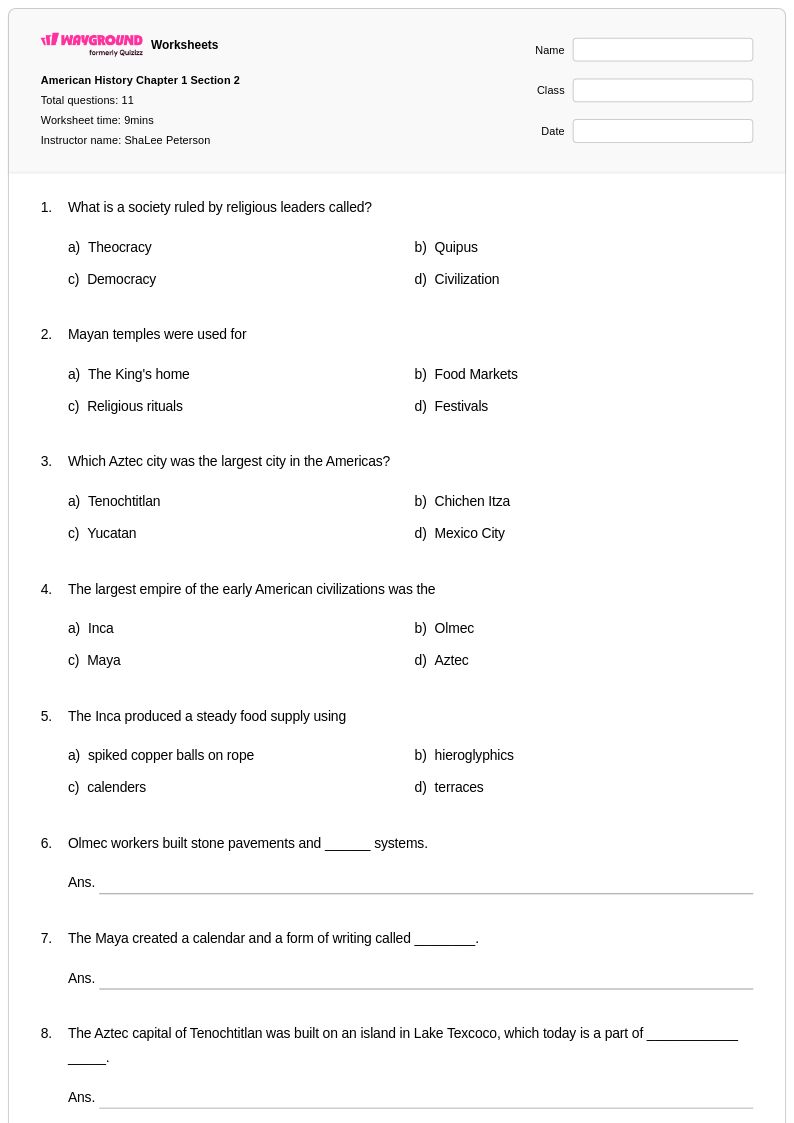
Class 8 Ancient Civilizations pyramid worksheets from Wayground help students explore Egyptian architecture and engineering through engaging printables, practice problems, and comprehensive answer keys in downloadable PDF format.
Pyramids worksheets for Class 8 students available through Wayground (formerly Quizizz) provide comprehensive exploration of these magnificent ancient architectural achievements and their cultural significance. These educational resources strengthen critical thinking skills as students analyze the construction techniques, mathematical principles, and religious purposes behind pyramid building across different civilizations, particularly in ancient Egypt and Mesoamerica. The practice problems guide learners through complex concepts such as the relationship between pyramid design and astronomical alignments, the social organization required for massive construction projects, and the evolution of burial practices among ancient rulers. Each worksheet comes with a detailed answer key to support independent learning, and the free printable format makes these resources easily accessible for classroom use or homework assignments.
Wayground (formerly Quizizz) empowers educators with an extensive collection of millions of teacher-created pyramid worksheets that support diverse learning needs in Class 8 social studies classrooms. The platform's robust search and filtering capabilities allow teachers to quickly locate materials aligned with specific curriculum standards, whether focusing on Egyptian pharaohs, Mayan temple-pyramids, or comparative analysis across ancient civilizations. Teachers can customize these digital and printable pdf resources to match their students' skill levels, using differentiation tools that accommodate various learning styles and academic abilities. This flexibility proves invaluable for lesson planning, targeted remediation for students struggling with complex historical concepts, enrichment activities for advanced learners, and consistent skill practice that reinforces understanding of how ancient civilizations used monumental architecture to express power, religious beliefs, and technological prowess.
FAQs
How do I teach ancient pyramids in a history or social studies class?
Teaching ancient pyramids works best when students examine them through multiple lenses: engineering, religion, politics, and economics. Start with the physical structure and construction methods, then expand to why each civilization built pyramids and what they reveal about social hierarchy. Comparing Egyptian and Mesoamerican pyramids side by side helps students see that pyramid-building was a cross-cultural phenomenon, not isolated to one region. This comparative approach builds critical thinking and prevents students from treating ancient history as a single, linear narrative.
What are good practice activities for students learning about Egyptian pyramids?
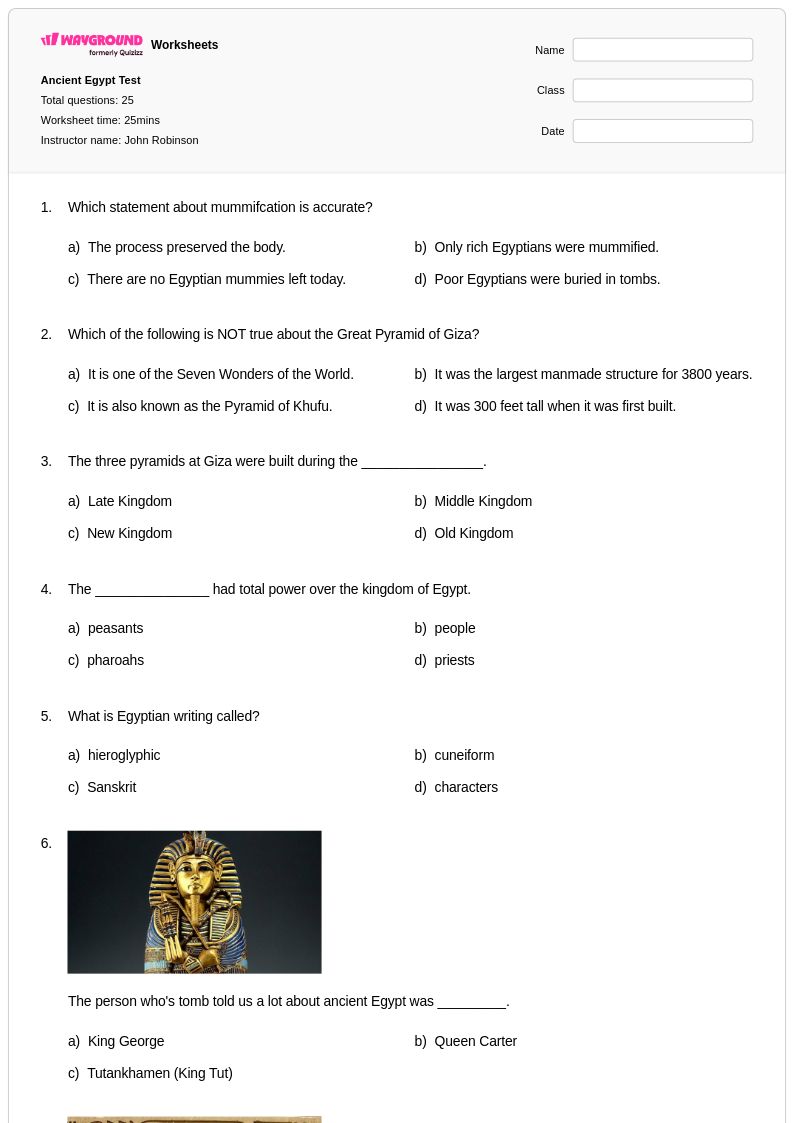
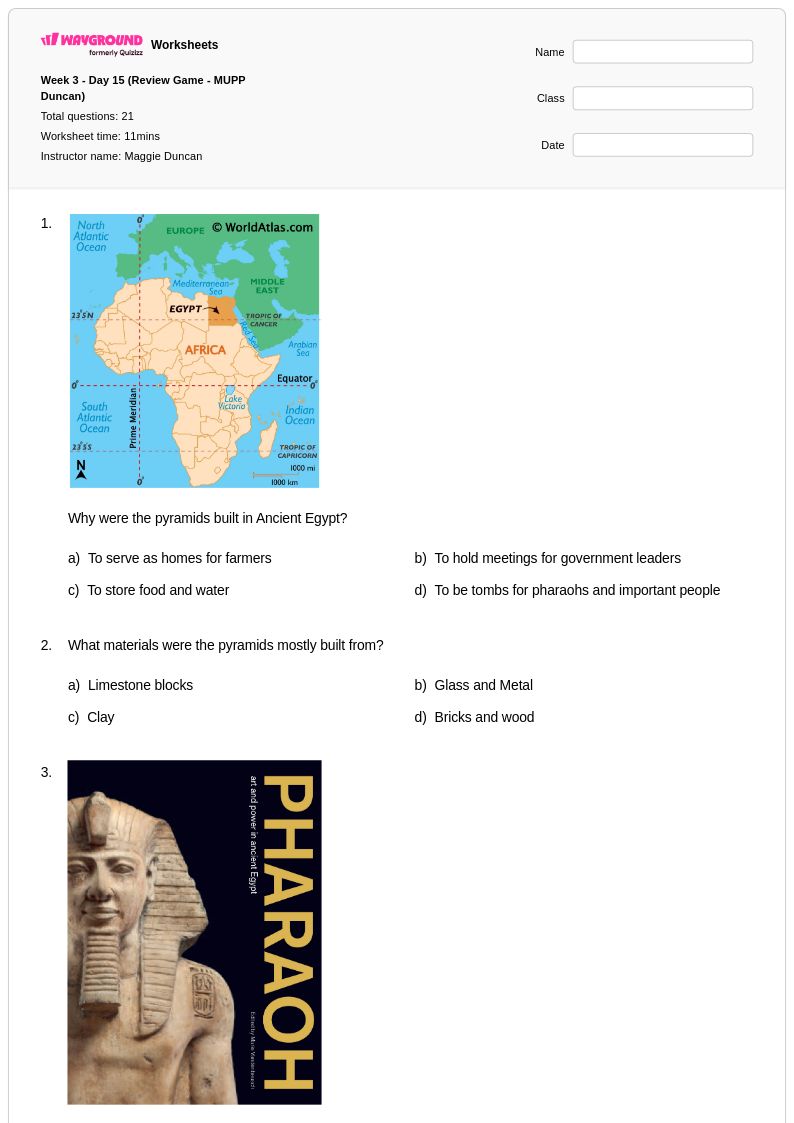
Effective practice activities include analyzing primary source images of pyramid construction, calculating slope and dimensions using the mathematical ratios ancient Egyptians applied, and comparing burial practices across dynasties. Worksheet-based tasks that ask students to evaluate the engineering decisions behind pyramid design, such as why the angle of inclination changed between the Step Pyramid and the Great Pyramid, give students concrete analytical problems to solve rather than passive reading comprehension alone.
What misconceptions do students commonly have about ancient pyramids?
The most persistent misconception is that pyramids were built by enslaved people working under brutal conditions. Current archaeological evidence strongly supports that the Great Pyramid was built by a paid, organized workforce of skilled laborers. Students also frequently assume that pyramids existed only in Egypt, overlooking the pyramid-building traditions of the Maya, Aztec, and other Mesoamerican civilizations. Addressing these errors directly in instruction deepens historical accuracy and encourages students to question popular assumptions.
How can I use pyramid worksheets to compare ancient civilizations?
Pyramid worksheets designed around civilizational comparison ask students to examine similarities and differences in construction purpose, architectural style, materials used, and religious function across Egypt and Mesoamerica. These structured comparisons build the skill of historical analysis because students must identify patterns across cultures rather than memorize isolated facts. This kind of cross-civilizational thinking is a core expectation in most world history and ancient civilizations curricula.
How do I use Wayground's pyramid worksheets in my classroom?
Wayground's pyramid worksheets are available as printable PDFs for traditional classroom use and in digital formats for technology-integrated or remote learning environments. Teachers can also host the content as a quiz directly on Wayground, making it easy to assign for independent practice or formative assessment. Each worksheet includes a complete answer key, so grading is straightforward and students can review correct answers independently.
How can I differentiate pyramid instruction for students at different skill levels?
For struggling learners, reduce cognitive load by focusing on one civilization at a time before introducing comparisons, and use visual supports like labeled diagrams. For advanced students, introduce primary sources such as ancient Egyptian texts or archaeological site reports and ask them to evaluate the reliability of historical evidence. On Wayground, teachers can apply individual accommodations such as read-aloud support, reduced answer choices, and extended time to specific students without disrupting the rest of the class.