Free Printable Research Strategies Worksheets for Class 6
Enhance Class 6 students' research strategies with Wayground's comprehensive collection of free worksheets and printables featuring practice problems and answer keys to develop essential information-gathering and source evaluation skills.
Explore printable Research Strategies worksheets for Class 6
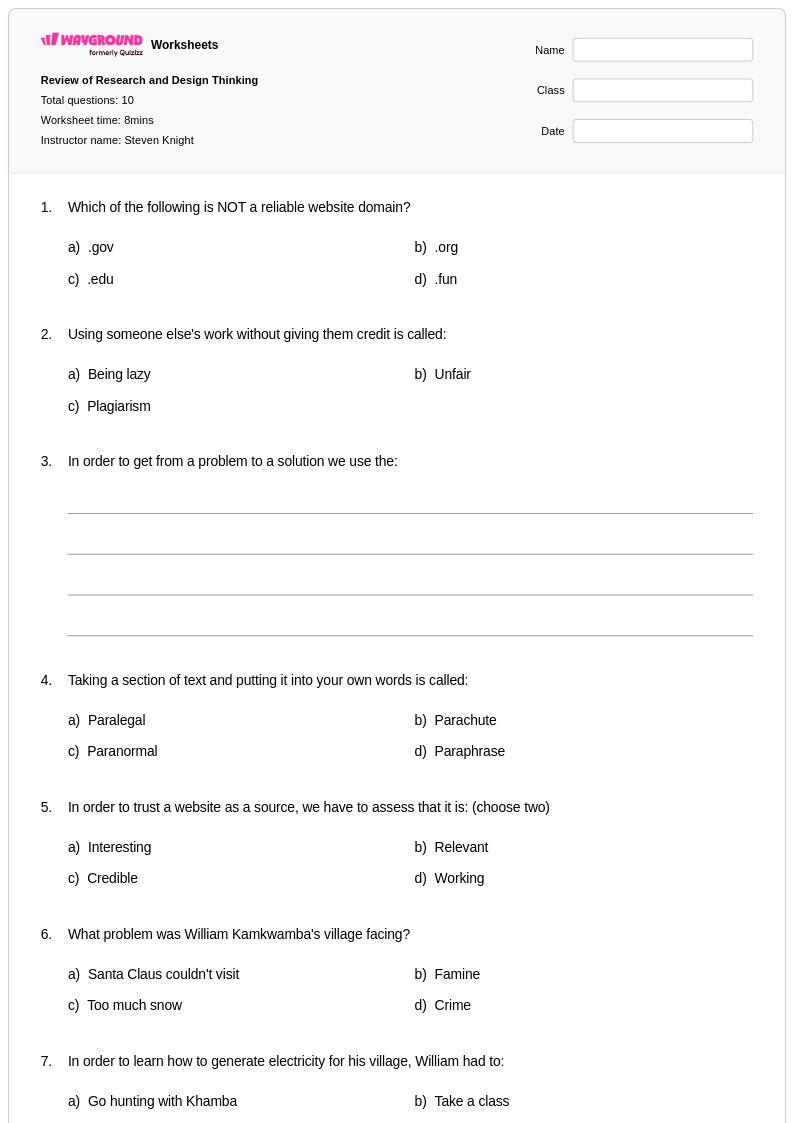
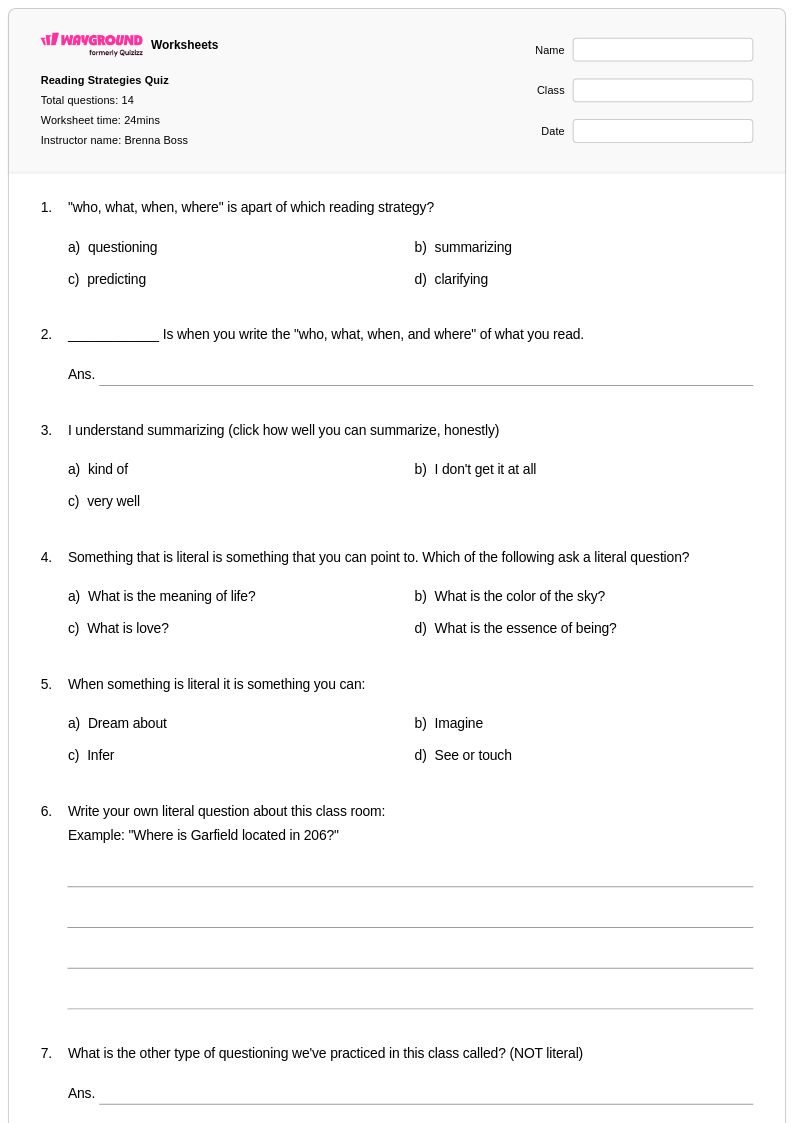
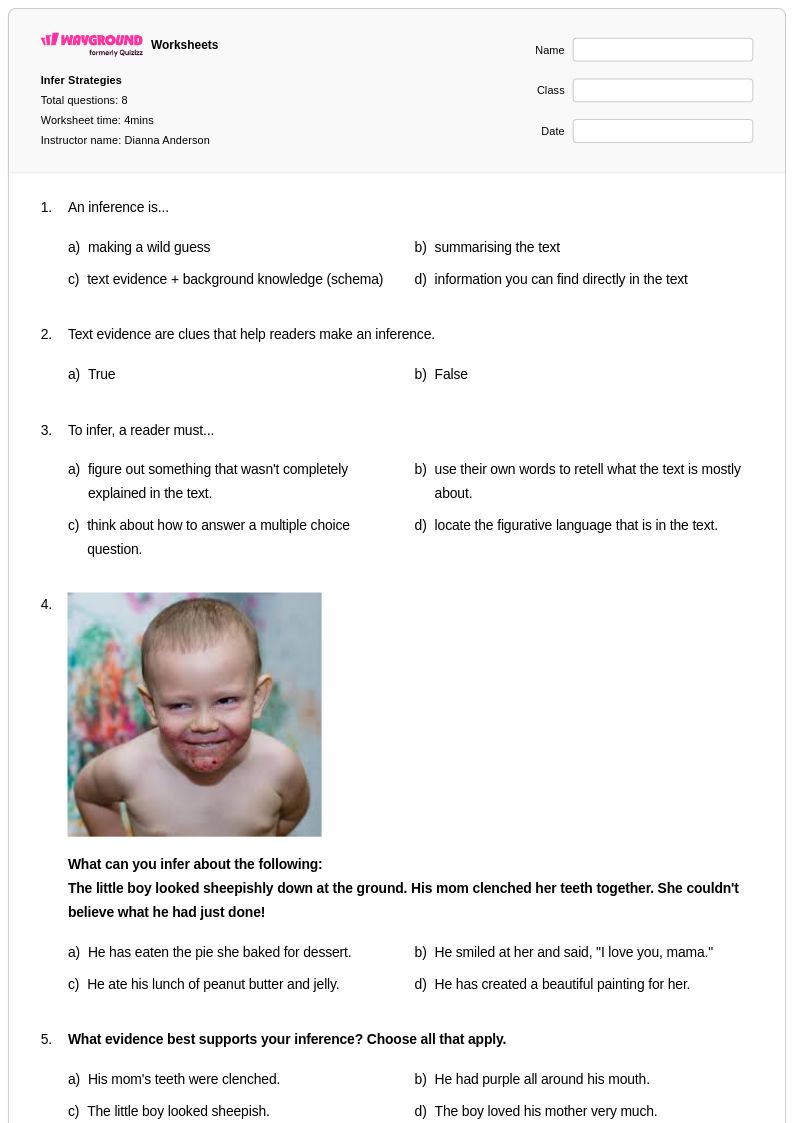
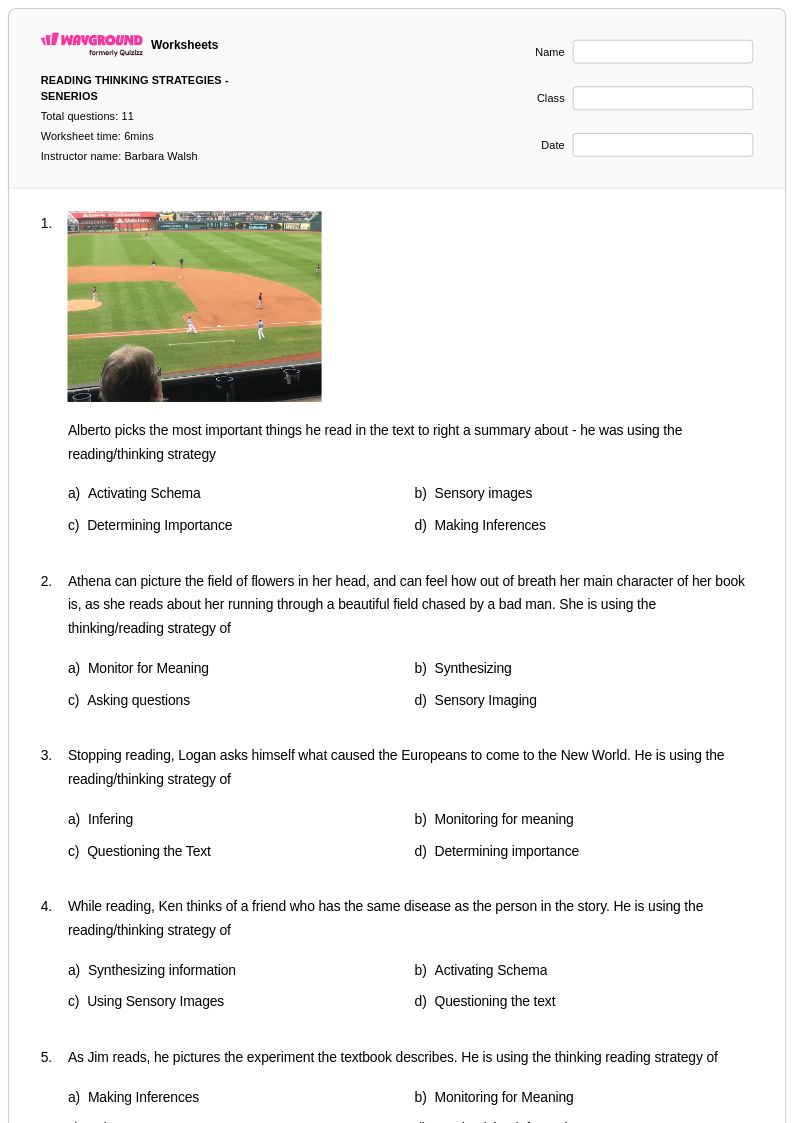
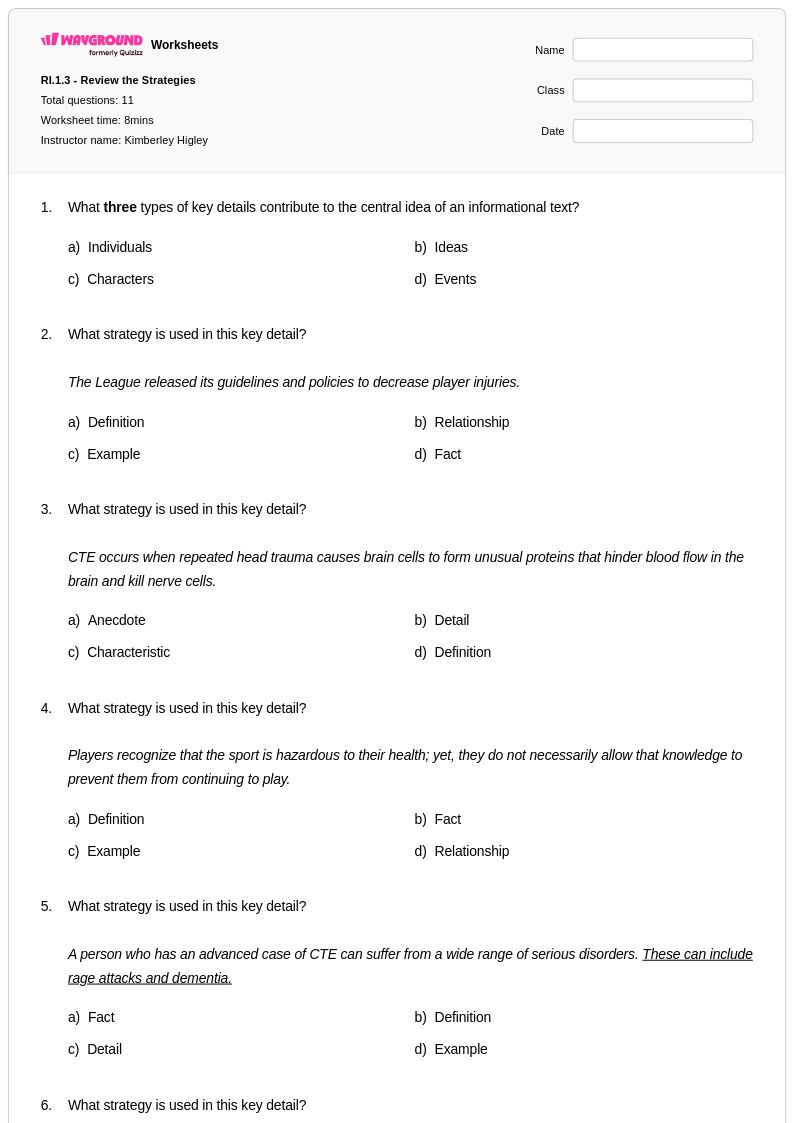
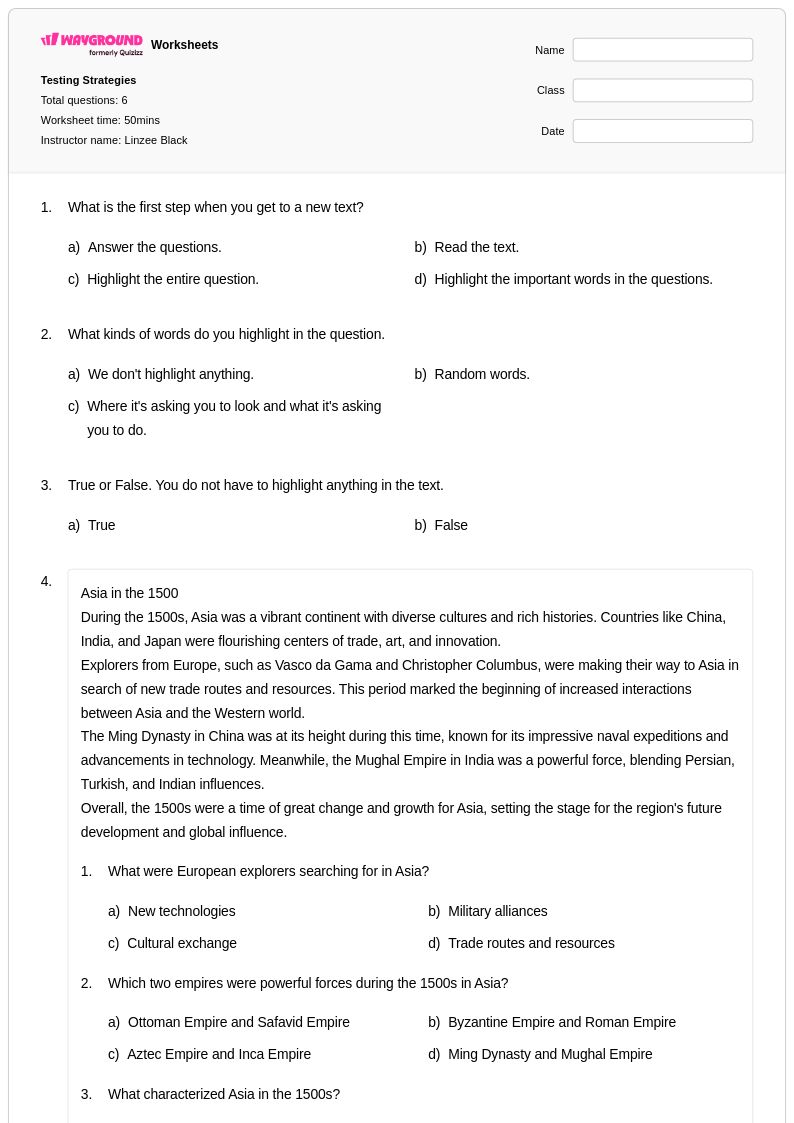
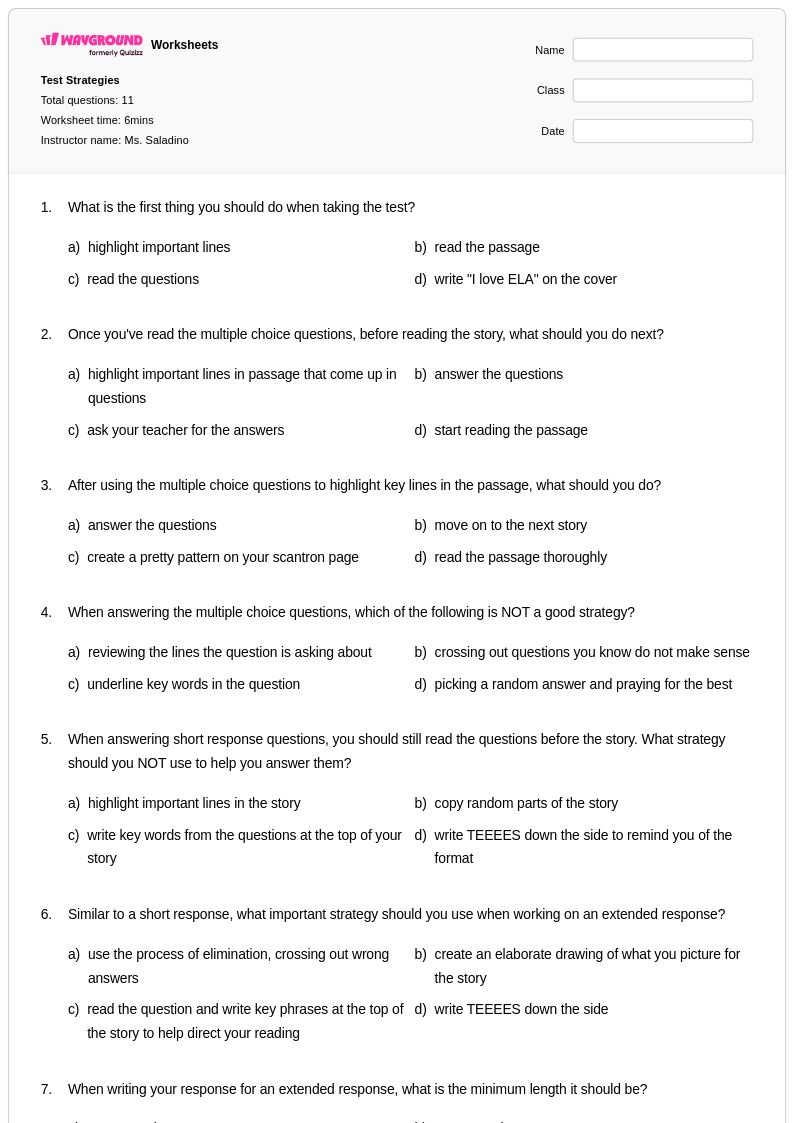
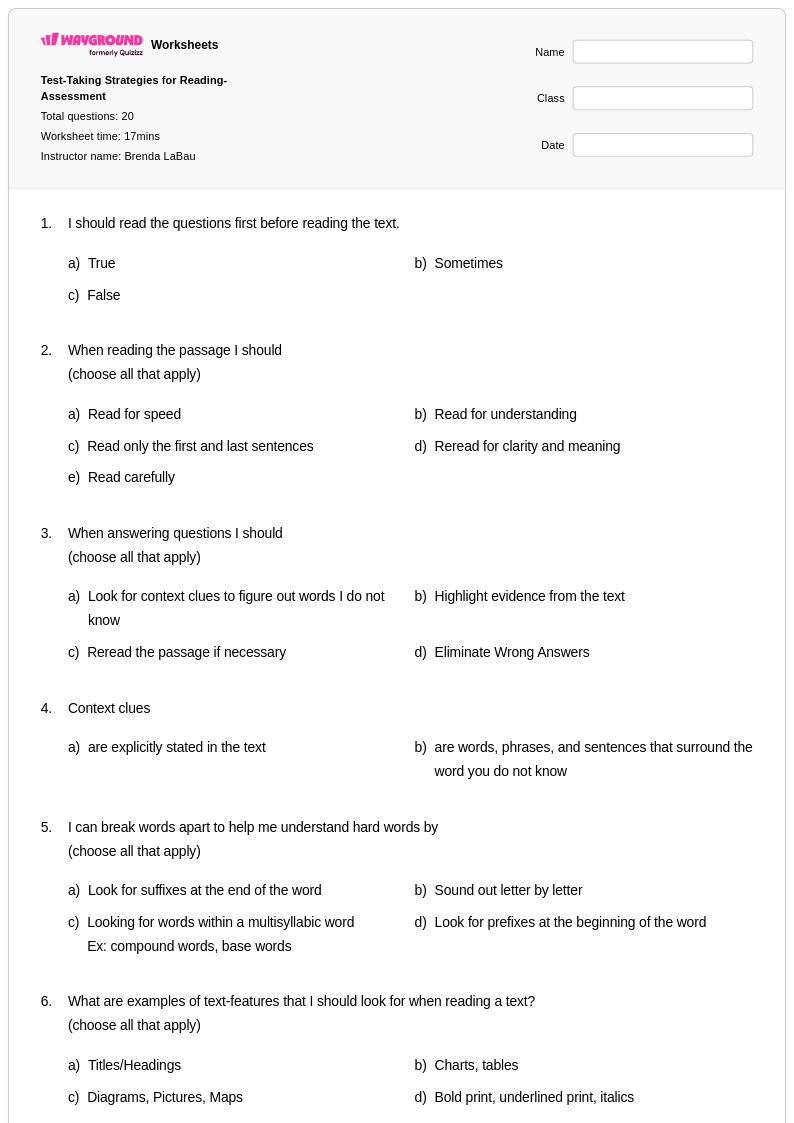
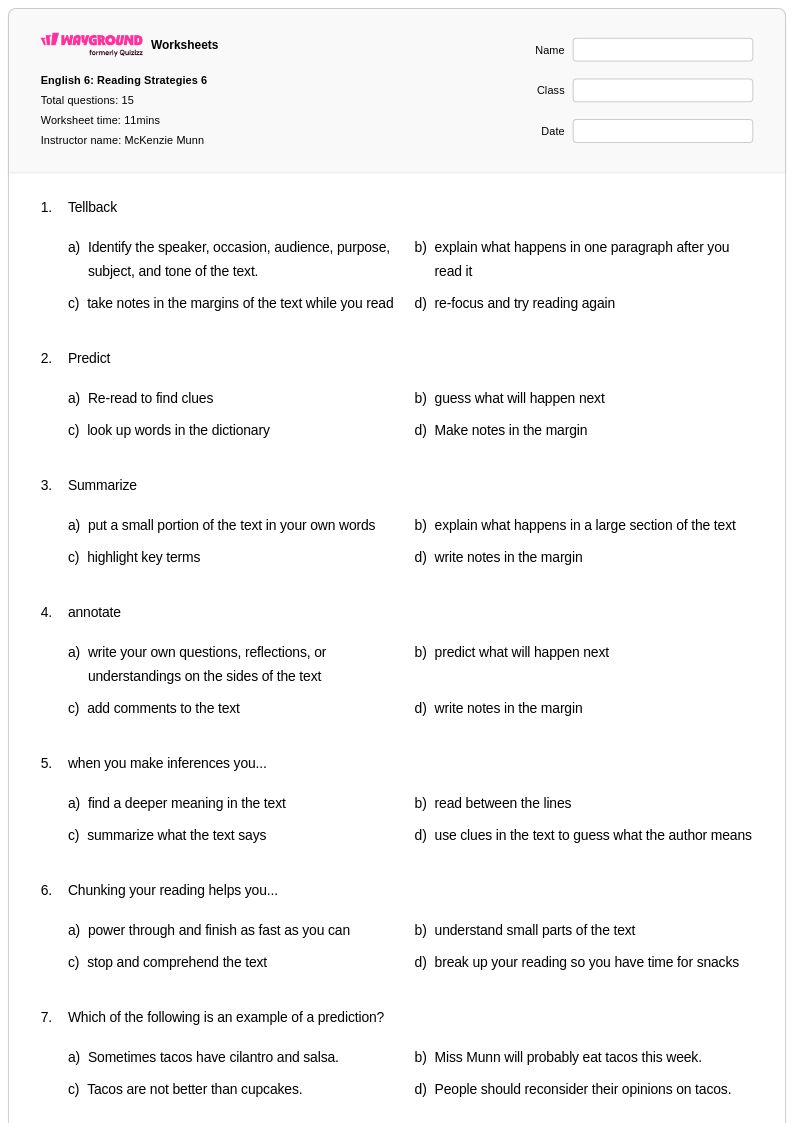
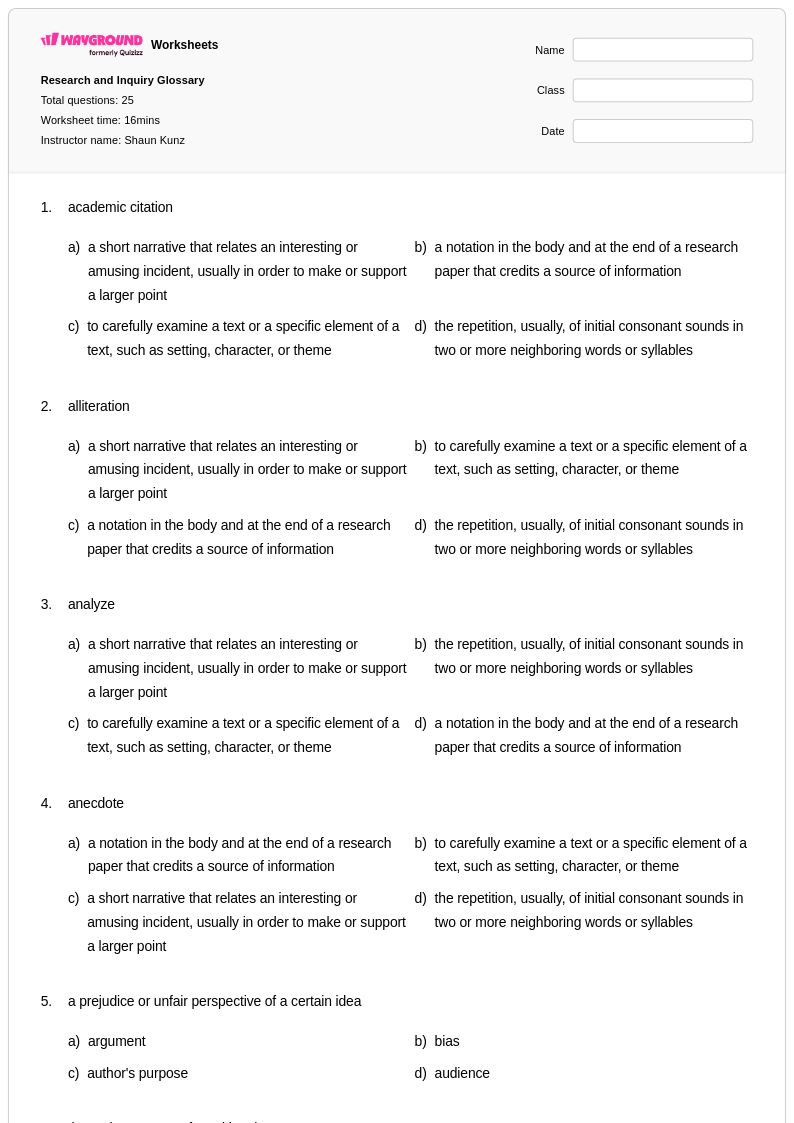
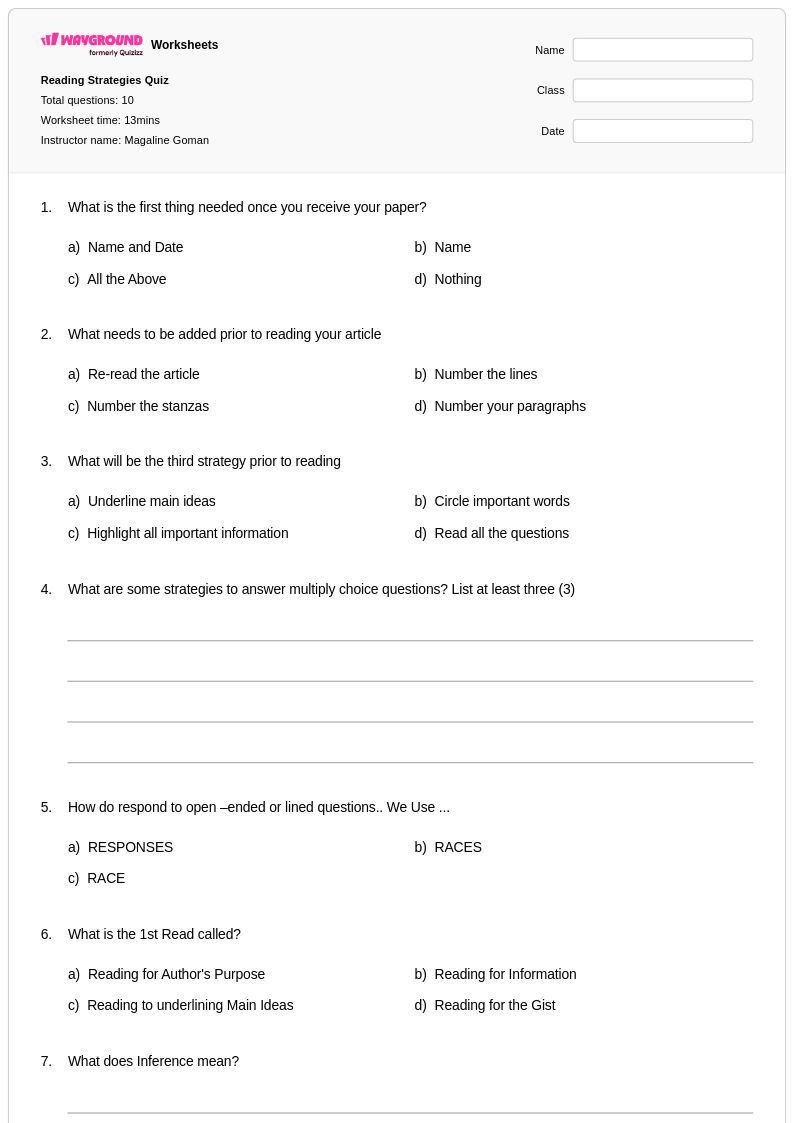
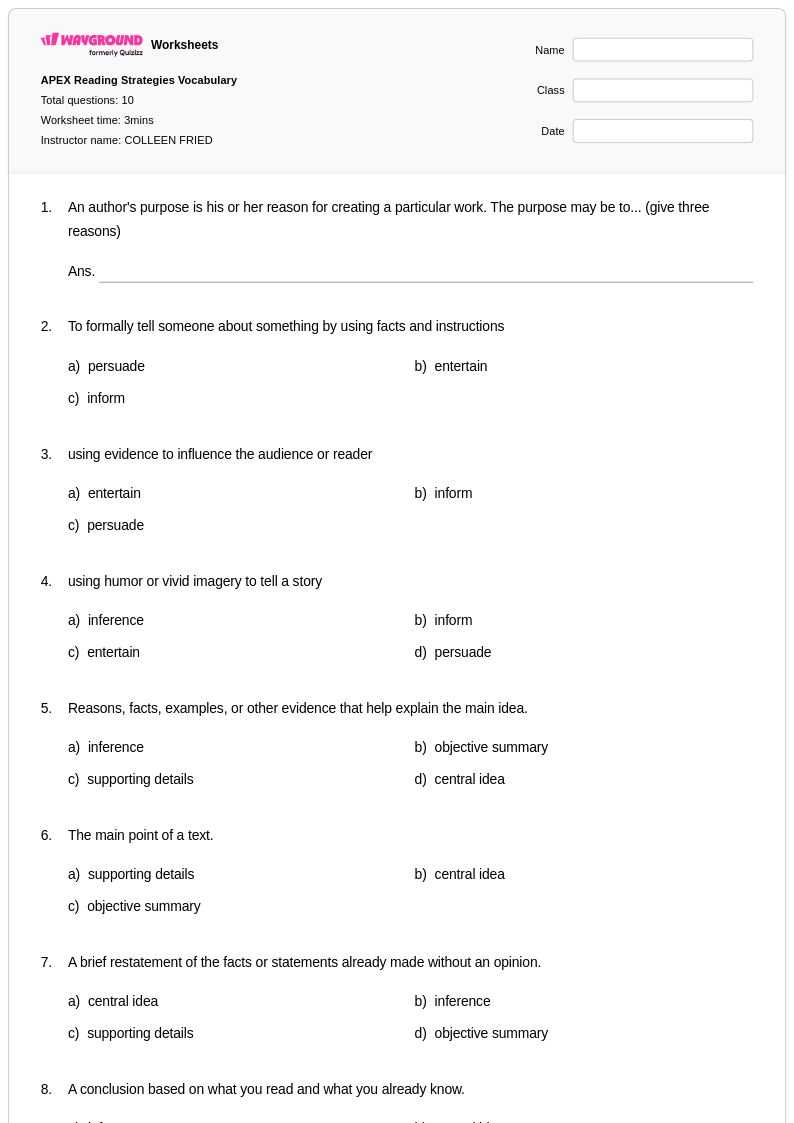
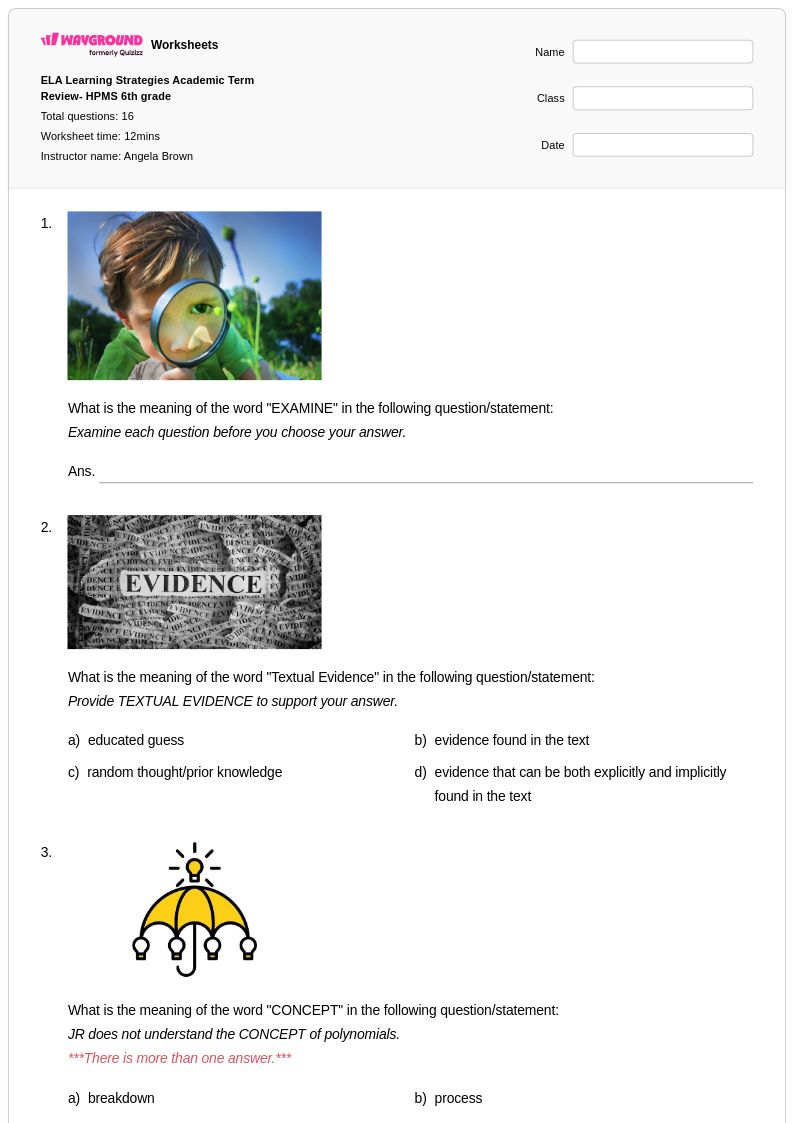
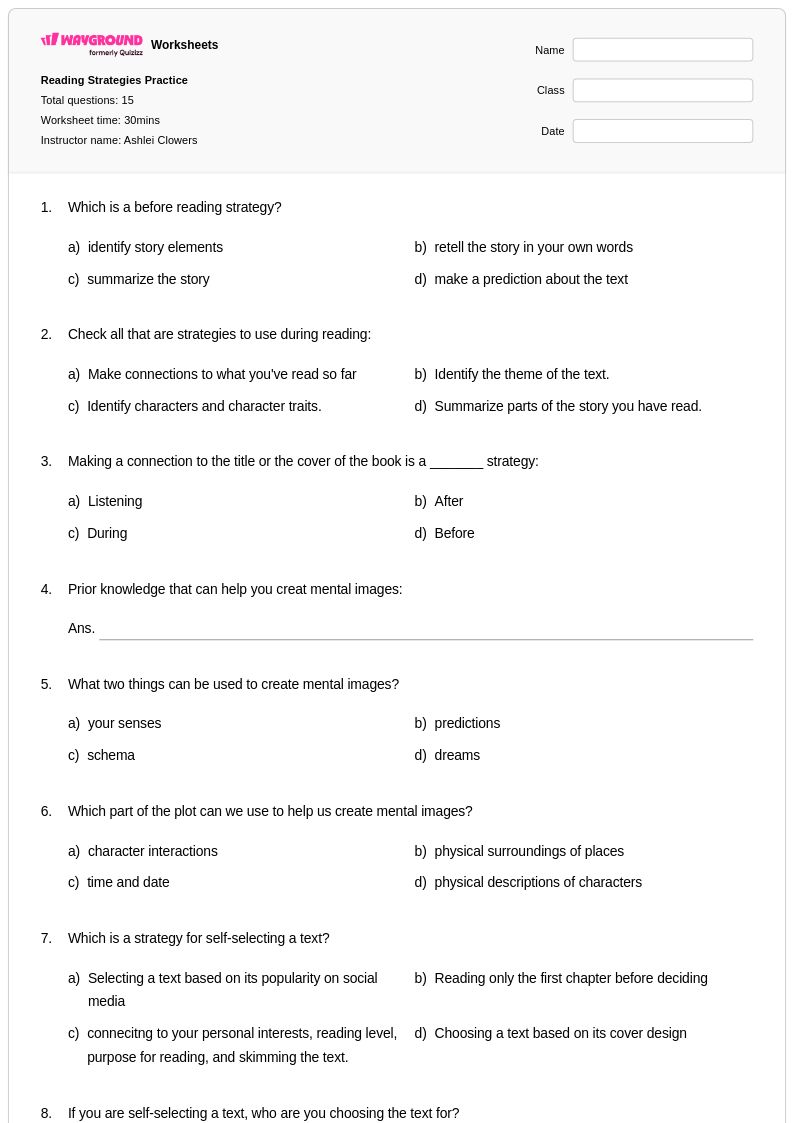
Research strategies form a cornerstone of Class 6 writing instruction, and Wayground's comprehensive worksheet collection provides students with essential practice in developing these critical academic skills. These expertly designed worksheets guide sixth-grade students through the systematic process of gathering, evaluating, and organizing information from multiple sources, teaching them to distinguish between primary and secondary sources, assess credibility, and take effective notes. Each worksheet includes detailed answer keys and is available as free printable PDFs, allowing students to work through practice problems that reinforce proper citation techniques, fact-checking methods, and the ethical use of sources in their writing projects.
Wayground, formerly Quizizz, empowers educators with millions of teacher-created resources specifically focused on research strategies for Class 6 writing instruction. The platform's robust search and filtering capabilities enable teachers to quickly locate worksheets aligned with state and national standards, while built-in differentiation tools allow for seamless customization based on individual student needs and learning levels. These versatile resources are available in both printable PDF format and interactive digital versions, making them ideal for classroom instruction, homework assignments, remediation support, and enrichment activities that strengthen students' research and information literacy skills across various writing contexts.
FAQs
How do I teach research strategies to students?
Effective research strategy instruction begins with breaking the process into discrete, teachable skills: forming testable questions, locating credible sources, evaluating information, taking organized notes, and citing sources correctly. Teachers should model each step explicitly before asking students to apply it independently, using real-world examples such as evaluating a news article for bias or comparing a primary source with a secondary account. Scaffolded practice that moves from guided to independent work helps students internalize each skill before they integrate all steps into a full research task.
What exercises help students practice evaluating sources?
Source evaluation exercises work best when students apply structured criteria, such as the CRAAP test (Currency, Relevance, Authority, Accuracy, Purpose), to real or realistic sources. Effective practice tasks include side-by-side comparisons of credible and unreliable websites, fact-checking a set of claims against verified references, and identifying whether a source is primary or secondary. Repeated exposure to varied source types, including news articles, academic databases, and social media posts, helps students build transferable judgment rather than memorizing rules.
What are the most common mistakes students make when learning to cite sources?
Students most frequently confuse citation formats across styles (MLA, APA, Chicago), omit required elements such as access dates for online sources, or reverse author name order. Another persistent error is treating in-text citations and reference list entries as interchangeable, not understanding that both are required. Students also commonly paraphrase without citing, assuming that changing wording eliminates the need to credit the original source, which is a core misconception underlying many plagiarism issues.
How do I help students understand plagiarism and why it matters?
Students often plagiarize not from intent but from misunderstanding what constitutes original thought versus borrowed information. Direct instruction should cover the difference between paraphrasing and copying, when to quote versus summarize, and why citing sources is an academic integrity standard rather than just a formatting rule. Exercises that ask students to rewrite a passage in their own words and then construct a proper citation reinforce both the skill and the reasoning behind it.
How do I use Wayground's research strategies worksheets in my classroom?
Wayground's research strategies worksheets are available as printable PDFs for traditional classroom use and in digital formats for technology-integrated learning environments, so they fit both paper-based and device-supported instruction. Each worksheet includes an answer key, making them practical for independent practice, homework, or guided in-class work. Teachers can also host worksheets as a quiz directly on Wayground, enabling real-time student responses and progress monitoring without additional setup.
How can I differentiate research strategies instruction for students at different skill levels?
Differentiation in research instruction typically involves adjusting the complexity of the source material, the number of steps students must complete independently, and the degree of teacher scaffolding provided. On Wayground, teachers can apply student-level accommodations including extended time, read-aloud support for students who need text read to them, and reduced answer choices to lower cognitive load for struggling learners, all without other students being notified. These settings are reusable across sessions, making it practical to maintain consistent support throughout a research unit.
What is an annotated bibliography and how do I teach students to write one?
An annotated bibliography is a list of sources in which each citation is followed by a brief descriptive and evaluative paragraph, called an annotation, that summarizes the source's content, assesses its credibility, and explains its relevance to the research topic. Teaching this skill effectively requires students to first master basic citation formatting and source evaluation independently before combining both into a single annotated entry. A useful classroom approach is to model a complete annotation for one source, then have students practice with a familiar text before applying the skill to sources they have selected themselves.