Free Printable Rocks and Minerals Worksheets for Kindergarten
Discover free kindergarten rocks and minerals worksheets and printables from Wayground that help young learners explore Earth's natural materials through engaging practice problems and activities with complete answer keys.
Explore printable Rocks and Minerals worksheets for Kindergarten
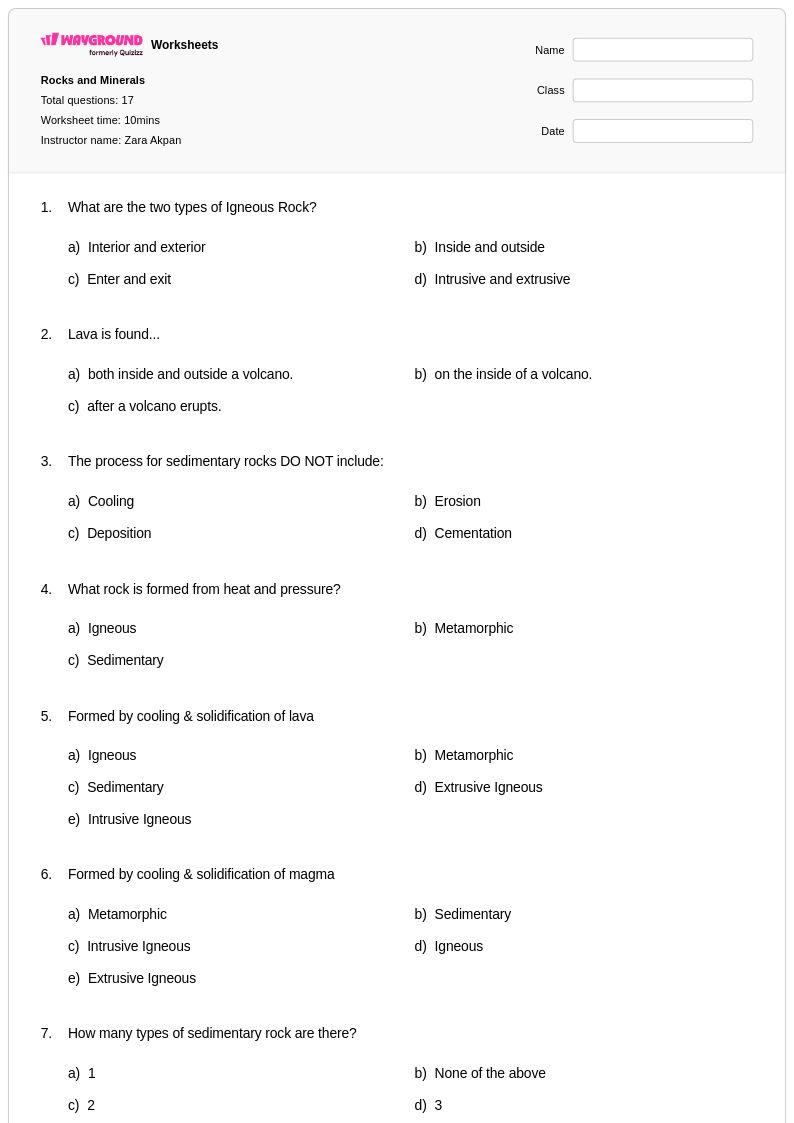
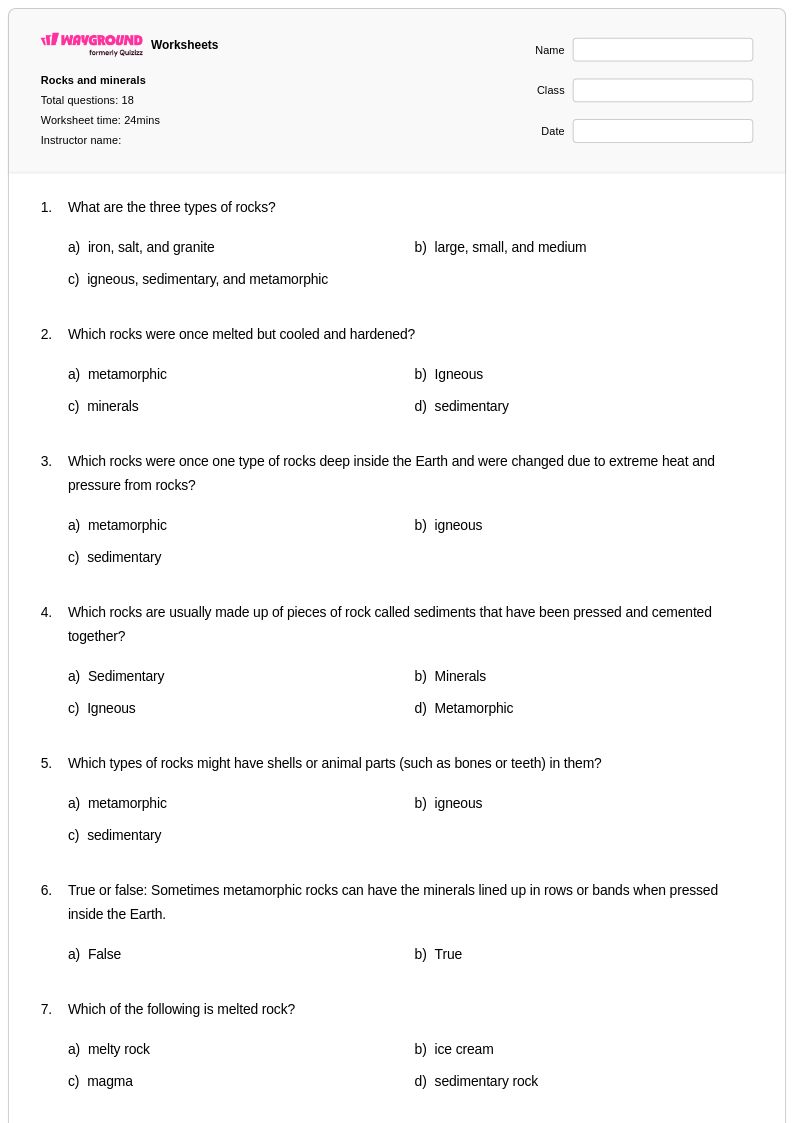
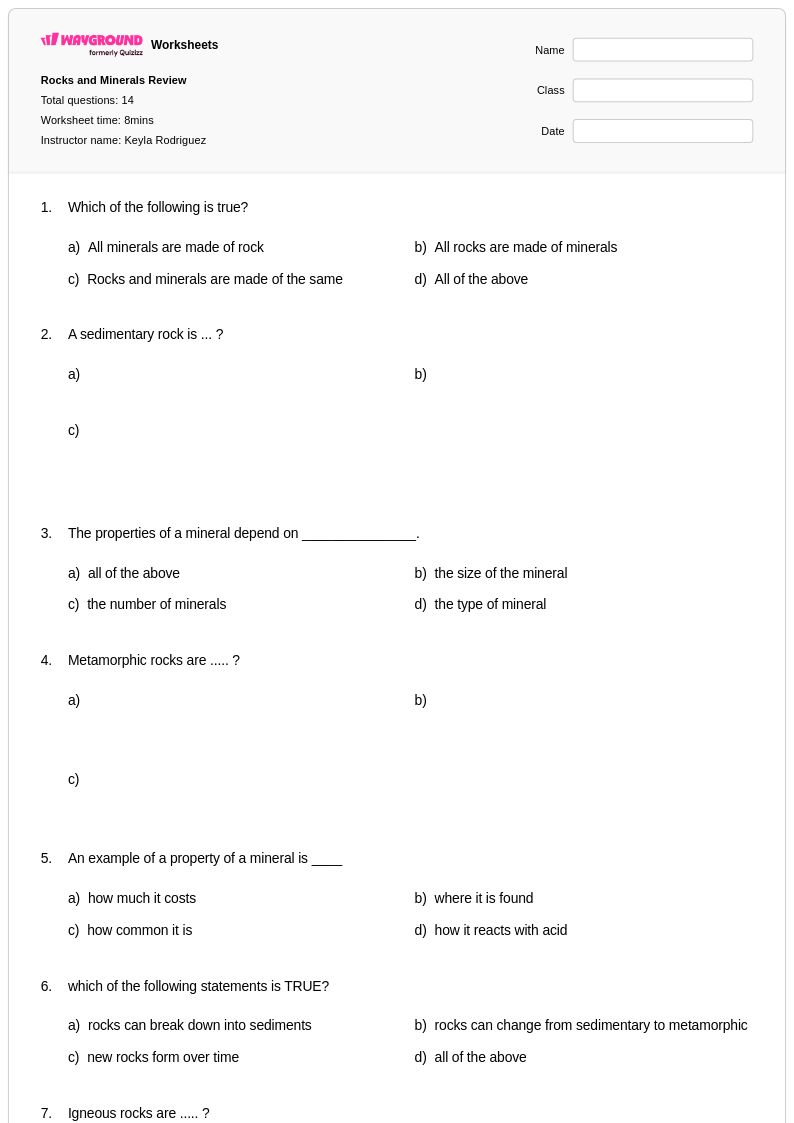
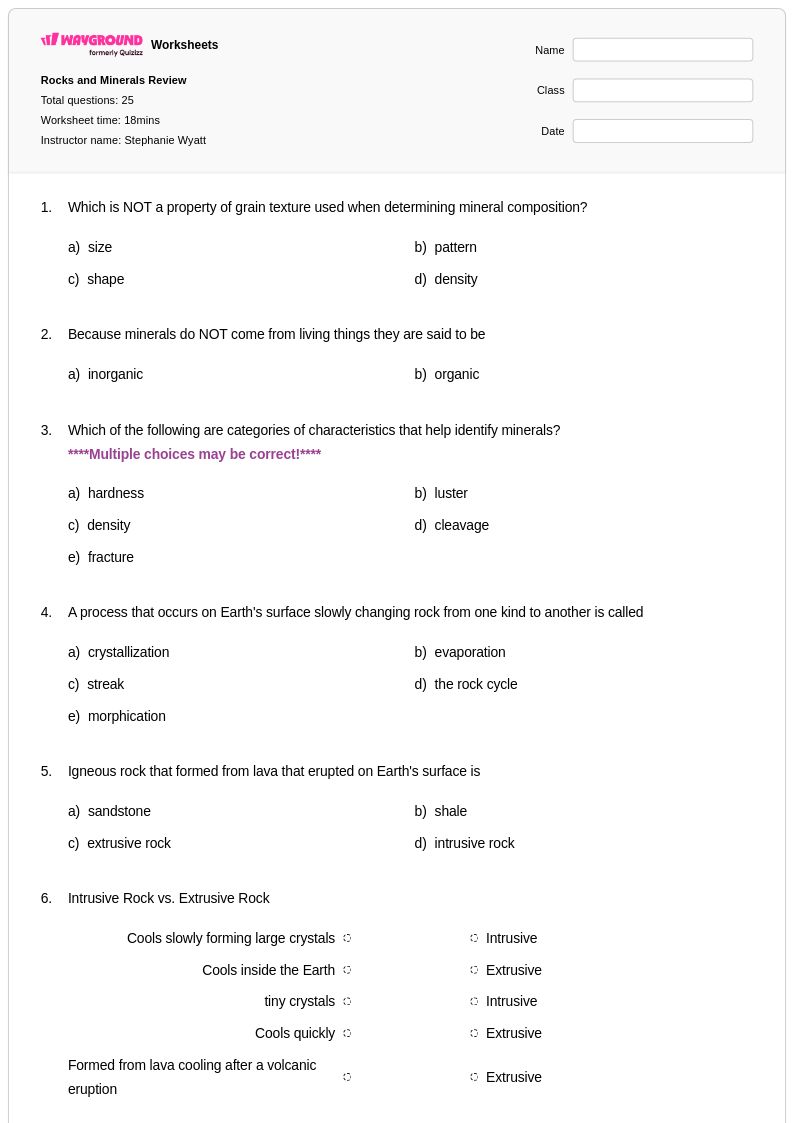
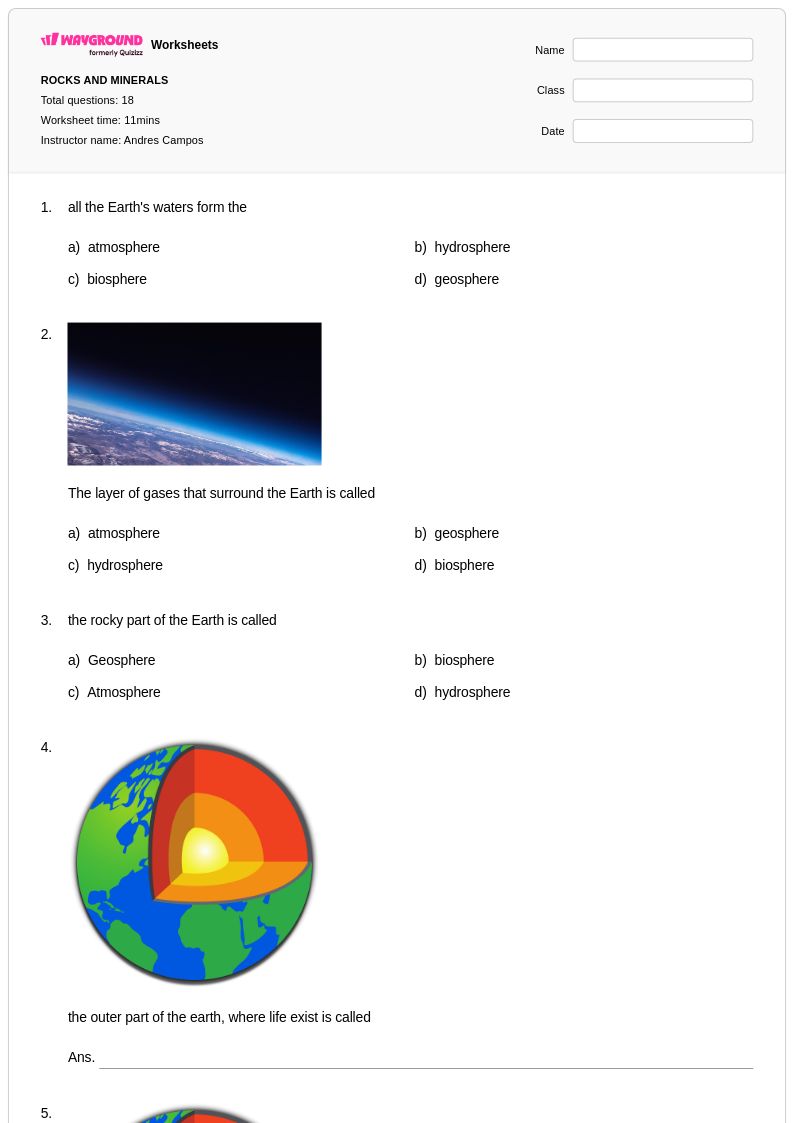
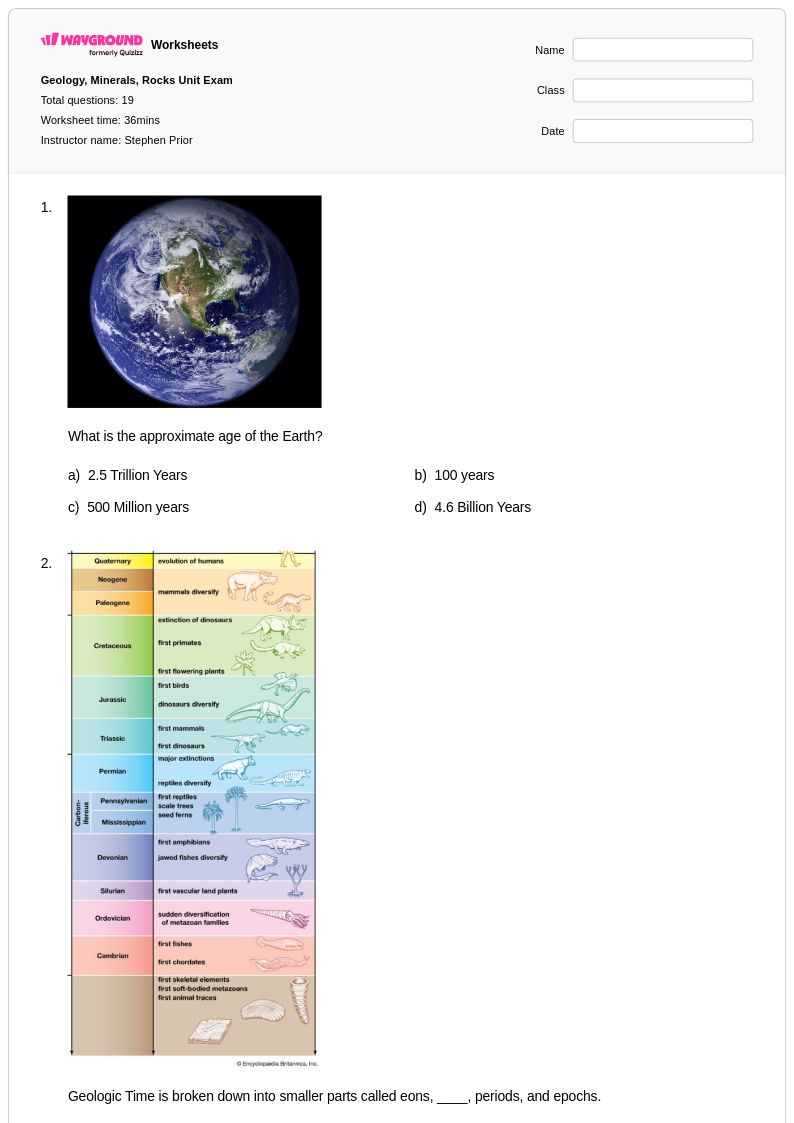
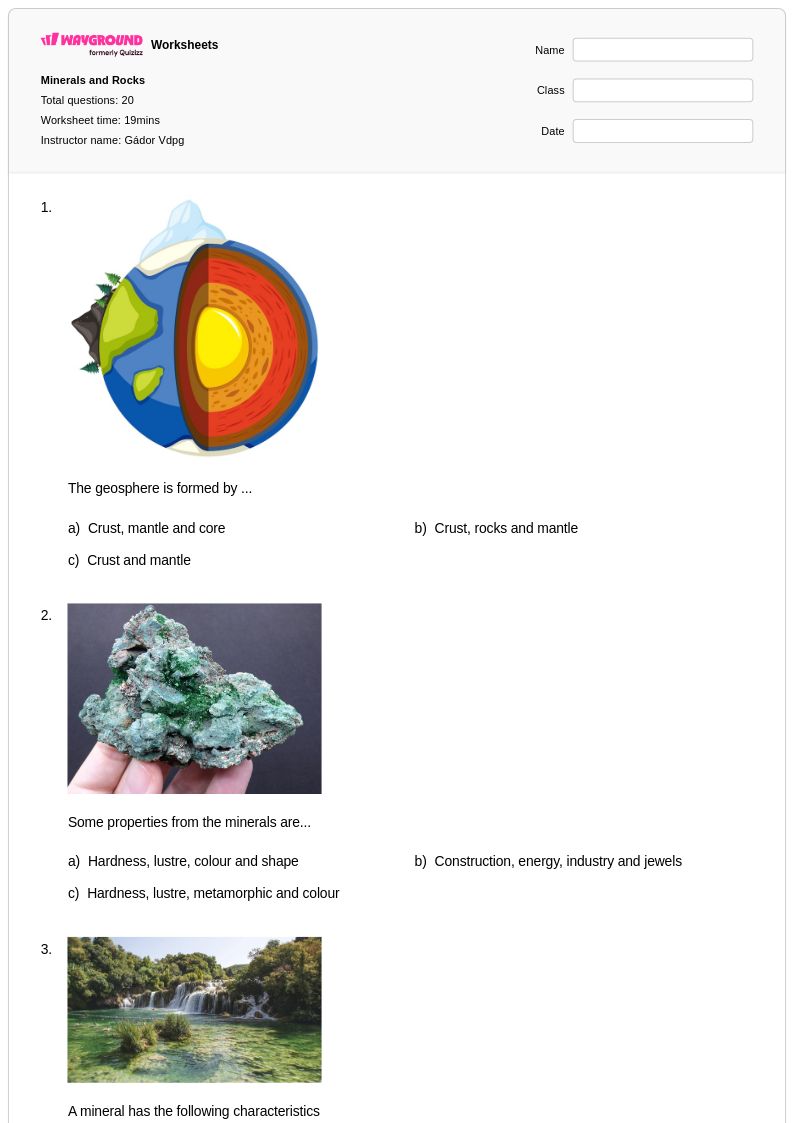
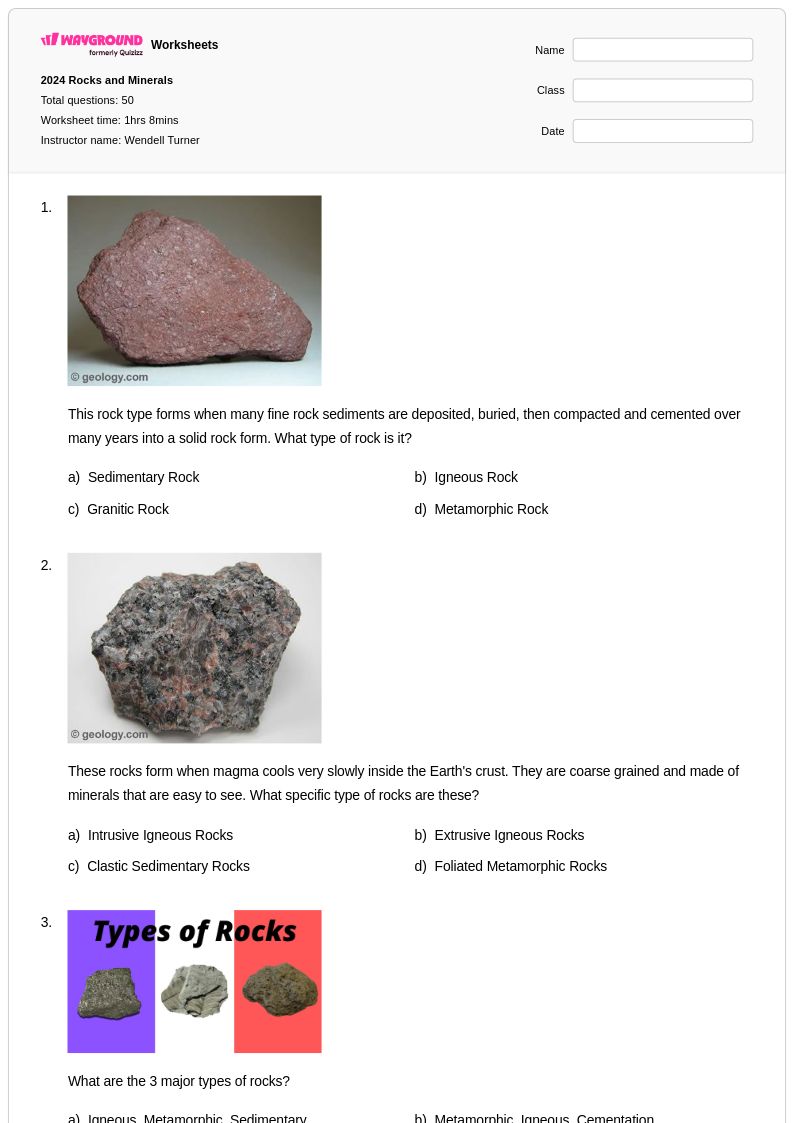
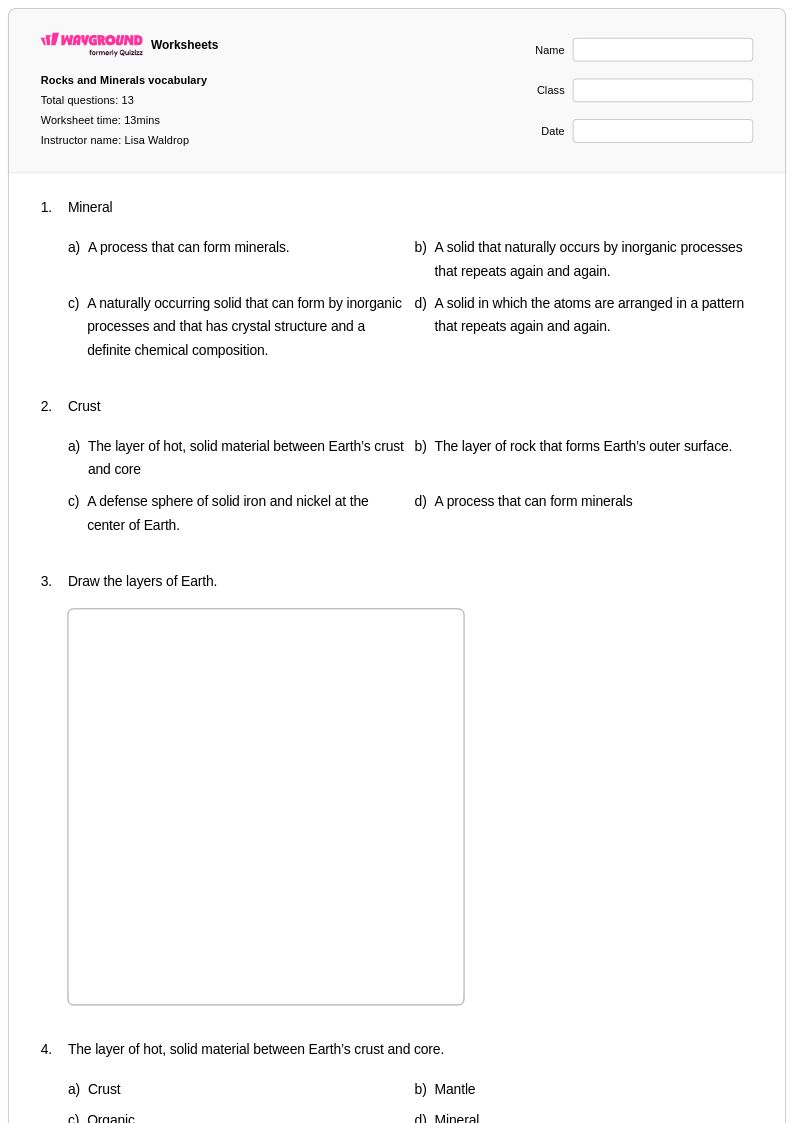
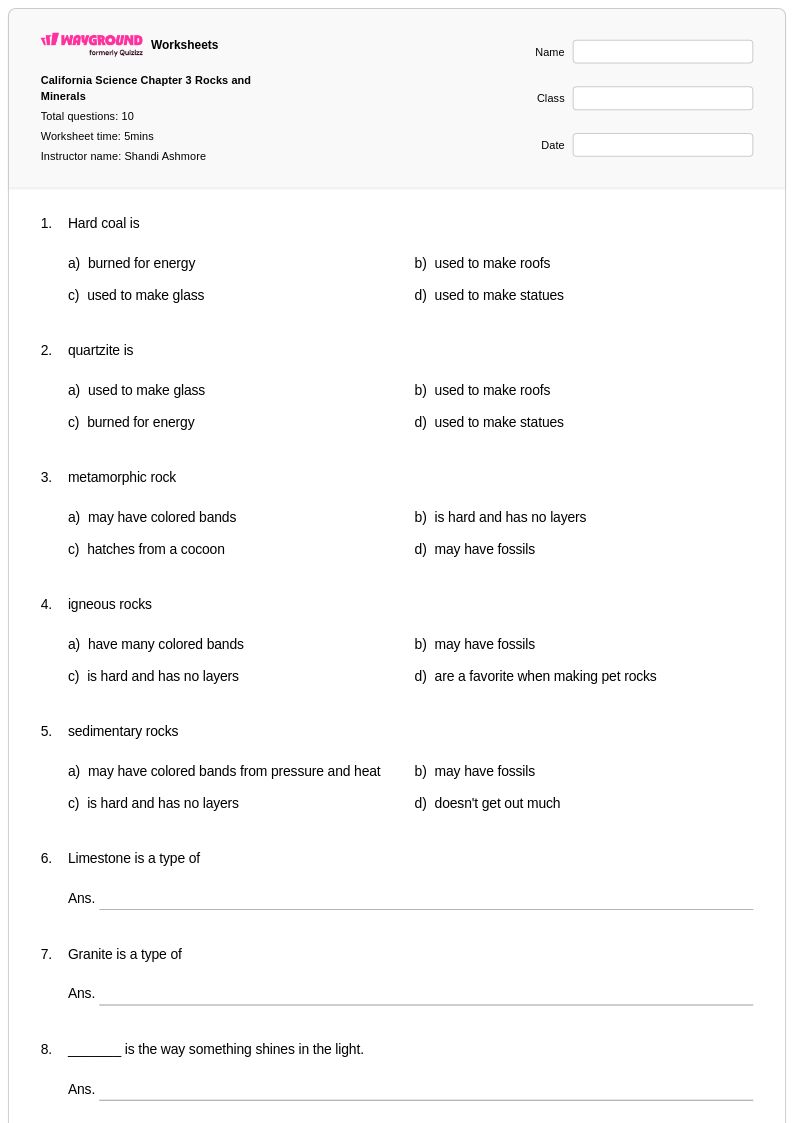
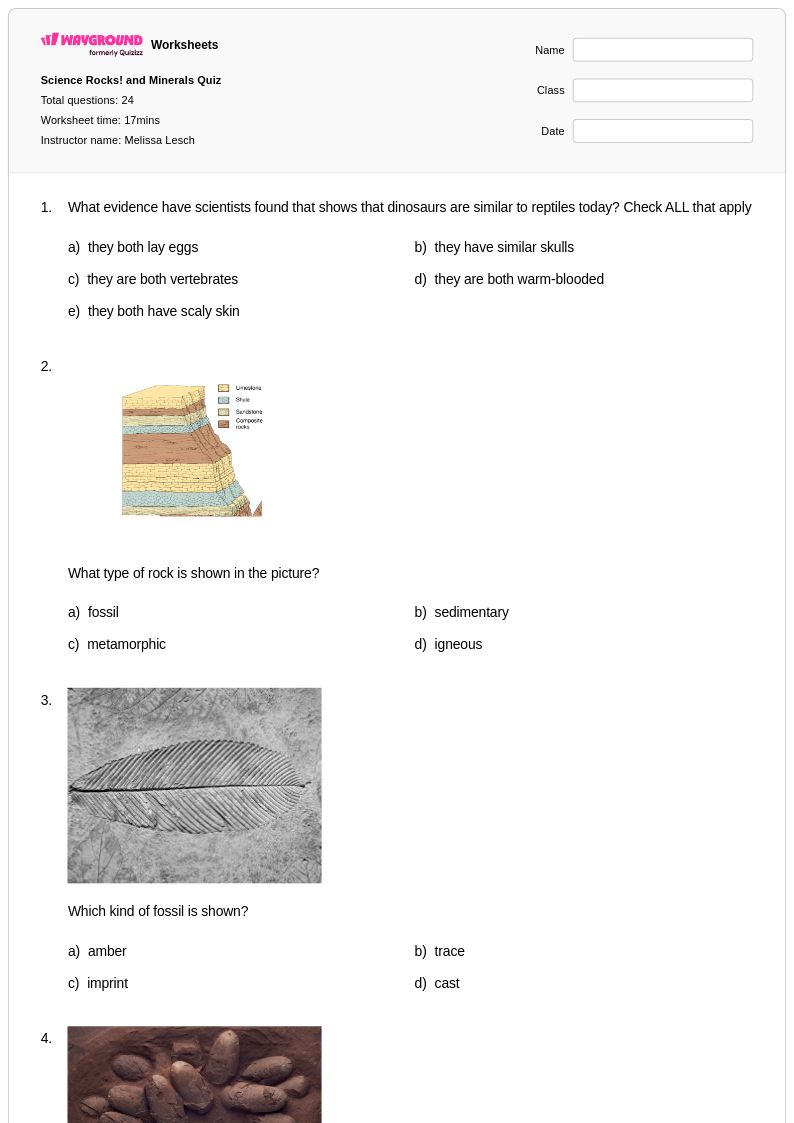
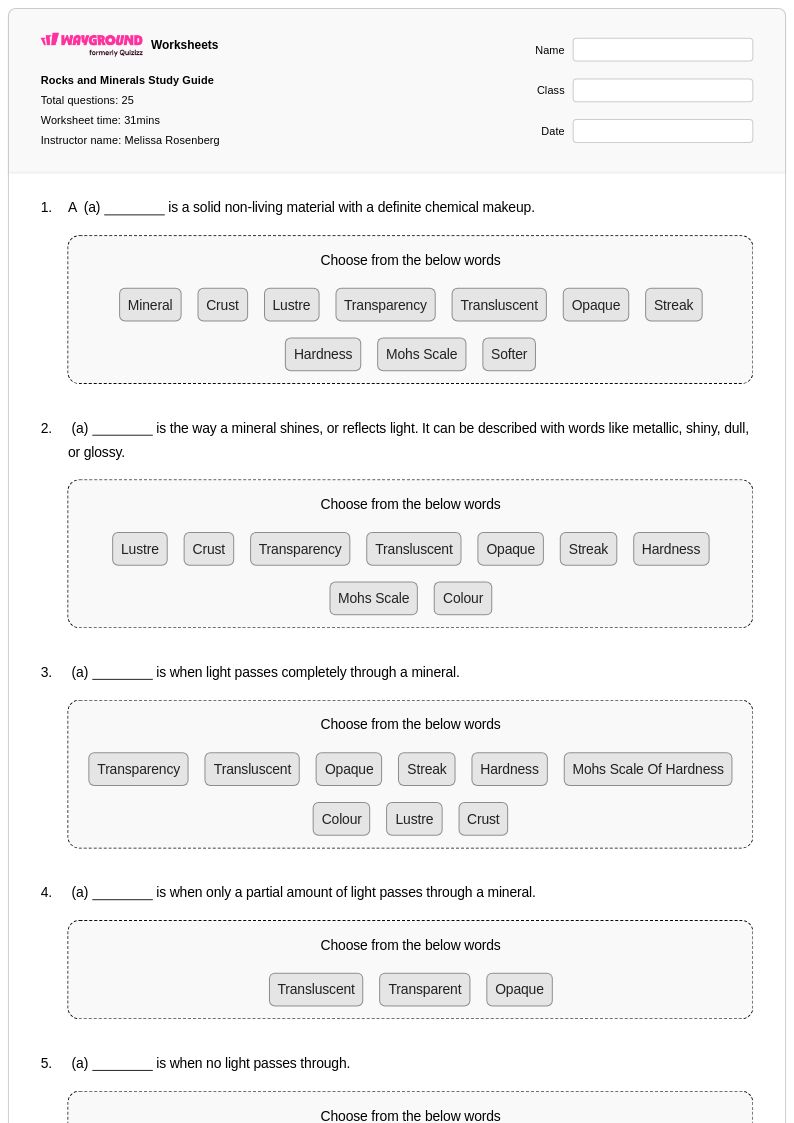
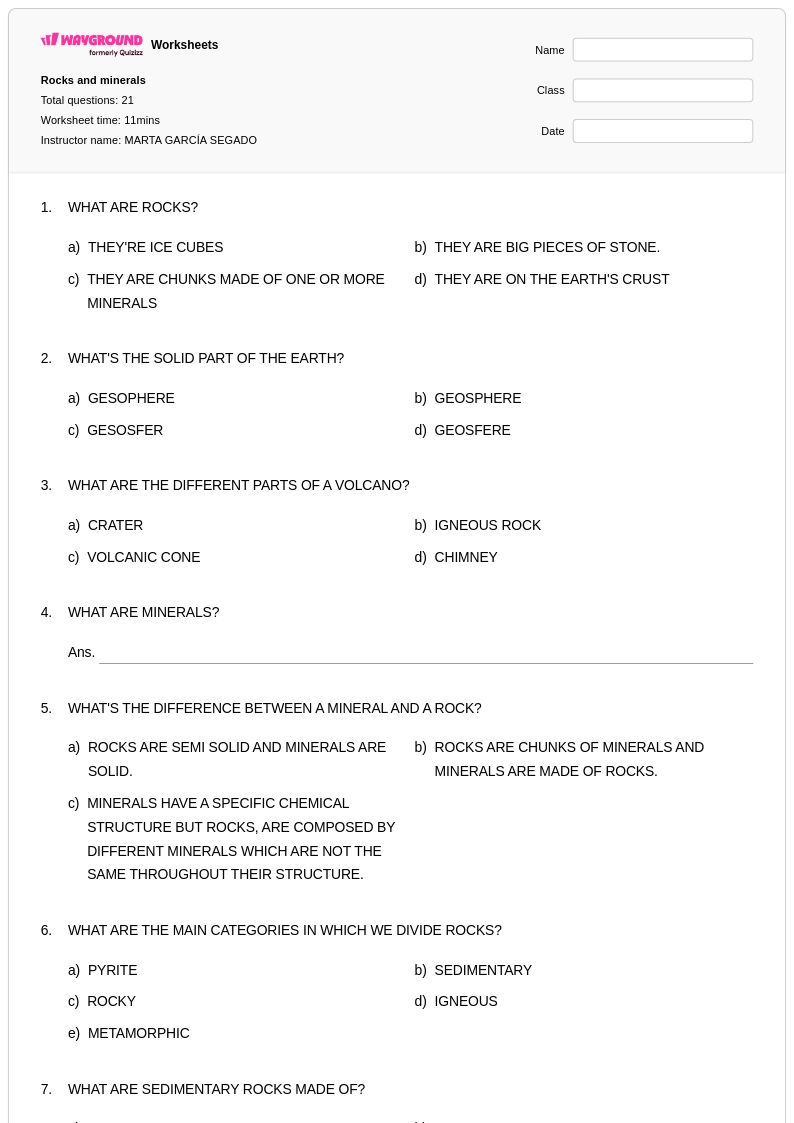
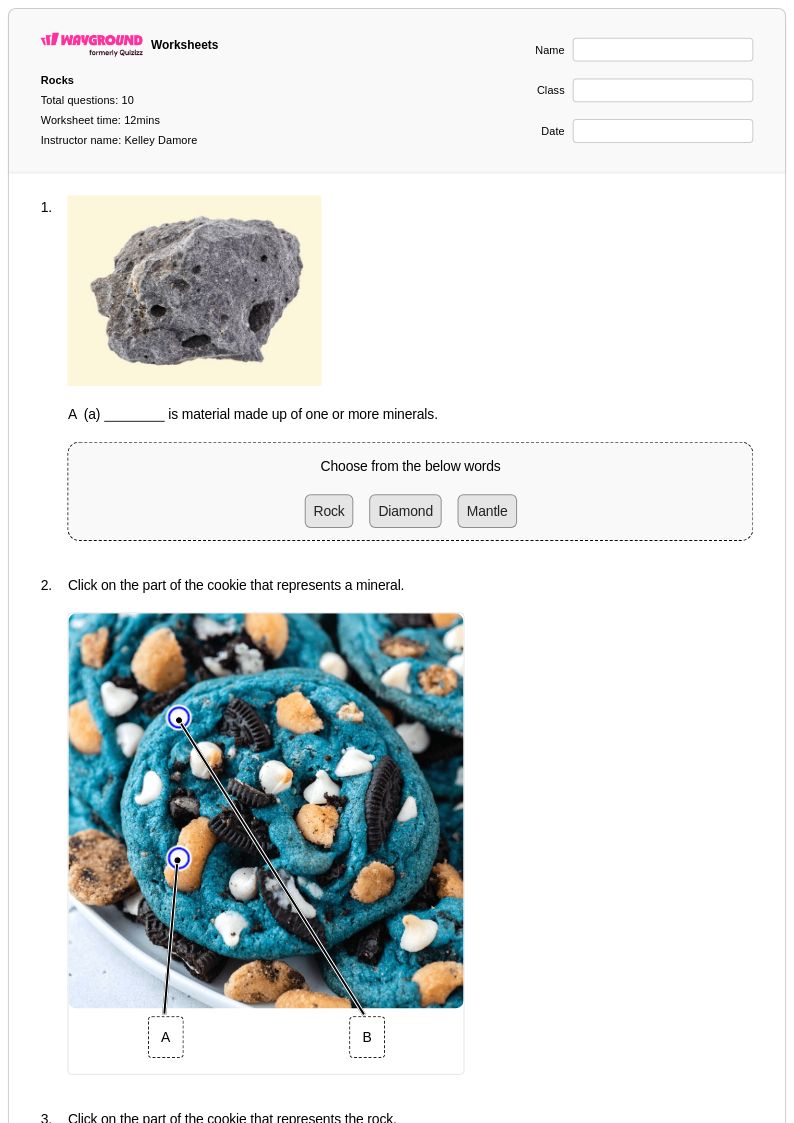
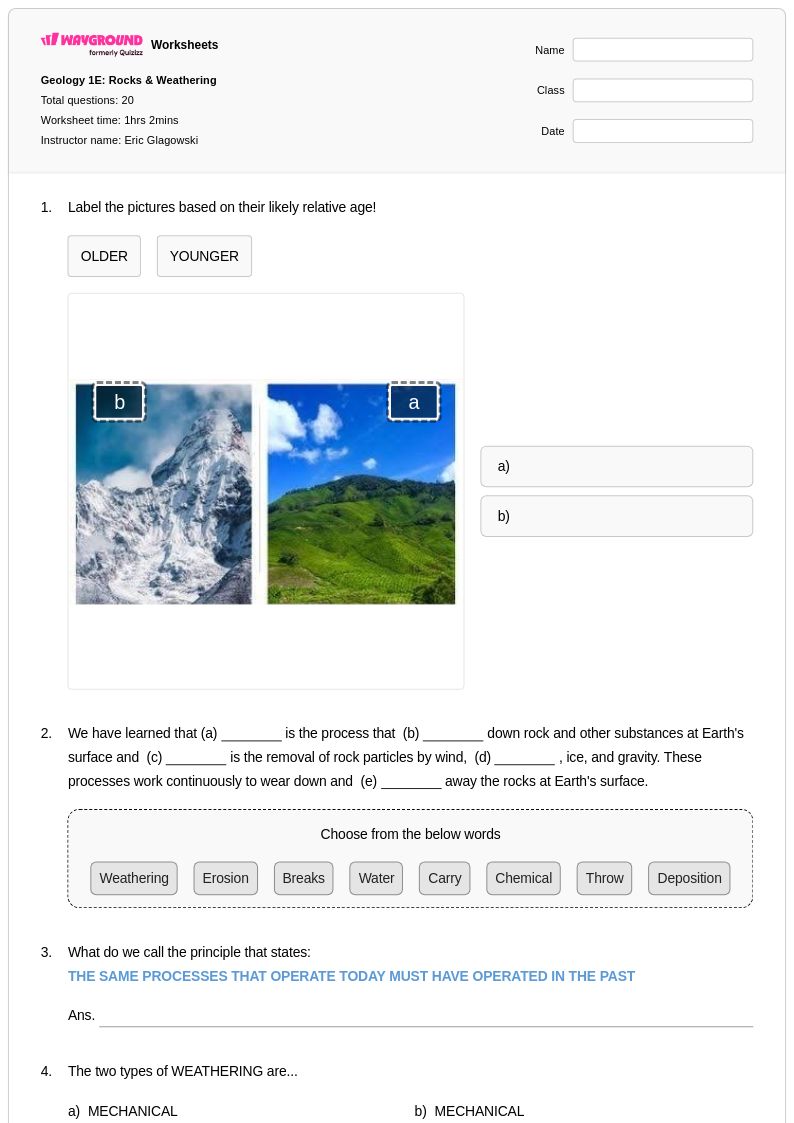
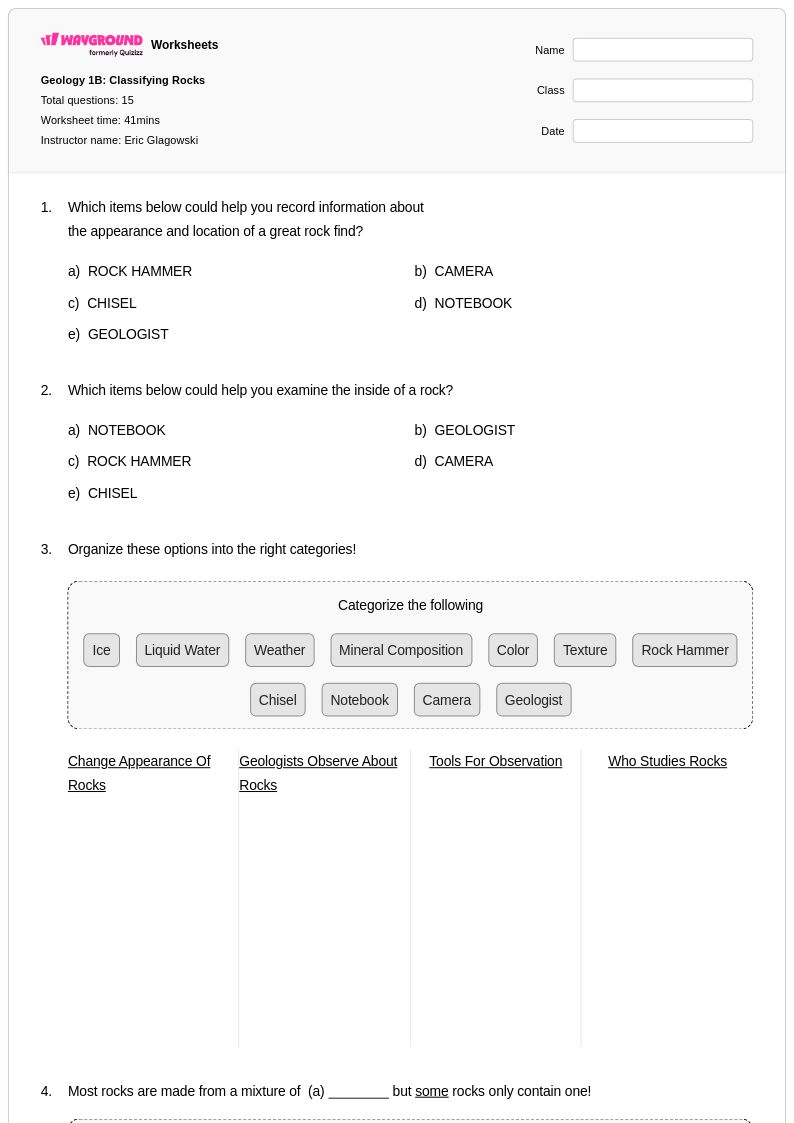
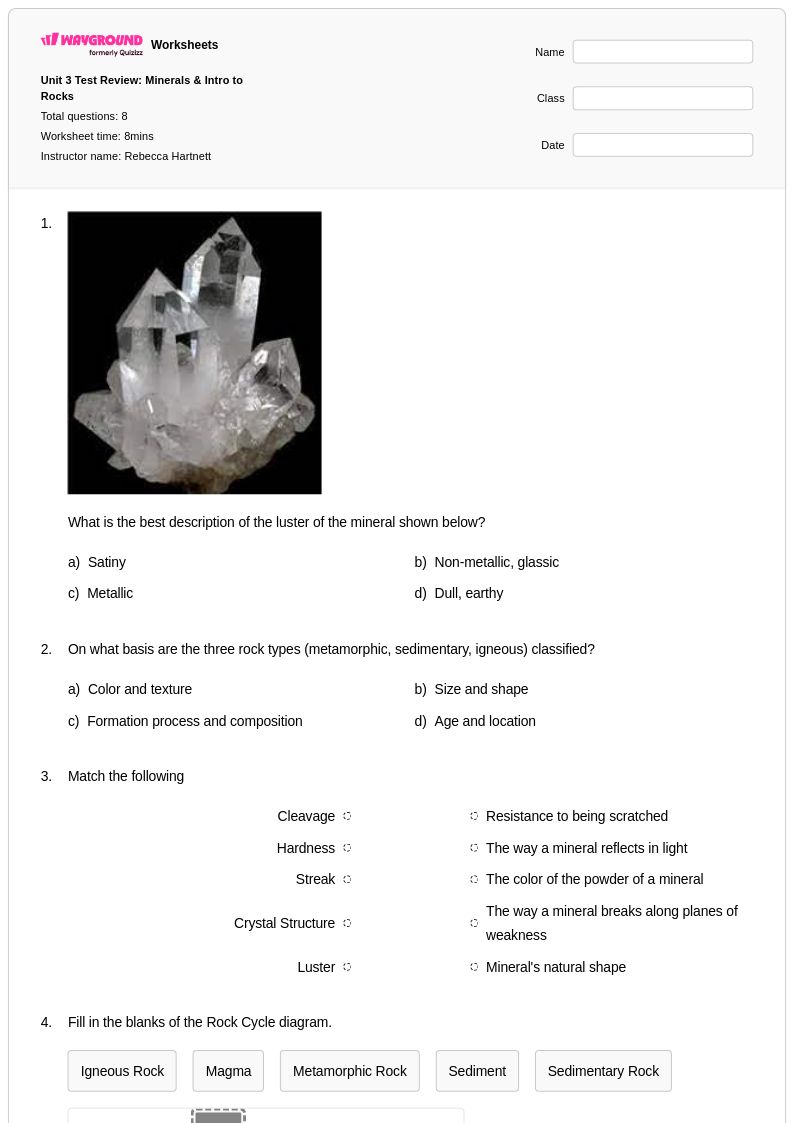
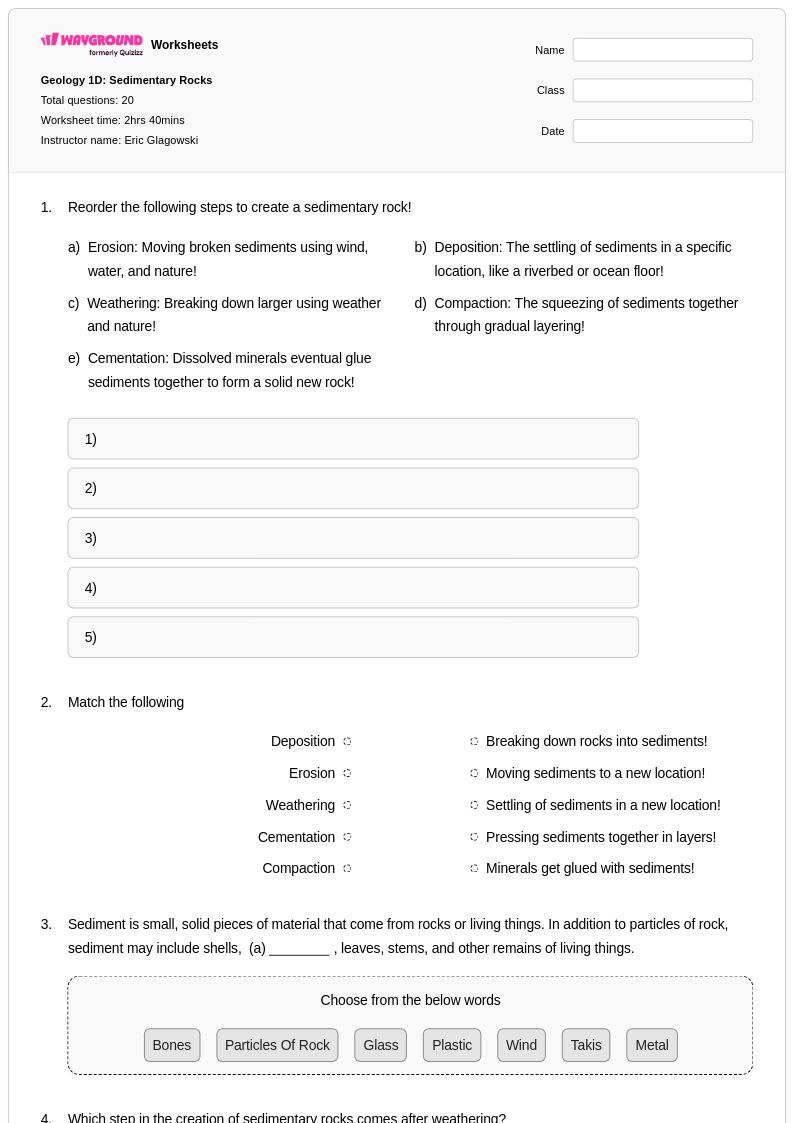
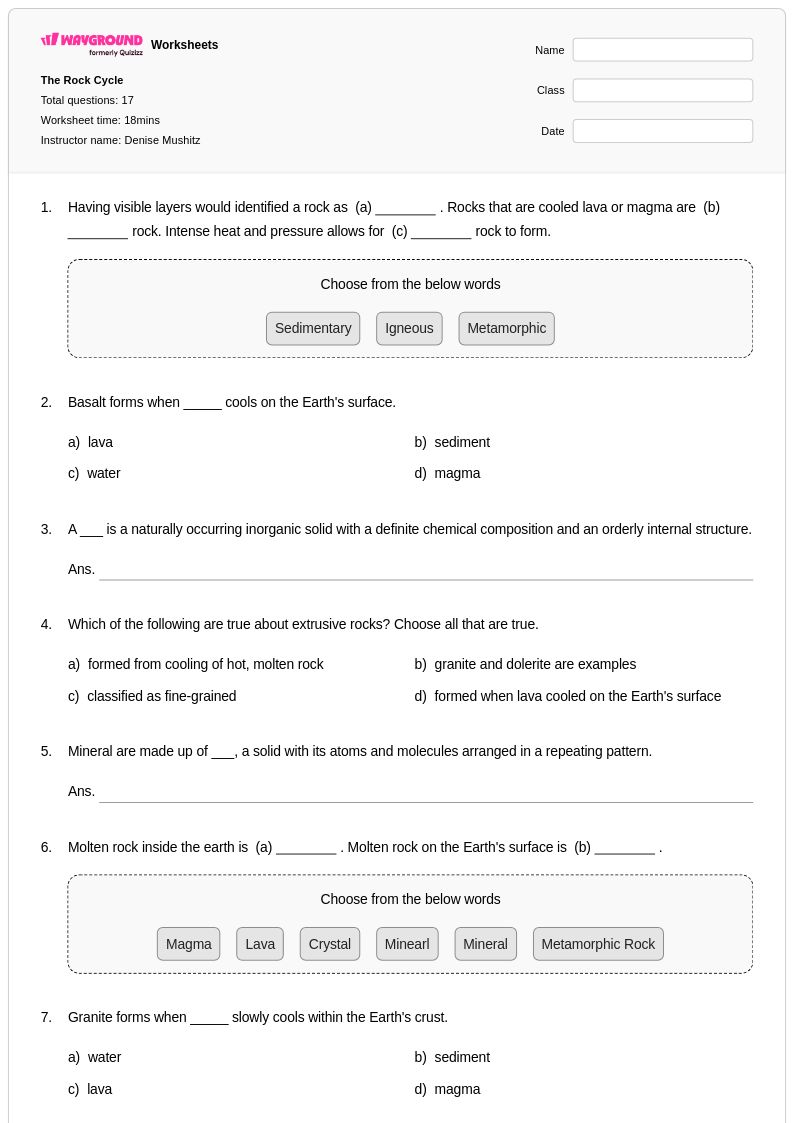
Rocks and minerals worksheets for kindergarten students available through Wayground (formerly Quizizz) introduce young learners to the fundamental building blocks of Earth's geology through age-appropriate activities and visual learning experiences. These educational resources strengthen essential scientific observation skills, vocabulary development, and basic classification abilities as students explore different types of rocks, identify common minerals, and discover how these materials form part of their everyday world. The comprehensive worksheet collection includes hands-on sorting activities, picture identification exercises, and simple matching problems that help kindergarteners develop foundational earth science knowledge. Teachers can access complete answer keys and utilize free printable pdf formats to support both classroom instruction and independent practice, ensuring students build confidence while exploring the fascinating world of geological materials.
Wayground (formerly Quizizz) empowers educators with millions of teacher-created resources specifically designed for kindergarten rocks and minerals instruction, featuring robust search and filtering capabilities that allow quick access to grade-appropriate content aligned with early childhood science standards. The platform's differentiation tools enable teachers to customize worksheets based on individual student needs, supporting both remediation for struggling learners and enrichment opportunities for advanced kindergarteners. Available in both printable and digital formats including downloadable pdf versions, these resources seamlessly integrate into lesson planning while providing flexible options for skill practice across diverse learning environments. The extensive collection supports systematic instruction in earth science concepts, helping educators build comprehensive units that engage young students in meaningful geological exploration while developing critical thinking and scientific reasoning abilities essential for future STEM learning.
FAQs
How do I teach students to identify minerals in the classroom?
Mineral identification is best taught through hands-on observation using the physical properties of minerals: hardness (Mohs scale), luster, streak, cleavage, and color. Start by introducing each property individually with a class demonstration, then have students apply all five to unknown mineral samples. Pairing physical specimens with structured identification worksheets helps students build systematic observation habits and reinforces the vocabulary they need for assessments.
What are the three types of rocks and how do I explain them to students?
The three major rock types are igneous, sedimentary, and metamorphic, each formed through a distinct geological process. Igneous rocks form from cooled magma or lava, sedimentary rocks form from compressed layers of sediment, and metamorphic rocks form when existing rocks are changed by heat and pressure. Teaching these through the rock cycle framework helps students understand that each type can transform into another over geologic time, giving the classification system meaningful context rather than isolated facts.
What exercises help students practice the rock cycle?
Effective practice exercises for the rock cycle include diagram labeling, process sequencing tasks, and scenario-based questions that ask students to trace how a rock transitions from one type to another. Worksheets that require students to identify the forces involved at each stage (weathering, heat, pressure, melting) are particularly useful because they test conceptual understanding rather than memorization. Having students annotate a blank rock cycle diagram with their own labels and arrows is a strong formative assessment technique.
What mistakes do students commonly make when classifying rocks and minerals?
One of the most common errors is confusing rocks with minerals — students often treat them as interchangeable, when in fact minerals are naturally occurring inorganic substances with a defined chemical composition, while rocks are aggregates of one or more minerals. Students also frequently misuse color as the primary identifier for minerals, when properties like streak and hardness are far more reliable. Worksheets that explicitly contrast these concepts and require students to justify their classifications help address both misconceptions.
How can I differentiate rocks and minerals instruction for students at different levels?
For struggling learners, focus on the three rock types and two or three key mineral properties before introducing the full rock cycle. Advanced students can be challenged with crystal structure analysis, mineral formation conditions, or comparing igneous rock textures across different cooling rates. On Wayground, teachers can apply accommodations such as reduced answer choices to lower cognitive load for individual students, or enable Read Aloud for students who need audio support, all without disrupting the experience for the rest of the class.
How do I use Wayground's rocks and minerals worksheets in my classroom?
Wayground's rocks and minerals worksheets are available as printable PDFs for traditional classroom use and in digital formats for technology-integrated environments, including the option to host them as an interactive quiz directly on Wayground. Teachers can filter materials by concept or skill to match their current unit focus, whether that is mineral identification, rock type classification, or full rock cycle analysis. All worksheets include answer keys, making them practical for independent student practice, guided instruction, or leave-behind sub plans.