
12 Q
3rd
9 Q
8th - 12th
9 Q
3rd
10 Q
6th - 8th
14 Q
9th
12 Q
4th
30 Q
12th
10 Q
8th
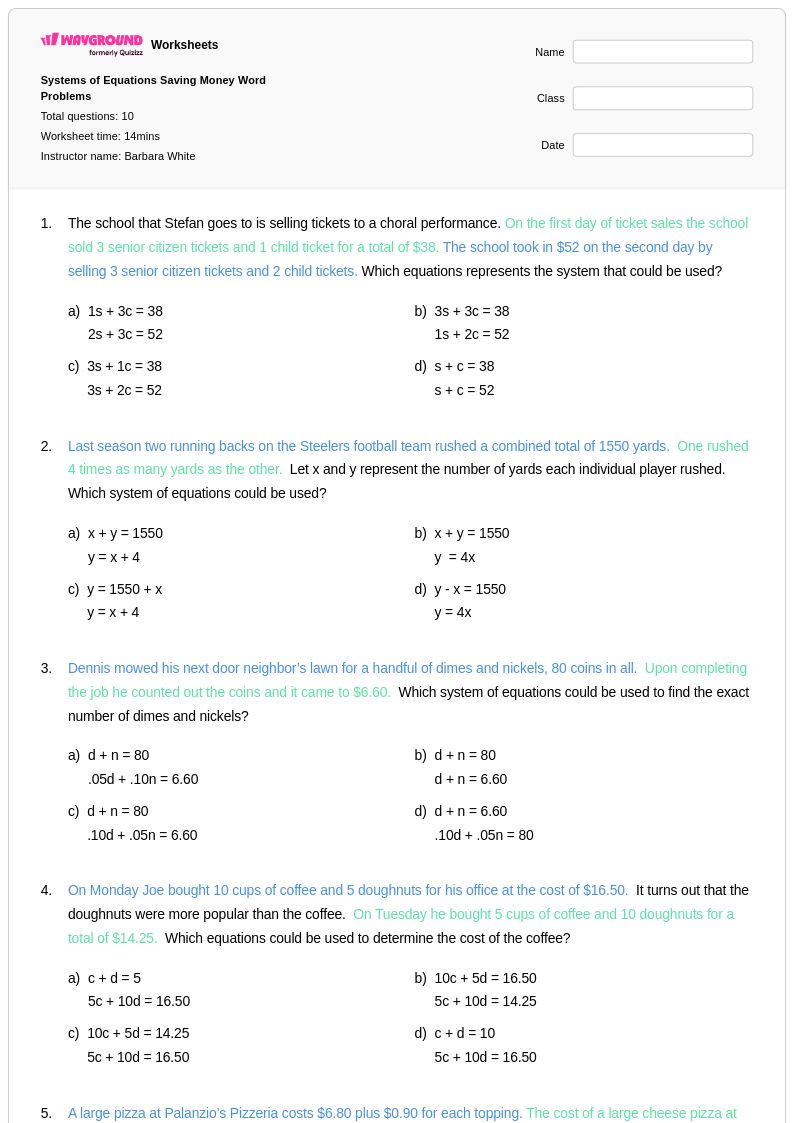
10 Q
8th - 10th
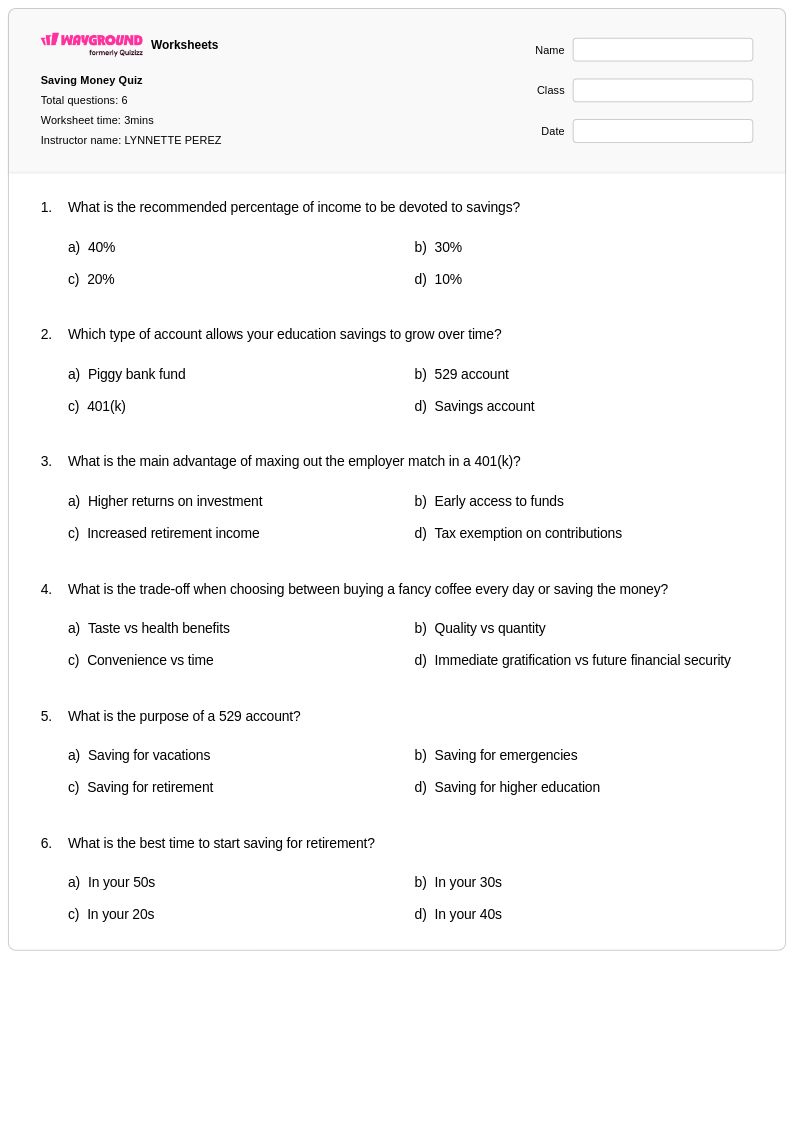
6 Q
12th
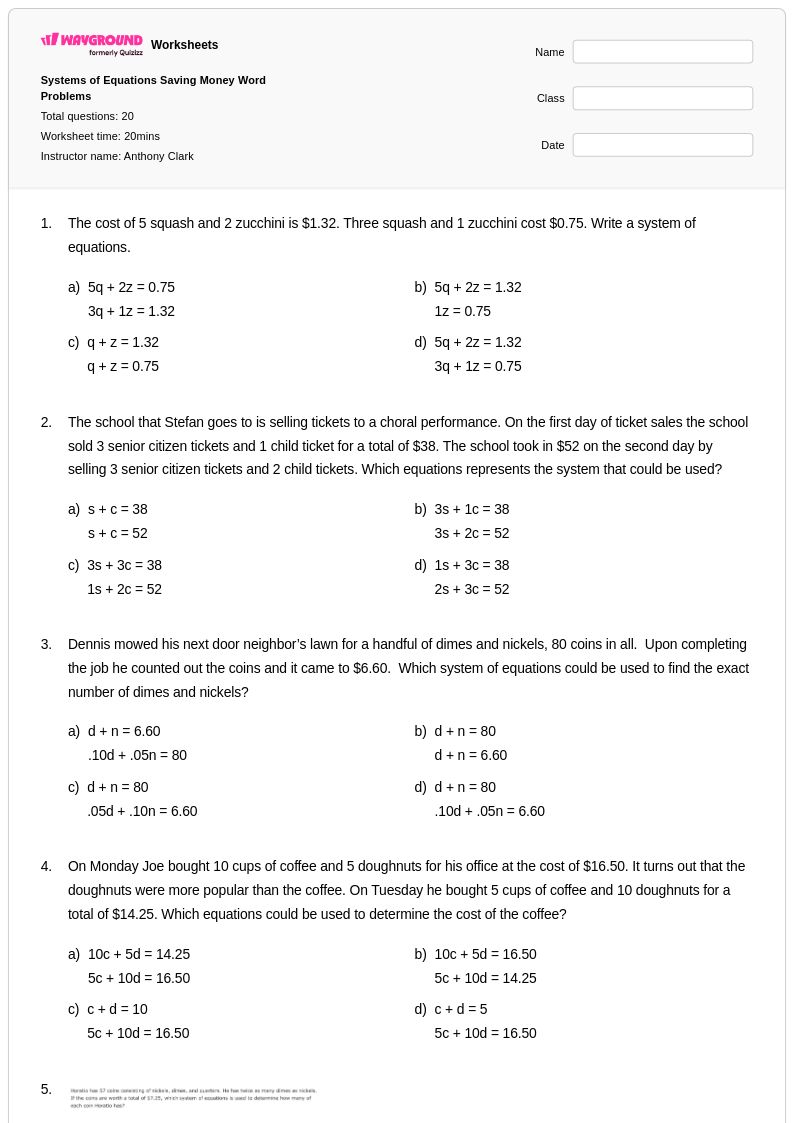
20 Q
9th - Uni
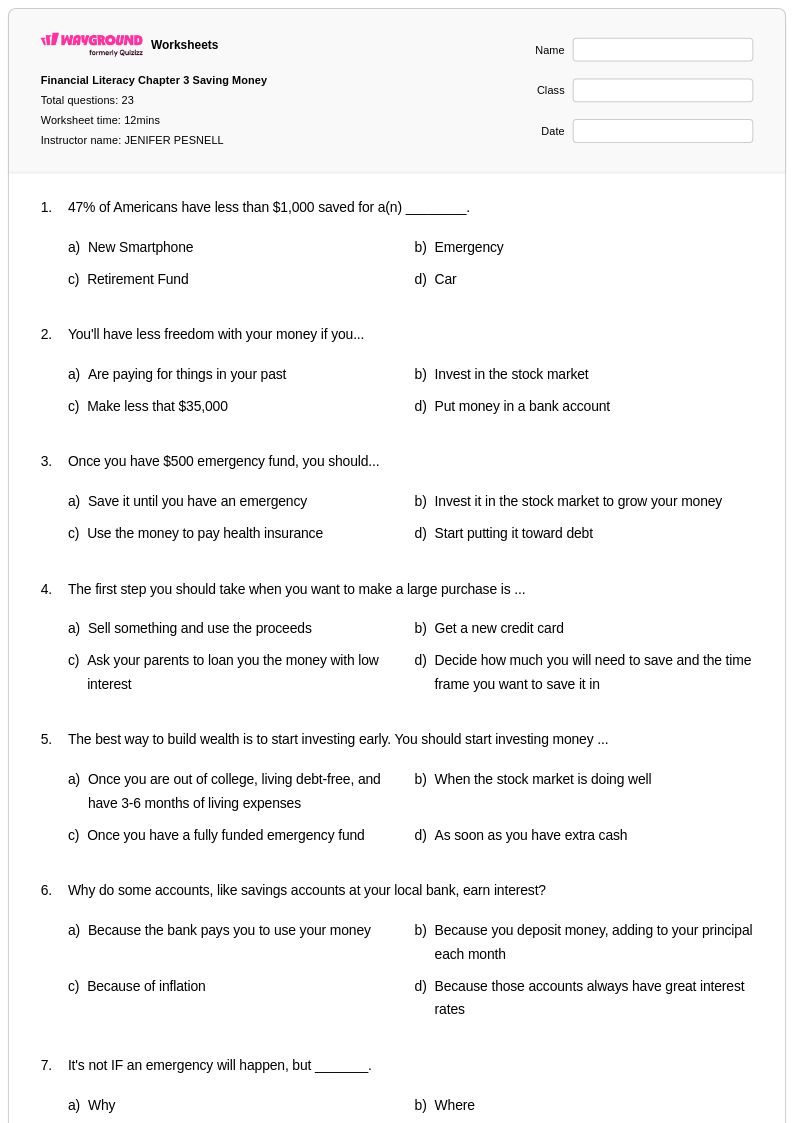
23 Q
12th
15 Q
9th - 12th
21 Q
9th - 12th
11 Q
5th
10 Q
2nd
8 Q
10th

25 Q
9th - 12th

25 Q
9th - 12th
13 Q
11th
21 Q
9th
14 Q
3rd
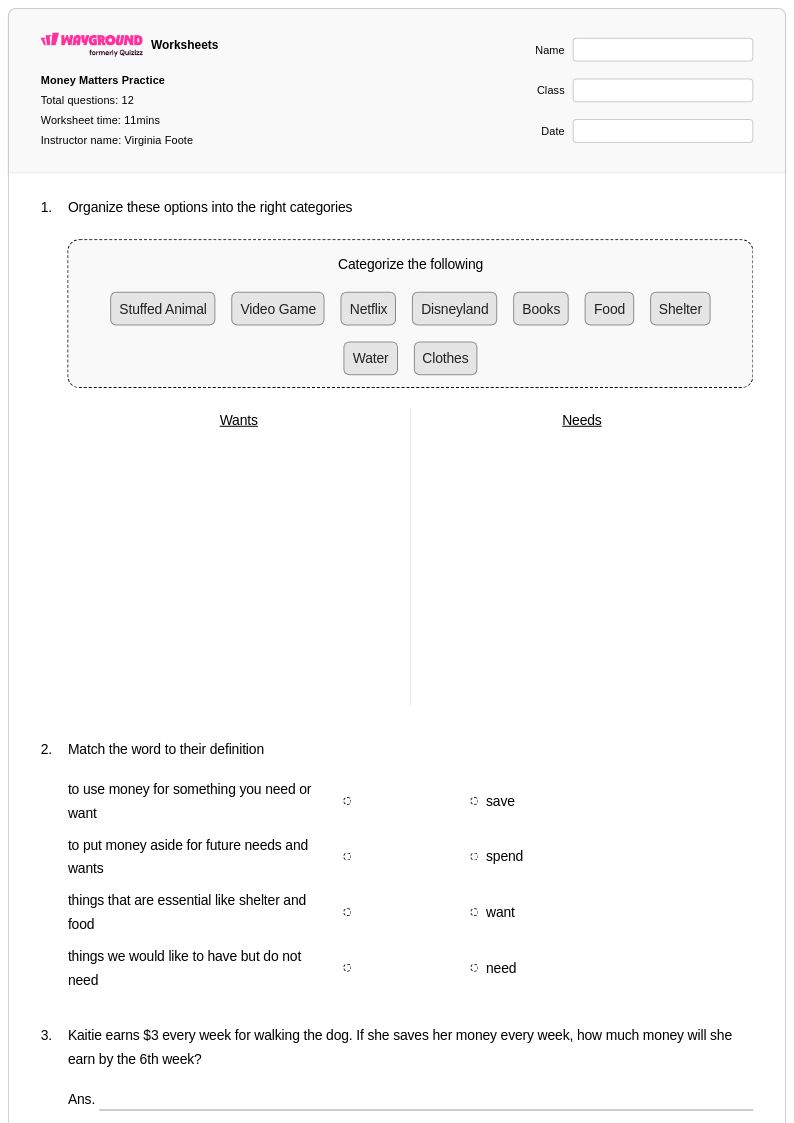
12 Q
2nd
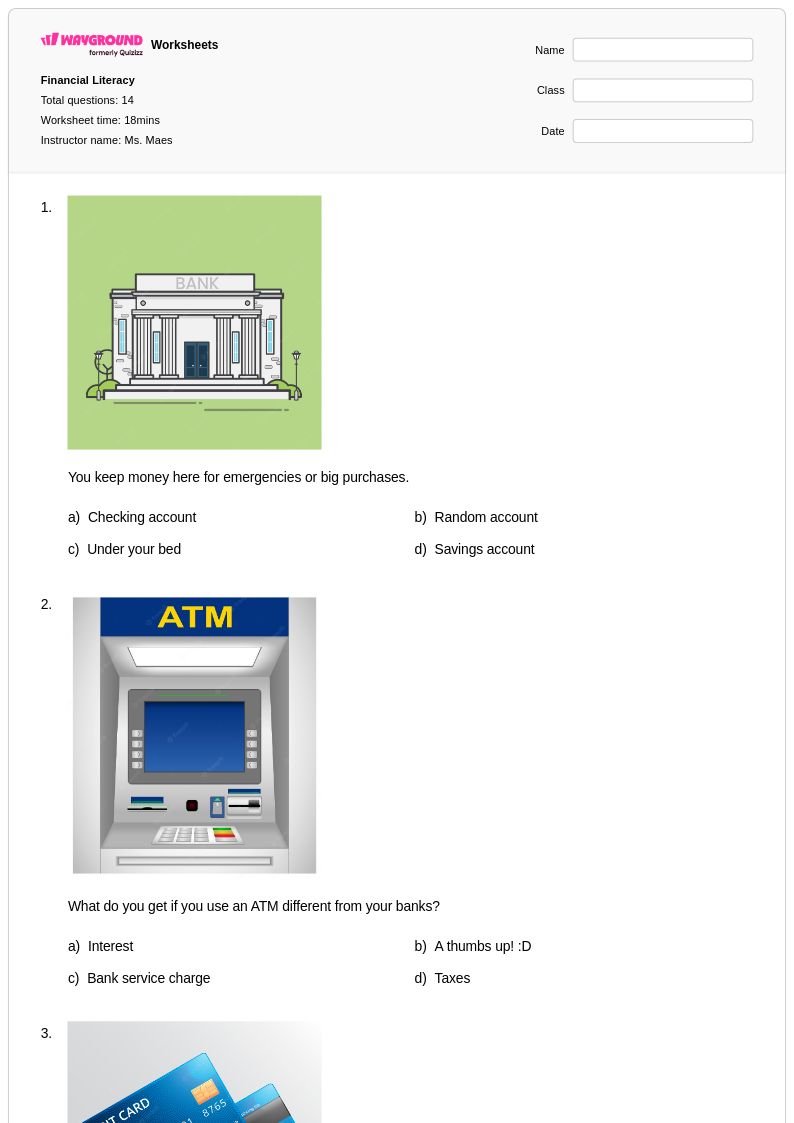
14 Q
2nd
Explore Worksheets by Grade
Explore Worksheets by Subjects
Explore printable Saving Money worksheets
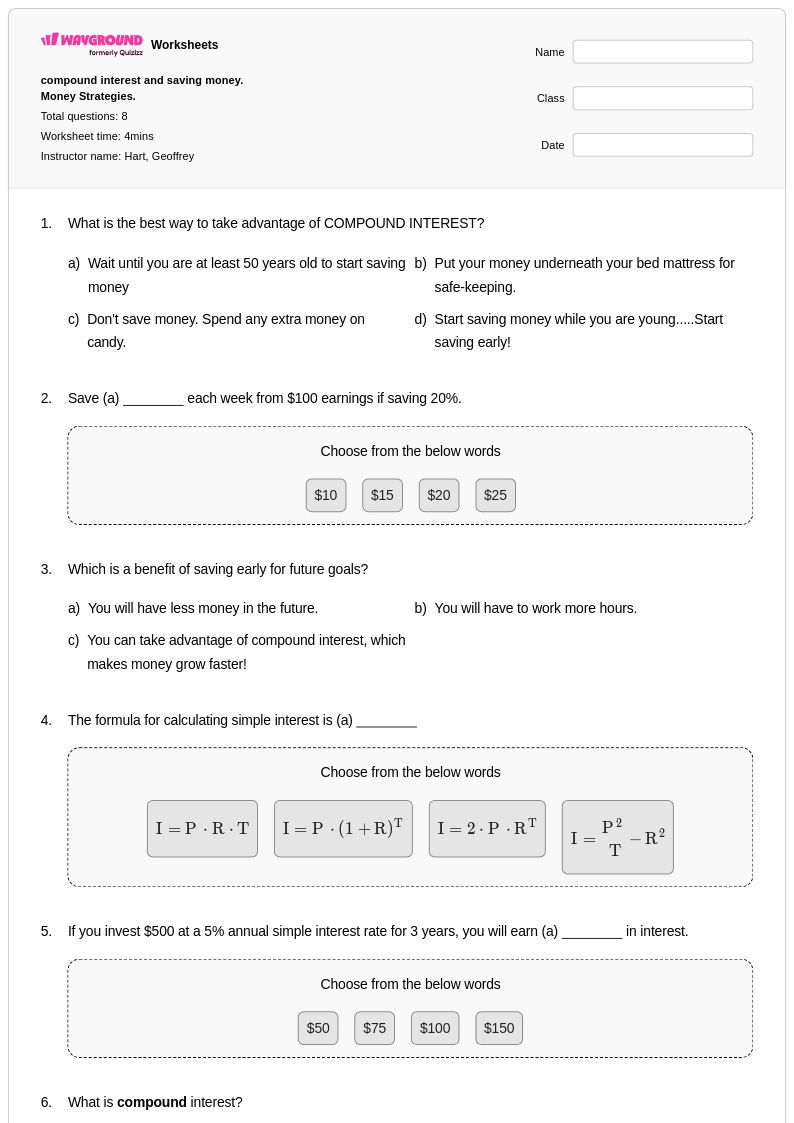
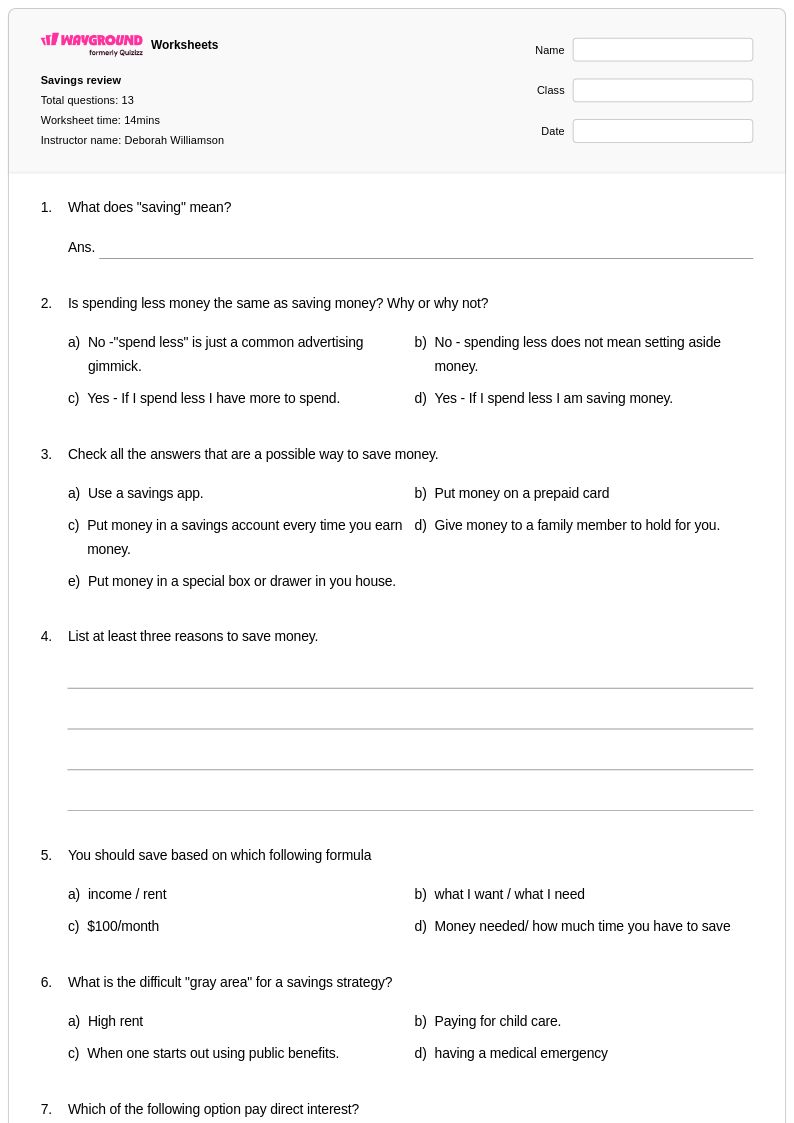
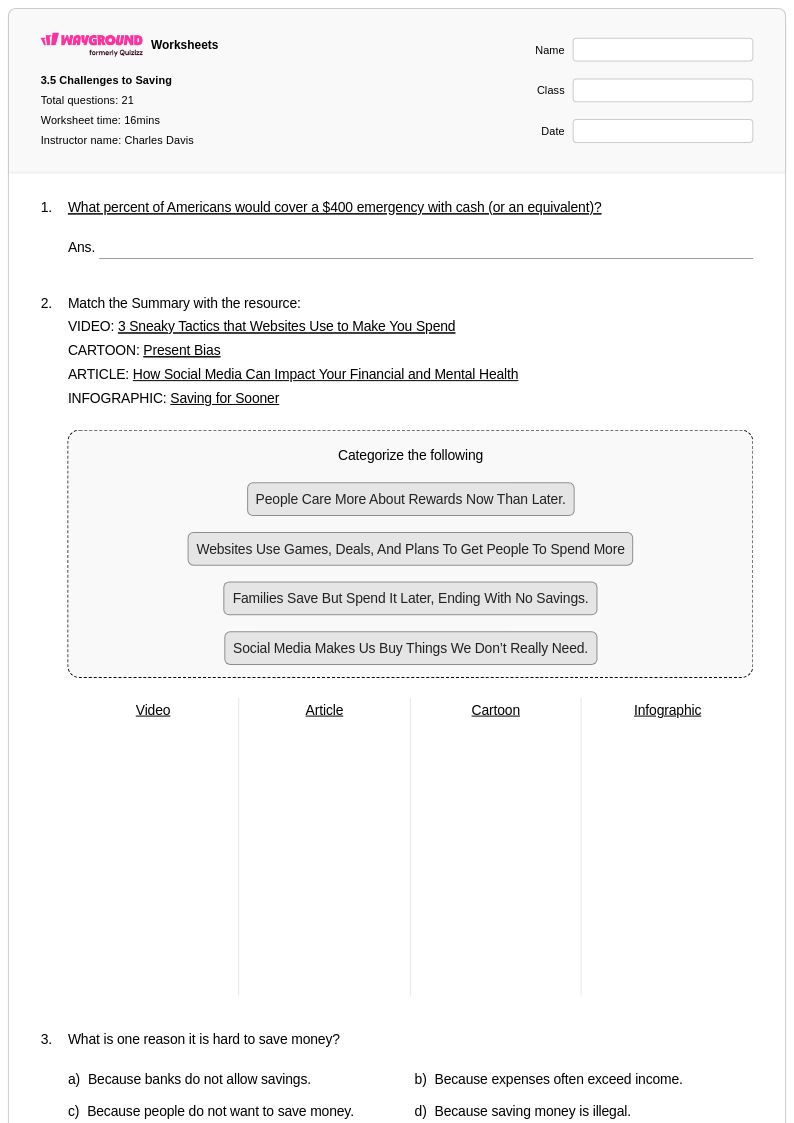
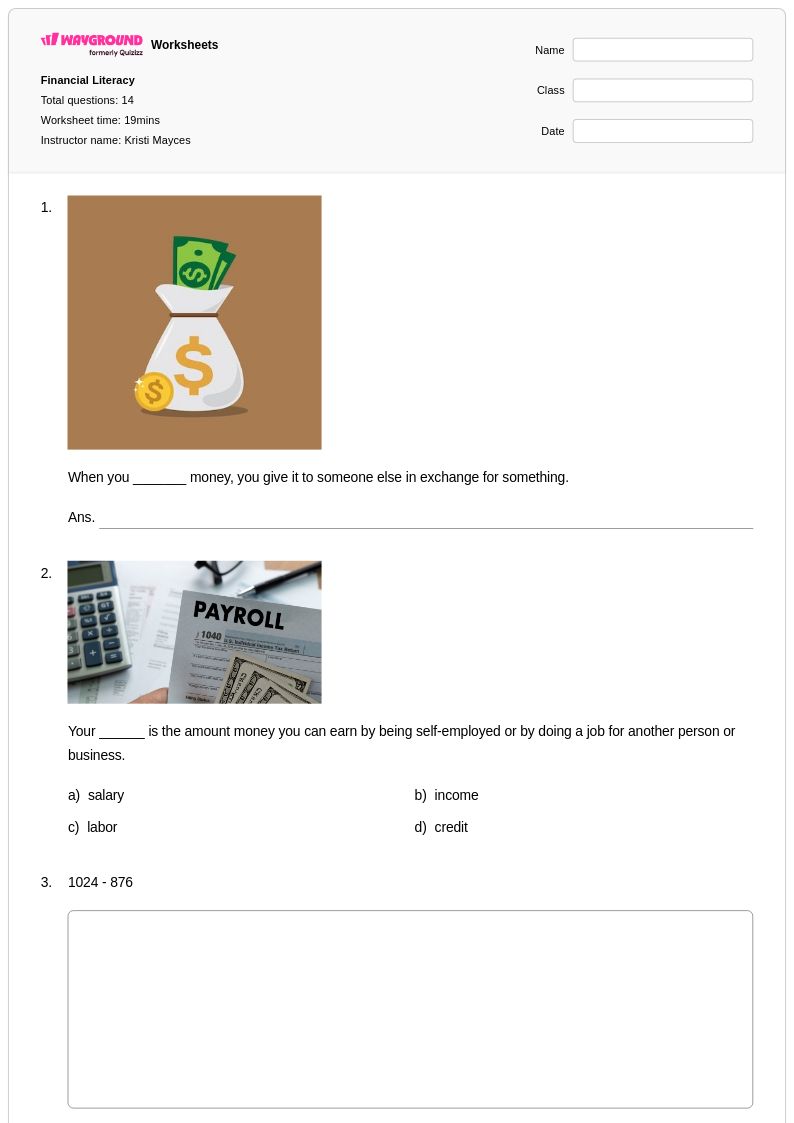
Saving money worksheets available through Wayground (formerly Quizizz) provide students with essential practice in developing fundamental financial literacy skills that will serve them throughout their lives. These comprehensive resources focus on building practical money management abilities, including calculating savings goals, understanding interest rates, comparing spending versus saving decisions, and creating personal budgets. Students work through engaging practice problems that simulate real-world scenarios, such as determining how long it takes to save for specific purchases, calculating the benefits of compound interest, and making informed choices about discretionary spending. Each worksheet comes with a detailed answer key, allowing students to check their work and understand the mathematical reasoning behind smart saving strategies. These free printables combine mathematical computation with critical thinking about financial decisions, helping students develop both numerical skills and financial wisdom.
Wayground (formerly Quizizz) supports educators with millions of teacher-created saving money worksheets that can be easily searched and filtered to match specific learning objectives and student needs. The platform's robust collection includes resources aligned with financial literacy standards, offering teachers flexibility to customize content for different skill levels and learning styles. These differentiation tools enable educators to provide targeted remediation for students who need additional support with percentage calculations or decimal operations, while also offering enrichment activities for advanced learners ready to explore more complex savings scenarios. Teachers can access materials in both printable pdf format for traditional classroom use and digital formats for interactive learning experiences. This versatility streamlines lesson planning and provides educators with ready-to-use resources for skill practice, assessment preparation, and reinforcing the connection between mathematical concepts and practical money management strategies.
FAQs
How do I teach complex financial topics like budgeting and compound interest?
What exercises help students practice financial planning?
What are common mistakes students make when calculating savings?
How can I use these saving money worksheets in my classroom?
How does teaching financial literacy fit into the curriculum?
How can I support students who struggle with compound interest calculations?