Free Printable Scientific Measurement Worksheets for Class 11
Enhance Class 11 scientific measurement skills with Wayground's comprehensive collection of free worksheets, printable PDFs, and practice problems featuring detailed answer keys to master precision, accuracy, and measurement techniques.
Explore printable Scientific Measurement worksheets for Class 11
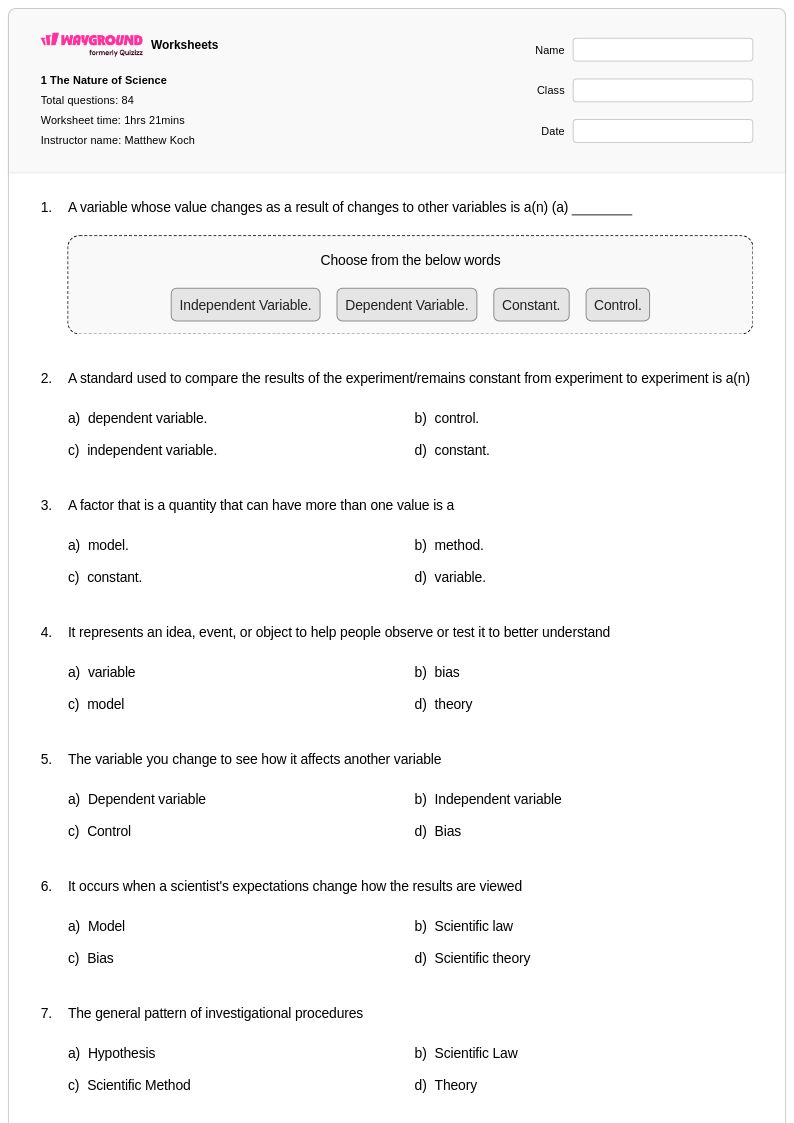
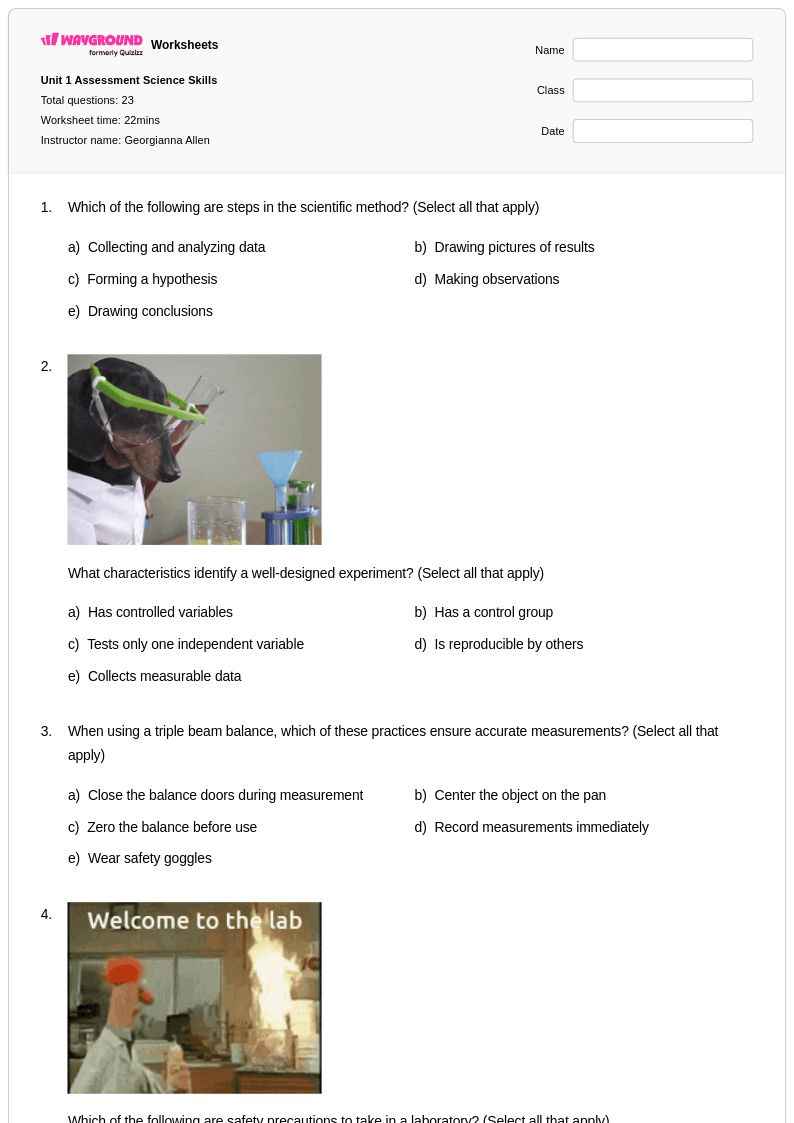
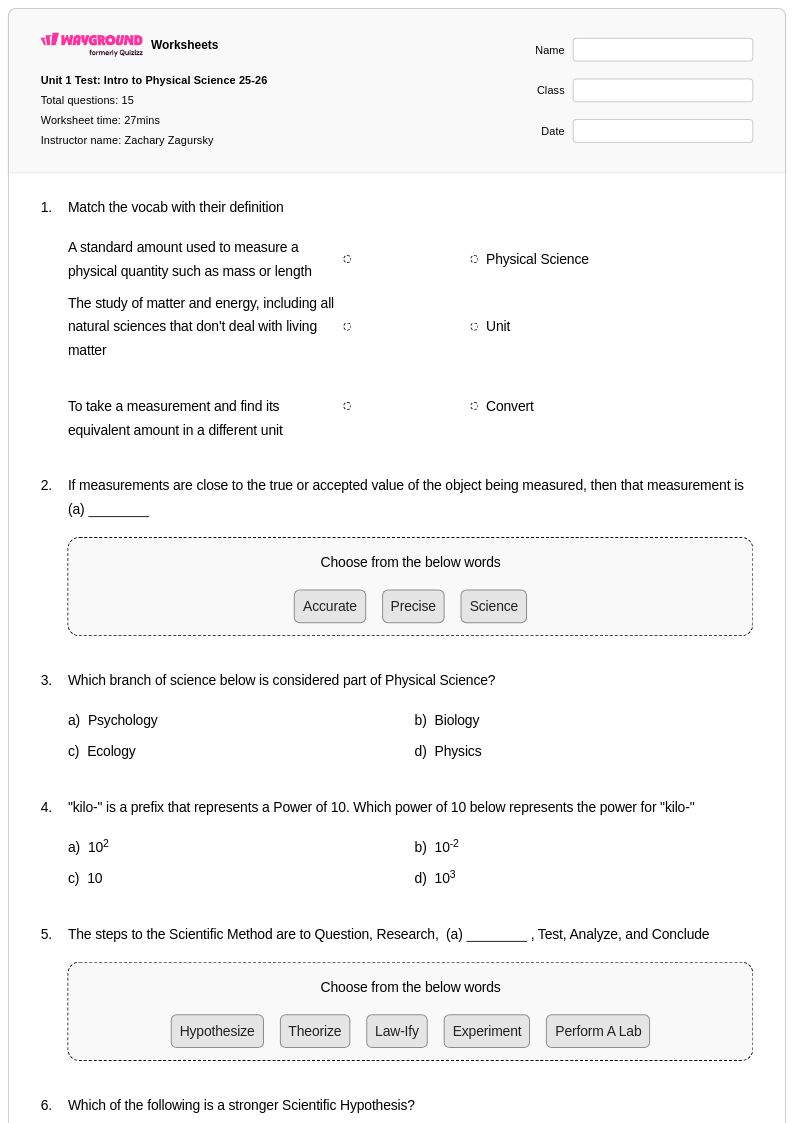
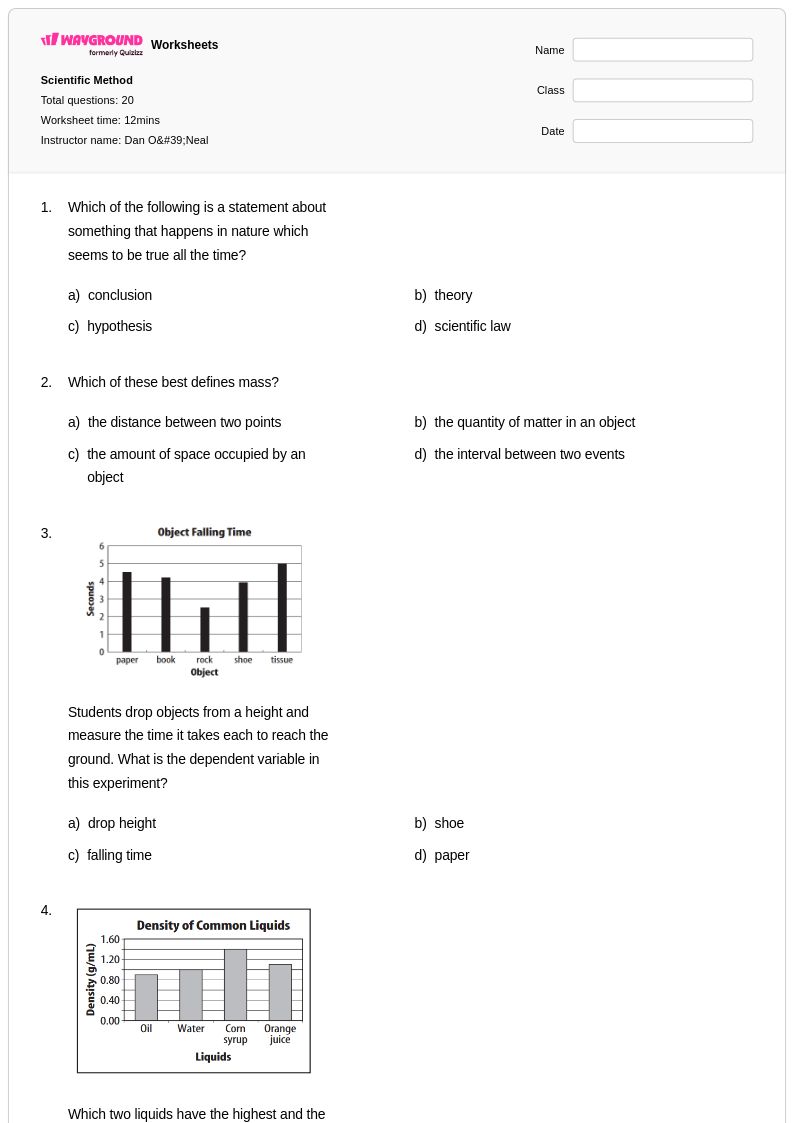
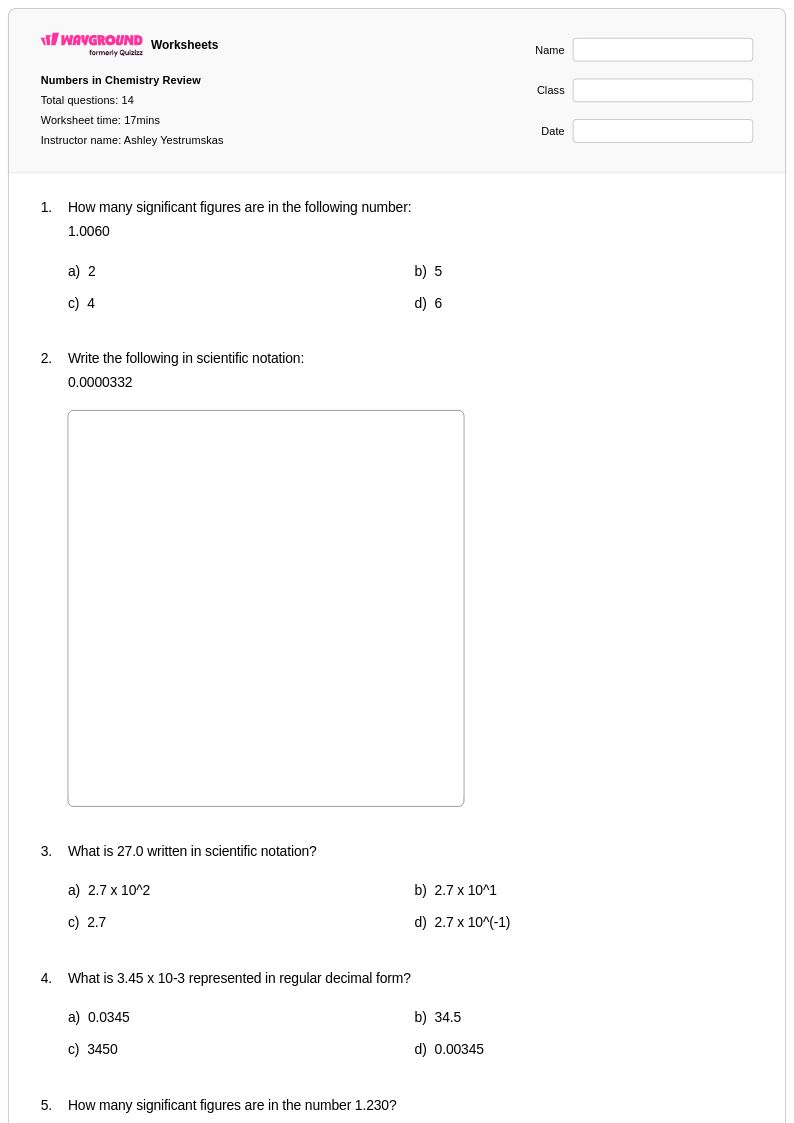
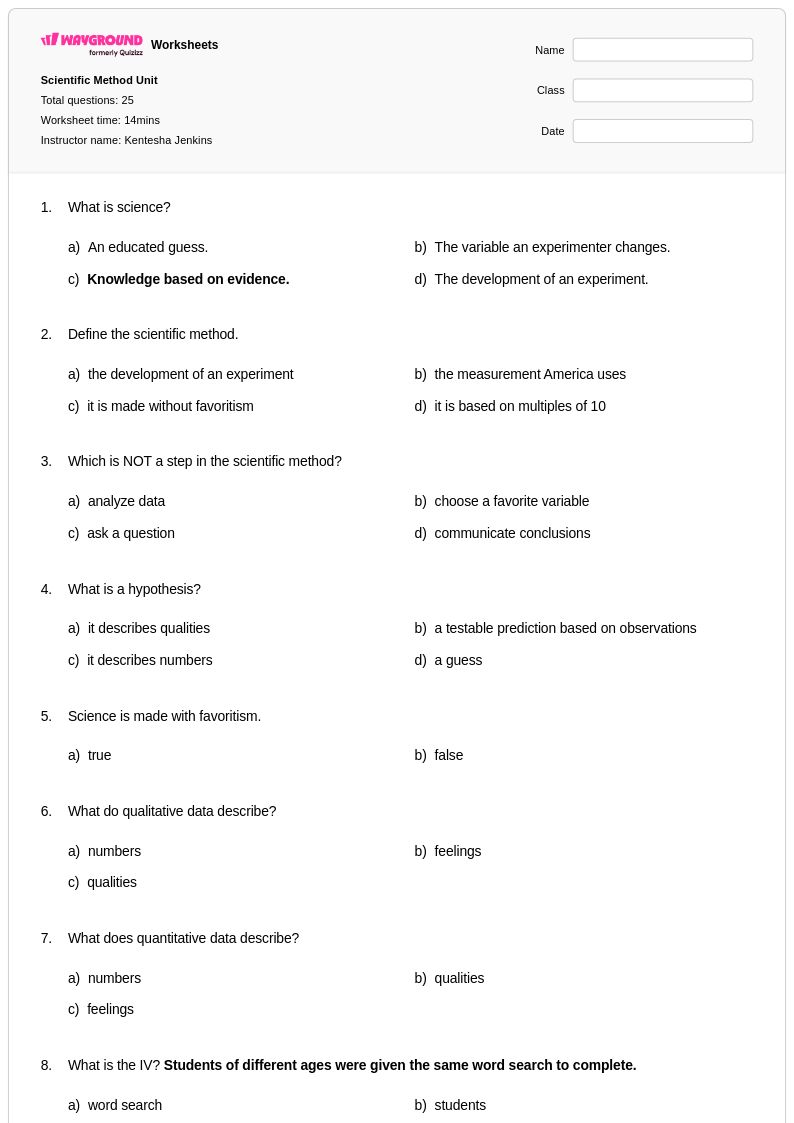
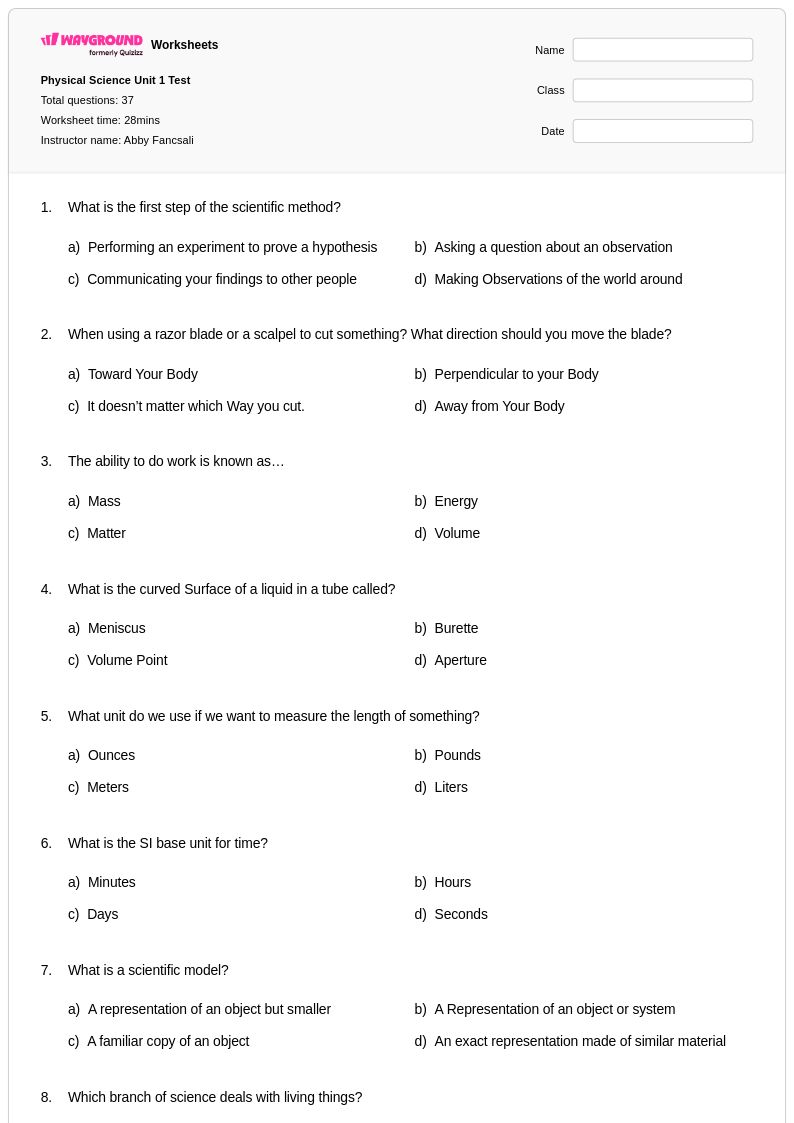
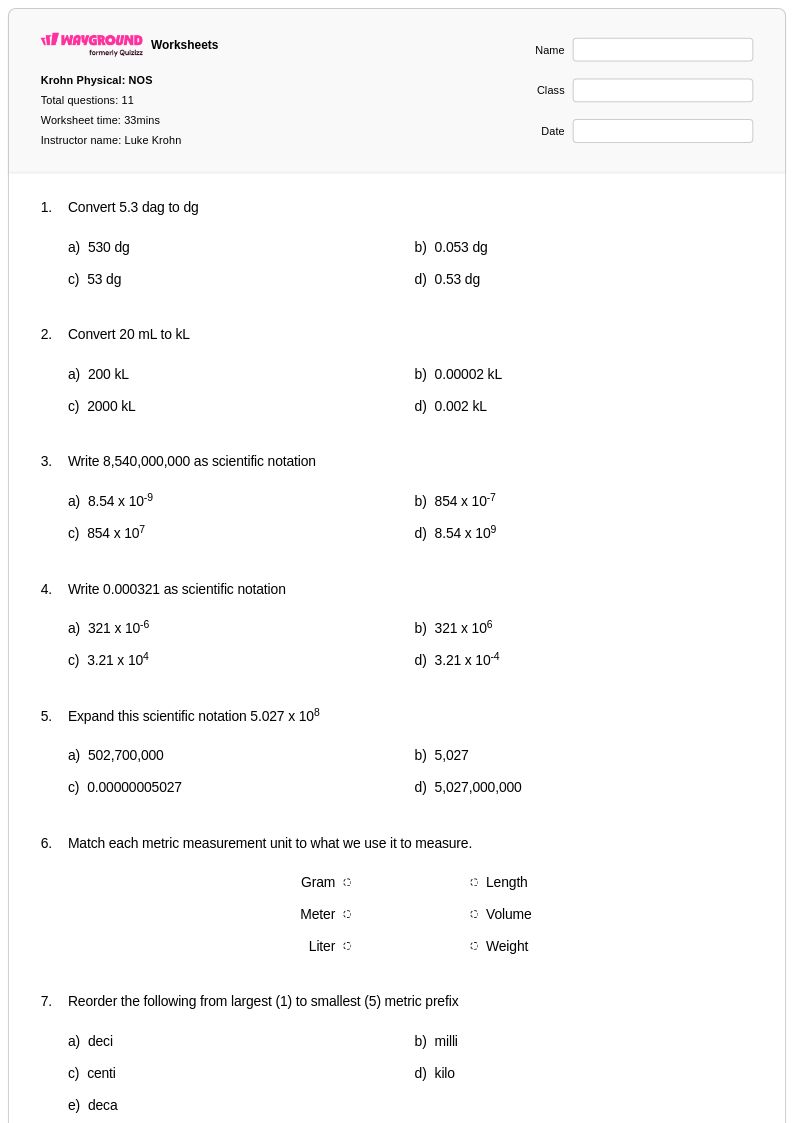
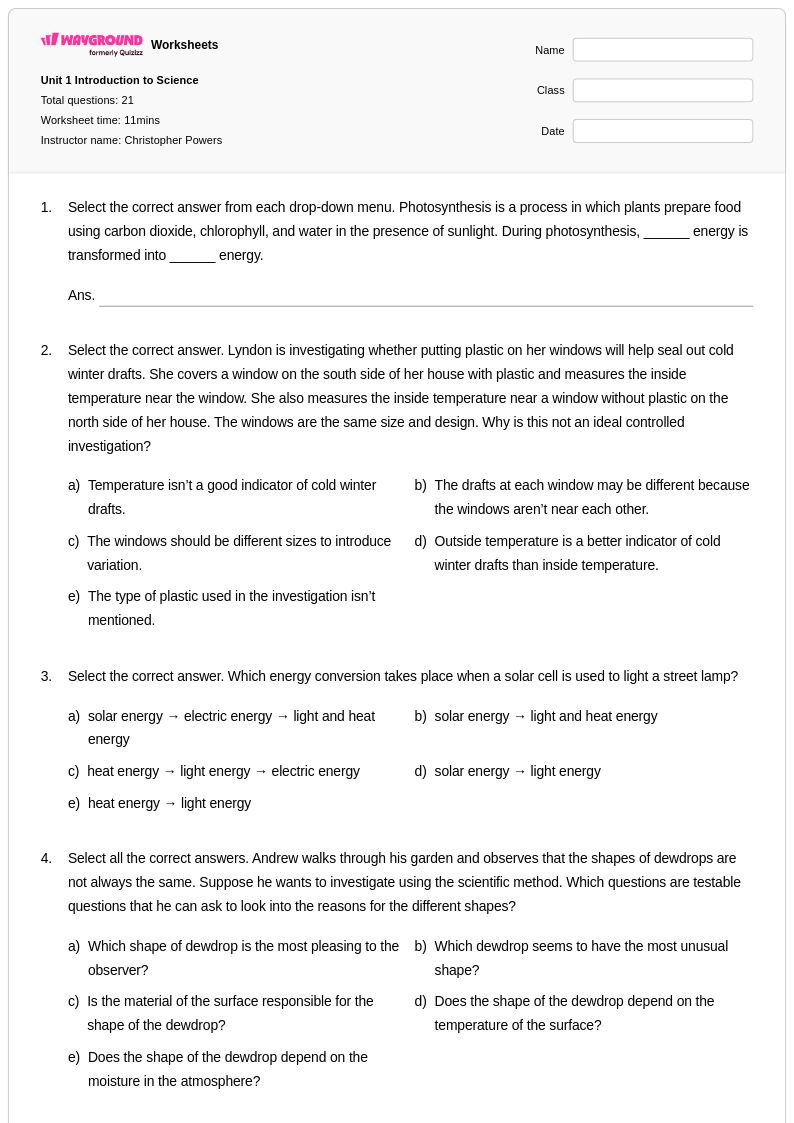
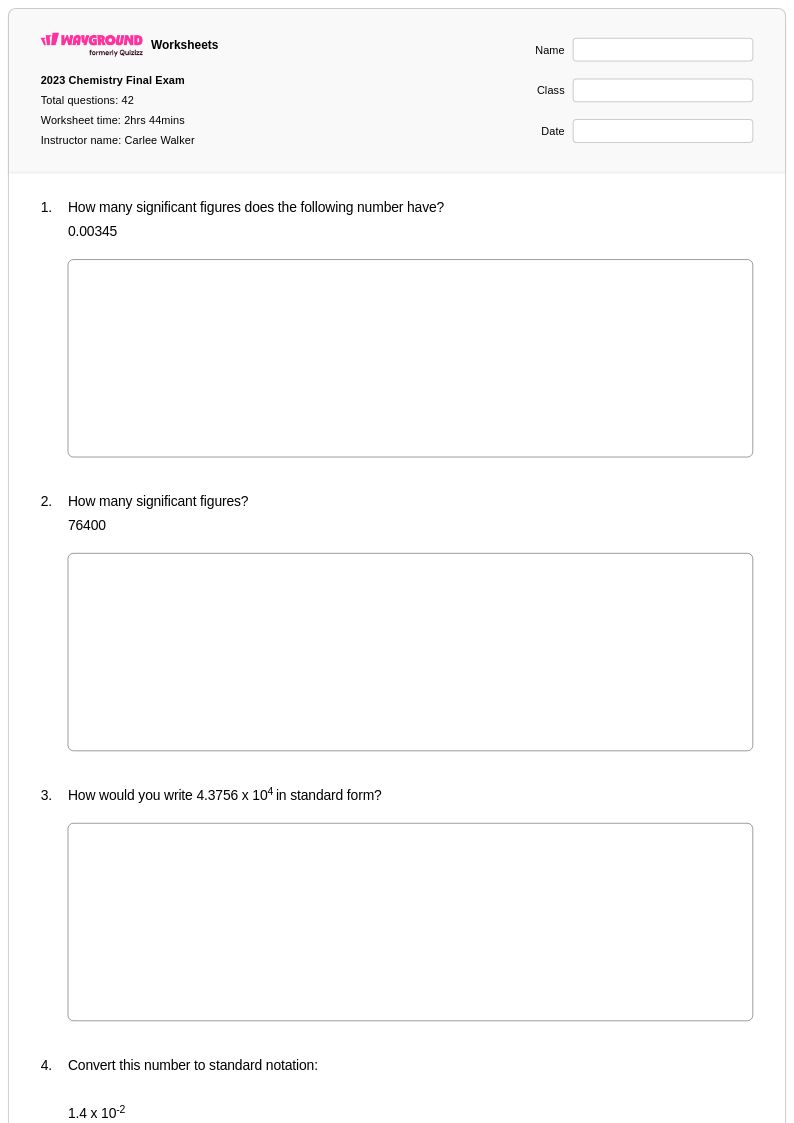
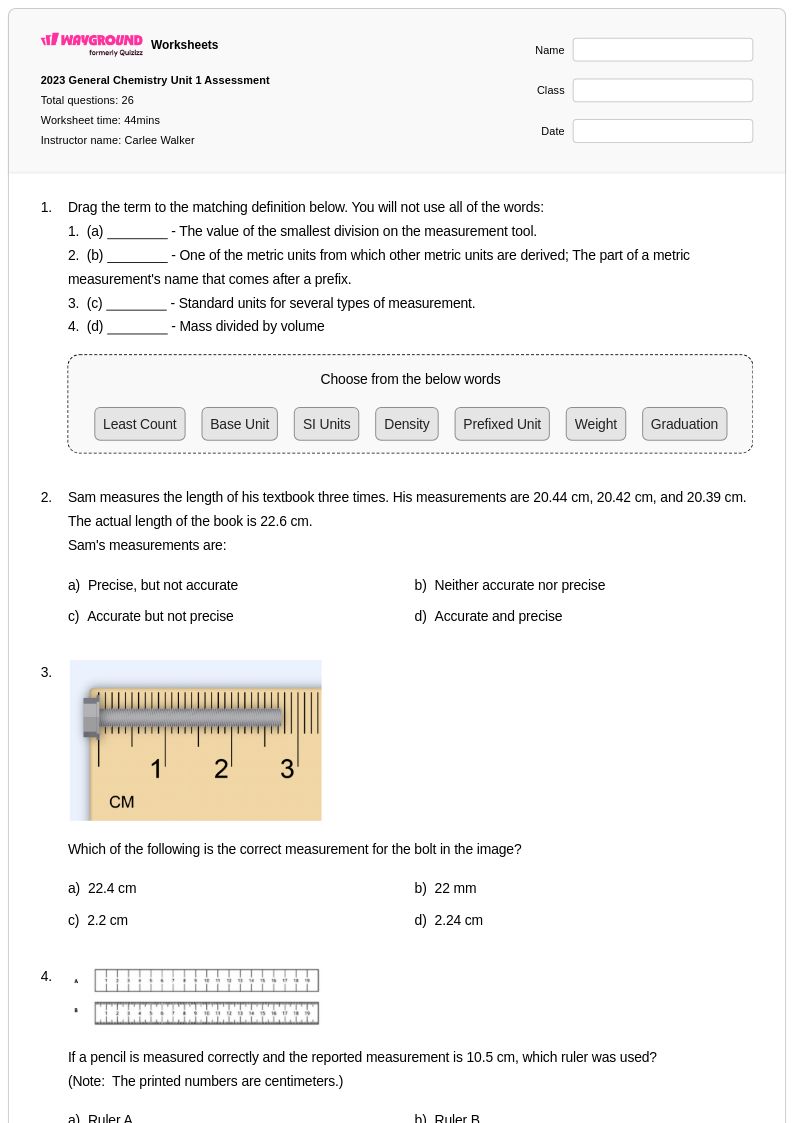
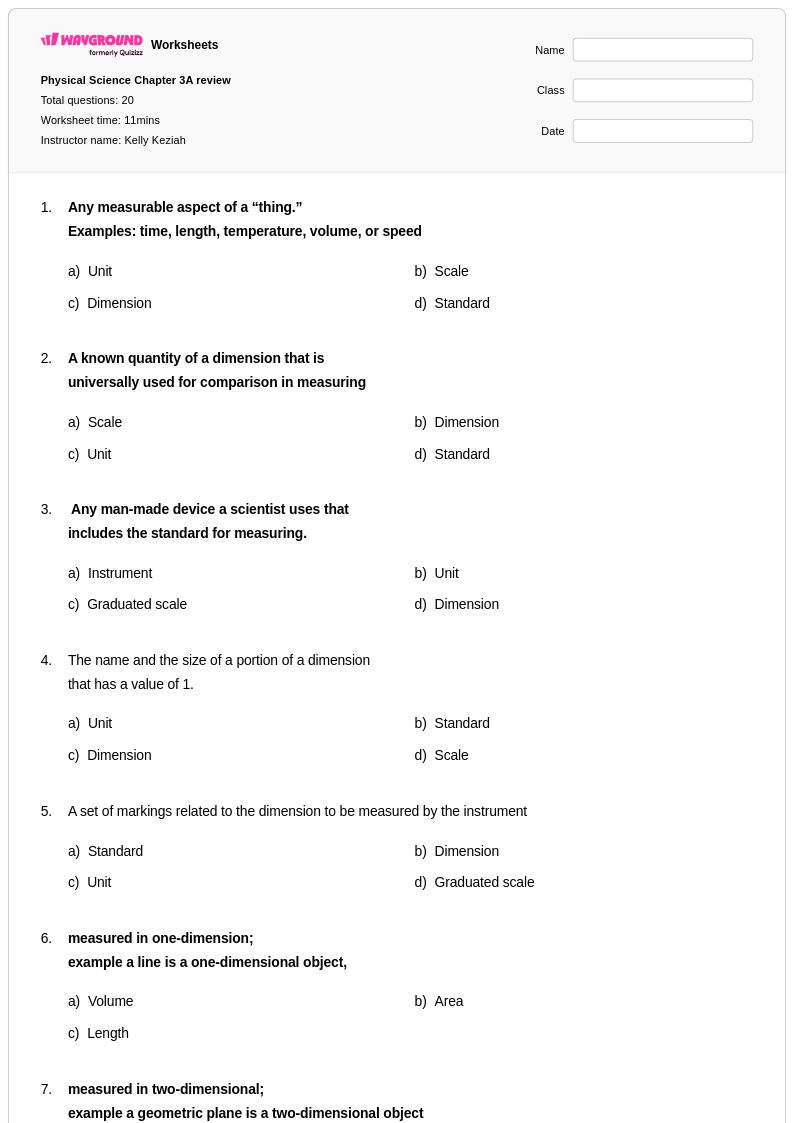
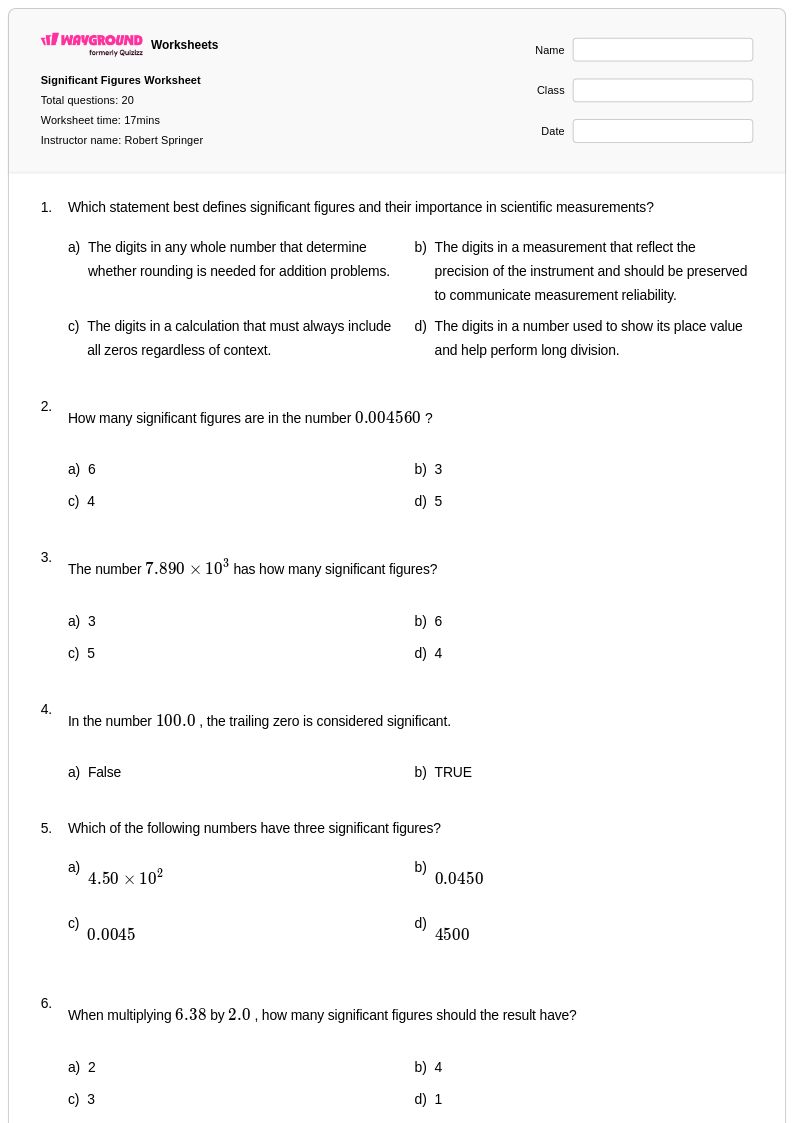
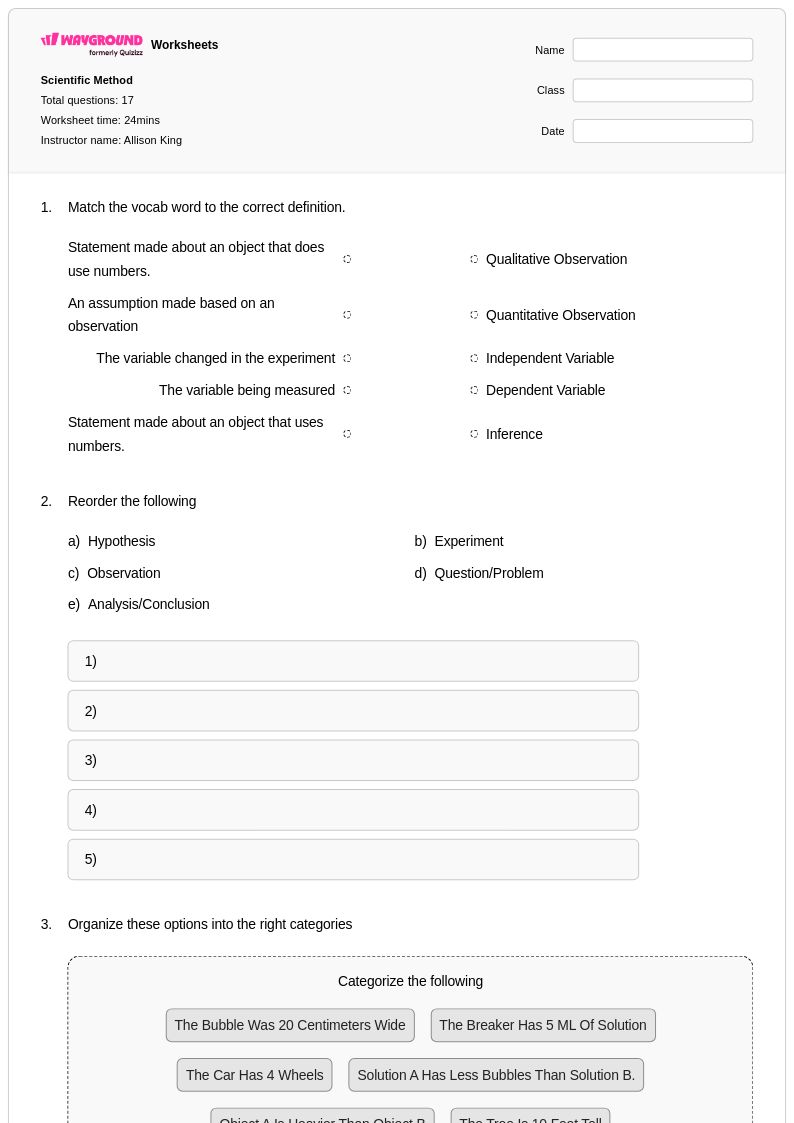
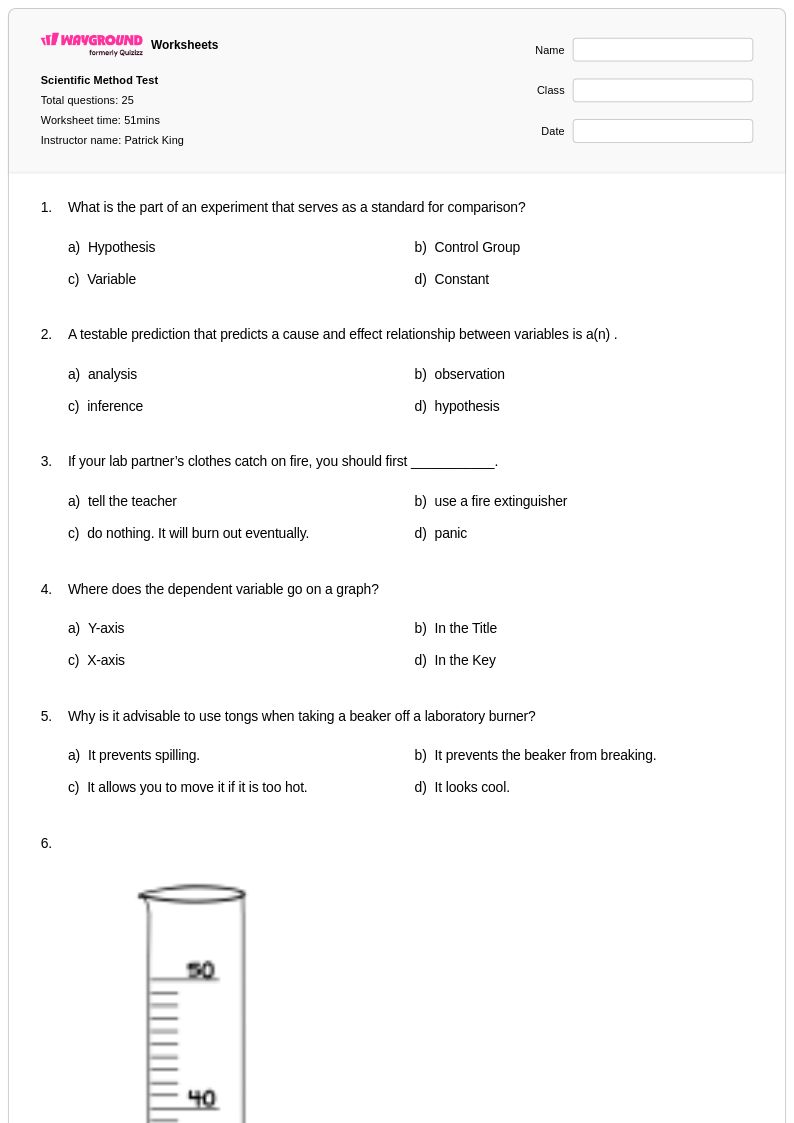
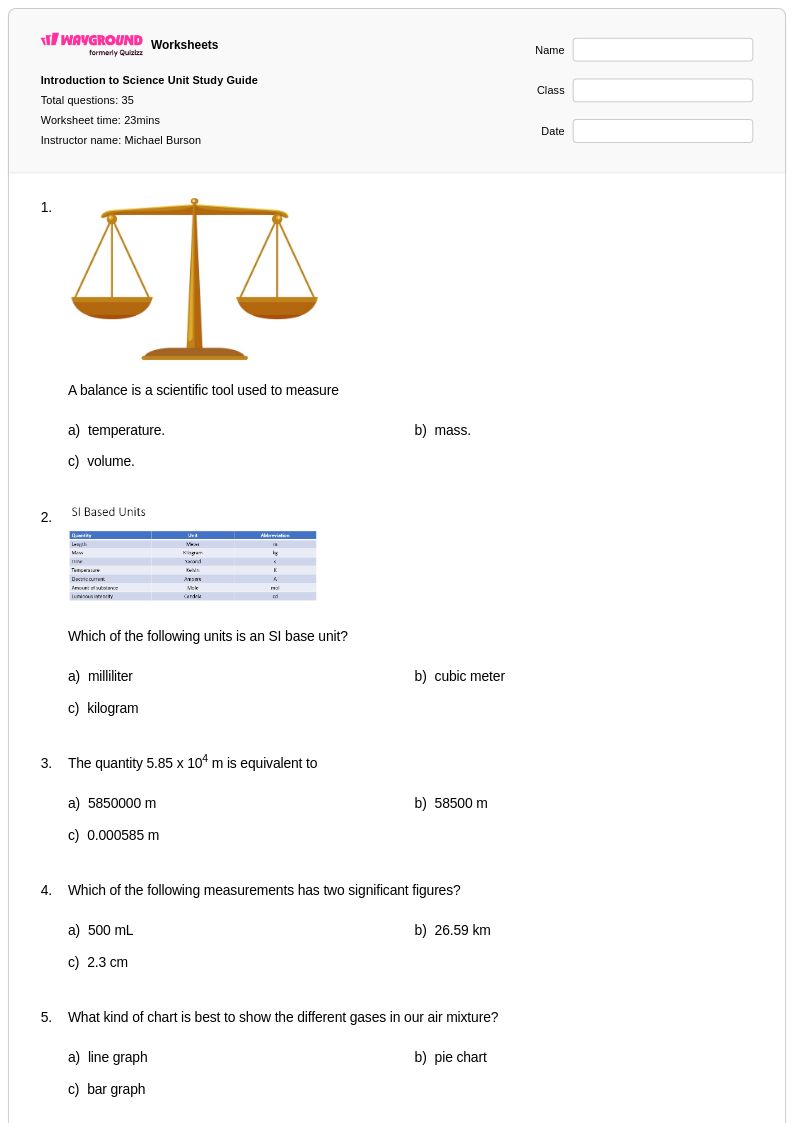
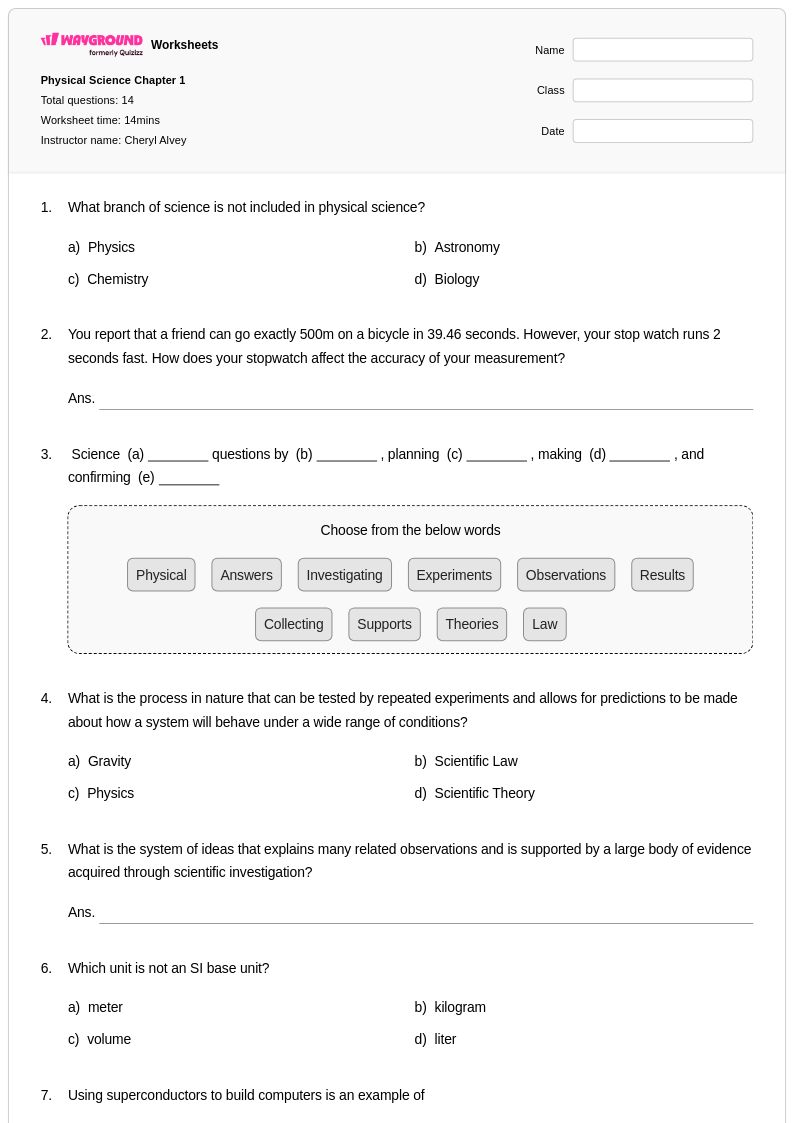
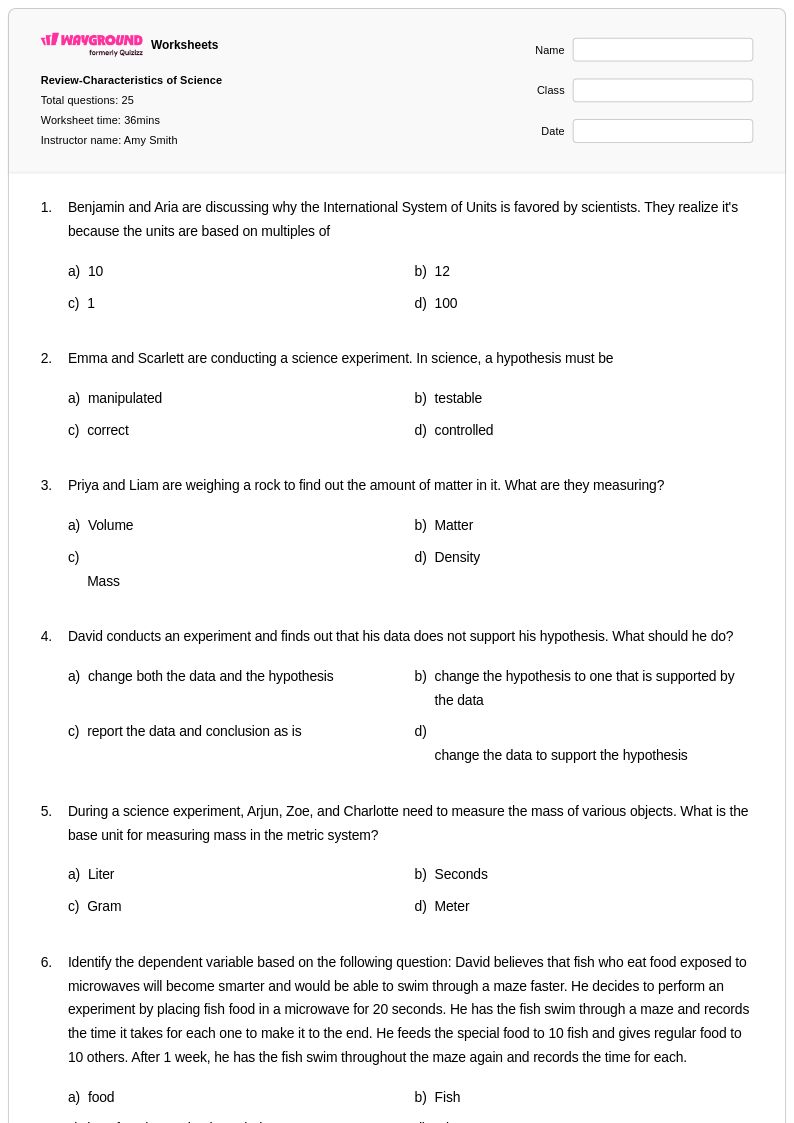
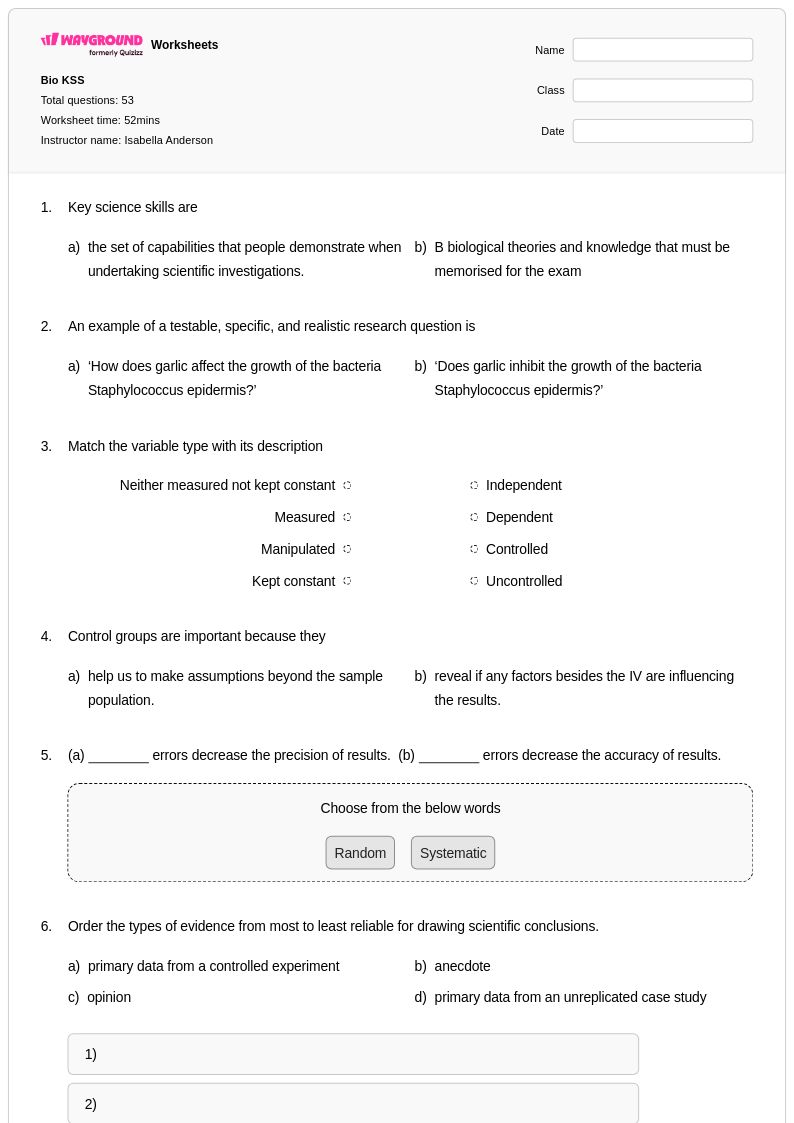
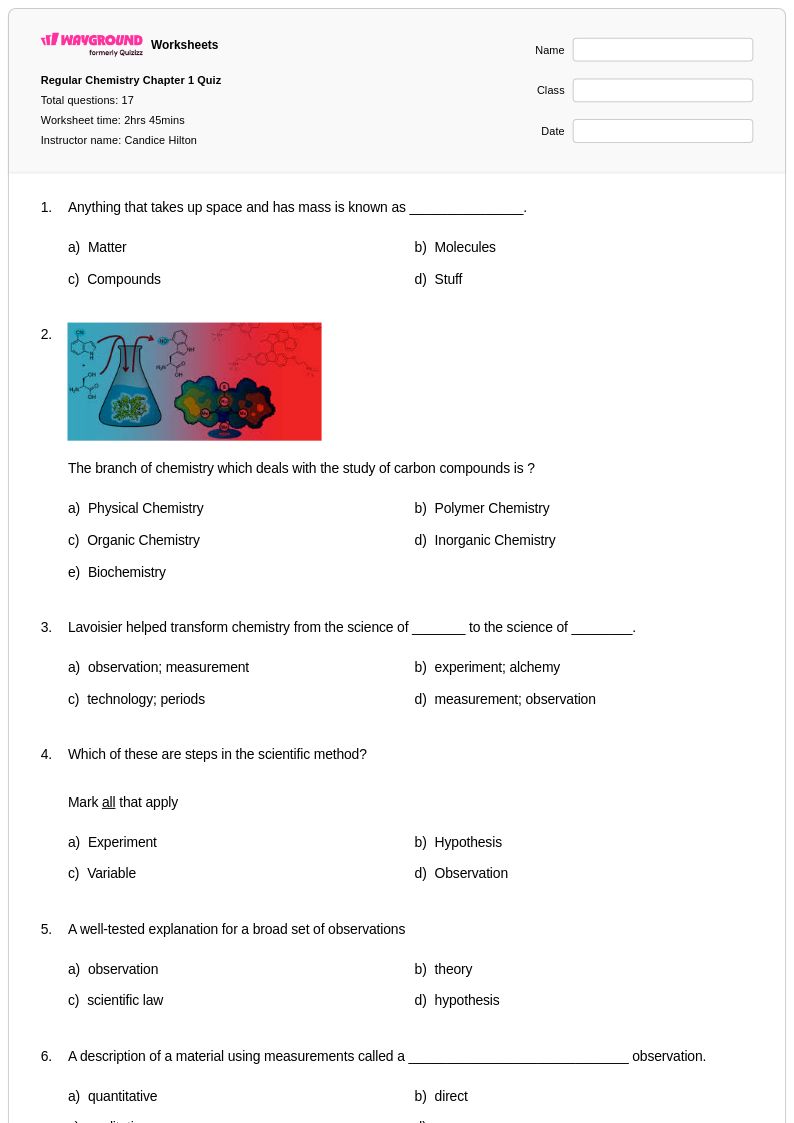
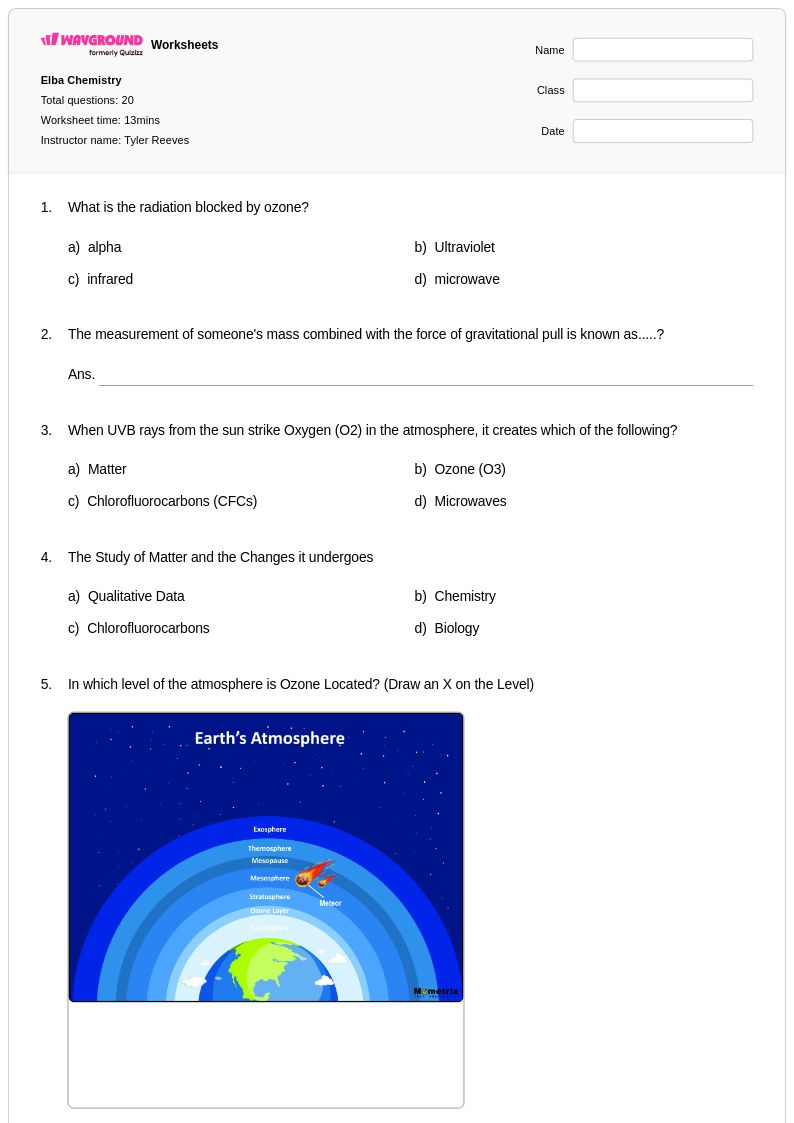
Scientific measurement worksheets for Class 11 students available through Wayground (formerly Quizizz) provide comprehensive practice in the fundamental skills of accurate data collection, unit conversion, and precision analysis that form the backbone of advanced scientific study. These carefully designed resources strengthen students' ability to work with significant figures, understand measurement uncertainty, apply proper scientific notation, and master the International System of Units (SI) across various scientific disciplines. The worksheet collection includes detailed practice problems that guide students through complex measurement scenarios, from calculating density and volume to analyzing experimental error and precision, with each printable resource featuring a complete answer key to support independent learning and self-assessment. Students can access these free materials in convenient pdf format, allowing for flexible use in laboratory settings, homework assignments, or exam preparation.
Wayground (formerly Quizizz) empowers teachers with an extensive library of millions of teacher-created scientific measurement resources, featuring robust search and filtering capabilities that allow educators to quickly locate worksheets aligned with specific learning standards and grade-level expectations. The platform's differentiation tools enable teachers to customize worksheet difficulty levels and problem types to meet diverse student needs, while the availability of both printable and digital formats, including downloadable pdf versions, provides maximum flexibility for classroom implementation. These comprehensive features support effective lesson planning by offering ready-to-use materials for skill practice, targeted remediation for students struggling with measurement concepts, and enrichment opportunities for advanced learners ready to tackle more complex scientific measurement challenges, ultimately helping teachers create a more personalized and effective learning experience in their Class 11 science classrooms.
FAQs
How do I teach scientific measurement to students effectively?
Effective scientific measurement instruction begins with hands-on exposure to real instruments such as graduated cylinders, triple-beam balances, and rulers before introducing abstract concepts like significant figures or measurement uncertainty. Teachers should emphasize the difference between precision and accuracy early, using concrete examples where students measure the same object multiple times and compare results. Pairing direct instruction with structured practice problems that require students to read scales, convert units, and select appropriate tools reinforces procedural fluency alongside conceptual understanding.
What exercises help students practice scientific measurement skills?
Practice exercises most effective for scientific measurement include reading graduated cylinders at the meniscus, using balance scales to determine mass, applying significant figures rules to calculated results, and converting between metric units using dimensional analysis. Scenario-based problems that ask students to identify the correct instrument for a given measurement task build both reasoning and procedural skills. Repeated low-stakes practice across these subtopics helps students build the automaticity needed for accurate lab work.
What mistakes do students commonly make with scientific measurement?
One of the most common errors is misreading the meniscus on a graduated cylinder by reading from the top of the curve rather than the bottom. Students also frequently confuse precision with accuracy, treating them as interchangeable when they describe distinct qualities of a measurement. Significant figure errors are widespread, particularly when students add or multiply values with differing decimal places, and unit conversion mistakes often arise from inverting conversion factors or skipping intermediate steps.
How do I use scientific measurement worksheets to differentiate instruction?
Scientific measurement worksheets can be differentiated by adjusting the complexity of the instrument readings presented, the number of conversion steps required, or the precision expected in significant figure problems. On Wayground, teachers can apply individual accommodations such as read aloud support for students who need questions delivered audibly, reduced answer choices to lower cognitive load for struggling learners, and extended time settings for students who need additional processing time. These accommodations are saved per student and apply automatically in future sessions, so differentiation does not require repeated setup.
How do I use Wayground's scientific measurement worksheets in my classroom?
Wayground's scientific measurement worksheets are available as printable PDFs for traditional paper-based lab preparation and review, as well as in digital formats for technology-integrated classrooms. Teachers can also host worksheets directly as a quiz on Wayground, allowing students to complete measurement practice interactively while the platform tracks responses. Each worksheet includes a complete answer key, reducing grading time and supporting immediate feedback during or after practice sessions.
How do I help students understand significant figures in scientific measurement?
Introduce significant figures by first ensuring students can identify which digits in a measurement are certain versus estimated, using ruler and graduated cylinder readings as the concrete reference point. From there, teach the rules for operations separately: addition and subtraction follow decimal place rules, while multiplication and division follow significant figure count rules. Students benefit from worked examples that show the full calculation alongside the correctly rounded answer, making the rounding decision explicit rather than a separate abstract step.
How do I assess whether students have mastered scientific measurement skills?
Strong assessment of scientific measurement should include both instrument-reading items, where students identify a value from a scale image, and application items, where they determine the correct number of significant figures or perform a multi-step unit conversion. Common error patterns to look for include rounding to the wrong decimal place in significant figure problems, unit mismatches in conversion answers, and incorrect meniscus readings. Including a mix of straightforward and unfamiliar measurement contexts in an assessment reveals whether students have genuine understanding or only surface-level procedural recall.