Free Printable Sentences and Fragments Worksheets for Class 7
Class 7 sentences and fragments worksheets from Wayground help students master identifying complete sentences versus incomplete fragments through engaging printables, practice problems, and comprehensive answer keys for effective learning.
Explore printable Sentences and Fragments worksheets for Class 7
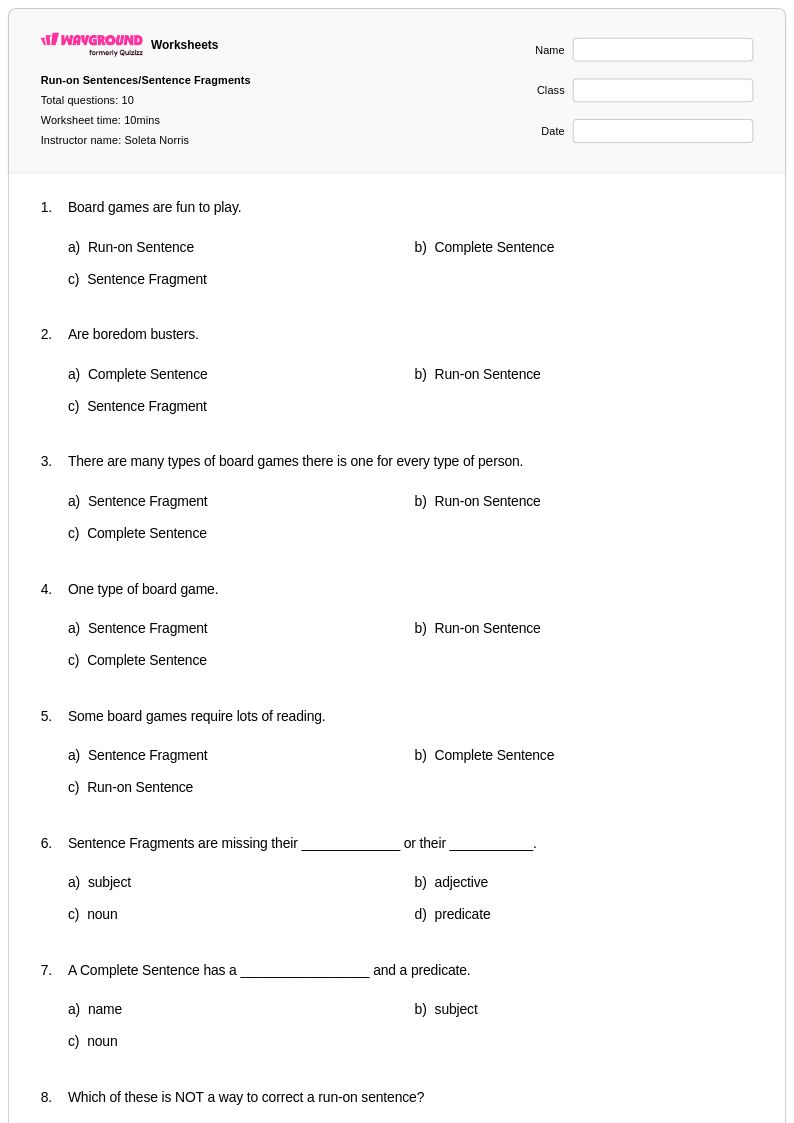
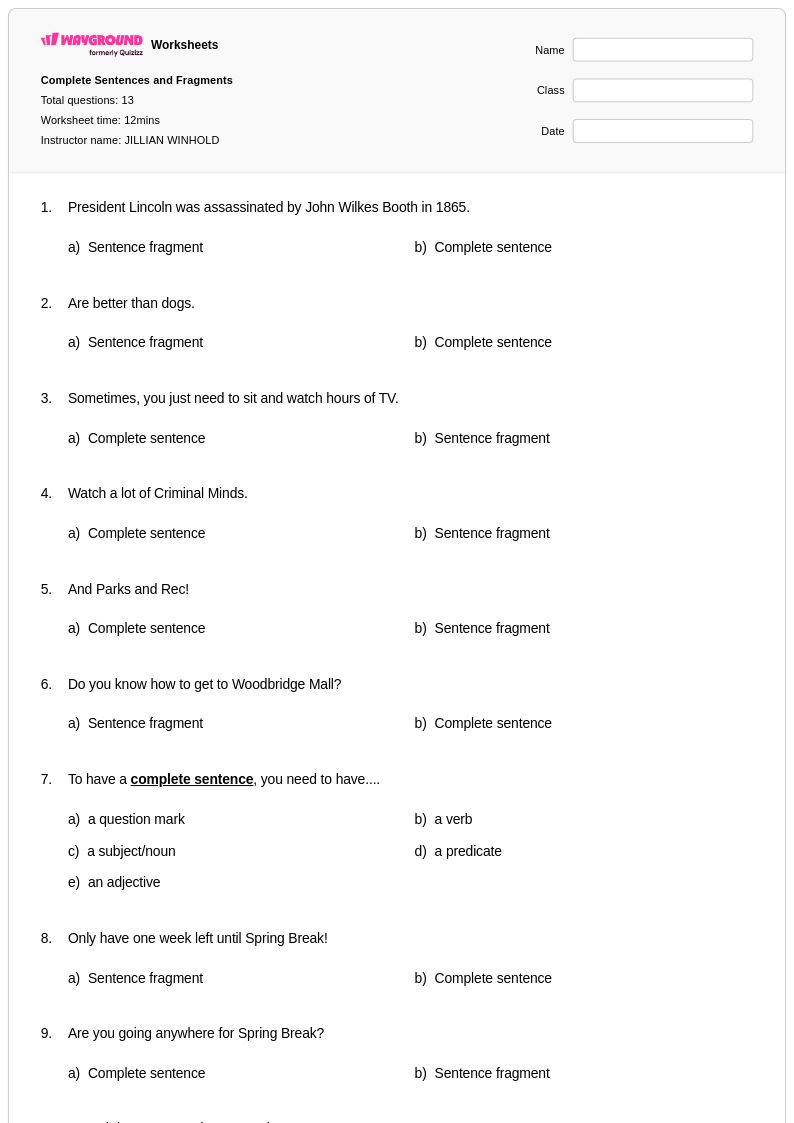
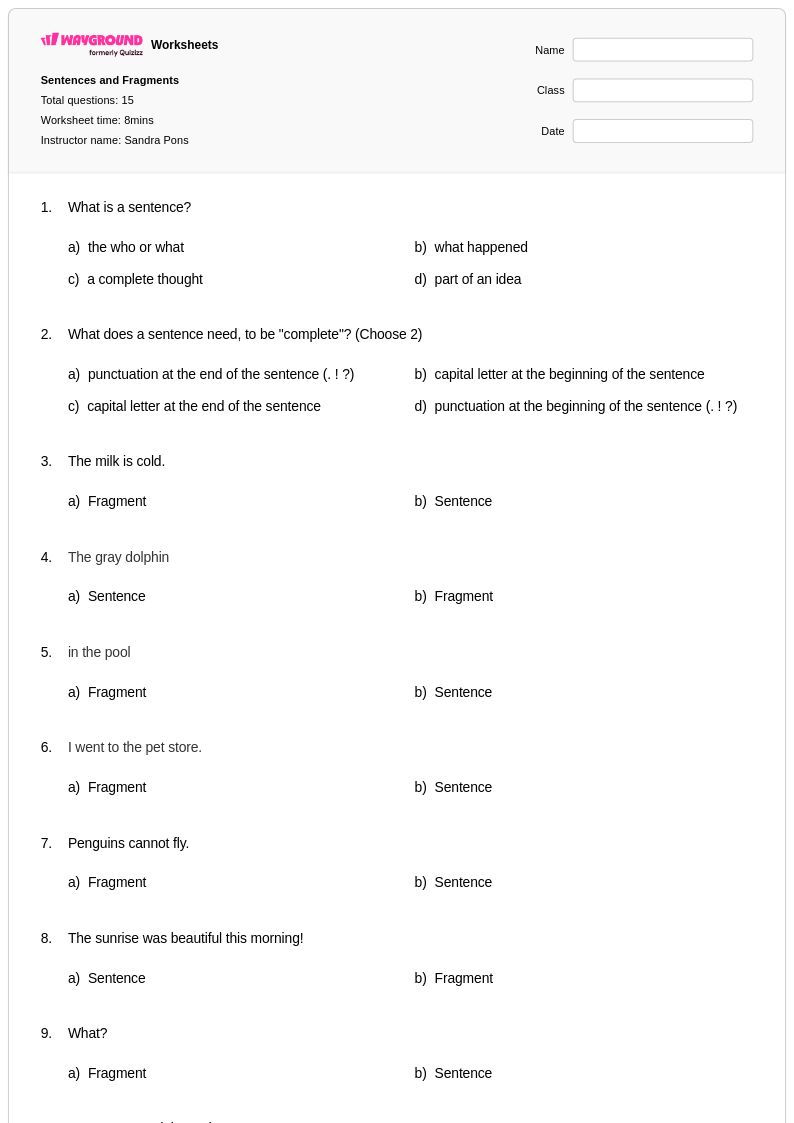
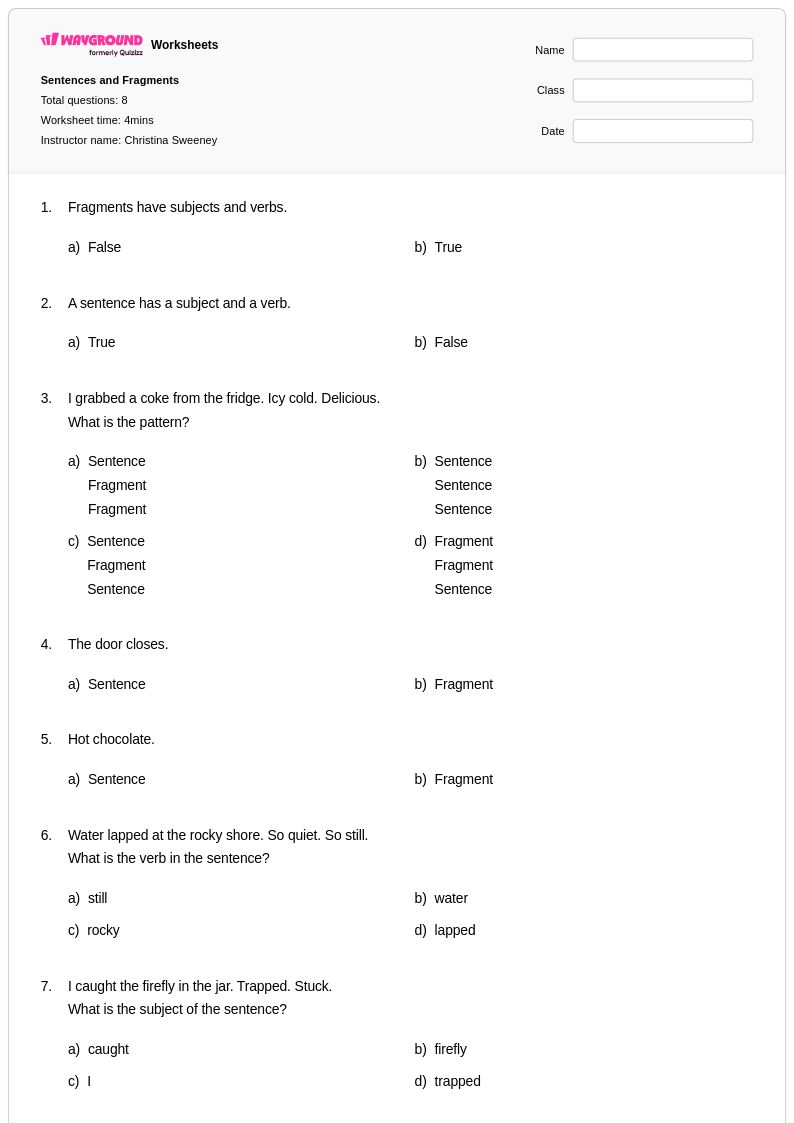
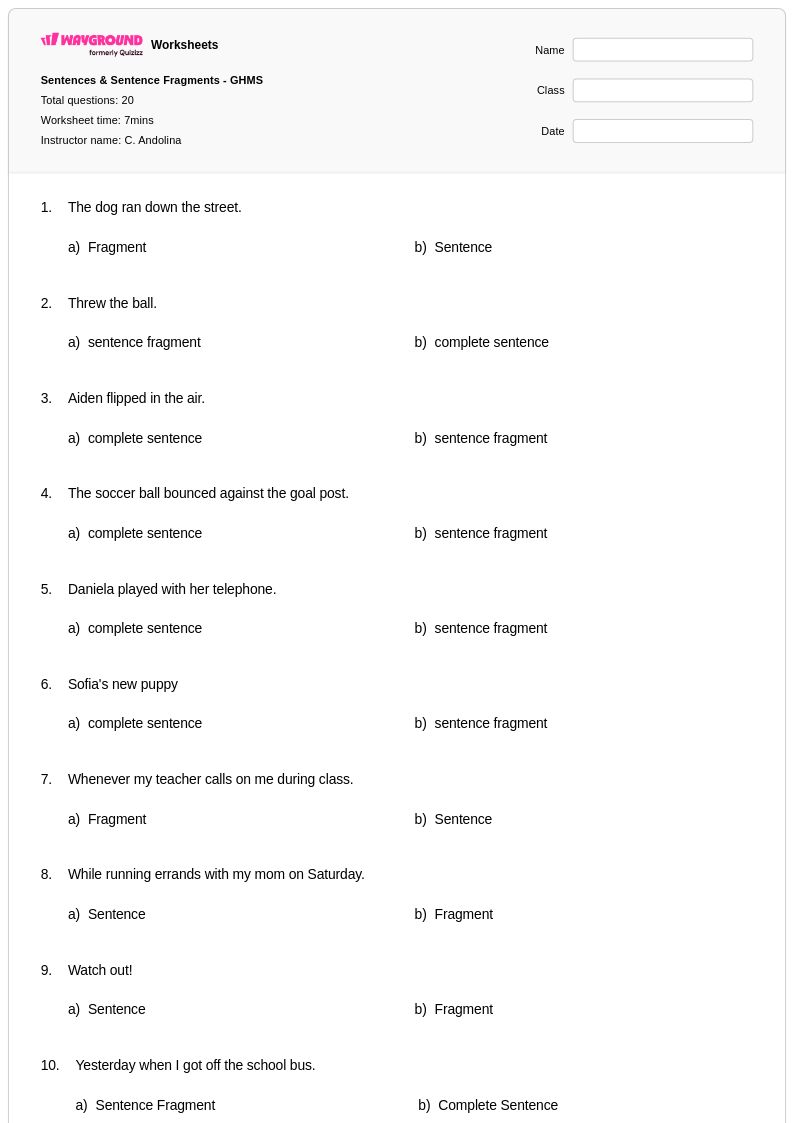
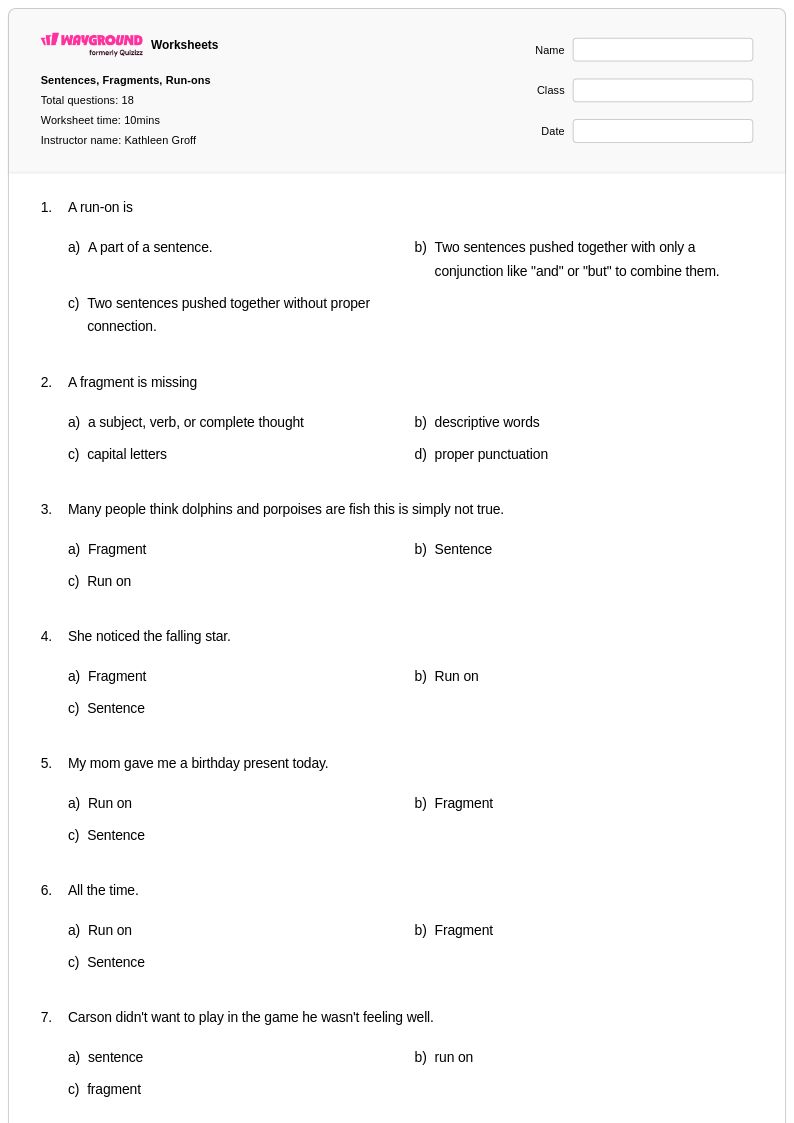
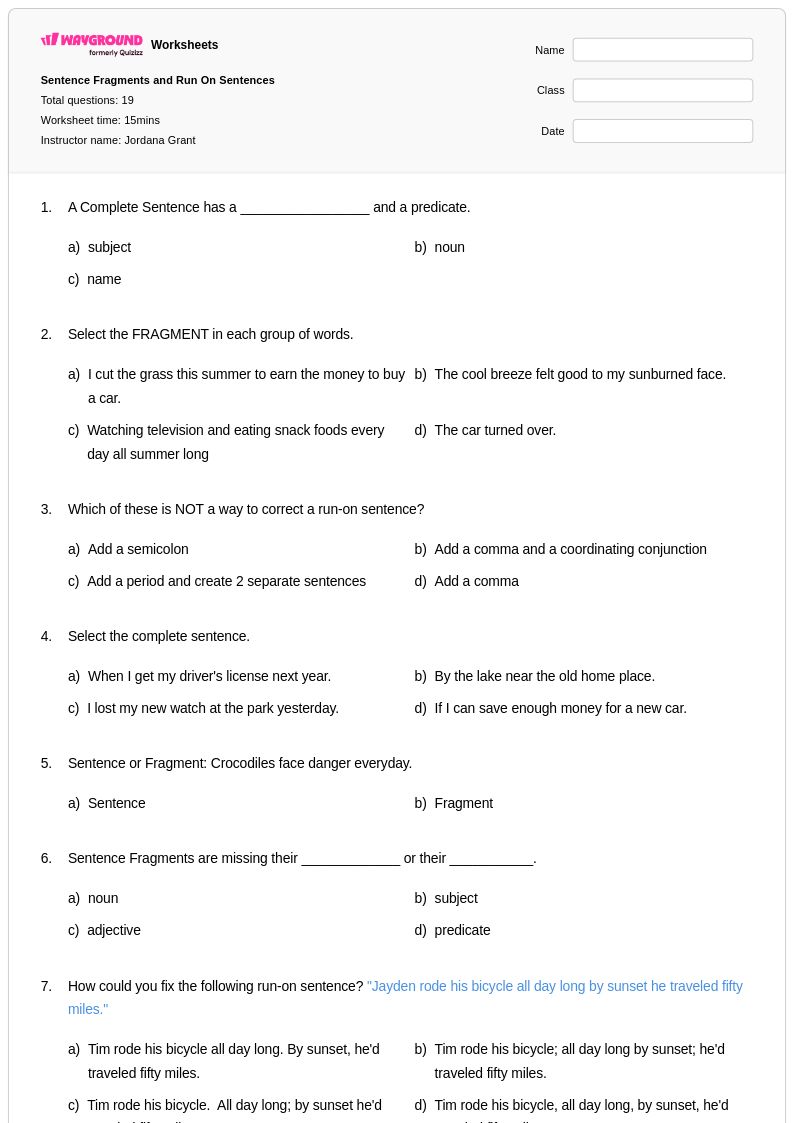
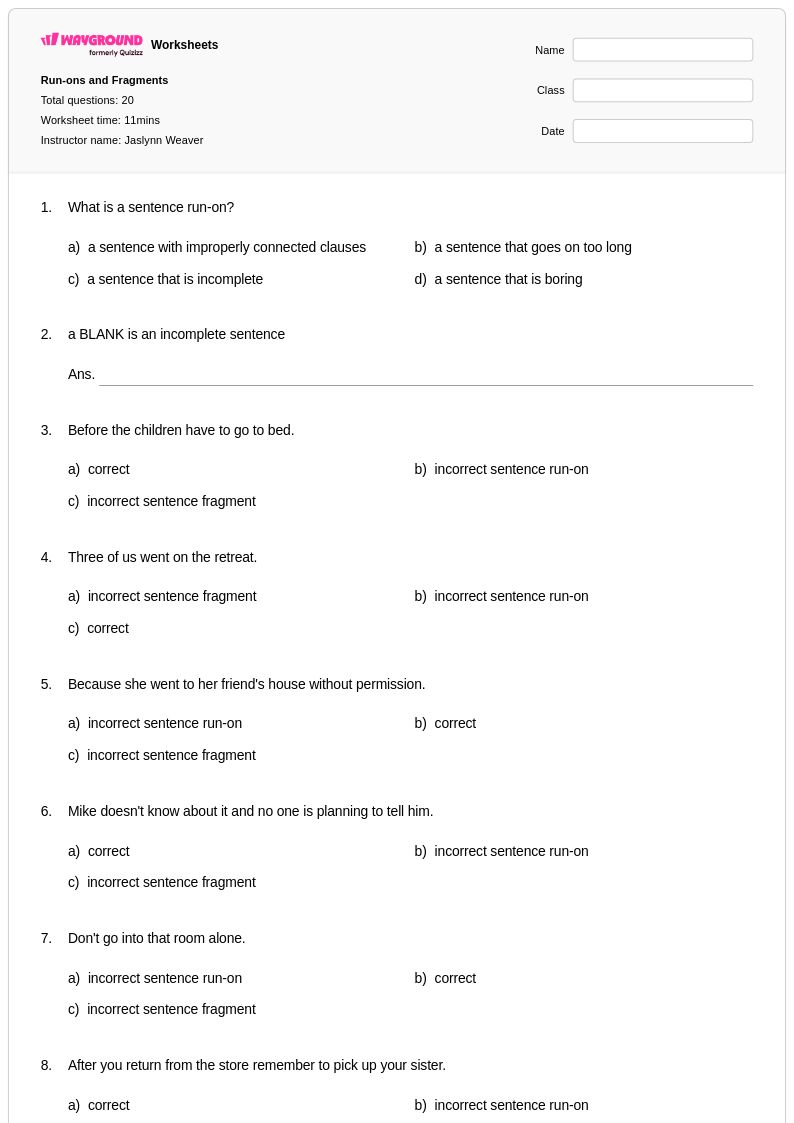
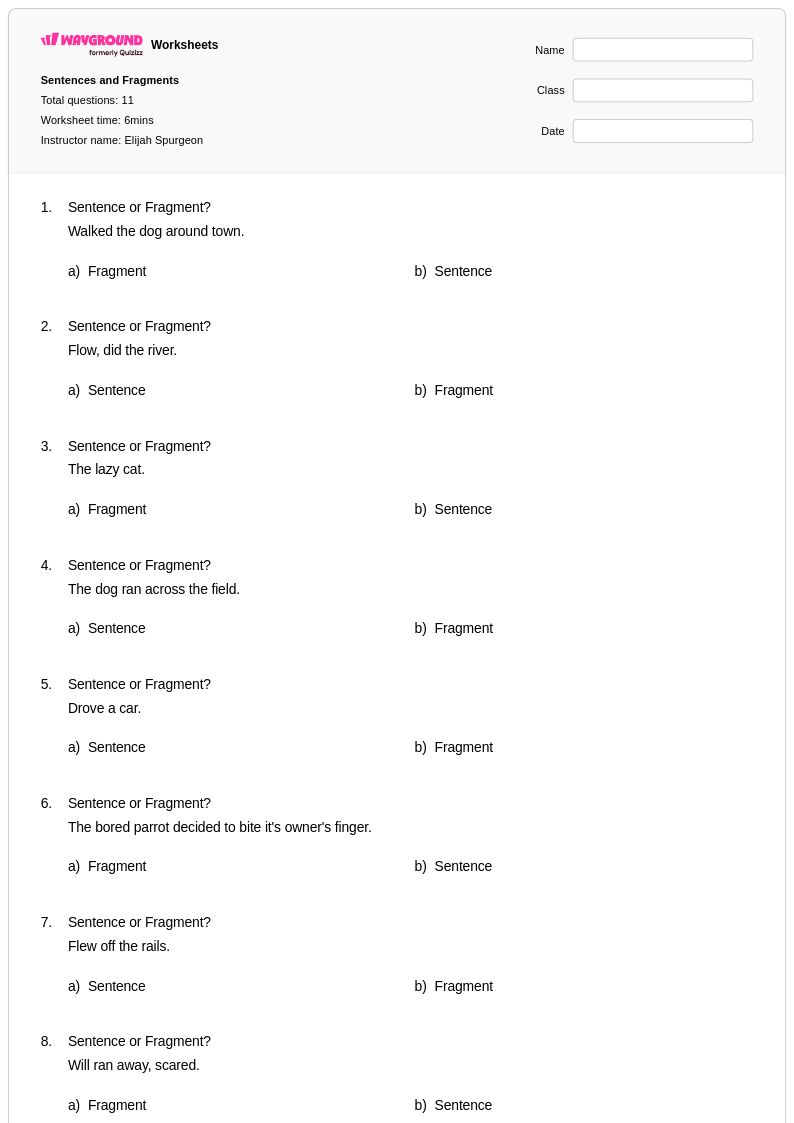
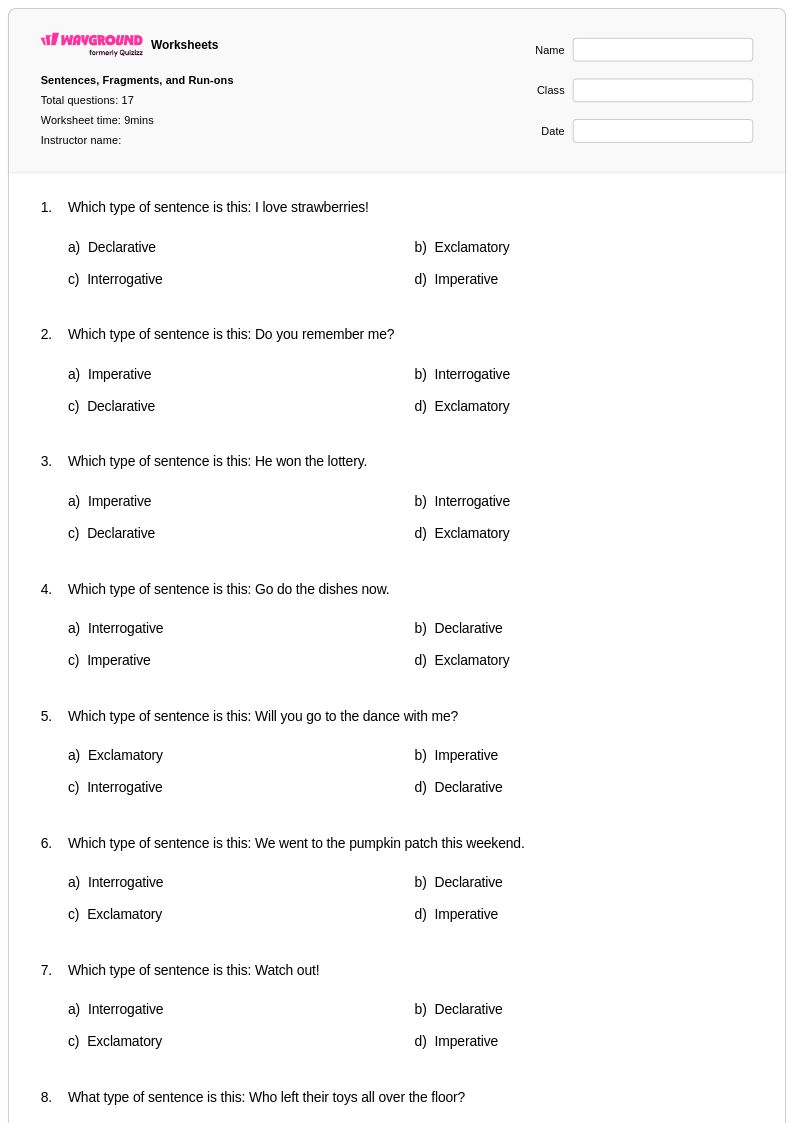
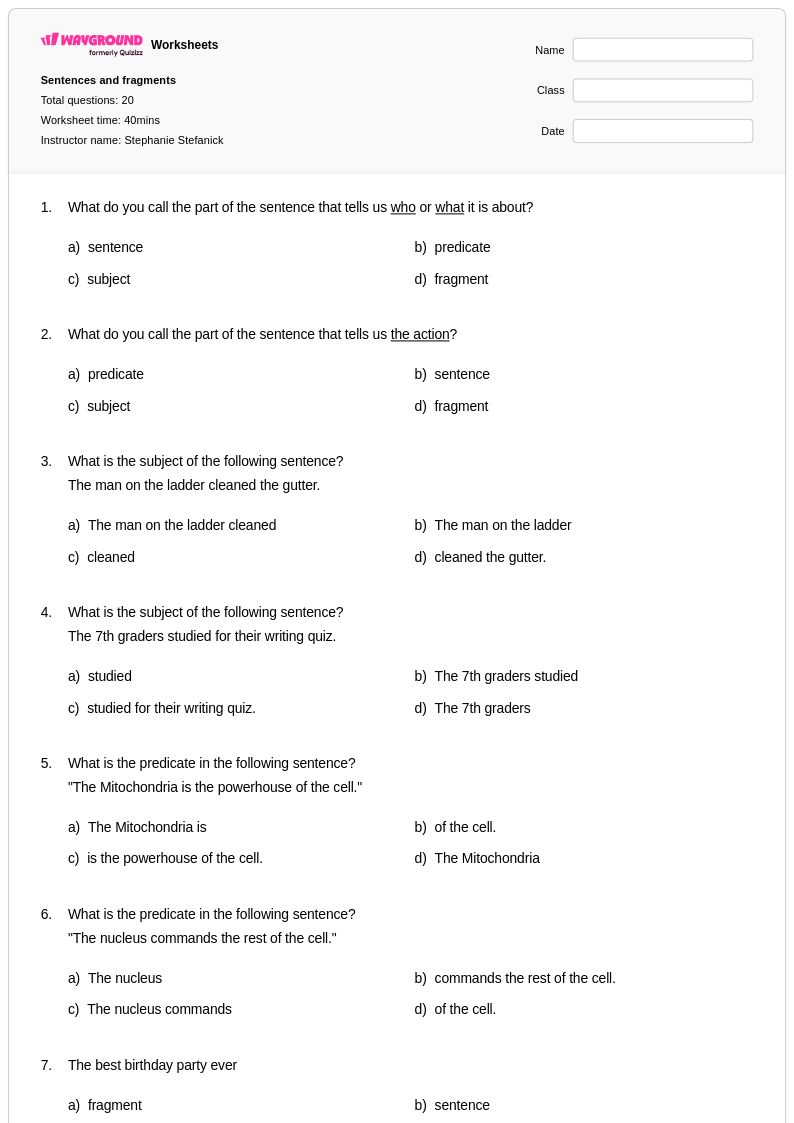
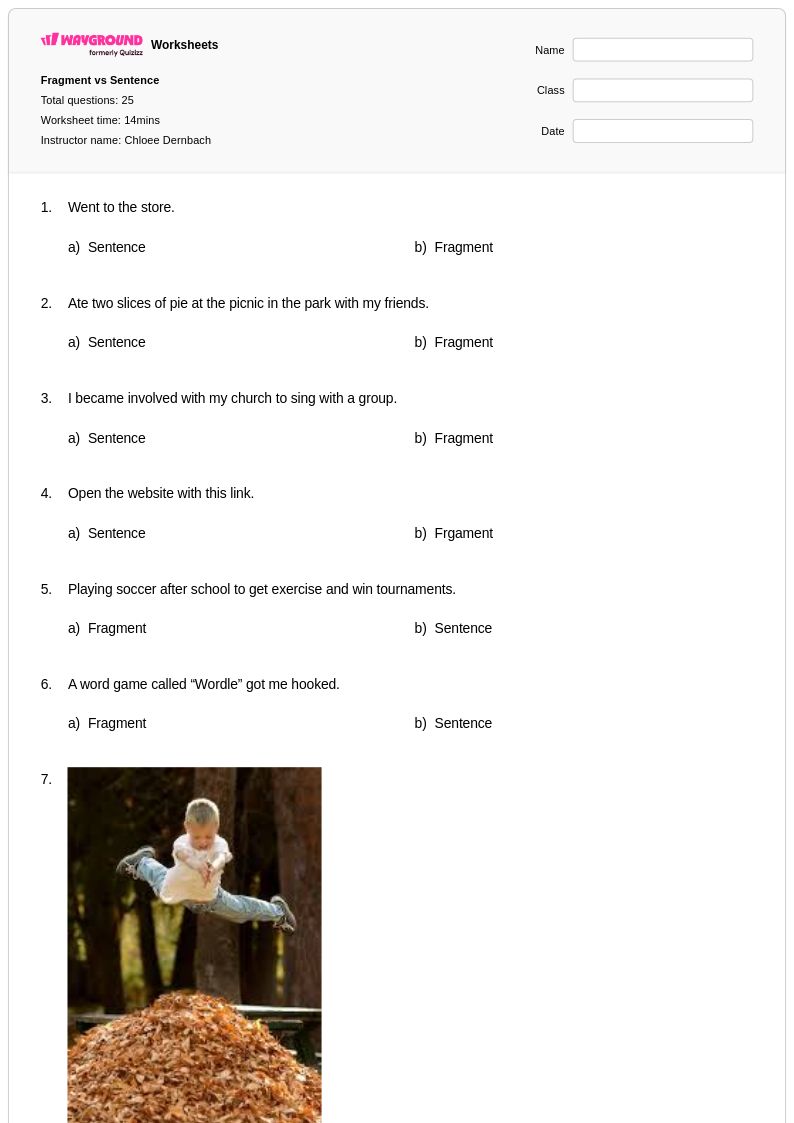
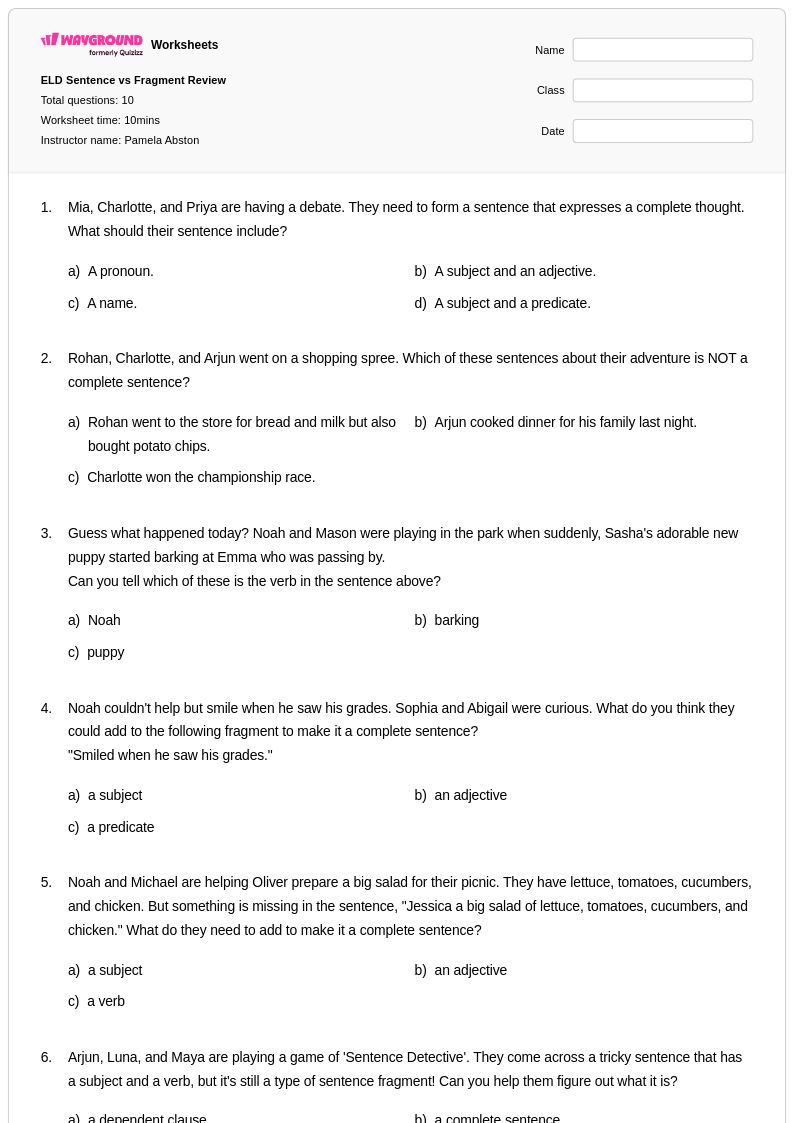
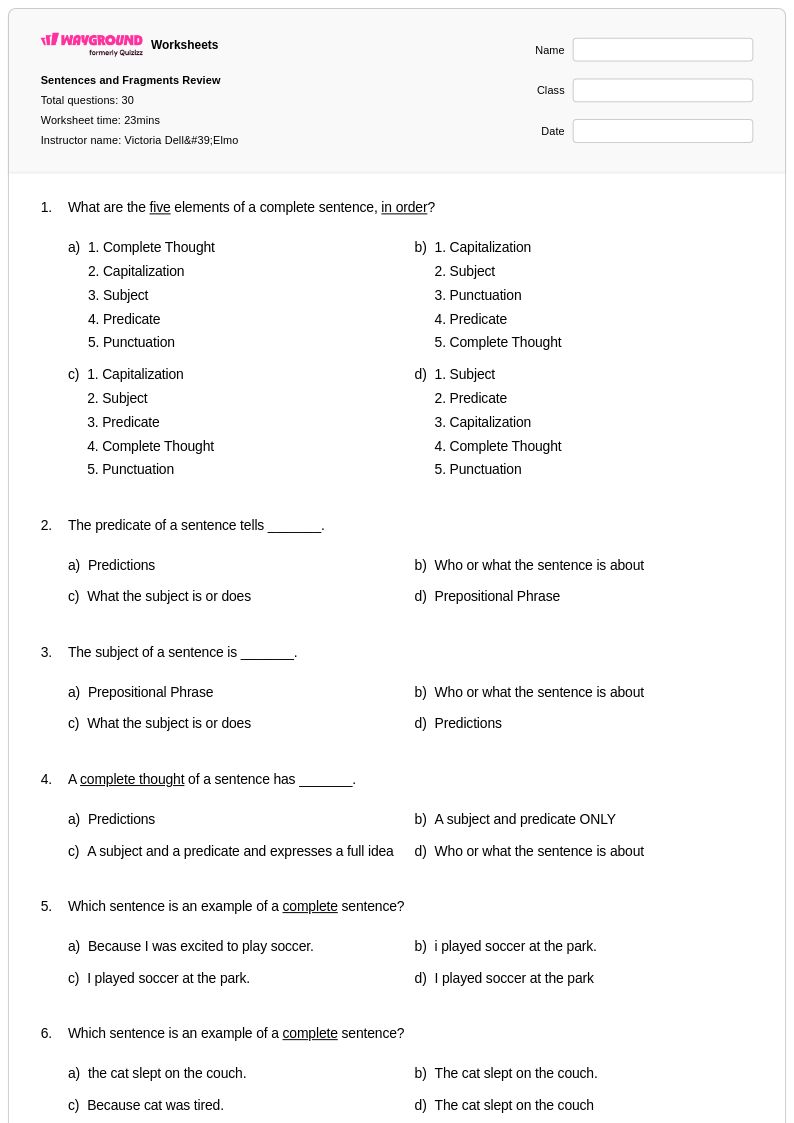
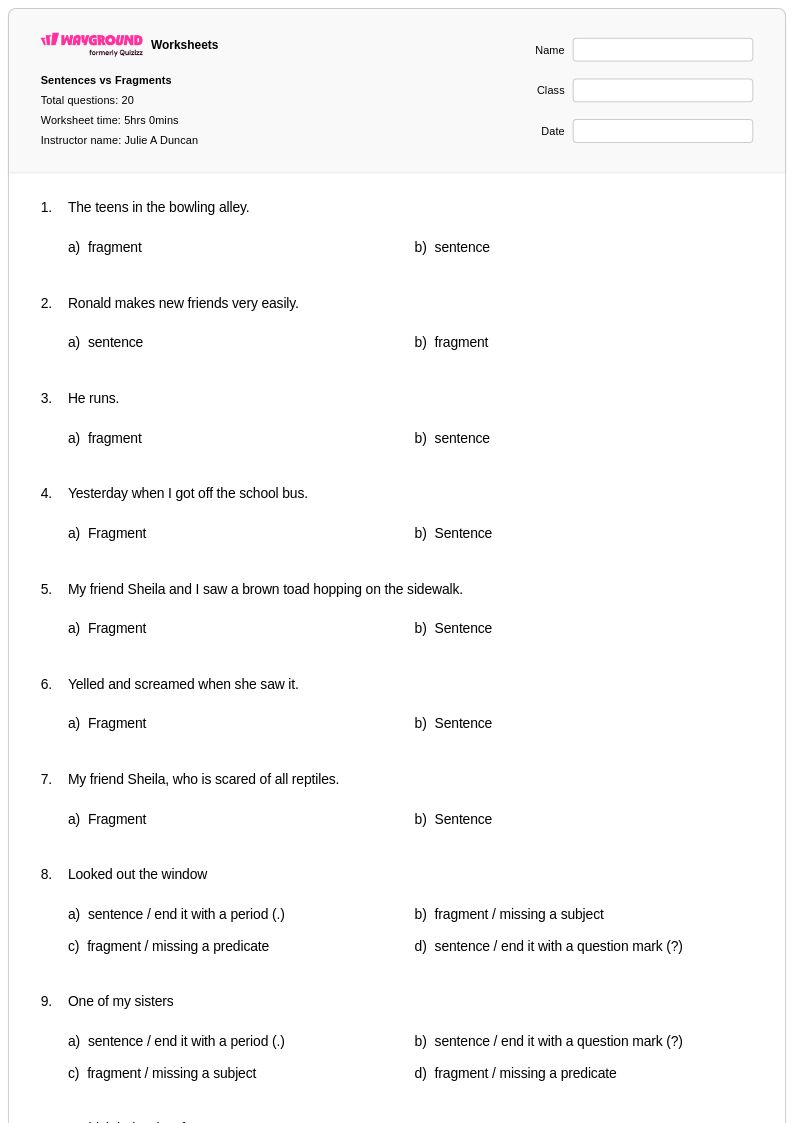
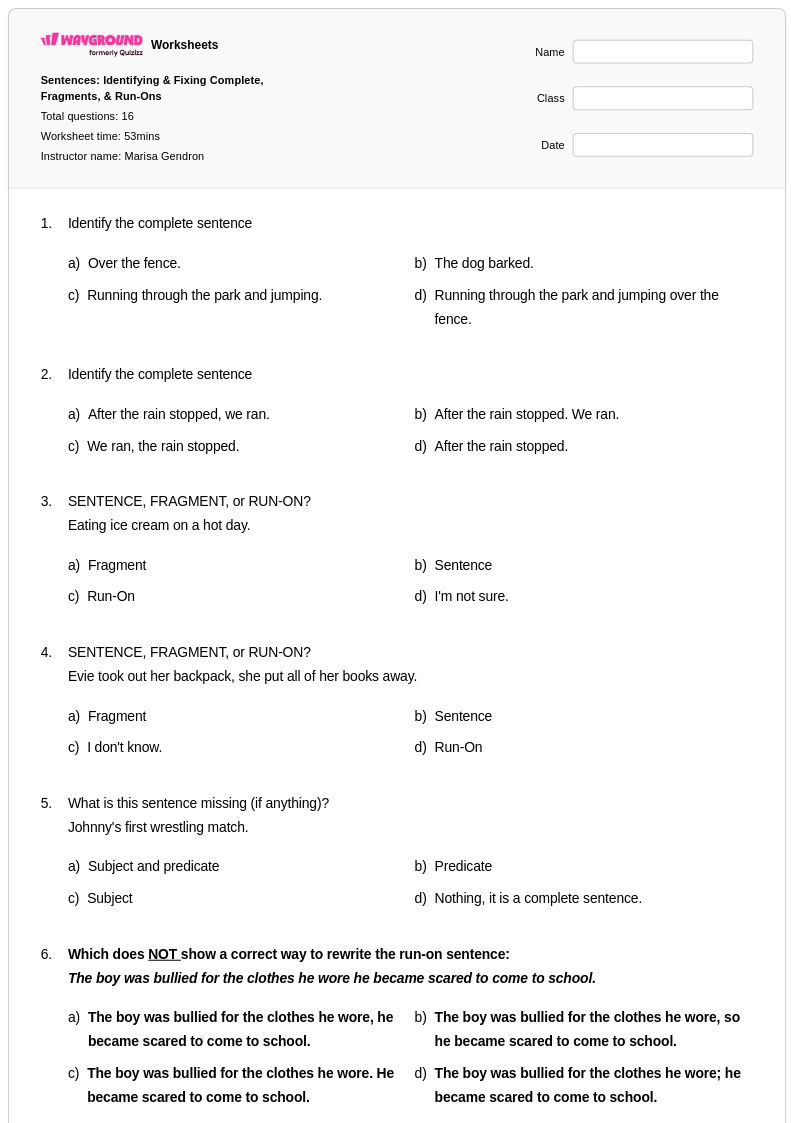
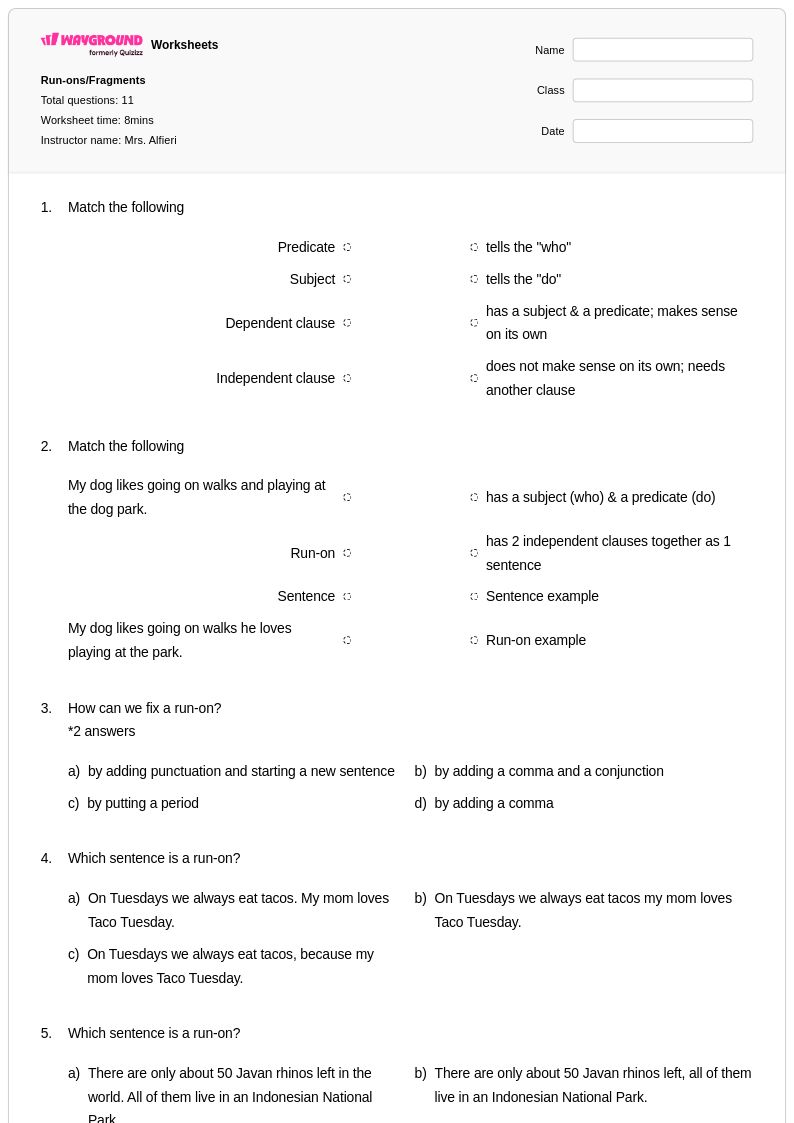
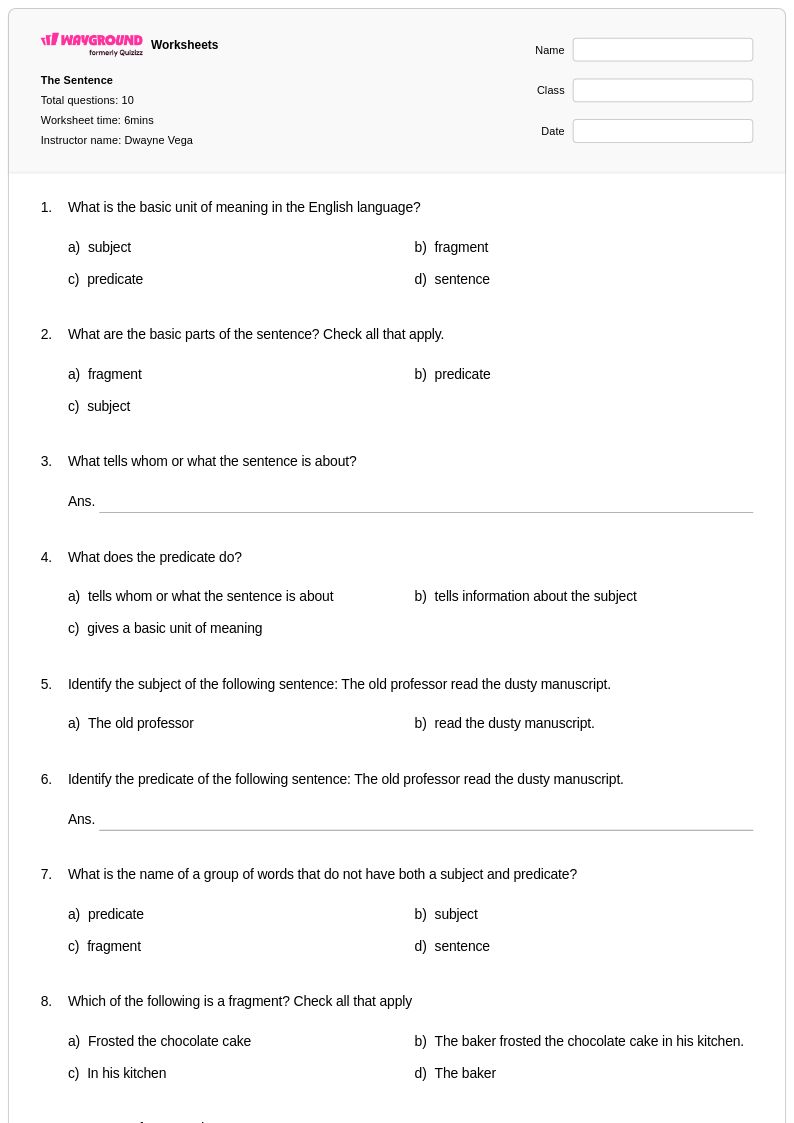
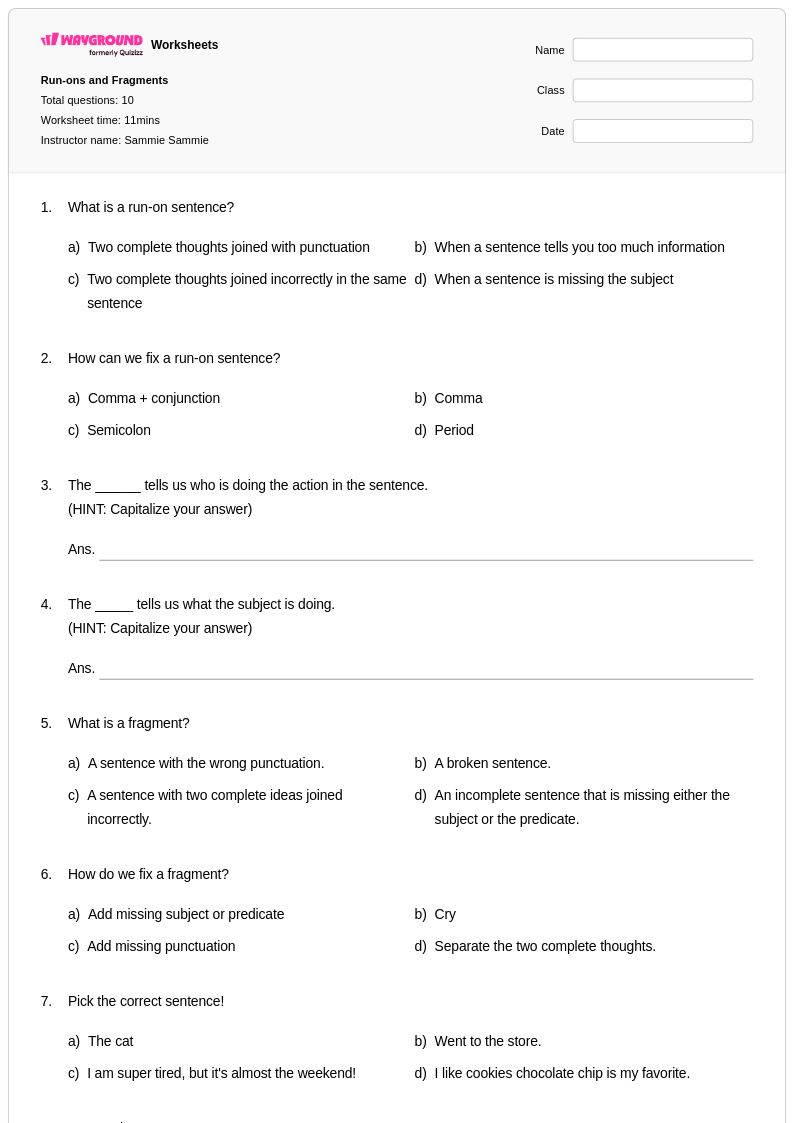
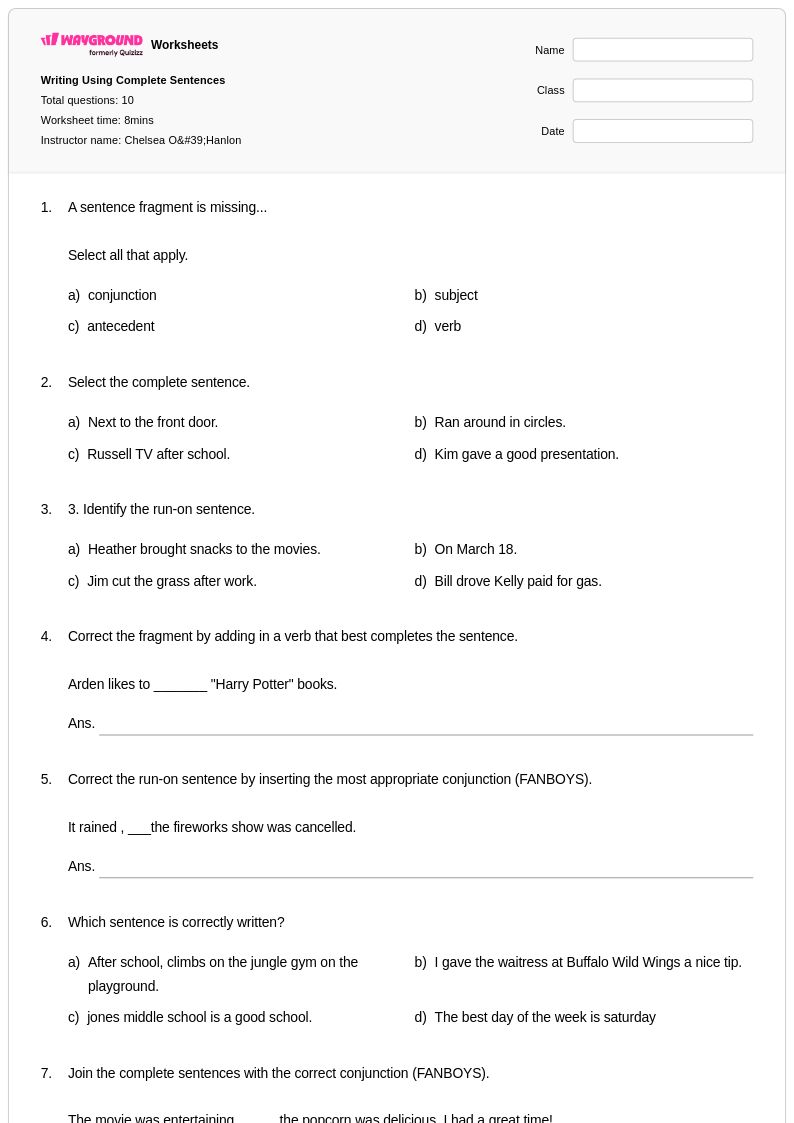
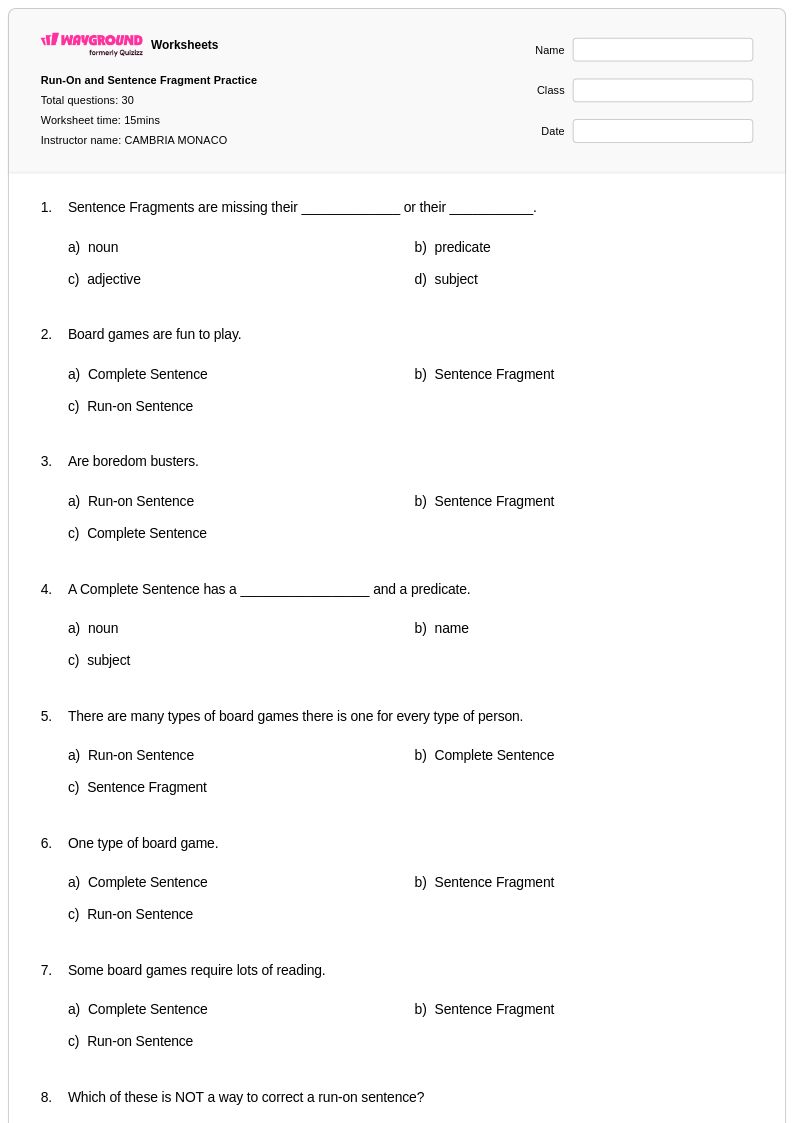
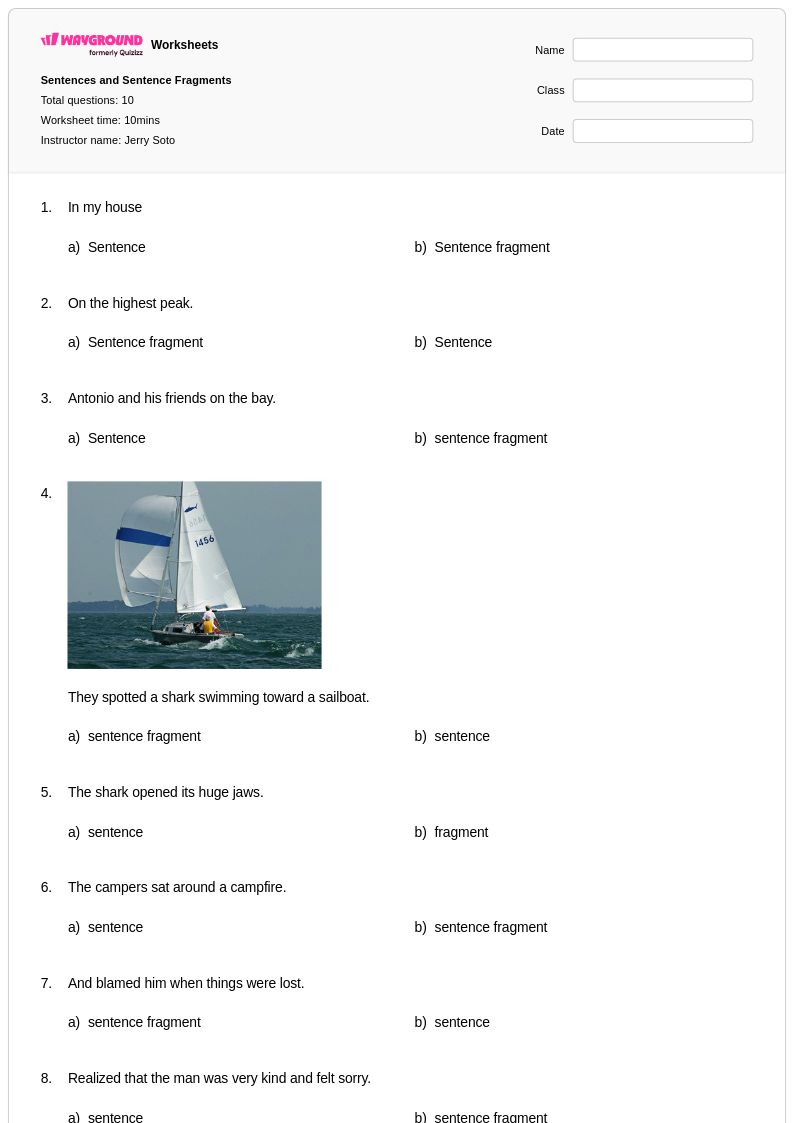
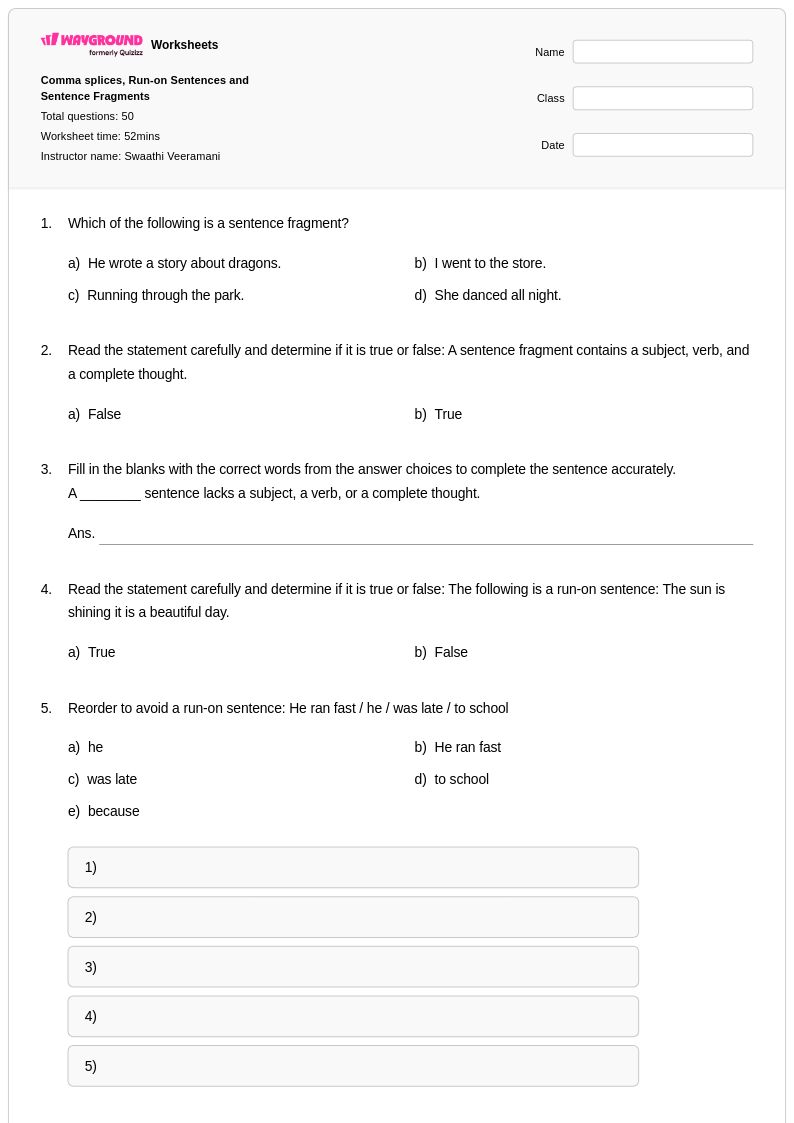
Sentences and fragments worksheets for Class 7 students available through Wayground (formerly Quizizz) provide comprehensive practice in distinguishing between complete sentences and incomplete sentence fragments, a fundamental skill that strengthens students' writing clarity and grammatical understanding. These carefully crafted worksheets guide seventh-grade learners through identifying the essential components that make a sentence complete—including subjects, predicates, and complete thoughts—while helping them recognize common fragment patterns such as dependent clauses, prepositional phrases, and participial phrases that lack the necessary elements for sentence completion. Each worksheet includes diverse practice problems that challenge students to analyze sentence structure, transform fragments into complete sentences, and edit passages containing mixed examples, with answer keys provided to support independent learning and immediate feedback on their developing skills.
Wayground (formerly Quizizz) empowers educators with an extensive collection of teacher-created sentences and fragments resources, drawing from millions of worksheets that can be easily located through robust search and filtering capabilities designed specifically for Class 7 English instruction. Teachers benefit from standards-aligned materials that support differentiated instruction, allowing them to customize worksheets based on individual student needs and learning objectives while accessing both printable pdf formats for traditional classroom use and digital versions for interactive learning environments. These versatile resources streamline lesson planning by providing ready-to-use materials for initial instruction, targeted remediation for students struggling with sentence construction, and enrichment activities for advanced learners, ensuring that all seventh-grade students receive appropriate practice in mastering the critical distinction between sentences and fragments that forms the foundation of effective written communication.
FAQs
How do I teach students the difference between a complete sentence and a fragment?
Start by establishing the two non-negotiables for a complete sentence: a subject and a predicate that together express a complete thought. Once students can identify those components reliably, introduce common fragment types one at a time, such as dependent clauses that begin with subordinating conjunctions, phrases missing a subject, and phrases missing a verb. Using mentor sentences from real texts helps students see the difference in context rather than in isolation.
What exercises help students practice identifying sentence fragments?
Effective practice exercises ask students to do more than just label a sentence or fragment — they should also correct the fragment by adding the missing element or combining it with an adjacent sentence. Activities that present fragments alongside complete sentences in a mixed set are especially useful because they mirror the kind of proofreading students need to do in their own writing. Worksheets that include dependent clause fragments, prepositional phrase fragments, and missing-subject constructions give students exposure to the most common error patterns.
What mistakes do students commonly make when learning to identify fragments?
The most frequent misconception is equating sentence length with completeness — students often assume a long phrase must be a complete sentence. Dependent clause fragments are particularly tricky because they contain both a subject and a verb, yet still do not express a complete thought on their own. Students also frequently overlook prepositional phrase fragments, treating them as complete because they sound natural in spoken language. Targeted practice that isolates each fragment type helps students build more precise recognition skills.
How can I use sentences and fragments worksheets to support students at different skill levels?
For struggling students, start with exercises that ask them to identify just one missing element at a time, such as finding the subject or confirming a predicate is present, before moving to mixed correction tasks. More advanced students benefit from exercises that require them to rewrite fragments into complete sentences in multiple ways, which deepens their understanding of sentence structure. On Wayground, teachers can apply accommodations such as reduced answer choices or read-aloud support to individual students, allowing the same worksheet to serve the full range of learners in a class without singling anyone out.
How do I use Wayground's sentences and fragments worksheets in my classroom?
Wayground's sentences and fragments worksheets are available as printable PDFs for traditional classroom distribution and as digital formats for technology-integrated instruction, including the option to host them as a quiz directly on Wayground. Each worksheet includes a complete answer key, making them practical for independent practice, homework assignments, or self-paced review. The search and filtering tools on the platform allow teachers to quickly find materials aligned to specific curriculum standards or targeted to a particular fragment type.