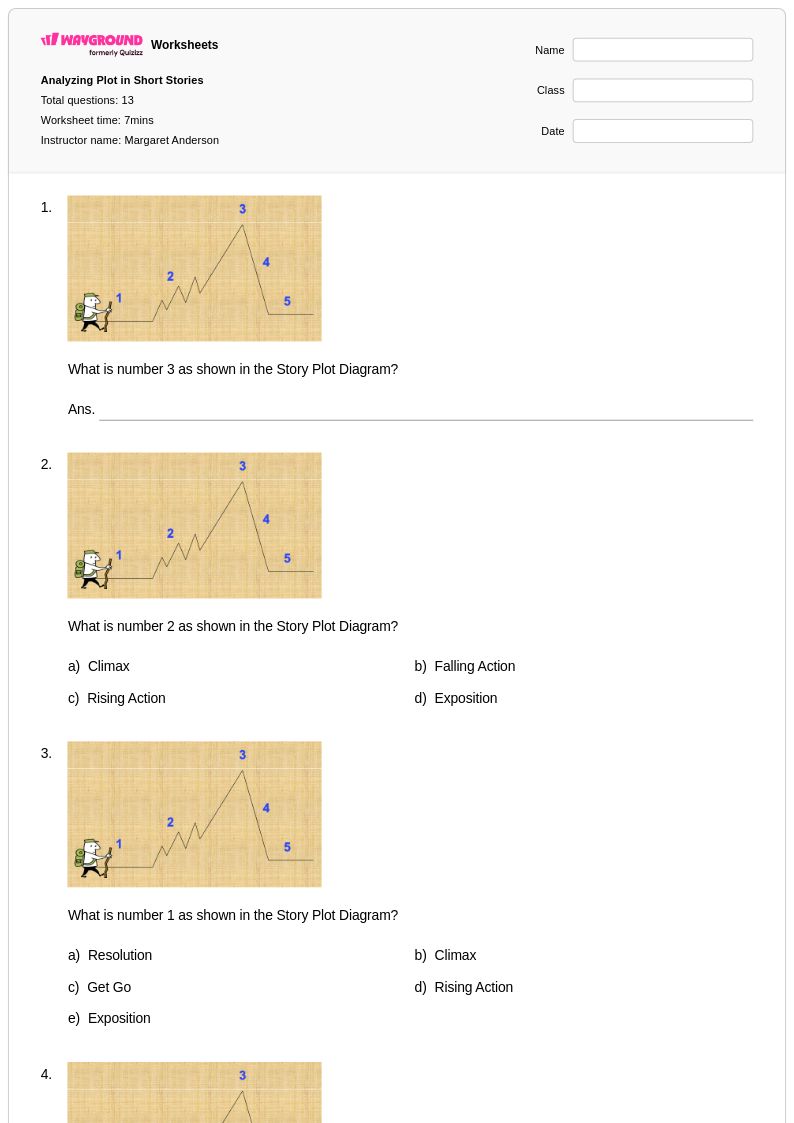
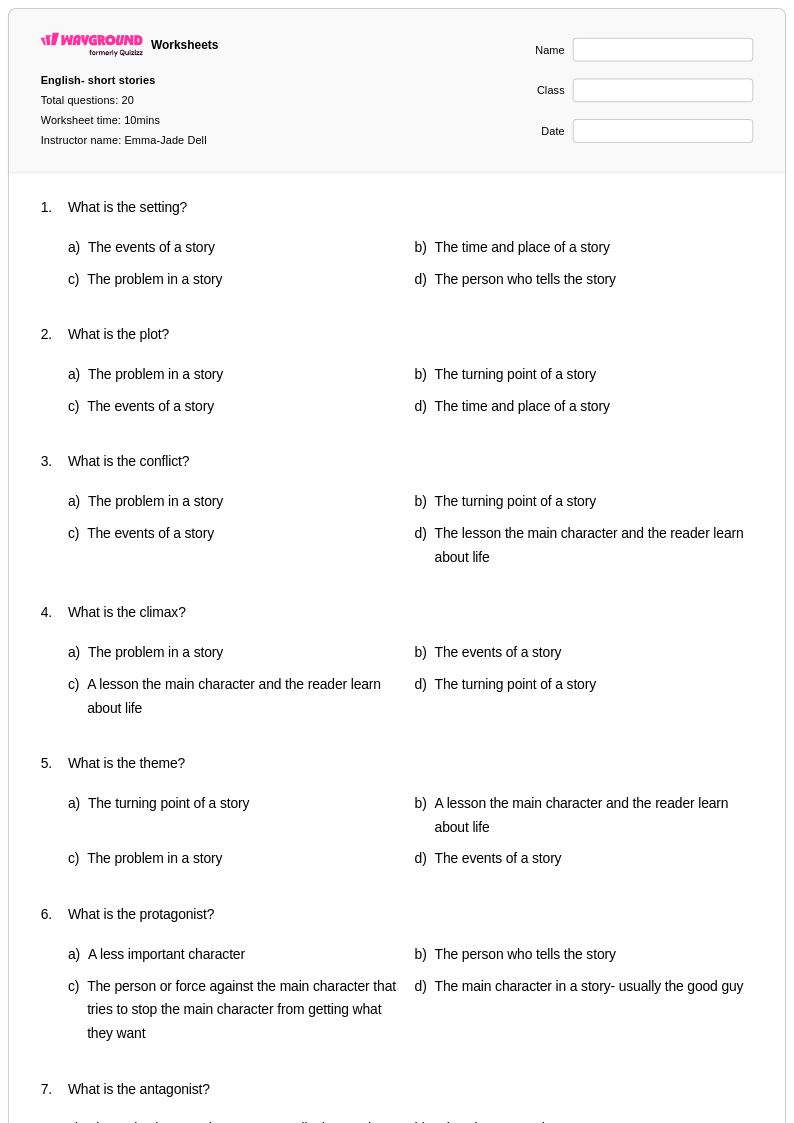
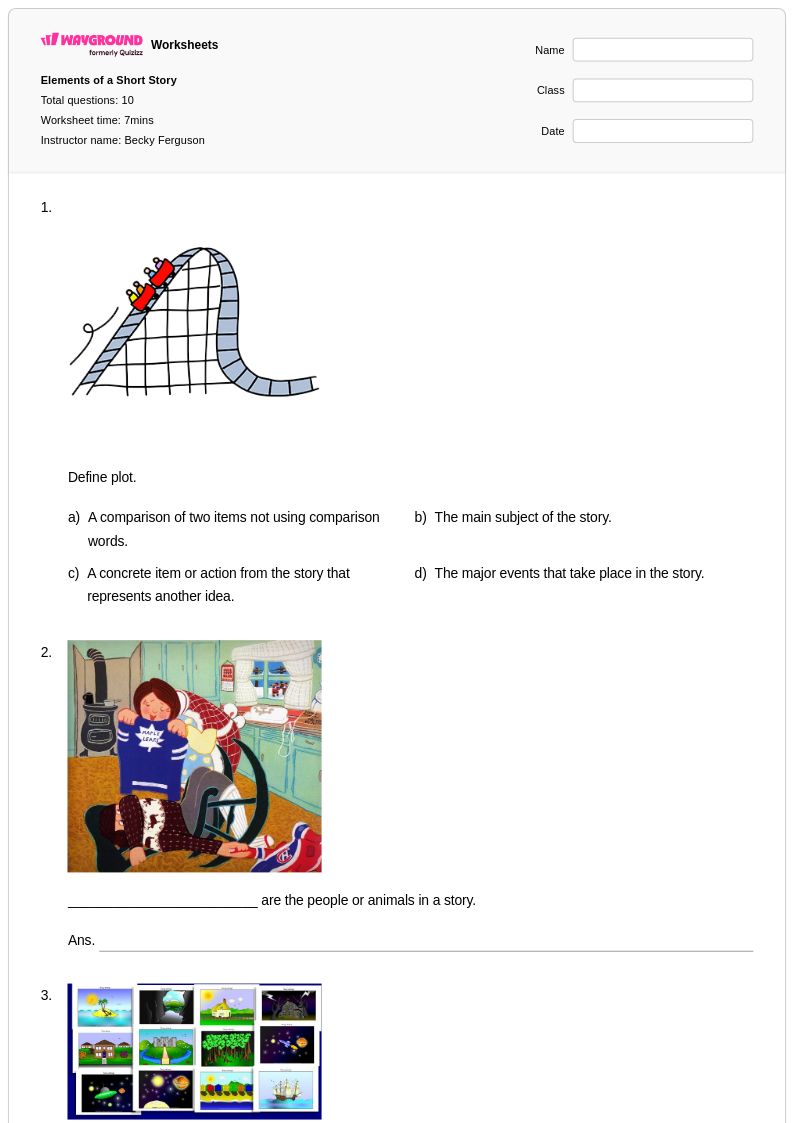
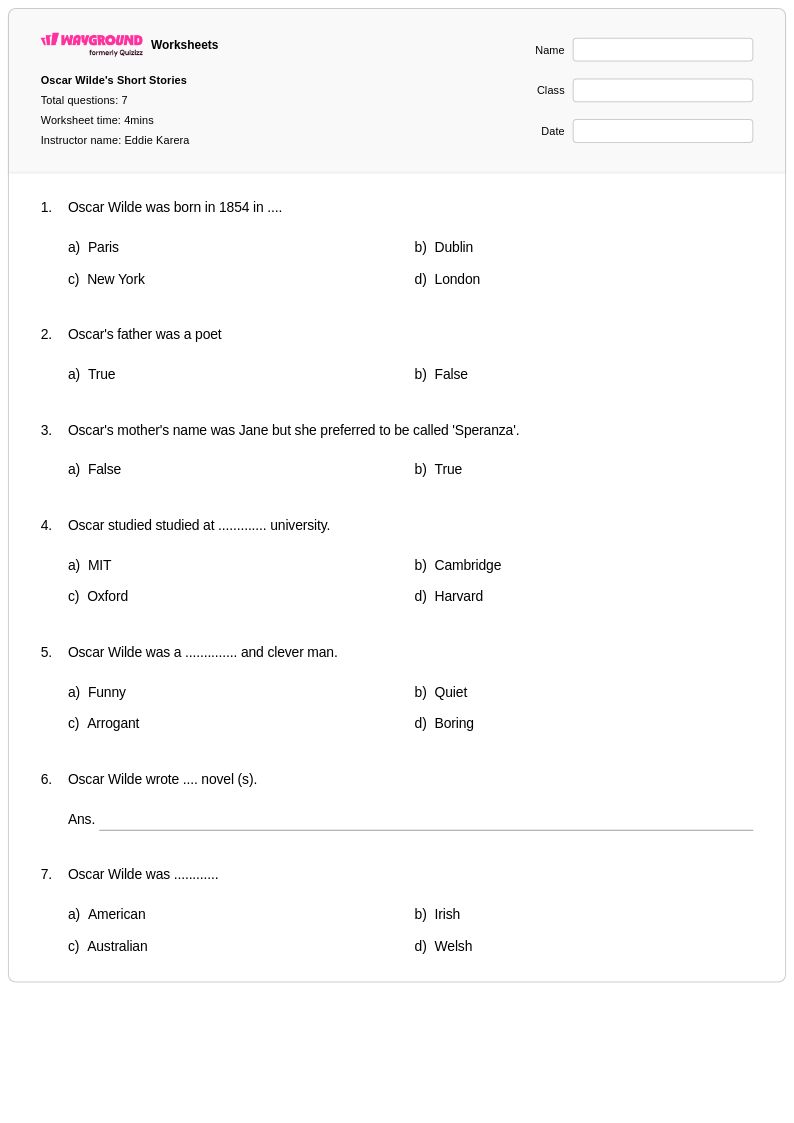
Free Printable Short Stories Worksheets for Class 6
Class 6 short stories worksheets and printables help students analyze narrative elements, character development, and literary devices through engaging practice problems with comprehensive answer keys available as free PDF downloads.
Explore printable Short Stories worksheets for Class 6
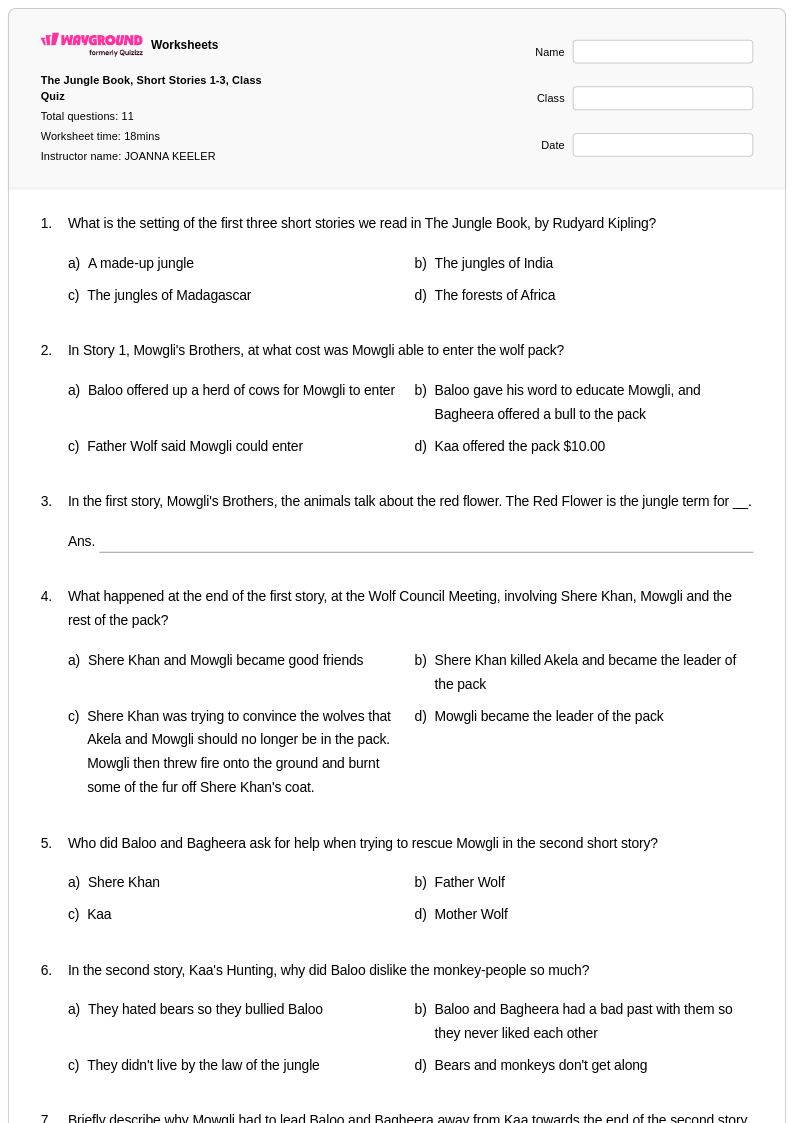
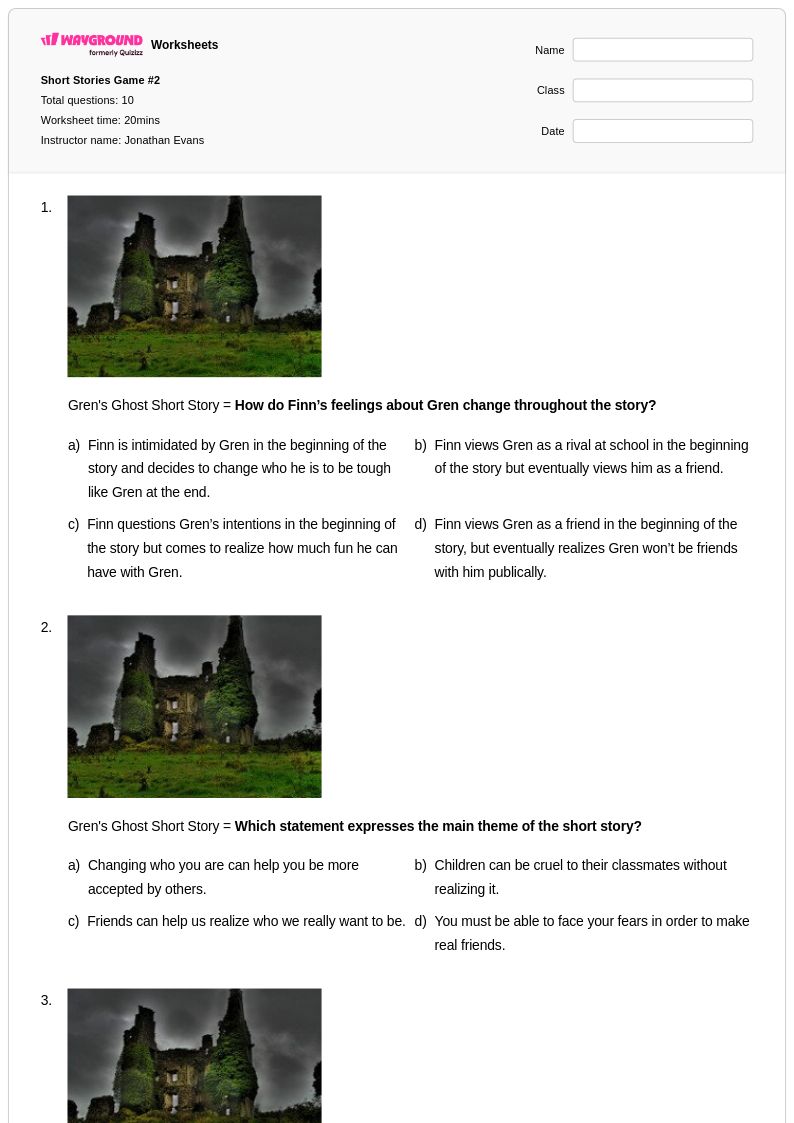
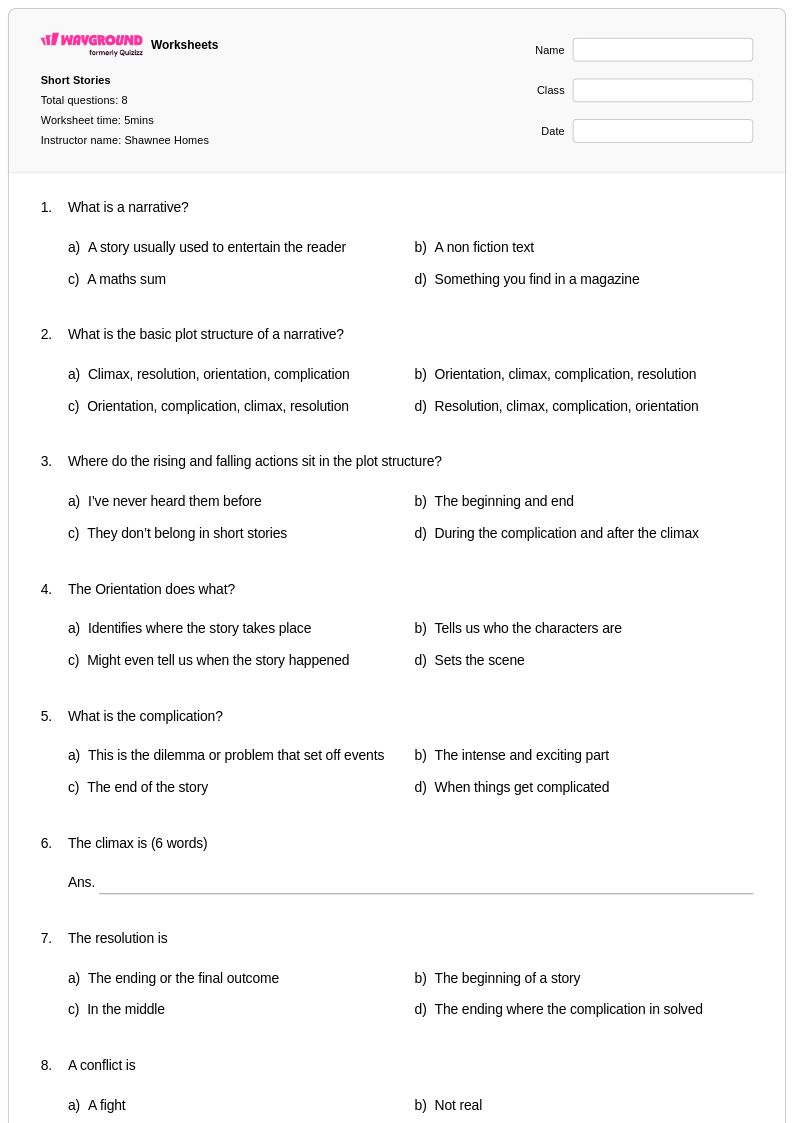
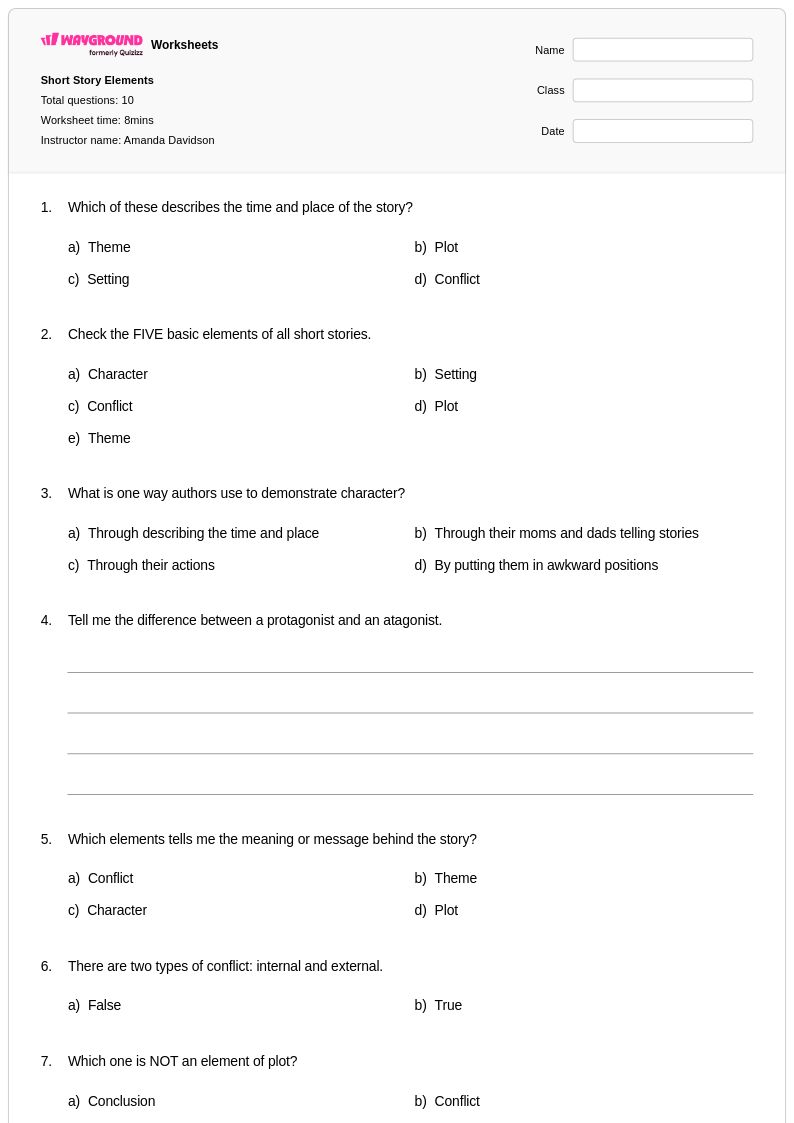
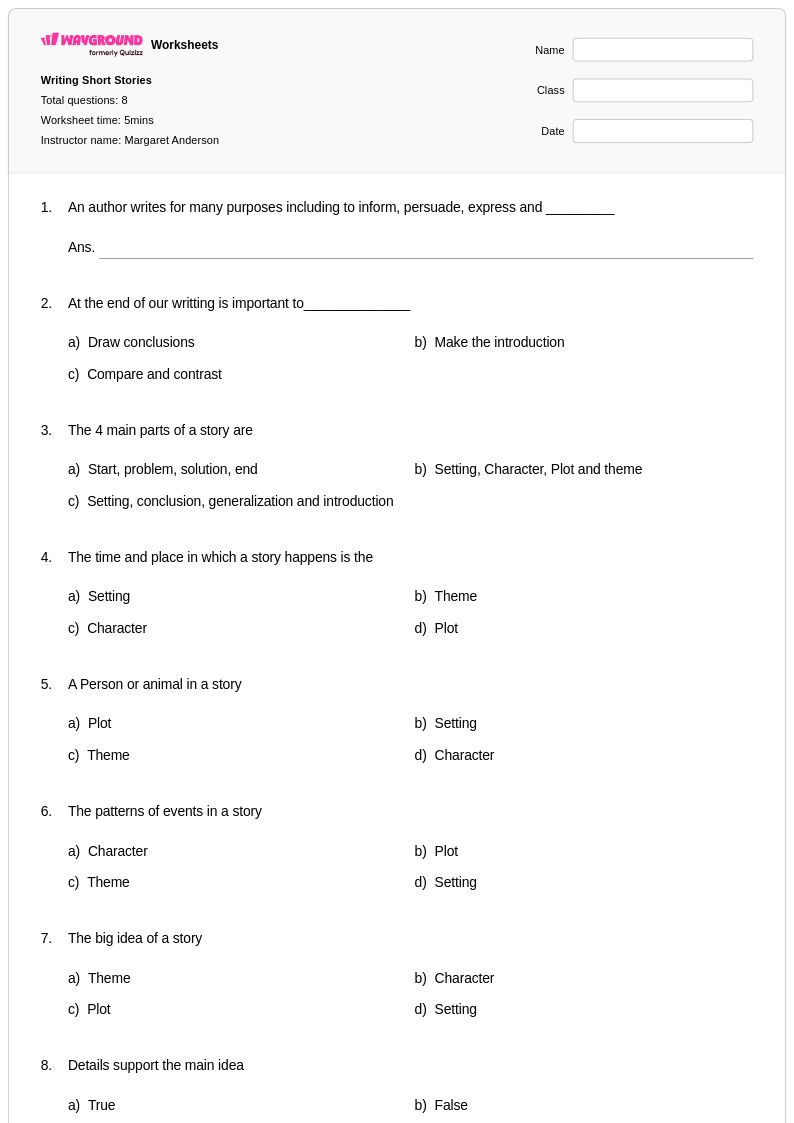
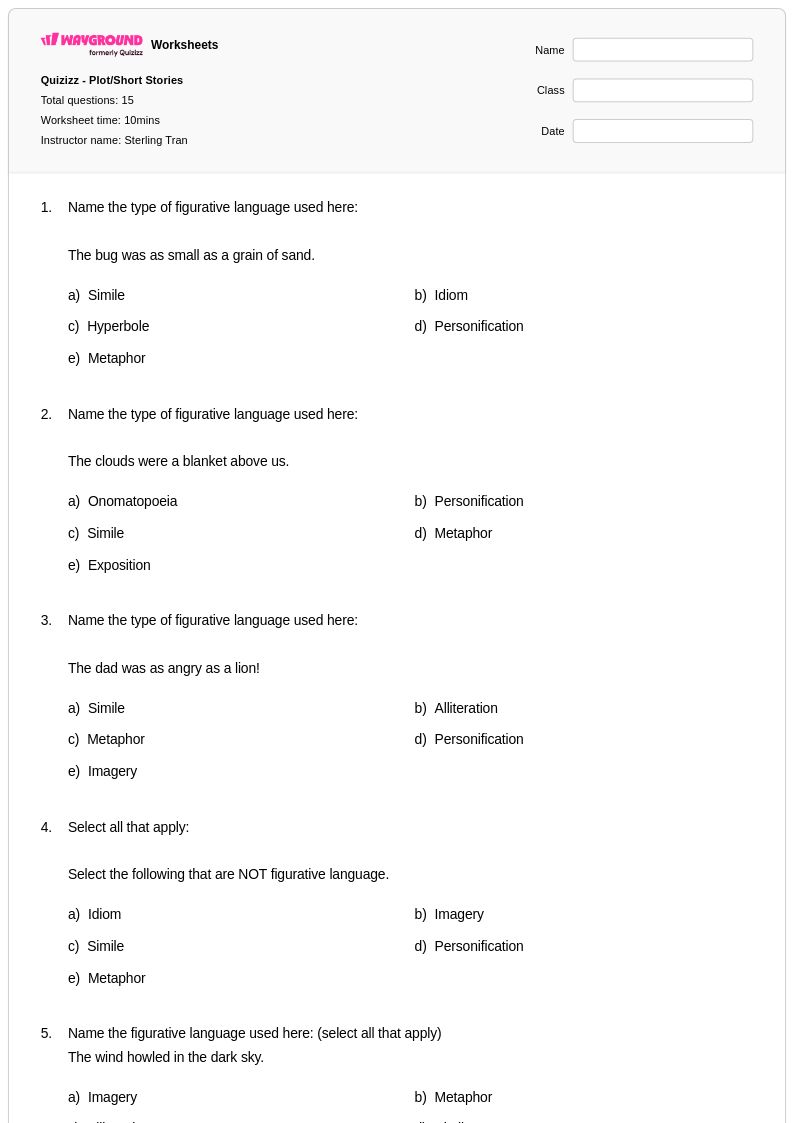
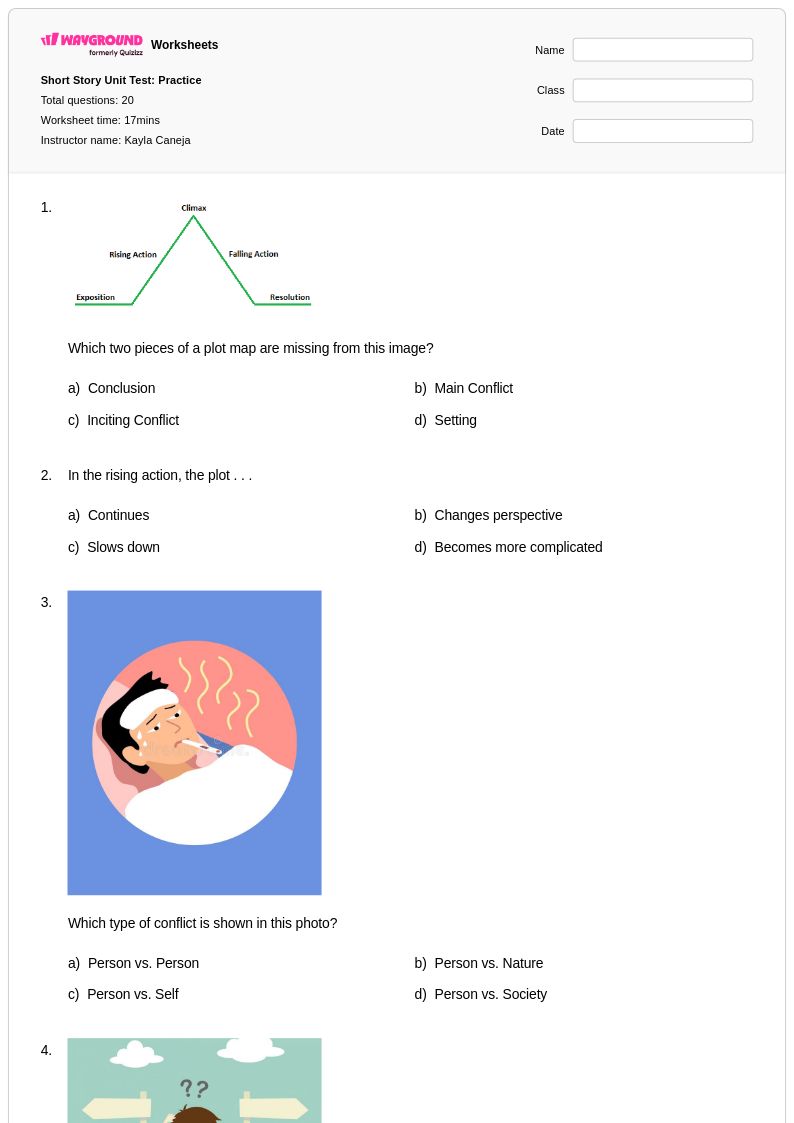
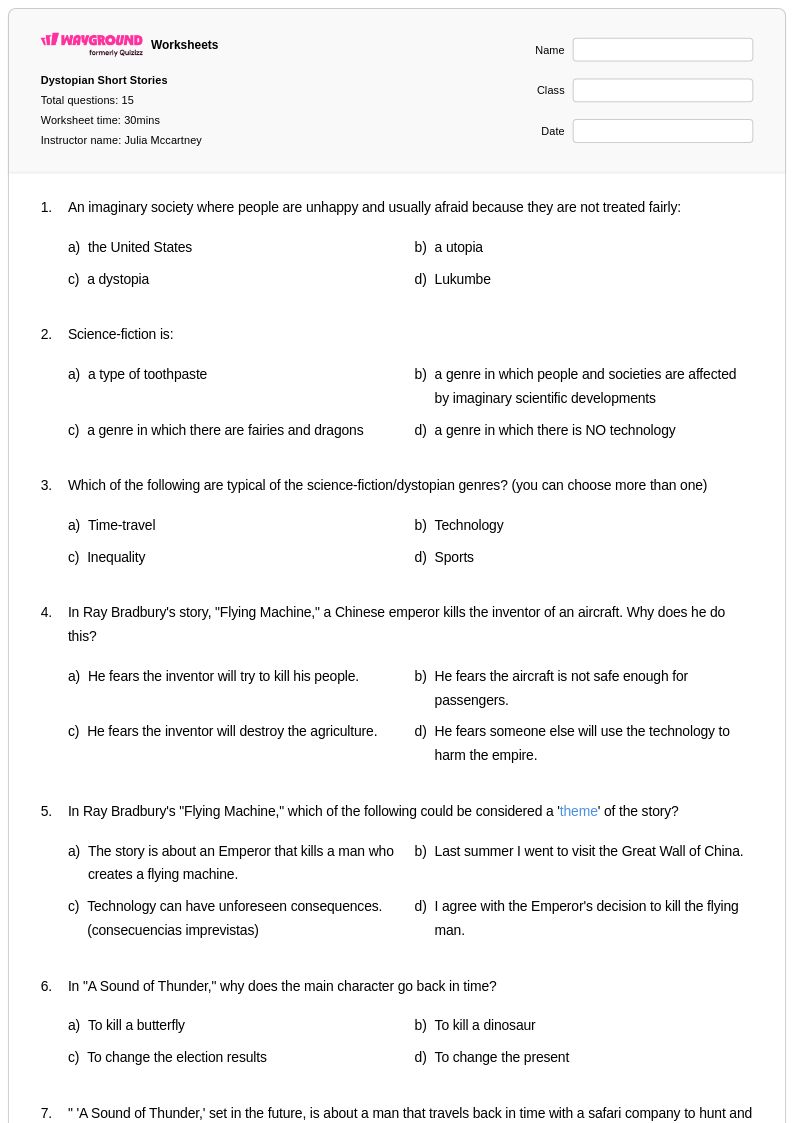
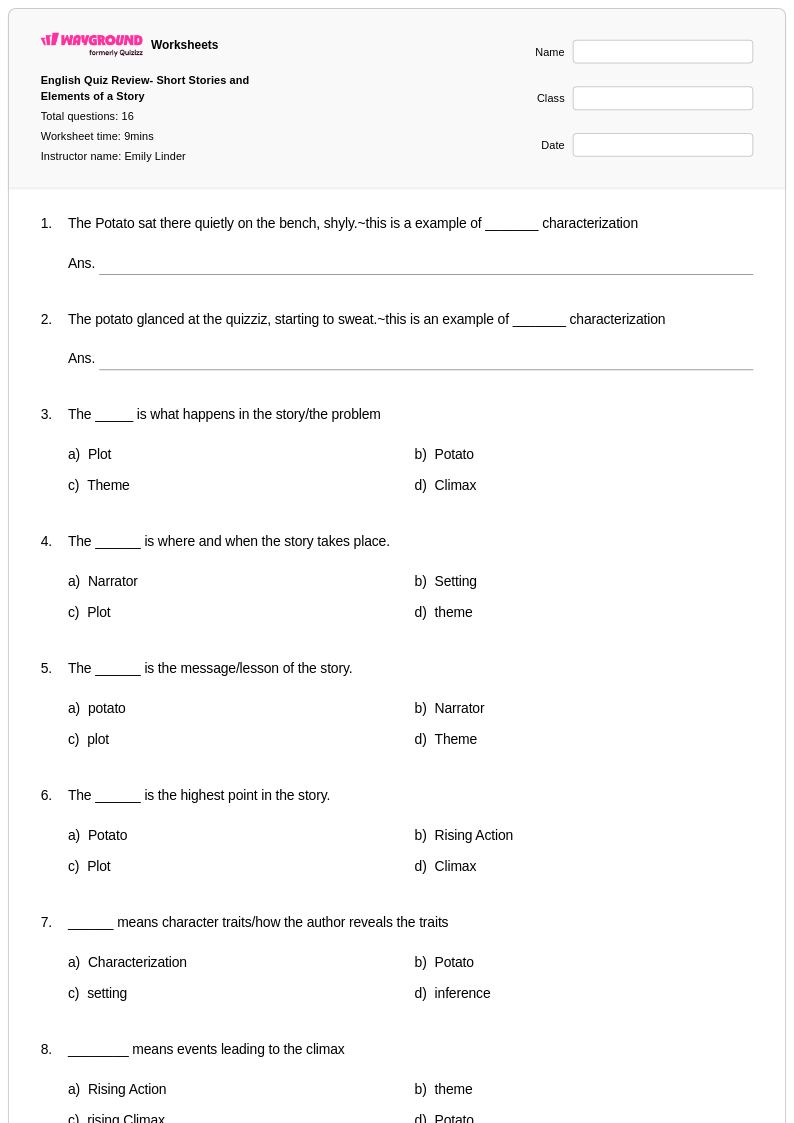
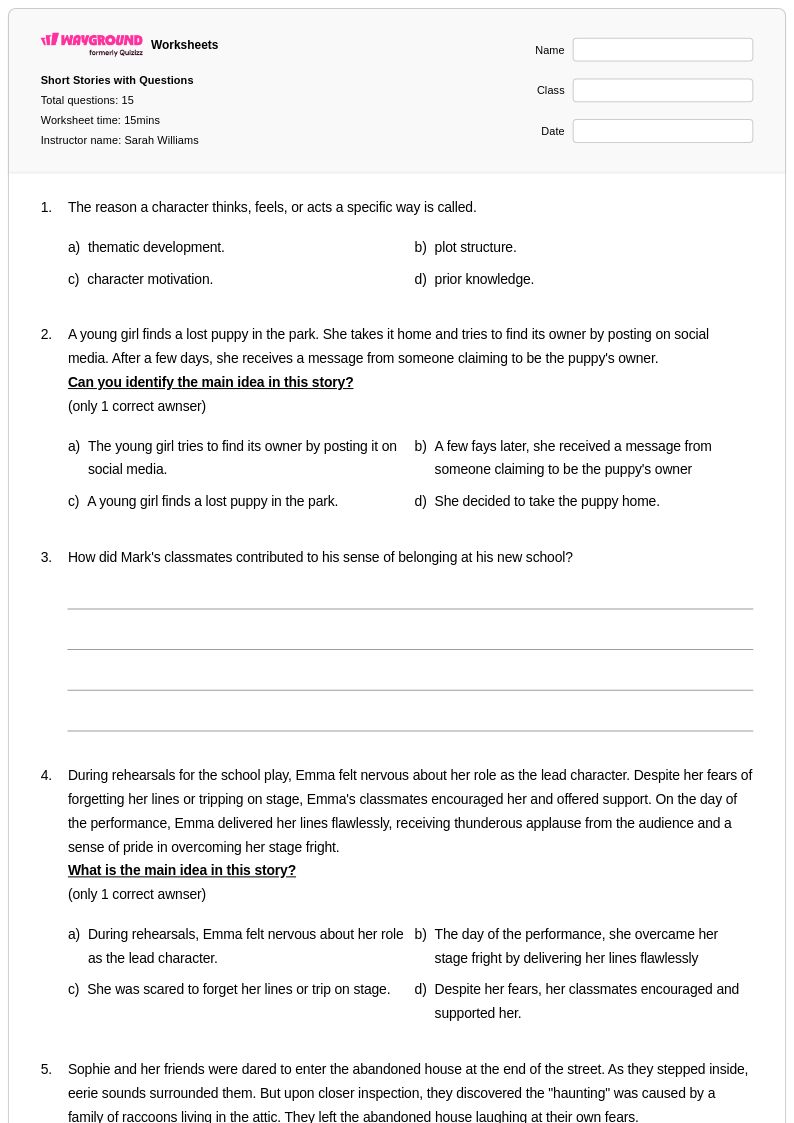
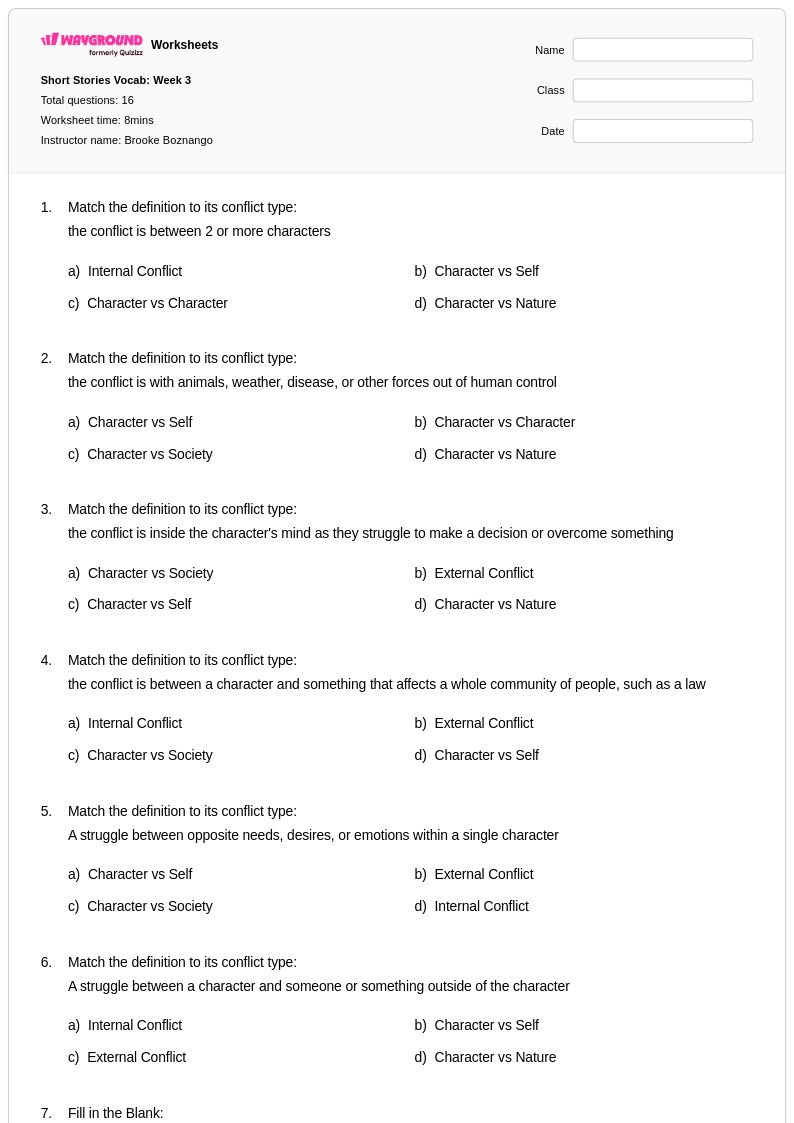
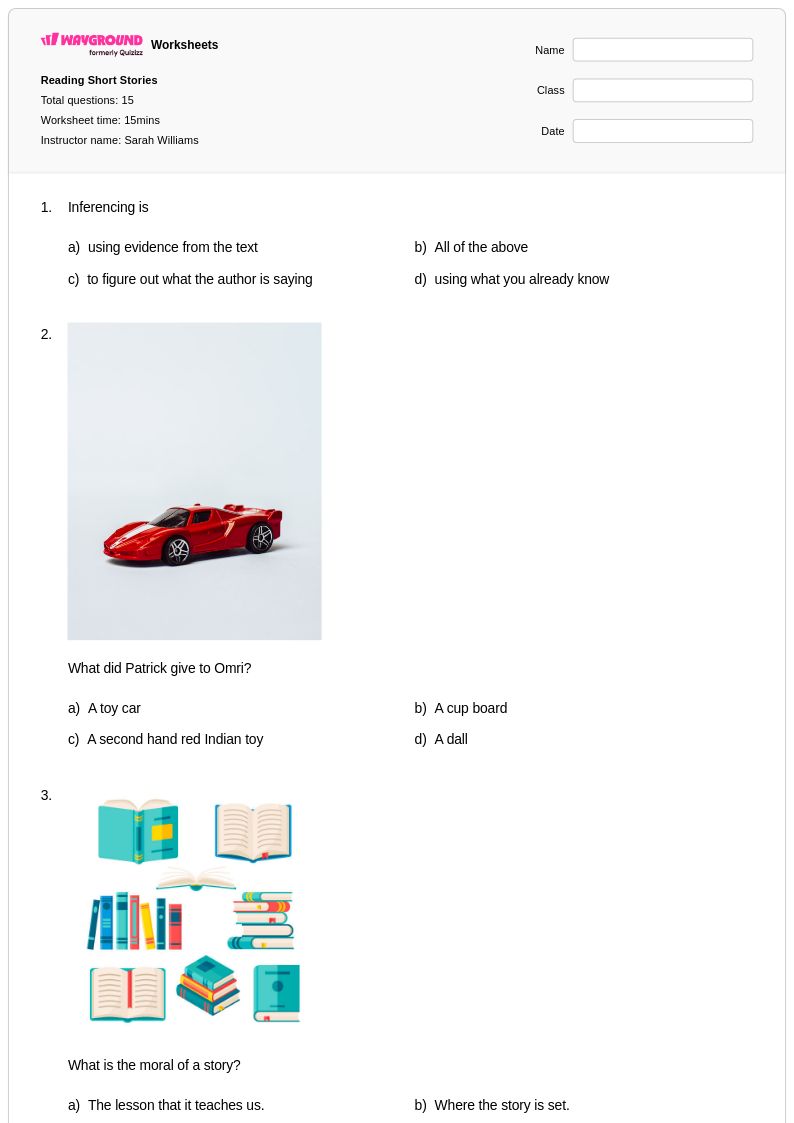
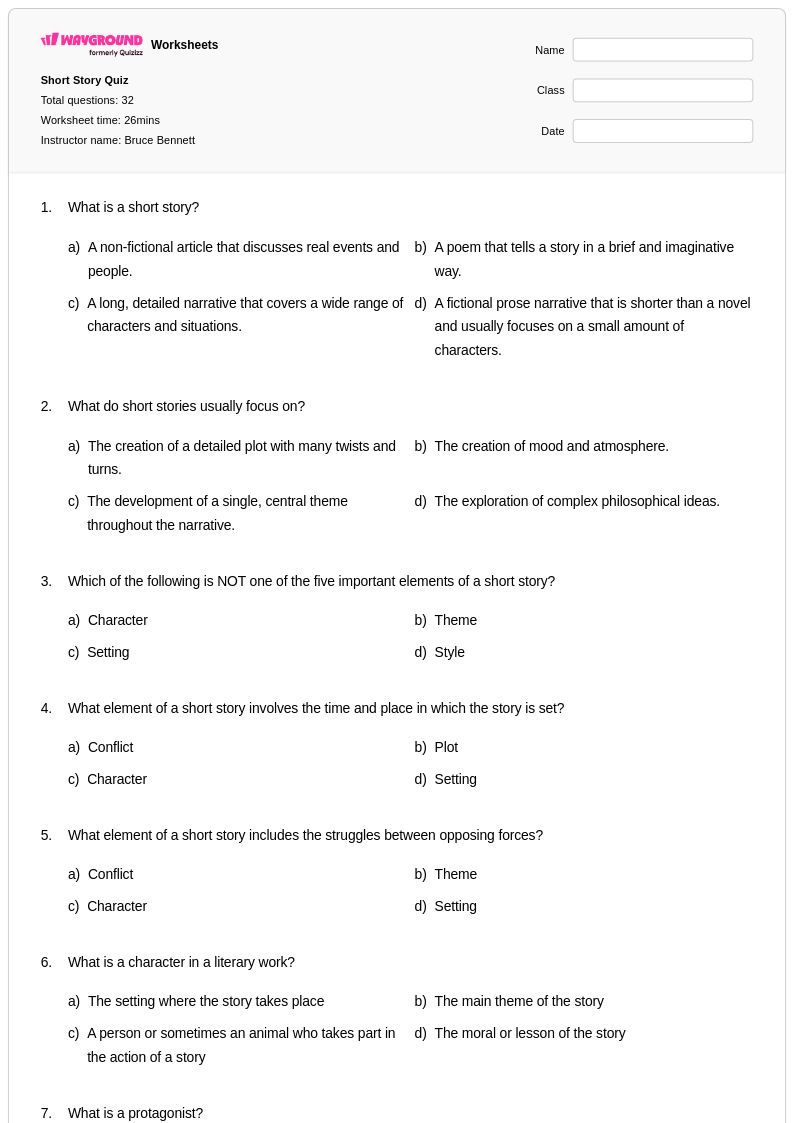
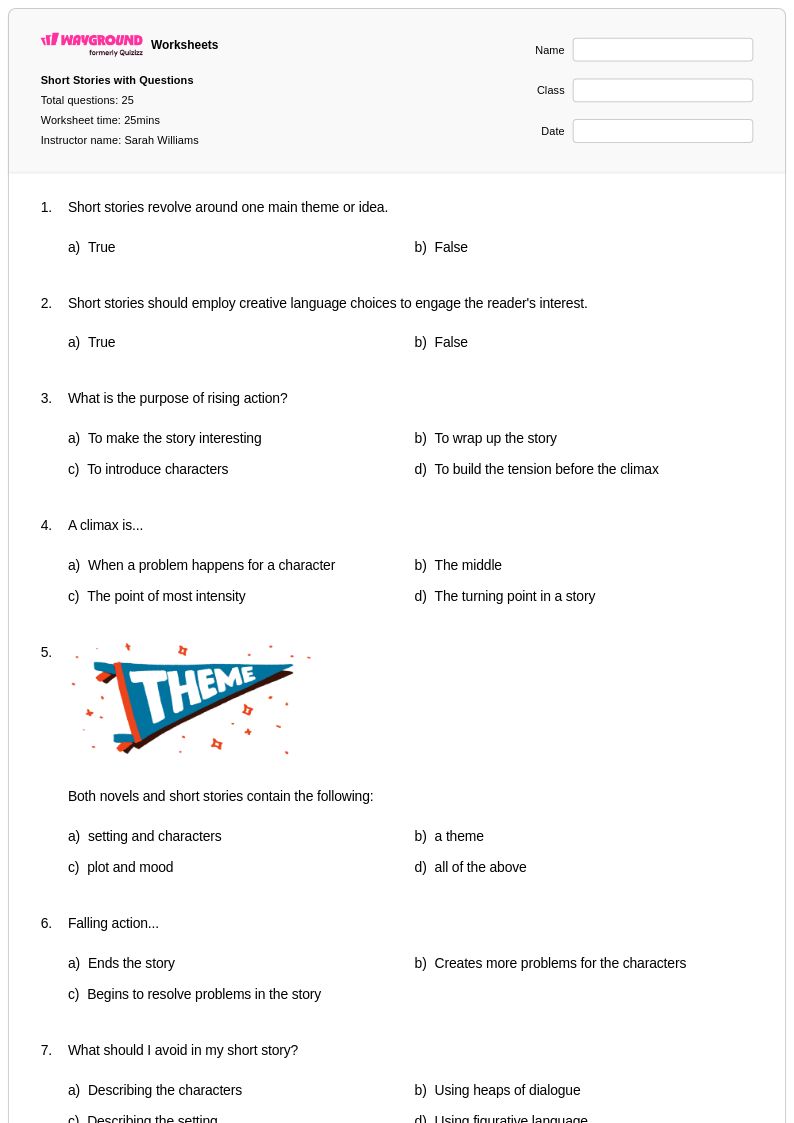
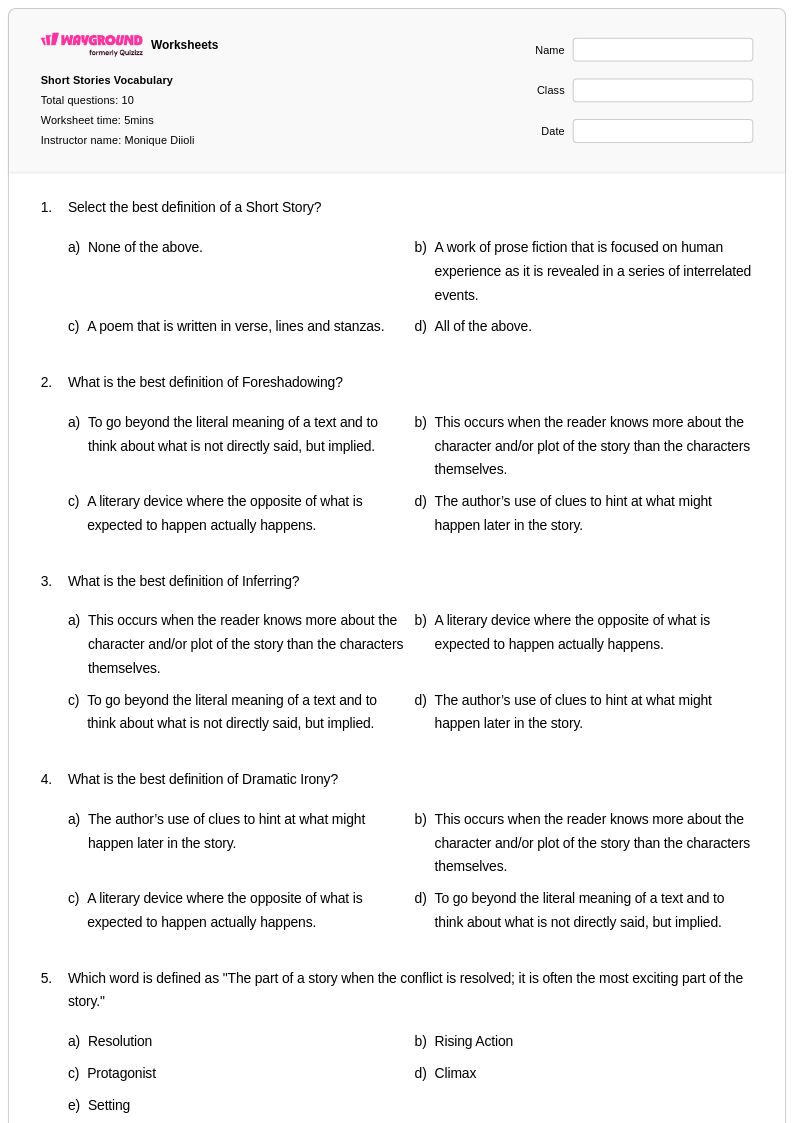
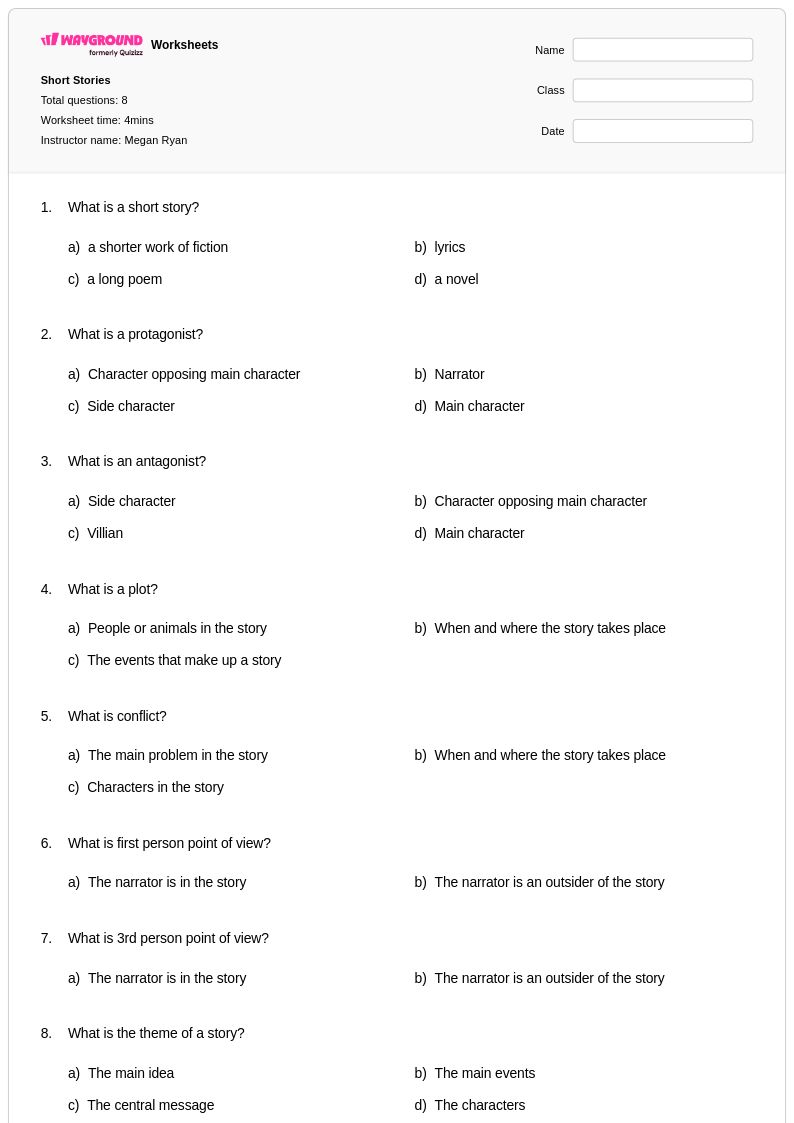
Short stories serve as an essential gateway for Class 6 students to develop critical reading comprehension and literary analysis skills through engaging, manageable texts. Wayground's extensive collection of short story worksheets provides educators with comprehensive resources that guide students through the fundamental elements of narrative fiction, including character development, plot structure, setting analysis, theme identification, and point of view recognition. These carefully crafted practice problems help students build confidence in close reading techniques while exploring diverse authors and cultural perspectives through age-appropriate short fiction. Each worksheet includes detailed answer keys to support both independent learning and teacher-guided instruction, with free printables available in convenient pdf format that can be seamlessly integrated into classroom activities or assigned as homework to reinforce literary concepts.
Wayground's platform empowers teachers with access to millions of educator-created short story resources that can be easily searched and filtered by specific learning objectives, reading levels, and standards alignment to meet diverse classroom needs. The robust collection supports effective differentiation through customizable worksheets that can be modified for remediation or enrichment, ensuring that all Class 6 students can access short story content at their appropriate challenge level. Teachers benefit from flexible format options, including both printable pdf versions for traditional classroom use and digital formats for technology-integrated learning environments. This comprehensive approach to short story instruction enables educators to efficiently plan engaging literature lessons while providing students with varied practice opportunities that strengthen their analytical thinking and deepen their appreciation for the craft of storytelling.
FAQs
How do I teach short stories in the classroom?
Effective short story instruction begins with explicitly teaching the core literary elements: character development, plot structure, setting, theme, and narrative techniques. Teachers often use guided reading followed by structured analysis tasks that ask students to identify and explain these elements in specific passages. Pairing close reading with discussion prompts helps students move from surface comprehension to deeper textual interpretation. Building in opportunities for students to compare how different authors handle the same element — such as theme or conflict — strengthens analytical thinking over time.
What exercises help students practice analyzing short stories?
The most effective practice exercises for short story analysis ask students to work directly with text evidence — identifying literary devices, explaining an author's purpose, making inferences from specific passages, and articulating thematic arguments in writing. Graphic organizers that map plot structure or trace character development give students a concrete framework before moving to open-ended analysis. Repeated practice with varied short fiction helps students internalize the analytical process and apply it independently across unfamiliar texts.
What mistakes do students commonly make when analyzing short stories?
One of the most common errors is summarizing plot rather than analyzing meaning — students retell what happens instead of explaining why it matters or how the author achieves a particular effect. Students also frequently confuse theme with topic, stating a subject like 'friendship' rather than articulating a full thematic claim. Another persistent error is drawing inferences without grounding them in textual evidence, which makes literary arguments vague and unsupported. Addressing these patterns early with targeted practice problems and clear modeling can significantly improve analytical writing quality.
How can I differentiate short story worksheets for students at different reading levels?
Differentiation for short story analysis can include adjusting the complexity of the text itself, modifying the analytical tasks required, or providing additional scaffolding such as sentence starters or structured response frames for students who need support. On Wayground, teachers can apply student-level accommodations including Read Aloud for students who benefit from audio support, reduced answer choices to lower cognitive load for selected students, and adjustable font sizes and themes through Reading Mode. These settings can be configured per student and reused across future sessions without disrupting the experience of other students in the class.
How do I use Wayground's short story worksheets in my classroom?
Wayground's short story worksheets are available as printable PDFs for traditional classroom use and in digital formats for technology-integrated or hybrid learning environments. Teachers can assign them as independent practice, use them for small-group guided reading sessions, or host them as a quiz directly on Wayground for real-time student response tracking. Each worksheet includes a complete answer key, making them practical for both instruction and self-paced student review.
How do I help students identify theme in a short story?
Teaching theme identification requires students to look beyond plot and ask what the story reveals about human experience, society, or universal truths. A structured approach is to have students first identify the central conflict, then trace how the protagonist changes or fails to change, and finally draft a complete sentence that expresses what the story suggests about that conflict. Practice with multiple short texts at increasing complexity helps students recognize that theme is inferred rather than stated, and that a single story can support more than one defensible thematic reading.