
20 Q
6th - Uni
15 Q
6th - Uni
14 Q
6th - Uni
20 Q
6th - Uni
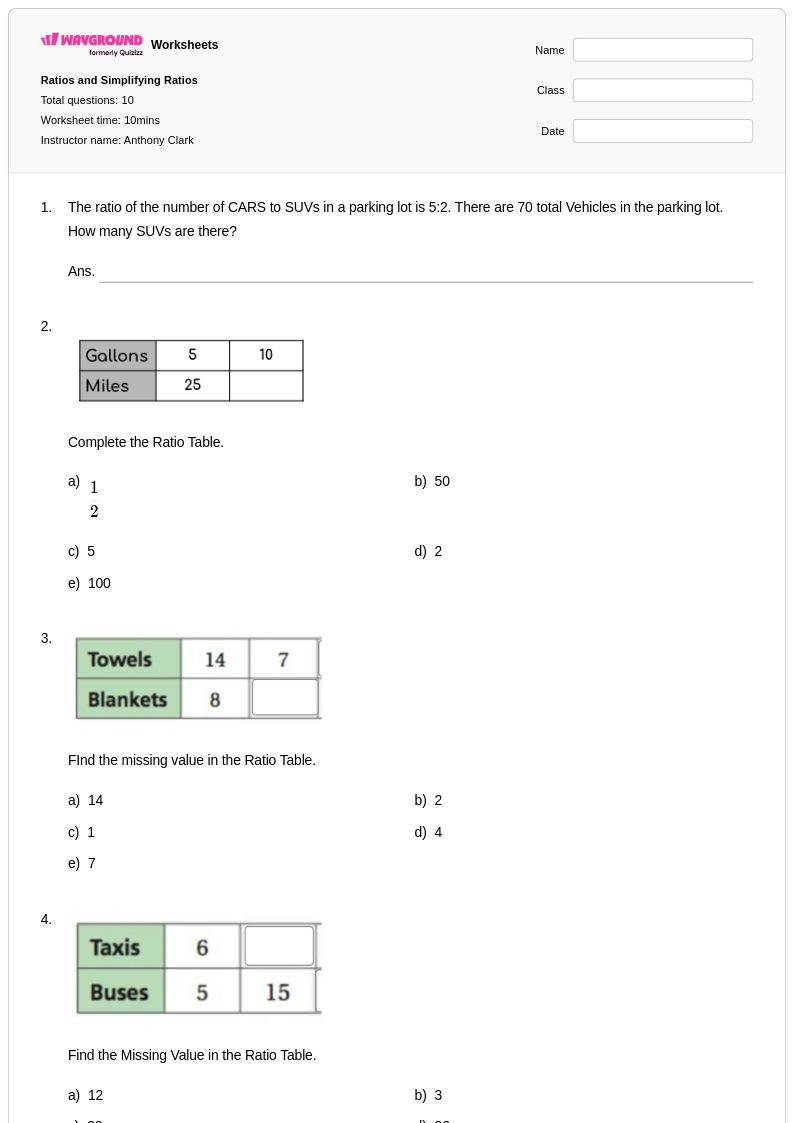
10 Q
6th - Uni
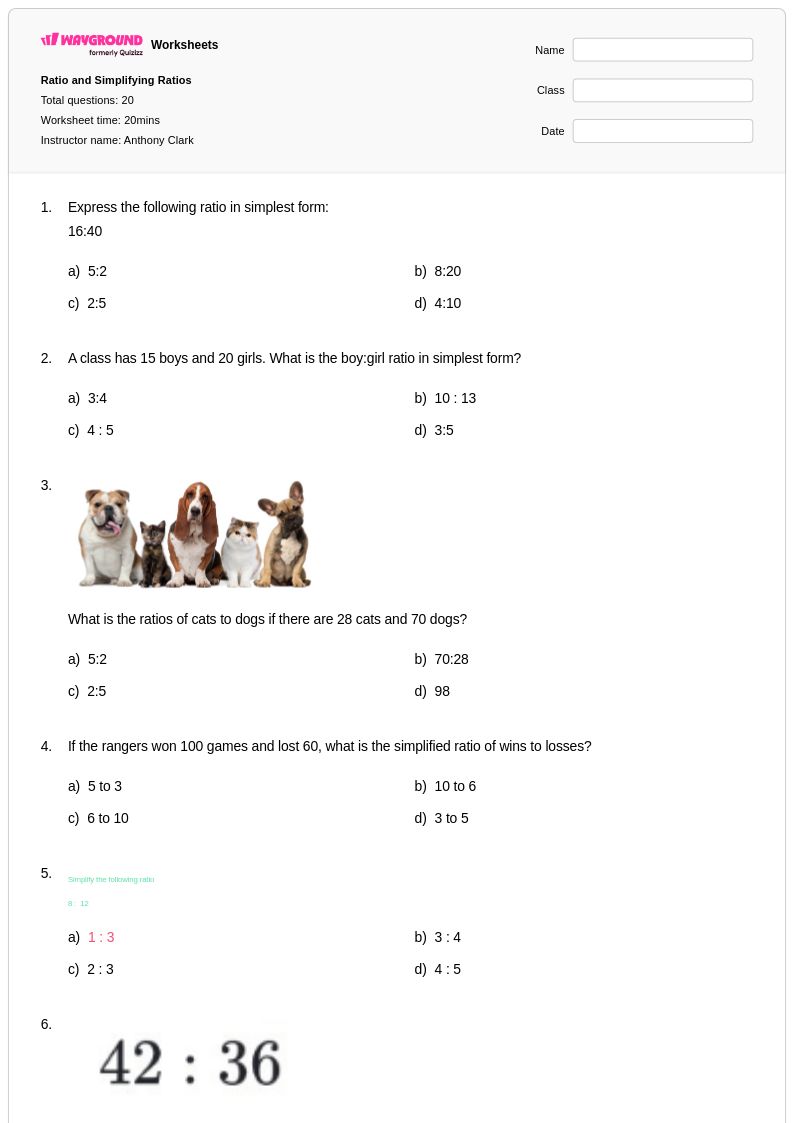
20 Q
6th - Uni
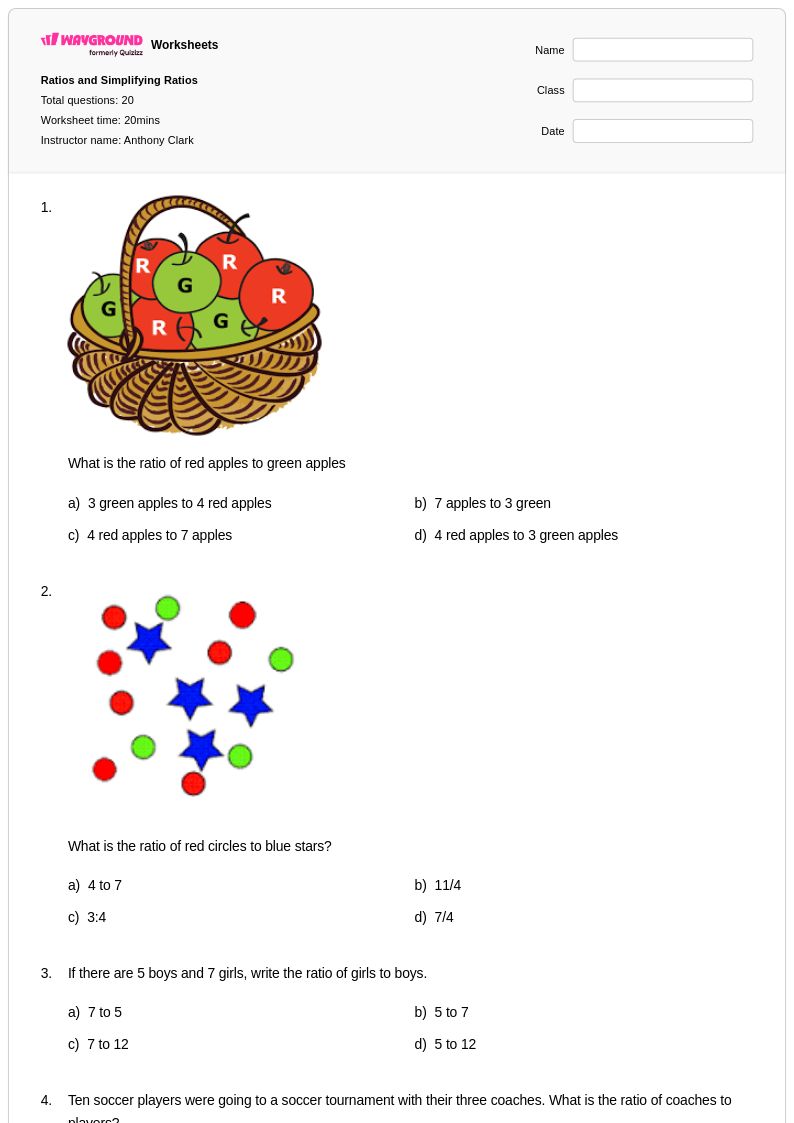
20 Q
6th - Uni
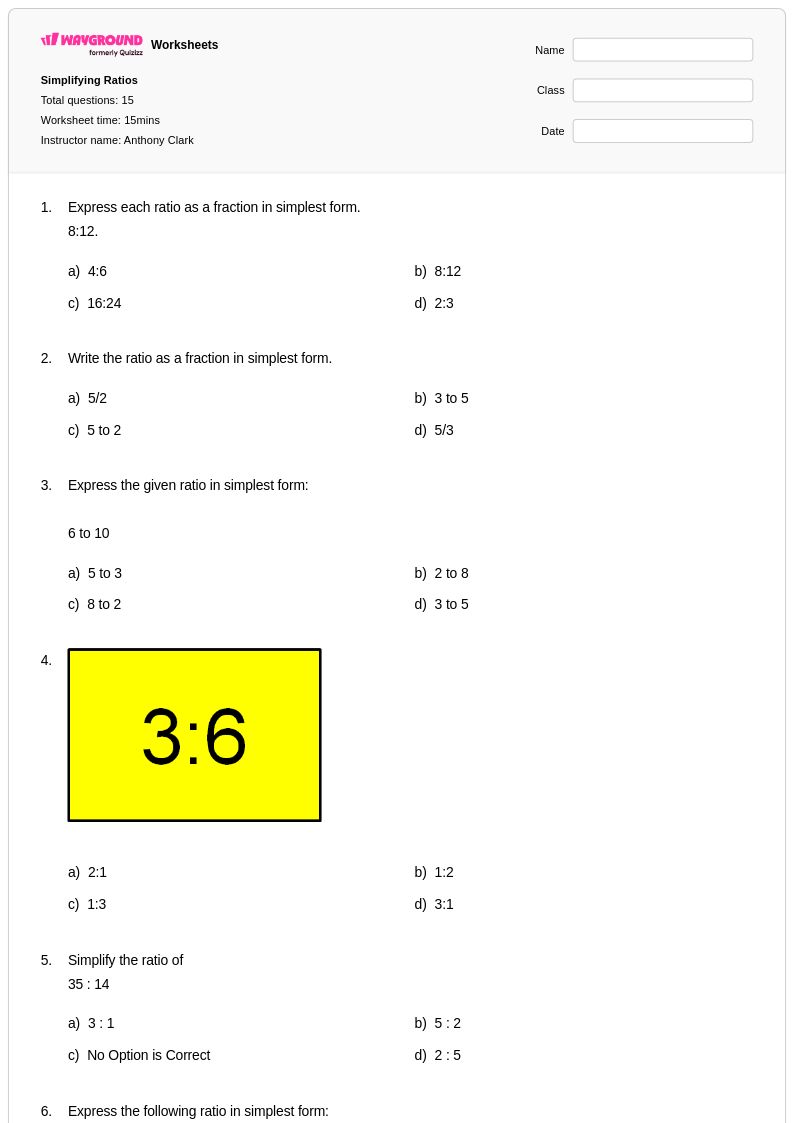
15 Q
6th - Uni
15 Q
6th - Uni
15 Q
6th - Uni
15 Q
6th - 7th
15 Q
5th - 12th
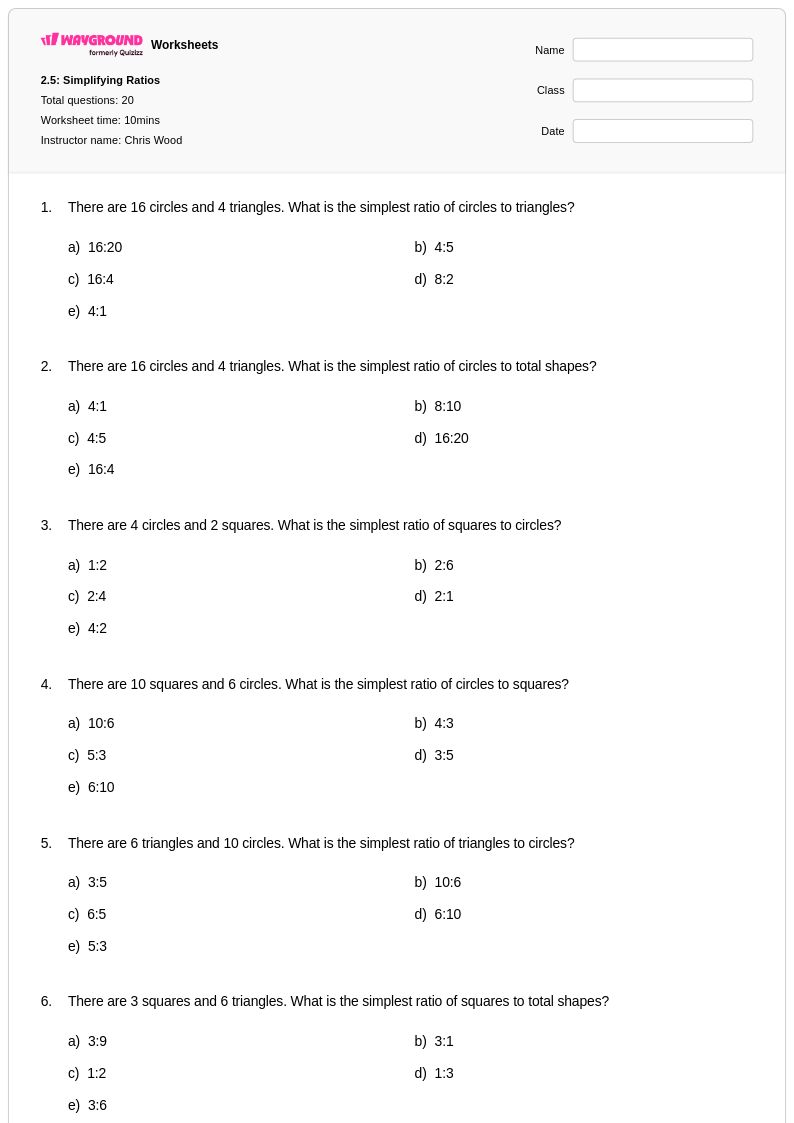
20 Q
6th - 12th
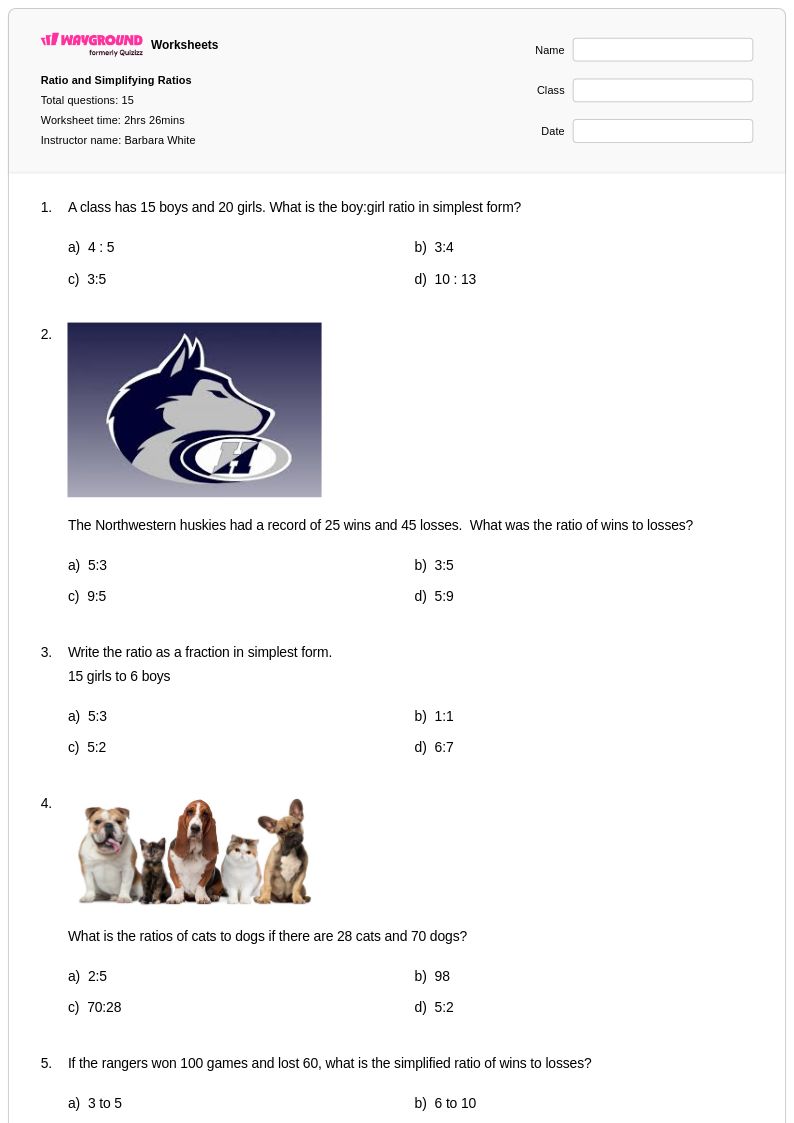
15 Q
6th - 7th
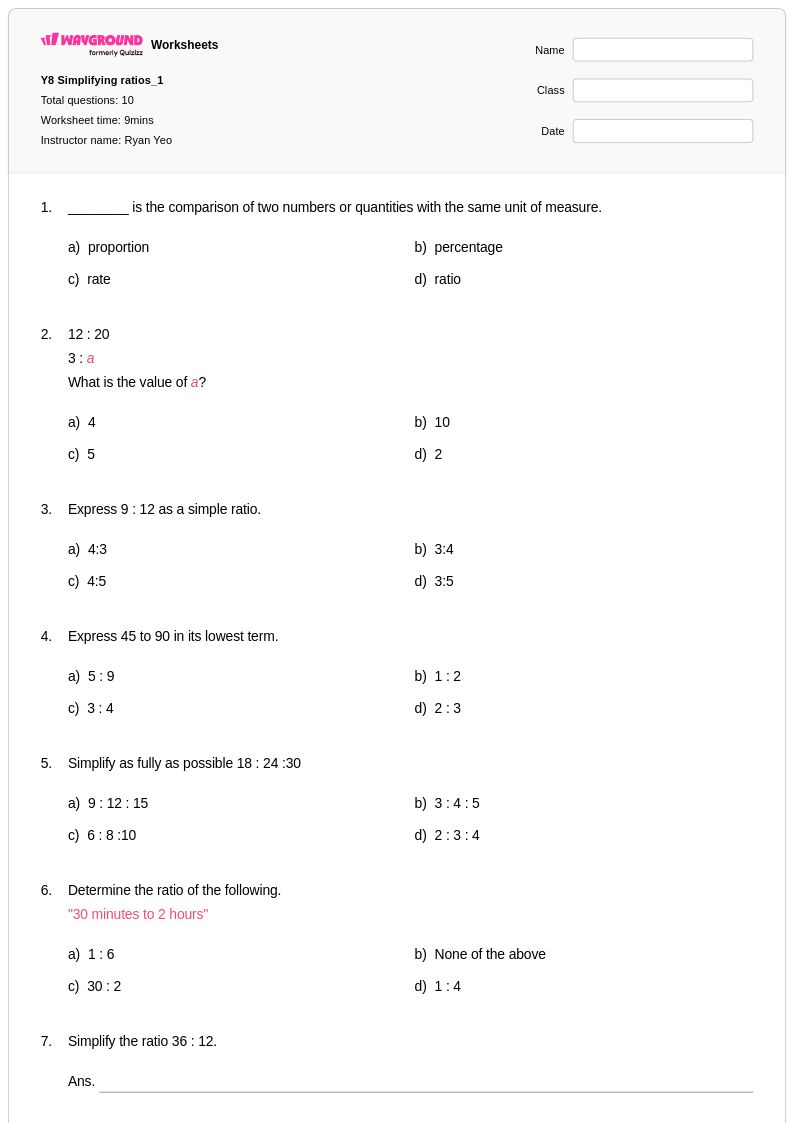
10 Q
7th - 9th
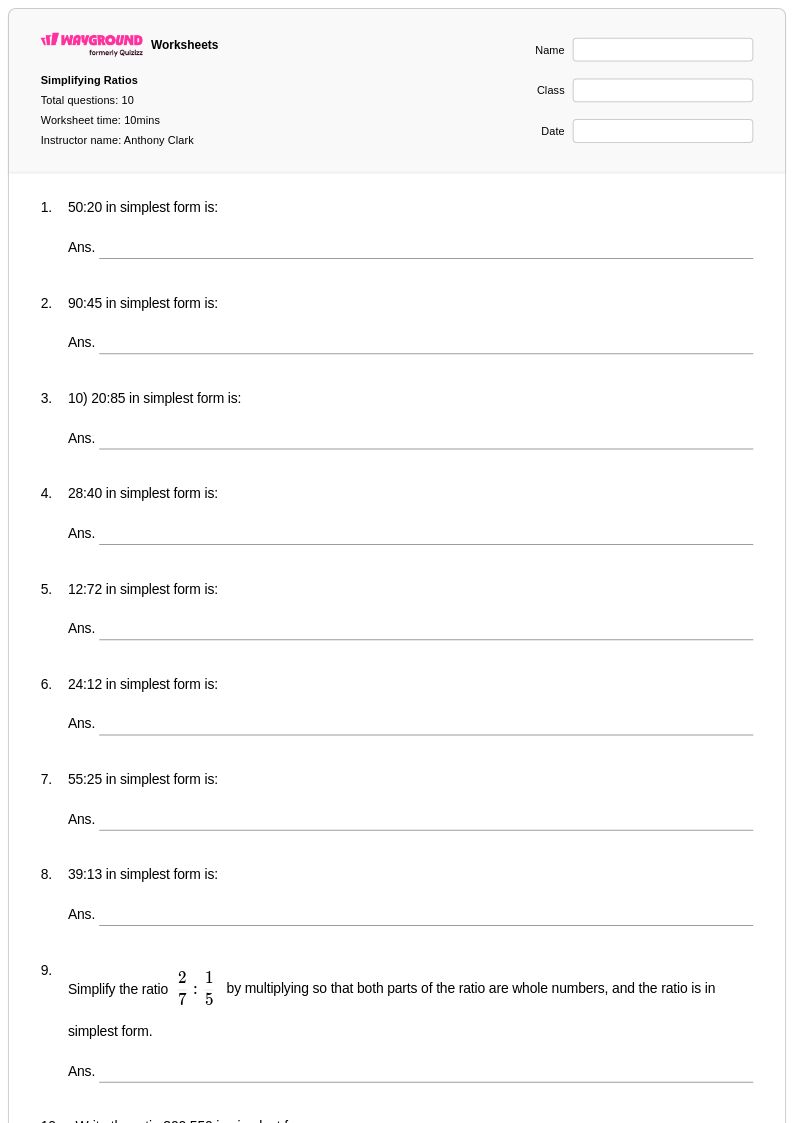
10 Q
6th - Uni
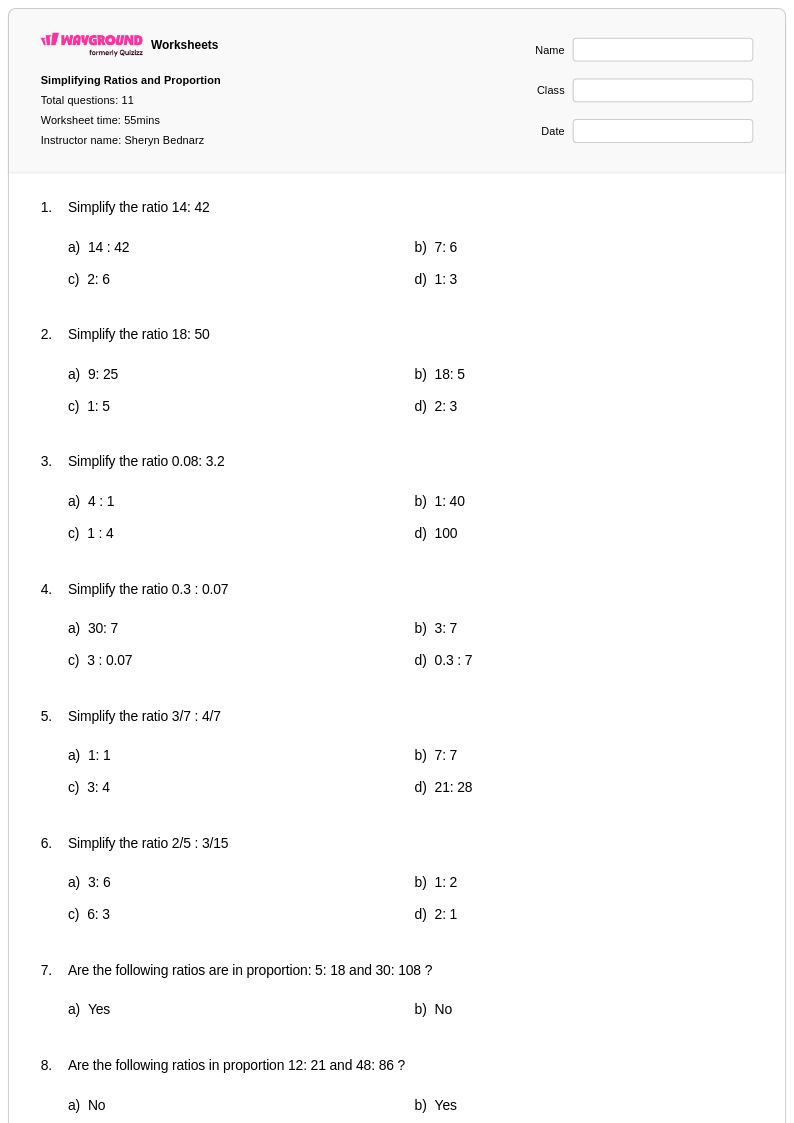
11 Q
7th - 8th
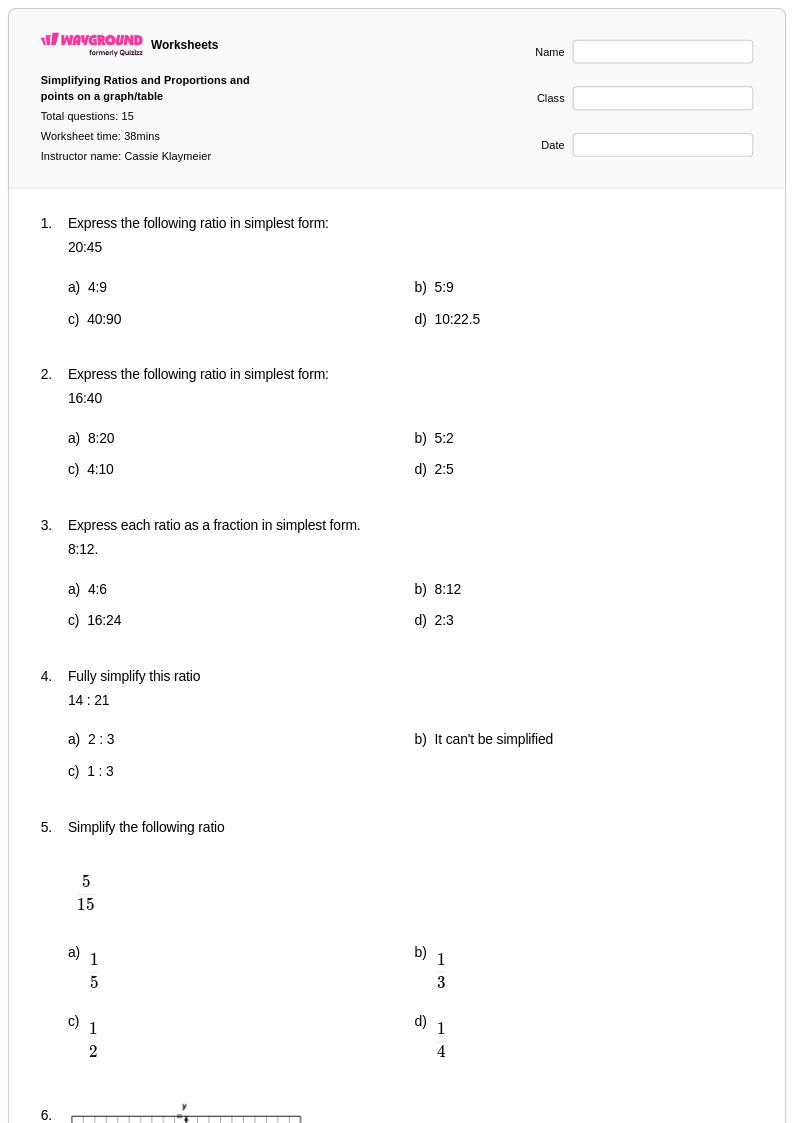
15 Q
6th - 8th
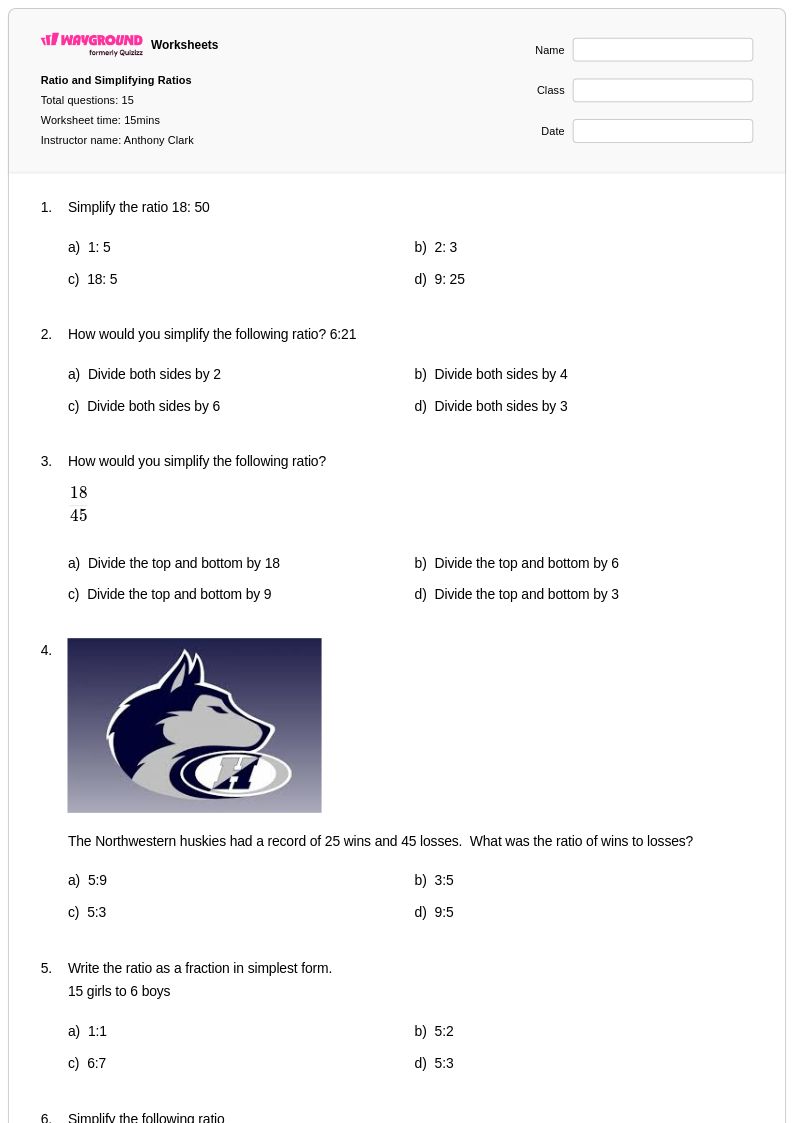
15 Q
6th - Uni
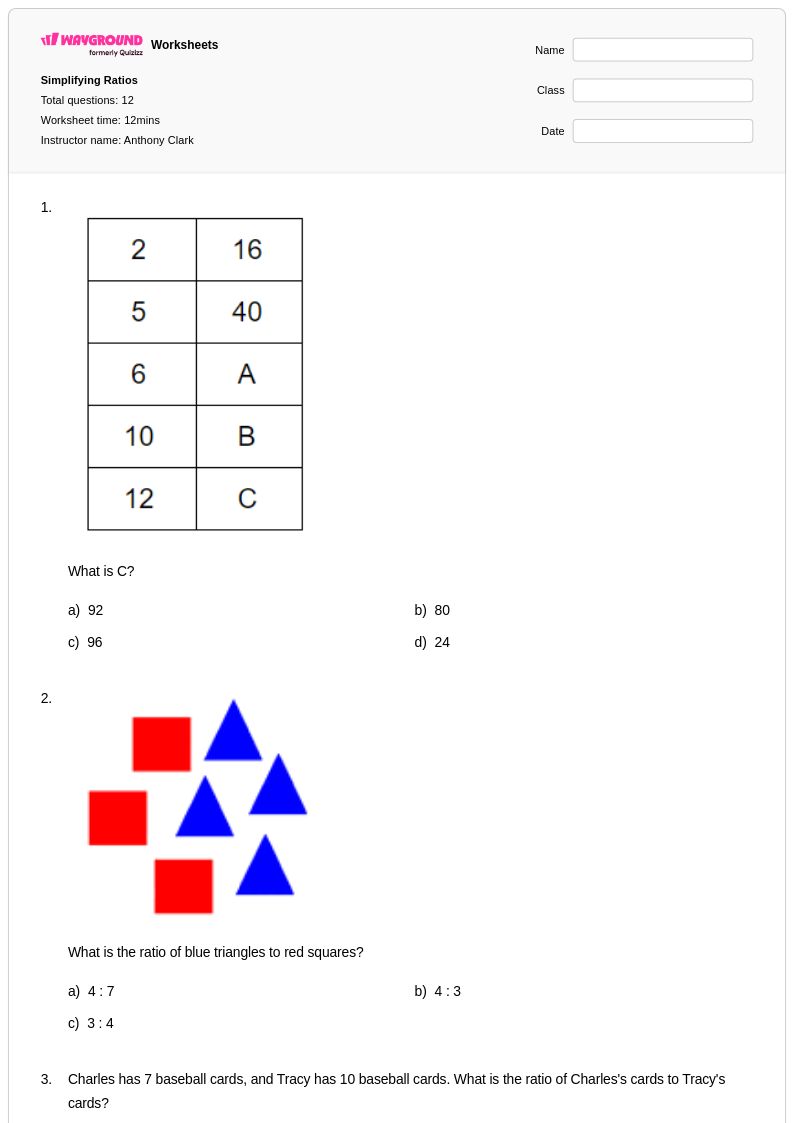
12 Q
6th - Uni
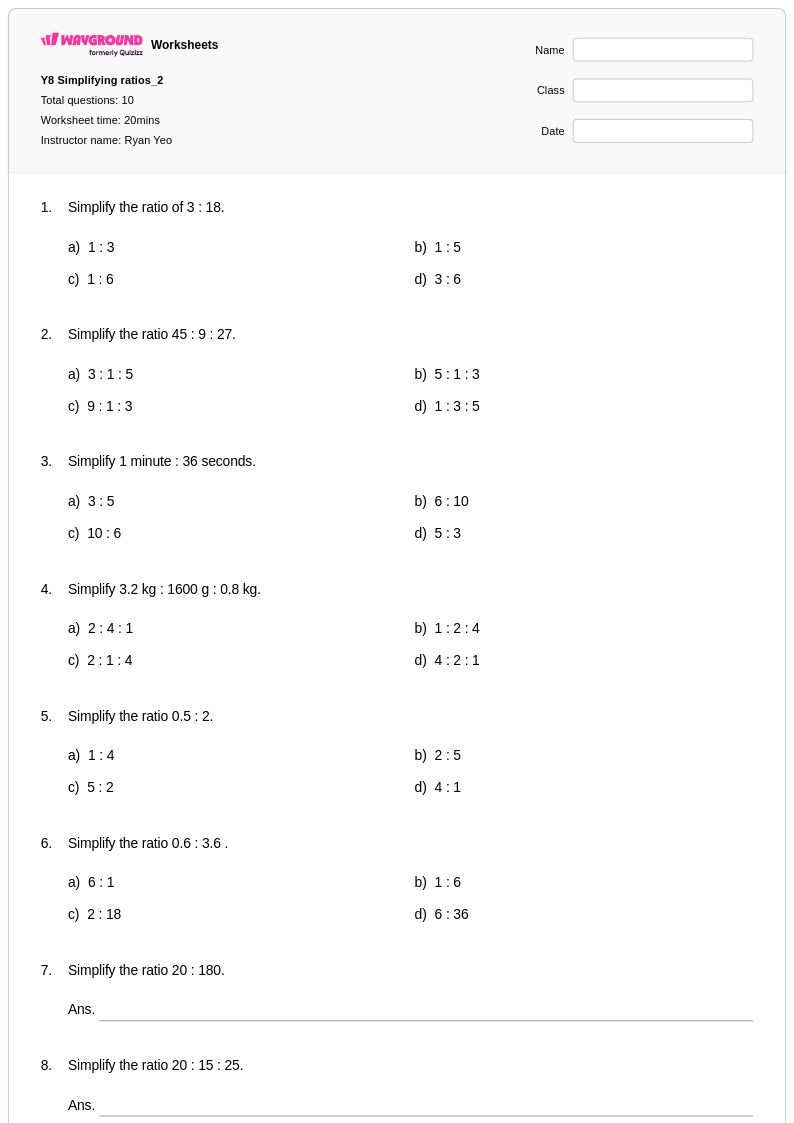
10 Q
7th - 9th
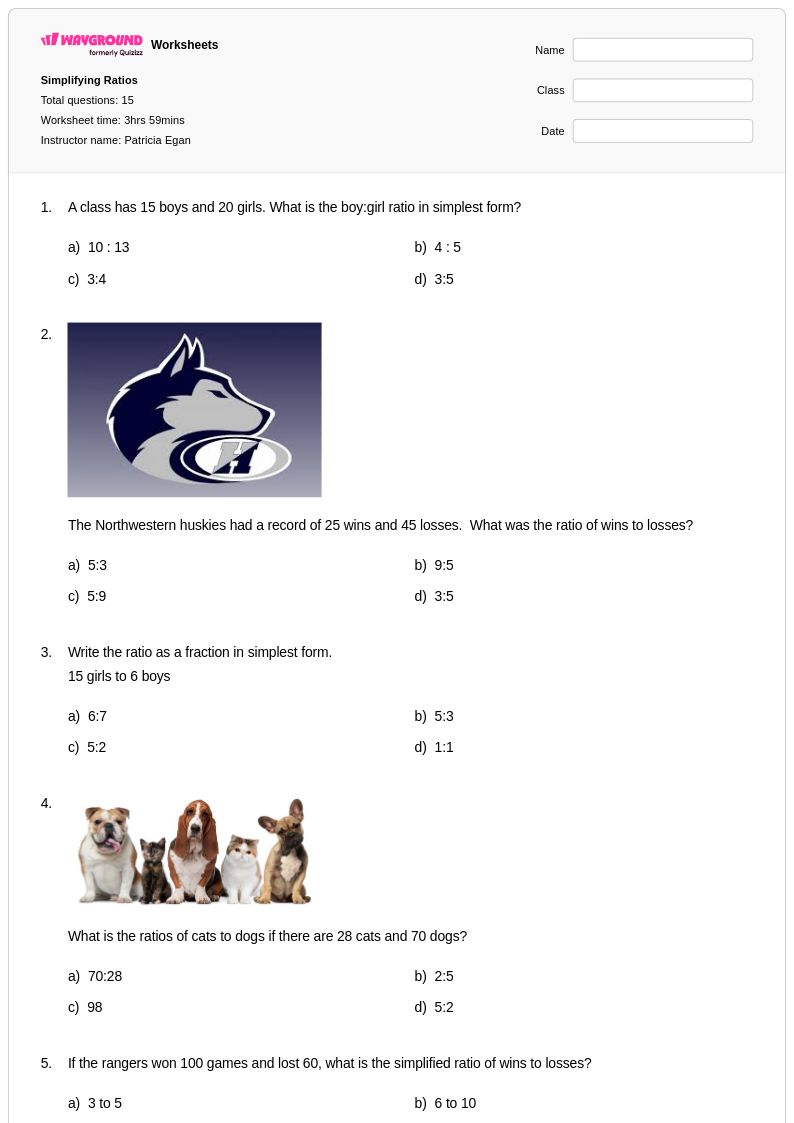
15 Q
6th - 7th
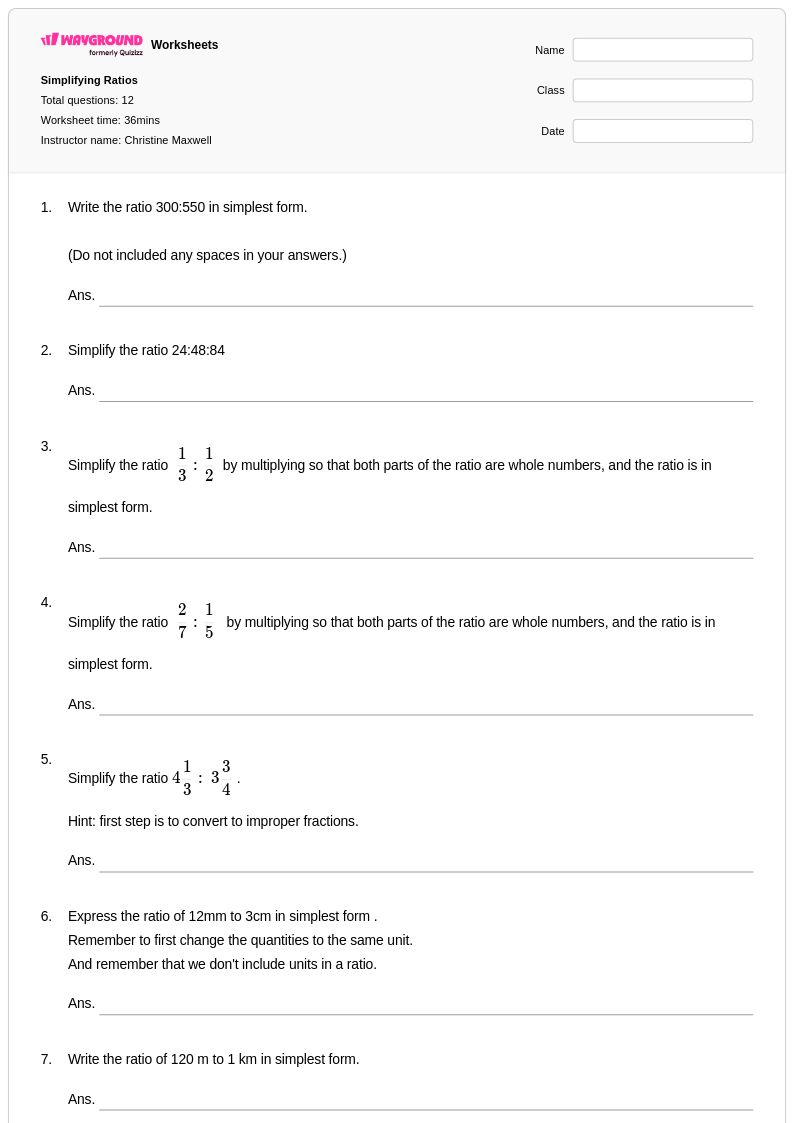
12 Q
7th - 9th
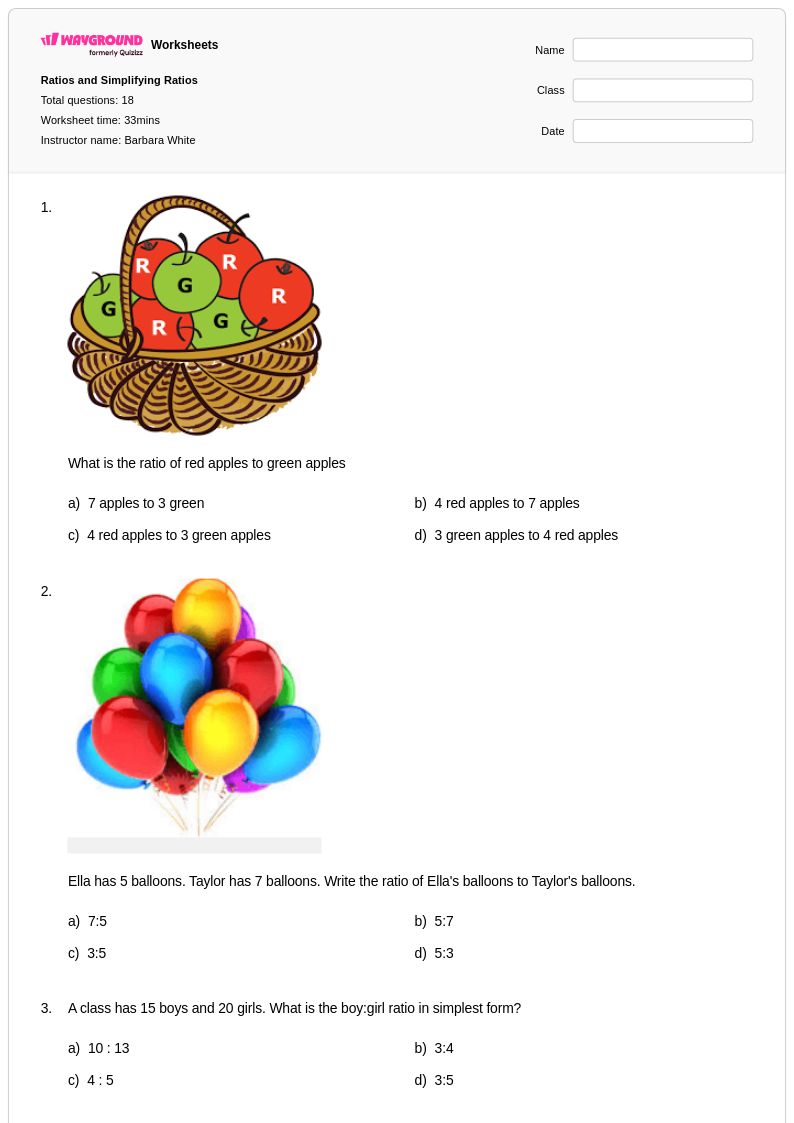
18 Q
6th - 8th
Explore Other Subject Worksheets for class 7
Explore printable Simplifying Ratios worksheets for Class 7
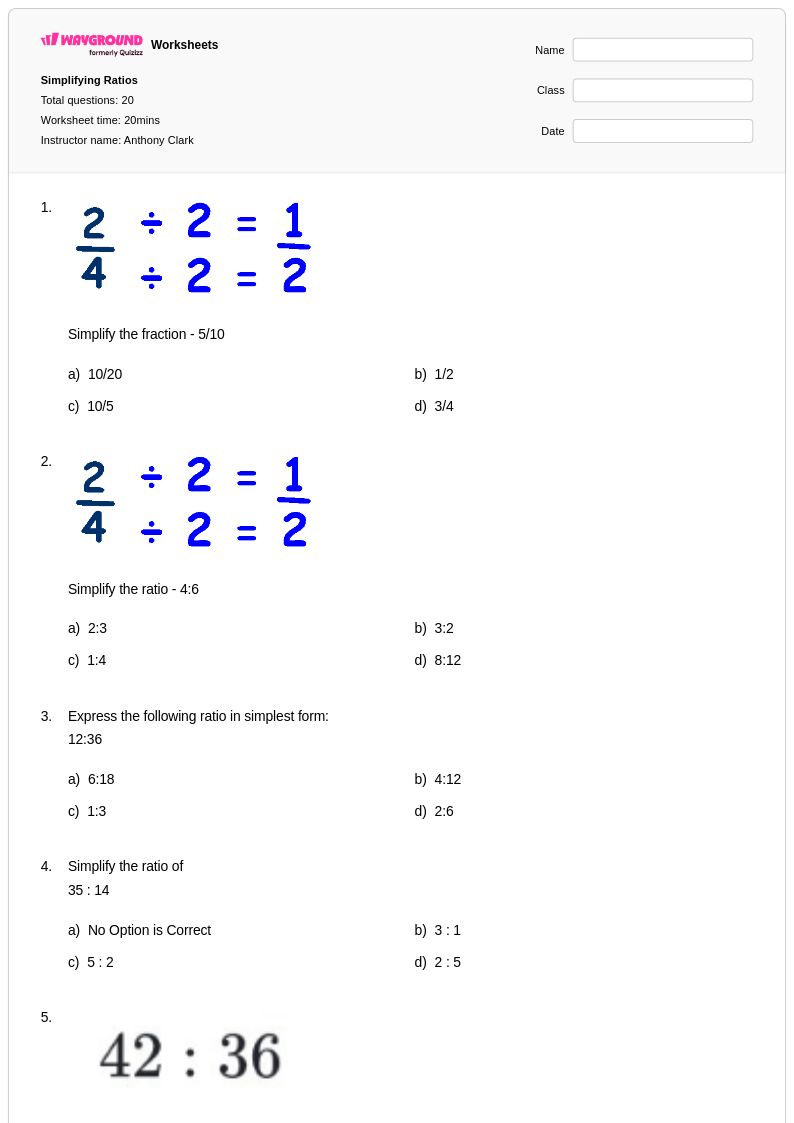
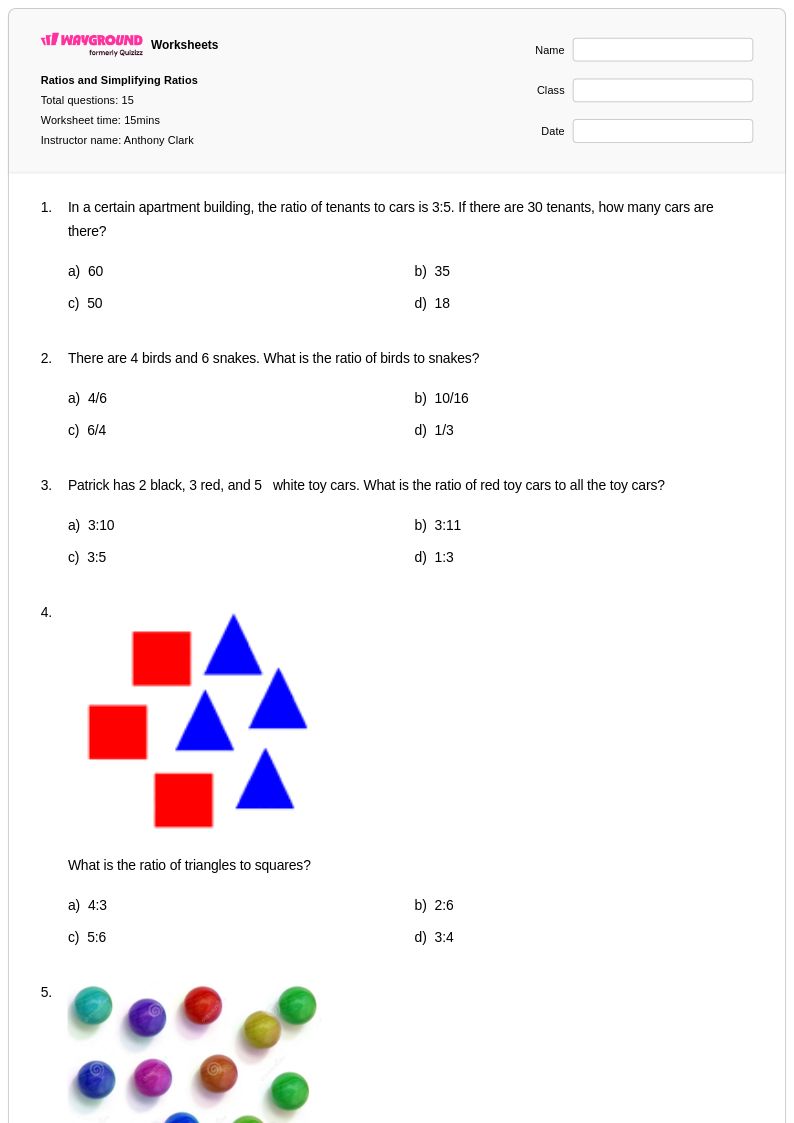
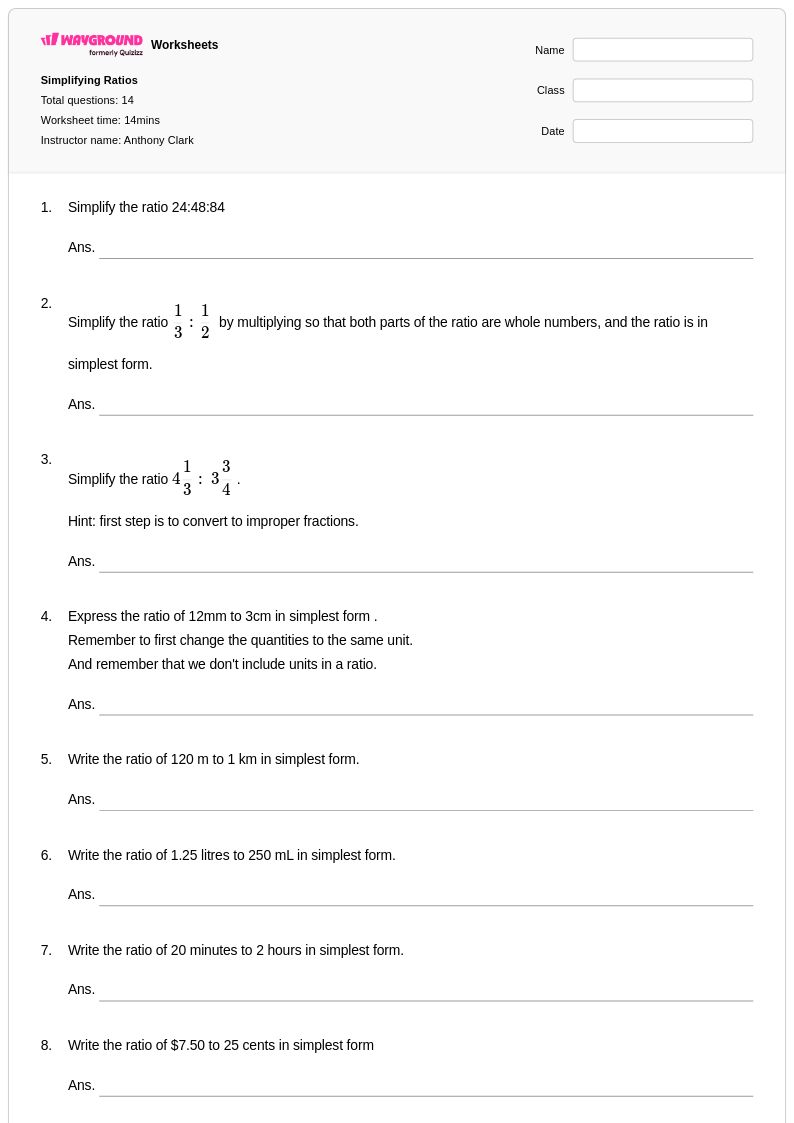
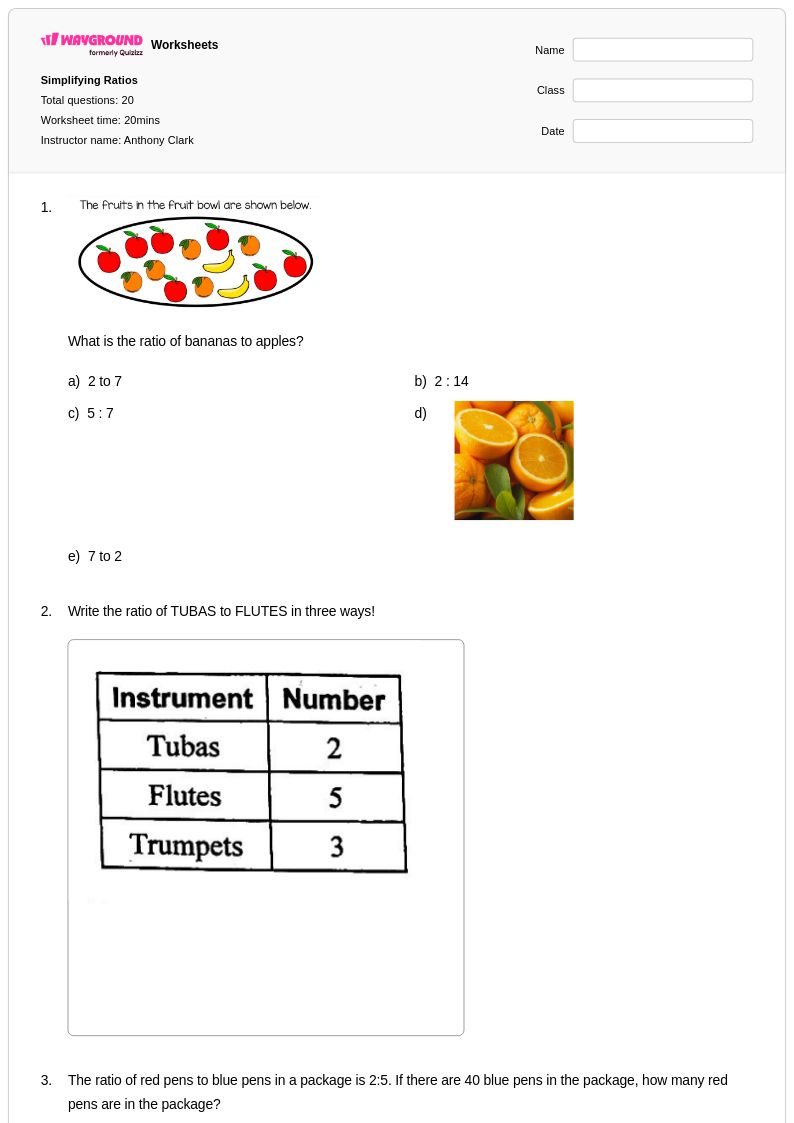
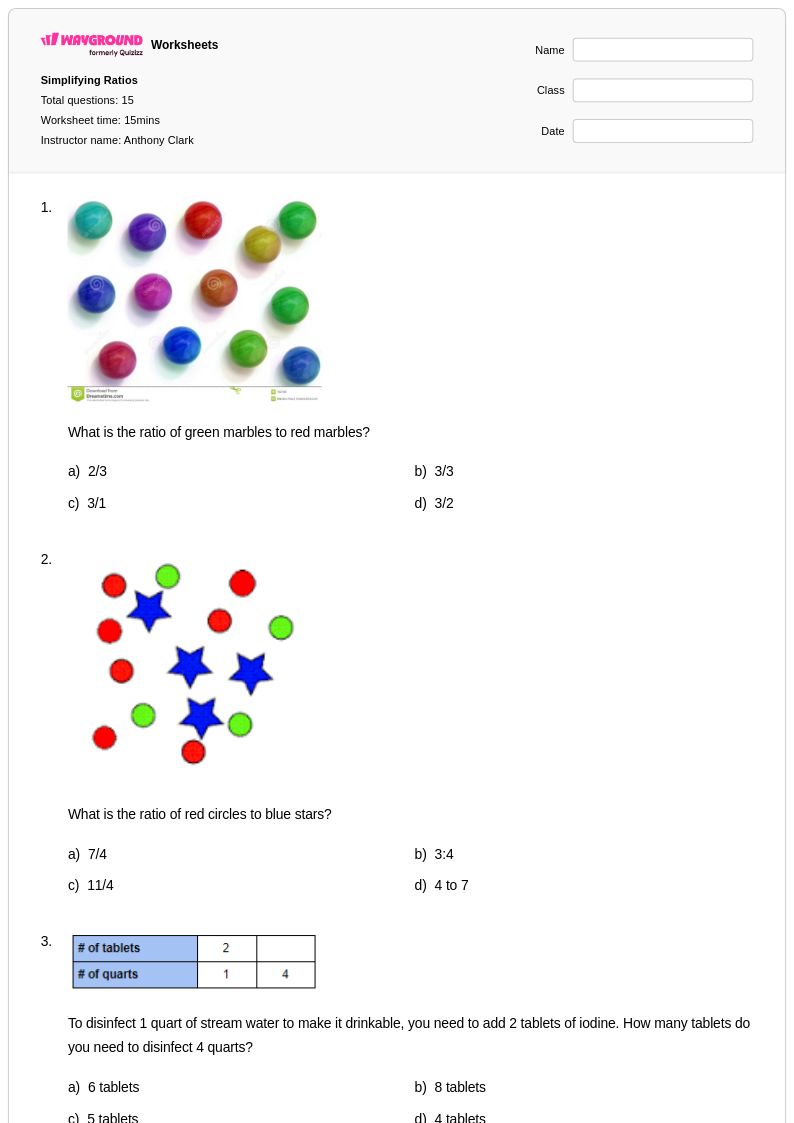
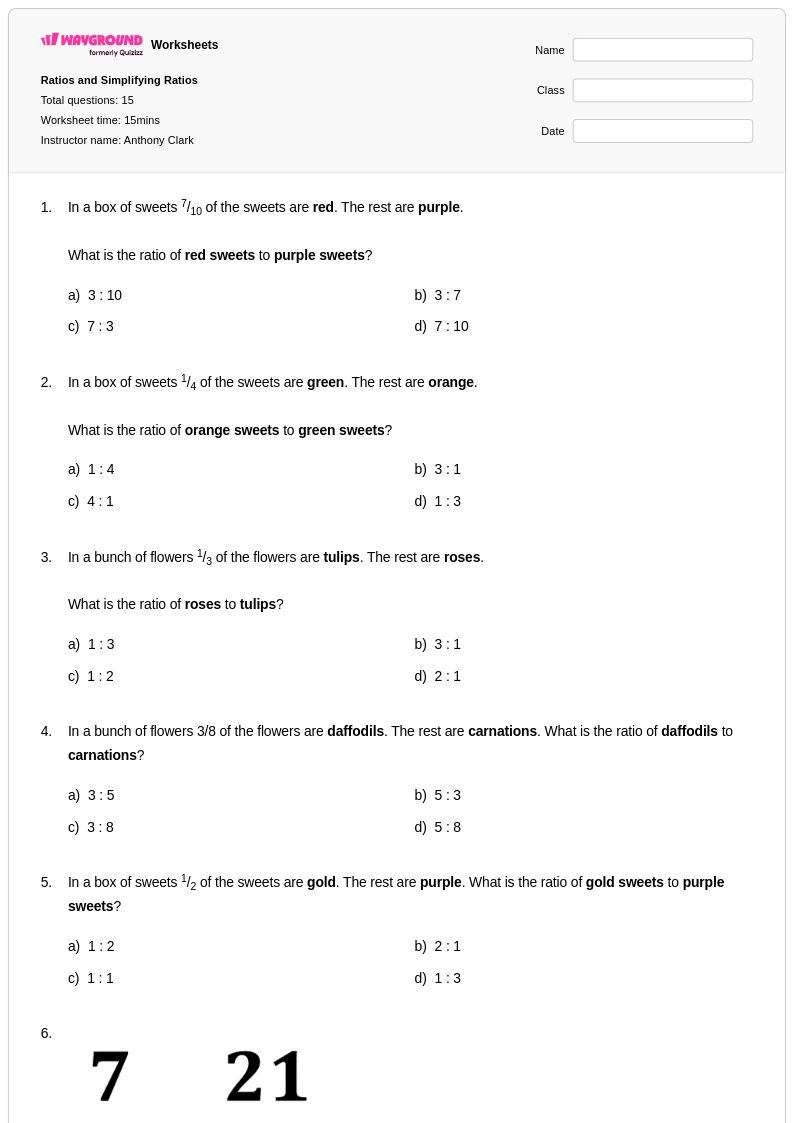
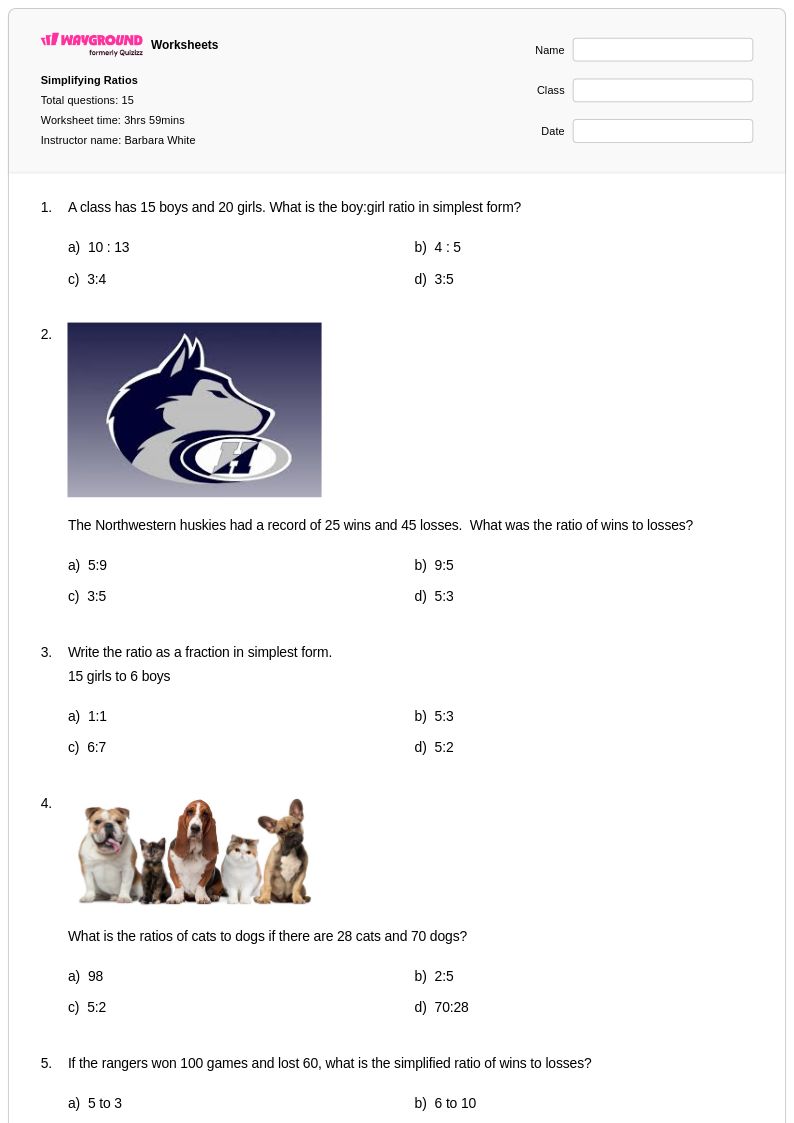
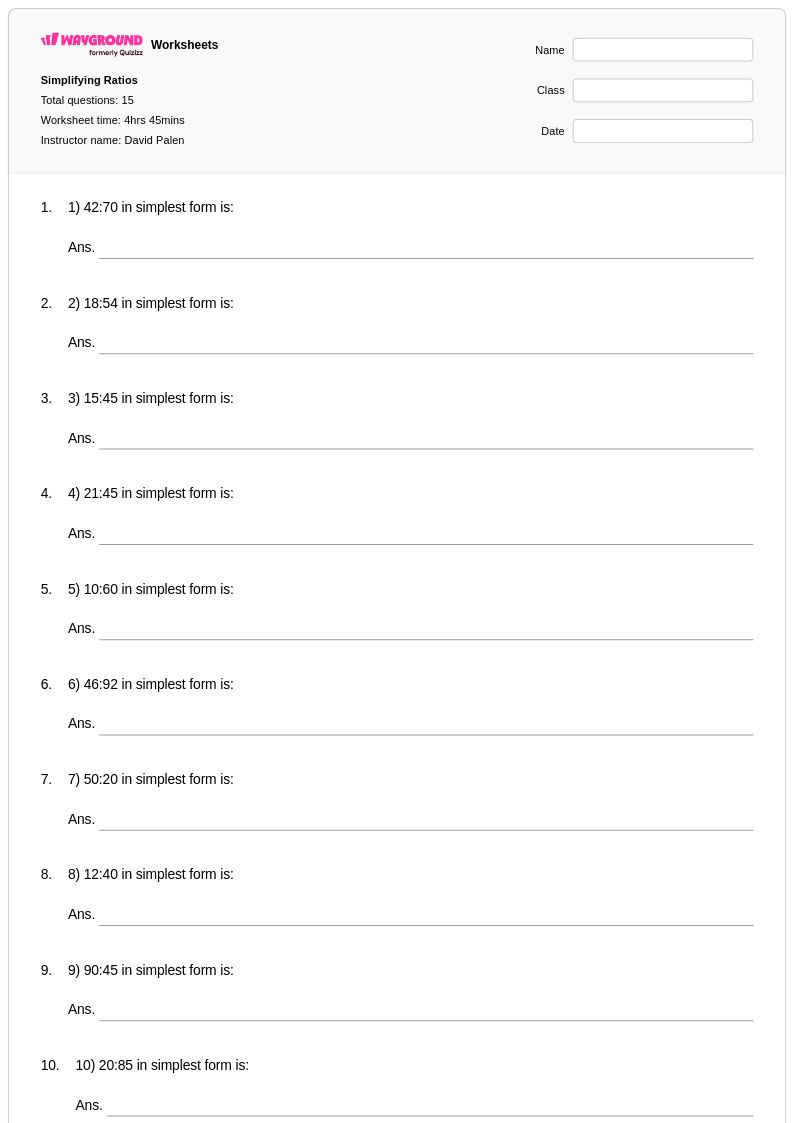
Simplifying ratios represents a fundamental mathematical concept that Class 7 students must master to build a strong foundation for advanced proportional reasoning and algebraic thinking. Wayground's comprehensive collection of simplifying ratios worksheets provides educators with expertly designed practice problems that guide students through the systematic process of reducing ratios to their simplest form using greatest common factors and equivalent relationships. These free printable resources include detailed answer keys that enable both independent student practice and efficient teacher assessment, while the varied problem formats ensure students encounter ratios presented as fractions, with colons, and in word problem contexts. The pdf worksheets progressively develop student confidence in identifying common factors, applying division strategies, and recognizing when ratios cannot be simplified further.
Wayground's extensive library draws from millions of teacher-created resources specifically designed to support effective mathematics instruction in middle school classrooms. The platform's advanced search and filtering capabilities allow educators to quickly locate worksheets that align with specific curriculum standards and match their students' current skill levels, while built-in differentiation tools enable seamless customization for remediation and enrichment activities. Teachers can access these simplifying ratios materials in both printable pdf format for traditional classroom use and digital formats for technology-integrated lessons, providing the flexibility needed for diverse learning environments. The comprehensive collection supports systematic lesson planning by offering scaffolded practice opportunities that help students progress from basic ratio simplification to complex multi-step problems involving real-world applications.
FAQs
How can I extend the concept of simplifying ratios for 7th graders?
What makes these simplifying ratios worksheets suitable for 7th grade?
What errors should I look for when 7th graders simplify ratios?
How does this topic support 7th-grade Common Core math standards?
How can I use this worksheet to assess my 7th graders?
How can I support diverse learners with these 7th-grade ratio problems?