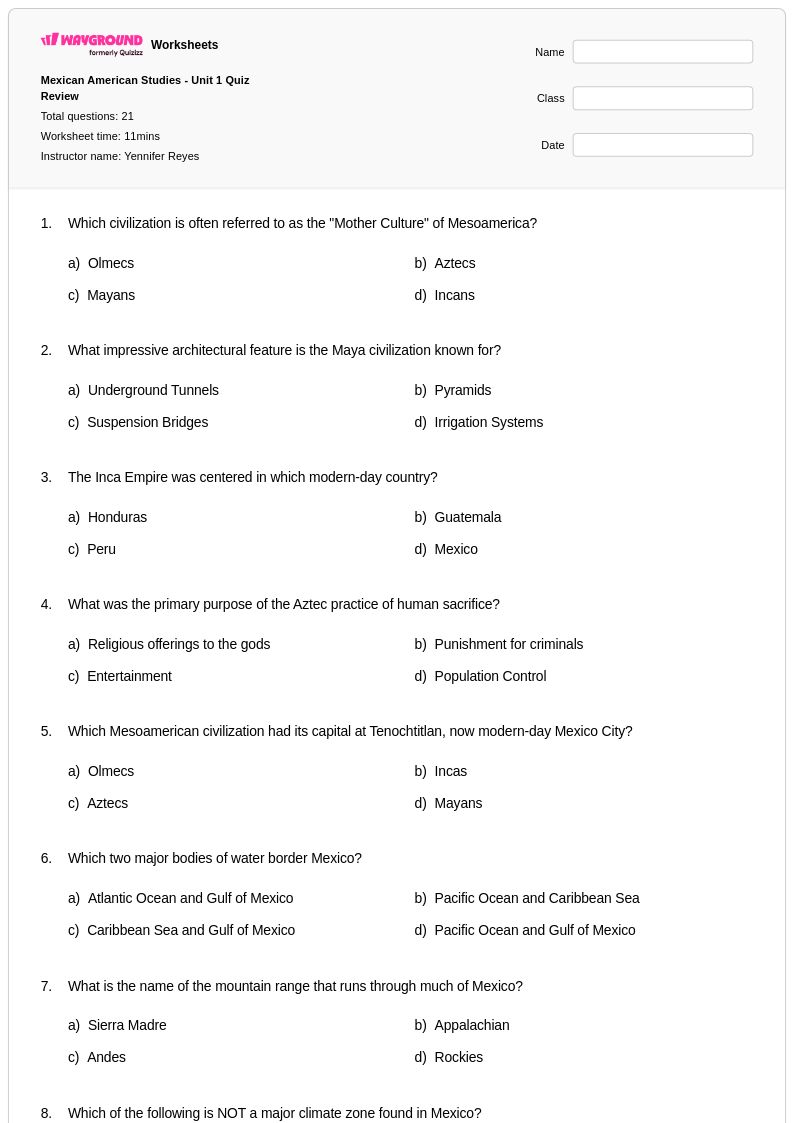
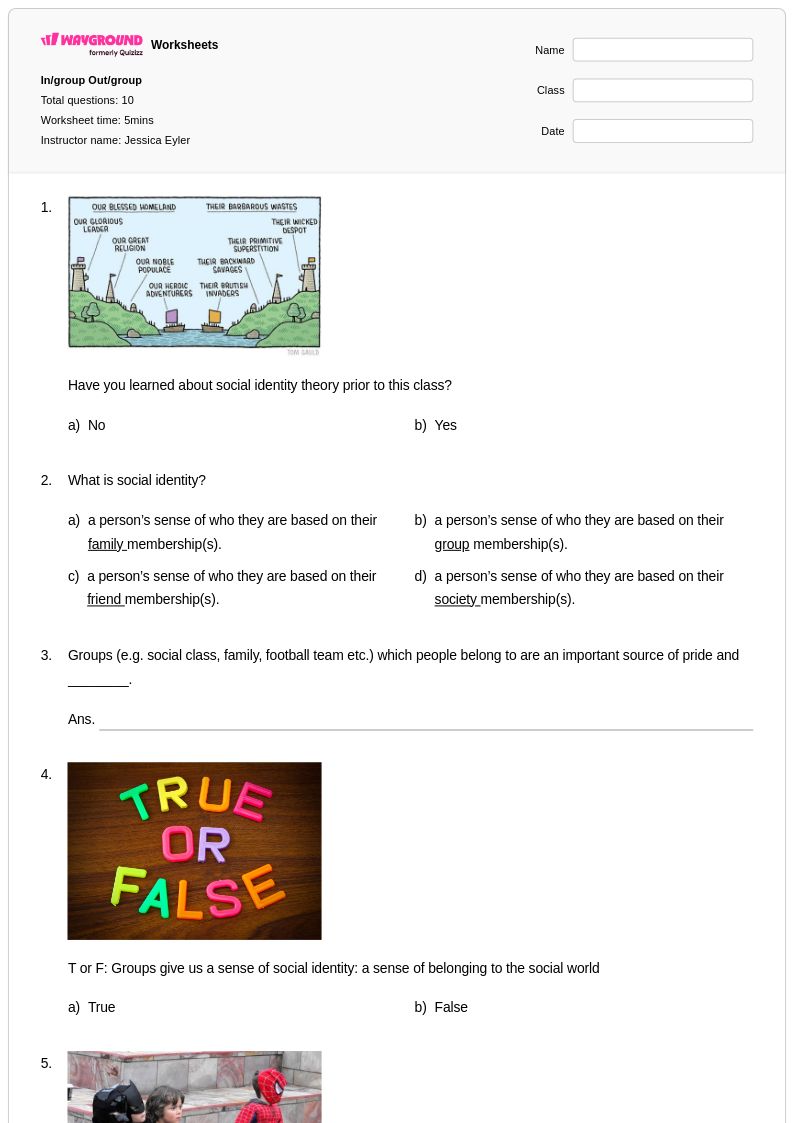
Free Printable Social Constructs of Race and Ethnicity Worksheets for Class 11
Explore Class 11 Social Studies printables focusing on social constructs of race and ethnicity, featuring free worksheets and practice problems with answer keys to help students understand how racial and ethnic identities are culturally and socially constructed throughout history.
Explore printable Social Constructs of Race and Ethnicity worksheets for Class 11
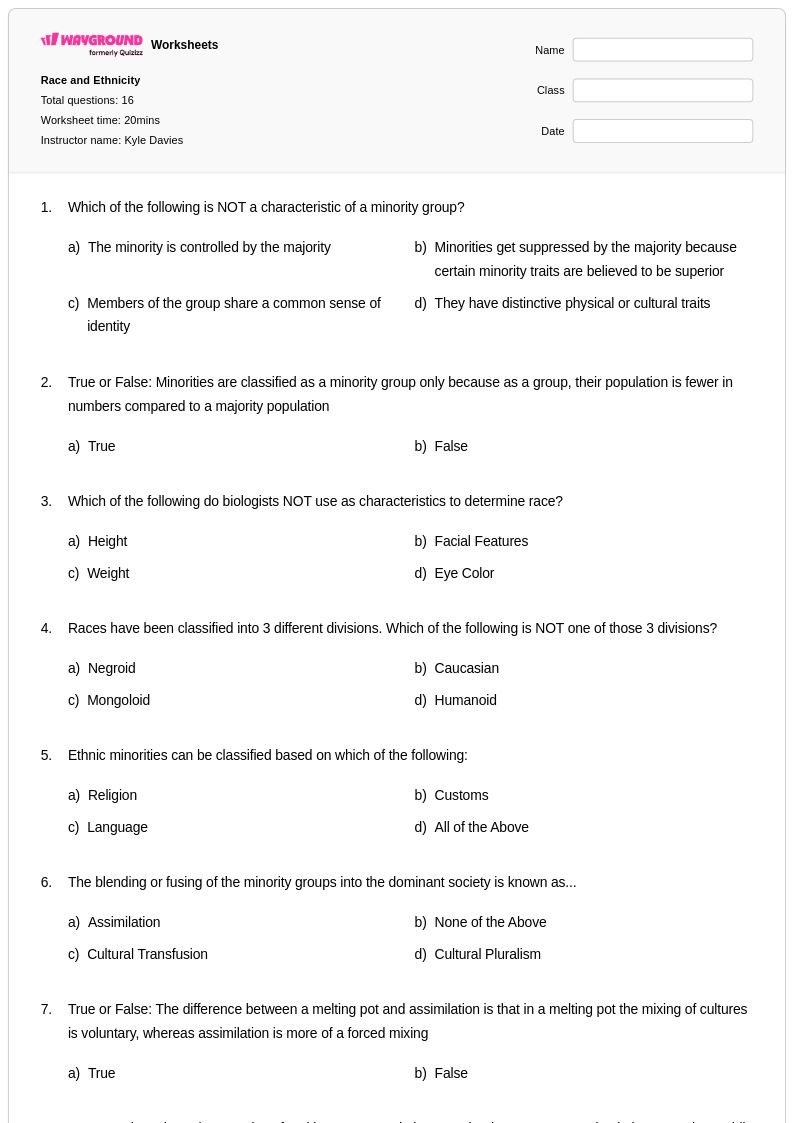
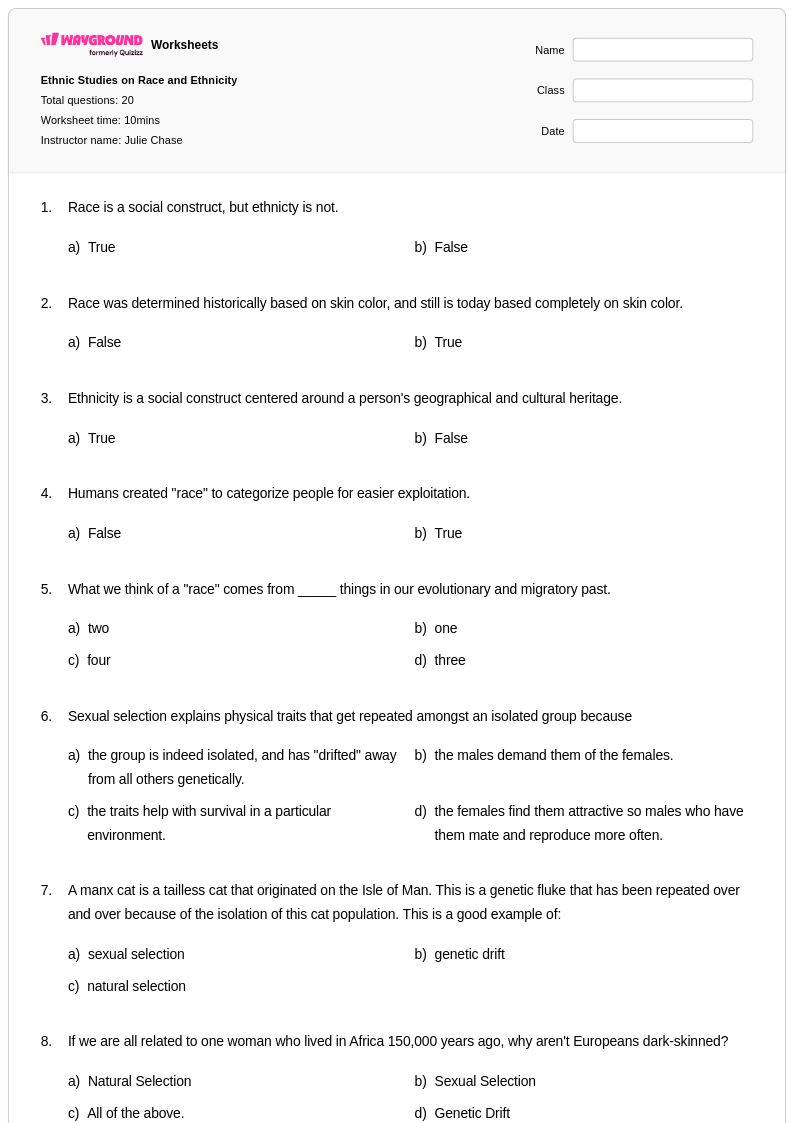
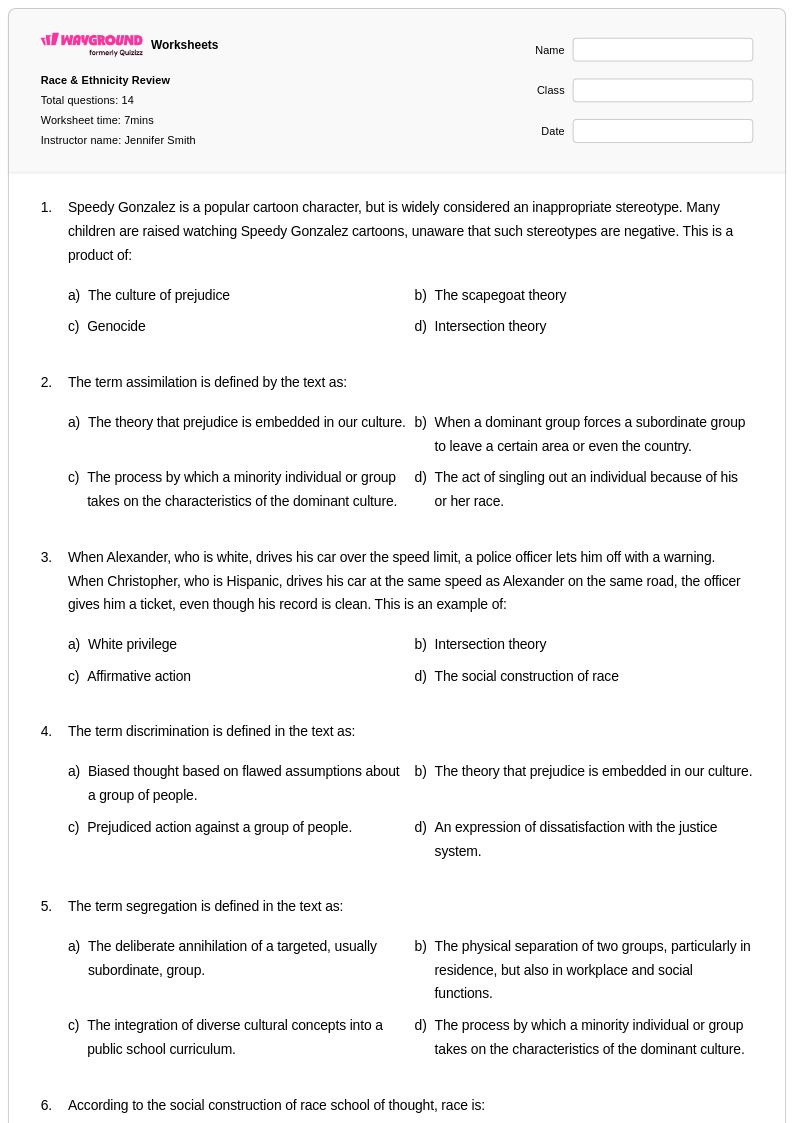
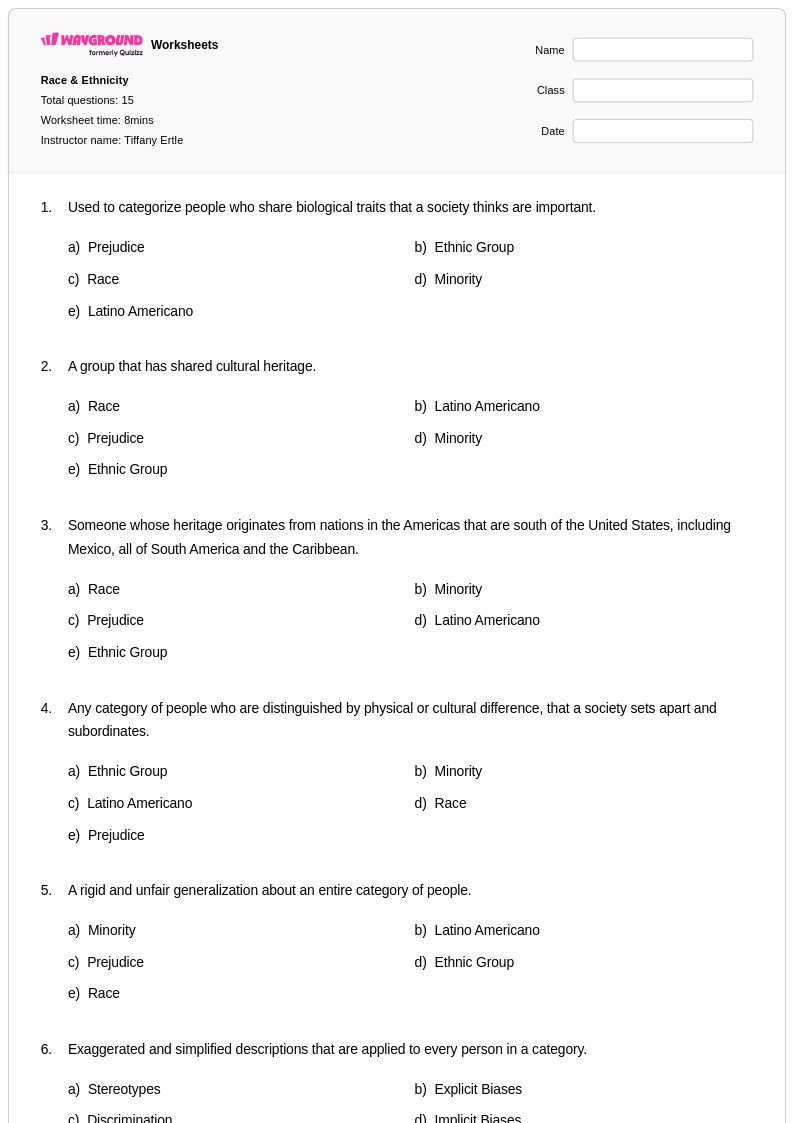
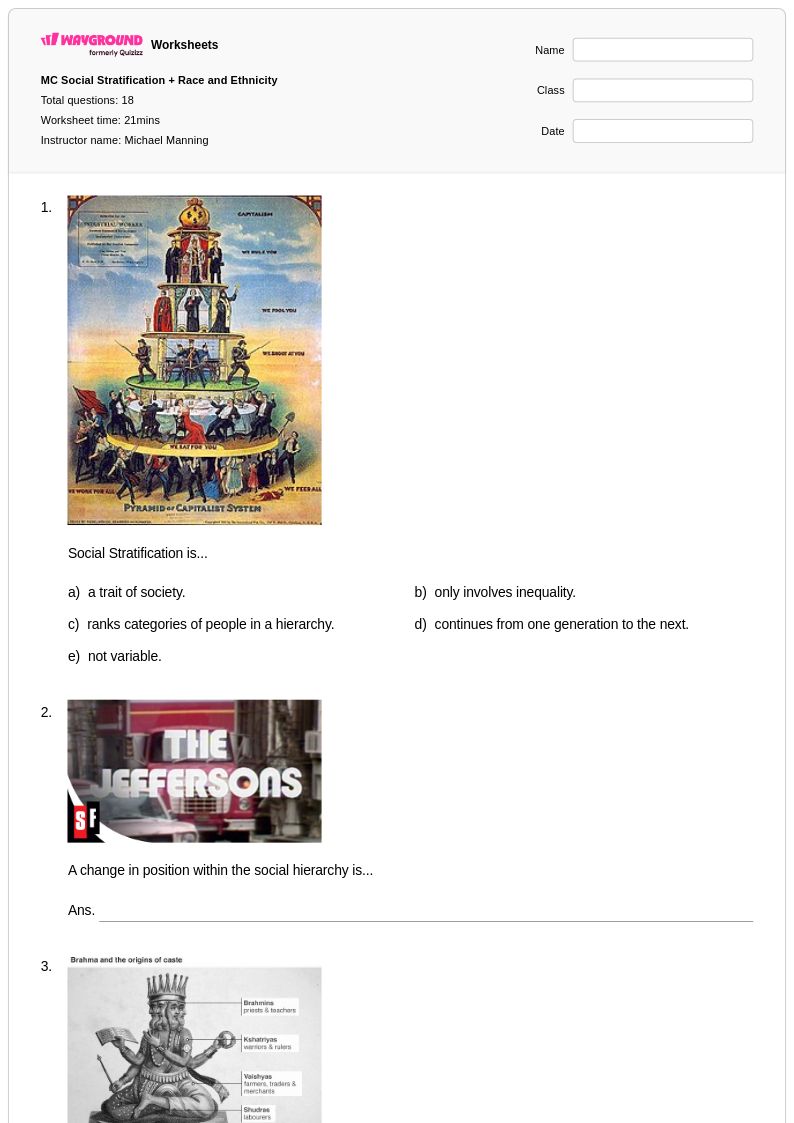
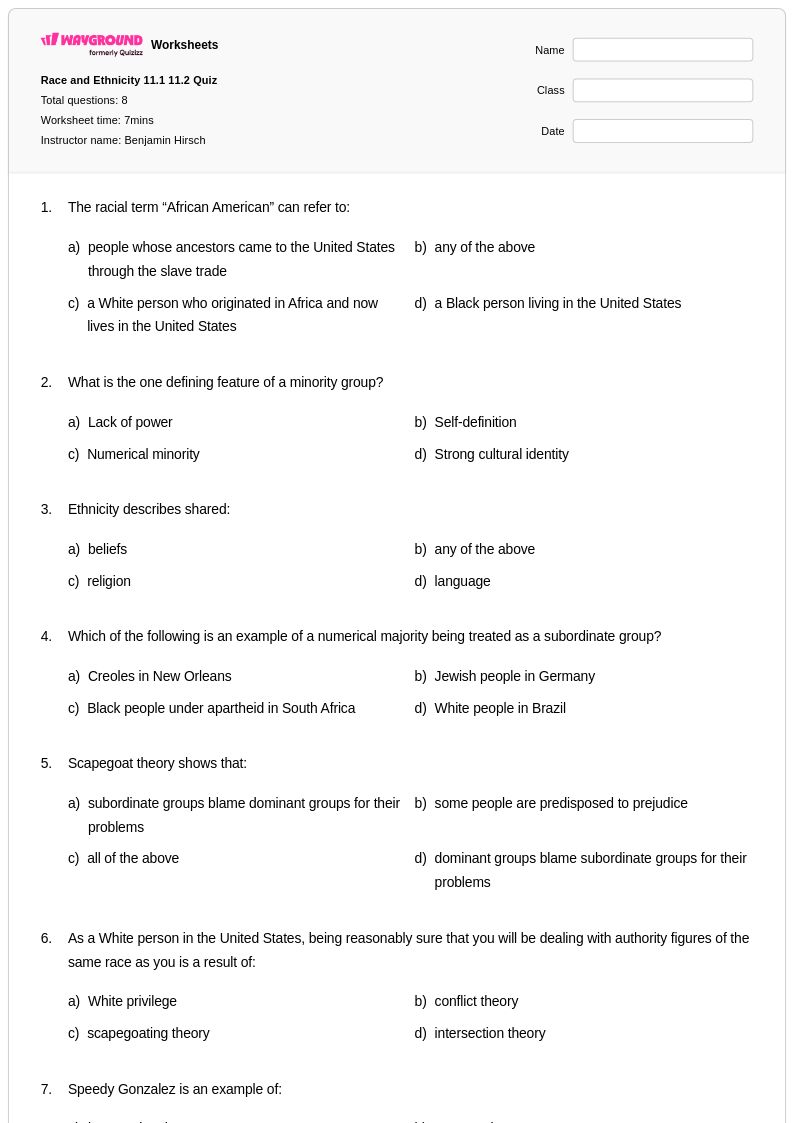
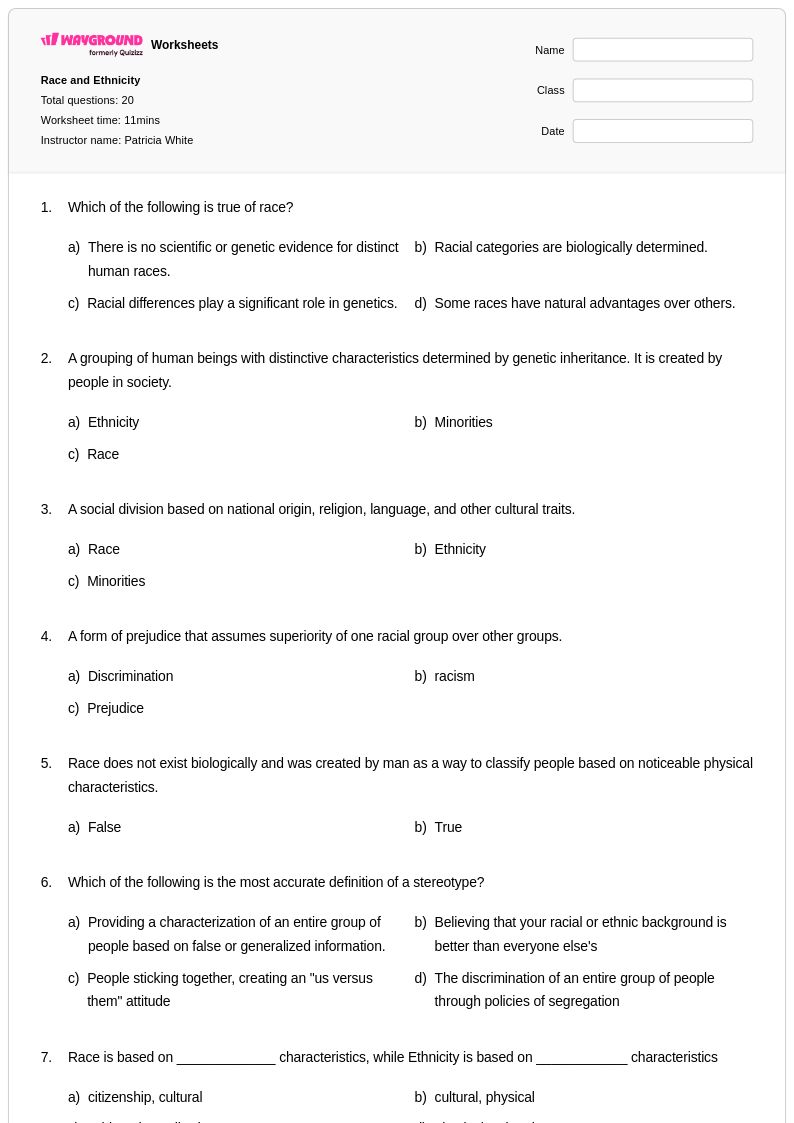
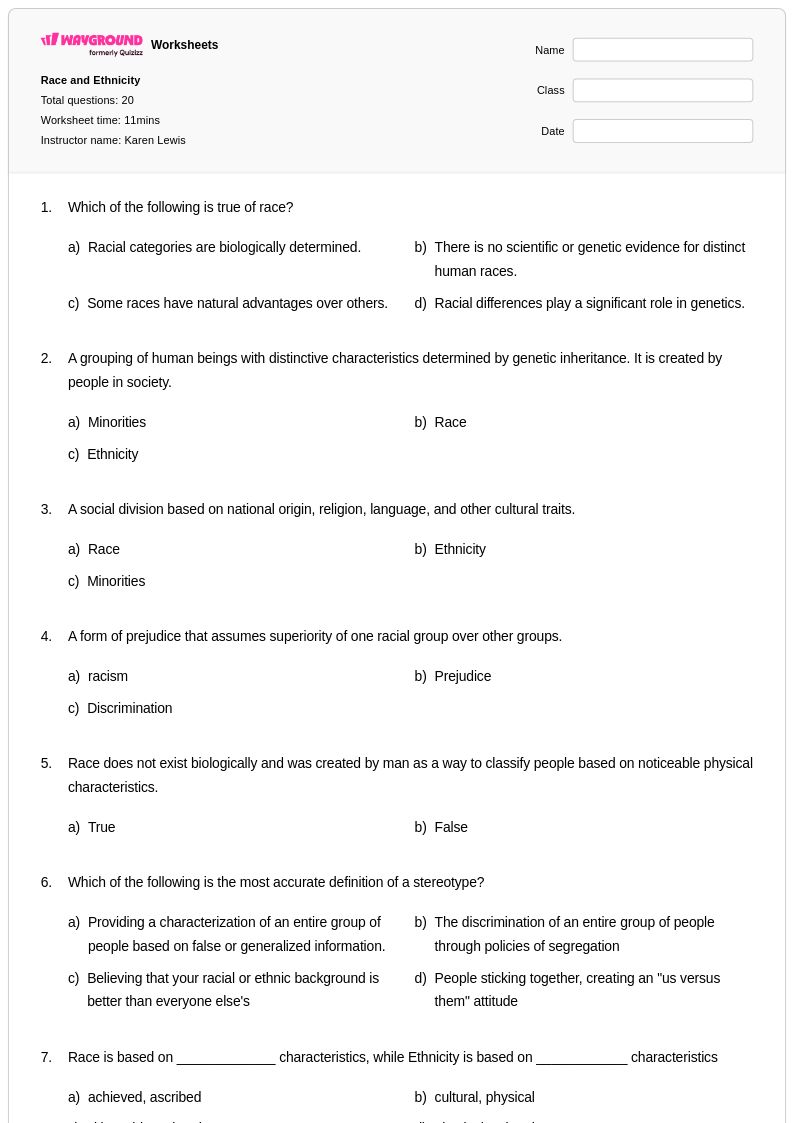
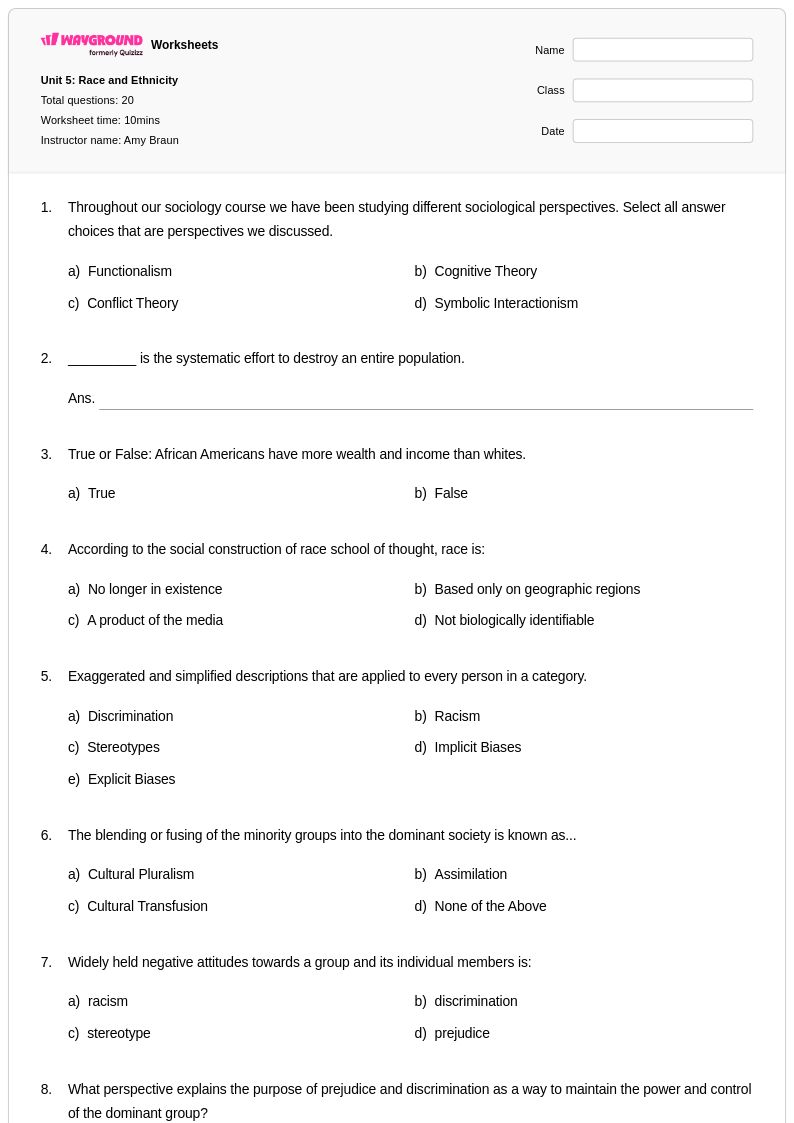
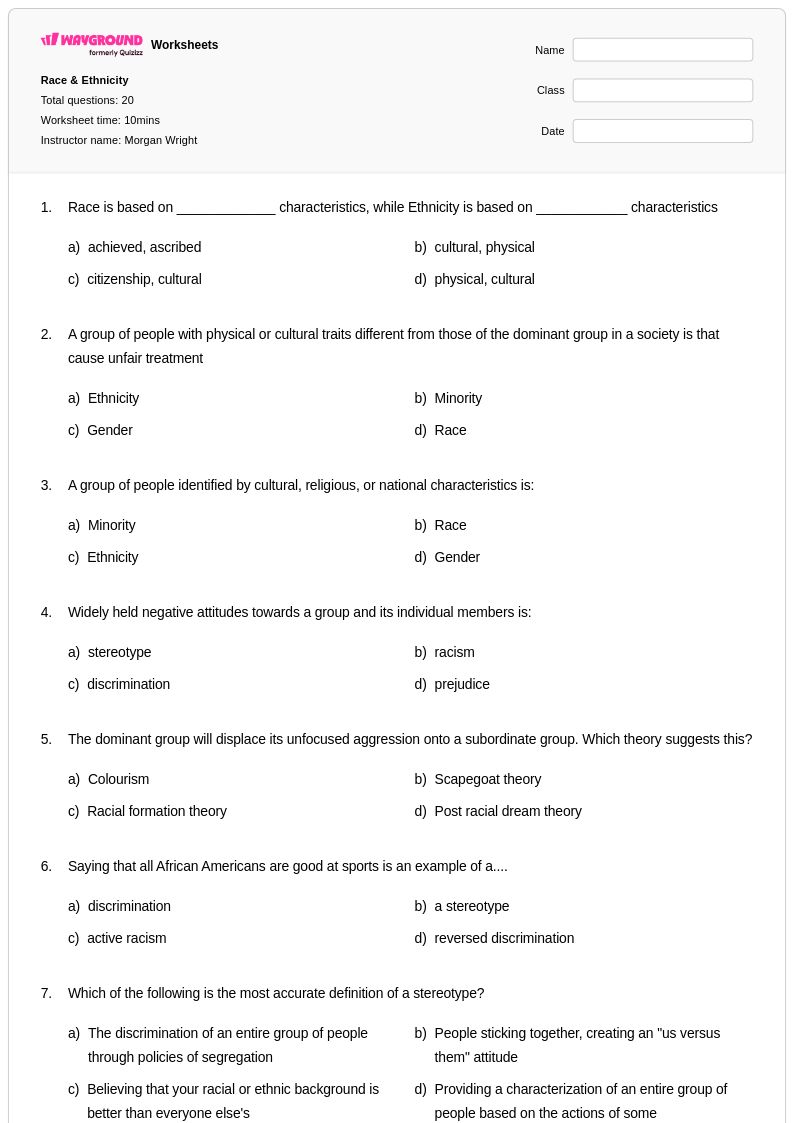
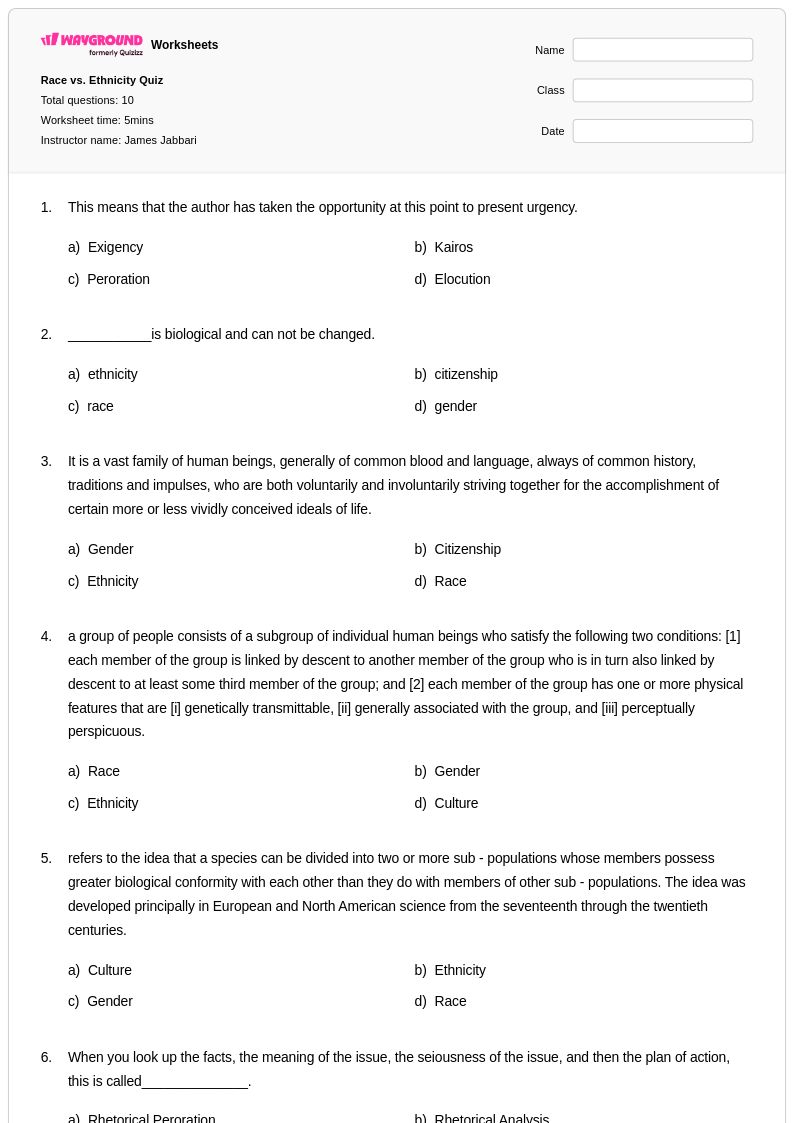
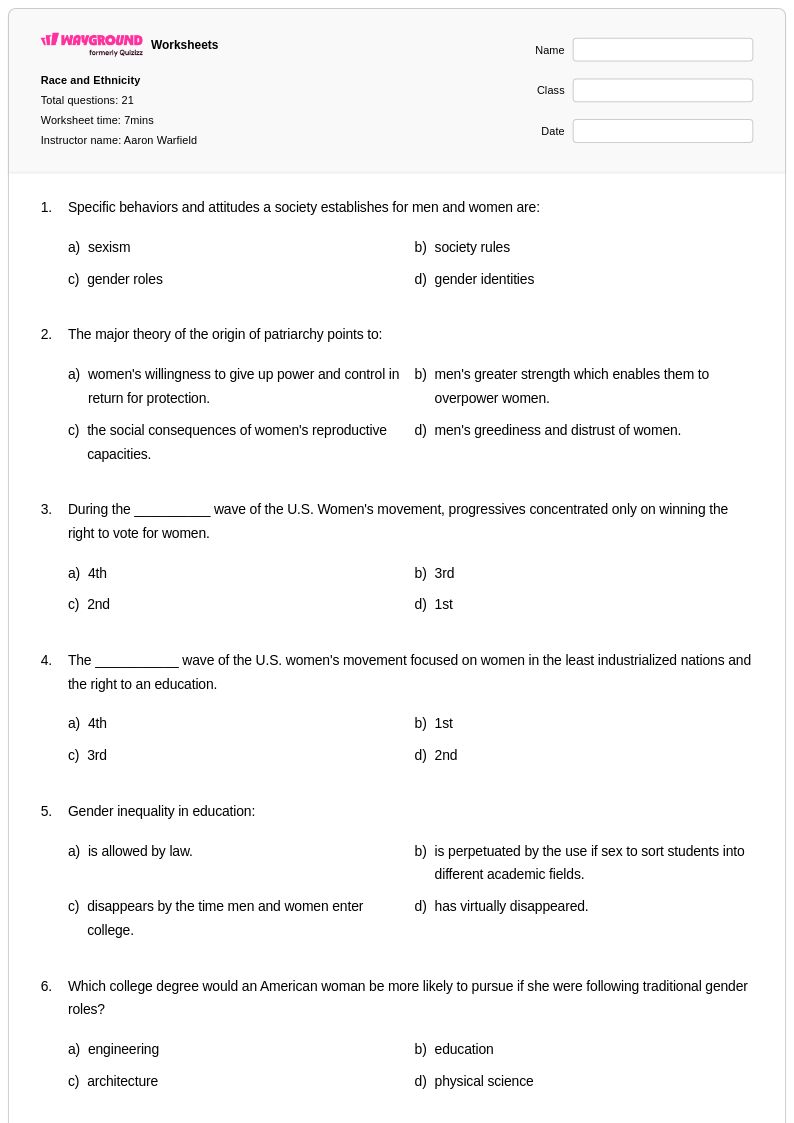
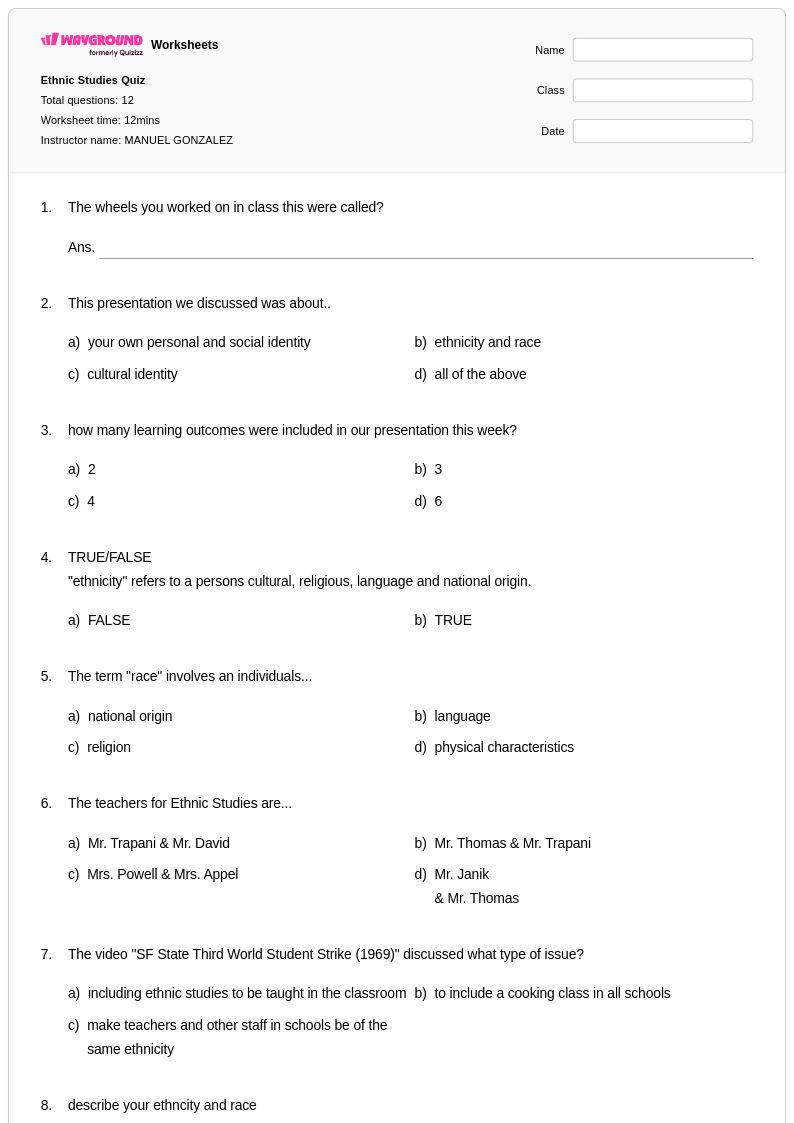
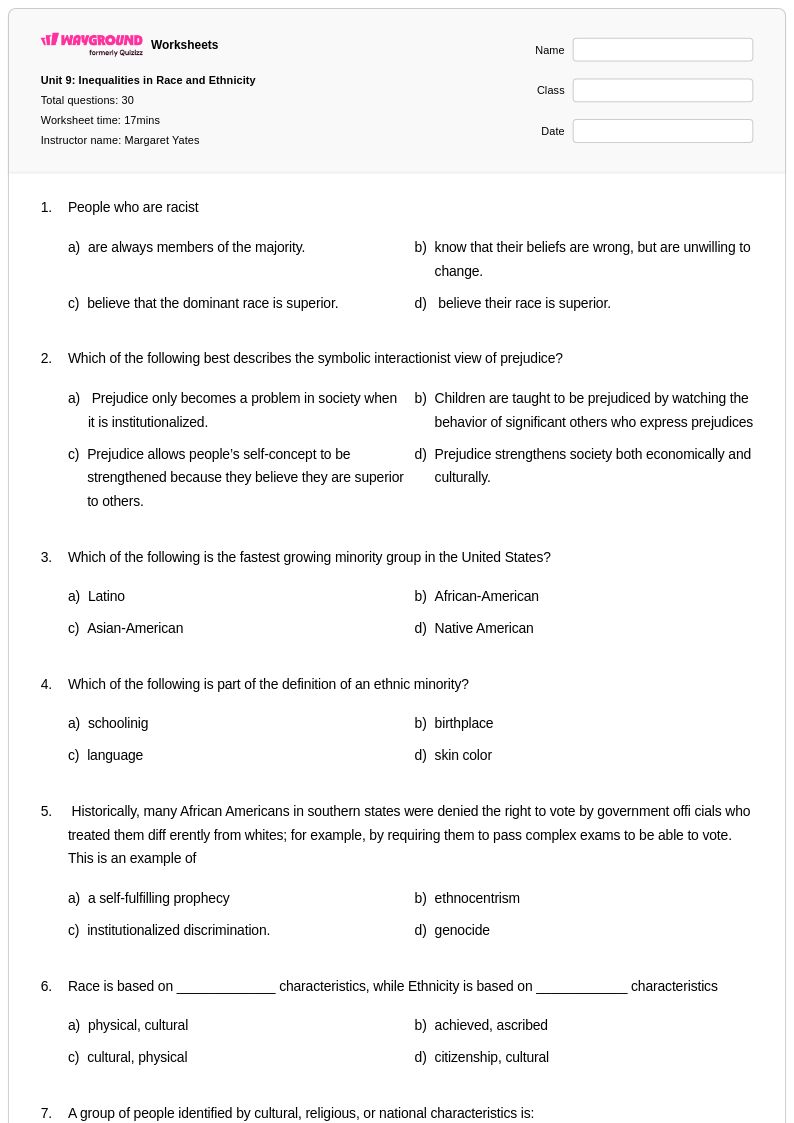
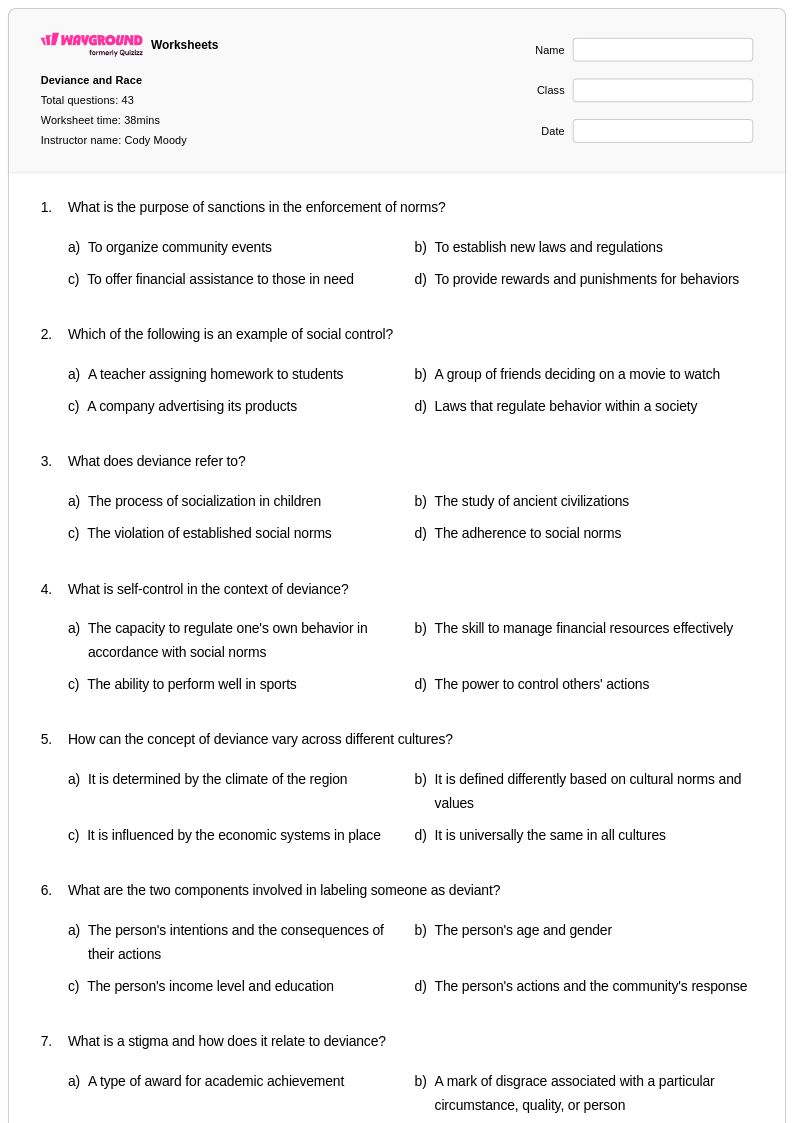
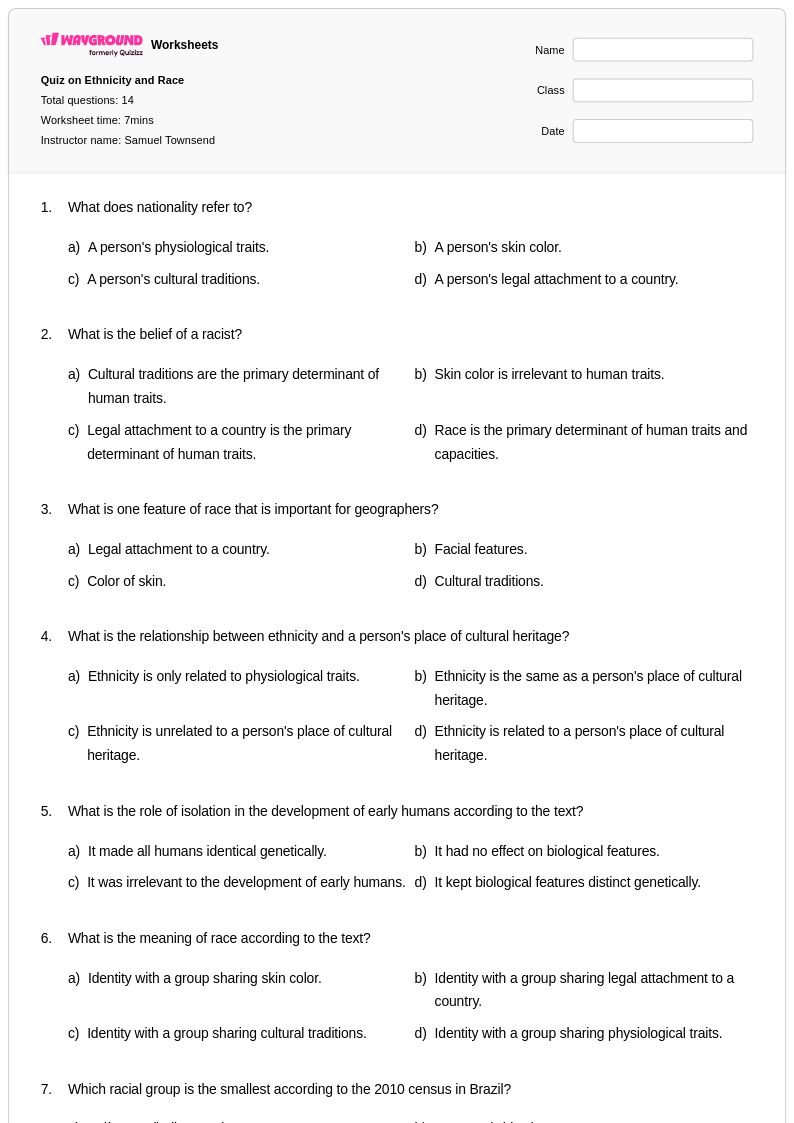
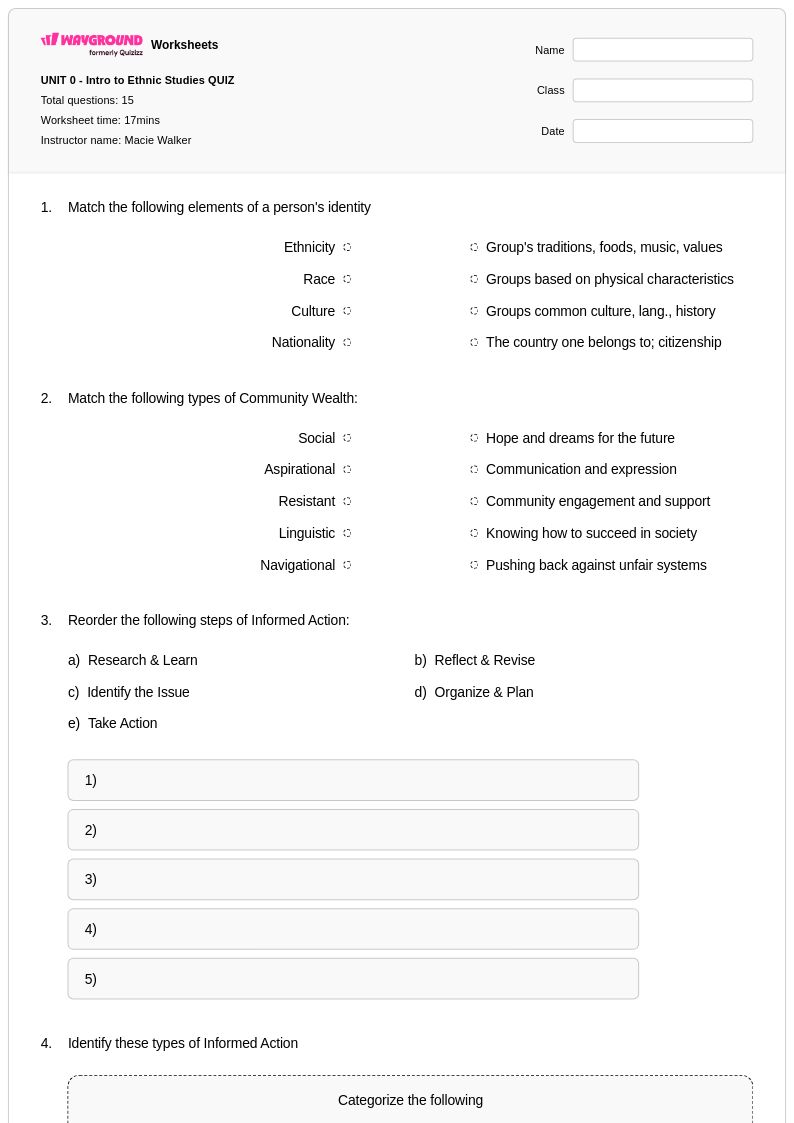
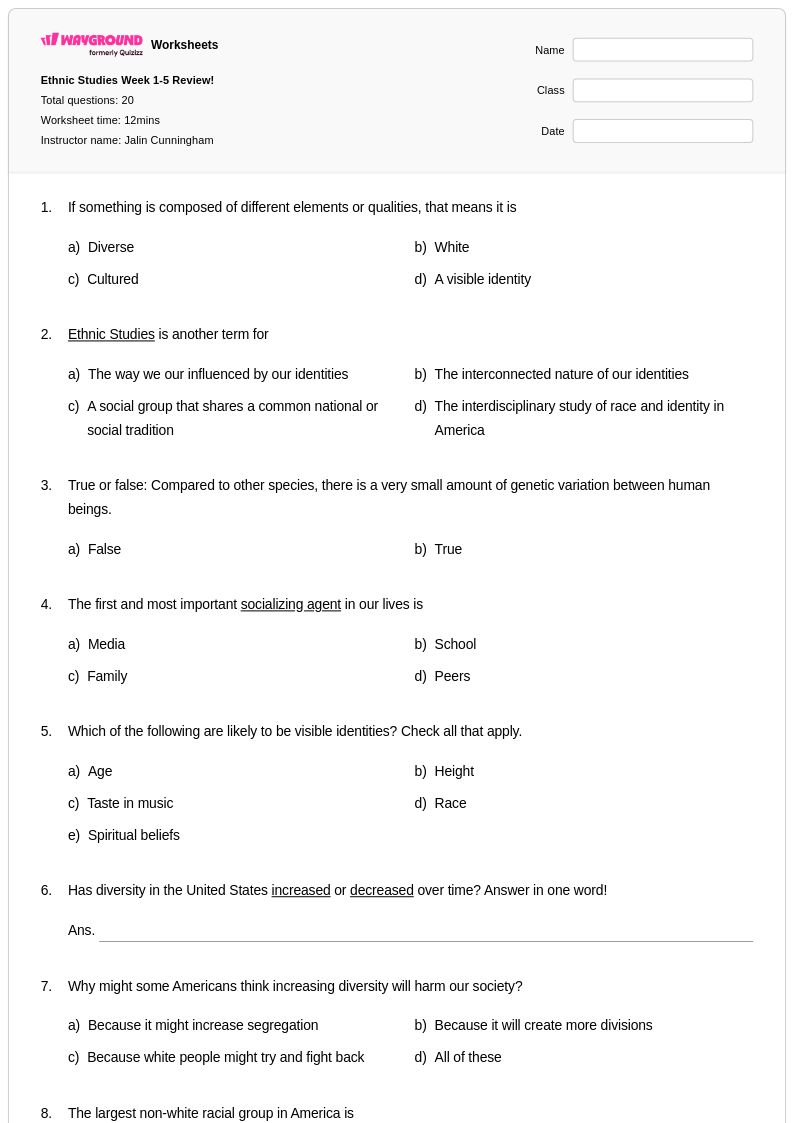
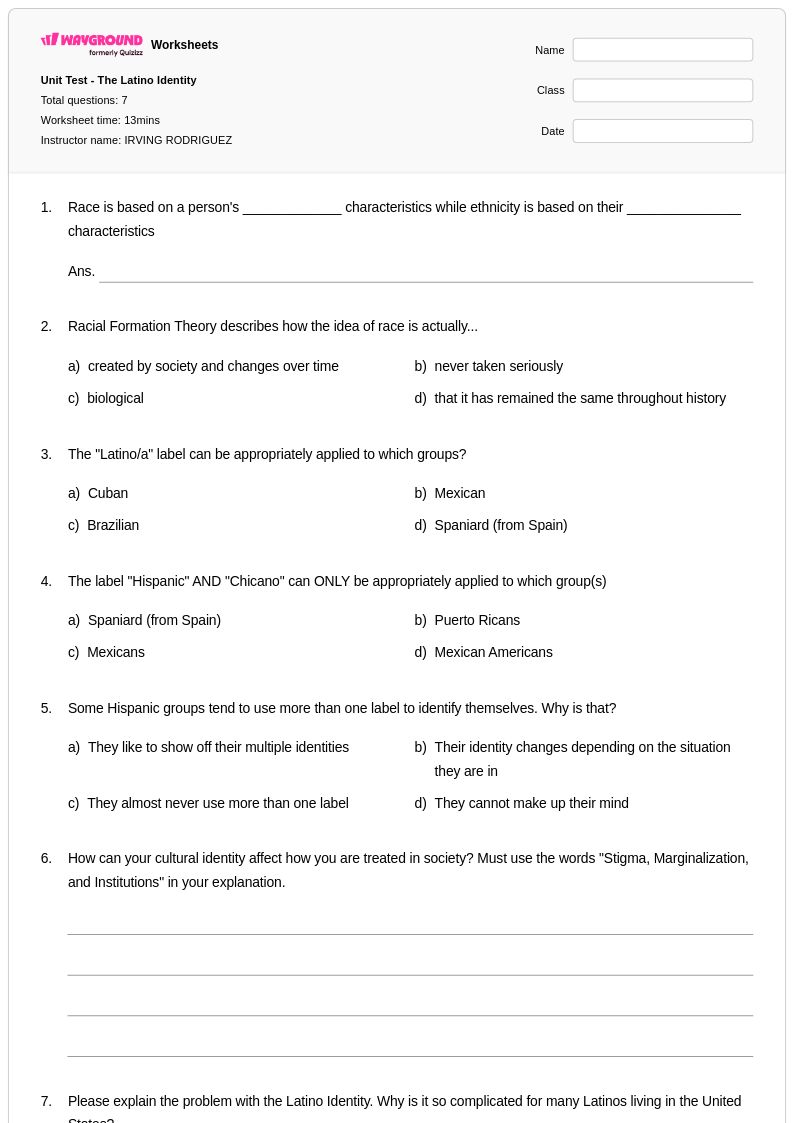
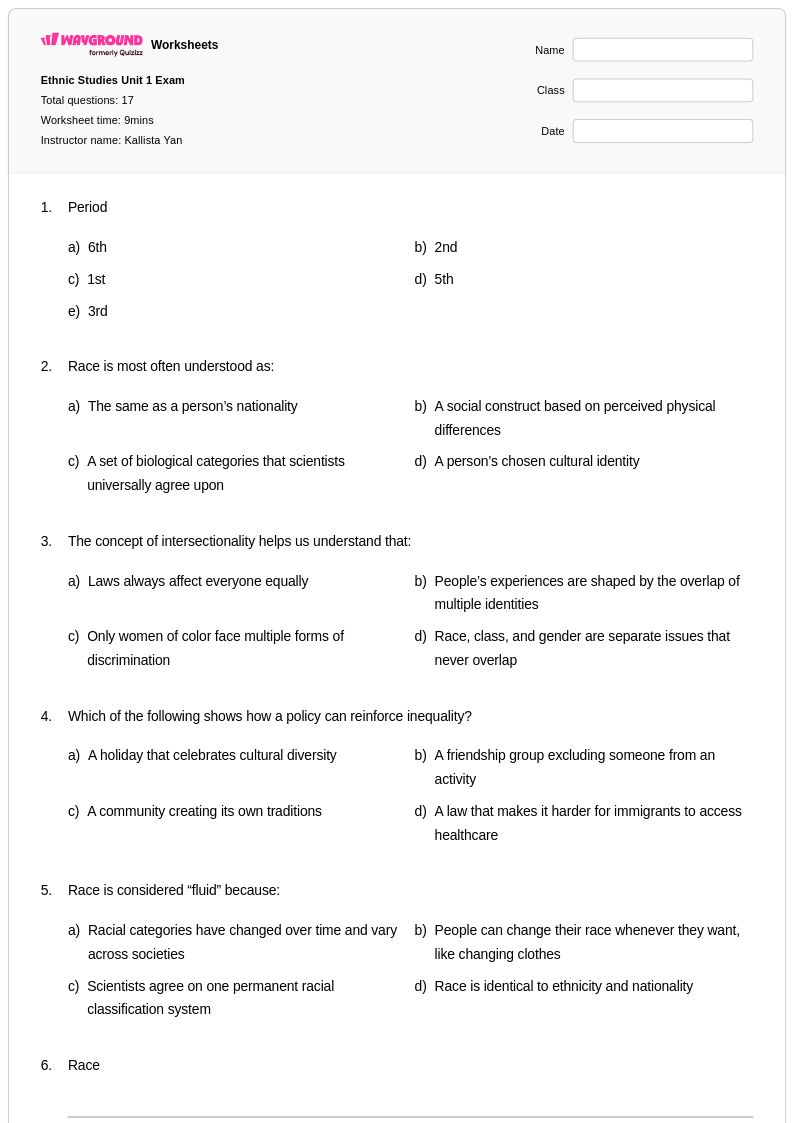
Class 11 students exploring the social constructs of race and ethnicity will find comprehensive worksheet resources through Wayground that delve into these complex sociological concepts with academic rigor. These carefully designed worksheets guide students through critical examinations of how racial and ethnic categories are formed, maintained, and challenged within different societies and historical contexts. Students engage with practice problems that analyze the distinction between biological and social definitions of race, explore how ethnicity encompasses cultural identity and shared heritage, and investigate the ways these constructs influence social interactions, institutional policies, and individual experiences. Each worksheet collection includes detailed answer keys that help students verify their understanding of nuanced concepts, while printable pdf formats ensure accessibility for various learning environments. The free resources encompass diverse activities from case study analyses to comparative exercises that strengthen students' abilities to think critically about identity, power structures, and social categorization.
Wayground's extensive collection of teacher-created resources provides educators with millions of high-quality materials specifically designed to address the complexities of teaching about race and ethnicity at the Class 11 level. The platform's robust search and filtering capabilities enable teachers to quickly locate worksheets that align with specific curriculum standards and learning objectives, while differentiation tools allow for customization based on individual student needs and varying levels of social studies proficiency. Teachers can seamlessly adapt these resources for both remediation and enrichment purposes, using the flexible digital and printable formats to support diverse classroom management strategies and assessment approaches. The comprehensive nature of these worksheet collections streamlines lesson planning by providing educators with ready-to-use materials for skill practice, discussion preparation, and formative assessment, ultimately supporting more effective instruction in this sensitive and academically demanding area of social studies education.
FAQs
How do I teach students that race is a social construct rather than a biological fact?
Start by presenting students with the historical evidence: racial categories have changed across time, geography, and legal systems in ways that biological traits cannot explain. Use primary sources such as census records, immigration laws, or court cases that reclassified racial groups to show students how these categories were invented and enforced by societies rather than discovered in nature. Pairing this with a comparison of how different countries classify race differently helps students see that the categories are socially negotiated, not universal or fixed.
What is the difference between race and ethnicity, and how should I explain it to students?
Race typically refers to categories imposed by external social and institutional forces, often based on perceived physical characteristics, while ethnicity refers to shared cultural practices, language, ancestry, or heritage that individuals may use to identify themselves. The key distinction is that ethnicity tends to be self-defined and culturally rooted, whereas racial classification has historically been assigned by outside systems of power. Teaching students to distinguish between these two concepts helps them understand both personal identity and structural inequality more precisely.
What exercises help students practice analyzing social constructs of race and ethnicity?
Case study analysis is one of the most effective exercises: give students examples from different cultures and historical periods, such as the shifting legal definitions of whiteness in the U.S. or the role of ethnicity in post-colonial nation-building, and ask them to identify who defined the categories, why, and with what consequences. Structured comparison activities, where students examine how media or institutions portray racial and ethnic groups differently, build the critical analysis skills this topic requires. Worksheets that prompt students to move from description to evaluation, rather than just identifying facts, push thinking to the depth this subject demands.
What misconceptions do students commonly have about race and ethnicity?
The most persistent misconception is that racial categories reflect meaningful biological differences, such as genetic groups or fixed ancestral lineages. Students also frequently conflate race and ethnicity, treating them as interchangeable, or assume that ethnicity is simply a polite synonym for race. A third common error is viewing these categories as natural and timeless rather than as products of specific historical, political, and economic processes. Directly addressing each of these misconceptions with concrete historical evidence is essential before students can engage critically with more complex questions about identity and power.
How can I use social constructs of race and ethnicity worksheets in my classroom?
These worksheets are available as printable PDFs for traditional classroom use and in digital formats for technology-integrated or hybrid learning environments, and they can also be hosted as a quiz on Wayground for interactive student engagement. The included answer keys make them practical for independent work, small-group analysis, or whole-class discussion, depending on your instructional goal. Because the materials cover both foundational concepts and applied case studies, teachers can use them for initial instruction, structured review, or as a formative assessment checkpoint.
How do I support students who struggle with abstract concepts like social construction in this unit?
Grounding abstract ideas in concrete, familiar examples is the most reliable approach: ask students to consider how categories like "cool" or "criminal" shift depending on who is doing the labeling and in what context, then transfer that logic to racial and ethnic classification. Visual timelines showing how racial categories have been legally redefined, or comparison charts across countries, reduce cognitive load by giving students a structure to hang the concept on. On Wayground, teachers can also apply accommodations such as read aloud and reduced answer choices for individual students who need additional scaffolding, without disrupting the experience of other students in the class.