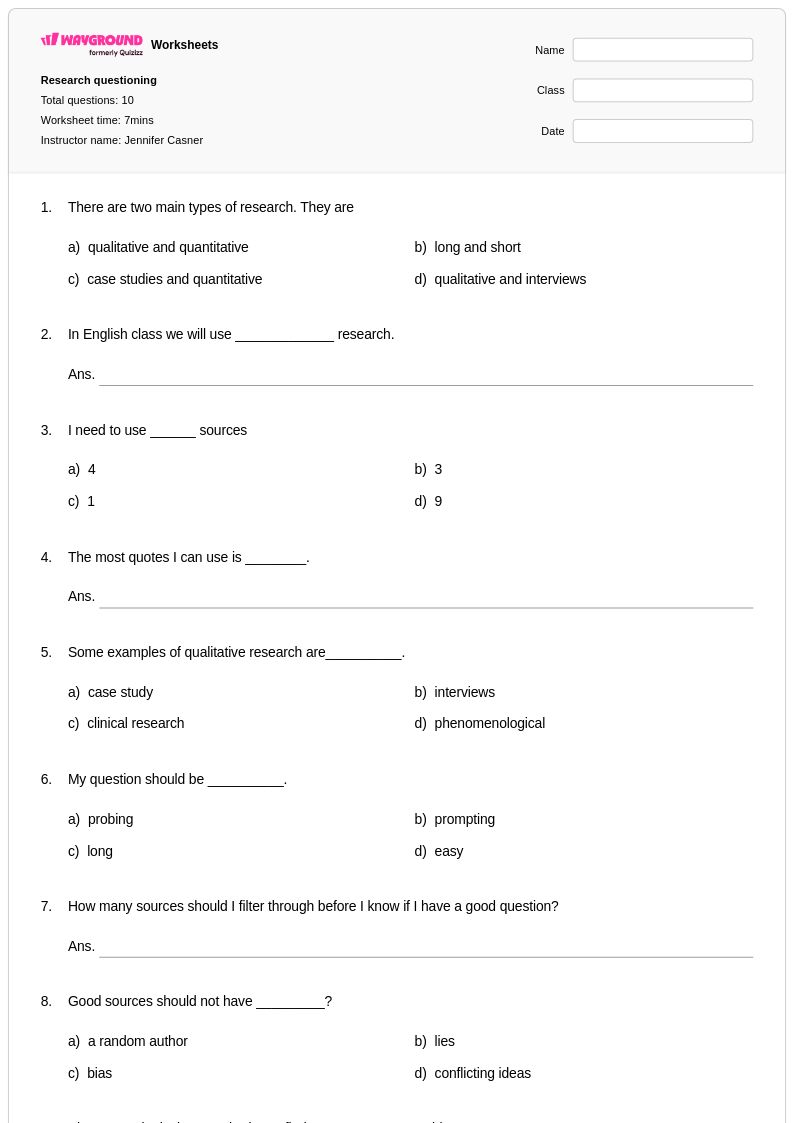
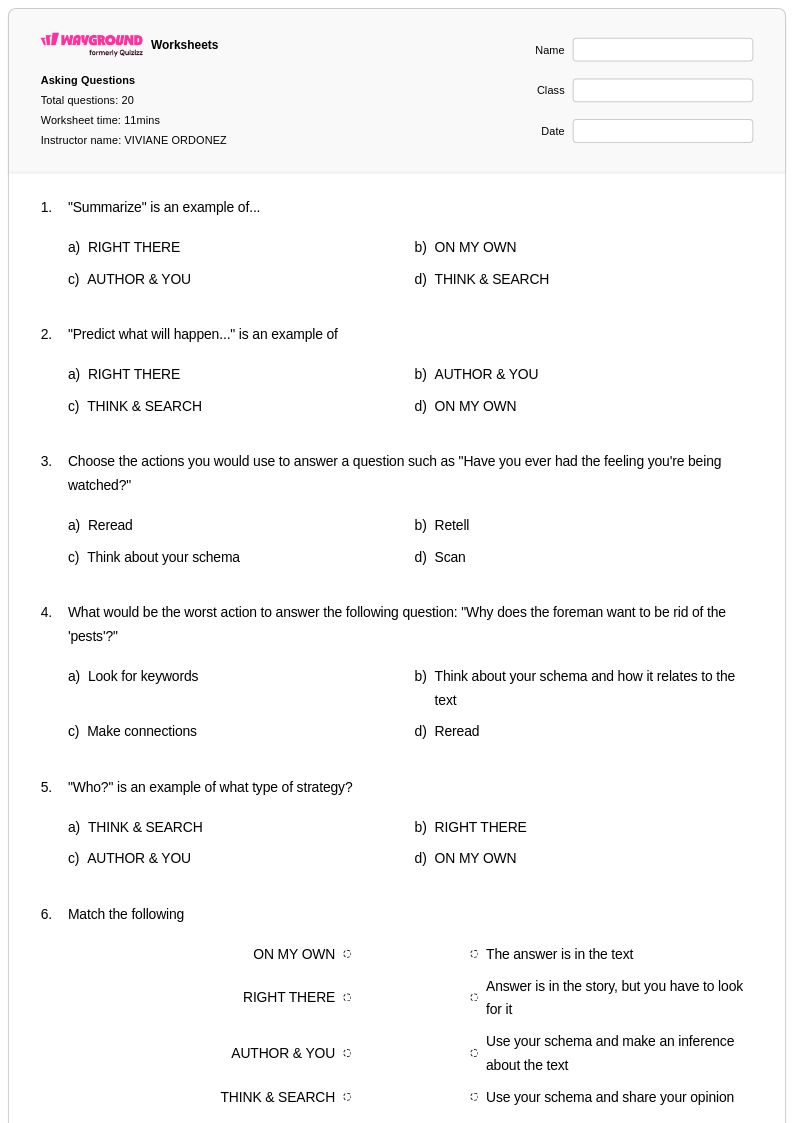
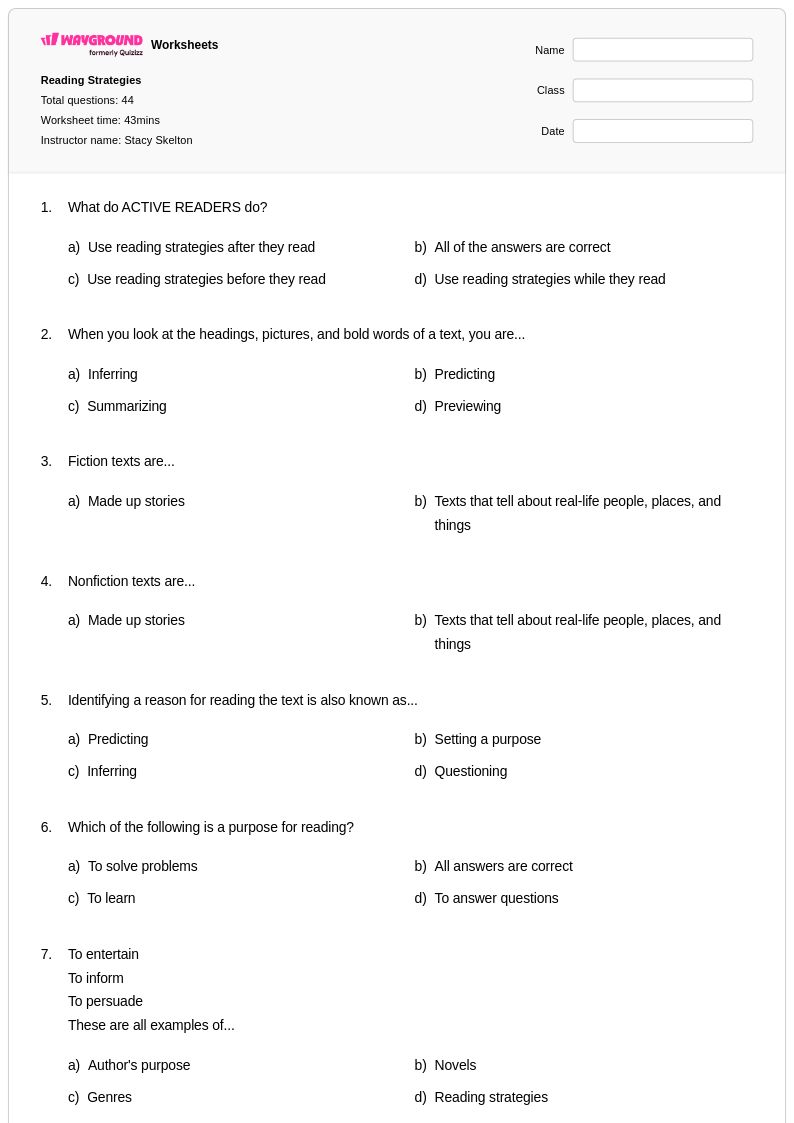
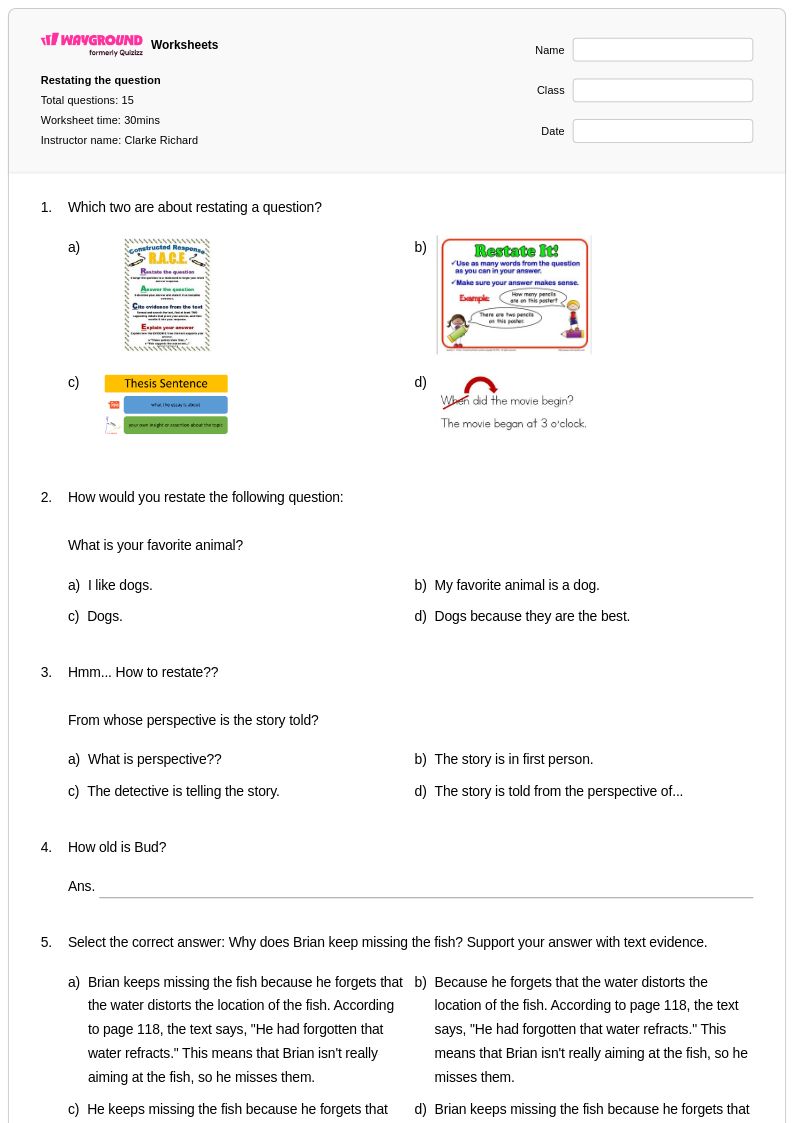
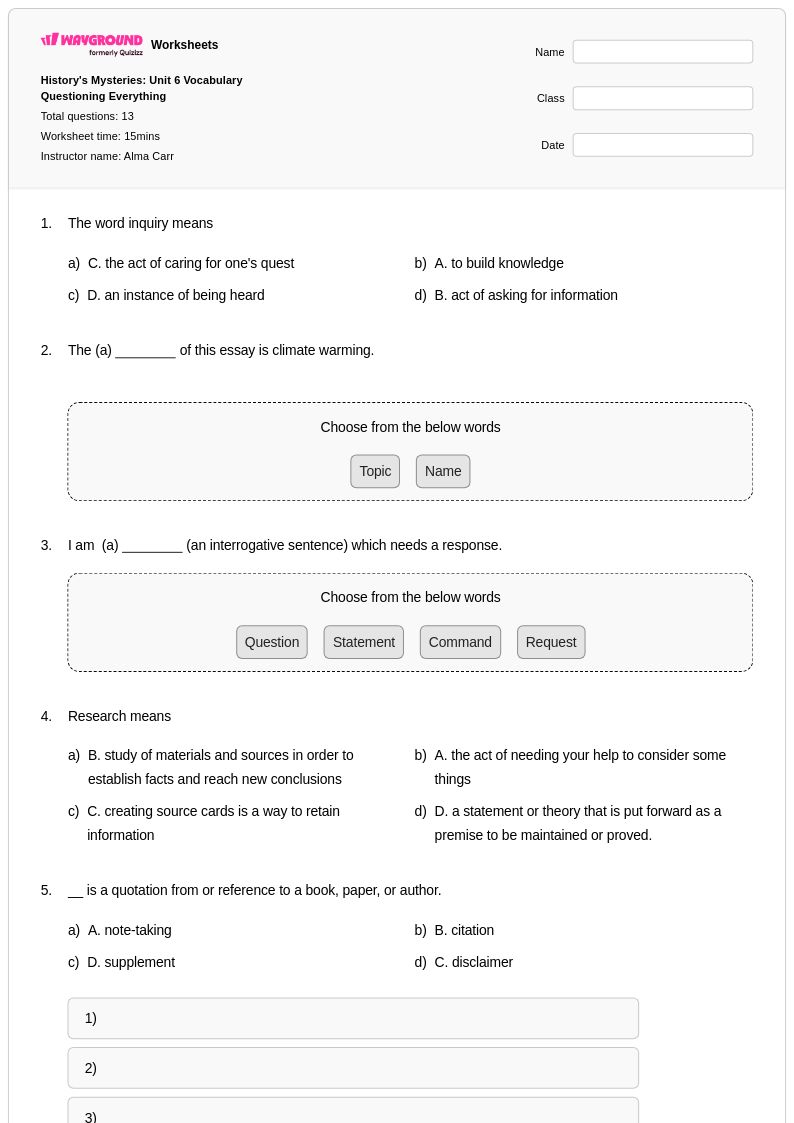
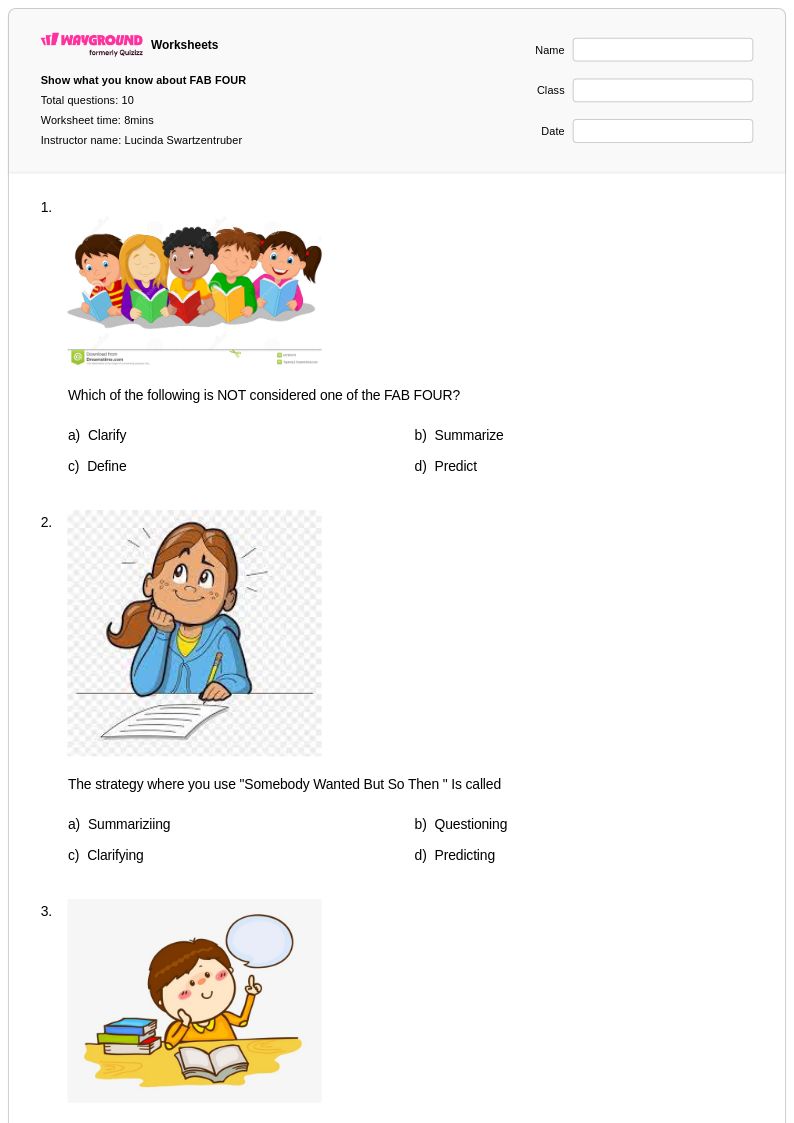
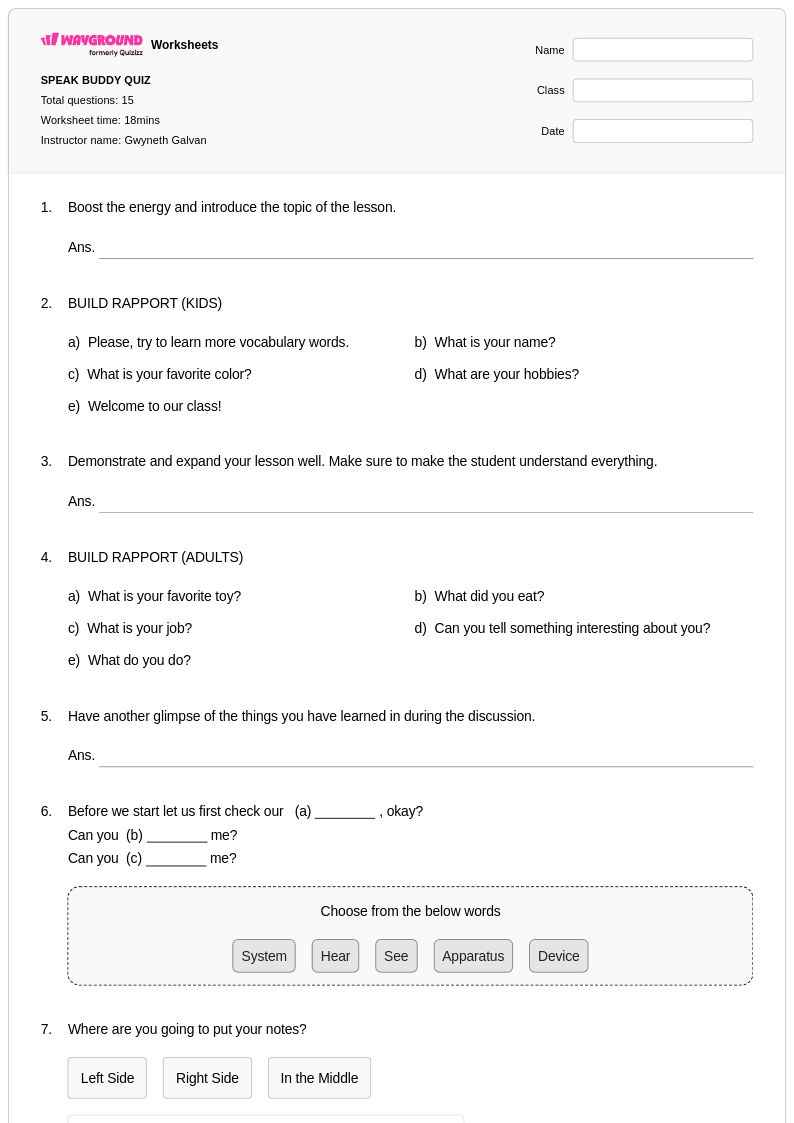
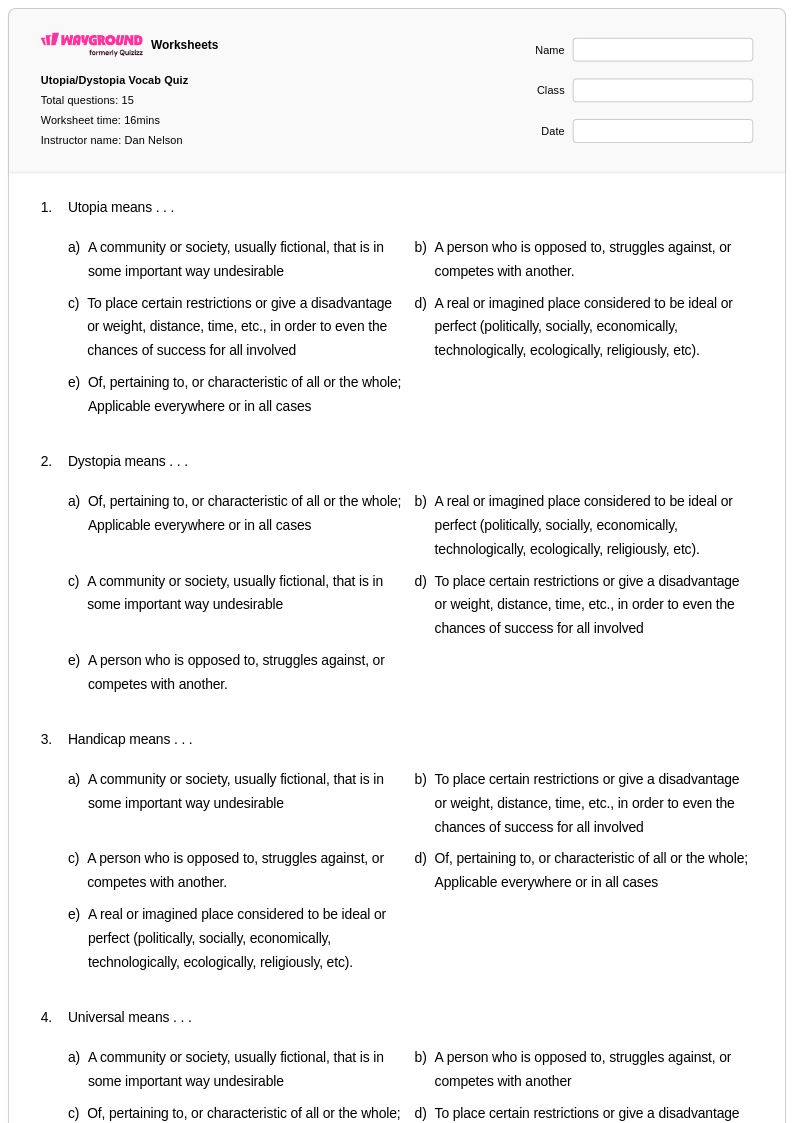
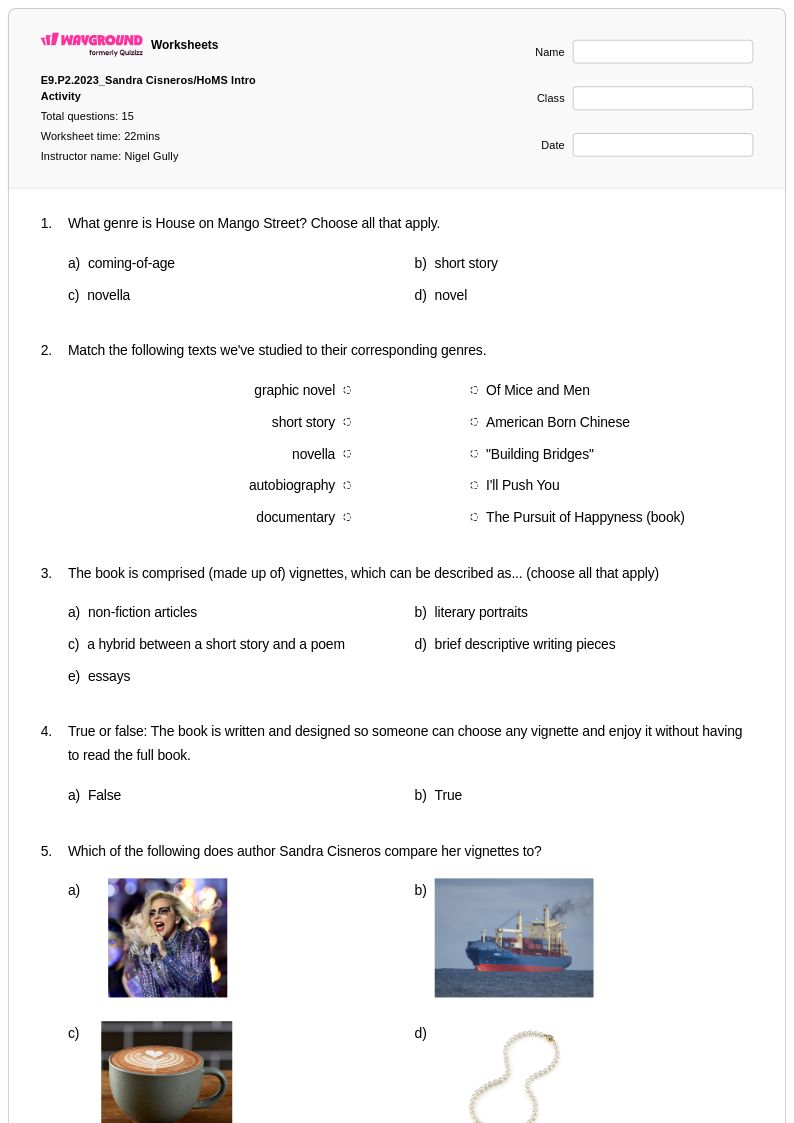
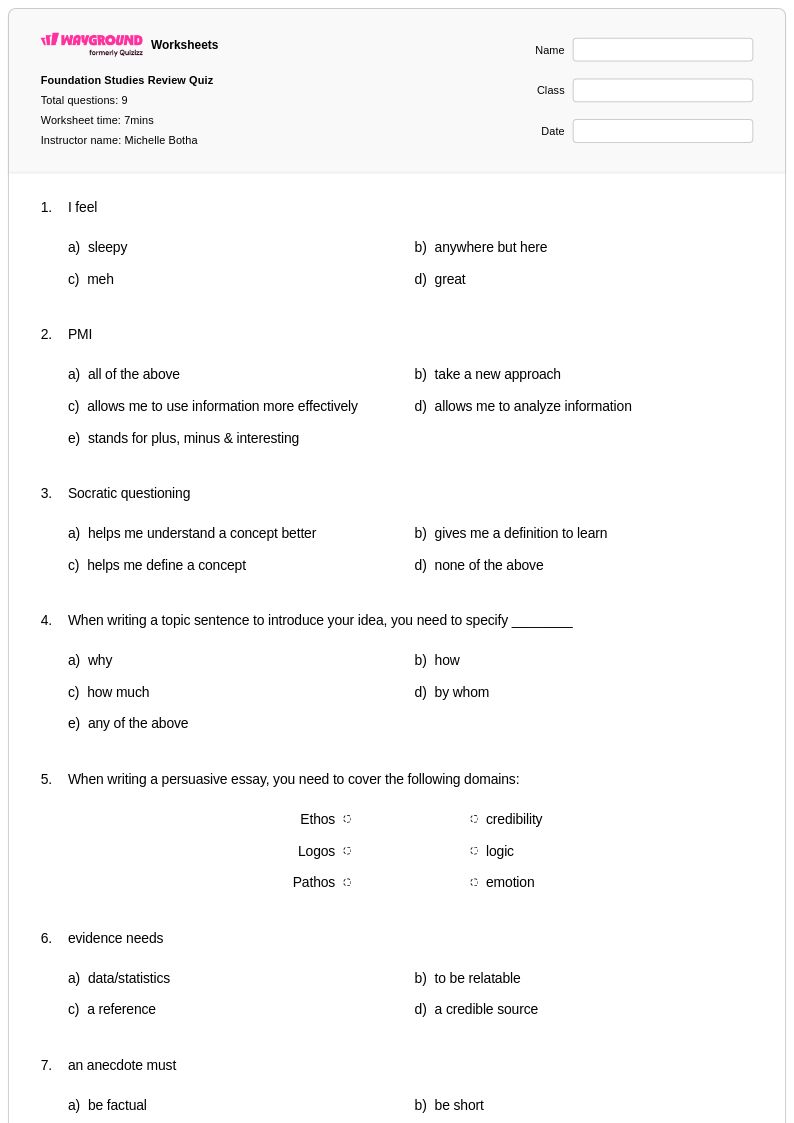
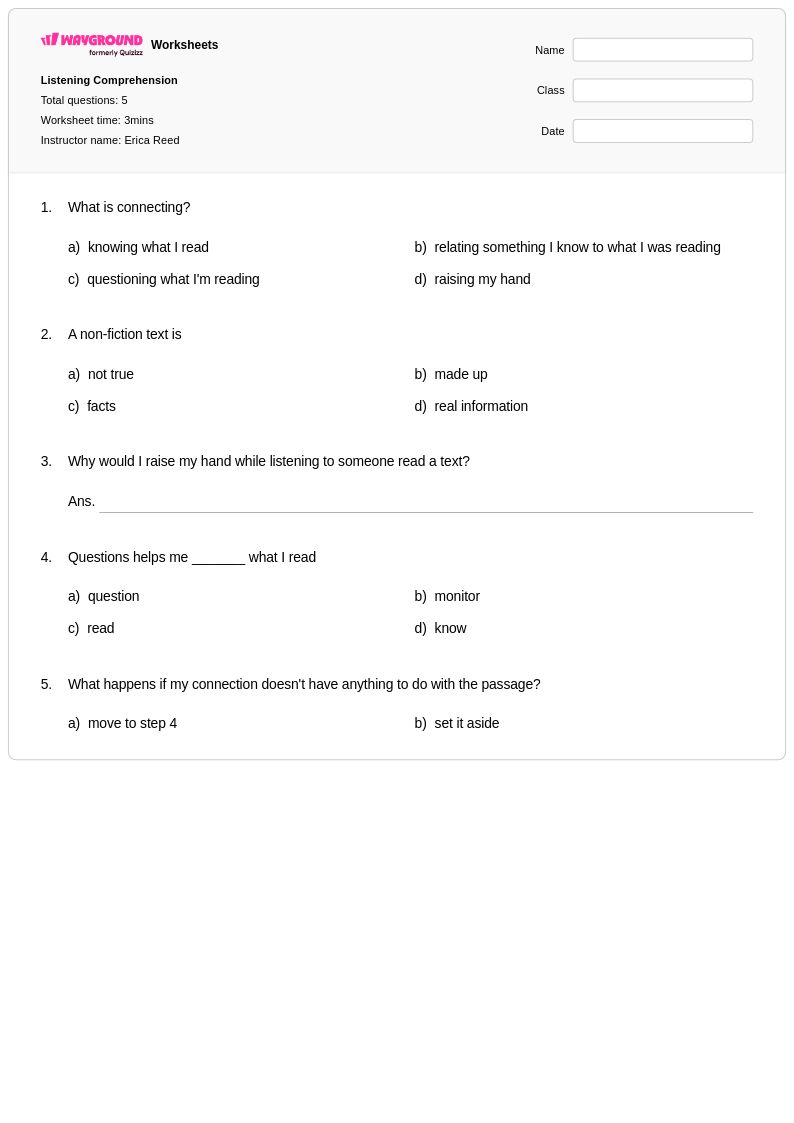
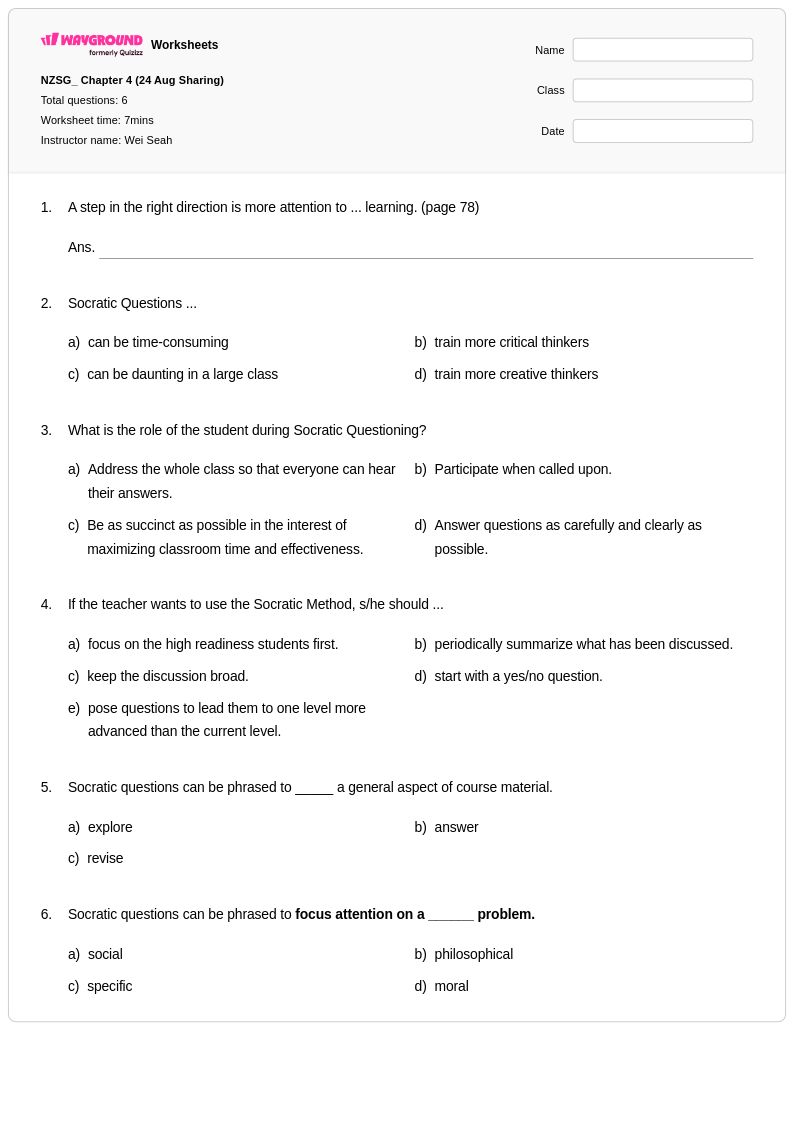
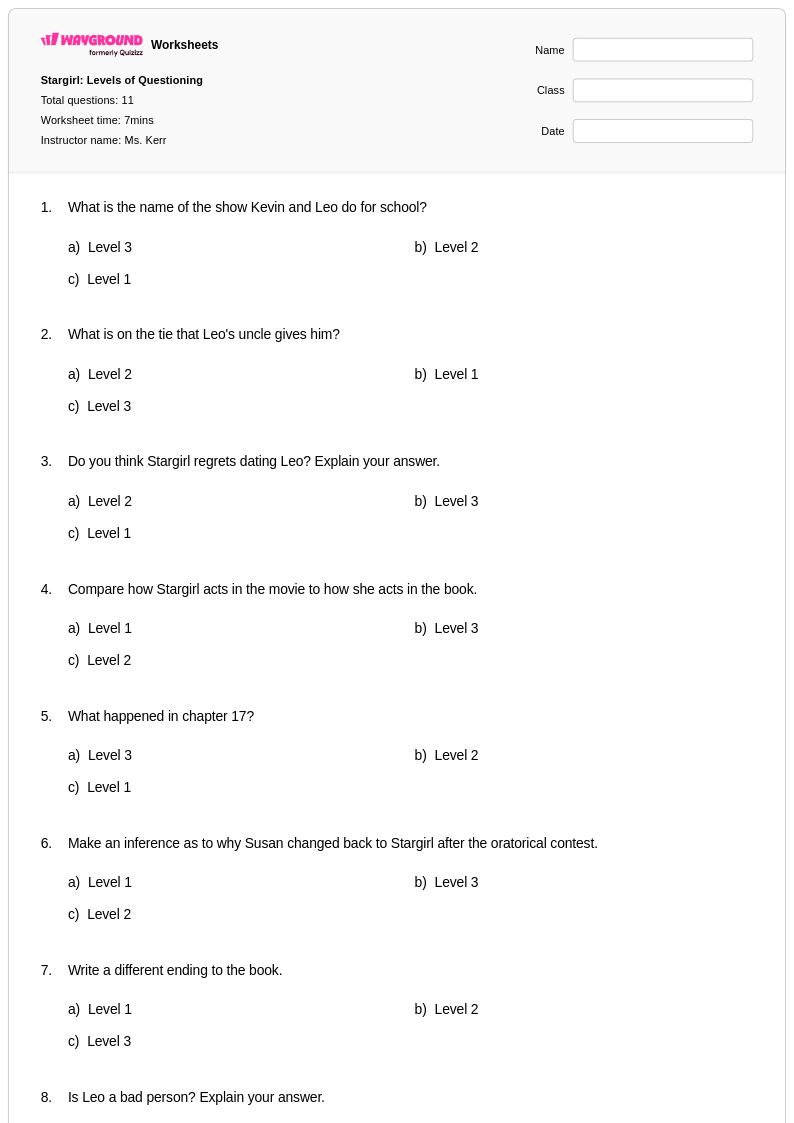
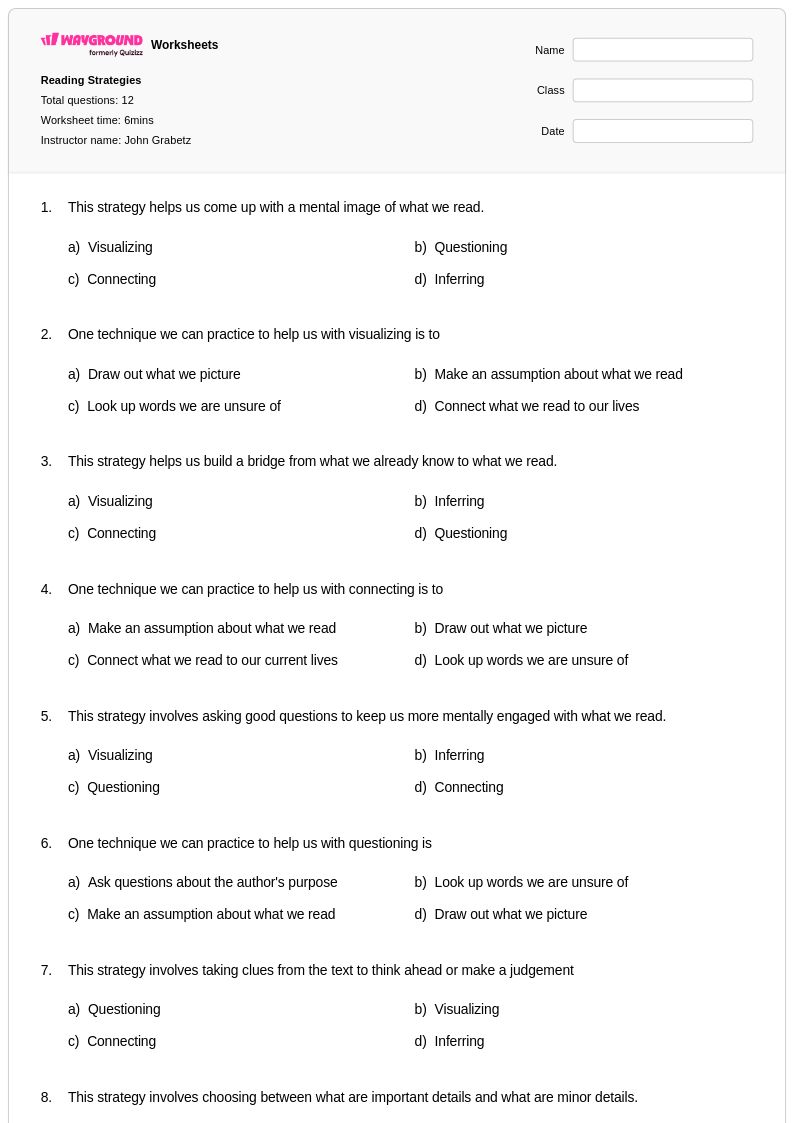
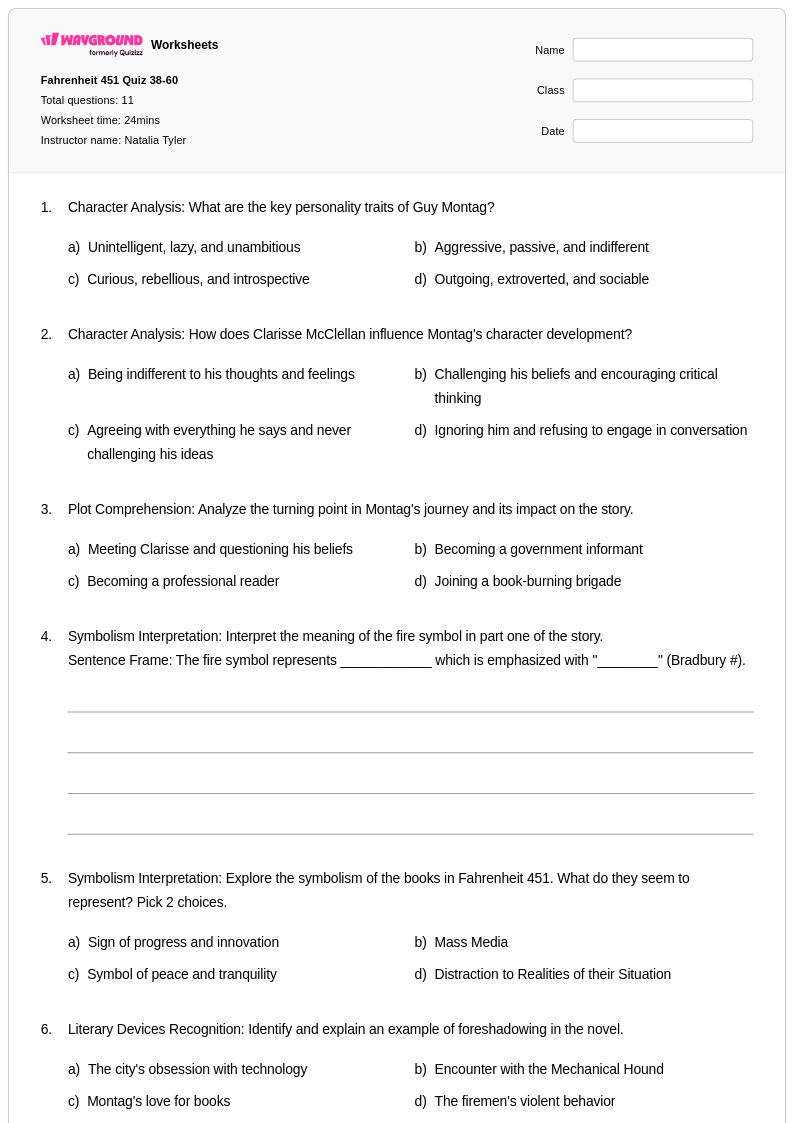
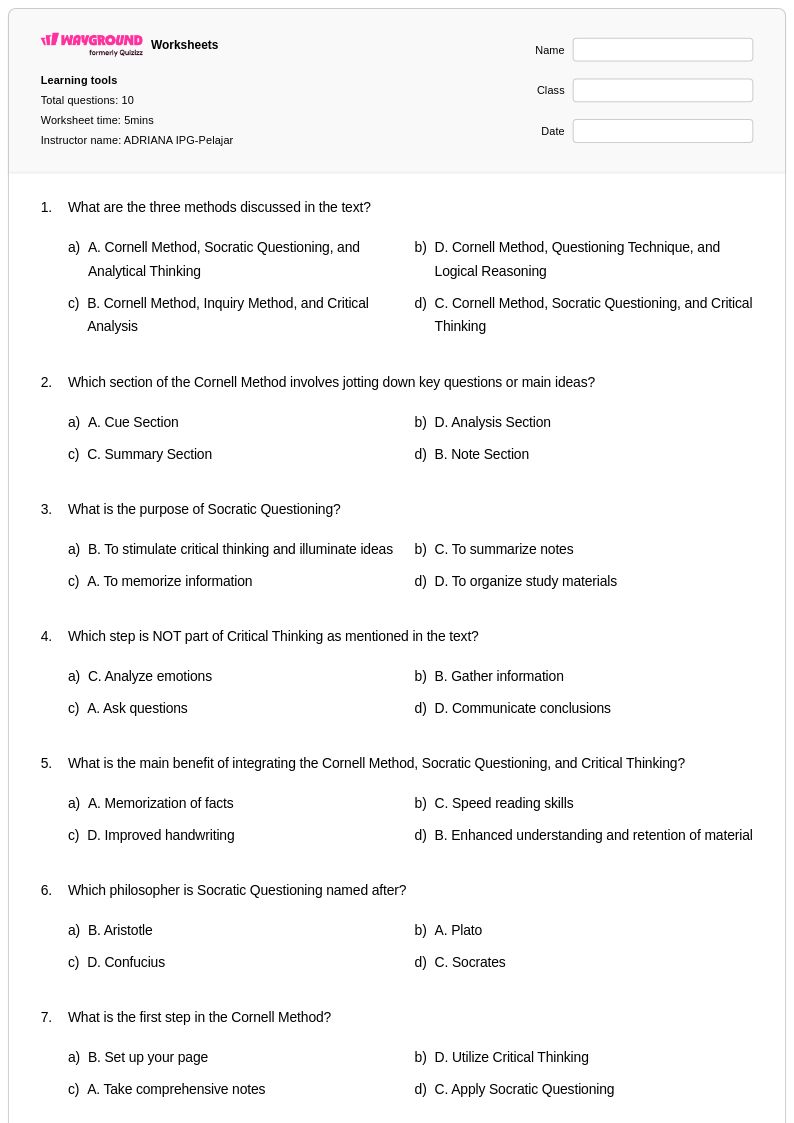
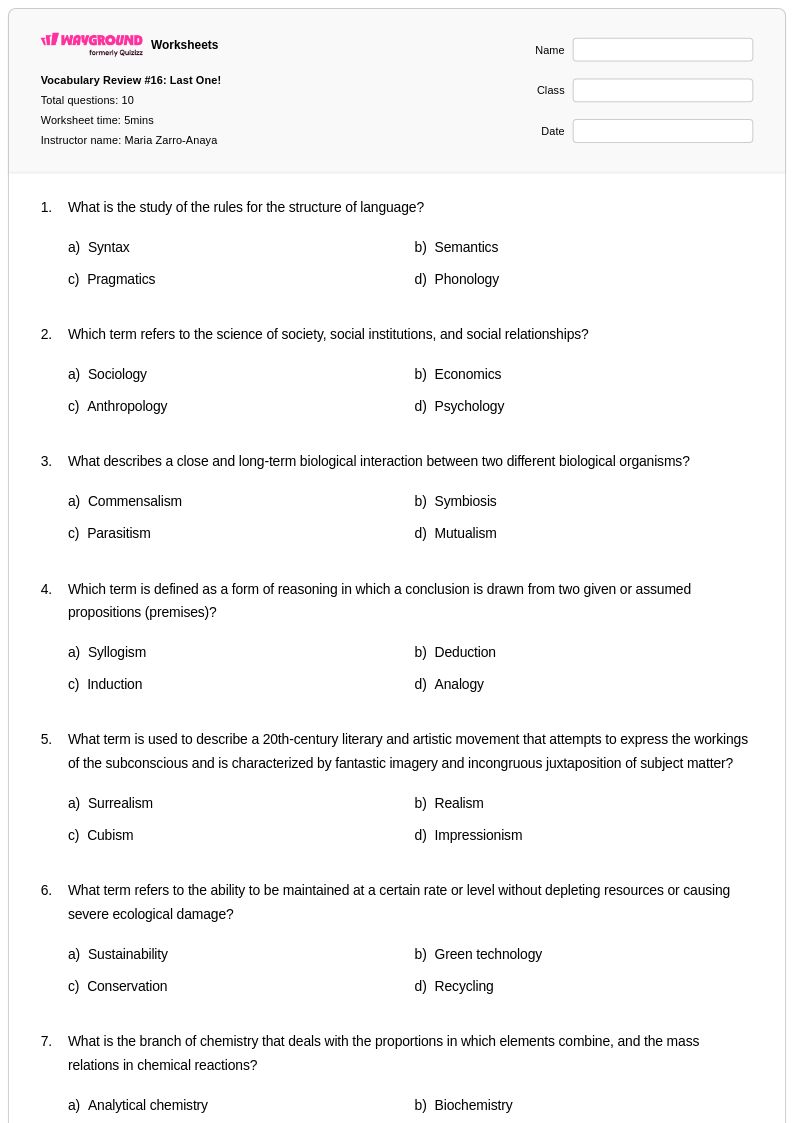
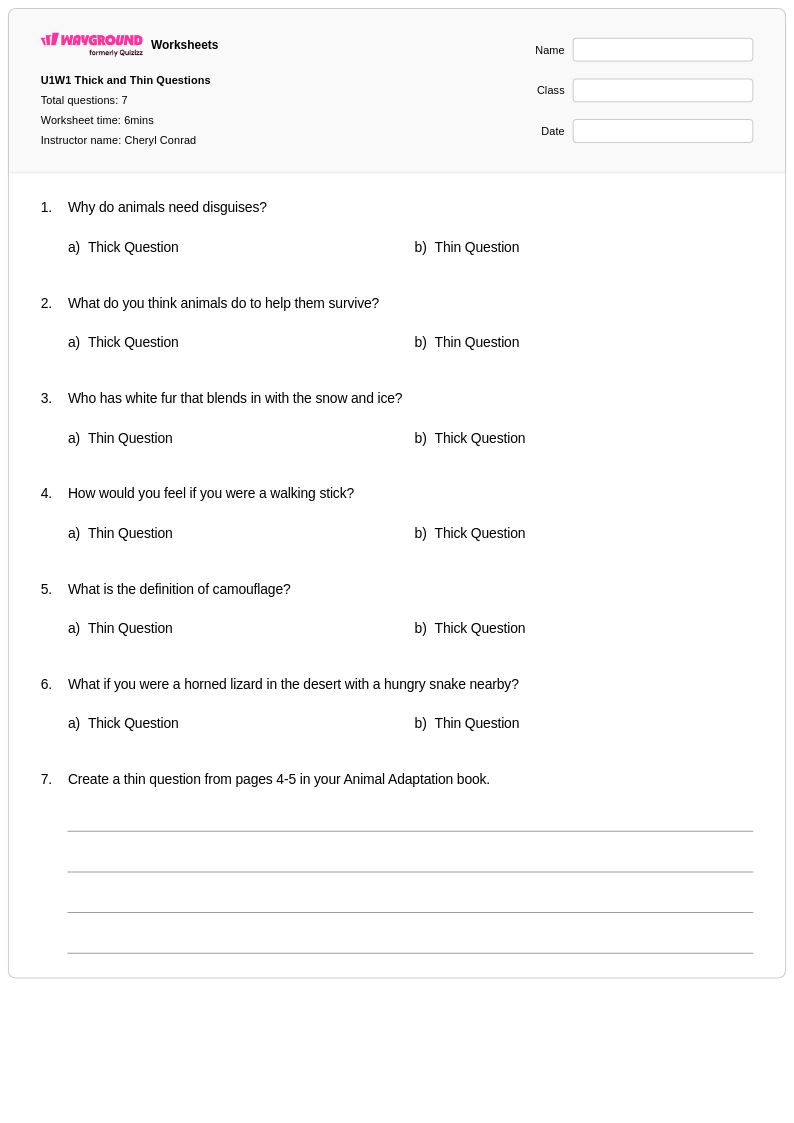
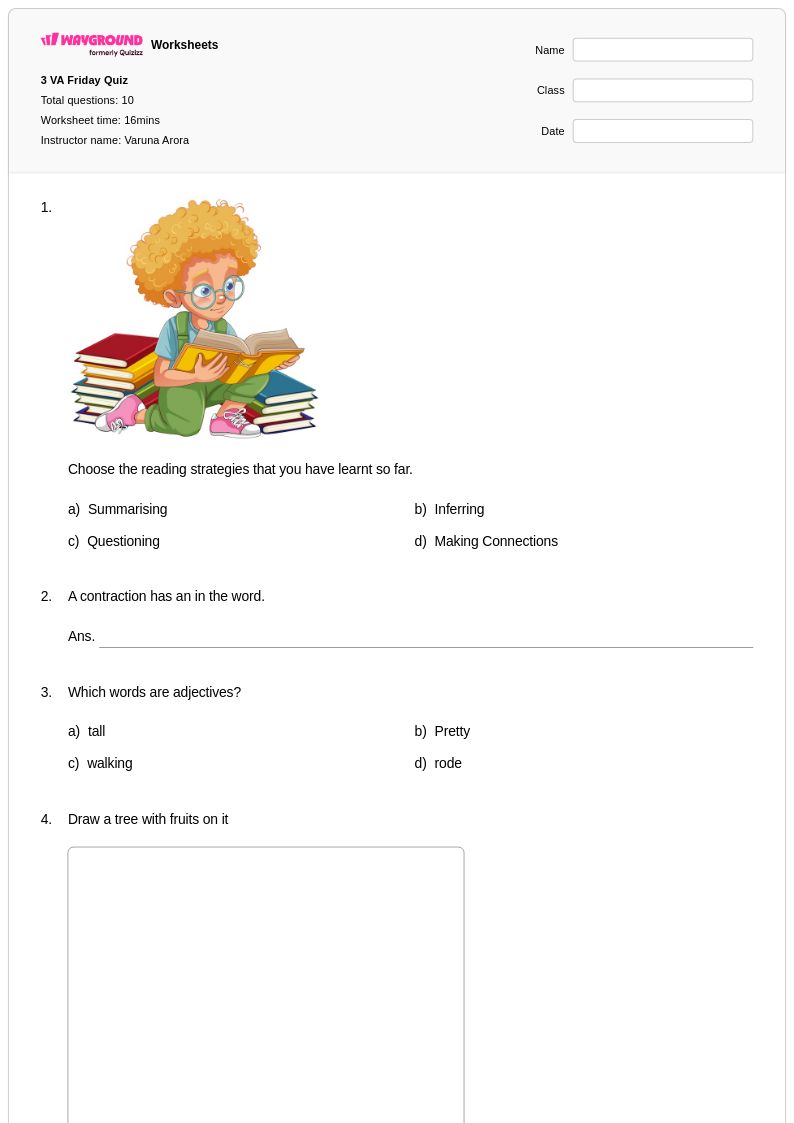
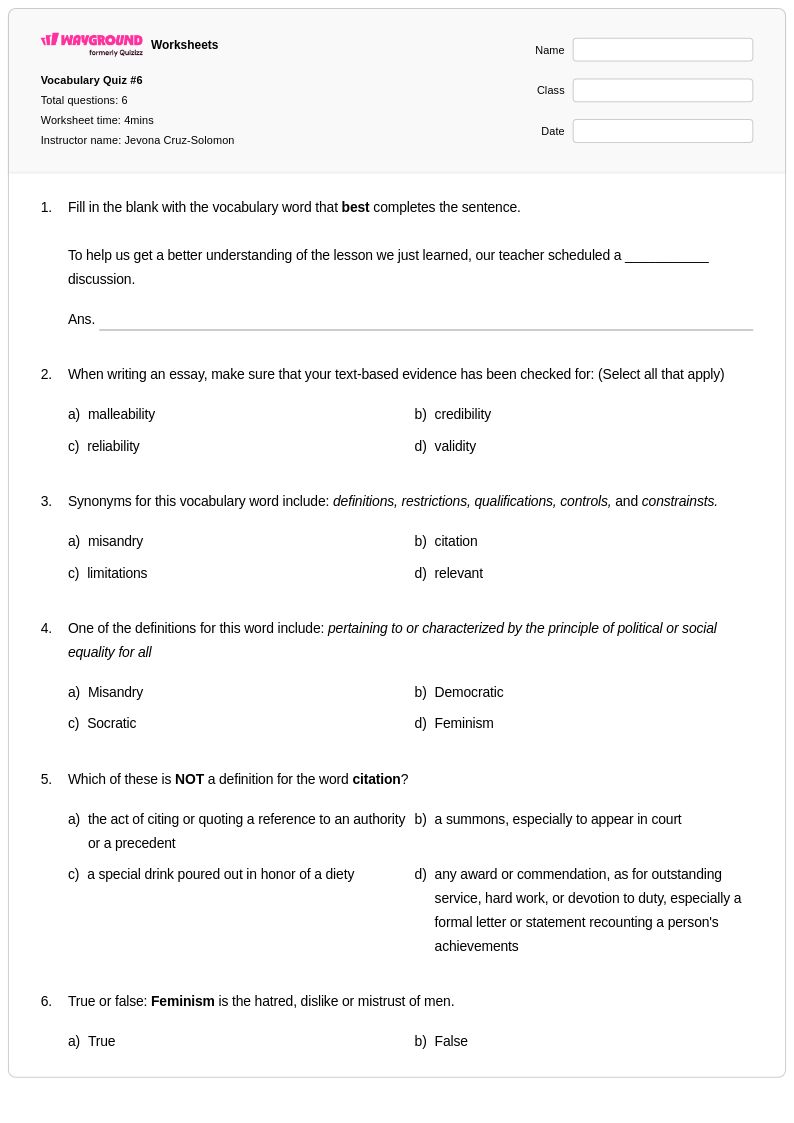
Discover free Socratic questioning worksheets and printables from Wayground that help students master critical thinking skills through guided inquiry, complete with practice problems and answer keys in convenient PDF format.
Socratic questioning worksheets available through Wayground (formerly Quizizz) provide educators with comprehensive tools to develop students' critical thinking and analytical reading skills through systematic inquiry-based learning. These expertly designed resources guide learners through the process of asking probing questions that deepen comprehension, challenge assumptions, and encourage higher-order thinking about texts across various genres and complexity levels. Each worksheet incorporates structured question frameworks that teach students to examine evidence, analyze author intent, evaluate arguments, and synthesize information from multiple perspectives. The collection includes free printables with complete answer keys, practice problems that scaffold the questioning process, and pdf resources that can be implemented immediately in any classroom setting to strengthen students' ability to engage meaningfully with written content.
Wayground (formerly Quizizz) empowers teachers with millions of educator-created Socratic questioning resources that feature robust search and filtering capabilities, enabling quick identification of materials aligned to specific reading standards and learning objectives. The platform's differentiation tools allow instructors to customize worksheets based on individual student needs, reading levels, and comprehension goals, while flexible formatting options support both digital implementation and traditional printable distribution. These comprehensive collections facilitate effective lesson planning by providing ready-to-use materials for skill practice, targeted remediation for students struggling with critical analysis, and enrichment opportunities for advanced learners ready to tackle complex textual interpretation. Teachers can seamlessly integrate these resources into reading workshops, literature circles, or independent study programs to systematically build students' capacity for thoughtful, evidence-based discourse about texts.
FAQs
How do I teach Socratic questioning in the classroom?
Teaching Socratic questioning works best when you model the process explicitly before asking students to practice independently. Start by selecting a short, accessible text and think aloud through the types of questions a critical reader might ask: clarifying questions, assumption-probing questions, evidence questions, and perspective questions. Gradually release responsibility by having students generate questions in pairs or small groups before attempting the process solo. Structured question frameworks on worksheets can scaffold this process effectively, especially for students new to inquiry-based analysis.
What types of exercises help students practice Socratic questioning?
Exercises that require students to generate questions rather than just answer them are most effective for building Socratic questioning skills. Useful formats include question-classification tasks where students sort questions by type, guided annotation activities where students write probing questions in the margins of a text, and Socratic seminar prep worksheets that require students to formulate evidence-based questions before a discussion. Scaffolded worksheets that provide sentence stems or question frameworks are particularly helpful for students who are still developing their analytical reading habits.
What mistakes do students commonly make when learning Socratic questioning?
The most common mistake is confusing surface-level comprehension questions with genuine Socratic inquiry. Students often ask 'what happened?' instead of 'what assumptions does the author make, and are they justified?' Another frequent error is treating the text as having a single correct interpretation rather than examining it from multiple perspectives. Students also tend to stop questioning once they feel they understand the literal meaning, when Socratic questioning actually begins at that point by probing the logic, evidence, and implications beneath the surface.
How can I use Socratic questioning worksheets to support students with different reading levels?
Socratic questioning worksheets can be differentiated by pairing stronger question frameworks with more complex texts for advanced readers, while providing sentence stems and simplified passages for students who need additional support. On Wayground, teachers can apply individual accommodations such as Read Aloud, which allows questions and text to be read aloud to students who need it, and reduced answer choices to lower cognitive load for struggling readers. Extended time can also be assigned per student so that students who need more processing time can engage fully without disrupting pacing for the rest of the class.
How do I use Socratic questioning worksheets from Wayground in my classroom?
Wayground's Socratic questioning worksheets are available as printable PDFs for traditional classroom use and in digital formats for technology-integrated settings, giving teachers flexibility in how they deploy the materials. Teachers can also host worksheets as a live or assigned quiz directly on Wayground, making it easy to track student responses and identify comprehension gaps in real time. The included answer keys mean minimal prep time, and the structured question frameworks make these resources suitable for reading workshops, literature circles, or independent practice sessions.
How does Socratic questioning connect to critical thinking standards?
Socratic questioning is directly aligned with higher-order thinking standards because it requires students to move beyond recall and apply analysis, evaluation, and synthesis to a text. When students ask questions about author intent, argument structure, and implicit assumptions, they are practicing the same cognitive moves required by standards related to analytical reading, evidence-based reasoning, and argumentative writing. Systematic instruction in Socratic questioning builds transferable skills students can apply across subject areas, not just in English Language Arts.