
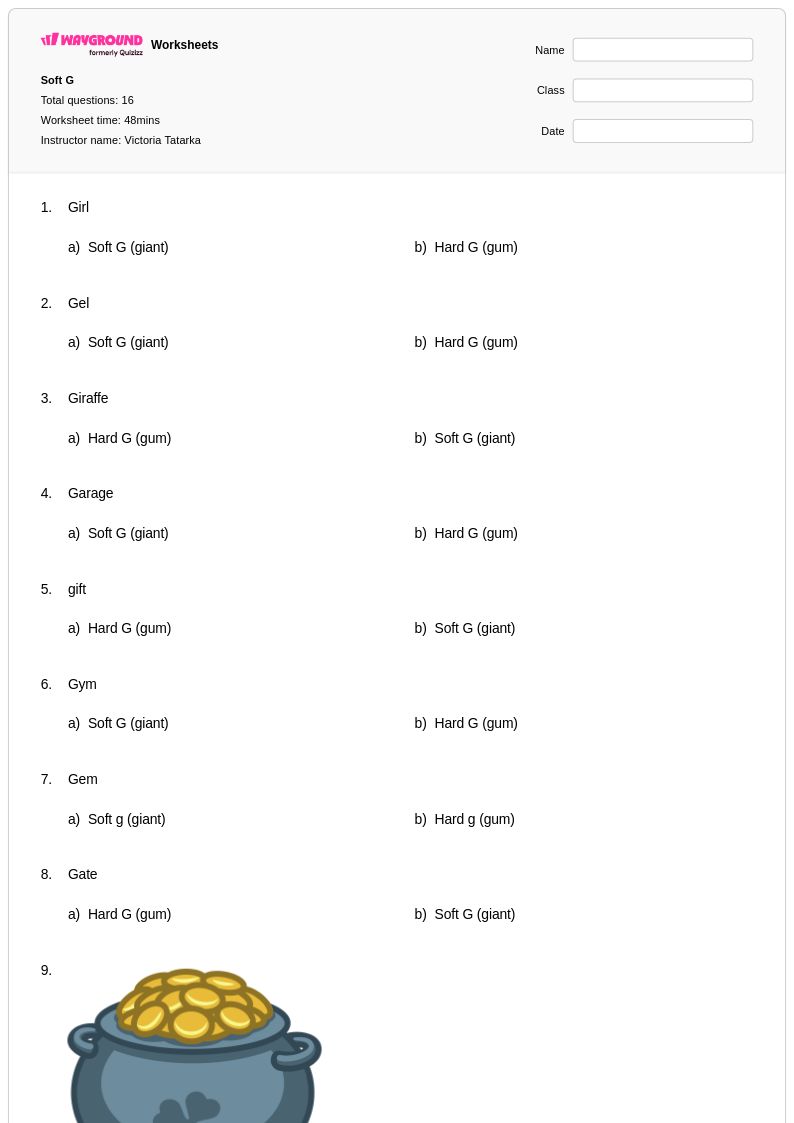
16 Q
3rd
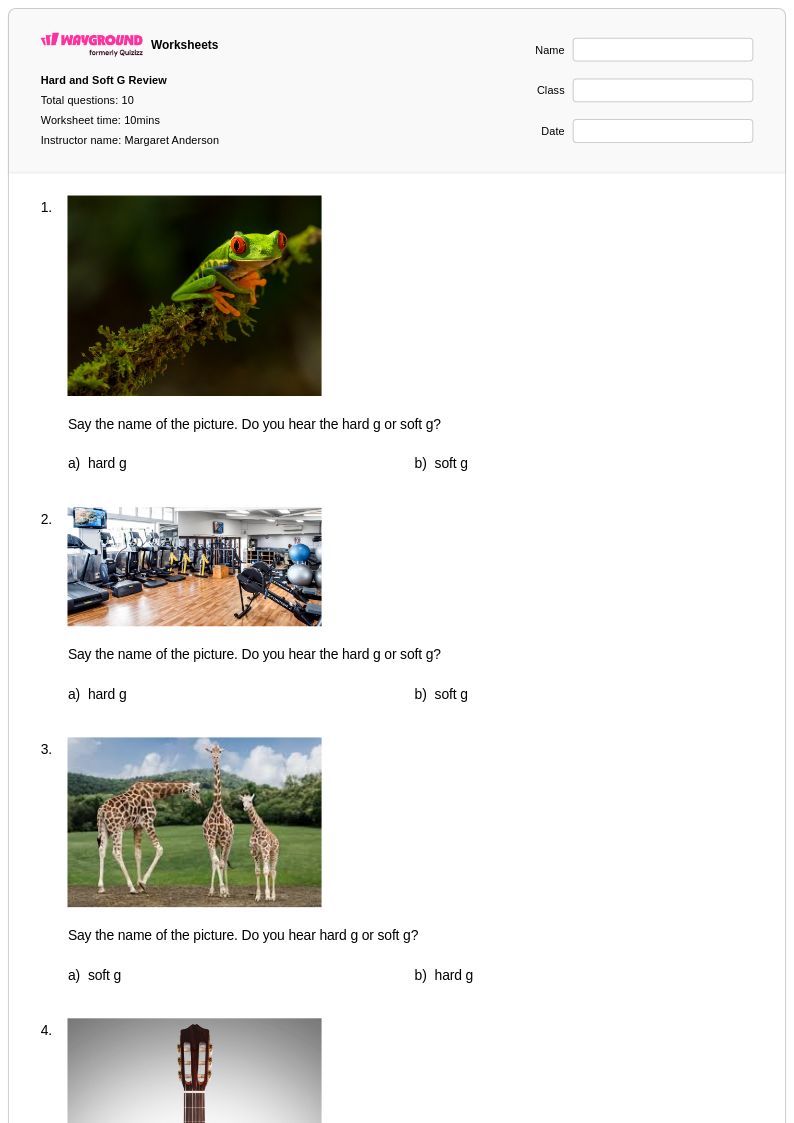
10 Q
3rd
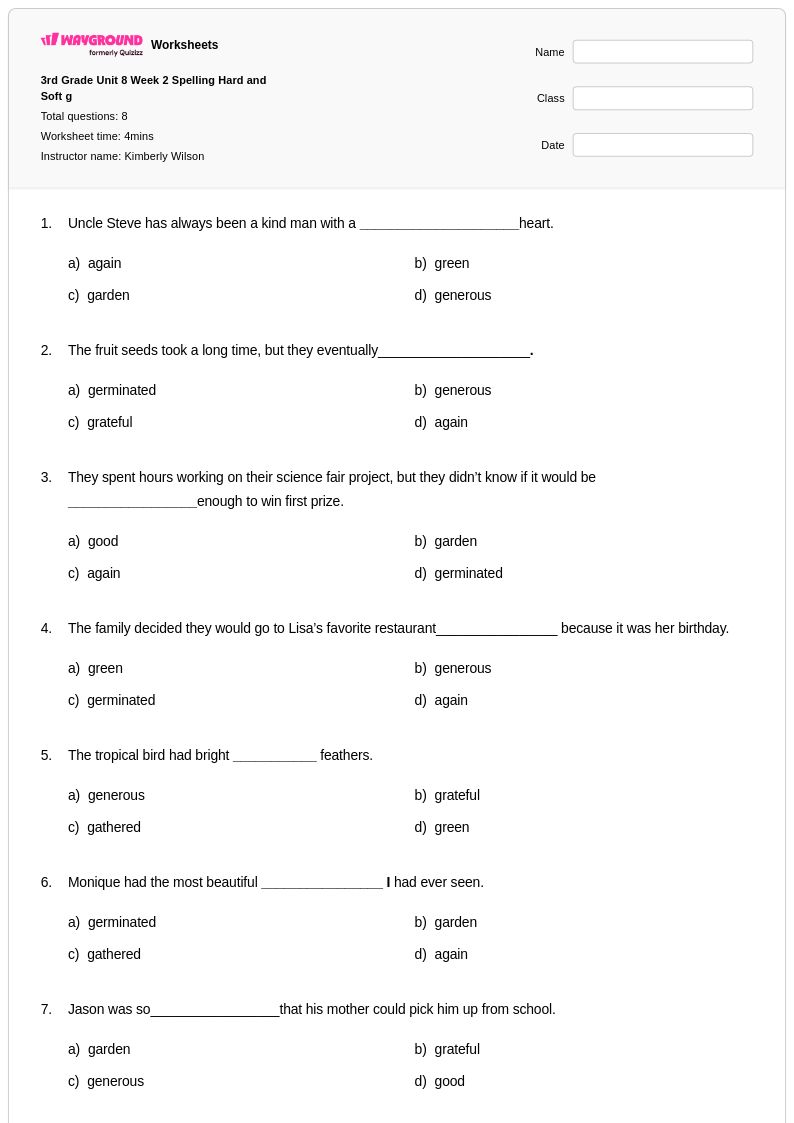
8 Q
3rd
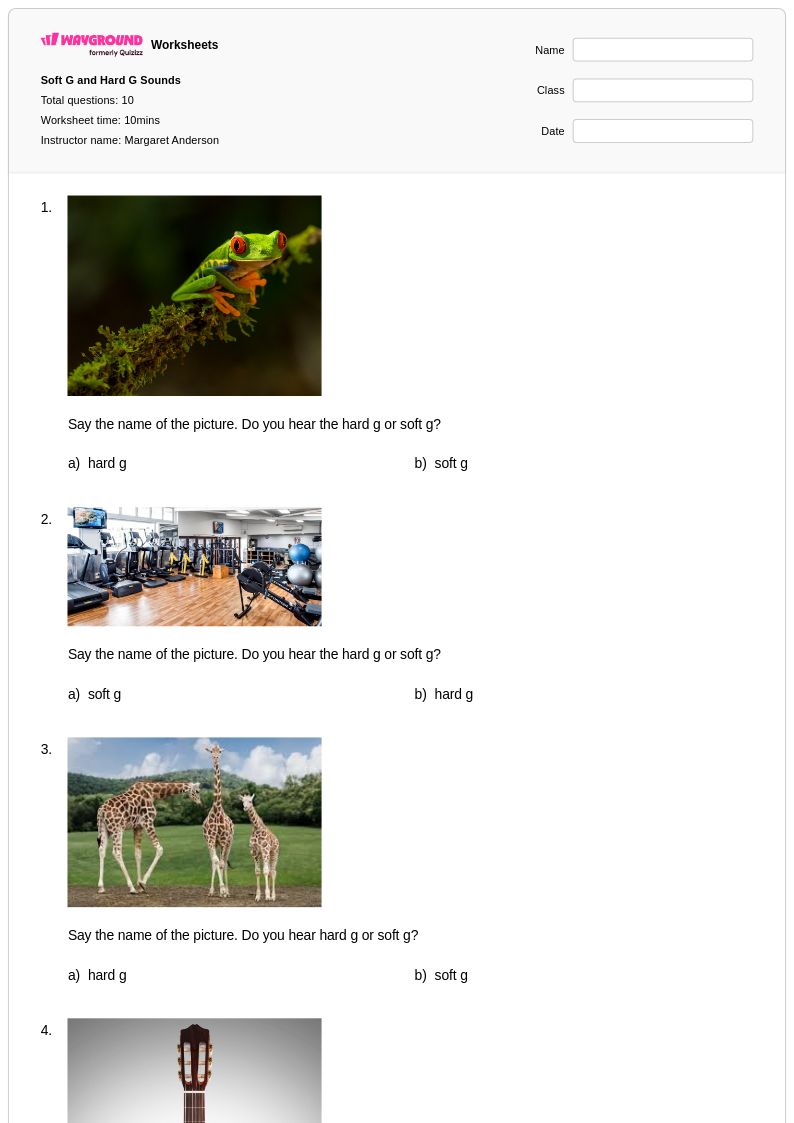
10 Q
3rd
15 Q
KG - 4th
13 Q
3rd
20 Q
3rd
16 Q
3rd
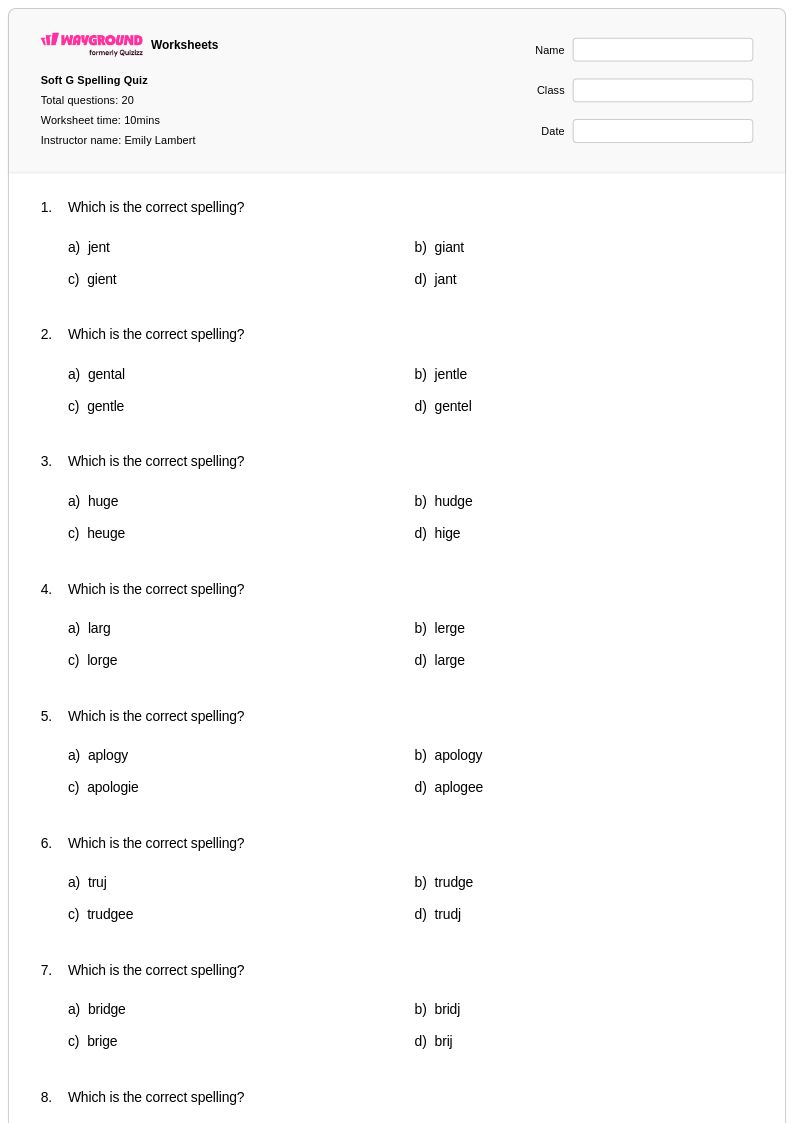
20 Q
3rd
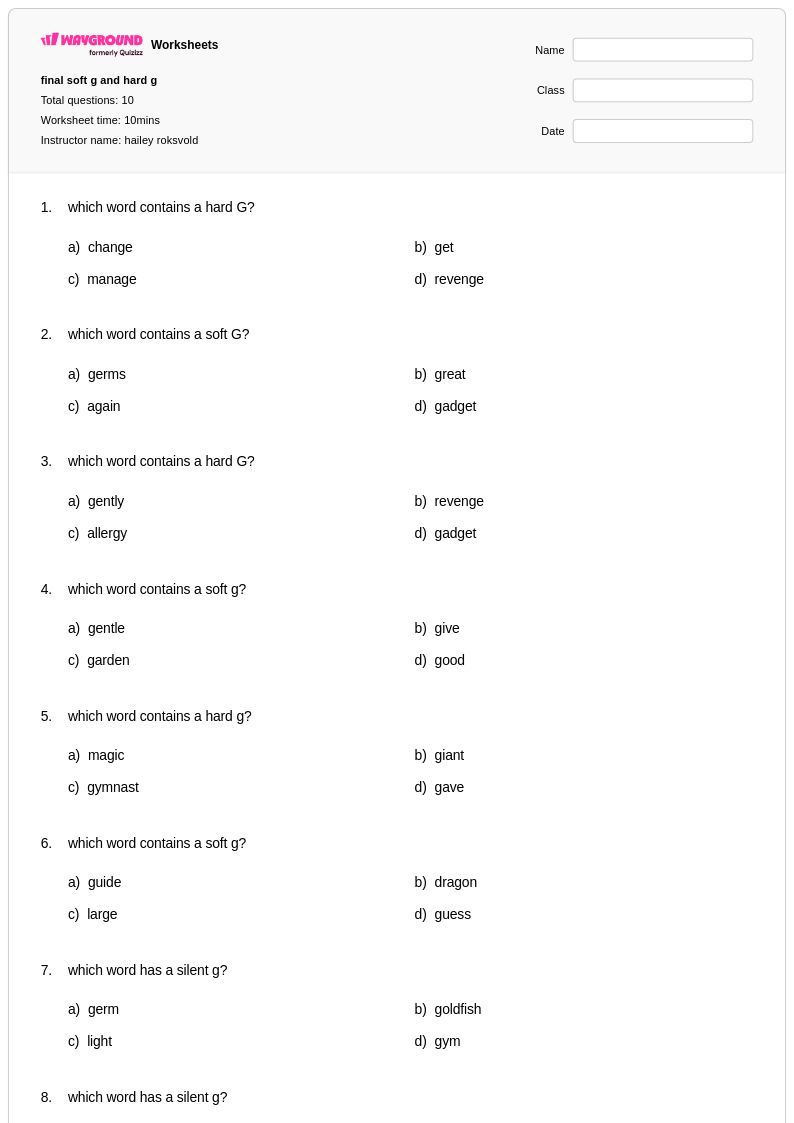
10 Q
3rd
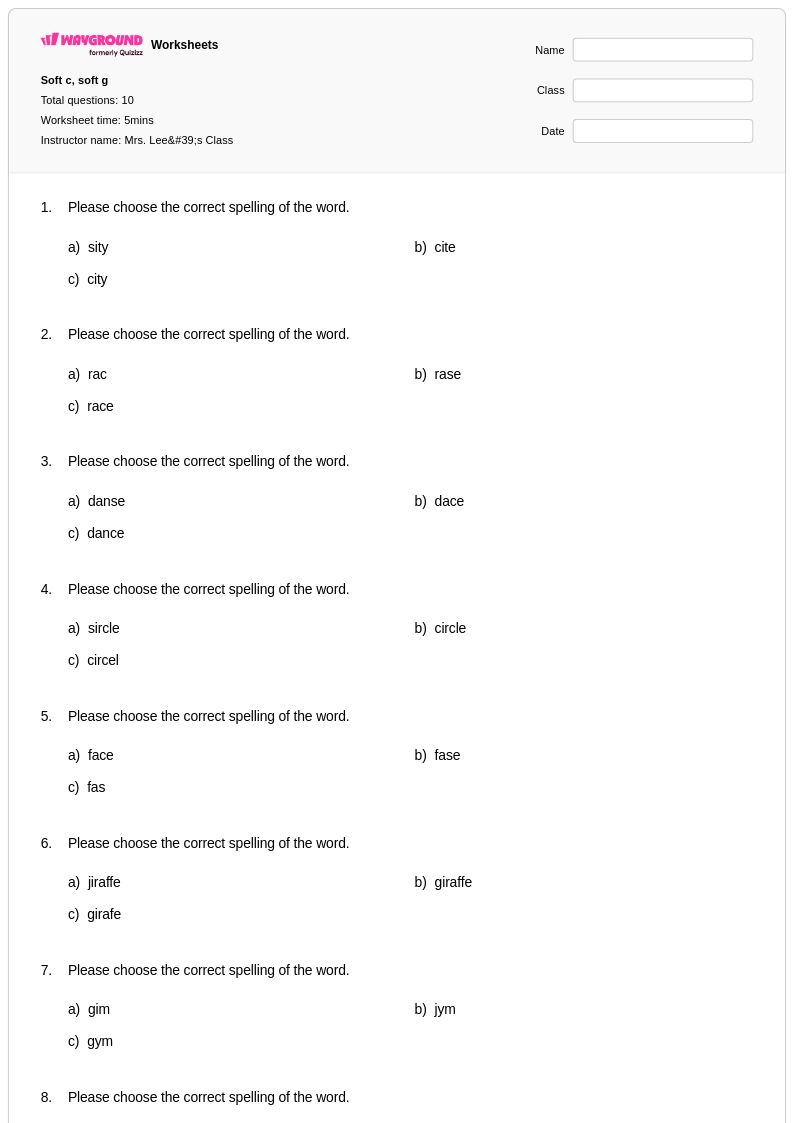
10 Q
2nd - 3rd
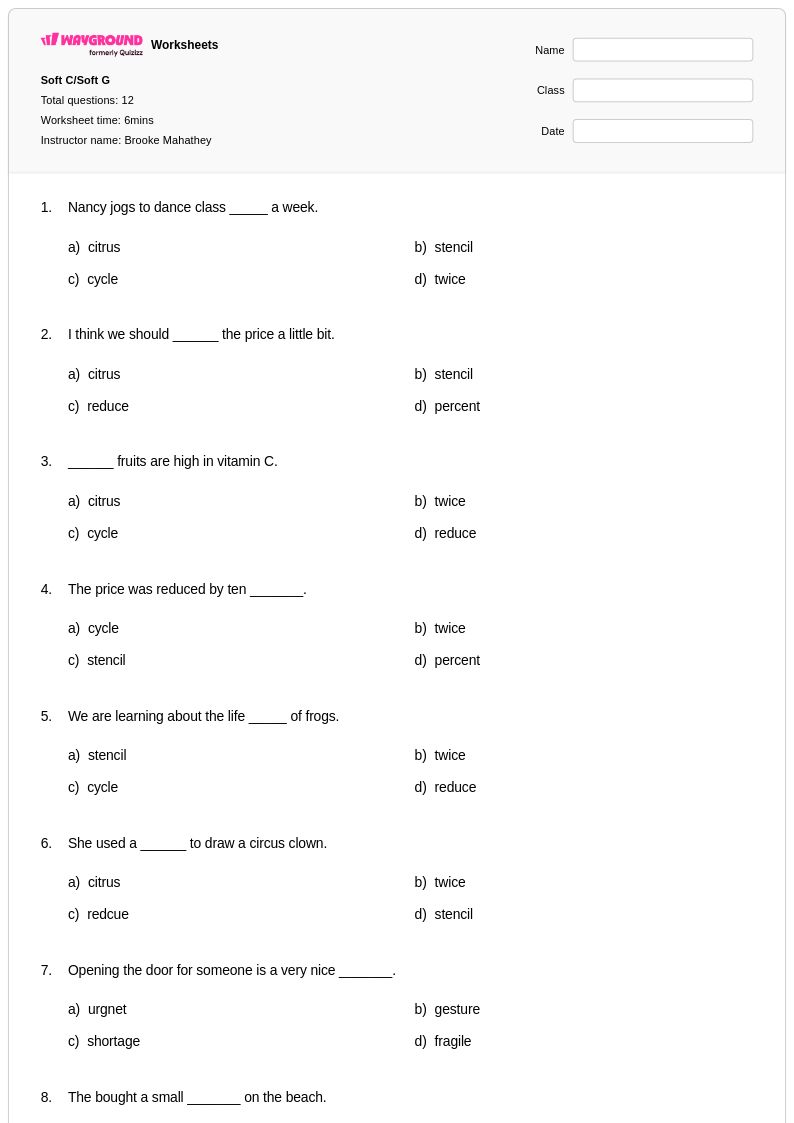
12 Q
1st - 5th
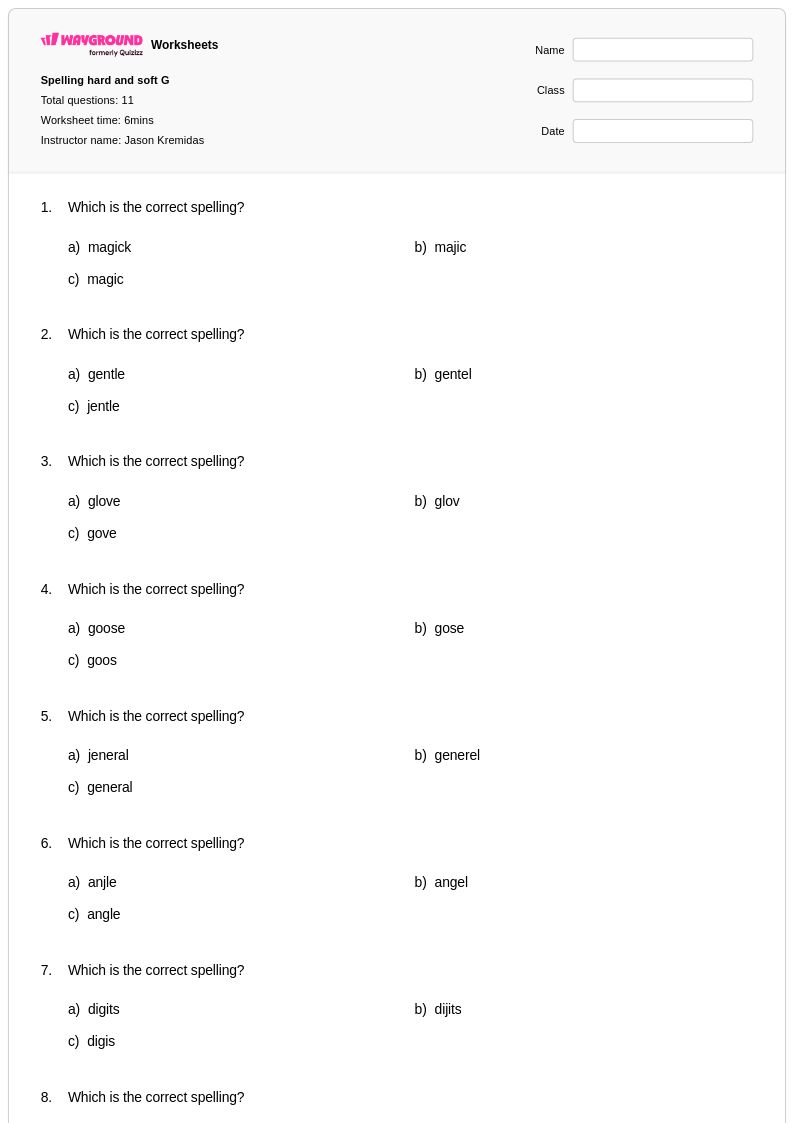
11 Q
2nd - 3rd
17 Q
3rd
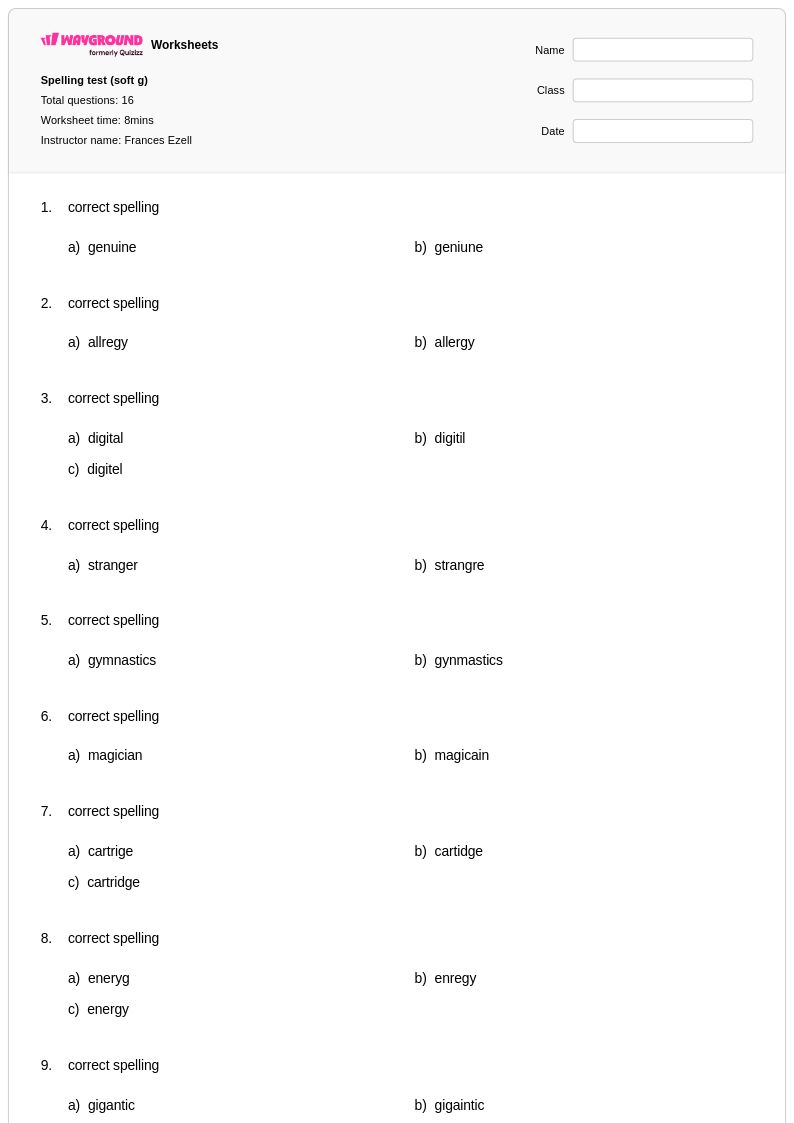
16 Q
3rd - 5th
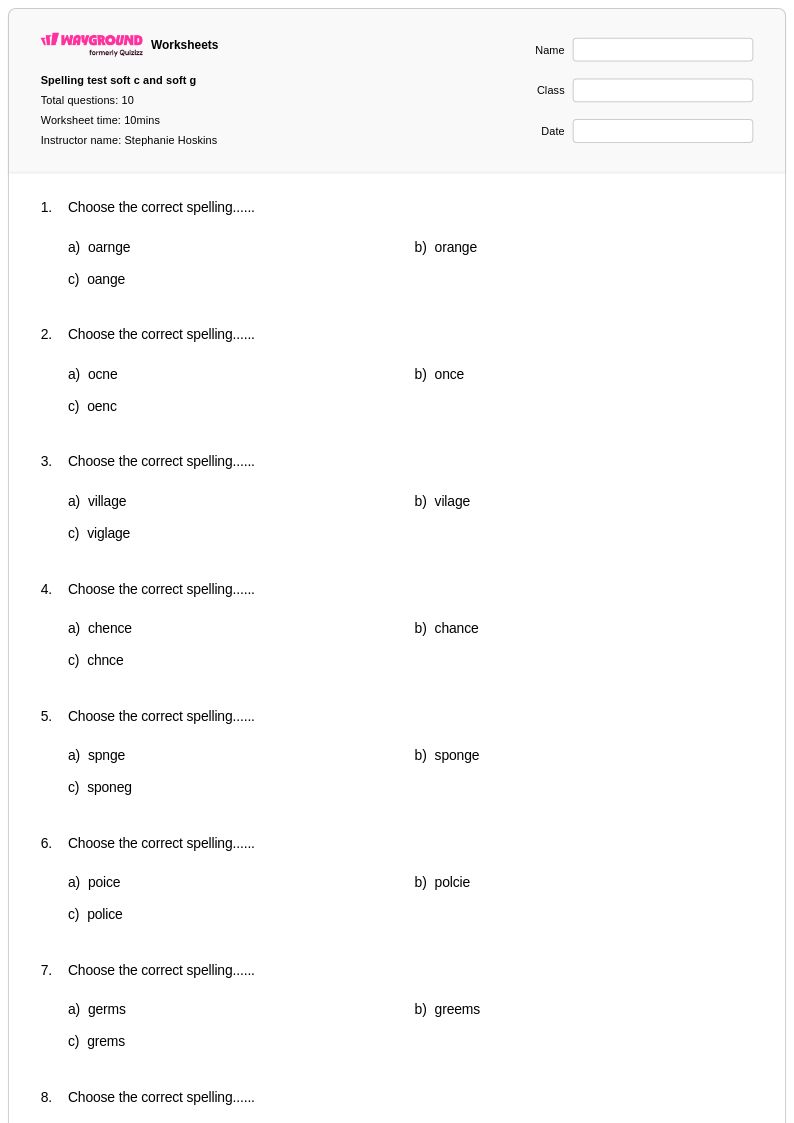
10 Q
3rd
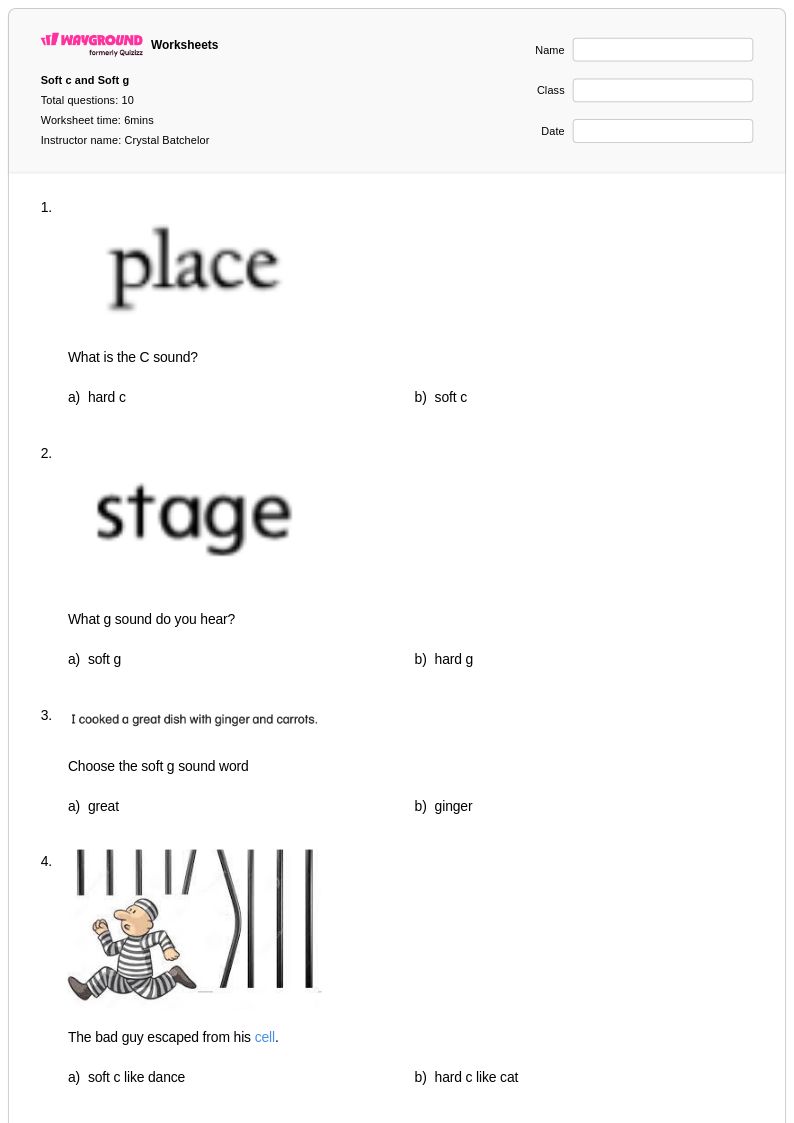
10 Q
1st - 3rd
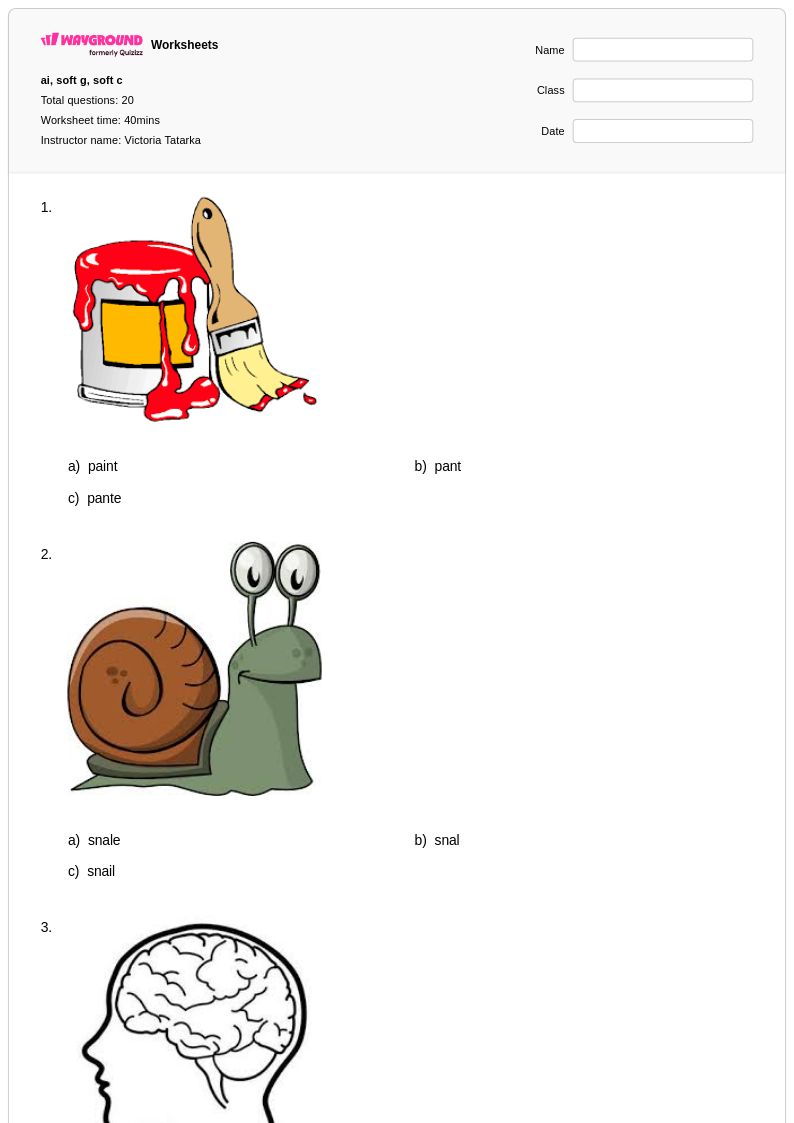
20 Q
2nd - 4th
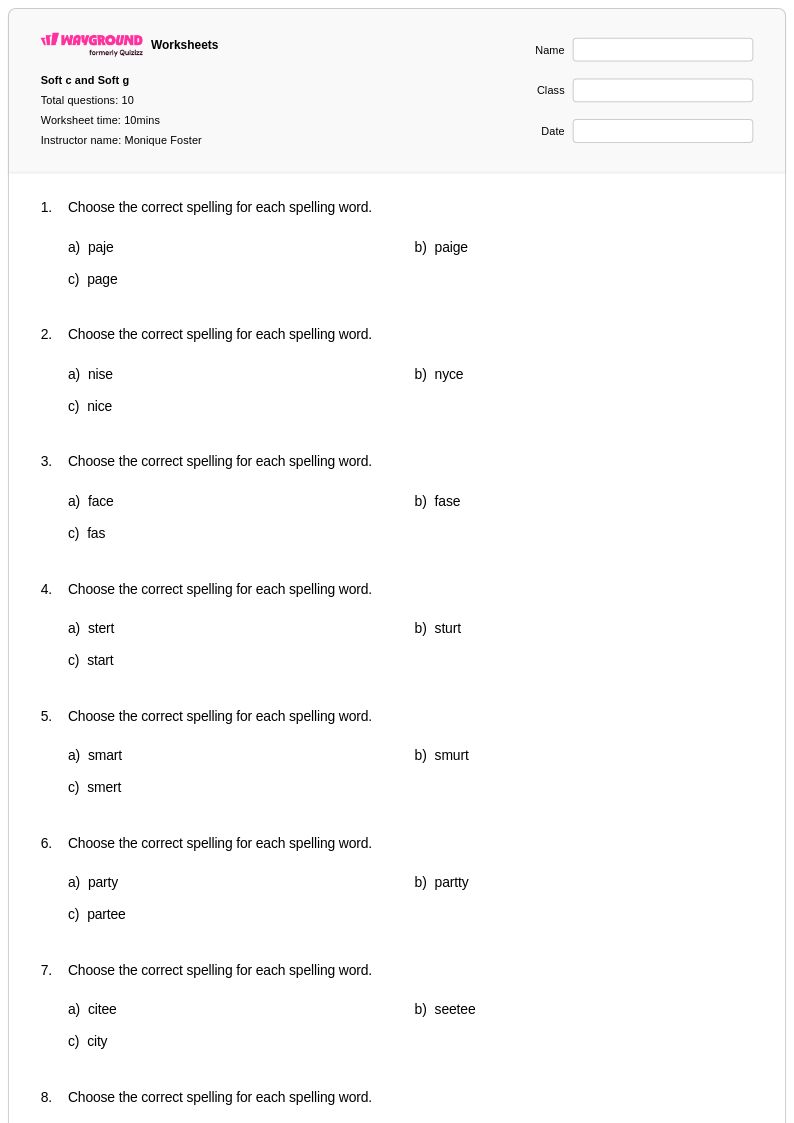
10 Q
1st - 3rd
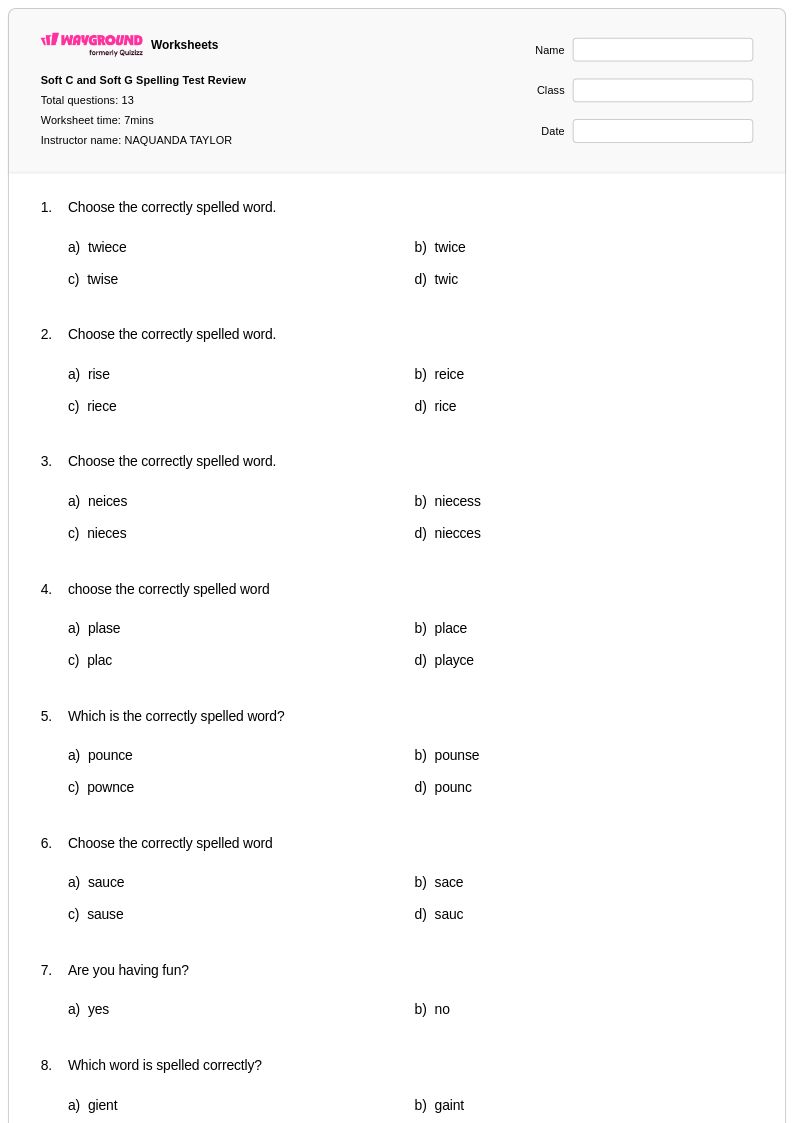
13 Q
3rd
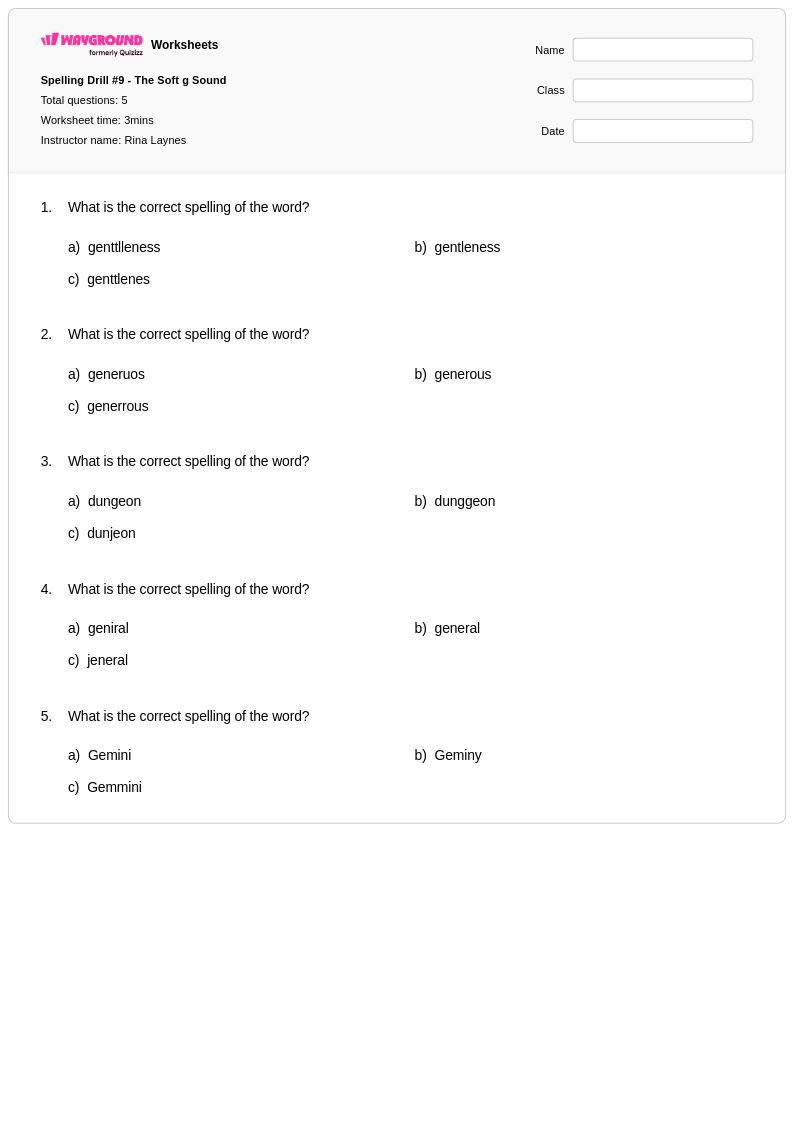
5 Q
3rd
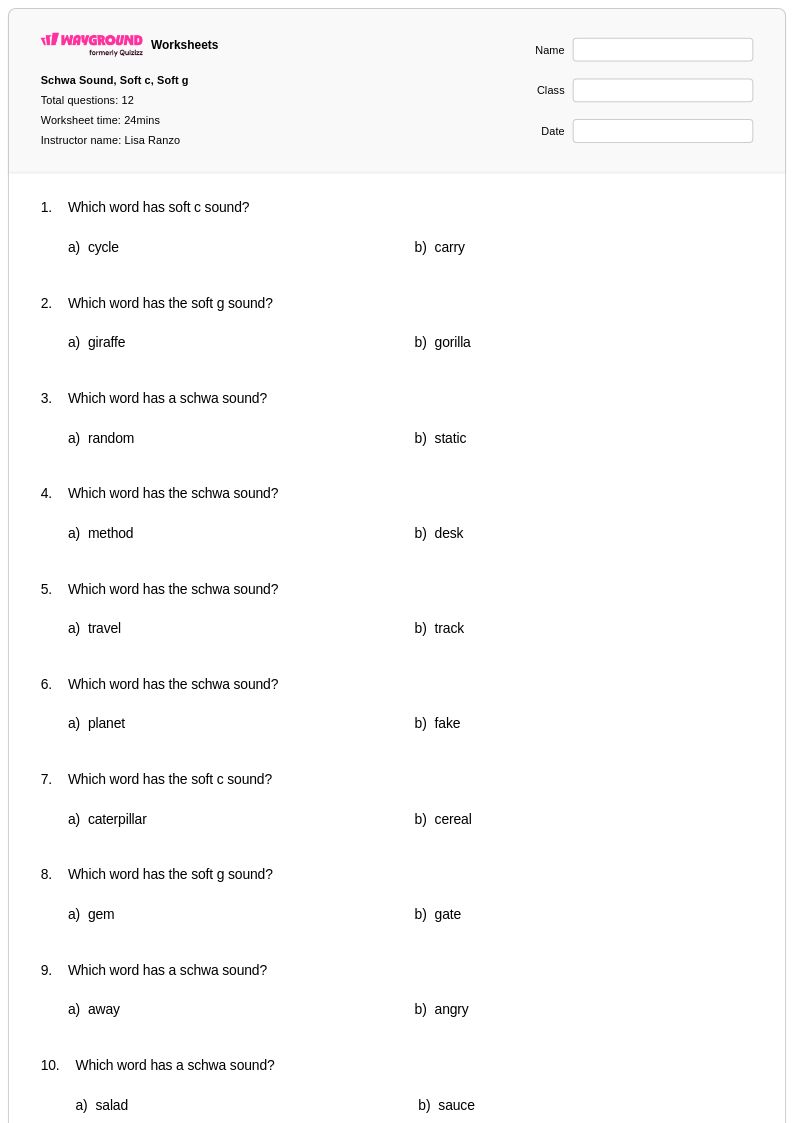
12 Q
3rd
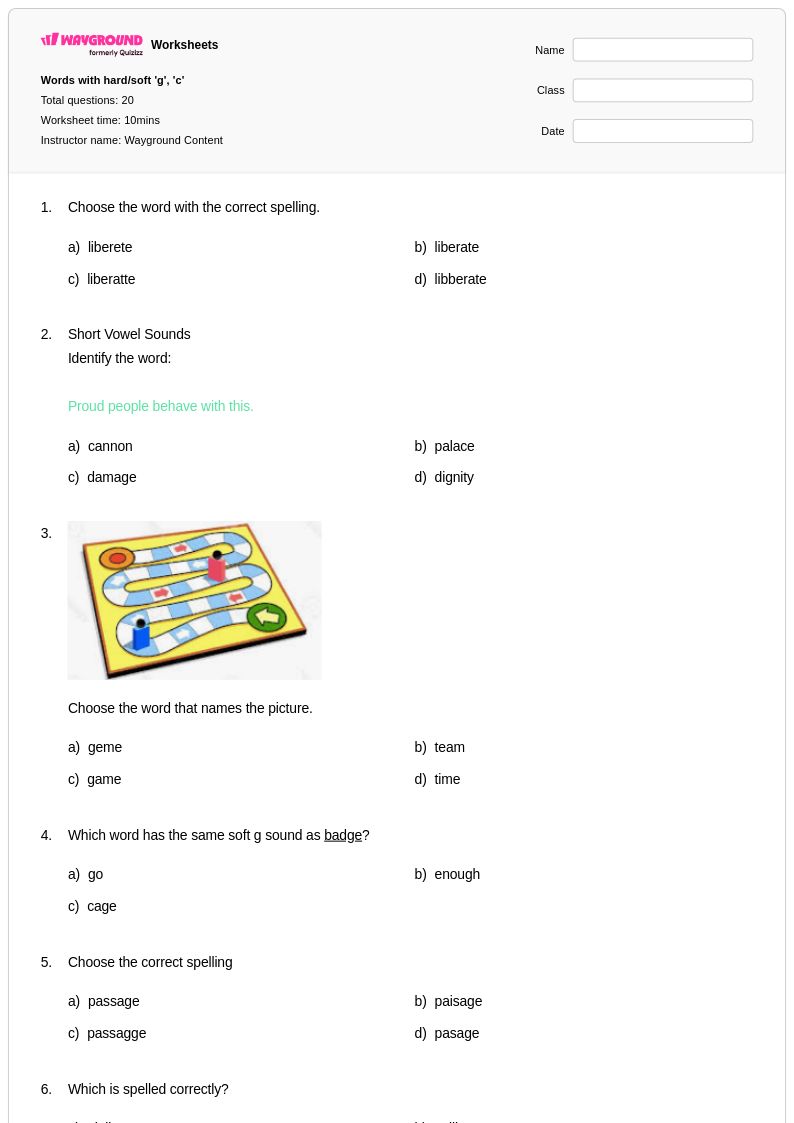
20 Q
3rd
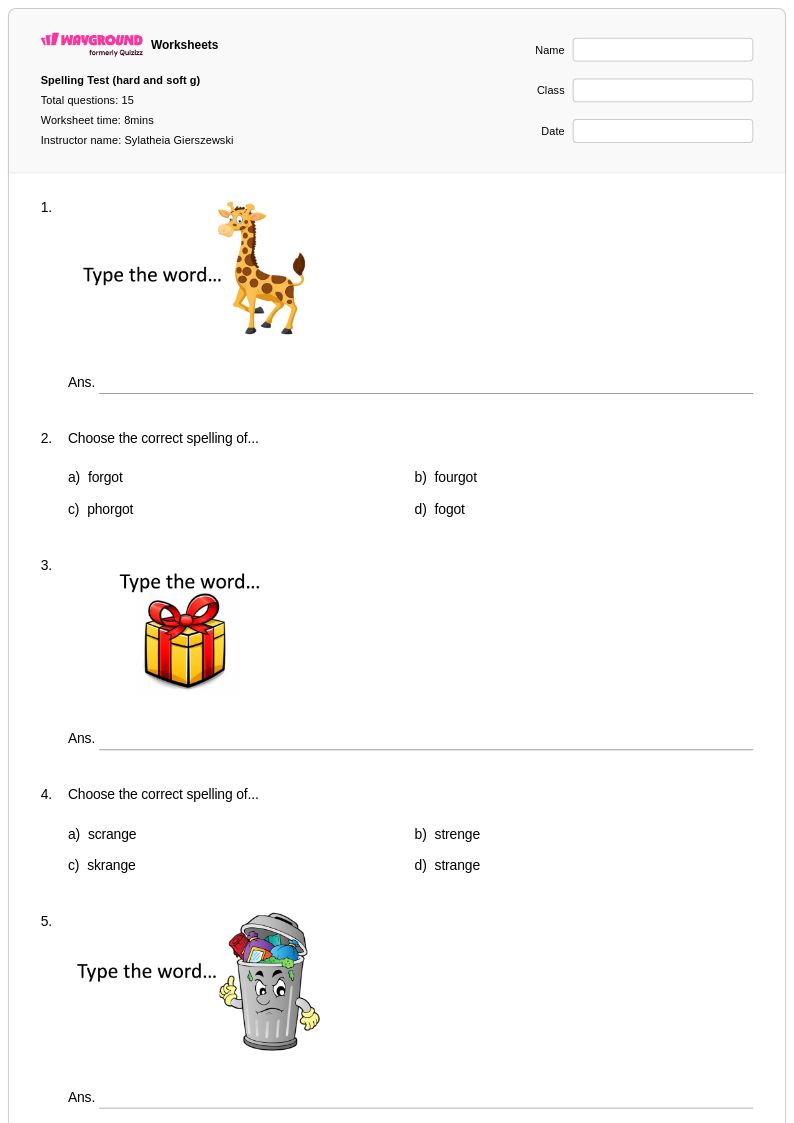
15 Q
3rd - 4th
Explore Soft G Worksheets by Grades
Explore Other Subject Worksheets for class 3
Explore printable Soft G worksheets for Class 3
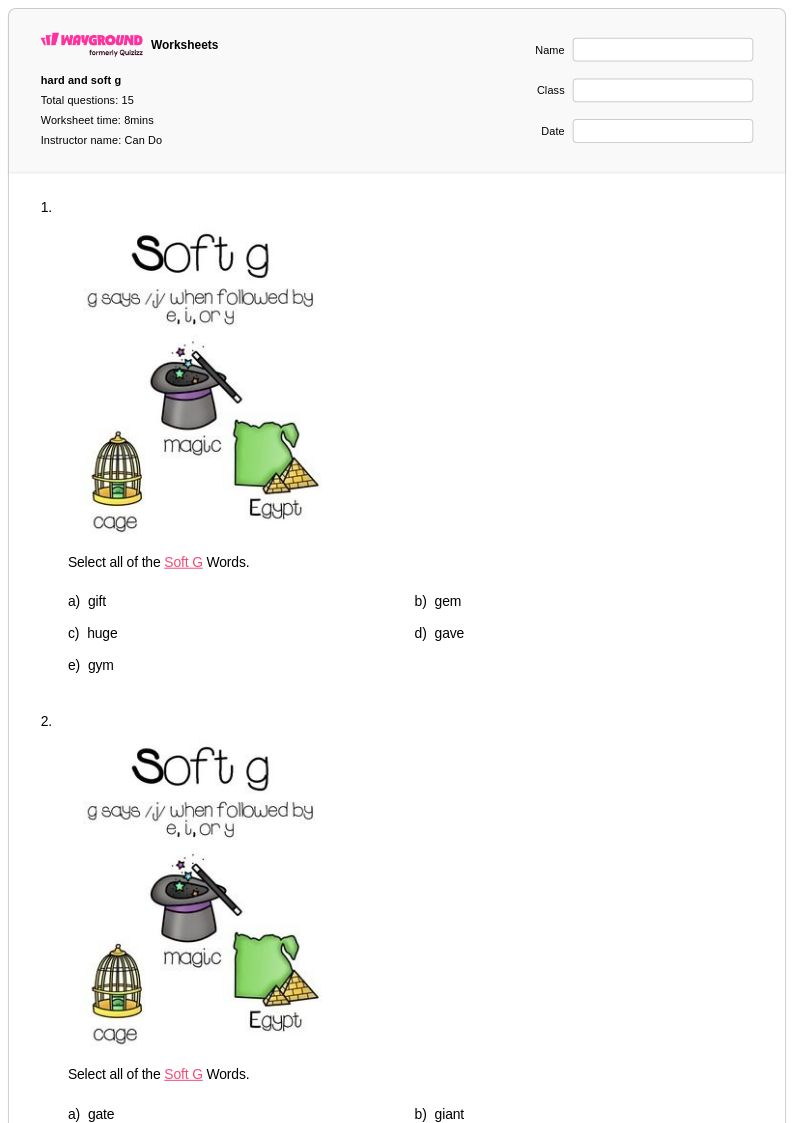
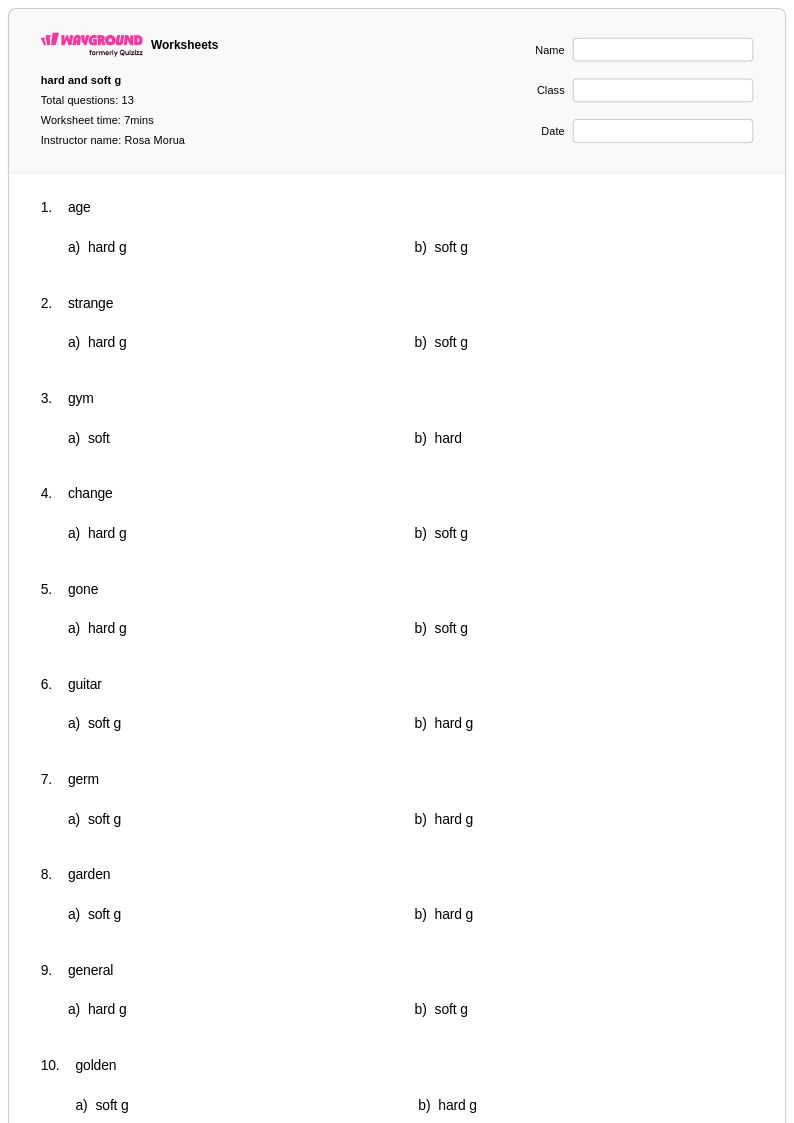
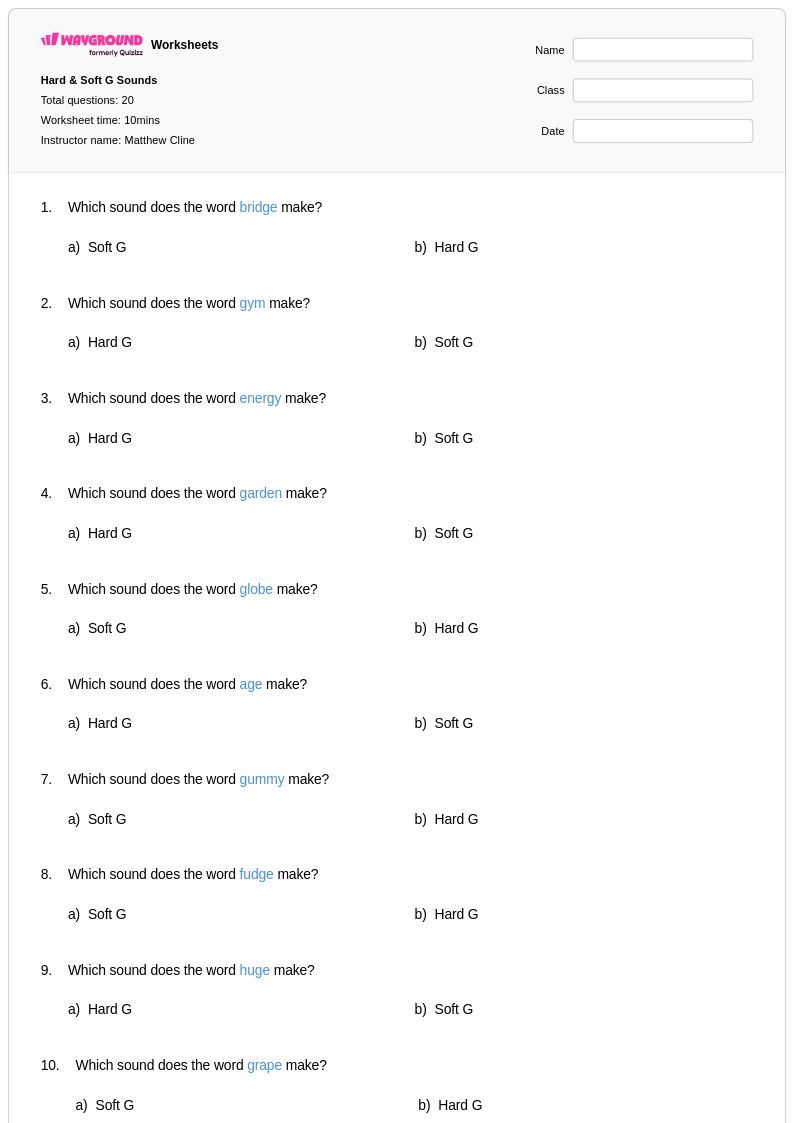
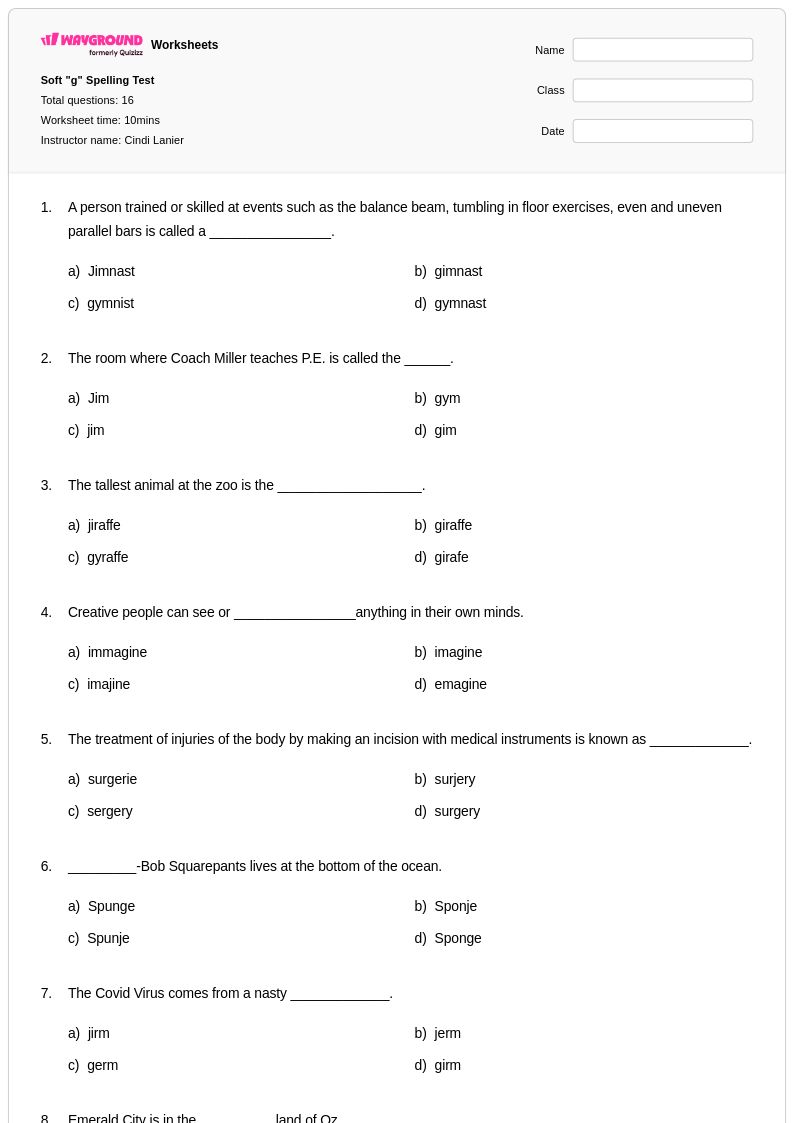
Soft G worksheets for Class 3 students available through Wayground (formerly Quizizz) provide systematic practice with one of phonics' most challenging concepts. These comprehensive resources help third-grade learners master the pronunciation rules that govern when the letter G makes its gentle /j/ sound, as found in words like "giant," "cage," and "bridge." The worksheets strengthen decoding skills through varied practice problems that include word sorting activities, reading passages with soft G words, and spelling exercises that reinforce the pattern recognition essential for fluent reading. Each printable resource comes with a detailed answer key, making it simple for educators to provide immediate feedback and track student progress. These free materials systematically build phonemic awareness while helping students distinguish between hard and soft G sounds in different word positions and contexts.
Wayground's extensive collection of soft G phonics worksheets draws from millions of teacher-created resources, ensuring educators have access to diverse, high-quality materials that align with Class 3 phonics standards. The platform's robust search and filtering capabilities allow teachers to quickly locate worksheets that match their specific instructional needs, whether for whole-group lessons, small-group remediation, or individual enrichment activities. These differentiation tools enable educators to customize content difficulty and provide targeted skill practice that meets each student's developmental level. Available in both digital and printable PDF formats, the worksheets offer flexibility for classroom instruction, homework assignments, or independent practice sessions. This comprehensive approach supports effective lesson planning while providing the consistent practice opportunities students need to internalize soft G patterns and apply them confidently in their reading and spelling.
FAQs
How do I teach the soft G sound to early readers?
What exercises help students practice the soft G phonics pattern?
What mistakes do students commonly make with the soft G rule?
How do I differentiate soft G instruction for struggling readers?
How do I use Wayground's soft G worksheets in my classroom?