Free Printable Spelling Strategies Worksheets for Class 1
Free Class 1 spelling strategies worksheets and printables help young learners master essential techniques for accurate spelling through engaging practice problems, interactive exercises, and comprehensive answer keys.
Explore printable Spelling Strategies worksheets for Class 1
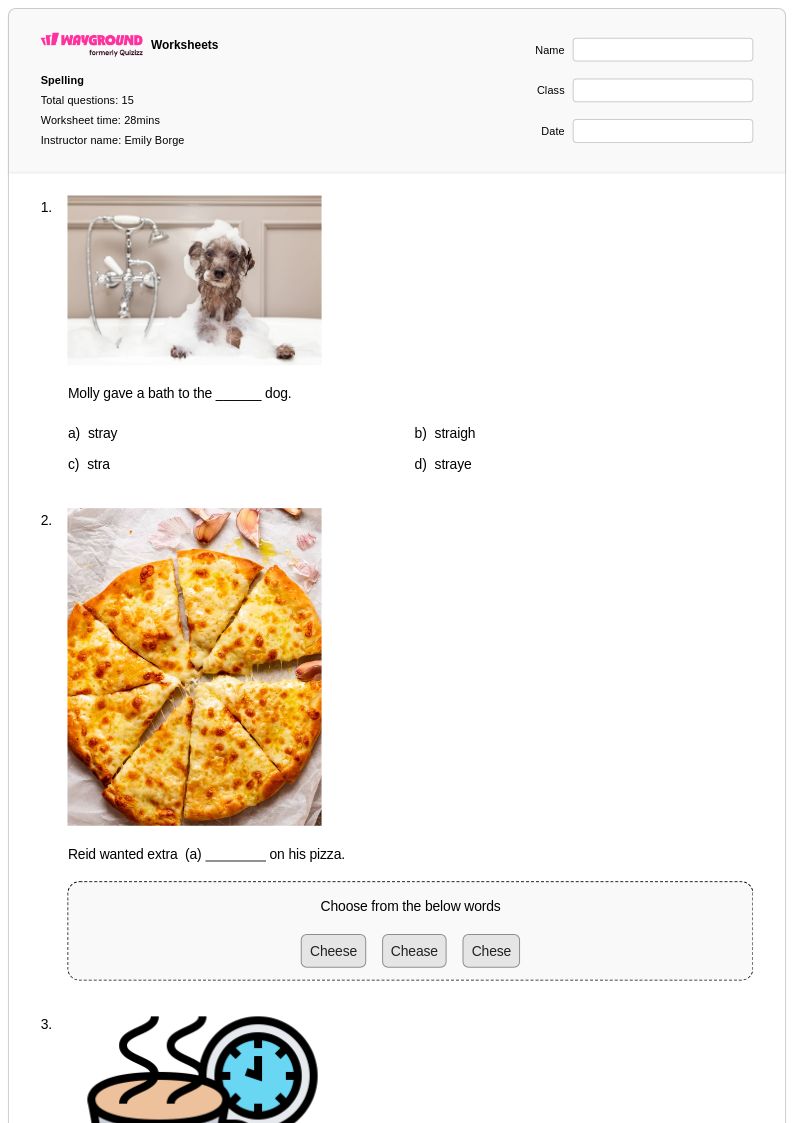
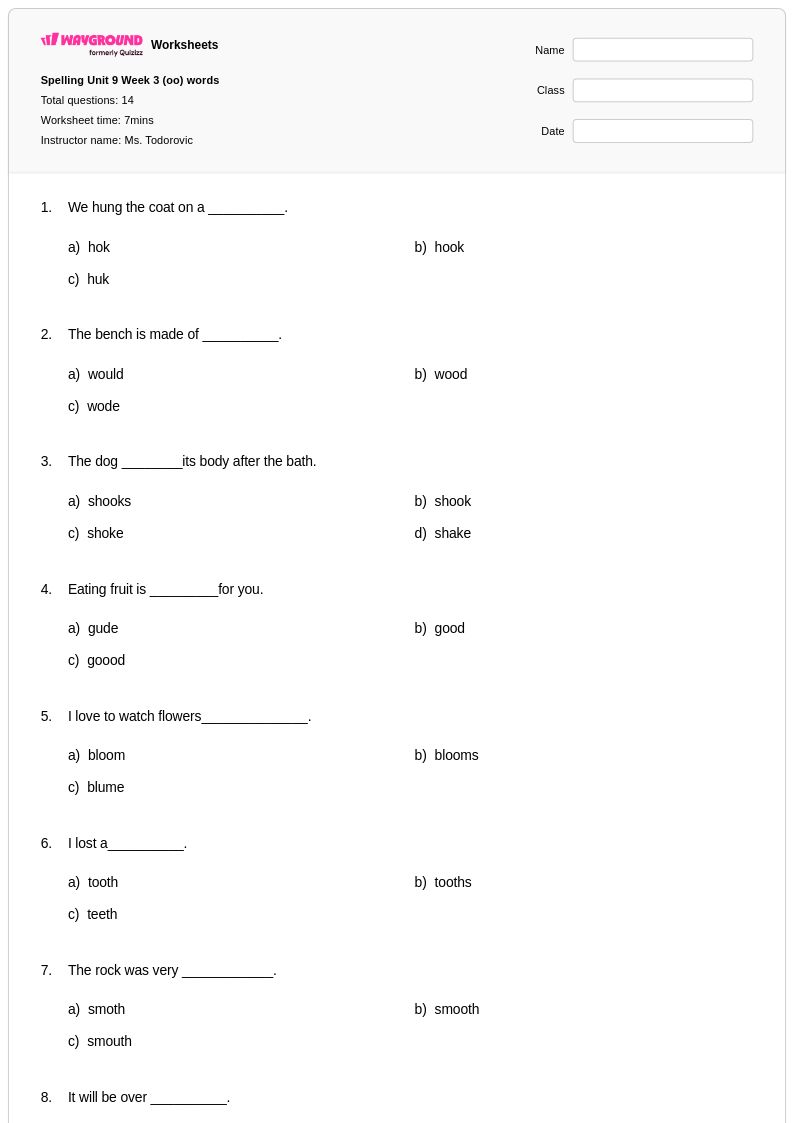
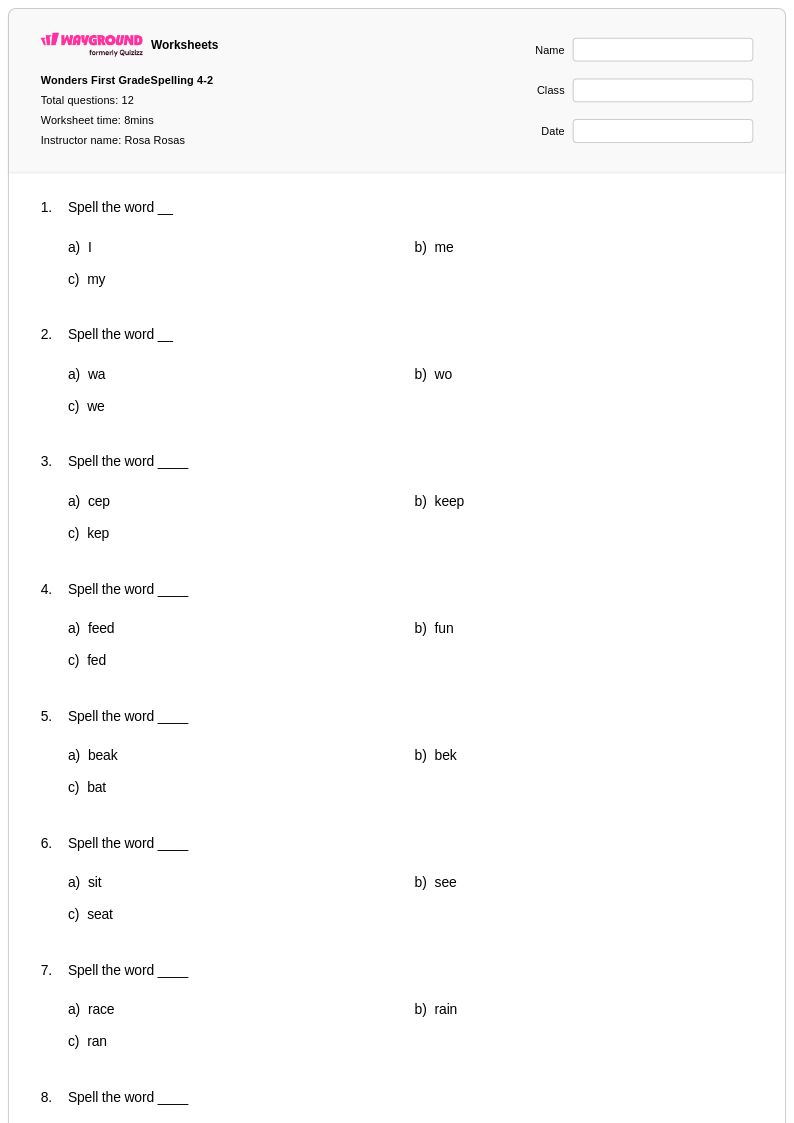
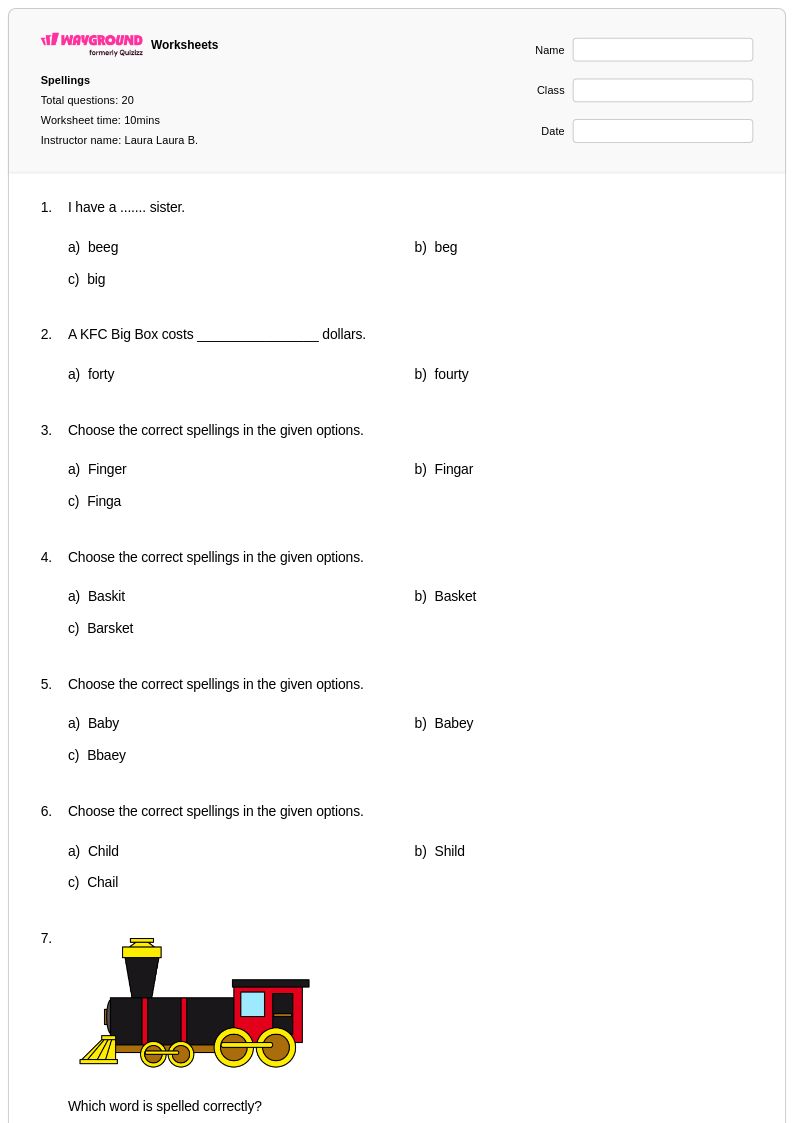
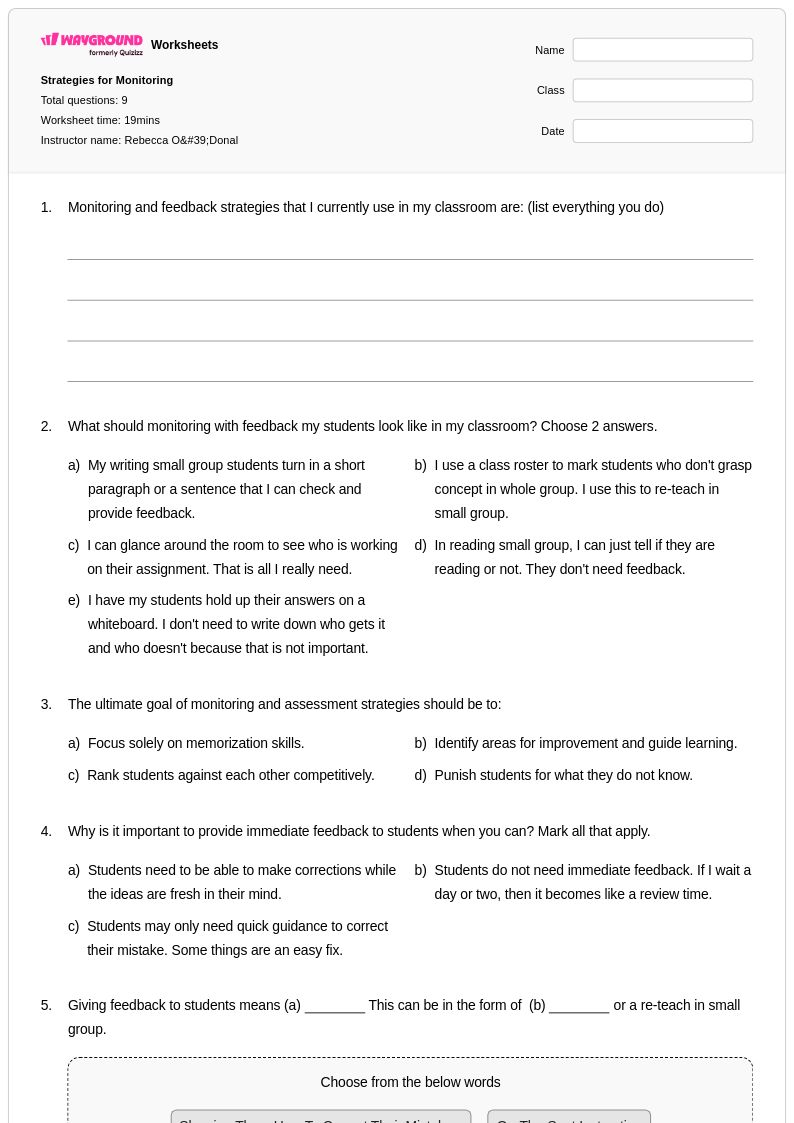
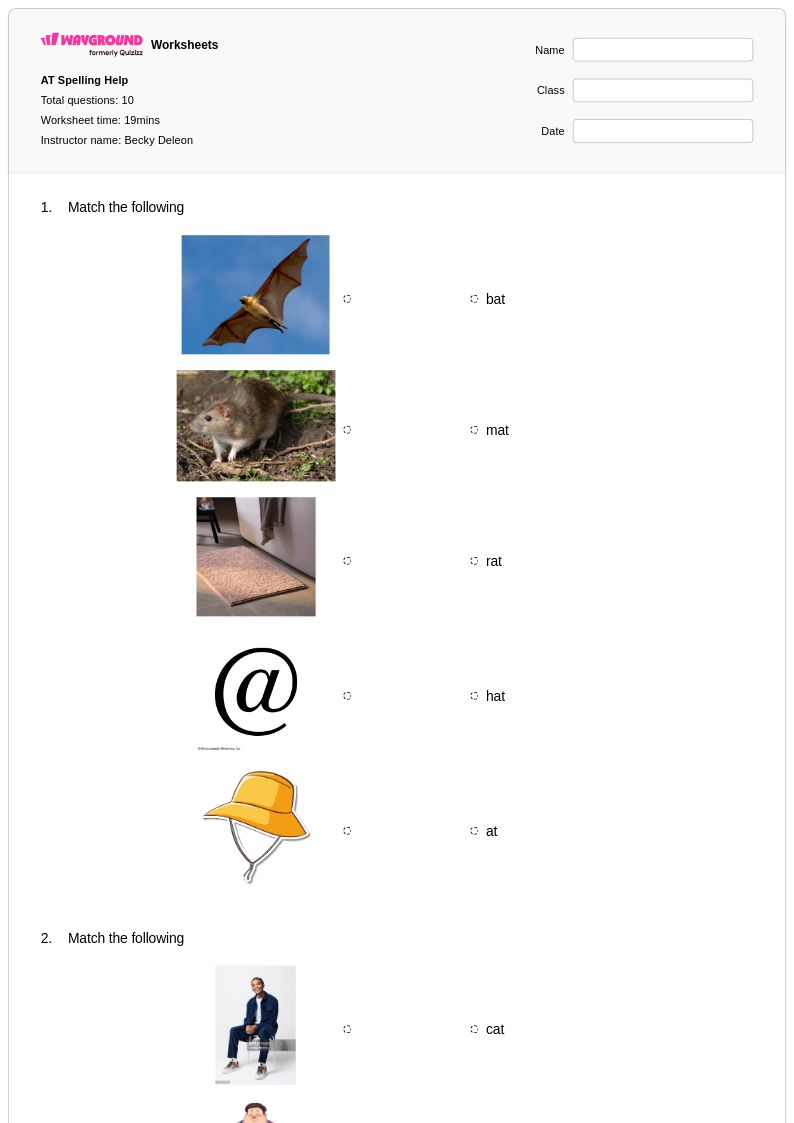
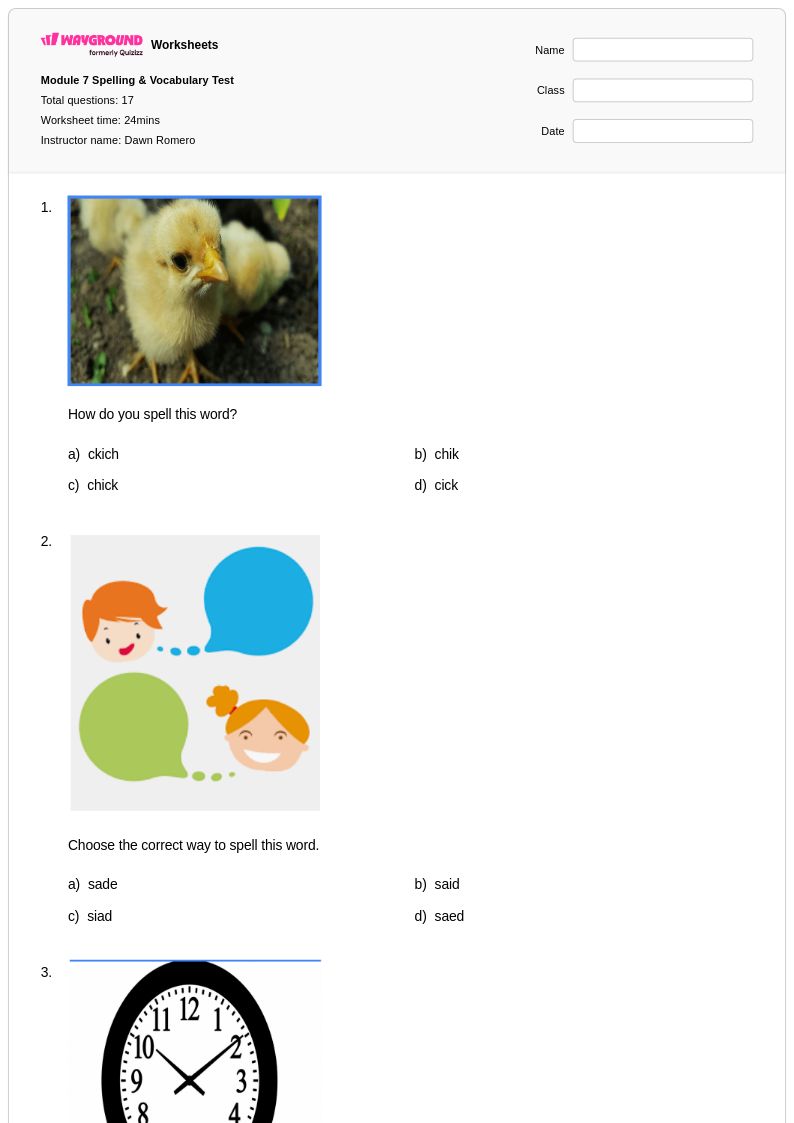
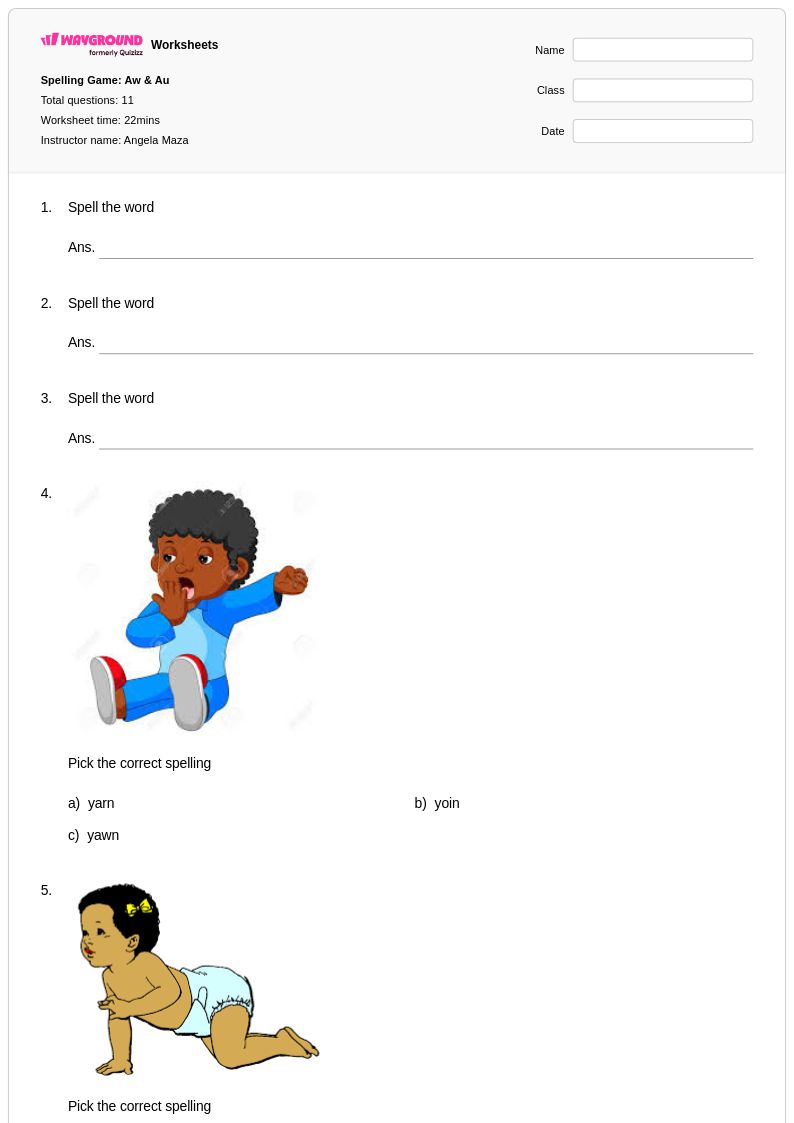
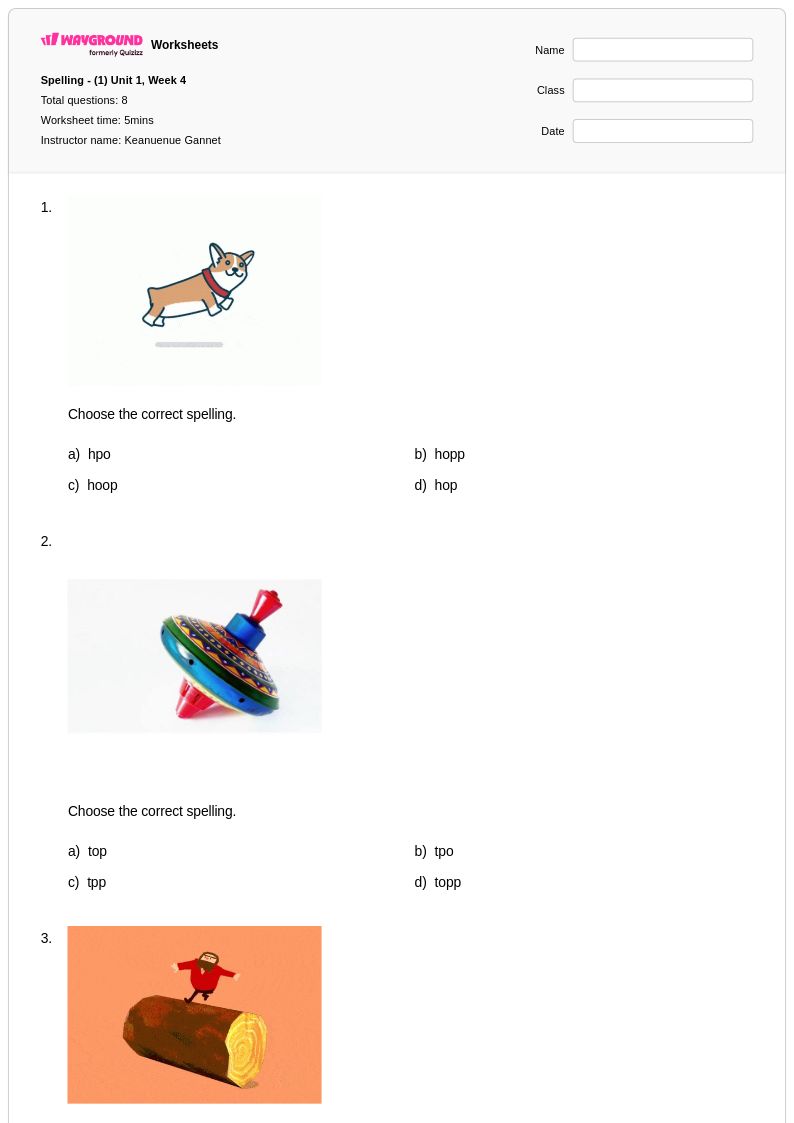
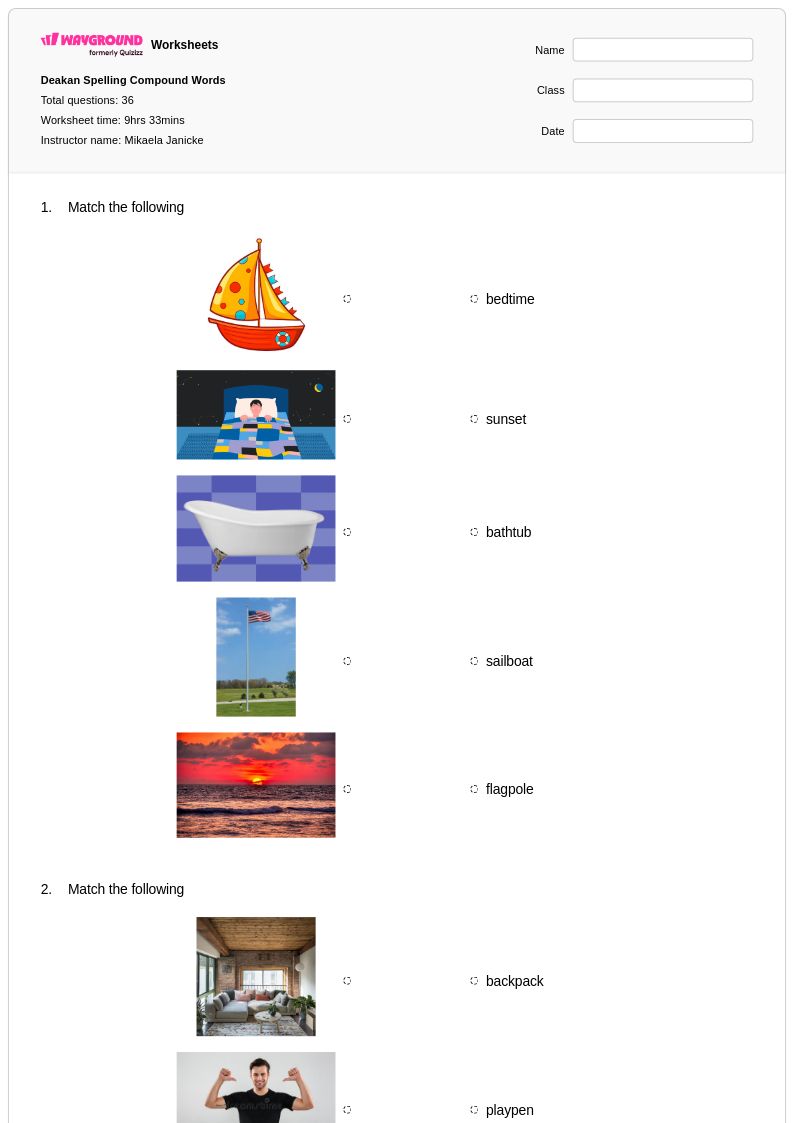
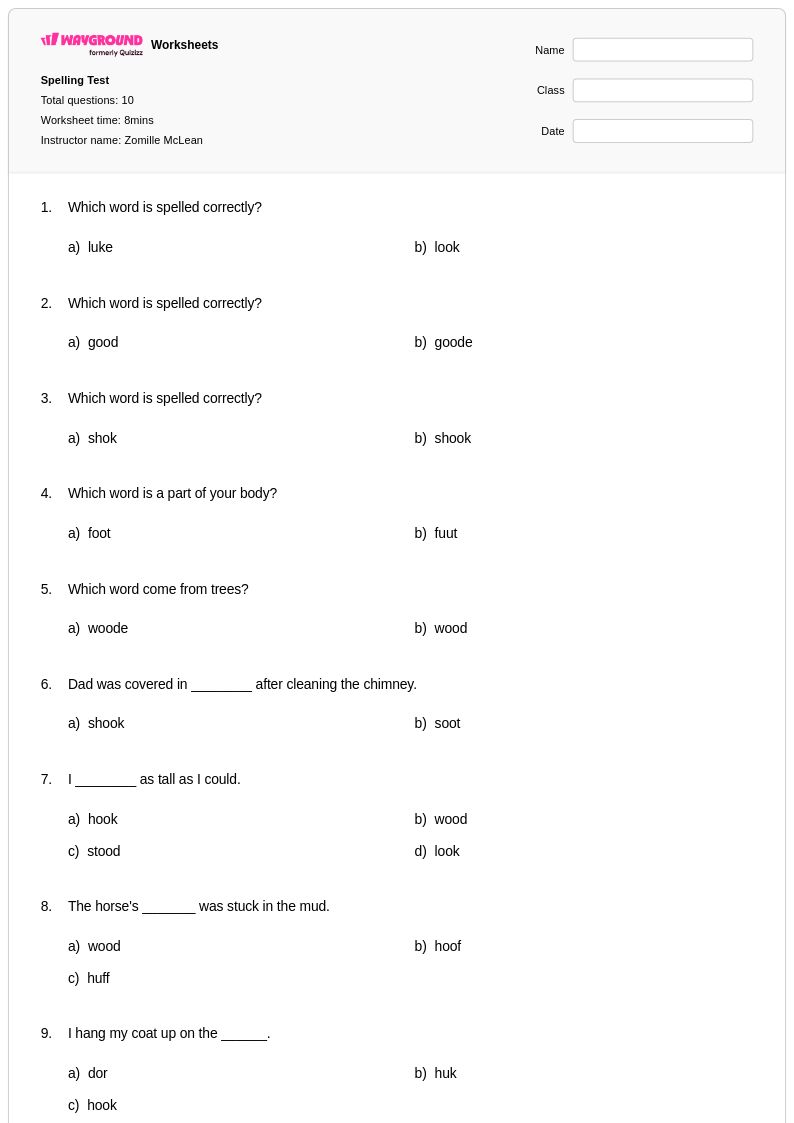
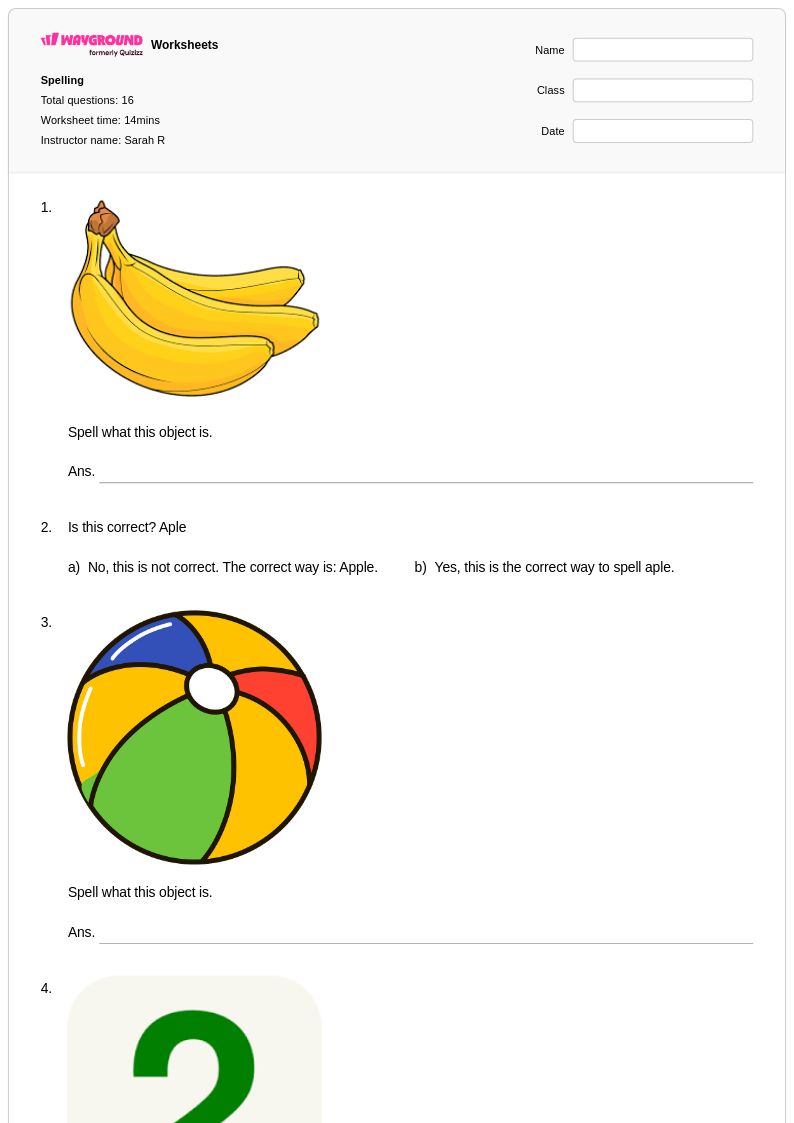
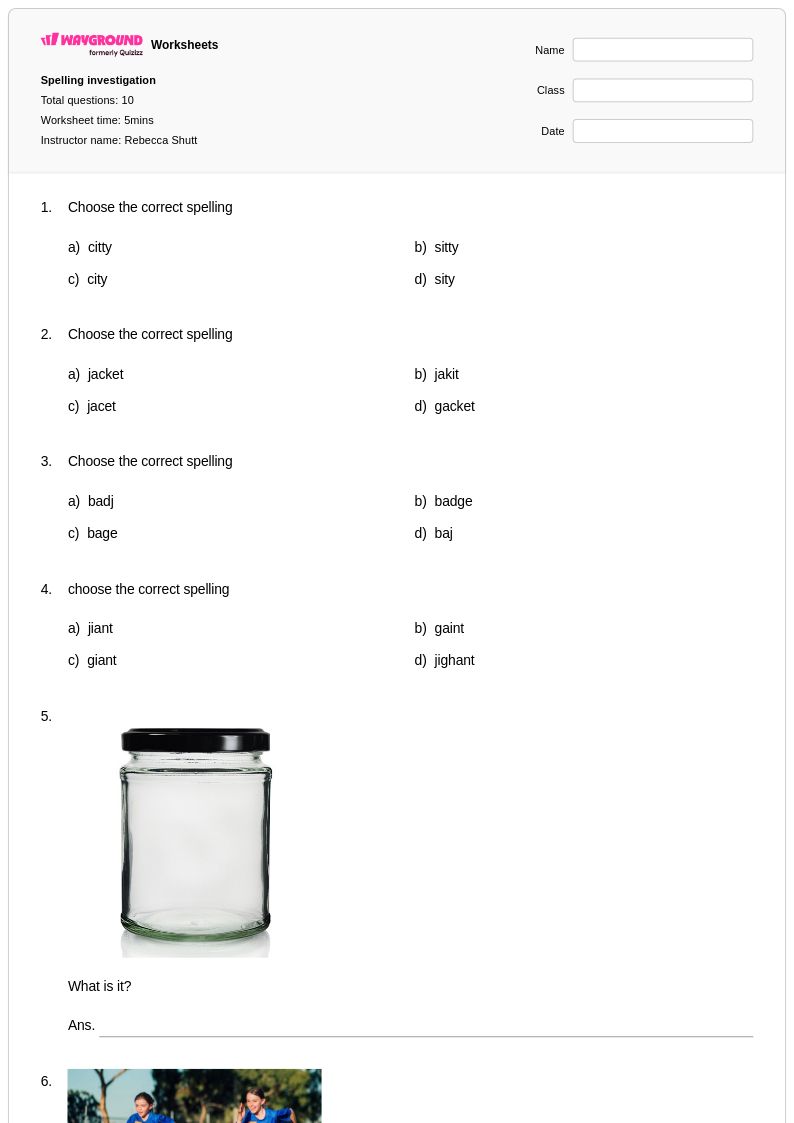
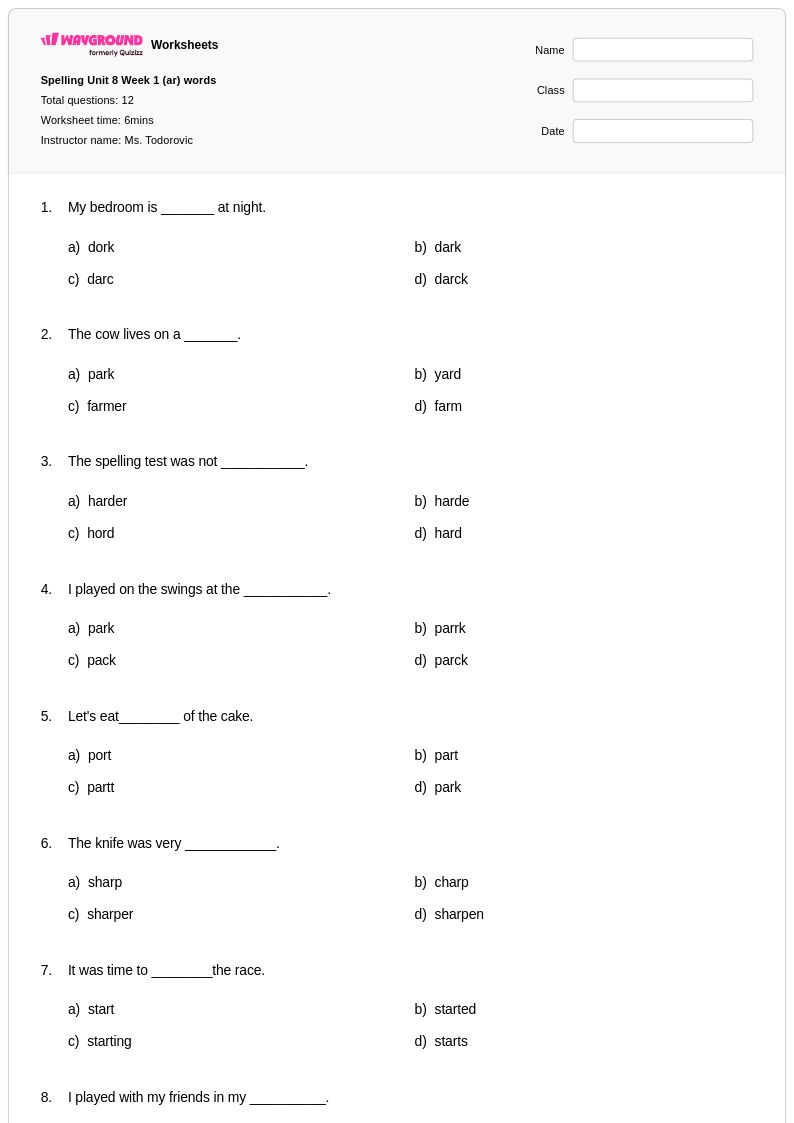
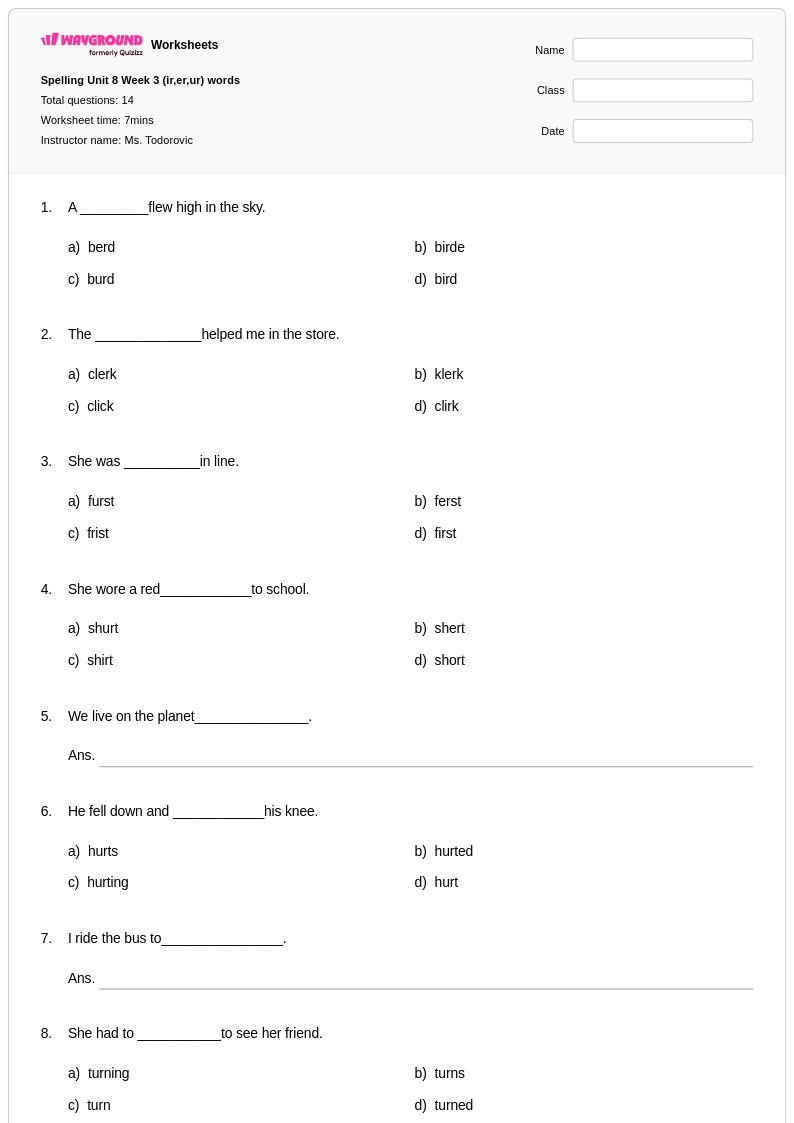
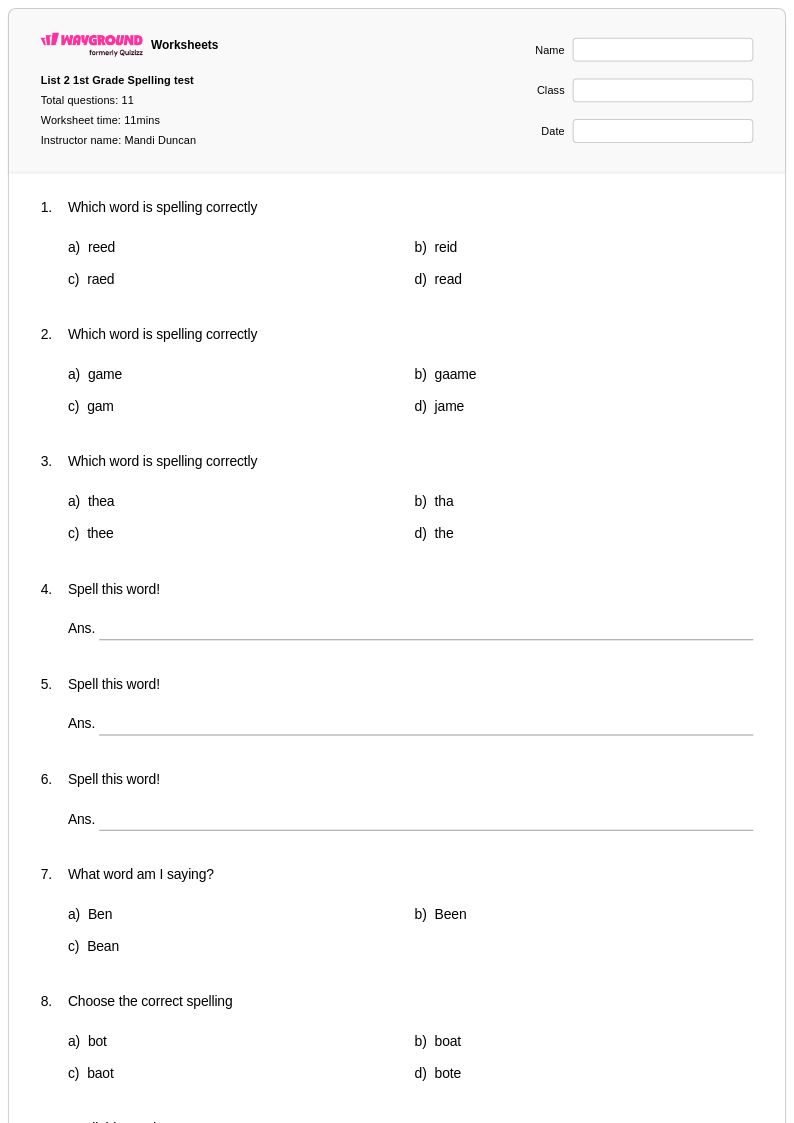
Class 1 spelling strategies worksheets available through Wayground (formerly Quizizz) provide young learners with foundational tools to decode, memorize, and apply spelling patterns effectively. These carefully designed resources focus on essential strategies such as sounding out words phonetically, recognizing common letter patterns, using visual memory techniques, and applying simple spelling rules like silent 'e' and consonant doubling. Each worksheet strengthens critical early literacy skills including phonemic awareness, letter-sound correspondence, and word recognition through engaging practice problems that build confidence in beginning spellers. Teachers can access comprehensive collections that include detailed answer keys and are available as free printables in convenient PDF format, making it simple to incorporate targeted spelling instruction into daily classroom routines or homework assignments.
Wayground (formerly Quizizz) empowers educators with an extensive library of millions of teacher-created spelling strategy resources specifically designed for Class 1 students. The platform's robust search and filtering capabilities allow teachers to quickly locate worksheets aligned with specific learning standards and differentiate instruction based on individual student needs and abilities. These versatile collections are available in both printable PDF formats for traditional paper-and-pencil practice and digital formats for interactive learning experiences, providing flexibility for various classroom environments and teaching preferences. Teachers can customize existing worksheets or combine multiple resources to create comprehensive spelling strategy units that support lesson planning, targeted remediation for struggling spellers, enrichment activities for advanced students, and consistent skill practice that reinforces essential spelling foundations throughout the academic year.
FAQs
How do I teach spelling strategies effectively in the classroom?
Effective spelling strategy instruction begins with explicitly teaching a small set of high-utility techniques before asking students to apply them independently. Start with phonetic analysis and syllable segmentation, then layer in morphological awareness such as recognizing common prefixes, suffixes, and root words. Mnemonic devices and word family groupings work well as supplementary strategies once students have a phonics foundation. Rotating through strategies across lessons helps students internalize when to reach for each tool.
What spelling strategies should students learn first?
Students typically benefit most from learning phonetic analysis and syllable segmentation first, since these strategies apply broadly across unfamiliar words. Once phonics is solid, introducing morphological patterns such as prefixes, suffixes, and root words dramatically expands students' ability to decode and spell multisyllabic words. Visual memory techniques and mnemonic devices are most effective as supplementary tools for high-frequency irregular words that resist phonetic approaches.
What exercises help students practice spelling strategies?
Structured practice problems that require students to apply a specific strategy to a set of words are more effective than simple memorization drills. Exercises that ask students to break words into syllables, identify morphemes, or generate word families reinforce strategy use rather than rote recall. Mixing strategy types within a single practice session, and including immediate feedback through answer keys, helps students self-correct and adjust their approach in real time.
What mistakes do students commonly make when learning spelling strategies?
A common error is over-relying on a single strategy, particularly phonics, for words that require morphological or visual memory approaches instead. Students also frequently misapply syllable boundaries or confuse similar prefixes and suffixes, which leads to systematic spelling errors across word families. Teachers should watch for students who spell phonetically plausible but incorrect forms, as this signals they need explicit instruction in when to switch strategies.
How can I differentiate spelling strategy instruction for students at different levels?
Differentiation in spelling strategy instruction works best when the strategy itself is consistent but the word complexity varies by student level. Struggling spellers benefit from focusing on high-frequency phonetic patterns and simple CVC word families, while advanced students can apply morphological analysis to multisyllabic and Latin-rooted words. On Wayground, teachers can apply accommodations such as read aloud, reduced answer choices, and extended time to individual students, allowing the same worksheet to serve the full range of learners without drawing attention to differences.
How do I use Wayground's spelling strategies worksheets in my classroom?
Wayground's spelling strategies worksheets are available as printable PDFs for traditional classroom use and in digital formats for technology-integrated environments, giving teachers flexibility depending on their setting. Teachers can also host the worksheets as a quiz directly on Wayground, enabling real-time progress monitoring and immediate feedback for students. Each worksheet includes a complete answer key, making them practical for independent practice, homework, remediation sessions, or whole-class instruction.