Free Printable States of Consciousness Worksheets for Class 12
Explore Class 12 states of consciousness worksheets and printables through Wayground that help students master sleep cycles, altered consciousness, and awareness levels with comprehensive practice problems, free PDF downloads, and detailed answer keys.
Explore printable States of Consciousness worksheets for Class 12
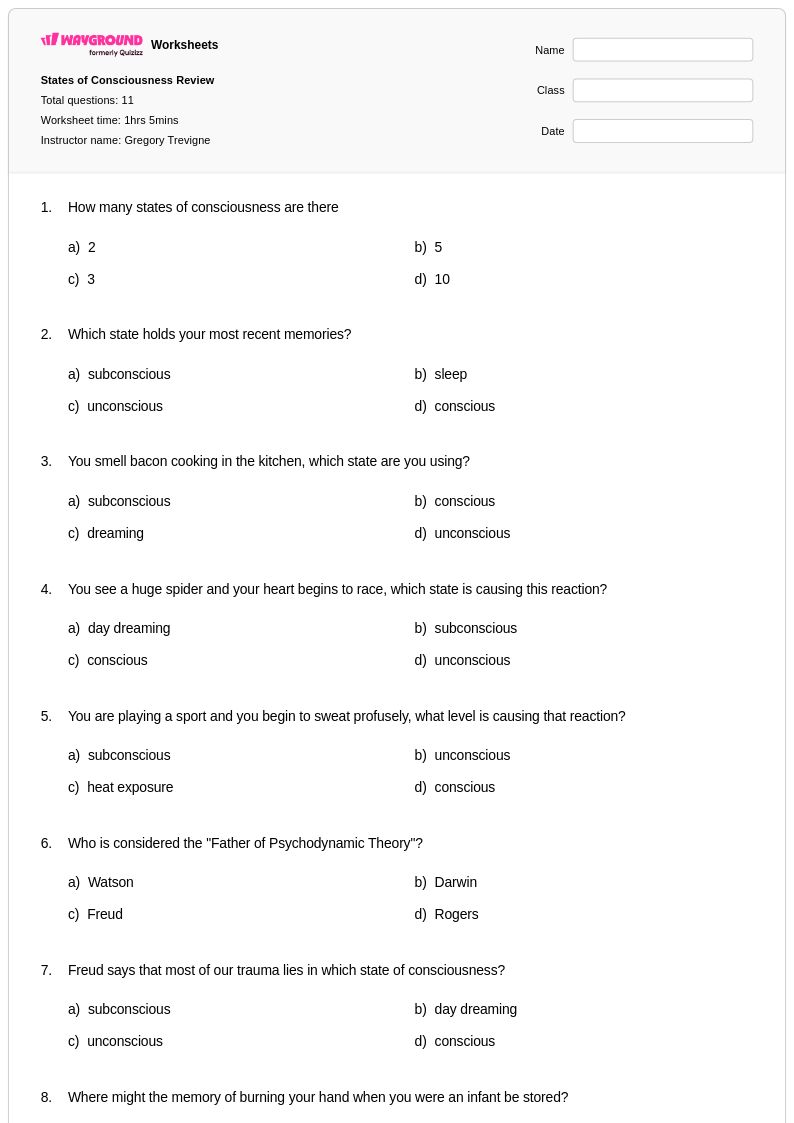
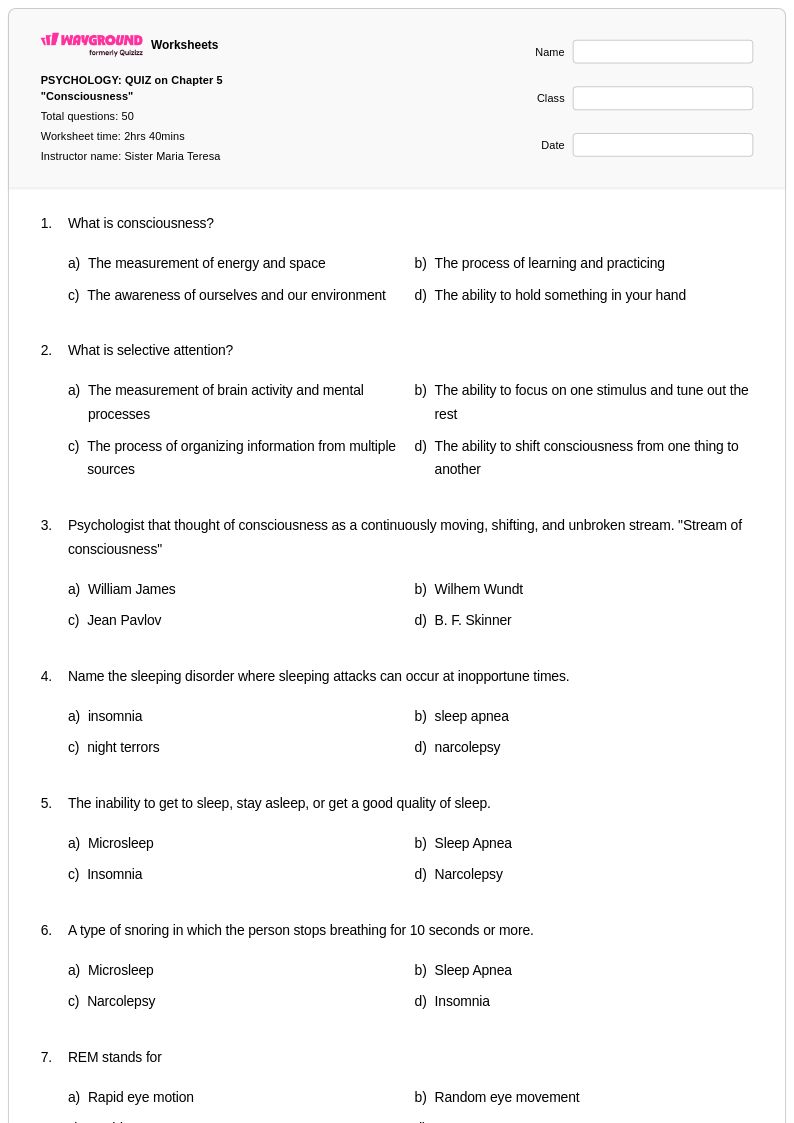
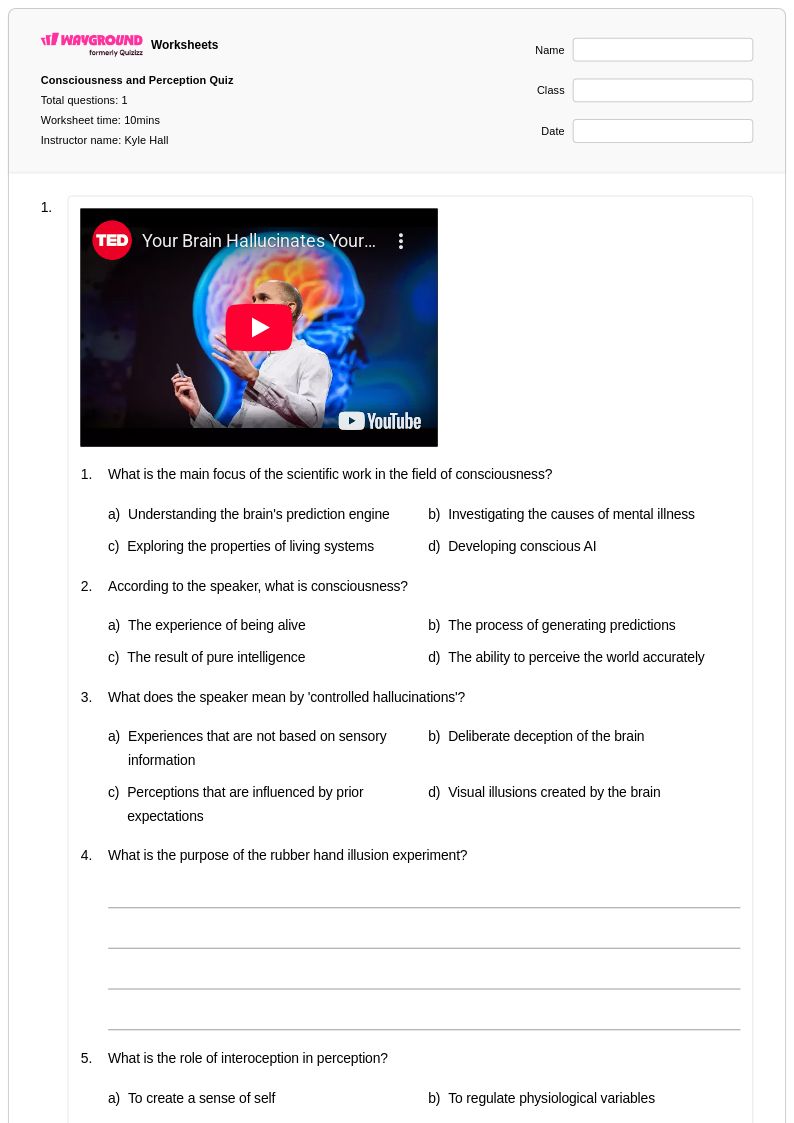
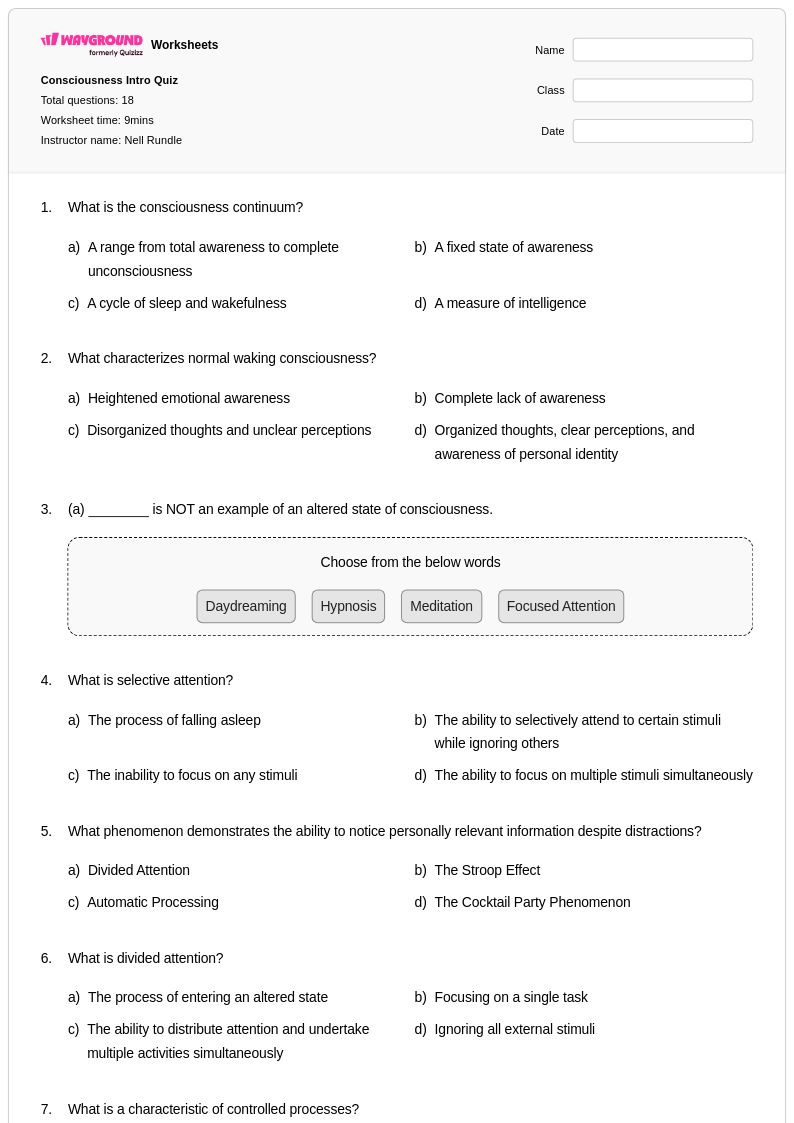
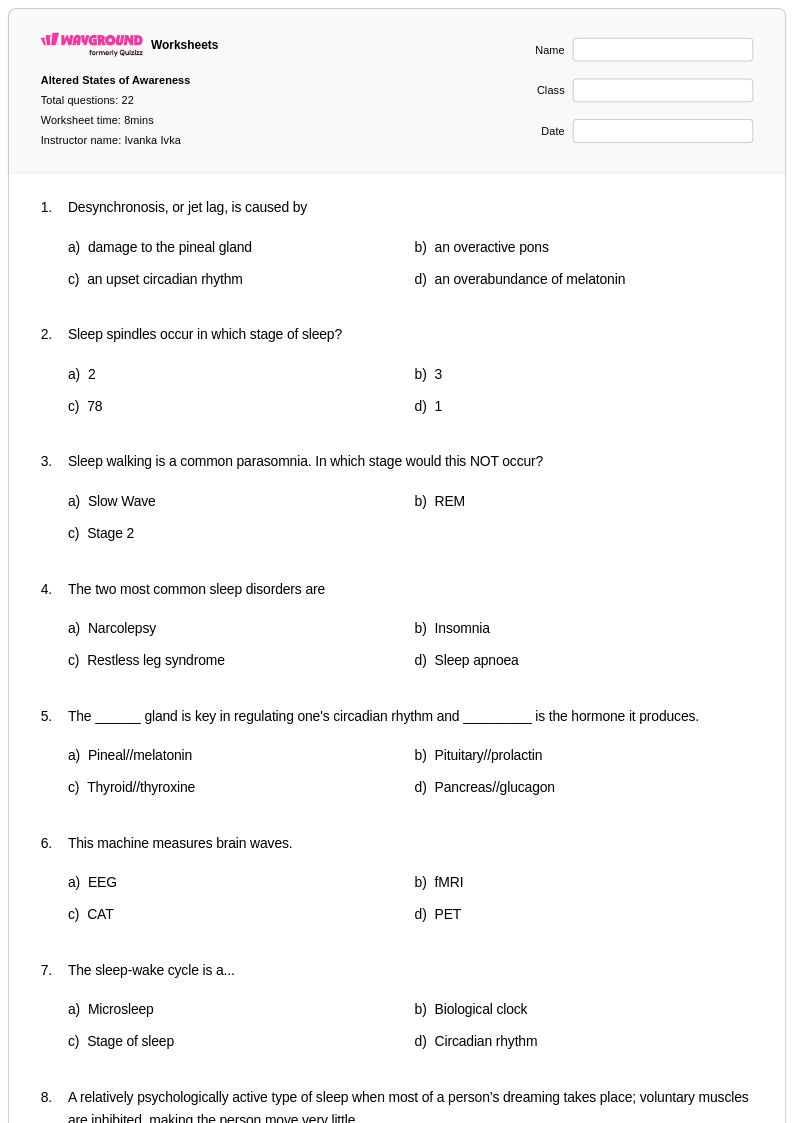
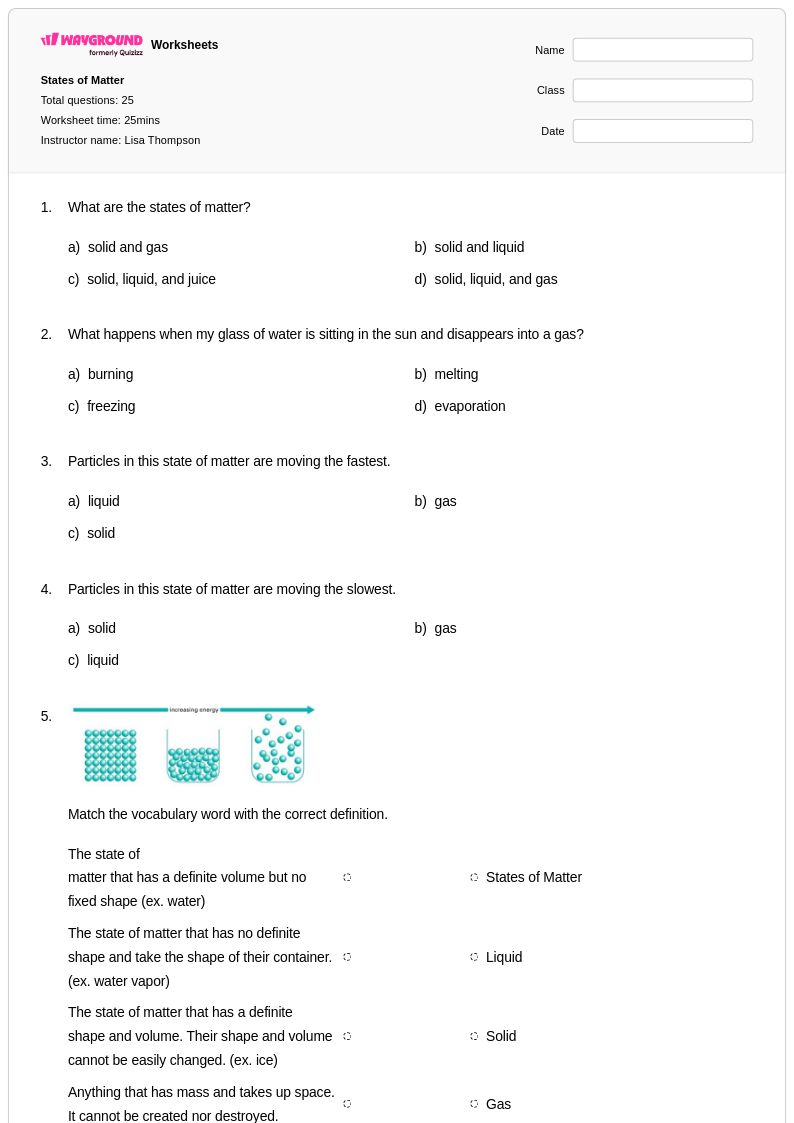
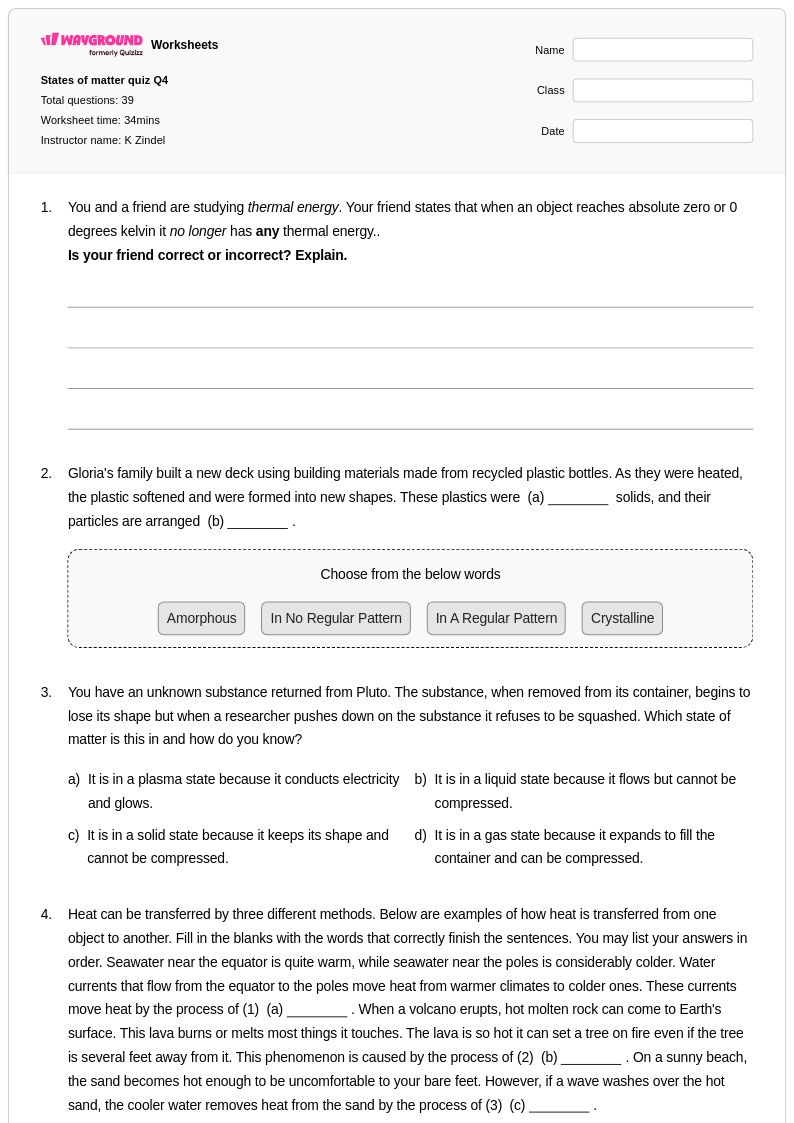
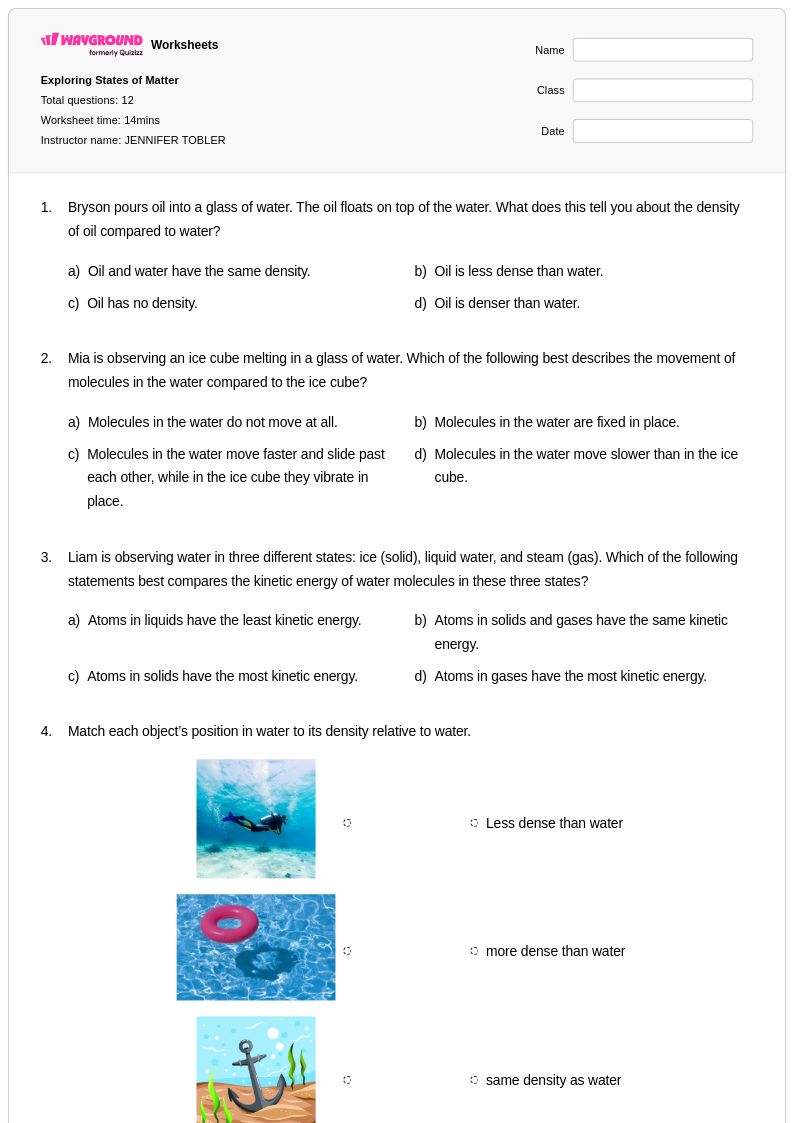
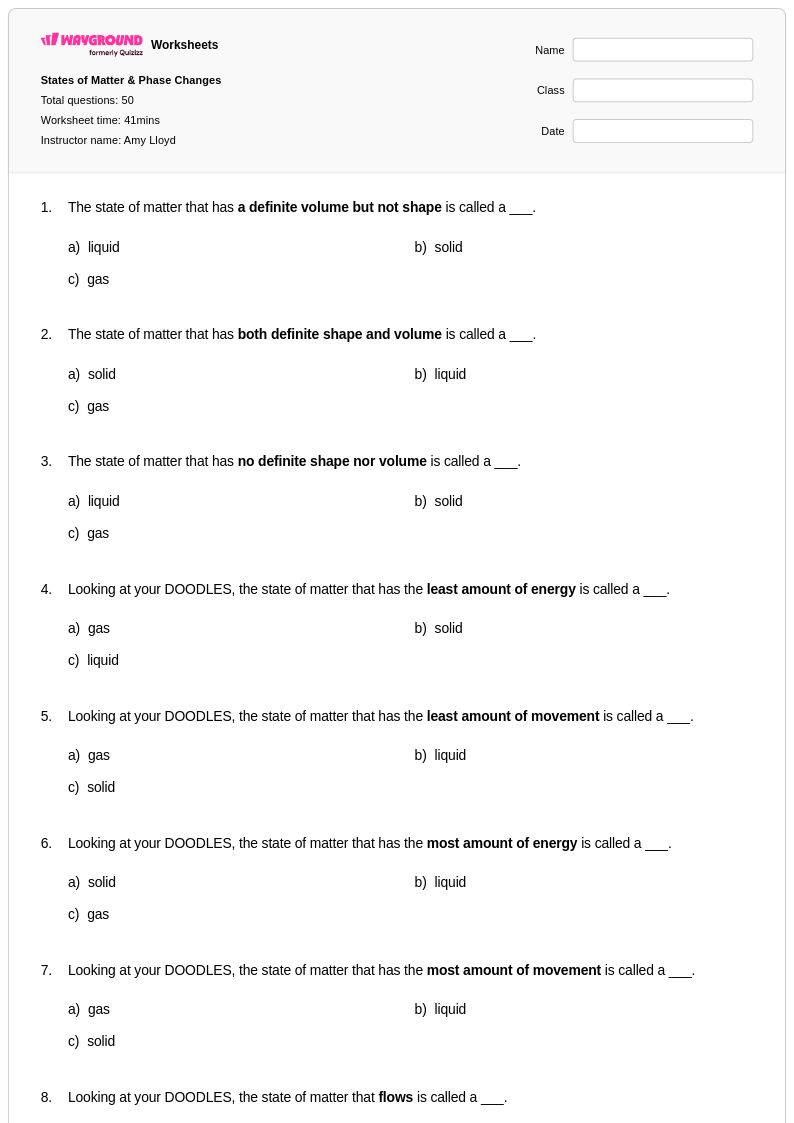
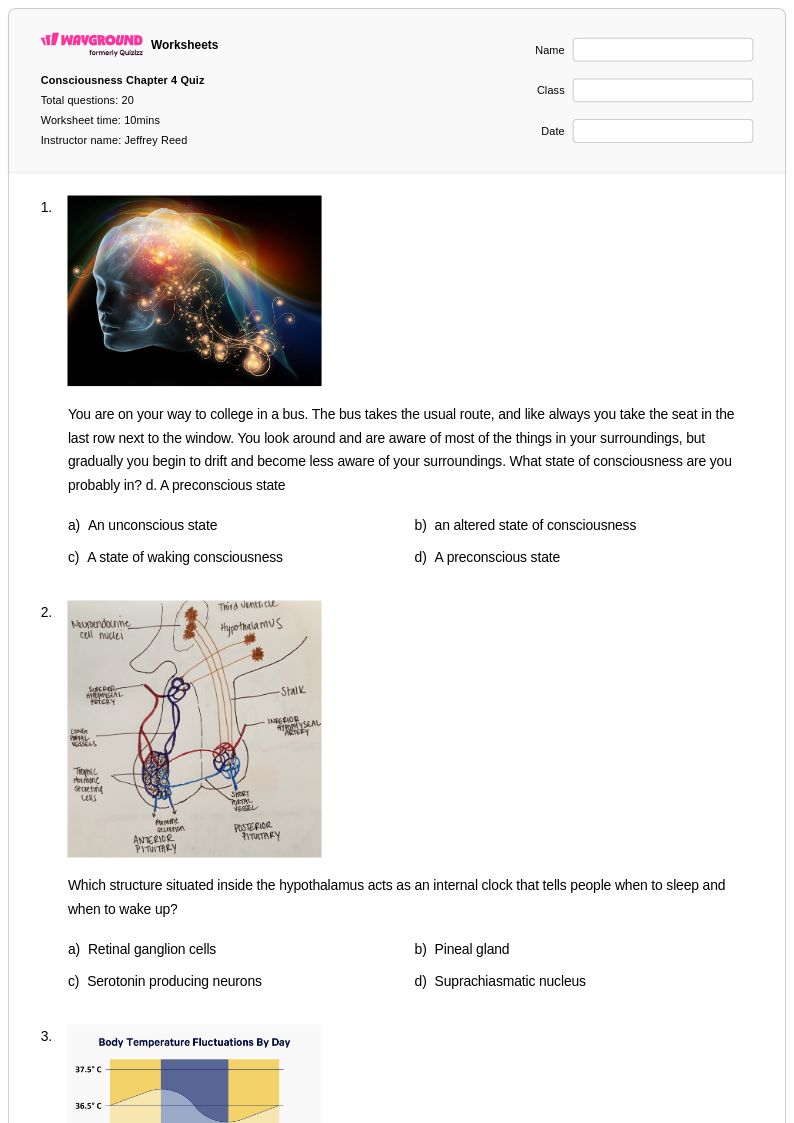
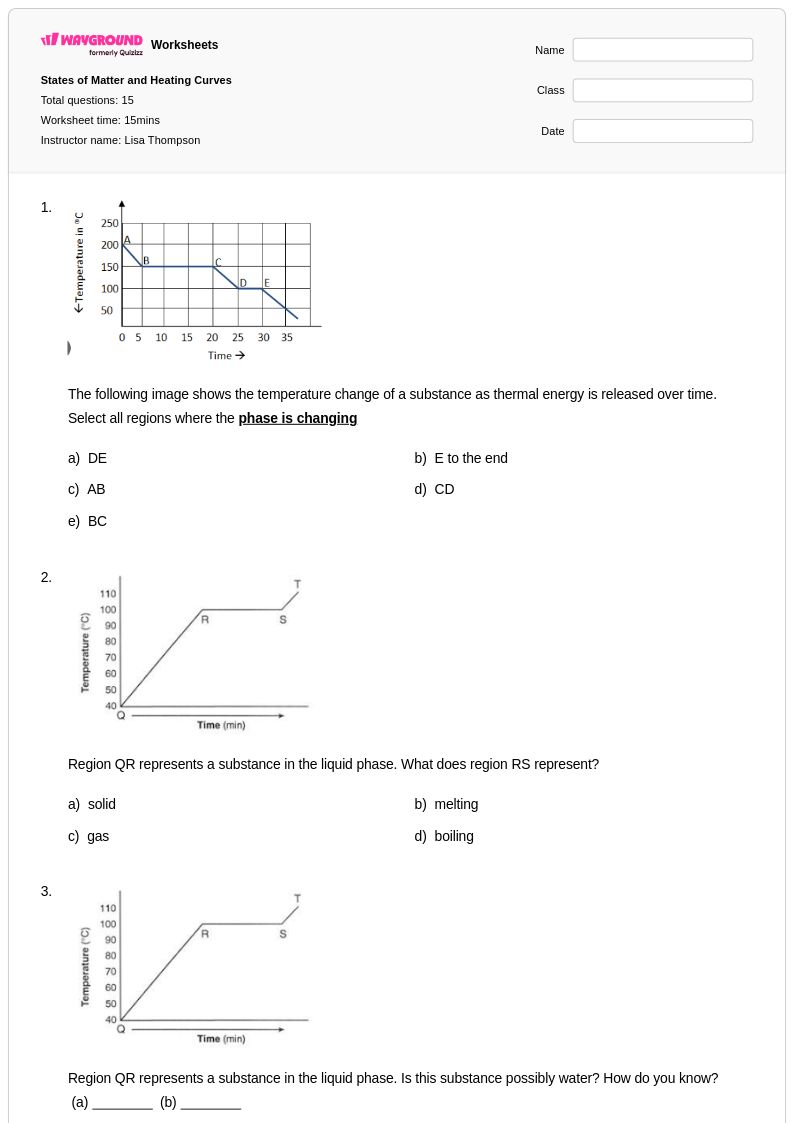
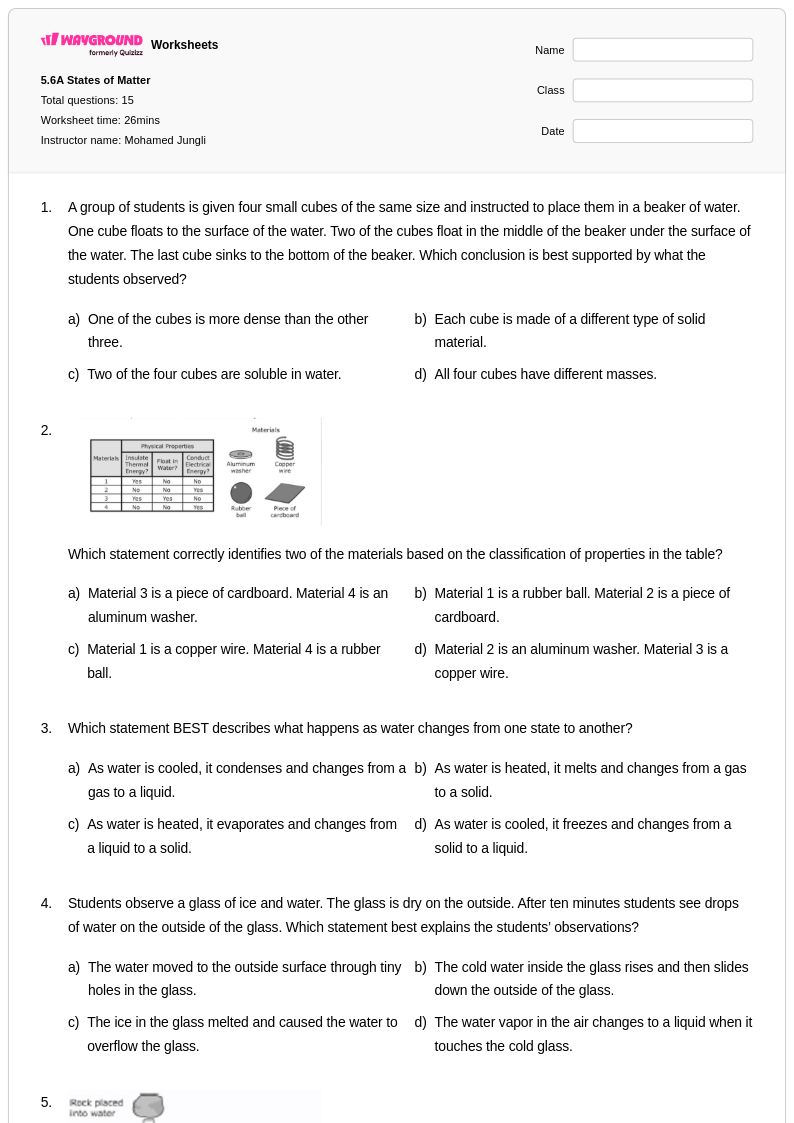
States of consciousness worksheets for Class 12 students available through Wayground (formerly Quizizz) provide comprehensive coverage of this fascinating area of psychology, exploring the spectrum of human awareness from normal waking consciousness to altered states. These expertly designed educational resources strengthen students' understanding of sleep cycles, dream analysis, meditation, hypnosis, and the effects of psychoactive substances on cognitive functioning. The worksheets feature detailed practice problems that challenge students to analyze brain wave patterns during different sleep stages, evaluate theories of consciousness, and examine the psychological and physiological mechanisms underlying various altered states. Each worksheet collection includes thorough answer keys that support independent learning and self-assessment, with free printable materials available in convenient pdf format to accommodate diverse classroom needs and study preferences.
Wayground (formerly Quizizz) empowers educators with access to millions of teacher-created resources specifically designed for advanced psychology instruction, featuring robust search and filtering capabilities that allow teachers to locate precisely the right states of consciousness materials for their Class 12 curriculum requirements. The platform's standards-aligned content ensures that worksheets meet rigorous academic expectations while providing differentiation tools that enable teachers to customize materials for students with varying ability levels and learning styles. Teachers can seamlessly access both printable and digital formats, including downloadable pdf versions, making it effortless to integrate these resources into lesson planning, targeted remediation for struggling students, enrichment activities for advanced learners, and regular skill practice sessions. The flexible customization options allow educators to modify existing worksheets or combine multiple resources to create comprehensive assessment tools that accurately measure student mastery of complex consciousness concepts.
FAQs
How do I teach states of consciousness in a psychology class?
Start by anchoring the concept in students' lived experience — asking them to reflect on falling asleep, daydreaming, or feeling groggy after waking. From there, introduce a framework that distinguishes normal waking consciousness from altered states such as sleep stages, hypnosis, meditation, and substance-induced changes. Pairing direct instruction with analytical exercises that require students to compare the neurobiological mechanisms behind each state helps move learning beyond rote memorization toward genuine conceptual understanding.
What exercises help students practice identifying and comparing states of consciousness?
Effective practice exercises include scenario-based identification tasks where students classify a described experience as REM sleep, hypnosis, meditation, or another state, along with comparison charts that map the neurobiological and psychological features of each. Analytical writing prompts that ask students to evaluate consciousness research — such as studies on sleep deprivation or the effects of meditation on brain activity — push students to apply theoretical knowledge to real evidence. These formats mirror the kinds of questions students encounter on AP Psychology exams.
What misconceptions do students commonly have about sleep stages and consciousness?
One of the most persistent misconceptions is that sleep is a single, uniform state rather than a structured cycle moving through distinct NREM stages and REM. Students also frequently conflate hypnosis with sleep, misunderstanding hypnosis as an unconscious state rather than a focused, altered waking state. Another common error is treating altered states induced by substances as identical in mechanism to naturally occurring altered states like meditation, when the neurobiological pathways differ significantly.
How do I use states of consciousness worksheets to support students with different learning needs?
States of consciousness worksheets on Wayground are available as printable PDFs for traditional classroom use and in digital formats for technology-integrated environments, where they can also be hosted as a quiz. For students who need additional support, Wayground's digital platform offers built-in accommodations including read aloud for question text, extended time per question, and reduced answer choices to lower cognitive load — all configurable per individual student without notifying the rest of the class.
How do I help students understand the difference between hypnosis and other altered states of consciousness?
Hypnosis is best taught by contrasting it directly with sleep and meditation: unlike sleep, hypnosis involves sustained responsiveness to external direction, and unlike meditation, it is typically guided rather than self-directed. Emphasize that hypnosis is characterized by heightened suggestibility and focused attention, not unconsciousness — a distinction students frequently miss. Structured comparison activities that require students to fill in physiological and behavioral characteristics across multiple states are particularly effective at making these differences stick.
What's the best way to assess student understanding of sleep cycles?
Effective assessment of sleep cycle knowledge goes beyond asking students to list the stages — it requires them to explain what happens neurologically and behaviorally at each stage and why the sequence matters. Diagram-labeling tasks, sequencing activities, and short-answer questions that ask students to predict the effects of disrupting a specific stage (such as REM suppression) all reveal whether students understand the functional significance of each stage rather than just its name.