Free Printable States of Consciousness Worksheets for Class 9
Explore Wayground's free Class 9 states of consciousness worksheets and printables that help students understand sleep cycles, altered consciousness, and awareness levels through engaging practice problems and comprehensive answer keys.
Explore printable States of Consciousness worksheets for Class 9
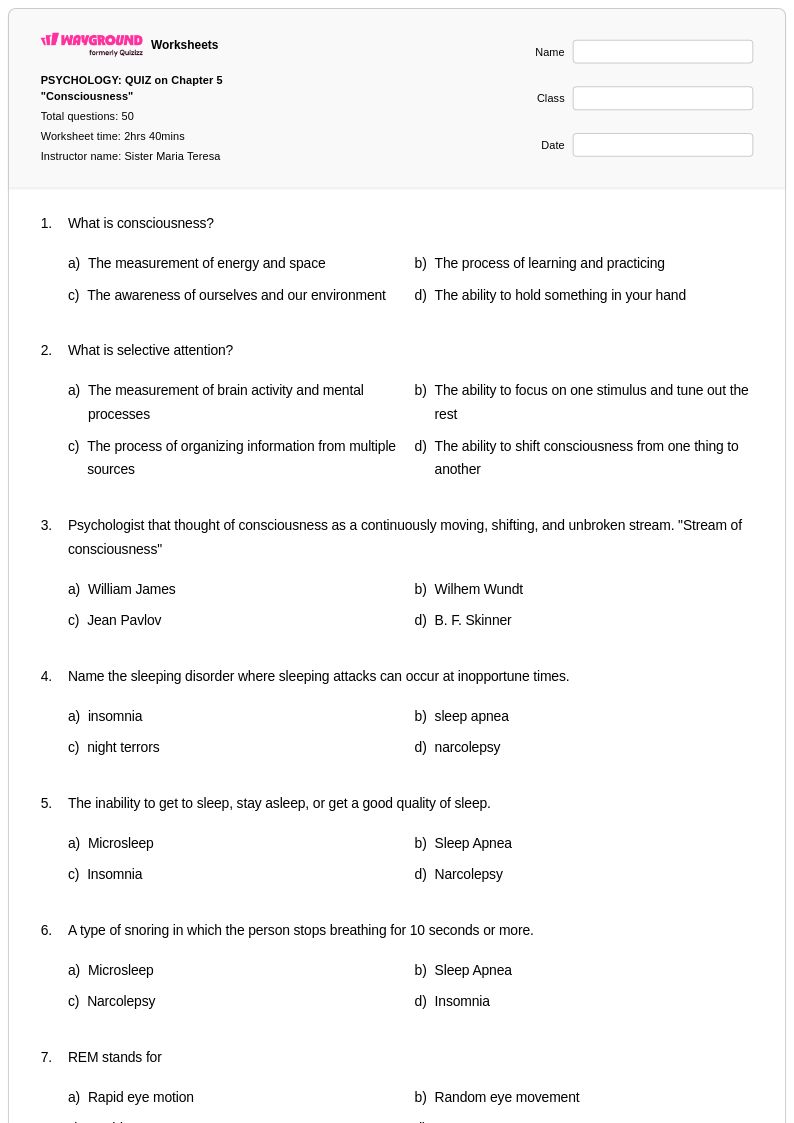
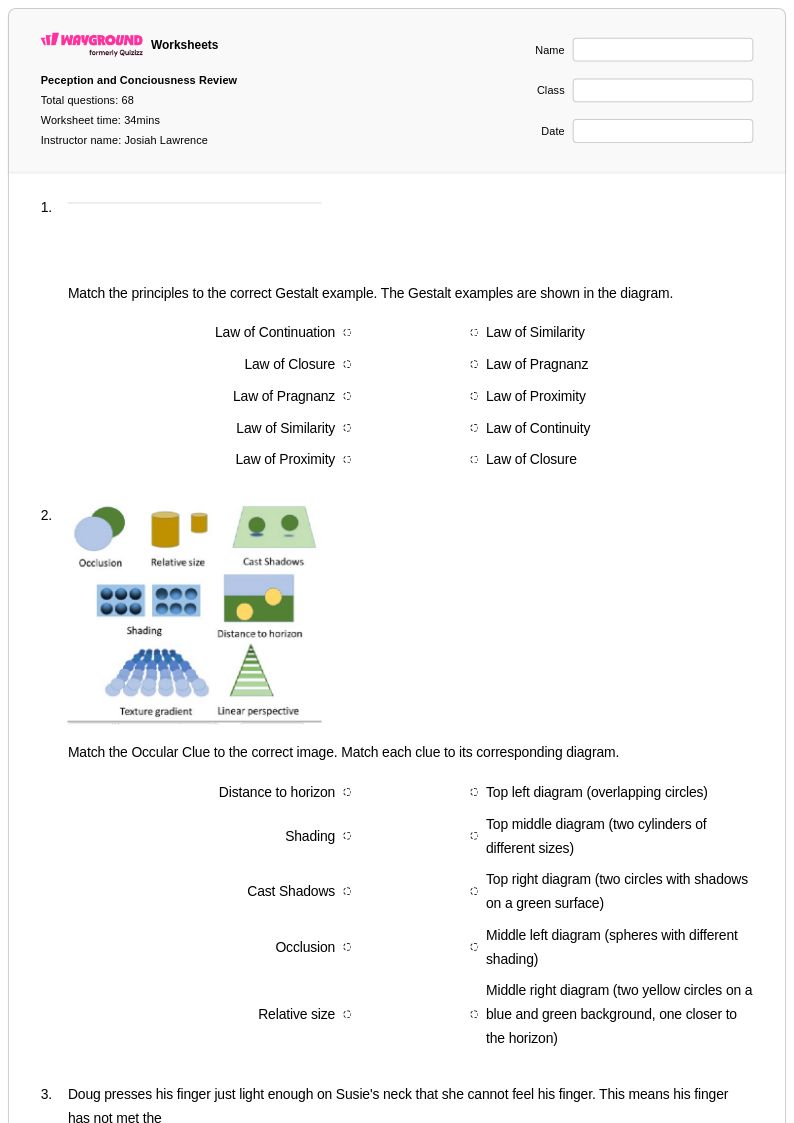
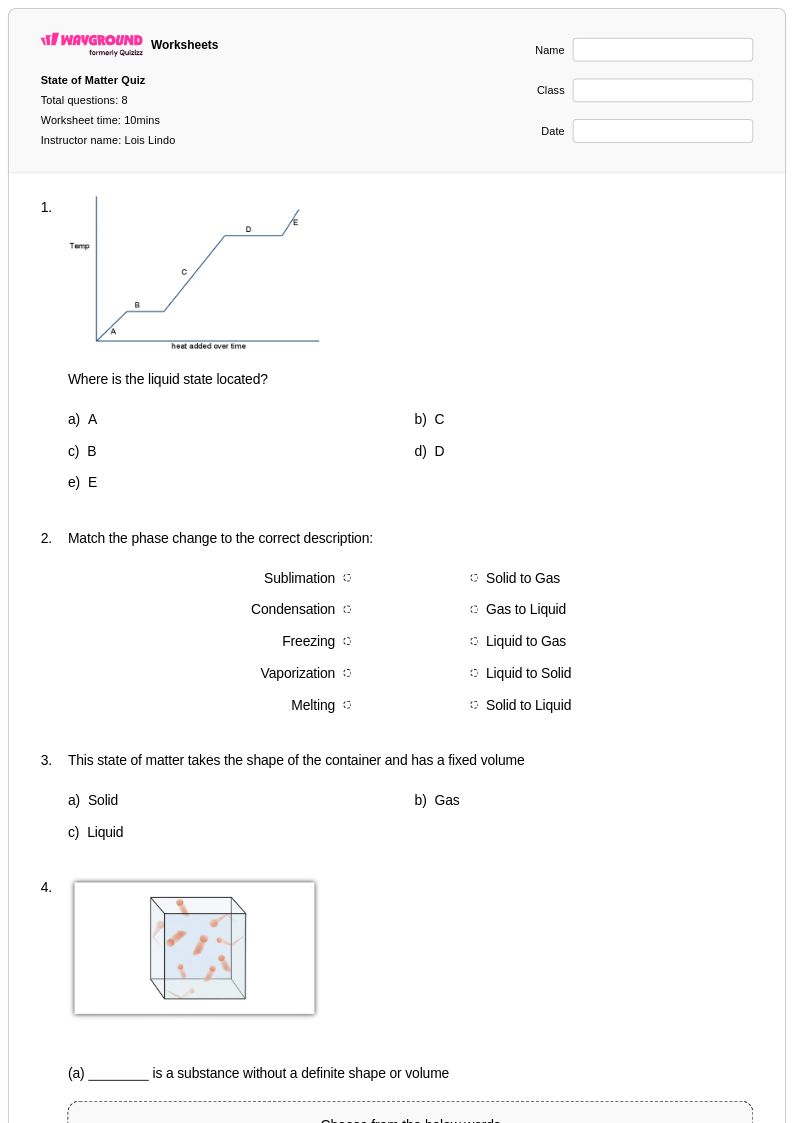
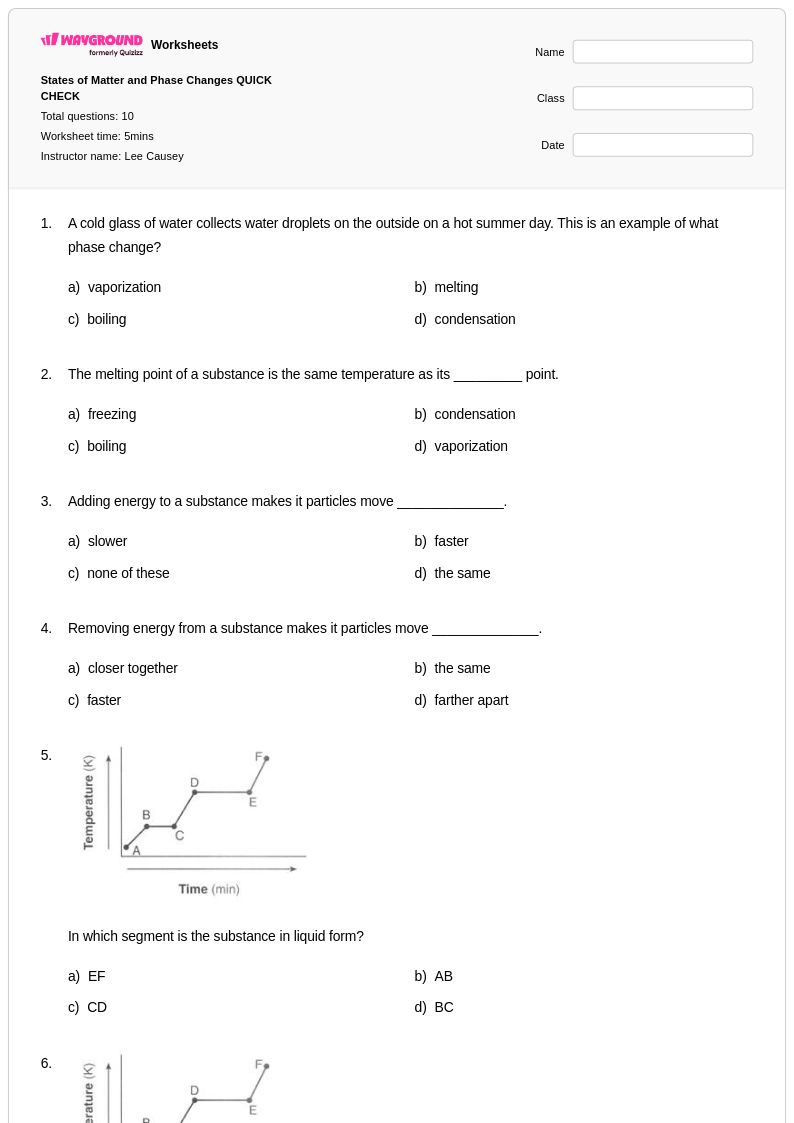
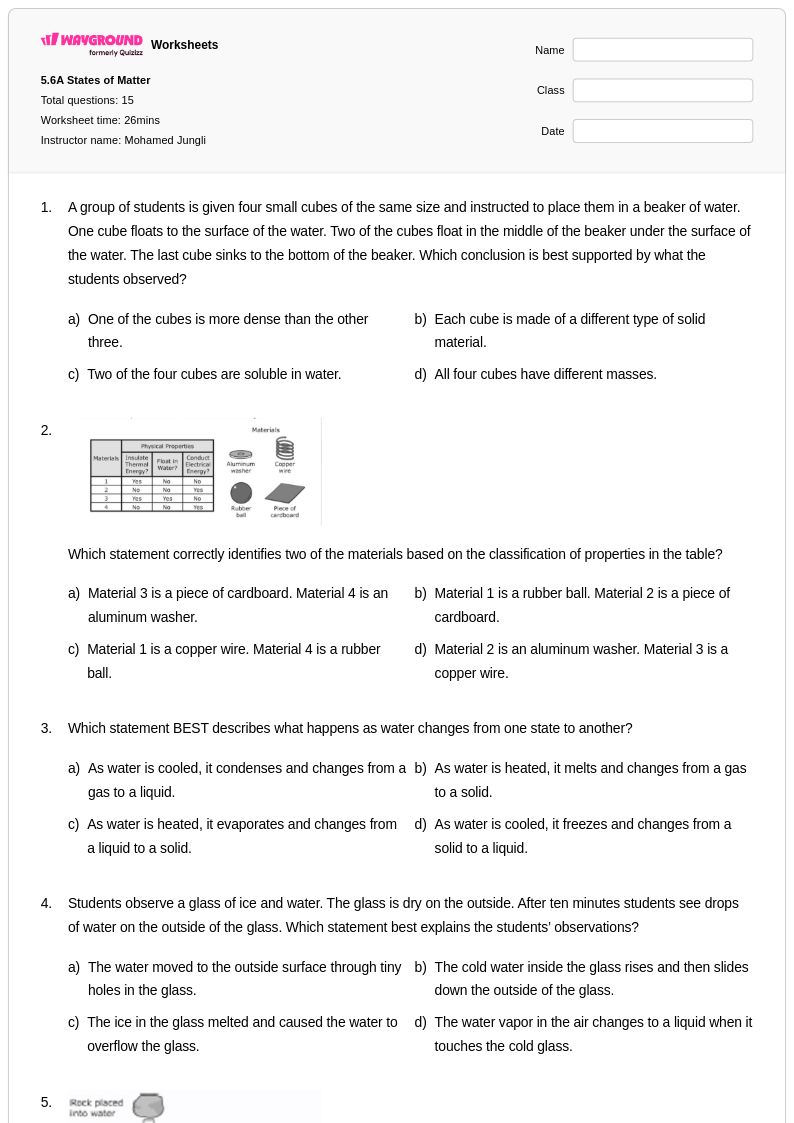
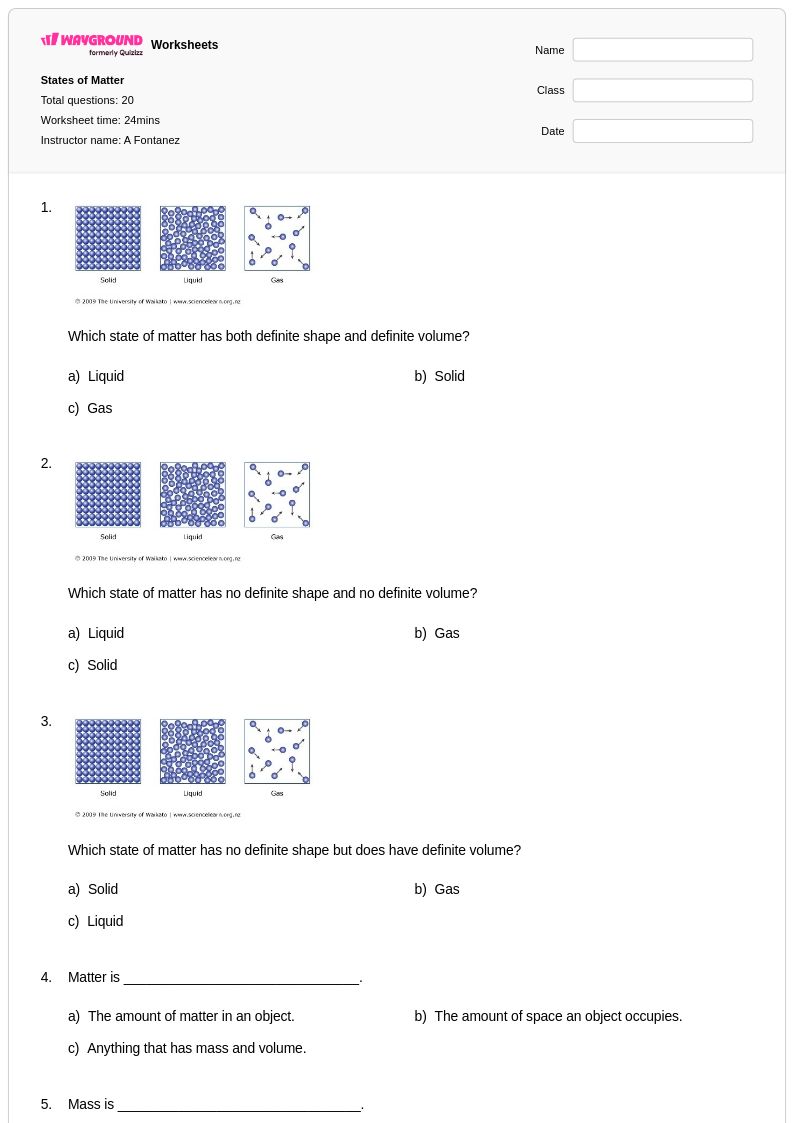
States of consciousness worksheets for Class 9 students available through Wayground provide comprehensive exploration of the various levels of human awareness and mental states that define our daily experiences. These educational resources systematically guide students through the fundamental concepts of waking consciousness, altered states, sleep cycles, dreams, and the effects of substances on cognitive function. The worksheets strengthen critical thinking skills by challenging students to analyze different consciousness states, compare normal versus altered awareness, and examine the neurological processes underlying these phenomena. Each printable resource includes detailed practice problems that require students to identify characteristics of various consciousness states, interpret sleep study data, and evaluate the impact of factors like meditation, hypnosis, and circadian rhythms on human awareness. Complete answer keys accompany these free materials, enabling students to verify their understanding of complex psychological concepts while developing scientific reasoning abilities essential for advanced psychology coursework.
Wayground supports educators with an extensive collection of teacher-created resources specifically designed for Class 9 psychology instruction, featuring millions of worksheets that address states of consciousness from multiple pedagogical approaches. The platform's robust search and filtering capabilities allow teachers to quickly locate materials aligned with specific learning standards and differentiate instruction based on individual student needs and learning styles. These customizable worksheets are available in both digital and printable pdf formats, providing flexibility for various classroom environments and teaching preferences. Teachers can efficiently plan comprehensive lessons covering everything from basic sleep architecture to complex theories of consciousness, while utilizing the platform's assessment tools for ongoing remediation and enrichment activities. The extensive variety of practice materials enables educators to reinforce key concepts through multiple modalities, ensuring students develop a thorough understanding of how consciousness operates across different psychological and physiological states.
FAQs
How do I teach states of consciousness in a psychology class?
Start by anchoring the concept in students' lived experience — asking them to reflect on falling asleep, daydreaming, or feeling groggy after waking. From there, introduce a framework that distinguishes normal waking consciousness from altered states such as sleep stages, hypnosis, meditation, and substance-induced changes. Pairing direct instruction with analytical exercises that require students to compare the neurobiological mechanisms behind each state helps move learning beyond rote memorization toward genuine conceptual understanding.
What exercises help students practice identifying and comparing states of consciousness?
Effective practice exercises include scenario-based identification tasks where students classify a described experience as REM sleep, hypnosis, meditation, or another state, along with comparison charts that map the neurobiological and psychological features of each. Analytical writing prompts that ask students to evaluate consciousness research — such as studies on sleep deprivation or the effects of meditation on brain activity — push students to apply theoretical knowledge to real evidence. These formats mirror the kinds of questions students encounter on AP Psychology exams.
What misconceptions do students commonly have about sleep stages and consciousness?
One of the most persistent misconceptions is that sleep is a single, uniform state rather than a structured cycle moving through distinct NREM stages and REM. Students also frequently conflate hypnosis with sleep, misunderstanding hypnosis as an unconscious state rather than a focused, altered waking state. Another common error is treating altered states induced by substances as identical in mechanism to naturally occurring altered states like meditation, when the neurobiological pathways differ significantly.
How do I use states of consciousness worksheets to support students with different learning needs?
States of consciousness worksheets on Wayground are available as printable PDFs for traditional classroom use and in digital formats for technology-integrated environments, where they can also be hosted as a quiz. For students who need additional support, Wayground's digital platform offers built-in accommodations including read aloud for question text, extended time per question, and reduced answer choices to lower cognitive load — all configurable per individual student without notifying the rest of the class.
How do I help students understand the difference between hypnosis and other altered states of consciousness?
Hypnosis is best taught by contrasting it directly with sleep and meditation: unlike sleep, hypnosis involves sustained responsiveness to external direction, and unlike meditation, it is typically guided rather than self-directed. Emphasize that hypnosis is characterized by heightened suggestibility and focused attention, not unconsciousness — a distinction students frequently miss. Structured comparison activities that require students to fill in physiological and behavioral characteristics across multiple states are particularly effective at making these differences stick.
What's the best way to assess student understanding of sleep cycles?
Effective assessment of sleep cycle knowledge goes beyond asking students to list the stages — it requires them to explain what happens neurologically and behaviorally at each stage and why the sequence matters. Diagram-labeling tasks, sequencing activities, and short-answer questions that ask students to predict the effects of disrupting a specific stage (such as REM suppression) all reveal whether students understand the functional significance of each stage rather than just its name.