
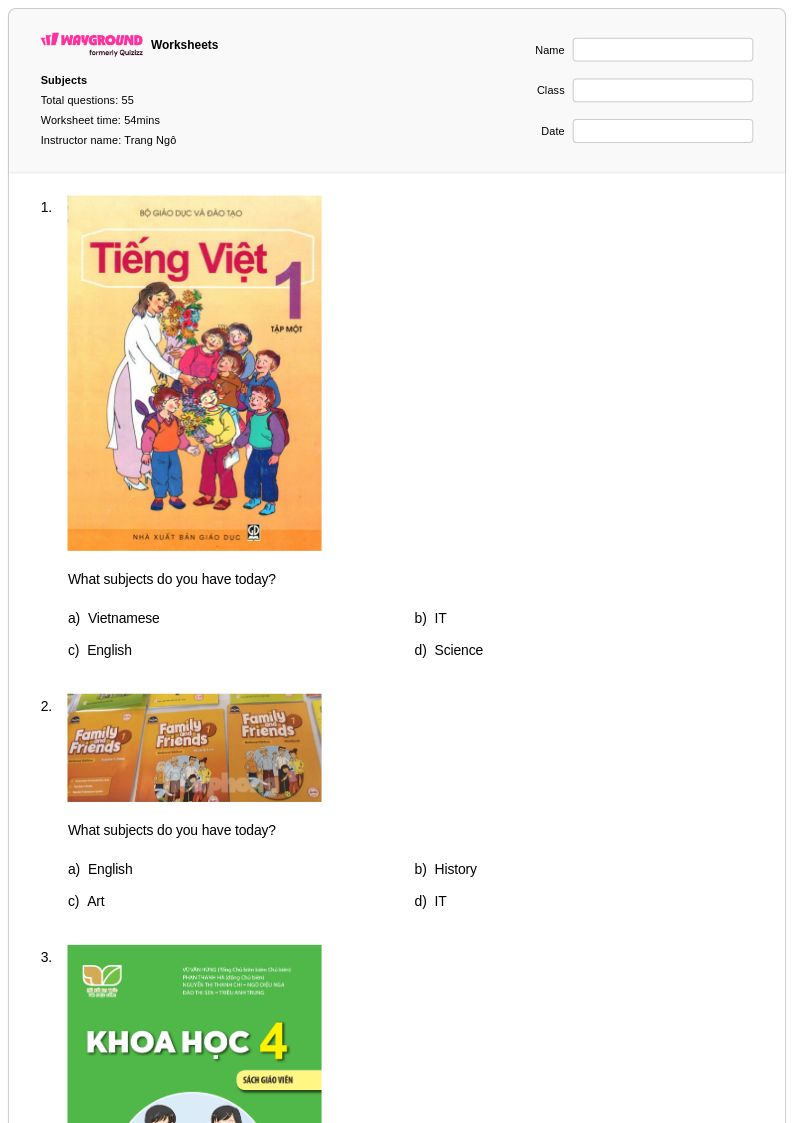
55 Q
1st - 5th
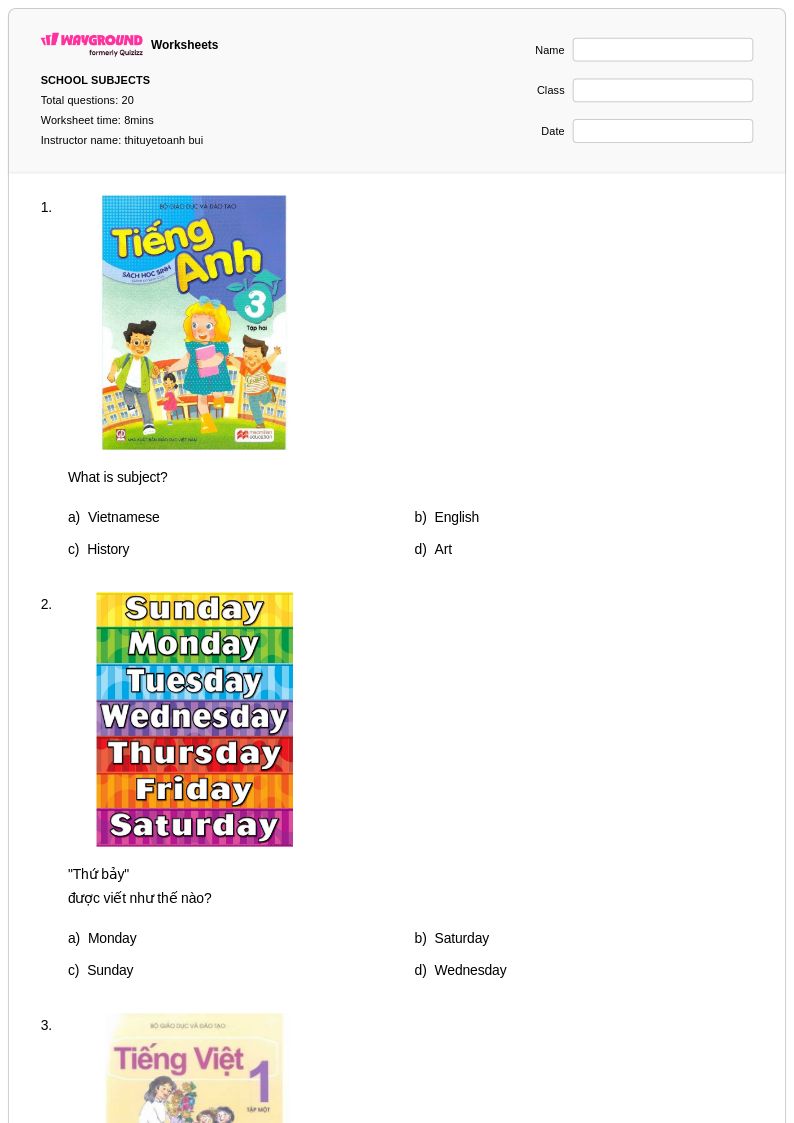
20 Q
3rd
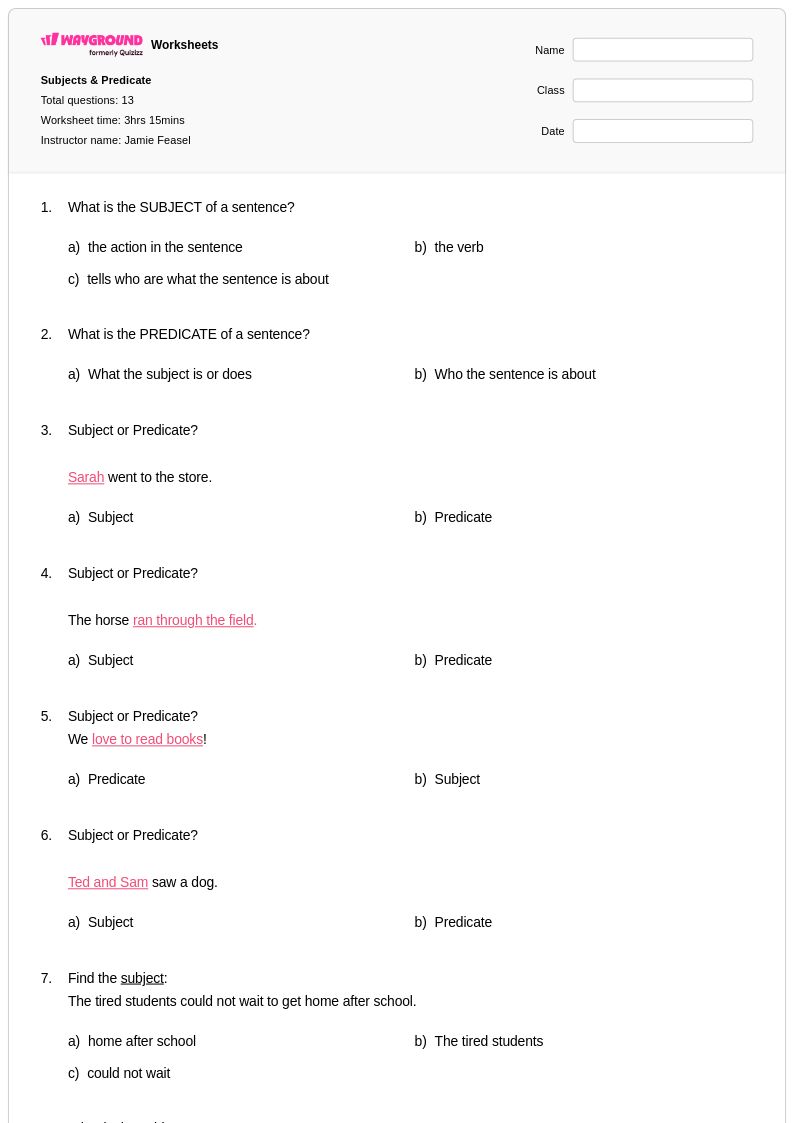
13 Q
3rd
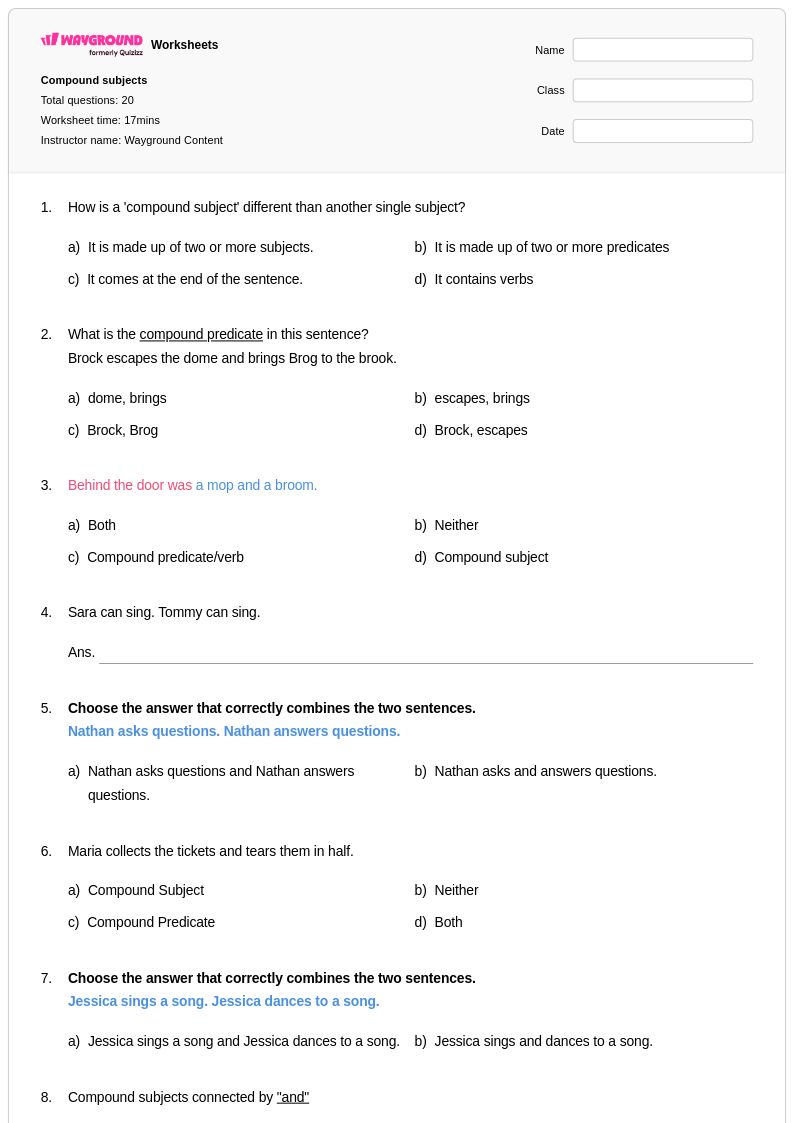
20 Q
1st - 3rd
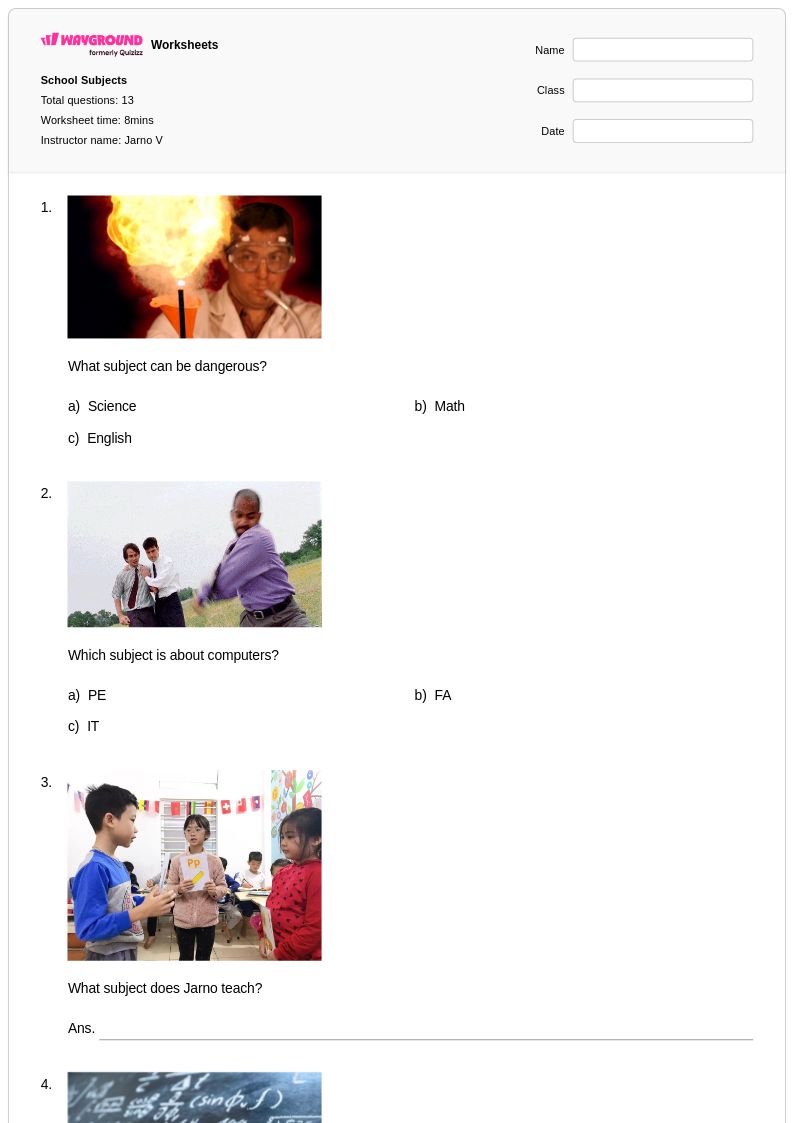
13 Q
3rd - 6th
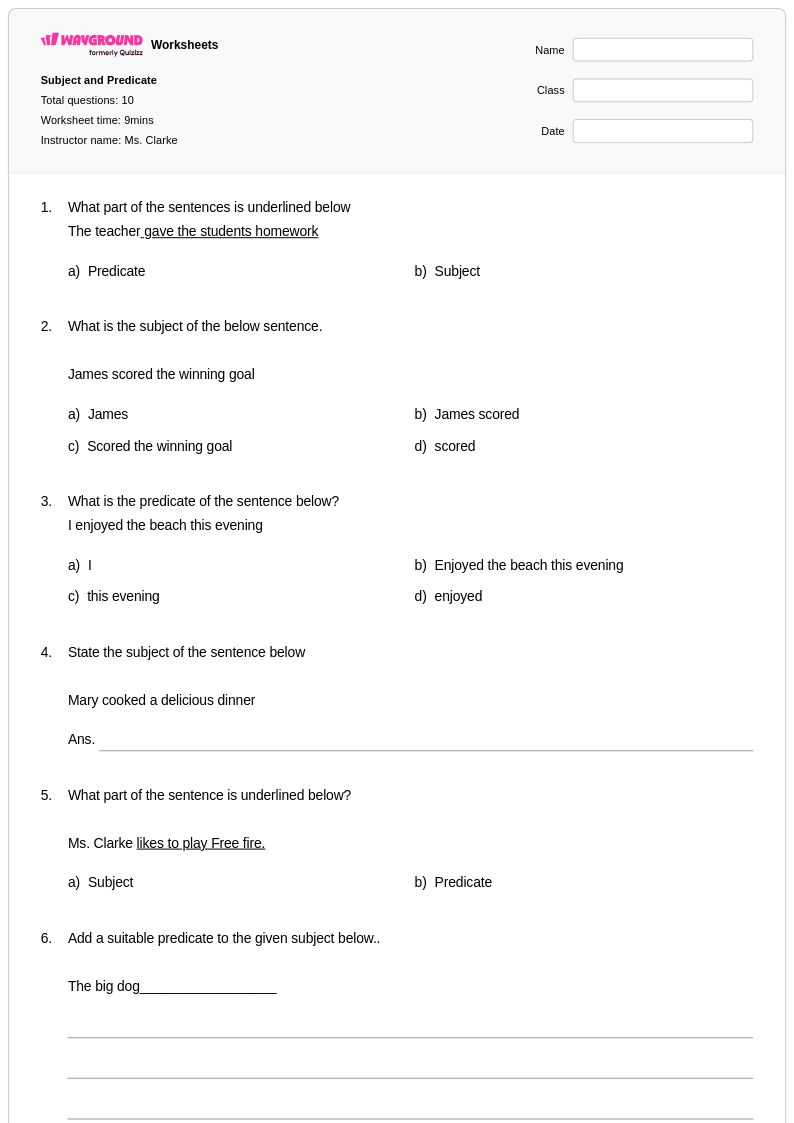
10 Q
3rd - 5th
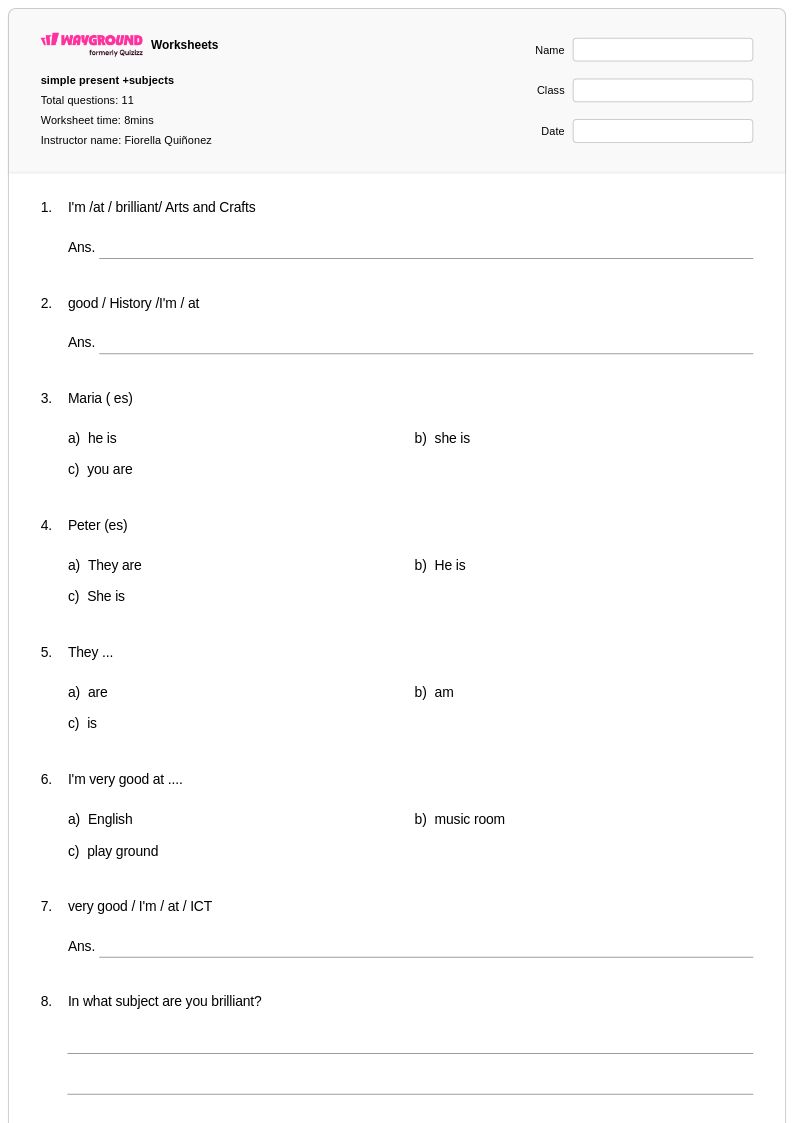
11 Q
3rd
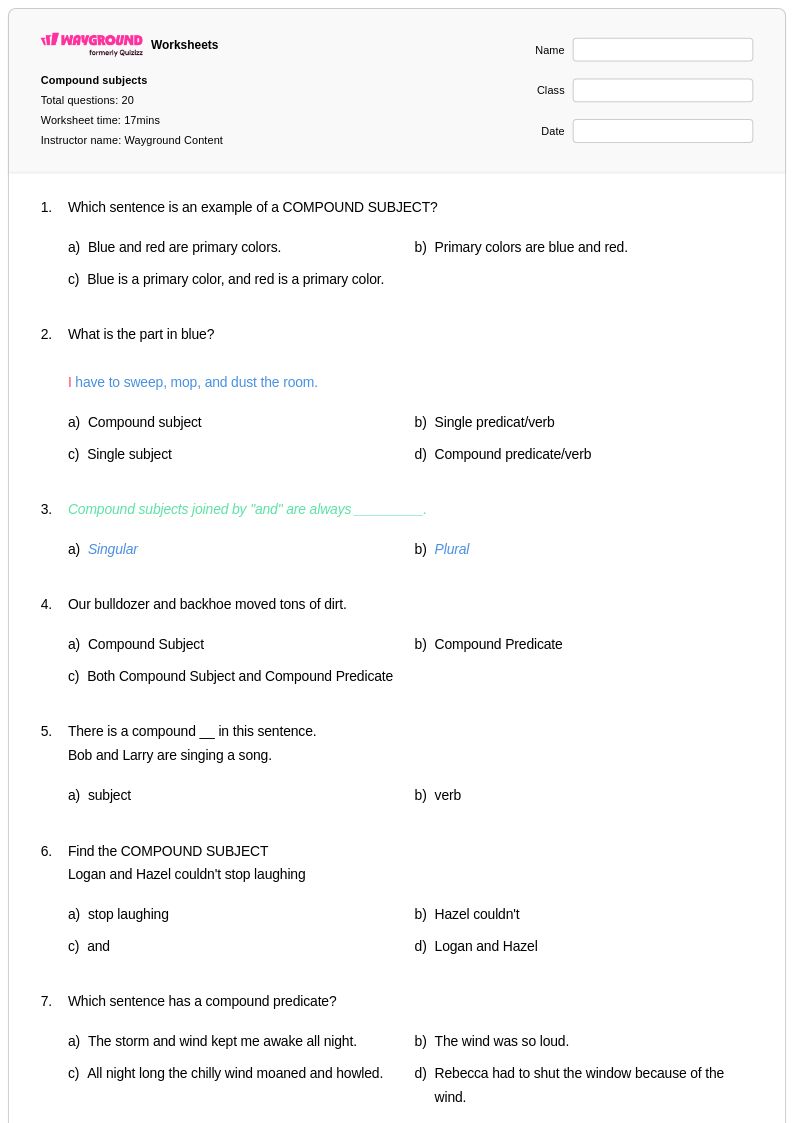
20 Q
1st - 3rd
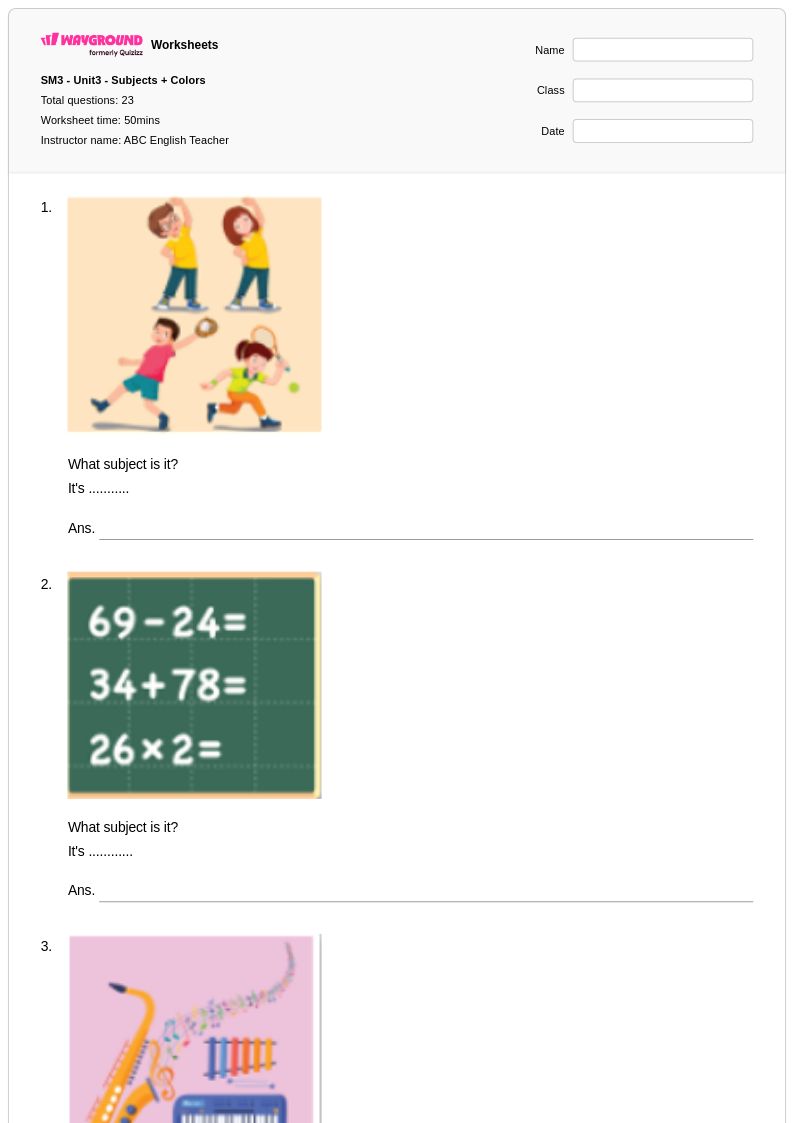
23 Q
3rd
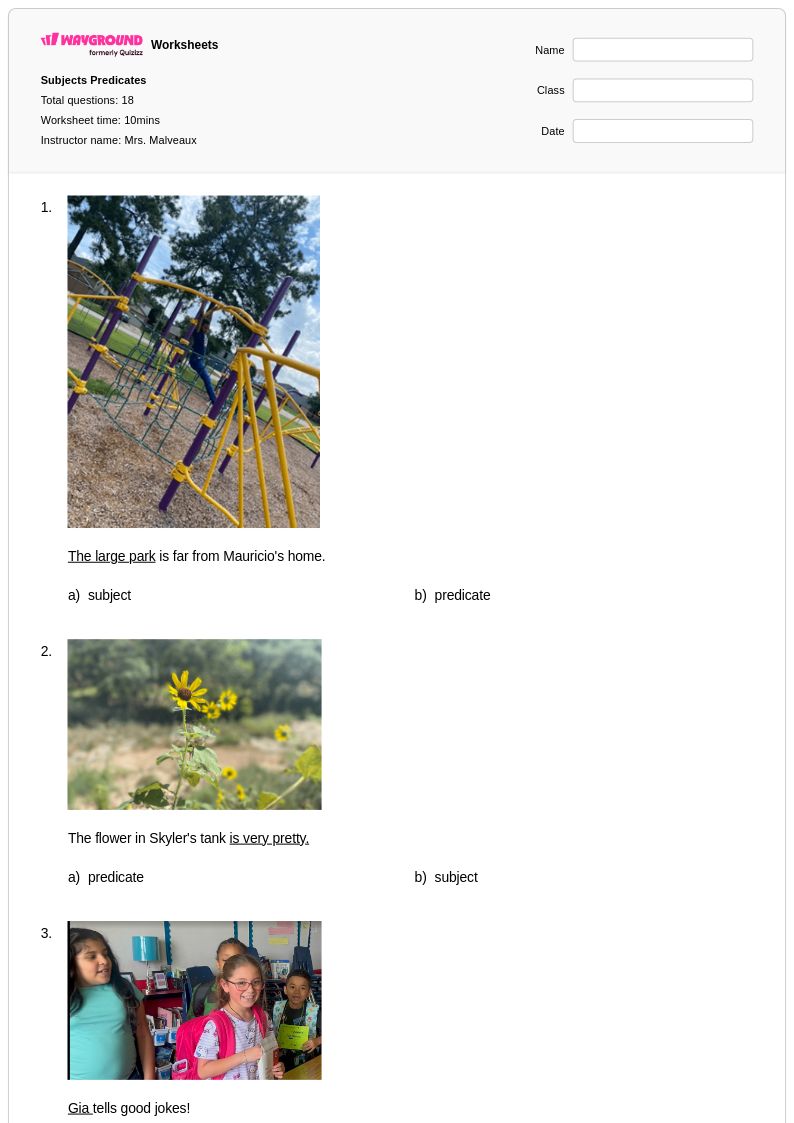
18 Q
3rd
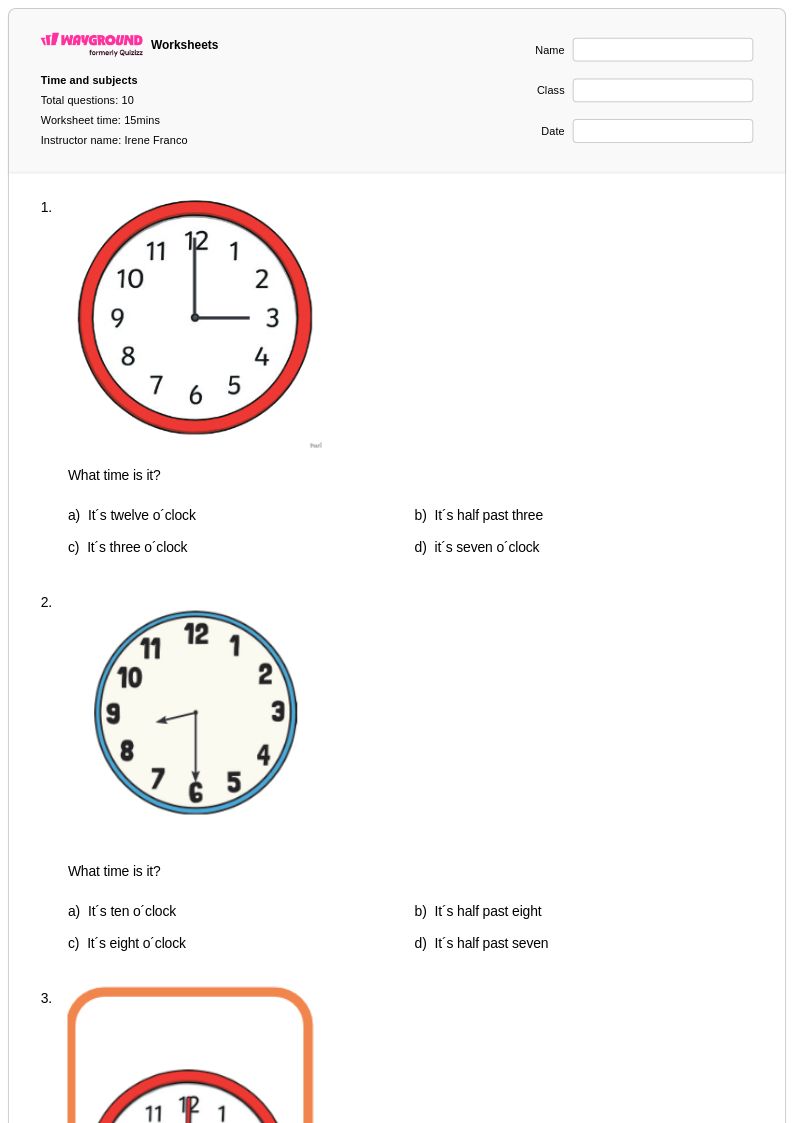
10 Q
3rd
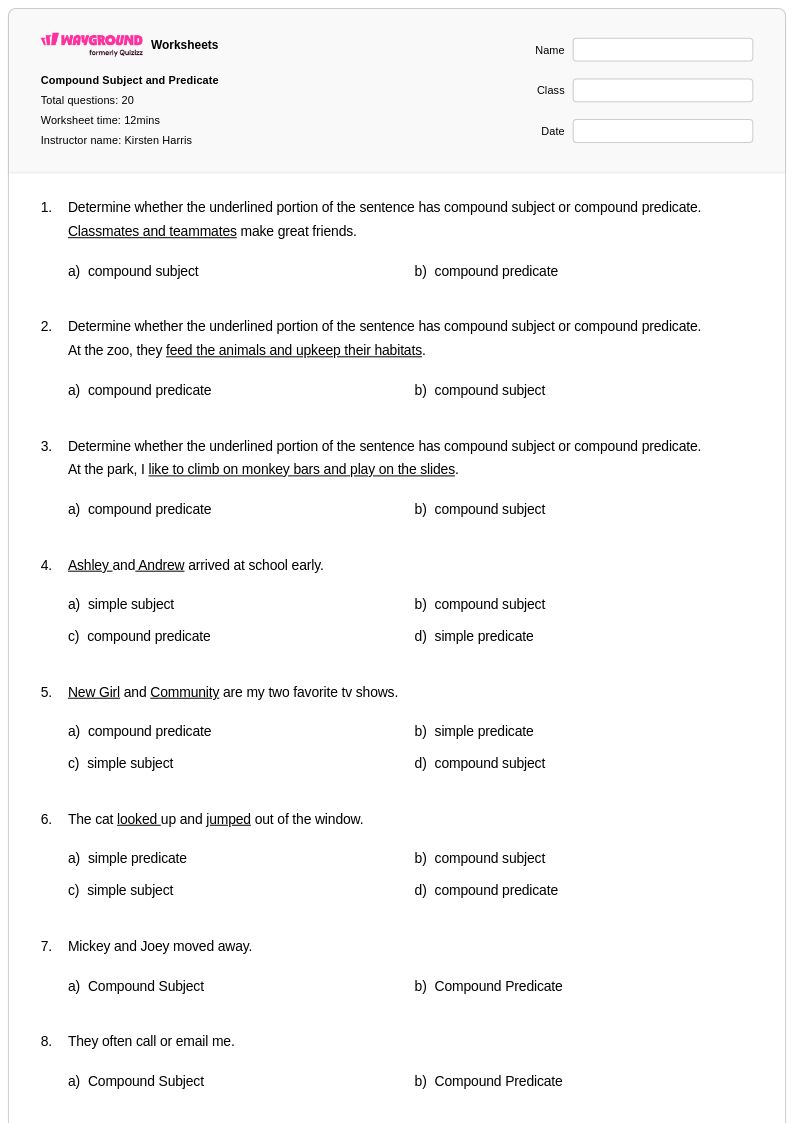
20 Q
3rd - 5th
20 Q
1st - 3rd
10 Q
3rd
22 Q
3rd
20 Q
3rd
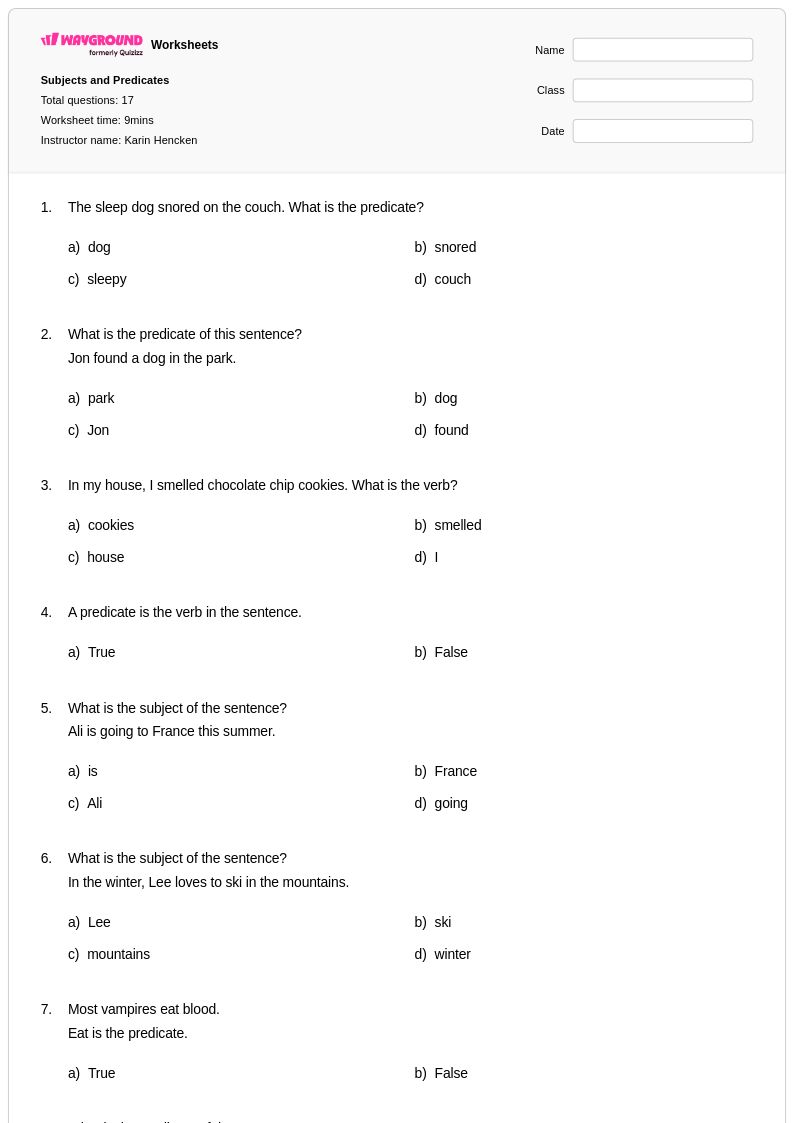
17 Q
2nd - 6th
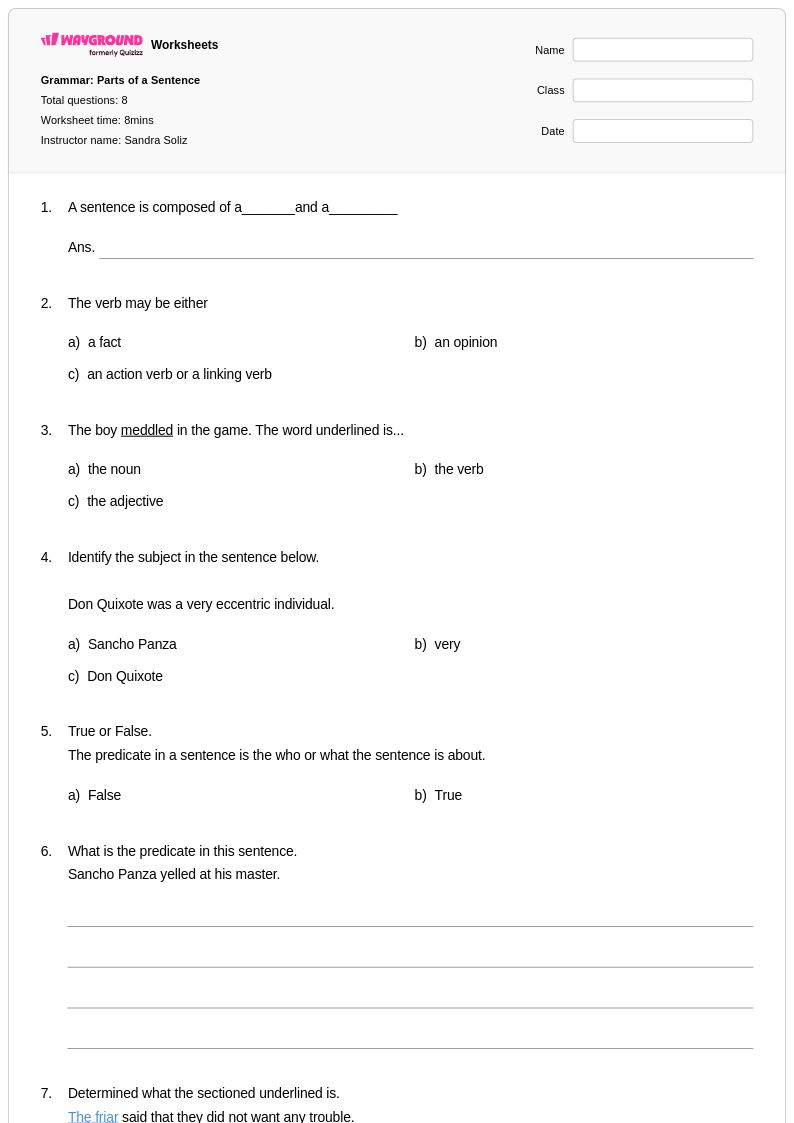
8 Q
3rd - 5th
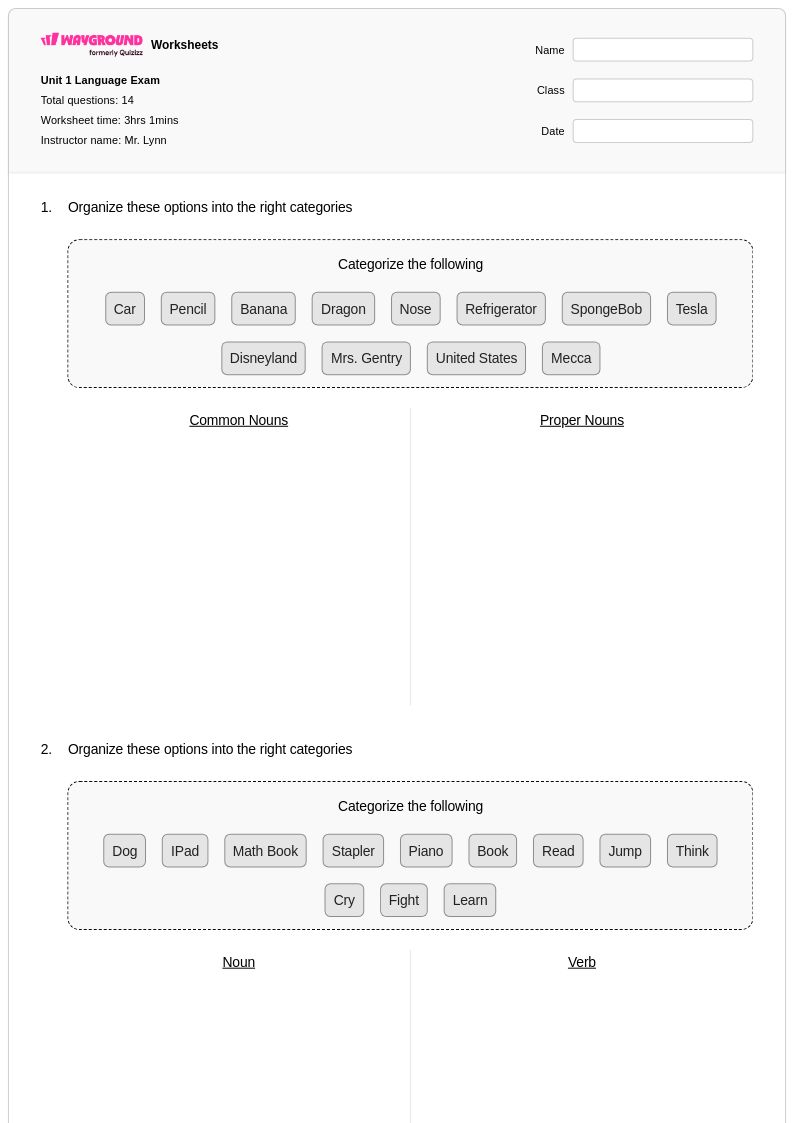
14 Q
3rd
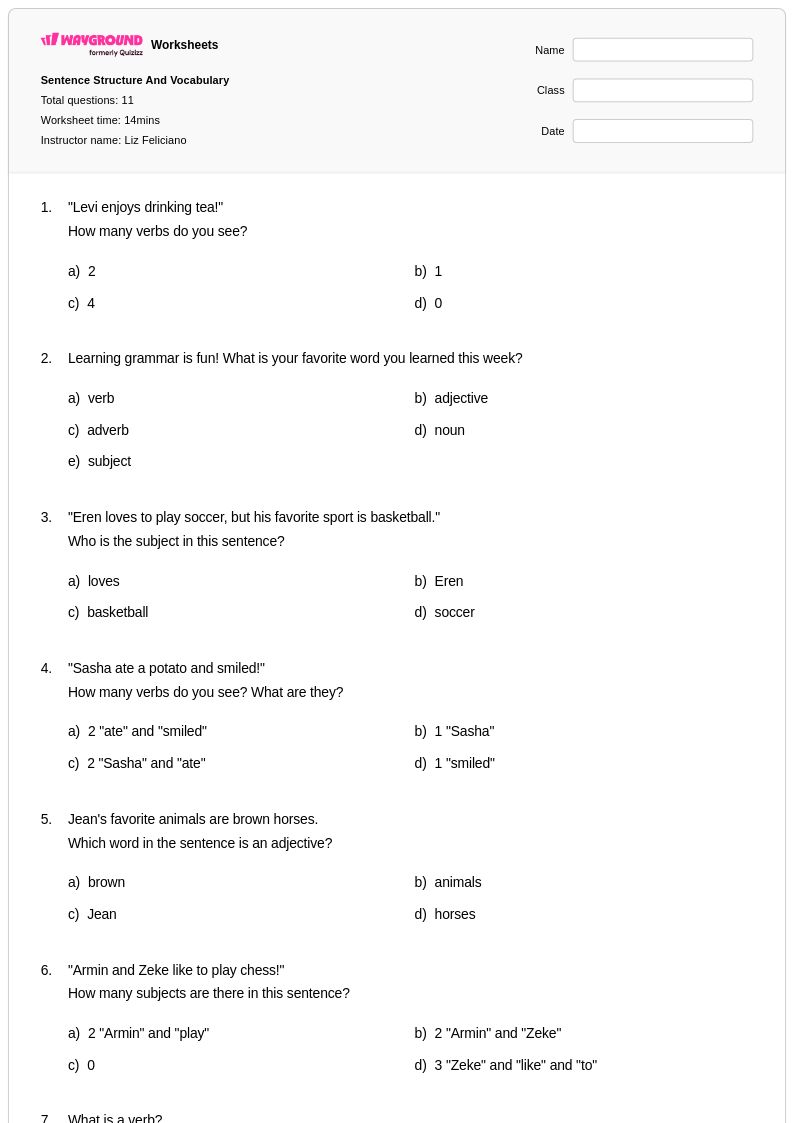
11 Q
2nd - 5th
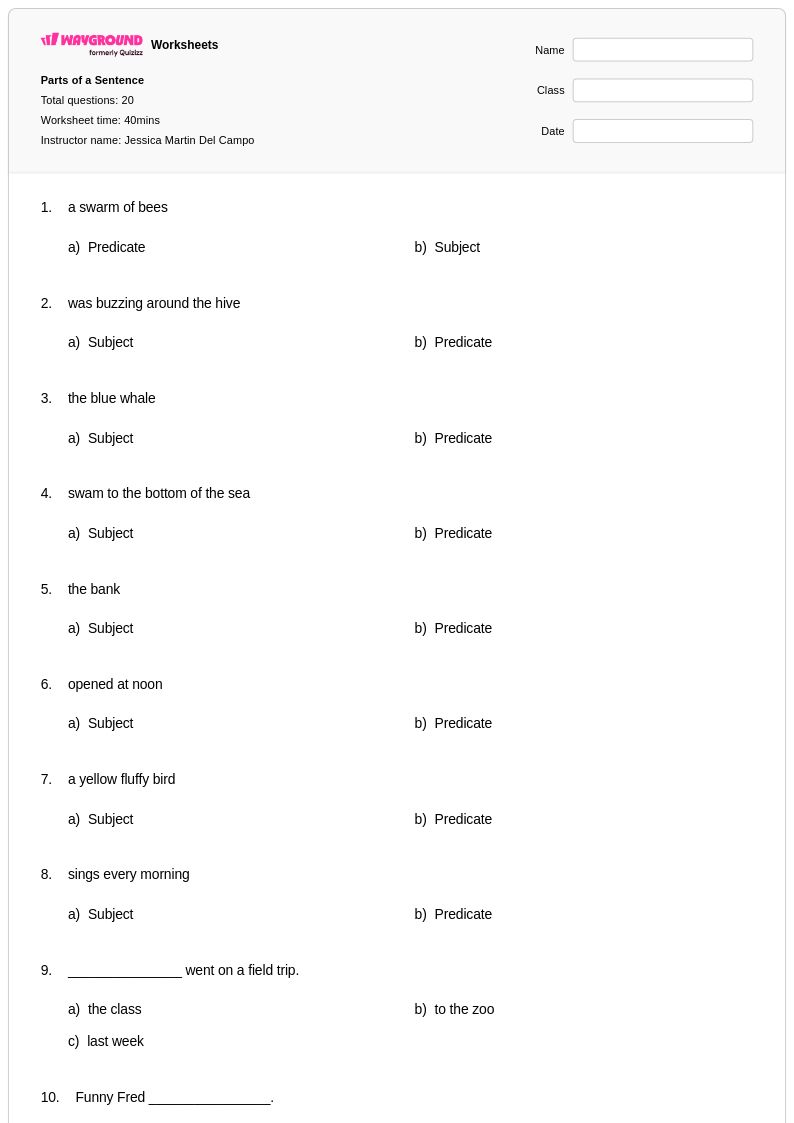
20 Q
1st - 5th
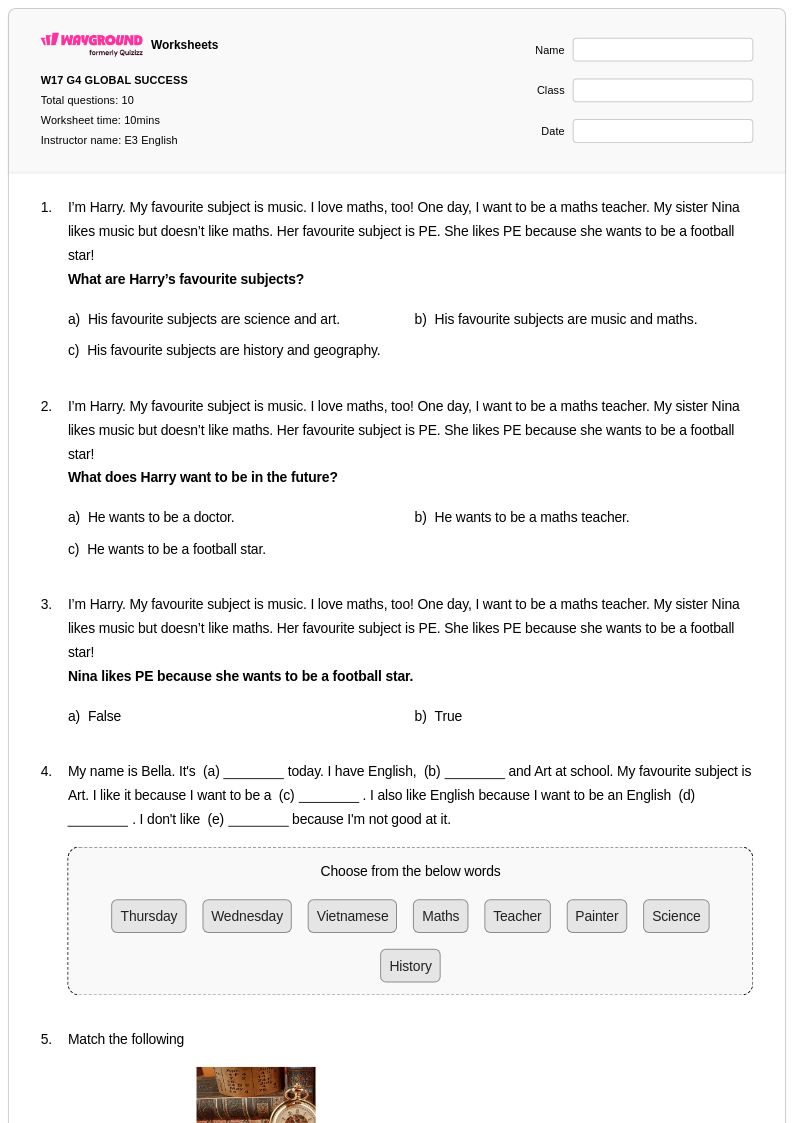
10 Q
1st - Uni
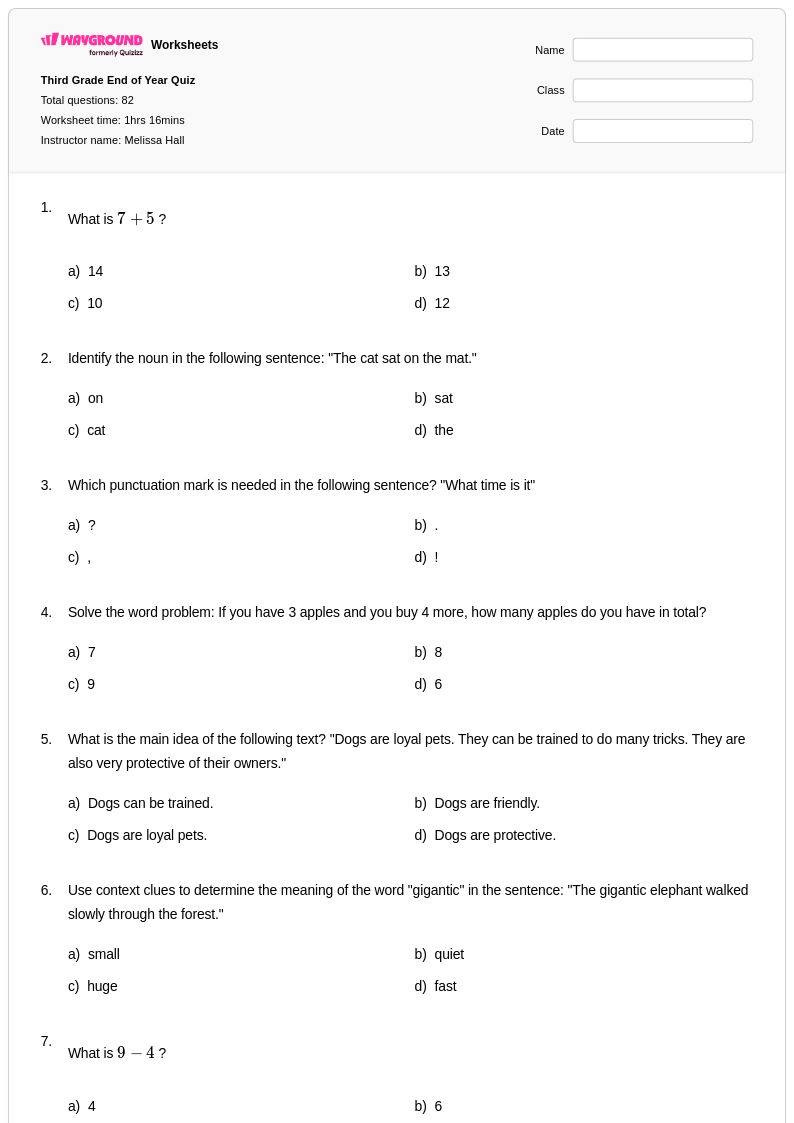
82 Q
3rd
Explore Other Subject Worksheets for class 3
Explore printable Subjects worksheets for Class 3
Subjects worksheets for Class 3 students available through Wayground (formerly Quizizz) provide essential practice in identifying and understanding the fundamental building blocks of English sentences. These comprehensive printables focus specifically on helping young learners recognize subjects as the "who" or "what" that performs the action in a sentence, a critical skill that forms the foundation for proper sentence construction and reading comprehension. Each worksheet collection includes carefully crafted practice problems that progress from simple noun subjects to more complex subject phrases, complete with answer keys that allow teachers and parents to provide immediate feedback. The free pdf resources feature engaging exercises where students circle subjects, match subjects to predicates, and complete sentences by adding appropriate subjects, strengthening their grammatical awareness through repetitive, targeted practice.
Wayground (formerly Quizizz) empowers educators with an extensive library of millions of teacher-created subject identification worksheets, offering robust search and filtering capabilities that align with Class 3 English language arts standards. Teachers can easily differentiate instruction by selecting from various difficulty levels within the subjects collection, customizing worksheets to meet individual student needs, or adapting existing materials for both remediation and enrichment purposes. The platform's flexible format options include both printable pdf versions for traditional classroom use and digital formats for interactive learning experiences, streamlining lesson planning while ensuring consistent skill practice. These comprehensive tools support teachers in developing students' grammatical foundation through systematic practice, enabling them to scaffold learning effectively and track student progress in mastering subject identification within the broader context of parts of speech instruction.
FAQs
How do I teach students to identify the subject of a sentence?
What is the difference between a simple subject and a complete subject?
What exercises help students practice identifying sentence subjects?
What mistakes do students commonly make when identifying sentence subjects?
How do I support struggling students who can't identify subjects in complex sentences?
How do I use Wayground's subjects worksheets in my classroom?